Book Promo
If you wish to send us books for next week’s promo, please email to bookpimping at outlook dot com. If you feel a need to re-promo the same book do so no more than once every six months (unless you’re me or my relative. Deal.) One book per author per week. Amazon links only. Oh, yeah, by clicking through and buying (anything, actually) through one of the links below, you will at no cost to you be giving a portion of your purchase to support ATH through our associates number. A COMMISSION IS EARNED FROM EACH PURCHASE.*Note that I haven’t read most of these books (my reading is eclectic and “craving led”,) and apply the usual cautions to buying. I reserve the right not to run any submission, if cover, blurb or anything else made me decide not to, at my sole discretion.– SAH
FROM ALIDA LEACROFT (DAVE FREER): CECILY
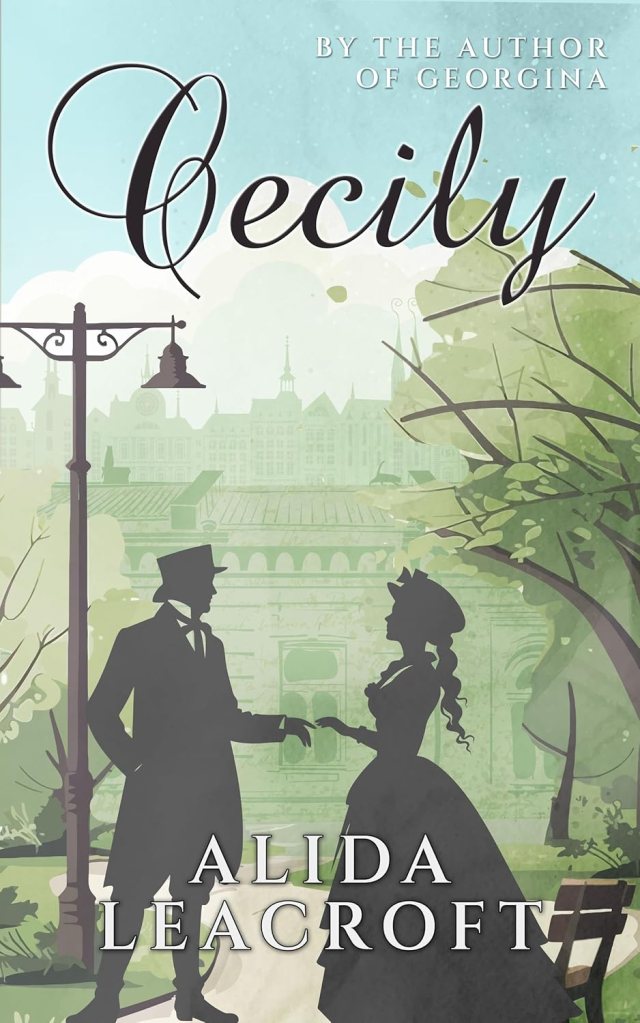
Wicked uncles, abductions, courage and romance…
Her father lost at sea, under seemingly scandalous circumstances, Miss Cecily Winiard is brought to the northern Spa town of Harrogate, to make her come-out under the aegis of her great aunt. Her family are in dire straits, and she must make an advantageous marriage. Except… her great aunt’s ideas of an advantageous marriage and Cecily’s do not run in tandem. Her great aunt wants birth and breeding, and certainly no-one with an interest in vulgar commerce. Young Lord Coleford, is, as far as her great aunt is concerned, a vulgar Cit and entirely unworthy to even breathe the same air as a Winiard, let alone have further pretentions. It’s a trifle awkward that Cecily likes him. It’s even more awkward that she, on the instructions of great aunt, snubbed the eligible young man severely. That is not something he’s accustomed to. He’d come to Harrogate expecting to be bored, not to be treated like a hatstand.
And stalking behind the gaiety and social whirl, there lurks the scandal of her father’s disappearance, and the plots that surround it.
FROM SABRINA CHASE: Red Wolf: Scout

A fortress of hope in a world of chaos
Nic thought she’d found her place in this alternate ancient China. But as imperial succession looms, she realizes her greatest challenges lie ahead.
With General Lin Feng Guo, Nic must transform Shanmen fortress into a bastion of strength. Her knowledge of future technology could turn the tide—if she dares to use it.
But a rogue general’s ambition threatens to plunge the empire into civil war.
As armies gather and alliances shift, Nic faces impossible choices. Should she reveal the full extent of her otherworldly knowledge and risk everything? Or watch helplessly as this world she’s come to love descends into chaos?
In a land where barbarians are feared and demons whispered about in the dark, Nic must find a way to bridge two worlds. Can she forge a future for them all without losing herself in the process?
With enemies at the gates and treachery within, Nic’s fight for survival becomes a desperate battle to save her new home and the people she’s sworn to protect.
FROM DAVE FREER: Dragon’s Ring
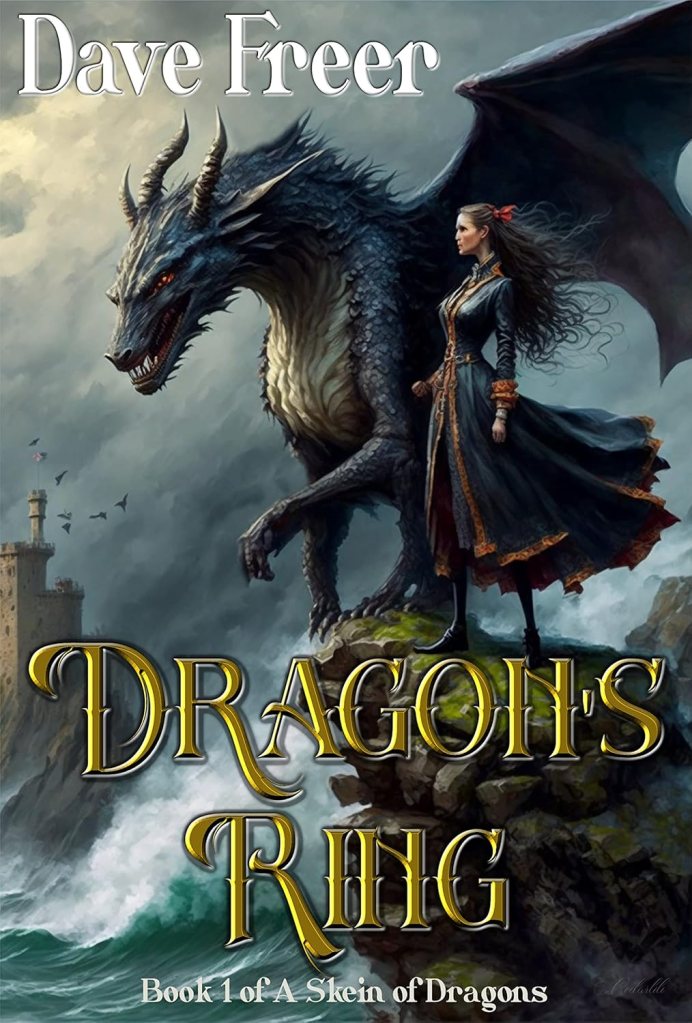
Tasmarin is a place of dragons, a plane cut off from all other worlds, where dragons can be dragons and humans can be dinner. It’s a place of islands, forests, mountains and wild oceans, filled with magical denizens. Fionn–the black dragon–calmly tells anyone who will listen that he’s going to destroy the place. Of course, he’s a joker, a troublemaker and a dragon of no fixed abode. No one ever believes him. He’s dead serious. Others strive to refresh the magics that built this place. To do so they need the combined magics of all the intelligent species, to renew the ancient balance and compact. There is just one problem. They need a human mage, and dragons systematically eliminated those centuries ago. Their augury has revealed that there is one, and they seek her desperately. Unfortunately, she’s fallen in with Fionn, who really doesn’t want them to succeed. He has his own reasons and dark designs. The part he hadn’t worked out is that she will affect his plans too. Chaos, roguery, heroism, theft, love, kidnapping, magic and war follow. And more chaos.
https://amzn.to/3UNq1ETFROM ALMA T. C. BOYKIN: Shikari: Shikari Book One
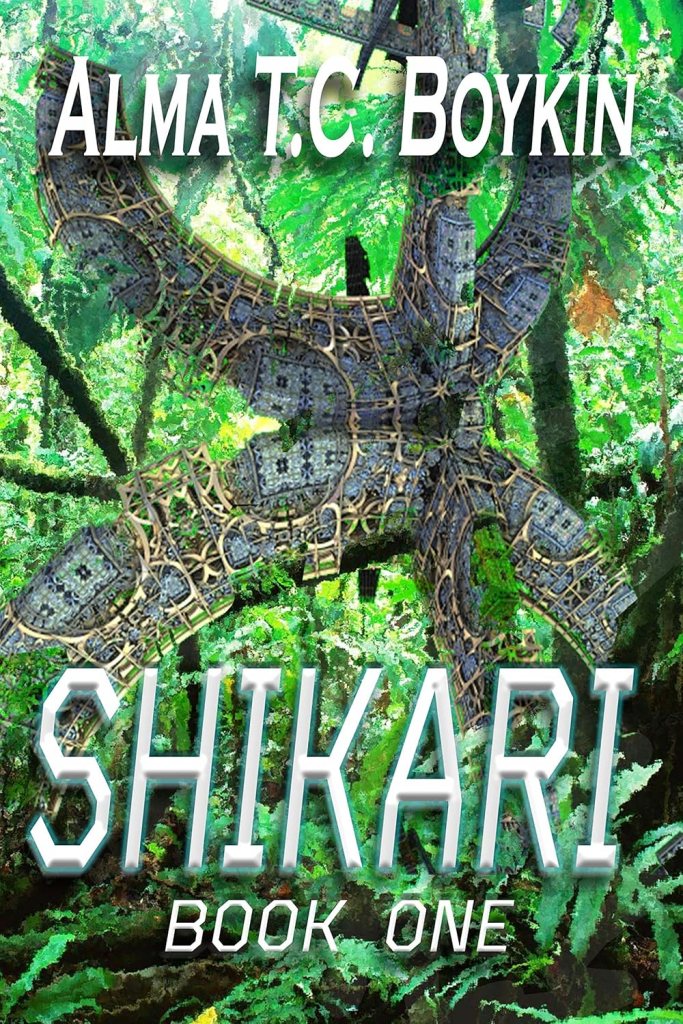
Adventure! Exploration! Martinus the m-dog! Lost cities and conspiracies! Strange creatures! And homework.
Shikhari, the most-distant human colony world, home to the Staré and Auriga “Rigi” Bernardi. While on school holiday, Rigi and her cousin Tomás Prananda discover a ruined city hidden in the forest. Their find strikes a spark that threatens to upend everything humans think they know about Shikhari’s past, and about the native Staré.
Meanwhile, back in school, Rigi’s determination to do well collides with the nastiest bully on the planet, Benin Shang Petrason. His father has the faculty and administrators under his thumb, allowing Benin to run rampant. If that wasn’t enough, Rigi’s big sister has discovered boys. If it weren’t for Martinus, Rigi’s new m-dog, Tomás, and their eccentric Uncle Ebenezer, Rigi wouldn’t know what to do.
But someone believes that Rigi and Tomás’s find is too dangerous to report. And that someone threatens the children, their families, and their uncle. That someone has just met their match.
FROM BLAKE SMITH: A Kingdom of Glass: A Novel of The Garia Cycle

Zara hasn’t seen her family in eleven years, but she doesn’t mind. They sent her to live in a neighboring kingdom when she was small, and she’s adopted her foster parents in their place. She lives the life of an aristocratic Garian girl- riding her horse, shooting her bow, exploring the castle with her friends- and she has nothing to wish for.
Until she’s summoned home, to a prospective marriage she doesn’t want, family she doesn’t remember, and a poisonous royal court that threatens everything she’s ever known. The East Morlans are nothing like Garia, and Zara struggles to find her place among the scheming Morlander aristocrats. Along the way, she makes new friends, meets enemies, and falls in love. But secrets abound in the glittering palace, and Zara must discover who she can trust as she fights for her life and freedom in a fragile, beautiful, kingdom of glass.
FROM MACKEY CHANDLER: The Long View (April Series Book 14)

Despite their animosity, North America seems cowed into leaving Home and the Kingdom of Central alone for the moment. They are begrudgingly honoring the treaty Singh and Love hammered out in Hawaii and allowing free passage to Home. That doesn’t mean they’ve lifted the sanctions on Home trade. The European powers are as friendly as needed to do trade but have never apologized for the lies about the origin of the last flu pandemic. That’s already fading from short-lifer’s memories. They can’t understand why long-lifers just won’t let stuff go. It helps that North America has other problems like Texas aggressively nibbling away at their border. Quebec has always been patiently waiting for them to be too busy elsewhere to repress them, and Mexico is quietly slipping away to Texan influence without a shot being fired. China, never really homogenous is too fractured into competing regions and interests to be a threat for a while. Jeff may have tipped them over the edge to that but it wasn’t hard.
In the relative peace holding for a moment in history, the habitats and the Moon are progressing past survival to making life comfortable. While many on Earth think the Spacers survive on Earth-grown food they’ve progressed to an abundance of essentials and are working away on the luxuries. They are acquiring extra-solar real estate beyond the Earthies reach.
Heather and her peers, April, and Jeff, plan a Grand Ball to celebrate life, friends, and allies. If the timing doesn’t work for the Earthies that’s their problem. It’s time to enjoy what they’ve accomplished and make plans for the future long put off. Soon enough, short-lived politicians will be replaced by those who don’t remember what happens when you rile the Spacers up. But for now, they can enjoy the moment.
FROM MARY CATELLI: The Book of Bone
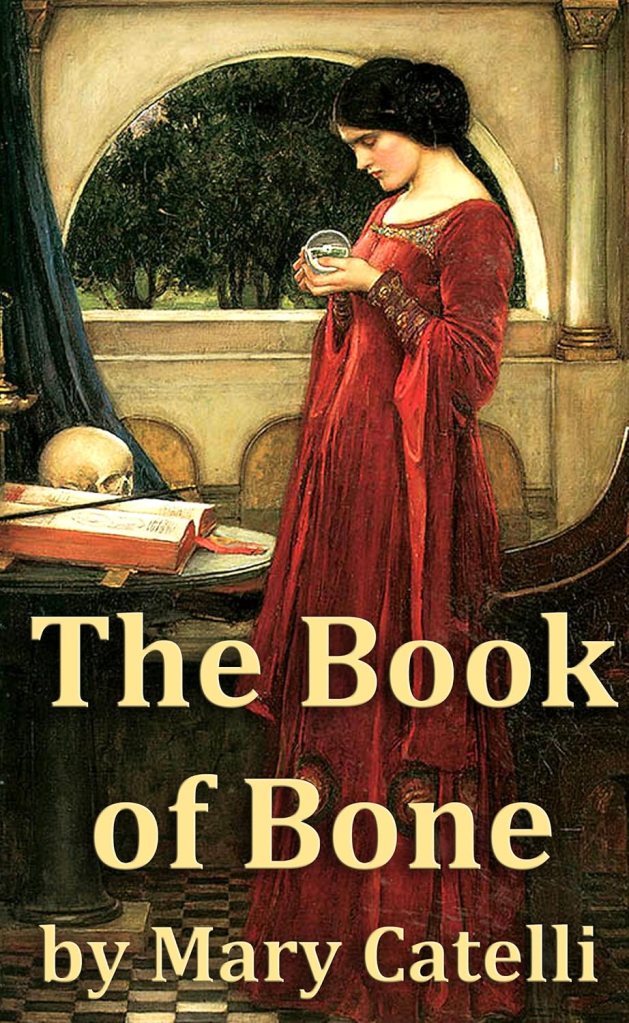
A novelette of curses and journeys.
Avice’s dreams of settling at Clearwater are dashed. The lawsuit had ended, and the lands were made over to her, but a bone wizard lays a curse on the land, and blight begins to spread. All will die before the curse as it spreads.
Neither her family nor her king are willing to help. She is left alone with only the knowledge that the mysterious Book of Bone may have the lore that she needs — if only she can find it.
https://amzn.to/48Lu9LrFROM HOLLY CHISM: Faerie Gifts
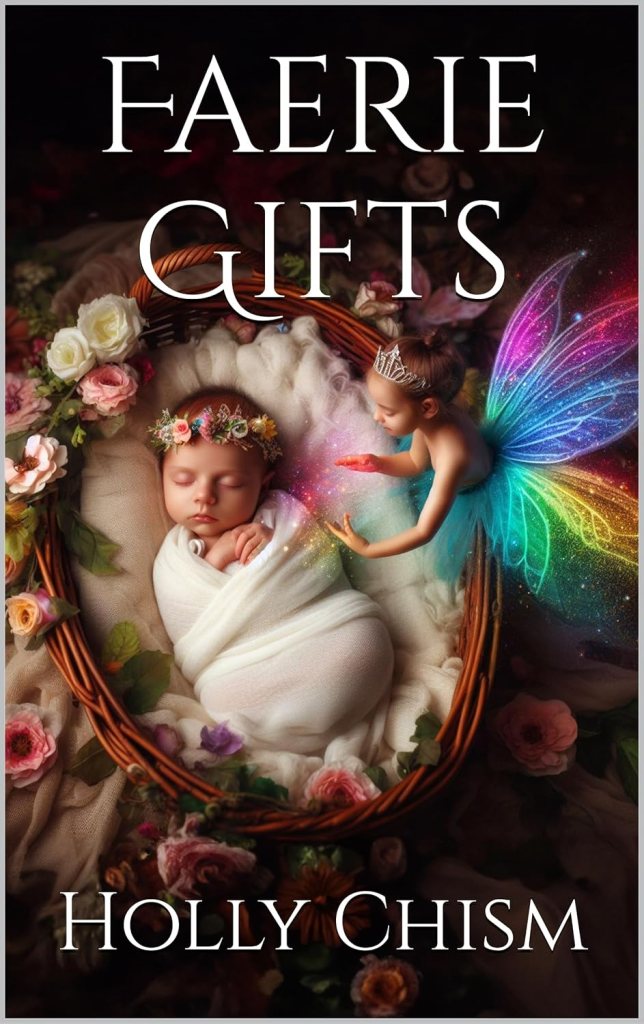
A collection of short stories about the intersection between over- and under-hill, between human and faerie.
Fortunate One–Is the ability to see the normally unseen a gift…or a curse?
Steed–When you don’t fit anywhere, perhaps you should listen when the faerie horse says you belong elsewhere.
Kintsugi–When your fiance is a faerie, they don’t want your mortality to get in the way of forever.
Faerie Gifts–Sometimes, the faerie’s gift goes wrong…what’s a new mother to do when a faerie wants to bless her new babe?
Mixed Blessings–A boon to a musician exchanges one addiction for another..
Bargains Struck–When the fairy grants your wish in exchange for your firstborn…what happens when you can’t have a child?
Golden–When the geese aren’t killed, the eggs keep coming.
FROM LEIGH KIMMEL: The Moon Mirror

Chelsea Ayles dreamed of going to the Moon since she was a child. Now her dream job at NASA has turned into a nightmare, thanks to those many blood-sucking arachnids. Yeah, politics, as in a Senator accusing her of destroying America’s priceless heritage because she chose the moonrocks that were used to make a proof-of-concept mirror segment for a lunar telescope project. Now the mirror sits in her office like a bitter mockery of what might have been — until the day her reflection turns into a handsome stranger who calls himself the Man in the Moon and offers her visions of a world that might have been. Visions that ignite a longing of an intensity she hasn’t known since she was in grade school and watched videos of the Apollo lunar missions in science class.
Vignettes by Luke, Mary Catelli and ‘Nother Mike.
So what’s a vignette? You might know them as flash fiction, or even just sketches. We will provide a prompt each Sunday that you can use directly (including it in your work) or just as an inspiration. You, in turn, will write about 50 words (yes, we are going for short shorts! Not even a Drabble 100 words, just half that!). Then post it! For an additional challenge, you can aim to make it exactly 50 words, if you like.
We recommend that if you have an original vignette, you post that as a new reply. If you are commenting on someone’s vignette, then post that as a reply to the vignette. Comments — this is writing practice, so comments should be aimed at helping someone be a better writer, not at crushing them. And since these are likely to be drafts, don’t jump up and down too hard on typos and grammar.
If you have questions, feel free to ask.
Your writing prompt this week is: Blush