Going Deeper

As some of you know, I’ve lately been reading romances.

Now, in a woman who’d come no nearer romance than Austen and Shakespeare until her late thirties, this must be understood in the way of a daring expedition into unknown and somewhat strange territory.

Picture me, in fact, in helmet and safari suit, led by a troupe of – possibly pink-attired – natives, penetrating impenetrable jungles.

Only as far as that goes, I would be a terrible explorer. Rather than penetrating deep (it’s so wrong to use this expression with romance, I know) into the contemporary swamps, I mostly stay around the edges of regencies – i.e. near the native villages of historical, which I have visited before.

Part of the reason for this is the reason I no longer read mysteries in the way I now read romance. Growing up I considered Science Fiction and Fantasy “real” reading, while mystery was what I read when otherwise out of “real” books, and/or, later on, as “popcorn.” Popcorn books are read without studying them and without any necessity to feel like I’m competing with them.

As it’s probably obvious part of what chased me out of mystery is that I started writing it. But the other part is what makes contemporary mystery – and a lot of science fiction and fantasy – odious to me.

I’m perfectly willing – no, look, I’m used to – skipping the political screeds in the middle of books. That’s fine. They’re particularly funny in older mysteries which assure me that such and such event/policy will destroy all life as we know it by… well, earlier than now. So, cool.

But while I’ve my entire life worked on the principle that everyone is entitled to his/her own opinion, I do take offense to people being entitled to their own facts and both in mystery and SF and for that matter contemporary romance, I run across an awful lot of stuff where I go “Well, now. I’ve never met a woman who worked THAT way.” Or “Yeah, you know, I refuse to entertain the idea I found the only man in the universe who is not an abuser.” And in the last ten years or so, either I’ve got more crotchety (Hey, you kids, get off my literary lawn!) or the instances of this type of nonsense have gotten WAY thicker. I’d suspect both, as the older I get the more I have trouble suffering fools – gladly or otherwise – and as we’re churning out generations of women who have been taught an entirely imaginary history, not to mention sociology and economics. (You need to be exquisitely educated and exceedingly brilliant to believe that much nonsense.)

Anyway, so I ended up reading mostly historical mystery but some years ago the publishers decided historical mystery was out. (No, don’t tell me it didn’t sell. It was a niche, like anything else is, practically. Mostly it didn’t sell because the publishers wouldn’t get it on shelves. They decided all that needed to be pushed was what I call “sex and the city” mysteries, which is fine, but I’m simply not that interested in shoes. Oh, and craft mysteries, which are the resurgence of the cozies they also decided wouldn’t sell about twenty years ago — but the fact I write those about furniture refinishing should tell you how ‘with it’ I am about crafts.)

I still need popcorn books. These are things read when cooking or cleaning, and usually not remembered at all. The things I consider ‘vacation’ because I can retreat into them and not think about much of anything. Ideally they’re the books I read while walking around amusement parks in the wake of the boys.

So I started reading romances. (They’re also great recessionary reading because I can buy a used book for a dollar pretty consistently, and then I can trade them in, four for one more book. And it is only after two of these transactions that I have to head to the used bookstore with thirty dollars again. So, a month’s worth of popcorn reading might cost me fifty.)

Unfortunately, you can take the writer out of her field, but you can’t make her stop being a writer.

So lately my mind has been turning on what makes some of the regency-popcorn I’ve been ingesting particularly tasty, and what makes some of it a snort-giggle fest.

We’ll eliminate genius from the equation, first. I should point out what led me on this primrose (or at least pinkish) path to hell to begin with was Dave Freer making me read Georgette Heyer. I’ll say it right now: Heyer is not like any other regency romance. Just isn’t, period. That’s genius.

So, I’m fairly sure I’m not a genius, and that’s where THAT analysis ends. Now, onto the other ones.

Like with any other genre I plunge into, I started noticing stylistic and character building stuff in some of the books I buy more or less blindly (no, really blindly sometimes. As in, I tell my friend at the used bookstore “grab me thirty regencies, put in a bag, I’ll pick them up in an hour.) So I started making “friends” – i.e. “I like her style, I’ll look for her name.” – and “enemies” – “oh, my freaking Lord, I’d pull out my eyes rather than try to read anything else by this woman” lists. We’ll leave those aside too. Right now my hatreds are way more violent than my loves which mostly rise to “oh, okay, she’s pleasant.”

Instead, let’s say that in the mass of books I get I get any number of “category” romances, as well as the more complex – better covers, far more push – “bigger” romances.

It wasn’t till this weekend I realized I could tell which one I was reading and would be able to even on kindle, with no cover or weight to tip me off to which it was. And then it occurred to me you might be interested, as I suspect this applies to all books.

A lot of the category romances are painless enough to read. None has made it to my hate list. On the other hand, none has come close to the love list.

What I will say for them is this – none of them is very deep. Now I think a lot of people have made this observation and in usual the cure for it from editors – who are not, after all writers, and who are, most of them university graduates in the fuzzier fields – is “let’s make it relevant.” This usually results in the injection of the sort of ideas that could only pass as facts on a college campus. I suppose that makes them feel “deeper” or more “relevant” if you either agree with them and/or you’ve been living in an hermetically sealed chamber for the last fifty years and the idea that someone would write a book positing women are the equals (or even the superiors) of men is a mind blowing thought. For the rest of us it amounts very much to a yawn.

No, what makes these books – as opposed to other regency romances – lighter or less relevant or, let’s face it, less interesting is more difficult to correct and I’d say it’s this: the writer studiously avoids the big emotions.

I realized this last night as I was reading one where a young girl “ruins” herself by attending a masquerade and being recognized. In one of the “bigger” books, this would be a serious thing (whether historically accurate or not is something totally different) and the subplot of her finding true love despite this would be if not the secondary subplot (she’s the supporting-role character) to the entire book, at least the subject of the second half of the book. It would require some soul-searching and changes on her part. You’d see character growth. In this book it is merely a diversion on the way to something else, and a reason to go to the country for a few days and you know that the problem will be solved in the way other problems in this book are solved: through luck.

In fact, we already know how it will be solved because, behind the back of the character, we hear that the guy who bragged of seeing her is not really believed since, what young lady of proper upbringing would go unmasked at a masquerade? Coincidence also helps a character follow another character who elopes, because someone with a carriage just drives by. In other words, it is too easy.

Is that all, you say, and you’ll remind me Heyer also employs coincidences. Well, sure. But because not everything is easy and passing, you don’t feel the coincidences are unwarranted. In this book the coincidences mar a plot punctuated with irrelevancy.

What do I mean irrelevancy? Well… take the disgrace above, even though we’re assured it won’t matter in the long run and the girl is none too worried about it and doesn’t seem to give it a thought, this is the reason the main male character chooses to throw a hissy fit we never saw coming, and the reason the girl then chooses to elope with someone she never looked at twice before, and who in fact doesn’t want to elope with her. Uh?

In the better romances, they start with something the character wants desperately (and usually it’s not JUST love) and then wind love and other contretemps around it, TIGHTLY never letting go until the climatic moment.

What this means is that people don’t acquire emotions and discard them simply to move the plot forward. If they want something they’ll continue wanting it until they either get it or are convinced it’s bad for them. The emotions don’t LET UP. They continue going deeper and deeper throughout the book.

If you do that, then even a fluffy romance can touch the heart of the human condition. I know it’s uncomfortable and it requires putting a lot of yourself in, to go into the emotions – but trust me, it’s the only way to make your book memorable and rising above the general stream of pap. And it doesn’t matter what field you write in.

*Crossposted at Mad Genius Club*
Believe Me!

When I sold my first novel, I faced an ethical dilemma that most of us never considered.

I’d been paid before, mind you. Short stories. A poem (I’m a recovered poet.) None of that seemed utterly brazen. But looking at a check for the princely sum of five thousand dollars, my mouth went dry and my throat closed. My hands shook. Looking up at my husband I said, “We have to give it back!” And when he didn’t show any disposition to do so, I tried to explain my idea that this was JUST wrong, “But I made up the whole thing. The whole story. All the words.” “I know,” he said. “They know. They’re counting on it.”

Now I’m more used to the idea of taking money for “just” making up stuff, but I am also aware – since that episode – that this is my real job description. I make up stuff and people pay me.

Well, if they’re going to pay me for lies, I owe it to them to tell the most convincing lie I possibly can.

This means I’m continuously looking for ways that good liars get away with lies. Both in fiction writing and in other situations.

Like most writers, I learn from the most unorthodox sources, and one of the best sources on “how to lie” came from (of all things) a Patricia Wentworth mystery. The main character (Miss Silver) is talking about how they’d all believed the lie because the criminal had been careful to put in stuff everyone knows to be so. (quoted Tennyson on the subject, too “A touch of nature makes the whole world kin.”)

Part of this is that at its most basic what we all share is the experiences of having a body. Those of you who have read me know that I often go to a level of “being in the character” that’s not strictly need. Surely I can say “she had a headache” instead of “her head pounded and throbbed and made it difficult for her to see”. We’ve all had horrible headaches. We can fill in the rest.

Well, sure you can. But you see, if I put in the details and they tally with your experience, something at the back of your mind says “oh, yeah. This is true.” And then you’re more ready to swallow the spaceships and the tentacled aliens. (The first one to mention tentacle porn dies. Also, I have never actually written tentacled aliens.)

That’s how humans work. Hence also starting with things like “It rained, a steady dispiriting rain. Too light for umbrellas, it would nonetheless penetrate clothes and hair and leave you feeling as though soaked in a cold sweat.” Most of us have been in that sort of rain, so that opening paragraph establishes how truthful we are… And then we can pull the wool over your eyes.

Now in the future when you read, look for the tells of the author cozying up to you, just before he sells you the Golden Gate Bridge and some swampland in Florida…

Honest, Mister. Such a deal. Why, just the other day I was telling my mother….

The Upcoming Schedule

As most of you probably know, it’s been somewhat of a strain for me to blog every day – a strain compounded by the fact that for whatever reason (yes, I suspect user error too, or – Error Between Keyboard and Chair) when I schedule posts my rate of their actually going up is fifty fifty.

I’m not by nature a non-fiction writer, and when I do it, it tends to be out of having something very important to say. Which rarely happens every day. I also suffer from a ridiculous form of attention deficit disorder, probably peculiar to authors, which means I can promise long series, but they rarely happen.

No, this is not an announcement that I’m abandoning the blog, merely that I’ve noticed I’ve been getting more and more tightly focused on writing advice, which might be what a lot of you come here for, but I suspect it’s not what most of you come here for.

I will not blog on politics or world events. There is a reason for this, one that I’ve had to explain recently at my conference (Sarah’s Diner on Facebook, not the open one, the closed one. Knock and it shall be opened. Or shoot me an email and I’ll pull you in. The bigger conference, in Baen’s bar is suffering from my having to login to post – I need to start inhabiting it more again.)

I don’t allow politics or religion at my conferences, and I will not talk about them on my blog, because I grew up in a strange place and in a time of such turmoil that made the US today look practically cohesive. Wearing one’s politics on one’s sleeve, particularly when they were as odd as mine (which have only gotten odder) won you the enimity of 90% of people, and was purely not worth it. It was easier to get along with people of all persuasions and ignore, as far as possible the despicable things they believed. (Most of them treated their politics as mainline protestants treat religion anyway – only relevant in certain times and places.)

The other part of this is that frankly I wish some of my favorite authors had refrained from rubbing their politics in my face. I can ignore them in the fiction books, weirdly, which – for my favorite authors, at least – are rarely BUILT around politics. I can ignore the occasional three page screed the same way I ignored Heinlein’s engineering diagrams. But when they pound me with their politics at social occasions, or over breakfast, or in other places where they’re totally unexpected, I confess it taints their books for me. There’s at least one of my very favorites whose latest book I haven’t read just because of one such screed.

I’m trying to avoid this. I have – of course – political opinions. Having grown up on Heinlein, and through revolution and counter revolution and having come from Portugal to the US and acultured as completely as one can, you could say I couldn’t avoid having political opinions. Actually, were it not for my odd life story, I probably would have given politics a miss for the same reason that while religious I don’t discuss my religious beliefs or even my affiliation with anyone unless I really trust them. (Part of this, of course, is that my religion is … complicated. But not all of it.) The fact is I’m one of those lassez faire people who mostly wants to be left alone and to leave others alone. However, the revolution/counter/revolution in Portugal taught me the dangers of ignoring the asylum till the loonies take over. So… I have opinions. And I’m ever ready to plunge in, sword drawn. On the side bar is the group blog which I DO use for my political articles. But I believe in letting people ignore it, if they wish to, and if my politics offend them. I tend to think everything to the nth degree, so I can offend even people with whom I agree.

So, politics is out as a topic. Family, by and large, is too. If I’d started regular blogging much earlier, I probably would have sounded like one of those mommy-bloggers. But the kids are now teens and – probably – on their last couple of years with us. Blogging about what they do and say would either violate their privacy or possibly get them in trouble with some of their odder professors.

My family has POSSIBLY the dorkiest lifestyle of any other middle class family in the US. We love it, mind you, but I think if I started blogging about our strenuously disputed games of mini-golf (the more fiberglass animals on the course, the better!) or our hunt for the cheapest and coziest diners in the world, you’d probably get tired very quickly. Not saying I won’t do that, now and then, mind you. I’ll probably reserve a day a week for it. There will even likely, as the summer progresses, be pictures of amusement parks and museums, which are our version of living it up.

But I need to put up some sort of post everyday. There was a rhythm I had in my baen.bar conference, and to which I need to get back, but some of it will need adaptations for the blog. So, below I’m going to list some of the things that worked and let you chime in on what you think I should do instead/additionally on the blog.

The new, new program won’t go into effect until June 15th, since I’ll be out of the country from the 27th of May till June 12th. For that time, I’m hoping to coerc… er… beg a bunch of friends to keep the blog going. So I have time to mull it over.

Anyway, here’s the proposal:

Monday – a report on what I got accomplished the week before and a snippet of something I wrote that week. This will also update you on what I have coming out – shorts and novels. It’s the “Fan update report.”

Tuesday – Blue Plate Special – I will try to post a (previously published) short story. Failing that, it will possibly a short short written on the spur of the moment.

Wednesday – Your how-to-write blog. This will probably be echoed over at Mad Genius Club.

Thursday – in the diner conference I had this thing called “the soap opera” also called “desperate barflies” which was well, what it sounds like. A story line, usually involving sf/fantasy themes, and also every single one of the regulars I could think of. I don’t know how that would work here, since most of you (according to the stats) don’t comment. If you have an idea how to replace it, chime in. It has occurred to me I could write a serialized novel, but if I do so, I’m warning you (even though it won’t be storyteller’s bowl) I’ll put up a paypal button. (There are novels I have started that would work best that way, since they’re not… traditionally marketable. Some of you might remember my special ops in hell novel, or the Red Baron alternate history, for ex. If you want it, I’ll get on it, then see whether I continue, depending on the hits. I mean, if I’m writing a serialized novel, I want it to be seen by more than fifty people…) The other option is to post some of my Austen fan fic, which I need to get on again soon…

Friday – Lifestyle report – this is the more “personal” part of the blog and will probably involve pictures of places I love, reports on any fun restaurant we found lately, stories about my terrible, terrible cats (one of whom, at least, is a lolcat) and when all else fails, reports on books worth reading or what I thought of a book as I re-read it or read it. It will also necessarily involve mini golf, museums, aquariums and, oh, yeah, inevitably – I’m sorry – the occasional Disney comic post, particularly in summer.

Saturday – Industry blog. Or as I like to call it “report from the living death” – I might bring a friend in to do this on occasion, as Amanda Green keeps far more on top of it than I do.

Sunday – quizzes, games, contests.

Okay, how does that look to you, and do you have any suggestions?

Do the Duck!

Okay, with this post, belatedly (I’ll explain this later) I institute the great and magnificent order of the rubber ducky.

Below I’ll explain where it came from, the thought behind it and how to enter into our hallowed and awesome company.

First let me tell you a story.

Imagine me as a young writer – a very young writerling indeed – about fourteen years ago. Oh, I wasn’t young in age, I was in my early thirties. But every time I’d started applying myself to writing seriously, I was blown back by a storm of rejections and cowered into research and “development” and “study” and all sorts of substitutes for actually sticking my neck out again.

I had made progress very slowly, because I’m an emotional (though not a physical) coward. As Kate Paulk and I have been batting about back and forth, there is an unclean attraction to writing, if done right. There is a dancing so near madness it takes squinting and using a high definition lens to see the difference. I don’t like that. Perhaps because it is so easy for me, it sends me careening back to stand on solid rock and saturate myself in reality: science, economics, history, politics. It’s telling I think that of all of those my favorite is economics, or that when I’m really depressed I read paleontology books, all about examining the bones, cataloguing the bones, being logical about the bones. Yeah. I’m an emotional wussy.

But I’d got to the point where I had a writers group, and one of the members of that writers group was Rebecca Lickiss – her books are available electronic on Amazon. If you like my work go and buy one of them to thank her. Go now, I’ll wait till you’re back – who took a notion in her head to go to the Oregon Coast Professional Writers Workshop.

I didn’t want to. Besides that wussy thing, I’d seen the work of writers who’d gone through workshops. I used to edit a small press magazine and there was a certain workshop that appeared in cover letters and that GUARANTEED the author’s work read like pap. (I don’t think that’s true anymore. At the time that unnamed workshop had fallen in the grasp of minimalists, which were, back then, at the top of their ascendency. Maybe they still are, but no pros seem to take them seriously anymore.) On top of that the workshop was expensive (I don’t remember how much anymore, but it ran into thousands of dollars) and worse of all, it was two weeks. This was a serious issue because at the time I had a seven year old and a three year old; I lived away from all family; I had no babysitter. Oh, yeah, and it was over Easter, which as you know – or maybe not – is sacred to the mother of small boys who look unbearably cute hunting Easter eggs and whose faces light up when they see baskets with stuffed elephants and monkeys. (Bunnies? Ah! It should be so easy.)

But Becky, bless her stubborn heart, is one of the most determined creatures in the universe, and when she wishes to get her way and is sure she’s in the right, one of the most stubborn. She has an approach to life based on lowering her head and charging – as she herself says – although in this case it was nagging. And poking. And prodding. And she got our husbands (I know where you sleep, guys!) on her side. They’re best buddies and at the time worked in the same company, in the same group. They were going to take vacation and watch the kids and geek out while the kids played. (Yes, we left six small children with two computer geeks. Weirdly they all survived. Even the geeks.) And my husband said we had the money.

With all my excuses yanked out from under my feet, I was forced onto a plane, and to the Oregon coast – where Becky and I arrived, tired out, sleepless, having eaten almost nothing because we couldn’t find a place that was open on the way and served food.

So… we get to the first meeting of the workshop. There are six of us (in that first workshop there were only six) in this vast room and first Dean Wesley Smith plays a country song about bananas. By this point I’m staring at Becky with the “It’s all an elaborate plan to annoy me, right?” and then… and then he tells us about the bathtub of publishing. By which time I wanted to put my face in my hands and cry.

However, it turns out, the man was right about the bathtub of publishing (corny metaphor and all) and the workshop did kick me out of the gate with force enough I haven’t stopped writing and publishing since.

So, here goes the metaphor. Publishing is a bathtub. Not a particularly clean bathtub, since there is a ring around it. In that bathtub there is a rubber duckie. The water pouring into the bathtub is the stories you write.

At first, while water pours, nothing hits above that ring. But then as more and more and more water accumulates in the bottom of the tub, some drops will jump above the ring. Dean explained this was “publishable” level, but in the days of self-publish, we’ll say that’s “commercial” level – the level at which your writers will think “wow, I must get more.”

When the first drop hits above that level – trust me, I did this – some people try to figure out what made it bounce that way and, paradoxically, reduce the flow of water and try to get it to bounce just right. Don’t do that. Instead, turn the water on full force. You see, at some point the base level of water climbs to where it will always be above that line. (And you’ll find other more subtle lines to aim for.)

The moral of this story is something I was always very reluctant to believe: “trust the process.” Yes, of course, study and read, so you know where you’re aiming (we’ve talked about the problem of your stuff always looking great to you and of not knowing how or where to aim. You must understand that first.) But at the same time, you have to write. The process of writing is not passive. It’s like learning to move muscles you never knew you had. You might completely botch a novel or a short story, but you will learn from each of them. (Trust me on this.)

I was very reluctant to believe it, because it’s almost like believing in magic. And yet, it’s true. Now, if you don’t bother knowing how to structure a novel or a short story. If you don’t study how to make it commercial, writing won’t help you. You can pour out pages and pages of stuff and you’ll be stuck at the same place. Your faucet is not connected. What pours out is maybe a little dust. But if you’re struggling to improve, if you have half a clue, if you set your stuff aside and examine it objectively in a few months, you’ll see you’re improving.

Now, Kris and Dean proposed something radical. You know how I said you have to fill the tub as fast as you can? They advised a short story a week, regardless of what else you were doing. I thought they were nuts, but you see, by that time I was ready to try anything – so I tried. While writing novels. I wrote sixty short stories over the next two years. (And I’m sorry I ever stopped.) Then novels got… more demanding and our group broke apart (support is important in these endeavors) and… I haven’t done it since.

Last November I stumbled by accident on short stories from early in that period, and then late in that period. Friends (Romans, Countrymen) the difference hit me in the face like something that hits you in the face. It was that blatant. At the beginning I was at best “beginner with half a clue.” At the end I was a pro. So I issued a challenge on Mad Genius Club. Anyone writing 10 (you count on half the possible) short stories in the next twenty weeks would get a rubber ducky from me.

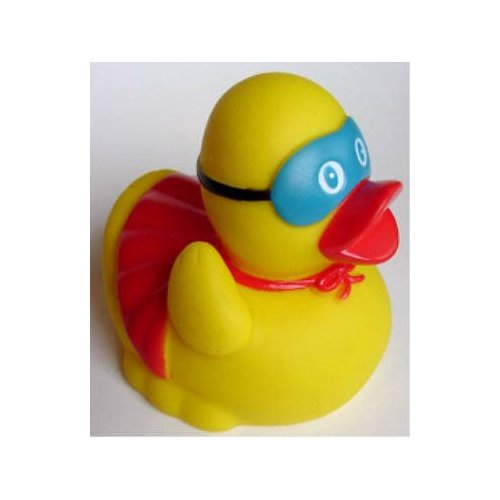
I meant to do it, truly. But life got in the way. (It usually does.) And I let it. The only person who finished it was Annie Reed, who has a Super Hero Duckie coming to her.

I meant to do it, because I still have more to learn. A lot more. And I meant to challenge others because it goes better in a group.

In retrospect what I did wrong was ALLOWING myself to only do half the weeks. That meant I kept putting it off because I could always catch up. Not anymore. In the original challenge, I tried to do it every week, and after a year I woke up on Saturday and I was ready to go. I craved writing a story. It’s like an exercise program.

Now I need to for other reasons. One of the things paralyzing me is the economic uncertainty as it applies to me, and I’ve already told you I intend to have a short story subscription service. Now I need to write the stories, right? And you have your own reasons, though I’m sure the most important is to get better as a writer. You’ve always wanted to do this, now do it WELL.

So, I’m throwing down the gauntlet again. Anyone who writes ten or more stories over the next six months (but you should aim for twenty!) Will get a super-hero ducky from me. And to keep myself honest, I’ll report on my progress (Neither gloom of night nor Mrs. Cake, nor impending trip to Portugal shall stop me) every Sunday, at the same time I post a Blue Plate Special. (There’s gonna be some changes around here starting in June – more on that later – and Sundays will be BPS day. BPS, in my conference, the Diner, both on Facebook [ask to be let in! It’s a private group. Yes, there’s a public one too, but you wan the private!] and in Baen’s Bar, is a free short story. Usually a long-ago published one, but hey, free.) And any of you going along with me, can report on yours in the comments.

One thing I didn’t have before and which might help you. Go to Amazon and buy this. Read it. Stay with it even if it seems crazy. It’s not.

The Rubber Ducky waits, and in the future, we’ll meet each other in public and go “quack” and we’ll know we’re in the presence of an equal who took the challenge. Then we can sit down and quaff a pint and compare how many duckies we have achieved.

Clear a space in your house, a vast shelf for all the rubber duckies.

We few, we happy few, we band of quackers…

The Great Talent Hunt

 So I won’t be misunderstood let me make clear at the outset that yes, I believe individuals are born with different capacities for different things. Let alone the capacities one sees in oneself which might or might not be observed objectively, it’s impossible to watch a kid growing upand not to know some things come more easily to people than others.

Take words, for instance. I rarely, if ever, struggle for words. Oh, on some days when I’m ill or insufficiently caffeinated, I’m capable of saying a sentence the wrong way around, but just a glance at it will show me my error. I find it almost alien to imagine fighting for each word as you write, having to work at translating thoughts/images/feelings into words. And yet, people I have reason to trust, like my husband, who has nothing to gain by lying, tell me that this is possible – that it is in fact a condition of vast swaths of humanity.

So, we’ll establish that people are wired differently, whether due to genetics, epigenetics or environment at a very early age.

That’s fine.

What this means is that you have a “gift” you get for free. So far as it applies to fiction writing I’ve identified the following gifts: a gift for language (arguably the least useful except in limited and specialized circumstances); a gift for characters; a gift for plotting; a gift for theme.

Usually a person will get one of these almost at an instinctive level. Sometimes, they’ll get two or more. It could be argued I got two: language (though I made things difficult for myself there by being a non-native speaker, which added some years to my journey) and characters. Is this enough to publish saleable (let alone good) fiction. I wish.

Take my friend, Dave Freer, who tells me started with only plot. Was this enough to produce saleable fiction? Well, he sold earlier than I, but that was influenced by so many factors that it might or might not mean anything.

Writing draws on all the talents above, plus some other, unspecified. To make it, in addition to all that, you need keen business acumen, an ability to spot trends, a thick skin that allows you to persevere in face of rejection, enough mental health to be able to withstand one of the most uncertain careers you can embark on, and enough insanity to want to do it. Talent, as such, is not there anywhere.

And yet, over and over again, newbies showing me their work ask “do I have talent?” Or “have I got it?” with the it being the mysterious force that allows creation.

Part of this is the myth of talent and genius our society has spun. We read about DaVinci and Einstein and Mozart with a sort of mystical awe. There is genius, we think. There is talent. And we imagine these people plunging into their field of endeavor effortlessly and fully formed.

Do I need to tell you it’s not true? I doubt DaVinci walked up to a canvas and effortlessly drew a Madonna. In fact, we know he didn’t – we have bits we believe were done by him as an apprentice and – whatever Dan Brown thinks (rolls eyes) – most of his notebooks were taken up with practice sketches and notes to himself on this and that. We know Mozart’s story as well and though I’m not as familiar with Einstein I would wager that though he might have been a mediocre student, he probably explored math and physics extensively on his own to the limits of availability. (I’m “gifted” with a child of the same stamp, and trust me, sometimes I’m amazed at how hard he works on his own time, provided it’s something that interests him. Which often has nothing to do with what the school thinks he should be studying.)

Even the language we use on this is wrong. We talk of “gifted” children and of having a “gift” for this or that. Other than at an almost elemental level (it could for instance be argued I have a gift for language. This is not true as I have to work harder than most at learning foreign languages. I did have an easier time of English than almost anything else, but I still worked very hard the first year. Much harder than my classmates. BUT I am a verbal learner, which means once I conquered the language, words come easy.) This is not true. Scratch a “gifted” child and you almost always find a kid who is working twice as hard as the others. The fact that this work is often “play” for the kid doesn’t change that. The gift the child has might be something completely different – i.e. what he got for free is probably something more elementary – like the capacity to concentrate earlier and more intensely than other children, or the capacity to visualize his adult ambitions and use them as a driver to his motivation.

Add to that that writing is an uncertain and odd career. When you start, you often know nothing of how the field operates or how one gets even one toe in. (Okay, that’s getting easier with the internet.) By the time you figure out how difficult it is you’re often fully committed… And your friends, relatives and strangers on the street think you SHOULD BE committed. They don’t hesitate to tell you so, either. (If you write science fiction and fantasy you add another layer of weirdness, as a lot of people can’t understand why you’re writing about spaceships or fairies. “But this stuff doesn’t exist!”) You find yourself coming home from a day job, or stealing time away from familial duties to work relentlessly at an avocation that might or might not ever bring you even the barest level of recognition (defined as a couple hundred people reading it and liking it) let alone monetary reward.

Of course people setting out on this uncertain sea – the pen is a harsh mistress. Eh! – will want to know they’re destined to do this, that there is a reason they’re so oddly afflicted, that there is a chance they’ll make it.

I understand all this, but unfortunately I can’t tell anyone they’ll make it. There are so many factors going into making a success of your writing endeavors, that unless I know you personally and have seen you in action throughout the years, I do not know how far and how fast you’ll go. I’ve been known to be wrong, too. Some people I dismissed as “pot boilers” who would stick at a certain level the rest of their lives, suddenly shot way up. Other people who to my eyes had it all together have spent the last twenty years working at one or two books and never selling.

I don’t know your religious or metaphysical beliefs, nor are they any of my business. However, for the purpose of writing, it helps if you start off believing there is no destiny.

If you want to write, if it truly is what you want, you’re no more guaranteed success than if you want to make shoes or to make and sell neat medieval toggery at cons. (You probably have less chance of succeeding at writing, in fact, since what I’ve found is that it takes an inhuman amount of work, concentration and planning.) Would you think it was your destiny to make shoes? Or to sell neat stuff at cons? No. Of course not. (And yet it might be, as much as to write books.)

So, start from there. There is no destiny. I don’t care what your momma told you, you don’t have to do this. If you can, walk away now and save yourself.

Those of you who remain, now, examine your assets. What’s the part of writing that’s easiest and most pleasurable? The part that people tell you “wow, I really like” – right, that’s your gift. Stop fussing with it, and start learning the other parts of a story. Read a few books you really like and try to separate all the elements that go into it. Be warned that if your gift is “language” people will routinely over estimate you.

They’ll tell you things like “you’re such a great writer” – but they won’t finish the story, because there is no story beneath the great words. You have to be alert to that sort of thing. Absent an ambition to write poetry; the sort of recherche short-shorts that get published in college magazines; or plotless and acclaimed novels no one ever reads, language is well nigh useless. It helps you write faster, I think, but you also have to stay on top of it. If I give my language full rein, I can easily smother the story-tlling under a blanket of prose. People who stop to admire my vocabulary will get popped out of the story as easily as if I’d made a crude grammatical mistake.

Suppose you examined your “gifts” and realize you don’t have any. Can you still be a writer? Of course you can. Again, other writers get one or two elements for free and those might frankly be an hindrance, as they then think everything else should come that easily.

If you still want to set out on this uncertain route, with no guarantee of success ever, then start learning. Your best textbooks are the successful novels out there. No, they won’t contaminate your style (don’t make me come out there and hit you with a dead fish.) If only it were that easy to acquire the style of the masters. They will simply point out a “route” for you to follow. In the same way “how to” books can be useful. I found a very few truly useful, Dwight Swain foremost among them.

The caveat here is you must find the books that are useful to YOU. Even from Swain, my husband found the character book useful, while I could never finish it because it annoyed me and interfered with my character creation, which I do at an instinctive level. Conversely, even though most new agey writing books (just bought one by accident) drive me to screaming fits, at a particularly dispirited and low time in my life when I thought I’d never get published, one of these books that regarded writing as a “practice” like praying or meditating, allowed me to write again.

The reason this is important, is that some people feel an almost pathological need to write – I’m one of those – and if they’re not doing it, they get very unhappy. I’ve known people – not me, thank heavens – who get suicidal during prolonged writing withdrawal.

If you’re one of those, and if you feel a need to write, even though you know you might never get published, even if you don’t have a single of those gifts for “free”, work on acquiring them. If you’re going to be writing, you might as well make it saleable and give enjoyment to others.

But don’t worry about talent. Chasing “talent” is an endless snipe hunt that has ruined more potentially great writers than anything else.

Start by assuming you don’t have any talent. Now, do you have courage, determination, a thick skin and just a touch of divine madness?

Work it, baby, work it.

The Shadows Within

One of the few proofs I have that we are a novel someone is writing – pauses to let her audience absorb this and dial the men in white coats. Chill. I’ll give you more reason for that before I’m done – is that the same themes seem to surface around you, whether or not you could be the cause of them.

Yes, I know the rational (ah!) Explanation for this which is that you suddenly just notice these themes. To this, I want to say – BS (which of course, means Baby Snot) – you know that isn’t true. Oh, sure there are instances when you suddenly become aware of say, exploding head syndrome, so when your friend starts talking about waking up with this loud exploding noise in their head, you know what it is. But most cases of cluster coincidence aren’t like that. They’re events or subjects unusual enough in themselves that you’d notice or remember them at any time.

Kind of like, you find a book in a library sale about the great flu epidemic in the twenties, a subject that never interested you before but the book looks cool and you bring it home. And suddenly every blog you check into (yes, this WAS several years ago) is burning up with bird flu news.

Something like this happened to me yesterday, as I was talking to a friend – not Kate Paulk – about metaphysics, which caused me to refer to the well known effects of meddling with the paranormal. No, whether you believe in the paranormal or not, there are definite psychological effects of attempting to explore it. Some people think the girls in the Salem Witch Trials drove themselves nuts that way first, I don’t need to mention, (I hope) Joe Fisher’s Hungry ghosts, and people have talked about how the deeper Sir Arthur Conan Doyle got into the paranormal, the more his cognitive/critical faculties seemed to deteriorate.

And it occurred to me that writing is a sort of shamanism. Oh, not always. At least I hear reports of writers who are perfectly rational and write in a “paint by the numbers” fashion. However – and I wish to stress this – none of those are writers I’m close to or who trust me with their process.

Those who trust me with their process treat the whole thing almost like a supernatural “gift”. The story comes when it wants to. It takes turns that scare us. The characters become alive to us.

Now, again, before you reach for the “I love me” jacket for everyone of your writer friends, let me point out that there are degrees in this. There are things I can’t get my characters to do no matter how hard I try, but I do have control over the plot and what happens. (Otherwise my books would be this sort of formless blob where I tell you what someone had for breakfast.) And I can choose how deeply to get involved.

Most professional writers are like that. We keep the otherworldly qualities of the work confined, restrained. We are willing to move on from a world because it’s not selling, etc.

However, at the same time, you do need to keep some bits of lucid dream, some bits of “not me” in it.

Where does the “not me” come from. I don’t know. It depends on your opinion of shamanism and your view of the supernatural. I have my opinions, but I’m not going there because I have no proof.

It could be that writers are simply highly advanced machines for reading the ethos of their time and translate it into a sort of dream that processes the input. I.e. if you view humanity and the mind of humanity as a collective organism, we do what your brain does when you’re asleep. We process the disparate inputs that the world receives all the time into a coherent form for storing. (Actually that makes a lot of sense, since to an extent the psychological function of story tellers is to give “moral” to the formless.)

In the same way that in the dream what you dream is true even if it makes no sense – yes, your pet poodle really can become a six foot python and talk to you across the breakfast table – writers have to sort of kind of assume a certain amount of “existence” for their worlds and characters.

The problem is to do this you have to “go inside” and assume as truth experiences that aren’t shared with any other living human being and experiences that depend on “senses” you don’t share with the rest of humanity. (At least I don’t. I know other writers who have actual, vivid auditory/visual hallucinations/dreams. In my case, it’s more like I remember the events or conversations, but there’s never actual sensory input.) You have to do this, because that lucid dream is often right, while your rational attempts at plot/character are wrong and will feel wrong to your reader.

On the other hand as my friend Kate – in one of those coincidences <G> – talked about in her blog yesterday, you must always keep in mind which world is real. It’s very tempting to sit back and just watch the worlds of your imagination, like the main character’s wife in Farenheit 451, but if you do, you lose your own life, as it spins away from you. Worse, if you go inside too much weird stuff starts to happen, the same sort of weird stuff that you get if you get involved in the paranormal. I’ve heard of characters crossing between heads and becoming obnoxious in a poltergeist sort of way. I’ve heard of writers who become depressed and think they’re possessed by their characters (some of it leading to suicide attempts.) I’ve heard of people who get, wholesale, historical facts that they couldn’t have known except through their characters.

But the same “insane making” slipperiness exists there as in any psychic phenomena. some of the historical facts will be wrong. The characters as they cross between heads assume the persona of that universal human myth character, the trickster, and sometimes definite malevolent characteristics. I’ve never heard of anyone’s character leading them to a better life or a more fulfilled emotional state.

You see what I’m saying? If you step full into the “not me”, it’s like stepping into a dream, where things are never fully rational, and suddenly a man eating lion can jump out of your closet.

Are these phenomena real? I don’t know. Again, it depends on your religious beliefs, and I’m so not touching that. But it doesn’t need the belief in the supernatural to explain it, particularly when characters cross between heads of people who are friends or in the same writers’ group. There are mechanics of group madness (probably an outgrowth of mechanisms that once encouraged tribal cohesion) and mass illusion.

Frankly, as far as I’m concerned, I much rather avoid anything supernatural and any paranormal explanations as far as humanly possible. I’d much rather examine things through the lens of reason.

Unfortunately my profession doesn’t allow me to. So everyday I sit at my desk and go hunting in the half lands where what’s real might or might not be and where every voice in the shadows might be a danger to my sanity.

And I take what I can from the shifting wraith lands and bring it back and tame it, and shape it with reason and make it safe for human consumption.

Which doesn’t make it either safer or saner for me. And which scares me and worries me when a whole book seems to come through my fingers without much control. Yes, I’m willing to concede I probably have gotten to where most of these processes are subconscious for me, and that’s all that’s happening. On the other hand, given the place I work at the edge of, I hate letting go of high control and strict rationality. And I have to do that, to stay on this side. I have to hold rationality and dream one in each hand, and never conflate them.

It is the job of the dream-hunter to go beyond the safe edges of reason and to work, uneasily, between shadow and light.

The Flaws In Detail

It occurs to me that when creating characters, most people get in trouble because they heard somewhere they must give their character a flaw and almost randomly decide to throw a flaw in. These “flaws” are almost always either totally out of place, so you end up with a superman who likes to kick puppies, a charity coordinator who likes to drive while drunk (though he never hits anyone) and a starship captain who picks his nose.

And to all this – if not utterly put off – the reader says “Wait, what?”

Sometimes you decide you don’t want your character’s flaws to be merely cosmetic of “something minor” and you get even worse – the great inventor who beats up women for fun, say. And then your reader goes “Ew.”

Stop whining and wringing your hands and saying “but they told me the character couldn’t be perfect.” To begin with the only reason they told you that is because you were Mary Sueing it, weren’t you, having a character who was a reflection of yourself and who could go into your world and fix everything without any effort. Yeah. I knew you were. Here, have my handkerchief. Almost everyone does that to begin with.

The thing is, if you’re not trying to keep your character perfect and if you make sure that he can’t solve things without hardly moving a finger, and if you give him real problems to face, his “flaws” will show, because you’re not perfect, so unless you rig the game, you can’t create perfect.

However, if you still can’t see it, I’ll give you a hint: most of us have the flaws of our virtues and have flaws in proportion to our virtues. Take Athena in Darkship Thieves – she’s brave and strong, it’s what kept her alive. She’s also unreasoningly violent. Or take Heinlein’s Friday (someone was convinced that’s where I got Athena, or that the themes were similar. They weren’t. She had to deal with ‘not being human’ but that was a SHORT part of the book, because for most of it she doesn’t know. Friday does.) Friday is inhumanely perfect. Her flaw is that she knows she’s not human. Take Jarl Ingemar also from Darkships, with whom I’m dealing in the current book (don’t ask.) His virtue is that he’s possibly the greatest genius the world ever created. The flaw is that he regards everyone else as lesser beings even if he tries to fight against it.

Alternately, your characters can have the flaws of their upbringing. Tom, in the Shifters series, was kicked out of the house at sixteen. He knows what it’s like to be lone and friendless so he compulsively rescues strays of various kinds. And if you think that isn’t a flaw, you’ve never done it. Let alone those that will metaphorically bite your hand, you could endanger yourself and those you love by extending charity and help against all rational advice.

Alternately, still, they can have the flaws of their situation, which is often the problem. Say, a character in a Stalinist society will have to engage in double thinking, with all the stains this leaves in the psyche. He might be engaged in a great work – say, revolution – and have to turn someone else in to live just another day.

Anyway – flaws work like that. And then they seem integral to the character and not a sprink from the “flaw shaker” whether the character needs them or not.

Questions? Comments? Rotten oranges?

The Writer Answers

*Somehow when doing this last night, I cut out most of the post both here and at Mad Genius Club, where this is crossposted.  I’m doing it again as a new post, so notifications go up, etc.*

Partly because I wasn’t sure what to write about, and partly because I think we keep trying to do articles on specialized points while there is a vast under-store of ignorance there that we aren’t even scratching, (mostly because today I got yet another nice email from a nice young man asking me to help him get published) I figured I’d ask my fans what I should be answering.

However, a funny thing happened on the way to certainties. I find that in casting my eyes over most of the entries, most of them are things I’d have answered unwaveringly a year or two ago but of whose answer I’m not absolutely sure now. Because ebooks are changing the way business is done, I can give you the “official” – i.e. this is how I did it/would have done it till recently – answer, then the answer I SUSPECT is true now. The caveat for those is please remember I broke in THIRTEEN years ago, and the new realities of the market are not something I’ve experienced first hand. I might know a little more than you, but only because I read blogs and listen to friends. I don’t know for sure.

I’ll use the questioner’s name for the question, then OA for official Answer then BG for Best Guess.

SS:To agent, or not to agent? And, if yes, *how* to agent?
What the heck is a “query”, and how does one go about concocting such a beastie?

OA: You have to have an agent to get published with a big publishing house. I suggest writing a query for your best novel (no one agents short stories). Then ask published writers for recommendations to agents and/or snoop on authors blogs to figure out who their agents are. Read the agents’ descriptions for fit with your work. Before sending queries to your picked ten or so, check preditors and editors to make sure you didn’t pick skunks. Send out. If one replies, then send out whatever they ask for, no more no less. Do not send out proposals or manuscripts to more than one agent at once. Wait for an answer. If the agent offers to represent you, watch very carefully to see how enthusiastic they are. You want an agent who LOVES your work.

A Query is a lot like the blurb in the back of a book, with a difference, you actually tell the agent/editor how it ends.

BG: Someone I respect greatly in the field just said it’s stupid to have an agent these days, that in the current publishing climate an agent gets you nothing. I don’t fully understand her angle unless she’s counting out all of big publishing, but she’s not the first much-more-established-writer than I that I heard it from, and when she says stuff like that, I wonder.

JD: Contracts: What’s fair? What’s a Trap? How far to trust your agent?

OA: At the most basic, contracts should establish that money flows to the writer. Anything requiring you to pay is unacceptable. Beyond that, there are many things that are traps, things that you should be able to figure out with common sense: contracts that get the rights to all your characters, or where you transfer copyright to the publisher. (This might be all right for SOME short stories, like using other people’s characters per invite. NEVER for a novel, unless it’s a media tie-in.) Other clauses to watch for will say things like, you can’t work for anyone else until your story is PUBLISHED. Since you can’t control the date of publication this could tie you up forever. Sometimes they just say you can’t work for anyone else period. Anything like that, run very fast. And if your agent tells you it’s okay, run from agent, too.


CDC: Keeping track of query letter and sent manuscript submissions and responses.

OA: I haven’t done this in very, very long. It’s far more important for short stories, when it climbs into the dozens. But I suggest a spreadsheet program, or else one of many specialized programs available. I’m blanking on names, can someone in the audience help. I’m thinking of Write Again. Not sure if that’s true.

MB:

Alpha readers, beta readers, writing groups, and all that. I just had someone fretting about “losing their ideas” if they participate in a writing group — I told them they were more likely to never find their ideas if they didn’t participate. But… there’s that running fear that somehow talking to people will ruin you, somehow?

OA: You need reality checkers. I’ve covered writing groups in several columns, and the importance of finding a writer group that works for you. If a writer group isn’t doable, at least find two critique partners you can trust and trade manuscripts.

No, you’re not going to have your ideas stolen. And no, no one can change your writing style, or at least not permanently. It is human to influence each other, but life also influences you. To grow you have to change and you don’t live in an hermetically sealed bag.

https://www.facebook.com/profile.php?id=100000928766185SS: In the absence of a co-conspirator with remarkably pointy shoes, how to recognize when one has reached the point of “polishing the cannonball”, as we called it in the Navy, and firing off a submission rather than endlessly re-reading and re-revising …

OA: Ah. I do this too and I went through long years without co-conspirators. It’s hard. My advice is that when you feel like you’re adding more errors than you’re removing (you find the subplot you just added in doesn’t mesh with an earlier one, for instance) or when you feel you’re being particularly clever (no, seriously, this is usually a symptom) or when you go above 200k words, it’s time to let go. Otherwise, establish an arbitrary number of passes, say, five. After five passes it leaves the house. (I can only do three or I kitchen sink it – I throw in EVERYTHING plus the kitchen sink.)

BG: If you’re going to self-publish as is an option this day, hire a trusted copy editor. I don’t care how good you are, you’ll drive yourself insane proofing and stuff will still escape you.

OP: As a former wannabe writer, I’m more interested in the business aspects. They are more relevant to my life. Your opinion of the right mix between paid writing and freebies that hook people in, for example.

OA: in general business “coverage” – I was told that you should quit your day job when you were selling fifty percent of everything you sent out. I’ve been there for years but if I had a day job I wouldn’t quit it. I’d guess right now, with the uncertainty, you’d have to be closer to eighty percent. Also, I would advise something I’m just now implementing: have multiple income streams, say novels and short stories and articles and whatever else you can get. If one of them can be regular pay, like a paid blog, that will give you some security. As for mix between paid and free – the freebies I give away that are fiction are usually already-published things. There’s also blogging and mine for my three base blogs (my own, my group blog and the other group blog) are still mostly free, but I’m starting to branch out into paid blog articles. Look, you need the exposure, it’s all there is to it, but if you find it taking most or even half of your time, you’ll have to cut back. Only you can find your balance.

EM – ebooks. Are ebooks merely paper books transformed to electrons? (like the early TV shows were just televised plays) or is there more potential in this medium? Hyperlinks, embedded video, embed sound effects,…..what else?

BG: I don’t know. I find that a book is a book is a book. Once you put in hyperlinks and embedded video, you’re running the risk of people not coming back to the story. Maybe my opinion is influenced by all those examples I’ve seen of this sucking badly. However, I still think a book is a book. But things that can improve the book while just a book are available in e – like the ability to search for a character name/word. That can really help when you want to go back and check on something.

https://www.facebook.com/sanford.begley SB – How about baby steps for the very beginning writer, such as how to find someone who can say “you’ve got potential” or ” was that suppose to read like bad Twain?”

OA: I find that “potential” or “talent” is one of the worst lies writers buy into. We have a great desire to write and we want to believe it’s somehow meant to be. Look, the only thing I’ve found “natural talent” or “potential” good for is to give you some things “for free.” In my case it’s characters. I understand Dave Freer got plot for free. The rest we had to work for. What most laymen will tell you is that “you have potential” based on LANGUAGE. Language is easy. It’s the story telling that’s difficult. I am telling you now that if you really want to write, and are willing to study how to, including grammar and expression, you have enough talent. How to find critiquers, OTOH is a problem. Ask at your local library if there’s a writers’ group and then screen them for experience, right field, etc. Alternately, grab a few friends you know are readers and make them read your stuff. (Paying in chocolate works!) This has the advantage that you presumably know your friends’ idiosyncracies.

AKD: Years ago, I had an agent who convinced me to write a truly appalling cover letter cum proposal letter (yes, same document). Which was mailed to every publisher in the world, and was rejected. I parted ways with the agent, but I still have great faith in the series that was rejected. However, I can’t even bring myself to do anything with it, because I’m convinced that it was so appallingly presented that my letter is still be laughed about in the publishers’ offices. Should I just kill the whole idea? Change my name?

Okay. Breathe. First of all 99% of the submissions or queries sent in by a low-status agent don’t even get read. I’m assuming this was not an A lister with offices in NYC, so, chances of it having been read at all are zero. Second, even if it was read, if you got back a standard rejection, it was read by an under-editor or an intern. These stay at the houses a maximum of a year, according to my experience. The chances of anyone now at publishing offices knowing or remembering this letter are zero. Honestly, if you’d done slush, you’d realize what it takes to be memorable in the bad category: death threats, live animals, body parts and nude pictures MIGHT do it. A bad query is as unmemorable as a oh, hum face in a crowd. Don’t change your name. Don’t kill the idea. Just send it out again

BG: or, alternately, publish it yourself on Kindle. *At this point, for certain genres this might be a better way to break in.*


RE: not just tell, SHOW it, if he’s a nose picker have him do it in a scene where it’s funny or inappropriate while being given instructions or mission orders and all he can think about (along with the reader) is where to put the booger.

OA: Okay, this was part of a longer ramble on a different suggestion for another post, I know, but I MUST insist RE go on over to my blog and read the post called Ick. This is an example of something memorable to have the character do that… serves no purpose and makes me instantly go “ick” and fling the book away. Unless you’re writing “gross out horror” for which the market is very limited, you can’t get away with having the VILLAIN do this, much less the hero. Remember your character is supposed to be someone we want to spend time with (if only to see him coming to a bad end.) Evil might fascinate. Gross will just make us look away.


The Glamour, The Glitz, The Cat Boxes


I love getting emails from fans that seem to imply that I live in a rarified atmosphere, touched only by genius and inspiration. You know, I’ll get an email that says something like “Pardon me for disturbing you in what I’m sure is the contemplation of your next novel, but I wondered if you’d possibly consider telling me which cons you’re attending this year, so that I might come and bask in your glory.” (Okay, I made up the basking in glory thing. A girl can dream.)

It’s not that I don’t understand how they feel. Reading William Patterson’s biography of Heinlein is interesting — among other things — because of realizing how the writing happened AROUND the man’s life. This is definitely not how I imagined someone like Heinlein writing which is stupid because of course he was just a writer, like the rest of us.

In the same way, my writing happens not only around life challenges – illnesses, extended family issues, house moves, trading of cars – but against the tow of a shallow but strong current: cat boxes, kids’ school projects, cat illnesses, kitchen cleaning, grocery shopping, etc.

In fact, whoever is writing my story has such a perverse sense of humor that the type of letter I quote is bound to happen the day the cat boxes (litter robot, ask for them by name) broke down; D’Artagnan cat informed me of this by peeing on my pillow, so I’ve spent most of the morning cleaning and resetting the boxes, and I’ll come down to find this in my inbox.

But while these are normal challenges in life that anyone can expect – I’m sure those of you who have honest jobs also have to work around life-challenges and cleaning – there are other challenges which exist only for the benefit of people who work at home, and PARTICULARLY writers who are, by and large, people who work at home doing work other people don’t understand or don’t view as work and whose monetary rewards are – for the normal writer – vastly overblown in popular imagination.

It might interest you to know, for instance, that in my rarified, not to mention amazing state, I have cut the acquaintance of several old friends because “I’m too good for them.” Or perhaps even better “I’m too rich to associate with them.” What? You missed the private jet and the bodyguards at the last con? (No, no, the two tall guys in black and sunglasses are my sons. They only guard me because I cook their food.)

Yes, people absolutely believe this. One of them it might possibly be because she’s insane, since for several years we couldn’t get in touch with her due to the fact she’d neglected to give us her new phone number. But in the meantime, before we managed to trace her down again, she saw my book in the store, and therefore she KNOWS this is why we stopped talking to her. Because I’m famous and she’s not. (Actually, given her job, probably more people know her by name and face than know me or most writers. But never mind.)

Another few friends have dropped our acquaintance and one complained to my son (!) because I clearly didn’t want to talk to her and she was beneath me. What brought this about? Well… You see, these people know I work at home, and therefore call whenever the fancy hits them. The calls asking me to go to lunch or something like that are one thing (though less disruptive via email, which, btw, is what other writers use for this type of invite.) HOWEVER the “favorite” calls are the ones where people “just want to talk” or even – and I love this concern, truly – they’re “worried about” my “health” and think I need a break. Because calling me when I’m on the final stretch of a novel and holding all the little pieces in my head that need to be slotted in at JUST the right time is a great way to help me relax and feel better. If I then don’t answer or cut the conversation short a few times, they decide I hate them and don’t want to be friends.

I don’t know if this happens to everyone. I know my male friends seem to be under the impression I can just say “I’m working” and people will cower away into respectful silence. Perhaps it’s a male-female thing. Or perhaps I’m just a wuss.

However, for your edification, this is how my day normally goes. Get up at around six and do email and blog (unless interruptions delay that.) Shower and make sure the guys eat before going to classes and that sort of thing, the later usually while reading the news (You wouldn’t BELIEVE what the world gets up to while I sleep) and pushing enough caffeine to get the brain functional.

Answer email from my friends and get on AIM with my assistant, to see if there are any fires (either personal or professional) that need putting out RIGHT then. (Emailing me late night so I get it in morning, or late afternoon so I get it in evening are best, btw.)

By this time I’m usually awake enough to give a bleary eye to my calendar and make a face. Then I sit at keyboard again, update my status on facebook, start reading the latest work, at least one chapter back to figure out the subtle cues in the text that are never even in the most elaborately written plot outline. At this moment someone comes in or calls. Either my husband forgot something that needs to be dealt with right then, my younger son has late-start and is roaming the upper floor looking for something, or my older son has an important test and – understandably – would like to talk before it. Or vice versa on the sons.

Depending on the interruption – some of these will last till lunch – I then try to resume work. Even if the interruption took only five minutes, it completely popped me out of what I was doing. So I have to return to the beginning.

At this point something random and odd happens. I can’t really tell you every one of them, because they’re usually stupid. Take yesterday’s – PLEASE – when I started getting calls every five minutes. If you’re saying “Don’t answer” well… I didn’t for a while. But it was annoying listening to the phone ring, so I looked at the number and noticed they were all different. Was I being prank-called by the world’s most annoying telemarketers? The next call I grabbed and the person on the other side kept cutting out. It was something like this. “Hello… ick… ock…dook, information…ick…kik…te…pop.” I yelled into phone that he was cutting out and his response was more indignant kik kik kik. Okay… so… I hung up. A few minutes later, phone rings, same phone number, different voice. (Because, yeah, it’s my problem with his VOICE.) “We want some information about the house you have for rent.” “WHAT?” “We want to know about the house you’ve advertised for rent.” “I don’t have a house for rent!” “But there’s a sign in front of it, and your number on Craigslist.” (Yes, I checked the front of the house. It’s been weeks since I looked there. I use the back door and I’m trying to avoid the lawn.) “No, you have the wrong number. I never advertised any house for rent.” Pause and a deeply suspicious “Oh!” Hangup.

Rinse and repeat with the next three callers, at which point someone must have got hold of the guy who put up the add and who clearly transposed digits or whatever. Calls stop. Bliss is relative.

At this point it’s eleven and my assistant – who knows my rhythms – pings me on AIM about an upcoming project, and btw, do I remember I have a short story overdue? No, of course I don’t. I DO remember I have two novels and an article overdue, though.

Get notepad and research books and go downstairs to eat something while trying to get short story which is only vague in my head, to gel. While I’m down there, clean kitchen and try to figure out why we’re plagued with ants and what I can do about them without killing the cats. Put two loads of wash in.

Come back up and write beginning of short. Then write it again because it doesn’t work. Husband gets home, having – somehow – failed to find our son in the usual spot for pickup from school. Two minutes later, kid calls wondering why he’s been standing around for forty minutes and no one has picked him up. (Was he there? Eh. He’s a teen. Who knows.) Get in car and drive out to get him, because my husband is back at work and kid needs to study. Come back home through a starting storm. Make coffee. Talk to older son, who just came in, about the plotting for the vampire story. Remember I haven’t exercised yet (and I have to, every day, or my knee starts hurting.) Go for walk which older son joins in. Under the rain. Fun talk. Get back home and it’s … five pm? How did that happen? Set table, warm leftovers, get everyone to eat. Start dishwasher. Go back up to computer and find I can’t concentrate. Answer emails. Talk with a couple of friends. Update facebook status. Take short story to bed with me and do a very little work on, still not getting it to gel.

Now, yesterday was an unusually bad day. Usually there in the middle, I do get two to three hours uninterrupted writing time. If you’re saying in answer to this that I need an office, you’re absolutely right. However as of now, I don’t make enough for an office. Also frankly what has compensated for the low er… compensation of the work is the fact I can set my own hours – in theory. I hate routine and going to an office nine to five would be interesting for about a week and then drive me murderous.

Again, remember that yesterday was unusually bad, but still, working from home shouldn’t be this difficult. The kids should stay out of the way more. (And an office wouldn’t solve this. They’d just call me on the cell.) But you have to understand that for most of their formative years I was writing but not getting paid. This meant that if they came in I dropped everything to see what they wanted – because of course the kids were more important than a job that didn’t pay and might never do so. This formed some bad habits that I suspect will only fade when they move out and maybe not then.

However, the kids and Dan are in a way entitled to cut up my day. Heck, I’ve been known to call Dan at work because I can’t find something that he should know where it is. It’s the claims of family.

It’s just that normally I get the added joy of friends, distant relatives and total strangers – my favorite was the neighbor who couldn’t believe I didn’t know what car she drove (and therefore just tell her she’d been blocking my driveway for two days instead of calling the police so I could move my car to go grocery shopping) because “you work from home. You see me all the time. You could have knocked at my door” (My office is at the other end of the house, and the times I might have nodded at her on the way to-from her car, while I was taking trash out or feeding the outdoor cat, I was probably deep in plot.) – thinking “well, you’re home, you have time.” Or even “You’re home and you need me to give you a break from your boring, boring job.”

If this sounds like a long, extended griping session, it is that. Yesterday truly was a very frustrating day. But it is also a plea for understanding. If you’re a friend or even a friendly fan, and it seems like I’m ignoring you, chances are I’m just so far behind on work as not to know which end is up anymore. If I promised to read something for you – a very rare occurrence, btw – and keep forgetting it, don’t hesitate to remind me about once a week. You’re not getting to be a bother, it’s just keeping you and your concern from sinking away out of sight.

Understand that the parts of the schedule I try to keep on top of are my writing first (because it has deadlines) and then my family. The rest gets shoved around wherever it fits, and if I keep putting of something or not answering a question, it’s probably gotten lost in the debris between litter box cleaning. I do try to make notes to myself, but nine times out of ten I lose them.

And if you’re an old friend, the chances of my having dropped you because you don’t fit my new, glamorous lifestyle are exactly zero. If I’ve sounded evasive last three times you called, chances are that I was either very late or you coincidentally always call at a bad time. (I used to joke with my friend Rebecca Lickiss about this. Back in the day when we were neither of us paid for writing and both of us had toddlers, we used to call each other and plot over the phone [mostly books. Occasionally, world domination.] She had the ODDEST timing. It never failed, the phone would ring the moment I lifted my toilet lid and was about to sit down. I accused her of having wired her phone into my toilet lid.)

I very much doubt – though who knows – that even if I hit J K Rowling levels of success I’d be cutting out friendships as not “worthy” of me. Writing is something I do, and hopefully something I do well. It’s not something I am. The all too solid flesh must carry on and live in the world in between books. For one, what else would I mine for the absurd events in the refinishing mysteries?

And now excuse me, Euclid cat just threw up next to my desk. I’d best clean it before it dries.

What Dreams May Come

I often have prophetic dreams. Yes, I know what you’re saying, there on the other side of the screen: “ooookay, another crazy writer.” And yet, it’s true. I often dream things that are going to happen, in some way – though the details can be horribly fuzzy or even wrong, the main thrust of the dream will be right.

I’m not going to claim it’s any kind of supernatural – I’d much rather it weren’t, in fact. I prefer to think it is the result of clues too subtle for my conscious mind to process, but clear to my subconscious. The only thing that doesn’t fit in this is when I dream of someone I haven’t heard from in years, and I wake up and the phone rings, and it’s that person. That gives me the idea that the universe is somehow a mechanism where these things are connected in a way we don’t perceive yet and perhaps can’t consciously. I like that too. It makes it a cool science fictional universe. “My friend thought of me, and the butterfly flapped its wings, and…”

Most of my prophetic dreams are about such exciting things as “an old friend will call you.” Or perhaps even MORE exciting things such as “tomorrow, you will see a mushroom on the side of this tree” or even MORE exciting such as “at a future date, you’ll cook steak and your younger kid will REALLY like it.” I mean, they don’t even rise to the “you’ll meet a tall, handsome stranger” level. They tend to be very short for one. You know, if I dreamed of a worldwide war, I’d probably dream the two minutes between waking up and turning on the TV with the sounds in the background either thunder or artillery.

Sometimes they give away a little more. Two of them stand out in memory because they relate to writing. In one I was reading a magazine with my story on it. This took place at an awards banquet. That last was spurious wishful thinking. The story, already written, did in fact sell a week later. (Plaudit Cives) It was my first short story sold.  (Well, first to be published.  By that time I’d sold Thirst four times, but it only saw light of day on the FIFTH.)

Then there are any number of them where I’m signing stories I haven’t written, and then I wake and don’t know what the stories were, so I forget the title.

However, one of them will be of interest to any fan of the Shifters’ series.

I’ve told this at a number of conventions, so you might have heard it. In 03 my first series had finally died and I’d broken up with my third agent. I hadn’t managed to sell any science fiction novels, which some of you know is where my heart and soul is. (No, I’m not saying I don’t like writing mystery and fantasy. If I didn’t I wouldn’t write them. I’m saying I fell in love with SF first and that like any first love this makes it special. Also, IMHO this makes my writing style even in mystery and fantasy “a little science fictional”.) Everywhere I turned, I got told “Fantasy outsells science fiction twenty to one” and I felt I’d never sell sf. Even in short stories my sales record for sf was half what it was for anything else. So… I felt adrift and a little lost. I got the contract to write Plain Jane under a house name, and while that’s easy for me, it wasn’t something I wanted to do a lot of. One book every few years was plenty. I wondered if I’d ever publish anything in fantastic literature again. Heck, I wondered if I’d ever publish under my own name.

And then I dreamed I was at a signing at the Mission Palms in Tempe, Arizona. This might be an incidental detail, since we’d just been there for a World Fantasy. I also dreamed my kids were in college, and grown (which seven years ago they definitely weren’t) and we were congratulating ourselves in getting everyone into the con, because at least one of them had flown from somewhere else I got a feeling in the East. (One is now in pre-med and living at home to cut costs, the other in a highschool-college dual program, also living at home.) At the time the younger was in elementary school.

Anyway, in this dream, I was sitting at the table and this woman came up with a HUGE box of my books. Now at the time I’d published exactly three books, so… OTOH this was a scene I’d often seen, sitting next to Dave Drake or other bestseller friends, so I figured it was filler. Still OTOH (I can haz as many hands as I wantz, thank you!) the dream had THAT feeling which can better be described as: In prophetic dreams I’m my dream self, but also my dreaming self. There’s the one who does and the one who watches.

As the fan started pulling books out of the box and putting them on the table, my dream self said, “Wow, you have everything, even the Shakespeare series.”

And she said “Yeah, I discovered you with your shifter series, and I went and bought everything you ever wrote.”

Now, at this point my dreaming self perked up her ears. I’d never written anything with – I presumed – shape shifters. As the fan enthused about the genius of setting an urban fantasy around a diner, and handed me the book I got a horrible shock. And I mean horrible. If you’ve seen the hard cover of Draw One In The Dark, you’ll understand. (And if you know that when he selected that cover Jim Baen was probably already suffering from the issues that killed him a few weeks later, you’ll understand even better.) And my dream-self said “Oh, good LORD you found one of the horrible cover hardcovers!”

The fan said something like, “Oh, yeah. It was hard, because once the series went bestseller those got even more expensive, but I’d heard you talk about it, and I wanted it.”

At which point my dreaming self went “best seller?” and under the guise of fidgeting while talking to fan, looked the book over thoroughly, noted Baen on the spine, and read first two pages and the back.

Now, I’ll not the series hasn’t gone bestseller – YET – perhaps it never will and that was a spurious detail. OTOH for reasons I have no space or time to explain, it was odd selling it to Baen at all. (For one my agent had other ideas at the time, but her hand got forced by circumstances.) The HORRIBLE cover was a second, bizarre coincidence. As was the fact that the publisher didn’t kill the series after the dismal showing that cover induced. So, maybe it will hit bestseller yet, who knows? It would seem to require a reprint of the first book, but that might change as digital books take over.

Meanwhile the answer for why I wrote the George and Kyrie and Tom and will continue to write them as long as the publisher buys them is “Because they’re dreams, and they need a chance.”