This is NOT a post.

So, once more, I think I’m getting a horrible cold, which since the first symptoms mimic the early symptoms I’m afflicting characters with in Darkship Revenge I spent two days thinking was psychosomatic.  Then I took the steroids for the outbreak of auto-immune. And the stuffiness is starting to recede along with the eczema, leading me to believe this entire thing is just another dang auto-immune attack.

I hate taking steroids because they make me gain weight, and seriously, I’d prefer to gain it by eating chocolate cake.

Yeah, the outbreak of eczema/asthma/arthritis was bad around the time a member of the family had surgery, (really bad, it was the reason I couldn’t sleep for several days), abated somewhat, and then inexplicably started up again, full force around the election, and seemed to settle into a permanent pattern of irritation.

This is not unusual . So in my round of doctors’ appointments I went in and asked for “the usual” which is antibiotic, steroid cream and steroid tablets.  But I was hoping to hold off on the steroid tablets.  The Nurse Practicioner agreed with my plan to take the antibiotic first (because one time before, the antibiotic was enough to calm things down and then I could control it with the cream.

Well, not this time.  Maybe it has gone on too long.  Anyway, it seems to be taking care of the breathing too.

We have friends coming over tonight, and the house is a zoo, so I’m going to do be doing some picking up and cleaning, though the dinner is the usual weekend dinner chez Hoyt: a bunch of finger foods, a few bottles of wine, because even when we don’t have guests, when both boys come to eat with us we’ll talk and debate till morning.

So this is a non-post-post.

For reasons known only to my friends, who are like you maniacs but worse, I got not one, not two, but three messages THROUGH THE NIGHT telling me Fidel is dead.

If this matches the other communist regimes, this is a time of hope.  The transition might or might not work.  I know Raul has been in charge for a while, and THIS transition might hold, but the next one might be the one that breaks it.  Communist regimes always devolve into dynasties, and I don’t think there’s a clear success to Raul, and he’s getting old.  I’m almost hopeful that 2016 will do for him.

2016 has been characterized as “the year in which gods bleed” and it seems to be true, from the harvesting of beloved celebrities to the puncturing of the left’s certainty of their infallible chosen successor.  (A certainty so great that, let’s be honest, they convinced even US of it.)

In that spirit, I’m reading When Prophecy Fails to understand the mechanism.

It’s a little tricker with the “progressive” movement, because they’re not one movement, but several, and they don’t have a “set date” for the arrival of utopia.  Not as such.  Which makes disconfirmation more difficult.

But I know a lot of the black leftist voters (okay, not the smarter ones) who voted for Obama expected him to become “our king” and usher in a system of black-rule forever.  That obviously didn’t happen.  (I know because of their comments, on blogs, and overheard the days after election.)

I know a lot of white leftist voters expected Obama to be “sort of a god” and even though they cling (bitterly) to the idea that he was one of our great presidents (despite fricked up economy internally and wars abroad) they show signs that the discomfirmation upset them.

Probably the most pitiable group are the millenials.  My younger son tells me they were told that there would never again be a Republican president in their lifetime.  He’s promised me a post about this and about the reactions he’s seen.  I’ll see if I can get him to read When Prophecy Fails this weekend.  (If he doesn’t have tests next week.) And then I’ll see how that fits.

But to an extent what we’re seeing is what would happen if after a communist revolution, people insisted on going back to the ancien regime.  It’s sort of like watching the restoration in Frnace, I imagined.  What this country has gone through is nothing less than a putsch and they’re astonished that it didn’t take. Even my generation was indoctrinated.  How come it didn’t hold?

If they studied real history they’d realize even when a regime is totalitarian (which we always fell sort of, though Europe comes close) and the information tightly controlled, after a few years or generations the real world breaks in.  Cults have limited ability to keep their followers in, much less a cult forced on a large population.

We know two things for sure: on January 2017 the economy will be found to have suddenly collapsed and it will be Trump’s fault the day he’s sworn in.  (Some of this is already happening.  Apparently NPR predicted a disastrous Black Friday because Trump.)  And Trump will be the Worst President Ever the first day of his presidency.  Or, as we’re seeing, before.

But the thing is, if he does achieve even 1/10th what he has promised and turn some of the collectivist policies around, and unfetter our poor shackled economy even minimally, eventually the cognitive dissonance of disconfirmation will set in.

For some it will be the last disconfirmation, the one that sets them free.  Others will just go crazier.

Interesting times ahead, and thank heavens for the internet that makes the “unified narrative” of the MSM if not unimportant at least not all prevasive.

And now that I can breathe again, I’m going to clean the house and get ready for company.

This is not a post.  There will vignettes, promo post, and likely Dark Fate tomorrow.

Also planned is a shortish MHI comes to Goldport.  AND I’m going to put my indie stuff on sale for cyber Monday.

Now go pet your cats/dogs/walk your kids/sit down with a good book. This is the extended holiday weekend.  Go remember how good your life is, before you strive to make it better.
 

Three-Fifths of a Lie – Kate Paulk

*I want to thank everyone who pitches in with guest posts, so that I can finish this book, particularly younger son and right-hand-wench Kate Paulk.*

Three-Fifths of a Lie – Kate Paulk

We’ve all heard the people who wrote the Constitution of the United States dismissed with a flip comment about how much modern people can trust someone who thought blacks were worth three-fifths of a person. Seeing and hearing comments like that from people who damn well ought to know better, people who should have some grounding in what the Constitution means and the context (you know, historians, lawyers… people who have supposedly studied this stuff) really gets my back up because the truth is so freaking obvious and it’s all there. It’s not like anyone’s tried to cover this up.

Way back in the ancient history (well, not quite) that was the late 1700s, some of the states coming into the fledgling United States of America had legal slavery, both the indentured and chattel variety. Some did not. The people writing the Constitution included representatives from slave states and free states. All of them wanted to make sure their states had reasonable representation in the new government.

And they argued. They argued over everything. I’m sure there were duels almost fought over the placement of every dot on every i. Some of those arguments make no sense to us now, while others still resonate – and one of the biggest sources of contention was in how the states were to be represented in the new government.

A simple representative system wouldn’t work: the states with the biggest cities and highest populations would completely overwhelm the voices of the smaller and/or less populated states. Think New York City telling Alaskans (rural or urban) what was a reasonable amount of heating to use (only then it was more NYC telling the ass end of PA or telling NH what they should be doing). At the same time, allocating each state the same proportion of representation would allow the small, rural, thinly populated states to dictate terms to the big urban states.

They weren’t going to get agreement with either option – and they knew if they couldn’t come to some kind of agreement, there wouldn’t be a United States.

For the legislative branch, obviously, they went with the lower house being the purely population based one, and the upper having equal representation per state.

For the Presidency (and back then, the Vice President’s office as well), what ultimately emerged was something I grew up with in Australia: to win, the President needs to win a majority of votes in a majority of states – it’s not phrased quite that way, but that’s how the Electoral College works out, made a little less obvious by the way each state has its allocation set according to the state population. The basic idea to ensure that anyone elected to the Presidency had a reasonably broad appeal.

Which led to a rather thorny problem and what I’ve been known to euphemistically describe as animated discussion.

To determine how many Electoral College votes each state could cast, a census was going to be used. But in the slave states, there were more slaves than free Americans, and while free men could potentially become voters, that wasn’t going to happen for slaves. This meant that if every person was counted, the slave states would have a disproportionate influence over the nation.

But, if the census only counted free people, the slave states would walk away from the union, something all the delegates at that first Constitutional Convention knew couldn’t be allowed to happen, no matter how distasteful the compromises they’d need would be. If the slave states walked, the free states wouldn’t be strong enough to protect themselves against the British Empire (and neither would the slave states).

What to do? If the delegates had gone with the more enlightened modern perspective certain people on the Intertubes seem to think they should have taken and counted everyone, the slave states would have dominated Congress, the Senate, and the Presidency. It’s likely that slavery wouldn’t have gone away until mechanical cotton harvesting became a thing – and became cheaper than housing and feeding slaves.

If they’d refused to count slaves towards how many electoral districts and how many Electoral College votes the slave states had, the union would have failed.

Instead, they went for the three-fifths compromise: for the purposes of determining how many Electoral College votes and how many electoral districts a state had, slaves would count as three-fifths of a free person.

This wasn’t an anti-black measure. There were free blacks and white slaves. It was an anti-slavery measure that worked to keep the slave states from leaving and to ensure that, per person, free states had a higher representation than slave states.

Claiming that the three-fifths compromise was because the delegates didn’t see slaves as people is at least three-fifths of a lie – and, like the curate’s egg, that makes it wholly deceptive.

Happy Thanksgiving Everyone

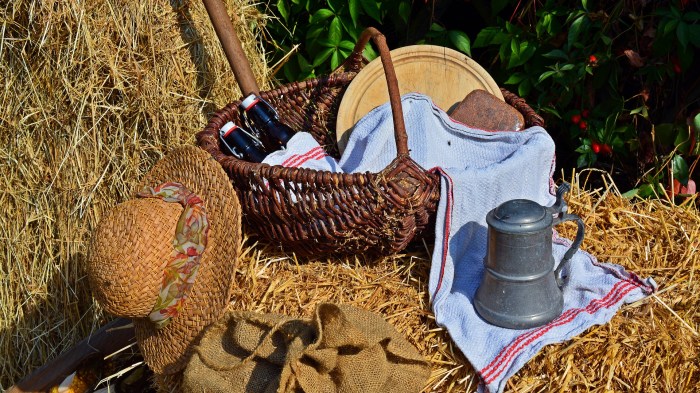
harvest-1642290_1920

When I was little, my favorite day was Saturday.  You see, Saturday afternoon the women in my family turned the entire house out of doors and cleaned as though it were a competition sport.

Being too young to help, I usually was sent off with dad to hike in the woods (in summer) or go look at holiday lights in the city or watch some sports event he wanted to see.

And then we came home, to a house that was sparkling clean, a (usually fairly spare on Saturdays) cooked dinner, and the consciousness that all work was done for a while.

When I got older and started participating in the cleaning, Saturday evening was even better.  You had a sense everything that needed to be done was done, and you could take a break and just be.

I figure Thanksgiving partakes of the same feeling, the feeling of having worked hard and now having enough to see you through the winter ahead.  It’s the feeling of harvest festivals in every culture, as far back as we can go.

I haven’t done everything, this year.  The book still hangs half finished, mostly because of all the moves (!) and yesterday, between four appointments and hunsgiving at Pete’s Kitchen (I promise next year, if we’re all still here, and I’m not ill or something, we’ll plan this a month in advance.  Until then, I’m considering a hunsdinner on the first tuesday starting in January.  Mostly because sometimes I need to see people and not just their pixels.) nothing got written.

Fortunately today it’s just us and our friend Charles, and since we have company on Saturday and I need to do a real house cleaning by then, I’m not even going to really do a deep clean.  (Charles knows our mess.)  I’m just doing cat-vomit-cleaning which is a constant duty, and kitchen cleaning.

Right now, I confess I feel a great deal of lassitude.  Not tiredness, precisely, just a feeling like I wouldn’t like to do much, probably the result of yesterday’s unusual exertions and people contact (which is why I need MORE people contact, of course.)

The family is (I think) still asleep, and I have some corn bread for stuffing in the oven.  Later I’ll spatchock a turkey and set a bunch of side dishes in the crockpots.

Even though the book isn’t done (TRULY should be done this week, although I’m not as fast as I used to be, and probably won’t be till I get new glasses)  this year has been one of several for lack of a better word, accomplishments.

My catalogue of gratefulness is so long, that I have no way of tagging all of it, so here’s a jumble of it, in short: I’m thankful we have a place to move, got fully moved in and that both boys are moved into situations they enjoy.  I’m thankful I have you guys to see me through the worst times, when thing get wobbly.  I’m thankful my mind is functioning again, and I can write again (more than I can say.)  I’m thankful I have three more books under contract after this one is done.  I’m thankful for my wonderful husband (always) and my two wonderful sons (always) and for number three son by adoption and his wife and two kids (Always, always.)  I’m thankful my car is still with us, though hopefully we’ll buy me a “new” one from the delivery money for these books. I’m thankful that Dan has a decent job, which carried us when I couldn’t work at all.  In these days, that’s no minor feat, and no minor thing to be grateful for.  I’m thankful that I have colleagues and friends in my life, who make me feel like I’m not a freak of nature for what I do or what I think.I’m thankful Euclid-cat who is sixteen is looking pretty spry, still, even if getting a little skinny.  I’m grateful derpfish is still with us, because if he had died right after Miranda, it would have sent me down the depressive spiral. I’m thankful that my issues with driving don’t seem to be psychological but physical.  Expensive for two pairs of glasses, to be sure, but not as expensive as extensive psychotherapy.

Most of all, I’m thankful for the stories that come and fill my mind, and make me want to tell them.  And I’m thankful other people like to read them.  To be able to do what you love and get paid for it is the best gift of all.

And I promise in the next year you’ll have a lot more to love.  (Be mindful that Amanda Green challenged me to a book a month, and I don’t mean to fall behind her production.)

Now go have your turkey and meet with your real life friends and family.  See you here tomorrow, for more of our peculiar fun.

The Things You Don’t See

I didn’t mean to scare anyone with my plethora of medical appointments.  I needed to get blood drawn to test the adjustment on the thyroid meds.  I also arranged to have a vision test, because I find myself panicking behind the wheel and that either meant that my vision was gone wonky, or my head had.  And while I’d panicked before while driving, when my vision was bad, I’d never gone crazy that way.  Precisely.

Anyway, so I went to get my vision tested.  For three years it was a real problem getting any writing done.  I couldn’t focus, I couldn’t “be there” and I couldn’t think myself into the story.  Also, for the first time in my life, I had trouble thinking of the right word and sometimes had to approach it by spiraling towards the meaning.

Now writing is relatively easy and I’m enjoying it again, but there have been a lot of interruptions.  I thought.  Or maybe my attention is not as intense as I thought.

At any rate, that’s not why I went to get my eyes checked.  I went because of the driving thing.

Turns out my vision is completely messed up, and not only has my astigmatism got doubly worse, but I somehow have double vision horizontally.

So, now I have ordered new glasses, which should make the writing easier, and maybe allow me to drive.

Anyway, that’s what we don’t see.  When what you use to see with is off, unless it’s really obvious (and sometimes then) you end up not realizing what was wrong.

On the other hand, sometimes what we don’t see affects us.

This week, I had two things rubbed in my nose.  One was that some kids in a college (and I’m not sure where, but it was linked at instapundit.  Might even have been by me) I think Loyola, were complaining about an “America” themed party, which makes them feel “divisive and unwelcoming” or something.  Because American citizens, or guests, living in America, should not love America or celebrate the special place we live in because…  I got nothing.

Also driving down the highway, I came across someone with a bumpersticker that said “I made the dhs list” which, you know, reminded me of how people who have great attachment to the constitution are are considered a terrorism risk.

I have before said that the people from the sixties, propagandized by the soviet union into thinking the US was all wrong and responsible for everything bad, are now in charge of most institutions (and the further left they are, the more in charge they are) and raised at least a generation to despise their own country and be afraid to feel any love for it.

This is the sort of thing that happens to occupied nations.  As my friend Bill Reader says, the problem is we lost the war.  Not the cold war, the propaganda war.  The USSR turned at least one of our generations into occupiers, who then destroyed the very heart of patriotism and love for our country.

We didn’t do that to Germany or Japan after defeat.  But for the USSR that was the way to our defeat.

That tantrum the millenials are throwing?  They’re throwing it, because they thought everyone agreed with them that America was terrible and should be destroyed from within. Or maybe it’s because the poor bunnies don’t even understand that everything they want to do would destroy the good things about the system.

They don’t realize that on average they have the freest, most prosperous life of anyone but the very rich in the other nations.  They don’t realize that compared to the rest of the world, this is still the land of opportunity.

They’ve lived here all their lives, in the lap of luxury, so much that they don’t see it.  And so, they’ve allowed themselves to be propagandized and made to feel guilty, and convinced the rest of the world is poor because they’re well off, and that they have to destroy America so the world will be better and wealthier.

Of course that’s not what will happen. When America sneezes, the world catches pneumonia.  Which means if the US falls, the world loses its engine of wealth and innovation.

So these blind children led by the blind are trying to destroy the things they love, in the name of making it all better, which it won’t.

We must apply corrective to the nation as soon as possible.  And I mean right now.  Let’s  go work on it.


When Teacher is Wrong – David Burkhead

When Teacher is Wrong – David Burkhead

I have a daughter.  She’s bright (in her school’s “high ability” program”.  She’s athletic (swim team for a couple of years now).  And she’s utterly adorable. (Don’t challenge me on that.  Just…don’t.)

Unfortunately, she’s in public school and there’s not a lot I can do about that.  As much as I’d love to homeschool, I’ve got to keep working to keep a roof over our heads and food on the table.  And my wife can’t do it because while I bring home the bigger paycheck, it’s at a very small company and my wife’s job does things like provide health insurance. (And with my various problems–I’d say it’s a shame we’ve got to get old, but when you consider the alternative…–we really need that insurance.)

So, she’s in public school.

A couple of years ago she brought back a school report which had an item “The purpose of government is to provide services that individuals can’t pay for.”

What?

So I ask her about it.  She tells me that the example they gave was street cleaning.  Someone has to clean the streets and that’s the purpose of government. (I’ll have a bit to say on this subject somewhat later.)

Again, what?  Yes, to a certain extent that may be a role of government but the role?  Don’t think so.

Obviously, the school and I disagreed on this subject.  This wasn’t a matter of there being an objectively “right” answer but rather presenting something that’s a matter of philosophy and values as though it did have an objective correct answer.

Now, I could have gone into the school and raised a fuss, insist that they teach my philosophy and values on the rest of the class.  Instead, I took the time, generally when driving my daughter to school in the morning, to discuss the issue with her.  I started with the Declaration of Independence:

We hold these truths to be self-evident, that all men are created equal,
that they are endowed by their Creator with certain unalienable Rights,
that among these are Life, Liberty and the pursuit of Happiness.–That
to secure these rights, Governments are instituted among Men, deriving
their just powers from the consent of the governed

And, so that the purpose of government is to secure our rights and that the basic rights include Life, Liberty, and Pursuit of Happiness.

Once she had that, we went on to the Constitution, the three branches of government: Legislature which makes the law, Executive which carries out (executes) the law, and Judicial which tries cases under the law.  We went over the Bill of Rights.

And, so, I made sure that my daughter understood my philosophy of government because that’s my responsibility.

And it’s not just matters of value and philosophy.  The schools, or at least the teachers, have been known to be wrong on matters of fact.  And this is nothing new.  Sometimes it’s outdated information.  For instance, when I was in grade school mountain building was described as being caused as follows:

When it was formed the Earth was much hotter than it is now.  As it cooled it contracted, as cooling things are wont to do.  This caused the crust, the “skin” to wrinkle like a withered apple.  These wrinkles are mountains.

This was at least a decade after plate tectonics had become widely accepted as the cause of such things as mountain building.

Other examples include a fourth grade teacher telling me that all radioactive rocks contain Uranium. (I could see in the book that Uranium was given as an example of something in radioactive rocks, not an exhaustive listing.) And a Sixth grade teacher telling me that the Curies discovered radioactive elements (as in discovering radioactive elements existed rather than the accurate statement that they discovered particular radioactive elements).  And so on.

And sometimes it’s not the teacher.  Sometimes it’s the book.  The encyclopedia I grew up with described stellar evolution thusly:

Stars start as large gas clouds.  They start to contract.  As they contract, they heat. (So far, so good, in an oversimplified way.  But now it goes off the rails) At a certain point they are hot enough to glow as Red Giant stars.  They continue to contract, getting hotter, and proceed through “yellow giant” “white giant” and “blue giant” Eventually contracting to a “blue dwarf”.  Once they reach blue dwarf stage, they gradually start to cool, going back through the spectrum until they reach red dwarf and finally extinguish.

That theory was superseded in the 1920’s.  Yet there it was, presented as Gospel Truth in a respected encyclopedia forty years later and being taught in our schools.

Sometimes the teacher is wrong.  Sometimes the book is wrong.  You, as an individual, have to be ready to question the book, question the teacher, and make sure your children do so as well.

And, now, I’m going to digress a bit on something brought up above simply because I think it’s interesting. I mentioned street cleaning and that I’d have a bit to say on that somewhat later.  Well, it’s somewhat later.

Folk have argued, with some justice, that public good activities such as street cleaning are among the legitimate functions of government.  And, in at least some instances, they make a compelling case.  Michael Z. Williamson in his Libertarian paean Freehold goes into this a bit.  There is a scene involving heavy, road blocking snow.  The libertarian government of Grainne (the eponymous freehold) has no services for things like snow removal.  Thus, it is up to each individual business or property owner to clear the road in front of his own business/property.  And if the guy next door doesn’t do it, well, then it doesn’t get done unless you do it yourself.  The residents of Grainne, almost rabid on the subject of individual liberty, are willing to accept that.  Other folk may not find that an acceptable trade.  One, however, has to be careful with that because Government is Force, including deadly force.  Matters of public sanitation, with the spread of disease and encouragement of vermin, may justify that force.  Other things do not.

Motivation

Writers like me suffer from a very strange impairment.  We tend to trust what our character tells us.  This is possibly a form of insanity, because my characters tend to be the epitome of “unreliable narrators.”

I’ve been struggling with Darkship Revenge since I lost the second half since the move.  I’ve been doing the equivalent of adding a new layer of paint, then removing it all with solvent, then again and again.

This is an unhappy state of affairs and it usually betokens a huge issue in what I HAVE written.  If the months since this summer hadn’t been fraught with moves and cat illnesses, with kids moving out and their own issues, I would have, long since, figured out what the problem was.

The thing is, I’d finished the book once, d*mn it, so it must be finishable.  Also, my outline (why do I do these, they lead me into trouble) showed exactly where the story was going, so why couldn’t I lay it down?

When Speaker to Lab Animals visited he illuminated the mechanism of a biological attack in the book and I thought “That’s it, now I can go on.”

Instead I continued to add layer, then remove, add then remove.

It wasn’t until I isolated myself in a hotel room (yes, there is a reason for this.  If I’m not isolated and forced to think about what is wrong, I tend to find other things to do, like clean bathrooms, groom cats, and other things I convince myself are very urgent.) and forced myself to lay down wordage, that I realized what the knot at the middle of the plot was.

Bear with me, these are not so much spoilers as teases, and heck, the clue is on the cover.

Yes, sure, I know exactly what Athena is supposed to do.  I know what she does in this book.  I can sort of watch her and see that.  BUT the why loses punch from about half way on.  I mean, up till then she’s doing things for her survival and Kit’s.  There is no thought.  But from that point on and when things get rough, she has no reason to stay on Earth.  She and Kit could leave to go to Eden with their daughter, end of story.

Oh, sure, she would be carrying the deadly plague back, but here’s the thing: from the moment they figure out the plague and what caused it, her actions make perfect sense.  Only not even advanced medical establishments can figure something as tricky as what Speaker came up with that easily.  So there are a few weeks in which she could easily just pack up and leave with Kit.  Actually now I think about it, she wouldn’t even risk Eden, because the trip is six months.

So what makes her stay on Earth through some very unpleasant stuff?  I can’t do it simply as “author says so.”  Particularly because I’m not forcing the character in the least.  I know when I am, and what that feels like, and sometimes we all have to do it, at least for minor things.  But you can’t do it for what will hold the plot together for the last half of the book.  And here’s the thing: I’m not.  Staying is the natural thing for her to do. But WHY?  Until I know why I can’t sell it to the readers.  My idea of why someone would do something might be wrong or at least unbelievable to other people.  I have got that mostly about why Kit puts up with Athena in Darkship thieves.  “Why would a sensible man?” But I can believe that, because young men are stupid when they like a woman.  And men of all ages often like the worst possible woman for them.

However, Athena is not a young man, and reckless though she is, there’s not an ounce in her of “selfless service to the needs of others” which is what she does, mostly, in this middle part.  Sure, she’s grown up a lot, and sure, I can smooth some of it by having her think of what would have become of her if Kit’s family hadn’t taken to her and looked after her.  But there has to be more, because until she can be her normal irresponsible self, find a way to leave her daughter secure and go kick butt, she’s going to be pushed into a very uncomfortable and indeed demanding position, which simply isn’t her style.

I went to bed disturbed by this, and slept very badly.  And then this morning, lying in bed taking stock of my various appendages (sure, you don’t do that.  Don’t come crying to me when you wake up minus an arm and don’t realize it till the evening,)  I realized that the problem is I tend to take Athena at face value.  You do, you know.  And Athena is the LEAST emotionally unselfaware person in the world, except me in certain moods. I mean, it took thinking she’d lost Kit to realize she loved him.

I now know why she stays and why she does what she does.  The good news is that I can probably go back and finesse it, without losing the wordage I did this weekend.  The bad news is that it IS finessing.  I need to work it in in such a way that the reader knows why, but Athena doesn’t know why exactly.  Being exasperated with herself is part of her issues in this one.  Hint, she never wanted to be a mother, and feeling maternal is the last thing she expects.

On the other hand, KIT needs to raise this before the second part of the adventure starts.  He needs to say “We have powerpods to deliver.  Why would  we even DO this.”  It needs to stick.  Because it needs to be there for people like me, who must have a reason.

And beyond the writer nattering… How often do we do that, and lie to ourselves about our own motives?  I will confess I didn’t realize how depressed I was leading up to the election, nor why.  I thought I was in one of my episodic downturns, but not that the cause of it was that some part of my brain had decided we couldn’t survive Hillary.

Can we survive Trump?  Who the heck knows?  But there is a chance.  A chance is needed so that I don’t feel like I’m fighting through the darkness without end.

And the indications — admits — that I’m seeing from friends who are politically connected are surprisingly good.  He’s too statist by half, but all of them are, and also, I’ll be honest, I don’t think either the culture or the technology are at the point we can reach the sort of freedom I would like.  We must get there, and avoiding going further down the socialist rabbit hole is all we can do right now.  And that — knocks on head — seems to be sort of working.

You need to stop the car, before you can turn around and wrestle bozo the state from the seat.

I will also confess the reaction from the left makes me very relieved with the results — and makes me realize why I was so depressed before the election — because it shows  they have interiorized politics as revelation, with the certainty that their way is not only right but inevitable.  It’s going to take a few slaps with the cold fish of reality before they realize it’s neither.  It’s going to take a few slaps for them even to THINK about whether the outcome they’re working towards is worth it.

I’ve long suspected the Marxist science fiction writers yeah, and those who are “soft socialists” and internalize the ideas without examining them, know exactly where their preferred model would lead.  Suddenly, the future went from being desirable to something rusty and full of scarcity and poverty, where all wonder and excitement was killed dead with dogma.

They know.  They just thing it’s inevitable, and as such have decided to justify it and push it.  Perhaps they hope they’ll be the last eaten.  And perhaps it’s guilt at how much they have that drives it.  (Yes, even for those of us who were never rich.  I have a post planned for this week about secondary stream wealth.)  Having been sold the finite pie as a model of economics, they’re convinced the best future for everyone outweighs their own comfort, needs and desires.

Of course, since economics doesn’t work that way, what they’re really doing is driving everyone towards a more impoverished, darker world.  And their subconscious tries to throw up flags, which are lost, because they can’t get through the “conscious dogma” that has been pounded into their brains.

So they convince themselves these rusty futures are somehow desirable, and seem determined to write 1984 as a utopia.

Because we’re human.  And humans are broken right down the middle, with our conscious thoughts going “lalalalalalalalala” in the face of what our gut knows.

Which is why I’ve come to the conclusion Trump’s election is a good thing.  Oh, I wish we’d elected a more strict constitutionalist, or a constitutionalist at all.  But just stopping what the left thinks is inevitable enough to make them pause and think is a goal in itself.

Not that they are, of course.  Right now, they’re blaming it all on “we weren’t heard.”  And “we must message better.”  Which means they need a few more smacks on the nose.

And people like them, and me, who live way too much in our heads, need to think a little less about macro movements of society and go back to doing things as much as we can.  Write and create, and build.  Because those too speak a language of their own.  And in the end, it is that language that carries the day.

Humans can convince themselves of the most stupid things and talk loudly about them.  Like Athena, being convinced she never wanted to be a mother or how much she hates being responsible for anyone.

But if the left truly believed the individual doesn’t matter, or that humanity is a blight upon the world — really believed it, at the gut level — they would all have committed mass suicide.

That they haven’t means their guts, their “below the dogma” actions and thoughts are all right.

Take that with you into Thanksgiving dinner, particularly those of you who have family of a more left political persuasion.  Remember that what they say might not be exactly what they think or are, not at gut level.

Meet them there and build upward.  This too is a political fight to the extent that politics is downstream from culture.

Be thankful for life, liberty and the pursuit of happiness, and convey your happiness and your joy that they too have that.  Then talk of recipes and kids and pets.  They’re not ready yet, but you can reinforce their gut and let their thoughts be quiet a while.

In the end, it is not dogma that wins but works.

Go work.


Sunday Vignettes by Luke, Mary Catelli and ‘Nother Mike

*Yes I should give you my opinion on last week’s, and will.  Sorry, we had “stomach flu” the reprise, only lighter, but enough that I couldn’t really function.  Also, yeah, no Sunday book promo.  I’m not sure why, but I figure the Oyster hasn’t been commenting either, so life must have got interesting for him suddenly.  I’m sure he’ll be back.  (Or I’ll have to make different arrangements.)-SAH*


Sunday Vignettes! – by Luke, Mary Catelli and ‘Nother Mike

So what’s a vignette? You might know them as flash fiction, or even just sketches. We will provide a prompt each Sunday that you can use directly (including it in your work) or just as an inspiration. You, in turn, will write about 50 words (yes, we are going for short shorts! Not even a Drabble 100 words, just half that!). Then post it!  For an additional challenge, you can aim to make it exactly 50 words, if you like.

We recommend that if you have an original vignette, you post that as a new reply. If you are commenting on someone’s vignette, then post that as a reply to the vignette. Comments — this is writing practice, so comments should be aimed at helping someone be a better writer, not at crushing them. And since these are likely to be drafts, don’t jump up and down too hard on typos and grammar.

If you have questions, feel free to ask.

Your writing prompt this week is:

somewhere

Rolling in the Deep

I wasn’t going to write a post today.  I have a guest post from David Burkhead, and at any rate, Dan and I ran away halfway through the afternoon, to a hotel room, so we could spend the weekend catching up on writing, because between stomach flu and family, November has been a disaster, I have books WAY overdue, and he’s barely started 9th Euclid’s War.

Of course, because someone (likely several someones) has a voodoo doll of me.  So Dan is having a second bout of stomach flu and while I don’t have it, I have the “funny taste in mouth” that means I’m barely fighting it off.  So this might not be the most successful writing weekend ever.  I already slept close to 12 hours.

Anyway, the problem with the undisclosed location (as we know) is that it has a television on CNN all through breakfast.  And that meant I had to write a blog post.

I’ve got a blog post about it somewhere in the archives.  But it’s not quite the same thing.  Now entire industries are doing this, and it’s amazing.  (Not in a good way.)

Years ago, watching science fiction magazines and newspapers of various sorts come and go, I identified a process I called “roll hard left and die.”

When a magazine or a newspaper or any news or entertainment media was in real trouble, they went hard, hard left, then died.

It took me a little while to realize this was a sane strategy.  In a field completely controlled by the left, when you knew that your job was in peril be it through missmanagement or whatever, your last hope was to go incredibly hard left, so you could blame the failure on ideology.  And instead of not being able to find a job, you found yourself lionized by all the “right” (left) “thinking people.”  New jobs were assured.

I watched this happen four times with a particular magazine editor, who killed sf magazines through publishing things that REALLY weren’t science fiction besides being preachy.  But every time the magazine got in trouble it would go hard left, and when it died the editor was offered another, better job.  (No, I’m not going to pick a public fight by identifying it, because this is a writing weekend.)

Then I started noticing it with newspapers and news magazines, both here and abroad.

It got so bad, I could identify when a magazine was in severe trouble, because it would go from “left leaning” to “To the left of Lenin” in nothing flat.

And then we come to where we’re now.

This morning at breakfast I watched CNN extensively interviewing a guy who wrote an article called “The Chaos inside Donald Trump’s transition.”  Mind you ALL of his reporting is based on unattributed leaks inside Obama’s administration AKA the gang that couldn’t shoot straight.

I told Dan “Remember all the articles about the rough Obama transition?  Or the ones about Clinton, which, according to bios published way later was indeed rough, and some people never submitted clearance paperwork EVER even in his second term?  No? I wonder why?”

I mean this campaign was amazing by the brazen way they supported Hillary.  Part of the reason I decided Donald Trump was the least of two evils is that the press was covering so hard for Hillary that I couldn’t trust her with power of any kind.  In fact, I voted for Trump because of the press’s performance.  I’m not alone, either.  Pollsters are “blaming” his victory on “suburban females who changed their mind the last week.”  (Thereby causing the democrats to manufacture insufficient votes, one presumes.)

Having managed this amazing feat, what is the news doing? Rolling harder left, chasing dust motes and nonsense, making a case out of the president elect going out alone with his family for a family dinner without informing them, and generally going even more in the tank for the left.

I’ve been watching this with mainstream publishers for three years now, and I still don’t believe it.  I’ve watched publishers who were “lean left” become wholly owned subsidiaries of the leftist project, no dissenters need apply to the point they’re now shedding middle-of-the-road writers.  And I’ve thought “How much trouble are they in?”

And now I’m watching this with the news AS A WHOLE.

The problem is that they’re doing what they’ve watched done/learned by example.  It’s not a rational calculus that goes “If I go hard left, I’ll be lionized and have a new job.”  Or maybe it is, but at least part of it is instinct.  They want to go out “a hero.”

Our tech is changing institutions too fast for the good old monkey brain.  If they looked around they’d see their ENTIRE field is in trouble and no one will be left standing to give them a job when their hard roll left causes the total collapse of their employer.

At this point things are changing so fast, they think they’re rolling over to a new job.  But they’re just rolling in the deep.

In the end, we win, they lose.  And part of it is the roll left before dying.  But, until then they’re going to be very annoying.

Now go work, because I’m going to, also.


Thresholds

For some reason I remembered this morning the day I turned fourteen.  I was so unholy excited I told EVERYONE.  By everyone, I mean everyone.  The train conductor, the ticket checker at the train station, the waiter at the coffee shop where I had breakfast, and all my classmates and teachers.  It became a joke for my teachers, because I had been telling them about it for DAYS.

In retrospect, I have absolutely no idea why.  I mean, it was a nice birthday.  I had my friends over.  I got several books as gifts, and I think my mom bought me boots.

I suspect it was the perception of a threshold.  Fourteen, for some reason, impressed me as grown up, an age at which I could be courted, an age at which I could move on from the sort of semi-independence of a tween, to the real world.

I think a lot of us — possibly more a lot of me — have that sort of impatience to grow up.  When I was three or four, I remember being upset at wasting time being a kid, when I could be out and doing stuff.  Only I didn’t know how to do the stuff I wanted to do (at that age, mostly travel and “work” which was a nebulous thing, but patently very important) and so I was forced to wait.

Back then people told me to enjoy childhood/tweenhood/adolescence/young adulthood.

Yeah, I know this is normal.  But I never told my kids that, because I’ve found each new stage of life has proven to be more fun, and oh, yeah, I wouldn’t go through my teenage years again for half the time and double the pay.  Each stage of life finds me more competent, and therefore able to DO and engage more with the world.  Which is (isn’t it?) what we’re here for.

Oh, sure, I wouldn’t mind sending my MIND back to my twenties, say, so I had warning of things, like what was ahead for indie, and also so I was more trained than anyone could be at that age.  But barring that, no, I wouldn’t want to relieve it.

The thing about being young is that one is so afraid of so many things, and so many of them stupid.  I spent half of my life terrified of giving offense, of saying something not socially approved, of thinking divergent thoughts.  Half a life is enough to waste on that, and I’m glad to be over it.

I can’t say I’m very excited about my birthday today.  It’s a birthday.  But something brought to mind that long ago birthday, something made me think, some commonality between them.

And I realized, like that long ago birthday, this birthday is a threshold.  I’m standing at the gateway to a life different than what I’ve known for the last years — long enough years to be a lifetime back when humans were more short-lived — and I know it because of the way I’ve had to adapt. Oh, sure, in recent years a lot of the onerous duties of motherhood have gone by the way side.  I no longer think of meal times as ordeals by interruption, where I had to cut up meat, right glasses, etc, and only afterwards could consider eating, unless there was another emergency and there was no time.  (I think it’s where I’ve acquired my very bad habit of grazing.  Why bad?  Because I tend to concentrate on things I can grab and carry.  It’s not as bad now that I am low carb.  A cheesestick is a cheesestick, but I remember when the kids were little, eating a whole bag of marshmallows, because it was on the counter and I could grab one at a time when I walked by.

But there are still things.  In the last few years my main mommy function has been making sure they’re up and ready for college; cooking breakfast so I can foist it on them on their way out the door; washing their clothes if they’re having exams and I see signs of recycling; losing afternoons to them when they want to talk.  That sort of thing.

It’s weird to not have those interruptions.  I keep expecting them and not getting them.

Which brings us to “well the last four to five years have been miserable for writing” and yes, part of it was the hypothyroidism, but the other part is that I do better with a regular schedule, which I lost once the kids went to college.  THAT at least should be better.

And I’m finding a lot of other things that should be better (more as I get new glasses and start driving again.)  I remember my parents going through this.  I know that is going to sound weird, but I was the much younger child, and my presence wasn’t enough to hold the structure of the house.  Also, I was cursed independent, and was usually too busy for them to keep my schedule, or a schedule for me.  Also, I cooked for myself and took care of my own clothes.

So the routine of the house gave way, once my brother married.  And suddenly I discovered my parents were able to do things like “Today we went to the beach.  Make yourself a sandwich.”  Or knocking at my door on a weekend and going “Wanna go visit such and such place?  Come one.”  And I’d go if I didn’t have a test that week.

The way to describe it is that after years of being tied down to child care, they became more flexible.  We too are finding more flexibility.  Not extreme, since Dan still has to work, but things don’t need to be done the way they always were.  And I can either go more froo froo in cooking — because I’m not working around kids’ likes and dislikes — or announce “today is grab it yourself” with a clear conscience.

But more than all of that, I have a feeling that there is more, that I’m about to embark on a life as different from the last 24 years as my life as a teen was from young married life.  How?  I don’t know.  It’s not old age, yet.  That will come, but as my dad said, thank heavens these days the time between 55 and 75 is not old age, but a kind of new maturity.  Yes, you have things that slow you down, but modern medicine is wonderful, and they don’t need to STOP you.  You have to be more careful about your sleep and your exercise, and what you eat, because you’ll pay for it, but you’re not yet noticeably impaired.

This is something our ancestors didn’t have.  It is possible, now, to start a career after the kids and have a full career, for most people.  Which is good.

I loved having the kids, and I wouldn’t trade it for the world, either their childhood or my friendship (unlooked for, but it happened) with the adults they’ve become.

But now I have time to concentrate on the career and to discover other things.  Stand by as I pivot to it, and get rid of my last reflexes of worrying about the kids every hour  of the day.

I have a feeling there are things I don’t even understand yet, which will make these years very rewarding.

I’m crossing the threshold into a new place, a new phase of life.

I wonder what it holds.