Sunday Vignettes by Luke, Mary Catelli and ‘Nother Mike And A Bonanza of Book Promo.

book-1332161

Vignettes by Luke, Mary Catelli and ‘Nother Mike

So what’s a vignette? You might know them as flash fiction, or even just sketches. We will provide a prompt each Sunday that you can use directly (including it in your work) or just as an inspiration. You, in turn, will write about 50 words (yes, we are going for short shorts! Not even a Drabble 100 words, just half that!). Then post it! For an additional challenge, you can aim to make it exactly 50 words, if you like.

We recommend that if you have an original vignette, you post that as a new reply. If you are commenting on someone’s vignette, then post that as a reply to the vignette. Comments — this is writing practice, so comments should be aimed at helping someone be a better writer, not at crushing them. And since these are likely to be drafts, don’t jump up and down too hard on typos and grammar.

If you have questions, feel free to ask.

Your writing prompt this week is: perfect

A Bonanza of Book Promo

*Note these are books sent to us by readers/frequenters of this blog.  Our bringing them to your attention does not imply that we’ve read them and/or endorse them, unless we specifically say so.  As with all such purchases, we recommend you download a sample and make sure it’s to your taste.  If you wish to send us books for next week’s promo, please email to bookpimping at outlook dot com.  One book per week. Amazon links only.*

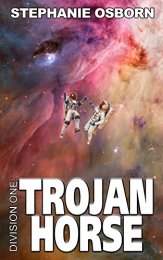
STEPHANIE OSBORN: Trojan Horse (Division One Book 5)
51yodhayxsl

After returning the healer Doron to his homeworld of Edeptis, Echo takes Omega on a training run to make her a Pan-Galactic Coalition-certified starship pilot–celestial navigation, extra-vehicular activity, emergency repair, planetary surveys, you name it. And he secretly delights in seeing Omega’s joy at finally fulfilling a childhood dream.

But when the Cortians show on the scene, intending to take Alpha One into custody for crimes against the Cortian Amalgam, the resulting space dogfight severely damages the Trojan Horse, causing it to crash on a primitive protoplanet. Both Echo and Omega are badly injured, and it will take both of them working together to survive in the wreckage, while more Cortian vessels search for them overhead, and Fox and the rest of Alpha Line try to fight their way through to rescue their friends and colleagues.

KAREN MEYERS: The Chained Adept Bundle (Books 1-2): A Lost Wizard’s Tale.

51evtbtbzvl

The Chained Adept – Book 1 of The Chained Adept

A STRONG WIZARD WITH UNANSWERED QUESTIONS AND A CHAIN AROUND HER NECK.

Penrys’s past is unknown, but she’s got a better grip on her future: find out where she came from, discover what happened to her, and figure out how the unremovable chain around her neck makes her different from other wizards.

What any of this has to do with the renewal of an ugly war between neighboring countries, half a world away, is just something she’ll have to sort out, along with the rumors of wizards where they don’t belong.

Assuming, of course, that no one removes her as a threat before she can find her footing.

All she wants is a firm foundation for the rest of her life, with a side helping of retribution, and if she has to fix things along the way, well, so be it.
—

Mistress of Animals – Book 2 of The Chained Adept

AN ERRANT CHILD WITH DISASTROUS POWERS AND NO ONE TO STAND IN HER WAY.

Penrys, the wizard with a chain and an unknown past, is drafted to find out what has happened to an entire clan of the nomadic Zannib. Nothing but their empty tents remain, abandoned on the autumn steppe with their herds.

This wasn’t a detour she’d planned on making, but there’s little choice. Winter is coming, and hundreds are missing.

The locals don’t trust her, but that’s nothing new. The question is, can she trust herself, when she discovers what her life might have been? Assuming, of course, that the price of so many dead was worth paying for it.

WARD WAGHER: Accidental Nazi.

41hwqfiebrl

A misguided time travel experiment in the twenty-fifth century fans out to impact hundreds of parallel universes. The effects varied widely and influenced billions of individuals. It most directly affected people who appear to be at the precise inflection point to jump them into a world that was almost the same as the place where they left.

Heinrich Schloss had arrived at Berlin’s Tempelhof airport in 1982 to pick up his wife. After a brief migraine-like spasm, he opened his eyes to Tempelhof in 1941 to witness Hitler’s death in an airplane accident. A history professor who had grown up in a divided Berlin was now a party chieftain in Nazi Germany. All of those speculative conversations around the table with colleagues about what could have been changed to avoid the fall of Germany now had immediacy.

The Schloss of this parallel world had replaced Martin Bormann to assume his role of party leader. The transplant now had to make himself into the alternate Schloss and interact with the murderous Nazis who surrounded Hitler. Schloss discovers the perils of simply trying to do the right thing.

J.D.BECKWITH: eConscience Beta

51lh16lc2brl

Peacekeeper Incorporated’s breakthrough nanotechnology could bring repeat offense crime to an end, freeing society from the need for criminal incarcerations. But first, they have to finish testing it. With funding on the line, and time to prove out the project getting short, the lead scientist must find a way speed things up. That’s unfortunate for his guinea pig, and anyone who would stand in his way.

Can the goal of ending most crime justify committing one… even a few?
And what happens when you conflate altruism with egotism?

Find out in eConscience Beta, where two lab techs and an uncouth petty criminal must outwit a brilliant but sociopathic scientist who’ll stop at nothing to establish his legacy as the man who ended crime.

LEROY NICHOLS: The End Begins: A Square Root of Time Novel.

51x0tmk02brl

Josanin the Heartless just wanted to conquer the world, not save it.

Josanin has been an ambitious schemer all his life—a calculating wizard who has matched wits with countless heroes over the years. Dwarves, humans, halflings and elfin folk have all borne the brunt of Josanin’s desire for power. But an accidental discovery reveals that the Free Folk are the least of his worries. A terrifying legend out of antiquity, Alimnazer the Hearteater, is real and about to unleash total annihilation on the world. Much to his consternation, Josanin must play the hero for a change.

Josanin may be the chosen one, but he can’t stop an evil of such magnitude alone. To succeed, he’ll need the help of his most resilient foes, the fire paladin Prince Wilelm, his equally fiery wife, Princess Ambre, and all the champions with whom they’ve surrounded themselves. Unfortunately for him, these battle-tested heroes will never believe a word their old enemy Josanin says, much less volunteer to help.

Against such impossible odds, only a truly heartless manipulator like Josanin has the evil cunning to bend the champions to his will and set up a final battle that gives the world a sliver of hope against a would-be god.

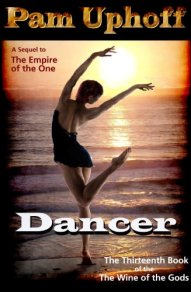
PAM UPHOFF:  Dancer (Wine of the Gods Book 15).
51fibo36-jl

*Fifteenth Book* In the Wine of the Gods Universe
Rael Withione was once one of the elite, a presidential guard.
After the assassination attempt, she has a long recovery ahead.
Investigating her brother-in-law’s murder was not part of her scheduled physical therapy.


Researching Your Fairy Tales – by Mary Catelli

vintage-1721914

[Yes, I know you’re going to say that this post is more suited to MGC.  And I confess that Mary wrote it thinking of writers.  But how many of us have had to defend Western culture in conventions, or even conversations, and point out that no, it’s not all “prince rescues princess”.  This gives you the background to point out most of what current crazies fight is imaginary.  Strong (really strong, not b*tchy) women have ALWAYS been appreciated, and western culture is no worse than others (and in many things it’s way better.) Perhaps because I put up with the usual idiocy at the recent con “there were no strong women at all before star wars” I feel forced to mention this.  Of course, in old tales, women weren’t made into ersatz men.  Garcons manque aren’t strong.  They’re sad. – SAH]

Researching Your Fairy Tales – by Mary Catelli

Would you like to work with fairy tales besides the Pop Top 20?
Would you like to invent fairy tales for your world that sound like fairy tales?

Would you like to have a character tell a fairy tale that has thematic resonance with the rest of the story?

Lots of possibilities out there!

Fairy tales, for instance, where the heroine bravely sets out to save her husband, or her brothers.

Where the princess opts to marry the servant and not the king whom the servant had brought her for.

Or the peasant decides that the princess who stole his magical treasures is not, after all, the girl for him.

Where the heroine gets to go to the ball three times because of having won the aid from a magical being, or even without magical help at all.

Where the maiden in the tower runs off with the prince before the witch catches them.

Where the story continues after they are married, and even had a child — or three.

Even — despite Disney — where a boy is the lead.

To find these, it is necessary to broaden your base of stories.  For instance, you could read all of the Brothers Grimm.  Or such important contemporaries and immediate successors as Peter Christen Asbjørnsen and Jørgen Moe (Norwegian), Laura Gonzenbach (Italian), Alexander Afanasyev (Russian)  or Joseph Jacobs (English and Celtic).

But the simplest way is perhaps to go to the library, go to the fairy tale section (Dewey Decimal 398.2, not that I have it memorized or something — adult section usually is best, though sometimes strange works get into the children’s), and look for books titled “Fairy tales of region” or “Folk tales of region.”

The next step is to check whether the region is France.  If so, you want to make sure it’s not a collection of literary fairy tales.  There are good folk fairytale collections from France — French Folktales by Henri Pourrat or The Borzoi Book Of French Folk Tales by Paul Delarue — but some are all literary.  Even if the literary ones are your interest (say, for a world with something like the precieuses in their salons), it helps to know the roots before you delve into the literary variations on them.

And then you read.

It does have the problem that you can’t play with the tales as easily, because your readers won’t recognize them.  You can, of course, change them and work with them, but the number of readers who will tell that your heroine went to Mr. East, Mr. South, Mr. West, and Mr. North because you are retelling “East of the Sun, West of the Moon” and they are the four winds — are very few indeed.  But that only requires writing the tale to not require knowledge of the original.  And you can do a straight retelling very easily.  (Though, being praised for your startling originality –as opposed to your cleverness in adapting it — is more annoying than you might think.  Especially when they start talking about your reasons for doing so.  No, you do not have be original to have your heroine rescuing your hero!)

The best collections for the writer, I think, are not straight as collected by folklorists, but have gotten a mild going over.  This is to do such things as smooth out such verbal issues as “Oh, I forgot to tell you that she was wearing the third dress for this,” and to conflate two variants of a tale, where each one left out one plot incident that, really, was crucial to making the story hang together.  Italian Folktales by Italo Calvino is particularly interesting in his footnotes of how he picked and chose variants and sometimes merged them and often choose colorful elements to elaborate his central one.  (For instance, he picked his Snow White variant because it was the only Italian one he found with bandits instead of dwarfs.)

Such books are seldom, if ever, a straight collection of pure fairy tales.  Most (especially those entitled “folktales”) include comic tales of simpletons or clever folks up to tricks, cumulative tales, and even legends.  Which, of course, you may find useful in their own ways.

But, on the whole,  it’s best not to read just one.  Read a dozen or so from different countries.  Or, perhaps, read a book like Beauty and the Beast Tales From Around the World by Heidi Anne Heiner or her Cinderella Tales From Around the World, both of which weigh in at a nice thumping 828 pages.  Reading one collection not specifically organized about a tale type gives you a bunch of fairy tales.  Reading a bunch of collections gives you many variations on a theme.  When you’re familiar with twenty variations of “Maiden in a Tower” tales, of which “Rapunzel” is merely the best known variation, you can master the type.

Then you can write fairy tales of your own for your world that will actually sound like fairy tales.


The Ground Moving Under Our Feet

life-3089646

This post is prompted by something that Amanda said on the comments to her post, yesterday: that traditional publishing should have seen the writing on the wall when their midlist writers started leaving en-masse for indie, but instead they lashed out and called writers widgets and said we could be replaced by others just like us… which is true… to a point.  The point is what they were missing: that things had changed, that there were other avenues, that the ones wedded to the old system and willing to be treated as widgets would be a self-selected population, and even those would probably not be willing to eat as much dirt as the rest of us did, when there was no other alternative.

Humans aren’t good at perceiving change, or perceiving conditions they’re not equipped to deal with by experience.

I’ve been in two earthquakes in m life, one majorish, one minor.  Both of them scared me so much that 17 years ago I nixed a highly advantageous move to California, because earthquakes.  (Turns out the decision was great, even if I made it for stupid reasons.)

The first earthquake I lived through, I was either 3 or 6 (these things run together in my mind) and it was pretty major, in that some houses in the village were severely damaged (stone houses, mind.) I slept through it, and woke up on the street, in my brother’s arms, blinking at all our neighbors in their pajamas or less.  (Grandad got his foot stuck in the guzunder, which was fortunately clean, but he ran down the stairs wearing a chamber-pot shoe because no one wanted to be caught in the house, in case it collapsed.

Apparently, if the house had collapsed both brother and I would have died, because having bravely pulled me out of the bed, he then spent precious minutes running back and forth from front to back door in my parents’ shotgun apartment (made out of what used to be my grandparents’ grain-and-other storage rooms) because he couldn’t decide which way to go out.  Remember he was a teen and we’d never had an Earthquake drill.

Years later (I think I was 21 or so, as I was already engaged to Dan) I was studying for finals, in my room, when the Earthquake hit.  My first thought wasn’t that the house was shaking (even though it visibly was) but that I was so tired I was hallucinating it.  Then I realized it was really shaking, and headed for the stairs.  And then the phone rang, and I FELL down the stairs, counting the last flight (nine or so stairs) on my behind.  (Fortunately cushioned there.)  It was a miracle I didn’t break a leg.  The ridiculous thing is that the phone call was my dad, who was up north where the earthquake hit first, and who was trying to warn me.

Note that Portugal is mildly disposed to Earth quakes.  (For years, the North has been waiting…. er…. expecting Lisbon to slide into the sea.)  In the North there are fewer than in the south, so ever ten or twenty years or so.  Meaning they’re not unknown, and you know they could hit at any minute, but they’re rare enough that your back brain interprets them as impossible.  Hence my brother’s reaction.  And mine.

Which is why people do fire drills, and Earthquake drills, and should be doing nuclear attacks drills again, too, and more sanely.

Because unless this is trained into your backbrain you don’t recognize it.  Because humans have got where we are through being REALLY good at identifying patterns like “if Ogg go play with tiger, Ogg get eaten.”  Other animals learn too, of course, but we have this thing called language to dissiminate this stuff far and wide.

But we’re not good at knowing when the pattern changes.  (We’re also vulnerable to faux patterns, aka faulty logic, and since, say, communism is internally consistent as a philosophy — though it has bloody nothing to do with the real world — people fall for it.)  All our adaptations are double edged swords, of course.

So, five? Six? years ago I heard an editor who is actually smart saying that this indie thing wouldn’t last.  When writers realized how much work was involved in covers, editing, publicity, dealing with sites, they’d come crawling back to editors and ask them to take it all over.

By then, I was already doing some indie, and knew a lot of people who were doing more.  Our covers weren’t very good or trivially easy, but we were learning.  And covers were the BIGGEST sticking point.  (We’ve got better.  The insert is novel hopefully coming out next month.) Because we, midlisters, were already doing everything else.  We were having to pay to have our traditional books proofread (and this was difficult, as sometimes they got messed up after that.)  We were already doing whatever publicity our books got.  And the sites were way easier to deal with than publishing houses.

ALIENCOVERFINAL
Coming hopefully next month. In the same world as The White Lady of Christmas, which is posted here somewhere. In fact, this is little Art Arcana III, all grown up.

So I stared in some shock, that someone smart didn’t see that this process which, yes, used to take an entire publishing house and trained staff, had in fact got so massively easier, due to automation, that it could be a one man job.  And that those of us who weren’t getting the star treatment didn’t really have any reason to go through the process.  Well, okay, some reason, SOMETIMES.  There are personal loyalties, etc.  BUT we certainly didn’t need to eat live frogs to get this stuff done for us, anymore.  Which is a massive game changer.

I don’t particularly blame publishing house personnel for not seeing it, either, really.  It’s like me looking at my books shaking in the bookcase above the desk and thinking it was just me being tired.  It’s not just that they know how many resources producing books took, it’s that they’re still surrounded by sycophantic wanna bes who think they’ll only be “real authors” if a house publishes them.  In the deluge they’re likely to miss that the quality of these ah… widgets has changed, and that people with a spine are not willing to break it for no better than “publication” anymore.  And PW and other publications who also can’t face the truth of the Earthquake under their feet don’t help things with stuff like “paper books are coming back, they really are.”

Now, when I talk of the changes that technology and the net have introduced in the last fifteen or so years, I usually illustrate with publishing.  It’s what I know better.  But it’s not just publishing.

The truth is that even those of us who believed the long march through the institutions had put a hard left cadre at the head of most things are shocked at how far this has gone, and are listening to the news about the FBI and the DOJ in something akin to stunned shock. And listening to the “defenses” of these things with even more stunned shock.

To me the whole thing looks like bullies who had been used to beating up weaker and smaller kids behind the shed, and suddenly the shed has gone transparent.  A lot of this was known (maybe not this much.  Okay, nowhere near this much) but couldn’t be discussed or admitted, because if you wanted to do anything you had to go past that shed and take your beating.

Now you don’t.  New media/blogs/indie have carved new paths.  Our brethren in education and movies are still prisoners, but I suspect it’s for less time than they expect.  Actually than anyone sane expects.

This ground is moving really fast.  Things are falling and rising up again.  And no one sees it clearly.

Of course, after 100 years of getting in position to control all of society (the only way socialism/communism can even PRETEND to work) the left is not going to take this calmly.  To the extent they’re waking up to how things are changing, they’re fighting back like weasels in a sack.  This is not going to be pretty.

I keep reading and in the back of my mind I’m expecting a “black day” like the revolution in Friday by Robert A. Heinlein.  A lot of assassinations and people disappearing from public life, and you don’t know why or which side is which.

I get that feeling that it’s time to assume the crash position and get ready for impact.  Now, this “time” might be one or two years.  It’s a blink of an eye in human affairs.  But I think a great scouring, a great upheaval and shaking is coming, and when it’s past we won’t even recognize the business, or political, or even daily life landscape.

In the end, we win, they lose.  Mostly because our philosophy is more aligned with reality.

BUT no one promised us a rose garden, and no one promised there would be no earthquakes.

Just try to run to safe ground, and mind you, don’t step in the guzzunder.

The State and Revolution Pt. 1 – by Amanda S. Green

revolution-30590

The State and Revolution Pt. 1 – by Amanda S. Green

Class Society and the State

Reading Lenin, whether you’re doing it in the original Russian or in English, is like reading a mix of law school textbook and philosophic arguments. You have to pay a great deal of attention to not only what he says but how he says it. Worse, reading it today, it is easy to fall into the trap of thinking how reasonable what he wrote more than a century ago seems. After all, we’ve heard so much of it as recently as the 2016 election cycle. That is what makes Lenin as dangerous today as he was in the early years of the 20th Century. It is also why it is so important that we study what he wrote and how he and his followers implemented his policies in the Soviet Union.

The first chapter of The State and Revolution is entitled “Class Society and the State”. Lenin spends the opening pages discussing how the “oppressing classes have constantly persecuted the great revolutionaries in their lifetime, reacted to their teaching with the most savage malice, the wildest hatred and the most shameless campaigns of lies and slander.” He goes on to write how the “bourgeoisie and the opportunists within the working-class movement at the moment co-operate in the elaboration of Marxism.” In other words, he accuses the middle class and the so-called opportunists of blunting the message of Marxism , “emasculating the essence of the revolutionary teaching. . . .” (-pg 7)

So, in other words, not only was the upper class the problem in Russia at the time of the revolution but, as far as Lenin was concerned, so was much – if not all – of the middle class. True, their “crimes” were the same. The upper class, the ruling class, wanted the status quo to remain. They had the power and did not want to give it up. The middle class, the opportunists of the time, stepped in as the Mensheviks and the Provisional Government took charge and perverted true Marxism, diluting it to their own purposes while giving lip service to the original.

Even as Lenin sets his Bolsheviks up to be the “true” believers, it becomes clear he was not above perverting and using Marxist doctrine to his own benefit. In fact, if there was ever an opportunist during 1917-1918 Russian history, it was Vladimir Lenin. Even as he wrote “our task is above all to re-establish Marx’s authentic doctrine on the state,” he meant to establish his own interpretation of it. (pg 7)

When it comes to the historical role and significance of the “the state”, Lenin writes:

The state is the product and the manifestation of the irreconcilability of class contradictions. The state arises where, when and to the extent that class contradictions objectively cannot be reconciled. And, conversely, the existence of the state demonstrates that the class contradictions are irreconcilable. (pg 8)

How many ways can he say basically the same thing in one sentence? If there weren’t irreconcilable class contradictions, there would be no state. At least according to the man whose great communist experiment led to one of the most oppressive “states” in human history.

In other words, Marx saw the state as “an organ of class rule, an organ for the oppression of one class by another; it is the creation of ‘order’, legalizing and perpetuating this oppression by moderating the clashes among the classes.” (pg 8) Now, let me ask you this: does the gist of this statement sound familiar? How often did you hear a variation of it being thrown out during the 2016 presidential race by first Bernie Sanders and then by Hilary Clinton? Keep this in mind as we continue the discussion.

Lenin spends several pages describing how the Mensheviks and others strayed from the true Marxist definition of the state and how the Bolsheviks, under his leadership would bring true freedom to Russia. “It is clear that the liberation of the oppressed class is impossible not only without a violent revolution but also without the destruction of the apparatus of state power which was created by the ruling class and which is the incarnation of this alienation.” (pg 9)

[Right here is both what allowed Marxist theory to infiltrate psychiatry in the west and give us the idea that capitalism caused madness.  Or that madness wasn’t real but an effect of capitalism.  Therefore the “mad” were actually dissenters and should be freed.  Hence closing our madhouses.  Also the excuse for putting political dissenters into mad houses in the Soviet Union.  Because they were rebelling against a “sane” state, after all.  And this confusion between politics and sanity is right here- SAH]

If this doesn’t bring to mind images of Antifa and certain BLM “protestors” or images of the so-called “concerned students” who shut down how many presentations by people like Ann Coulter or Milo simply because they didn’t espouse the “right” ideas, it should. Just as it should remind us of those politicians, both currently in office and those who didn’t find themselves sitting in the Oval Office, who encouraged the less than peaceful “protests” over the last few years.

In discussing the creation of a standing army and police, Lenin turns to Engels. Basically, a standing army and police are the creation of the state. It is there to keep the oppressed under control. That expanded to include the state’s use of these standing army and police to expand the state’s territory. How different it would be if we had a “self-motivating armed organization of the population” (pg 11) All those loving and giving and non-middle class oppressor would be so much less likely to use their weapons for anything but the “good” of the whole.

Pardon me while I laugh hysterically.

Of course, it doesn’t end there. You knew it couldn’t – or wouldn’t. Next up is the state as “an instrument for the exploitation of the oppressed class.” If that doesn’t sound like it came straight out of the Bernie Sanders playbook, I don’t know what does.

Lenin, being an expert at pushing the right buttons in a time of turmoil, boiled all of Engel’s writings on this particular question to this: what is it that places them [state officials or bureaucrats] above society? According to Lenin, this “theoretical question was resolved in practice by the Paris Commune in 1871”. (pg 13) A bit more about the Paris Commune shortly.

As the state arose from the need to hold class antagonisms in check and as it arose at the same time in the midst of conflicts among these classes, it is a rule the state of the most powerful, economically dominant class, which, with the assistance of the state, becomes also the politically dominant class, and thus acquires new means of suppressing and exploiting the oppressed class. (pg 13)

[This effed up idea, instead of the idea that the state arose to do the very few things that people can’t do individually is responsible for the insanity of socialism and communism.  They think the state needs to pick losers and oppress the “right” people.  It was never meant to be neutral.  There is no equal under the law. – SAH]

Does this mean the question is really “Which came first, the state or the rich, ruling class?” Or maybe it’s “What the hell is he talking about? Has he ever really paid attention to what people are really like?” [No. He knows what he wants them to be like.  As a sociopath, that’s all he needed – SAH]

Here is the money quote, one we need to always keep in the back of our minds:

A democratic republic is the best possible political shell for capitalism, and therefore, once capital has got control of this excellent shell, it establishes its power so securely, so firmly, that no change of individuals, of institutions or of parties in the bourgeois democratic republic can shake this power. (pg 14) Lenin goes on to note that Engels concluded universal suffrage was an instrument of bourgeois rule.

[Which also explains the Democratic congresswoman, wassherface saying the voters are ruining democracy.  I think we found the ink they drink. – SAH]

So where does the Paris Commune of 1871 come into all this?

The Paris Commune was the socialist – and radical – government that ruled Paris for a grand total of two months in the Spring of 1871. Napoleon III had been defeated the year before. The Second Empire ended and the Third Republic rose to power. France was at war with Prussia. In the upheaval that followed, the Paris Commune arose. For a brief look at the Commune, check out its Wikipedia page. Yes, it accomplished certain typical socialist goals. However, it is difficult to count anything it did as a success or an example of socialism in practice because of the short length of time the “state” once again took control. The very fact the Commune did not know any real time of peace, a time when they weren’t all fighting for a common goal, also casts doubt on how much of a real example of socialism in practice it could be.

I suggest that a more accurate representation of we what socialism in action can be is to look at the genesis of the Soviet Union. No matter how enticing some of the tenets of socialism might be, unless and until you accept that humans are flawed, they are selfish, some are lazy while others are driven, you will not be able to see the flaws of socialism. The underlying basis for it to be successful is for humanity to reach a point where each person puts the good of the many above the good of the one, NO MATTER WHAT. It means knowing that no matter how hard you work, the benefits of your labor go to all according to their needs. But who is it that determines that need? It certainly isn’t the person putting forth the effort.

It is important to remember that Engels preached that the State would “wither away”. In other words, “when the state finally becomes truly the representative of society as a whole, it makes itself superfluous. . .The government of persons is replaced by the administration of things and the direction of the processes of production.” (pg 16). This is the withering away. Of course, what Engels – and Lenin – doesn’t address is who directs and administers and 1) how they are chosen and 2) why they won’t fall into the same pit of oppression the current managers and administrators of the state have. [Neither of these men had ever run a business.  This is part of the reason they believe the state is therefor keep the classes in order or something.  They have no clue how much administration and how many decisions even a small business, let alone a big nation, take – SAH]

This withering away is, according to Lenin, the only “real legacy of socialist thought” in the socialist parties of 1917. He then goes into a perfect example of the game of twisting and reshaping what he said Engels wrote into what he says Engels meant. He changes the “withering away” to the state being “eradicated by the proletariat in the course of the revolution. It is the proletarian state or semi-state which withers away after the revolution.” (pg 17) In other words, we now have to look at the evolution from an oppressor state in at least three stages: revolution, the establishment of the proletarian state and, finally, the withering away of that semi-state into the socialist existence.

To accomplish the former, the proletariat must have its own “special repressive force” that will be used for the suppression of the bourgeoisie. Wait, what? Isn’t that just trading one oppressive government for another? Not at all, or at least not really, according to Lenin. It is necessary for the “eradication of the state as a state.” (pg 17)

Riiiight.

But it continues. “Engels refers quite clearly and definitely to the period after ‘the state’s expropriation of the means of production in the name of the whole of society’, i.e. after the socialist revolution. We all know that the political form of the ‘state’ at that time is the fullest democracy . . .democracy is also a state and that, consequently, democracy will also disappear when the state disappears. Revolution alone can ‘eradicate’ the bourgeois state.” (pg 19)

Every state, according to Lenin, is unfree and non-popular. Even so, he favored a democratic republic as the “best form of the state for the proletariat under capitalism, but we have no right to forget that wage slavery is the lot of the people even in the most deomocratic bourgeois republic.” (pg 19)

Wage slavery. Hmmm, why am I reminded of calls for huge increases in the minimum wage without one politician in favor of it explaining to the population the economic realities such an increase would bring into play? Let’s increase pay to a “livable wage” as determined not by the circumstances and location of the particular worker – much less his or her abilities and education and time of the job – but by an arbitrarily determined number. Let’s not worry about the economic impact that will have on the employer or how said employer will pass along that hit to his customers who, in turn, will pass their hit on to others. Welcome to the People’s Republic or Commune where consequences don’t matter until we can no longer deny them.

Over and over again, Lenin returns to his refrain that the proletarian state cannot replace the bourgeois state except by way of violent revolution. The withering away of the proletarian state is the eradication of “the state” and is not something that will happen overnight.

Think about Lenin’s constant refrain of violent revolution and look at what has been happening in our country. Look at the rhetoric coming from certain politicians who encourage the “protestors” to violate the rule of law, to ignore the concept of private property. See the parallels with what is happening now with what happened in the early years of the Twentieth Century.

Then ask yourself this: if we have that violent revolution here, who has been putting themselves into position to take control. Are they the people you want to trust with not just your future but your children’s and their children’s?

Recognizing not only the rhetoric but the tactics is important in preventing history from repeating itself.

[For raising the tone of this blog — ATH is culture! — and helping me with the exposing of the roots of the current mess — in her case with more facts! — if you decide to  send the woman a drink–  And her Amazon author page is here -SAH]

Semantic Confusion

My problem with the women’s marches, the one last year, and the one now, is that I still don’t understand them.  What’s more, the people marching in them don’t seem to understand them.

Go look at that link, I dare you.  When asked why they were marching in the … ah, sisterhood of the traveling pussy hats… the enlightened activists gave the following answers:

“So future generations don’t have to.”

“My Mother and Planned Parenthood.”

“My mother, she’s a homeless person.”

“I don’t want my children growing up how this is now.”

To which the only logical and appropriate response is “AND?” because, honestly, what do they expect to gain by marching?  “So future generations don’t have to?”  Don’t have to what?  What are you marching for, precisely?  The right to wear a pink pussy hat, or dress like genitalia?  I don’t think anyone ever disputed that, honestly.  Pointed and laughed, sure, but hey, that’s our right.

“My mother and Planned Parenthood” is roll on the floor funny.  What are the links between those two?  Does her mother work at Planned Parenthood, or just visit frequently?  Is she just happy her mom didn’t use Planned Parenthood to get rid of her?  WHAT?  What the hell does that even mean, and what does marching on the street like a loon do for either her mother or planned parenthood.

“My mother, she’s a homeless person.”  Oh, this one takes the cake.  I mean, in a country full of services for the homeless, in a country in which the only way to remain homeless for more than a couple of weeks is to be mentally so far gone you can’t function, or to have a drug or alcohol addiction, this flake is marching for her mother because her mother is homeless.  Here’s a clue, sparkle princess, marching for your mom will not do squat.  How about bringing mommy home and inviting her to sleep on the sofa?  That would do something.  Is your filial love predicated on marching so everyone knows how nice you are, but you can’t actually be bothered to help the woman who gave birth to you?  And what do you expect your silly march to do?  PRECISELY?  Will you explain this to me?  People will go “Oh, she’s marching with a pussy hat, I’d better take care of her mom?”

This last one is the same shit that liberals always tell themselves, and note the vagueness of it “I don’t want my children growing up how this is now”

Um…  you don’t want your children to grow up with electricity, abundant food, and better hygiene than any other society in the history of mankind?  Is that it?  No?  Then what don’t you want your children to grow up with?  A mother who can’t express herself to save her life?

Over all, over and over again, they seem unable to answer the one fundamental question: What are you marching for?  What do you expect to result from this?”

Some of them make allusions to some vague “lost rights.”  I want someone — anyone — to go over the law and everything that’s happened legally from last year till now.  What right have women lost?  Name me one.

They can’t of course.  It’s just that their betters told them that women would lose rights under Trump, and therefore we must have.  Somehow.

The smarter might make strange noises about health care, but that’s the veriest bullshit.  Insurance is not healthcare.  Obamacare was already imploding where it counted: on getting to see a doctor for your problems.  Not having to pay a fine for not having “insurance” doesn’t kill anyone.  The contrary could be argued.

But let’s concede they’d lost “rights”.  What in actual heck would marching around be-pussied do?  Despite some of the signs (like the one proclaiming this chick’s vagina was the scariest thing anyone had ever seen [we believe you, crazy lady]) a) people know women exist.  b) people know women have vaginas, and no, conservatives, republicans and libertarians aren’t scared of vaginas.  Well, maybe of crazy liberal vagina, because who knows what in heck diseases multiply there, but not of vaginas in general.  Most of us either have vaginas or think highly of them. c) even if women had lost rights — say the right to kill babies who can survive outside the womb, because mommy changed her mind — what would marching do for it?  Most people who think that right should be lost — including women — have reasons ranging from the cohesion of society to the idea that murdering innocent humans in batch lots is bad (‘mkay?) and their minds aren’t going to change because some frankly unhinged idiots march up and down saying things that mean nothing or carrying signs that are self-indictments as to inability to reason.

The other day I was watching liberals lose their sh*t when the results of the election came in (don’t judge me, okay? The alternative was calling my few remaining liberal friends and laughing) and there was a woman news anchor telling the world how she didn’t respect any woman who voted for Trump, because he was a serial assaulter (totally unproven), treated women like objects (COMPLETELY unproven, and according to women who work for him, counterfactual) and had talked about grabbing women by the pussy.

And my jaw dropped open.  leave aside that I’d lay you even money this idiot voted for Clinton, probably twice, and Clinton WAS a serial assaulter who treated women like objects, and it’s all proven and public record.

Let’s go to the “grab them by the pussy.”  All Trump said was that if you were rich enough women would let you grab them by the pussy.  He didn’t say he did it.  He didn’t say you should do it.  All he was saying was that women find things other than looks attractive. He was in fact saying women are hypergamic which happens to be true.  And yeah, he used the word “pussy.”  Dear idiots, if your vagina is the scariest thing anyone has ever seen, and if people who can’t say “vagina” can’t legislate it, you can’t faint with shock at the word pussy.  That’s not how this works.  that’s not how any of this works.

And no one is impressed with your strutting your pussy hats and vulva (no, those aren’t vaginas.  Geesh.  Did no one ever teach you anatomy) costumes, when you can’t articulate what you’re doing it for, nor reasonable goals you hope to obtain from this.  Because the things that come out of your mouths make me wonder why your vote counts as much as mine.

Heinlein’s books talked a lot about semantic incoherence during the crazy years.  I was unclear on the concept but I’m not anymore.

And the worst of it?  The absolute worst?

This is how women talk.  Note not individual women and not all women.  But it’s a thing women do in groups.

You see, just like testosterone boosts your self confidence and your ability to feel good about yourself, female hormones boost your ability to bond, your desire for group cohesion, and your not-perfectly-rational wish to belong.

So you get a group of women, and it’s easy to get them all to march out for no particular reason and with no end in sight.

You’re invited by friends, because “we’re all doing it.”  And you go, because your children or your mom or stuff.  Because your friend told you “we have to do it so the children don’t have to” or because “isn’t your mom homeless.”

And unless you’re rock bottom stupid (some people, male and female, are) you know it doesn’t make a wit of sense.  But your friend is so sure.  And if you ask questions or point out it makes no sense, they’re not going to talk to you again.  There’s going to be a rift, and who are your kids going to play with?

Women are evolutionarily designed to avoid conflict and reinforce the group.  This means they can be very good for creating happy extended families, and very bad for creating crab buckets at work or in political situations.  And they’re really good at mass movements of astounding and jaw-dropping incoherence.

This bothers me for two reasons:

It gives ammo to genuine bad actors who hate us and everything we stand for.  The Mullahs in Iran can say that even women aren’t happy living in the great Satan, look at their demonstrations.  Clearly, Islam respects them much more, by wrapping them in furniture covers.

It gives ammo to genuine misogynists.  They can assume that every woman is an incoherent zombie, and use it to curtail the rights of thinking women, or to sweep us out of employment, or to treat us like overgrown children.  Because honestly, the women on those marches are overgrown children.  They’re just not all women.

As a woman, and one who believes in female equality before the law (not in female equality, because we’re different from cell to hormone) I want these women to stop, to think, to consider what’s likely to come from this, and to behave like thinking human beings.

This might be impossible because “aren’t you marching? I knitted you a hat.  If you don’t come, I know you hate us all.”

It’s human.  It’s the way we’re made.  And I’m not going to march against it, but it’s annoying the heck out of me.


We’re Already That Which Passes

man-1169309

I used to think my grandmother had seen amazing change in her lifetime.  She did, look you.  She was born in 1904, in a village that still had iron rings embedded in every wall or pavement near the door, so you could tie your horse, while going about your errands.

She died in 1992, in a world that had not only sent flights to the moon, but where flights to other continents were normal and easy and even (relatively) affordable, compared to the long transatlantic ship travel my grandfather did.  Her children who had immigrated to Venezuela and Brazil could visit, if not every year, then every other year, something that had been unthinkable when she was young.

But in a way, her quotidian life was not that much different.  Part of it was the village being in many ways a slow community, lagging behind, taking what it wanted from progress and ignoring the rest.

When I was very little — this was important, since I sometimes needed to be rushed to the hospital for oxygen (I really have never been very well, except briefly in my twenties, which I now feel I squandered) — there were two cars in the village, both panel vans, both associated with jobs.  The joking description for the road I lived on when I was little was the road “oooh, there comes one.”  Meaning cars were rare enough they were remarkable.  This changed in the late seventies and early eighties, of course, but it was a slow “let’s adapt to this” ramp.

I mean the village grew before I was born.  I know that, because when I was 6 my uncle from Brazil came to visit first time in 20 years, and was amazed at all the new houses, and some new people.  But all his old acquaintances were till there too.  I wonder what he’d make now of Porto swallowing the village whole due to the highway being put in, and of high rises all around.

The thing is the changes in he 20th century were more “outside the house.”  Sure, there was the telephone (Grandma — and us — only got that in the late seventies, but we could cross the street to answer the phone in the general store, if called for.)

Our changes are direct, personal, where we live, some of us more than others.

We tend to think nothing changed, because well, where is my flying car?  WHERE are my moon colonies?  (My grandkids could very well live in one, but never mind.)

But so much has changed about daily life.

You see, mysteries, contemporary or near past are like time capsules.  Because the crime and solving it depends on the details of everyday life, you get to see/feel/taste the past.  Agatha Christie is a primer to between the wars.  And in another ten years people will look, confused, at “A murder is announced.”

I realized that two mysteries I wrote in the late eighties are now unpublishable and unsalvageable, because the murder/solution depends not only on there being no cell phones, but there being no computers.

My kids are more aware of what used to be than most of their generation because they read, but the number of times I’m telling them something, or we’re watching a mystery and they say “Why didn’t he search that on the net?”

I used to wake up, the first twenty years of my marriage, and spend an hour reading the daily papers (local, Denver and the WSJ.)  The arrival of monthly magazines gave me a day off as I read all the news and opinion pieces.

It changed so suddenly, that the postage I had to mail out short stories on submission has been “feeding” all our postage needs for the last 10 years.  Short stories (not that I really write on spec anymore) and novels go out electronic.  And more and more they get published electronic (and I need to catch up on paper) right here too.

I’ve gone from telling people how to submit, to just telling people to go indie at least at first.  Those people in general make more money than I do.  (Go indie, young man, go indie.)

And the secondary order effects are still percolating, things we don’t see coming yet. Note the village was swallowed up by a big city on the delayed arrival of a 20th century tech.  The highway which now runs up and down the length of Portugal wasn’t completed till the end of the century, but it makes it possible honestly (it’s a small country) to commute from one end of the country to the other if you so wish.  My brother, on his first job, used to go to Lisbon for the week and commute Fridays and Mondays by train.  It took half a day.  Our trip to the beach at the Southern end of Portugal took eight hours by car (usually at night.)  This means populations are dislocating, and what was once a highly regionalized country is homogenizing.  It will mean strange marriages, the break up of traditional culture (good and bad.)

The US went through that in the 20th century to an extent, (except it’s more within states) but it’s now going through something different…

More and more people work from home.  Sure, there are some professions that won’t be able to do it.  But many can.  And things change.  Part of the reason our society is as it is, part of the reason for the state as moral arbiter is the working out of another change form mid-twentieth century: most women working.  Kids raised by strangers.  The schools having free rein, because you have to trust someone and who checks EVERYTHING when you’re dead tired.

Internet? Cell phones? Work from home?  More autonomy in a lot of professions, like mine?

Where does it lead?

This morning I woke up with the idea that soon, not very far off, the world I was born into will be strangely romantic.  Checks? Phones? Letters? Newspapers?  The stuff of romance.

At some point in the future, a novelist will make us as quaint as the regency.

But for me it is yesterday.  Caught between the times, I only want to see where this is going.  Sure, there will be turmoil and confusion, but so far the changes seem as though they’ll empower the individual.  And that’s something I approve of.


The Siege- by Bill Reader

holloko-195752

The Siege Bill Reader


The de facto position of the Democrats in what I’m coming to think of as the annual government shutdown scare is maybe more ridiculous this year than it’s ever been before. This year is criminal hostage-taking at its finest—the Democrats struggling to set up a heads-I-win-tails-you-lose without anybody noticing.
To boil down the essentials—Democrats want DACA. No surprise there. They’ve spent long enough screwing over average Americans with their policies that said Americans have become a little unreliable at toeing the party line. If you wanted votes the way the Democrats do—and, of course, had the moral compass of a prostitute, and an understanding of American civics like a Soviet middle-schooler or, then again, a modern Harvard humanities graduate—you’d probably want DACA too. Indeed, when they think of DACA, I imagine Democratic senators unwittingly contribute to the strength of the Trump economy—since they likely are doing much to stimulate the handkerchief industry while they try to manage their drool.

What’s not to like? Illegal Mexican aliens come pre-indoctrinated with the socialist ideals that have made Mexico so amazingly hospitible that said aliens can’t stand to live there anymore; they don’t care much about government corruption because corruption is government where they come from, and that’s music to the ears of the party that gave us, say, the Clintons; they are dirt poor so, by corollary, they’re easily bribed with welfare programs; they’re a convenient source of gardening and housekeeping staff for the Democrat-voting oligarchs of California, whose East coast friends are therefore inclined to think fondly of them; and best of all, they are authentic non-Americans—who by and large understand America’s philosophical roots even less well than the average Democrat, and in many cases hardly even speak English. Put simply, they offer myriad opportunities for Democrats to give themselves more power while continuing to systematically dismantle America—if only they can get their hot little hands on them.

Republicans want to pay America’s military. Some would say that’s the least we could do, given the immense sacrifices they make for the good of the country. They devote years of their lives—and sometimes, unfortunately, lose their lives entirely—in order to preserve the United States against enemies. Unfortunately salaries for troops come from the government, so if you want to pay troops, the government technically has to be functioning. Given that Republicans do not have a supermajority, that unfortunately means that that you have to get some Democratic senators to agree that perhaps we should pay the troops. And this is a problem, because regardless of the lip-service they’re required to pay, asking Democratic senators to pay the people who protect America from enemies is, at the best of times, like trying to sell Fireman’s Ball tickets to arsonists. They simply can’t get into the spirit of the thing.

So the Democrats have come up with a lovely idea—sure, we’ll let you pay the troops. Just give us DACA. Or, to translate this so it’s unadorned—we’ll let you pay the people who protect America as long as you institute a key policy for destroying America. If the Democrats were laying siege to a castle—which in some ways is exactly what they’re doing, since they seek, essentially, to starve our military into submission— this would be something like saying “we’ll be happy to break our siege, as soon as you open the gates and let us in”.

Disgusting? Yes. That’s politics for you. The inevitable question is, what are you gonna do about it, Jack? Well, I have an idea. Remember, ultimately we need to diffuse the ability of the Democrats to force the country to make a huge, difficulty-to-reverse mistake—but we also can’t sacrifice our fighting men and women who they’ve taken hostage. Wrest that away from them, and their position isn’t half as strong. Well, I can’t promise this’ll work, but here’s my thought. Perhaps it is, at least, a nucleus or a beginning for others to build upon.

Washington can’t reliably guarantee that it’ll support our troops. It may well be up to us.

Okay, now I base the possibility of this plan on a few key things. First, although it is certainly true that not every member of the military is conservative, I nonetheless feel that the average Democrat’s view on the military is closer to the average Democratic senator’s than to ours. Not to put too fine a point on it, conservatives are probably more likely to know and keep up with a military family in their friend circle, especially in these polarized times. Secondly, Republicans are consistently more likely to put money into extra-governmental causes than Democrats— exemplified by higher charitable giving on the Right, for example. This, of course, is not really a case of charitable giving—this is just having the backs of our friends and neighbors while the people in Washington try busily, on the one hand, to threaten them with bankruptcy so as to use them as a cheap bargaining chip for, on the other hand, rendering the thing they have devoted so much to and sacrificed so much for moot. So it’s both pretty resolutely extra-governmental, in that Washington couldn’t be bothered, and certainly a worthwhile cause. Thirdly, though I appreciate that the Obama economy pretty thoroughly depleted many of our cash reserves, and many of us are still high… or perhaps, low… and dry, the first year of the Trump presidency has gone some little way towards beginning to turn things around. I wouldn’t say anyone I know has money to spare, not after a decade like the last one. I certainly know I don’t. But perhaps we have just enough margin to stretch what we have a little further now. Some companies are giving bonuses, some businesses have started hiring again, some commodities like oil are, if not hitting their record lows, at least a little less dear on average. Maybe we have a little wiggle room, just in time for it to serve a purpose.

I’m not asking you to draft a check for a whole salary. Just based on the military people I know, I don’t think they’d accept it. But find your military friends and help as you can, and operate on the understanding at the outset that a rough period is coming up for them. Just as you’d help have the back of a friend who was bereaved after a death in the near family, or otherwise going through a difficult time, this will be a time for inviting people over for dinner or bringing meals over, lending a hand with housework and fetch-and-carry stuff, and yes, maybe helping out with a rent check or a car payment here and there. But I’m not, as such, suggesting an extraordinary task, just an ordinary one at an extraordinary time in America’s history. These are humble things, but if we can pull them off, we may be able to help provide the necessary buffer to get through what is, in fact, a siege.

Because if the Democratic senators decide not to bend, then ultimately, our long term strategy has to be to push through until we can replace them. Best case scenario, we can actually continue to take ground in the next election and, at the very least, put the fear of G*d in the Senators who survive this year. Even though, as a high-level stratagem, importing foreign socialists probably is the Democratic party’s best shot, individual politicians may decide that keeping their own bread buttered is more important to them than the party. Why not? It’s a calculation a fair number of politicians have consistently made over the years. This would require an unprecedented election season, where the Republican base shakes off the coating of ennui that usually accrues on a winning party after an election and faces up to the fact that the Democrats, on the other hand, have wasted no time in lining up another existential threat to the nation, to follow on Hillary Clinton.

Worst case we may have to hold out longer, and then we really will need the improved economy to hold out, because after all, TANSTAAFL is still built into the nature of the universe. In which case, well, though the constant fight is surely stultifying, I’m afraid that’s simply indicative of the truth of the political turmoil under the surface of the United States—people who disavow our founding principles so vehemently that they would see us destroyed got just about to the brink of succeeding. Now we sit watching the long, slow, tense struggle, both sides trying to get the upper hand and deal a fatal blow, but on such a giant scale that every twitch, one way or the other, takes weeks to evolve. It’s horrific while also being extremely dull, like the mathematics of entropy or an unassuming but highly poisonous plant spreading through a garden.

But if we succeed, then we will be managing to take from America’s most fervent enemies their most potent chance of destroying us. Moreover, we will have turned simple friendship—not to say, citizenship—into a gentle, and subtle, but highly effective shield for America in its time of need. We may well be able to make ploughshares do the work of swords. I doubt it will ever get recognition if we can pull it off. It is, by intent, distributed and personal, and hence reflects our deepest beliefs, since that’s just the way that we recognize the world innately to be. It won’t get you accolades or medals or probably even speech, but it will stop a friend getting unfairly screwed over and it might well get us all a future.

As I say, I don’t think this is an end-all, be-all idea, but it’s what I plan to do. I submit it as a starting point. And anybody, anybody at all who has other good ideas, I welcome them.

We must survive the siege.

An Announcement and Sunday Vignettes by Luke, Mary Catelli and ‘Nother Mike

An announcement from this blog’s management (who happens to be wearing pajamas and having her first cup of coffee, but you can imagine me in a business suit and looking sharp, if it works better for you.)  We have a new address for book pimpage.  It goes by the veddy cryptic address of bookpimping at outlook dot com.  If you have a book coming out, or a book on sale, or even a book you loved and want to tell the world about, send us the Amazon link at that email, and we’ll put it up on Sunday with the vignettes. – SAH

An Announcement and Sunday Vignettes by Luke, Mary Catelli and ‘Nother Mike

So what’s a vignette? You might know them as flash fiction, or even just sketches. We will provide a prompt each Sunday that you can use directly (including it in your work) or just as an inspiration. You, in turn, will write about 50 words (yes, we are going for short shorts! Not even a Drabble 100 words, just half that!). Then post it! For an additional challenge, you can aim to make it exactly 50 words, if you like.

We recommend that if you have an original vignette, you post that as a new reply. If you are commenting on someone’s vignette, then post that as a reply to the vignette. Comments — this is writing practice, so comments should be aimed at helping someone be a better writer, not at crushing them. And since these are likely to be drafts, don’t jump up and down too hard on typos and grammar.

If you have questions, feel free to ask.

Your writing prompt this week is:rub

On the Psychology of Friendship and Social Media – by Cedar Sanderson

tattoo-2894318

On the Psychology of Friendship and Social Media – by Cedar Sanderson

I ran across a paper the other day about the correlation of social media and self-esteem. The study was conducted on people who posted a photo, and how they felt when it got a lot of ‘likes’ versus few or none. The results were not terribly surprising, but still interesting when teased out into a statistical analysis of the human reactions to one another. The takeaway from the paper: “we also predicted that having a sense of purpose in life – or a “self-organizing life aim that organizes and stimulates goals, manages behaviors, and provides a sense of meaning” would moderate the effect of likes on self-esteem.”

So, having a purposeful life means that one’s self-esteem is less contingent on external validation. Not that the external validation of one’s social media connections ‘liking’ one’s curated glimpses into one’s life means much. Unpacking this more, we start to see that a ‘like’ or even the slightly more effort of choosing an emoji that more nearly conveys a real reaction to a photo, is worth something only if we consider that the viewer could have scrolled on by without the reflexive tiny ‘click’ of a mouse. So little energy, so little time… and yet we give that power. We crave the flood of validation and the emotional rush it delivers to our brains, so we spend far more time and energy on creating just the right photo for our social media connections to get the maximum possible reactions to it. There are people who make a career out of this. It’s not hard to prove my point – google ‘Instagram Husbands’ for ridiculous articles about the travails of the man behind the camera catering to his needy partner while she poses and pouts.

But that’s an extreme example. And, by reading through the study of how people reacted to the validation via social media, we see that not everyone succumbs to the temptation to become an attention whore. Some can find validation through their own selves, by living a goal-oriented life. One presumes that their self-esteem is thus supported by meeting goals, which makes them feel good, and they challenge themselves not by composing the perfect photo or status post, but by setting new goals that have measurable results in the real world.

So why does this work? “individuals’ self-esteem was responsive to evidence of one’s value to others, even in virtual environments” Humans like to feel needed, to feel as though they bring something of value to the table in a relationship, even one as attenuated as social media connection online alone. When an individual sees the likes pile up, they believe they have made someone else out there happy, and in return their reward/pleasure center of the brain is stimulated. Even in person, friendships have this value-reward attached to them. If one of the friends perceives that they have no value to the other friend (or to a group of friends) their self-esteem takes a hit, and their connection to the other person weakens or fails entirely. So the social media study is, really, a snapshot of how we interact with friends. It would be absurd to say that someone who only ever ‘likes’ a social media status is a friend, but yet in a friendship, with no validation, the relationship is eroded.

Self-validation sounds like a perfect solution. You don’t need anyone. You’ve mastered the art of feeling good about yourself. You set goals, and you meet them, and you set harder goals and meet those, too. You’re the king of the world! If you tell yourself that you’re doing great, you believe you.

I don’t know about you, but I have trouble doing that. My internal dialogue has a lot more sarcasm and despair than perkiness and optimism. I enjoy seeing a photo get likes, but it’s not the end of the world if it doesn’t (although I will admit to more than a little feeling of irritation that FB chooses to hide content via their algorithms since they want to get paid more than to let me show off my work. Well, duh.). What matters to me, deeply, is what my friends think about the purpose of my life, the internal goals I am driven by, and my value to some few humans on the face of this earth who matter to me. Because they can’t all matter, except in abstract.

That’s not a mean thing to say. “But the People! Teh Global Community!” Um, no, not really. I don’t know all those people. While they matter in the abstract sense of humanity, and yes, humanity does matter to me because people are individually pretty amazing and cool and I usually like folks once I get to meet them and know them… but they aren’t my friends until that happens. My self-esteem and valuation of my contribution to society is unruffled as long as those who form my social circle like me. And maybe like my photos, too.

How many people can really matter to us? I’ve seen numbers that vary anywhere from 300, to 9. The numbers tend to go down with age – the nine came from a study of people aged 50+ – an artifact of reduced external context (active workplaces, social interactions, loss of friends and family to death, and lessened need for external validation). I came across a concept I rather like, metaphorically speaking of our relationships with the social circle as being like a convoy. The term in the paper “used to evoke the image of a protective layer, in this case, of family and friends, who surround the individual and help in the successful negotiation of life’s challenges. Each person can be thought of as moving through life surrounded by a group of other people to whom he or she is related through the exchange of social support.”

Or, since one of the few movies I can remember curling up with my Dad to watch, in the era when we had a CB radio, was Convoy… I think of it as each truck being a person (and my mental image comes from another movie, one I watched with my kids: Cars). Sometimes they travel together, chatting on the radio, and other times some of the group peels off to drive down different paths. They wouldn’t be traveling together if they weren’t providing support to one another, even if all that is is a friendly voice on the radio keeping you from falling asleep at the wheel. Sometimes maybe the support is more tangible – like help changing a flat tire. Sometimes you need help, sometimes they do. It’s a network of caring that gives us the validation externally we can’t always manage internally, to come back to my original premise.

It’s not that self-esteem is the be-all and end-all. Feeling good about oneself no matter what isn’t the point of life. There’s time when life sucks, and our internal dialogue does, too. With a purpose to work toward – be that our daily work, our family, or more complex desires to leave the world a better place for our having been in it – we’ll experience less desire for ‘likes’ than if we lack an internal compass that is pointing us in the direction of our goals. All of us, however, lose that direction from time to time. Grief, stress, fatigue, there are so many reasons that our needle starts to spin aimlessly. For those times, traveling with that convoy of friends really means support is near at hand. Self-validation means that those friends will be there: the instagrammer will find that when their pouts turn to real sadness, the shallow ‘likers’ are long gone on to the next fun photo in their feed. But the true friends, the ones who are always there, they give a shoulder to cry on. It can’t be all crying all the time, or the convoy breaks up because ‘man, take that thing into a garage and get it fixed!’ It’s a relationship. It’s back-and-forth, sometimes you need a hand up, and sometimes they do. Without self-validation, you can’t have true friendship.

And without self-validation, we’d be less able to survive the death of friendship. Not a physical death: the convoy metaphor has the trucks veering off a shared path for many reasons. Lack of mutual support, a need to deliver goods to another location (moving, job changes, slow decrease in communication from daily chatting to the occasional ‘like’ on a photo), a breakdown that can’t be helped with (be that mental or physical – some people push everyone away when they are in pain). I have lost touch with many friends, for many reasons, on the road of life. I’ve formed permanent bonds with relatively few, partly because I’m an Odd and partly because of my odd upbringing (although it is certainly arguable that I’m an Odd because I was brought up oddly). We moved a lot when I was a kid. Even with the rise of the internet and the explosive growth of social media that allow us to be more connected in more ways to more people in more places than at any previous time in history, if you don’t have the ability to sit down in person and re-form the bonds from time to time, friendships fade. That’s part of the reason that most long-distance romantic relationships fail to thrive. Even though I’m in one of the few rare exceptions, I’ll be the first to say that had I not been impetuous enough to trust him and make a long visit, we would never have been more than online friends with no real romance between us.

When a friendship dies, sometimes we’re left sitting on the curb wondering ‘was it something I did? Was it something I didn’t do, or say, or…?’ and without the ability to self-validate, we might find ourselves stuck there, unable to form new bonds out of fear of what happens when those bonds break. It’s like rubber bands stretched tight…if you don’t let go, it’s going to break, snap back, and hit you in the face, and that hurts. Having enough self-confidence to let go and carry on alone is crucial to long-term mental health and survival. Taking the risks to reach out despite fear of the immediate (rejection) or the future (death) means the ability to form new friendships. To maintain old ones that have been fading. Or to know when it’s time to let go, and travel with the diminished convoy, talking over the radio and stopping to help fix a busted whatchamajigger. Life doesn’t stop when we want to cry. Life doesn’t like all our photos the same. Life just keeps going, and if we stay focused on the horizon of our purposes in life, we can keep going, too. Look down at your phone all the time to monitor your social media, and you’ll be ‘most likely to get wiped out in the crosswalk.’

Cites:

Akiyama and Antonucci, Journal of Gerontology, 1987: Social Networks in Adult Life and a Preliminary Examination of the Convoy Model

  1. Andreassen et. al., Addictive Behaviors, 2017: The relationship between addictive use of social media, narcissism, and self-esteem: Findings from a large national survey
  2. Burrow and Rainone, Journal of Experimental Social Psychology, 2017: How many likes did I get?: Purpose moderates links between positive social media feedback and self-esteem.


Shiny! Let’s be Bad!

agent-148505

Most humans want to fit in, and will go a long way to fit in.  In fact, most if not all dictatorships in the 20th century depended on this impulse.  “You don’t want the neighbors to think you’re a bad person” or mutatis mutandi, Jew/Jew sympathizer/wrecker/hoarder/saboteur/running dog of the imperialism/etc etc.

No army in the world can hold even a small mutinous fraction of a large population in subjection, if they are not held back by internal controls and stops, and the ancient social-ape impulse to be liked and accepted by the band.

What strikes me when reading books about the holocaust or the various communist massacres is not that these were horrible people and monsters.  It’s that 99.9% of the people involved were just “human beings” put in a position where the unthinkable had become normal, and there was no one to say “oh, wait, this is objectively not only evil, but one of the craziest things ever.”

The same instinct that made us civilized, that creates rules of behavior like “I will not kill and eat the neighbors” can be turned around completely on its head, where killing and eating the neighbors, or at least their children, is acceptable, as something you do to survive.  (See holodomor.)  In that case, of course, it was needed to survive, because you and yours were being deliberately starved.  However, the fact humans can do things like that then move on, get past it, go back to normal life, tells you how plastic humanity is, when faced with times/a community gone crazy.

Manners, good behavior, lack of social aggressiveness, all of that which we take for granted is in fact, completely part of the “we all do this, and that’s how we fit in society.”

And in the west at least, for a long time, it has been part of the public facade that we’re a meritocratic society, that people will succeed or fail, sure, with some element of luck, but mostly based on what you can do, what you know, and how hard you’re willing to work.

Now all of us have been in jobs and situations where … we knew it wasn’t precisely so.  Sometimes it was simply that, you know, the editor’s ex-roommate or the boss’s son in law were going to get promotion and advantages no one else could have.  This happens, and is, unfortunately human.  You lumped it, and you moved on, looking for another situation where your talents were better appreciated.

In the last few decades, in certain industries and certain fields of endeavor, it would slowly (or fast, in my case, since I’d seen the movie before) dawn on you that you weren’t going to get anywhere if your political opinions weren’t left.  It became clear, hearing say editors talk, that the furthest to the left, the better — which is why some bright lads and lassies formed the “young communists club” for science fiction writers, AFTER the wall fell, and by the time it was formed not one of them under 30 — but if you believed in the free market, individual freedom, and despised the idea of benes for protected classes (even if — particularly if — you fit at least two of them) you’d better keep your opinions to yourself and pretend you were too stupid to understand politics.  Because the moment you revealed your politics your career was done.

This was particularly insidious because the pretense wasn’t that it was your politics.  Even the people shutting you out might not realize that’s why they were doing it.  The fact is that the left has erected a facile self-image as both concerned underdogs (they’re not, they’ve had most of the power most places since world war II) and the “smart” ones.  In fact, of course, they are not that.  All of us, even the blind ones, could see the writing on the wall.  It took a thoroughly disconnected geek not to perceive leftism as a social positional good. Most of us aren’t that.

The people who embraced the “easiest setting” of life as a leftist intellectual were two categories: The first is the genuine good boys and girls.  In this case “good” doesn’t imply moral.  It implies people in whom the fitting-in impulse is stronger than thought.  They are the kids teachers’ loved and parents praised.  They instinctively figured out leftism was how to be “good” and therefore followed it.  The other category, of course, are the amoral SOBs, which usually went the furthest.  They knew how the wind blew.  They were smart enough to know it was wrong, and that communism was the charnel house of history.  The brightest might even know why and that the corpses inhere from the principles.  But they didn’t care.  The way to the top of most professions (except some stem) was to play that game as hard as they could.  What if they were screwing future generations.  They’d got theirs.  I have no proof, but I have long suspected this second group were the ones that were catapulted to leadership.

However, the self image of both groups is that they were the smart ones, the caring ones, and — this is very important — the SANE ones.

This meant the minute you outed yourself as not belonging to either group, as in fact, having too many principles for your own good, you were considered stupid, uncaring (racist/sexist/homophobic) AND insane.  So it was easy enough to exclude you “per cause.” “Yeah, so and so is a good writer/worker, but he/she is insane.”  “Difficult to work with.”  “Couldn’t be part of the team.”  “Isn’t googly.” (Follow that link if you have a strong stomach.)

I’ll never forget — pre twitter — the day I voiced a mildly non-conformist opinion in an email list for female writers.  I don’t know which was crazier: the public pile on, inferring things about me that my worst enemy couldn’t say, or the private panicked emails, saying “I agree with you, but…”

There is a term for this.  It’s preference falsification.  And in totalitarian societies it can be so total that each individual can’t figure out that his opinions are in fact the majority and only a small minority at the top actually believes the opinions they enforce.  It’s what explains Ceausescu and his equally brutal wife being beloved figures in the morning, and cooling piles of bullet-riddled meat by the afternoon.  It’s also what gave us Trump’s victory.

Since then… things have changed.

Look, I kept my peace for many years, and because I couldn’t pretend to be a liberal (because, reasons.  I know too much about the nature of the beast.  I like to sleep at night.  More importantly, I like to look at myself in the mirror in the morning.  Putting on makeup by touch is possible, but can yield inconsistent results) I pretended to be apolitical, and would let political references, jokes and barbs roll off my back.  Now, that required me to work mostly in historical fiction, of course, but that was fine.

It was only two things that allowed me come out of the political closet — besides something that was either my subconscious or perhaps the divine applying iron-clad boot to my behind — a) the existence of indie.  b) the fact that the left had gone so far they were demanding vocal endorsement.  And that I couldn’t give.

Freedom is just another word for nothing left to lose.

Even after Trump’s victory most people held their social facade.  If you were in a certain set of professions you’d never (still) admit you voted for Trump.  Wild horses couldn’t make you. For one, you’re probably addicted to food on the table and a roof over your head.  For another, the left is so busy demonizing everyone who voted against Hillary, that it would be the same as stepping forward and saying “Yes, I’m racist, sexist and homophobic.”  EVEN if objectively not only are you not any of those, but there is no evidence Trump is any of those. (I was told there would be prison camps.  Honestly, worst Hitler, EVER.  Not even Hillary’s promised “adult fun camps.”  Sheesh.)

But the left has now gone as zany everywhere and publicly as it’s been for years in my field and covertly.  (As for my field it has gone…. I think it’s achieved terminal velocity on the way to insanity.)  You must loudly proclaim your hatred for Trump, you must exhibit something like Tourette’s about everything the man says and does, no matter how unimportant.  And you must at all times proclaim yourself of the body and stamp out heresy with all your being.

Of course this sends all the wrong signals.  A confident ideology doesn’t engage in heretic hunts, and tolerates the philosophical fringes.

But more importantly, what the left is doing is sending out the same signal I got loud and clear five or six years ago “you can’t pretend well enough for us to leave you alone.  You must join, or we’ll destroy you.  We’ll make sure you never work in this town/business/field/world again.  We’ll leave you nothing, not even your reputation.”

What they’re forgetting, again, is that freedom is just another word for nothing left to lose. Or put another way, if you take away everything because someone failed to conform PERFECTLY, then you leave people free to act the way they always wanted to.

And us, on the right?  Us, the damned?  We were never “good boys and girls.” We were just conforming enough to fake it.  A lot of us were the people who cut classes, spit in the teacher’s eye, and still had straight As.  We are the people who have spent a lot of time infiltrating YOUR organizations, just so we could survive.  And, oh, yeah, we do have a moral code.  And it’s not yours.  And you’ll never get us to kiss ass again, because you’ve proven yourselves unstable, narcissistic buffoons.

We’re evil you say?  We’re crazy?  We don’t play well with others?

Aw, shucks, honey.  That was us being good.  But you wouldn’t leave us alone.  And now many of us are coming to the conclusion the masquerade isn’t worth the reward.

We’re looking at all the work we put in not to disturb you, and the things you call us, nonetheless, and we’re going “Oh, yeah?  You think we’re bad?  You ain’t seen nothing yet.  Shiny.  Let’s be bad guys.”

The only question is how fast what I think is a majority gets there.  But the worm is already turning, and you can’t stop it.  Screaming and name calling will only increase the speed of the turn.

You’d better learn to swim, or you’ll sink like a stone.  For the times, they are achanging.