And in that Garden, where Adam and Even wandered dreaming, there was a peacock…
Wait, what?
In my deep dive for the origins of modern mankind, of modern civilization, of modern stories, I came across the bizarre idea that the Yazidis were devil worshipers. And then I realized they were self-declared Satanists. Sort of.
Like you, perhaps, I only knew the Yazidis as victims of the Daesh-bags. Their women were taken away and raped, and sold in slave markets for sex slaves, a portion of them were starved on top of a mountain. The news reported them as “an ancient religion of fire-worshipers” and they’re not wrong. But there’s more to it than that.
First and foremost, the Yazidis,whatever they are, are not angels of light and love. You could have told that, duh, because they’re an ethnic group that has persisted very long in a deeply hostile religion, but they also have some of the bad habits we associate with Muslims (and which to an extent are the sins of desert peoples.) In my deep dive into “what the heck, the Yazidis, really” I found reference to young women stoned to death for the crime of wanting to marry outside the tribe, so there’s that.
But other than that, which is not exactly a sin unknown to any human tribe, (though the west got over it a few centuries ago and we used to slam them in convents rather than kill them for centuries before that) I found nothing particularly heinous. There were no baby sacrifices upon stone altars, while a being made entirely of flies buzzed a demand for more blood.
If we’re going to talk what we in the west would associate with devil-worship, we’re more likely to fasten on Inca Aztec (corrected after error pointed out by commenter. Yeah, the Incas were no angels, but the Aztecs… man. And sorry, too much blood in my caffeine stream this morning.) ceremonies (or even the “peaceful” Mayans or the ancient Celts than on the Yazidis.) Yes, the Muslims think they’re devil worshipers. But the Muslims also think that the Christian trinity includes the Virgin Mary. Mahommed had comprehension problems (or perhaps got his ideas from small heretical sects long forgotten. Or perhaps from some merchant who was neither Christian nor Jew) and Islam has some serious lapses in understanding Judaism or Christianity. So we’re not obligated to believe what they do about the Yazidis. Nor, frankly, do we have any reason to think they have any clue about it, though they’ve lived near the Yazidis for so long.
But then we come to that self-declared Satan worship…
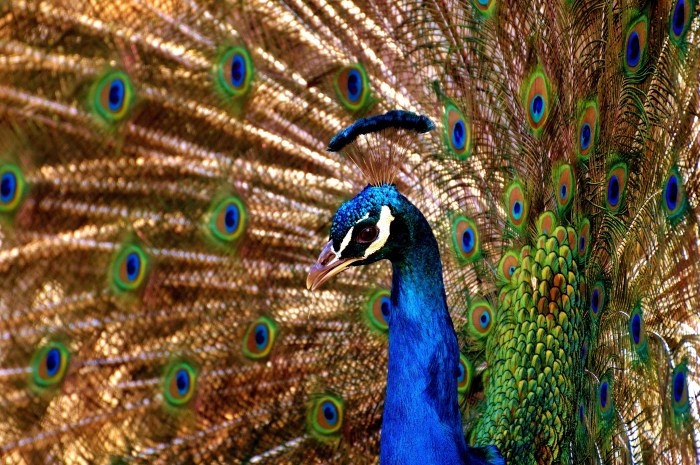
….the group consider themselves to be the chosen people of Melek Taus, the “Peacock Angel,” who they also know as Shaitan, or Satan. In Yazidi tradition, this special relationship began when Shaitan visited their ancestor Adam in the garden of Eden, bearing forbidden fruit.
The Yazidis are an ancient rural people from the plain of Mesopotamia, the cradle of civilization. Almost forgotten archaeological layers of belief still poke through the surface here, old echoes that stretch religious absolutes held sacred by Muslims, Christians and Jews alike into weird, unsettling shapes.
The parallels between the Peacock Angel and the Satan we’re more familiar with can be baffling—Melek Taus is God’s most important angel, his commander-in-chief in this world, which was also his original role in the Abrahamic traditions. He’s also a fallen angel who rebelled against God and was subsequently cast into Hell; but in the Yazidi cosmology, after 40,000 years his tears quenched Hell’s flames and God forgave and reinstated him.
One of Melek Taus’ symbols is fire, and he can illuminate as well as burn. He’s responsible for granting mankind knowledge and free will, and in an intriguing twist on the familiar Garden of Eden story, he first initiates Adam with forbidden fruit: “[God] commanded Gabriel to escort Adam into Paradise, and to tell him that he could eat from all the trees, but not of wheat. Here Adam remained for a hundred years […] Melek Taus visited Adam and said, ‘Have you eaten of the grain?’ He answered, ‘No, God forbade me.’ Melek Taus replied and said, ‘Eat of the grain and all shall go better with thee.’”
First, if you’re like me and one of your main failings is a perverse sense of humor that last paragraph amused you mightily. What if it were true? What if the forbidden fruit, metaphorically speaking was wheat/agriculture/civilization?
It’s actually not that far off what I understand of current, orthodox (meaning the main one, not the Orthodox church) that the paradise was the time of our innocence, the animal state in which we could not sin because we did not think or plan.
And I do get that a lot of people — not me. Sorry, not buying it. It’s like the noble Vikings thing who are exactly like NYC professors. I know fads when I see them — now think that the nomadic state of humanity was better, more egalitarian, less oppressive than agricultural society.
So of course, I grinned like a loon thinking of centuries/millennia of discussion on the apple symbolizing sex or science or– And here all along, the evil was those golden strands that allowed us to grow and have cities and spread across the face of the world.
But should we take the Yazidis’ origin story as … well… gospel truth?
Why?
Sure, genetically they’re one of the oldest human groups. Sure, they say and the article linked buys — rolls eyes — that they were there at the beginning at Gobleki Tepe, (if that was the beginning and not the debased state after the fall of the previous civilization. I will hold out for more findings .)
People say all kinds of things. And people buy all sorts of stories and incorporate them into their myths and into the “it has always been so.”
Looking for truth in the legends of mankind is even more slippery than looking for truth in human genetics. You might as well use Napoleon’s Book of Dreams or Nostradamus as a way of interpreting the history of mankind and be done with it, it’s about as reliable. Or perhaps you should sit quietly in your corner and wait the dawning of the age of Aquarius.
Legends and stories, the place from where humanity dreams, are one of my fascinations, as are the places where those meet, and the places where those diverge.
But every time we dig into a particular story or try to pin down particular details, we find it was borrowed from elsewhere, pre-figured elsewhere, or influenced by people who lived around.
So, yeah, the Yazidis worship the peacock angel, Melek Taus, though worship might be a faulty term. It’s more like they try to keep him from getting too mad.
Did he have anything to do with paradise as Jews and Christians believe in it? Or with the temptation in that primeval garden of the soul?
Unlikely. Is it likely that the Yazidis lived at a religious crossroads, with Muslims and Christians and the various sects that lived only a short time, and didn’t imbibe any of the stories, adapt any of the stories? Borrow any of the symbology?
It’s not written, remember? These are stories granny tells and some grannies (mine, for instance) are novelists who never got around to writing things down, and instead made up elaborate stories, weaving them skillfully with the real world. (It took me years to figure out the Parish Priest was not in fact a werewolf.) And then, you know, kids absorb stories imperfectly and through their experience, things they’ve seen and other things that they heard. For instance, it took me years to figure out my son thought I was the youngest of three, not the younger of two. This is because my cousin, who was raised with us is called “Aunt.” And she was raised with us, which means in the childhood stories I tell she figures as a sister.
The “they all steal from each other” Heinlein said of writers applies to all story tellers. I suspect the Yazidis incorporated their own fire-idol into the cosmogony of their neighbors, however they could.
Someone else I was reading said that people who use birds and serpents as sacred symbols are always bad news and perhaps they’re right. Except Christians use the holy dove as a symbol of the holy spirit, and the peacock as one of the symbols for the Christ. (No serpents, though, as far as I know.)
And yes, the Yazidis say that the symbols at Gobleki Tepe are Melek Taus and his friends. And perhaps they even believe it, but the only reason I would is if they’d said this and talked of creatures that resembled those symbols before Gobleki Tepe was excavated.
I might sound like I’m making the Yadizis out to be deceptive or confused. I’m not. They’re just human. Every time you pursue this sort of mythical (in the sense of where myths live, not in the sense of false, though some obviously are) account down the rabbit hole, you come back with your teeth clenched on nothing.
Take Roots, the myth that American blacks fastened on to, the origin of “we were kings.” There were so many problems with it that even when it came out as a mini-series, anyone half-educated in the history of Africa went “Wait what?” and the most kindly thing some of us could say was “well, maybe the author’s family history was highly atypical.” But of course, it wasn’t family history. It was fiction, based on a totally unsourced fiction book. But it was what people wanted to believe, and you can never debunk it enough that people will stop believing it.
Or take the great lost matriarchy that makes up so much of the background of both feminism and New Age in the U.S. It’s nonsense, partly based on Marija Gimbutas’ willful misinterpretations of things like bull’s head as uteri. And partly on people wanting to believe and have something to base their dreams upon. People want to believe that women are peaceful, and that “if women were in charge” everything would be peace and love. Mostly because people want peace and love, and because they’ve come from another planet and never met any real women. (What? I spent six years in an all-girls school. Books positing a peaceful planet of “all women” get walled so hard they dent the brick. It’s not that we didn’t even have physical violence. In an all-female environment, the strongest and biggest inevitably turn to male-style hooliganism.)
I have no idea why the Yazidis chose to identify themselves as the people of the tempter in the garden, except, well… they were living among Muslims for generations. So many “we’re on the other side” made some sort of sense.
I don’t particularly credit it more than Arabs being descended of Esau Ishmael (Edit. Really high blood in caffeine stream). Though that wheat thing is intriguing. That wheat thing might relate back to something.
Every language has a “fall” built into it, and the assumption we came from on high to our present debased state. This is explained by the idea that every generation thinks the world is in decline. But it doesn’t satisfy. Not quite.
Look, if that were the case, would Latin have that built in? The Romans were the peacockiest of all races (but no angels) and convinced they were pinnacle of everything. But their language betrays them.
Perhaps, if there was a higher civilization before, a higher state of being — let’s say that there was a civilization of agriculturalists before the pastoralists of Gobleki Tepe — and it fell in some horrible way. Nuclear fire is not needed for the fall, though heaven help us, every “historian” who posits ancient civilizations is fascinated with it. Their own myths of the seventies, their idea we’d all die by fire taints everything they see. The black plague would suffice and be enough, and quite likely to start rounding the moment humans massed in cities, and take a humanity that wasn’t used to it.
Would that not get incorporated as a “fall”into the legends of long ago? Before wheat we lived in a state of health and innocence, and then we had wheat and fell from grace. Indulge not in the tempting agriculture…
The legend need not even have originated with the Yazidis, just was taken by them, at some point, to explain why they were “a people set apart.”
Look not for truth in the legends of mankind. Not real truth. We might be made of ape and angel, but we’re mostly made of story, story that weaves into our thoughts, our bodies, our beings, and becomes part of us and makes us who we are, and shapes our being and our choices.
We all steal from each other. We all make up stuff.
But perhaps some attention needs to be paid to the stories we tell. This modern myth that humans are always wrong and evil and must disappear is starting to manifest itself in a birth dearth, in young people with no purpose, in a civilizational suicide from which there is no return, not for thousands of years.
In the garden there was a serpent, and he whispered “Humans are uniquely bad. Eat of this fruit of emotional irrationality and you’ll go into the long night with no regrets.”
Do not listen.
Humans are evil compared to what? Who judges absolute evil, or absolute good? Without us, what is absolute evil or absolute good?
Suicide is never the answer. Not for a person, not for a civilization, not for a species.
Perhaps out there, in the starts, the good that we do is desperately needed.
Forget the peacock angel and build for the future, and the centuries yet unborn.
The children might believe all sorts of crazy things about themselves and us, but that’s all right, so long as we give them the tools to survive, to build and to go on.
Evil is the negation of the future, of hope, of creation. Evil is the voice that whispers “Kill yourself now and it will be better.”
In the beginning there was chaos, void without form. We came from it. We’re not going back.










 .