What Remains

fantasy-3060807_1920

The Portuguese, or at least some of them, or PARTICULARLY my mom have a tendency to burn most of the belongings/correspondence/papers of the deceased.

This is something that would shock Americans and in fact it is probably a measure of my acculturation that I was somewhere between shocked and upset when mom burned paternal grandma’s decades of correspondence.

You see, grandma was the family’s node point, keeping in touch with relatives and friends from 80 years before, and their outflung progeny.  Also as part of her correspondence would be 30+ years of daily letters to/from grandad where he worked all over the world froM Brazil to Venezuela to South Africa. During the period of early 30s to mid 50s.  Just the casual historical mentions in that would be…

OTOH I get mom’s habit is more normal for Portugal than the tendency to save and study everything.

This might be because, as Robert puts it, Portugal is an iceberg in time.  The amount of history and the amount of Portugal buried below the waterline in time greatly exceeds the present.

The same way family tombs with a vast chamber where you lower the new coffin atop the old ones, and the ones at the bottom likely become dust, burning most of what we get from the dead might be the sane thing to prevent the past taking over and choking out present and future.

Heck, a lot of us do this in our own lives.  I’m in the middle of a process of doing that with my clothes, since the weight is FINALLY coming off.  So, formerly cherished and go to garments, that are dropping off my butt or sagging on my chest are being given away.  (some will be retrofitted, but honestly, I prefer to donate so that someone having an issue with their weight can find something nice.)  This is more of a wrench than you think, considering that sometimes those garments were the one bright spot, the one thing I knew looked good on me, in an otherwise blah time.

I do the same with a lot of other things, form knickknacks to dishware, from books to music. Things that were important to myself at some time but no longer used, I try to donate so that someone else can enjoy them.  Sometimes they are things that I used for purposes I no longer need to fulfill.

For instance, there was the collection of fondue pots.  We used to have a new year’s party at our house when the kids were little, and serve fondue.  Then we moved, and stopped having the party. So the fondue pots got eventually donated.

OTOH I shocked the woman who came to pack my house, because I keep a box (just one) of kids clothes, most of them toddlers’ but from six months to about five years.  You see, one of the things is a lambskin winter coat where the hood has EARS. And the back says douce come un agneau.  My best friend from elementary school, who married a Frenchman, gave us that for Robert at a time when we literally couldn’t afford a winter coat for him.  And he looked adorable in it, as did his brother later on.  They looked like teddy bears with human faces.  And it was warm.  Then there’s the dragon outfit I made for Robert when he was five. The knit coat and hat mom bought Marshall. Etc.

The packing lady was like “But your sons are grown!”  And sure, they are. But hopefully there will be grandkids who’ll wear the coat and look adorable. And anyway, those are pieces of their childhood and important TO ME.  Do I mind if the kids throw it all out when I die? No. They’re important TO ME. The kids might find them funny or not.  It doesn’t matter.

I’m trying to minimize, however, the amount of cr*p the kids have to deal with when we die.  Which means sometime in the next year there will be a great purge, mostly of art stuff.  (Since I now do most of it on the computer.)

Yes, this was brought about by the fire at Notre Dame.

It seems that they saved a lot more than not. And I’m confident the French will do well by the source of revenue.  And of course, it’s part of the patrimony of mankind.  I mean, mom was in tears about it.

But in a post-Christian Europe, how long will those marks of the past be acceptable and tolerated, much less cherished?  What comes after? And how many things form other civilizations have we already discarded or lost that would be relevant to us.

This is one of the things that fascinates me about lost civilizations (for the purpose of this post as advanced as ancient Greece, Rome, or even Gobleki Tepe)?

It disturbs me, like the idea of grandma’s lost letters.  What there, what true patrimony of mankind is lost forever, beneath the Earth or burned or otherwise obliterated.  What would it tell us about our ancestors and ourselves?

No way of knowing, except in dreams.

It is important, the way Notre Dame is important. Because it gives us the range of bigger than ourselves things humans can accomplish. A measure of human dreams.

And yet much of it, maybe most of it, is burned, lost in the past we can’t retrieve without a time machine (makes story note.)

And only those of us who dream in words can bring it forth for the rest of the world.

Which is why we must.

The Squid And Its Ink

squid-153604

I’m no longer surprised when someone takes offense when I say something like “communism has been driving the culture for a hundred years.”

I have been called insane and worse for saying that, and incidentally for saying that the Earth is not overpopulated, we have no way of telling the real population count worldwide, because even in the US counting is a bureaucratic mess, and that it is my opinion — though hard to substantiate — that the population is in fact already falling. I’ve been saying both of those for 20 years.

All I can say is that I’m getting less push back on both now. People actually in touch with the culture have started suspecting the same thing and being vocal about it 5 years ago or so.  I’m not the only thinker on the right (the thinkers on the left are something else and quite approve of what they see happening) to think that Western Culture is dying of a fatal wound inflicted around WWI.  I’m even less the only one looking at what is actually happening in the world, from economics to the relations between nations and smelling a rat on population.  Most of the people already ringing the bell on population though have more than my gut feeling/sense of the culture as representative of how many people, understanding of how the rest of the world does censuses. A lot of them are scientists, in command of things like “water consumption in Africa” or “the actual population density in x or y.”  I see them, occasionally, pop their heads above the maelstrom of the culture, only to be shouted down by those who are teaching our kids that humans are a plague upon the Earth.

No, I don’t have the links. As I said, I see them pop up, here and there. But they’re still very countercultural, and get shouted down. I just note “I’m no longer the lone voice in the desert” and carry on.  I also note that these outbreaks are getting more frequent and that if you get scientists who are not invested leftist ideologues in private, all of them snort at the UN population ideas.

I’m particularly not surprised when it comes from a commenter who 9 times out of ten comes here to misunderstand what I wrote or otherwise try to cause dissension.

I don’t mind trouble makers. As some of you know, all I do is step in and go “stop fighting each other.”  I do mind people who willfully or otherwise misunderstand, and always misunderstand to rebuke and reproach from a position of their assumed superiority.  Which is part of my issue with “our betters” in the culture, btw.

I’ll note in passing that Heinlein, then a convinced democrat and honestly a socialist, thought that the democrats had become fully dominated by communists by WWII.  You don’t need to have his insider view of the Democrats to understand the same, if you look at the gyrations of the American left before and after Hitler and Stalin broke their pact.

Now, were most democrats communists? Please. Most of them were rather traditional people in traditional communities who would spit on a communist faster than listen to him.  On the other hand they were listening to communists without knowing, swallowing communism in bite size without realizing it, being led down the garden path.

I didn’t say the communists were openly ruling the country. I said that for a hundred years, secretly, they were in full control of our cultural institutions. (And not just ours. Europe–  Never mind.)

“But Sarah, World War 2 is not 100 years ago.”  Of course it’s not. It’s 75. But the ideas of Marx were driving the culture long before that.

I know this because I don’t read what people say about how they feel about communism. I read their output in fiction, in news, in thought instead.

And because I grew up in another country which was in many ways in the past, I read American cultural output at least 30 and sometimes more years older than I.  British too.

Hell, some of my favorite writers from childhood had their heads full of rats. MORE full of rats than Heinlein when he was a socialist.  Heinlein at least always had a firm grasp on the nature of humans, so even while he approved (at least I think so, I haven’t correlated the publication date) of socialism and Unions, his depiction in Starman Jones is exactly the kind of bureaucratic hell one would expect.

Most writers weren’t as grounded as Heinlein, and Heinlein had the distinct of advantage of, while working in an intellectual field, having grown up poor and done a lot of things to “root, hog or die” along the way.  It’s almost inevitable that the biggest crop of nonsense comes from authors who were more intellectual/intellectually minded from the beginning.

To begin with, let’s establish our terms: Communism — this is me, buster, and the first squawk about how means of production and their different handling makes a big difference gets a baseball bat — is a more severe form of socialism, and the socialist’s ultimate goal and dream.  Yeah yeah “but socialists let you retain ownership of the means of production”: define means, define production, define ownership.  When you still have the field but the feds tell you it’s a wet land and you can’t farm it or build on it, is it still yours? When you still have the cows but you have to shoot them on the government command to prevent flatulence, are they still yours?  I’m not in the mood for the semantics they taught you in school, buster, and I have a baseball bat.

Both philosophies come from Marxism, a crazy and flawed prophecy based vaguely on economics and history but infused with the vision of a grifter who never did anything useful with his life, despite holding himself very high in intellect, and who died in 18… 83 I think.  Around there somewhere.

Marxism maintains a lot of crazy crap, starting with the idea that if you regulate everything suddenly, automagically, the state will wither and there will be paradise while soup rains from the sky.

It has got all sorts of refinements added to it over the last hundred years.  You see, it is typical of the squid to let out a cloud of ink when you’re about to catch it. In the same way, when Marxism fails, its followers immediately come up with another just-so story as to why it would have been proven right “if only.”  (It absolutely follows When Prophecy Fails by Leon Festinger, by the way.)  The last major patch applied to the crumbling software was the Gramscian one, which explains why workers in the West haven’t arisen to seize the means of production.  You see, it’s all race and whatever based.  No, it doesn’t make a wit of sense, but good Lord, neither did Marxism.  What it is is a way of placing the left’s hopes for workers uprising on our “little brown brothers.”  No, that’s not what they say. It’s all blah blah colonialism and oppression.  But what it boils down to is “other races are naturally socialist/communist” and we must now count on them to lead us to the great progressive future.

This is part of the reason they’re denying Venezuela is a disaster of socialism and screaming US interference even harder than usual.  It’s also the root of all the crazy “check your privilege.” the intersectionalism insanity and sundry other bits of ways to avoid thinking on the left. And it’s been driving way longer than people who are not in their circles realize.  In the early two thousands or late nineties, someone attempted to pillory me in the letter columns of Analog for having a story in which if history had been different the Chinese would be Capitalist.  I didn’t understand how any human being could believe culture is genetic and race-tied. Even I didn’t believe any thinking human being would swallow Gramsci whole and make it part of their worldview without realizing this made their worldview a racist swamp.

So, I’m not going to take communism apart in detail, because in detail there is a lot of squid ink and ways they obscure when they’re about to be caught. Also, I have real work to write, stuff I get paid for.

I’m going to stick to the generalities: Marxists, in general believe that government is best held by “enlightened” or “progressive” (they might have been in the 30s) people who can lead us to that paradise where government will automagically wither away.  They discount the ability of individual people to choose their fate and how they spend their money. They might or might not wish for international control — that was almost exclusively a Soviet thing, disguising its expansionism under a cloak of “one world government” — and they might or might not openly call for the abolition of money.  They do absolutely think that pretty much any economic (or often otherwise) activity should be regulated/legislated/controlled by the government. And by “government” you’re to understand a government of like minded Marxists. Most of them believe they’re “caring” or “kinder” or just filled with revolutionary zeal for “the poor downtrodden masses.”  None of them I’ve ever met even knows what poor downtrodden masses are, and almost all feel that in a just world their own intellect would be worshiped and they’d be in charge.

This I oppose to “right wing” which is only, really, the right wing in the US. In Europe it tends to be a disagreement on who “the best people” are with the right holding on to hereditary and religious markers of the best people as opposed to ideological (which has made them very easy to infiltrate by the Marxists, so now most of them are Marxists, but without atheism and with a head nod to “all the best families.”)  In fact both systems, Marxism and the European right can be and often are startlingly similar.  But at least the European right doesn’t wish to deliver their own people bound to their foes, and sometimes one supports/votes on very small differences indeed. The choice often isn’t between cake and death but between slow poison or fast one. Always vote for the slow one.

For a while the right in the US went the way of the right in Europe. When the left controlled all the cultural apparatus and moved the Overton window so that anything non-socialist or Marxist, or which had different assumptions about history and the future was unspeakable without being ridiculed or causing its speaker to be destroyed in public, a consensus emerged that communism would — of course — ultimately win. It was the future and so much more efficient than sloppy capitalism. Therefore we can slow it/make it less totalitarian and brutal, but that’s all.  A lot of the older Republicans, possibly including Romney is still stuck there. McCain LIVED there: “You’re going to eat us, but I say eat us slower.”

In many ways I’ve spoken in defense of these people, not because they’re not despicable, but because they grew up in this ethos and find it difficult to adjust. Humans need a vision of what comes after their time. And their vision is of the Marxist future. They thought communism would win in the end, while still being opposed to the brutal tactics, etc. to achieve it.  (Note that they don’t dispute a communist future, if non-brutal would be a good thing. They sort of assume it. Which is bizarre and wrong, but it’s what they grew up with.)  In a way standing between your people and the system you think will inevitably win is a position of great courage. These people were and are the fighters at Ragnarok fighting the battle they already believe lost.  The fact they don’t take well to having the narrative they’ve held onto punctured merely makes them human.

Note I don’t say I want them in power. Only that their issues are understandable. I feel sorry for them and think great evil results when they’re in control, and they should be kept away from any power real or imagined. But they do have courage. And I understand how they got where they are. So I don’t hate them. I just don’t want them in control of anything.

So, what does all this have to do with 100 years of cultural dominance?

This post is already incredibly long.  However, I have a plan to re-read again my formative science fiction. Most of which is from the thirties and on. (90 years. Science fiction. How hard are you going to quibble?)

From reading early twentieth century books my understanding is that Marx’s system of thought had penetrated the intelligentsia thoroughly before even WWI.  WWI smashed the hierarchies of belief in the entrenched systems of power in Europe, and allowed Marxism to fill the gaps more and more.  I remember reading (while pursuing a rabbit hole — yes, my name used to be Alice) about the publishing industry in GB and how it became increasingly “progressive” after WWI. Note this was said with approval. That they were actively searching out books that supported progressive ideals.

I have been having a weird drug interaction that acted like ADHD and dementia combined, so this reading has been delayed.  However I’d started at some time with The Green Man of Socialism (Obviously Occasio Cortez’s mate in the wild) which is mostly a national kind of socialism, probably prevalent from WWI to WWII (note that Marx himself was largely a national socialist, and the nationalism he believed in was British.) which changed it to international socialism.  Which in practical fact was Soviet nationalism projected abroad. (And is now largely Russian nationalism projected abroad.)

I can tell you that books from WWI on are full of the idea that money is inherently unjust as a means of trade, that somehow capitalism brings about war and death, that “there should be a more equitable system” etc. Periodicals of the time are more explicit on the idea of “world peace” through some kind of unity; the idea that the bright young things who believe in redistribution and “easing the burden of the little man” or whatever they call it, are right, etc.

You find it even in such relatively innocuous writers are Agatha Christie (whose horse sense, like Heinlein often save her from the grosser errors.)

Rex Stout? Avowedly anti-communist, while advocating for one-world-government, education as a way of convincing the young of the progressive future (redistribution via high taxes, etc.), believing every single canard the leftist press brought up against more right leaning politicians (many of which we now know to be wholly invented) etc.  Was he a communist? One assumes he wasn’t. His detective is a creature of excess and very human. But the principles he was advocating and his throw away lines contributed to the increase of leftist fog in the culture. (Partly why the gatekeepers allowed him to flourish. Not saying he was untalented. Note despite his politics giving me a sour stomach, he’s still one of my favorite writers. But the establishment in publishing, while unable to MAKE you could bury you.  As I and others know.)

We’ll leave aside Heinlein’s early folly.  It’s hard to underestimate how much WWII convinced people that force could remake culture for good.  I’ll just note he gave up that insanity after his tour of the world. And he riled the left up often enough even before that one can only trust “a storyteller’s true instincts.” They still hate him as one hates an apostate.

Let’s instead go with Clifford Simak.  A middle-class journalist from the heartland.  So involved in the culture on two fronts.

I don’t revile Mr. Simak who was one of my favorite writers before Heinlein became one.  In fact my brother was surprised second son wasn’t named Clifford. (He would be but husband put foot down hard.)

Recently I had the opportunity to send 4 of his books to a friend who hadn’t read them, and I envied him a little reading them for the first time.  At the same time I felt forced to explain that I didn’t think Simak was a communist — and I had Jerry Pournelle’s words he wasn’t — but reading him my friend would encounter many of the ideas that make the left today insane: one world government; government as only and always a force for good; the need to defeat religion and other “remnants” of the past; the advisability of abolishing money.  Even, past that, the ideas that always follow (because inherent in that world vision) that humans are naturally evil and need to be controlled, etc. (But government somehow escapes this.)

Despite these ideas — which Jerry assured me were just middle brow when these books were being written — Simak has touches of humanity and of love for individuals.  Like Rex Stout he’s worth reading.

But as decent people who consciously would tell you they were anti-communists, they were still “another brick in the wall.”

Was there a conspiracy to move the world left?  I don’t know. Arguably Russians have only ever been good at ONE thing: propaganda and corruption of other cultures.  From time immemorial.  And there are records of the Soviet Union paying off/subsidizing A LOT of leftist groups/causes, many of which would be shocked to know they were being manipulated.

But how much of it was that, and how much merely people who had been disillusioned with tradition and whose world had exploded in the industrial revolution and its echoes seizing a new prophecy and a new vision, particularly one designed to appeal to intellectuals with little experience of the everyday working world, and an unwarranted good opinion of themselves?

That society had gone to mass-production of everything including news, art and entertainment would only facilitate that kind of group-think.

Just as our current distributed forms of communication undermine it.

Has the culture been in the hands of increasingly more communist Marxists for almost a 100 years (some sectors more)?  A-yup.

What does it matter now?  Well, the squid is still letting out ink, but it’s in a little tank and the rest of us can see what it’s doing and see it very clearly.  This is where the worm turns.  Let’s hope its turning belies history and doesn’t leave blood as well as ink in the water.  But changing so many infected minds quickly enough to avoid that is going to be… tricky.

And a man who argues that people said they were anti-communist, in defiance of these people’s cultural period just might be hagridden. And wearing an overcoat of self-righteousness.

Let’s end the masquerade, so everyone knows where they stand.


Vignettes by Luke, Mary Catelli and ‘Nother Mike and Book Promo

book-4096336_1920

Book Promo

*Note these are books sent to us by readers/frequenters of this blog.  Our bringing them to your attention does not imply that we’ve read them and/or endorse them, unless we specifically say so.  As with all such purchases, we recommend you download a sample and make sure it’s to your taste.  If you wish to send us books for next week’s promo, please email to bookpimping at outlook dot com.  One book per author per week. Amazon links only.-SAH*

FROM AMANDA S. GREEN:  Nocturnal Revelations (Nocturnal Lives Book 6)

51j4ykkhqol

As a cop, Mackenzie Santos knows every shift might be her last. That was driven home two years ago when Samuel Wilcox came much too close to killing her. She still had nightmares of waking in the morgue. But that was nothing compared to leaning she is descended from one of the oldest and most powerful shapeshifter bloodlines. Until the night she “died”, she always believed shapeshifters and werewolves were the thing of bad Hollywood movies.

Now she knows differently. Monsters really do walk among us. Some are human. Some are shifter. . . And one wants her dead.

Worse, so much worse, whoever it is wants to reveal the existence of shapeshifters to the humans. He–or she–doesn’t care about the consequences. Somehow Mac and those who know her secret must discover who their enemy is and stop them before it is too late. But can Mac do that and stay alive?

FROM JASON FUESTING (Who, when he started this series asked me if I felt he was trespassing too close to my USAians and was told we need more people hitting that zone.):  By Dawn’s Early Light (Echoes of Liberty Book 1.

51n1wcdrxql

Eric Friedrich was supervising the last ice harvesting shift for his ship’s shot-up environmental systems when they detected an anomalous ice comet drifting by. Investigating the icy tomb, Eric finds a ship that couldn’t exist- a relic from a nation the Protectorate killed billions to erase from history. .. And will kill even more to keep secret.

When his world explodes, Eric must make allies in the unlikeliest places, and seize even the slimmest chance of survival while unraveling a conspiracy that shattered planets and set off interstellar war!


Vignettes by Luke, Mary Catelli and ‘Nother Mike

So what’s a vignette? You might know them as flash fiction, or even just sketches. We will provide a prompt each Sunday that you can use directly (including it in your work) or just as an inspiration. You, in turn, will write about 50 words (yes, we are going for short shorts! Not even a Drabble 100 words, just half that!). Then post it! For an additional challenge, you can aim to make it exactly 50 words, if you like.

We recommend that if you have an original vignette, you post that as a new reply. If you are commenting on someone’s vignette, then post that as a reply to the vignette. Comments — this is writing practice, so comments should be aimed at helping someone be a better writer, not at crushing them. And since these are likely to be drafts, don’t jump up and down too hard on typos and grammar.

If you have questions, feel free to ask.

Your writing prompt this week is: blue

And Marry Our Fortunes Together

puzzle-1721592_1920

Perhaps not coincidentally, I’m thinking a lot about marriage, (mine is fine, thank you. It’s a combination of the kid getting married and seeing a Peterson lecture on it, mostly.)

Mostly I’ve been thinking — a lot — on the changing nature of marriage.  We won’t go into same sex marriage, because I don’t want that donnybrook in my comments again and also today, fundamentally, I have a wall to paint and this would distract me.

But the thing is that those who hold onto the traditional definition of marriage, as it exists now, beyond the sex of the people engaging in it are, with few exceptions, holding on to a dead form.

Look, two things have fundamentally altered the nature of marriage.  Four, except for two being  subclauses of the other, which make the marriages we contract, and our understandings of it completely different from what it was, say, 100. years ago.  Note I’m not saying this is better (in many ways it’s not) nor that a lot of us aren’t doing our best to hold onto traditional marriage. But even then, the bits and pieces of the “real” (secular) world intrude as they can’t help doing.  Because marriage, while a contract between a couple is also a contract with the wider society. It’s a contract upon which other contracts are formed, the smallest grouping that is fundamental to society (including the creation of new generations. Something on that later.)

The fact that it’s in flux is a lot of the problem. In fact, societaly speaking marriage right now might not be functional in any sense, including traditional and modern.

In the traditional sense marriage was ordained to make two into one: “for the procreation of children, as a remedy against sin and for the help and support the two would have of each other.”

Part of that, ultimately, ties in to the idea that in Eden woman came from man, i.e. we are pre-ordained as a dual being.  Something like that.  It’s hard to explain mystical concepts in every day words.  Interestingly that idea pre-dates Christianity and is central to a lot of very old myths: the idea that we’re always two meant to be one, and that the two halves of one person have to find each other to be complete.  If you’re a believer, this is very old because it’s right. If you’re not, it’s because the very duality of humanity suggests it to the human mind.

That idea is under attack on several points.

First of all the procreation of children: it seems a lot more people avoid that, and it’s easier to avoid by several means, mostly the pill or course, but others as well.

A subclause of that is that we have more means of entertainment than any of our ancestors.  I see people lamenting that younger people are having less sex, as well as looking for physical reasons for this up to and including lower testosterone in males.  And that’s probably part of it, (the lower testosterone, btw, might be induced by the role of males in society right now, since a lot of testosterone production comes from perceived victories. This would also explain higher testosterone in women. In which case all the current nonsense is not just annoying and a bad idea, but leads to extinction.) But the other part of it is probably that we — in Freudian and therefore not quite right terms — can sublimate our sexual impulse into a lot of other things. And the more creative you are, the more you do so.

I think our ancestors defaulted into sexual activity a lot out of boredom and a need for connection, while we’re fueling pursuits not-sexual from the same needs.

Second subclause is that women are — because contraception is a thing — expected to work outside the home and put at least some of their self-worth into a career rather than “the procreation of children” and their upbringing.  This makes marriage… subtly different. You’re two independent people coming together and the terms of union are not the same as they were in most of the past.  Possibly the forms of marriage first appeared to protect the pregnant woman/the infant.  While that’s still sought out by those of us who want children, the game has changed.

The other major change — not a subclause — is longevity.  For reasons known only to the psychiatrists they desperately need it has become fashionable on the left to deny the advances of longevity over the last hundred years. This might be because they desperately want us to believe we can sign onto something like the Green Nude Heel, or give up all our health autonomy to the government and we’ll live “about as long.” I’ve learned to be suspicious of this type of squid ink in the cultural water and ask myself what they’re trying to obscure.

Pish. And tosh.  I was 14 the first time I met an 80 year old. He was barely connected to the world and had constant tremors.

You’ll say “ah, but that was selection bias.”

Hardly. I lived in a village. I met people of all ages. 75 was considered VERY old.  Hell, 60 was the beginning of OLD and 65 was “old enough to die with no remark.”

Portugal was not a third world country. It was at least second, maybe first and a half.

And when I became conscious of such things it was at least the mid to late seventies.

I’ve mentioned here before that once you got the kids married/out the house people “prepared to die.”  This was not subtle. They basically shuttered all interests, except grandkids.  Consider that born when parents were 28 and 31 I was considered a very late child, almost late enough to be my parents’ grandkid and you’ll see when that “get kids out of the house” was.

I’ve talked to people my age who grew up all over the world and their experience is similar.  Right now my 60 some year old friends consider themselves late middle age. (Or sometimes middle, middle age) and some are studying for or embarking on new careers.  There’s a whole second life after your raise the kids. And 85 is considered old, but certainly not decrepit for at least half the people, who are active, engaged and might have businesses.  I know losing friends at 80 some feels like “well, they were old/not very well, but d*mn.” Losing someone at 65 incites “so young” comments.  And medical son tells me getting 100+ year olds in the hospital isn’t even unusual.  I remember a long discussion in the mid 80s about whether 100 year olds existed in any numbers or it was just bad record keeping. It seems silly to argue that now.

What does all this mean, and what does longevity have to do with marriage.

Why… everything.

Look, marriage was a bond for life, but you didn’t have a ton of life past your reproductive age.  Now you might have half your life after that, as a couple.

Add to that the “more entertainment”thing which includes more spheres of action, and what you get is “more identities”.  Depending on what people work in/get fascinated by or the causes they adopt, people might have many identifies in a life time.

One o the enemies of marriage is changing the rules of the game.  Say (I’ve seen it) a woman becomes an all-in feminist activist in her late 40s and this affects her relationship with her husband to the point of questioning minor things such as whether sex is patriarchal oppression?  Or take something seemingly less crazy, like someone decides to pursue a passion for… piano playing or crocheting in middle age.  Even if they don’t quit the day job, and simply channel all their energies to breaking in to the new field: that’s going to affect the couple’s options of work and play and what they do together to the point it might break them.

At some point, because marriages were breaking anyway, no fault divorce seemed the logical answer to all of this.

If Peterson is right, it was rather a step in the WRONG direction.  The reason he claims marriage is essential to happiness goes around all those definitions of marriage as was (but not counter them. While having a fairly traditional marriage, this applies to us, with hobnail boots on, for instance) is because it is an indissoluble association. That is, the fact that you can’t run away from each other makes marriage THE safe space where you can see each other without veils, and be each other and have someone else accept you.

Because we’re all broken (or as Peterson puts it “full of snakes”) it is important to working on our brokenness to know there is someone who knows it and can’t run away.  It’s easier to deal with secondary effects if our back is protected.

Mind you, in the age of divorce this is not true, which makes marriage fairly worthless.  Also, no one tells anyone this as a real and very needed reason to get married, which means it took Dan and I a couple of decades to find that this was one of the very important things in our marriage.  We could be ourselves, even the parts we didn’t like very much, because the other one was here for keeps.  And being able to be ourselves allowed us to improve ourselves, if that makes sense.

Sometimes I wonder if all the necessity for “safe spaces” is because we lost that one, fundamental safe state, where we could take off the armor and let the other see the cracks. I know, since we were recently reviewing insurance and what the plans for the other would be if one of us woke up dead tomorrow (yes, I know, but that’s how grandad said it) which in turn affects the amount of insurance. My thought was that  don’t know if I can go on without that one place I can be me, and that one person who still loves me (mostly defined as sticking around) despite knowing me.

It amused me highly this morning, while doing housework to a Rex Stout audio book (I’ll resume it while painting. It’s Homicide Trinity) that bizarrely Nero and Archie fit the Petersonian definition of marriage.  I.e. lifelong, indissoluble union where you know each other and still stay.

Note nothing is said about sex in it.  I don’t know if sex has anything to say in that definition, except that if you’re both seeking it elsewhere it tends to send your loyalties elsewhere too.

I also don’t think it works with more than one person. I think revealing yourself wholly to multiple people at once would be impossible.  The necessity to manipulate your image to different people (even with friends we do that) would make group marriage untenable as a safe place and a life-long union.

Which means Heinlein correctly diagnosed the stresses on marriage, but went in a completely sideways direction, at least if we agree with Peterson’s thought.  I agree with it more than with Heinlein, which doesn’t detract from my admiration from Heinlein on most things.  Making predictions is hard, particularly when they’re about the future. He got the nature of man more right than not.

Again, mostly I’m going on my own experience, which leads me to believe that whether you believe in traditional marriage or not, the most important nature of such a union is that it be permanent and indissoluble.

I’m not telling you that’s how it should be.  I just think that in the long run we’ll find for society to persist and civilization to continue that’s the most important thing of all.  Perhaps even sex between spouses doesn’t matter as much (I know married couples who had to give it up usually for health reasons, and yet continue to function as married people. Which means the seventies obsession with what’s happening in bed for the functionality of marriage was probably wrong.) as the ability to be “naked” in a metaphysical and psychological sense before each other.

In which case our years will be considered even crazier than not.

As in all things, I only know how this works for me and some friends close enough to give me some insight into others’ lives.

But I thought it was worth pondering. (Besides giggling at the idea of NW and AG as a married couple, mostly because I can see both gentlemen glaring in my head. :) )

Now I’m going to paint walls. Try not to burn anything down.


Clearing the Fog

way-768567_1920

In a way I’ve always loved fog.

Literal fog, I mean.

For someone who lives with her head between worlds, fog can be magical. It obscures reality, it shifts, it obscures and reveals.

When I was a kid the village got thick, milky fogs. Okay, part of it was the fact that the city of Porto sent all its garbage to a fertilizer factory on a hill overlooking the village, and that — as a result and because of either lack of funds or lack of permits to build — the factory burned great big piles of garbage above the village almost every night (Yes, I do have asthma. Don’t ask.)  The problem is that the village was in a valley and mom’s house was located about halfway up a slope coming up from what used to be a swamp before the railroad raised the ground to build on it (the other side were still swamps.)

The thick, heavy fog would settle there, and the smoke would weave through it, making it more opaque (also stinkier.)

I did not love the throat burning or the constriction in breathing, but I loved the shifting, obscuring and revealing quality of it.  It was the sort of fog where you saw clearly maybe two feet in front of your face and where, as you advanced, anything might happen. That street light might turn out to be a UFO. The lights advancing towards you might not be a bicycle or a car going slow as heck, but a carriage from the age of sword fighters and romance.

You knew it wasn’t. You didn’t even really want it to be. (I told son the other day after we drove past something that might have been outlandish and was certainly surreal that we’re the sort of people who’ll never have adventures. We don’t get out to check it out. We like this world and this reality, thank you so much.) But it could imagine it was and make the world fractionally more magical, teeming with potential interest that wasn’t there before.

It’s in a way the same reason I like reading about lost civilizations. It’s not that I believe they existed or even want them to have exist (if many human civilizations have risen and fallen, that makes our prospects dim) but I like reading about it for the daydreams and the possibilities (which honestly would be easier if every “lost civilization researcher” weren’t obsessed with astrology. Why must it always be astrology?)

There are times, though, when fog is scary.  The scariest drive of my life (which includes drives in snow storms and heavy rain) was the drive from Colorado Springs to Denver in a thick fog where we saw realistically maybe 5 ft in front of our bumper.  On a highway that has a sudden drop on the right side. We couldn’t even tell where we were on the road, and just followed increasingly dimmer back lights.

And now I’m trying to get back to driving (after five years of very bad sight) I’m glad I took son to grocery with me two days ago.  When we came out there was a fog mixed with frozen rain.  Probably not too bad, but I’m night blind. The combination meant I’d not be safe to drive back, because it’s hard to see through that stuff.

That is more or less where we are, as a society.

The left has had control of education, of means of communication, of intellectual ideiation and narrative for a century.  Full control, I mean. Before that they had partial control and toe holds.  Also before that they were not as full on communist. All the things we “know” and were taught aren’t necessarily so.

And make no mistake, while the current crop of fog machine leftists are almost transparently inept, this wasn’t always so.  Much of your ideas of everything from industrialization to the position of women in society to… well, anything is informed by very smart, very gifted men and women who believed in lying for their cause, and that sufficient lies would bring about utopia.

You realize this when you realize how lies shade differently in other countries, how you get people in Europe who earnestly believe the only alternative to socialism is monarchy, or that people were starving to death in Sweden just before socialists took over.

The lies corrupt everything, including the West’s view of itself.  And it’s a fog.

It’s hard to drive when the fog obscures the road, and when you’re no longer sure where you came from.  And there are drop offs, suddenly, on the left side, which will kill us not only as individuals but as a civilization. Certainly as a nation (ask Venezuela.)

And the new crop of leftists doesn’t even realize the lies their “ancestors” told. That’s why we get idiot children who honestly and earnestly think there were no women of note in SF/F before 1990.

Less idiotic ones but who have no children earnestly believe women are still told they can’t do math and shouldn’t go to STEM (across the board. Yeah, I’m sure there’s one here and there, but trust me, no.) And aren’t aware that the problem is that all these girls and women are being given “the has-vagina A” and thus rendered incapable of facing real competition in college. Because everyone is so afraid of “discouraging” a female.

It’s hard to set course in those cases. You might think you’re writing the most daring thing ever by being a woman with a female main character (or a gender fluid one — rolls eyes –) in a science fiction book. You might think that if only girls got more encouragement they’d all be engineers and mathematicians (if they got more rigor we’d have a bunch of more of them, I’d wager.) You might even think socialism is nothing to be scared of. After all the soviet union was communist not socialist. (Except that they never called themselves communist.  And communist East Germany called itself Democrat. Let those who have ears hear.)

Your history, your literature, your news are covered in fog. It might be pleasant to imagine they’re something other than they are. Certainly if you believe in the power of the government to bring about utopia. But it doesn’t make it less dangerous. Because you can’t see the precipice clearly.

Some of us have taken it upon ourselves to get fog lamps and hit the road, but there’s too few of us and the space we clear is limited.

You have to know you’re driving in a fog and take due precautions.  Don’t simply know all of our cultural references are wrong in some things and then assume they’re right in all the rest.

Months ago when talking to younger son, I asked him how we came out pretty close politically, since I discussed history, writing, engineering and science fiction with the boys, but never politics. And they were faced with such a barrage at school.

He said “You taught me to question everything. To look for proof. When you do that, the conclusions kind of end in the same place.”

Question everything. Not just what you’d like to question. Search out primary sources. Don’t think that because you were taught lies, the precise inverse is the truth. Things are never that simple and easy. Not in a world of humans.  Question, search, look. If a theory seems too seamless, a view point without flaw; if there’s a just-so story that explains everything, it’s probably the fog creating a fairy tale.

The only way to drive through the fog is to take it slow and make very sure of your ground.  Yes, sure, your predecessors back lights are useful, but make very sure they’re not just driving off a cliff and taking you with them.

There is a culture to rebuild. History to relearn.

And the fog must clear. Eventually.

Until then do what you can to see your way. Clearly.


I Can’t Write

I can’t write today.

Yes, there’s stuff going on. But more importantly, I can’t think.  I tried to remove the “I will have patreon soon” because I won’t have patreon soon, and have no clue why my husband put that in, when I’d already decided I wouldn’t have patreon.

I’d decided it for various reasons, but mostly because like Mailchimp it is beyond my ability to figure out how to make it work.  Though Holly Lisle says there’s better reasons.

So does the Passive guy.

Anyway, because my ability to navigate the innards of wordpress gets worse everyday, I also accidentally removed the paypal link and don’t know how to put it back up, partly because I never had the details for that particular paypal account.

I will restore the paypal connected to Goldportpress if I can figure out how. It allows subscriptions, though I’m not offering any incentive at any level, having proven myself incapable of following through (partly because paypal doesn’t tell you who is subscribing at what level, in any way, except culling month by month and year by year, manually, something we haven’t managed to do in three years.  Mostly because the last three years we’ve been going through hell uphill, barefoot.)

IF I can figure out how to do it, which right now is a big “if.”

Now excuse me while I go figure out wordpress.  ARGH.

Perchance To Dream A Blast From The Past From February 2011

atlantis-1757100_1920

Perchance To Dream A Blast From The Past From February 2011

In the last day, I noticed a lot of postings on Facebook about the shuttle. And this made me realize something about space, and what space means.

I haven’t been exactly paying attention. Whenever a novel is done – let alone a novel that was delayed due to my stupid body, once more, reminding me that these things come without warranty – there’s a lot of things I’ve been putting off that have to be dealt with. Particularly when I’m plunging straight into another couple of books that need to be finished, both of which are ready to enter ‘final phase’ (the phase when things are coming together and I work in a sort of white-hot haze.)

So, in the last couple of days I verified that my kitchen does, indeed, still have a floor by removing all the fur and grime that had accumulated over it; reduced the waiting Everest of laundry to a mere Pikes Peak; did grocery shopping; made sure the kids are still alive (you never know, and zombie children are such pains); cleaned the cats water fountain; removed approximately three Haveys from every surface in the house, including the floor (a Havey is a measurement of fuzziness. It equals about an inch of fuzz on everything.)

As has been obvious from this blog, I’ve logged on to the net maybe twice/three times a day, if that, and I haven’t exactly been thinking about the internet.

Even so, I couldn’t avoid postings on the shuttle.

. Perhaps it is a function of the type of friends I have, but for a day, posts on the shuttle seemed to overshadow even the endless political postings by people who should know better about what they put on their professional Facebook pages (Hint, if you feel free to put it up in a place where your potential bosses will read it, you’re not talking truth to power. You ARE the power.)

It reminded me a lot of the moon landing. For a moment, for a blessed few hours, we looked up from the ball of mud as all eyes turned to space and to what we all knew in our hearts was the next movement for our species. Remember, I wasn’t an American then, but I felt it too. And it wasn’t just me. Within a week our elementary school teacher, in this tiny one-room school house, started talking about how lucky we were to be living in a time when we might grow up and go to space. At various get togethers arranged for kids, the various, insanely-cheerful songs of the row your boat variety suddenly included references to the lunar age, to man of the space age. (Oh, I’m sure some Soviet scientists were furious that day. Bureaucrats even more so. But doubtless even they were in awe.)

The difference of course, is that the moon landing was a first and everyone pays attention to a first. So you might think it means nothing. It doesn’t explain the attention paid to the shuttle, because we’ve been expecting the end there – we know it’s an expensive program and it’s being shuttered.

And yet. And yet there’s something that calls us to space. In Space Engineers, Simak posited that we always longed for the stars, because we’d known we come from there. Of course if I wrote anything suggesting that, it would get buried under screams of outrage – even if I wrote it metaphorically, so I won’t. Beautiful and chest-expanding as that idea is, the explanation is much simpler.

As some of you know when I’m sick I read biology and anthropology manuals and sites. (Unless I’m REALLY sick, in which case I read about dinosaurs. It’s like comfort food.)

Our species – all species – have two modes: expand range or die. As my friend Dave Freer put it, we’re a species of colonists. It’s what we do. Every human race, every human culture longs to expand and most of them have, with varying degrees of success. Expansion is healthy both for the new culture and the one left at home. Innovations are bought back; inventions are sparked; restless young men are given productive outlets.

Are expansions within Earth and into someone else’s territory different? To an extent. It could be argued, though, that from the very long term perspective those expansions have, ultimately, been for the benefit of humanity in general. (Yes, I could expand on this, but not at six in the morning on a day when my to-do writing list is overflowing the page. Also, I suspect to explain it in detail would take a book. However, take the fact that as a whole humanity is now – at the end of expansionary movements and wars of conquest that started in the paleolithic – not only more numerous but more long-lived and healthier than ever. Then connect the dots.)

Whether our expansion is a good thing for anyone else, frankly, is a matter of total lack of concern to me. I know it’s chauvinistic and irredeemable of me, but when it comes to choosing between my own species and hypothetical blue aliens with linked in pony tails, I’m going to choose my own species. And no, I don’t care how ecologically sound these hypothetical aliens are, or how loving-kind or how perfect. Heck, I wouldn’t care even if they stopped being hypothetical.

Yes, I know, you’re looking at me in horror. But there are things that are so basic, so simple, so fundamentally gut-right that it takes years and years of education and an exquisite attention to moral formation to make people ignore them or think otherwise. Arguably our system does just that to people, just now.

And that’s insane, because even herbivores fight for their herd. You never see cornered antelope go “Oh, look, it’s much better for our herd if we let the lions eat the weak and the old. I mean, it’s not like they can live forever. And what right do we antelopes have to take over the area? Everyone knows we overgraze and destroy bio diversity.” The reason antelopes don’t do this is that they haven’t spent twelve plus years listening to how the species they belong to is harmful and useless and should go extinct for the sake of higher values of a nebulous kind. Lucky antelopes.

I did spend sixteen plus years listening to what horrible creatures humans are. I’ve also read countless books to the effect. But, aw, shucks, as my parents found out from the moment I could move around and say “no” I’ve never taken suggestion well. Also, I’m a mother, (no, not in the sense you guys call me that) and I’m selfish. I’d like to see my line of descendence stretch all the way into the future and if possible to the stars.

Those posts yesterday proved that despite schooling, despite instruction, despite the fact that the rest of you aren’t as tri-plated irascible, stubborn b*tches as I am, (which is a good thing. A world full of me would be terrifying, not to mention boring) most people at a gut level feel the same yearning to push our species past the ball of mud and on to new and bright frontiers.

Oh, we know it won’t all be blanket trees and candy fields. If anything we know the dangers far too well. We know in this wave of expansion as in many others, men and women will die, and we’ll lose some of our true best and brightest. Doesn’t matter. In reaching beyond one simple planet, they will bring a better life to the vast majority of us. A life so rich, so free, so full of security and abundance that we can’t imagine it, and our ancestors would have called it heaven.

And that is why I’m talking about it in the future, despite the last decade or so of our being assured this expansion would never happen; despite the last two decades of our being hectored on how this was a pipe dream and we had to learn to be good stewards of this one, tiny corner of the galaxy.

Look my friends, here is wax. Block your ears against the siren song of the nay sayers, the guilt-trippers and the scared sisters who always, always prefer their fireside to the discovery of new lands. Their ilk has always existed and always will. Someday our descendants will come back from their distant space colonies, conquer their descendants and bring them the innovations we discovered meanwhile. And then some of their descendants will join in the expansion to another galaxy and – if it’s possible we’ll find a way – another universe.

Oh, things look nasty right now, but the way we’ve been doing space is expensive and not very efficient. If there’s one thing we’ve learned in recent decades (since we went to the moon) is that not only isn’t big government necessary for big projects, big government is usually an hindrance to big projects, (it tends to be staffed by all those fireside sisters.)

So, government is broke and won’t be doing much for us. That’s fine. Not a problem. Le us do for ourselves. Let us try many ways to get into space. the best will succeed, and after that we’ll continue trying.

Look up into the skies at night see all those stars? Your descendants (direct or collateral) and mine will walk in planets circling them. They’ll be born and die, war and marry in worlds we can only imagine. They’ll change, they’ll grow, they’ll understand more than we can know.

And they’ll dream of bigger things.


They’re Out To Get You

witch-4072544_1280

Does someone hate you and mean to thwart you for no good reason?

This question can be solved by two other questions:

1- Are you human?

2- Do you live among other humans?

Note that the first is optional. If you live among humans, someone might be out to get you/thwart you even if you’re oh, a termite, a rat, or even a cat.  Euclid cat is very upset I thwart his hobby of finding ever new and interesting places to pee and poop, for instance.

BUT if you answered yes to both those questions, yeah, there is someone who is out to get you.

The insanity is not in thinking that someone is out to get you. Insanity consists in becoming obsessed by it, thinking you are doomed and THINKING THERE IS SOMEONE WHO ISN’T. Particularly that last one.

Part of the insanity of the people who believe in white privilege is thinking that some people in the world — white people — aren’t discriminated against.

Sure, some people are more discriminated against than others, in some fields and circumstances.  It is provable with numbers, for instance, that right wingers (for this purpose anyone to the right of Lenin, really) are discriminated against in creative, communications and artistic fields.  It is provable because most people in those fields are aggressively leftist and because — no matter how much the left keeps insisting that’s the cause — such talents were never restricted to one political side of the divide. (As indie is proving for writers, btw.) And some people are more discriminated against in certain areas/places.

Look, it’s not even racial, but it is tribal. Because human beings are  tribal. By evolution and inclination, humans associate most with people they’re used to, and they feel safe amid a small number of people they know well.

The insanity of all the “your baby is racist” studies is thinking that babies prefer people who look like THEM. This is not the case. They prefer people who look like those they identify as parents.  Take a Chinese baby, at birth, and have him raised by Maori and they’ll react badly to people who look Chinese.  Think of it in terms of the band of human (or pre-humans.)  If a baby found himself amid a group that didn’t look like its caretakers chances were it was dead and/or lunch. Sending up a distress signal in the form of wailing is its only hope its caretakers will come and rescue it. (It because i’m including pre-humans. This applies — with bells on — to baby chimps, btw, who are just human-adjacent.)

Same signals and instincts persist in adult humans.  Except of course, we have many many more ways to distinguish tribe other than skin color and general resemblance.

Until my politics are known, I fit in perfectly well in places where college professors/vaguely artsy types lodge.  My grooming, attire, body language and general interests (up to and including the fact I often forget there’s an outside to the house for months on end) make me, on site a “member of the tribe” and no one finds me strange.

I never felt so out of place, and I’m fairly sure there was a gossip circle entirely devoted to me as when we briefly lodged in a suburb filled with self-employed small business people in the trades.  For whatever reason (and I didn’t even know that was a thing in the US) their wives behaved much like village housewives. As in, they didn’t go outside the house without full makeup and business attire (my mom was shocked I went to the store with no lipstick on, when she visited, let alone in my paint-spattered clothes, when I ran to home depot halfway through a job.)  My rare appearances from indoors, usually with headphones and wearing jeans and ratty t-shirt occasioned disapproving looks, and also groups to congregate and talk.  Eh.  Even though I probably had a ton more in common with them, my appearance and habits identified me as “not of us.”

Note none of this had anything to do with race. Both suburbs referenced were primarily white/blond. But the reasons I fit or didn’t fit were… more peculiar.

The solution is to move out of the field, area, etc. and find one more congenial.  This is more difficult with people inclined/trained to work in fields dominated by their political enemies.  Most people still take it, mind, which accounts for fields becoming mono-political. (usually skewed left. Mostly because the right has principles that don’t allow hiring/promoting for political reasons.  Or it did. This might be changing in self-defense.)

What if you can’t?  Well, you have my sympathy. I can’t, and I’ve paid the price.

So?

So, stop obsessing that people are out to get you. Knowing they are is beneficial if you can thwart them. Or be aware of their bias and countervene it. Or whatever.

But if there’s nothing you can do about it, becoming locked in the certainty they’re out to get you will only destroy you.

Sure they’re out to get you, but when people are out to get you at that level, they’re out to get a lot of people.  Find ways around them and cheerfully ignore them.

In the end, people who absolutely discriminate for no good reason other than politics, race, appearance, sex or whatever — note for no good reason. There is reason for instance for churches to discriminate against those who believe otherwise; for sex-restricted sports clubs to discriminate by sex; age restricted groups to discriminate, etc — are only destroying themselves.

As we’ve had ample evidence with traditional publishing, stupid hiring or firing on politics, not competency, leads to an ascendance of the less than competent and in the next round of the frankly incompetent, until you have people who could rival the monarchs of Europe for cheer dysfunctionality.

It’s not that people on the other side aren’t competent. It’s just that if you’re picking for reasons other than competence enough of those less than competent get in, who then feel out of place/threatened and hire those less competent than themselves.  Give it a few iterations and the entire field are roaming around in the wilderness, without a clue of where the real world is.  Which goes a long way to explain much of our publishing, news, academic and other establishments.

The good news is that they’re stunningly ineffective. It’s not that they’re not malicious, it’s that they are so incompetent at it they mostly fail, just in the same mode as most dictatorships fail. I.e. inability to do anything coherent or sane.

The other good news is that most of these fields are on the slate to be beaten hard with the tech stick. I.e. alternate markets already exist, or are about to exist, so if you’re shut out of them you have access to the public anyway.

Yes, it sucks to see incompetents get lauded and advanced.  Meh. They have their own challenges. For instance, most of them, in their heart of hearts know they suck.

What if you’re discriminated against for other reasons: Appearance, race, sex, etc?

Same applies.  Do not delude yourself into thinking that other humans don’t.  Sure, if you’re a minority woman you might think that straight white males have no challenges.  But the grass is always greener on the other side of the fence. (Just like most people think I’m an optimist — ah! — a lot of people think husband and I live golden lives with no challenges — ahah! — because mostly they aren’t inside our heads/lives.) Straight white males aren’t an uniform group and I’ve never met one without some severe challenge, be it of background, birth, education, health or other issues.

If you’re human, you struggle. It’s what you do.

There is a reason envy and despair are both mortal sins.  Stop worrying about how tough you have it, and how easy others (you think) have it.

Worry instead about how you can optimize your situation and go forward.  Nothing else works to keep you human and sane.

Shut up and do. Everything else is a distraction.


Book Promo Vignettes by Luke, Mary Catelli and ‘Nother Mike and Heads Up

Heads Up

*Okay, heads up first. I have a minor test/surgical thing tomorrow morning.  The reason this post is ridiculously late is that I spent the morning chasing down the necessary prep (think about it, it will come to you) for which the center forgot to send me the prescription.  On that, I wish to add “ew, yuck.”
What this means is that likely there won’t be a post tomorrow morning.  Which is why I don’t feel bad about putting promo up THIS late. -SAH*

Vignettes by Luke, Mary Catelli and ‘Nother Mike

So what’s a vignette? You might know them as flash fiction, or even just sketches. We will provide a prompt each Sunday that you can use directly (including it in your work) or just as an inspiration. You, in turn, will write about 50 words (yes, we are going for short shorts! Not even a Drabble 100 words, just half that!). Then post it! For an additional challenge, you can aim to make it exactly 50 words, if you like.

We recommend that if you have an original vignette, you post that as a new reply. If you are commenting on someone’s vignette, then post that as a reply to the vignette. Comments — this is writing practice, so comments should be aimed at helping someone be a better writer, not at crushing them. And since these are likely to be drafts, don’t jump up and down too hard on typos and grammar.

If you have questions, feel free to ask.

Your writing prompt this week is:  Toys

Book Promo

*Note these are books sent to us by readers/frequenters of this blog.  Our bringing them to your attention does not imply that we’ve read them and/or endorse them, unless we specifically say so.  As with all such purchases, we recommend you download a sample and make sure it’s to your taste.  If you wish to send us books for next week’s promo, please email to bookpimping at outlook dot com.  One book per author per week. Amazon links only.-SAH*

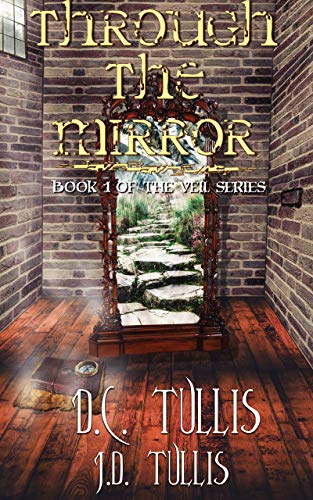
FROM J. D. TULLIS:  Through the Mirror (Book 1 of The Veil Series)

516w6qowugl

In Through the Mirror, Jason Whitelock and Ellie O’Connell are two high school seniors that live in the isolated and slightly mysterious port-town known as Eastmouth. The shocking discovery of a hidden room catapults Jason and Ellie into a clash with terrifying, lovecraftian alien forces and shadowy government organizations. Stranded in an impossible situation, the two must band together to survive the odds and find a way to escape back into the semi-normal lives that they had greeted with boredom only days prior.

This book should be of interest to fans of Jim Butcher’s ‘The Dresden Files’, Larry Correia’s ‘Monster Hunter Series’, and Rick Riordan’s ‘Percy Jackson and the Olympians’. It is the first entry in The Veil Series.

FROM J. L. CURTIS:  Rimworld- JACE

51r-cqpvpel

Roberto de Perez engineered his escape from the soul-killing drudgery of corporate leadership, to a remote research lab under an assumed name to play with research projects, like the creation of AIs more powerful than any protocol envisioned.

Freedom isn’t perfect: As a mid-level lab manager developing a brand new self-aware AI that’s actually better suited for combat shuttle control, Roberto unwittingly crosses a line with an external agency he didn’t know cared, and his own internal bureaucracy isn’t happy, either. What he doesn’t know is that there are people determined to keep him from succeeding at any cost.

What he doesn’t realize is his new AI has learned to manipulate the system all too well from watching Roberto, and everyone underestimated what it will do when its existence is threatened…

Novella 17,600 words

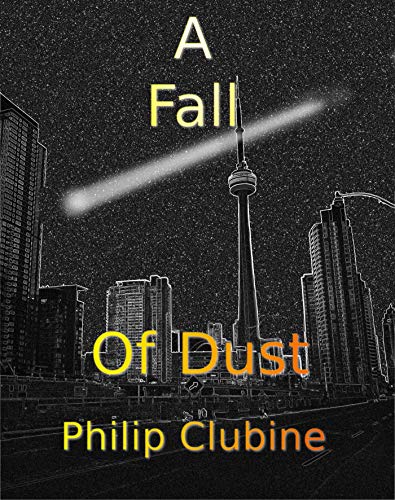
FROM PHILLIP CLUBINE:  A Fall of Dust.

51xfppds4tl

When you know the world is ending, what would you do? Some people give up. Others tend to go a little crazy. Then there are the planners and the ones that refuse to believe things will end. Nick Theopolis, convienience store owner, reader, and planner is one of those.

It won’t be easy. Mobs, hunger, and collapse of general infrastructure. Don’t worry, he’s got a plan for most of that.

FROM ALLENE R. LOWRY:  Einarr and the Oracle of Attilsund (The Adventures of Einarr Stigandersen).

51yzrjcxg6l._sx331_bo1204203200_

No sooner have Einarr and his friends returned to meet their ship at Kjell Hall than they have to set out again. Captain Stigander has determined it is time to get serious, both about lifting the Binding that keeps them away from the home his son barely remembers and about more material matters, such as gaining the wealth and manpower they’ll need to take on the usurper’s enthralled army. When the svartdvergr Jorir hears his new Lord’s tale of woe, he suggests a detour into the far northern reaches of the sea, where dwells an Oracle he has had cause to visit before. Now the crew of the Vidofnir sets off to seek its fate in a rather more literal way than anyone is used to.

FROM ALMA T. C. BOYKIN:  Miners and Empire: Merchant and Empire Book Five.

512iwstlfzl

Aedelbert Starken shapes stone, not magic. Or so he thinks.

The town of Garmouth depends on the mines for life. Aedelbert comes to the city with his partner Caedda Quaedel in order to build three new smelters for the ore. Aedelbert and Caedda, master stone-cutters, just want to work, collect their wages, and move to the next job. Nothing more or less.

To their chagrin, building smelters and training an apprentice pose the least of their problems. A noble with a grudge threatens the mines and the city, leading to a race between the men of Garmouth and the mines, the noble, and the forces of ice and water.

Aedelbert wants nothing to do with any of it. The Scavenger, however, has other ideas. And what He gives, He can also reclaim…

67,000 words.

And I Can’t Get Up

monument-2032694_1920

If you’re like me, you have trouble with the usual encouragement and sayings that are meant to give you strength/courage/optimism.

You know perfectly well what I mean. I’m not going to give sources for these, because I hear them from everywhere, and my mind isn’t really good at buying anything wholesale.  Hint, my mind buys it even less if it comes with a cute kitten.  I think I started hating motivational posters before I had my first job (Which this being the eighties was PLASTERED in them).  (Though at one time I did have the “hang in there” poster because the kitten was adorable.  So, I’m inconsistent. Deal with it.) We are naturally attracted to demotivational posts out of frustration with the easy pollyannaish motivational posts, and annoyance with the people who believe in them.  Hold on to that thought. It’s important. Seeing people for whom things seem to work, particularly things that our annoying brains tell us are far more complex than the poster/maxim/story is making them out to be causes annoyance. Frustrated annoyance. And a desire to believe the opposite.  If people tell you “Hang in there” you know you’re going to drop hard. You just know it.

Some of it is born of experience, sure, but be honest with yourself, you expected it all along.  Remember that too, it’s important.

One of the things that annoys me most is the saying that “the best predictor of whether you’ll succeed is how many times you fail.”  Mostly because that’s not how that works. That’s not how any of that works.

That saying is sort of the incarnation of survivor bias.  The more you’ve gotten knocked down AND still managed to get up, the more likely you are to succeed, sure. But that’s because you’re already by any definition a fairly exceptional person.

I’ll use writing for a bunch of this because it’s THE experience I have, but honestly, you could use anything, from your love life to your attempts and being the world’s best tiddly winks player.  (Why am I obsessed with tiddly winks? Well, my eidetic, brilliant brother spent something like 12 years devoting all his free time to playing tiddly winks, a game that in Portugal, usually was left behind at age six or so (for boys. Girls didn’t play it.) In retrospect, it was an addictive behavior. If he’d had video games, he’d probably have been addicted to that. It’s not unusual for very, very bright people to need to dull the pain of… well… of the world not being made for them. And if they have an addictive personality, even if they don’t fall into drugs or alcohol, they’ll get addicted to something REALLY weird.  For one of the worst times of my life, I was addicted to fanfic for a TV series that I never watched. Why? Well, it kept the brain minimally occupied so I could dream my life away without DOING anything. Yes, brother eventually stopped it. But meanwhile my parents kept joking his ambition in life was to be the world’s best tiddly winks player.)

Most people who want to be writers never start.  Laziness? Maybe. Perhaps. Sitting down and putting fingers on keyboard is not physical work, but it is work.

I’d argue though that most of the time the problem is not so much laziness as the fear of never getting better. I know that’s true for almost everyone who tries to draw anything.

And trying to write a story is a series of compromises. In your mind the thing is multicolored and gigantic, with 100 actors and 1000 elephants. But you can’t write that. It’s simply not something you can put on a page. No one is going to follow that sort of diffuse action. So you compromise.  You’ll tell this person’s story. Maybe 10 actors. And one elephant.

And even then, if you’re a beginner you’re going to botch it.  For instance, it’s perfectly normal for beginning authors not to be able to handle more than two characters on the page at a time.

So most people give up. Our model as humans seems to be “perfect first time, or I’m no good” but also most people don’t believe they can get THAT much better. (Hint, you can.)

I no longer remember the statistics, and since I don’t know how they collect them anyway, they’re probably meaningless, but it’s something like:of a million people who ever thought to write a book, one actually does it.  Of course, there’s no way of measuring how seriously they thought of it, so again, it’s just a vague indication.

We do have more solid ground for people who actually wrote anything significant AND submitted it, ever getting accepted.  The ratio is something astronomical like 100000 to one.

Why? Because most people give up after the first rejection.  On this, I’m going on my experience in many writers’ groups over the years.  Any number of people I met along the way wrote ONE NOVEL. It was a good novel, in most cases (two were brilliant.) They then spent the next five, ten, fifteen years trying to sell it, so single mindedly focused on selling it, that they never wrote another.  And the novel got rejected. It got EPICALLY rejected. It got rejected by every reputable outfit and a dozen of the oh, 100 or so I knew ended up falling for scams like “pay us to read” or “pay us to publish.”  When this failed to obtain success, they stopped writing. Well, honestly, they’d stopped writing years before, in favor of selling the one novel. But that’s something else. The truth is that they looked at that novel as “proof of concept” and since it didn’t sell, they knew nothing would sell and they gave up.

This is understandable, but completely contrary to reality.  So contrary it doesn’t even coexist in the same plane.  It’s part of the lies we tell ourselves and the world tells us “if your thing is good enough, it will be a bestseller.”  Doesn’t work like that. You’re not submitting your novel to some all-knowing perfect judge. You’re submitting it to a person who is flawed and has issues in his own life and views your story through their own lens. And sometimes their lens has bloody nothing to do with anything you could anticipate when writing the novel. For instance, one of my series took SIXTEEN years to sell, because it was weird, but also because the one house who WOULD have bought it rejected it with “we bought something very similar just last week.”  You know, in such circumstances I assume they’re lying. But I know what they bought, and yes, it’s very similar. And it went on to be a bestseller.

Let’s assume you’re one of the very resilient few and write a second novel and a third novel, while trying to sell the first. (I wrote nine. Three of those have sold since.)

The fairy of good fortune comes and touches your novel.  It sold. YAY.

Good for you. Be aware the chances of its becoming a bestseller is not dependent on quality, but on distribution, cover, and how much the house pushes it.  Heck, the chances of it becoming a GOOD seller are minimal.

Most people who sell a book never sell a second. I don’t know how many, but way in excess of half.

By the way, all of this applies to indie. Most people who put a novel up never sell more than a dozen copies. Discoverability is the problem, mostly. Just advertising your novel everywhere is not going to make it a bestseller (for one indie is heavily biased for series.)  I’m not in writers’ groups now, but I KNOW just from people who write me and who decided they were “no good” after a novel or a short story that the “drop out because of perceived failure” rate is about the same.

So, what about if you sell a second or a third, or a fourth novel?  Yeah. My career has died… eight times now.  Utterly dead. At one time it took me almost two years to sell anything to anyone again. I did a full relation of my career here.  Well, more or less full. I elided some set backs. And there’s been one more since that was written. Without going into details let’s say my own remaining option — ONLY option — is going indie with both feet. Whether I’ll ever recover my IP is something else again. No, I’m not ecstatic about any of this. More on that later.

One of the most bitterly funny things about me is that most people perceive me as an optimist.  One of you in comments yesterday asked where do you master the will and the optimism to try again.  Ah!

It has nothing to do with will or optimism.  Seriously. Absolutely nothing. It has to do with being alive and wishing to remain so.

My family is notoriously unlucky. I was born knowing that or at least imbibed it with mother’s milk.  Seriously “if we made baby bonnets, babies would be born without a head” unlucky. The stories of wars, investments and just general life in which we backed the losing side KNOWING IT WAS THE LOSING SIDE is extensive.

On dad’s side (you don’t want to know about mom’s truly) we tend towards melancholic depression, dark sense of humor and sad poetry.  Because I’m half mother’s daughter, my depressions can get way more active and self destructive. Which is why I learned to control them early.

To all this is added a disposition I’ve started calling “born owing money.” (Though in fact I wasn’t, mostly because my parents have a debt-phobia, one they passed one.)  You don’t approach the world as though it can give you things. You approach it as though you’re afraid of bothering it, and would much rather it didn’t notice you.

How much are all of these attitudes responsible for the repeated failures in my career.  I don’t know. When your lens is flawed, what do you see through.

I don’t believe in affirmations. Sometimes I’d like to, but I don’t. They’re like the motivational posters.  It does you no good to write on your mirror “I’m beautiful and everyone loves me” if you know with bone deep certainty that this isn’t true.

And yet, I know from observing others lives that what you start out with really influences the outcome.  And by that I don’t mean your gifts, talents, beauty, or even wealth.

A little man who looks like a monkey and smells like a diseased weasel but who believes he’s the master stallion of the world will have women hanging off him. A smart, handsome man who thinks he’ll never get a romantic relationship will die bitter and alone.

Part of it is that if you don’t believe something is possible, you don’t even see the opportunity when offered.  Part of it is that when you get it, and attempt it, you keep expecting it to crash. And part of it is that you don’t protest bad treatment, don’t ask for what you deserve.

i.e. Yeah, your beliefs about life and yourself can set you up for failure.

I realized last year I simply did not believe I could be successful in writing.  What does that influence? Well, everything. From how much I put in my writing, to how much I write, to how much I promo, to…

“But Sarah,” you say “I’ve really failed over and over and over at thing x. Why should I try again?”

And I’ve failed over and over and over again at becoming spectacularly successful, or at least having a publisher recognize the potential of anything I wrote. (Weirdly a ghost written novel for another writer made her career.  Odd, uh?)

So, why not just lay down?  Why not give up?

It depends.  Is it something you CAN give up? By which I mean without significantly losing part of who you are and what you want from life?

I could give up sewing or art tomorrow. I probably won’t, but I could. They’re “interesting” occupations, not part of what I am and how I’m made to function.  Not the thing I’ve wanted all my life.

I’ll eventually have the kids move out of state (probably) and see them only a few times a year. That’s fine. My relationship as a mother is something created to be given up (if successful.)  If we’re lucky, we’ll replace it with friendship.  But could I give up my marriage?  Well, we’ve had our ups and downs, but I fight for it because no I couldn’t. Not without losing a significant part of myself.

The crucial question is “And if you give up, then what?”

For something that’s central to you, the answer is usually “I don’t know. I do nothing.” or perhaps “I’ll just drift.”  That might not be the answer, in those words, but it is what will happen.

In the few times I thought I HAD to give up, I undertook bizarre, mind numbing activities. To avoid doing the beloved thing, because that hurt.

So, where do you find the strength — ah! — and the optimism — ahah! — to get up again?

You don’t. You get up because you have to. Because there’s nothing else on the other side of giving up.

Look, we tend to think in static categories.  “I’ll just give up.”  Or “I’ll succeed.”  Or “I’ll fail.”

But none of these are permanent. Nothing stays still, not even our emotional states.  All of them are followed by “and then what?”

Even those who succeed will EVENTUALLY experience failure.  Trust me, I have a ton of friends who are bestsellers. Most of them have experienced catastrophic failure more times than success.

“The key is to get up one more time than you fall down.” Sure, but how. From what?

From a fear of what happens if you don’t.

I hesitate to write this, because the person might read this blog and know himself. But if he does, perhaps it will help, because it’s high time he understood it.  Hell, we saw it happen and we didn’t understand it.

Decades ago, when we were young and green as grass, and Dan was just starting up his career, we met someone about our age (a little older)who wanted more than anything to be a writer.  His education and background were different from ours and he thought this was massively important but it wasn’t.  When we were all young, he was starting out in a profession with just as much potential as Dan’s, and he was moderately successful and made just a little less than Dan.  And hell, he had advantages I never had in writing. For one, he was a native speaker of English. For another, he had some vague idea of how publishing worked.  Very vague, but better than mine.

Over the years, I wrote and wrote and wrote. It took me 9 years from first sending anything out to selling a short story at semi-pro rates. It took me 13 to sell a novel (and that series crashed hard.)

I’m not made of iron. I’m naturally pessimistic. Sometimes rejections hit so hard they disabled me for months. Not just being unable to write, but sometimes spending months crying and trying to hide it from Dan and the boys.  One day I had 60 some rejections ON MY BIRTHDAY.

But there was nothing else, so I kept writing. Along the way I stopped here and there, tried to give up and got some really spectacularly stupid addictions (fanfic for TV series I’d never watched, for instance.)  And carried them on for months/a year before realizing it was not just making me useless, it was making me hate other people/resent them for no good reason.  Like, I hated everyone who was still writing — even my closest friends — even though they had NO success.  Because they were writing, and I couldn’t/had given it up.  When I started being mean to my kids, because I was hurting and someone else had to hurt, is when I realized I had to pull up. Even the stupid addictions are hard to give up. Trust me. It was difficult.

Along the way I had some successes too. Some critical acclaim. A couple of awards. Series that sold well enough I had the income of an underpaid secretary now and then for some years.

Our used-to-be-friend?  Not so much.

He had a story accepted and the magazine went under without publishing it (note this happened eight times with the first story I sold. It killed magazines.) and this seemed to be it for him. He wrote a few more stories because all our friends were writing them, but some of them he seemed to think he was being clever and mocking our idea you could just write many stories. He seemed to think he was writing very bad stuff.  In fact, that’s some of his best, but never mind.

And he became more and more invested in the idea he’d write a novel, it would be a world-shattering success, he’d be set for life.  This is not the way things happen.

I don’t know if he tried it. One of our kids thinks he did. And got rejected.  Possibly.

What I know is that year on year, as the “defeats”– and he seemed to view MY successes (such as they were, dear lord) as his defeats — accumulated he did less and less and less. He restricted himself more and more.

And though it took us years to realize it, he came to first resent us, then hate us.  It manifested in a hundred different ways, all under the flag of continued friendship.  We felt sorry for him and tried to help him, but every time we saw him, it became more unpleasant.  Until two years ago at the end of the year he went too far and at a time when we had neither financial nor emotional resources to handle it.  He has tried — at least twice — since then to “avenge” himself by bringing crisis into our life, at a time when he thought we were at a party or enjoying ourselves. (We weren’t, but that’s something else again.)

Normally I hate losing friends. I hate cutting off contact with anyone. This time I realized I was ridiculously relieved.

I realized over the years he’d acquired the habit of belittling us, attacking us verbally, inflicting his presence on us at the least wanted times, and generally being a pain in the ass.

Why?

See the thing above.  This was an immensely talented individual who fell down a couple of times and decided that was good. He’d just lay down and rot.  But he couldn’t help knowing what he’d wasted. And he couldn’t help resenting those of us who had gone on to do ANYTHING.  Anything, even my halting, painful, not very profitable career seemed amazing to him, and also like “if there was any justice, I should have had that.”

From the amount of times he tried to bleed us (financial emergencies. Loans never paid. Etc. etc. etc.) he also viewed us as “very wealthy.” (We’re okay.  We make do. A little stressed now for reasons that should pass in a year. But mostly through the miracle of living beneath our means, buying from thrift stores, etc.)

You can’t lie there.  You can’t just lie there.  You’re alive. You can’t stop. Because you can’t. Because that’s not how humans work.

Not getting up is a choice, and not one that ends in a static option. You’re not just going to be there, forever, world without end. No. You’re going to become bitter, resentful, envious of everyone and everything, even JUST those who are still trying.  You’re going to say “I wish I had their optimism” without having a clue if they have it, because they must have SOMETHING you lack.  You’re going to think it’s their academic education (ah!) or their higher class background (ahah. Doesn’t translate between countries) or that they’re prettier than you, or have better clothes, or … Lord alone knows.

And in the process you’re going to destroy everything, including the regard of people who once cared for you. You’re going to push everyone away. Most of all you’re going to destroy yourself.

The opposite of trying once more isn’t just laying there.  The opposite of trying is dying. And a horrible death in bitterness and self-destruction.

The example I gave is NOT the only one I’ve seen, it is just perhaps the most spectacular example of it I’ve ever seen.

When you fall and decide you can’t get up, you’re choosing to reign in hell, rather than serve in heaven. You don’t have to be religious to understand that. Milton knew a thing or two about people.  You are NOT lacking strength or optimism.  Because those aren’t needed to get up again, and try again.  You can do that from nothing but stubbornness.

No. You’re choosing to lie there and die because your pride is hurt. You should have been an amazing success.  Don’t they recognize your genius? Fools! you’ll show them.

Only the only person you can destroy is yourself. And you do.

This is why I crawl up, on bloodied and hands and knees and try again. Despite total pessimism and lack of strength. Over and over and over again.

If they made a motivational kitten poster of me, it would be too bloodied and gruesome to hang in an office.  My spirit animal is Inigo Montoya.

Will I succeed? I don’t know.  I am actually trying to convince myself success is possible, because I’ve realized mind set is important.

Will I lie down and die? No. Because that’s not an option. Failure is not just a static state. It’s decaying and bitterness and giving yourself in to evil. And I’m not doing THAT.

So.  Up on bloody knees. Despite weakness and despair, up.

Because there’s nothing else.