Perfection- Part 1- Inside out

Humans always strive for perfection. It’s something in us. We can conceptualize perfection. We also know when and how we fall short, and in what myriad ways we fail.

To an extent striving for perfection in the individual is fine. To an extent, even, it is a — not unique but the degree of application is unique — part of the American character. When I first came to the US as an exchange student, I was startled at the EXISTENCE of a self-help shelf. Things on how to cope with brokenness, how to improve your performance, etc. ad nauseum.

Some of them were very obviously insane or infantile — I came over the first time in 1980, which is to say at the very end of the 70s when everything was infected with the pseudo-just-so-stories of Freudianism. (In fact, I’ve been reading a lot of books that came out late sixties to the early eighties, and it’s amazing how every author — every single one — dives into Freudianism to attempt to make the book “profound” or “literary.”) — but a lot of the techniques described still worked.

The techniques are usually behavioral, which, as an explanation for what humans are, for the human ethos, sucks, but as a way to modify and regulate your behavior for the inside works more or less unfailingly. (More or less. Humans can always invent new ways to fail.)

Note I said from the inside. From the outside… Well, every time a dog salivates, a Pavlovian must ring a bell, to paraphrase Heinlein.

Which brings us to the urge to improve humans from the outside. Those other humans. Yes, them, outside my head. While I might be falling short of my own potential, brother, what’s their excuse?

I mean, I won’t deny that I’m not a particularly charitable person. And I confess I suffer from intellectual pride. But there are exchanges one witnesses online — particularly between people we know both exist — where the only possible response is “I didn’t realize the baseline of humanity is mentally dead.” Particularly when one knows neither of these people are actually stupid by any other marker.

The truth is that raising kids who tested in the stratospheric line for IQ made me very skeptical of IQ as a measurement of any use for anything but academic achievement (And even then! For instance, until trained both sons scored abysmally in multiple choice tests, due to an inability to accept an answer could ever be “that simple” or “that stupid.” Instead they would try to complicate things and justify in their heads why an obviously and clearly absurd answer “must be” right.) Because while the kids — saltational development is a thing — could demonstrate some bizarrely high abilities, at the same time they could pull mistakes that you couldn’t even figure out how someone could make. And then I’d sit there, holding my head and going “And if these are the creme de la creme, how do other kids even survive?” (I have an answer to that, actually. Normal kids don’t get in half as much trouble, and don’t come up with half that many crazy things to do, that could either blow up the house or poison them, or whatever. It’s like raising my very smart kittens. It’s driving me bonkers. I’ve now raised fifteen cats, but none that got into drawers that are child-locked, to find twist ties to eat.)

Everyone seemingly is incredibly stupid at times. Geniuses just are stupid faster, harder, and from above, so to put it.

Come on, you know if you look back, there were entire periods of your life when you were convinced of something, or attempting to do something that in retrospect was incredibly stupid or at the very best misguided. (Around here we call it Sarah’s so called writing career. It continues, too.) But at the time you couldn’t see it, and what you were doing seemed logical. (To be fair, I’ve known it for some time. And it’s not logical, it’s compulsive.)

However, from the outside in, looking at other people, it’s easy to think you know exactly what they should be doing, what they should be trying, how they should be solving their issues and mitigating their trouble.

In my fifties, I finally understood mom’s most annoying habit. No, seriously, I’m now 61. I’ve been on my own since 22, so almost the time I was a child in her house, doubled, but if I mention I’m doing anything at all, from cleaning something to making something, I get advice as though I were about 10. And heaven forbid I’m having some problem, health or motivation or something, and mention it, because the instruction will be very minute, take hours, and tell me everything I’ve known for 39 years, give or take.

I understood it, because looking at my sons as they launched off into their own lives, the impulse to tell them what to do, so they avoided making the same mistakes I made was almost unendurable. You could see them tottering off to do exactly the most stupid things you did. And you wanted to physically reach out and redirect them.

It took a lot of self-control, and even more self-reflection to realize that no, it wasn’t my mistakes they were making, but their own. While sometimes there were echos, mostly because there is a familial temperament (depressive and anxious and neurotic as a shaved cat– like you’re surprised, right?) their path was not mine (thank heavens, even if both of them write) and their time is not mine, and the country they grew up in is not mine (We could ease up on the echoes of recent developments any time now, or why do you think my PTSD is keeping me up on the black-swan blind?) In the end turned out some of the things they were doing I thought were horrible mistakes, were not. And some of the actions I approved of based on my own experiences, might have been mistakes, and–

Now, these are our kids — speaking in the general — that we have that impulse about. And the impulse is often wrong. I know in the village, from listening in to the gossip of women, that half the “nice girls” women hoped their sons would marry were disastrous. And have of the “that whore” they did marry did turn out to be very good wives, and often very good to the complaining mother in law, as well. Yes, sometimes parents are right after the kids are adult, and beyond the obvious “don’t drink too much, drug too much, whore or waste money” but– It’s not often.

Almost all my friends were their family’s tragedy, taking a path that the parents didn’t like, and the extended family disapproved of. Often they were their own tragedy, balked of the initial path for some reason, physical, mental or just fate. Often they spent years lamenting the path not taken.

But in the end, we all came to a place where we’re doing pretty well, at peace with ourselves, and looking back, we can’t see it any other way. (Which is why the so called career still exists. That and because I enjoy writing more than having written.)

The point is….

Self-improvement is a grand and noble ideal if undertaken from the inside out. And it has been known to score some remarkable successes.

We often hear about them, and not just when someone is trying to sell you something.

Sure, about half of the prisoners who gave up drugs and found Jesus in jail will fall back into criminal behavior once they come out. Given what militates against them, from habit to the friends they choose, to the circles they’re used to navigating in, and the way they are used to things working, the big shock is that only half of them do so.

We tend to hear about the big transformation projects in movie-of-the-week type thing, and it’s always huge: the drug abuser who went clean and became a multi-millionaire entrepreneur; the alcoholic who went clean and became a philantropist, etc. etc. etc.

But those are not the most common transformations. In fact, I’d say those are the rarest, because they happen to people who had reached a level where saving themselves is almost impossible. It’s not one habit or one tendency, but an entire complex of them pushing them a certain way. And those are very hard to break.

The most common transformation will be the C student who formed new study habits and seemingly overnight becomes an A student. The basement dweller who wakes up one day and realizes he must stand on his own two feet, and starts reaching for everything and anything to make that goal happen, including putting in a lot of work. And similar cases, which we all know.

These cases we know and see every day, just about. We don’t fully remark on them, just treat them as “Oh, he finally grew up.” Or “Oh, she got serious.”

I’ve done this a number of times, with different things. Including fiction writing. I do really well with a regular writing schedule, and habits. This makes perfect sense, if you know I’m ADD AF. Habits or medication are the only ways to deal with it. But habits break, usually with…. moves, illness, various issues. Like, you go through two or three weeks of not being able to do whatever you made an habit of. So I will fall off the wagon, and have to reform the habit again. (I’m in the middle of this, which might or might not be perceptible from that side of the screen.)

The power of doing this is outright transformative. And therefore it gives people illusions.

“If I can change that much, I who am so superior,” okay, most of us know that’s BS, but self-obviously a lot of people don’t, “Surely if these mugs just did what I told them, and worked at it the way I tell them to, they too could be perfect. And then the world would be perfect.”

That is where the issue starts, because that’s not how any of this works. Habits imposed from outside are notorious for not sticking, if they ever take in the first place.

I think this illusion that you can change others from outside is one of the oldest temptations of mankind.

But in the twentieth century it became the illusion of nations.

More tomorrow.

Death Or Ice Cream – A Blast From The Past from August 2012

This is not a post about writing, but it is a post about reading – or a post about fiction and reality, humanity and myth.

There is a way in which fiction forms our mind.  Shakespeare has, after all, been accused of inventing modern men with modern emotions.  Then, through the immense popularity of is plays, these character types, these ways to react to things… spread.

This is possible, though I don’t think it’s true, which is good because if it were it would make a very bad case against the bard’s legacy.  It is true that before Shakespeare there were fewer plays that were coherently organized around character types and character dilemmas that made sense to the modern man.

But I grew up in Europe.  I was taken to see art from the middle ages and before before I even had an idea of art.  I remember the medieval statues, their proportions all askew.  I don’t presume that Leonardo DaVinci and Michaelangelo invented the modern body and we all grew up to conform to it, and part of the reason I don’t believe it is that the ancients pictured bodies similar to our own.

Now, as with the argument with the Venus of Dusseldorf and whether it was porn or an accurate representation of women during the ice ages, it is possible to say that with Barbarian invasions, malnutrition and colder climate during much of the middle ages, it is entirely possible bodies had a totally different shape.  One does periodically meet a person walking around who looks like one of those medieval statues, just as one does, occasionally, bump into a woman shaped like the Venus of Dusseldorf.

In the same way it is possible that during the middle ages, while trying to survive, the idea of the individual mind and emotions counting for much fell right out of the culture.  (It was never as dominant as in our era anyway.)  Survival and times of scarcity always bring about a tightening of social norms to whatever the society considers “average” or “normal” behavior, sometimes with lethal consequences for the odd.  (One of the reasons it always puzzles me why Odds – people who don’t fit in our society – admire despots and societies of enforced poverty.)

Romeo and Juliet, and certainly Hamlet are not fully comprehensible unless we realize we’re watching the struggle of the individual against the group and that social obligations which were considered paramount.

But enough of Shakespeare.  As you know – or possibly, fortunate people that you are, don’t – you can say the words “William Shakespeare”, start me talking, provide me with food and water at intervals, and I’ll go on under my own power, with no audience interaction, for a day or two.  (Possibly more if my voice doesn’t give out.)

However, the fact that the very notion of Shakespeare having invented the modern human exists tells you with absolute certainty how much we’re aware of having acquired our notions of how the world should work from fiction, in all its means of delivery.

Fiction serves – or can serve – great purpose.  It can show things that otherwise can’t be seen in human life except in the very slow development of a whole life, clearly and in a minute, and through emotional delivery.  Concepts like deferred gratification or limited altruism (sacrificing for one’s kids) or even the ups and downs of a long marriage.

That is the problem too – It shows us what is slow and mostly internal as immediate and external.  Where fiction gives us odd notions – oh, all but the very “literary” sort, and that, I dare say might inform the minute moments of life, but will not (from what I read) give you a general thesis of existence (unless it is “Kill yourselves, all is lost” – the slightly more elaborate form of “Fly, all is discovered”) is the climax.  (You, the lady in the back row, stop blushing.  I didn’t mean that kind of fiction.)

Terry Pratchett whose works are, in a way, a meta-critique of our fables and stories pokes fun at this in (I think) Men at Arms (I always confuse it with Guards! Guards!) when they’re on the roof top and have a bow and one arrow and are attempting to hit the dragon on the “voonerables.”  The clinching argument is “There’s a million to one chance, so it’s a sure thing.”

Fiction operates on creating cathartic release.  As such, it requires a big climax for big stakes (or arrows) and a reward immediately after.  I try my best (because I have trouble believing it otherwise) to indicate there will be a long slog to set all right after the big climax, while still making it satisfactory to people.  But it’s not easy.  

I’m not criticizing literature (or other fiction) mind.  The other times I’ve written this sort of thing people get all mad and say “what do you want then?” – but I like literature fine the way it is.  I like the big climax and the big payoff precisely because they rarely happen in life.

On the other hand, it is important for the readers to remember that fiction is a representation, not the reality.  In reality, when you take the one in a million chance, there’s a good chance you’ll fail.  And even if you succeed and the dragon is gone, you still have to deal with all the crazy people who brought the dragon over and wanted to crown him king.  (The plot of whichever of the Pratchett books is mentioned above.  The covers I have are so similar I routinely confuse them.)

They’re not going to vanish over night; they’ll get up to ever more interesting stuff; and killing them is just not part of the game because it creates other problems.  (We all know what happens to societies that do that.)

So killing the dragon in real life would never be the all-encompassing solution it is in the Discworld  world (though Pratchett too hints at other issues, of course.)

There is a moment when I’m very ill – I don’t know if it happens to everyone – usually in the middle of the night, when I wake for a moment, and I feel the wellness below the illness.  (Just like when I’m getting sick, I feel the sickness beneath what’s as yet health.)

It doesn’t mean I’m well.  There will be days of feeling terrible still, and impatience with weakness, and sleeping far too much.  But it means I’ve turned the corner and I’m going to get well.

In real life it is somewhat like that, and when we throw fits and demand perfect and stark choices, we’re doing it because we want life to be a fairytale.  We want someone to offer us a choice between death or a bowl of ice cream with extra marshmallows, and we’re going to hold our breath until we get every last sweet mushy marshmallow.  We earned it, we deserve it, and we’re going to enjoy it.

I think this is part of human nature and fiction merely gives us an outlet for it.  In the same way I don’t believe Shakespeare invented modern humans, I don’t believe fiction invented the big climatic choice.  It goes back through our fairytales and legends – far back indeed.

But let’s remember that’s the only place it can be achieved, shall we?  The starkest choice you’ll get in real life is between sure death and less sure death (or whatever other evil you’re trying to avoid.)

So, you can choose between death and a bowl of ice cream that might be cyanide laced.  You can choose between letting illness take its course or feeling that moment of wellness and building on it, and taking great care and eventually after a lot of work, getting well. It won’t be easy.  It won’t be fast.  Recovery is not assured.

I’m an optimist.  I’ll take the chance.  And hey, cyanide tastes like almonds.

Black Swan

The first time I heard of deer-blinds — in this case a platform, up on a tree — it was of someone — a kid of 12 — dying because he’d been so still so long that a blood clot, formed from his position against the side, migrating to his heart and killing him.

Metaphorically speaking, I’m that kid, atop that duck blind. Only I’m waiting for the black swan to erupt.

Which is both insane and counterproductive. My watching for it or not won’t make the black swan erupt.

By definition a black swan is an event you can’t predict, which changes everything.

And part of me thinks that this obsessive — it’s interfering with life, because I have to check through the news so often — checking and watching is wishful thinking, because the depressive thinks we’re headed to h*ll in a hand-basket that’s already on fire. But part of me refuses to give up, and is hoping. Hoping for the event that turns everything upside down.

Except this doesn’t feel like hoping. Or waiting hopefully. More like….

Okay, so I went through a lot of fire-seasons in Colorado, some worse than others. Twice, we had the radio on all the time, waiting for the order to evacuate. Once a friend left our dinner party to rush home to pick up stuff so he could evacuate. (He didn’t lose his house, turned out, but it came this close.) And at least once, we had everything in the car that we absolutely couldn’t afford to lose, and our important documents in a briefcase, in case word came in the night. And took turns sleeping, so the other could be awakened.

This is what it feels like, though I be covered in fish and called Persephone if I have any clue what urgent action I’d need to take should the black swan take flight. Particularly since I don’t know where the black swan is, when it will appear, or–

Look, chances are it’s something really big, far away from me. My knowing about it the first five minutes will make absolutely no difference.

And yet, here I am atop the deer, duck, black swan blind, afraid to move or make a sound and startle it was it starts and —

Why do I think a black swan event is about to happen?

Part of it is “Because it feels like it is” and part is, because there have been a series of black swans flying recently. Actually a lot of them.

Some were sort of predictable, like the stolen election. I mean, given the lockdowns, but the lockdowns themselves, and the cascade of crazy that followed was a black swan. The Canadian — CANADIAN! — trucker convoy was a black swan. What is going on in TX is a black swan. BUT on a less happy note, 10/7 in Israel was also a black swan. And way, way, way back? The USSR falling. Just collapsing. The collapse was baked in, but…. like that?

Once black swans start taking flight, they seem to come closer and closer.

Digging deeper: A black swan is something you wouldn’t believe if someone told you about it before it happens. Sometimes, dream or nightmare, something you end up thinking you dreamed up, and keep trying to snap out of it and wake up.

So, why would they be coming closer: Well, because we’re living in an era of high instability.

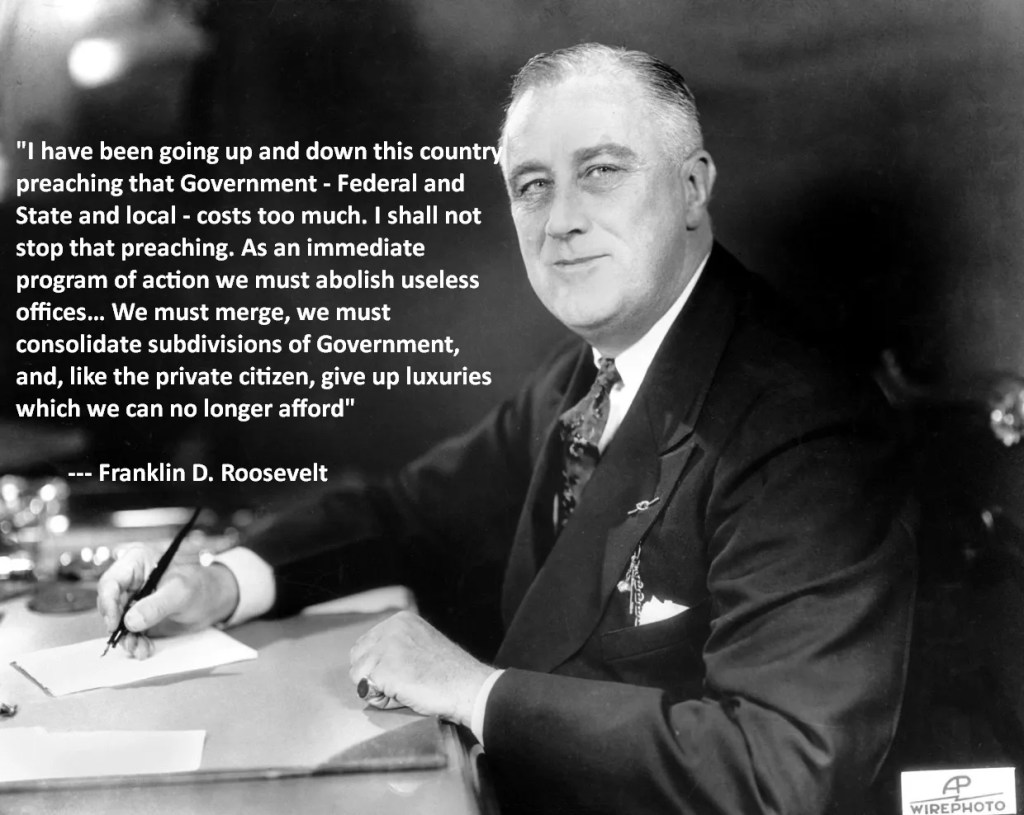
Partly because of catastrophic innovation. And partly because the “blue model” — the centralized governance and society model slapped on the US by FDR and on the rest of the world at various points of the 20th century– is falling apart. It’s falling apart because it’s run as far as it could, and it’s starting to fail. A centralized model always fails, and this one lasted a long time, because it left bits of freedom around the edges. Less and less as time went on. Till it’s gobbled up almost all areas of innovation and privacy. Not all. Not yet. But it passed some critical point, and it’s falling apart.

The number of people telling you exactly what the curvature of bananas should be has grossly outnumbered the people who know how to grow bananas, or even how to make banana bread. At that point society can’t work, because the people regulating the curvature of bananas are starting to branch out to the ovalness of eggs. And no one knows — or is allowed — to do the essential. And things start collapsing. Combine it with the literal culture shock of changing tech, and you’re in unknown territory.

Most of us my age or twenty years either way have already changed our lives so much in our lifetimes that my having literally changed continents is a minor thing in comparison.

Oh, another black swan: A university president was pulled down and her record revealed utterly fake. And the ivy leagues are in the process of discrediting themselves.

So many black swans in the last 3 or 4 years, and coming closer and closer and closer.

And because the left is trying to play the 20th century communist revolution script, including trying to make people share their houses (they had to import destitute for that!) only none of it applies properly to the US and to current tech, or current popular sentiment, I keep expecting them to unwittingly provoke a massive convulsion, similar to the fall of the USSR or the tearing down of the wall.

Something that just happens, one day. Good or bad? Oh, it could fall either way.

Now, is it likely to have anything to do with me, directly? Or be something that an early warning could help?

Unlikely, short of us all having to run to the most distant member of the family, or his having to run to us. And both are unlikely for various reasons. Possible, but highly unlikely even in a black-swan event.

And yet–

And yet I feel like I need to stay vigilant and sit here and watch for the first signs….

Just up here, in the black-swan blind, watching the shifting darkness for movement.

And waiting.

Good And Evil

This week our church bulletin had an added feature, and I’m going to bet our pastor, a working class boy, got it pushed on him and he thought “Oh, why not” and didn’t look too closely at it.

Because the church hasn’t given a hint of “praying for cease fire” or anything of the kind. if they had, I’d have left so fast it left a hole in the air. But this amid fairly innocuous questions and answers had a question about what was licit to achieve a good end. And amid a bunch of self-obvious examples, there was a stern condemnation of … wait for it… carpet bombing German cities in WWII, because killing people was wrong, no matter how good the end.

I’m fairly sure this is crazy cakes in most Christian theology, except possibly whatever the Quakers used to do the job. I’m also fairly sure they pulled this from the left hand of the underwear gnomes’ underpants in order to make a point about Israel and Gaza.

The point is that there are age-old answers to this. And while it’s true that it’s no part of Christianity that “The end justifies the means” it’s also true that there is an entire doctrine of just war.

And I’m fairly sure that defending yourself against a relentless enemy who won’t stop is a just war. Yes, there are things about doing the minimal damage to achieve your end. Looks sternly at Gaza: If more than the necessary damage had been done, Hamass would have surrendered by now. But it hasn’t.

Or Germany you know? While yes, a lot of people died in carpet bombing, no more than necessary died to stop the regime from killing a lot more. Because, you know, if Germany hadn’t been stopped, they wouldn’t have stopped. The fact that as they were aware they were losing, they just sped up the “final solution” tells you they would have tried to exterminate Jews from the world, as well as anyone who didn’t measure up to their semi-mythological standards.

The truth, actually is that national socialist — LIKE ALL SOCIALISM — is ultimately incapable of feeding even its own country. And in their extreme form, as fascism, the same as international socialism in its extreme form as communism, it becomes a ravening beast, just to keep its core supporters happy. So first, it has to devour more and countries by conquest. and then it has to start devouring people inside its own territory and expropriating them. Which is part of what Germany did, yes. And the USSR too, just not as openly.

And if it hadn’t been stopped, Germany would have killed a lot more people.

And on the same, point, yeah, we didn’t bomb “Innocent civilians” to stop the USSR (arguable about Vietnam, very arguable, but we certainly didn’t take the war to the USSR) and you know, there’s 100 million dead of communism, and the death toll hasn’t stopped yet.

It’s like the old argument over whether bombing Japan was good or evil. It saved lives. Was it “the end justifies the means”? No, because there is no optional evil performed for utopic, optional good. It is a distasteful, painful undertaking of a terrible duty to stop evil.

Yes, it would be better if good people could somehow wave a magical wand or say an incantation and conquer evil without having to shed blood. But until G-d himself chooses to put both thumbs and a full fist on the scales, we will have to do what we will have to do.

The carpet bombing of Germany was no more evil than a surgeon cutting into a person to remove the cancer is evil.

And what Israel is doing in Gaza is no more evil than a man shooting at the people trying to kill him, to make them stop.

If Hamass wants a cease-fire or peace? All they have to do is surrender utterly and give up the leaders responsible for the October 7 massacre.

Because if that doesn’t happen, what Israel will be doing is inviting a lot more massacres of its people. This needs to be finished now, or next time there won’t be enough carpet bombing to make it stop.

Allowing evil to rampage the world is not good. And pacifist — true pacifist — cults are either small, limited, and set in very safe areas, or are extinct.

The right to self-defense is G-d given and the most basic and fundamental part of civilized society, without which civilization cannot exist and without which nothing is left but savagery and fighting, everyone’s hand against everyone else’s.

I’m not impressed by those “theologians” who I think would do best to crack the source book now and then. And note the source book is not the New York Times editorial pages.

Book Promo And Vignettes By Luke, Mary Catelli and ‘Nother Mike

Book promo

If you wish to send us books for next week’s promo, please email to bookpimping at outlook dot com. If you feel a need to re-promo the same book do so no more than once every six months (unless you’re me or my relative. Deal.) One book per author per week. Amazon links only. Oh, yeah, by clicking through and buying (anything, actually) through one of the links below, you will at no cost to you be giving a portion of your purchase to support ATH through our associates number. A COMMISSION IS EARNED FROM EACH PURCHASE.*Note that I haven’t read most of these books (my reading is eclectic and “craving led”,) and apply the usual cautions to buying. I reserve the right not to run any submission, if cover, blurb or anything else made me decide not to, at my sole discretion.SAH

FROM JULIE FROST: Cry Havoc

Nate Cassin, the alpha werewolf of Missoula, Montana, finds his little city has a big wolf problem when shredded bodies start showing up all over town. Faced with a hostile press and even more hostile hunters, he tries to protect his innocent pack of eight at the same time they try to track down two elusive killers in an area of 35 square miles with a plethora of hiding places.

He’s seen this before. And the hunters always, always go overboard and decide the only good werewolf is a dead one, no matter who’s actually responsible. His pack will be collateral damage unless he can find the enemy wolves—and stop their broken alpha—before they turn his hometown into a human buffet.

FROM CEDAR SANDERSON WRITING AS LILANIA BEGLEY: Distress Signal: A Short SciFi Romance

As Sumire reveals her secrets in an explosive climax, a young Patrolman finds that what really matters is taking him in hand and leading him towards danger. Now, he has a chance to prove himself… and find out what love really means.

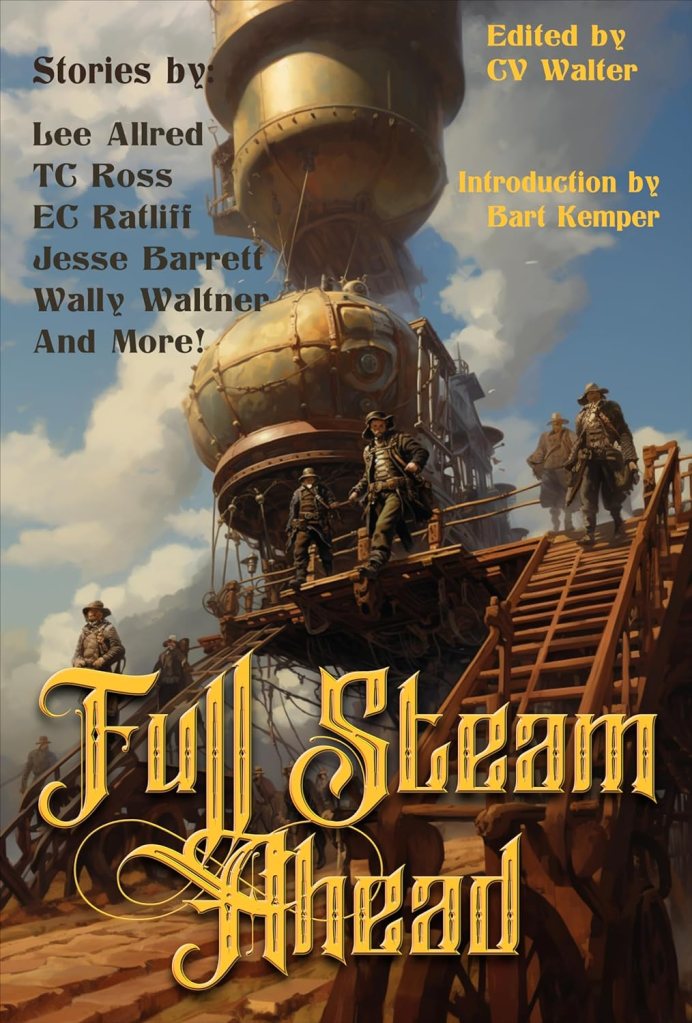
FROM RACONTEUR PRESS WITH A STORY BY LEE ALLRED: Full Steam Ahead!

“In the midst of this danger, dirt, speed, technological changes, and social upheaval comprise the heart of steampunk. The old and new were in conflict, and the outcomes were uncertain and fraught with failures, making it a rich tangle of possibilities for characters to clash and collaborate within. ” – From the introduction by Bart Kemper, answering the question Why Steam?

Steampunk is danger, adventure, and technology with a flair for the dramatic and an eye for beauty. Join these 10 authors as they explore worlds of danger, daring, romance and steam.

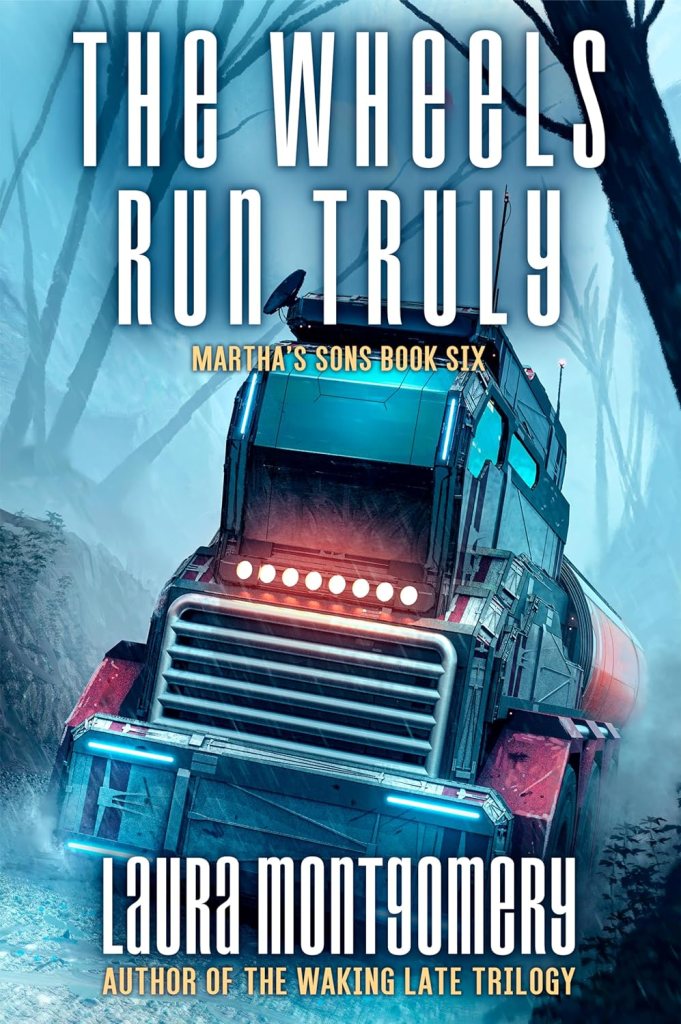
FROM LAURA MONTGOMERY: The Wheels Run Truly: A Science Fiction Lost Colony Adventure

Two brothers fight for freedom. A lost colony’s governor strives to reinvent the feudal state. Can Martha’s sons escape to liberty and a future?

Thaddeus Dawe is a patient man. On a planet where only the valley of First Landing is fully terraformed, he waits for spring’s agonizingly slow arrival. He plans to take the colony’s last terraseeder to fortify a secret northern enclave outside the governor’s control. When the palace loses power in late winter, Thaddeus scrambles to save his and his brothers’ hopes for independence.

Peter Dawe suffers under another secret. When he receives his brother’s call to return from exile to save the terraseeder, Peter forces himself to disclose his long-planned departure to those who sheltered and befriended him, including the woman he wants in his life. None of that goes as planned, and he heads north responsible once again for too many lives.

With the terraseeder losing power, a promise he has yet to fulfill, and the governor’s men against him, Thaddeus fears the new chaos marks the imminent death of the essential terraforming microbes and the failure of the new world he plans to build. Peter has spent the winter learning skills for his brothers’ northern plans, but joining Thaddeus’ team puts not only his own life at risk, but that of the woman he gives up to friendship.

Can the Dawe brothers escape the governor’s dominion with the life-giving terraseeder in time, and with their friends and loved ones alive?

The Wheels Run Truly is the final installment in the gripping science fiction colonization series, Martha’s Sons. If you like driven heroes, deep bonds of love and friendship, and a fight for freedom, you’ll need to read Laura Montgomery’s thrilling adventure tale.

Pick it up now to reach for independence!

Lord Adrescu’s Blade: A Familiar Origins Tale (Familiar Tales)

A legendary sword, and the man who wielded it.

Lord Danut Adrescu returns to his keep to find a mystery and a warning. A battered young Healer who cannot speak, and a vision of battle with a half-bull monster. What links the two? And what ties them to his new sword, a battle-claimed blade made by the finest Italian swordsmiths?

A novella, 30K words.

FROM M. C. A. HOGARTH: In the Court of Dragons: A Peltedverse Collection in the Fallowtide Period (The Fallowtide Sequence Book 5)

Sweeping cultural changes sound very good on paper. But in the lives of normal people, even the ones who stand to benefit, those changes can be a challenge… one they might not have even asked for. In the Court of Dragons collects eight stories of the period after the events of the Chatcaavan War, focusing on changes both personal and widespread: old favorites return and new characters make their debut as we follow the effects of the war on everything from the imperial harem to the nascent Eldritch newsroom. What are the Faulfenza up to in the capital? What was the fate of the palace castrates? And who taught an Eldritch to… bungee jump?

This reader-commissioned collection includes stories written by the author at reader request. Come home to the Alliance with these tales of hope, renewal, comedy, and romance.

FROM MICHAEL HOOTEN: We Are All Enlisted (Enlisted Book 1

Peter Wright joined the Navy thinking that he could do his time in a nice, quiet billet somewhere on Earth. The Navy had other ideas. When the asteroid miners claimed their independence, Peter finds himself getting sent to space on a warship headed straight into the combat zone. He has to get used to everything: zero gravity, standing watch, and being the only Earth-born in his crew. And he has to be ready for the biggest battle the solar system has ever seen.

FROM HOLLY CHISM: Lizzy’s Tail

A small, plush horse learns what it means to be real when a little girl chooses her and takes her home. Through adventures and accidents, Lizzy the horse becomes real to her little girl, Carrie, even though she is still a toy.

FROM LEIGH KIMMEL: Lunar Surface Blues

The High Frontier is no place for foolishness, but nature can always make a better idiot.

Four years ago, Molly’s parents brought her up here to the Moon when their work brought them to Shepardsport. In the time since that move, she’s earned her place here and a seat on this field trip. Only one problem — she’s been given the worst possible EVA partner.

A pencil-necked dweeb with an attitude, Benji wants to be one of the guys. But his stunts keep putting them both in danger, and the adults keep blaming Molly.

When Benji gets in over his head, can Molly save him before it costs both their lives?

A short story of the Grissom timeline.

Vignettes by Luke, Mary Catelli and ‘Nother Mike.

So what’s a vignette? You might know them as flash fiction, or even just sketches. We will provide a prompt each Sunday that you can use directly (including it in your work) or just as an inspiration. You, in turn, will write about 50 words (yes, we are going for short shorts! Not even a Drabble 100 words, just half that!). Then post it! For an additional challenge, you can aim to make it exactly 50 words, if you like.

We recommend that if you have an original vignette, you post that as a new reply. If you are commenting on someone’s vignette, then post that as a reply to the vignette. Comments — this is writing practice, so comments should be aimed at helping someone be a better writer, not at crushing them. And since these are likely to be drafts, don’t jump up and down too hard on typos and grammar.

If you have questions, feel free to ask.

Your writing prompt this week is: seat

Small, Private Tragedies

I’ve been looking for a way to write about the small private tragedies, for which we each blame ourselves, but which are in fact part of a system that more and more militates against humanity and — in our place, in our time — particularly against young people, and even more particularly against young males.

And then I was reading Francis’ Turner’s Post yesterday and this jumped out at me:

And this has of course had all sorts of bad effects. As the Forbes article he linked to points out, prior to the 1500 hour rule, pilots typically had about 500 hours when they first sat behind the controls on a commercial flight and they were mentored over the next 1000 or so by more experienced pilots. This system worked just fine, and is in fact the system still used everywhere except the US and commercial airliners do not fall out of the sky on a regular basis. But now, in the US, would-be pilots need 1500 hours before they can start which radically limits the pool of potential applicants and raises the cost because if not military they have pay for that 1500 hours of flight time out of their own pockets.

The problem is that the effects of this rule change take years to be noticed (most of a decade I believe in this case) by anyone outside of a few subject matter experts who get blown off because “it’s for the children” or whatever.

And that, right there is the issue. The rules that are signed with much flourish, and which sound so good on paper, have monstrous effects down the road. And yet, the people raised on the previous set of rules don’t know where this is coming from, and are shocked and surprised, and always, inevitably, attribute the problem to the wrong thing.

Mostly, it gets attributed to “kids these days” but unless you have kids, these days, you don’t know how they are bound. And even if you do, you might not realize it, because all you see is the infantilization of a generation, and not that they, themselves, aren’t the ones doing the infantilizing, but all those “good rules” and regulations and laws are doing it.

I realized about 10 years ago that my son’s generation was about 10 years behind where we were. In their mid twenties they were doing things we did in our teens. It was disconcerting. And even I had no idea why, other than too much regimentation in school, too much of a never end of button counting, and not enough room or freedom to think or be on their own.

Since then…. I’ve seen more. And a lot of the reason they are younger than we were is that the entire world is geared not to let them grow up. I mean, let’s be glad that — unprepared or not — they’re legal adults at 18, or people would be denouncing them for walking alone down the street, without an “adult” at 25.

There’s also… adolescence is in some ways a profoundly unnatural life-stage, and more or less invented in the 20th century. In the past, sure, people were children, and people grew to be adults, but there wasn’t this protracted time period where they were adults in size and at least some ability, but weren’t allowed to be adults: they weren’t allowed to earn or spend, or make their own decisions, for years.

The earn or spend thing is important. Kids used to grow along with their tasks. Read Tudor or colonial memoirs, and you find four year olds looking after cows or horses, or learning Latin, or other unlikely things even for twelve year olds in our time.

Mom went to work at 10 and started getting a salary. It wasn’t much, and 90% of it went to her parents’ budget. But she was working, holding down a job, doing things that were maybe not at adult level, but could lead to it, eventually, if she applied herself. This was normal for her generation. In my own generation, amid the working class, most people went to work at 10. Heck, amid the middle class, most people went to work at 15 or so, after 9th grade. Were they more mature than the rest of us that went all the way to college?

I wouldn’t have thought that at the time, but yes, of course they were. Most of my elementary school classmates were married, with kids by the time my biggest worries were final exams. Of course, with my intellectual pride I looked down on them but now I understand they were managing a very difficult job, which at the time I could not have done.

I always feel stunned and shocked when someone says the kids should be “holding down two jobs like I was at 16” or “working to pay their way through college.” (That last is a giggle as it has two impossibilities. Finding a job that pays enough after college which has a lot of make-work expectations, and making a full-time middle-class salary, which is what college costs these days.) Two Jobs. At 16. The difficulties in giving work to 16 year olds, increasingly restriction of hours, etc. combined with chaotic scheduling in the only unskilled jobs remaining (mostly just retail) means that until recently none of them could find A job. Let alone two. And the recently was during Covid. I haven’t seen so many little 16 year olds cashiering, or serving at tables recently. And that’s because most people I’m seeing are around my age: I guess unemployment is biting hard.

But you know, all these strong rules against “child labor” mean that most kids hit 18 or, if they’re going to college, 22 or — more likely, as most degrees (remember make work?) are taking 6 or 7 years — 24, with absolutely no job experience. Which means their applications aren’t even looked at. Not seriously.

Honestly, almost every young person — particularly young men — I know who found a job, and is doing relatively well, did so through contacts. Through friend of friend. Through knowing someone.

This is a bad sign, because it’s how Portugal functions, and it is not in any way shape or form meritocracy, which in turn contributes to other things falling apart.

But more and more what I’m seeing is young people hitting their mid twenties lost, and doing this, and doing that, and trying this and trying that, and nothing ever gels. To make things worse, they don’t have the habits mom had by 10, because they haven’t been allowed to acquire them.

There was a similar generation — one, while here we’re well into two — in Portugal, where unemployment was so bad (the generation before mine) that most people weren’t “established” on a path till their mid thirties. I’d guess about half of them never got the knack of it: of the day to day of working, fulfilling the work duties, just…. the unglamorous day to day that makes us adults.

It’s particularly hard for boys. What places there are seem to be given to girls. Who also, usually, have better grades — though when I saw their work…. never mind. let’s say there was little difference, but everyone is afraid of discouraging girls, so the Lady’s A is a thing — and therefore on paper look much better.

Meanwhile the boys are quietly drowning.

Note, I’m not speaking for my boys here — they’re doing okay. For their generation, they’re doing amazingly and are almost precocious — but being the mother of boys, I got to know a lot of boys. Oh, girls too, but a larger number of boys. And for some reason our friends who had kids also had a lot of boys. Again, girls too, but a lot of boys.

The boys are drowning. And these are not unmotivated or stupid young men. The whole thing about a lot of brain function being inherited? Our friends aren’t exactly slackers and ne’er do wells. In fact, we often anchored that pole in our group, by virtue of my being a free lancer.

But the boys are spinning in circles well into their thirties, looking for a place to belong, looking for something to do where they add value, where they can be adults.

And here’s the thing: it’s pretty much society wide. Yes, some kids go to trade school early and escape it, but those are the kids turning 18 now, who saw older brothers and cousins and children of family friends be destroyed. But kids five to ten years older, by and large are still spinning.

The scale of it precludes personal failings at the route. It’s more … well… let me see, stuff against under age labor, a lot of illegal immigration, undercutting the bottom wrung of jobs, the de-industrialization of America cutting out the type of jobs available to the young and unskilled, and– well, yes — mandatory minimum wage, making it prohibitive to hire someone who might not work out.

All of these things sound good. But they snowball and they roll, and they make it almost impossible to break into the job market. Now, add in everything designed to give women a leg up, because, you know, we’re all victims of the patriarchy and….

Years — decades later — all of these come home to roost. And they’re not chickens, so no one notices. They quail, maybe. Or sparrows. No one will notice till they obscure the skies, like the sparrows returning.

Instead, each family — and probably each of the young men — thinks of it as a personal failing. ”It’s my fault. I shoulda/coulda/woulda–“

But the game was rigged. It wasn’t their fault.

It’s kind of like, on a smaller front, at one time I realized our washer was running continuously, and yet I was falling behind on laundry. And when my husband complained and asked why I didn’t do laundry, I fell apart. I didn’t cry — I only cry when I want to kill something and can’t — but I fell apart, and started trying to explain that I was always doing laundry, but–

So he went down and looked at the times. Each load, in the low-water washer, was taking 2 hours. And we were a family of four, with two kids in sports and other stuff that caused dirty clothes. It was mathematically impossible for me to catch up with wash. (Yes, we changed our washer. It’s now only one hour, which is still too long, but I have to do extra rinses, because of my skin stuff.) Until he did that, I thought it was a personal failing.

I’m sure there are other instances, where we think we’re failing, but it’s a stupid regulation, an idiot rule, catching up with us. Years or decades later.

Only it shouldn’t cost entire generations. And more importantly, we should be aware it’s not PERSONAL. It is, quite literally, systemic. It’s only our remaining individual responsibility and shame keeping us from realizing it.

In Clifford Simak’s They Walked Like Men, there are aliens buying the Earth. (Now, the money counterfeit, and the ending has two holes you could drive a mac truck through, but never mind those). They are buying it piecemeal by buying houses and businesses. And the people who sell for amazing prices, don’t realize that there’s nothing to buy. That the money they got is literally worthless.

A big turning point in the story is when people realize their old homes are vacant, and just move back in. Just realizing there’s something going on and they’re NOT ALONE is enormously empowering.

To the young people out there: you are not alone. You didn’t do this. You didn’t give up adulthood. It’s not a massive personal failing.

It was done to you. A lot of well intentioned (and some maybe not) rules and regulations, supposed to protect you and be “nice” just met in an utter tsunami of crap to destroy your life.

It’s not your fault. You’re not alone. The game is rigged. But that doesn’t mean you’re not needed. You should in fact show the f*ckers that rigged it a thing or two, by getting around it.

Quickly, before they ban gig work and entrepreneurship. Figure out what you can do and do it, no matter how small or stupid. Then build.

And the rest of you: figure out the people who think it’s all their fault, the broken down Atlases trying to lift the world, and go lend a shoulder and a hand.

And while we’re at it, let’s cut through all the stupid, counterproductive legislation and regulations. In this and in everything else.

With a chainsaw.

DIEing in Nice Red Tape by Francis Turner

In which I partly agree with David Brooks and Mark Edmundson

Thanks to Stuart Schneiderman1, my attention was drawn to this NY Slimes column by David Brooks (it’s an archive link) in which he points out that there are a lot of bureaucrats in government and business and they seem to mostly subtract value rather than add it.

Brooks in turn links to an article by Mark Edmundson, a professor at the University of Virginia. In that article, which I read as a rational lefty in the process of being red-pilled and fighting to maintain his delusions, the prof tries to explain that the DIE bureaucrats at his university are nice people who are trying to make the world a better place even if they do so by means of mandatory DIE in academic annual reports.

… I had just learned that there would be a new aspect to our annual reports. We would be asked to tell our overlords how each one of our activities contributes to Diversity, Equity, and Inclusion.

Teaching? How did it advance DEI? Scholarship? How did it help speed DEI on its way? If you get an honor or an award, you are to say how it contributed to Diversity, Equity, and Inclusion. Outside consulting: did it do any DEI duty? And what does the university mean by Diversity, by Equity, by Inclusion? The university doesn’t say. There are no official definitions out there to consider. 

So I had a lot to tell my friend about administrative interference with academic freedom. I didn’t want the university deans and DEI enforcers setting the agenda for my teaching or my scholarship, or for anyone else’s. At the same time, I couldn’t really argue with my friend’s observation: the people in the dean’s office and the DEI enclaves are decent sorts. I like them…

DIE is one of those things that sounds nice and which no one should complain about, but which is in fact built on a lie. Edmundson, as a self-confessed Bernie Bro and literature professor, may lack the desire or the tools to prove it, but it remains the case. But I digress, because Edmundson does show some signs of detecting the over-reaching problem

The good people who came up with this notion are — without knowing it, I suspect — softly tyrannizing us. They are also softly tyrannizing themselves. And what they are up to isn’t only a university matter. It is happening in corporations, medical centers, primary and secondary schools, foundations, and NGOs. Surveillance and discipline, carried out almost exclusively by good people, are becoming pervasive.

Now again, we can perhaps question whether DIE bureaucrats are good people or not, but they undoubtedly see themselves as good people who are doing all this for our good. Moreover each one is a good little cog in a machine.

Instead, we find ourselves within a web of power whose influence is everywhere and whose center is nowhere. And who administers this power? Not the king, or the duke. And not even — this will matter in what’s coming — the president. Power is now administered by everyone in what we might call an administrative position. The ones who design, vet, and disseminate the mandatory work surveys; the ones who have a hand, or just a finger, in getting the annual reports out to the workforce, whether a faculty or a corporate population; they are the ones who evaluate the students for intelligence, grade them for performance, collect data on their likes and dislikes. These administrators of power include marketing people and advertising people and public relations people — all the people who count and characterize, and whose work manages to shape the lives of their subjects.

All these people — most of whom are no doubt good people — are watched and counted and measured in turn. Do some have more disciplinary power than others? Do some have more surveillance power? Maybe — but it probably doesn’t really feel that way to any individual. They are just doing their jobs. A certain amount of such bureaucratic calculation and observation is critical to the functioning of a mass society, certainly. Yet I think the collective effect of these jobs done by good people is more discipline. The collective effect is less freedom. One is observed more. One is judged more. 

[… very very long …]

In truth, there is no center of power to take possession of. If Trump wins the next election, the forces of discipline, which are deployed by no one, in the interest of no one, will continue to compound themselves. The college-educated will get to push more of the buttons, but they too will be subjects of discipline, constantly evaluated, scrutinized, regimented, and regulated. At least they will feel as though they possess some power and some dignity. The non-college group, by contrast, will stroke many fewer keys and see that their lives are being run, though they will think they are being run by those goddam liberals, not by the disciplinary regime. They will not recognize the power that expands for its own sake and functions, finally, for nothing and no one. Its only interest is its own blind growth.

This is the problem. And this harks back to Brooks and the death of 1000 papercuts.

The real problem is that DIE is embedded in bureaucratic administration. Administration makes regulations, some of which (e.g. DIE discrimination ones) are bad and most of which are merely questionable, but which end up making it harder to get things done. See the rant above about documenting whether your job helped the DIE cause. DIE is just the cherry on the cake of red tape that is strangling productivity and creativity. But the key point is the thing that various UK Tory ministers called the blob is in charge. It’s the administrative stuff, some of it government bureaucrats, some of it NGOs/charities, some of it organizational HR departments and so on. Each one of them come up with an idea that adds just a little more straw to the camel’s back. DIE edicts are just the last few straws before the poor camel collapses.

Then there’s Richard Hanania’s recent post2 on why DIE wokism won’t kill safety, which is, IMHO, overoptimistic but in the middle recounts an incident where bureaucracy gratuitously makes things worse and no one can fix it. This is what happened when in the mid Obama era the FAA decided to unilaterally make a change in pilot hours required to qualify as a commercial airline pilot:

In this particular case, we have if anything too much “merit” when it comes to hiring pilots. The US used to require only 250 flying hours before an individual could earn their license. After a crash in 2009 that doesn’t appear to have had anything to do with the amount of training the pilots involved had received, they upped that number to 1,500, making the US a global outlier.

And this has of course had all sorts of bad effects. As the Forbes article he linked to points out, prior to the 1500 hour rule, pilots typically had about 500 hours when they first sat behind the controls on a commercial flight and they were mentored over the next 1000 or so by more experienced pilots. This system worked just fine, and is in fact the system still used everywhere except the US and commercial airliners do not fall out of the sky on a regular basis. But now, in the US, would-be pilots need 1500 hours before they can start which radically limits the pool of potential applicants and raises the cost because if not military they have pay for that 1500 hours of flight time out of their own pockets.

The problem is that the effects of this rule change take years to be noticed (most of a decade I believe in this case) by anyone outside of a few subject matter experts who get blown off because “it’s for the children” or whatever.

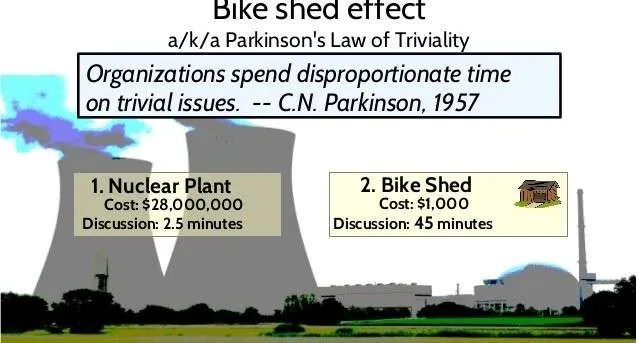
This is all, IMHO, an expansion of Parkinson’s Law of Bureaucracy

DIE in fact meets one of the related laws too – the triviality one:

Parkinson’s Law of Triviality, also known as “bikeshedding,” is a phenomenon that occurs in organizations when a group of people spend a disproportionate amount of time discussing and making decisions about minor or insignificant details, while neglecting more important issues.

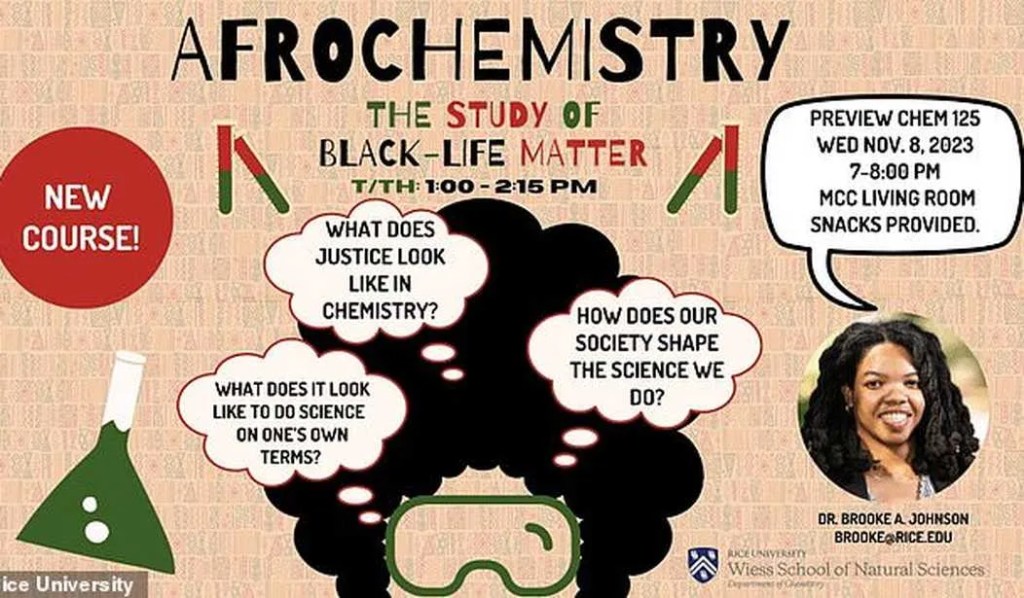
DIE is a classic bikeshed. It allows people of low competence and limited knowledge about the major subject manage to take up the time of others doing nothing of relevance. But because it is something even low competence people can have a viewpoint on they can argue about it, while decisions about the actual functiomn of the organization require rather more knowledge and competence so they shut up. See for example the Afrochemistry chick

Or the Johns Hopkins HR chick, though she may be just evil (or stupid, or both). Having said that she actually has a significant academic publishing record (far more significant than that of Gay, C – to pick a diversity hire at random) and many of them are about diabetes and seem (at a quick skim) to be reasonable. Mind you some appear to be less high quality:

Measuring Structural Racism and Its Association With BMI

Structural racism has attracted increasing interest as an explanation for racial disparities in health, including differences in adiposity. Structural racism has been measured most often with single-indicator proxies (e.g., housing discrimination), which may leave important aspects of structural racism unaccounted for. This paper develops a multi-indicator scale measuring county structural racism in the U.S. and evaluates its association with BMI.

etc. ad nauseam

I haven’t read the paper, but I’m pretty sure it’s blaming racism for African Americans being fat. Probably because African Americans are poor wittle children with no agency who are forced by the ebil white patriarchy to eat a poor diet and not get any exercise. I may be exaggerating, though I’m not sure because how else do we read the original explanation of ‘privilege’ that said that it was something white, male, cisgender, middle class people had. In other words male normies.

For the most part these people contribute nothing of value to their organization, but they need to justify their salaries and existence somehow so they attach themselves to the DIE bandwagon and play the RACISS card in order to show their power and authority.

And I have a slight tangent to insert here. A lot of the useless bureaucrats, both inside government and outside in corporate HR, NGOs etc., are “minorities” or “women” or were otherwise affirmative action/diversity hires picked for their original job mostly on the basis of their skin color, gender etc. with less concern for their ability to do a proper job. Originally there may have been a decent excuse for this, back in the 1960s/70s – which is, I remind you, HALF A CENTURY AGO – but that excuse should have been tossed some time in the 1980s or 90s. I don’t have statistics or indeed much beyond anecdata but I find it noteworthy that we are seeing the issue now as the affirmative action hires of 20-30 years ago, probably hired back then by other older affirmative action hires, now bubble up to the top of their organizations and then cock everything up in ways that cannot be swept under the carpet because they are the visible face of the organization (see Gay, C as the perfect example).

The other problem is that these people, who are in fact generally of less than stellar competence, have found that they can’t get jobs designing bridges or aircraft or computer games or indeed much else that requires actual intelligence and knowledge. Neither can their children [and yes ladies and gentlemen and little furry creatures from Alpha Centauri, IQ and executive function are in large part heritable characteristics, with another critical influence (not) being in a female single parent household]. This, they assume, has to be due to “structural racism” and/or “the patriarchy” because they can think of no other reason why precious darlings can’t get intellectually stretching jobs.

But returning to Brooks, DIE is just the visible tip of the iceberg that is the problem. The real problem is bureaucracy in general, the fact that people who have a real job to do must jump through pointless hoops of (electronic) paperwork before (or after) they can do what they need to do and they have to attend meetings and training sessions that at best waste their time and at worst actively assume they are all bigots in the process. Those who have a real need to solve have to navigate pointless levels of semi-automated phonetree or level 1 customer support people before they can talk to an actual human who has the power to fix their issue.

Or perhaps just the knowledge to tell them that the issue cannot be fixed with the current product because some idiot government efficiency mandate has made it at best semi-functional.

And going back to Hanania, the corrosion of woke may not have yet showed up in the statistics but it is certainly present in everyday life. I know, for example, of a number of people (some of them probably readers of this) who deliberately choose older white doctors as their primary care physician. Who likewise search for (generally older) male tradesmen for repairs and the like. And so on. They have made choices that mean they avoid the dangers of a woke diversity hire being involved in their life and harming them through incompetence (or malice). They tend to buy used older stuff or commercial stuff to evade idiotic energy etc. mandates that make their dishwashers at best semi-functional. Likewise many now fail to have flight cancellation issues or to be groped by the TSA because they no longer fly commercial airlines. Who no longer work for large corporations with DIE HR policies. Who no longer watch woke TV or read woke magazines. And so on.

The blob of bureaucracy is there and growing and it is absolutely making things worse. See dishwashers. And DIE.But DIE is as much a symptom of a bureaucracy that wants an excuse to expand as it is a cause.

Japan is different

In many ways Japan has skipped the general encrudification. Japan has a reputation as a pretty bureaucratic place and that is true, but the bureaucracy in Japan has not grown like it has in other places. Just as prices in yen have barely increased in 30 years, so too the bureaucratic load. Indeed in certain respects Japan has actually decreased the bureaucratic load – various pointlessly low speed limits have been removed, for example, and (after some teething troubles) the entry process at airports has been significantly streamlined post wuflu with everything done via a website/app that you show to the nice immigration or customs agent.

[Note that you still need to queue but that’s due to the volume of tourists seeking to enjoy Japan as a cheap, safe tourist destination. Also as someone who once bought the most expensive beer of his life in Tokyo I find putting the words cheap and Japan in the same sentence to be bizarre, though it is true.]

Flying domestically in Japan is not as good as it was in the US in the 1990s when you could board your plane 15 minutes after parking your car, but it’s also not the hour plus long gropathon that is the current TSA experience – unless you fly at peak periods but then proportionally the time is less than US equivalent peak periods. Moreover you don’t have to show photo ID, you don’t need to take your shoes off and you can carry bottles of booze (or microphone stands) in your carry on bags.

In healthcare there has been no Obamacare and thus no requirement that your health insurance support this or that fashionable thing. You get to choose your own doctor or hospital and for the most part you and your doctors determine your treatment plan without having healthcare bureaucrats – either government or corporate – arguing over whether it is appropriate. The price will generally be clear too, as is what you will be expected to bear as copay, and if you don’t like it you can ask another clinic if they’ll do it for less.

In some areas – e.g. construction – Japan is actually notably freer than other countries. Zoning rules are much broader, buildings just need to meet safety standards (which is likely one reason why the recent 7.6 magnitude Noto quake killed less than 300 people total) and anyone can turn their home into a shop or other small business (or vice versa) with no way for a government busybody to stop it. Noah Smith had a recent article about the “California Forever” new city project3, where he mentions the zonings for mixed use residential / commercial / light-business as a positive but any Japanese bureaucrat would be scratching his head and wondering why this was special.

It is true that large Japanese companies remain horribly bureaucratic places where mediocre performance does not necessarily lead to lower pay or slower promotion, but they have not got worse, except for a notably increased propensity for wearing face masks post wuflu. If it took a year to make a decision in, say, 1995, it takes a year to make the same decision today. There’s no additional friction and just as in 1995 once the decision has been made it is implemented promptly.

As well as masks there are mutterings about “eshicaru” this and that and “essudeijiizu” (ethical and SDGs) but in general this is froth. In part this is because even government bureaucrats mostly believe in customer service. Yes Japan has plenty of mostly pointless bureaucratic stuff to do but as long as you stay on the track of everyone else the process is clearly documented and you carry bits of paper from bureaucrat A to B to … and end up with the permit to do what ever it was. Indeed if you expect to deviate from the standard track but tell a bureaucrat first, the bureaucrat will likely help you fill in the right forms / provide the right supporting documentation etc. and all will be fine.

Aside: Japanese bureaucracy only gets nasty when you don’t get prior approval and then act all huffy about it. It’s much, much better to ask for permission than forgiveness and if you did fail to get permission, an attitude of deference bordering on groveling will often result in you being let off with a warning as long as you write your apology letter properly.

The Solution

It is unclear how to solve this problem without mass disruption. In fact it may be hard to solve it even with mass disruption. But the key to the solution is to take an axe to the entire bureaucracy not just the twigs that are DIE and ESG. Almost certainly the Milei approach is required. A chainsaw that cuts down branches and all the ivy, brambles and other overgrowth.

The key to recall is that Parkinson’s law is a ratchet on the bureaucracy, so you have to both repeal 80% of the regulations AND fire (at least) 90% of the bureaucrats. Do not reassign them, just fire them. There are almost certainly entire government departments (Education, HUD…) that can be entirely replaced by a small outsourced call center, if that. Others, the EPA comes to mind, need to be pruned radically and have most regulations in the last 25 years revoked. The FDA, FAA, SEC etc. probably need more careful pruning but I’m sure that a significant reduction in regulations and manpower will be easily achieved.

And so on.

How to choose which bureaucrats to remove? Well a simple first wave is everyone that has showed up to the office fewer than three days a week in the last year, call it under 150 days in total. That’s likely to be about 75% of the government bureaucracy. And if that impacts other bureaucracies than the ones that need to be cut then those get more firings as required.

Once the government bureaucrats are fired, the next is to go after the NGOs that get government funding. Simply pass a law that no non-profit can receive government funds. Most of them will be doing useless things like DIE training so there’s no loss. Of course if you word this right that will include most of the universities. That’s probably a positive, but it may be necessary to include carveouts for actual scientific research, but it seems reasonable to require that universities that accept research funds comply with a few rules that will likely remove some of the faculty as well. It is probably beyond the (federal) government to remove administrators but state governments almost certainly can for state funded universities. There probably ought to be a maximum non faculty staff number/ratio to undergraduates that is approximately the number of such staff in 1999.

Some sample rules

  1. (Undergraduate) entry requirements must be objective and compliant with US non-discrimination laws, Supreme court rulings etc., with subjective choices only taking place in the case of objective ties.
  2. Any researcher who receives government funds and fails to produce sufficient raw data/methods to enable replication shall be required to repay the funds. If the research doesn’t have any raw data/methods it isn’t research and shall also not be acceptable

After that the chainsaw needs to go to corporate HR departments. Almost certainly the lack of required regulations to comply with (thanks to the chainsaw above) will help most organizations decide to remove chunks of HR drones in the interests of larger bonuses for CxOs because of greater profits. But a stick, in the form of a reminder that US non-discrimination laws, Supreme court rulings etc. mean that diversity hiring is generally illegal and could open the company up for prosecution would probably help.

If the US is lucky, the next US president will take a leaf out of the Milei book. In other countries it may be too late.

We’re Still Standing

The bad news is that we’re an occupied country. I’ve said that for a long time. The country itself is all right. It’s the structures of power.

Someone on American Greatness not only agrees with me, but traces it to exactly the inflection point:

Since 1933 and the rise to prominence of FDR, America has been an occupied country, governed by a ruling class that hates the nation’s older way of life and wants to see America on the side of the global revolutionary Left. This is why FDR’s administration was filled with communists and the American government gave $300 billion to the USSR in its existential war of survival against the fascists. America did not remain neutral in that conflict because the American ruling class was explicitly on the side of the communists.

I mean, he’s wrong insofar as, well two things:

First, this started under Wilson, which paved the way to FDR. Second, well, being on the side of the Nazis wouldn’t have improved anything. And staying out might not be possible. But the thing is not only did we aid the USSR in war, but we continued aiding it. It was when that help was removed and pressure added by Reagan that it collapsed. But it was barely surviving before. Communist countries can’t survive without aid.

He’s also right absolutely that all of our upper echelons of everything, even those that are supposed to be on the side of the right and the good are corrupt and if not explicitly communist are implicitly so: this is true of everything from grocery chains to churches and yes, the army too.

This was accomplished by corrupting the universities way back in the early 20th century. Communists were seen as not just the wave of the future, but also “just” and “fair” and wanting the best for others. What it meant in practical terms is that universities which run on virtue signaling and are ever willing to embrace of virtue that requires no sacrifice went into it with both feet. Being a commie became “just smart”. There was a brief period of confusion, because the USSR fell. For about a blink they didn’t know what to do or why. And then they realized their networks were still in place and they could do what they’d always done. BTW more or less the same happened in Russia, only it couldn’t get its vassals back without active US help. It’s been trying to ever since. They want the USSR back. And if you say “Oh, but they’re nationalists” I’ll tell you they always were. The “international” in socialism was a ruse. It was always Russian Nationalism Everywhere. Just every other country was supposed to bow to Russia. Seriously, if you were in one of the countries it was doing its best to swallow this was painfully — literally — obvious. Russia swallowed communism as a vehicle for its expansion. The idiot US commies swallowed communism as “Russia is our model.” Bah.

Anyway, you could tell the moment the academics went back to doing what they always did and being part of the brain dead commie net. There stopped being discussions about the plight of Russia and how badly off they were left. There was no more mention of the horrors that happened under communism. Hell, even in Germany, with living proof of how bad it was in their midst, the talk stopped, and eventually the komissars started getting elected again, because communism was just “smart you know” and definitely the way of the future.

When the universities are corrupted, in a society soaked in credentialism, means that every one of the upper echelons that require the right credentials are corrupted.

In theory at least.

Except something happened on the way to the glorious communist revolution. It met America. And America never behaves as expected.

So we didn’t let them convince us we needed a revolution. We ignored the propaganda. The basic programming of America won out over the indoctrination, and the fact that communism was “cool”. Most people parroted the lines we had to to stay okay socially, or to climb the social ladder. To move ahead. But we still lived as Americans where it counted. And the attitude that we’re never poor only temporarily embarrassed millionaires is with all of us. Which means we make lousy revolutionaries. We certainly make lousy communists.

To convince our young people they’re socialists, the left has had to define socialism as everything that is done in a group, from schools to roads, as though those hadn’t worked under every single regime since the Romans, or probably the Egyptians, long before Karl Marx’s misbegotten birth.

The truth, guys is that it took them too long. It took them too long to institute the glorious dictatorship of the proletariat. It took them past the fall of the USSR. It took them till the system put in place by FDR has slowly decayed, till it’s falling apart visibly. Till the internet exists and we know that we’re not alone. We know it doesn’t work. We know. Everyone knows.
And the fourth generation of of leftists, promoted just because they’re leftists, are so totally incompetent, they actually drink their own ink and are trying to institute DEI, and hire the mentally ill to fly planes and–

And with all that, with complete control of all the institutions, the only way they could seize the Federal government in the US was by cheating. By cheating huge, in front of G-d and everyone. Yeah, the cheating was more subtle in 22, but it was still visible, if you knew how to look.

Even having full control of the levers of government, all they can do is stomp their little hooves and say “obey my authoritah” while the American people say “Nah, bro, we’re fine.” They managed to lockdown, through immense effort, and through fooling the entire world. But they aren’t doing it again. Heaven knows they’re trying. And they’ll probably do completely crazy things from here on.

But here’s the thing: Everything they do sours and turns out wrong.

What they are trying to do is akin to trying to build the Berlin wall while people are ripping out chunks of it and driving off in their ladas and trabants. Driving off, as far and as fast as they can, until they hit the ocean.

I’m not saying we’ll win this year. The fraud is so deep and thick, it might be impossible. It doesn’t exempt us from trying. But be aware we’re fighting against a tide of fraud and corrupt information streams.

But–

They can’t win. Not the elections, but in installing a communist regime here. Everything they do turns wrong and upside down.

And eventually we win. Eventually. Now this might not be in our time. History doesn’t move at the pace we want it. I think it will be in our time. But if it’s not, it’s not the end of the world. Just the end of us, but the world goes on.

It is our duty, it is our very great privilege to do everything we can, in every way we can to thwart their putrid and horrible vision for our country and the world. Voting, sure. But more importantly opposing them every day, in every way we can.

After everything they threw at us, the American people went out and voted against them in 2020 so hard that their fraud had to be obvious.

And that was at the end of just about a hundred years of work — slow crawling through the institutions — to throw us over.

They still haven’t done it. We’re still standing.

And we’ll be here long after they’re gone. Oh, maybe not us as individuals, but America will.

Be not afraid. Keep being American.

*Truth in advertising. The first half of this post was written in September 2023. I’m fairly unslept and dealing with getting the pipe repaired. So I couldn’t write an entire post. But I could finish one. I say this, so if there are inconsistencies, you know why. – SAH*

The Good, The Bad and the Eternal a blast from the past from 4/20/2018

The Good, The Bad and the Eternal a blast from the past from 4/20/2018

So recently some twitter twit, of whom I’ve never heard in the whole course of my days took it upon herself to put down both John Ringo’s work and mine (I’m still not sure at all why I was pulled into this, except that I gall them by existing and not falling in line.)

Those of you who have read both of us might go “What do these two things have in common?”  I don’t know, but since this was was on a twitter thread where it was also proclaimed that we wanted people like the writer to die, you have to take it with a grain of salt.  I don’t think I’ve ever consciously desired anyone’s death, though I’ve been known to wish plagues of locusts or the like against people who are annoying me.  The person then back-peddled and said that the policies we support means people like him/her/zyr would die.  This is a puzzler.  The only policies I know of that cause people to die are derived from Marxism — 100 million and counting! — so I believe Xer was misinformed.  Maybe Syr read too fast and missed the “anti” prior to Marxist.  Or maybe the uninformed keyboard strummer really believes all that stuff about you know, not paying for contraceptives is the same as banning them.  Maybe zyr believes that if we don’t actually lovingly spoon mush into zyr’s mouth, and pay for it too we want zyr to starve..

However, it was the comment on our writing that amused me the most.  Look, I enjoy the heck out of some of Ringo’s books, but it took me a while to get into them, just because his plot structure is so different from mine.  I used a very classically ordered plot.  He doesn’t.  Took me a while to realize no, it wasn’t just formless.  And because I’m a writer, it drove me nuts, looking for the pattern, and it wasn’t until I figured out what thread he was following that I could relax and enjoy it.

It’s the same problem I had watching Japanimation with the boys.  Their concepts of story are so different from ours that on first exposure, it doesn’t fit well.

So, is John Ringo a good writer?  Uh. You know, I listened to the Black Tide series, in audio book, while fixing our previous house for sale.  We had been delayed putting it for sale because I’d had major surgery and been so ill, and we were renting elsewhere and running out of money.  On top of that everything that could go wrong did, from younger son stepping on a nail and putting it through his foot, to it raining continuously while we were doing repairs outside.

You’d think it was a depressing series to listen to, while doing that, but the thing is, as bleak as much of it is, there is a hint of unquenchable human spirit a surging tide of hope (eh) throughout the book, and you actually feel uplifted by this.

I have, for my sins, a degree in literature (actually literatures, which is a word in Portugal, because I had to study the national literature of every language I studied.  My degree is in Languages and Literatures, formally.) If you ask me if John’s work is literature, the only thing I can tell you is that it’s not “literary” which is its own separate genre and requires a certain playfulness with words, and a certain obscuring of meaning which he doesn’t bother with.

But is it literature?  Well, literature and literary have bloody nothing to do with each other.  Literature, in the sense of the stuff you study in school, is stuff that either has survived the test of centuries to speak to those yet unborn when it was written.  Yeah, there’s also modern literature and that tends to be “literary and guessing” and most of it — thank heavens– will be mercifully forgotten if not mocked by our descendants.

That contemporary stuff is picked by literature professors on very specific characteristics.  Some of it is just confusion.  Because the old stuff we study tends to have a level of opaqueness in language, (because of the time when it was written and the evolution of language) they tend to assume that opaque meaning means “literary.”  In the same way because we study the old books according to the current fads, we tend to study the old books according to the prejudices of our time: that is to say through a social-classes, struggle, anti-authority, and other Marxist distorting lens.  Thus Pride and Prejudice becomes about female oppression and money, when well… no, it wasn’t about that except very marginally and at the edges.  And what they do to Shakespeare is unforgivable.

But because we view the immortal literature through those lenses, we’ve created an entire set of books, an entire genre (and subgenres of other genres) that tries to emulate those characteristics, and is both  purposely difficult to read and, at the same time, filled with the prejudices of our time, and the cause du jour.

I am glad to report that nothing of Ringo’s I read fits in those two characteristics.

Does this make it bad?  Good Lord no.  It moves the emotions, which is what any good writer should do.  He also has an amazing amount of logic and world building buried sometimes beneath action and a few jokes.

So, am I a bad writer?  Heaven only knows.  People in general don’t seem to believe so.  Yeah, little Damian lately of the Guardian thought I was, but that’s because I a) used first person, which is apparently a “marker” of bad writing (wouldn’t a lot of immortal writers be shocked.) and b) didn’t engage in pretty-wordage.  He might have been shocked if he read my first published novel, the one which was a finalist for the Mythopoeic.

And that’s part of it.  Am I a bad writer?  Well, if you equate a certain style with “bad” I’ve written some very bad books.  If you equate a certain style with “good” I’ve written a few good ones too.

Even if you judge them as I do, as “books that are immersive and cause you to experience powerful emotions” I’ve written good and bad books, both.  Every writer does.  My favorite authors all wrote some pot boilers and then some brilliant stuff.  Our books aren’t just the product of our minds, and whatever idea we had.  They’re the product of our state at the time.  When a book is due and I’m sick, or preoccupied with something else, it’s not going to be as good as it could otherwise be.  And yet, often, those are the most successful ones.

This is why I try not to pronounce on other people’s books.  I can tell you what I don’t like and what I like, and I can say if there are factual errors in a book, or even errors of narrative (like the person who kept signaling their character was a tall male, while she was supposed to be a small female.)

Most of the time, though?  Most of the time, the worst thing I can say about a book is “I couldn’t get into it.”  If after page five I just don’t feel any reason to read on, I can’t tell you why, but the book isn’t getting a second chance.  Now, are these ever ideological?  Rarely.  Only if the politics comes at it out of place.  A long diatribe about current politics in a future book, particularly naming names, will pop me out.

But usually it’s far more subtle than that.  Usually it’s just “this just doesn’t interest me.”  And sometimes, mind you, I personally like the author as an individual.  The book just fails to interest me, and since I’ve reached the age when I’m aware my remaining reading time is finite, off it goes.

Sometimes mind you, this is situational.  I might be unable to get into a book at a time when I’m ill or stressed, then find it completely immersive three months later, when I stumble on it again.  Similarly, I might love a book, then go back 20 years later and wonder why.

So I might say things like “I haven’t read it” or “couldn’t get into it” or even “I don’t like it” or “It depressed me.”  But I rarely say “it’s a bad book” PARTICULARLY if it’s a book by someone whose ideology I despise.  Because, you know, I’m aware that they’re rubbing me wrong on the ideological front, and therefore I might not appreciate their good points, or even their great qualities.  Because I’m human.

Will some of those books I couldn’t get into go on to become immortal literature of our time?  Probably.  Statistically speaking, at least one of them should.

Don’t I feel bad about it and like I should like it?  No.  Why should I.  What I like is what I like.  What I consider good is what works on me at the moment.  Writing and story telling being such a personal art, aiming at evoking not just an emotion but a series of them in the reader, I can only tell you “this was good for me now.”  And if it works many times over years, like Heinlein or Pratchett, I’ll tell you “this is just good.”  But it’s always for me, and through my lens.

Do I have any idea what works will be immortal?  What will resonate with future generations?  Ah!  No.  I’d be surprised if at least some of Pratchett and some of Heinlein didn’t make it.  I think it’s quite likely some of Ringo will make it.  And I think it’s unlikely to the point of making me snort-giggle any of my stuff will make it.

What about the stuff the SJWs write?  Will any of it make it?

Some might.  Just because someone is objectively mistaken and in need of dried frog pills, it doesn’t mean they aren’t touched by the divine spark that makes something immortal.  An that spark makes you forgive a million bad points.

The one thing I can say for sure is that they don’t know what will make it any more than I do.  And their attempts to get people to stop reading us because we’re “objectively bad” only mark them as kindergartners, repeating what they heard teacher say, without actually understanding.

As they usually tell us about drugs and the more outre sexual explorations “How do you know you won’t like it till you try it?”

“When any government, or church for that matter, undertakes to say to it’s subjects, this you may not read, this you must not see, this you are forbidden to know the end result is tyranny and oppression, no matter how holy the motive.” – Robert A. Heinlein.

And that goes double for half-baked keyboard warriors pronouncing a holy ban on things they admit they never read.

Pfui.  Only children and savages are afraid of the written word to the point of condemning it unread.

We are given a certain time and a certain number of books that allow us to experience someone else’s mind.  Sure, a lot of those minds I won’t like, or more likely won’t interest me.

But there are minds that interest me and which are vibrant and alive in all sides of the political spectrum.  And I’d be a fool to deny myself the pleasure of those immersive books just because their authors are politically deranged.

As for trying to guess which books the future will admire, and which it will praise, and trying to read them today?  Who cares?  When that future arrives you’ll be long dead.  Do you need approval so desperately that you must have people you’ll never meet retrospectively endorse your choices?  I don’t.

The future can like what it likes.  And I can like what I like.  And if the future likes something else, that’s fine.  I doubt I’ll care.

Read.  Read whatever you like.  Enjoy what you enjoy, hate what you hate.  But do not condemn books unread, because that’s a waste of time and mind.