The Sharp Edge Of Guilt

Yesterday I was hanging around in the kitchen with my older son, waiting for the coffee to brew, and he made some joking comment about my being oppressed when I was growing up.

I told him I was oppressed enough, or at least women were, in that time and in that place – as they still are in many times and in many places.

Yes, I like to point out and do – often – that it wasn’t a gigantic conspiracy of men against women that kept women down for six thousand years because frankly most men can’t conspire their way out of a paperbag. (I suspect women are naturally better at it. No, don’t hurt me. Just women seem to be naturally more socially adept. But even women couldn’t manage a conspiracy of that magnitude.) And I like to point out – and do – it wasn’t shoulder to shoulder but the pill and changes in technology that liberated women or at least that made attempts at liberation reasonable instead of insane. (Of course, shoulder to shoulder makes for better movies and books, which is why everyone believes it.)

However, as I told the boy, given the conditions biology set up, women were “oppressed” enough in most cultures and in most places. Yes, men were oppressed too at the same time, because this type of shackles is double-sided, but the oppression of women lingered a bit longer than that of men – say a good couple of generations by habit and custom and because humans simply don’t change that fast. Which is why the oppression of women is remembered as such and the men are remembered as being on top.

So I told him in Portugal, until the seventies, women weren’t allowed to vote and, oh, by the way, a married woman couldn’t get a job outside the house unless her husband signed papers saying that they needed it, due to economic hardship. (Which of course, meant the dumb bastard had to sign a paper saying he wasn’t man enough to support his family. Made it really easy on him, it did.) I’m sure there were other legal and economic hobbles that went with that. And I told him of course in many many countries in the world that inequality persists, only much worse.

Which is when I realized he was squirming and looking like he’d done something wrong.

Guilt. My poor kid was feeling guilty of being born male.

Guilt is a useful enough emotion, in small doses and well administered. For instance when I was three I stole some very small coin from money my mom had left on the kitchen table. I don’t remember what – the equivalent of five cents. I stole it to buy a couple of peanuts at the store across the street (they sold them by weight. In the shell.) My mom made it clear to me I’d made it impossible for her to buy her normal bread order when the bakery delivery (no, don’t ask. Delivered. Door to door. Every morning. I missed it terribly my first years in the US, but now they don’t do it in Portugal either, anymore) came by the next morning because she didn’t have the exact change. It wasn’t strictly true. The money amount was so small she just said “I’ll make the rest up tomorrow.” But she told me it was, and how she had to be short a roll. My understanding there were larger consequences for my stupid theft made me feel guilty, and that ensured I never did it again. The same, with varying degrees of justice, managed to instill the semblance of a work ethic in me in relation to school work.

However, the guilt my son was feeling was stupid, counterproductive, all too widespread AND poisonous.

Stupid because he could hardly be held accountable for something that happened thirty years before his birth, even if he has the same outward form as the people who benefitted from an inequity. (And benefitted should be taken with a grain of salt here. Countries in which women are kept down might offer an ego bo for the guys, but they are far less materially prosperous on average. Everyone suffers.) Counterproductive because guilt by definition can never be collective. Well, not beyond a small group like, say the Manson family. You get beyond that and you can’t assign blame with any degree of accuracy. So, going and yelling at my father, say, for “keeping women down” when I was little would be as insane as yelling at my son. Why? Well, because a) he didn’t and wouldn’t (he was raised by a strong woman, practically on her own, while my grandfather was in Brazil, working and grandma ruled the extended family with an iron fist.) b) to the extent he enforced societal rules, it was usually to keep us from getting in trouble with society in general (which, btw, included women. In fact women were the greatest enforcers of “you shall not be seen anywhere with a young man you’re not dating” rule that got me in the most trouble.) c) his standing up and talking given who he was and the amount of social power he had (or in fact didn’t have) would have changed nothing except get him treated like a lunatic.

I’m sure there are good men in Saudi Arabia who find it abhorrent and painful that women can’t drive, for instance. I’m also sure they enforce that rule on their women because they don’t want them fined or imprisoned or worse. They can’t DO anything. Not as individuals. And they’re too busy feeding their families to organize and run campaigns no free women. Also, there have been some men who have organized and tried to make a difference, but there weren’t enough of them. That “grain of sand” stuff only works dramatically in movies. In real life, it’s more one generation raising the other; one friend talking to the other – until the balance TIPS.

And once it does making them feel guilty would be a counterproductive. Sorry for breaking Godwin’s law, but did we persecute ALL of the German people for Hitler’s crimes? No. Could any of them have spoken up? Many did. But most people who were alive at that time were good people caught in a social mechanic they couldn’t break out of – not individually. And they weren’t connected enough to form cohesive groups.

While we’re speaking of Germany, look at collective guilt and collective punishment for “crimes” that people supposedly committed which no individual could have stopped. If you’ve studied the mechanics of the avalanche leading to WWI (I have. There’s a novel about the Red Baron and time traveling started, and it will eventually get done) there was a certain unstoppable force to it. It was going to start sometime. Someone was going to fire the first shot.

It was Germany. They invaded other countries. The “Hun” entered European mythology of the early twentieth for reasons both good and bad. (Google WWI Belgian Nuns, for instance. Much of it was propaganda, but a lot of it, doubtless, happened.)

When they lost the war, they were treated as if they and they alone and they collectively were guilty. The penalty levied was so high they could not and would not pay and that it was crushing the man in the street.

There were other reasons leading to the rise of Hitler. However, THAT punishment facilitated. It might not have happened without it. The “in for a lamb, in for a sheep” is a normal human reaction. If you’re held constantly guilty of things you did NOT do and could not have changed, you’re going to DO something anyway. I mean, how can it get worse?

To a certain type of woman – or man, though we’re only giving some tenured college professor males that kind of power – it is sweet to be able to play the victim ad nauseam. Particularly when you’ve never actually been victimized. And it is great to be able to make men squirm with stories of past injustice and feel guilty for things they are either way too young to have done (anyone born after the fifties, pretty much) or could not have changed if they tried, but which many of them mitigated in small ways.

And to a certain type of man – or woman, but in this case it doesn’t apply – it’s a great feeling to go around apologizing for the crimes of your ancestors. If you feel your accomplishments are diminished by theirs, apologizing gives a quick leveling. You recognize they did wrong, therefore you must be better than them. It’s a stupid feeling that ignores that you’re probably also doing things that your descendants will apologize for, but hey, it’s much better than actually trying to achieve something. Less work. Instant boost.

This dynamic gives power to passive-aggressives and bullies, the exact type of person you don’t want to have any power. And it makes good people feel like they’re bad and if they’re bad they might as well act it. It can, for instance, make young men very attracted to religions that DO oppress women (and no, sorry, that’s not most main line Christian religions, where you can leave if you want to.) Frankly, I think it’s a miracle more of my son’s generation hasn’t converted to one of those. I think it’s a witness to their essential decency, given the books, the movies and everything else designed to make them feel guilty for crimes they never committed.

So, let’s stop right here, okay? Being born with a penis is not a sign of guilt. Original sin and original taint are religious concepts that work ONLY in the mystical framework designed to control them and forgive them. In this workaday world of ours, they get in the way and engender a cycle of resentment and backlash.

Honestly, if aliens wanted to stop humans from reproducing, they couldn’t have come up with a better idea than this! Or if they wanted to ensure those who reproduced oppressed women again, this time without any real biological excuse.

You guys stop feeling guilty – even vestigially. You women, stop holding the cudgel over their heads. It’s not fair and it stopped being productive a while ago.

Now go forth and be free. It’s a brave new world and we’re the creatures in it. Don’t let inappropriate guilt twist it.

Crossposted at Classical Values
The Paperback of Darkship Thieves is out

And in case you missed this

Sarah reads beginning of Darkship Thieves: (warning: 27MB)

Oh, yeah, that IS my real accent and, oh, no, it’s not Russian and further oh no, I don’t have any explanation.

Also, I’d thought I’d given all these away, but I just found an (L size) shirt with the cover of Darkship Thieves on it. Tell me why you deserve it by any means and in any venue you choose. I’ll pick someone to get it.

Update: Welcome readers of Larry Correia’s blog. Thank you, Larry, for the bomb-DST-on-Amazon campaign.

For anyone who has read it yet, I loved Larry’s Monster Hunter International. It takes off on a dime and keeps going at the fastest pace of anything I’ve ever read. And his vampires are REMARKABLY sparkle-free.

A Few Things to Get You By

So, I’m cleaning my basement so we can get the washer and dryer in. Also, I’m trying madly to finish A Fatal Stain.

Is this the post to say I’m not posting? Sort of. I promise to post tomorrow.

Meanwhile, if you haven’t visited my site, consider:

Free Sarah Stories

Also, my friend Kate Paulk’s Knights In Tarnished Armor comes out this weekend from Naked reader. For a free preview, look here: Knights In Tarnished Armor Sample
It’s one of my – and Dave Freer’s – favorite pieces. Twisted, mind, but… er… Kate’s mind is. And that’s a compliment.

And for fun – just don’t expect me to finish it SOON, here is the first chapter of the next Musketeer’s Mystery (The Musketeer’s Confessor) which will probably be published electronically as soon as I have time to finish it. Needless to say, it is QUITE unedited, so don’t hit me for typos and such:

The Obligations Of Friendship;The Limits of Trust;
A Sudden And Fearful Death

Monsieur Aramis suspected he was about to be caught in a trap.

This feeling was new to the man who, having joined the musketeers to escape a charge of killing his opponent in his very first duel, had soon become known as one of the four most fearsome sword-fighters in France.

Slim,blond and poised, Monsieur Aramis talked like a court fop, and might be discounted by those who didn’t know him well at all. Those who knew him, on the other hand, were aware of the sudden death deal by his word and, more importantly, the intrigues and traps that his cunning mind could build for those who chose to cross him or to attempt anything against the King, the Queen or Aramis’ friends: Athos, Porthos or D’Artagnan.

Which was why the fear that looked back at Aramis from the depths of his polished tin mirror struck him as so odd. As did the feeling that there were things moving in the depths of events around him, vast shadowy conspiracies that would strike him when he least expected it.

He turned around from the mirror with an impatient movement that made the cloak he’d flung over his shoulders twirl about in a wide arc. He was not used to wearing a dark cloak, made of plain wool. In fact, the one he now wore was his servant Bazin’s, and therefore much too short and much too wide, since the musketeer’s servant was neither known as tall nor slim.

Let it be, Aramis told himself. The more ill-dressed, the less like himself, and that too was a good thing, when he suspected there were conspirators in the shadows, aiming for Aramis. Or perhaps for that Chevalier D’Herblay who hid under the name of Aramis and Aramis’ musketeer uniform.

His movement brought him face to face with one of his friends – Athos. The only one to whom Aramis had confessed his errand tonight. And if the look of fear in Aramis’ own eyes scared the musketeer, he wouldn’t even dwell upon the expression in Athos’ dark eyes.

Athos was not, at the best of times, of a clear and open countenance. A thirty year old man, he looked younger, or at least well preserved, with clear pale skin, long black hair and the sort of manner that, in old breeches and moth-eaten, outdated doublet, could allow him to throw back his head and step forward and, suddenly, look nobler and more important than Aramis in his well-cut silks and velvets or even their splendid friend Porthos, in his gold embroidery and jeweled rings.

But Athos’ blue eyes, so dark that they resembled nothing so much as the unlit sky of an August night, never showed fear. Sometimes they did show rage. Or perhaps something else, that Aramis was loathe to examine for fear it would be polar coldness and uncaring. But today they looked yet more unreadable than normal, half-hooded by his lowered eyelids.

Athos too looked strange, his pale countenance touched by red fire at the cheeks, as though he were running a fever, or perhaps excited by what they were about to do. But what Athos could find exciting in keeping a rendez vous that would possibly lead to their arrest. Perhaps, and Aramis would not forebear to think it, Athos longed for death and knew he was about to meet it.

And on that thought, Aramis stopped. “Perhaps,” he said, as his hand felt underneath his cloak for the sword pummel that felt like security and aid in trouble to him. “Perhaps we should not do this, Athos.”

Athos made a sound like hitting his teeth with his tongue, hard. The dark eyebrows lowered over the half-veiled eyes. His hand, too, went to his sword, and Aramis wasn’t sure it was not a threatening gesture.

But then he let go of the sword and sighed. “Can you think of anything else we might do in the circumstances?”

Aramis felt his fingertips touch his forehead, before he realized he had raised his hand, and turned away from his friend to hide his confusion. He walked to the window of his chamber, swathed in heavy, expensive velvet, the gift of one of Aramis’ lady friends. “I don’t know. Perhaps I should meet with Saint Clar in private? In … in these chambers?”

“What?” Athos said. There was to his voice a tinge of that irony that Aramis normally deployed so freely and which he disliked excessively hearing used against himself. “Do you think perhaps that your chambers are immune from being spied upon? Or do you believe perhaps, that being used to a stream of visitors, the Cardinals spies will forebear to notice this one? It would seem to be that being male, he would stand out, considering none of the others are.” A brief pause, which, were his interlocutor anyone but Athos, Aramis would have expected to hear laughter. “Unless, of course, you can convince him to wear a dress.”

“Saint Clar is a priest, Athos. In holy orders!” Aramis said, his confused outrage forcing the words out, even as he turned around to see that though Athos wasn’t laughing, an amused smile turned the tips of his lips upwards. “Oh, very well. So am I, in my heart, and I recall all too well that I was forced into a green dress. But I was in danger of my life.”

“And you wore a sword beneath,” Athos said, in appeasing tones.

Aramis ignored the comment he didn’t know how to answer, and instead, went once more over what he knew so far, “Saint Clar is a somber man, of an exacting tone of mind. I know such is not the norm in those that climb to the confidence of people in power, but Saint Clar is so openly and obviously saintly that he has managed to become the confessor to half the court. At least the higher reaches of it. I… I have not spoken to him since my days as a seminarian, and in fact, I’m not sure how he found who I was or under what name I was hiding.”

Athos was examining his fingernails, a seemingly riveting occupation that Aramis normally employed to avoid giving anything away with his expression. When had his friend become so accomplished at employing Aramis’ own weapons against himself?

“Perhaps some… seamstress let him know it,” Athos said. His face turned in such a way that Aramis could not see if he was smiling or not. Which was very good, because if he were smiling – mocking Aramis’ for his human frailty that made it hard for him to resist female charms even while he was, as he viewed it, on a transitory detour to his vocation as a priest – Aramis would have to challenge him to a duel. “Or perhaps the niece of your theology teacher?”

Instead of saying what he wished to, Aramis expelled breath in a hiss, and said, “Perhaps,” then proceeded to the main point. “But the fact remains he would not write to me, nor ask me to meet him at this celebration tonight, were it not that he believes he has encountered something that needs my help and expertise.” He opened his arms wide. “And before you suggest the expertise he needs might be theology or the lives of saints, there is only one thing in which I am more qualified than my old friend Saint Clar – dueling. Using my sword.”

Athos opened his mouth and for just a moment looked like he was about to make some ironic comment, but then shook his head, as if answering himself. “No, Aramis, there is something else in which perforce you must be better than your friend, unless… That is, I don’t suppose your friend is as expert in court intrigues as you are.”

“Of course he is, Athos,” Aramis said, curtly. “He might not participate in them, but he has to know of them. He is the confessor to most of the would-be intriguers. Unworldly and saintly he might be. But a fool, he’s not.”

Athos inclined his head. “But then…” he said, considering. “You forget that there is another ability that you have, beyond the use of your sword. Or do you believe that the way the four inseparables have managed to discover the murderer in four mysterious deaths hasn’t made its way through court.”

“But what death?” Aramis asked. “For Saint Clar to be concerned, it would have to be an important death, at court. And there has been known. At least… Poor Mousqueton’s affianced bride was murdered, but she was only a servant, and I doubt that Saint Clar would even be aware of it.”

“So it must be a death we can prevent. Some… great conspiracy, as you told me before. Which means…”

“A conspiracy against the king, the queen or the cardinal.”

“All of which are dangerous, particularly the last,” Athos said. “And all of which are a good reason to have sent back a note to Saint Clar saying you’d meet him in this public feast. In the confusion of people, no one will note that you saw him, or said anything to him. While if he comes to your lodgings…”

“Yes, yes,” Aramis said, impatiently. “But it doesn’t feel right. To be doing this, and without our friends.”

“There is no reason to risk Porthos’ or D’Artagnan’s lives in this,” Athos said. “Yours might be implicated, anyway, at least if anyone knows this friend of yours approached you. And mine…” he shrugged as though to signify it did not matter.

Aramis had to agree with him. The four of them might be inseparable, but there was no reason to risk the lives of Porthos – a towering red headed giant who would never recognize a court intrigue if it danced naked in front of him – and D’Artagnan who might be a cunning Gascon, but who, at nineteen, was only slightly older than a child and had much life and promise in front of him.

But, Aramis thought to himself as he climbed down the stairs of his lodging next to Athos, he could not like the expression in Athos’ face, or the look of odd excitement just barely repressed that seemed to permeate his friend’s movements and gaze.

The most fearsome thing in this possible trap, Aramis thought to himself, was that as far as Aramis was concerned, Athos might very well be in on it. Or at least, Athos had never before shown this much interest in anything that involved going out in public and never – Aramis thought as he looked at his friend walking amid the festive crowds, hurrying to the public gardens for the feast being given by the king to the city – had looked this alive. And even though Athos liked his wine almost as much as he liked air to breathe, Aramis had trouble believing that it was his interest in the free-flowing wine that quickened his step and made him look much younger.

The wonderful idea that he was about to meet the unknown with only an unknown to guard his back made him groan. Too late he thought to cover his bright-blond hair with the hood of his cloak, an indiscretion he could only attribute to his nervousness. Not the least of fears – beyond the risk that he would attract the attention of some enemy – was that Porthos and D’Artagnan would see Athos and Aramis leave Aramis’ lodgings and know that the different, separate excuses they’d given for not attending the feast were lies. Aramis might lie to his friends, but his tender conscience smarted at the idea he might wound them by having them know themselves deceived.

The further they walked away from Aramis’ lodgings, the more they found themselves engulfed in a jostling crowd. This was a new experience, since normally the crowds gave enough room to the king’s musketeers and their swords.

This crowd, however, wasn’t thinking of any such thing, but only of amusement. Men and women walked hand in hand, men called to their friends, and small urchins squeezed through the increasingly heavy press of bodies, doing whatever it was that Paris urchins did. Twice, Aramis had swatted a small hand intent on rummaging through his garments, doubtless for coin.

More and more the press of bodies pushed them and squeezed them, and led them this way and that. It was all that Aramis could manage to keep the dark hood of Athos’ cloak in sight.

He felt considerable relief as he saw, ahead, the trees of the gardens and the blazes of light of the luminaries placed amid them to light the festivities.

For a moment, he looked, to orient himself. The note he’d sent St. Clair had said that they should meet at the edge of the garden, where the wall to the nearby cemetery provided shelter and shadows, in which they might hide to talk. By the orange tree, next to the cemetery wall, Aramis had said. He looked at the trees visible now and over the press of people – fortunately fanning out and giving him more breathing room – to find that familiar landmark, then turned back to Athos to motion that he should follow. And stopped. Athos was nowhere to be found.

Oh, of course Athos had been wearing a dark cloak and hood, which would make him indistinguishable in the current press – but the thing was that Athos was never really indistinguishable. At most the dark cloak might retard recognition by someone who didn’t know him very well or did not expect him to be there. There was to Athos’ bearing, his way of walking that distinctive mark of the high-born that would have made him easily identifiable, were he dressed as a farmer and covered in manure – an image that made Aramis bite his tongue to prevent himself smiling. Particularly since there was nothing to smile about, as his frantic look all around discovered neither trace nor sign of his friend.

The idea that some unnamed persons had gotten hold of Athos and dragged him away blossomed in Aramis’ mind only to be dismissed. He couldn’t imagine Athos being dragged away without fighting, and indeed, killing most of his opponents. He gathered breath to whisper “Athos,” though his circling turn didn’t show him Athos within the reach of his voice.

And then he saw him. Athos. Beneath one of the nearby trees. His head was turned, and he was speaking to someone – a small and graceful figure, dressed as a page, but, Aramis would swear to it, not a male. In fact there was something haunting about what he could see of the woman’s rounded cheek, the shining blond hair beneath the page’s hat pulled just so as to hide most of the hair and most of the face.

Had it been any other musketeer, this would only have occasioned an impatient sigh from Aramis, and his proceeding to get his friend. But Athos did not voluntarily consort with females. The disaster that had propelled him into the musketeers involved a woman who had married Athos under false pretenses and whom Athos had executed when it was revealed she was a common criminal. The incident had left Athos with an invincible hatred and disdain for women. His comments on the subject were legion. It was not possible nor credible that the older musketeer had taken advantage of Aramis’ errand for an assignation.

Which meant that Athos must be… involved in some conspiracy. Perhaps the very conspiracy meant to ensnare Aramis.

Alas, Poor Character


All writers love their characters. I mean, the characters are ours. Of course we love them. Or we hate them with the sort of hatred that’s the other side of love.

One of the eternal questions is how to make the reader care for them too.

There are probably many ways to do this, but my favorite is to have an eccentric character that thereby arouses the reader’s interest. You can also have a sexy character, of course. (I don’t seem very good at that.) And there’s always … oh, yes, making your character a victim.

I think the attraction of making your character a victim – which is particularly likely for younger or new writers (yeah, I did my share of this) – is that most people instinctively want to protect the unjustly oppressed. This causes them to bond to your character like a mother duckling to her baby.

The thing is – and my younger self didn’t understand this anymore than the rest of newbies do – that there is a difference between having your character be a victim and having your character be interesting. Yes, a victim character immediately arouses strong emotions – but the emotion that certain characters bring forth causes you to want to slam the door in their faces. It’s sort of like meeting a stranger in the street and have him cry all over you and tell you how unhappy he is. You’ll be looking all over for a friend – or another stranger! – to rescue you from the situation.

But then, you say, (come on, say it!) Won’t the victim character arouse the reader interest as well as their protective instincts? Won’t people want to know how the character comes out of it?

The point is of course that the character is supposed to come out of it. Which means, we have to believe they’re the sort of character who can.

Back when I was young and stupid (as opposed to well worn and stupid-er) I used to plot by dropping walls on characters. I.e. everytime the character started raising his little head from the mire, I dropped a wall on him to smash him back down. This was an attempt to increase sympathy for him (it was almost always a him) rather than to plot, since at that time I wouldn’t have known a plot if it had danced naked in front of me waving a giant flag that said “Plot”.

The problem with this method of making my characters interesting was that… it didn’t. Eventually the character got tired of the horrible, unexpected, bizarre illness, the accidental near-death, the robbery, the assassination attempt that leaves him lost on a snowy road and I just couldn’t care enough for this pitiful lump to make him do anything more…

I grant you, I probably was better than most people, because this was MY character. Most sane people would have given up on page one when pitiful lump shows up sobbing and moaning.

I was also guilty of the normally coincidental flaw – the tendency to assume that because the character is a victim that must make him good. This type of character building is normal on TV, where I think they think they’re striking one for social justice or something, but seriously – character is an oppressed minority? You’ll find he’s out feeding orphans in his spare time. Character is a misunderstood teen? You’ll find he’s really a genius working on a new theory in his spare time.

It’s the type of surprise that doesn’t surprise anyone, but – worse – when translated to books, these victim-heroes are ASSUMED to be heroes because they’re victims and the writer doesn’t bother to show any admirable qualities. Or any flaws, either. It’s just “oh, look, he’s being kicked. He will save the world.”

When I went to the Oregon Writers Workshop Kris Rusch got upset at what she called “empty description.” Say you’re entering an office. “It was the typical office. It had a desk, a chair, some pictures on the wall.” Can you see it? No? Neither can I.

I was doing empty description because I was filling the backgrounds with Hollywood stage sets. I’m a people person, I don’t pay much attention to scenery but I was trying to avoid talking heads in a void, and I thought I was succeeding… till Kris rubbed my nose in it.

After that, I learned to do things like “It was the sort of office that made you wonder about its occupant. The walls could use a paint, the desk was grey and battered metal, but on top of the rusted metal file cabinet in a corner was a watercolor portrait framed in what looked like an antique gilded frame. It showed a little girl, aged maybe four. On the wall were framed pictures of the sunset over the sea. The chair looked like Joe spent too much of his time in it – until it had taken on the shape of his body and looked incomplete without him.”

I think what we’re talking about with characters is similar. It’s okay to reach for the victim character. Or the quirky character. (Or both.) But to save it from cheap sentimentally and to avoid the little crushed blob syndrome, you REALLY must get to the particular – focus in. Make your character unique.

As an exercise, read Night Watch by Terry Pratchett. Note that the “revolutionaries” are by and large truly oppressed, but this doesn’t make them admirable – or even good. And yet they’re likeable. We look at them and we recognize… people. Characters who are good all the time aren’t people, they’re mannequins. You can’t admire what you can’t aspire to.

Since I tried to create my characters this way, I find my plots easier, and my writing much more pleasant – for me and others.

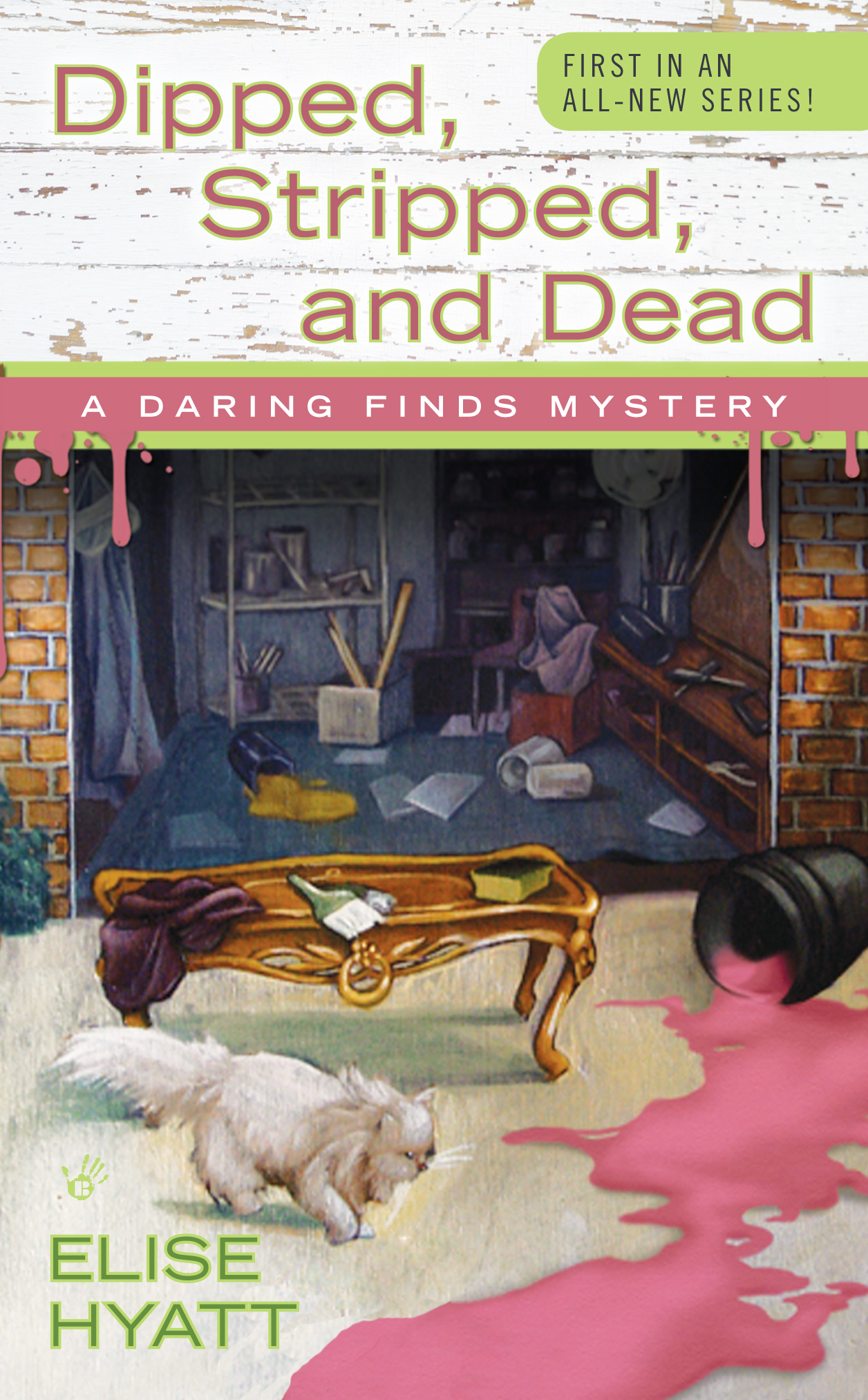
Take the beginning of Dipped Stripped And Dead – someone has to. Her real circumstances make her a “victim” but she’s just not getting the message. (Kind of like Euclid cat who LIKES being confined in the big dog carrier we use for a kitty jail. We catch him peeing somewhere inappropriate, set up the carrier, and he runs in, all happy.) You know she’ll get out of whatever it is, because she has yet to UNDERSTAND she should be a good little victim and lie down under her misfortune. Same thing with flaws – you know she has flaws aplenty from the moment she saunters on stage. You can name them. But they just make her human.

When I was little, I was going to be a ballerina. This was a strange ambition for a five year old who could trip over both feet at the same time while standing still. As soon as that tragic fact dawned on me, I settled on the more attainable ambition of becoming a lion tamer. This, at least, seemed perfectly within my reach, since my cat always did exactly what I wanted her to – well, except when she balked at jumping through the lighted hoop. Which is just as well, since Mom didn’t exactly approve of my setting fire to her quilting frame. With the quilt in it.
In the aftermath of the fire-in-the-living-room incident and subsequent grounding, I’d regretfully dropped the lion taming ambition – probably good, since Fluffy wouldn’t come near me any more, though her fur did grow back – and with it all my hopes of a career in the performing arts.
A failure at the age of six, my ego crushed, I’d actually been weak enough to consider dad’s life-long ambition of having me grow up to become a private eye. Except that I wasn’t absolutely sure what a private eye was – it seemed to me you’d have to go around with your hands over your eyes to prevent anyone seeing them and…
Well, that also didn’t go well. And My Little Investigator’s Kit which Dad bought me, didn’t provide me with many clues. I spread the fingerprint powder over the cat, finger painted with the inking pad and used the magnifying lens to start a fire in the leaf pile in the backyard.
After the fire department had been by and we’d found Fluffy cowering under the azalea bushes at the far end, I thought that this private eye thing was by far too hazardous.
And this is how I never quite figured out what to be when I grew up.
Which probably explained why, at twenty nine years of age, I had parked at the edge of Goldport college campus and was rummaging through a dumpster.
Okay, it wasn’t exactly as dire as Mom had always said it would be. I wasn’t living on the streets. I still had all my teeth – even if there had been some doubt about that when I went flying from my bike at the age of eight, after riding down suicide hill with no hands – and I wasn’t looking for food.
Well, at least I wasn’t exactly looking for food, only for the stuff that allowed me to make a living. Because, after waffling through two years as an English major – until the words post modernism could put me to sleep like hypnotic suggestion – and a year as a teaching major – before I remembered another name for hell was school room full of kids – and a year in pre law, before I realized I just didn’t have the required forked tongue, I’d left college with a Mrs. degree.
And when that exploded in my face – worse than the quilting frame – I’d found myself as at a loss for what I wanted to do with my life as I had been at six, when my hopes of lion taming had been so cruelly dashed.
Only it no longer was a career a matter of keeping myself amused, or even of feeling I was a productive member of a society. No. My marriage with Alex – All-ex, completely ex, he couldn’t be more ex if I killed him, something I was tempted to do twice a week and four times on Sundays or whenever we had any interaction – Mahr while otherwise completely unproductive, had left me with a child.
Enoch – his father had chosen the name because he thought it sounded solid. I called him E because I hoped to save on therapy bills when he grew up — had been one when his father and I got divorced. His primary interests in life had been attempting to stuff all his fingers in his mouth at once and finding ever more interesting bugs to eat.
He was still interested in gastronomic entomology at two and a half. But he didn’t look at all like All-ex – or like me, though he had the blond hair and blue eyes I’d had till three, before both had turned pitch black – and he showed some signs of, through some amazing genetic mutation, growing up to be someone worthwhile. Which would be thwarted if I let him starve to death or even – forbid the thought – if I allowed his father full custody.
My working retail would have supported us – sort of – but I’d have had to leave E with someone. Mom and Dad weren’t an option. They worked all day in Remembered Murder, the mystery bookstore they owned and where Fluffy – whom I believed remained alive on the hopes I’d die first – was store cat. And Fluffy started twitching whenever she saw me, or E.
This left me with the one skill I’d more or less inadvertently picked up while furnishing my first home. I’d taken a course in furniture restoration and refinishing at the community college. Back then I’d done it to fit furnishing a house within the scant budget All-ex would allot to it.
On my own — after some experimentation — I found that picking up old, beat up and abused furniture, refinishing it or fixing it or giving it a total make over, and selling it – under the business name of Daring Finds — made just about enough money to keep me and E in three meals a day and a roof over our heads.
Said roof was rented and in an area of town that made my friend Ben cringe and the meals might run to pancakes a lot, but it beat the alternative. Homeless shelters struck me as a terrible place to take a kid who liked to sample bugs.
And so I was at the corner of the college, on a bright Saturday in late May, looking at a bulky green dumpster.
You see, while real antiques go for exorbitant sums in Colorado, they sell at those prices because they are hard to get. Very few people have an attic full of grandmama’s break front dresser or great great grandmama’s Duncan Phyfe dining set that they would be willing to sell at a garage sale for mere pennies and which could be made radiant by a simple wiping with oil.
No. I heard of such things from other people who came from places out East, but I figured on the way to Colorado by covered wagon, most people had ditched their grandma’s carved walnut chairs halfway across Kansas, possibly with Grandma still clinging to them.
What could be got – in various states of disrepair –were twentieth century knock offs and good, solid furniture of forties and fifties vintage, made in factories, but capable of looking quite good once one had scraped off the twenty coats of paint, including the two inevitable metallic coats applied in the sixties by someone who had found truly interesting mushrooms.
Oh, sometimes, rarely, in a thrift shop or a garage sale, I’d come across a good piece, which I refinished and took to Denver to leave for consignment at Shabby Chic. But for the greatest part, I cleaned and fixed and varnished, then put the pieces up at the local flea market where they made a modest profit just barely enough for our daily pancakes.
Which brought me to cost-cutting.
“Bah, bah, bah, bah!” E said from the strapped-in safety of his child seat in the back of my fifth hand blue Volvo station wagon. I looked over to see him glaring at me, his face scrunched intently, as he clutched the top of the half-lowered window with his chubby spit-covered fingers. “Bah!”
Since he could say quite a few words and even the occasional sentence, I assumed “bah” was his view of the situation.
I looked over to the dumpster, overflowing with black trash bags. Though it was still too early in the morning for it to be really hot, there was a distinct smell of spoiled meat coming off the container. “Undoubtedly,” I told E. “On the other hand, look, there is something there that looks like a gracefully curved table leg. Painted white, but a table leg.”
“Bah!” E said.
Which was probably true. I frowned up at the maybe-table-leg.

So, what other ways do you know to make a character riveting right from the beginning? And how do you cope with making them not so terminally interesting that people run away screaming? And what are your pet peeves in character-generalities? And am I barking up the wrong tree altogether?
*crossposted at Mad Genius Club*

Getting better

I’m afraid today’s post is not riveting. I’m merely — finally — getting over whatever this was.

I hate this sort of illness that is an undefined… malaise. Give me something that I can point to and say “this is flu” or “this is an ear infection.”

This was more generalized malaise with hints of stomach flu. (This is very hard to diagnose in me at any rate, since the weird design of my stomach prevents the most obvious of symptoms.) Tiredness, so I could barely do anything and certainly didn’t want to was the most evident symptom, but it went well beyond the “well it was a tough weekend” type of tiredness. More like that pathological state where they tell you the house is on fire and you don’t muster the strength to get up.

Halfway through the morning, I realized yeah, I was ill when I saw myself in the mirror. Let’s just say that I know what I’ll look like at ninety.

I am feeling better now. Hopefully tomorrow I’ll be myself.

Not This AGAIN

This morning, while exercising, I realized I couldn’t seem to move much at my normal speed. Now I’m feeling nauseated. I’ve had a touch of the stomach flu but this is more than a touch. And yet, stuff MUST come up from the basement so the washer and dryer (new) can go in and the washer and dryer (old) can come out. And A Fatal Stain MUST get finished this week, it simply must.

Grumble, no rest for the wicked, but I don’t remember being THIS wicked.

A smattering of news — for those who read the chapter of A Fatal Stain and didn’t realize it was the third in a series, be advised it is and that it was done under Elise Hyatt.

Also, the short stories and the piece of Jane Austen sort of Fan Fic I did with my friend Sofie — A Touch Of Night — is available at Naked Reader at a substantial discount today. I’m negotiating with Naked Reader to bring out mini-collections of my short stories new and old. If I can convince them, I’ll release five or six next year, probably 5 short stories and between 30 and 40k words for around 2.99. So, keep an eye on the stuff. They’re also publishing my friend Dave Freer (and if you only know his collaborations, treat yourself to his solo work, which is more layered than phillo pastry.) Actually, I’ve read ALL their stuff and, depending on your tastes (some of it is a little more… er… than the rest) it’s good stuff to feed your literary addiction.

Anyway, today the discount is 25% and here are the links to my stuff, short stories first:

Short Story, Till Your Proud Heart Break

Short Story, Zebbie

Night Whispers (an antho, containing my work & others.)

A Touch of Night, Pride and Prejudice and Dragons (oh, my) with my friend Sofie Skapski, an excellent writer who did most of the work. (I must tell NR about Sofie’s creepy little mystery stories. I just realized I never have.)

The coupon to get you a 25% discount at checkout is CyberMonday1 and all of these works are DRM free.

In other news — I THINK Darkship Thieves is now available in paperback, and it makes suitable gifts, stocking stuffers and projectiles for your SF lover, local library, highschool English teacher or highschool library.

AND if I can just get over whatever this is and if my appliances (please G-d) stop breaking down, I’ll bring you posts on Homosapienphobia (yeah, I know) and my take on ebooks (I know you’re holding on to the edge of your seats) and finish AFS and hopefully the Darkship sequels too.

Wish me luck.

This and that

Not much writing done today, which is driving me insane because I’m at that part of the book — a Fatal Stay under pen name Elise Hyatt, third in the Daring Finds Mystery series — where I just want to walk in and pull the story shut after me.

However, sometimes real life must happen — in this case in the form of a new dishwasher that was installed first thing in the morning; then buying a set of sofas to replace the ones the cats have made the subject of their p*ss wars; then buying me a new winter jacket, because I lost 45 lbs since last winter and my current jacket is not only manky (or as my husband calls it “an encouragement for the homeless to hit on you) but leaves way too much space for the wind to blow under and chill me.

And then I had to wax the living room to get it ready for the sofas (part of it because the p*ss wars had — literally — spilled onto the floor, and so long as the area smelled, we’d have issues.

Now my living room is human-smelling and p*ss free. (Fingers crossed.) I should clean the rest of the house, but I’m not up to that. Maybe tomorrow. And I’d like to do at least a couple of chapters of AFS tonight.

Then I need to return to editing and finishing the romantic space opera (Like Darkship Thieves. Actually, same world, 500 years on) The Brave And The Free. I should have my head examined for writing something not sold yet (not submitted, even) but I feel compelled to, so…

And now, I shall go to bed. Is it me, or are there NEVER enough hours in the day?

Earth Needs Women

. No, this is not the obligatory ecological post. Today, in the car on the way from dinner (not cooking at Thanksgiving is logical when you have only four people – five with our friend/honorary uncle to the kids) I was talking to the kids about a book I read when I was maybe 12/13.

This book – whose name I (unfortunately) can’t remember – came amid a trio of “fairytale books.” At twelve or so, I decided that I hadn’t read enough fairytales and was trying to round out my education. This one looked like a nineteenth century book with woodcuts, was written by some unknown Portuguese author and the title was something like “the foundling.”

It started with a baby girl found abandoned in a forest. She’s taken in by an older woman who gathers wood and who makes a good – if unloving – foster mother.

Half-bored, I felt I knew where this was going, but continued reading, expecting the more or less obligatory hidden princess story.

I was wrong. Though I no longer remember the details of the book – yes, I read it a good hundred times, as it became one of my favorites, but it was a long time ago and memory gets blunted – I know that the parentage of the girl is never revealed. The old woman dies, the girl is turned out of the house, she ends up working as a maid and some other menial jobs. Her work ethic and (what my friend Dave Freer calls) battler spirit get her through. She helps an old lady who is dying and whom no one looks after and, in return, is given an old book of recipes.

She starts her own little business selling cakes and pastries at fairs and meets a young man of very good family who – however – does not marry her because of course, she’s a foundling of unknown parentage. Eventually her little business becomes a successful pastry shop and later she meets another young man, a pastry chef, and this time it all works out and they marry and have a happy family and a successful business.

If you’d asked me at twelve, I’d have told you I had no idea why the story charmed me as it did. I only knew I liked re-reading it and it became one of my favorite books. It felt good and somehow “right” in a way that fairytales and romances didn’t.

Today, when I telling the kids about it, I realized why. It was because the character was a strong woman. Born with the ultimate disadvantage, the ultimate lack of support, she doesn’t – like fairytale princesses – either get rescued by a strong knight nor even by fate that reveals her to be a hidden princess. Also, she never complains; she never repines – she takes the situation she finds herself in and makes the best out of it, all the while looking out for those who are weaker or in more need than her. This last characteristic nets her the all-important recipe book (supposedly created by a medieval convent, which rings true for Portugal, and lost for centuries.) When her romance doesn’t work because her very conventional suitor wants a girl of suitable family, she doesn’t go into a decline, she just goes on with life.

She is, in fact, what editors so often say they want “a strong woman heroine, self sufficient, a good role model for growing girls.” Only, from my observation and reading, by this they usually mean mouthy, aggressive, foolhardy and complains a lot about men till one wonders if said character has an issue with being born female. There are exceptions, of course, but complaining about fate and men and being bitter seems to be obligatory.

And yet, it is true that this type of character is not only a great role model for young women, she is the type of role model we do need. Earth needs women (yes, and men, but we’re talking women here) who take care of the weak and helpless. Earth needs women who don’t whine. Earth needs women who cheerfully shoulder the burden of what needs to be done.

Earth does not need women who complain about men all the while neurotically obsessing on clothes and jewelry to attract said men and pursuing the highest-status males they can possibly get. There is nothing wrong with these activities, in moderation, but when they become the focus of existence they create a generation of infantile harpies. Now, I don’t think any women in real life are as bad as that, but almost all women characters in books and movies are just like that.

Young women who read/watch these characters end up feeling they must APPEAR like them or they’ll be thought weak. And this is wrong. Strength in women – and men – can be defined not as throwing weight around but in doing what must be done for oneself and those who depend on one.

Earth needs grown up women.

I very much hate to tell people what to do, much less what to be, but I wish we could set about writing – and living – role models for the women Earth needs.

The A’tist and the Businessman

Periodically people – on facebook, via email, through my site – try to get me to read their manuscripts. Unless they are friends or I know that what they really want is an honest critique, I do not give it. This is difficult, because some of these people are quite, quite, quite persistent and keep coming back with “but I’m sure you’ll love it if you just read it.”

I’m not saying that they’re wrong. For all I know, most of them or a significant portion of them are right and their manuscripts would absolutely knock my socks off, set my world afire or rock my aesthetic perceptions.

I’ve long ago learned not to judge how good someone’s work will be by whether or not they’re published. Being published involves all sorts of other qualities/events than being a very good writer. For example, one of my best friends was writing much better than I was – or probably ever will – when she was completely unpublished and is still doing so now, when she’s only published short stories and I’ve published several novels. Her novels keep getting rejected, though. Another of my best friends writes so much like me that my own husband can’t tell our work apart. She’s published almost nothing compared to me.

So these strangers who absolutely want me to read their novel might be amazing writers, much better than what I can buy off the shelf. I’m still not going to read their work, because it wouldn’t do either of us any good. Note my examples above. These are people I like very much and on whom I depend as though they were family. They are still largely unpublished. Why? Because writers don’t have that kind of power. We can’t do the editor’s job for them. It’s not OUR job. We can at most – if we love something – recommend it to an editor/publisher/agent. I’ve now recommended my two friends a couple of times. They’ve been rejected. Mind you, they got the up close and personal rejection which means my view of their work is correct – they’re very good and publishable. But something about the work, something about the timing, something about the editor’s/agent’s taste keeps them from breaking in.

It might seem to you getting an author’s recommend, or a personal introduction gets you closer to the goal, at least, let me disabuse you of that notion. I have a lot of friends, many more – much, much more – successful than I am. Their attempts to give me a hand up have been about as successful as my attempts to get my friends published. Oh, it happens, once in a blue moon, that an author friend – and almost always these are close friends – will recommend you to his/her editor/agent/publisher and you’ll get a contract. However, just on percentage, it’s easier for you to go through the normal channels of submission. Discovery sounds glamorous, but it’s harder than normal acceptance.

Of course, some more creative souls do stranger things, like post samples of their work on my blog comments, my facebook wall or – and this is very creative indeed – send it to my agent/editor with a note that I recommended it.

The first two are at best annoyances. Look, yeah, I have a few editors/agents who, sporadically, read my postings. They do this because we’re friends outside of “work” and like to joke or tease me about stuff I post. They do not do this to find “the next best thing.” To be blunt, most of them get quite enough submissions to read during their normal work time. In fact, reading submissions is the chore that never ends. They get submissions through the normal channels, they get work from writers they met at cons and social occasions, and they get submissions from people (not always writers) who recommend friends and co-workers. And this is work for them. No matter how much they love reading, no matter how much they tell you, in interviews, that they love “discovering” new work, when they read submissions it’s in a different frame of mind than when blogging or reading blogs/facebook/twitter. TRUST me on this. I’ve edited in the past. When I read with an eye to what might be publishable/needed, it’s not the same as reading say Austen fandom, which I often do read.

I’m not saying they might not look at your work. I’m saying that after catching on it’s a “sneaky submission” slipped into their leisure time, they’re likely to be mad at you and, if I don’t take steps to delete it or dissociate myself from it, at me for ambushing them with work during their fun. Ambushing them in that way is as impolite as ambushing a doctor at a party and asking for a diagnosis. I don’t have numbers, but I’d bet you a lot of money that you stand a better chance of being ambushed by a meteor in a back alley than you have of selling a book this way.

In fact, some writers will block you/defriend you/shut you out for this sort of thing. I won’t, because I can understand where you’re coming from. (More on that later, as well.)

The third method – to send something to my editor or agent and telling them I recommended it when I didn’t – will get you defriended/blocked/shut out if I ever find out it happened, because frankly it could potentially affect my professional relationship. POTENTIALLY – as in, unlikely, but it could happen. The reason it’s unlikely to damage my professional credit is the same reason why this fraudulent action manages to be both dishonest and stupid.

The person who comes up with this brilliant idea doesn’t realize that there have been several people to try it before him/her and that therefore there are procedures in place to circumvent it. For instance, unless I send my agent or editor a letter asking “Would you like to see my friend’s…” and the editor or agent answers with “sure” any over the transom submission saying “Sarah A. Hoyt loves this” will be seen as a fraud. MOST of the time (exceptions made for writers’ group members I HAVE introduced to the editor and even those just in short stories, frankly) such letters from me to editor and answers are followed by MY sending the manuscript I’m recommending to the editor/agent, with a copy to the author, with whom future correspondence will take place.

What all three of these methods will do, in any case, is cause untold damage to YOUR reputation and your chances of publication – if they’re noticed. You should pray they aren’t. This is because the one thing the publishers fear is “the crazy”. “The crazy” might have been a perfectly normal person driven insane by the process of getting published and their fundamental misunderstanding of that process. Or they might be – and very often are – people who think of themselves as artists and tortured souls: people whose work doesn’t depend on excellent craft and practice, but on the bolt of lightening of inspiration or the touch of a god of some description. These people just KNOW they’re good. (A surprising number of them have ‘something’ – usually smothered under layers and layers of twitdom and lack of craft.)

For the Touched By The Gods Artist it’s hard to endure the fact that they have to go through the same selection process as common mugs. This is reinforced – for practically everyone – by

a) the fact our society’s method of educating the young gives everyone, even adults this bizarre idea everything is a class and has an exam/grade. So when your work is good enough and you’re still not getting bought it’s an “injustice”.

b) Stories of strange methods of discovering writers circulated around and highly publicized. I’ve heard these stories the same as everyone else has and I can tell you nine times out of then when you dig into them you find that they just ain’t so. There’s always something that’s not told, like that the new, amazing star happens to be the best friend of the editor’s boyfriend/girlfriend and that’s why their blog post got read. Or they went to school with the agent or the agent’s best friend. Or…

The stories of sudden discovery are just that – stories, which make for d*mn good publicity. But again, you stand a better chance of being snatched up by aliens to be their king.

The Artist doesn’t know this, or if he does, he thinks he deserves that almost-impossible chance. And that means, he tries creative methods. The other things that lie in his path should he not wise up are what will get him blacklisted at the first sign of “artistic temperament” – a lot of these tortured souls will make threats to published writers/agents/editors; they will act unhinged/aggressive at cons; they will at best be nuisances and at worst dangerous.

Worse yet, even if they don’t do any of those things, and manage to get published, they’re unlikely to be able to bear up under the slings and arrows of publishing fortunes. And if you want to know what I mean by that, let me just say I thought I was uniquely unlucky until – while siting with about twenty other writers, some of them bestsellers – we started comparing horror stories. And then I realized I’d practically been treated with kid gloves by lady luck.

As into every life a little rain must fall, into every writing career – even of those who will end up being bestsellers – a little sh*t happens must fall. And the sh*t includes but is not limited to: horrible covers, dropped publicity campaigns, completely failed early books, disaster doom and lack of sales. The people who go on to be bestsellers end up shouldering these issues, and forging ahead – not matter how much more difficult the road has become.

This is why the best and fastest way to get published is to play by the rules. This shows an even temperament, understanding of the field, and taking a realistic attitude towards the BUSINESS of publishing. It means you have a better chance of persevering, working hard and not causing trouble – all excellent qualities in a contractor, which is what the publisher/editor is looking for.

Nowadays, I agree the process of submission is a mess. I’m not going to advise you on that beyond the barest level: find editors/agents who take slush submissions, or find an agent and leave the process to them. Or if you’re absolutely sure you’re not a twit but a real writer, publish your own work, publicize heaven out of it and sell enough to then submit to a real house. All of these methods have been proven to work, as has climbing the ranks from small press to major publisher.

Things that will help your path will be attending cons and both making personal acquaintances in publishing (always showing yourself polite and professional, of course), reading in the field to know what people are looking for/like, and – needless to say – work at perfecting your craft, because the great idea must be married to great execution to work.

And then… keep at it. In my experience, a good publishing career depends on – preparation, persistence and professionalism. Luck helps, but it’s neither indispensable nor all important. And notice that the “p” of potential or the “g” of genius are not mentioned. Most bestsellers or even mega bestsellers didn’t make it on either but on sheer slogging and persistence.

Questions? Protests? Worries? Let me know and I’ll answer as I can.

*crossposted at madgeniusclub.blogspot.com and at Classical Values.com*

Doing To Yourself

Not to go into details, but apparently my teeth are very weird. My adult teeth are over-well-anchored, and apparently so were my baby teeth.

What does that have to do with anything? It means that losing my baby teeth was a series of painful experiences, probably more so than they are for the average kid. (No, I don’t know this for sure, but I know my pain threshold is higher than normal and that I dreaded pulling a shaky tooth out.)

My parents tried all the usual stuff, including tying the tooth to a door and slamming the door, or having an adult pull it off for me. (I’ve heard of people taking kids to the dentist for this now, but it was unheard of in my day. Also, my kids never needed it.)

My dread of the pain grew to the point I wouldn’t tell anyone when a tooth was loose and once or twice ended up with the new tooth wildly out of place (which was fixed later.)

Finally I figured out a way to deal with it. I would pull my own tooth. It still hurt like living fire, but the fact that I was in control seemed to make all the difference.

I have since found this is true for me for all unpleasant or painful experiences. I pull my own bandages, I remove my own splinters and I edit myself more harshly than any editor can.

I think this is the only thing that explains how I feel about the current TSA shenanigans. I am not someone overly afflicted with body modesty. Right now I feel embarrassed about being seen naked, but I feel embarrassed about being seen clothed, too – being about fifty pounds overweight. In fact, con pictures and family pictures are most notable by how much I manage to avoid the cameras.

However, this is consciousness of my weight, and not modesty. I never UNDERSTOOD modesty. One of nature’s nudists, I guess, mostly I cover myself so as not to embarrass other people.

But the idea of the TSA using the peekaboo scanner brings up a “h*ll no” reaction and the idea of being felt up… Well, that is a genuine phobia. If you’re my friend you know I’m kind of a touchy person – I pat arms, I squeeze shoulders and I hug. BUT if you’re a relatively recent friend, you also know it took time and I need to be familiar with someone before I touch them in casual contact. I HATE being touched by strangers – yes, it does make doctor’s visits very fun.

So, being me, I intend to lose at least forty pounds before I fly again, and then wear an easy-off dress atop a micro bikini (if I can find one in stars and stripes, so much the better.) I will then remove the dress, put it in the scanner, and walk through in bikini.

It’s quite probable they’ll arrest me as they did guy in underwear. If they do, the fur will fly. But I intend to have a bikini small enough they can’t imagine I’m concealing anything. And then, I’ll still have to reveal all to fly, but I – not them – will be in control.