What A Wonderful World


One of the mixed blessings of having changed countries around the time of adulthood (Look, I was 22. It’s not that far off.) and of having CHANGED countries instead of just emigrating and keeping strong ties back in my original homeland, is that I’m forever separated from my childhood reads.

This is a problem PARTICULARLY when you add in the charming habit of Portuguese publishers of changing the title of books beyond any possible recognition (yes, The Moon Is A Harsh Mistress is recognizable as Revolution On the Moon, but there are others where you sort of have to guess. I think, though I don’t fully remember, that They Walked Like Men is They Came From The Stars in Portuguese and a lot of others are even more bizarrely titled.)

Now, for most science fiction authors, at least the ones I REALLY liked and read and re-read I just got their entire oeuvre and found my old favorites (and some never published over there) that way. Here I must add the caveat that some old favorites didn’t survive the transition. Apparently it is possible for a translator to MARKEDLY improve a book when translating. Other people, though I still love them in English, are better in Portuguese because their style is better adjusted to the language structure. Simak is one of those. What my linguistics teacher said was that Portuguese has an “unpacking” sort of structure, where the statement unfolds through the sentence. English on the other hand has a structure prone to synthesis – i.e. to packing as much meaning as possible in one sentence. This means, depending on how the writer wrote, sometimes Portuguese works better for telling the story, even if the translator is faithful.

(Interestingly enough, the language itself seems to impart a slower and more descriptive pace to the story telling. I used to be able to tell if a story’s author was Portuguese even writing in another language because of that habit of mind. And it took me something like seven years to rid myself of that impression of languid, descriptive pace in my own writing. [At least mostly rid myself, I think.] There is still a tendency for me to write long [like this] when I’m in a hurry and have no time to edit to more compact posts.)

Weirder is the effect where a writer reads the same to me in English and Portuguese particularly when the way they read to me is weird. Now, please believe me, I’m not saying I write like him – my head is not that swollen – but there is something in Pol Anderson’s writing that triggers the “mine” reaction, so that if I’m reading him when in the middle of editing, the editor comes out and I start editing his books. He did this to me in Portuguese and I have the exact same reaction in English… and did, even back when my English was not nearly idiomatic. No, I have no idea what causes it.

Anyway, the problem with finding old book-friends lies in the books I read before eleven, when I sold my soul to science fiction and gave my heart to Heinlein. In those dimly remembered years, I never paid attention to the names of the authors – unless they took up box of books after box of books, like Dumas or shelf upon shelf, like Enid Blyton. I read books that had been in the family for generations, and I had no reason to assume they wouldn’t be there for me or my kids whenever I wanted to bring them out again.

So I often paid no attention to the authors of the single titles, even when I really liked them.

The problem with this is when something brings a book to mind and I go “oooh, I haven’t read that in forty years. I want to look at it.” And I realize, in shock, that I never knew the name of the author and the title probably has nothing to do with the original.

Well, there was this book that I found in the boxes in the attic, called in Portuguese Um Pequeno Heroi (A little hero) which, btw, was an insane title for it as the main male character was about fourteen and Pequeno is normally used for LITTLE boys. I wonder if it was the pious title that made my brother hate it or that – as I’ve found out over the unfolding of the last few decades – that my brother and I have fundamentally different concepts of life and even of good and evil?

Back then, my brother, being ten years older than I, was, of course, the arbiter of my reading taste. I remembered he hated this book and said it was “trash” which made it very much a guilty pleasure. I read it on the sly, but I must have worn it reading it.

Yet, here I was stuck, with no idea how to find it. I had always assumed the author was either British or (because of certain oddities in the language) perhaps American.

The only scene I remembered VIVIDLY from the book (other than the general impression, of course) was the scene in which the little girl who is the supporting character, is running madly around the fire. She has malarial fever (which is what brought it to mind as a character in a book I read recently suffered malarial attacks) and the young man who was the main character had to find her quinine to save her life. I also remembered her name was Nell, the book took place around the time of the Mahdi rebellion and the characters’ fathers were engineers with the Suez canal building crew.

So… I went to google and looked up Nell, quinine, Mahdi, Suez Canal. I got it immediately, on the third link down: In Desert and Wilderness by Henryk Sienkiewicz

Turns out the author is Polish and that the book has been made into a movie which I’m almost afraid of buying. It is available for free here: http://www.freefictionbooks.org/books/i/16367-in-desert-and-wilderness-by-henryk-sienkiewicz

but I chose to get it for a couple of dollars from Amazon.

I also confess that I haven’t read it yet, though the description of the book made me realize why I liked it so much… there is something to the plot that for some reason reminds me of Dave Freer’s work, which I also love. It’s the whole doing what has to be done to protect the innocent and helpless, no matter how unpalatable or difficult the actions.

I haven’t read it yet because its original being polish, another issue intrudes: how is the translation into English? Some Dumas translations render him unreadable, for instance. In fact my older son thought I was nuts for liking the three musketeers until he learned enough French to read it in the original.

So I’m being a bit of a wussy about sampling it, but, meanwhile, I’m also in awe and amazed at how easy it was to find on a scrap of memory.

For those of you younger than thirty or so, in the bad old days, say twenty five years ago, this search would have taken years, if it were possible at all. And I’d never have found the book absent a very knowledgeable antiquarian or book searcher (yes, people used to make a living searching for this sort of thing.)

We often hear about the “challenges” and “issues” of our high tech civilization. (Of course I’ve long thought most of those complaints are bellyaching and the equivalent of “but I don’t wanna learn new stuff!”.) It’s good, now and then, to have graphic proof that this is a wonderful world that most of our – even recent – ancestors would consider a miraculous one.

Writing and other obsessions

So, I’m working on Darkship Renegade and hoping to finish before my subconscious clamps the lid on it.  Also, I have my own rubber ducky challenge to pick up on, otherwise everyone else will outstrip me in ducks.  Sat here for half an hour, wasting good (fiction) writing time because I couldn’t come up with a topic to blog about. 

Have decided to give up on that and, instead, give you a blue plate special free short story to amuse you while I’m working.

The story below is from my second collection, Wings.  It’s not available electronic, yet, though it’s contracted for epublishing with Baen books.  It is available on paper via amazon. 

I hope you enjoy it.  (In a note, I was an exchange student when John Lennon was shot.  My best friend was a girl called Lydia Hohol from Leeds, England  (Her parents were Ukranian emigrants) whose birthday was on the day John Lennon was shot, something she took as a personal offense.  I remember being sort of shocked but not really because I was seventeen and, hey, celebrities do the craziest things, including getting shot.  I’d consider myself the least likely person in the world to write a story about Lennon.  But — as these things often happen — I found myself somewhere with a biography of Lennon and no other reading material and by the time I was done reading, I had this story.)

Super Lamb Banana


John Lennon thought he was going to be mugged.

And it shouldn’t happen here. He was at Liverpool docks where the tourists were as thick on the ground as muck in a back alley. He thought he’d be safer than near his rent-subsidized flat. But these days there was nowhere safe.

John peered with near-sighed anxiety at the man approaching through the foggy evening. He looked taller than John and big and approached with the sort of purposeful confidence only criminals had.

Turning away, John tried to use his cane to steady himself on the cobblestones that the fog turned slippery.

The steps got closer.

Tap, tap, tap, John pushed his cane against the cobblestones, balancing himself, desperately, trying to move faster, to–

The water slap-slapped against the moorings of Albert dock. The bracken smell of river water surrounded him. Somewhere, far away, noise of women laughing and glasses tinkling echoed, so faintly that it might as well have come from another world. Probably at the Liverpool Tate gallery. Or the Beatles Museum.

But out here, John was alone with his pursuer.

John had nothing that anyone could want. He wore an old turtleneck and threadbare jeans and, in his pocket, kept his return bus ticket back to his flat. None of which would be worth much, even at a flea market.

But it didn’t matter. The mugger might lose his temper. He might kill John for kicks. Or for nothing.

John tried to walk faster. His heart sped up and his breath came in short puffs.

The steps behind him neared, relentless. John tried to run.

His feet went out from under him, as the too-worn shoe lost purchase on the slick cobblestone. He gave a faint cry and struggled to hold himself upright with his cane. Somehow he could not set it firmly on the pavement.

The ground rushed up to meet him. He hit on the side of his face. His bad hip sent a vibrating pain through his body that made him curl in a ball and keen.

Behind him, the steps turned into a run. Jackals always got excited when prey fell.

John tried to get up, scrabbling to his aching knees. Cold breeze blew where his jeans had torn against the stone. In front of him, a blurred yellow glare like a boulder painted an unholy color offered a grip to help him get up. He couldn’t quite see what the thing was, since his glasses were badly out of prescription. But he reached out, anyway, and scrabbled with his hands at smooth cement, trying to find a handhold.

“Sir, are you all right?” a man’s voice asked. Strong hands, on John’s shoulders pulled him up, helped him balance against the yellow thing.

John rested against it, panting, the sweat from his exertions cooling fast on his body.

“Mr. Lennon, did you hurt yourself?”

Dizzy, his head aching, his skin abraded, John turned to look at the man. Was this the same person who’d followed him through the fog?

He sounded like a yank. And, up close, he had that well-scrubbed, clean-shaven look that so many yanks had these days – always giving the impression they were overgrown school boys. Couldn’t look less like a mugger.

“I’m fine,” John said. “Perfectly fine.” The last word faltered, as he realized that the man had called him by his name. The man had recognized – John.

Which – considering how difficult John found it to recognize himself when he looked in his mirror and saw his domed, balding head, his rheumy eyes, his sagging chin — must rate as some sort of a miracle.

The yank seized hold of John’s hand and shook it up and down with much unnecessary vigor. “I’m Richard Sforzi,” he said. “I’m so glad to meet you at last. I was hoping you’d be coming to the reception at the Beatles Museum.”

He stopped, doubtless because he couldn’t fail to notice how John’s eyes had narrowed at the mention of the Beatles.

John knew that when anyone said he was a great fan of John’s, he actually meant he was a great fan of the Beatles. He’d probably flown all the way across the Atlantic to go to the reception at the Beatles Museum – which celebrated the fact that Paul had given the museum his gold plated Rolls Royce, or perhaps the gold plated thong underwear of his young wife.

John felt his lip curl into a snarl, and controlled it by an effort of will. These fans – his or not – were often good for a pint of beer, or – rarely – two fingers of something stronger. Really rarely they would have other, illegal substances they were willing to share.

John forced a slightly daft smile upon his lips, and looked at the man with what he hoped was an encouraging gaze. “So, a great fan of the Beatles, are you?” he asked. “I was going to the museum me’self. To have a gander at what not that McCartney has donated now. Good old Paul McCartney, that, always finding way to make money out of the three notes he knows, no?”

“I always thought you were a much better musician than McCartney.” Sforzi swallowed. He grabbed John around the wrist and spoke in a great rush. “You probably still are, er… if you’re still playing… The only reason I came England was that I hoped to meet you, and the Beatles museum seemed like a place to find you.”

It was, of course. Not just because it allowed John to get away from his lonely flat for a few hours. Not just because there would be free food, and there was always the hope of a fan to touch for a drink or a handout.

No. Most of all, Lennon came to these things for the same reason one’s tongue dwells upon an aching tooth. Because sometimes the pain is too great to do anything else.

There was a time he’d been as well known, as famous, and as wealthy as Paul. Where had he gone wrong?

He looked through the fog, towards the subterranean entrance to the Beatles Museum – marked by an iron arch. It was all so long ago. And so few people remembered him. Really remembered him. They remembered the Beatles. That was all they remembered. John had sunk from their consciousness.

“Well, I was thinking,” Richard Sforzi said. “I’m not very interested in the museum, now that I’ve met you. If you’d let me take you out for tea and some cakes, or– ” He looked around, with a stranger’s helpful certainty that a tea room will materialize in front of him, and spoke with the yanks’ assurance that there was nothing a Britt ever needed more than a cup of tea.

“Make it a pint or two and you’ve got a deal,” John said. “My cane fell down, somewhere.” He held onto the big yellow bulk behind him.

This close up, he identified it as Super Lamb Banana – a sculpture erected back in the eighties to – the artist said – symbolize the perils of genetic engineering. It had the front of a lamb, the end of a banana and an idiotic expression on its near featureless face. For some reason, it always reminded Lennon of Paul McCartney. Perhaps it was the air of great self-satisfaction.

John let go of the statue, as Sforzi handed him his cane.

He smiled as Sforzi said, “The super lamb banana. I couldn’t believe it when I heard about it. It’s the sort of empty-headed, feel-good commercial art that takes up too much space in the real world.”

It was going to be a fine evening.

***

The pub was the kind of upper class pub – all shadowy nooks and heavy oak tables, and a roaring fireplace located so it could be seen from almost anywhere — where no man would dream of meeting his mates or having a friendly game of darts.

These days, it was a world closed to John – a place of money and privilege where he simply could not enter. So he relished his moment back in, remembering those days – now like a dream – when he could have bought the place twice over.

Sforzi navigated amid the tiny, candle-lit tables with the assurance of a man to whom this type of place was all too common and sat down at a white-cloth draped table.

When the slick and blonde waitress approached, Lennon ordered two fingers of single-malt — amber and cold in the thick-walled glass. Sforzi ordered something thick and bright green.

“Absinthe,” he told John. “Though they don’t make it with wormwood, anymore. No madness….”

Sforzi started speaking. John just sat there, contented to have his drink and stare at the roaring flames in the fireplace. He concentrated on appearing to listen, but he knew there was not much point. Fans always raved, and yanks were the worst of all.

There was that woman, three years ago, who’d told John that if only he’d married her, instead of marrying Yoko, everything would have been fine. Forgetting, of course, that John had once been in love with Yoko and that the fan-woman didn’t have even a tenth of Yoko’s personality.

At first Sforzi’s conversation seemed headed in a similar – if less romantic – direction. What John would have filed under how great you could have been, if only.

Did the fans really think that these things had never occurred to him? That he didn’t run through his memories in the night, trying to figure out where all his fame and all his power could have gone?

But then he heard, “in most worlds, of course, you did not make it so big, you know. But I’m sure there must be one. If you change just one thing and manage to make that world real, it could make you the biggest ever – bigger than Jesus, you know, as you said.”

John blinked at the man. “Worlds?” he asked.

“Yeah, I was telling you,” Sforzi looked around, like a spy who fears being followed. Having satisfied himself that no one was listening in, Sforzi turned back to John. By the light of the candle, his blue eyes shone unnaturally bright. “I work for NASA,” he said. “On a secret project. You see, every time that you make a decision…. every time one of us makes a decision, it generates another universe… another world. All these worlds, going on forever, compressed together like pages in a book, but never touching.”

John lifted his eyebrows. Ah, it was not a madman but his near cousin. A science fiction chappie. John himself had watched Star Trek religiously once upon a time. He understood this. Besides, at least, the bloke was not saying John should have married him and not Yoko.

“Parallel worlds,” John said, firmly, to show he understood. Also to prevent the conversation from getting stranger. “I understand that. Now, if there were a way to find a better one, eh?”

Sforzi’s eyes shone brighter. He leaned forward across the table. “There is,” he said. “There is.” He looked weirdly Mephistophelian with the candle lighting him from behind, as he hesitated. “At least, there is a way of going back in time to the fork in the road and taking a different one from the one that’s led you here – and if you find the right fork…”

“Time travel?” John asked.

“It’s actually a quantum uncertainty mech–” Sforzi stopped, waved his hand expansively. “Close enough. Yes. Time travel.”

“So I can go back to my younger self and–” John said, helpfully. The man was insane, of course, but it was an entertaining form of insanity.

“Warn him. Tell him what to do, what not to do. And then he can…. change.”

“Why would my younger self believe me?” he asked. “I don’t even look like myself, anymore.”

“Well,” Sforzi scratched his head. “Well… is there something you could give him? Something that could prove you are… him?”

“My journals,” Lennon said, happy to solve this hypothetical puzzle.

“Journals?”

“I wrote them since I was fourteen or so,” he said. “So if I were to meet myself anytime after that, he’d see that the first journals were his. Also, he would know where my life went wrong without my needing to tell him all of it.”

“You don’t have the journals with you, right? I could take you back in time right now. Car is outside.”

“Car?” Lennon had been so carried away with the fictional puzzle, he’d forgotten this man believed it. But a car? He expected them to travel back in a car?

Sforzi shrugged. “I built the quantum device into it. Makes it easier. Just a rental car. I’ll remove the device when I return it.”

“Ah…”

“Why don’t I take you to your flat now, and we get your journals and go back in time?”

Why not? Because Sforzi was delusional? Because John had no time for this?

But John had all the time in the world, and even if he got nothing more out of this adventure, the lark allowed him to spend a longer time in Sforzi’s brand new BMW with its leather upholstery. It would be a few moments away from the squalor John’s life had become.

***

He’d gotten the journals – twenty red-cover notebooks in a box. John had been slapdash in journal keeping after he and Yoko had been deported by American immigration authorities back in the seventies. He wrote almost every week. Well, sometimes every month. Definitely at least once a year.

There wasn’t much to write about. Yoko hadn’t been able to endure England for very long and it seemed like only a few minutes before she filed for divorce and left for Paris with most of John’s money and copyrights and…

Not that John begrudged them to her. He’d always admired the way she looked out for herself. And besides, she’d left him plenty to live on until he issued the next big album.

But then, there had been parties – he was free, after all – and drinking and… other stuff, and somehow the album never got made, and, by degrees, so slowly he hardly knew how, he’d found himself living alone and forgotten in a bloody state-subsidized flat. And the world had gone on. Twenty year olds didn’t even know his name.

“Well,” Sforzi said. “Do you know where you want to go?”

“Yes,” John said. He’d thought about it, all the while he was making his rickety way down the eight flights of stairs from his flat to ground level. The elevator was on the blink again. He knew where he wanted to go, on the off chance this worked. “I know exactly where I want to go. I want to go back and never get involved with Super Lamb Banana.”

“Super–”

“McCartney. Paul. We’ll see how far he goes without me, shall we? We’ll see how Super Lamb Banana does without the real artist to make it all seem important. We’ll see about his albums and his concerts then.”

He held the cardboard box on his skinny, withered legs and thought maybe, maybe another world existed in which John had a chance to be the artist he should have been without Paul grinning around him, fuzzy, undefined and vaguely benevolent — like Super Lamb Banana.

And then, John wouldn’t need drugs and alcohol to dull the pain of his stolen art. And he could have kept on. He would still be wealthy. He would be famous. He would be the greatest artist in the world.

***

Seventeen year old John Lennon stood outside the Quarry Bank public school. School was over for the day.

He wore his Teddy boy tight pants and flamboyant jacket, but he felt as if he was quite a different creature from the teenage boy who had left the school yesterday. Yesterday, when the old man had handed him a box full of tattered diaries.

At first he’d thought the old man was a bum. Then he’d noticed a certain air of family resemblance – the sharp nose, the angular chin, and he’d thought it was his father, come to reclaim him after all this time.

But, while anger and bewilderment and relief all rose in John together, rendering him mute at seeing this long lost father, the stranger spoke. He said he was not Freddie. He was John himself, come from the future.

John had spent the night awake, reading those diaries – at first euphoric as the diaries “predicted” that he would be one of the greatest musicians of all time. But then the tone of the Journals had changed. John had become bewildered by the constant betrayals by friends and lovers. And then shocked at his abandonment, his disappearing from the public mind.

The old man – his old self? – had scribbled a note at the end of the journals, telling John to steer clear of Super Lamb Banana. Super Lamb? Banana?

John had no idea what that meant. But he did understand the other things the old man had told him, “McCartney is no good for you. McCartney will only live off your art.”

From the diaries written in the last years of the band, John understood that Paul McCartney had taken over John’s music, that he’d overpowered John’s greatest creativity and cheapened John’s art. Made John irrelevant.

John frowned. And Paul seemed so nice, too. In fact, John had just about decided he would let Paul join the Quarry Men. Well, forget that. John would take the Quarry Men to glory all on his own.

He saw Paul walking towards him down the sunlit street, a smile on his face. Right. Time to stop that friendship before it went anywhere.

***

John Lennon straightened his tie, self-consciously. He’d been retired from his teaching job for twenty years now, and he’d grown unaccustomed to his tie. But business men always wore ties. And suits. And John was meeting with an important movie producer, after all. A man who wanted to make a movie about the Quarry Men.

Bloody time, too. Rock-and-roll had been an important form of music, even if now defunct. Though it had come from the Americas and had petered out without reaching most Europeans, those it had reached, it had marked deeply. It was about time someone realized what a great thing the Quarry Men and other groups like them had been and how their experimental sound could have changed the world. Perhaps even introduced a new way of thinking to a generation — broken the bonds of Puritan morality that still encased British society.

John had heard that in America sometimes men went to work without their ties, but that would be unthinkable anywhere in Europe.

Which is how John spotted the yank who was supposed to meet him. He got out of his BMW, looking florid and well-scrubbed, wearing a grey suit of the best cut and a shirt open at the collar. No tie.

John, stood near the absurdly yellow sculpture of Super Lamb Banana. Built in the eighties, it seemed to Lennon to embody all that was phony about the commercial art that surrounded him now. If only he’d got a chance. If more people had appreciated rock music. If it could have reached the masses.

“Hello,” the man said. “I’m Richard Sforzi.”

“I’m John Lennon,” John said, stepping forward.

“Oh, Mr. Lennon,” the man said. “I know.”

***

“Of course I remember the old man, when I was in school,” John said, leaning across the table. “He was the reason I never took in that chappy… Paul McCartney. Fellow went on to make himself a pretty good album or two, I think. Made some money, dropped out of music, immigrated. I heard he’s a building magnate somewhere in Canada.”

The American waited, on the other side of the table, staring – as if there were something obvious that John should be realizing.

“You mean, his story was real?” John asked. “That he… That I… Time travel?”

“If you didn’t think it was real, why did you turn Paul down, when he tried to join the Quarry men?”

John shrugged. “Well, back then I thought it was real. I thought– ” He shrugged again. “But then… nothing happened that the diaries talked about. No flower power. Nothing. I mean, the yan– the people in your country got pretty wild there for a while, but it seemed it never reached the children of the middle class, and it all…” He shrugged again, unable to convey the impossibility of sons and daughters of the middle class prancing about in velvets and silks, with flowers in their hair, experimenting with different substances and different ideas. Oh, they’d all dressed a little wildly in their youth, but then they’d settled down to careers. They’d settled in. Even John, when he’d got his job as an art teacher–

“Don’t you miss playing?” the yank asked. “Don’t you think you could have been much greater in music? Much, much greater?”

“Do you still have the diaries?” Sforzi asked.

“Somewhere, back at my flat,” John said. He’d never married. Every time a girl got close enough, he thought they might turn out like the two wives, mentioned in those disturbing diaries. He lived alone in a neat little flat that contained everything he’d ever acquired – carefully catalogued and itemized. “I think under the desk in the parlor.”

“Well, why don’t you go and read them and tell me where you’d like to go to try the next fork in the road to greatness.”

“Travel back in time?” John asked. “Really?”

“You’ve done it before,” Sforzi said.

“But I don’t remember that,” John protested. “I mean, I don’t remember being the person to go back. So… how come you…”

Sforzi shook his head, as if forced to explain something elementary. “Because you grew up in this reality. I didn’t go back. I just came here. To see if it had worked out.”

“Oh.”

“I have the car right outside,” Sforzi said. “Waiting for you.”

***

John didn’t know why he believed the man. Or rather, he did. Too well. The man had left the impressions of his fingers on John’s glass, when he’d bought John a drink, after school. And John had looked at those prints, and his own. They were the same.

Then the man had given John diaries, the earlier ones of which were exact replicas of the little red notebooks in John’s room at aunt Mimi’s house – Mendips in Menlove road.

So, either the impossible had happened or John had traveled back in time to warn himself. He was not to stick with the Quarry Men. The Quarry Men would never go anywhere.

Oh, the man had given John a sheaf of diaries, too, but John had yet to get past the first two diaries – those that described the events in the next year or so. The diaries seemed to talk of a fictional future in which John and the Quarry Men changed their name to The Beatles – why not the rockroaches? Or perhaps the loco-usts? – and went on to change music and the world.

But though that diary and the part of the second John had read sounded so hopeful, he knew how it would all end. He’d heard the older John talk about it. The Quarrymen – and thus, probably the Beatles – would go nowhere. It was time John found a better way to express his art. A way to change the world and make himself known.

He’d stashed the diaries away in his room at Mendips. And he would drop the foolishness of music, he decided. He would stick with art, stay with it. He could do great things in art.

***

John Lennon thought he was about to get mugged, when the man came at him out of the fog. John was just walking from the Liverpool Tate to the car park and was just walking past Super Lamb Banana, when he saw the man come at him, full of confidence and certainty, like a man who has a purpose in life.

Most of the time, this sort of purpose is to mug someone.

John stood, trembling in his cashmere turtleneck, his hands deep the pockets of his well-cut pants – his artist uniform. To run or not to run. Well, he had only a few pounds on him, and a handful of cards all easily cancelled and reissued. He put a hand out, to hold on to the Super Lamb banana, which stared idiotically next to him.

The man walked briskly towards John, and stopped a few steps away, looking as little like a mugger as it was possible for a man to look. He looked well-scrubbed and eager, like an overgrown boy scout. “Mr. Lennon,” he said, and Lennon placed the look and the accent together. A yank?

The man waited a moment, as though he felt that Lennon should know him. Lennon didn’t, of course, and the man registered that minimal let-down that people did when their favorite artist did not recognize them at first sight.

He rallied admirably, though, smiling wide and extending a clean, square-fingertipped hand. “Richard Sforzi, Mr. Lennon. I’m one of your greatest fans.”

Lennon nodded and refused to show any surprise, though so far as he knew all his fans were British. He made a decent living and all, and his art – canvases suffused with light from which emerged creatures as strange and distorted as everything had looked when Lennon had refused to wear glasses, back in adolescence – sold very well to a cultured elite, appreciative of the outre.

But he’d never made much inroad into other countries. Other countries were more conservative than Britain. Since WWII there had been a tendency to conformity worldwide. A closing of the ranks against the strange. And John’s originality wasn’t appreciated. In fact, this was something that nagged at him, as he rounded his mid-sixties.

He shook the man’s hand. “You’re an American dealer, then?”

But the man had grinned, a strange, crooked grin as though he felt guilty for something for which he could not apologize. “I’m an American, though my work…”

“You’re an artist?” John asked, impatient, sure that this was only a fledgling come asking for advice or help.

The man shook his head. “No, not at all. Look.” He hesitated. “I think I can help you. Make your art have more impact, make you better known, make you the influence you were supposed be in the world at large.”

Well, that was more like it, John thought, as he put his hand in his jacket pocket and absent-mindedly jiggled the keys there to the tune of Three Blind Mice. Maybe this was one of those mad Yanks that made their money in sugar beets and then spent it all in promoting a baseball team. This one wanted to promote John’s art.

John gave a look over the man’s impeccably tailored grey suit, his well-cut hair. He thought very few muggers dressed that well. And John was not a well-known enough artist to attract a kidnapper.

“Would you come with me and have a drink?” Richard Sforzi said. “I’ll explain it all to you.”

John shrugged. “Right, why don’t we walk?”

The man was probably not a kidnapper, but there was no point being stupid.

***

“You’re bloody mad,” John said, as he sat back, with the whiskey in his hand. “I mean, of course I remember the man. And he said… Well, let’s see – that he was from the future. Let’s say he was. And that you’re the one who helped him time travel. What are you saying? That I still haven’t got it right?”

He twirled his glass around, with minimal movements of the wrist, imparting a swirling motion to the amber liquid within. “Why would you think that? My art is well liked. Critics say it burst upon the British art scene like a breath of fresh air. I sell enough to support myself, and Cynthia. And our boy… Well, he’s married now. But I raised him decently. Nice little house. I never had any real problems making ends meet.” He gave the man across the table an appraising glance. “So, even if you’re telling me the truth… why should I trade this success I have on the off chance of something bigger? The chap – myself, I guess – who gave me those diaries didn’t look like much of anything. I’d say I’ve improved considerably upon his fate. Why should you think I can do better?”

Richard Sforzi looked anxious and exasperated, all the while attempting to look endearing. He looked, in fact, like a little boy in need of going to the loo while his busy mother drags him on a shopping trip. “But… haven’t you read the diaries,” he said.

“Oh, the beginning. Till it became clear the Quarry Men would go nowhere,” he said.

Richard Sforzi leaned across the table, “But they did,” he said. “They did go somewhere. Not the Quarry Men, really, but the other group that came from them. The Beatles. They– ”

“Beatles? That’s an idiotic name for a group. Why not the crickets?”

Sforzi just shook his head. “The Beatles,” he said, putting great emphasis on the word. “Changed the world of music. The world of everything. Their music, at first innocuous enough to penetrate into middle class homes, attracted fans from every walk of life. And then, when they got experimental, their entire generation followed them. They created a freer world, a more creative world than ever been before. They changed the world in their image and semblance.”

John grimaced. “You make it sound like a messianic religion.”

“It was. In a way. You– I mean, him… I mean, you in another alternate world, said in an interview that the Beatles were bigger than Jesus. And for just a moment it looked that way. You were certainly bigger than any other man in recent memory. I just thought you could have been bigger. I still think…”

“Right,” John said, and tossed back his drink in a single gulp. “Listen, I really have to get back. Cynthia is expecting me. It was fascinating to– ”

He got up, and started to walk out of the expensive little pub. But Sforzi grabbed at his arm. “No. Listen. You may go if you want. But promise me one thing. Promise me you’ll go home and read those diaries. You still have those diaries, right? Why don’t you go and read them? Just so you see how much bigger you were in that world? That first world. How your art, your… critical acclaim pale beside the kind of revolution you helped start once…”

“I can’t really promise–” John started.

“Come on. Are you afraid of finding how short you’ve fallen of your potential?”

“No. You see, the grandchildren–”

“You still do have the diaries, right?”

“I’m sure they’re in the attic, somewhere.”

“Why don’t you read them, tonight?” Sforzi asked. “I’ll be here tomorrow,” Sforzi said. “If you should find you want to travel back in time and change anything.”

John frowned and, without dignifying that with an answer, he turned around and walked back to the carpark. But by the time he got to his car he was already thinking – his art was good, but he’d never set the world on fire. He’d always felt deep within that there was something he was supposed to do. Something big he was supposed to accomplish.

He wondered if that feeling came because some part of his subconscious mind knew how much bigger he could have been if only….

There had been an ache within him all along and the stranger’s words had ignited it into excruciating pain. He could imagine greatness that even he had never dared dream of. And it was all lost.

That night, after Cynthia lay asleep, he’d crept up to the attic and found the diaries, together with the collection of biographies of famous people that he’d brought there from Aunt Mimi’s when aunt Mimi had died and he’d sold Mendips. Now, sitting on the dusty floor of the attic, by the increasingly weaker beam of a flashlight, he read diary after diary.

How great a man he’d been, in that other reality. But then… why had he looked so much like a retired school teacher? And if he’d been all that famous, all that wealthy – if he’d had fame and power to change the way an entire generation perceived the world, why had he tried to go back in time and warn himself?

John read on. Little by little, it started to make sense. The bad relationships, the betrayals, the substances required to dull the pain. He read, half-cringing, about his deportation from the States for drug use. The deportation he’d never thought to fight because he really, secretly, wanted to go back to England and this was the only way Yoko would allow it. Of course, she had divorced him soon after the deportation. But the end of his marriage hadn’t freed him. Instead, it had started his slow spiral into penury and irrelevance.

If only he could have held on. If only he could have continued. If only he could have remained at his peak forever.

But how? How could he ensure that?

He was willing to suffer for his art. He was willing to endure the friendship gone sour, the love gone bad. But was there anything he could do to stay famous and influential forever?

By morning, he thought he had it. From the tension between his pride in his art and the nagging certainty he could have been much better, a huge plan blossomed. A crazy, risky plan.

He kissed Cynthia after breakfast, as he had every day of their marriage. A dutiful kiss, not meaning much.

Afterwards, instead of going to his studio in the back of the garden, he walked out of his tidy little suburban home to his car. He would not be coming back. Sometimes a sacrifice was required to achieve something really great.

***

John Lennon followed Yoko Ono out of their limousine and into the Dakota.

He’d been working all evening on their last joint album. Double Fantasy. After this he was going to tape something all his own – to reclaim his solo career. And it would be great. It would be the culmination of all his plans.

He was glad that the man who’d met him – so many years ago outside his public school – had told him that marrying Yoko would be worth it in publicity, even if sometimes she would seem strange. And he’d told John that it was important to make sure he didn’t get deported. Because Yoko couldn’t stand to live in England. And if she divorced him, she’d take him to the cleaners.

In fact, he’d outlined an entire life plan for John, till John knew everything he was supposed to do, down to the last minutia of promoting this album. The other John, the older John, had said he’d worked it all out with the inventor of time travel. He’d worked to make sure John got what he wanted. At last. He would remain forever great.

Now, on this cold autumn morning, John walked half-bent over, carrying in his hands the tapes for Yoko’s session, and he followed his wife towards the building where they’d lived for so long.

He barely saw the little man that approached from the right. He half-registered by the corner of his eye that it was a pudgy young man, well scrubbed and neat, like an old boy scout.

He had barely understo od that the object in the man’s hand was a gun, when the bullet ripped into his chest.

John staggered, as burning pain and a blazing cold tore into him. He tried to speak, but the words wouldn’t come. Another bullet. Another. Time seemed very slow. He couldn’t escape.

With a sort of distancing numbness, he was aware of his body’s tripping, staggering away from the gunman, stumbling through the glass doors onto the floor of the foyer and falling. He thought of saving the tapes, but his hands couldn’t hold them.

He fell on the floor of the foyer and heard the doorman yell hysterically. “Shot.” “Hurt.” “Emergency.” Those words emerged, clear, from others John could not understand.

Far away sirens wailed.

John felt cold. Very cold. Someone threw a blanket over him.

Idiots. That would do nothing.

He tried to take a breath, but the air had nowhere to go, and blood oozed in his mouth. He inhaled it, drowning in blood. Curiously, he wasn’t in pain. It all felt very distant.

He was aware of Yoko, and the doormen, and other people, touching, lifting him. But it didn’t matter. This did. Because for the first time – in pain and shock — John could see the implications, the ramifications, the exquisite detail of the plan the older John had formed and got this John to follow, unawares.

Everything, from fighting extradition back in the seventies and staying in the States – where crazed murders of celebrities were so much more likely – to the right interview given in the right tone to inflame the fanatic who’d think John had sold out. It had been a gamble, all designed to achieve this end. And it had paid off.

John would die before he could destroy his power, his influence, the memory of his art.

He coughed once.

“It will be all right,” someone said, from nearby.

John tried to nod. It would be all right. His art would live, after him, untouched and all the stronger for his having died so suddenly. Everything he had done would acquire even greater meaning. He’d remain true to himself. He’d never become irrelevant or embarrassing like Super Lamb Banana.

He fell into the darkness and there found peace at last.
Swept Away

My husband recently told me that my “process” – who knew I had one – consists of writing blindly till I hit a wall, then figuring out what the wall was, then going back, fixing it, and carrying the book the rest of the way.

I swear I thought I was free of this with Darkship renegades because I have the whole book – and its not quite sequel A Few Good Men – in my head. And yet, I hit a wall.

I knew where the problem was. I could feel it. I knew how to fix it. It was a “Here I started skimming above the story instead of being IN it” and fixing it is always going to the nitty gritty details. BUT I couldn’t do it. Every time I tried to focus on it, it would go blurry – not the screen (though that too, at times, because my subconscious defense mechanism to avoid my rushing things is to put me to sleep) – the story. I couldn’t get the voice. I couldn’t pin it.

And then it came, at four in the morning, of course, starting with

I didn’t have to like it, which was a good thing, because I didn’t.

It wasn’t even the rigged examination at the center and everyone knowing something I didn’t know. It wasn’t even that Diana was foisted on us, a total stranger, destined to spend months in space with us and Doc and more time on Earth, fighting for our lives.

And now the blockage is swept away, and words are flowing. NORMALLY a blockage of this magnitude is the last on the way to finishing. So… Posting here will be erratic for about a week IF it all goes well.

Keep your fingers crossed.

And in retrospect, everything I’ve been writing here, from listening to voices (sometimes you can’t “tune” them properly and then you force it and it snags. I know that makes no logical sense, but… trust me.) to yesterday’s post on going deeper has been very much me, talking to my subconscious.

Who knew?

Going Deeper

As some of you know, I’ve lately been reading romances.

Now, in a woman who’d come no nearer romance than Austen and Shakespeare until her late thirties, this must be understood in the way of a daring expedition into unknown and somewhat strange territory.

Picture me, in fact, in helmet and safari suit, led by a troupe of – possibly pink-attired – natives, penetrating impenetrable jungles.

Only as far as that goes, I would be a terrible explorer. Rather than penetrating deep (it’s so wrong to use this expression with romance, I know) into the contemporary swamps, I mostly stay around the edges of regencies – i.e. near the native villages of historical, which I have visited before.

Part of the reason for this is the reason I no longer read mysteries in the way I now read romance. Growing up I considered Science Fiction and Fantasy “real” reading, while mystery was what I read when otherwise out of “real” books, and/or, later on, as “popcorn.” Popcorn books are read without studying them and without any necessity to feel like I’m competing with them.

As it’s probably obvious part of what chased me out of mystery is that I started writing it. But the other part is what makes contemporary mystery – and a lot of science fiction and fantasy – odious to me.

I’m perfectly willing – no, look, I’m used to – skipping the political screeds in the middle of books. That’s fine. They’re particularly funny in older mysteries which assure me that such and such event/policy will destroy all life as we know it by… well, earlier than now. So, cool.

But while I’ve my entire life worked on the principle that everyone is entitled to his/her own opinion, I do take offense to people being entitled to their own facts and both in mystery and SF and for that matter contemporary romance, I run across an awful lot of stuff where I go “Well, now. I’ve never met a woman who worked THAT way.” Or “Yeah, you know, I refuse to entertain the idea I found the only man in the universe who is not an abuser.” And in the last ten years or so, either I’ve got more crotchety (Hey, you kids, get off my literary lawn!) or the instances of this type of nonsense have gotten WAY thicker. I’d suspect both, as the older I get the more I have trouble suffering fools – gladly or otherwise – and as we’re churning out generations of women who have been taught an entirely imaginary history, not to mention sociology and economics. (You need to be exquisitely educated and exceedingly brilliant to believe that much nonsense.)

Anyway, so I ended up reading mostly historical mystery but some years ago the publishers decided historical mystery was out. (No, don’t tell me it didn’t sell. It was a niche, like anything else is, practically. Mostly it didn’t sell because the publishers wouldn’t get it on shelves. They decided all that needed to be pushed was what I call “sex and the city” mysteries, which is fine, but I’m simply not that interested in shoes. Oh, and craft mysteries, which are the resurgence of the cozies they also decided wouldn’t sell about twenty years ago — but the fact I write those about furniture refinishing should tell you how ‘with it’ I am about crafts.)

I still need popcorn books. These are things read when cooking or cleaning, and usually not remembered at all. The things I consider ‘vacation’ because I can retreat into them and not think about much of anything. Ideally they’re the books I read while walking around amusement parks in the wake of the boys.

So I started reading romances. (They’re also great recessionary reading because I can buy a used book for a dollar pretty consistently, and then I can trade them in, four for one more book. And it is only after two of these transactions that I have to head to the used bookstore with thirty dollars again. So, a month’s worth of popcorn reading might cost me fifty.)

Unfortunately, you can take the writer out of her field, but you can’t make her stop being a writer.

So lately my mind has been turning on what makes some of the regency-popcorn I’ve been ingesting particularly tasty, and what makes some of it a snort-giggle fest.

We’ll eliminate genius from the equation, first. I should point out what led me on this primrose (or at least pinkish) path to hell to begin with was Dave Freer making me read Georgette Heyer. I’ll say it right now: Heyer is not like any other regency romance. Just isn’t, period. That’s genius.

So, I’m fairly sure I’m not a genius, and that’s where THAT analysis ends. Now, onto the other ones.

Like with any other genre I plunge into, I started noticing stylistic and character building stuff in some of the books I buy more or less blindly (no, really blindly sometimes. As in, I tell my friend at the used bookstore “grab me thirty regencies, put in a bag, I’ll pick them up in an hour.) So I started making “friends” – i.e. “I like her style, I’ll look for her name.” – and “enemies” – “oh, my freaking Lord, I’d pull out my eyes rather than try to read anything else by this woman” lists. We’ll leave those aside too. Right now my hatreds are way more violent than my loves which mostly rise to “oh, okay, she’s pleasant.”

Instead, let’s say that in the mass of books I get I get any number of “category” romances, as well as the more complex – better covers, far more push – “bigger” romances.

It wasn’t till this weekend I realized I could tell which one I was reading and would be able to even on kindle, with no cover or weight to tip me off to which it was. And then it occurred to me you might be interested, as I suspect this applies to all books.

A lot of the category romances are painless enough to read. None has made it to my hate list. On the other hand, none has come close to the love list.

What I will say for them is this – none of them is very deep. Now I think a lot of people have made this observation and in usual the cure for it from editors – who are not, after all writers, and who are, most of them university graduates in the fuzzier fields – is “let’s make it relevant.” This usually results in the injection of the sort of ideas that could only pass as facts on a college campus. I suppose that makes them feel “deeper” or more “relevant” if you either agree with them and/or you’ve been living in an hermetically sealed chamber for the last fifty years and the idea that someone would write a book positing women are the equals (or even the superiors) of men is a mind blowing thought. For the rest of us it amounts very much to a yawn.

No, what makes these books – as opposed to other regency romances – lighter or less relevant or, let’s face it, less interesting is more difficult to correct and I’d say it’s this: the writer studiously avoids the big emotions.

I realized this last night as I was reading one where a young girl “ruins” herself by attending a masquerade and being recognized. In one of the “bigger” books, this would be a serious thing (whether historically accurate or not is something totally different) and the subplot of her finding true love despite this would be if not the secondary subplot (she’s the supporting-role character) to the entire book, at least the subject of the second half of the book. It would require some soul-searching and changes on her part. You’d see character growth. In this book it is merely a diversion on the way to something else, and a reason to go to the country for a few days and you know that the problem will be solved in the way other problems in this book are solved: through luck.

In fact, we already know how it will be solved because, behind the back of the character, we hear that the guy who bragged of seeing her is not really believed since, what young lady of proper upbringing would go unmasked at a masquerade? Coincidence also helps a character follow another character who elopes, because someone with a carriage just drives by. In other words, it is too easy.

Is that all, you say, and you’ll remind me Heyer also employs coincidences. Well, sure. But because not everything is easy and passing, you don’t feel the coincidences are unwarranted. In this book the coincidences mar a plot punctuated with irrelevancy.

What do I mean irrelevancy? Well… take the disgrace above, even though we’re assured it won’t matter in the long run and the girl is none too worried about it and doesn’t seem to give it a thought, this is the reason the main male character chooses to throw a hissy fit we never saw coming, and the reason the girl then chooses to elope with someone she never looked at twice before, and who in fact doesn’t want to elope with her. Uh?

In the better romances, they start with something the character wants desperately (and usually it’s not JUST love) and then wind love and other contretemps around it, TIGHTLY never letting go until the climatic moment.

What this means is that people don’t acquire emotions and discard them simply to move the plot forward. If they want something they’ll continue wanting it until they either get it or are convinced it’s bad for them. The emotions don’t LET UP. They continue going deeper and deeper throughout the book.

If you do that, then even a fluffy romance can touch the heart of the human condition. I know it’s uncomfortable and it requires putting a lot of yourself in, to go into the emotions – but trust me, it’s the only way to make your book memorable and rising above the general stream of pap. And it doesn’t matter what field you write in.

*Crossposted at Mad Genius Club*

Believe Me!

When I sold my first novel, I faced an ethical dilemma that most of us never considered.

I’d been paid before, mind you. Short stories. A poem (I’m a recovered poet.) None of that seemed utterly brazen. But looking at a check for the princely sum of five thousand dollars, my mouth went dry and my throat closed. My hands shook. Looking up at my husband I said, “We have to give it back!” And when he didn’t show any disposition to do so, I tried to explain my idea that this was JUST wrong, “But I made up the whole thing. The whole story. All the words.” “I know,” he said. “They know. They’re counting on it.”

Now I’m more used to the idea of taking money for “just” making up stuff, but I am also aware – since that episode – that this is my real job description. I make up stuff and people pay me.

Well, if they’re going to pay me for lies, I owe it to them to tell the most convincing lie I possibly can.

This means I’m continuously looking for ways that good liars get away with lies. Both in fiction writing and in other situations.

Like most writers, I learn from the most unorthodox sources, and one of the best sources on “how to lie” came from (of all things) a Patricia Wentworth mystery. The main character (Miss Silver) is talking about how they’d all believed the lie because the criminal had been careful to put in stuff everyone knows to be so. (quoted Tennyson on the subject, too “A touch of nature makes the whole world kin.”)

Part of this is that at its most basic what we all share is the experiences of having a body. Those of you who have read me know that I often go to a level of “being in the character” that’s not strictly need. Surely I can say “she had a headache” instead of “her head pounded and throbbed and made it difficult for her to see”. We’ve all had horrible headaches. We can fill in the rest.

Well, sure you can. But you see, if I put in the details and they tally with your experience, something at the back of your mind says “oh, yeah. This is true.” And then you’re more ready to swallow the spaceships and the tentacled aliens. (The first one to mention tentacle porn dies. Also, I have never actually written tentacled aliens.)

That’s how humans work. Hence also starting with things like “It rained, a steady dispiriting rain. Too light for umbrellas, it would nonetheless penetrate clothes and hair and leave you feeling as though soaked in a cold sweat.” Most of us have been in that sort of rain, so that opening paragraph establishes how truthful we are… And then we can pull the wool over your eyes.

Now in the future when you read, look for the tells of the author cozying up to you, just before he sells you the Golden Gate Bridge and some swampland in Florida…

Honest, Mister. Such a deal. Why, just the other day I was telling my mother….

The Upcoming Schedule

As most of you probably know, it’s been somewhat of a strain for me to blog every day – a strain compounded by the fact that for whatever reason (yes, I suspect user error too, or – Error Between Keyboard and Chair) when I schedule posts my rate of their actually going up is fifty fifty.

I’m not by nature a non-fiction writer, and when I do it, it tends to be out of having something very important to say. Which rarely happens every day. I also suffer from a ridiculous form of attention deficit disorder, probably peculiar to authors, which means I can promise long series, but they rarely happen.

No, this is not an announcement that I’m abandoning the blog, merely that I’ve noticed I’ve been getting more and more tightly focused on writing advice, which might be what a lot of you come here for, but I suspect it’s not what most of you come here for.

I will not blog on politics or world events. There is a reason for this, one that I’ve had to explain recently at my conference (Sarah’s Diner on Facebook, not the open one, the closed one. Knock and it shall be opened. Or shoot me an email and I’ll pull you in. The bigger conference, in Baen’s bar is suffering from my having to login to post – I need to start inhabiting it more again.)

I don’t allow politics or religion at my conferences, and I will not talk about them on my blog, because I grew up in a strange place and in a time of such turmoil that made the US today look practically cohesive. Wearing one’s politics on one’s sleeve, particularly when they were as odd as mine (which have only gotten odder) won you the enimity of 90% of people, and was purely not worth it. It was easier to get along with people of all persuasions and ignore, as far as possible the despicable things they believed. (Most of them treated their politics as mainline protestants treat religion anyway – only relevant in certain times and places.)

The other part of this is that frankly I wish some of my favorite authors had refrained from rubbing their politics in my face. I can ignore them in the fiction books, weirdly, which – for my favorite authors, at least – are rarely BUILT around politics. I can ignore the occasional three page screed the same way I ignored Heinlein’s engineering diagrams. But when they pound me with their politics at social occasions, or over breakfast, or in other places where they’re totally unexpected, I confess it taints their books for me. There’s at least one of my very favorites whose latest book I haven’t read just because of one such screed.

I’m trying to avoid this. I have – of course – political opinions. Having grown up on Heinlein, and through revolution and counter revolution and having come from Portugal to the US and acultured as completely as one can, you could say I couldn’t avoid having political opinions. Actually, were it not for my odd life story, I probably would have given politics a miss for the same reason that while religious I don’t discuss my religious beliefs or even my affiliation with anyone unless I really trust them. (Part of this, of course, is that my religion is … complicated. But not all of it.) The fact is I’m one of those lassez faire people who mostly wants to be left alone and to leave others alone. However, the revolution/counter/revolution in Portugal taught me the dangers of ignoring the asylum till the loonies take over. So… I have opinions. And I’m ever ready to plunge in, sword drawn. On the side bar is the group blog which I DO use for my political articles. But I believe in letting people ignore it, if they wish to, and if my politics offend them. I tend to think everything to the nth degree, so I can offend even people with whom I agree.

So, politics is out as a topic. Family, by and large, is too. If I’d started regular blogging much earlier, I probably would have sounded like one of those mommy-bloggers. But the kids are now teens and – probably – on their last couple of years with us. Blogging about what they do and say would either violate their privacy or possibly get them in trouble with some of their odder professors.

My family has POSSIBLY the dorkiest lifestyle of any other middle class family in the US. We love it, mind you, but I think if I started blogging about our strenuously disputed games of mini-golf (the more fiberglass animals on the course, the better!) or our hunt for the cheapest and coziest diners in the world, you’d probably get tired very quickly. Not saying I won’t do that, now and then, mind you. I’ll probably reserve a day a week for it. There will even likely, as the summer progresses, be pictures of amusement parks and museums, which are our version of living it up.

But I need to put up some sort of post everyday. There was a rhythm I had in my baen.bar conference, and to which I need to get back, but some of it will need adaptations for the blog. So, below I’m going to list some of the things that worked and let you chime in on what you think I should do instead/additionally on the blog.

The new, new program won’t go into effect until June 15th, since I’ll be out of the country from the 27th of May till June 12th. For that time, I’m hoping to coerc… er… beg a bunch of friends to keep the blog going. So I have time to mull it over.

Anyway, here’s the proposal:

Monday – a report on what I got accomplished the week before and a snippet of something I wrote that week. This will also update you on what I have coming out – shorts and novels. It’s the “Fan update report.”

Tuesday – Blue Plate Special – I will try to post a (previously published) short story. Failing that, it will possibly a short short written on the spur of the moment.

Wednesday – Your how-to-write blog. This will probably be echoed over at Mad Genius Club.

Thursday – in the diner conference I had this thing called “the soap opera” also called “desperate barflies” which was well, what it sounds like. A story line, usually involving sf/fantasy themes, and also every single one of the regulars I could think of. I don’t know how that would work here, since most of you (according to the stats) don’t comment. If you have an idea how to replace it, chime in. It has occurred to me I could write a serialized novel, but if I do so, I’m warning you (even though it won’t be storyteller’s bowl) I’ll put up a paypal button. (There are novels I have started that would work best that way, since they’re not… traditionally marketable. Some of you might remember my special ops in hell novel, or the Red Baron alternate history, for ex. If you want it, I’ll get on it, then see whether I continue, depending on the hits. I mean, if I’m writing a serialized novel, I want it to be seen by more than fifty people…) The other option is to post some of my Austen fan fic, which I need to get on again soon…

Friday – Lifestyle report – this is the more “personal” part of the blog and will probably involve pictures of places I love, reports on any fun restaurant we found lately, stories about my terrible, terrible cats (one of whom, at least, is a lolcat) and when all else fails, reports on books worth reading or what I thought of a book as I re-read it or read it. It will also necessarily involve mini golf, museums, aquariums and, oh, yeah, inevitably – I’m sorry – the occasional Disney comic post, particularly in summer.

Saturday – Industry blog. Or as I like to call it “report from the living death” – I might bring a friend in to do this on occasion, as Amanda Green keeps far more on top of it than I do.

Sunday – quizzes, games, contests.

Okay, how does that look to you, and do you have any suggestions?

Do the Duck!

Okay, with this post, belatedly (I’ll explain this later) I institute the great and magnificent order of the rubber ducky.

Below I’ll explain where it came from, the thought behind it and how to enter into our hallowed and awesome company.

First let me tell you a story.

Imagine me as a young writer – a very young writerling indeed – about fourteen years ago. Oh, I wasn’t young in age, I was in my early thirties. But every time I’d started applying myself to writing seriously, I was blown back by a storm of rejections and cowered into research and “development” and “study” and all sorts of substitutes for actually sticking my neck out again.

I had made progress very slowly, because I’m an emotional (though not a physical) coward. As Kate Paulk and I have been batting about back and forth, there is an unclean attraction to writing, if done right. There is a dancing so near madness it takes squinting and using a high definition lens to see the difference. I don’t like that. Perhaps because it is so easy for me, it sends me careening back to stand on solid rock and saturate myself in reality: science, economics, history, politics. It’s telling I think that of all of those my favorite is economics, or that when I’m really depressed I read paleontology books, all about examining the bones, cataloguing the bones, being logical about the bones. Yeah. I’m an emotional wussy.

But I’d got to the point where I had a writers group, and one of the members of that writers group was Rebecca Lickiss – her books are available electronic on Amazon. If you like my work go and buy one of them to thank her. Go now, I’ll wait till you’re back – who took a notion in her head to go to the Oregon Coast Professional Writers Workshop.

I didn’t want to. Besides that wussy thing, I’d seen the work of writers who’d gone through workshops. I used to edit a small press magazine and there was a certain workshop that appeared in cover letters and that GUARANTEED the author’s work read like pap. (I don’t think that’s true anymore. At the time that unnamed workshop had fallen in the grasp of minimalists, which were, back then, at the top of their ascendency. Maybe they still are, but no pros seem to take them seriously anymore.) On top of that the workshop was expensive (I don’t remember how much anymore, but it ran into thousands of dollars) and worse of all, it was two weeks. This was a serious issue because at the time I had a seven year old and a three year old; I lived away from all family; I had no babysitter. Oh, yeah, and it was over Easter, which as you know – or maybe not – is sacred to the mother of small boys who look unbearably cute hunting Easter eggs and whose faces light up when they see baskets with stuffed elephants and monkeys. (Bunnies? Ah! It should be so easy.)

But Becky, bless her stubborn heart, is one of the most determined creatures in the universe, and when she wishes to get her way and is sure she’s in the right, one of the most stubborn. She has an approach to life based on lowering her head and charging – as she herself says – although in this case it was nagging. And poking. And prodding. And she got our husbands (I know where you sleep, guys!) on her side. They’re best buddies and at the time worked in the same company, in the same group. They were going to take vacation and watch the kids and geek out while the kids played. (Yes, we left six small children with two computer geeks. Weirdly they all survived. Even the geeks.) And my husband said we had the money.

With all my excuses yanked out from under my feet, I was forced onto a plane, and to the Oregon coast – where Becky and I arrived, tired out, sleepless, having eaten almost nothing because we couldn’t find a place that was open on the way and served food.

So… we get to the first meeting of the workshop. There are six of us (in that first workshop there were only six) in this vast room and first Dean Wesley Smith plays a country song about bananas. By this point I’m staring at Becky with the “It’s all an elaborate plan to annoy me, right?” and then… and then he tells us about the bathtub of publishing. By which time I wanted to put my face in my hands and cry.

However, it turns out, the man was right about the bathtub of publishing (corny metaphor and all) and the workshop did kick me out of the gate with force enough I haven’t stopped writing and publishing since.

So, here goes the metaphor. Publishing is a bathtub. Not a particularly clean bathtub, since there is a ring around it. In that bathtub there is a rubber duckie. The water pouring into the bathtub is the stories you write.

At first, while water pours, nothing hits above that ring. But then as more and more and more water accumulates in the bottom of the tub, some drops will jump above the ring. Dean explained this was “publishable” level, but in the days of self-publish, we’ll say that’s “commercial” level – the level at which your writers will think “wow, I must get more.”

When the first drop hits above that level – trust me, I did this – some people try to figure out what made it bounce that way and, paradoxically, reduce the flow of water and try to get it to bounce just right. Don’t do that. Instead, turn the water on full force. You see, at some point the base level of water climbs to where it will always be above that line. (And you’ll find other more subtle lines to aim for.)

The moral of this story is something I was always very reluctant to believe: “trust the process.” Yes, of course, study and read, so you know where you’re aiming (we’ve talked about the problem of your stuff always looking great to you and of not knowing how or where to aim. You must understand that first.) But at the same time, you have to write. The process of writing is not passive. It’s like learning to move muscles you never knew you had. You might completely botch a novel or a short story, but you will learn from each of them. (Trust me on this.)

I was very reluctant to believe it, because it’s almost like believing in magic. And yet, it’s true. Now, if you don’t bother knowing how to structure a novel or a short story. If you don’t study how to make it commercial, writing won’t help you. You can pour out pages and pages of stuff and you’ll be stuck at the same place. Your faucet is not connected. What pours out is maybe a little dust. But if you’re struggling to improve, if you have half a clue, if you set your stuff aside and examine it objectively in a few months, you’ll see you’re improving.

Now, Kris and Dean proposed something radical. You know how I said you have to fill the tub as fast as you can? They advised a short story a week, regardless of what else you were doing. I thought they were nuts, but you see, by that time I was ready to try anything – so I tried. While writing novels. I wrote sixty short stories over the next two years. (And I’m sorry I ever stopped.) Then novels got… more demanding and our group broke apart (support is important in these endeavors) and… I haven’t done it since.

Last November I stumbled by accident on short stories from early in that period, and then late in that period. Friends (Romans, Countrymen) the difference hit me in the face like something that hits you in the face. It was that blatant. At the beginning I was at best “beginner with half a clue.” At the end I was a pro. So I issued a challenge on Mad Genius Club. Anyone writing 10 (you count on half the possible) short stories in the next twenty weeks would get a rubber ducky from me.

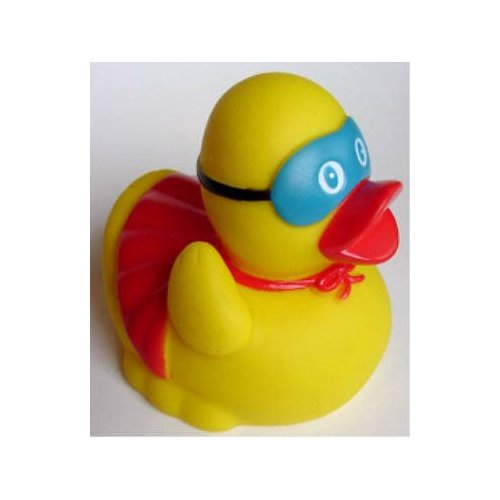
I meant to do it, truly. But life got in the way. (It usually does.) And I let it. The only person who finished it was Annie Reed, who has a Super Hero Duckie coming to her.

I meant to do it, because I still have more to learn. A lot more. And I meant to challenge others because it goes better in a group.

In retrospect what I did wrong was ALLOWING myself to only do half the weeks. That meant I kept putting it off because I could always catch up. Not anymore. In the original challenge, I tried to do it every week, and after a year I woke up on Saturday and I was ready to go. I craved writing a story. It’s like an exercise program.

Now I need to for other reasons. One of the things paralyzing me is the economic uncertainty as it applies to me, and I’ve already told you I intend to have a short story subscription service. Now I need to write the stories, right? And you have your own reasons, though I’m sure the most important is to get better as a writer. You’ve always wanted to do this, now do it WELL.

So, I’m throwing down the gauntlet again. Anyone who writes ten or more stories over the next six months (but you should aim for twenty!) Will get a super-hero ducky from me. And to keep myself honest, I’ll report on my progress (Neither gloom of night nor Mrs. Cake, nor impending trip to Portugal shall stop me) every Sunday, at the same time I post a Blue Plate Special. (There’s gonna be some changes around here starting in June – more on that later – and Sundays will be BPS day. BPS, in my conference, the Diner, both on Facebook [ask to be let in! It’s a private group. Yes, there’s a public one too, but you wan the private!] and in Baen’s Bar, is a free short story. Usually a long-ago published one, but hey, free.) And any of you going along with me, can report on yours in the comments.

One thing I didn’t have before and which might help you. Go to Amazon and buy this. Read it. Stay with it even if it seems crazy. It’s not.

The Rubber Ducky waits, and in the future, we’ll meet each other in public and go “quack” and we’ll know we’re in the presence of an equal who took the challenge. Then we can sit down and quaff a pint and compare how many duckies we have achieved.

Clear a space in your house, a vast shelf for all the rubber duckies.

We few, we happy few, we band of quackers…

The Great Talent Hunt

 So I won’t be misunderstood let me make clear at the outset that yes, I believe individuals are born with different capacities for different things. Let alone the capacities one sees in oneself which might or might not be observed objectively, it’s impossible to watch a kid growing upand not to know some things come more easily to people than others.

Take words, for instance. I rarely, if ever, struggle for words. Oh, on some days when I’m ill or insufficiently caffeinated, I’m capable of saying a sentence the wrong way around, but just a glance at it will show me my error. I find it almost alien to imagine fighting for each word as you write, having to work at translating thoughts/images/feelings into words. And yet, people I have reason to trust, like my husband, who has nothing to gain by lying, tell me that this is possible – that it is in fact a condition of vast swaths of humanity.

So, we’ll establish that people are wired differently, whether due to genetics, epigenetics or environment at a very early age.

That’s fine.

What this means is that you have a “gift” you get for free. So far as it applies to fiction writing I’ve identified the following gifts: a gift for language (arguably the least useful except in limited and specialized circumstances); a gift for characters; a gift for plotting; a gift for theme.

Usually a person will get one of these almost at an instinctive level. Sometimes, they’ll get two or more. It could be argued I got two: language (though I made things difficult for myself there by being a non-native speaker, which added some years to my journey) and characters. Is this enough to publish saleable (let alone good) fiction. I wish.

Take my friend, Dave Freer, who tells me started with only plot. Was this enough to produce saleable fiction? Well, he sold earlier than I, but that was influenced by so many factors that it might or might not mean anything.

Writing draws on all the talents above, plus some other, unspecified. To make it, in addition to all that, you need keen business acumen, an ability to spot trends, a thick skin that allows you to persevere in face of rejection, enough mental health to be able to withstand one of the most uncertain careers you can embark on, and enough insanity to want to do it. Talent, as such, is not there anywhere.

And yet, over and over again, newbies showing me their work ask “do I have talent?” Or “have I got it?” with the it being the mysterious force that allows creation.

Part of this is the myth of talent and genius our society has spun. We read about DaVinci and Einstein and Mozart with a sort of mystical awe. There is genius, we think. There is talent. And we imagine these people plunging into their field of endeavor effortlessly and fully formed.

Do I need to tell you it’s not true? I doubt DaVinci walked up to a canvas and effortlessly drew a Madonna. In fact, we know he didn’t – we have bits we believe were done by him as an apprentice and – whatever Dan Brown thinks (rolls eyes) – most of his notebooks were taken up with practice sketches and notes to himself on this and that. We know Mozart’s story as well and though I’m not as familiar with Einstein I would wager that though he might have been a mediocre student, he probably explored math and physics extensively on his own to the limits of availability. (I’m “gifted” with a child of the same stamp, and trust me, sometimes I’m amazed at how hard he works on his own time, provided it’s something that interests him. Which often has nothing to do with what the school thinks he should be studying.)

Even the language we use on this is wrong. We talk of “gifted” children and of having a “gift” for this or that. Other than at an almost elemental level (it could for instance be argued I have a gift for language. This is not true as I have to work harder than most at learning foreign languages. I did have an easier time of English than almost anything else, but I still worked very hard the first year. Much harder than my classmates. BUT I am a verbal learner, which means once I conquered the language, words come easy.) This is not true. Scratch a “gifted” child and you almost always find a kid who is working twice as hard as the others. The fact that this work is often “play” for the kid doesn’t change that. The gift the child has might be something completely different – i.e. what he got for free is probably something more elementary – like the capacity to concentrate earlier and more intensely than other children, or the capacity to visualize his adult ambitions and use them as a driver to his motivation.

Add to that that writing is an uncertain and odd career. When you start, you often know nothing of how the field operates or how one gets even one toe in. (Okay, that’s getting easier with the internet.) By the time you figure out how difficult it is you’re often fully committed… And your friends, relatives and strangers on the street think you SHOULD BE committed. They don’t hesitate to tell you so, either. (If you write science fiction and fantasy you add another layer of weirdness, as a lot of people can’t understand why you’re writing about spaceships or fairies. “But this stuff doesn’t exist!”) You find yourself coming home from a day job, or stealing time away from familial duties to work relentlessly at an avocation that might or might not ever bring you even the barest level of recognition (defined as a couple hundred people reading it and liking it) let alone monetary reward.

Of course people setting out on this uncertain sea – the pen is a harsh mistress. Eh! – will want to know they’re destined to do this, that there is a reason they’re so oddly afflicted, that there is a chance they’ll make it.

I understand all this, but unfortunately I can’t tell anyone they’ll make it. There are so many factors going into making a success of your writing endeavors, that unless I know you personally and have seen you in action throughout the years, I do not know how far and how fast you’ll go. I’ve been known to be wrong, too. Some people I dismissed as “pot boilers” who would stick at a certain level the rest of their lives, suddenly shot way up. Other people who to my eyes had it all together have spent the last twenty years working at one or two books and never selling.

I don’t know your religious or metaphysical beliefs, nor are they any of my business. However, for the purpose of writing, it helps if you start off believing there is no destiny.

If you want to write, if it truly is what you want, you’re no more guaranteed success than if you want to make shoes or to make and sell neat medieval toggery at cons. (You probably have less chance of succeeding at writing, in fact, since what I’ve found is that it takes an inhuman amount of work, concentration and planning.) Would you think it was your destiny to make shoes? Or to sell neat stuff at cons? No. Of course not. (And yet it might be, as much as to write books.)

So, start from there. There is no destiny. I don’t care what your momma told you, you don’t have to do this. If you can, walk away now and save yourself.

Those of you who remain, now, examine your assets. What’s the part of writing that’s easiest and most pleasurable? The part that people tell you “wow, I really like” – right, that’s your gift. Stop fussing with it, and start learning the other parts of a story. Read a few books you really like and try to separate all the elements that go into it. Be warned that if your gift is “language” people will routinely over estimate you.

They’ll tell you things like “you’re such a great writer” – but they won’t finish the story, because there is no story beneath the great words. You have to be alert to that sort of thing. Absent an ambition to write poetry; the sort of recherche short-shorts that get published in college magazines; or plotless and acclaimed novels no one ever reads, language is well nigh useless. It helps you write faster, I think, but you also have to stay on top of it. If I give my language full rein, I can easily smother the story-tlling under a blanket of prose. People who stop to admire my vocabulary will get popped out of the story as easily as if I’d made a crude grammatical mistake.

Suppose you examined your “gifts” and realize you don’t have any. Can you still be a writer? Of course you can. Again, other writers get one or two elements for free and those might frankly be an hindrance, as they then think everything else should come that easily.

If you still want to set out on this uncertain route, with no guarantee of success ever, then start learning. Your best textbooks are the successful novels out there. No, they won’t contaminate your style (don’t make me come out there and hit you with a dead fish.) If only it were that easy to acquire the style of the masters. They will simply point out a “route” for you to follow. In the same way “how to” books can be useful. I found a very few truly useful, Dwight Swain foremost among them.

The caveat here is you must find the books that are useful to YOU. Even from Swain, my husband found the character book useful, while I could never finish it because it annoyed me and interfered with my character creation, which I do at an instinctive level. Conversely, even though most new agey writing books (just bought one by accident) drive me to screaming fits, at a particularly dispirited and low time in my life when I thought I’d never get published, one of these books that regarded writing as a “practice” like praying or meditating, allowed me to write again.

The reason this is important, is that some people feel an almost pathological need to write – I’m one of those – and if they’re not doing it, they get very unhappy. I’ve known people – not me, thank heavens – who get suicidal during prolonged writing withdrawal.

If you’re one of those, and if you feel a need to write, even though you know you might never get published, even if you don’t have a single of those gifts for “free”, work on acquiring them. If you’re going to be writing, you might as well make it saleable and give enjoyment to others.

But don’t worry about talent. Chasing “talent” is an endless snipe hunt that has ruined more potentially great writers than anything else.

Start by assuming you don’t have any talent. Now, do you have courage, determination, a thick skin and just a touch of divine madness?

Work it, baby, work it.

The Shadows Within

One of the few proofs I have that we are a novel someone is writing – pauses to let her audience absorb this and dial the men in white coats. Chill. I’ll give you more reason for that before I’m done – is that the same themes seem to surface around you, whether or not you could be the cause of them.

Yes, I know the rational (ah!) Explanation for this which is that you suddenly just notice these themes. To this, I want to say – BS (which of course, means Baby Snot) – you know that isn’t true. Oh, sure there are instances when you suddenly become aware of say, exploding head syndrome, so when your friend starts talking about waking up with this loud exploding noise in their head, you know what it is. But most cases of cluster coincidence aren’t like that. They’re events or subjects unusual enough in themselves that you’d notice or remember them at any time.

Kind of like, you find a book in a library sale about the great flu epidemic in the twenties, a subject that never interested you before but the book looks cool and you bring it home. And suddenly every blog you check into (yes, this WAS several years ago) is burning up with bird flu news.

Something like this happened to me yesterday, as I was talking to a friend – not Kate Paulk – about metaphysics, which caused me to refer to the well known effects of meddling with the paranormal. No, whether you believe in the paranormal or not, there are definite psychological effects of attempting to explore it. Some people think the girls in the Salem Witch Trials drove themselves nuts that way first, I don’t need to mention, (I hope) Joe Fisher’s Hungry ghosts, and people have talked about how the deeper Sir Arthur Conan Doyle got into the paranormal, the more his cognitive/critical faculties seemed to deteriorate.

And it occurred to me that writing is a sort of shamanism. Oh, not always. At least I hear reports of writers who are perfectly rational and write in a “paint by the numbers” fashion. However – and I wish to stress this – none of those are writers I’m close to or who trust me with their process.

Those who trust me with their process treat the whole thing almost like a supernatural “gift”. The story comes when it wants to. It takes turns that scare us. The characters become alive to us.

Now, again, before you reach for the “I love me” jacket for everyone of your writer friends, let me point out that there are degrees in this. There are things I can’t get my characters to do no matter how hard I try, but I do have control over the plot and what happens. (Otherwise my books would be this sort of formless blob where I tell you what someone had for breakfast.) And I can choose how deeply to get involved.

Most professional writers are like that. We keep the otherworldly qualities of the work confined, restrained. We are willing to move on from a world because it’s not selling, etc.

However, at the same time, you do need to keep some bits of lucid dream, some bits of “not me” in it.

Where does the “not me” come from. I don’t know. It depends on your opinion of shamanism and your view of the supernatural. I have my opinions, but I’m not going there because I have no proof.

It could be that writers are simply highly advanced machines for reading the ethos of their time and translate it into a sort of dream that processes the input. I.e. if you view humanity and the mind of humanity as a collective organism, we do what your brain does when you’re asleep. We process the disparate inputs that the world receives all the time into a coherent form for storing. (Actually that makes a lot of sense, since to an extent the psychological function of story tellers is to give “moral” to the formless.)

In the same way that in the dream what you dream is true even if it makes no sense – yes, your pet poodle really can become a six foot python and talk to you across the breakfast table – writers have to sort of kind of assume a certain amount of “existence” for their worlds and characters.

The problem is to do this you have to “go inside” and assume as truth experiences that aren’t shared with any other living human being and experiences that depend on “senses” you don’t share with the rest of humanity. (At least I don’t. I know other writers who have actual, vivid auditory/visual hallucinations/dreams. In my case, it’s more like I remember the events or conversations, but there’s never actual sensory input.) You have to do this, because that lucid dream is often right, while your rational attempts at plot/character are wrong and will feel wrong to your reader.

On the other hand as my friend Kate – in one of those coincidences <G> – talked about in her blog yesterday, you must always keep in mind which world is real. It’s very tempting to sit back and just watch the worlds of your imagination, like the main character’s wife in Farenheit 451, but if you do, you lose your own life, as it spins away from you. Worse, if you go inside too much weird stuff starts to happen, the same sort of weird stuff that you get if you get involved in the paranormal. I’ve heard of characters crossing between heads and becoming obnoxious in a poltergeist sort of way. I’ve heard of writers who become depressed and think they’re possessed by their characters (some of it leading to suicide attempts.) I’ve heard of people who get, wholesale, historical facts that they couldn’t have known except through their characters.

But the same “insane making” slipperiness exists there as in any psychic phenomena. some of the historical facts will be wrong. The characters as they cross between heads assume the persona of that universal human myth character, the trickster, and sometimes definite malevolent characteristics. I’ve never heard of anyone’s character leading them to a better life or a more fulfilled emotional state.

You see what I’m saying? If you step full into the “not me”, it’s like stepping into a dream, where things are never fully rational, and suddenly a man eating lion can jump out of your closet.

Are these phenomena real? I don’t know. Again, it depends on your religious beliefs, and I’m so not touching that. But it doesn’t need the belief in the supernatural to explain it, particularly when characters cross between heads of people who are friends or in the same writers’ group. There are mechanics of group madness (probably an outgrowth of mechanisms that once encouraged tribal cohesion) and mass illusion.

Frankly, as far as I’m concerned, I much rather avoid anything supernatural and any paranormal explanations as far as humanly possible. I’d much rather examine things through the lens of reason.

Unfortunately my profession doesn’t allow me to. So everyday I sit at my desk and go hunting in the half lands where what’s real might or might not be and where every voice in the shadows might be a danger to my sanity.

And I take what I can from the shifting wraith lands and bring it back and tame it, and shape it with reason and make it safe for human consumption.

Which doesn’t make it either safer or saner for me. And which scares me and worries me when a whole book seems to come through my fingers without much control. Yes, I’m willing to concede I probably have gotten to where most of these processes are subconscious for me, and that’s all that’s happening. On the other hand, given the place I work at the edge of, I hate letting go of high control and strict rationality. And I have to do that, to stay on this side. I have to hold rationality and dream one in each hand, and never conflate them.

It is the job of the dream-hunter to go beyond the safe edges of reason and to work, uneasily, between shadow and light.