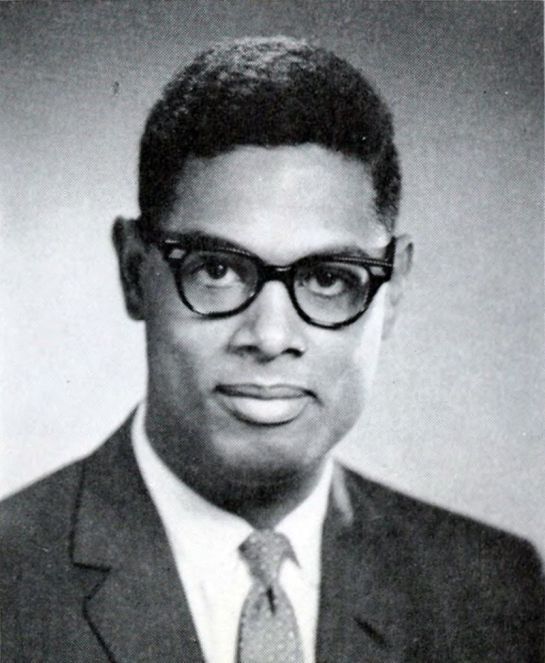
When Facts Fail and Knees Jerk An Introduction to Thomas Sowell’s “Black Rednecks & White Liberals” – By Amanda S. Green

800px-thomas_sowell_cropped

When Facts Fail and Knees Jerk

An Introduction to Thomas Sowell’s “Black Rednecks & White Liberals” – By Amanda S. Green

After a couple of weeks of angsting over what book to review next, the decision turned out to be easier than I thought. I knew going in I didn’t want to do another book on the last election, Hillary Clinton or Trump. I’ll come back to them, but not right away. I also knew I wanted something that didn’t send me screaming into the night, which is exactly how I felt while reviewing TSAR. Yet it had to be something timely and, more importantly, interesting. Then a headline in the local paper caught my eye and the decision was made for me. So, starting today, I’ll be spending the next several weeks discussing Black Rednecks & White Liberals: Hope, Mercy, Justice and Autonomy in the American Health Care System by Thomas Sowell.

I’ll admit, the title of the book intrigued me. I’d never heard the term “black redneck” before and wondered how in the world Sowell managed to get away with using it. I will also admit to being a fan of Sowell’s writing on economics. However, as alluded to earlier, I chose this book based on something that happened locally and, after reading the description for Black Rednecks & White Liberals, I wondered what Sowell’s take on current events might be.

Over the last year or so, we’ve been inundated with reports from around the country about statues being removed and parks and buildings being renamed. Why? Because politicians have been worried about those names and statues being racially insensitive in today’s enlightened age. I’ll even admit in some instances, they were right. However, as with so many other movements, things have reached the point of being ridiculous.

The latest case in point happened recently in Corsicana, TX. Corsicana isn’t a big town – the 2010 census placed its population at 23,770. Located an hour south of Dallas, it’s not one of those places you expect to see in the news, much less the national news. Yet that’s exactly where it found itself this week and all over the statue of a gorilla.

Yes, you read that right, a gorilla.

Specifically, Dobby the gorilla. A 500-lb statue that had been in place in a circus-themed public park for 19 years. During that time, there had been no problems with Dobby. In fact, the city took steps to insure the safety of children using the park as well as of Dobby by placing him in a cage. You see, Dobby hadn’t been reinforced when he was first brought to the park. So, what you had was a gorilla, one fist upraised, in a cage in an appropriately themed public park.

Suddenly, local government received complaints about how racially insensitive Dobby was. They were offended, I tell you, offended. Oh, and those complaints? There “about” 45 of them. Forty-five. If my calculations are correct, that’s 0.19% of the city’s population complaining, and that assumes those complaints came from citizens of Corsicana.

But, being concerned politicians, the city council removed Dobby. After all, they couldn’t be viewed as being insensitive to the concerns of their constituents, could they? What they didn’t expect was for it to blow up in their faces. Flowers, stuffed animals and balloons suddenly decorated Dobby’s now empty cage, a memorial to the beloved gorilla. One man staged a sit-in from inside the cage. There was a candle light vigil for Dobby. There’s even a Facebook page dedicated to Dobby’s memory. Part of the problem, beyond the fact Dobby had become a fixture at the park, was city government acted without actually letting the citizens give input on the issue. In other words, they knee-jerked based on a few complaints and, I have no doubt, memories of the protests about Civil War statues commemorating Confederate generals, etc.

As I said, it blew up in their faces. Reports now indicate Dobby will be returning to the park. Which he should, especially when you have local government officials admitting they don’t understand why there was suddenly concern about Dobby being “racially insensitive” and when those same government officials don’t detail what the complaints actually said. Was it because Dobby’s arm was upraised? What was it?

[No, it’s because Democrats are enormously racist and think black people look like gorillas.  Then they project this on everyone else.  Truth is, of course, all people look like gorillas.  There was a gorilla at the springs zoo who looked remarkably like my brother and had his expressions too.  My kids loved it.  BUT democrats are enormous racists, so they think it’s only black people who resemble gorillas, themselves having been evolved from fairies and unicorns.  I wouldn’t mind if they’d stop pushing their evil on us – SAH]

In other words, where is the context and what is the culture that not only brought about the complaints but caused the city council to respond in such a knee-jerk reaction?

And that brings us back to Thomas Sowell and Black Rednecks & White Liberals. (All quotes come from the preface of the Kindle edition.)

I knew I was in for an interesting read with the first sentence: Race and rhetoric have gone together for so long that it is easy to forget that facts also matter—and these facts often contradict many widely held beliefs.

Such a simple statement and one that, on its surface, appears self-evident. Yet, it points out the problem facing our country right now. Politicians are so afraid of being seen as racist or, at the very least, insensitive, they act without taking a moment to consider the complaint. Facts have been thrown out the window all too often (and not just in race issues but also in other hot button issues like gun control. We’re seeing that play out in the media right now with the latest press for gun control). No one wants to deal with those pesky little facts when the feelz are so much more important. (Sarcasm high here.)

In the preface to the book, Sowell explains his purpose “is to expose some of the more blatant misconceptions poisoning race relations in our time.” That is a huge task he’s set for himself. More than that, as I read the book last night, it dawned on me just how big of a risk he took in publishing it back in 2009. He doesn’t mince words. He doesn’t hesitate to place blame where he sees it – both within the African-American community and with white liberals. He brings forth facts that will shatter the beliefs of some people – if they would sit down and read the essays in the book. Most of all, he gives us something to think about and does so in a way that is not only readable but thought-provoking.

[E]ven a work seeking primarily to untangle a complex set of historic social issues can provoke the fashionable question: “But what is your solution?” Yet there is not the slightest danger that there will be a shortage of solutions. On the contrary, an abundance of uninformed solutions has been one of our biggest social problems.

Isn’t that the truth and aren’t we seeing so many examples of that today? It doesn’t matter how well-meaning a so-called solution might be, if it isn’t based in facts, it is doomed to failure. Perhaps not right away but eventually it will fail. The question then becomes how great the harm will have been.

One thing Sowell said in the preface really struck me, especially after having just re-read Lenin’s The State and Revolution:

Common sense can be more readily expected when writing for the general public than when writing for the intelligentsia.

Think about that single sentence for a moment. “Common sense can be more readily expected when writing for the general public than when writing for the intelligentsia.” It’s important that we ask ourselves why that is. Then we have to ask why, if that is the case, the so-called intelligentsia have failed to recognize that truth. Is it because they don’t want us to seek common sense solutions to the problems that plague us today? Are they afraid of losing status or power? What is it? More importantly, why have we allowed ourselves to be swayed by them?

Sowell does state certain facts about the essays contained in this book. They are something we need to remember as we go forward: [T]hese essays do not mean that (1) all Southern whites were or are rednecks, that (2) all black Americans today or in the past were or are black rednecks, that (3) Jews are exactly the same as the other groups with whom they are compared, or that (4) slavery is somehow morally acceptable because everyone was guilty of it. He states this because, as he points out, you can’t predict “the clever misinterpretations that others might put on one’s words.” Keep those premises in mind as we go forward with the book.

Next week, I’ll tackle the first essay, “Black Rednecks and White Liberals”. In the meantime, if you haven’t read this book before, I highly recommend it. Here’s a teaser from the next chapter:

Moreover, such cultural traits followed blacks out of the Southern countrysides and into the urban ghettos—North and South—where many settled. The very way of talking, later to be christened “black English,” closely followed dialects brought over from those parts of Britain from which many white Southerners came, though these speech patterns died out in Britain while surviving in the American South,143 as such speech patterns would later die out among most Southern whites and among middle-class blacks, while surviving in the poorer black ghettos around the country. For example:

Where a northerner said, “I am,” “You are,” “She isn’t,” “It doesn’t,” and “I haven’t,” a Virginian even of high rank preferred to say “I be,” “You be,” “She ain’t,” “It don’t,” and “I hain’t.” …These Virginia speechways were not invented in America. They derived from a family or regional dialects that had been spoken throughout the south and west of England during the seventeenth century.

Now consider these two paragraphs and think about speech patterns we hear today. We’ll be discussing that and much more next week. In the meantime, think about other instances where facts have been pushed aside in favor of rhetoric. What about where common sense has been tossed aside for the convoluted “solutions” of the intelligentsia?

Until later!

[For raising the tone of this blog — ATH is culture! — and helping me with the exposing of the roots of the current mess — in her case with more facts! — if you decide to  send the woman a drink–  And her Amazon author page is here –  Also, she has a new book: Light Magic, under her Ellie Ferguson pen name. SAH]

What Can’t Go On

sheep-2722073

A friend talking to me yesterday asked “is it me or have most institutions, stores and corporations, most large human organizations, gone stone stupid?”

This was after a conversation that involved the fact that our people, including friends and acquaintances are at war with something pretty much universally right now.  Something that they’d never dream of going to war against, something they didn’t want to fight, but have to, because “mistakes were made.”  Usually mistakes are made by the business or organization and they’re large enough that they’re either existential or very, very expensive if not fought back against.

And the one universal on these things is that they’re STUPID.  I mean, rock bottom, bizarrely stupid.

On the last trips to the grocery store, Dan and I, looking over our receipt at the end, have found big enough errors to justify losing half an hour in the customer service line.  We’re talking $50 to $100 errors on bills that were under $300.  (Yeah, we tend to buy meat for a long time and freeze.  NOT actually gold plated nightingale tongues.)  Errors against us, btw.  In one of those, we had to help the clerk with elementary math in order to get our refund right.  And half the time he was erring in our favor, so it wasn’t exactly, you know, a dodge.

It’s gotten so bad Dan and I joke about not needing to go to the ATM.  Since this company can only give refunds in cash, we’re always flush.

I’ve run into the same thing with online companies and various other things.  Even Amazon the unflappable has pulled a couple of strange shipping orders recently, where I look at the box and go “who? Why?”  Now, half the time, it’s true, I did order the thing, and I’m just suffering a Writer Moment (totally a thing) because my brain is in three worlds at once. (BTW if someone sent me the cat pee remover for tile grout and is reading this, thank you kindly.  I tossed the box before reading the gift receipt, because I assumed I’d ordered it.  It was only later going over my orders that I realized it must have been a gift.)

But the other half the time I got an order supposed to go to someone else across the country, something that never used to happen and now does.  Still very rarely for Amazon, more often for other places.  Startlingly often for more “respected” and older places.

Most of my friends have had run ins with employers in the last few years, and the reasons will startle you: they were doing too much and were too competent.

The charges ranged from “showing off” to “Causing trouble by doing too much.”  All of which boiled down to “You’re making other people look bad.

There is a pull towards mediocrity, as it were, pretty much everywhere, including the very strange (and familiar to me, because it’s Portuguese culture) notion that it’s better to be fast than to be accurate in some tasks.  In retail, and other places that are understaffed, the emphasis is on fast, even if sloppy.  Which is why I suspect we keep getting odd charges on our receipts.  (Mostly sales not ringing as sales.)

Sometimes if you’re efficient, and just keep your head down and work, you get accused of not being a team player.  Not socializing with your workmates is somehow suspicious and causes you to be on the outs.

And of course, in some industries — mine — not being vocally left will cause you all sorts of trouble.  I remember the ex-Baen contractor who came at me on FB at the height of Sad Puppies telling me how much she hated working with me and what a horrible person I was.  I checked.  She did copy editing for Draw One In The Dark.  That was it.  If I remember properly — I was concussed at the time, but I have the email trail — she sent the copyeditted manuscript, I looked over it, and didn’t stet hardly anything, because concussed and didn’t trust myself, and I sent it back.  That was the extent of our interaction.

Also at the time, I was politically in the closet, and the book — as most of you know, and if you don’t it’s free on Amazon and the Baen Free Library — is not even remotely political, though some people have found penumbras and emanations in the Great Sky Dragon.  (Mostly because they’re nuts.  Seriously, guys, the curtains are blue.  Or in this case, the Great Sky Dragon came about because at the time of writing I’d been reading a pile of Chinese mythology.)

However, apparently, just minimal interaction with someone who later turned out not to be hard left caused this woman to burn.  BURN I tell you.

So why are the wheels coming off?  Why is doing well sometimes considered a sin? Why is “social fitting in” more important than doing your job?

Well… there is the fact that no one knows what good is, anymore.  We’ve lost track of what we’re working for.

No, seriously.  What is the aim of civilization?

It used to be, in the age of empires, that everyone knew that: to take over all the world, bring it all to “civilization” and live better.

We used to build big things, like canals and bridges and refineries and large ships because no one doubted that was good.  We used to extinguish illnesses because no one doubted that was good.  Ditto with say, wolves in populated areas.

But at some point — I date it from the end of WWI, and you can sort of see it in books of the time and forward — we decided we weren’t sure that was the good of right thing.

Part of it, and I’ll die of saying this, I swear, was Soviet agit prop, softening the west for take over — note they never bought into this bullshit, even as they propagated it — stuff like extreme ecology and the idea we shouldn’t go to space because we were bad and evil and would just propagate our evil.

And part of it was getting comfortable enough that our crazies weren’t immediately shut down as crazy.  To put it bluntly, we had enough wealth and comfort to let even the crazy be heard.

So these days if you aim at something big, something that objectively improves the prosperity of all mankind, like say asteroid mining, you’ll get a chorus of “but what if we’re despoiling????”  And these people have enough pour that nothing much gets done, and very little of importance.

This process goes down, all the way down the line to our stores, our garages, our schools (where students can all do “too well” per CACS in her comment yesterday.)  It’s imbeciles and nincompoops all the way down.

People desperate for some kind of standard, be it in the arts or commerce, often fasten on to the latest politically correct directive as being “good”.  Hence the crazy stuff with companies dropping NRA discounts because they were twitter mobbed.  (Even though the NRA had nothing to do with the shooting, is not the only gun owner organization, and most gun owners don’t belong to ANY organization.  And even though twitter mobs are not known for their calm, sanity or for that matter large numbers.)

The problem is that “progressivism” is not an objective good.  Sure, it might be in a world where history came with an arrow and we knew how “the future would judge us.”  But even there, for it to be an objective good it would have to work.  But like it’s parent, Marxism, it just doesn’t.  It just adds a layer of malice to the incompetence tarnishing the world.

(EDITED to add, because I’m recovering from severe stomach flu and forgot to put it in: We saw this writ large with the Broward Cowards letting children get killed and then jumping on the politically correct gun control bandwagon to cover their (objectively) crime and dereliction of trust.)

The thing is, if a house divided against itself cannot stand, a house penetrated by derp and held down by insane people who have no objective standards and don’t even know what “good” is; people who don’t know if they are for humans or against them; people floundering in the clutches of an ideology that changes day to day to designate a new victim class, crumbles slowly and bizarrely.

In many places, not just my own field, it sounds like the wheels are coming off.  Things still trundle forward, kind of, but there is an accumulation of errors and faults that is starting to gum up everything.

It’s honestly amazing we’ve made it a hundred years or so with this mind set.  If there hadn’t been massive technological improvements, we probably wouldn’t have.  But it got easier to be relatively competent, even as the schools (one of the first taken) turned out less and less competent people.

But what can’t go on, won’t go on.

It’s not like it’s a surprise to any of us, right?

Thing is this won’t devolve into a mad max world, you know, just by stages into closer and closer to a third world nation, till we don’t notice when the inevitable TP shortages hit.

OR we can fight it.  And I don’t mean just going to war with city hall, though some of us are crazy enough to do that (and with their employers, and with retailers and service providers.  I once fought the post office.  Won too.  Let’s face it. Some Huns just like to fight.  I know you’re shocked.)

I mean BUILD.  Under, around, over.  So that when she cuts lose and the weight rests more and more on us, we can carry on.

For some fields that’s impossible, and it’s going to become very difficult, particularly where those fields impact every one.  For others… like mine, which is not terribly essential, we’re already managing.

It’s horrible, but the hope of civilization rests on the shoulders of the Odds, the Goats, the odd man out.

Because when collective madness sets in, our saving grace is that we don’t DO collective well.

When things get weird, the weird go pro.

Be not afraid.


Dropping the Chaff

Before I get someone horribly alarmed, as I go into this post, I’m not dying.  I just have the worst case of stomach flu I’ve managed to acquire in seven or eight years.  It introduced itself while I was away from home yesterday, and I almost didn’t make it to the public bathroom in time before I threw up all over the stall.

Right now going onto almost twenty four hours without food, and water is enough to make me queasy.  I’ll try sports drink after I nap, I think.

There is something to that “the prospect of being hanged in the morning concentrates the mind” but it doesn’t take that.

For the last five years, one way or another, I’ve been sick, and knowing you only have so many spoons means that you have to concentrate on what you need to keep going and what can drop.

Not everything I’ve dropped is good.  I’m late by a year sending books to some people.  Or two years, or so.  And my subscription page just sort of died on the vine, no matter how much I tried to revive it.  I simply didn’t have the strength.  So I would push and do it for a couple of days, then relapse into silence.

I did more or less keep this blog going, though, and I finished probably ten novels (I don’t feel like counting) which is low for me, but not bad.  However “mistakes were made”.  Stuff like series left to languish, which I need to recover, like Musketeer mysteries and Witchfinder.

In fact when I was really ill, only the books for Baen got done, because they were waiting for them.

Now I feel better — excepting today which is like a blast from the past, howdy! — my problem is having energy to do many things, and therefore being unable to concentrate on one.

It occurred to me, as I finished the post at Mad Genius Club that I was flagging, even though most of the words are quotes.  So I only had the time for maybe a short post here, and then I’d have to nap.

It reminded me of how many of my favorite artists did their best work on the last few years of life, when you have to concentrate with everything you have just to turn out product.  It makes you decide what is really important, and what is chaff and can be let go.  (Okay, things like dishes and cat boxes WILL get done, after the nap.)

Of course, the best thing to do is to organize yourself so you can get work done while you’re not dying.  It combines the best of health and the concentration of near death.

Ask yourself, if you were very ill (temporary or permanent) what do you absolutely need to get done today?  I bet it whittles down the to do list wonderfully.

As for me, I’m going to take a nap then work on Alien Curse.

How to improve your talent – by Wayne Blackburn

How to improve your talent – by Wayne Blackburn

android-3086433
You, in the third run from the back. Yeah, I heard the joke about ventilated boobs!

What’s that you say? You know how to improve? “Practice, practice, practice!”?

Well, you’d be right, of course, but that’s not the whole story.

I’ve heard (ok, read) Sarah and others talk about “the myth of talent”, with which I have had my disagreements. It turns out, though, that I have never actually encountered the myth of talent, which apparently says that if you have talent, you don’t need practice to be good at something. I’ve only encountered the reality of talent, which is that talent allows your practice to be more effective.

Now, how much is talent genetic and how much is early experience? We may never know, because the factors that determine it are probably incredibly complex and intertwined. So much so that it’s far too large for a blog post, so I’m not going to go into that here. I am, though, going to show you ways to improve the talents you have.

“Improving your talent” is actually something that will help you in a broad range of things, not just the thing you’re practicing.

My father was a Jack-of-all Trades. I won’t say, “Master of none”, because as far as I could tell, he was a master carpenter, even if he didn’t have a piece of paper saying so. He could have been quite wealthy, had he gone into business for himself and been able to bring himself to charging a reasonable rate for his work (which latter part is why he wasn’t building houses with his friend, because they couldn’t bring themselves to charge enough to make a living). Instead, he retired in 1989, after 25 years working for the YMCA, and when he retired, he was making $6.99/hr. Needless to say, when I learned that last, I was a very unhappy person on his behalf.

But living with my father was an educational experience. He was, as I said, a Master Carpenter in all but certification – he could decide on a project, start pulling out tools and supplies, and setting up workspace, and then, in an astoundingly short time, produce a quality piece of work. He may not have been a Master Plumber, but he could do general plumbing and do a quality job. He wasn’t really an electrician, but he could wire your house, and it would pass an electrician’s inspection.

But more than that, dad could look at something and figure out how to do it. My brother recently told me that dad once tore down and rebuilt a friend’s manual transmission because the friend couldn’t afford to replace it. Dad could also pack things into a smaller space than you would believe. I joke that he could pack a two-bedroom house into a pickup truck and a hatchback. So one of the things I decided early on was that I would become as good at doing things as dad was (I never really hit that mark, but I did better than average).

And on my journey, I came up with things that help. I’ll tell you up front that they work a lot better when you’re young and your body and mind are more elastic, but they’ll still help the old farts in the audience.

Much of this, I figured out on my own, but I also cribbed from several other sources, even including one little tidbit from Dune, though I suspect that it was originally from some Eastern martial arts practice.

This article is for physical talent. That is, the kinds of things that will help you learn to do physical labor, or sports, or things like martial arts or dancing. Not all of these will be for everyone, but most of them will be useful as standalone improvements. And these are by no means an exhaustive catalog. I’m sure there are tons of other ways to improve.

Let’s start with the bottom of the pyramid. I know I said they can all help separately, but they definitely work together, and this one will help the others the most:

FEEL YOUR BODY. (Sigh. No, stop that. I didn’t mean… Hey, you in the third row from the back! I DEFINITELY didn’t mean THAT! Ow, my eyes! OK, let’s start over.)

You can do this standing, sitting, or lying down, or you can move from one to the other. I don’t care. First, close your eyes. No, you don’t have to if you don’t want to, but for me, it makes it easier to concentrate. Now, starting with your toes, try to move each one individually. Now, for most people, this is hard, so don’t expect to do it immediately.

Here’s the important part – As you try to move your toes, concentrate on feeling your muscles as they move. Some people find this difficult, but it gets easier over time.

After you’ve tried that a few times, try to curl your foot under as much as you can, then uncurl it and extend your toes to the sky. Next, move to your ankle. Move it up and down, tilt it in and out, and roll it around. Do all this slowly, and focus on the muscles that are moving as you do it.

Work your way through your muscle groups like this. Slowly, focusing on the muscles as you go. It’s not necessary to turn this into a stretching exercise, but you certainly can. The point, though, Is not to push yourself to increase your flexibility (it will help, but you can work on pushing it later), but to learn how to pay attention to your body as you learn other things.

Once you have learned how to feel your body, you will be able to tell better how you are progressing as you learn physical things, and will be better able to tell what you are doing wrong when you make mistakes, which will help you figure out how to correct the problem.

Next, at the beginning of learning, if you have the opportunity, MOVE LIKE A ROBOT. (Hey, third row from the back – are you trying to get me to fling a carp at you? I did NOT say, “Do the Robot”. Sheesh.)

Moving on – what do I mean by “move like a robot”? Just this: Once you learn what movements are needed, you go through the motions slowly, deliberately, and as absolutely precisely and accurately as you possibly can. It’s possible that you may not be able to do this if you’re learning a new job, but often you can get the basics down and then do the intense part later.

To begin, push away all the distractions you possibly can from your mind (don’t push away things that would affect your safety, you need all the fingers and toes you still have to stay attached). Next, go through the motions in your mind, thinking about how to make them. Finally, go through the actual motions, making certain that you are doing all of them as nearly perfect as you can.

The previous exercise is very helpful, because you can feel when you are making mistakes, or if you don’t realize you’re making a mistake until later, you can tell how to modify what you’re doing to make it right. It also helps when you’re doing it right, because you can remember how it feels so that later, you can even tell if you made a mistake when you’re not paying as much attention.

Slowly speed this up as you go along, but for the first couple of hundred repetitions, do your best to focus on the job, and nothing else. Once you have programmed your muscles, you can loosen up and start paying less direct attention to what you are doing, because a) you will be doing it automatically, and b) your muscles will tell you if something is wrong – you won’t have to watch so closely any more.

I have used this technique to learn, in a single day, jobs that I saw other people take more than a week to learn, and some never did really learn to do them correctly.

Note: This technique can also be helpful later on, if you find yourself in need of hurrying. The absolute focus, the attention to prefect motions, perfectly repeatable, can bring you to a pace you would previously have found incredible.

Next, PRACTICE EVERYWHERE. (No, no, no! Man, you’re really starting to get on my nerves. It means to practice wherever you happen to be. It does NOT mean to practice on someone else’s person! You’re lucky you only got slapped.)

Some people. Anyway, this means to find ways to practice the components of what you want to do when you’re not in the environment where you NEED to do it. Now, this is one that many children do anyway. How often have you seen a child prancing around as if they are still at dance class? And many times, their parents tell them to stop.

But it’s a REALLY good thing to do! Most of you probably already know this, but studies have indicated that it takes about 10,000 hours of practice in order to become competent in a field of work or study. To put that in perspective, a standard full-time work year is 2080 hours (40 hours/wk, 52 weeks/year). So that’s just about 5 YEARS as full time, just to get COMPETENT (I’m talking about something that encompasses the full complexities of a professional job, not the packing job I said I learned in one day above).

So, how do you get better faster? You find ways to practice when you’re not practicing. This increases the number of hours you actually get practice in, overall.

Now, at home, you can probably at least practice the movements just as you would if you were doing the real thing, but in public that might be problematic, what with the pointing, and the laughing. More on that in the next section.

When you’re practicing at home, do your movements slowly, and perfectly, unless what you are practicing is timing the movements to something else, and then of course, you have to keep in time. I often will practice the two (movement and timing) separately for a time (that is, when practicing timing, paying very close attention to that and not so much to getting the movements perfect in placement), before combining the two.

One of the good things about practicing at home is that you don’t need to do it in a dedicated fashion. You can work it in while you’re fixing supper, while you’re watching TV, while you’re in the shower (maybe), or whatever else you’re doing, as long as what else you’re doing doesn’t take a lot of concentration. It may not give quite as much benefit as dedicated practice would, but it’s still better than not practicing.

Finally (and you’ve probably seen versions of this from self-professed self-help gurus numerous times): TURN PRACTICE INTO A GAME. (What, you again? Somebody load the carp launcher. I’ll show you a GAME, pal!)

Sigh. Where was I? Oh, yeah. Make it a game. This one is a very free-floating suggestion, really, because there are many ways to make games out of practice.

As an example: One of the things that I struggle with, and have since I was little, is controlling the force and speed of my movements. I can do gentle, or I can do nearly my full force (likewise for speed – either very slow or very fast), but I have a hard time moderating in between the extremes. So, one of the things I make a game out of is shutting doors. Yep, shutting doors. Here’s how: When I shut a door, I give it a single push, and attempt to gauge the force I use to make it shut perfectly. That is, it should completely shut and fasten, but with an absolute minimum of striking against the frame. This is particularly difficult with microwave ovens.

But, you say, what if I pack light bulbs for a living (something I’ve done)? Well, that IS a rather specialized motion, but you can still improve your ability to do it by setting yourself to do things precisely – when you’re at home, set an empty can that had vegetables in it, or maybe baked beans (soup cans will be too small), and set your drink in it. You may have to pick a particular glass or something so that you can easily pick it up and set it down. Then make a game of setting your glass into the exact center of the can every time. When you can do it without really thinking about it, you’ll find that the job that requires exact placement will be significantly easier and you can do it much faster.

The secret is finding things that are similar to things that you would do in whatever you’re practicing for. My baseball coach recommended that his players practice batting by taking a tobacco stick (a hardwood board approximately 1 inch square, and pointed at both ends), and some bottle caps (if you don’t know any beer drinkers, you might need to use pebbles, or maybe just wad up some paper balls), throw a cap into the air, and hit it with the stick on the way down. Why? Well, the tobacco stick is much thinner than a bat, and the bottle cap much smaller than a baseball, so if you can almost always hit the cap, you can surely hit a ball.

Now, the title of the article was how to improve your talent. How does this improve your talent? Well, to begin with, the first part, about learning to move your body more effectively, and to feel how you’re doing it, is the most effective part of improving your talent, because those exercises will feed into making it far easier to learn new physical activities from the bottom up. The others go towards learning techniques to add practice when you’re not formally practicing.  And turning it into a game makes it more fun, which makes it easier to motivate yourself to do the practice.

So there you go. Four basic components:

  • FEEL YOUR BODY.
  • MOVE LIKE A ROBOT
  • PRACTICE EVERYWHERE
  • TURN PRACTICE INTO A GAME

Follow these principles, and you’ll find that your activities become easier, more precise, less awkward, and more useful. And you can learn new skills faster and easier.


Of Nations and Men


Yesterday at church much was made of the necessity to shelter dreamers from deportation, because it’s the “charitable” thing to do.

It is, of course, the charitable thing to do to look after those who need it, but there is an epistemological confusion when one applies moral standards meant for individual humans to whole nations.

I keep running into this with the idiots that think the only time we should use our military abroad is when we DON’T have a guiding interest in doing it, too, and it drives me just as nuts.  It might be a beautiful and kind thing for a person to be disinterested in their acts of aggression or defense, (if a little daft.  You should generally use enlightened self interest) but for a nation it can be suicidal.

It’s as though people think of nations as “that guy down the street” and of course if that guy down the street is running around punching people just so everyone will be afraid of him, or even if he won’t take “nothing from nobody” in the sense that if you look at him sideways he punches you, he’s not a very nice guy and he should refrain from being a jerk.

Now, nations can be jerks, too.  But sometimes being a jerk as a nation is a good thing.  Because nations aren’t people.

In fact, I think the entire misbegotten idea of the UN is that nations are people, and people in kindergarten, and we just needed a kindly teacher, or something.

It failed, because nations aren’t people.  They’re not even groups of people.

Nations are groups of people wrapped around an idea (that is an identity) and claiming a territory.  They’re insanely dangerous things, because nations have governments and those things tend to grow out of control and get up to all sorts of no-good.  It is possible — theoretically — to have a nation without a territory, but then things get really fuzzy and metaphysical and it makes my head hurt, so let’s not do that.  I already have cough from hell.  I actually suspect that will be a new morph for nations by the end of this century, because of people’s location not having as much to do with whom they socialize with or where they work as it used to have.  But it’s almost impossible to be completely independent of territory, absent teleportation, because you’re still stuck with the physical conditions of your terrain, weather, and whatever your neighbors are up to.

In this, nations are like people: they have a body, ie. a physical location.

As far as nations are tolerable and necessary they are so to provide protection, rule of law, and several other benefits to the people living in a certain territory.

The people of such a territory can choose collectively (or singly, if it’s say an absolute monarchy) to let people in, or to provide charity, or even to go kick the nation down the street, because it’s been buzzing us with its stupid war planes, and if we let it keep doing that, then sooner or later it’s going to bomb a majority of our citizens, which would be bad.

It used to be, in less enlightened times, that nations also had very few qualms about, say, going to war to steal a warm water port, because its people really could do with one.  Or with taking more territory to expand, also known as colonies.  Actually both of these still go on to a great extent (see China and the grabbing of African resources) but now they’re dressed in ohter clothes, and are frowned upon by all the Western nations.  Most of whose citizens think of the nation as an individual.

So take the dreamers and — because this was part of the thing, and it made my eyes roll back so far I saw my brain — their families.  Say it’s the charitable thing to do to open our arms to them, their families and their hyper extended families.

Okay.  But I recall no — not one — command for nations to be charitable.  There’s a lot about individuals being charitable.  But why should the nation be charitable?  What will it get out of it?

Well, it gets to help all those poor little kids, who got brought here without their say so.  Um.  ‘mkay.  That’s nice, I guess.  It also gets to keep the parents who knowingly broke the law to bring them.  Um…. that might be charitable, but aren’t we on thin ice, here?

Won’t doing this cause more people to drag, bring or send (anyone remember Obama’s children’s crusade, with unaccompanied minors being sent on an hellish journey sometimes all across the Americas because he announced they wouldn’t be sent back) their minor children, in what is manifestly an act of child abuse (the conditions of the journey alone dictate that) in order to eventually get in themselves?  As charitable individuals, is that something we want to encourage?  And as a nation, is that something we want to encourage?  The immigration of people who are willing to exploit their own children?

And as for all their relatives coming in on the back of these poor children… my head really hurts.  How is that charitable?

More importantly, how is it charitable to the people already here to flood the country with illiterate, untrained, technologically ignorant people?  Don’t we have enough of those ourselves and shouldn’t we be more concerned with helping/elevating them, than with importing more people to take the jobs available to them?

And then it comes back to Nations aren’t individuals.  They don’t have a mandate to charity.  They have a mandate to protect their own people and make their territory as safe and prosperous as possible.  Seems to me that if you’re protecting your territory for your own citizens, you don’t want to encourage a mass invasion over the border.  Because that would be the opposite of all those things.

But Sarah, you say, we are a nation of immigrants, and many of those who came in were illegal and illiterate.

Yeah.  I know.  Though the economic effects on the people here weren’t always pretty, either.  But most of our mass immigration waves of the past came into a country at a level of technology where they could be brought up to speed in almost no time, and where most of what needed was willing hands, willing backs, and an enthusiasm for work.

We live in a far more complex world now, and as Mark Steyn asked the other day, what is the benefit to any technological nation of importing illiterates?

Also the nation of successful immigrant waves was a nation sure of itself, one that demanded immigrants adapt.  Not a nation that was so scared of its own shadows it didn’t allow citizens to display the flag in a school lest it offend immigrants.

One thing no nation can afford is balkanization: the splintering of its culture into many subcultures that lack even a common language.  Partition of territory tends to follow that.

And no nation can allow its neighbor to send over people convinced they own half of its land.  (The whole Mazatlan nonsense.)

Land is not magical.  By itself, it doesn’t change the culture of those who live in it.  Just because we are “charitable” and allow people to move here, it doesn’t make them any more prosperous.  In fact, if they keep their culture and don’t adapt, it’s likely to make all of us less prosperous.  More so for “refugees” from the Middle East where the culture has been strangling all developments for centuries.

Individuals not being nations can change their culture.  All the more so if they immigrate alone or with a very small group.

So, yeah, I’m not anti-immigrant.  (It would be pretty coming from me) I just think a nation, not being a person, should choose its immigrants on the principle of “this person would be a good addition to the nation and make us all better off.”

Most nations in the world do that.  They pick and choose, and if you want an education in how tight immigration can get look at the paperwork to immigrate to Mexico.

Should we be importing people?  Probably.  At least I don’t see any way to stop it.  There will be people like me, mad in love with the idea of America; there will be people who see a better future for their kids here; there will be people who just want to come.  But the country should not treat this as a charity.  We cannot in point of fact take all the hungry of the world onto ourselves, and if we could it would work the same as any redistribution.  Once they get a fraction of what we have, and are unable to produce more, we can all starve together.

In the US, as in most western cultures, we’re fuzzy on what’s “individual” and what’s “nation” and the duties of each.  So we get this “charity” nonsense.

A nation’s individuals can be charitable.  They can reach across the boarder and help other individuals.  They can even (and perhaps should) form charitable organizations that do things like job training.

But the nation as a nation has no business in charity.  Yes, I know, we do something like in foreign “subsidies.”  We have no business in that either.  It’s a form of Marxism infecting thought and people believing if we feed the wolves a little, they’ll eat us last.  A lot of our government’s money abroad actually impairs other nations’ development and makes things worse in the very long run.  And that’s when it’s not dane geld.

As for the dreamers?  Yeah, they were brought over through no fault of their own.  And if they meet the same requirements as the other immigrants: speak English so they can transact all their business in English; are self supporting; have no criminal record, they probably should get a green card.  It’s dangerous, mind, because it encourages more of the same.

OTOH if we don’t extend our benevolence to the parents, it’s probably not fatal.  Provided they match the requirements above.  And we won’t be rewarding outright law breakers.

But at some point we must realize Lady Bountiful is a great role to play with other people’s money and other people’s security.  It is not a sane or safe one for a nation.

It’s neither charitable to encourage people to use children in this way, nor is it charitable for the people already here to be importing more people who will need all kinds of support and all kinds of public assistance, and who, more often than not, make no effort to assimilate.

It is the opposite of charity.

And religious leaders who don’t understand this, might have other moral failings.


Sunday Books & Vignettes by Luke, Mary Catelli and ‘Nother Mike

book-863418

Note these are books sent to us by readers/frequenters of this blog.  Our bringing them to your attention does not imply that we’ve read them and/or endorse them, unless we specifically say so.  As with all such purchases, we recommend you download a sample and make sure it’s to your taste.  If you wish to send us books for next week’s promo, please email to bookpimping at outlook dot com.  One book per author per week. Amazon links only.


DAVID BURKHEAD: The Thunderer: Three Tales of the God of Thunder.

51eiyb18myl

Three tales, each giving a different view of the God of Thunder:

Donner Rothskegg: When a struggling family man is mugged on his way home, a homeless drifter saves him. Strangeness follows this drifter who proves to be more than he at first appears.

In the Hall of the Giant: Thor and Loki journey to Jötunheim, the land of the giants. There, Thor faces his most difficult challenge, and his most implacable foe.

God of Thunder: In the waning days of the Viking colonies on Greenland, a young warrior follows Skraelings, raiders from the icy waste even further to the north, that had been attacking their village. He finds something even stranger and more terrifying and discovers the truth of the old stories.

(BTW, David Burkehead is in a bit of a personal pickle, and there’s a Go Fund Me.

SARAH ROTHMAN: Suicidal Samurai.

512yvfoolkl

A samurai-cowboy seeking revenge.
A secret society with a propensity for murder.
An exciting adventure in Victorian Japan.

When Mori Makoto returned to Yokohama after fifteen years of exile, he did not expect to be accused of murder. But when he comes across a dead body, Makoto is unwittingly thrust into a murderous plot involving killers from his painful past. Together, with a boisterous policeman, a thrill-seeking American actress, and a beautiful and mysterious shrine maiden, Makoto will find himself up against a dark conspiracy that could threaten the very survival of the new, Japanese government.

Suicidal Samurai is the first book in an exciting new series, Meiji Mysteries.

Vignettes by Luke, Mary Catelli and ‘Nother Mike

So what’s a vignette? You might know them as flash fiction, or even just sketches. We will provide a prompt each Sunday that you can use directly (including it in your work) or just as an inspiration. You, in turn, will write about 50 words (yes, we are going for short shorts! Not even a Drabble 100 words, just half that!). Then post it! For an additional challenge, you can aim to make it exactly 50 words, if you like.

We recommend that if you have an original vignette, you post that as a new reply. If you are commenting on someone’s vignette, then post that as a reply to the vignette. Comments — this is writing practice, so comments should be aimed at helping someone be a better writer, not at crushing them. And since these are likely to be drafts, don’t jump up and down too hard on typos and grammar.

If you have questions, feel free to ask.

Your writing prompt this week is: STUPID

Contrary to Rumors, Still Alive

Sorry, guys, I really meant to post, but I’m getting pulled about fifteen ways, work and family, and I kept forgetting.  I’m also either having the flu or in the middle of an auto-immune attack.  (Could be either.)

So, since you guys like visual cues to stories, I’m going to give you one, from Pixabay, and then go back to pushing liquids and getting some work done.

I’m so sorry.

buckled-book-2180047

No Feet Sally And the Denial of Human

man-845847

Yesterday, on Facebook, Larry was discussing how the liberals interpret “some teachers will be allowed to carry guns if they want it” as “all teachers will have to carry guns.”  Going from that assumption, people of course make comments about how their friend the teacher is half blind and can’t shoot straight, which Larry called a “Poor Sally who was born without feet” argument.

I can see how it would apply, from having seen liberals in action for a long time.  Look, I know we’re not the side of “more laws.”  (They don’t know that.  Since this is their modus operandi, they assume it’s everyone’s.)  But in Portugal when mom was little someone passed a law that you had to wear shoes to use public transportation or in the confines of the city of Porto.  This was partly so that tourists didn’t realize how poor the country was, but it was also a public health measure.  In my day tuberculosis was endemic.  In mom’s day it was epidemic.  And there’s a charming habit of spitting on the ground/floor all over the country.  So, shoes were sensible.

Of course, showing the limits of laws to change behavior, because the country was extremely poor, I heard about this law because mom told us how they cheated it.  You wore one shoe, carried the other, and if the police told you to put the other shoe on, you said it made your foot hurt, and they couldn’t force it.  So people wore out one shoe at a time, and made it last twice as long.  (Father’s family was never poor enough for that contrivance.)

But if such a law passed here, or even if we said “you know, wearing shoes is a good idea for health reasons, so everyone should be encouraged to wear shoes” you know and I know some idiot would pipe up with “But poor Sally who was born without feet would never be able to go out.”

There is a fundamental denial of humanity in that statement and the poor Sally with no feet argument.  It assumes two things: what is not forbidden is mandatory, and if we want people to be ABLE TO carry guns (after passing all appropriate screenings) it’s the same as requiring every teacher to be armed.  And two, people are incapable of discernment and exceptions within rules.

First, this makes obvious why they want to multiply rules and regulations till ever part of your life is scripted.  They believe rules are a kind of magical spell, and if they exist everyone obeys it.

Given that idea, banning guns makes perfect sense.  I mean, if no one breaks laws or rules, just say that no one can have guns, and you’ve eliminated a major form of mass murder. Of course, then you have to outlaw explosives, and also knives and eventually butter knives.  And perhaps frozen legs of lamb.  (Never mind.)

Also, if people just do things according to law and have no discernment, of course we have to script every little thing.

Never mind that we never heard of a single case of a transsexual being banned from the bathroom of their chosen sex (unless they announce “I have a penis” while entering a woman’s bathroom) because no one actually checks the contents of your underwear.  (Trust me, one of my friends way back when looked so masculine that my husband on seeing her picture took weeks to figure out which she was (and only because her wife let it slip.)  And yet, she would go into bathrooms without anyone asking anything, and certainly without anyone checking her underwear.  In fact, the only time I know someone protested wrong sex in a bathroom was older son who looked six at 3, and who — being three — would do things like look under our stall partition to see who was on the other side.  (Not sexual but curiosity.))  BUT if people are like programmable robots, who only act according to rules and laws, then you need to specify that transsexual people will be allowed to use the bathroom of their chosen sex, or the panty police TM will rise up and stop them, right?

This is the same thing that makes taxes THE way to redistribute and doesn’t trust private charity, because if it’s not mandatory, people don’t know to do it.  It also removes several checks for worthiness, because then people will refuse everyone.

It is at the basis of the idea that the government needs to regulate EVERYTHING about business, because if it’s not mandatory people won’t do sensible things like, oh, raise the salaries of high-performing employees in order to keep them, or hire the most competent regardless of sex and skin color, because it’s a value add.

It is in fact at the basis of EVERYTHING.  And it’s a completely consistent view, except for one thing: people are neither robots nor computer programs.  They just aren’t.  No policeman is going to arrest Sally for going without shoes, when she has no feet and is therefore not walking like other people.  (Not unless he wants to harass Sally, which is why I’m against more laws.)

People don’t need laws to say “Healthcare will pay for contraceptives when they serve a clinical need other than keeping you from getting pregnant.”  Insurances were doing that for all the decades I’ve been in this country.  I know because given my screwed up system, I needed it intermittently.  Because people aren’t robots.  “Stops bleeding for a year” is not “elective use of contraceptives.”

“Looks like a woman and it’s none of my business” is most people’s default position, and no one is going to ask to check panties.  (Note this is different from “doesn’t make any effort, has a five clock shadow and is wearing a Carmen Miranda hat.”  Because in that case, yeah, people might get worried, since someone who does that might have other mental issues.)

“Doesn’t have feet, will not ask them to wear shoes” is also most people’s default position.

Because people aren’t robots.

In fact, the left has never explained how, if people are supposed to be robots, incapable of disobeying rules and laws, we still have murder, something that has been forbidden in every society in the world, from basic tribe on.

So… why do people think that humans are robots and must follow the law?

Honestly?  First, because we’ve lived so well so long, people of middle class upbringing have no experience outside their class and group.  If they are law abiding, they imagine everyone is, and that laws are inflexible.

Second because for years now our teaching of humanities has been corrupted by Marxism.  It’s all “Great movements of history” and humans as widgets within it.

It has a certain amount of truth — all of these things have.  That’s what makes them pernicious — in that people tend to have their mental image of the world and what’s possible within their time from the culture they live in.

But it is an incomplete picture.  Sure Elizabethans might think of the universe as a mechanical arrangement of spheres, and therefore that the sovereign was untouchable.  To an extent that explains how the Tudors got away with so much.  But it wasn’t UNIVERSAL and some people thought themselves quite outside the rules, which explains why it was the years of “a plot a minute.”

Because humans aren’t robots.

The very mechanics of Marxism demands that we think they are though.  (I think Marx might have been… ah… neuro-atypical.)  It’s all supposed to be vast movements of history and people will all act like the other, regardless of what they bring to the situation.  People have to be widgets, for Marxism and its promise of future utopia to work.

Hence people being divided into classes, genders, colors, all of which are supposed to act and think uniformly.

Except people aren’t robots.  And that’s where the philosophy falls apart.  And why pushing it into people’s heads as the model for everything is wrong.  And why Marxism in any form always ends up in piles of dead, whether violent or not.  (Do you want to count the dead from the many, many socialized health systems?  How about the dead because people don’t work harder than they have to, and society stagnates?  How about the dead of drugs because there’s no hope for the future?  Piles of dead I tell you.  Some in this country.)  Because it’s designed for robots.

And humans aren’t robots.

Whether the left wants to believe it or not.


The End of TSAR, er Lenin (The State and Revolution, Pt. 5)

dead leninThe End of TSAR, er Lenin

(The State and Revolution, Pt. 5)

We’ve come to the end of Lenin’s The State and Revolution. I wish I could say it’s been fun but, well, nope. Can’t say it and won’t say it. However, it has been necessary. As we’ve seen, so much of what good ole Vladimir said back in 1917 has become political dogma. No, not in Russia or Europe (although it has) but here. It slowly crept in over the years but, if you look at the 2016 presidential campaign, it is there front and center. We heard major candidates talking about redistribution of wealth. We heard the calls for the oppressed to rise up against their oppressors. There was more but it’s too early and I haven’t had enough coffee to be able to rehash them without feeling sick – and very, very angry.

There is one good thing, if you can call it that, to what we heard in the last election. Those candidates spouting Lenin at us are the types of socialists he hated. They are the type he condemned in the last full chapter of TSAR: the ones who cherry-picked portions of Marx and Engels and talked the talk but didn’t walk the walk. (Not that he necessarily did either, but he was different. He was the only one who knew what Marx and Engels meant and he was the first to tell you.)

He’d have lined Bernie up with all the bourgeois because Sanders wasn’t advocating the violent overthrow of the government. He’d have laughed at Clinton for being inept and nothing more than the bourgeois she condemned. The very fact they are part of the government he knew had to be violently destroyed would have painted a huge target on their backs in his eyes.

Unfortunately, that doesn’t undo the damage they, and those like them, have done with their rhetoric. They spout all these ideas that appear so wonderful in sound bite but that are, in reality, untenable and a foundation of socialist philosophy (universal healthcare, free college education for all, etc.) I know very few people who won’t admit the healthcare industry needs major reform and who wouldn’t like medical care to be affordable for all. However, putting it in the hands of the government – which universal healthcare eventually does – is a very bad idea because it will eventually put healthcare decisions in the hands of politicians. I don’t know about you, but I don’t want my treatment being approved or disapproved based on what the national budget needs might be.

It is the same with education. When we start relying totally on the government for not just our primary education but for college education as well, we give the government our tacit agreement to let it tell us what we should study and what our career field should be. All those homeschoolers would get to say goodbye to their education preference. We would all be using government resources and following the government line. Nope, not something I want for my kids or grandkids. How about you?

But, whether Bernie and company are what Lenin would have called true socialists or not, they have learned from the “master”. Lenin knew what to say to not only agitate the masses but to connect with them. He recognized their concerns and played on them. Obama was a master at doing the same thing. Bernie, for some reason, was as well in the last election cycle – at least when it came to young voters and those not yet able to vote. What the liberals didn’t expect was for Trump to be able to do so as well. He simply spoke to a different part of the populace.

So, this last chapter of TSAR is Lenin’s condemnation of several well-known socialists of his time. As he’d done previously in TSAR, he took their words and then interpreted, twisted and mangled them to fit his own narrative. Specifically, pointing out how they had sold out Marx and Engels and weren’t real socialists and that, under their plans, socialism and then communism would never occur. In other words, he was setting himself up as the lone voice of not just knowledge but power when it came to socialism/communism.

He phrased it in terms of the “question of the relation of both the state to the social revolution and the social revolution to the state, like the question of revolution generally, engaged the minds of the leading theoreticians and publicists of the Second International (1889– 1914) very little.” (TSAR, p. 93) He accused them of actually evading the question or, worse, failing to notice the question. This, he wrote, led to “an evasiveness which worked to the advantage of opportunism and fostered it – resulted in a distortion of Marxism and in its complete vulgarization.” (TSAR, p. 93)

What follows are several pages of carefully chosen quotes from the so-called offending interpretations of Marx and Engels. Then Lenin jumps in with his interpretation and condemnation. “Marx, as we have seen, meant that the working class must smash, break or shatter (Sprengung, explosion, being the expression used by Engels) the entire state machine.” (TSAR, p. 96) This declaration by Lenin is based on his interpretation that others believed the socialist revolution could be successful without an “excessive revolutionary zeal when seizing power.” According to Lenin, “[a] cruder and more hideous distortion of Marx’s idea is inconceivable.” (TSAR, p. 96)

So, we’re back to his Lenin-Hulk smash, grab power! Ideology.

“The point is not about opposition or about political struggle in general but revolution.” (TSAR, p. 104) In other words, political opposition or struggle, the use of the existing political system to gain your objectives is no longer enough. In fact, according to Lenin, it won’t work. The political system – and remember, that also includes our infrastructure and corporate structure – must be overthrown and those in power must be destroyed. Don’t forget how he spent the majority of TSAR discussing how the proletariat revolution would become the proletariat dictatorship until all opposition was destroyed. Only once everyone walked and thought in lockstep with the leadership could the socialist revolution continue toward first true socialism and then communism.

“Revolution consists in the proletariat destroying the ‘apparatus of administration’ and the whole state machine, replacing it with a new one consisting of the armed workers.”(TSAR, p. 104)

The whole state machine.

Think about that. As much as we sometimes rail against our government, or aspects of it, this is all-inclusive. We’re not just talking about on the federal level but all the way down to the local level. Note also how Lenin never really answers how the gaps that occur will be filled. I’m not so much worried about in the government. There will always be politicians, even if they are good little socialists (looks in Bernie’s direction). But what about in the corporate world? Despite everything Lenin says about the workers coming together to run their factories, we know how well that went over, don’t we? The worker on the floor doesn’t know how to run the shipping department or inventory or do the books. So, managers are needed but where are they to come from?

The answer’s simple and one Lenin didn’t want anyone looking too closely at. They came from the new oppressing class and their sole job was to oppress everyone – bourgeois or proletariat alike, anyone who didn’t produce at the proper level and who didn’t believe in the correct way.

Revolution consists in the proletariat destroying the ‘apparatus of administration’ and the whole state machine, replacing it with a new one consisting of the armed workers. (TSAR, p. 104)

If that statement alone doesn’t bring you up short and make you think twice about how wonderful socialism sounds, it should. A true “people’s state” wouldn’t require armed workers. It would be cooperative. It would be supportive. It would NOT be oppressive. Yet that is exactly what Lenin says it will be, at least to begin. Note, too, he initially says this beginning phase is a passing one and then, as TSAR progresses, he hedges and hedges even more about how long it will take. Look at history to see it is such a slow progression from armed revolution to proletariat dictatorship to socialist society that 100 years wasn’t enough to move out of the dictatorship phase. In fact, if possible, we are seeing that phase entrenching itself as if it doesn’t want to erode into a true socialistic state.

Gee, who would have thought? (Yes, sarcasm is high here.)

Revolution consists not in the new class commanding and governing with the aid of the old state machine but in its smashing this machine and commanding and governing with the aid of a new machine. (TSAR, p. 104)

So, rise up, brothers and sisters, listen to my promises. Just don’t look too closely when my armed forces place their boots on your necks after you’ve helped us overthrow the government. Trust us, brothers and sisters, you’ll learn to love it. It is for your own good. I promise. Some day – possibly in a far away galaxy – the true socialist state will evolve and you will have been the first step toward it. Honor your role and listen to your betters. We are one, brothers and sisters, but some of us are more equal than others. Bow down to the new state and apparatchik. I – we – know what is best, comrades.

Gag.

But we shall move on to a break with these traitors to socialism and shall fight for the complete destruction of the old state machine in order that the armed proletariat itself should become the government. (TSAR, p. 107)

Wait, what? The proletariat becomes the government? So, he confirms one class replaces the other as the ruler. Hmmm.

This isn’t new. He’s been saying this throughout the book. However, he usually didn’t say it quite as openly or without a great deal of lawyer double-speak. It is a reminder that this book was never meant to be a handbook for the average person and especially not the average Russian in 1917. Think about how those without college educations would have reacted if Lenin spoke this plainly when stirring them into revolutionary fervor. The faults in his plan, in his view, would have been much easier to spot. Would it have stopped what had already started – and the revolution had been coming for decades – probably not. But it might have altered some of what happened in late 1917 and early 1918 when it comes to the Russian/Soviet governments.

But we shall move on to a break with the opportunists; and the entire conscious proletariat will be with us in the fight not for a ‘shifting of the relation of forces’ but for the overthrow of the bourgeoisie, for the destruction of bourgeois parliamentarianism, for a democratic republic after the type of the Commune or a republic of Soviets of Workers’ and Soldiers’ Deputies, for the revolutionary dictatorship of the proletariat. (TSAR, p. 108)

“Conscious proletariat”, “democratic republic” and “the revolutionary dictatorship of the proletariat”. Riiight.

What part of “dictatorship” is hard to believe? And what part of human nature not wanting to give up power is so hard to understand?

This is why it is so important we, as conservatives and as libertarians, understand what Lenin and others promoting socialism and communism wrote and what they meant. We have to have a knowledge of history and an understanding of why things happened. We have to be able to not only discuss our beliefs but be able to point to source material to show the fallacies in our opposition’s point of view. If we don’t, we have zero chance of convincing them they need to rethink their position.

Note, I’m not saying we have to go in and tell them they are wrong. That is the surest way of getting them to dig their heels in and refuse to consider anything we say. No, we have to take a page out of Lenin’s book and convince them. That starts with them looking at their position and possibly recognizing there are weaknesses to it. We point out alternatives. We show them current or historical trends that undermine their points. In short, we avoid the knee-jerk reaction and we force them to do the one thing they haven’t been doing – think.

We have a perfect opportunity to do so right now. The Bernites of the world want us to sink into socialism because they feel it is the perfect world. We’d all be beautiful and equal and sit around the fire and sing Kumbaya while manna falls from the sky because none of us would know how to operate the factories or plow the fields, etc. Yet, they avoid looking at the reality of what socialism and communism have done to those countries that have “embraced” it.

For those with any memory or knowledge of the Cold War, the Soviet Union was the great evil. Even if Stalin was long in his grave by the time we entered school, the threat of the Soviet Union was very real. The media today paints Russia as the greatest threat to our nation after our president. How often have we heard Putin – another Vladimir (maybe it’s something about the name. Think about it. Vlad the Impaler, Vladimir Lenin, Vladimir Putin) is doing everything he can to corrupt our elections, etc? (And nothing about how Obama tried the same with one of our own allies.) Yet, that same media and those politicians advocate the socialist principles Putin represents.

But be prepared. The other side will say Putin isn’t a true socialist/communist. Then they’ll point out they want the “good parts” of socialism but not the bad. They want universal healthcare and government paid education. But they have no clue how to pay for these – or what the potential consequences of them are. They will tell you with one breath they want less government and then, in the next, they are willing to turn their health and education over to Big Brother.

So, ask the hard questions but have your own answers – and facts – ready. Hit them in the face with not only the reality of where socialism and communism are in today’s world when it comes to that “withering away” of the state. Make them think about what their heroes – Lenin, Marx and Engels, among others – actually said. Don’t argue and don’t make them dig their heels in. Remember, these folks are the ones who want safe spaces and who don’t understand the concept of consequences. We have to educate them and, even if we fail where they are concerned, we have our children and grandchildren to worry about. We educate them and we give them the best weapon of all – the ability to think for themselves and recognize bull shit when they see or hear it.

Lenin was, if nothing else, a master manipulator. But he was one in the right place at the right time, at least for his own purposes. Our challenge today is not that we will face another Lenin, especially not here in the US. It is that the socialist ideas have been slowly infiltrating our government for years. Our job – our duty – is to recognize them, stop the slide and repair the damage to our country. I’m willing and ready to take up the challenge. Are you?

[For raising the tone of this blog — ATH is culture! — and helping me with the exposing of the roots of the current mess — in her case with more facts! — if you decide to  send the woman a drink–  And her Amazon author page is here -SAH]

Your Most Basic Right

rage-1564031

Your most basic right is the ability to defend yourself.  The ability in fact, to preserve your life.

Every animal fights to preserve itself.  And every human does too, whether it’s legal or illegal.

Any society that violates that right is prioritizing savagery over civilization, and lawlessness over law.

Why?  Because criminals don’t obey the law.  So while it’s illegal to attack you, the criminal will still do it, and if you don’t have the right to defend yourself (as is true in many places in Europe) then you’re devolving to the criminals having power of life and death over law abiding citizens.  This is a recipe for the law to become dead letter and for everyone ignoring it.

I know this is not the reason that the founders gave us the second amendment.  Or it mostly isn’t. So much of the Constitution is defined as “protecting yourself from the government” and of course, that’s just one form of protecting yourself from the government.  The horror-regimes of the 20th century would have fared very differently with an armed populace.  Which is why the first act of any would be tyrant is to grab the guns.

So, you say, what do we do about things like school shootings?  You already know what you do.  Mostly, you stop warehousing kids all together like sitting ducks.  Also, persecuting violent people who are known wolves would help.

But how do we prevent them?

Well, preventing them is much to ask for.  Kind of like the idiot women who want to make sure there is never rape.  Men can’t make sure one man somewhere isn’t a wrongun.  They’re not a hive entity.  In the same way, even the best police force in the world can’t make sure there are no crazy people who want to shoot up schools.

This is particularly difficult if you include in it gang warfare that happens to take place in schools.

So, if you can’t prevent school shootings, how can you prevent their being mass shootings with a lot of casualties?

There’s only one way. Let people defend themselves.  Sure you might not want to arm every student, because teen hormones and stuff…. but then again, if everyone is armed, what is the payoff in a shooting?  You’ll just get nailed by your classmates.  Sure, some people will do that, to kill the ex boyfriend/girlfriend, but you know… that would happen anyway, by poison or bomb, or whatever, if they’re that determined to die for it.  The fact that they would DIE for it will deter any number of them. Even teens have a self-preservation instinct.

“But then people will just shoot at each other every day.”  Yeah, I know the left will say that.  That’s because the left has never met an actual, living human being.  They’ve met human beings that live ONLY in their own heads.  Hence trying to tell #yesallmen they’re responsible for every single crazy person who happens to have a penis, as though they could somehow send out penis-mind-rays and control every male on the planet.  Or you know, the charming idea that if there only are some more laws, people will stop committing violence.  Because, you know, we’ve had laws against murder since… ever… and that’s why there is none.

No, of course, people wouldn’t just shoot each other every day over minor stuff.  That has never happened in any armed group, or even in shall issue states.  This, btw, is a big problem with your movies, leftists, when people get a gun and just can’t help shooting people left and right, like it’s some kid of magical weapon.

A gun is a tool.  You can kill people with a dozen different tools.  I can kill you with a shoe, my handbag, or the handle to my office door.

A gun just makes it easier.  At least if you see clearly more than about two feet away.

Because it makes killing easier, criminals and psychopaths will have it.  They will have guns, regardless of what the law says.

The only people who believe that the way to prevent violence is to disarm the law abiding people and leave them at the mercy of psychopaths are children and idiots.  The ones using this to disarm the populace are neither, but would-be totalitarians like the disgusting Soros who is a Nazi collaborator and quite literally a race traitor. (The left caviled at Pope Benedict having belonged to the more or less obligatory Hitler’s Youth, but they’re okay with Soros selling out innocent Jews for a cut of their fortune.  Go figure.  It’s almost like they have no moral compass, and only standards of convenience.)

I’m not about to let a coalition of would-be totalitarians chomping at the bit to repeat Stalin’s body count, and the idiots who think if only there’s laws against it, it will never happen, strip me of my natural right to self-defense.

You can’t force people to stop defending themselves.  The most you can do is destroy the rule of law.  So you can stop the histrionics.  We’re onto you.  And you cannot have us this time.

If you get rid of the rule of law, I doubt it will go the way you expect, either.  So whether you’re an idiot or a would be Stalin, ask yourself what you’re likely to get from this nonsense.

It’s not what you expect.  We have had enough.  You got to make the 20th century a vast grave.  You’ll have no more from us.

You shall not pass.