I’m continuing the four paths leading forward from where we are now.
Four is a gross oversimplification, of course, as there are probably hundreds, and each of these will partake a bit of the others.
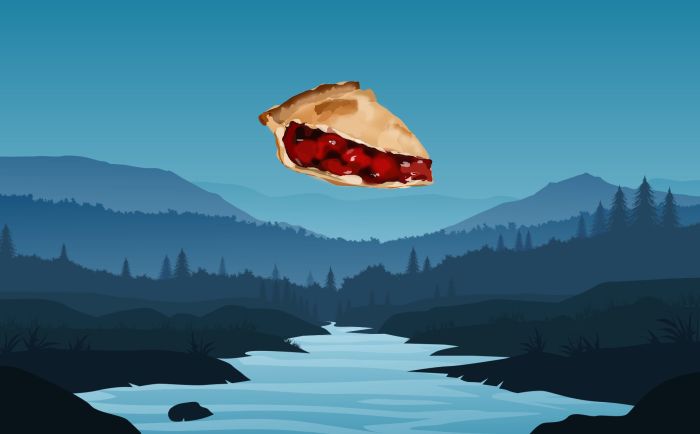
And because the usual suspects will think I am sketching my idea of Utopia, let me point out my idea of Utopia is Pie in the Sky where Marxism is defeated without blood and the future gives freedom to every weirdo (I are one) and oddling without fear. And where the boundaries of humanity’s hope are enhanced by technology.
HOWEVER if we’re going to boog, this is the best case scenario. And frankly it’s as much “pie in the sky” as the previous one because the possibilities of it going very, very ugly are much higher. Once you toss the dice of civil war, it could be worse. And probably will be. (BTW all of these are scenarios in which the US survives as a nation, though perhaps in the last two only in name. The ones in which we break apart and become neighboring hostile nations are all worse. For us, and for the world.)
So, here we go. 2020, later referred to as “the year we saw clearly.”
As the lockdown extended into July in some places, and the other places were far from normal, as the obviousness mounted of shortages, and that those who had presumed to tell us what to do were not only wrong but criminally so, unrest started to happen.
The fourth of July was bad across the country, as the nation woke to what had happened in Sacramento, and there was a brief attempt to demonize “militias” which had worked so well under Clinton. But while horrified by the events shown on TV, America as a whole had listened to the media for the last time. So the attempt had the opposite effect. One on one, neighborhood by neighborhood, neighbors started talking, organizing. At least in the functional parts of the country, this resembled more a mutual aid society. “Oh, your computer needs a part my dead computer might have.” and “I see little Timmy has outgrown his shoes. Well, since they still won’t let thrift stores happen and clothing stores are having supply issues, let me see if I have a pair Billy wore only for a month before his growth spurt.”
The internet is up, and the part of America that does things and learns things (the majority of it given a chance) is hitting you tube for gardening videos, shoe repair videos, canning and food preserving suggestions, and generally busy as a bee.
In the functioning part of America — everywhere but some cities, really — things are tight and bad, but not horrible. The other parts of America receive aid from the federal government in the form of supply trucks. Cereal and rice normally sent to the rest of the world, are distributed to American citizens. Special diet? Well, no room, really.
Some people still doing very well even in urban enclaves. And some have formed their own mutual aid societies. Some not so well.
As cold hits and the personnel to man power plants isn’t always available — the authorities are still being paranoid about colds and there are union rules — even those who are self-sufficient pass some very cold nights. Media’s dramatization of homeless freezing in the streets is shrugged off by a population that is scrambling for the next meal (having money doesn’t mean there’s food you can afford.) Strangely a lot of the homeless clean up. More than freeze or starve? Who knows. It’s not like the media covers those. There are also some brutal crimes, some food riots, neighborhoods perceived as “rich” under siege by those who wish to redistribute. No one knows how many. The media makes it sound like “they’re coming for you next, and you must elect socialists to save you.” The socialist rethoric is now strident. You’re fairly sure 2020 has lasted a lifetime. Your doctor is still only sporadically in, as your local government takes sudden panics over “infection.” And you know damn well that grandma wouldn’t have died of her cancer if she’d had some chemo. She was only in her early seventies, too, and you were counting on her for babysitting.
When the famine hit in the rest of the world, including parts of Europe, most people didn’t even notice. They noticed the push at the border. They noticed politicians talking about the brotherhood of man and how we should open our borders and ship all our food abroad. In a leaner — literally — and more food-anxious population this goes over like a lead balloon.
Which is probably why all hell breaks loose when the election results come in and the international socialists won.
Isn’t it weird it should start in Boston, so long a bastion of that exact ideology. Maybe there are places that are fated.
No one really knows what happened. Yes, there are people who save to take their kids to see the monument and the liberty bell that was broken out of bounds to ring that day. But no one really knows the rights of it. Was it really a riot over representation and vote dilution? Or was it over food? Or was it, as the media tried to say for a while, “white supremacist” guerillas? There are learned people writing learned books about it. It’s fascinating to the part of the population fascinated by that. Not very large, since few have the leisure, time and excess wealth to devote to such things.
This time, though, it wasn’t like Sacramento. It was more like the powder keg we’d long been tapping dancing on went up, all of a sudden, without warning.
They don’t recommend you teach your kids about the winter of 20-21 until they’re mature enough. They leave it to you to decide what mature enough is, but for most people it’s just before franchise. Which is now 21 in most states and restricted in the way each state decided.
The left as it was before the boog — and it is a mark we are still Americans that that fossilized joke made it into teaching materials — would say the franchise was racist, sexist…. Whatever. In most states both men and women can vote, and all colors. Note “in most states.” The franchise is universal, but you have to qualify, but the qualifications vary by state. Because those decisions went back to the states. Because the insanity of treating the entire country as NYC taught people that it’s better to be local. Really local. That’s the other thing: you want to run in a state, you’d best have been born there. And for voting…. well, we think the minimum qualifying residence is 5 years. Those jokers in Ohio were always lax. Also they wanted to attract population, despite their winters.
Most states agree that you’re an adult after you served in the army or have been married for 3 years with at least one child. SSM? Well, some states allow it. Cut your cloth to fit your pattern. You might have to immigrate to another state. Yes, it’s a pain now a days. But that’s the result of sending power back to the states and disempowering the out of touch feds.
Whether the fiddly bits of the person you marry are unlike yours or not, devolving to local rule means Mrs. Grundy has a say. The Karens didn’t go away. But instead of policing you for compliance with mask policy or compliance with the latest SJW command, after the boog the Karens want you to know you should be married, faithful and living a life just like everyone else.
We never go social credit or intrusion by the state. But we find out the tyranny of our neighbors is just as strong.
Oh, the boog was brief but horrible. Between it and increasing economic disorganization, we lost more people and wealth than we could afford. The US is a young country. Neighborhoods are full of children. Most of the children are either homeschooled, or schooled in neighborhood-arranged schools so the parents can go to work. Admission to college (rare) or trade school is by merit exam. No one collects data on the race of the applicants. They seem representative of the area it’s drawn from.
But college or trade school come after the army. Mandatory for men. Voluntary for women. Strangely no one complains women aren’t given combat posts, by and large (there are exceptions. The beast is always hungry), probably because serving in the army has a real chance of dying. People joke about it, nervously, as “have two and one for the war.” Most people have more, simply because they remember the twenties and how the elderly with no support network … well, most of them didn’t starve. But it wasn’t pretty.
People from the late 1900s would say we’ve become a militaristic society. It’s true to a point. There are very few men who didn’t serve, and a bit of the mannerisms and attitudes translate to civilian life.
But you see, it wasn’t a choice. We caught that nuke right after the boog, because no one was paying attention to what was going on abroad, as our media tried to shape, instead, what they wanted to happen in the US. And then there was that EMP attack. Not as much damage as there might have been, but let’s say the winter of 21-22 also shouldn’t be talked about to young children. So our young men go to war. Because the world is a mess. And we don’t want the — real, this time, not orchestrated — border-rush of — real, this time, not orchestrated — refugees and starving families of 22. No one should ever have to shoot desperate people. But the US was too close to the edge, itself. And the rest of the world…. well, if the Europeans wouldn’t involve us in their to-the-death knife fights, it would be nice. But you know that’s not how it works. And we do need to protect trade, such as it is. And even with news being all weird and non-centralized, what happened in Frankfurt should never happen again anywhere. We’re not the world’s police, but cannibalism, really? in the twenty first century?
China went very quiet after the nuclear exchange, but we still patrol the seas. Japan is rebuilding and has A birthrate. As we said rebuilding. Russia is a permanent threat, as they’ve been most of their history, and airplanes and guided missiles allow them to threaten the world, not just their neighbors.
Anyway, your kids will come back from service, and tell you they can’t tell you everything but you catch a look sometimes, a shadow in their eyes.
And if you lose a child…. you might never know how or where.
Those who remember civil liberties don’t like this and talk of the real danger of military dictatorship. If we elect the wrong man — or woman — and particularly if a bio agent really hits us and it’s worse than the panic of 2020. This is why the obsession with devolving power to the smallest unit. And giving states more say than the Feds. But people who lived through the boog as adults remember how fast things can change, and get nervous.
How free are people? Well…. Most of the country they’re okay, at least in terms of the government. There are pockets where we hear of odd things. But it’s so difficult to get unbiased news. (Shame what happened to those TV stations, but we sort of understand. People blamed them for the madness and destruction of 2020. They weren’t wrong.) You hear it from your neighbor who has an internet gaming friend on the other coast, and who heard it from a cousin’s friend. It’s possible none of that is true.
Still, we know from our own neighborhoods that we’re not free-free. You might be free in law, but Karen would like you to know they saw you smiling at the guy from the garage at the fourth of July barbecue. And don’t tell her he’s your cousin. She’d have heard. And your kids will be laughed at in the neighborhood school, and damn it, you’d better behave. Because, well, at some point you might need the neighbors’ help.
There are no internal passports. But few people travel. “Foreigners” has come to mean “people from another state.” Part of it honestly was the loss of airline fleets during the whole mess. And we never really had the money to recoup. Sure, you can travel by car. But those stories you hear, from over in the next state make you a little hesitant. Those who do are considered wild and crazy. And wild and crazy isn’t good. They might tolerate you if they know you really well, in your local area. BUT, well…. traveling might not be too bright. Every place has bad elements, and if you run afoul of those, well…
The “new normal” is probably hardest of all on people who stick out. No, not skin color (though of course in some areas that makes you stick out, but if they know you, you’re fine. OTOH be pale in a predominantly dark neighborhood, and just arrived and you’ll at least be shunned till they get to know you. Though probably not a lot worse than any stranger is shunned. And the reverse is true, also, color wise, of course.) and sexual orientation — well, we hear stories of some parts of the US, but we don’t know if they’re true — but just strangeness. Are you one of those people who reads weird stuff? Or likes to wear clothes not befitting your age? Or just styles her hair weird? Do you let your garden get full of weeds because you were busy building a dragon sculpture? Well…. You won’t get attacked. Not most places. BUT let’s say if something happens the neighborhood will assume you did it. And if we get in straits again…. well. So outwardly we’re a very conformist society. Probably not as bad as Japan pre 2020. PROBABLY. Well, not most places.
Oh, the economy? It’s doing fine. Rebuilding. See, you don’t need to live where you work, if you have a job that’s not serving the locals. Most of those are intensely local, and most kids are trained for trades. But if your trade is computer-based or can be done remotely, you can work anywhere, and often do.
The internet is up, and some people call it “relief valve for eccentrics.” (Or Odds as odd people call it.) The most common reason to move across states and endure the time of suspicion and disenfranchisement is this guy/gal you met online.
World trade is a more difficult matter. And produce and such tend to be more regional, as does manufacturing of essential stuff like medicine, or clothing. Our diet is more seasonal and not as varied, but we’ve learned. Almost everyone has stores “in case.”
The big cities recovered too. Some people will always want to live where the excitement is. Honestly, if you’re an odd, it’s the best place to be, and lots of artists flock there, which creates its own gravity and people are less likely to ask you why those two young ladies stayed at your place last night. Less likely but not unlikely, mind you. Cities have neighborhoods. Neighborhoods have their own Karens. Everyone hates the Karen, but no one does much about it.
To someone from the 20th century, our cities would look cleaner and safer (most places. If you don’t stick out.) Homeless? Well, you might see some vagrants, but the drug trade hasn’t really recovered (pot, sure, some places, but honestly vegetables pay off better and there’s only so much land and time to tend crops. No one much cares if you have a few plants in your garden, as long as the neighbors aren’t allergic, and you’re not visibly stone in public. Like being drunk in public, Karen will enforce her displeasure on those.) And most people in genuine need get looked after by charitable organizations. A lot of them are those who were late middle age and managed to live through the boog. (A minority.)
Your doctor, by the way, might live across the country. But the local nurse will take your vitals and confer with him or her over the net. Most people are okay with their care. Most care is pays-in-cash. Charitable organizations help with the rest. In a few states the state will help if no one else will. People are starting to live really long again, so we must be doing something right. Some states allow for more experimental drugs than others. There are complaints both ways.
All in all? Well…. Libertarians complain. Marxists…. Not many of those around, or at least not vocal. For one, we’re seeing how his “planned economies” are playing out in most of the world.
Land of the Free? Well, sure. I mean, as compared to what? It’s not like we’re locking you in for months and preventing from working at your trade. That idiocy told its own tale. Your rights are respected in most states (the ones that don’t, well, the feds take years and years to decide to intervene, so some people pack up and leave. It’s not as common as you’d think). Unless they’re violated by your neighbors, but you take it up with them.
We lost untold people and wealth in the boog. Our world is smaller, more restricted, both in self-expression and in expectations. It would seem miserable to people from the 20th century. But we’re doing all right. We’re rebuilding. And tech allows us to be a little richer, and have a source of escape.
Of course there ain’t much for space exploration, though there are rumors the army is doing stuff up there, at least to prevent us from being suckerpunched. But we’re not sure, because, well, news is local and sometimes it’s just rumors. And military secrets are kept, which is justifiable in a nation at war on many fronts.
Sure, we don’t like it, but then again no one asked us. (And honestly, most of us died in 20-21 — SAH)
But you know what? People aren’t hungry. And most people have all the freedom they need in their day to day life. People who’ve been in the army or the few that have traveled abroad, will tell you it could be worse. A lot worse.
(And probably will be – SAH)





 According To Hoyt
