You, Get Off The Couch

For various reasons (one of them being the whole process described over in Mad Genius Club) I’ve been punting downstairs to the easy chair a lot. Which in turn made me feel all crotchety. (I have to put up the feet to type, or the laptop slides off. But this means I have to do weird things tot he back, and the whole position was just making me feel ick.)

I’ve also gained a lot of weight. Like 1/4 more weight than my already way too heavy weight in the last six months or so. Actually not related, and not sure HOW it happened (no. I didn’t change my diet. No, I didn’t change my level of activity. But my endocrines are a mess and for some reason never on the side of weight loss. Sigh.), but it has consequences, including making it harder and more painful to move, which in turn feeds the cycle.

I knew I needed to walk. Have known it since last November. The problem is I HATE WALKING ALONE. Yeah, yeah, get a dog. The problem then being that I’m a lousy dog owner, and trainer, and we’d have to get a specific breed or two, because younger son is allergic to dogs, and we actually like seeing him. And husband, though he’s getting better with knee therapy, is still not able to walk any long distance.

However, I need to walk. I also need other forms of exercise, yes, but I definitely need walking, because when I don’t my body doesn’t work right.

I even exchanged phone numbers with a hun, so we could walk “together” — but the weather is never right, etc.

On top of which I was profoundly depressed, because the writing wasn’t working. And because of a bunch of other things.

Two weeks ago, in a fit of “what the heck” I brought the laptop from the sofa to my walking desk in the bedroom. (Part of the problem being the walking desk being in the bedroom, honestly. I can’t get up before Dan and do the social media/blog stuff before he wakes.)

Since then, I’ve made it a point of walking a minimum of an hour every morning, then standing there while I do the insty posting.

This is doing two things: makes me pay for social media, which keeps me off it during work time. (The social media is on the laptop.) And of course, it keeps me off the chair/sofa till after dinner, when I’ll sit with Dan and my crochet, and usually watch an old mystery series. (Well, an episode thereof.) Which kind of calms the mind down before bed.

So — effects: I feel better. No, seriously, a lot better. In the first week, I realized the keyboard issue that was stopping the writing, because I’m concentrating better and thinking clearer.

I haven’t lost any weight because I don’t lose weight. In fact, I’ve gained a little. And before you say it’s muscle, the fit of my pants says otherwise.

I am obviously meant to achieve planet size and explode. But at least I’ll feel better and be able to think on the way there.

Now, is it all physiological? I suspect a lot of it is. As I said, I need to walk. I used to walk five miles a day give or take in the course of my normal day in college. (Partly because I hated public transportation.) And despite the fact that I lived on espresso and maybe a pastry a day (I’m only half joking. I actually only ate one normal meal a week: Sunday dinner with the family) I had a ton of energy and could run forever. Yes, I do realize I was much younger, but still. Throughout life, when I find myself in situations where I can’t walk, I tend to get profoundly depressed.

But the other part of it is physiological. It starts with me achieving something every morning. “I walked.” Even on days when I feel blah and can barely get myself off the bed, I achieve that.

This is an enormous boost. Now, I don’t know if it fits daughter in law’s dictum of “do at least one thing every day that won’t be undone by nighttime” because obviously, I need to walk every morning. On the other hand, it seems to be doing something. Every day things are getting a little better, even when I’m under-slept like today.

I’m going to keep doing it. At least until the treadmill breaks under my weight or something. (I’m joking, I’m joking. I actually do know how to lose weight. For me it involves a single meal a day. Yeah, 24 hour fasting. The problem is the first few days are very hard, because I can’t concentrate, as all I think about is food. I’d got myself into it, then the last course of prednisone kicked me off (there’s no way while on pred. Just no way.) And now I decided to re-establish the walking habit first, so I’m less depressed going into it. Because depressed and crabby is a terrible combination. But will start tomorrow. (Yes, there is a reason for tomorrow.) I mean no guarantee it will work this time, but it probably will.)

So, I’m going to gift you DIL’s dictum: do something every day that won’t be undone by the end of the day. Do it early. It helps with the depression. Success builds on success, and for those of us who work with the mind something physical done and accomplished tends to be a big boost.

And do go for a walk, or whatever your equivalent is.

You are not a mind in possession of a body. Your body does influence your mind. So give some care to the poor thing.

I can’t swear it will help you, but it seems to be helping me.

Running Away

Obviously, I’m not the person to tell you to bloom where you’re planted. In fact one of my biggest problems with Wreck it Ralph (the movie) is that that appears to be its moral.

Not only did I leave my country of origin but I’ve recently left my state-of-the-heart.

The country of origin was not left due to politics. Sure, politics annoyed the heck out of me, but frankly, I was used to treating it as a scrum, and it was not really a problem for me by the time I left. For one things had gotten both a lot safer and relatively more free. It was left for no rational reason but a sense of the soul.

Years later I found this quote that comes the closest anything ever came to explaining why I left Portugal (and would have left anyway, even if I hadn’t happened to fall in love with an American. I had other options, including a job offer.)

“I have an idea that some men are born out of their due place. Accident has cast them amid certain surroundings, but they have always a nostalgia for a home they know not. They are strangers in their birthplace, and the leafy lanes they have known from childhood or the populous streets in which they have played, remain but a place of passage. They may spend their whole lives aliens among their kindred and remain aloof among the only scenes they have ever known. Perhaps it is this sense of strangeness that sends men far and wide in the search for something permanent, to which they may attach themselves. Perhaps some deep-rooted atavism urges the wanderer back to lands which his ancestors left in the dim beginnings of history.”

― W. Somerset Maugham

The dim beginnings of history thing makes no sense, but the feeling is otherwise much like this.

Recently I left the state I loved for 30 years, the state in which I had a dim sense I belonged before the first time I ever saw it. That one was health but also political, or at least partly political. Part of the reason for leaving was a sense of being unsafe, for which I have absolutely no explanation. My first name in the current house was the first time I slept well in months, perhaps years, and the first time I felt safe. Now, this might be related to altitude issues, as I have, since moving, come to realize how very, very ill I was at high altitude with worsening symptoms since I was about 35. Now I’m not a hundred percent better here, and allergies took a bit getting used to, but the trajectory was upward.

Now Colorado has become politically a wasteland, and Denver was increasingly less safe, particularly during the lockdown. All of which made it easier to leave. I still miss it, and I suspect much of the generalized malaise of the last year has been coping with depression from leaving the place that felt like a homeland. There were rational reasons for leaving including what can only be described as “next level f*ckery with our internet access” some weirdly specific threats, the fact that for years, for reasons known only to their psychiatrists, the Baen office used the author’s address when filing for copyright, so that was out in the open, and the fact that my health periodically throws wobblers no one understands and that Colorado has passed an euthanasia law that might rival Canada’s.

However, I’ll be absolutely honest, as bad as the political climate and crime have got in Denver, if it weren’t for the added incentive of my health spiraling ever further down, I’d have never left.

Anyway, from my history — to which there’s more — I have come to believe I am in a way an expert in “relocating because the country is going to the dogs and I have to get out of here.”

The more: over the end of the sixties and part of the seventies, the summers were devoted to very strange family reunions. You see, to no one’s surprise, every branch of dad’s mom’s family is given to immigrating. To be precise, each generation loses half to another/multiple other countries. Mom’s side isn’t perhaps as consistent, but still has a tendency to have far flung cousins, great cousins, etc.

My idea of summer, if you say the word unbidden is of lying in a deck chair in grandma’s patio, staring up at the canopy of vine leaves above while the adults nearby discussed foreign affairs.

What I didn’t understand is that the reason for these reunions and the import of many of the conversations that made no sense to under-10 me is that the various empires of European countries all over the world were in their final come-apart phase, and these people were often scouting the possibility of coming back to ye old homeland.

Some did come back. Others went to other foreign parts having determined they couldn’t stomach a return. So many people returned, though, over the next ten years, that we had a name for them “The Returned.” Most of them, mind you, from the newly handed to the Russians and their Cuban mercenaries independent Portuguese colonies, but many from a bit all over the world. When I was a teen, meeting someone with an accent in the grocery store usually meant a Portuguese-born person who had lived abroad so long he’d acquired an accent/foreign phrasing.

Here I’ll interject two facts: throw a pin at the map and I probably have cousins there, including in the most unlikely places Most of these though are distant enough that I come across them in 23 and me and can trace our connection, but never met them or their grandparents even. My mom sometimes knows who they are from people who left when I was little.

And two: staying in the countries you immigrate to is rare for Portuguese, and my family is rare in that. As are the various Portuguese-descended people here and elsewhere. For Portuguese maybe 10% stay where they go. The rest return when they’re old, with their pensions, to live out their lives amid the people they knew in childhood. There is also a tradition if you have kids, of returning as the older kid finishes high school, so they don’t marry a “foreigner.” When my oldest cousin in Venezuela married there (despite their parents best attempts to send them to Portugal every summer from age seventeen, in the hopes they’d marry locals) my grandmother said “I guess they won’t be returning.”

Note I’m a special (!) case. I married an American, and at any rate, my intent was never to return. We did consider, before marrying and decided my kids were better off growing up Americans. And so, here we are, and so they are. They’ve married/will marry Americans and there’s no idea of ever returning. Ten years ago, when I visited, my parents took us to a restaurant they like, and the owner having been informed I was their daughter asked when I was coming back, since the kids were then in college. I said “Never” and mom said “I think her husband would come live in Portugal before she did.” She’s not wrong, precisely. She is in essentials, in that Dan knows enough about the “real life of locals” he wouldn’t consider relocating there permanently, though he would probably be open to buying a beach house in the South of Portugal to spend winters there. I might be too, if things change/calm down considerably, simply because it’s cheaper and it’s nice, and we have enough contacts in the medical profession we probably wouldn’t die before being able to fly home for treatment. I’m not, mind you, as sanguine about this as I once was.

I might send my bones back, but only if I die before we make arrangements for burial here, and if it’s cheaper to fly me back to the family vault rather than buy a plot here. Honestly don’t know, but have given Dan that option. He says it feels wrong, and he’s probably right.

Anyway, those are my interests/experience/caveats.

Now, to get to the cold turkey, and it’s very deep frozen indeed.

Since 2008 a lot of my friends on the right have approached me at some time or other to say the equivalent of “I don’t think this is tenable. I’m going to move to X.”

Sometimes the X is outright crazy cakes –Brazil, say — and when I stop my horrified laughter and explain why they go and do research and stop the nonsense.

Sometimes the X is marginally crazy, or a place I don’t know much about. Or have heard stuff about and tell you but whatever, it’s your life. (I recently heard from someone who claims to have immigrated to the Philippines and be very happy. Well, whatever. I know a bit about life there through a ducttape son and wouldn’t touch it with a ten foot pole, in terms of being a foreigner abroad, but it’s his life, not mine. And it’s not someone I know personally.)

So, once and for all I’m going to lay down all the caveats about upping skirts and moving elsewhere to escape perceived oncoming political instability at home.

First: the older you are, the harder it will be to adapt. Our vets have informed us it’s cruel to move when our cats are over 12. They’re not wrong. We also, in general, haven’t had much choice. However, their point is true for both cats and humans. Look, moving to Colorado at 30 was a grand adventure. Sure, it also felt like coming home in many ways, but beyond that, we were just more…. flexible. The older you get, the more you fall into habits of “this is my stuff. This is where I do x. These are my friends.”

Second: That said, there is often reason to move, sure. In my case the health and politics combined put it over the top. My friend Charlie Martin moved to Florida, and seems to be doing okay. (I miss him rather terribly, but that’s something else. I mean we lived three hours away and saw each other four times a year, tops. Dan says we need to go visit. He’s probably right.) Other friends have moved from deep blue states to Florida or Texas, mostly.

Most of these moves were relatively happy, but I want to point out there’s always a cost, as there’s a cost for us. Things feel…. I like my landing place a lot, but it often feels like I’m in the witness protection program and not just because of relative secrecy, but because it feels like I’m living someone else’s life. And I know from friends who also moved in the last two years I’m not alone.

And keep in mind we moved withing the US. Most of us didn’t even change phones. Now imagine changing everything, in a country where you don’t know anyone, and the “every day life” things aren’t out in the open and easy to figure out because “everybody knows.”

True fact, in the 80s, when Portugal was pretty much “first world” my parents’ house was nearly impossible to find, unless you were in the know. Things weren’t very clearly signaled. Still true fact: even with GPS it still is. The GPS will take you through some no-go zones. Let’s say we got lucky.

Third: You don’t know about other countries from searching online. You just don’t. You also don’t know from visiting. As I pointed out sometime ago, if you visit Portugal as a tourist and stay int he tourist-areas you’ll be excused for thinking there’s practically no crime. The law is pretty hard on anyone attacking a tourist, because tourists are Portugal’s cash cow. You have to get to the nice suburbs (and know they are nice, that’s the other part) before you see the shutters over the bars on the windows, and wonder if there’s a crime problem.
Now, I know this because I know Portugal.
However, take it from someone who acculturated. It takes a good five to ten years of living in a country to even know what you’re looking at. This is why we took a bath on our first house sale. And also why I’m very lucky to be alive. Some of the situations I got into because I didn’t KNOW were that dangerous. And the US is probably the safest place a stranger can move. In general we’re non-tribal and not blood and soil. Save for certain zones. The rest of the world is not like that.

Fourth: “But it’s cheap.” Yep. There’s likely a reason for that too.
When we started scouting out places to move to, part of what we did was look at cheaper places. For obvious reasons. Here’s the thing: the cheaper the place, the less likely you’ll find the ‘conveniences’ you’ve become used to. No, seriously. When we first moved from Charlotte NC to the Springs, we felt like we went back ten years. And it’s the same where we’re living now. Little conveniences we’d become used to are gone. Things are a little harder. Now, it’s just a little, so it’s not a big deal. But it’s about ten years back in convenience and ease of finding stuff, etc. And the houses are less well maintained because the area hasn’t been in constant boom for 20 years, so you need to make more repairs, and some of the stuff is dodgy. Look, not enough to regret it. We really like the new house and the new area. But enough to be different.

Now imagine it’s a whole other country and it’s much, much cheaper. There are reasons for that. And the lifestyle will reflect it.

Fifth: “But I have dollars. I’ll live like a king.” Sure. Maybe you will. Do however remember that if the US collapses, those dollars might not go very far. Also, be aware that everywhere, pretty much, there are people who hate Americans, partly because Americans are prosperous. Partly because USSR propaganda was very successful. If the US falls, the world is going to be in a heap of financial hurt. Yes, the whole world. We are the consumers of the world. That means we buy a lot of things and keep a lot of places employed.

When things collapse, you might find yourself the target of resentment, without an embassy in reach.

Sixth: Connections. “But I don’t have connections here either.”
The thing is, in the US not having connections or friends nearby means you’re lonely. (And you should do something about that. Try a club or a hobby or something.) Abroad it can mean you can’t find a doctor. People at the store won’t sell you something you need, and you’ll have no idea why. At worst, you’re targeted for a crime, being known to be isolated and defenseless.
Dan laughs and says “Who are her connections” from Pride and Prejudice when we talk about Portugal. Because in Portugal connections are essential to figure out how to make things work, when they obviously don’t, in the open and by the rules.
Now, Portugal is Western Europe, kind of. These things are more so as you move East. You have to know who to call/contact for the most elementary things, from house repairs, to materials, to well, whatever you want to buy that week. And health care is definitely a point this. You have to know people. Having connections is essential to survive.

Seventh: You won’t even get the laws. No, seriously. The reason most other countries don’t have political bloggers is that the laws make it too difficult. This means stuff you think is perfectly normal/natural is criminalized, and you wont’ even find out till you trip over it.

Look, I have at least a couple of friends who live happily abroad. I want to emphasize, though, that both are married to locals, and for both it was a slow transition, involving a lot of decision points.

Running off half cocked because you have the impression some place is lovely is dangerous. It is doubly dangerous when the entire world seems to be on the verge of tipping into the bucket in the next ten years or so.

I’m not your mom. You’re not my responsibility. But before you decide to move to that lovely new place because you heard it’s wonderful, or you visited once and it seemed so perfect, do more research. Then do research again. And then do research another time.

Almost every country you could think to move to/retire in probably has several blogs of Americans who’ve done it and held on for a year or two. Maybe. Some might have even stayed for good. Find their blogs and read them, before you consider it.

If you’re American born and bred, you really don’t know anything about the rest of the world. No, I don’t want to hear it. Unless you have relatives abroad and have lived with them extensively, you don’t know anything about the rest of the world, how it works or what the pitfalls are. (In reply to Editor — this is not an insult. Just a fact of life. Americans are profoundly weird in a good way. If you grow up here, it’s impossible to fully understand the many modes of fail in the rest of the world, even in fairly “close to us” societies. And you won’t figure it out till you’ve lived there and hit them head first a few times. Oh, an exception would be maybe Mormon missionaries. They’re still sheltered, but they tend to see more of the pointy end than students or visitors.)

When you decide the water is fine and you should just jump in, you don’t even know if there are piranha or candiru.

Yeah, the downsides might be things you’re willing to live with. But you have to know what they are first. And you have to be able to make some extrapolation of what happens if the world’s economic wheels come off or if America collapses (which is more or less the same.) Just saying “Oh, they have plenty of fields, there must be food” is the way of insanity.

I’m not saying you shouldn’t go abroad. I’m saying you should research. Then research again. And be ready to be disappointed and markedly poorer than you expect to be.

The life you save might be your own.

Coming Apart

No, the title does not refer to America. Though I excuse those who go full on doomer, running around with their heads on fire and screaming the sky is falling.

There is a feeling in the air, a sense that things are falling apart, that the center cannot hold, that in fact the world we knew, the world those of us around the mid-century mark of a little past grew up in is gone, and that nothing will bring it back.

That is because this is largely true. And it accelerated in the last three years.

But it doesn’t in any way shape or form stand to reason that the world we were born into was the best, or that everything was wonderful — as opposed to now — or that in fact we should revert to it. That way lies madness.

It is a very human thing to assume the world and rules you internalized in childhood are “the way it is” and the perfect world. And with a few rare exceptions, it is even true: for you, as a child, that environment was perfect. Someone looked after you. Compared to your limited life experience, everything was stable and nothing ever changed and everything worked.

Sometime around adolescence you started questioning if everything really worked. But while you might have had doubts about your family, you rarely had doubts about the larger structures of the country. In the US and the world in general, for that matter, you took your education, reached for something that worked with what you’d taken from that and you went.

But it is important to remember that around the mid 20th century what was imposed on America (Started around the 20s or so) wasn’t in any way part of the American system. It was, in fact, a form of centralized “scientific” governance given to us by people who knew that central government and command economies were more “efficient” and that this was the future.

Were they right?

Well, this phase of development gave us things like the highway system, wider commerce, and other things that are probably good. It was also, however, being a centralized system, run by a self-proclaimed elite that was getting its ideas from abroad, quickly subverted. Sending jobs abroad was arguably the last phase of this, but the welfare system, the various “compassionate” rules that are supposed to help people but just distort the economy, and things like the EPA and the Education department were terrible ideas and disasters already in the process of happening seconds after they were formed.

So, now, we can’t trust any of the official institutions that we grew up thinking of as trustworthy and places who would come in in last resort. And it feels like the world is coming apart.

If the CDC came in tomorrow and told us that there was a plague in New York City that made people turn purple, buzz for a few seconds, then explode all over the landscape, and that the way to prevent it was to take six aspirin, would you even bother to stop and take aspirin? EVEN IF THEY SHOWED YOU VIDEOS?

Yeah, no. I don’t think I would either. Heck, I might avoid taking aspirin under the assumption there was something in there that would react with the weather in my area and turn me green or give me tentacles. Because if the Federal government wants you to do something, at this point the way to bet is that it’s at best pointless, and at worst bad for you. And it’s amazing how many times it is bad for you.

And as for the FBI and CIA and the rest of the alphabet soup, while it’s true, probably, that there are still decent agents, doing decent things and trying to protect the public, most of those agencies are a sh*t show and either actively harmful, or would be if they could find their ass with two hands.

And it feels like everything is coming apart.

But in fact, none of this is recent.

During the lockdowns, I did a deep dive into the institutions and their history, and the best you can say about all the three letter agencies and pretty much every department of the federal (feral) government is that sometimes, in brief shining instances, they don’t do more harm than good. But those instances are limited and rare.

I’m not the only one who did this. So, among us, the trust in anything that comes out of DC is close to zero. And the fact that the left captured the levers of that power through fraudulent elections isn’t helping the case any. But our distrust extends way beyond that.

Until recently the US public trusted the armed forces. A lot of them had served. A lot of them sent their children into the armed forces. Serving was a tradition of honor in the US, linked to love of family and love of country. Not only has the fact that military commanders lied to the president, when the president was Trump, in order to circumvent his orders, but most military families are telling their children to stay away from the military with a vengeance. Yes, yes, there are patches of shining sanity, but by and large no one can trust a military that is now working to woke rules and desperately trying to fit themselves into the vision of the idiots who took power in a color revolution.

Where we’re headed there’s no respect for the military, because they are just another governmental boot on the people’s neck. Oh, there will continue to be decent people in there. There are probably decent people in the PRC and we know there were decent people in the Soviet army at its fall.

The thing is, the decent people have to stay quiet and submerged, same as they have in the Universities for decades now, while the whole thing tilts more and more out of control left.

And speaking of, the universities. So, while my family — and husband’s — have some sporadic traditions of service (Father in Law was Navy. Dad was Army) that is not as consistent, going back generations as what I’ll call the “university tradition.”

On both sides, our families have a pretty deep tradition of going to university and being learned, mostly in “useful” things like engineering or medicine, but also stuff like finance and law and math. Going back generations and for some of our lines centuries.

I would not encourage any of my grandkids (ducttape or possible biological in the future) to go to college. I’m deeply regretful that husband and I didn’t stick to our idea, oh, going back 25 years or so, that we’d both apprentice both kids in our trades then release them into the world to be who they want to be. Deeply regretful.

Now for a while, I suspect, you’ll still need university credentials for some things, but I suspect it won’t go on. It won’t go on because the credentials are completely divorced from actual competence or ability to do things.

Now, I’m talking about those institutions of our culture because recently my attention was called to them. But if you look around, in your area of expertise, you’ll find the same is happening everywhere. A bit all over.

Look at my very own profession: when is the last time you bought a book and actually verified that the imprint it was released under belonged to one of the now big four or whatever?

It used to be that being published by traditional publishing was a badge of honor. You knew you had gone through an exhaustive selection process, and you were likely to know what you were doing. Heck, you coudn’t get on bookshelves without it, so you know, the public was thoroughly protected from those fools in their pajamas writing about things…

It was never true — and yeah, above I allude to journalism, a field I also have a bit of visibility into — not even in the fifties and sixties. Already back then people were being published or selected for editing jobs based on things other than competence. I have it on credible information that some of the things people were selected for involved “leftist beliefs” since at least the 40s, not uniformly, but in most presses. And there were of course the usual human “Went to the right schools” etc.

But the perception is that if you were traditionally published, you might be worth reading. You’d gone through a selection process, not simply put up whatever.

I used to be pretty proud of that badge, even while having to be quiet about my politics, and often eat live frogs when fans asked questions like “Why did you drop x series I loved” because I couldn’t tell them that it wasn’t my decision at all, and I had to fake enthusiasm about the new thing, making me seem fickle, and not the publisher random.

… And then I started noticing the people who got decent treatment coming in to traditional were self-published and successful before. And then I started noticing the people who didn’t bother with traditional were making decent livings, actually.

And now, fans and other writers are noticing that you get blacklisted from publishing for wrong opinions, the conventions have gone stupid, the books are unreadable, and they think everything is coming apart. But it was for a very long time. There was just this facade.

So, you know, what happened is that anything centralized is always more inefficient, and tends to be captured by left leaning ideologues — which makes sense, since for them centralized is a religion — but you can keep the impression it works, and is great and trustworthy by controlling information, and keeping the absolute crazy nonsense off the public eye. (Like FDR picking the price of gold according to his lucky numbers, say.)

Then the wrecking ball of distributed communications hit. And the facade fell off.

What you’re seeing: the boiling mess behind the demolished facade, the rot and maggots? It was always there. It just looked pretty and orderly. It never was.

You know d*mn well, this is not even the first color revolution we’ve had, or the first time an entire government was frauded in.

It was just the one of the new era, when we can see them.

At some level, dimly, they realize we’re watching. And they’re terrified. Hence those famous barricades that stayed up in DC forever, and their ever more outrageous power grabs.

But here’s the thing, the first rule of tyranny is that it can’t be visible. So is the first rule of fraud and corruption. It has to take place behind the scenes, hidden, tidily away, while in front you present a beautiful and clean facade and call everyone who opposes you crazy and conspiracy theorists.

None of this works in a nation that lost faith in its institutions.

And were every additional power grab and skin suiting of an institution just shows how corrupt they are, and how crazy.

Yes, they can grab all the formalized institutions, even the army, but by the time they have the army, they’ll be able to be defeated by fifteen sixty year old women with their fabric scissors.

Because the more they try to turn institutions into instruments of their — non functional, counter reality — philosophy, the less are those institutions able to carry on their stated purpose.

It’s easy to get discouraged, scared, upset, when things we believed in and organized our lives around — institutions of knowledge, or defense, or even public protections — are subverted and corrupted and made into mockeries of themselves.

But it’s important to remember, they never really were the paragons we believed them to be, or at least the corruption has been laid in for a long time.

You can’t clean a house if you go around wearing a blindfold and declaring loudly that it was always super clean, even while you slide on cat poop and careen into surfaces covered in dust.

And you can’t even guess the shape of future institutions, which might very well be more local, more responsive, and therefore better, while you equate the fall of the centralized state that FDR consolidated with the fall of the USA.

This centralized nonsense is okay for Europeans, with their bonsai countries. And even there it’s not great.Look how many times their countries go to ill defined wars and the continent convulses in fire and blood because some centralized tyrant is in the grip of an idea.

We’re Americans. We came here because we didn’t want the same. If we must have governments and bureaucrats let them be as a local and small as possible. If the bastages come up with some green new deal abortion of an idea, we want to be able to go to a public meeting and give them pieces of our minds. Loudly.

Yes, it feels like everything is coming apart.

I’ve experienced this before. These are the contractions, preceding a birth. It feels pretty awful. It feels like your body is coming apart. In a way it is. Because if it didn’t, you’d die and the future in you.

Yes, it’s going to hurt. Yes, it’s going to feel pretty awful. Yes, there might be blood, and other not so pleasant substances.

Did you think things could change painlessly and with a wave of the hand? That’s an illusion fostered by centralized governments and bureaucrats.

Really change is always painful, messy, and there’s a good chance what we birth will be a monster.

But this one has good genetics. It has the Constitution. Remember that.

Build over, build under, build around. There is only one way to get through the pain, and closing your eyes and wishing it would all go back to the way it used to be, ain’t it.

Push.

Book Promo and Vignettes by by Luke, Mary Catelli and ‘Nother Mike

Book promo

If you wish to send us books for next week’s promo, please email to bookpimping at outlook dot com. If you feel a need to re-promo the same book do so no more than once every six months (unless you’re me or my relative. Deal.) One book per author per week. Amazon links only. Oh, yeah, by clicking through and buying (anything, actually) through one of the links below, you will at no cost to you be giving a portion of your purchase to support ATH through our associates number. A COMMISSION IS EARNED FROM EACH PURCHASE.*Note that I haven’t read most of these books (my reading is eclectic and “craving led”,) and apply the usual cautions to buying. – SAH

FROM LAWDOG AND CEDAR SANDERSON: The Squeaks Caper

Lawdog tells two tales from his childhood in Africa.

Speaker, known as Squeaks, gets to live the mongoose dream when a python drops literally at his feet. The python has other thoughts. Chaos ensues, with the family thrown into an uproar by the chase.

The trial of a goat becomes an educational experience for the young Lawdog and his even younger brother. Will justice be done? Will the goat speak in court? Read on and find out!

The whole thing is illustrated by Cedar Sanderson’s quirky pen-and-ink style. Pictures of Nigerian flora and fauna accompany the full pages portraying scenes from the tale, and bonus illustrations at the end will leave you amused at her whimsical imagination.

FROM HOLLY CHISM: The Dragon’s in the Details

Six stories of dragons hiding in today’s world:
A Friend, Indeed–A little girl meets the best friend she could ask for when she finds a dragon sleeping in her wagon.
Tempest–What do you do when you find a dragon in your favorite teacup?
Clowder–These are absolutely not cats, no matter what they look like, and will take offense at your mistake.
Back Yard Birds and Other Things–If the dragon defends your chickens, you invite it to stay.
Houdini–When the pet supplier sends the wrong kind of dragon, the pet store’s got a problem.
Hoard–Not every dragon cares for gold, gems, or cash.

FROM J.M.NEY-GRIMM: Queen’s Cusp (The Hades Cycle Book 6)

Does she love him enough to forego her heart’s desire?

As queen of hell, Persephone revels in the freedom granted by darkness. She finds meaningful work in the release she provides shades seeking repentance and atonement. But when her mother bids her beware Dìs’ cruel side, Persephone’s newly won assurance falters.

After her husband invites Persephone to again witness ‘the dance’ at his side—a sadistic rite essential to his rule over Hades—she sees its horror with fresh clarity. And knows she can no longer condone this torture of innocents.

But if her scheme to provide Dìs another source of strength fails, Persephone will confront an impossible choice. Unless she forfeits the god she loves most—and the wellspring of her own strength—the macabre ritual must persist forever.

Queen’s Cusp is the sixth tale in the vivid Hades Cycle. If you enjoy lyrical mythology that moves quickly, keeps you guessing, and magnificently captures the terror and passion of the ancient gods, you’ll love J.M. Ney-Grimm’s twist on the story of Hades’ king and queen.

FROM LEIGH KIMMEL: The Baying of the Hounds

In the world we know, Nikola Tesla’s Wardencliffe experiment proved a costly failure and was ultimately torn down for scrap. But what if things had gone differently and he pressed his work to completion?

In a world similar to but unlike our own, Tesla completes his transmission tower. But when he turns it on, he discovers his calculations were incomplete. Some unknown factor has created a connection with another world with physical laws unlike our own. The commingling of curved and angular space has led to catastrophe.

Now his greatest rival, Thomas Alva Edison, compels him to repair the damage. To do so, Tesla must make his way through a ruined city to the locus of the damage. And through his mind echoes the baying of unseen hounds.

A short story originally published in the anthology Steampunk Cthulhu.

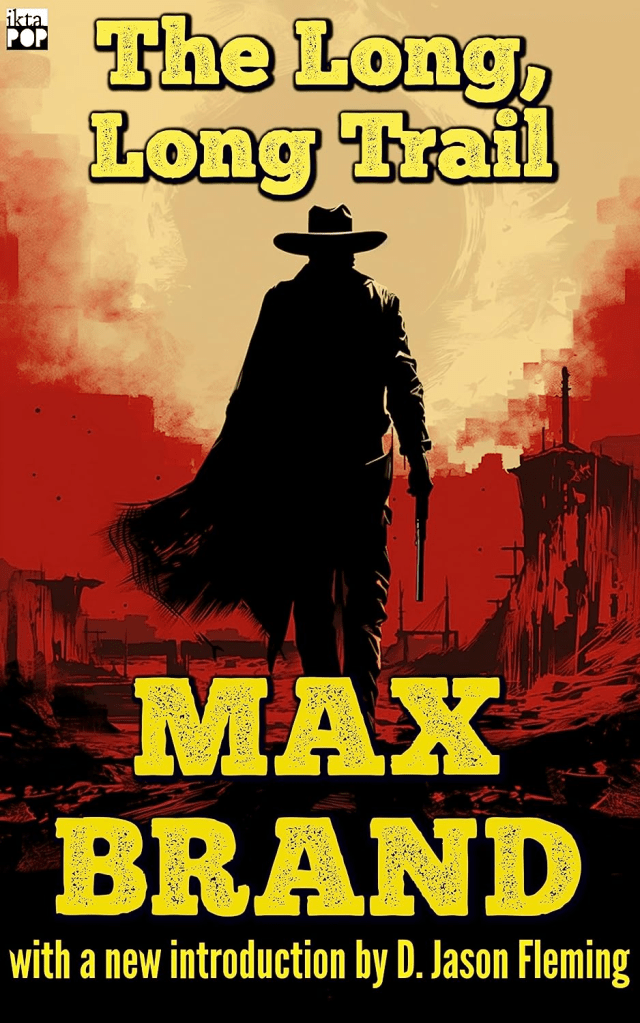
BY CHARLES ALDEN SELTZER, BROUGHT BACK BY D. JASON FLEMING: West! (Annotated): A Classic Pulp Western Adventure

Josephine Hamilton’s first impression of the west was stopping the hanging of a supposed horse thief. From that moment, she decided that the west needed her principles imposed upon it.

And the man who personified that west, and most needed dominating, was Steel Brannon, a man who was merely amused that she stopped him from giving justice to a horse thief. And intrigued by a woman so willful, and so misguided.

    This iktaPOP Media edition includes an introduction giving historical and genre context to the book.

FROM KEN LIZZI: Silver and Bone (Semi-Autos and Sorcery Book 4)

The fingerbones of a dead Voodoo priestess possess the power to point to treasure. Naturally, people are willing to kill to find the fingerbones.

A salvage vessel discovers a sunken treasure ship. A self-loathing practitioner of Voudon hopes to investigate the scientific foundations of his powers and needs funds to do so; the treasure would do the trick. A piratical deserter from the Venezuelan navy has designs on the recovered treasure.

Karl Thorson, ex-Special Forces soldier, becomes embroiled with all three parties when Gig Delphin, a salvage expert, treasure-seeker, and heiress to a Gulf Coast fortune, asks him to protect her and help secure the delivery of the treasure. Samuel Augustin, Voudon oungan and assistant professor of history, helped Delphin pinpoint the location of the treasure. He means to get his hands on it, no matter who he has to hurt along the way. Ernesto Abad, tool pusher of his own oil rig demolition crew—a crew happy to help on the occasional heist, wants to intercept the treasure. Karl Thorson was hoping for some time off on the beach. But helping the beautiful Gig just might make up for his interrupted vacation.

Can Karl get his hands on the Voodoo priestess’ fingerbones? Can he protect Gig from magic and pirates? And why can’t all these people solve their problems on dry land?

Don’t miss the 4th and final book in the Semi-Autos and Sorcery series. It’s what fans of Larry Correia and Jim Butcher are hungering for.

FROM MARY CATELLI: Treachery And Spells

Two novellas of magic and adventure. . .

Caught between pirates who would force him to use wizardry in their aid, and a king who would force him to spy, Alik will need every scrap of wits and wizardry to forge his own path.

A curse of ill luck leaves Perriel and Gareth trapped in an endless winter, with only the faintest hope of breaking free.

FROM SARAH A. HOYT, NOW WITH A NEW COVER AND IN PAPERBACK AND HARD COVER: Death of A Musketeer

When D’Artagnan, Athos, Porthos and Aramis discover the corpse of a beautiful woman who looks like the Queen of France, they vow to see that justice is done. They do not know that their investigation will widen from murder to intrigue to conspiracy, bring them the renewed enmity of Cardinal Richelieu and shake their fate in humanity. Through duels and doubts, they pursue the truth, even when their search brings them to the sphere of King Louis XIII himself and makes them confront secrets best forgotten.

FROM KAREN MYERS: Tales of Annwn – A Virginian in Elfland (The Hounds of Annwn Story Collections Book 1)

A Collection of Five Short Stories from The Hounds of Annwn.

The Call – A very young Rhian discovers her beast-sense and, with it, the call of a lost hound.

It’s not safe in the woods where cries for help can attract unwelcome attention, but two youngsters discover their courage in the teeth of necessity.

Under the Bough – Angharad hasn’t lived with anyone for hundreds of years, but now she is ready to tie the knot with George Talbot Traherne, the human who has entered the fae otherworld to serve as huntsman for the Wild Hunt. As soon as she can make up her mind, anyway.

George has been swept away by his new job and the people he has met, and by none more so than Angharad. But how can she value the short life of a human? And what will happen to her after he’s gone?

Night Hunt – When George Talbot Traherne goes night hunting for fox in Virginia, he learns about unworthy men from the old-timers drinking moonshine around the fire and makes his own choices.

Who could have anticipated that the same impulse that won him his old bluetick coonhound would lead him to his new wife and the hounds of Annwn? Every choice has a cost, he realizes, but never a regret.

Cariad – Luhedoc is off with his adopted nephew Benitoe to fetch horses for the Golden Cockerel Inn. He’s been reunited with his beloved Maëlys at last, but how can he fit into her capable life as an innkeeper? What use is he to her now, after all these years?

Luhedoc needs to relearn an important lesson about confidence.

The Empty Hills – George Talbot Traherne arranges a small tour of the local human world for his fae family and friends, hoping to share some of the sense of wonder he discovered when he encountered the fae otherworld.

He’s worried about discovery by other humans, but things don’t turn out quite the way he expects.

FROM WILLIAM EDGAR JONES: Tales of Frozen Sleep Volume 1: The First Family.

Imagine you and your family are driving home when your car suddenly crashes off a bridge into the icy water below. You hopelessly scramble to save them and yourself as the car sinks; all of you drowning and freezing together. However that is not the end.
You wake up. You cannot feel your limbs, cannot move your mouth, and have no sense of smell. Opening your eyes presents only a jumbled picture, and the sound you hear makes no sense. You finally discover that you died in the crash, and have now been revived as a Living Cryogenic (LC) subject. You are just a head in a container.
Join Franklin as he struggles to establish contact with the scientists that have revived him. They have invented a process to keep heads alive, but never put in any foresight for how the revived would feel or interact with the living. Then add to that the horror of discovering that the rest of your family is waiting in storage to also be revived. Can Franklin keep his sanity? Can he help the scientists to establish methods of contact and even comfort for LC subjects? What will be the final fate of his family? And unknown to both him and the scientists are the horrors they are experiencing while in storage.
Bundle up. You are about to enter the Frozen Sleep Universe.

FROM CHRISTOPHER WOERNER: 202302 Balloonatic

Current events for the month of February, along with whatever else I think and write about. Leftist tyranny, the upcoming war, all the usual stuff. It’s just in straight-forward chronological order, each day getting us closer to the end. Hopefully our rulers will hold off and wait until we’re close to the ocean before they shoot us down. That would be nice.

The B-side collects the comic strips I’ve done this month, various amounts of commentary about the same events. Because what else would the end of the world be if you couldn’t read comics? That’s just wrong!

FROM CAROLINE FURLONG: The Best of the Planetary Anthology Series

Welcome to this remastered best-of collection to showcase the highlights of the entire out-of-print Planetary Anthology series from Sol to Pluto and everything in between.

SOL:Let The Dead Bury Their Dead (Caroline Furlong)

Vignettes by Luke, Mary Catelli and ‘Nother Mike.

So what’s a vignette? You might know them as flash fiction, or even just sketches. We will provide a prompt each Sunday that you can use directly (including it in your work) or just as an inspiration. You, in turn, will write about 50 words (yes, we are going for short shorts! Not even a Drabble 100 words, just half that!). Then post it! For an additional challenge, you can aim to make it exactly 50 words, if you like.

We recommend that if you have an original vignette, you post that as a new reply. If you are commenting on someone’s vignette, then post that as a reply to the vignette. Comments — this is writing practice, so comments should be aimed at helping someone be a better writer, not at crushing them. And since these are likely to be drafts, don’t jump up and down too hard on typos and grammar.

If you have questions, feel free to ask.

Your writing prompt this week is: TIE

Do It Yourself

When I was starting out in writing, the common advice was “you’re in charge of your career.”

I have no idea why that was the common advice, since as a beginning or pre-published writer you had almost no agency.

Note I didn’t say you have no agency. There were things you could do or refuse to do that could help or destroy your career.

Like, for instance, if you refused to learn, or refused to read how-to books, for some inexplicable reason, you’d be locked out of the language that the editors and agents talked, with the obvious knock-on consequence that when you were asked for a bigger book, you’d think they meant a longer one.

Or you could refuse to send your publisher what they asked for, for reasons good or bad.

Or you could refuse to stay fired and like an insane person spend the next several months spending the publishers proposals until they broke and bought something.

But this wasn’t being in charge of your career. You had no control over how good a cover you got, what distribution you got, or even if your agent was lying to you about sending things out (happened to me, twice.)

So in the end, what you had was what you had. Other people in charge of your career. People who could — and did — inexplicably, based on a rumor you didn’t even know about, decide you hated them, and therefore they would destroy you. (Again, happened to me.)

Telling someone in that situation that they’re “in charge of their career” is literally the equivalent of telling a person with no legs to run a marathon. They might be able to — given a wheelchair or prosthesis — be individually motile, but they’re not going to be running marathons or trying out for the olympics.

In traditional publishing, you literally needed your publisher’s buy in that you could be a bestseller to even get close to it.

The buy in wasn’t enough. I know names, which no I’m not going to give, which were pushed as hard as it’s humanly possible and whose sales are probably lower than mine.

So, yeah, there was some “agency” there (not as in literary agency) that when push came you had to be ready for it. Kind of like ‘when the wind blows your way, you’d better have the sails.” Which is great, provided you understand the wind might never blow your way.

And this is not even in terms of “Well, you’re the wrong political color” (which they might or might not have ferreted through my camouflage, but by the way trying to figure out if they did is a good way to drive yourself insane. Yeah, the trail was there, if they’d looked, but most people don’t invest that long analyzing a new author, even if he/she works for them.) It can simply be “he’s weird for our circles” (And trad pub was incredibly provincial) and we don’t think anyone will like him.

How much difference did the publisher buy-in make?

Well, here’s the thing, tying in with the comment above: Terry Pratchett, whom I found when he had just started out because someone in Colorado Springs went to England regularly, bought his books and — when getting back — sold them to the used bookstore, didn’t do very well in the US for ten years.

Now, I’ll admit he got much better as he went on, but I liked his first book well enough I had an alert on when his books came in. (Yes, even used, it meant we ate pancakes for a week.)

So, why was he selling practically nothing? Or 6 to7k copies per book, which back then was practically nothing?

Well… Covers, distribution, push.

He sold about what I sold, because he was in the stuff the book reps showed bookstores after all the pushed books and said “you can also order these.” So he had a book or maybe two per store, and if someone found them/if they were ever shelved/if they weren’t shoplifted he might sell half the laydown.

And then he changed agent (literary agent) and publisher. And suddenly he was selling 100k copies, and the publishers were no longer saying “Well, it’s British humor. Americans don’t like it” because obviously Americans did.

That’s the difference it made.

There was absolutely nothing — there probably still isn’t, even with indie — I can do by myself to give my self that kind of boost.

So when old pros said “you’re in charge of your career” it was good to understand this had huge limitations. Sure, I could hire/fire agents. I did. Never lucked out into one who was amazingly behind me. I could sell to other publishers, provided they liked what I was offering. I could learn their language and read the how to books to figure out what they were looking for. (How to write a bestseller was always “How to write a book your publisher or agent might identify as a bestseller. Because you needed the publisher/agent buy in, so that came first.) And you could — and oh, boy, many people did — kill your career dead. Like, you know, attacking someone or outing yourself as a conservative. (grin.)

Now, here’s the thing: we have more latitude in indie. And it’s harder to kill a career dead. partly because the buying public is a huge group. So whatever you do has less effect. It’s unlikely all your readers know each other and attend the same parties, so if you call a name to one of them it’s unlikely all the others will hear about it. Or know the details to be so sure you’re in the wrong.

But that works the other way too. You can advertise. You can have a podcast. You can hire a skywriter. But your growth will be small and incremental and your best bet is to work for the long tail.

Unless a miracle occurs, which it does sometimes, but is not under your control.

So, you see, I had a similar problem in 2020. I watched the world fall off into an abyss of insanity, and I kept thinking I should be able to stop it, I should be able to pull things back onto a rational course, if I yelled loud enough.

Turns out it’s not how that works, either. I’m not in sole control of the world sanity. Which is good, considering the number of clown noses around.

So what can you do?

In writing as in life, you can do what you can do. Carve out your little area of agency, control and sanity. Like, I have this blog, and I have continuously learning to do things better/do more things.

And keep on doing what you can. Everything you can.

Because, yes, if the miracle occurs, you want to be in a position to act on it. And if it doesn’t, you’ll have done all you can.

Agency has limits, but so has despair. And preparing to take advantage of opportunities (or respond to necessities) is the best antidote for despair.

Hello, fellow humans!

Hello, fellow humans. I’m doing righteous battle with a shifter short story, in which the following phrase has just been typed “there are going to be a lot of babies in the morgue any minute now.” And this doesn’t mean the babies are dead.

Okay, it’s probably not a short story, since it’s at 10k words and not finished.

However, we’ve reached the point in “how dirty my house is” (you really don’t want to know. let’s just say certain people of fuzzitude have tracked litter everywhere and there’s litteriness up with which I will not put.)

So, you know, the world is dirty and I must clean:

Unfortunately (?) nuking from orbit is probably not an option.

So, instead it’s a quest. I’ll go and clean, and then finish the story.

See you tomorrow. (I’d say more anon, but this is not anon. This is me.)

That is not me, because it’s male, but if it were female, it would be me going in search of the mythical land of clean.

Okay, see you tomorrow. Don’t destroy the blog.

Roll To Disbelieve

I’m not going to say anything bad about Scott Adams. Most of these cultural figures make no sense at all to me, anyway, since I march to the tune of my own kettle of fish. I mean, Dilbert was funny… sometimes. Though maybe that had to do with the fact I was never cube-farmed.

I’m going to say up front and no mistake that he should not have been cancelled for saying what he did. Turn it around. If he were calling for “safe spaces” for black people, it would essentially be the same thing, and he’d be lionized.

What I’m going to say is that Rasmussen has been mighty funny recently. (I have nothing against DeSantis. He’s okay for a career politician. He’s head and shoulders about the current clown show. But you know, I live in the hinterlands not in Florida, and I talk to real people, including my plumbers and people who mow the lawn, and you know what? DeSantis isn’t — even with the entire Trump DeSantis death match in the news — even a bump on their recognition. The answer to DeSantis is “who?” and maybe for the more politically aware “Oh, yeah, the guy in Florida.” Meanwhile, you drive any distance out of a major city and farmers have HANDPAINTED billboards for Trump lining their land. They took time off whatever to do those. So when Rasmussen reported that DeSantis was way up above Trump for 2024, I rolled my eyes hard. He is. If you talk to the right commentariat, because even those who ended up supporting Trump were embarrassed by him. He’s so “crass” and “populist”. But the real people? DeSantis is Jeb!) And therefore, I’m going to roll to disbelieve on the whole 47% of black people don’t think it’s okay to be white.

First of all, polls are always bizarre. Even back when they were (or were treated as) trustworthy, to figure out if they meant what you think they meant, you’d have to do a deep dive not just into internals: who was polled, when, how were the polls administered, if phone, how were the phone number collected, etc. etc. etc. but into things that are a lot harder to quantify like “What tone of voice did your pollster use?” and did they express some kind of reaction (even just changes in breathing) to previous answers?

Humans are social apes. We not only respond to social signs we don’t even know exist — like a barely perceptible change in breathing from the other person, over the phone — but we want the person we’re talking to to like us. Even oddkins like me. We, without even knowing we’re doing it, (again) will change the tone of our answers or even our not carefully considered opinions to fit in with the crowd. This makes sense because the defiantly pink dyed monkeys left no descendants, not even us.

So, you know, when a poll touts that 47% of black people in America have problems with “it’s okay to be white” I roll to disbelieve. I roll to disbelieve pretty hard in fact.

Particularly since the statement itself is clear as mud. For whom is it okay to be white? People born white, or people of other races? And what is meant by “be white”. I mean, if I stay strictly out of the sun, I can have a pale color approximating my husband’s but why more olive. So, I’m a little pale green olive. Unripe maybe. OTOH get a touch of the sun, or be healthy, and the neighbors start asking what race I am. (Not actually a joke. Sigh. And they all look puzzled at “Human, probably.”) So, Is it okay for me to be white in appearance? Oh, heck no. The one time I came closest I was so severely hypothyroidal I was dying.

Is it okay for black people (or other races) to “be white” in actions? Well, it depends on what is meant by that. I mean, we’ve heard that white peepo are responsible for everything from global warming to the heartbreak of psoriasis, so a lot of people will say “no.” Instinctively. (Again) Without thinking.

Or did they interpret it as “it’s okay for me — personally — to act white” and was their answer “Heck, no, my brother in law will kill me, alas.”

So, you see, without knowing a lot of things we don’t know, including how the voice of the interviewer (if it was via voice. I really have no time to poke, though I’m sure my commenters will) and its tones, I can’t say if that poll is valid. This goes double for online polls which are so ridiculously gameable it’s not funny.

What I do know is that for the last ten years or so, it has been a project of the left to create an apartheid state. They sell it to people of color as “safe” and have apparently to moving to selling it to whites as “get away from them.”

Let’s face it, the left is the side of eugenics. They never change (see them being upset we’re not aborting all “defectives.”) Of course they don’t like our large, fractious, multi-racial intermarrying society. And of course they want to separate the races and imaginary races. (Latin isn’t a race. It’s a culture, really. Yes, we generally can tan, but that’s not the point. I have more in common in terms of upbringing with a person from Cuba than with one from England, and that’s the only point. Of course, people grow and change and culture can be superseded on the individual level. (it just hurts like a bugger. And weird traces remain. Like the chinelo-chancla. I must teach this magic to DIL and almost DIL should they spawn.).)

Anyway, the left wants us separated, because it’s easy to manipulate separate groups that separate due to visible differences. This allows them to use one group as a threat against the other and operate in the environment of irrational hatred they prefer.

So, getting that conclusion from the poll, even if the poll is accurate? It’s stupid. It’s not racist. It doesn’t make the person cancellable. It makes the person a conventional thinker, which to be fair, is how one makes lots of money with a comic strip. By appealing to a bucketload of people. Which is easier if you think along the same lines as most people. (This has nothing to do with IQ. I have reason to think Scott Adams qualifies for Mensa. It’s more the personality and lines of your thought. Also note it’s me saying he’s conventional. I think in inverted, upsidown, abolished tangents. So it doesn’t mean much in general.)

If that poll is 100% accurate, I have another solution. And it is far more upsetting the left. (Trust me on this.)

I suggest we stop talking about race. No race anything in polls. As a category, it stops existing. You don’t get better or more poorly treated because of your race. So you can tan? Good for you. From now on we consider it the same as having blonde or brown hair. It’s there, but it doesn’t mean much of anything. And then we see where that leads.

For one, it’s FAR more accurate to reality. Most American blacks, unless of recent (Like last couple of generations) African ancestry are basically Caucasian. I laughed my ass off at Angela Davis finding out she’s “white” and everyone being shocked. I mean, seriously people, that bitch is lighter than 80% of my cousins, and has fewer African features than I do. Of course she’s mostly white. Except in her head… No, wait, her head is also 100% white, being filled with the excreta of Marxism, put out by that white male, Marx.

And you know, the other day Biden said the quiet part aloud when he said he was “on the side” of Blacks, because he liked being on the winning side. That wasn’t just Biden being Biden. The idiots have a whole mythology in which the “global South” wins, because it has so many more people, and so, white people are a thing of the past and….

Only very pale Anglo Saxons can look at the world and decide that white people are a tiny minority. This is because they’re considering anyone who tans another race.

Funny thing is that they don’t consider themselves other races. I mean, they might think their nationality is a race. (Most of the world does.) BUT if you ask them, most of them will tell you they’re white. In Africa this gets outright funny. For instance, Obama’s paternal side considered themselves Arabs, not black. Think about it.

And yeah, some of it is actual for real racism. It’s the taking “white culture” i.e. the Western Civilization that is still dominant, despite the termites within it as “being white” and people wanting to be that. But some of it is because race doesn’t make a heck of a lot of sense. Put me on a beach for a month, give me a perm, and I look way more “black” than Angela Davis. (not that I have more black genes than she does. at the 16% contribution from Congo, I’d say we’re about equal.) Because looks aren’t the thing.

While there are some genetics associated with times and places and isolated populations — for instance I berserk, thank you the 2% Scandinavian (Norwegian, specifically.) — that doesn’t necessarily show in looks. According to my 23andme I have a never end of cousins on mom’s side who look like stereotypical California blonds. We share the same genes (a portion of them) but you’d never guess it.

More importantly in the US most of us are some vague light tan. “Black” people — and note there’s a lot of Angela Davis’ — are 15%. Trying to incite a race war means you want black people to die. Which, to be honest, would also be standard Democrat SOP.

So race defined by skin color and features so vague you know them when you see them, is a ridiculous way to mete out benefits or punishment. And it’s absolutely of no interest to a rational, civilized nation.

It is, however, a great, arbitrary way to enforce division which favors Marxists. Hence the left’s unclean love with it.

If any poll seems to favor that I roll to disbelieve.

And my prescription for ending racial hatred remains the same: Stop talking about it.

Every person of every race is descended from slaves and slavers, from rapists and raped, from murderers and murdered, from Lords and peasants, from idiots and geniuses, from monsters and saints.

We’re all humans. Ultimately that’s the best and the worst we can say for all of us.

Any person of good will, working to preserve civilization and beat back the gnawing worm of Marxist is my brother and sister. And I couldn’t care less how well or badly you tan.

Incomprehensible Abundance

As all of you know I have vices. To be specific, when tired or overwhelmed I read stuff that while not itself bad (even the strange ones) is the equivalent of burning spare cycles.

This varies with the level of depression. If mildly depressed, but mostly tired and not feeling great, I read Jane Austen fanfic, back to back. Its great for those middle-of-the-night-can’t-sleep jags. And doesn’t give you nightmares after. If more depressed than that, I go to true crime. More depressed than that and it’s UFOs and stupid alternate prehistory. If I hit the absolute bottom, I read about dinosaurs. That’s all.

Anyway, lately, it’s just being sick and mildly out of it, and therefore I’ve been reading Austen fanfic. Mosty pride and Prejudice variations. Now these vary from great to terrible. Mostly I read the good and great. And their virtue when I feel out of it is that they’re predictable. You just get to see what the writer did with your familiar characters. Imagine it as if people got to reincarnate again and again in the same life, these are like imagining all the paths they’d take.

I’m reading a current one that’s both good an terrible. It’s good if you presume that the writer doesn’t understand economics and has no idea how rich we — even those of us who are relatively poor — all are.

So I have to ignore both characters acting out of character — which is forgivable, as it’s often the point of the story — and doing things that would never work in their time.

So, you know, we have (Those who don’t know Pride and Prejudice, ignore the specifics, it still makes sense.) Colonel Fitzwilliam, second son of an Earl. He’s in the House Guard. I endure a lot of stories where people decide the military at the time worked like the military now, and that the Colonel is a war hero. Whatever. In the novel, it’s obvious he’s mostly decorative, and he tells the main character he has to marry a woman with at least 50,000 pounds dowry, since he’s has expensive habits. (It might PARTLY be a joke, to warn the girl off having any interest in him.)

Anyway, fine, whatever. But in this novel, the Colonel doesn’t like the army and has a passion for…. wait for it… woodwork. He uses Mr. Darcy’s townhouse workshop (every townhouse has a workshop, apparently) to make… pretty little wood boxes.

When he falls in love with Kitty, the second youngest sister of the main (female) character of P & P, he gets disowned by his father, but it’s okay, because he can go into business and make these little boxes, and become rich, as all the merchants are getting rich. (Like Kitty’s uncle who lives in sight of his “extensive warehouses.”) As further certainty they’ll be fine, well, Kitty sells designs for dresses to an elegant modiste, so you know…

I’m still reading it, by which you have to assume the writer is a very good writer on the writing end of the business, because the setup makes no sense whatsoever.

Now, could a couple today in which he made beautiful, handmade crafty wooden boxes and she designed unique dresses could do very well. Oh, probably not become rich. Certainly nothing on the level of what a son of an Earl in those days could expect, but a decent middle-middle class life.

A lot of us make livings from something like, like this blog and a few novels.

But the thing is: OUR TIME IS NOT THEIRS.

Our time is rich, ridiculously rich. People can afford to pay a premium for things like beautiful little boxes and lovely dresses. A lot of them can, because, get this, we get the necessities very cheaply.

Now, keep in mind I don’t by most of my clothes new. Some, now and then, but most of my clothes come from thrift stores. of course, that means I CAN because people can afford to buy new clothes while the “old” ones are still in great shape. And they donate them, they don’t even sell them.

I know how ridiculous this is, because I grew up in a poor country in the 20th century. Most people had maybe two or three changes of clothing. Most people made their own clothes…

Could you have made a decent living in Portugal from that kind of crafty endeavor? Maybe? But it wouldn’t be a very good living. And you’d need some kind of access to very rich people to have a steady customer basis.

In the Regency? Seriously? They’d be paupers. They might not starve, but they wouldn’t do great. Unless people made it a novelty to buy boxes made by the son of an earl.

Because whatever the idiots say about inequality in our time, there were very few people in the regency rich enough to just buy little wooden boxes for the heck of it, because they were pretty. This is because even the rich in the Regency didn’t have money for that kind of thing. Yes, they wore expensive clothes and did great display parties, but that was part of their business and the way to climb in society. Sure, they might buy a pretty little box, but they weren’t going to pay a big premium for it. Because craftsmen were everywhere, and labor was cheap. In fact I could see lovely little wooden boxes being made by some apprentice in a workshop from leftover stuff, for extra pocket money.

The thing is craftsmen were not major businessmen. The big money in the regency, the people who became rich enough to compete with the nobility of birth, were import-exporters or owners of big factories. They were the people working on making the things everyone wanted/needed cheaper.

Because a society that has just risen above the hand-to-mouth of no-extra-capital needs the essentials. It is only those who are rich who want the cute little thing that’s completely uneeded but makes you feel happy. They’re the only ones willing to pay for it.

If you’ve ever bought something because you heard about it and you thought “oh, that’s cool” or because you were browsing booths at a county fair (or a science fiction con) and found…. a cute box, or a pretty necklace, much more expensive than something that would fulfill the same function but mass produced? And you bought it? Congratulations. You’re as rich as Lords and Ladies in the regency.

If you make a living of your crafts, your bespoke clothing, your writing, your non-essential good that enhances people’s lives?

Congratulations. No matter if that life isn’t the thing that an Earl’s son would be happy with but just “average” middle class living? Congratulations. You live in the richest society the world has ever seen. And this is why you’re allowed to “follow your passion” or whatever it is, and do your thing and sell it for enough to live off of.

All the crazy-children “anti capitalists” and mentally-slow, brain washed communists who think smashing this engine of prosperity — in the name of equity or the environment or whatever their cause is today — will give them the chance to “follow their passion” or do their poems, or art or craft instead of working for a living, have the same economic understanding as the person writing this book.

In their world, wealth just exists, and everyone has always been as rich as we are. without the industrial revolution, without the improvements of (real) science and industry, without the labor of countless people working for their own individual interest. And everyone, always, could make a living from their ‘passion’ and be rewarded for it, regardless of how close to the bone the society was, and what a struggle it was for most people to survive.

And they will destroy all this wealth, all this fortunate society, the result of the labor of generations, chasing a dream in which everything is free.

It won’t last, of course. Their imaginary paradise can’t subsist. even on other lands, communism only managed bare subsistence level because America was free enough to be an engine of innovation and wealth such as the world has never seen. And by our charity and our misguided attempt to keep people we thought could destroy us (it’s doubtful they could) from getting desperate, and simply by making food so cheap and abundant, we fed those societies and kept them going (Sometimes at three removes.)

Destroy America and it won’t last. There is no one else to feed America. Even if we took over the nearby countries, they wouldn’t have a hope of feeding us.

An “American Empire” is impossible because in the Imperial system the center lives from the colonies. And no one is big enough or productive enough to feed us. (No, buying from people or paying them for their work is not what I mean. They live from us as much as we from them. Something China has forgotten at her own risk.)

So, it won’t last. But the breakage we’re headed for — even if we escape a butcher’s bill — what a massive destruction it will entail, and the labor of how many generations will it consume.

Prepare, prepare, prepare. Not just to survive the crash they’re bringing about, but to rebuild once they sink everything.

And in the future, make sure they know to teach their children well. Economics most of all. Because TANSATAAFL, and people don’t live on nothing.

And speaking of living on nothing: Available from Amazon today:

Barbarella: The Center Cannot Hold #1

A Passion For Control

A friend’s company has sent out an order for people to declare his pronouns in his signature line….

So there was a discussion about this. And neither of us can understand it. Because you know, the only time you use someone’s pronouns is when the person is being talked about in the third person.

(And don’t get me started on they/them: I want you to refer to me in the most generic terms possible, and as though I had multiple personalities. It’s…. cute is a word for it. Mentally defective is another. But mostly it’s lazy and imitative.)

This suddenly made sense in my head and in only one way: these are people who are…. well, terrified of everything they can’t control.

They probably know they’re a bit insane and maybe ridiculous. They’re afraid you’ve noticed. And they’re afraid you’ll talk about them behind their back. So they’re trying to control how you talk about them.

As someone who grew up in a village (do they still think “it takes a village” is a good thing?) I can tell them they have absolutely no control over this. Even if they make it a law you have to call them by the pronouns they insist you use, people will talk: in their houses, in their cars, while walking down the street, in letters, etc. And they will call you whatever they please. “That asshole” might be the lightest you get away with if you mandate they use pronouns. “They them asshole” might be part of it. AND THERE IS NO GOVERNMENT however totalitarian that has ever stopped people talking, or worse people laughing at things that are ridiculous. if you don’t believe me, look up Soviet Humor. Heck, people could use the exact words you want and raise an eyebrow to make other people dissolve in laughter.
What are you going to do about that?

In fact “trying to control” is the bog standard definition of the current left. They (/them) might think of themselves as bold revolutionaries, striking one for the oppressed and saving the world from paternalistic male oppression or whatever, but they’re really fragile souls living with the fear that somehow, somewhere, someone is doing something they disapprove of.

From economics to literature, from art to fiction, from news reporting to well…. everything, including what you say in the privacy of your own home, these people have a complete passion for control.

You must all be sock puppets doing precisely what they tell you to, nothing more, nothing less. JUST what they do.

One gets the feeling that they either were never told no as a kid, and have the ego’s illusion that the entire world is under their control/and or are terrified it isn’t or they never outgrew playing dolls, and want to make the voices for everyone else.

I want to assure them that even in the old village, as small as it as was, you couldn’t stop outright lies being told. The best I could do was make them interesting. So I would put in fake hints about what was going on to make it more interesting. And then they’d propagate that — often insane — version.

They can’t control us. This is a fight they can’t win. However, they can make it very unpleasant for us while they’re trying it.

And unfortunately the only way we can avoid a full butcher’s bill is to make them realize they are alone and they’re not winning this. And to make them realize that we need to pierce their cultish self-delusion.

You know what that means, right?

On the count of three, everyone point and laugh.

Liberte, Fraternite, Equity?

The problem with the DIE (Diversity inclusion, equity (WHY would I use their order to obscure what they are?)) proposals is that they’re the French revolution’s answer to problems no one in America really has or has ever had, and certainly problems no on in the US has had in living memory time.

So, to explain, the reason that the French tried to establish EQUALITY not before the law but of results is that they were overthrowing millennia of purposeful, legal discrimination.

In that, they were similar to the American revolution in that they were overthrowing established organization of society that, if you looked closely and squinted, went all the way back to the Roman occupation. The parts that were different from America is that America was reaching into a tradition of English law, arguably going all the way back to the Magna Carta, and that Americans had the advantage of doing it in a new land, where a few generations of hardscrabble and innovative living had knocked the bounds of the culture a bit, so it wasn’t hardened in place.

But you can see how at the dawn of the French revolution, looking at some of the serfs (I don’t remember if the villeins were still land-bound at that time in France, since the liberation spread throughout Europe at different times, after the Black Plague (and didn’t reach Russia till the twentieth century and in an unfortunate way)) who were basically slaves attached to the land and sold or inherited with the land, people who had been raised for centuries if not millenia in the idea that there were people naturally born their superiors and with the right to order them around, it was easy to think “Well, we have to knock all this off and make them have the same equal results to their lives, by law.”

It was probably the same as the Fraternite, which I have no clue how they meant to impose from above. And let’s not even mention liberte in conjunction with those two, unless you want to break your head.

Now, just because I understand how they got to that conclusion, it doesn’t mean it was right. In fact, it was probably the opposite of right and goes a long way towards explaining why France has remained a world power only in its own mind and why right now its greatest value is being parceled off willy nilly into retirement parcels for British and Germans.

Look, yeah, they were facing generations of being put down. And yes, of course family history has an influence on what people can or should achieve. Your parents’ traumas influence you, and chase you all your life. There’s a reason I was “born owing money” and feeling like I need to justify my existence. And my kids, too, to an extent. And there’s habits of my mind that limit my achievements. Like being really averse to financial risk.

So yeah, those families of serfs faced an uphill battle, mostly inside their minds. But here’s the thing: the revolution happened at all because the world was changing. Between the industrial revolution and the serious breaking of boundaries of the the Black Plague mortality, once the government-enforced-discrimination was removed, people would have figured it out. People would have — were already, to a great extent — found their way to better places, education, different work and more prosperous lives.

Trying to cut the generations of “getting to a decent place” by law simply meant enforcing a different type of discrimination, one that eventually fed Madame la Guillotine and various different forms of despotic or f*cked in the head government all the way to today’s socialists.

Because the government can’t do certain things. Basically anything that involves changing humans, healing humans, making humans into different creatures, even if that’s better, more empowered creatures.

You know the thing in the Bible about the sins of the fathers being visited on the children for seven generations. That’s an optimistic view, because each generations adds their own sins and their own trauma. No human has ever got through childhood without some trauma. Being the wrapped-in-cotton children of overprotective parents comes with a trauma of its own, as we have proof daily. All the triggered generations of oversensitive people are ultimately victims of that. And those who find their way to reproduction will pass something of that trauma to their kids, though I don’t know what.

The point being you can’t really guess what trauma each family is dealing with from social class, or generation, let alone skin color or general orientation of the children.

Which might be why our “equity” attempts are possibly the dumbest of them all. With spice and sugar on top.

No?

Look, at who’s covered by “equity”. Everyone but white males.

And what has brought it about? Well, the fact that after generations of mandated government discrimination in favor of everyone but white males, that vaunted and amazing “equality hasn’t been reached. Also, of course, the fact that every single leftist is a not so secret racist, sexist and homophobe. I.e. they think these people cannot possibly achieve, without government intervention. (And part of the reason they hate my guts with a burning passion. And those of other people like me. Because, honestly, if immigrant chick with zero contacts, writing in her third language can be published and achieve a following, why do people need the help of the great white saviors of government and philanthropy (or affirmative action publishing, and stupid awards for having a vagina or being able to tan) to get where they wish to go?)

Let’s think about it. Arguably the people with most claim to needing equity are those black Americans who are descended from slaves. Now, keep in mind, please, this is at this point not all of the American black population and probably not even a majority (hard to tell.) Take Obama please — I certainly don’t want him — not only doesn’t he have any American slave ancestors, but both sides of his family, regardless of color, were slave dealers and slave traders. Which you might say has a certain fearful symmetry. The same for Commie La Whorish who, to put the icing on that cake, isn’t black in the sense of having African ancestors. Well, not any more than the rest of us, at least if you believe the out of Africa hypothesis.

Anyway, you can sort of see where “descended from slaves” would be in the same position as the serf families in France after the revolution. “Been treated as things so long the entire family culture is corrupted and they’re held down in a unique way.”

Well, kind of right? Because that might have made sense immediately after manumission. Except that people, once the government wasn’t telling them they were things, picked up and moved to industrial states and found jobs. Save for government enforced discrimination, they were by and large getting better, becoming productive, joining the rest of the country.

The important thing there was removing the government-enforced discrimination (which was unconstitutional anyway) not bringing in stuff like “affirmative action” which is discrimination under a newer and more exciting cover. But it’s the same sh*t.

Then they added to affirmative action women…. who had been integrating into the work force since contraception made it possible and labor shortages (and high taxation) made it desirable. Now that’s absolutely bizarre, because family culture wise, women came from all across the spectrum. You can’t say that discriminating FOR women is going to make women more likely to succeed.

In fact, ultimately, all these attempts at discriminating FOR people or against people do is achieve the opposite result.

Look at the Biden administration. No, really look. They are basically a good representation of every single big corporation out there right now. When you go looking for a “diverse” workforce, you’re of necessity not considering the other reasons to hire. Because you can’t really say “these people have equal qualifications.” They don’t. No one ever does.

So, they’re hiring people for interesting skin color, or having a vagina, or you know, liking doggy sexual play and stealing women’s garments. And what becomes obvious daily is that not only aren’t they picking competent people, but none of them have any idea what competence even is, and couldn’t find it with two hands, a seeing eye dog, and competence finding GPS. But the people they are hiring are “diverse” in the sense they have a diverse means of failing. Each one in his or her or heaven knows what’s way.

It’s made worse, and brings on covert, undercover discrimination against the favored classes when you — like me — have raised kids over the last 30 years, and have seen how schools go out of their ways to hold boys back and given every girl a gentle-lady’s A. From discrimination in favored ways of learning, to demanding of the boys things they are simply not neurologically equipped to do (boys and girls mature at different rates) to actively favoring girls in grades, not to mention praise.

In every graduation I attended for my kids, except for two, all the spots of honor and praise went to girls or women. Those girls and women I knew personally were not only unimpressive, but truly spectacularly lackluster.

In the same way in teaching, I found that men usually came out of high school with lower grades than women. And far better prepared.

Which is how we get to the insidious part of discrimination. Go through history. Any minority hard-discriminated against, unless you’re willing to adopt outright genocidal tactics, flourishes more than any group discriminated for by the government.

Don’t believe me? Go look at history. Look hard.

Dave Freer will hold witness that when South Africa discriminated against “people of color” (No, not just black people. There was a hierarchy of colors. They were as weird as our modern day progressives, really) those people who still managed to make it to positions of learning and responsibility were stunning.

In the US? Well, when it was illegal to teach slaves to read we got some amazing minds expressing themselves fluently. (Frederic Douglass for instance.) And lest anyone forget Thomas Sowell managed to become who he is though born under and come to maturity under a highly discriminatory — against him — regime.

Women? Ah. Agatha Christie didn’t have the benefit of feminism. Jane Austen didn’t get doors opened to her or awards given her writing because “Wow, you have a vagina.” And they weren’t unique in their times and places. And pardon me, I am tired, but there are just as many examples of women scientists, it’s just I have trouble calling them to mind other than Ada Lovelace. And women entrepreneurs and–

Sure, those were a small proportion. And note I’m not saying we should discriminate against anyone, for any reason, not legally. (Human beings, individually tend to discriminate against a vast array of other individuals. It’s just what they do. You can’t stop it. It’s human. Fortunately, without government putting their thumbs on the scale, everyone is randomly discriminated against for some things, and it all comes out in the wash.)

However, I enjoin you to look at the history of the Jewish people, and note that no one has had more weaponized malice aimed at them throughout thousands of years. And yet there is still — among the mentally slow reaches of the internet — arguments about whether they’re a threat or a menace. And no one is offering them protection under “equity.” In fact, like most Asians (the only people — well, a subset of Asians put in camps in America in living memory) they are “White” for equity purposes, and only worthy of notice if they also have vaginas or like to bump uglies in interesting ways.

If you wanted to weaponize a minority of the population — say redheads — immediately pass laws actively discriminating against them. In a hundred years, we will all know that redheads are the smartest, most business capable, best scientists and general powerhouse worthy human beings ever to come down the pike. (NOTE I’m not suggesting this.)

Yes, sure, that method wastes a lot of individual human lives. A lot of them will give up or be broken at the inability to get anywhere. But at the end of it, they will paradoxically be on top.

Look at young men in America, right now. Kids, 40 and younger, they’ve been told their whole lives that they’re wrong for having a penis. Every show, every book, every news item lauds females as being heroes and wonderful, while men are natural-born oppressors by reason of existing. Their every impulse is wrong, their every instinct criminalized.

The breakage is evident, from young kids who want to be girls (I’ll remind you my close-to-thirty son wanted to be a girl at 4 because only girls got to have adventures. We had to sit down and talk about the difference between TV and reality, and well…. he never had that brilliant idea since.) to young men who are self-destroying and so depressed they can’t pull up.

But there is starting to be a counter to this. As official institutions of education go beyond discriminating for girls to discriminating against boys — and Biden’s insane EO is making this law at all levels — boys are…. going their own way, and not just in the sense of avoiding girls/women. They aren’t even doing that, really, though they take a longer time to find non-insane ones. Or at least non-anti-men ones.

Men are increasingly choosing not to go to college and starting their own companies, or getting trade certificates, or going to work as soon as possible, or–

Meanwhile women are lauded and encouraged to stay in the educational treadmill, even though they might be learning almost nothing (and getting maximum credit and praise for that little.)

Under the need to keep the paying customers in, colleges are becoming more and more useless, and turning out people who have no clue what they’re doing except for knowing they’re the best.

Meanwhile, the men who are sent to the wilderness are beating their head against walls to find a way. (And btw, those who make it through college are having to do the same in professional life after.)

If this is allowed to go on in 30 years, it will be known that the only reason women aren’t succeeding is because they were channeled into those decoy-organizations: colleges. While they were getting play-degrees like masters and doctorates, men got to control all of real life. REEEEE. Abolish colleges. Give women free trade certificates, and hand them their own, ready-built businesses. You can’t complain. That’s EQUITY.

Because I do believe in the broad equality of individuals (meaning that no, not everyone has the same interests, inclinations and aptitudes, but that given equality before the law everyone will find their own success and happiness, and it won’t be massively weighted for any group) and think that frankly white males don’t need to be given the advantage of being put through the crucible of oppression, I have a suggestion for true equity.

Abolish ALL government enforced discrimination, for, against, sideways, upsidedown. Abolish all handouts to groups of people for presumed past suffering. Avoid all “incentives” to groups of people for assumed past victimhood.

Take every individual as an individual, and treat them as equal before the law. Shame anyone in a position of authority who takes it upon herself or himself to discriminate for or against any class of people, whether real or imaginary (well, the purple-eyed three-footed giants had it coming, I’ll admit.)

Let humans be humans and figure themselves out. Yes, there will be some issues. No, we don’t all start out the same. True since at least the garden of Eden, or if you prefer Lucy’s tribe.

But in the end? the results won’t be equal, but they will indeed be equitable. In the sense that you put in the time, sweat and suffering to buy success. And lady luck gets a vote. And it all shakes out some way.

And if it doesn’t, the kids get another try at it. World without end.

At least there’s a good chance we’ll be getting the best of everyone, the best way we can.

And that in the end is good for society, for civilization, for humanity. And by and large better for individuals, too.