Whither Conventions?

(Oooh.  How well that sounds.  I confess I always wanted to title something “Whither something or other” because it makes one seem so important, grown up and particularly well informed.)

Lately science fiction conventions have become a topic of discussion in my circles.  In fact, I haven’t discussed cons and which cons are worth while so much since I was, myself, a raw beginner.

To begin with let me point out that I didn’t grow up with con-culture.  While I was a fan, I was a fan in Portugal, which meant the only contact I had with other fans were while waiting in line to buy that month’s release from Argonauta which was (except for certain fly by night, appallingly proof-read and probably pirated editions) the only science fiction imprint in Portugal.

Since I had no clue science fiction conventions happened, I managed to live in the South Eastern US for eight years and never even know there were about a dozen every summer within easy driving distance.  (Remember, children, this was before internet.)  I first found out about conventions my very last year in the South (at the time in Columbia, SC) and it was academic for me at that point, because we had a small infant, I was very ill and we were beyond broke.  Oh, yeah, and I found out they existed only because I discovered Locus magazine on a magazine rack in Columbia (and then subscribed.)  I was so disconnected from US fandom I didn’t even know of Locus and/or SF Age.

I think I first saw science fiction cons in some sitcom, which made fun of them, of course, and pictured everyone there as rabid gamers and/or media fans.  Now, I have nothing against Star Trek, (DO NOT ask me about Star Wars) but my love of science fiction existed before Star Trek, and continued after it, and also I have the sort of mind that has trouble remembering world details, (even my own.  If Gentleman Takes A Chance EVER has another edition, there are things to clean up) so I can’t get into those fascinating “in episode 25, the ten seconds that show the Romulan base” conversations.  So I thought that while these were science fiction cons, they had nothing to say to me.

And then I sold my first book, fired my first agent, and needed to find a second.  Kris Rusch suggested I go to World Fantasy on a shopping expedition.  And that’s when I discovered conventions weren’t necessarily all media or all fan.

Oh, sure, fans attend conventions – though there are fewer fans at World Fantasy than the other major cons.  Or rather, there’s a higher ratio of writer to fan than anywhere else except the Nebulas – and most of the stuff is directed at them.  But if you are a pro you attend for completely different reasons.

Because I started so late, the only con I ever attended strictly as a fan was Discworld Con, and it was a blast.  The rest of the time, cons for me are working time.

Oh, sure, they’re fun too, but in a different way.  Working in a field where my colleagues can live all over the world (let alone all over the country), I’ve formed alliances and even close friendships with people I’ll never see in the normal course of life.  However, there are cons at which we all gather by accident or design.

You can usually tell pro writers at cons, because they’re a little better dressed, they rarely attend panels, though they often come in near the end and wait for the panelists to finish speaking then go up and greet them.  That’s another way you can tell pros: someone a little too well dressed and a little too old to be squeeing “I haven’t seen you in ages!” and hugging a friend.

Our first two years of attending cons, Dan happened to be in a very well paying job (now referred to as “when we were rich”) which was a victim of the mini-slump after 9/11 (mini compared to now.)  So we attended all the major cons: Nebs, World Con and World Fantasy.

Of the three, as I said, the Nebs had the highest rate of pros to fans, with world fantasy second and world con third.  However, when it came to cutting our traveling for economic reasons, and we tallied the cons where we “did business” we found that World Fantasy paid for itself every year, while the Nebula Awards didn’t.  (This is possibly because the Nebs had MUCH bigger names than I.)  In Worldcon we did no business whatsoever, though it was a lots and lots of fun.  Also, being a minimum five day con it was too “expensive” in time, particularly for a couple with young kids.  So, we decided to do only world fantasy.

This calculus has changed somewhat.  The last two world fantasies I attended I did no business at all.  Part of this might be the pivot in my career (as what I’m becoming known for is MOSTLY science fiction or fantasy with Baen – and Baen doesn’t really have a presence at WFC) and part of it I think are the changes we’re seeing.  On the other hand, Worldcon is coming online as “a good place to make contact with fans who aren’t local” and money permitting I’m going to try to attend at least every other year.

The last time I attended the Nebulas four? Five? Years ago, it was more sparsely attended than I remember, the attendees were more from the Prestige side of the field, and there were only a couple of editors in attendance.  So unless I or someone in whose work I’m interested is nominated, I will probably not bother.  Or unless I hear reports that they are changed again.

And that brings us to the topic of this – yes, WHITHER cons? – and the fact that we pros (and wanna bes) have been talking behind y’all’s backs again.

The topic, quite specifically is “cons to do business in” and there don’t seem to be any.  I mean, none like World Fantasy where an editor was likely to come up to you and go “Sarah” well, if your name is Sarah, natch.  “We’re starting a new imprint and we really liked your Shakespeare books.  Do you think you can….”   These days editors are just as likely to poke you via LinkedIn or to send you a Face Book email.  Ditto for most of your interaction with colleagues.

So, in terms of cons, which ones are still worth it if you’re an established pro?  The ones where you commune with your fans and can meet most of your far-flung circle.  To me that’s boiling down to World Con, though I understand Dragoncon is bigger and better (and I mean to try it, if ever I’m not QUITE so pinched.)

But what if you’re a wanna-be?  Well, it didn’t hit me that things had changed for you guys (since I was never a wanna be at cons) till a friend said “I used to come as a wanna be and hear the names in the field, and the recently published people, to figure out how to do it.  But now it’s 90% self published people on panels, and who wants to see that?”

He has a point, unless, of course, the panel is on self-publishing.  The other reason for a wanna-be or new pro to come to a con was to meet editors.  With the state the publishing field is in, this hardly seems worth it.  Also, according to my friends in the East, where you got more editors at the local cons, there are fewer and fewer of these personages attending cons and the ones that are there mingle less.  I know this is true for world fantasy and world con.  They have meals with their writers, and they make nice, but they’re not as available as they once were and it’s harder for a newby to just bump into them.

So, I’d say if you’re a wanna be and if – like me – you hate most cons (my exception is Liberty con, which is very relaxed and laid back.  It’s not that I hate the cons, actually.  I just hate being out in public.) don’t go.  Stay home and write and work on getting your work out and getting well known.

Does this mean that I think cons will vanish?  No.  At least not most of them.  Some MIGHT vanish, what I call “prestige cons” attended mostly by pros, but even that is doubtful.  There still needs to be a Nebulas Award ceremony, at least as long as the award exists.  So the con might shrink, but it won’t vanish.  Ditto for World Fantasy where, at any rate, a lot of pros meet just to see their friends.  (And I might go now and then just for that, money permitting.)

But cons will CHANGE.  In these pinched times, I expect – if I’m right about what I’m seeing – that smaller local cons will actually grow, particularly if they have a genuinely popular guest of honor.  This is because they allow fans to see their local authors.  They allow authors to socialize with their local friends.  They allow local self-published authors to promote.  They allow local fans to discover local self-published authors.  Honestly, I think these cons, or most of them, would benefit greatly from having an “Indie track” where they put authors who are mostly or exclusively indie.  Not because they should be segregated in a ghetto, but because they’ll attract their own audience, more interested in what they’re saying than in what the traditionals have to say, and also because we avoid those panels where half the panelists sound like they come from a different world from the other half, with yours truly caught in the middle.

Local cons will grow and flourish if they cultivate the sort of atmosphere Liberty con cultivates, where it’s all relaxed and laid back, everyone knows everyone else, and fans and pros are very permeable groups.  (And yes, I’m still trying to figure out how to go to Liberty con.  If I can get a few more indie properties up, and if the front end of my car doesn’t cost me in the many many thousands, there’s a chance I can make it.)  Liberty con is particularly good at providing a place for the younger ones in sf/f to socialize, and if you think your kids don’t desperately need a place where they’re not considered odd, think again.  However, those local cons who insist on being “Too good for the likes of you” will run into some issues.
The bigger cons might shrink, at least if what I’m hearing about gas/flight prices is true, but it depends on how BIG they are.  They might be big enough they’re worth the price to meet THAT many of your fans and to see THAT many of your friends at once.

The hard-hit ones will be the medium ones, particularly in a region that has small cons also.  Those cons have charged a little more and been a little more upscale, but they also bring in bigger guests, and sometimes editors.  This has been failing for some time, and they’ll lose attendants, as the brought in guests are diluted by a flood of indies and as the prices make people balk.  On the other hand, there are tons of things they can do, like… establish an indie track.  Get one or two of the self-published or even the editors of small presses (or the tech people of small presses) to do workshops on how to put your book on line and the pros and cons of various outlets. Take a page from RWA Nationals and open your doors to the local public for a soiree or books give away (particularly good for small presses and traditionals) – ie. Have local people pay a small ticket price and come in to get books signed by the visiting authors and to get books the houses sent to give away (I don’t suggest one does this on the scale of RWA, but perhaps a raffle.)  In other words – get creative.

Also, try not to have the same authors in the same panels every year.  If I’m put on another Heinlein panel where I’m the ONLY one who comes to praise Heinlein, not to bury him, for instance, and where I KNOW what every panelist is going to say ahead of time, there’s going to be blood.  And while that might attract the audience, it’s not fun for the local CSI, mmkay?  Seriously – even the panels I DO enjoy I get tired of saying the same things every year.  I suspect so does the audience particularly at small local cons get tired of listening to us.

While I HATE some of the experiments, like “Speed date an author” that Mile Hi has engaged in, a lot of experiments NEED to be tried, to keep the mid size cons (and some of the smaller ones) worthwhile.

Again, make sure you don’t have “too good for the likes of you” issues.  As a midlister, I’ve often run into cons that had no idea I was “still” publishing after my first series or where the program person didn’t read my bio and assumed I was ONLY writing historical/literary fantasy.  Look, I don’t mind Shakespeare panels, but while I studied him in college and am interested in him, I’ve spent the last nine years writing non-related things.  The research I did for those books is NOT foremost in my mind.  And when what I have coming out that year is an urban fantasy and a Space Opera, offering me a forum to promote my – out of print – series not only is not useful, it doesn’t exactly make me feel like you give a flying fig for my presence.  So when I become pinched, or am on deadline (when am I not?) OR even if the kids want to go to some event that day, I’m likely to send regrets and not go.

Now, I realize most of the time (There are the odd con where my fans all gather) I am not a great loss.  But when you lose ten of fifteen people like me, you’re losing serious pull.  Get your mind out of the “one big blockbuster guest.”  The future is indie and local, and even blockbusters (unless you’re booking Rawling or Meyers) are not what they used to be.  Think “small local divinities” instead of the great pantheon.  By all means, have the guest of honor, but look, you really have no excuse not to KNOW what local midlisters are doing – not in the age of Internet you don’t – there’s wikipedia and, failing that, there’s Amazon.  Five minutes per midlister will have them feeling cherished and important.  We don’t require much.  We’re used to being second-class-citizens.  But when you don’t even bother, we feel like you think you’re too good for us.  And why would you want to do that?  To attract a higher-grade of attendee?  Good luck with that in the era of the long-tail and divided marketing trends.  You’re not in the seventies or eighties.  Not everyone agrees on what prestige is.  Cultivate loyalty, instead.

Given a minimum effort, the future of cons is better than their past.  Whither cons?  Wherever they very well please.  As with publishing houses, things are changing, but it’s not the end of the world.  You get to choose whether that glow over the horizon is Ragnarok or the bright dawn of a new day.

UNRELATED ANNOUNCEMENT:  For those who are interested, May You Write Interesting Books, edited and collated should be up at Amazon and Barnes And Noble within hours.  Smashwords is failing my file.  (I’m not amused.)
Writers’ Gremlins

As we all know — or at least as R. A. Laferty did his best to warn us about — modern life is filled with a kind of gremlins.  For instance, paper clips reproduce and create excess hangers who, in turn, create bicycles, which–

You see what I mean, right?

Well, turns out writers suffer from this too.  I’m going over a manuscript that has rested for no more than a month, and already I’ve come across gremlin activity.

1 – Odd typos appear.  They’re not typos you’d ever make, not on your lifetime, so they’re evidence of the malevolent activity of typo gremlins who rearrange your electrons so the words are misspelled.

2- Sentences that you know were perfectly clear now seem to have twisted themselves so as to be as hard to understand as possible.  You know you did not write them that way, you’re not insane.  So, it was the sintax gremlins moving words around and random and adding an excess of “because” and “therefore”.

3 – Tension gremlins — those scenes you thought were nail biters have somehow been drained of all tension and ready “um… okay.”  Curse you, tension gremlins.

4- world building gremlins — you know you didn’t at any time contradict your worldbuilding within two pages.  No, it’s the world building gremlins, throwing random stuff in again.

Take heart.  They afflict me too.  I suspect they afflicted Shakespeare and Austen, too, possibly aided by the ink-blot gremlins.

But I shall go back to work.  And I shall win.  I just wish someone would create anti-gremlin software.

Back To Junior High

Yesterday – for the second time – my husband pleaded on face book for celebrities (though honestly, most people, unless they are known for politics, could benefit from taking his advice) to stop posting political stuff.

This is actually something I’ve found brought up in conversation a lot, with other professionals (and fans) in recent months.  Without exception everyone who talks about people posting politics or religion on their status says “I lost all respect for him/her.”  This, btw, often regardless of whether the person speaking agrees with them or not. And as you know I’ve got fans, acquaintances and friends of whom Stalin would say “Whoa, that’s too extreme” and others of whom Professor Bernardo de La Paz would say “Don’t you think we need just A LITTLE social organization.”  I’ve also never made any secret to which extreme I belong, though I only post it on FB if there’s a literary or funny tie-in.

(Needless to say you are excepted from this if you are a celebrity BECAUSE of politics, if your day job or a significant portion of your day job is pundrity and/or if most of your friends are “political friends.”  Then politics is part of your public image and not commenting on it would be rather like my not commenting on writing, science fiction or the slow collapse of publishing.)

So I echoed my husband’s status, with an added Heinlein quote.  You know the one.  The one about how if you want to vote but don’t know whom to vote against, ask a well-intentioned fool.

Needless to say it was two comments to the predictable defense that celebrities post this KNOWING they’re going to lose fans and that they do it “because they feel so strongly about the topic.”

To which I call Bull Hockey.  No.  Double reverse Bull Hockey with a cherry on top.

Most of the political statuses I see from the “famous” (a word for which, btw, there are many definitions when we come to my field) people in my field (and others) amount to “The other side are poopy faces.  Look what poopy faces they are.”

What they post – often echoes from “news” sites usually fit at least two of these characteristics and often all of them: They’re vapid with no substance behind them; they’re based on horribly distorted information, which doesn’t take very long to reveal as such; they’re so incredibly, out there partisan that they’re only going to convert the converted; they have ABSOLUTELY nothing to do with the poster, personally and are about people the poster would never consider voting for, never, ever, ever, not in a thousand years.

If, to be blunt, these posts were made by middle school girls about other middle school girls, they would qualify the poster as a “mean girl.”  Actually most of them sound like they do.

And that’s your clue for what these posts REALLY are.

Look, it might seem like I’m not qualified to write about people desperately wanting to belong to a group because frankly I don’t care.  There are maybe two dozen persons in the entire world for whose good opinion I care, and some I only care about their good opinion in specific areas.  I live my life as I wish to – dress and dine wherever I enjoy, from the top to the bottom – and care nothing for what “group” this fits me into.  I belong to no group and I pay no dues of membership.  (Well, except to SFWA, but… that gives me a handy directory.)

HOWEVER let me assure you this doesn’t mean that the wish to belong was left out of my makeup.  Like all humans, I was born to be a social animal and to belong to a group.  It’s built in, right, it’s how our species survived.

Being hades’s own outlier, I was never too good at making like I belonged.  At best, I could strive to belong to multiple groups (or at least I tend to be claimed by several groups at once, each of them convinced I’m just humoring the others.)  Beyond that – the hades’s outlier thing – that tendency which seems to be normal to become more and more yourself as you age has now taken over.

I’m not going to say I don’t care what anyone thinks.  Harsh words over my craft will bring me to my knees, even if totally unfounded.  An accusation of disloyalty from a friend I care about (only one of those recently, and she was right, though it was more an effect of my being sleep deprived and acting without thinking) will upset me.  Consciousness of having hurt someone I love will make me miserable.

BUT I don’t care what any group thinks of my membership in another group or of my being insufficiently loyal to them.  Given the political opinions I’m blessed with; given my musical tastes; given even my taste in attire and fun activities, if you think I belong to a group, you’re probably wrong.  And any attempts at making me fall in line (the great “sisterhood” are the only ones who’ve tried, by using middle-school tactics.  Oddly – don’t you think? – they fail to work and make me more p*ssy than ever.  Go figure) will bring about retaliation often in a humorous form.

I’ve paid for this professionally, but let me tell you, it’s worth the price.  It gives me the right to sit outside the glass palaces waving both middle fingers in the air.  And it gives me the right to tell you: Stop it, just stop it.

Lately Face Book has become a hideous experience, made more so by their helpful decision to start tagging the posts with what they’re “about” and putting them first on the summary page when I log on.  Thank you so much.  That means that when I log on, I’m assailed by inane opinions, half of them offensive to me and almost all of them superficial and silly.

And what I hear is “twit, twit, twit.”  Why do I hear that?  Because that’s what these noises are.  Having determined that all the “intelligent” and “good” and particularly all the people who can advance their careers are on one side of the political divide (an impression fostered by way too much reliance on the media’s attempt to create an impression of consensus over the last… oh, fifty years and an impression that’s wrong, except possibly for the career advancing bit if you are the appropriate political color) these people are posting these things to say “I belong, I belong.”
Interestingly my FB friends who are political pundits (at least part time) post less of these ridiculous screeds.  Usually the most political things they post is a leading tag and a link to their article or post.  And that’s just proof of what I’m saying: they already belong to a group, so they have no need to flap wings and scream.

In the end, as Terry Pratchett says, the noises that birds make are all about territory and sex.  Turns out the noises writers make are not much different.  “I belong here, I belong here.”  And “I’m cool and enlightened, sleep with me” are at the back of this spate of annoying vitriol.

Only consensus is NOT what you think it is.  In fact, if you look at both UNBIASED polls and at voting results (less at those, since most of our population doesn’t vote) we are a very closely divided country.  So by definition, your attack posts are offending fifty percent of your reading/watching/listening public.

I’m a political animal.  I understand having strongly held opinions.  But NOTE that I blog about politics elsewhere and NOT in the blog that’s devoted to my writing.  I might despise someone’s political opinions, but if they love, say, Daring Finds, I want them to keep reading it.  Heck, I want them to keep enjoying it too.

No, I don’t keep politics out of my writing.  Impossible to, though I tried to for years.  If I do, my work reads bland and blah.  BUT I also treat politics in my writing at a deeper level: at the level of living decisions and choices.  And guess what, I read authors I disagree with who treat politics at that level in their writing – this does not include taking a break to tell me what you think of a politician currently in power.  Besides dating the book, that amounts to the same as FB status vitriol – and I ENJOY them.  And if you really care about politics that much – so much that they’re a part of how you live – and you’re a fiction writer, I’m FAR more likely to be converted to your opinion (or at least admit you have a point) if you treat politics like that than if you scream at me “That side” (and by extension you, if you agree with them) “are poopy faces.”

So, if you’re known for something other than political punditry, stop the “identification posts”.  You’re not making any friends, and you’re not helping your cause in any way.  If you really want to make with the group markers, just post “I am in the same group with x y and z and I think they’re the coolest.”  You’ll sound like a middle school girl, of course, but at least you won’t sound like a MEAN and borderline psychotic middle school girl.  I might for the rest of your life imagine you in a pink sweater, a plaid skirt and little socks with ponpons, but at least I’ll go on reading you.  And if your books make a cogent cause, who knows, you might bring me to agree with your opinions, at least those that are more than identifying signals.

What Shall We Name The Baby

Or in this case, the story.  (If you really have a baby to name, there are several sites on line where you can get info on names.  And several sites on line where you can get info on names NOT to use.  There are also some excellent books and I owe a copy of every one of them.  My kids used to get freaked out by finding me reading baby name books.  Now they know it’s not [more’s the pity] the expectation of a blessed event, but merely a sign of character in the offing.)

Titles are hard.  Particularly for your own stories.  And going Indie has, I think, made it harder for most of us, because in the old days you knew the title was not ultimately in your hands.  Yes, you may have a wonderful story title, but then the publisher will change it, according to some unfathomable marketing ticker.  These were not always an improvement from the artistic pov – my Down the Rushy Glen because Ill Met By Moonlight – and given my experience I wouldn’t bet that it was an improvement in the marketing pov, either, but at least IMBM sounded like Shakespeare while Down The Rushy Glen did not.  Though then one wonders why in the name of little children they kept the other two titles, also taken, like Down the Rushy Glen, from William Allingham’s The Fairies.  (And the answer children is that publishers move in mysterious way that most of the time not even they understand.  Give your sacrifice goat to the high priest and pray that the publishers will be inclined to mercy, or at least rationality.)

But now you’re faced with going it alone.  And, oh, my, is it hard.  – Says she who woke up this morning thinking that the short story Liberty – a mystery of the Early French Revolution – she put up last night really should have been called Death by Liberty, because right now neither name nor cover signals murder mystery.  (Sigh.)

So, let’s look at what a title is and what it must do.

First, remember that like your cover, your title is your marketing tool, NOT your term paper cover.  We’ve all been trained in dysfunctional ways by our schooling, and one of the ways we’ve been trained is to think of titles and cover pages (or covers) as miniatures of what’s within.  I recently had a cover artist contact me, because he’s suffered the wrath of writers in past for putting a character with the wrong hair color on the cover.  Look, unless it’s a long-running, beloved series with crazy fans, that really doesn’t matter.  The wrong race can be a problem (like, if your character looks Asian on the cover of a fantasy, people expect Asian magic) because it can “signal” the wrong type of book for the reader.  BUT a blond instead of a brunette?  Pah.  It’s more important that the cover send off the right “buy” signals.  What do I mean by that?

Well…  If you’re looking for a murder mystery, you expect a knife or a gun or something on the cover.  Unless it’s a refinishing mystery, and then you expect a piece of furniture.  EVEN if that particular murder has NO deaths (happens.  Victim survives) or the murder weapon was a belt.  You still expect blood, a gun or a knife.

Titles are like that too.  Take someone like me who is new to a genre – regencies which have become my “I’m too fried to read” genre on the principle that I’m unlikely to ever write one.  I am starting to know half a dozen names, but I don’t know enough to sustain “popcorn reading” levels.  So, it’s late at night and how do I pick a book for the kindle, if I’ve never heard of half the writers and the houses are mostly indie?  Easy.  I search for one of the “word marks” Rogue or Rake (though the latter also gets you gardening manuals) various nobility titles, etc.  Even if I don’t get one of the books with that in the title, it will show me “people who looked at this also looked at/bought” and I can find something that sparkles my curiosity (more on that later.)

Look at the following titles, and tell me where they go genre wise: Call To Arms in Alpha Centauri; Glitter, Glitz and Murder; A Death At the Abbey; To Love a Rogue.

The first is, of course, mil sf.  You have arms in the title, then the name of somewhere else in space.  (Yes, these are prototypical and don’t exist.  More on that later.  For now, I wanted to show how we pick up clues.)  The second is either a craft mystery involving a seriously malfunctioning glitter gun (unlikely, but I’ve cleaned up after one of those.  Glitter gun explosions, not murders.  I think.) or a murder mystery set in Hollywood or in the fashion industry.  The third one is either an historic mystery or a non fiction – reading the description will solve that, but if I’m looking for either, I’d check the description.  The fourth is unabashed regency or it’s signaling seriously wrong.

So, now you know how to create a – yawn – bog standard title.  What next?

Next you have to do that sparking of curiosity.  You get… interesting.

This is one of the things I had practice in from submitting to magazines.  The reason I ended up with names like Super Lamb Banana and Sugarbush Soul was that one of the ways to jump out of the slush pile was to have a title that just made you read the story.  That’s not so different from what you have to do now, except for one thing: at magazines you usually didn’t have to signal genre, since they only published one.  Adding genre in throws another complication in the way.

I suppose I could have called it Time For Superbanana Lamb and Sugarbush Soul and Stars, but…  Eh.  When in need, I’ll go for the flashy and let the signaling go by.  But that’s just me.  I’m old school.

However I can tell you that instead of To Love A Rogue, you put in a title like The Rogue’s Twisted Heart I’ll be interested.  (Of course, I’d also buy What the Rogue Saw though it sounds like mystery, because I read mystery too.)

The short answer is titling is an art and I’d advise you to go over a lot of titles in your field and genre and THEN to sit down and consider the elements of your book and see what you can call it that will sell it to the right public.  It doesn’t need to show the details of what’s inside only the vague outlines.

For instance, the title A Touch of Night came from a Tennyson poem (more on that later.)  Is there anything in Pride, Prejudice and Dragons (which was too flip a title, also sounded derivative by the time we came to publish it, because of zombies – yes, we did ours before, but…) that is either touch or night?  Well, not really.  But A Touch of Night has the right FEEL and well, shifters change at night and romance implies touch, right?

Darkship Thieves was much, much, much harder.  It was harder because I was dealing with Athena, front and center as a main character and the pivot of the plot.  BUT titles like Athena Rising and The Athena Principle (yes, I tried both) failed to “fit.”  Then there were titles with Eden.  Let’s not go there.  And then, while I was talking to a friend online, I was describing the plot and said “And then she meets the darkship thieves” and my friend said “That’s what you should use for the title “Darkship Thieves.”  It’s intriguing and it’s either naval or science fiction.”  So, even though Darkship Thieves is what Earth calls the Edenites, and even though the darkships are a small part of the plot, I titled the book that.  Seems to have worked. (Grin.)

Then there are the titles that obtrude on you from the first line of the story.  Say, A Few Good Men.  I fought that title tooth and nail.  It doesn’t SAY SF.  OTOH you know given the rulers of Earth are called Good Men… well, it fits.  And the association with the movie, and the slogan for that matter means “war in the world of Darkship Thieves” which is what the book is, with the added flip that the revolution centers around a few Good Men.

So, what advice do I want for the pilgrim looking for title advice?

Titling is more an art than a science.  Here’s what I suggest:

First, read a lot of titles in the genre you’re working in.  Go to the bookstore and walk up and down the isle reading titles, or browse the titles on the right section of Amazon.  Steep yourself in those titles.  Then think of your book and try to come up with a title that both signals right and is catchy.

Second, if you’re still coming up blank, read poetry.  Yeah, I know, but this is why I pick up poetry books at garage sales and thrift stores.  It doesn’t need to be GOOD poetry, either. But poets, by nature, encapsulate things in a few words, which is what your title needs to do.  Read it until something catches in your mind and you go “oooh” – also, if you write shorts or try to, it helps to write down other lines of poetry that seem catchy, then write short stories to go with them.  For some reason this is something I have to read on paper to work for titling.  Kindle won’t cut it.

Third, Remember that titles aren’t copyrighted.  You can ABSOLUTELY use a title that hasn’t been used.  Beware though that you should avoid: Classics (if you write The Moon Is A Harsh Mistress, you’d best make sure you’re the second coming of Heinlein, Asimov and Pol Anderson, all rolled into one.) Particularly if the classics are in the same genre (so Ill Met By Moonlight was okay because the big classic of the title is a non-fic about WWII.  I still got hate mail, but meh.) Recent books in the same genre.  This is a courtesy to your readers who will otherwise get confused and hate you.  Recent movies in the same genre – because people will assume your book is a novelization and either avoid it or be furious it isn’t.  (Signaling, remember?)  So, if a title strikes you and it’s NOT in the same field you write in, go ahead, make free of it.  For instance, I have two non-fic titles filed away to write as genre fiction books: The Damned Die Hard and The Slicing Edge of Death.
Fourth: in despair make a list of elements and unusual words in your book, then pair them in odd ways and see how it strikes you. Or put your terms in old movie titles and twist.  (Yes, yes, I have considered Dimatough Is A Girl’s Best Friend – but who would want to read that?  Or Gentlemen Prefer Bios or…  Some Like It Dragon… or…)

Fifth: bounce your proposed titles off friends.  Try not to have so many they scream and threaten to kill you.  But pick two or three favorite ones and see how they strike your friends.  This avoids blindspots.

Sixth: Go with the blind spots.  What?  Well…  Take the diner/shifters series.  It might have been a mistake to name the books from old diner lingo.  Draw One In The Dark doesn’t exactly scream “I’m light fantasy” – and the artists clearly didn’t think so, hence the DARK covers.  But oh, heck, it’s picking up fans slowly and besides, it’s what it WANTED.  (In my defense, for the second I saw a woman in a mini skirt in silhouette, leaning against a lamp post with a dragon rearing behind.  But that might have been even worse.)

Seventh: If you have a song for the book, look carefully at the lines.  Of course, if you’re like me this might not work too well, since I suffer from “song for the book” dysfunction.  Had Darkship Thieves been titled this way, I’d have ended up with I’m Gonna Tell You How It’s Gonna Be, because that was done to Buddy Holly.  And while it fits Kit’s (and Thena’s) personality, it’s certainly not SF.  And if I shortened it to How It’s Gonna Be, it sounds beyond dorky.  A Few Good Men would be “Forgive Me” which sounds like a confession of some sort.  And The Brave And The Free would be called Tell Me That You Want Me Then, which is romance.  So, apply this method judiciously.

Eighth: when all else fails practice Bibliomancy.  I have about ten versions on my shelves, including a crappy annotated version of the Torah, and a French and a German version, but King James is the go to for titles, probably because of the elegant language.  I mean, where do you think we got Stranger In A Strange Land?  There’s something to old words that have gotten into the subconscious through centuries of use that will imbue your book title with extra meanings, not there and yet there.  Don’t be afraid of those.

Ninth: Surrender to the inevitable.  Just like when your character wants a stupid name, your book often wants a stupid title.  Go with it.  Write it.  You can always change it later. Just don’t let your subconscious know that.

Tenth: Don’t overstress the title.  Look, children, let’s be blunt here, Ric Locke’s book, Temporary Duty could be a military exploit book, it could be a deep insightful main stream about a woman who undertakes to raise her brother’s children (what?  It could!), or it could be kick ass science fiction (Did I mention you SHOULD buy it?)  It still found an audience.  Look at the classics: Gone with the Wind – where is the reference to the civil war? – or Lolita (incest and pedophilia, really?  Sounds like a bilingual book on the order of Dora The Explorer to me.  Oh, wait.  Lolita WAS Delores.  Um… never mind.  No, it is not one of my favorite books.  Next?) Or Catcher In The Rye.  Or The Sun Also Rises.  Or …   Or, of course, The Bridges of Madison County or … TWILIGHT?  Yeah, those benefitted from publisher push (at least the last few ones) but yours can benefit from proper tagging and description.  So if the best title for your book is intriguing but doesn’t “signal” just make sure your description signals right.

So, stop stressing and start writing.  If the book lets you write it without a title, slap a working one up there (of course, for years Rebecca Lickiss’s program put the “working title” of “A Pretty Bitch” on ALL her stories.  This was a software and retunning it thing, but we lived in fear she’d send in a novel with that in the header without noticing.  What?  Oh.  It was a sort story about sentient dogs, but…  You know how that goes.) and write.  Darkship Thieves didn’t have its proper title till eight years after the FIRST version was written.  If it insists on the title, look through the methods above till one clicks.  And if the title is generic or stupid, live with it, and make sure your cover and description signal genre and sub genre.

And that’s all there is to it.  Sorry, but there is no magic bullet.  I’m still slogging in these trenches, right alongside you.  Forward, TYPE!

Old Ideas

*Crossposted at Classical Values.*

Let me admit that I have a bad Leonard Cohen habit.  In fact, the only reason boy #2 is not named Leonard is that my husband put his foot down and said “No” fairly emphatically.

As with Heinlein, I’m one of the odd fans of Cohen, the ones who prefer late Cohen, very mature Cohen, over the Cohen of the seventies.

I’d always liked his music.  Dance Me To The End Of Love is Dan’s and my song, as much as we can be said to have “a song.”  (Our musical tastes tend to be diametric opposites.  Yes, it’s possible to be happily married despite that.  This is why G-d invented headphones.)

But when Ten New Songs came out, I remember I saved listening to it till I’d finished cleaned the house.  Then I sat down in my office, to do some editing and put the album in.  There I was, in freshly clean and vacuumed office, with a cup of tea, ready to do some work.  Then the songs hit.  And … oh my.  I found myself just closing my eyes to enjoy them and not getting much else done.

The difference between young Cohen and old Cohen is the difference between unaged Port Wine and Port Wine properly aged in oak barrels.  One can be drunk lightly chilled as refreshment in summer – or listened to as a background to life – the other needs your full attention and will make you moan in sheer pleasure.

Still I confess I had some misgivings about his newest album Old Ideas, because the man is pushing 78 and how many people can sing at that age.

Well, I ordered it, and my husband ordered it for me.  I cancelled my order, and his came through.

First of all, if you’ve never listened Cohen let me point out that part of his attraction is highly targeted and part, probably, acquired taste.  I can’t speak to the acquired taste.  I started listening to him before ten, because my much older brother listened to him.  I don’t remember not liking his songs.  (Yes, including Don’t Go Home With Your Hardon.  Everytime I talk about Cohen SOMEONE brings this song up as if in the hope of shocking me.  Oh, please.  Have ya’ll read what I write?  There are things that shock me deeply.  Consensual sex is never one of them.)  Part of it (part of the targeted thing) is that Cohen’s mix of mysticism, sex, religious (several religions) fascination and beautiful, exalted language (in most cases) acts like catnip to people like me.  Oh, h*ll, it couldn’t be more targeted to me if he’d stopped in the middle of the song and said “This is for you Mrs. Sarah Hoyt, sitting there on your chair, surrounded by high falluting books and writing compulsively as though some higher power tells you to.  Yes, you, who have a complicated relationship with the fact that when you weren’t paying attention some bastard encumbered you with a physical body.  Yes, you, who believes in G-d almost despite herself and who has an even more complicated relationship with Him, which includes trying to discuss the plot of your life.”

And yet, as I said, as I put this album in the MP3 player with some trepidation.  There’s nothing like watching the decay of a great artist to drive home to the rest of us that we too are mortal.

In a way my fears were justified.  This album is very much about the artist and mortality.  On the other hand, my fears were insane, because this song takes the artistic fears, the mortality, the lack of control over our own careers, the creativity that goes where it lists, and the hankering for something beyond and above ourselves that we can almost touch at the edge of our creative jags.  As for how Cohen sounds, the best way to put it was the comment on one of the youtube videos “He sounds so very nearly dead and so, so good.”

The minute the first song started playing, I found myself in tears, because it is so much “artist at the end of life.”  (On this, I’d like to point out that the Canadian reviewer of this album is an ignoramus, being totally puzzled by “a brief elaboration of a tube.”  Kids – as far as it goes, evolutionarily, we are.  Also, there’s the sexual innuendo, which with Cohen you have to assume is intended.)   That is one of my favorite songs, probably for this part “He wants to write a love song/an anthem of forgiving/a manual of rliving with defeat/ A cry above the suffering/A sacrifice recovering/But that isn’t what I need him/ to complete.”  As someone who just recently found herself writing A Few Good Men and ignoring the three books under contract, let me tell you this sounds “right.”

As for the refrain “Going home/Without my burden/Going home/Behind the curtain/Going home/Without the Costume/That I wore.” anyone who believes in anything more hereafter can resonate with that.

Next is Amen and to me it has a special impact, partly because… Well, ya’ll know I write to music, right?  Well.  I tried and tried and tried to write The Brave And The Free, but I couldn’t tune in to the main character or to the voice character.  And then this started playing, and suddenly I HAD it.

Show me the place is another artist end of life song and it is full of religious imagery.

Darkness and Anyhow are not among my favorites, but they are still better than most other songs.

Crazy To Love You works on so many levels, from love affairs, to my relationship to my (admittedly fraught) career. I keep finding the words “Had to do time in the tower/Begging my crazy to quit” and also “Crazy has places to hide in/Deeper than saying goodbye” coming to my mind unbidden.  There are nods to Buddhism (when being confused between two religions isn’t enough, or why Sarah became a Buddhist at 12 though she got over it by fourteen.) such as “I’m tired of choosing desire/Been saved by a sweet fatigue.”
Come Healing is clearly a blessing song and it will touch you if you’re the kind to be touched by that.

Banjo – and we’re back to the relationship between art and artist.  Weirdly, within minutes of the release of the album there were MISHEARD lyrics for it on line that were ALMOST worthy of Cohen: “There’s something that I’m watching/Means a lot to me/It’s a broken angel bobbing/On the dark infested sea.”  The word should be banjo, not angel, but I can see why the confusion.

Lullaby – is just that.

Different sides is very much a religious song, with allusions to the separation of the surface being from another (clearly G-d, becasue “You to your side, call the Word.”) while “up above” there’s unity.  Of course my joke having always been that whatever Cohen wrote he was writing love songs to G-d, in one of the most misguided attempts at courtship since my (fixed) cat tried to copulate with my toe, I think this song is a marital argument.  And it’s magnificent.  “Both of us say there are laws to obey/But frankly I don’t like your tone.”

Anyway, I’m going to listen to Amen again, and then write the first chapter of the Brave And The Free again.

“Tell me again, when I’m clean and I’m sober/Tell me again when I’ve seen through the horror/Tell me that you love me then.”

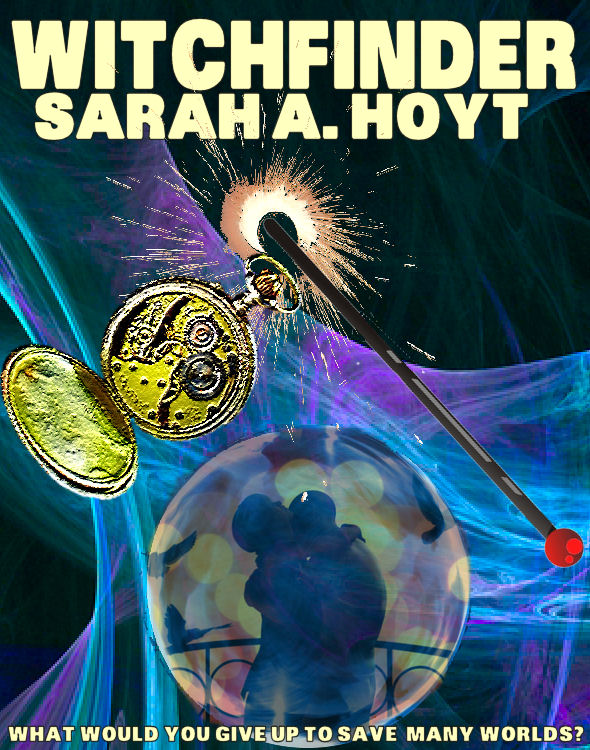
Witchfinder Free Novel — Chapter 20

*Guys, I promise to put up a good chunk of more than one chapter either next week or the week after.   I was hoping to do it this week, but I’ve had disabling-level headaches for the last three days, which means the next three chapters are still unproofed, even to the minimal level of these posts.  They read sort of like Atlanta Nights ;) particularly since they were written through the headache.  So, bear with me, but I hope you enjoy this week’s installment anyway.*

*This is the Fantasy novel I’m posting here for free, one chapter every Friday.   If your conscience troubles you getting something for free, do hit the donate button on the right side.  Anyone donating more than $6 will get a non-drm electronic copy of Witchfinder in its final version, when it’s published.
There is a compilation of previous chapters here and I will compile each new chapter there, a week after I post.  When the novel is completed and about to be edited the compilation page will probably be deleted.

Oh, this is in pre-arc format, meaning you’ll find the occasional spelling mistake and sentence that makes no sense.  It’s not exactly first draft, but it’s not at the level I’d send to a publisher, yet.*

For previous chapters, look here:  https://accordingtohoyt.com/witchfinder/
A Rude Wakening

Barbara Ainsling, Dowager Duchess of Darkwater woke up without a sound.  Before she woke, she knew that something was wrong – very wrong.
Normally she woke with her personal abigail, Jane, bringing in a tea tray.  It had become a ritual, and the Duchess’s first consciousness came with the sound of the tray being set on the little table by the bed, followed by the sound of calm footsteps across the floor which in turn was followed by the sound of curtains being drawn back.  Then light filtered gently past the sheers and the Duchess woke, composed and ready for her day.
Today there was no light, no tray, no calm footsteps.  Instead she had awakened to the sound of the door opening, then closing, stealthily.  It was followed by the sound of someone panting rapidly, as though in a panic.
Barbara Ainsling had for many years been a Duchess, surrounded by both comfort and propriety, hemmed in by the precise politeness of her position.  But she’d not forgotten her years as a child in a vast wooded estate in Derbyshire; her years of climbing trees and fishing with the tenant sons.
The much younger daughter of a large family, whose next youngest child was a full ten years her senior, she had learned to make her entertainment and had bid fair to become a hoyden, if not a tomboy, till the lure of her mirror, and how well she looked in ball gowns, and the effect she had on boys had called her to more feminine pursuits and thence to marriage.
But even at forty four, inside she often felt she was still that same wild girl she’d been.  So she sat up, instantly alert, and reached, silently, for anything she could use as a weapon without moving much.  Unfortunately the only thing she could reach without getting up was the coverlet over herself.  It would have to do.  It was Barbara’s experience that very few people could be nepharious while trying to extricate themselves from a blanket.
She clutched at the coverlet with both hands.  And then the person panting in the shadows gulped and said, “Milady?”
Barbara let go of the blanket, and, half careless, made the gesture for the spell that brought the magelight at her bedside to full power.  By its unblinking light, she saw Jane by the closed door, both hands clutching at her apron which, by the look of it, had been twisted between those clutching hands.
Jane was a most superior servant, abigail to milady and about Barbara’s age.  In fact, she’d been helping Barbara dress and arrange her hair since they’d both been fifteen or sixteen.  Barbara trusted her so much that she had disdained to hire a dresser, as most ladies of her class were wont to do.  No, for Barbara’s purpose, Jane must do very well.  And normally she did.  And normally, on demeanor alone, anyone looking at two women would easily take Jane for the Duchess.
But now Jane looked discomposed and ill, her face blotchy as from crying, her hair disarranged.  She had dressed herself, and even put on her largely decorative lace apron.  But she hadn’t combed her hair, and her cap was altogether missing.  “Milady,” she said again, and gasped, her eyes full of tears.
“What is it Jane?” Barbara said, trying not to sound as worried as she felt.  The truth was that she’d never seen Jane this discomposed.
Jane swallowed again, audibly, and let air out, slowly, between her half-parted lips.  “There are constables in the house, Your Grace, and men from his majesty’s magical enforcement force.”  She swallowed again, convulsively.
Barbara’s mind flew to Seraphim and, with only a little delay, to Gabriel, to Michael missing, and thence, in a moment, to her husband’s suicide, to that horrible moment they’d found him in his dressing room, his gun fallen from his nerveless right hand, his pocket watch clutched convulsively in his left, so hard that it had taken a wait for rigor mortis to pass and his fingers to let go.  It clutched, aimlessly, at shadows and hints: at her sense that her husband had always been doing something far more complex, far worse, in a way, than mere affairs and infidelities – even if he’d done that too.  And lately Seraphim had been secretive and Gabriel had, of course, been helping.  And they were involved in something.  And there had been a man killed by magic.  And Michael was missing, perhaps kidnaped into fairyland.
Oh, those boys, she thought, those careless boys, and surprised herself with thinking it, as though Gabriel and Seraphim, and perhaps Michael too, were about five and heedless, and not grown and almost grown men and playing with something very dangerous indeed.
She became aware that Jane was speaking, in between gulps and sobs.  “It is the man as was killed, madam, you see.  It is the man who was killed.  They say as his grace done him in purpose because he was the lover of that woman as– Well, they say his grace done it for jealousy and not in self defense, and they are– ” she swallowed.  “They’re demanding to take his grace before king’s justice, and Mr. Penn with him, as well as Mr. Michael.”
“I see,” Jane said.  “And His Grace says?”
“Well, that’s just it, Your Grace, as they say he’s run and that’s a sign of guilt.”
“Run?  Seraphim?” Barbara said.  If there was one thing she couldn’t believe Seraphim would do was run.  Charge ahead foolishly, perhaps.  But run, never.
Jane nodded.  “I don’t see how it can be, Your Grace, but they said as he and the young–  The young person, Miss Felix, transported from the room where she– That they transported to another world, Your Grace, as is forbidden under the law.”
Yes, Barbara could see how that story would assemble itself, in the servants’ minds, and in the minds of the magistrates too.  They’d think, of course, that Seraphim had been in the young woman’s room, when he heard the constables come in, and had transported them both to somewhere safe.  And she could well imagine the construction placed on his being in that room, in the night.
Barbara didn’t believe it.  Not for a minute.  Oh, it was possible that Seraphim was romantically involved with the woman, though Gabriel had claimed she was his fiancé.  For that matter the strange liaisons that men engaged in with a certain sort of woman were not something she wanted to probe.  But something sounded very wrong in all of this, including the fact that Barbara didn’t get the feeling Miss Felix was that sort of woman.  Or not precisely.  For that matter, though no one had ever told her exactly, she didn’t think Gabriel Penn was the sort of man to be engaged.
The whole thing felt wrong, a sort of scene concocted to deceive the eye, but not very deeply thought out at all.  A story to deceive onlookers.  She heard herself say, hollowly, “Something is very wrong with that story.”
Jane started, then nodded.  “Yes.  I thought so too,” she said, slowly.  “Because it doesn’t explain how the corpse got to Miss Felix’s room.”
“The corpse?”
“The corpse of the man as the gardeners say attacked his grace, the one his grace … killed.”
“Ah.  Yes.  He was in Miss Felix’s room?  No.  That is not explained at all.  I don’t think that anyone would carry him there, would they?”
“No, miss.  And he looked like he had fallen there, after walking, you know.”
Barbara didn’t know, but she could well imagine.  “I see.  And what does Gabriel say about all this?”  Because if anyone knew anything, it would be Gabriel.  Gabriel was and had always been Seraphim’s willing accomplice, his faithful dog’s body.  Seraphim wouldn’t do or know anything that Gabriel either didn’t know or couldn’t guess.
A deep breath from Jane foretold that the news there wouldn’t be good, and Barbara felt a stab of foreboding.  “He’s missing, isn’t he?  Mr. Penn?”
“He’s …”  Jane swallowed.  “Emma, you know, the kitchen help, well, her room is directly above Miss Felix’s guest room, and she says that she heard him… that she heard him say something very loudly from… from the area of Miss Felix’s room, just as the pounding first came on the door.”
“What did he say?” Her Ladyship asked.
Jane colored and opened her mouth.  “I wouldn’t like to repeat it.”
“I’m sure I’ve heard the word, whatever it is.”
“Well… he said … shit.”
“I see.”  She didn’t in fact, see.  She couldn’t imagine Gabriel shouting anything of the kind loudly enough to be heard through the floor into the upper floor.  But she was sure Jane wouldn’t repeat it, unless she were certain it had been correct and properly heard.  “And what does he say to that?”
“No one can find him,” Jane said.  “His room…  His traveling bag is missing, and his personal effects, at least some of them, and–”
“And?”
“Well, then, Mr. Penn locked the door on his room and… transported out.  They are trying to sense where he went, but they haven’t traced him beyond London and– ” Jane stopped.  She looked like she was holding back tears by an effort of will.
So.  Seraphim was gone.  And Gabriel had followed.  She didn’t know how or why Seraphim had left, but she was sure it wasn’t because he had run.  Not in any sense of the word.  The only reason she could imagine for Seraphim to have left, at all, would be if his staying could only make things worse for his family.  In that, he was like his father, who, despite his multiple sins against matrimony, had always tried to protect his family and his estates.
And Gabriel too, for all his sins, would never have left – would certainly not have left without leaving them word of where he was going – without good reason.  The reason being that his staying would make things worse for all of them.
Michael was missing.
That left the family house, the servants, and Barbara and Caroline to look after themselves.
Without Barbara knowing, the decision had made itself in the back of Barbara’s mind.  The constables and for that matter the magical enforcers would do nothing to the servants and the house.  Nothing, that is, beyond ransaking the house and having the servants keep it up.  At worst, if judgement were brought in against Seraphim, the house would be confiscated.  The risk was to Seraphim, who would be beheaded, but not to the house or the servants.  She shook her head.  That part she didn’t need to worry about.  So, what was there to fear?
The only thing she could think of was that she and Caroline could be used as bait to bring Seraphim and Gabriel back.  And to lead to their being executed.  No.  That couldn’t be allowed.  And so Barbara Ainsling, who, like her son, would not run from danger to herself, must put herself and Caroline away from danger.
She’d go to her brother.  No one would dare penetrate her brother’s estate in Derbyshire.  “Jane, can you go to the stables?  Are there… are there law… people, there?”
Jane’s eyes grew large.  “As of yet, no, Your Grace.”
“Very well.  Then go there, and wake Johnson, in secret if possible.  Ask him to get the small traveling carriage together, with the match black horses, and to arrange for escorts for myself and Miss Ainsling.  As quietly as possible.  Tell him… yes, tell him to get the carriage ready in the alley outside the walls.  Without, if at all possible arousing our… ah… illustrious visitors.  Tell him – in the greatest secrecy of course – that Miss Ainsling and I will be going to Lord Hartwitt’s in Derbyshire.  Can you, Jane, and keep it quiet?”
“Well, of course,” Jane said, and bobbed a courtesy.  “What shall I pack for you?”
“Nothing.  I shall travel as swiftly and as quietly as possible, and I’ll acquire whatever I need on the way.”
Jane blinked.  “Oh, no.  I must go with you.  And, Your Grace– ”
“No, Jane.  This is likely to be very dangerous.  I can’t allow you to risk yourself.  Go, and tell Johnson to have the carriage ready.  I’ll take a carpetbag with my absolute necessities.”  As she spoke, Barbara got up and started to brush her still mostly black hair and pin it back.
“Your Grace!” Jane said again, in a tone of shock.  But Barbara was Barbara again and not just the Duchess of Darkwater.  For years now, since she’d married the Duke, the bright, sparkling woman who’d been Barbara Hartwitt had been subsumed in the Duchess, the mother, the wife.  Now…
“Leave it, Jane,” she said.  “I can take care of myself.  And send Miss Ainsling to me, as quietly as you can.”
“Your Grace,” Jane said again, in the tone of one who doesn’t quite believe what she’s being told to do.  She apparently, from her expression, could also not quite believe what she was seeing, as Barbara selected her most plain and sturdiest traveling dress and, with nimble fingers and hands still quite capable of reaching behind herself, started lacing herself into it.
“Now, Jane, there’s not a minute to be lost, if we’re to save something from this debacle.  And should the magical… ah… gentlemen ask, you know nothing of where I went.”
Jane moved then, bobbing another courtesy, and heading for the door.  Before she opened it, though, the door opened, and Caroline came in, fully dressed.  “Mama,” she said.  “Oh, I’m so glad you’re up.”
Jane hesitated, looking at Barbara but at Barbara’s quiet, “Go then, Jane, take care of that matter,” she nodded and scurried out.
Caroline closed the door behind Jane, and turned to Barbara.  “We must leave, Mama.  And quickly too.  You see, Gabriel sent me a message through a compulsion on a maid, and he said that Seraphim was pulled by a trap into another world, and Gabriel himself was leaving as fast as possible, so he couldn’t be used to bring an accusation of magic malfeasance against Seraphim.”
“Yes,” Barbara said, gratified she’d reconstructed the situation properly and trying not to think of the cold feeling, in the pit of her stomach, because of what the boys were risking, and because of the trouble coming down on all of them.  “I realize that.  And I thought it best if we left too, and could not be used against them.  I’ve given orders to have the small traveling carriage prepared, in secret, so that you and I can go to my brother, in Derbyshire.”
Caroline’s eyes widened.  “Mama!  You must be all about in your head.”  And then, realizing how improper what she’d said was.  “I beg your pardon, but you see it must be so.  How can you think we’ll escape in the carriage?  Mama!  They’ll find the carriage easy enough.  All they have to do is send a fast rider.  And no matter how much you tell Jane or the coachman to keep the secret, they have magical compulsion and the right to use it by royal decree, and they– ”
“Jane, credit me with some thought.  We shall leave, in the carriage, and then transport from it while it’s moving.  They will not be able to trace the transport spell, unless they can pin point exactly the place in space from which we transported.”
“To your brother’s?  In Derbyshire?”
“No, of course not.  I confess that was my first thought, but then I realized…”
“You realized?”
“While we might be safe at my brother’s, it’s too much like running away, and the Ainslings do not run away.  It’s obvious someone is trying to entrap your brother– Your brothers, and bring this house down.  And fairyland is involved, which is …  We must find Michael.  And Seraphim.  And there’s only one person who can help us.”
She looked at Caroline’s blank expression and almost laughed.  “We shall go pay a visit to Mrs. Penn,” she said.  And by way of explanation, “Gabriel’s mother.”

If They Ever Change At All

One of the ways we lie in fiction is to make change quick and hinging on a pivotal event.  This is needed — or course — because the whole point of fiction is to make sense out of the otherwise unorganized, multiple inputs the real world offers.  And the change, the climatic, all important change to society, to the evil kingdom, to a love affair, to… has to be such that fits within the confines of a book or the much tighter confines of a movie.  And the clues to that pivotal event, and to what is causing the problems, have to be so large, so magnificently prominent, that were this real life your character would need to be deaf and blind not to see them.

This is not real life. It’s fiction.  It’s entertainment.  So sue us.  We get paid for lying.

Sometimes writers try to portray a more gradual change, a more realistic transformation of character and circumstances.  These books get called atypical and while cherished by a few crazy people, like yours truly, they usually baffle normal readers.  Take Georgette Heyer’s A Civil Contract.  Love develops there, but not in the way it develops in most Heyers — through high adventure and suddenly — but rather daily, by quotidian domestic contact and a myriad small sacrifices on the part of the one who loves from the beginning.

It doesn’t seem to be most people’s favorite Heyer.  It might be mine (followed  or preceded closely by Venetia, which manages the business by galloping bounds by using a pretty unlikely coincidence in the middle.  [One of the best arguments for the use of the one coincidence allowed rule is that it mediates the middle ground between realistic and fits within book.]  Arguably, in the unlikely event I ever have the naming of a baby girl, by birth or adoption, I shall name her Venetia and not A Civil Contract, but that is entirely different, surely?)

Heinlein, also, in The Moon Is A Harsh Mistress tried to give us a more “realistic” view of revolution than is common in science fiction books.  To do so spans not just a political transformation, but also several years.  The only way to manage it, particularly in a first person narrative, is to have your character out of where the action is for large portions of the war/fighting/maneuvering and to report it in “memoir” mode.

I found this was a narrative necessity when writing A Few Good Men, where I take “reality” a small spot further, by realizing that no, in fact there wouldn’t be a revolution all over the Earth, but multiple revolutions, and only one of them would in any way resemble the American revolution at lest in spirit.  (I still don’t know how it plays out in terms of government, but I daresay I’ll find out over the course of the series which might run to ten books.)  And that, is the author pushing the odds as is.  Think of all the revolutions of the 20th century, a lot of them from colonies throwing off colonial powers.  How many of them resulted in anything close to our system?  Right.  And how many of them turned really nasty, really fast?

(I still have no clue how that book will play, btw.  I’ve heard there’s an editorial letter for it, but I have no idea if it’s an editorial letter with an offer or an editorial letter under the guise of “friendly advice.”  Quite possibly the later.  As I said, it’s an odd book. A pity as if it goes Indy it might take years to find an audience.  OTOH, I wrote it because it had to be written, so it’s probably all academic whether it’s bought by a publisher or not.)

Anyway, I found the memoir tone annoyed some beta readers, though most of them only disagreed with the parts that made it clear some characters survive.  There is no indication that the revolution is won till almost the last chapter and at that, it’s not even very clear.  Only that it’s considered an historical building.  But it didn’t matter.  I couldn’t do it any other way, because in the same way my character can’t go to war because I CAN’T read enough about war to make it believable, I can’t cram ten years into a book first person and not bore the reader to crying fits.

(Some identified the mode as coming from TMIAHM but it’s not really — if there’s an Heinlein Ancestor to the book, it’s If This Goes On — it’s more that similar narrative necessities create similar narrative outcomes.  The writerly equivalent to parallel evolution.)

The problem is, as I’ve noted in the past, that reading fiction is not JUST a pasttime.  We might think it is.  But the way the human brain is built, we can’t help bur recall vivid emotional experiences (which good fiction provides) as things we lived through.  Which means we are stuck in a rut of expecting things to change suddenly.  (We also expect ever after, which I think accounts for a lot of divorces, since fiction, mostly as movies, has become more and more prevalent in society.  Because ever after happens in intermittent patches, not as continuous and unalloyed bliss, but our “trained” brain tells us we want the latter, not the first and that it’s possible.  We’ve lived through it before, surely?)

What is this in the name of?  This is in the name of the relationship between publishers and writers.  And also between writers and market.

In the previous thread, in comments, Tolladay told me to impose order on my schedule by dictating to the publishers.

You have no idea how appealing that sounds.  And how impossible.

Yes, yes, there will come a day when the power is all with the writer — not yet.  Note my advance mourning at the idea [gathered from the tone of the email and the fact no offer is attached] that AFGM will have to go Indie.  It will go Indie, and I trust over time it will find many readers.  But it doesn’t compare — yet — to the power of a major house putting it out.  Oh, in money… probably, over two or three years.  But in dispersion?  Not so much.

But why you say?  Can’t readers find it by word of mouth?  Sure they can.  But some astonishing number like 80% of people still prefer to read on paper, regardless of how bad the industry and what’s available has become.  So why do they do it?  Habit.  It’s engrained habit.  And that changes slowly.  VERY slowly.  It won’t change fully for about ten years, when I suspect it will flip.  To flip earlier we need one of those “coincidences” — something that makes paper books infinitely worse, or ebooks infinitely better.

And you know what, even if it were 50/50, it will take even longer for publishers to ACCEPT that writers now have power.  Worse, it will take the writers YEARS to accept they have the power.  The relationship has been set in stone forever.  A generation will need to retire and another to come in BEFORE that changes.  So, my trying to dictate to publishers would simply get me pushed into going completely Indie before I’m ready.  Things don’t change that fast.

[And by the way, I’m not repining on having to take AFGM indie, if that’s the case.  I have complete faith in that book, odd though it is.  While I can see the publisher might hesitate or even balk at it, I think it will sell, and I think I’ll make considerably more than I can make from traditional publishing within five/ten years.  But the nature of the book make me wish it could have a more traditional birth.  Neither here nor there, I’m grateful to have the alternative.]

So, do I expect indie to triumph and writers to have a lot more power in the future?  Sure I do.  But it takes time.  I doubt I’ll see the full transformation in my lifetime, even if I turn out to be as long-lived as my ancestresses plus a bit more for better tech, and come to touch or near the full century.

It doesn’t matter, since in the meantime I should be able to make a living and to have somewhere to put properties that MUST be written, but which the houses won’t touch.

It is sometimes helps to remember that the pivotal event might have happened (In the case of ebooks SEVERAL pivotal events.) but that change still creaks in slowly and through the back door and not suddenly, in a great climax of sound and light as it does in fiction.

And it helps to get used to this idea and realize small, incremental changes are often worth our entire devotion and our entire life, because they set off other changes, which eventually lead to a whole new world — in the future we might not see.

(And now I think about it, that too is the theme of A Few Good Men.)

Now I’m going to make a large, obvious change to the cat boxes, then move dust around a bit and make the house fractionally cleaner.

Whooshing By

When I got in this business – by which I mean, when I actually sold – I was so scared of deadlines that I tried to finish books three to six months ahead of time.

This is relatively easy when you have one book a year, or even two.  Because I write every day – or everyday there isn’t some crisis going on.  Um… okay, half the days – I was always early with books and developed a reputation for it.

Then came a time when I had to take three/four contracts a year.  And I started slipping a little.  Yes, I write very fast.  Yes, given a quiet day and eight hours, I can do twenty thousand a words.  But a novel is not twenty thousand words and cap it.  A novel is coherence, an idea that forms before hand, and in my case, SF or historical or even “just” fantasy there’s research and worldbuilding.

Some of this overlaps writing the last book, but it’s difficult.  Say, you’re in the twenty fourth century and reading everything about Tudor England.  Language leaks in, if nothing else.

Also, I always wondered if Misty Lackey was talking about writing when she came up with the magic for Valdemar.  Trust me, when you write books back to back without down time, or – worse – using the downtime to catch up on editing and shorts and stuff, you get the sense that your “channels” have been “stripped.”

When you are, as I’ve been for most of the last five years (yes, yes, you don’t know, because a lot of those are closed pen names or other type of work) on six books a year, well…  All it takes is one cold, and it pushes everything else forward, and suddenly you’re two years behind on a series (Noah’s Boy for the Shifter’s series) and wondering how the hell you got there.

Because, you see, this writing thing is not just writing.  At least not for traditional press work (though I’ve found also not Indie.  I’ll explain later.)  You write, then send it out, then it comes back, usually, with an editorial letter of some sort.  Then it goes back and comes back with copyedits.  Then it goes back and comes back as page proofs.

Each one of these is GUARANTEED to come when you’re in the middle of the trance on another book – the part of the book where you’re eating, breathing and sleeping the characters and the situation.  It stops work on the new book AND makes it difficult to “tune in” to the book under revision.  Oh, and if it’s a messy revision requirement, it’s bound to come with “ASAP” stamped on it.  Did I mention you have no control over these, which go at the house’s pace?  Yeah.  Once, I decided to go to the front room of our house to get something as the taxi that would take us to the airport and for a two week vacation in Portugal pulled up.  While picking up whatever it was (I THINK a book) there was the “thunk” of a package on the front porch.  Fedex.  Revisions and mark upon one of the musketeer’s books, which had then to be accommodated in the suitcases.  (Let alone if it had been five minutes later, it would have had to wait two weeks, which it couldn’t, by house schedule.)

Now that is one part where I can see Indie helping.  Yeah, I know, I’ll still have edits and “revisits” to the book, but since it’s on my schedule, it’s easier to control.  And maybe I can get a handle on this.  OTOH as I’ve pointed out, for the foreseeable future I’m living in two worlds.  (When I was little, I saw this act in a circus where a pretty girl stood with a foot on each horse, galloping side by side.  I still have no idea HOW she did it, but I guess I’ll have to learn.)

What this means in practical terms is that on top of the madness above (and I have three books due at traditional presses this year – two overdue, which IS a full schedule for most authors, as well as a book overdue at Naked Reader and two more novels with them (Orphan kittens which already has cover, and a fantasy one and a collaboration with Amanda Green [Rye Crisp – a paranormal mystery]) and a few short stories too and a few books I want to finish for Goldport.) I also have to keep on top of software and the changes in platform at various retailers.  And I have to SOMEHOW redesign my web site.  And, oh, yeah, a bunch of the short stories I have set aside for Goldport Press need a rewrite.  And, oh, yeah, the Marlowe mysteries short stories are doing well for me, and I’d like to finish the novel and give it a chance, but – as with the Red Baron one – this almost requires my going away and hiding so I can immerse myself in the time period.

And through all this, rewrites requests will continue to come, and requests for submissions, and page proofs and…  And my health seems to be even more … uh… amusing than it’s been for years.

Who, complain, me?  Did I ever say I didn’t want to live in interesting times?

If you need me, I’ll be under my desk, braiding my hair and studying a rewrite letter.  Then this afternoon, I’ll be working on one of the late books.  I have a nervous breakdown penciled in for 2020, and I intend to enjoy it thoroughly when the time comes.

It might be the only way to get some rest around here.

What A Writer Has To Do

Over at Mad Genius Club yesterday we got into what good editing was worth.  Oh, okay, Dave Freer (aka Doctor Monkey) did.  But I got more into it in comments, because – and this is not JUST me – in this age of turmoil and strangeness, it seems like editing is becoming a point of contention.

Perhaps it always was.  The bad edit not only shall always been with us, but you bet your bottom vowel it has always been with us, now and forever, world without end.  Part of this is that publishing houses (and in my time in working traditional) and agents had a vested interest in “making it more marketable.”  (We won’t go into how “marketable” when it comes to books, in my time, mostly meant “I want to appeal to the two or three reps who determine if it goes on shelves.) This of course might or might not have anything to do with the writer’s vision or what the writer is trying to get across.

Look, I’m the first to say, speaking as a variety of writers, genus compulsive, sub-genus intuitive, that my people aren’t the most rational things around.  Our relationship with our ideas is mostly that of cats with a fast moving object across their field of vision.  We cannot help but follow, and we will eat it even if it happens to be a roll of string, and not the tasty earthworm we thought it was.  Guilty as charged – to an extent.  I’ll also admit that my people, collectively, have the sense of business that G-d gave a gnat.  A gnat who has gone bankrupt several times.

But now that we’re done talking in general, let’s talk in specifics, shall we?  I’ll admit I fit some of the “artistic” stereotypes.  No, not by choice, but as my grandmother used to say “we don’t make ourselves” which is true either case, whether you believe the divine (or, er… the other side) had a hand in, or whether you think that we are the result of nature plus nurture.  There are things you can’t eradicate, even if we try.  And I’ve realized at some point that getting rid of the irrational compulsion to create would also get rid of the writing altogether, which, considering how central it is to my personality, might lead to a nervous breakdown or worse.

So I have a compulsion to write, and sometimes I have a compulsion to write things I know will never find a market.  Listen, I have written things that not only aren’t marketable, but which will never be shown to anyone, my closest friends and my spouse included.  They were in head and that was the only way to get them out.  (And if the kids try to publish them after my death, hauntings WILL be real.)

HOWEVER – and it’s a big however – aside from that compulsion and other minor stuff I can’t control about the writing — I’m a rational, not to say a hard nosed person.  Which is good because – this is still part of that however, as it applies to my entire generation of writers – I came up during REALLY tough times.  Your chances of getting published at all were minimal, and your chances of continuing to work — as I am to this day — past book three, or even book two, were well…  In this environment, I’ve been continuously under contract (save for a few months in 03) for ten years.  If you think this was dumb luck and chance, let me tell you you’re dreaming.

It isn’t that I’m so smart, either, but I’m good at knowing “what will sell” – that is, I’m good at knowing where my insanity intersects with that of the people I’m aiming to sell to.

And that’s what’s changed.  I have – for years now – learned to sell to agents/editors/publishers.  In the last two years, I’ve been tuning to how to sell to the public.  Which, no, is not the same as selling to publishers/editors, because well… THEY’ve been selling to reps and not to the public.  And most of them still are.

This is where we get back to the matter of edits – you knew we would, right? – by a circuitous route.

I’m not a prima-donna, though I can default to prima-donnaish attitudes as a reaction/defense.  Let me explain: when I started in the field I rewrote everything the way they told me to rewrite it.  Rational.  Without passing the gatekeeper, I could never get read.  Besides, I never think I have the ultimate answer, and while I admit to some artistic quirks, I’m more craftswoman than a’tist.
So, when my second agent said “rewrite this” for All Night Awake, the middle book of the Shakespeare trilogy, I did.  And I wrote it to his specifications.

Not only did I hate the result – which he loved – but people who read my stuff/liked my first book, hated it too.  Of all my books even the other-name-deep-secret-small-press ones, that one sold the absolute worst.  Was my original version better?  I don’t know.  Both are available in one volume from Baen Webscriptions, so if the question bothers you, go find out.  BUT I know the original second one is more my own.  It might have needed editing, but it didn’t need a radical plottectomy and formula transplant, which is what it got.

This has served as an object lesson.  Since then, even when it meant alienating a publishing house, I draw the line when the editorial letter starts by telling me how much they love the book, then asks me to change it… in a way that requires I scrap everything but a few pages and write it again from page one to make it a different type of book.

Around the house the guys have learned to read my expression when I receive one of those letters and they call it (from the Code Monkey song) “Maybe editor wants to write g*ddamn book herself/Novelist does say it, outloud/Novelist is crazy AND proud.”

I’m perfectly aware this might come across to some people/houses as my being primadonnish.  And that’s too bad.  It’s not that I think my book is perfect – most of them aren’t, mine or others – it’s that I’ve learned through my own experience that people who buy my books want… well… my books.  While a book by someone else might sell way better, it won’t sell way better if it’s a book by someone else written by me.  For instance, All Night Awake got a thriller plot shoved in.  Have you guys noticed the distinct lack of thrillers in my line up?  Yeah.  That’s because while I read them (I read everything, including want ads for professions I don’t know) they’re not… vital enough for me to want to write them.  They just don’t INTEREST me enough.  So, when I write them, they come out second best, at best.

Remember that thing I did, way back, about some ideas aren’t yours?  Well, the fact that it’s your publishing house telling you that this idea is what your idea should be does NOT make it yours to write.  And look, while Sarah A. Hoyt might be a niche brand, while J.K. Rowling or Stephen King are massive blockbusters, I can write D*MN good Sarah A. Hoyt.  I can at best do subpar J.K.Rowling, and I doubt I could do King at all.  (Throws book at head of giggler on back row.)

There are other things I’ll stick at.  I’m not a pantser.  I think I’ve mentioned that.  However, some pantsing bits always fall in to my writing.  For instance, while needing to make my character do something relevant with communications, I found out I’d already seeded that detail in the first book, in a throwaway line I put in without knowing why.  This could be said as “the subconscious has reasons the mind doesn’t know.”  So when an edit wants to remove a detail and that feels WRONG, I’ll put both feet up against it and say “NO.”

So, do I take any edits?  Sure I do.  Toni Weisskopf told me to add a whole section to Gentleman Takes A chance, and the minute she said it, it was like the skies opened, etc.  Also, with Darkship Thieves, it felt fractured till she told me it needed to be divided into sections.  And then it made sense.  (Does this mean she’s always right?  Probably not.  She’s not me.  Ultimately I’m the best judge of what I was trying to say/do.  Also, after 21 books I’m the best judge of whom I appeal to, and more importantly, whom I CAN appeal to, given ideal circumstances.  People who read Doc Travis or Ringo might like my stuff too, but they would be very put off if I tried to BE them.)

Also, a friend of mine who is possibly the best editor I have ever worked with, does edit some of my books and stories.  I listen to him very closely, partly because he’s not intrusive at all, and never tries to superimpose his own ideas of what the story should be.  Instead, he tells me when I’m repeating myself, or when my meaning is not clear, or suggests I make something more obvious.  And I take it.

He also copyedits.  This is what most people call “editing” but it’s not.  It’s at the word level.  He’s very good at that too, and can make my clunky sentences sing, while keeping my style.  I’ll confess I’m if anything overeasy on the copyedits.  Most of the time if you want to use flare instead of flash, I go “whatever.”  It takes a lot to make me scream on those (a recent copy edit on an historical managed it, but it was only the second book in my career to do so.  I mean, there have been the occasional spit-takes on the occasional line, but only two that I said “Not only no but h*ll no” to most of it.)

In fact, lest you think I REALLY am primadonnaish, out of 21 acknowledged books and – mumble – unacknowledged ones, there have been exactly three rewrites I’ve stuck my feet in the dirt and said “you can’t make me.”  One of them I ended up doing, anyway, the aforementioned All night Awake – and lived to regret it.  The other one I did the Code Monkey variation and killed my relationship with that house, possibly for good. (BUT — and this is important — the book sold much better than ANA.)  And the other one … eh…  I’ll tell you when the ulcer subsides whether compromise is possible.

But the thing is, both the edits and the copyedits I’ve got recently are tipping the scales of “we want something else completely different” and from what I hear through the grape vine, so are everyone’s.

How come?

Well, I think the reason is twofold.  First, houses are running scared.  They are now not marketing ONLY to the reps, and they simply don’t know what to do.  So they’re doing everything.  At once.

Second, houses are running scared.  Writers are jumping ship to indies.  They realize that for years, they’ve done nothing for writers but get them on shelves, and now they can’t do that reliably.  So they want to offer something, and they can offer – they think – quality editing.

To quote The Moon Is A Harsh Mistress “Oh, Bog.”  They’re doing the exact wrong thing.  Because they don’t know how to sell to the public better than the writer – particularly if the writer came up in the last ten years and have learned to psych the buyer, be that the public or the publishing house – and they surely don’t know the writer better than the writer knows him/herself.  All their panicky effort to make everyone “better” by making them more like other writers will do is… frustrate a lot of writers into going indie.

As I’ve said, I don’t intend to be under contract again, if I can help it, and I don’t intend to do drastic rewrites on any books not under contract. If a drastic rewrite is required, book goes to my friend to edit, and then goes indie.

Does this mean I’ll be digging my own grave?  I doubt it.  Yes, we’re all familiar with writers who should be edited and aren’t.  Weirdly though, they usually sell very well, nonethless.  Which, I think shows that it’s better to be a better yourself than an ersatz someone else.  (And besides, I’ll be edited.  Just not “reshaped”.)

However, even if I fall on my face, at least I’ll fall on my face under my own power and through my own hand, and not because I was trying to be what someone else wanted me to be.

(And,  under this, is Mika’s Grace Kelly.  I first heard this song when my kids were playing it and I was going through heck with the mystery house who wanted me to change my name, yet again and write “a craft mystery.”  This was the third name change, and that song resonated.  Under that again, is Leonard Cohen with Going Home.  It’s from the new album Old Ideas.  I’ll completly admit Cohen is an acquired taste.  I have acquired it.  This particular song baffled a reviewer as in “who is speaking to him?” and “what does he mean he has to say what whoever it is wants, even though it isn’t welcome.”  This reviewer, my dears, is NOT a writer.  Or at least not my kind of writer.  We often write what has to be written, not what we want to.  Which is why edits can be so jarring and so wrong, even when they don’t seem to be…  From the outside.  Which is all that editors have access to.)