Book Promo And Vignettes By Luke, Mary Catelli and ‘Nother Mike

If you wish to send us books for next week’s promo, please email to bookpimping at outlook dot com. If you feel a need to re-promo the same book do so no more than once every six months (unless you’re me or my relative. Deal.) One book per author per week. Amazon links only. Oh, yeah, by clicking through and buying (anything, actually) through one of the links below, you will at no cost to you be giving a portion of your purchase to support ATH through our associates number. A COMMISSION IS EARNED FROM EACH PURCHASE.*Note that I haven’t read most of these books (my reading is eclectic and “craving led”,) and apply the usual cautions to buying. I reserve the right not to run any submission, if cover, blurb or anything else made me decide not to, at my sole discretion.SAH

https://amzn.to/3AimcR0FROM PAM UPHOFF: The Bad Cop

“There was a shield piercing Impression on the bullet. Karl had a shield up, too, and it wouldn’t have stopped that bullet.” A faint snort. “I think he’s a little indignant that the ‘Bad Cop’ saved him.”
Police Captain Lord Daniil Ambrose Vinogradov grinned. “As opposed to the Good Cop? I’m afraid that when it comes to double teaming on a suspect, the role of Bad Cop does come rather easily to me. And Nix is a damn good cop.”
“Ah. I thought you two disliked each other?”
“We’re rivals for the next promotion, and, well, I am more aggressively ambitious and less well mannered. Or to be less polite, a ladder-climbing asshole.”

As the attack on the 300, the Government Council, leaves the Three part Alliance without leadership, a runaway teenager leads a police detective deep into trouble, and romance.

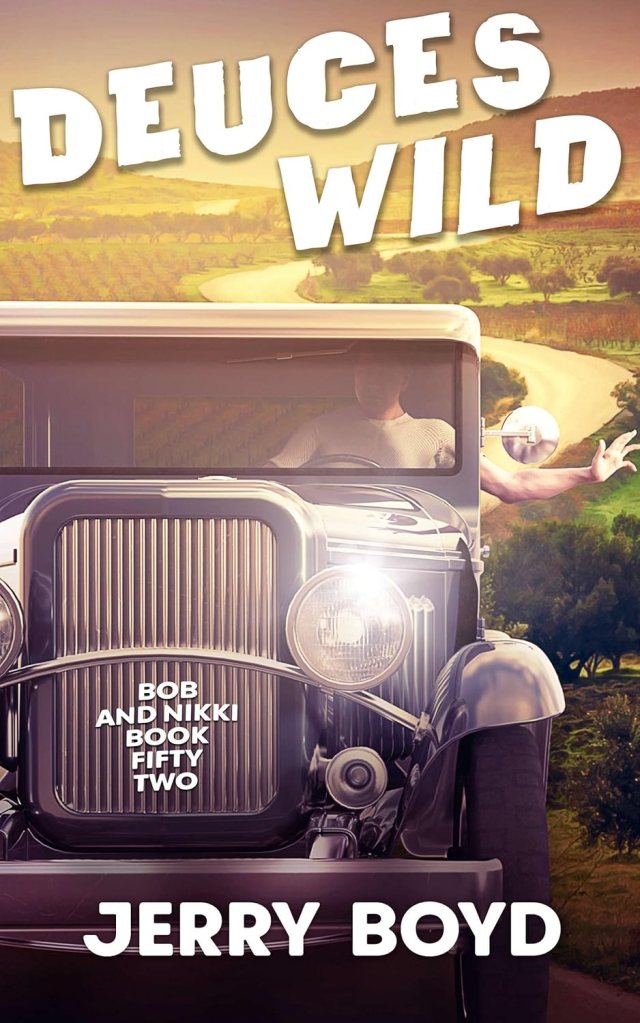
https://amzn.to/3YumrlfFROM JERRY BOYD: Mei’s Quest

Mark and Denise just want a little time off for a honeymoon. Wouldn’t you know that’s too much to ask? Denise’s mother has a little project she needs their help with.

FROM ALMA T. C. BOYKIN: Healer, Hunters, and Hearts: Familiar Generations Book Seven

Birds of mischief flock together …

Healer and Hunter, Deborah Chan Lestrang makes her way in the world as an herbalist and Healer who also hunts fell creatures when needed. Tensions inside her extended family call for a healer of hearts as well—a task far trickier, perhaps, than easing physical pain.

Weaker magic workers report being harassed by birds, birds inside a shield. Foul creatures appear, brought by a gate-spell cast by a coven. Or was it?

An old ill resurfaces …

Word comes from the north of a new drug, one that seems to grant magical abilities to those who take it. And that does not kill them as quickly as heart’s fire did. Could the birds of ill omen and the new pharmaceutical be related?


Deborah must find a path between duties and desires, the past and the present. But she does not travel alone. And she is her parents’ daughter. If she can survive Master Lestrang’s chili and his curries, she can banish abyssal evil. Maybe.

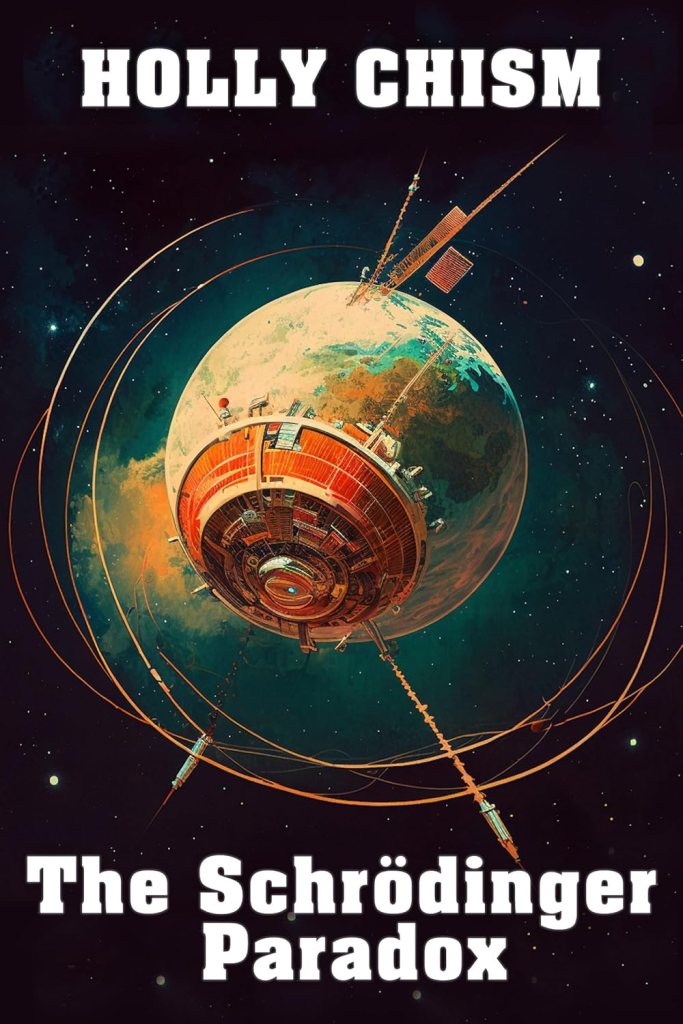
FROM HOLLY CHISM: Meals on Wheels

Not by the (nonexistent) hair on her chinny-chin-chin…

Meg Turner, vampire, accountant, ruler of her own small territory. Has a nice ring to it, doesn’t it? Not if you ask her, it doesn’t. Because the world’s going mad, the idiot mortals in charge are forcibly shutting down the economy without the understanding that it won’t start up again as easy as it’s going down, nor that it’s creating a nasty blood shortage for hospitals, much less vampires.

Even better, the head of her line is invading her dreams again, and teaching her history of all things. And teaching her about the laws, and why they’re there. It’s not just to avoid being noticed by humans capable of staking, beheading, and burning vampires during daylight hours—a vampire that breaks fundamental laws turns into something worse than a vampire.

And she’s got a bunch of those knocking at her border, wanting to come in. Worse yet, they’re sending their day-help into her territory to kidnap their meals, and they keep mistaking her for prey. And leaving their discarded empties in her territory to make it look like she’s draining humans without concern for the laws.

This really isn’t looking good, and it’s really not safe for her still-living friends and family.

FROM NATHAN BRINDLE: On Account of a Dame

Welcome to the New Jazz Age!

It’s the Roaring Twenties all over again — well — the 2120’s, that is. Where New York City has reverted to its Jazz Age roots of two centuries before. What’s missing? Prohibition, and gun control. What’s not missing? Tough guys, and the dames who (sometimes) love them. Gin joints. Speakeasies. Dance halls. The Social Register is still a thing, and the Beautiful People litter the society pages of the local hypernews sites.

Enter a typical gumshoe private detective — a member of that high society himself, yet a man who left society long ago for other pursuits. And his latest client, a rich young woman of leisure, who needs her new husband followed.

Throw in the recently-crowned queen of one of Chinatown’s tongs, a beautiful investment wizard from upstate, and a hundred million dollars in assets, and suddenly it’s all

On Account of a Dame.

FROM MARY CATELLI: Curses And Wonders

A collection of tales of wonder and magic.

A prince sets out to win his way to the dragon’s lair.

A woman fights a curse on her lands.

A man returns to his castle, bringing a magical sword, and worse things.

And more tales.

Includes “Dragon Slayer”, “The Book of Bone”, “Mermaids’ Song”, “Witch-Prince Ways”, “Sword and Shadow”, “Eyes of the Sorceress”, “Fever and Snow” — and “The Emperor’s Clothes”, which is not sold separately.

FROM ANNA FERREIRA: The Root of All Evil

When murder comes to Stockton, it brings long-buried secrets in its wake…

Kate Bereton leads a busy but unexciting life as the clergyman’s only daughter in a small Dorsetshire village. She’s grateful for the break in routine heralded by the arrival of her stepmother’s latest guests, but when Kate discovers a dead body in the parsonage one morning, she finds herself in much more danger than she could have ever anticipated. Terrified and desperate, she turns to the local magistrate for help. Mr. Reddington is eager to aid his dear friend Miss Bereton, but can they discover the murderer before it’s too late, and the secrets of the past are forgotten forever?

With a dash of romance and a generous helping of mystery, The Root of All Evil is a charming whodunit that will delight fans of Jane Austen and Agatha Christie alike.

https://amzn.to/3UevEvuFROM LEIGH KIMMEL: City of Blinding Light

The Columbian Exposition has transformed Chicago into a vision of the bright shining future. However, the electric lights that turn night to day bring no joy to Kitty Hawthorne, and not just because they are the work of her employer’s chief rival. Now Edison wants her to abandon her investigation of Tesla’s alternating current system and look into a mysterious newcomer. Who is Samuel Gillian, who devises calculating machinery as easily as he builds flying machines?

So what’s a vignette? You might know them as flash fiction, or even just sketches. We will provide a prompt each Sunday that you can use directly (including it in your work) or just as an inspiration. You, in turn, will write about 50 words (yes, we are going for short shorts! Not even a Drabble 100 words, just half that!). Then post it! For an additional challenge, you can aim to make it exactly 50 words, if you like.

We recommend that if you have an original vignette, you post that as a new reply. If you are commenting on someone’s vignette, then post that as a reply to the vignette. Comments — this is writing practice, so comments should be aimed at helping someone be a better writer, not at crushing them. And since these are likely to be drafts, don’t jump up and down too hard on typos and grammar.

If you have questions, feel free to ask.

Your writing prompt this week is: EXAMPLE

Gone and Done

While I’m sick — yeah, still kind of stewing. Better, but not well. I suppose it’s that whole “when you’re older you heal slower” but I’m kind of impatient — I’ve been preventing myself from doing what patently needs to be done around the house by watching endless youtube videos.

And somehow I settled into the channel of this guy who does “Faces of the Forgotten” (I first discovered him while looking up a curious sculpture in a cemetery in Iowa city.) Okay, full disclosure, my ADD spastic self watches him at 2x the speed, because otherwise I would get very impatient, but he tells interesting stories, in interesting places.

It’s frankly a little weird for me to watch it, because I’m the person who doesn’t even like to go to cemeteries. I know lots of people enjoy it, but me? Other than visiting grandma’s grave (just off the pic, above) I don’t really have any interest in wandering around cemeteries. Weirdly we did some on this visit, because my husband was fascinated by some of the imagery and sculptures in the old cemetery. (I don’t remember now when the decree came out to stop burying people IN the church, and the cemetery was started, but I think 18th century or thereabouts. Sometime in the twentieth it was decreed the sculptures had to be marble.)

My family has a crypt there, now, but we didn’t until mom bought one. We were buried in the “rented ground”. So, the way it worked is you were buried in the dirt, in an area reserved for it, and I think the rental period was 25 years? Which in Portugal in that region is enough to reduce you to bones. Then you could buy a small niche for the bones. And someone else would be buried in the plot you were buried in. Yes, this seemed perfectly normal to me, as a kid. My little cousin Dulce, my age, was buried in such “rental ground” when she died in the small pox epidemic that almost — but obviously not — killed me. For most of my childhood, we used to go and light candles at her grave for all Saints Day. Mind you, her grave was in the portion of rented ground marked off for children. I wonder if it still exists or is as large as it was.

ANYWAY, moving right along, as I said, my mom bought a crypt in dad’s name, but for bizarre family politics reasons, my grandmother (and grandfather) aren’t in it, nor in my grandfather’s ancient family crypt in the next village over, but in the crypt belonging to the family of my oldest uncle’s wife. Where my uncle is not, because he was buried with his new wife’s family. Anyway…. it doesn’t matter. Just that I know where she is, and I try to go there and leave flowers whenever I visit. I did not leave flowers this time, as there didn’t seem to be a vase I could use to put the flowers in, which is disturbing. In fact, all these elaborate monuments (as we wandered around) were devoid of vases for flowers, and few even had place for candles.

If I had to guess it’s the new generation of caretakers — mostly boomers and their children — not putting much stock in caring for the graves/making remembrance. I’m divided on this, as it was always mostly done for display and for the neighbors to see your piety. OTOH there was something consoling in visiting the graves, and knowing there was a place for you and you’d join them some day. There was…. You fit in when you came into the world, and there was a place for you when you went out.

And so I fell into watching this “Faces of the Forgotten” and what’s amazing, again, is how … ignored these graves are. No matter how famous or infamous, the graves are there, and the person is mostly quite forgotten. Worse here, in the park like cemeteries that don’t allow for headstones or photos on those. (I am told, though weirdly I’ve never been there, and am not sure how to find it, that my great grandmother’s picture, on my paternal grandfather’s family crypt, is a dead ringer for me. Um… perhaps vault is the name, not crypt, since ours is in ground and slightly raised, not the little chapels, which are for the very rich families indeed, and also old and no longer available.)

There is just a plaque with a name on the ground, and it gets mowed, and it is pretty much forgotten.

This slots in with thoughts I’ve had when doing stuff on this house. You see, it was last remodeled in the early eighties. And someone spent considerable money on the gardens, too. It then was sold around 2010 and there’s every chance the people who remodeled it are done and gone, and when I find their labels in the garden, or move some plant, I think of them, forgotten, under one of those plaques.

Of course, I’m sitting here, sick, watching these programs and thinking what’s the point even, if we’re all going to end up completely forgotten, as though we’d never been? Mind you, it’s only recently that I decided I don’t in fact want to be cremated. I want to claim my portion of the Earth — six by three — and be buried. I’ve told Dan that if I die before we have purchased a space, just ship me overseas to the family vault. Which prompted him to say it’s damn inconvenient, because then he’d have to be shipped overseas too, in time, and also, honestly, why bury an American abroad. Which I must admit feels wrong.

(Also think how inconvenient it would be for all of those who wish to piss on my grave to have to buy a ticket. And someone is bound to get offended if they go and piss on marble, anyway.)

But over these last few years I just started feeling overwhelmed with the futility of human life, and watching the videos more because I felt like someone should bear witness to the forgotten.

Perhaps I’m feeling better — or not — but yesterday something smacked me upside the head. I still visit grandma’s grave every time I go to Portugal. But more importantly, there is not a week that goes by when I don’t think of her multiple times. How she used to do something or other. What she’d say in some situation. How much something her great grandkids did or said would delight her.

In a very real sense, she is not gone, because I think of her as a living presence in my life. And through me she has influenced the grandkids, and perhaps even generations yet unborn.

This shifted the picture. Sure, the grave is a memento and it is often forgotten, particularly if the family line dies out.

But who the person was and what they did will reverberate through time till the end of the world.

There was a medieval belief you were held in limbo (or purgatory) until the last echo of your actions in the world was judged and your fate decided. When I heard it I thought that was silly. Might as well say we’ll all be judged at the end of time.

Look, it’s not always obvious. You won’t be remembered for what you want to be remembered. You can’t dictate it. But something you said or did, that affected others will keep reverberating to the end of time. Things you said that helped someone might have changed how they lived. Alternately, yes, your anger and pettiness also affected people.

But think on it, how many things you heard, not just from your ancestors, but friends’ stories of their parents and grandparents that influenced you no matter in how minor a way.

YOLO is supposed to be a nihilistic cry. You Only Live Once, so do whatever crazy thing comes to mind.

But–

YOLO. One day you and I and all we know will be ashes in the wind, or little plaques on the ground. Gone and done. But who we are and what we do, the things we believe, the things that animate us, the things that COUNT? Those go on forever in echoes and actions and reverberations.

Make it count.

The Poisoned Stream

Yesterday in one of my hangouts someone brought up the Tartaria conspiracy. This is one of my favorite internet insanity conspiracies, second only to “The dinosaurs are circling the Earth in a spaceship habitat, waiting for the right time to come back.” And I’m not sure it’s second to that, since on the insanity scale the dinosaur one is at least slightly more plausible.

For those who haven’t stumbled on this:

In recent years, a new alternative world history claim has arisen from the Internet — and it’s a doozy. It revolves around an alleged worldwide cataclysm believed by adherents to have taken place sometime in the 1800s, a disaster that wiped out a worldwide advanced civilization and allowed the nations as we know them today to rise up. The event was a “mud flood” in which several meters of mud washed in and buried the ground levels of houses and buildings everywhere. Those cities and towns that were partially buried constituted the worldwide advanced civilization called Tartaria, which had free wireless energy and was populated — at least in part — by giants. It was a civilization “reset”: out with the old, in with the new; and that “new” civilization is us. If this sounds too silly to be worth anyone’s time to even listen to, then consider the fact that of all the hundreds of topic suggestions in the Skeptoid queue, this is the one that I chose for this week. And I chose it for good reason, so attend.

https://skeptoid.com/episodes/4765

Or here: Inside The Empire Of Tartaria, One Of History’s Wildest Conspiracies.

Why do I love this? Let me count the ways: it’s relatively recent history and I keep scratching my head and wondering if none of these people had a relationship with their grandparents, and heard stories of their grandparents’ grandparents. I will grant you that my chronology is super-muddled, as I know some stories are grandma’s, some her grandma’s, and some possibly older, but they all tend to blend together, so I can come across as thinking the Napoleonic wars were in grandma’s living memory. But still, people, I got stuff from there, and if an entire superior civilization had collapsed, I’d know.

And yet it’s there, and it’s all encompassing, and you keep thinking “This is true in an alternate reality. Has to be.” And of course, this is the danger of these crazy conspiracy theories: they spawn novels.

On the other hand, if you really look at it, you feel a chill up your spine. Because the fact that this conspiracy has a lot of adherents, being as crazy as it is, means the official sources of information are viewed as nearly useless.

Put it another way: Regardless of how many people jump on the Tartaria bandwagon because it’s fun, the fact that the theory is all over means that people not only don’t believe a thing they were taught in school, but also are perfectly willing to believe they were egregiously lied to in a coordinated and seamless manner.

To an extent they’re right of course.

I mean, none of us knows the past, and the history we’re taught in school is by necessity canned. As an history geek, I can spend entire months diving down a few months of a country’s history and still know I come away with a “canned” version of it that ignores a million factors. To get a “History of the world” version in school, it means that what we get is canned, tendentious, and ignores most of what actually happened. This doesn’t mean it’s not generally accurate, even if — and this changes depending on when we were taught — it has an obvious slant.

It is the fact that history has to be compressed and facts selected that makes great hoaxes like the 1619 project possible. It’s possible to pick and choose a dozen events to present a bizarre racialist version of history that exists only in the heads of the person telling it and their cultists. And then push it on every kid in school. And it’s recent enough history that most kids will get rolled eyes from someone in the family, or other facts pointed out that make no sense in context. Which weakens their belief in what they were taught.

To make it worse, the progressive project has delighted in tearing down centuries-old accepted history, mostly by casting doubt in stupid ways. Things like “Oh, sure, you say Christianity won the west, but what about forced conversions?” (Which happened, but far less in the case of Christianity than any previous religion.) etc. etc. etc. undermining everything people thought they knew to install the “new word” of Marxism. Mind you a lot of what people thought they knew was indeed wrong, but it was wrong in ways that changed country to country and allowed people who didn’t travel much or didn’t have great curiosity to have a common stratum of “everybody knows this.”

The progressives have further undermined faith in the teaching of history and the information stream with their frantic attempts to hide the gigantic failure of communism and progressivism in general.

So the feeling people get is not that what they learned in school is canned and sometimes goofy and often wrong in details, but that it’s a full lying narrative, often weaponized against their own countries and cultures, in ways their older relatives dispute.

And this opens mind space to “What if they’re lying about everything?”

And then….. things like Tartaria appear, which is fun, but much worse things can appear.

Lest we forget both the Leninist and the Fascist project have their roots in times of just such instability, in the demise of the monarchies and their overarching narratives.

And already we see poisonous narratives appear, some very old like the divine right of kings (no really) and some given a shiny new coat of crazy paint, like the idea that all innovation came from Africa and white people just “stole” it.

The worst part is that the narratives from the top will keep not only fragmenting, but becoming crazier and more disconnected from reality as the once-dominant pseudo-elites try to get back in the saddle. the 1619 project is already a symptom of extreme crazy from above. And the crazier they get, the less they’re believed, and the more they will give rise to crazier and stranger theories that can’t be denied because at least — most of them — are more believable than the mainstream.

And this, ladies and gentlemen, is how a civilization loses its history, buried in a mud flood.

Apres nous, le deluge.

Listening For The Bells

There is a persistent legend — yes, from Portugal, too, but I’ve heard it echoed from Italy and other places — of villages swallowed by earthquake and tsunami where the submerged church bells ring with sea storms.

Here, before I get into the post proper, I must make two things absolutely clear:

The first is that if I ever had any right to complain about how Portuguese run their own affairs, it was while I was one of them, before the age of 27 or so. I have absolutely no right to complain about how things are in Portugal now. It’s their country. I just visit, for increasingly brief periods further and further apart. And I’m not complaining. I’m observing, and some part of me is mourning, a little.

The second it’s that although I always felt out of place in Portugal — out of place enough to have bought Stranger in a Strange Land on the title alone, before Heinlein’s name was a must buy for me — there were parts of it, and aspects of it I loved. Mostly I loved the village I grew up in (my parents would be outraged to hear it called a village, since in Portugal at the time that meant an isolated settlement of maybe ten families. But it was a village in our terms. And worked like a village) and the woods around it. And I loved Porto, where I started spending most of my days from the time I was about 12 and went to high school.

Look, it was a vast, dirty port city with old crumbling buildings (and some well preserved ones) intractable traffic snarls, filthy sidewalks, crazy people who’d pursue you calling you names, and– But it was also a city of fogs, of dream, of coffee shops open in the early morning hours, pouring out their scent into the sidewalk, of forgotten little alfarrabios (yes, an arabic word for used book seller, but really, much more aromatic and textured. It has the implication of century old books, which some of these stores in fact had in their less noticed corners) where you could find a first edition Verne or Wells for pennies, because no one had touched it since it was first stocked. It was a place where I could find what I wanted at the time almost as though it had come into being because I wanted it. I’m still not sure I didn’t hallucinate the little shop that sold vintage pre-WWII stockings at pre-WWII prices into being when I was in my “Dress like a femme fatale” kick.

This is the place where I first learned I was myself, and who myself was, distinct from who I was in the village, which came freighted with centuries of my people living there, and people expecting me to be a certain way, because I was an Almeida female. In a way it was the first tentative steps in the journey that would eventually lead to where I am.

https://www.pexels.com/@joao-cabral-1723948/

Over the years, going back, since at least 15 years ago, I find the city I loved receding further and further away from me.

https://www.pexels.com/@joao-cabral-1723948/

It’s not as obvious as the village, which no longer exists in any sense of existing. It’s been submerged under stack-a-prole concrete high rises and “urban” planning roundabouts (So many roundabouts) and highways that crisscross it. Grandma’s backyard, the center of the universe, where I first explored the galaxy in a spaceship that had a startling resemblance to a little red tricycle, has been cut to 1/4 its former size by a highway. The corner where we buried the cats and dogs who shared my childhood is now under several tons of highway. And that’s fine. It’s not my place any more. And I do realize, in the sane part of my brain, that as much as I loved it, the village was a hardscrabble place, inimical to man and beast, comfortless and unhygienic and well… There was a reason that waves of disease swept through it on the regular. Also most people who live there didn’t live there back then. A lot came from the villages in the hinterlands but a lot more came from all over. All over? Well, all the former Portuguese colonies, including Brazil, but also everyone who escaped Eastern Europe and ran as far as they could till they hit the sea, and also– well, people from all over. So the village doesn’t exist anymore, and it doesn’t hurt, really. My attachment there was my grandmother’s house, and that’s passed out of the family and been remodeled so it no longer exists. Visiting the site doesn’t much matter. There are no memories there. Oh, the way the light slants on certain mornings. The song of certain birds. The way the fog descends….

But Porto…. Porto is bewildering and it…. hurts. The plant is still there. Oh, sure, it’s being torn up as they’re installing a subway. But I know where things are. It’s the same streets and roughly the same buildings that were there when I was little, going downtown with dad to watch the city being decorated for Christmas.

It’s just the alfarrabios are gone. Heck, the bookstores are gone, save for one in the mall.

And the entire plant is overlaid with…. strangeness. Like one of the days we went downtown, all I heard was German.

And the purchases we made…. one of the shopkeepers spoke only Spanish and a little French. The coffee shop waiter had a strong Brazilian accent. Even the “locals’ meaning the people who live there, aren’t locals, but people from somewhere in the world, who knows where….

Which means the interactions, the behavior is wrong in subtle ways and my back brain keeps throwing up alarms of the “mommy, in the kitchen, eating live snakes” type: ie. the familiar and the bizarre intermixed so it’s never comfortable and you never relax.

Oh, some things are better. They cleaned up the old medieval streets. Sure the price for that is to fix the old buildings and sell them piecemeal as condos to foreigners, but it’s better than their being slums quite literally submerged in sh*t. And the museums and statues are cleaned up and sometimes they even remember to label them.

The fine fellow above they didn’t. More on that later.

But the old church I used to duck into for a quick prayer on the way to college had a line out the door, of tourists wanting to gawk at its baroque splendor, so I couldn’t go in. And my favorite street in the entire town has one side entirely boarded up, the facades crumbling. (I’m not sure why, or what sense it makes, since it otherwise seems to be expensive real estate. But I don’t live there.) Also most of the beautiful tile murals are crumbling, some of them literally, with the tiles apparently having been hit by a plague of tile-specific woodpeckers. I don’t know why.

And then there’s the fine fellow above. He’s on the way down from the Cathedral and I was struck dumb staring at him. I couldn’t remember any warrior in Portuguese history rumored to have gone to war with a dragon on his head, as metal as that sounds.

It took a bit of research to find who he was and realize I wasn’t in fact amnesiac. He didn’t use to be there, but in a location I didn’t often go to. (Or ever, really.) And he’s the city of Porto personified.

…. As it used to be. You know. Fine strapping young fellow, in armor, rocking dragon on his helmet, and striding off his plinth to go do some damage.

We took a picture. For that moment — just that moment — I caught an echo of the city I used to love, before it was submerged in tourism and internationalism and EU immiseration of poorer countries. For a moment, for just a moment, there was an echo of the old Porto, proud and more than a little bit strange.

A submerged bell tolling the oncoming storm.

A Glimpse In Passing

First, let me reassure you I am indeed MUCH better. My ears are still utterly stopped, so everything seems to be very far away, but that will either fix itself or I’ll get used to being deaf. I can now go several hours without cough syrup, and my wakeness periods are up to half an hour or more.

Now the big danger is my pushing too hard, as the things undone are bothering me. But for today I’m limiting myself to “washing clothes from trip” which might seem mild but isn’t, because while there we had resort to a laundromat, which …. you couldn’t choose your soap, and something is very itchy. So, two weeks of clothing for each of us, which is almost all my clothing.

Anyway, one of the scariest things about the trip to Portugal was talking to people and realizing they’re living in an alternate reality.

You know, all the things that the Junta has tried to sell, and push? From “We’re in a booming economy” to “Biden is a patriot who stepped down to save the nation” to “Trump is a criminal” to “The refugee crisis is the result of global warming” ALL OF IT is being bought wholesale in Europe.

Now as a caveat to this, actually two of them: My family is now very much what would be considered “laptop class”. I.e. they are all credentialed professionals of some description, who therefore pride themselves on being “well informed” a lot of which consists of following our MSM (NYT, CNN, etc) and the Portuguese translations thereof. And I was mostly associating with them, save for listening in when we were in public, as I pretty much do all the time out of habit and because I like to know what people “really” think.

However, as far as I can tell even if not uniform, Portugal — which probably means most of Europe — at least as far as its educated classes go, is taking the pap our MSM spews as the gospel truth. You literally can’t tell them the truth without their thinking you’re a complete lunatic. I.e. the reality on the ground here in the US seems to them like something out of the left field that we’re just saying for shock value.

Keep that in mind when you hear of all the European love for Kamala-rama-lama-ding-dong.

It is quite literally a case of sh*t in, sh*t out.

And weirdly I found my non political, laid back husband was the best counter to this. Mostly because he doesn’t immediately go to white hot, or start blurting out the truth in social occasions. Instead, he very calmly said “Yes, but” and presented counter evidence. Like when someone said that Trump had instigated a revolt when he legitimately lost the election, husband brought up the absolute unlikelihood of the turn around in results. He also pointed out that people we personally knew got kicked out of poll watching just before that turn around. Or point out that the “great job numbers” are routinely downgraded out of view. Or calmly explain in real life terms why EVs won’t work in our huge country. Or talk about “is it even needed” and glaze their eyes with math.

Weirdly, they both flocked to him, because I’m a “known radical” and took him seriously with his “Yes, but.”

Will they reset now he’s gone? Almost for sure. It’s the social pressure, the one source of acceptable news (many brands, but all from one perspective) and the fact that — bizarrely — they still have no political blogs, no indie book publishing, no…. well, no sources of counterculture that sprang up here in the last 20 years.

Once more, my look at their sf/f shelves in translation, reveals no Baen books, nothing that isn’t “Hugo and Nebula winner.” People acclaimed as giants of the field are barely known here. This too helps distort their view or reality.

Would we be like that if we hadn’t had the blogging revolution after 9/11? If we hadn’t had the ability to publish indie? If we didn’t have places like this to hang out in online?

I don’t know. And you don’t know either. I’d like to think we’re always a little more refractory than Europeans. After all, we’re the ones that got away, right?

But–

But I remember the seventies and the eighties, and how blurting out something that went against the accepted wisdom of the MSM was the equivalent of donning a propeller hat with a duck on top in the middle of a formal affair. Even if it was something you’d personally lived through.

So, come what may in two weeks and change, remember it could be worse. We could be stuck in a “reality” molded entirely by the fever dreams of the intelligentsia, a reality in which stating the truth brands not only as dangerous but as insane.

Let’s hear it for the craziest timeline. The one in which we can say “The king goes naked” and have people actually look and go “D*mn right. I too can see his willy.”

Because it could be much worse.

MOstly alive

Slept 13 hours last night and I’m better. Meaning my brain is mostly working, but my body is still shutting down on the regular. Have vegged in front of a lot of stupid utube videos.

I do have posts to write. And books. But …. not yet up to it.

Don’t break anything. Don’t set fire to any large bodies of water. Do not invade any third world countries. If you take your guns on a water journey, remember to give them life vests. (Americans are lousy boaters.) Turn off the TV before so called journalists compell you to put a shoe through it with force. Or shoot it. (Remember, well brought up Americans do not go strapped in front of a TV that might assault them with stupidity at any moment.)

Okay, the above is the ramblings of a fevered brain, but a fevered brain housed in a body that has Miss Muse the kitteh on her knees. She’s very worried about mom kind of drifting off every five minutes. Signally this morning while drinking tea….

Hopefully tomorrow real post. Now returning to vegging.

Sarah’s In A State

Good news: I’m home.

Bad news: I managed somehow to contract the WORST cold I’ve had in…. oh, a decade or so. Let’s put it this way: I slept twelve hours, showered and had breakfast and I feel like I did a hard WEEK’s work.

It was probably a normal sized cold when I left — we got soaked a couple of times while out and looking at things, and everyone in Portugal was sniffling. — but traveling 28 hours, dragging bags, etc did it a whole lot of no good.

For the record, if any of you feels like trying “Take off and landing with double ear infections” 3 TIMES: don’t. No, seriously, don’t. There is that sound when your eardrum finally bursts which is like someone trying to suck a weasel through a straw. After that it hurts less, ut you’re at the very least semi-deaf. Which is where I am. (And no, not my first rodeo. Eh.)

I’m sorry. Resuming normal schedule will be delayed. The big program today is lying here and sleeping.

Hopefully better tomorrow.

When Death Comes Below The Cross

Some utter savage painted the rays on the cross blue, on a cross that is very very old. How old I don’t know, these things aren’t precisely documented.

This cross stood once, before highways crisscrossed the entire village and refashioned it into something utterly alien, at the crossroads that led to the village.

As it’s normal, all sorts of superstitions accrued to it. My dad had this thing going that truly annoyed him. If it was even slightly overcast, when he passed the cross, it would start to rain.

And people left flowers for blessings on their relationships and such.

BUT–

But…. the most common one was the part of “bad things come in three” superstition. It was believed that when death managed to cross below the cross, it took three people.

In my headcanon, and note that I have absolutely no support for this at all, that cross was erected when — something I only found out on the net — the plague killed 90% of the residents. (It was unusually hard hit, probably because of being a large market town, back then. And it was reduced to a village size with one main road.)

In my head, it was put in place, precisely to make it difficult for death to come past it and claim most of the village.

Of course, whoever erected it never counted on highways bypassing the crossroads and providing other avenues into the village.

…. not to mention some BARBARIAN painting the old stone blue.

When The World Ends

Grandma — not a fan of apocalyptic fiction — used to say “The world ends once for each of us.”

I only wish she was right.

The world has ended several times for me now, and then… I pick up my boots and build it again. (Note I’m sleepy and still weird-jet-like-lagged enough I almost typed “pick up my boobs.)

Look, the world ended for me when I left the village to go to high school in the city. It was a different world, and my past assumptions no longer applied. Then I became an exchange student and the world ended again. And I came back and strangely the world was yet different. And then I got married…

I’ve moved between states 4 times in my married life, and the world ends. And you build again.

I’m not making light of the devastation, particularly for those still digging out of Helene and Milton. For a lot of them, the devastation and the end of the world is so vast that there is not– or there seems to be no — tomorrow. The world has ended.

I’ve found myself almost in that place once or twice through my own stupidity not a natural disaster. And it took me years to dig out, and the scars remain.

But I’m saying: The world ended. You endure, you survive. And then you must build again.

And I’m saying it too if the unimaginable happens and the enemies of civilization, through fraud, capture the key points in our nation and manage to destroy it as close to utterly as possible.

The world ends. That is a sign that you must build again.

Because unfortunately there is no other choice. Humans build, and sometimes it all gets destroyed, and we grieve.

And then we build again.

Because to stop is to die. If you stop, you’re lying down and dying, as is everything with you. There is no future anymore.
My heart goes out to the people who lost everything. When the wild fires in Colorado took familiar neighborhoods and friends’ houses, it wasn’t as large a disaster. When floods destroyed and reshaped our beloved Manitou Springs, it wasn’t as last a disaster. I’ll continue praying for those people who were unfortunate enough to get hit by monster storms at a time when our government not only wasn’t helping but was actively undermining and almost making war on its own people.

First comes survival, and achieving a place where you can endure day to day without dying.

And then you take your broken heart and you mend it by rebuilding, by making things new again.

It will never be the same. You retain the scars and the homesickness for what will never again be, what never exists again, outside your mind and your dreams.

But you build. You go on, because there is nothing else.

I’ll continue praying for the victims of destruction, storm and man made. And that it’s not as complete as it could be.

And I’ll be here, to cheer on and help when I can, while you build.

We build. To build is to live. Even on a broken heart. Even when everything we built before has been destroyed.

We build.

Sursum corda.