The Counterculture

When I was in college I read “Counterculture comics” and counterculture magazines, mostly because I read everything, and they tended to be cheap or free or really free. (Really free is “Please take a copy of my comic. Please, please, please. I haven’t been able to give one away to random passersbys in weeks. Please take one, or I’ll cry.”)

Most of them weren’t particularly exciting. Look, guys, most of anything is not particularly exciting or particularly good.  Most cookery is not really exciting or good, but when what you want is some food, an egg sandwich is fine, and you just want plain bread and a fried egg, and you leave the fine points of cookery, herbs and how long you should beat the egg to the froo froo people. As long as it’s well cooked and tasty, that’s enough, right?

But one thing I’ll give them. Most of them, shown to a professor, or heaven forbid my parents would result in a heart attack, or at least a hissy fit, and probably revocation of my ability to read things unsupervised, if not to walk out unaccompanied. (No, really. Some of them, if I met my younger self I’d ask her if she was ready for a straight jacket to be reading that utter trash.)

Now mind you most of them managed that by being crude, lewd, bizarre or taking potshots at religion that didn’t even make sense in any sensible universe (which means they’re the background of Netflix series now. Never mind.) Which would legitimately shock the “adults” who “controlled the culture”.

Or something…

Even back then unless they were totally out of their rockers – which happened – and advocating for gunning down anyone over thirty, the political prescriptions of these publications shocked no one. Their Marxism was bog standard the same as those of our college students, and that of a lot of people’s parents, and their screams to eat the rich had been expressed better if just as stupidly earlier in the century, and were by then in all the mainstream publications, and all the assigned books.

So they were mostly counterculture in going where no one had done before in … well, being explicit, gross or bizarre.  All of which were, I grant you, shocking, but perhaps only because Portuguese society was relatively hidebound.

Anyway, that was the counterculture.

The problem we have right now, though, is that the culture views itself as the counterculture, which results in some truly bizarre distortions.  One of them being the absolute certainty of the very strange left – including the people who were writing the gross, bizarre and other strange stuff people doing the “counterculture” comics and books when I was a kid – that they are fighting against the establishment, while controlling the entire establishment, and thinking they are being oppressed when some parents protest or some people say they’ll pray for them.

At the same time, the kids raised under this regime think they’re being daring, brave, or pushing the envelope doing things that would bore my grandmother – like push the envelope a little (for perspective, she was a little older than Heinlein) about people being gay or having sex before marriage or equally anodyne topics.

Meanwhile, if you try to say real counterculture stuff – if you question Marxism, or say anything for traditional morals or culture — which is outrageous to most people alive today, they say you “sold out.”

We must be the world’s stupidest sell outs, people. If we go along with the establishment, we get all the grants from anti-racist and anti-discrimination and anti-whatever groups financed by international billionaires. We, instead, insist on questioning things, and pointing out that what they call “anti-racism” is basically racism which apportions everything by race; and what they call antifa, considering its tactics and beliefs and the type of people they recruit, is basically the same as brought Hitler to power, should be called ante-fa; and that the only valid women in current feminism are men manque. All of which means that we place ourselves instead in the invidious position of being considered idiots by the conventional left, sell outs by the stupid left, and end up making no money (except donations. Thank you) because our side has no access to either government money or NGOs.

I mean the number of things available to the left, under the cover of “fighting” things that only they do is astonishing. The other day I came across an advertisement on facebook for Noam Chomsky teaching how to combat “disinformation.”  He must be amazing at it, considering how much he produces. Oh, and a “science fiction writer” who has written books much talked about and not read, taught a class on “writing while black.” Try to imagine how that went. “Be black. Write.” Yeah. Of course the idea was that she suffered some mental anguish or discrimination, because apparently we stamp our skin color at the top of our manuscripts. Or perhaps use paper that magically imprint our skin color. I don’t know. It’s not like using characters “of color” (ever so much better than “colored”) is a distinction. I think we’re supposed to make sure we have a few, and they are heroic and flawless.  Same for women and anyone of divergent sexual attraction.

Meanwhile there are magazines that openly say they do not want any conservative writers submitting. The rest also don’t want it, but they only whisper it quietly in their offices.

And yet…  And yet, we keep doing it. And we have the overwhelming numbers.  And we’re winning as the election proved.

There is a power to the counterculture, to saying the repressed that everyone else is thinking.

Cultures instinctively reach for that which arises from everyone’s mind and can’t be spoken outloud because the authorities and the overculture forbid it.

And we’re telling the truth because we can’t help it, and because it drives us insane to see the truth and not tell it.

We’re the counterculture, the real one. And sure, there’s deprivations and suffering to live with, but there’s victory at the end, and the joy of knowing we did what had to be done.

And that’s why in the end we win, they lose.

Keep telling the truth and be not afraid.

Book Promo And Vignettes By Luke, Mary Catelli and ‘Nother Mike

If you wish to send us books for next week’s promo, please email to bookpimping at outlook dot com. If you feel a need to re-promo the same book do so no more than once every six months (unless you’re me or my relative. Deal.) One book per author per week. Amazon links only. Oh, yeah, by clicking through and buying (anything, actually) through one of the links below, you will at no cost to you be giving a portion of your purchase to support ATH through our associates number. A COMMISSION IS EARNED FROM EACH PURCHASE.*Note that I haven’t read most of these books (my reading is eclectic and “craving led”,) and apply the usual cautions to buying. I reserve the right not to run any submission, if cover, blurb or anything else made me decide not to, at my sole discretion.SAH

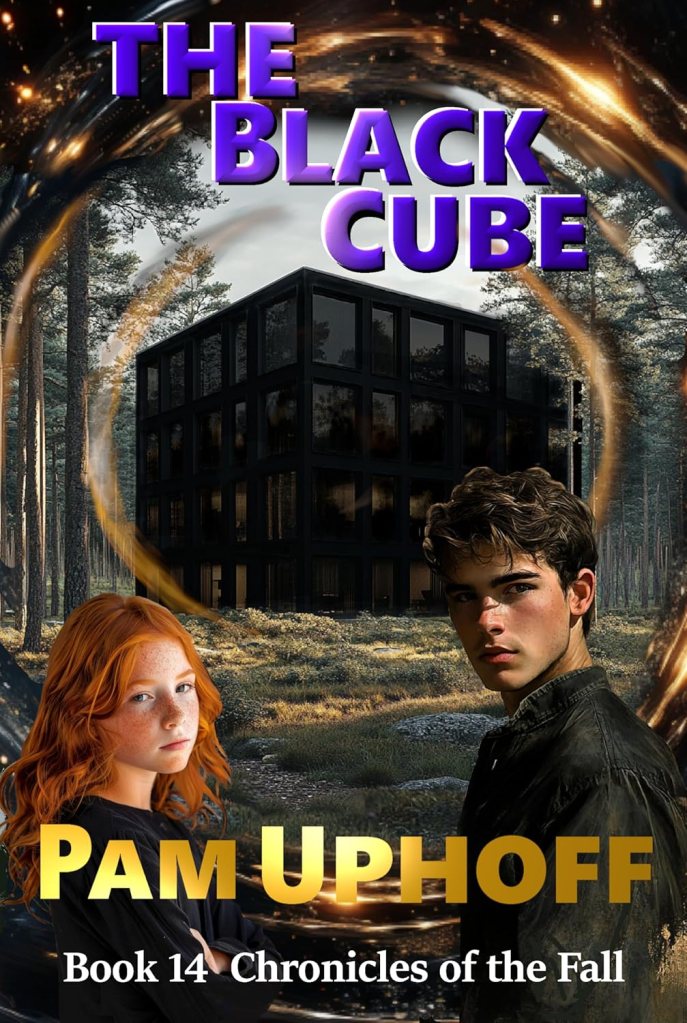
FROM PAM UPHOFF: The Black Cube (Chronicles of the Fall Book 14)

Hieronymus was just going to take a ride with a friend and wasn’t expecting his friend’s sisters to be a kidnapped . . . and he certainly wasn’t expecting the opportunity to be a hero.

As information about the abilities of unchipped Portal Clones spread, their usefulness for cross-dimensional crimes of the ordinary sort should have been anticipated . . . although how to stop them is difficult, if not impossible. But as a spunky thirteen-year-old works to escape, Hieronymus has a plan . . .

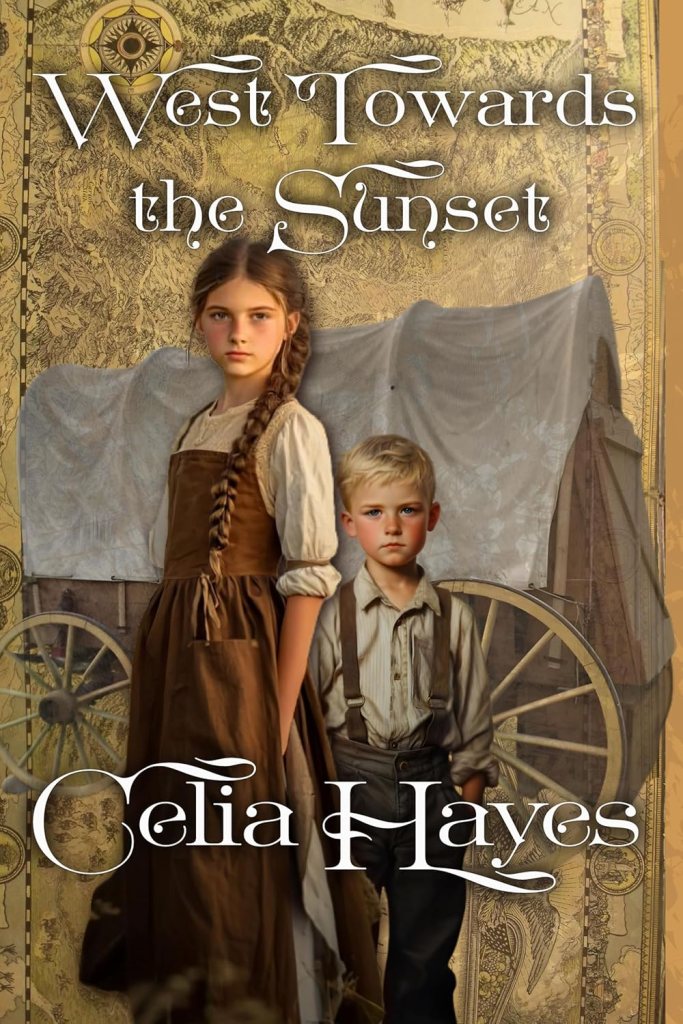
FROM CELIA HAYES: West Toward the Sunset

It’s the year 1846, and Sally Kettering is just twelve years old. Her parents have decided to sell their farm in rural Ohio and go west … west to California. Sally and her six-year old brother Jon must leave everything they knew – friends, kinfolk and the little town where they had lived all their lives so far. Pa and Ma Kettering packed what they could take into a single covered wagon, and they set out to follow a trail through the wilderness west, along with a party of other families and adventurers. Unknown dangers lay around every bend of the trail … wild animals, wilder Indians … Indians who might be hostile or friendly, and no way to know for certain … treacherous river crossings, trackless deserts, and jagged, dangerous mountain passes.
And still, the Kettering family and their friends boldly set out … following the trail that led west toward the sunset!

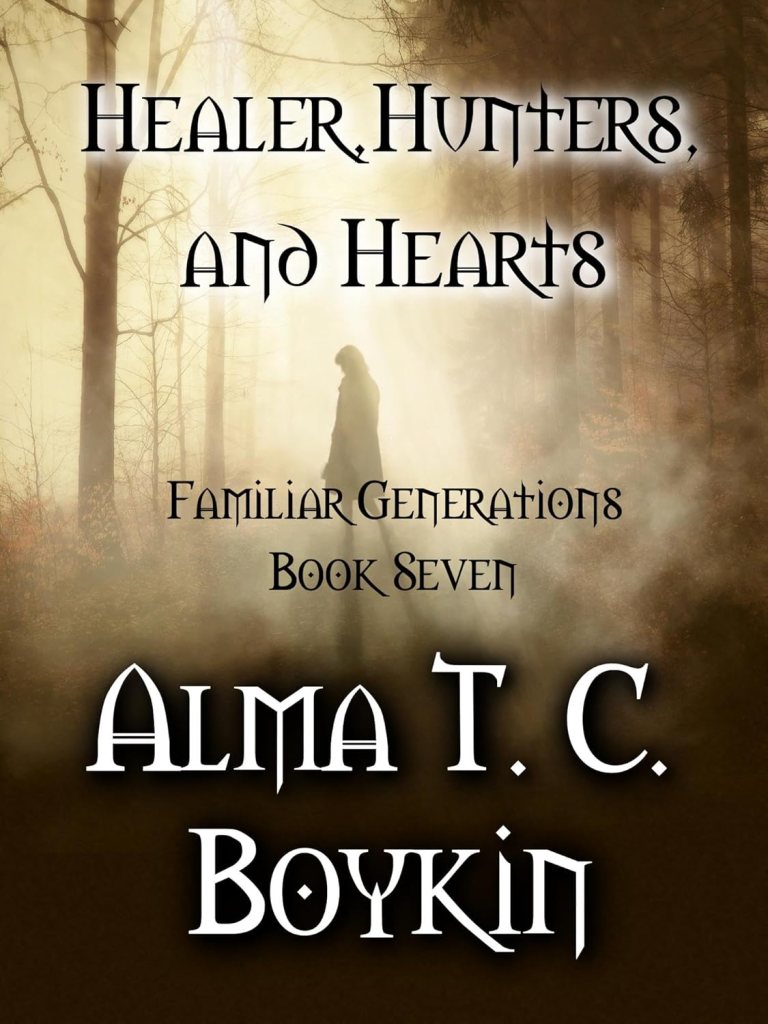
FROM ALMA T. C. BOYKIN: Healer, Hunters, and Hearts: Familiar Generations Book Seven

Birds of mischief flock together …

Healer and Hunter, Deborah Chan Lestrang makes her way in the world as an herbalist and Healer who also hunts fell creatures when needed. Tensions inside her extended family call for a healer of hearts as well—a task far trickier, perhaps, than easing physical pain.

Weaker magic workers report being harassed by birds, birds inside a shield. Foul creatures appear, brought by a gate-spell cast by a coven. Or was it?

An old ill resurfaces …

Word comes from the north of a new drug, one that seems to grant magical abilities to those who take it. And that does not kill them as quickly as heart’s fire did. Could the birds of ill omen and the new pharmaceutical be related?


Deborah must find a path between duties and desires, the past and the present. But she does not travel alone. And she is her parents’ daughter. If she can survive Master Lestrang’s chili and his curries, she can banish abyssal evil. Maybe.

FROM HOLLY LEROY: Pooled Blood – A Lt. Eve Sharpe Thriller

Love J. A. Konrath’s Jacqueline “Jack” Daniels? Try Lt. Eve Sharpe.
After barely surviving the horror of the Parkside Strangler, Lieutenant Eve Sharpe and her friend, P.I. Jillian Varela, decide to head to Cancun for a little well-deserved R&R.

But instead of a relaxing two weeks at a five star, luxury resort, a grisly death lands at their feet, and a young girl is arrested.

It should be simple, but in Mexico, you are guilty until proven innocent. And if the Policia Federal find out what Eve and Jillian are up to, they’ll be spending a long time in less than luxury accommodations.

The third in the series of Lt. Eve Sharpe/Jillian Varela mysteries.
ONE EIGHT SEVEN
REMEMBER THE DEAD
POOLED BLOOD

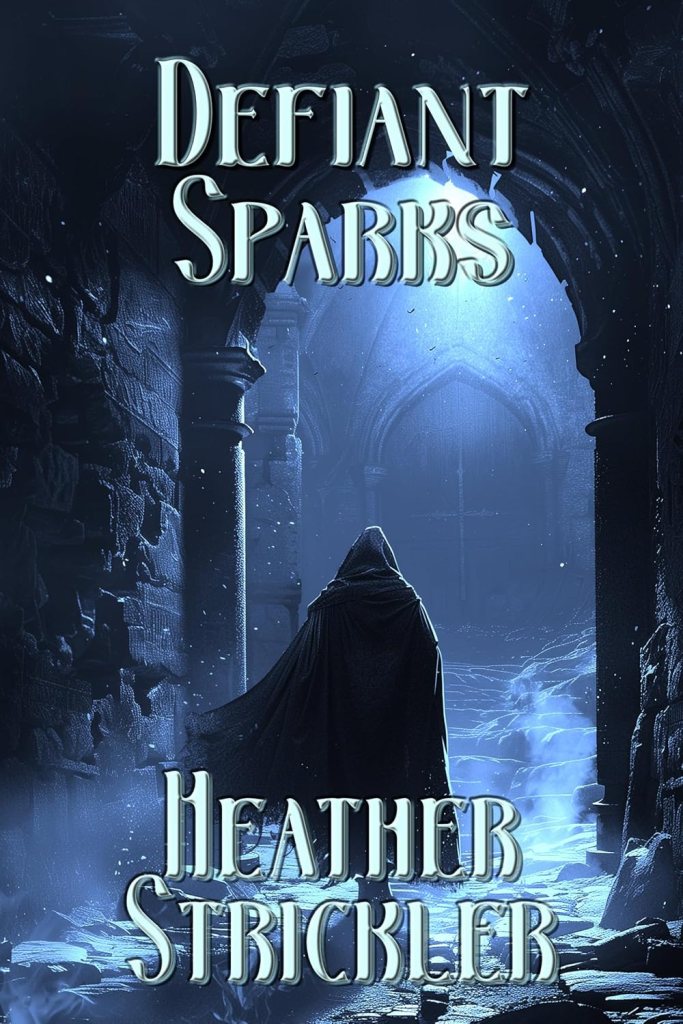
FROM HEATHER STRICKLER: Defiant Sparks (A Bard’s Hearth)

Some fires will not be quenched.

Some people will never just lay down and die.

These are some of their stories.

Old men fighting hungry shadows.

Prisoners refusing to be broken.

From the mean streets of a fairy city to the ancient paths of Ur, some people will not yield nor sacrifice honor to any force.

Ten stories of determination and honor and a willingness to cling to what is right.

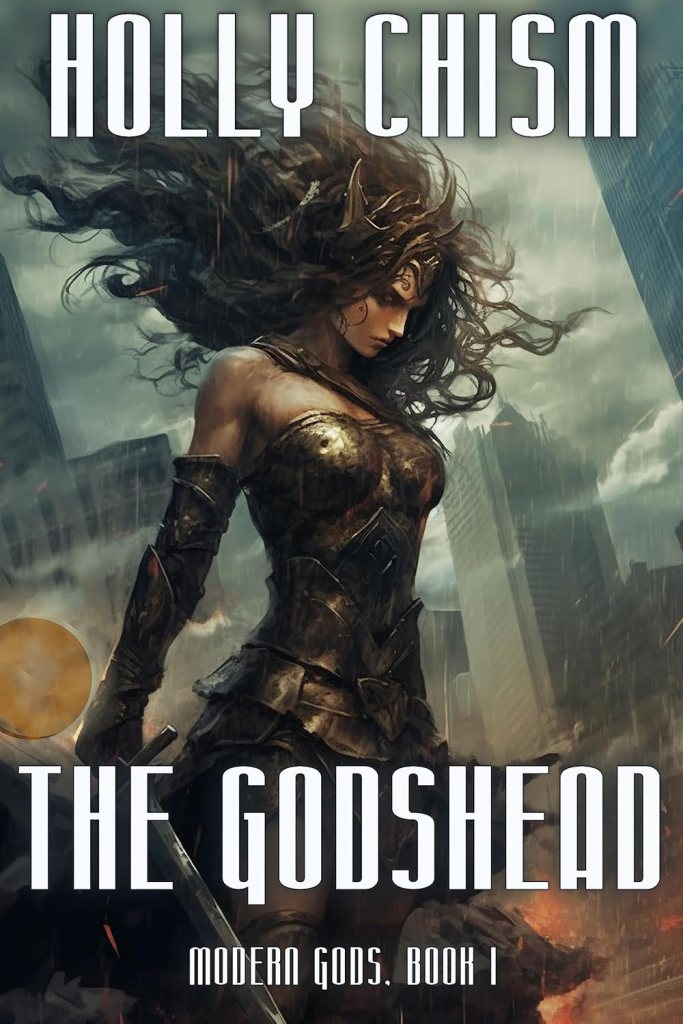
FROM HOLLY CHISM: The Godshead (Modern Gods Book 1)

Food and drink for sale; snark for free…

It’s hard to be a god nobody believes in, sometimes. Especially when one spends their days trying to quietly go about his or her life in a world that barely remembers the myths surrounding the old Greek gods, but where some religions still follow the old Norse gods.

And some of the Norse gods are getting more dangerous: Loki, the trickster, has lost the last of what passed for his sanity, and needs to be helped, or stopped. One of the two. And no one seems to be up to it.

At least, not alone. Working together, they can avoid the worst of Loki’s tricks, and maybe even solve their problems.

A tale told from several points of view.

FROM MARY CATELLI: Queen Shulamith’s Ball

A ball, a ball, Queen Shulamith would hold a ball. . . .In the magical city that all kingdoms can reach, and none can conquer, filled with kings and queens, intrigues and wonders, that the reclusive queen would stage a ball was a marvel among marvels.It will mean much to many: a young woman newly arrived in the city; a woman and a bear who dance on the street; two small orphans sent to the house of their great-great-grandfather; soldiers staging an invasion; and a queen securing her position.

FROM LEIGH KIMMEL: The Space Race Trilogy Omnibus: Time Slips, The Secret of Pad 34, Beach House on the Moon, Plus two exclusive new essays

Time Slips

What if our most treasured verities were in fact wrong?

To be selected for Project Mercury and be one of America’s first astronauts was a dream come true for test pilot Deke Slayton. But fellow Mercury astronaut Al Shepard kept telling old stories from his native New England, tales of monstrous entities like Cthulhu and Yog Sothoth. Earlier generations had viewed them as demons, but might they in fact be aliens, here long before humanity?

Soon Deke discovers evidence that something is watching the US space program. Something that begrudges humanity the stars and would put a ceiling on human attainment. Something that can manipulate time itself.

HP Lovecraft wrote that we dwell on a placid island of ignorance amidst the dark ocean of infinity, and that we were not meant to travel far.

What might the US space program have looked like in a cosmos filled with hostile eldritch entities? Would they notice us as playthings? Or as a nuisance to be dealt with?

The Secret of Pad 34

Who would put a ceiling on humanity’s expansion into space?

That’s what Gus Grissom wants to know. While fishing offshore from Cape Canaveral, he glimpses a mysterious undersea city of unearthly geometries, marked with a strange three-armed cross symbol.

His efforts to research it bring him veiled threats from strangers at his door. Trouble blights an exemplary career. However, Gus refuses to be cowed into silence, and pursues every lead he can find.

HP Lovecraft wrote that we live on a placid island of ignorance and were not meant to travel far. This is the Space Race in a world where the Soviet Union is not our only adversary.

Beach House on the Moon

The Moon is a dead world, airless and desolate. Emmaline Waite has known this fact since childhood, when she watched the Apollo landings.

But here she sits on the shores of the Sea of Tranquillity, looking up at the gibbous Earth as the waves roll in. What madness can this be?

She gets no time to contemplate that question, for she is not alone. She is about to enter a realm of love and fear, of mind-bending secrets that change her understanding of human history, and of self-sacrifice.

Her life will never be the same.

Miskatonic University in the Cold War and Contemporary Era

How would H.P. Lovecraft’s famous fictional institution of higher education have developed through the second half of the Twentieth Century and into the Twenty-first?

Space: Gernsbeck vs. Lovecraft

A look at the fundamental worldviews underlying the approaches of Hugo Gernsbeck and H.P. Lovecraft to the portrayal of outer space, aliens, and space travel.

So what’s a vignette? You might know them as flash fiction, or even just sketches. We will provide a prompt each Sunday that you can use directly (including it in your work) or just as an inspiration. You, in turn, will write about 50 words (yes, we are going for short shorts! Not even a Drabble 100 words, just half that!). Then post it! For an additional challenge, you can aim to make it exactly 50 words, if you like.

We recommend that if you have an original vignette, you post that as a new reply. If you are commenting on someone’s vignette, then post that as a reply to the vignette. Comments — this is writing practice, so comments should be aimed at helping someone be a better writer, not at crushing them. And since these are likely to be drafts, don’t jump up and down too hard on typos and grammar.

If you have questions, feel free to ask.

Your writing prompt this week is: PURPLE

You Worry Too Much About Money, by Cybersmythe

Here in the United States, we worry about dollars. Everything from cheeseburgers, to the gross domestic product (GDP), to the national debt is denoted in dollars. When I recently negotiated a salary at my new job, that amount was in dollars. That’s because the dollar is the kind of money that the US uses. Other parts of the world may worry about Euros or Yen or Pesos or Yuan or even other flavors of dollars. The point is that it’s all money, and it is probably not what anyone needs to be worried about.

GDP is especially pernicious because government spending is added directly to the bottom line, and scary words like “recession” and “depression” have definitions that are tied directly to the GDP. The government also controls the amount of money that there is, so if you want your economic numbers to look good, all you have to do is generate a bunch of money and spend it on, well, anything or nothing at all and presto! No recession! Ain’t the economy great?

When I say that you probably don’t need to worry about money, I’m not making some sort of hippy dippy claim about how if we were all to just live together in peace and harmony everyone would have enough, so stop worrying and join the chosen! On the contrary, my point and purpose is to give you something else to worry about. Paying attention to the flows of money won’t give you the real picture of how the economy is doing, so let me tell you where your attention should really be going. By the way, none of this is intended to argue that money isn’t necessary, only that it is not core to an economy.

Let’s start by the observation that money isn’t wealth, it only represents wealth. That’s because money, by definition, only becomes useful when you trade it for something. It’s the goods and services that you trade for that’s the real wealth. The problem, of course, is that it’s hard to compare all the myriad forms of wealth in a meaningful way, so of course one is forced to use money for that. Hence the use of GDP to describe how the economy is doing, but like the old saying goes the map is not the territory.

Times are good when you have all you need and more besides. Times are bad when you’re having to make hard choices concerning what you need. Sometimes times are bad for you when they aren’t for most people. Sometimes, times are good for you even when your neighbors have to tighten their belts. Given those definitions, it’s not clear that it is meaning to talk about what times are like, in general. However, people can intuitively tell when things are generally good and when things are bad, and measuring the GDP gives you a way to quantify that. Nevertheless, people don’t buy and sell little bits of GDP. They, instead, buy things they need and sell things they have, and the flow of wealth is in the direction opposite of the flow of the money.

Understanding that money is not wealth also reveals the source of phenomena like inflation. In principle, (hands waving wildly to distract you from the fact that nobody knows what all the wealth is, nor how much money there is) you can take all dollars in the world and put them in a pile, and you can also place all the wealth in a big pile, and assign a bit of money to each bit of wealth. That is, in some sense, the value of that bit of wealth in dollars. That allocation will change over time as dictated by the law of supply and demand, but there are other things you can do.

You could, for example, add a bunch of money to the money pile. Then, every bit of wealth now has more money assigned to it. That’s inflation. People often observe that the government need not tax anything because they can just create the money needed to pay for the things they do. While that is true, kind of, it is much harder to create that much more wealth that quickly. You could also remove a bunch of money from the money pile, and the result is what is called deflation.

We’re not likely to see deflation, however, because money isn’t just traded for things. Sometimes, money is traded for money. No, I’m not talking about currency exchange. Instead, I’m talking about trading the same kind of money in time. As in, I get a bunch of money all at once and I give it all, plus a bit more, back to you a bit at a time. A loan, in other words. Inflation makes it easier to pay the loan back because inflated dollars you use to pay it back are worth less than the uninflated dollars you borrowed. Since the US Government is America’s biggest debtor, the fact that the US Government also has control over the money supply means that you’re always going to see some inflation. Sometimes more, and sometimes less.

Looking at money as if it was not wealth also puts paid to Marx’s labor theory of value. The value is the amount of wealth created by whatever process, and is independant of the effort required to create that wealth. If no one values the end product of the work, then no wealth was created. You cannot make anyone rich by paying them to engage in unproductive labor. It makes no economic sense to pay one person to dig holes while also paying another person to fill them in, although you might choose to do that for other reasons.

Bear in mind that wealth is created and destroyed all the time. When I go to Whataburger to buy a cheeseburger, that valuable assembly of tasty food doesn’t exist an hour before I arrive and ceases to exist shortly after I buy it. Other bits of wealth may last longer, but nothing lasts forever. So, making new things is something that needs to be done continuously just to keep up. Wars are paroxysms of wealth destruction, so it also makes no sense to justify starting a war for economic reasons, although (once again) you might have other reasons for doing that.

So, that’s what I think. Paying attention to the money is simple but causes people to not see what is really at the heart of an economy becuase it’s the stuff that’s more important.

The Illusion of Knowledge

The problem with totalitarian states is a problem of information, or lack thereof. No one wants to tell the boss that things didn’t turn out the way he planned. And there’s a hierarchy of bosses before the ultimate boss. At each level, the information is corrupted.

Suppose that you manage a factory making boots for the army. You were asked to make 4000 pairs of boots, but you only managed ten, because the leather for the boots never got to you. When the big boss asks for the boots, of course you tell him it’s on the way, the because you know the leather providers lied and said they got it to you. The guy in charge of transport, in turn, will tell his boss the trucks are fueled up and full of boots. The fact is no only doesn’t he have boots, but also no fuel and possibly no trucks.

This is why totalitarian regimes make wrong decisions and why they lose wars. Also why they’re absolutely convinced they’re the strongest, etc. until they lose.

Now I’m going to blow your mind: this is not exclusive to totalitarian states. It’s in fact endemic in any system where truth imposed from above and no redemption is possible. In fact, most centralized organizations of a certain size, with no countervailing culture.

You know all the chest beating “In this company there’s no room for failure?” That’s a company that will fail, because people working for it can’t afford to.

If your company — say — expects the editor to know exactly how many copies a book will sell, in a system that neither surveys the market nor knows how to market, the editor will pull numbers from ass, control as much as he can to make sure it sells the right number, and — if needed — pull the book out of print if it’s going to sell too much. Because no failure allowed and estimating too few sales is as bad as estimating too many. (True story, not me, but someone had a book that was becoming an unexpected runaway bestseller pulled out of print after a week. And the editor refused to put it back in print.)

I’m sure there are a ton of other examples, from huge corporations, where people are taught that they need to set goals and be inflexible, and that there is no failure, etc.

However, the most obvious examples for this are our media, our intelligence agencies, our institutions that are supposed to know what people think and want and how they are coping with current issues.

I was reminded of this today when I accidentally tripped on an article where the writer was utterly baffled all surveys claimed that religion and religiosity are in sharp decline in the US and yet the Bible is hitting new numbers in sales and the top podcast is a Rosary in a Year podcast.

I mean, I don’t know about you, but I absolutely can square that circle. It’s not even difficult. If the surveys aren’t outright fabrications — a big if these days — chances are that what was asked as if they were members of a church. With the mainstream churches, without exceptions, tilting more and more into conformity with the leftist establishment, a lot of people who are very serious about their religion are finding it hard to attend a church or admit they belong to an organized church.

Of course, the left who are most of the people commissioning these surveys, wouldn’t even understand this concept, because in their minds “left” is just mainstream, and churches that are leftist should therefore be the most popular. If people aren’t attending them, it must mean they’re no longer believers.

Or alternately they asked people who don’t trust the person asking the questions, and who would be destroyed if their colleagues knew they were religious.

Part of the problem, of course, is that the information/culture/industrial complex is running the Marxist script according to which the smarter and more “advanced” you get the less religious. And every bit of information they get must fit into the matrix or be disregarded.

Because, well, failure is not an option. If the Marxist assumptions are wrong, their whole world collapses, because they’ve been interpreting everything through the Marxist assumptions.

The other part of the problem is that their cultural branches continually manufacture pseudo-knowledge, which adds up to a picture of the world that has nothing to do with reality, but does so by being so pervasive, so unified and so inescapable, that it triggers our subconscious impression of what’s real.

What do I mean? Well, it turns out that things like TV and movies can trick the back of our brain into thinking what we watched is real. It won’t stand up to examination, but it is never examined. Our brain doesn’t actually have a defense against seeing things that look realistic but aren’t real. This wasn’t a thing in our evolution.

So, people assume something like 25% of people are gay, and 50% of people are black, and probably at this point that something like another 25% are transgender. The numbers are, of course, nowhere close to that. Not even vaguely.

BUT the system of information is corrupted and that feeds more corruption.

About five years ago I stopped watching British mysteries. Understand that, even though some series bothered me with political insanity, most of them didn’t, and it was my escape. And then I realized that every couple shown in every series, including those set in the 30s was a bi-racial couple. Why? I don’t know. I asked friends from England if this was realistic and the answer was ‘lol, no.’

And I couldn’t watch it. Because the fact EVERY SINGLE couple was bi-racial obtruded to such a level I couldn’t suspend disbelief.

And then recently, I started seeing this in American movies. Just… all of a sudden every couple is bi-racial, unless they’re both some non-white variety. These are stories set in small towns in areas of America I know d*mn well — having been there — are 90% white.

Yes, this means I rant at the TV and my husband tells me to shush, but seriously!

I have no problem with bi-racial marriage. By the crazy leftist definition I’m in one, though it’s really hard to figure out which of us is what race, and you have to squint and go with the 10% rule. (Like most Americans, we’re just shades of beige.) And I seem to have an unusual number of friends who married different races. Mostly I think because I’m part of a group where we couldn’t care less for “race” but care for individuals. And being Odds we have enough trouble finding people we get along with without caring about skin color or “ethnic” features.

However, I know d*mn well that day to day, out there, bi-racial couples aren’t that common. Most people are or appear to be “standard white” (see we aren’t at home to the one drop theory in this case. It’s visual identification, and for that most people are “white” ranging from pale blond to tanned Mediterranean.) Then there are some obviously Hispanic couples, some Indians, and depending on where you are, a lot of black couples, but nowhere near as many as white-white couples. Bi-racial couples aren’t rare enough that people turn to look, but they also aren’t anywhere close to the rule.

I have nothing against the occasional ethnic or bi-racial couple in a movie. I’m not even going to stand here and go “Well, statistically it’s 15%” or whatever (For one, statistics are unreliable, because they depend on self-identification, which mostly depends on the one drop rule.) If 2/3 of the couples are white, and the 1/3 is mixed, ethnic, whatever? That won’t feel jarring. Heck, 50/50 wouldn’t feel jarring. It’s when you start noticing it’s something like 90% mixed and you don’t see a single white-white couple. And you start going “What reality are these people living in?”

The reality they’re living in is one in which they think black and white are 50/50 and then the other ethnicities are 30% (yes, I know, but Math is racist. You know that.) And everyone is isolated and belongs to this group and hates everyone else.

In their befuddled little minds — ask them. They’ll rant about the global South and how white people are going extinct. It’s stupid stuff, but you see, they give incentives for claiming to be a minority, and never notice people change IDENTIFICATION not ethnicity — they’re easing the extincting of you those evil Westerners by promoting bi-racial marriage and “erasing whiteness.” This in turn will bring about magical califragilistic communist Utopia.

Anyway, the only way to make sense of this is to get into the minds of these people, and it’s almost impossible to do so, because there’s failures of information, at every level.

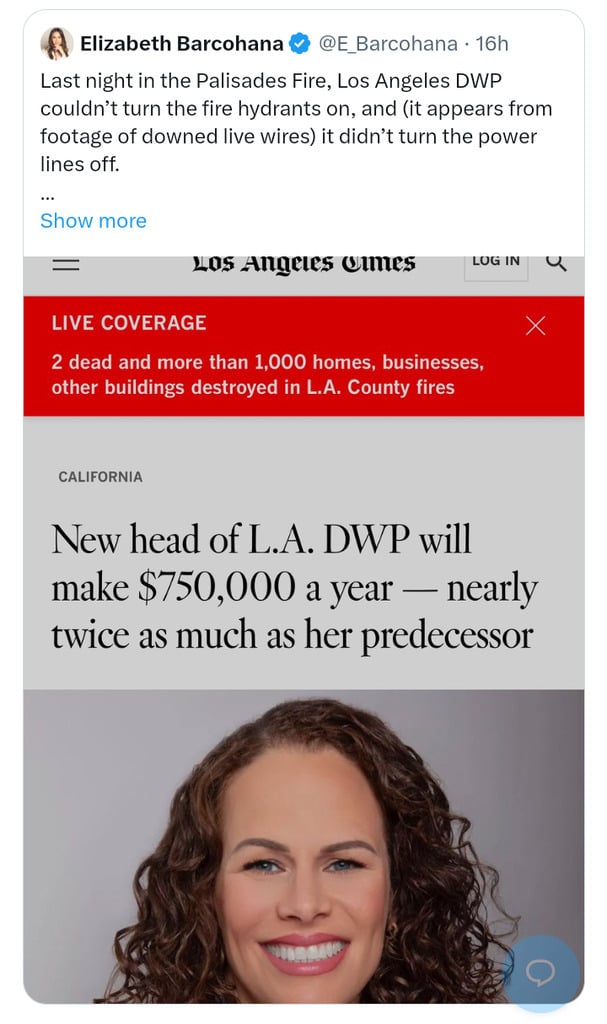
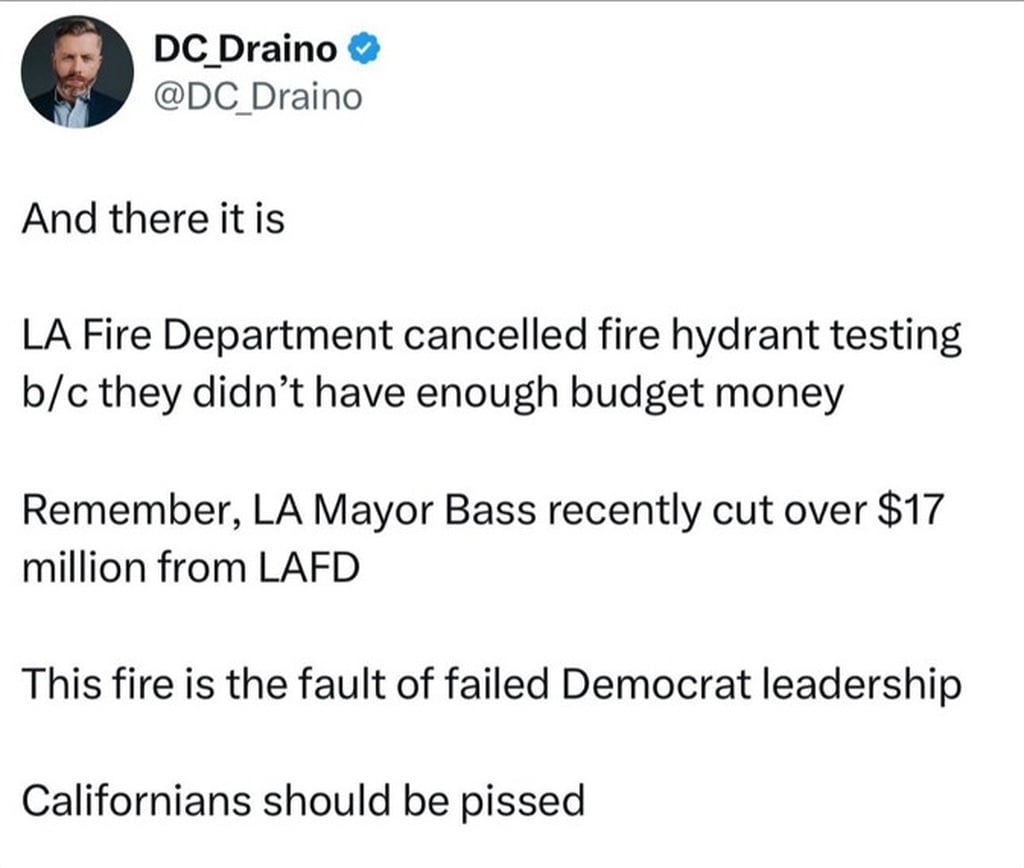
Take for instance the fact the head of every police department is a woman and has been for at least the last 30 years, in every TV show and movie. (Though they used to also allow black men.) If you believe that, you’re going to think that when this doesn’t happen people are being “intentionally held back” and need DEI. And then…. And then things like LA happen. Because every time you promote or select based on any characteristic but competence, you are degrading competence and end up with mediocrity.

It basically amounts to “delusion on delusion on delusion.” And it’s impossible to figure it out completely, even if you make guesses.

This is to say, as a lot of people become redpilled, don’t assume they’re faking it. A lot of them really were lost in a morass of bad information and bad first principles to which to interpret the information.

The thing is that one event that is shocking enough can wake people from this type of thing. (It’s how you deprogram cult members.) And Trump’s election was a very shocking event for them. They thought they had won full control of the country forever.

So some of the newly red-pilled might be completely sincere. (Though probably not the ones who claim not to have known Biden had dementia. At least not those that had any contact with him.)

The other thing is: you don’t have to mimic their errors in thought. You don’t have to believe their TV shows and run around with your head on fire saying the “white race is going extinct.” (For one, you’d have to define white race. Also, the “white race” has absorbed so many things considered “not white” and yet it’s still here. Chill.) You don’t have to listen to their designated ethic virtue-bearer talk about how he hates all whites and believe this is true of your neighbor who tans a bit.

And you certainly don’t have to believe no one is religious anymore. Or that America has changed out of all recognition. Or that people don’t want to work anymore. Or whatever is being pushed by the crazy media, at the top of the pile of distortions and lies.

As the election showed, this country is nowhere near dead, and mostly Americans are Americans. (With some cities entirely taken over by invaders. Probably. Only I haven’t been there.)

No, you can’t find anything about the country as a whole and be sure it’s true. All of the information streams are corrupted. But there are clues.

I knew that the left wasn’t fully in control or even close to in control when Let’s Go Brandon went viral and was everywhere. I knew the economy sucked because I have a lot of friends in all types of retail. And also because I saw the prices in the supermarket. I knew the real state of people’s satisfaction with the Bidentia by listening to people at the supermarket. (I listen to strangers’ conversations. I’m a writer. We have no shame.)

This is again to say “Get out and touch grass.” Or better yet, look around at reality, listen to people not in your immediate circle. Look at the subtle signs the left is in real trouble. (The right can boycott brands into submission is one of those. The opposite isn’t true. They’re loud but not many.)

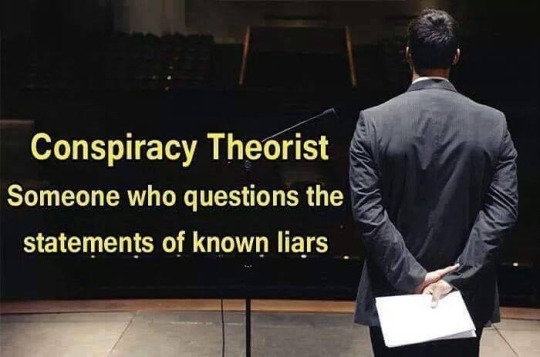
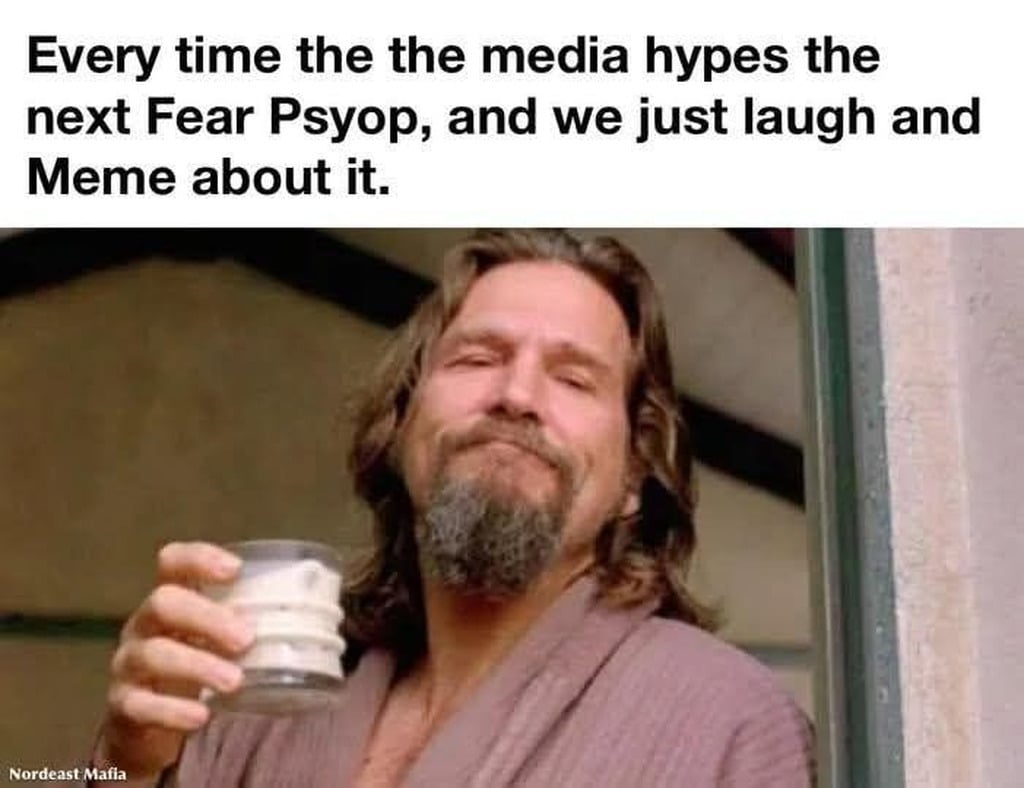
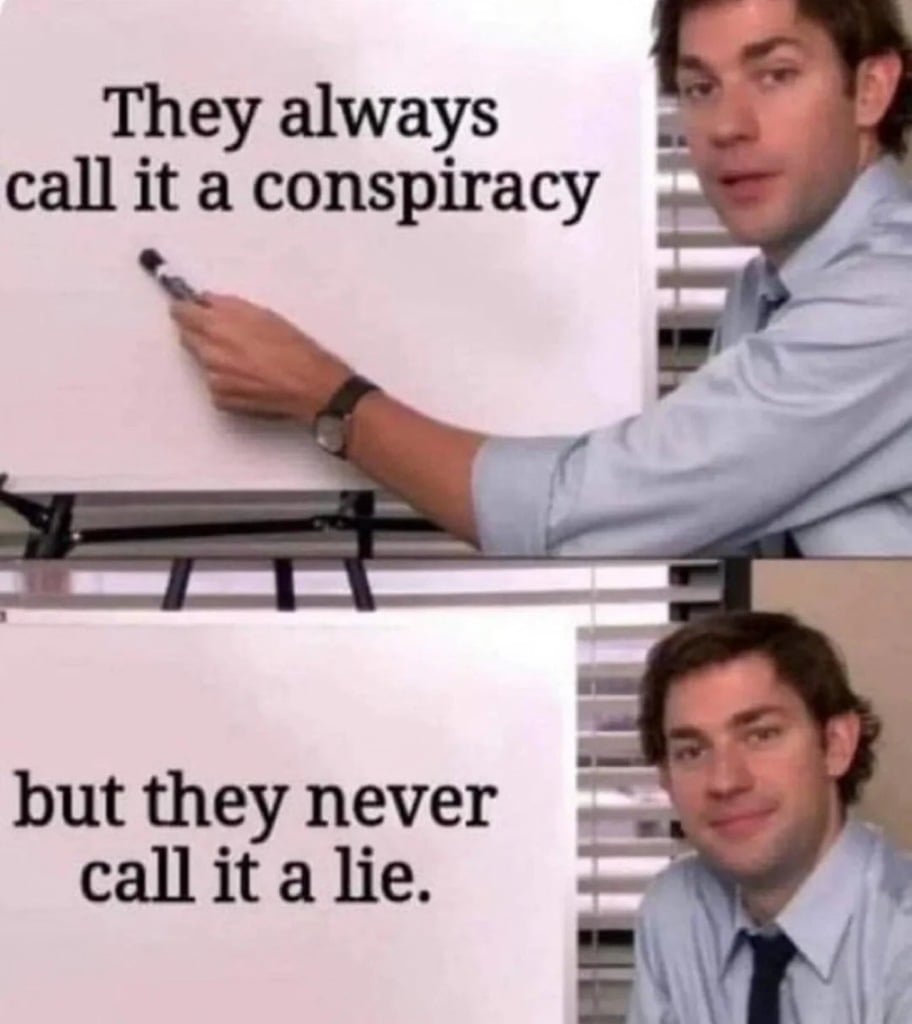
Always look behind the ideas and “facts” being dished out by the media and experts. Sure, they’ll call you a conspiracy theorist, but these days it’s just what they call people not taken in by the psy-ops. And there are more and more of us every day.

Because the “facts” the left is dishing out just don’t add up. They’re as phony as wooden nickels and you’d have to be a fool to believe them.

Or foreigners. As I found out in October, in Europe they tend to believe everything they see in our media. Which means Americans on average are part of a shootout a day, we’re all in mixed race marriages, and all our men are stupid and all our women brilliant.

Let them fool themselves. It’s dangerous enough to have them running around in an illusion.

We don’t have to join them.
The Missing Pieces

Lately, as we’ve been finding out how controlled the internet was during the Biden maladministration, and even before through the magic of the deep state, I’ve been getting a very weird impression of what is important to the left.

Oh, not through what they say, which is — granted — weird enough, but through what they don’t say. Through the things you’re not supposed to see, question, or think about.

Because, you see, recently, I realized a lot of things I’d read, a lot of rabbit holes I’d plunged down in pursuit of something that “tasted wrong” are now completely gone.

As we found in the last ten years, when the pictures of the jumpers from the towers on 9/11 disappeared from online, followed one by one by all the pictures of that day save for the airplanes hitting or the fairly-distant ones of the smoke billowing, the internet is only forever if someone with power and resources doesn’t comb through it with a fine tooth comb eliminating that which they don’t want anyone else to see.

However, in all this, again, the important thing is that you can’t do that that without leaving behind the shape of what you removed, and someone looking at the aggregate of what you removed becomes fairly sure of what you’re trying to push, what crazy theories and outright lies you’re trying to protect, and exactly how deranged and out of connection with reality your whole project is.

There are other things that have disappeared recently, but the three I remember because I’d written about them before, based on things on the net are all fairly obvious and glaring.

One is the Mouse Utopia experiment, revered for years as “proof” that overpopulation and over crowding had certain bad results (The women become whores the men become thugs would be a short hand, but yeah.) The problem is that the experiment showed no such thing. What the experiment showed is that if you took care of the mice so that they didn’t have to do anything for it this happened. To the extent mice are like men, this would be more like saying that welfare destroys society, which is an experiment we’ve been running on humans, ourselves, for about 100 years, and seems to bear true. Purposeless lives are blighted lives, and men (and mice) were made to strive.

There used to be debunkings on line. At one point I was arguing with people on our side — American conservatives love the Mouse Utopia because they view it as a condemnation of cities, not being aware that our city density is spacious anywhere else — and pointed out it had been debunked. I knew it had because I had spent one of my depressive periods tracking it.

I should have saved and archived the pages of debunkings. They’re all gone. I couldn’t ferret a single one.

I have only one proof to offer for my being right: For this influential an experiment, which changed the world by creating population control bureaus and ways to discourage population growth everywhere… why has it never been reproduced? You’d think some graduate student would have redone it. Mice are cheap. You’d probably have tried to reproduce it with monkeys or apes, too, though more expensive, more difficult to get permissions but closer to humans.

But no. Neither here, nor in countries where where animal experimentation is more unregulated. This experiment has never been reproduced. And questions about it have disappeared from on line.

Then there’s the debunking of Marija Gimbutas. Look, people, the woman was nuts. Her theories of the great pre-historic feminist utopia doesn’t pass the laugh test. She saw this in ancient Greece — Greece — and interpreted stylized bull’s heads as uteri. She was a raving lunatic on a mission to impose her view on pre-history, which by definition left no written records.

And she was debunked. Not once, but several times. She used to be the laughingstock of any thinking archeologist.

Now all that remains on the internet is reverential and treats her “discoveries” as gospel.

It’s jaw-droppingly stupid. But I guess the idea of women as an oppressed “minority” is essential to the shaky edifice of leftist cant and their bizarre idea that men and women are oppressor-oppressed and not two halves of a whole.

(And in pre-history everyone was oppressed. Even the kings lived sucky lives. Ignorance and scarcity are hard taskmasters.)

Then there’s Margaret Meade. Do I need to explain what was going on there? No there was no paradise of free love, and certainly not where she purported to have found it.

And please, those of you who know her personally don’t need to write to me — again — to tell me that she wasn’t hoaxed, she made it all up out of clear blue sky because it amused her. She might have. I don’t care one way or another. I just know she lied and gave an entire generation the idea that humans were like bonobos and it was healthful and good to sleep around with many people all the time, with no particular attachment and no emotional consequences from the act.

We know whatever she thought she had seen, or made up, that she was utterly wrong. The hook up culture doesn’t produce rapturously happy people. All it does is destroy family formation. And family instead of being a tool of oppression turns out to be protective of women, and good for young children. It’s almost like the structures evolved for a reason and like the cultures with the healthiest families are the most successful for a reason.

However, her debunkings, which also used to be fairly obvious on line have disappeared and all that’s left is respectful, hushed reverence.

Guys, look, the questioning of the moon landing, pages claiming that JFK was killed by aliens, pages claiming the greys control everything, crazy conspiracies like Tartaria, or of course, the factual page on how birds aren’t real (eh) are all still out there.

None of them are stopped. None of them are disappeared or memory holed. I bet I could poke around a few minutes and find pages claiming that Einstein was wrong, or “disproving” the existence of planets on the solar system.

So the fact that these experiments and theories have no dissenting views left on line, or not in the first 100 pages of search…. by itself tells us a lot.

That all these shaky, bizarre, outright made up things are the base of the leftist edifice and that their answer to their debunking is to make the debunking disappear is why the left has now entered its ghost dance phase.

Reality is that which doesn’t go away just because you cover your ears and scream “I can’t hear you.” Or even because you scour the internet and erase all traces of it.

Reality doesn’t actually care what you believe or how well you think you’ve hidden it.

Reality just is. It abides. And it bites you in the ass the moment you think you defeated it.

The Fine Line

There is a fine and sometimes well-nigh invisible line between reality and fantasy.

No?

“I did it because I had a hunch” — true or false? I mean, was it a hunch, or did you make it up a-posteriori? “I’m wearing my lucky hat” — true or false, or just something you convinced yourself of, in order to have courage. That voice you heard in the night, was it true, or your subconscious who knew that tomorrow you were likely to get in an accident in the snow?

More importantly, the things we tell ourselves to get through bad times. “I’ll be fine. I can tell they’re just joking.” Are they real or a fantasy?

Of course, I have perhaps a greater temptation than most people. See, I can make up really compelling stories, and by this point I’m not even aware I’m making them up. Do I believe in them? Well, no. I’m very careful to know which voice is mine.

So what is this in the name of? There was a post on twitter taken from reddit and frankly horrifying. I’m not linking because partly I am lazy, and partly I don’t want to horrify anyone. And the post was fairly horrifying in the sexual sense. No, I don’t think in the “he should go to jail” sense, but people could interpret it that way.

It was from a guy trying to figure out how to introduce his daughter to his sex doll, since the daughter was likely to be in his custody soon.

People who read it took it under “it is his perversion to involve the kid in his sex games” which would in fact be worthy of jail. But what I suspect is happening is far more horrifying and scared me, personally, a whole lot more than that, particularly given the chances of his ending up with a kid in his care.

To explain: in further conversation it became obvious that he didn’t want his daughter to know he had sex with the doll and then the solution of putting the doll in her own apartment (!) you read that right, as his mistress and dirty little secret came to him.

And what became obvious throughout the whole thing is that he didn’t think of the doll as a doll or a sex object at all.

He was so far in his fantasy life, he had endowed this doll with a personality, thought he was communicating with her, and was convinced they had a “relationship” and she was his “Girlfriend.”

I don’t know how common this is in humans at large. I know that little kids can get like this. They can be so in their play that they convince themselves the toy train really has feelings; the teddy bear is their friend; the doll really wants her hair cut.

Some of us never lose that, and can drop into that mode even as adults. But I think there is more than those of us who make a living from writing our stories who do this. And that people who are less used to walking back and fort across that line are more likely to get lost.

I know I, myself, at a very stressful point in my teens lost track of the line. Like, I was so used to spending time in my room talking to my imaginary friends, that I was afraid of mom going in there. What if she saw them.

I think, honestly, that’s where that poor SOB at the origin of the post was. How did he get that way? I don’t know. Perhaps there was something organically wrong with him to begin with. Or perhaps he went through some enormous trauma, and emerged from it so broken that holding to the illusion that the sex doll is a real person who really talks to and has feelings for him was the only way he could survive.

Now, I realized most of us never go that far into fantasy.

But 2020 broke all of us a little bit. And I swear while I don’t think any of us has gone so far as to have a full blown relationship with a human-shaped piece of silicon (If you have, don’t tell me, okay?) I bet I’m not the only one who has developed unhealthy coping habits (a minor addiction to social media, blogs, internet. I mean I sort of had one before, but when I find myself reading the news on my phone as soon as I open my eyes in the morning to make sure no one blew up the world? It’s probably too much.) And some of those might involve forms of evading the world and reality. Whether those are full blown fantasies, or a minor addiction to oh, Jane Austen fanfic (the fact it seems to be increasingly written by AI is curing me!) or stupid computer games, or mindless romcoms…. it doesn’t matter. If you’re doing it as a self-calming mechanism, it risks being abused. And like any such mechanism being abused, it risks cutting you off from reality and the rest of humanity.

Look, as a past master at getting lost in fantasy, and as someone who has an extremely addictive personality and unhealthful coping mechanisms? Sure, if you have to have something to cope fantasy is better for you than alcohol or drugs. But “better” doesn’t mean good.

As I found out, when I forcibly dragged myself our of my “lost in fantasy period” as a teen, reality is where you live. The place you go to escape is at best a waste of time, and at worst a distraction from actually living your life.

It is acceptable to get unhealthy coping habits for a little while if that’s what you must do to survive.

But don’t stay there. The longer you indulge the escape, the harder it gets to come back.

Come back now. It will hurt like a mother, and it will be difficult. But the longer you delay, the harder it will get.

Come back now. We’re here for you.

It Runs On Rails

I was talking to Charlie the other day and he mentioned an incident I don’t remember, possibly because I am younger than he and only came to the US 39 and a half years ago, when some idiot activists put themselves on the path of a train, not realizing that when the train could “see” them it was too late for it to stop.

Of course, I knew this was stupid because I took the train to school between 7th and 11th grade. (12th I was in the US.) And every time I rushed in, as the train came down the tracks towards me, I knew exactly the risk I was running.

In fact, “throwing yourself in front of the train” was just a way to describe “committing suicide” kind of like other cultures use “putting your head in the oven.”

If you sense a metaphor coming, you’re absolutely right. Because when Charlie was talking about this incident, what light up in my mind was “like our government/regulations/economy.”

The important thing to remember about trains is that they are very large, very heavy and run on tracks, which means they have very little friction. They need a long time to stop, and if you want them to change directions, you need to take them to a special place, where they can be turned and put on a different track.

This is a better metaphor for our system of government and the economy that suffers under it, than I wish to say.

Yes, our economy is all sorts of screwed up by our government and institutions which were captured almost a century ago, just about. And no matter how hard we work, we cannot possibly even know everywhere that has been corrupted and infiltrated.

The other thing we can’t do is turn it around on a dime.

Look, even Milei in Argentina with his chainsaw and working with a smaller (though perhaps more corrupt) economy has only managed to reduce spending by third, after what? Two years?

I expect great things from the incoming administration. And I don’t say we don’t hold their feet to the fire. Holding their feet to the fire is what we’re here for. Because if we don’t the left will. And we can’t let them forget who is boss. Us, not the lefty press.

But give them a little elbow room, okay? Don’t assume “they betrayed us” at every step.

It’s going to take a little bit to turn this train around, and it might be needed to get it to a place where the turnaround is possible.

Honestly, I understand the impulse to say “stop them doing this thing that is the same the bad people did” because I am one of those people who feel this way too. But with some things, like say the spending cap? They’re going to need room to turn us around, or the crash will be harder than we’re ready to withstand.

Sure, come next year, if they’re still asking us to raise the spending cap and to do all sorts of things that are bad for the economy? Then it’s the time to get very vocal.

For now? Hold your breath and give them room to maneuver. Trump has earned that much from us. He’s earned our confidence while he turns the train around.

Trains and economies and governments are notorious for not turning on a dime. And for having inertia to stay on a certain course once they engage it.

Turning around will be painful enough. Give them room to do it, then hold your breath that it doesn’t all fall apart while the turn around is happening.

We’re known to be fractious, unforgiving and vigilant. These are good qualities.

But let’s not shoot ourselves in the foot before we take the first step.

Hold your breath and wait. In six months is the time to grumble. And in a year the time comes to be really upset.

For now. Watch and wait.

Book Promo And Vignettes By Luke, Mary Catelli and ‘Nother Mike

If you wish to send us books for next week’s promo, please email to bookpimping at outlook dot com. If you feel a need to re-promo the same book do so no more than once every six months (unless you’re me or my relative. Deal.) One book per author per week. Amazon links only. Oh, yeah, by clicking through and buying (anything, actually) through one of the links below, you will at no cost to you be giving a portion of your purchase to support ATH through our associates number. A COMMISSION IS EARNED FROM EACH PURCHASE.*Note that I haven’t read most of these books (my reading is eclectic and “craving led”,) and apply the usual cautions to buying. I reserve the right not to run any submission, if cover, blurb or anything else made me decide not to, at my sole discretion.SAH

FROM JAMES Y. BARTLETT: THE ORGAN JOB: A Musical Mystery Featuring Johann Sebastian Bach (The Bach Musical Mystery series Book 1)

Award-winning historical novelist James Y. Bartlett has reimagined the great German composer and keyboard virtuoso Johann Sebastian Bach as a cross between Sherlock Holmes and Keith Richards in this imaginative new historical mystery.

During a visit to the German city of Kassel to inspect the church’s newly constructed pipe organ, (based on an actual event in his life) Bach, his wife Anna Magdalena and his cousin and personal secretary Elias Bach (who serves as Dr. Watson to Bach’s Sherlock) discover that the pastor of the church may have murdered his young wife.
And while they investigate that, Bach learns an old adversary from his past is a guest of the Prince of Hesse, and he plots some musical revenge.

While the heads of Bach scholars may explode, Bartlett has created a delightful contrapuntal mystery set in the heart of 18th century Germany that music and mystery lovers are sure to enjoy.

FROM JAMES Y. BARTLETT: The Coffee Garden: A Musical Mystery Featuring Johann Sebastian Bach (The Bach Musical Mystery series Book 2)

Bach is back and investigating another musical mystery!
In this second novel in the Bach Musical Mystery series, award-winning historical novelist James Y. Bartlett has taken the real-life incident that Bach scholars call ‘the Prefect Affair’ and kicked it up a few notches into a musical whodunit.

When Bach’s First Prefect – the student leader at the St. Thomas School in charge of the main choir – suddenly disappears after an ugly incident at a wedding, the school’s headmaster moves to appoint his favorite student to the position, over Bach’s objections.

While the City Council mulls over the conflict between the two, Bach, his cousin and advisor Elias Bach and Bach’s wife Anna Magdalena Bach search Leipzig for the missing boy. All while Bach is preparing for the summer concert series he conducts in the Coffee Garden outside the city walls. And his daughter Dörte begins a friendship with a controversial woman poet.

In the end, truth becomes known, scores are settled, and Bach conducts a triumphant concert in the Coffee Garden before the King himself, featuring Anna Magdalena, once a promising professional singer herself.

Bach scholars’ heads may explode over Bartlett’s audacity in creating this new Bach persona, but music and mystery lovers alike will delight in this contrapuntal story set in 18th century Germany.

FROM HOLLY LEROY: Street Crimes

STREET CRIMES – Global EBook Award Nominee and Mystery Fiction Medal winner.

Holly LeRoy offers this 21,000 word collection of short stories that are “…sometimes funny, sometimes disconcerting, sometimes plain terrifying. Perfect if you like action-packed suspense.”

MISTAKE PROOF – “Due to a run of bad luck and a string of some very uncooperative ponies, I owed a lot of money to a mob bookie.” A bank robbery goes very wrong in this noir story.
RARE JUSTICE – Private Investigator Jillian Varela tries to solve a pro bono, murdered-child cold case, with a potentially dying client. Unfortunately, it doesn’t look like it’s going to end well.
HOLLYWOOD HITMAN – Spend time with the beautiful people, where an enterprising hit man takes care of a Hollywood couple’s marital problems with a unique and permanent solution.
THE GAME’S END – Return to Jillian Varela’s world, as she races to save the life of a naive heiress who only wanted to know if her boyfriend had been cheating on her. Instead, she could wind up on death row.

FROM DALE COZORT: Aztec Gods: A Snapshot Explorer Novel

Martin Bragg is a Snapshot Explorer, flying into wild, unexplored alternate realities in search of adventure, treasure and video of strange cultures or animals he can sell to TV networks or big Internet companies. He doesn’t want to be a conqueror or king, but he finds himself among modern US mercenaries trying to set themselves up as God kings of an Aztec empire that has survived almost unchanged into the modern age in a hidden alternate reality.
Modern weapons versus arrows and obsidian swords. It should be an even bigger mismatch than the historic conquest. The Aztecs already have Gods, though, and they are far more terrifying than airplanes and machines guns.

FROM MARY CATELLI: The Lion and the Library

The library holds many marvels. Lena and her betrothed Erion had found things that helped the beleaguered Celestians of the city.

But when the king’s caprice decides to sacrifice Erion to protect himself, Lena can only hope a legend can help her. A legend of just kings. And lions.

FROM LEIGH KIMMEL: Perfect Darkness

What would perfect darkness look like? And what would happen if you saw it?

When Pavlik becomes obsessed with the idea of seeing perfect darkness, it becomes a distraction from the pod’s duty as asteroid miners. Little does he know that danger lies in opening one’s mind to the things that lurk in perfect darkness. Things that endanger his pod-brothers, even all of Briar’s Children.

FROM HOLLY CHISM: Bite Sized (Liquid Diet Chronicles Book 1)

Meg Turner has been a vampire for twenty years. Her favorite food is rapists. Which is how she met Andi Donahue, her new best friend/ girl Friday.

And then the nightmares start. And the bodies start showing up–bled out and raped. Just like Meg was. They don’t have a whole lot of time to stop the killer before he strikes again, and only one way to stop the killer.

But how can Andi help Meg stop a killer she can’t even see?

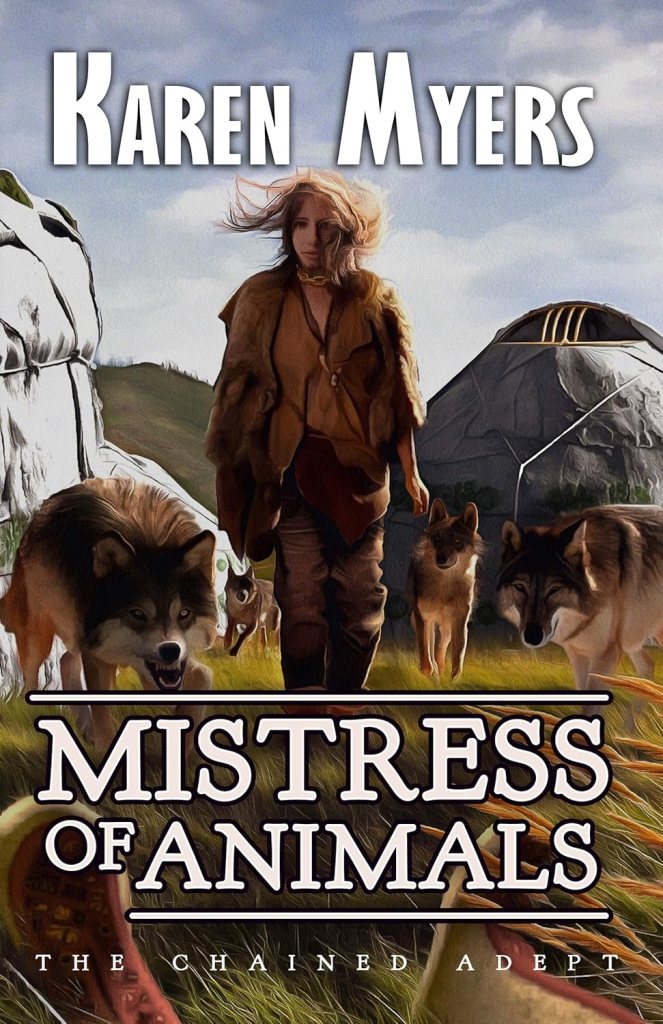
FROM KAREN MYERS: Mistress of Animals: A Lost Wizard’s Tale (The Chained Adept Book 2)

Book 2 of The Chained Adept.

AN ERRANT CHILD WITH DISASTROUS POWERS AND NO ONE TO STAND IN HER WAY.

Penrys, the wizard with a chain and an unknown past, is drafted to find out what has happened to an entire clan of the nomadic Zannib. Nothing but their empty tents remain, abandoned on the autumn steppe with their herds.

This wasn’t a detour she’d planned on making, but there’s little choice. Winter is coming, and hundreds are missing.

The locals don’t trust her, but that’s nothing new. The question is, can she trust herself, when she discovers what her life might have been? Assuming, of course, that the price of so many dead was worth paying for it.

So what’s a vignette? You might know them as flash fiction, or even just sketches. We will provide a prompt each Sunday that you can use directly (including it in your work) or just as an inspiration. You, in turn, will write about 50 words (yes, we are going for short shorts! Not even a Drabble 100 words, just half that!). Then post it! For an additional challenge, you can aim to make it exactly 50 words, if you like.

We recommend that if you have an original vignette, you post that as a new reply. If you are commenting on someone’s vignette, then post that as a reply to the vignette. Comments — this is writing practice, so comments should be aimed at helping someone be a better writer, not at crushing them. And since these are likely to be drafts, don’t jump up and down too hard on typos and grammar.
If you have questions, feel free to ask.

Your writing prompt this week is: drink.