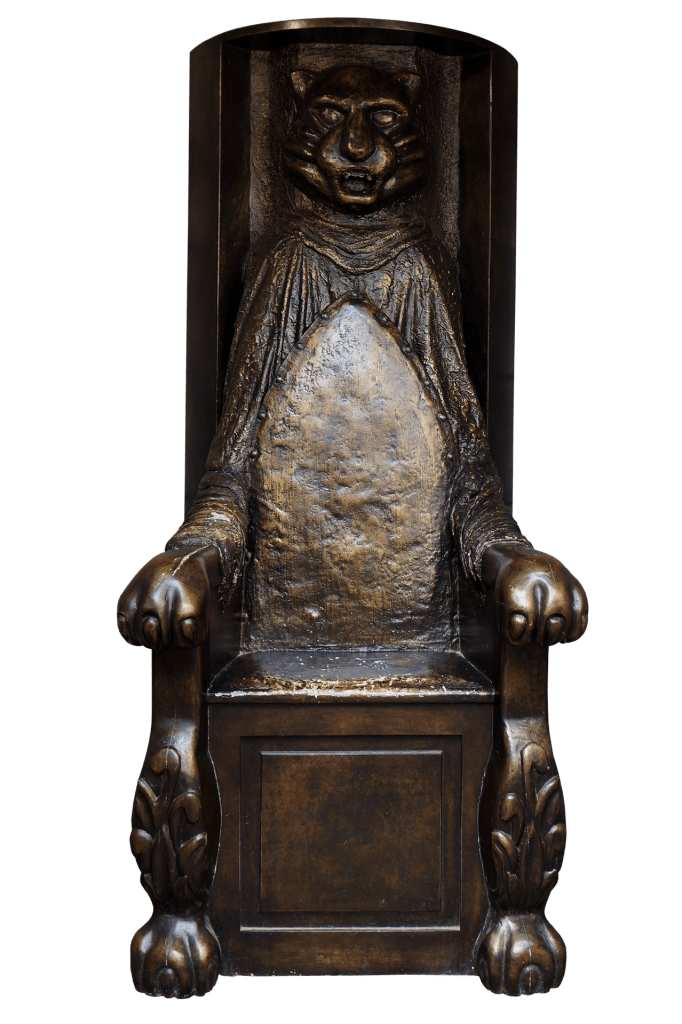
We’ve all heard of Ming the Merciless, and his depredations on the planet Mongo.
But you probably never heard of his truly evil twin, Ming the Merciful. You never heard of him, because he destroys civilizations so completely that nothing is left to tell the tale of their fall. And he’s been in charge of our institutions for a long time. It’s frankly both a wonder and heartening that we’ve resisted him so long.
Yeah, I’m being silly, but only somewhat. And what I said still applies.
I have nothing against mercy and compassion. In fact, I try to exert it on a regular basis, because I’m conscious of how far off ideal-me I fall and how often I need mercy and compassion. Half the time when husband asks “Why did you do x?” (Which makes our life markedly more difficult) my only answer is “Actually I have no idea.” Mostly because ADD and tiredness… let’s say hope I don’t have Alzheimers, but the last month is largely a blank, and the two months before that not much better. And I find my body has a mind of its own. For instance our fridge in CO has this really neat feature where you can open JUST the dairy compartment, and not the rest of the fridge. So for five years I’ve trained myself to put the handle towards that door. … I’m still doing the same, even though we don’t have that door, and the handle is hard to reach from inside the fridge.
So, on that as well as more — ah expensive and destructive — miscalculations, I often need mercy and forgiveness. And I try therefore to dispense it to others.
But I’ve come to suspect that mercy is a bigger responsibility than unbridled anger and destruction. If you lose your mind and kill a bunch of people, it’s terrible. But if you, in your mercy, plan to make people act as they should for (your vision of) a better future, you an distort people’s lives and cause misery (and death, or never life) forever. See FDR and the soft socialists of Europe.
My Wicca friends have a rule that goes something like “Harm none.” But looking back on half a century of life, I have to tell you that this rule is easier to believe in than to apply. Sure, I can refrain from punching people in the nose, or taking stuff from them or — even — hurt them. Physically. In the moment. But in the long term, my acts of what I thought was mercy, my — often — attempts to save people I liked or loved from themselves probably led to more misery than if I’d stepped back and washed my hands of them. Okay, so my life would probably have been lonelier. But these people would probably be in better places now. Some of them much better places. And others would have wreaked less havoc if I hadn’t believed their stories.
Of course if one thinks about it too much, one ends up in a corner, trembling neurotically and doing nothing.
But–
So, Peter linked this story on his blog: It’s not a “homeless” crisis – it’s a drug crisis.
He’s not wrong.
There are two things that caused me to sit back and reconsider the “Always be merciful; always give unstintingly. There’s never any harm in charity.”
One of them was seeing a thrift store throw away perfectly good things, better than we had in our house or could afford at the time: even from the thrift store which was (still is) where we acquire most of our stuff. (Dan calls it the lease program. In Colorado it was ARC thrift stores, because they were cheapest, in fact 10 years ago very cheap. We got furniture and clothing there, used it as long as we needed it and donated it again.)
We’d just bought something — probably a desk — and I was waiting out back to return it, as I watched the employees take a lot of the donations they had been given — piles and piles that were completely unsorted — and put them through the compressor dumpster. A lot of these were things I would have bought on the spot. Disclosure, in fact I tried, as they were putting a dinnette set in, and our dining table had just been broken. They wouldn’t sell me the dinette for $50 (which is all we could afford) and instead reduced it to shreds.
How is that harm? Well, how is it not? I realize they got the thing for free, and probably get rid of a bunch of things so they can keep prices up. But– It was something we could have used. We would have paid what we could afford for it…. and then it was destroyed. This while they keep a steady drumbeat for more donations. Which causes more waste.
We still donate things to thrift stores, but I usually try to give them away to PEOPLE first or (weirdly this works better, particularly when Dan assembles computers from the “components junk” around the house) sell them very cheaply. For the longest time, Dan would take broken computers replace the non-functioning parts, and sell it at cost of repair parts. Usually around $50. I think in the nineties we equipped a lot of broke or strapped people with computers for that price. That was our charity. But I also “sell” refinished furniture for that much, rather than take to thrift store.
The other experience that made me uncomfortable with “unbridled charity” was walking through Acacia park in downtown Colorado Springs, when it was still safe, but getting overrun with homeless. If you walked as I did, minding your own business, you heard the most appalling things.
The link above talks about how the homeless crisis is mostly a drug crisis. They’re not wrong. I’ve come across at least two “high as a kite” homeless who weren’t even, in any definition, human and one who fit as close to the definition of “Possessed” as I ever want to meet (Yes, including quoting scripture.)
But back in the early 2000 when we moved back downtown Col Springs, the homeless were not, by and large, demon-kind on meth. They were … homeless. Panhandlers. Shiftless. No account.
And the conversations I heard were… uh… enlightening. They despise and think of settled/income producing people as patsies. There to be fleeced. They’re not wrong.
But I also heard enough life stories of people who “dropped out” to leave a life of ease and do nothing, catering only to their pleasures in their teens. And now they were facing old age (Often at 50. I mean, you age fast on drugs and such) and couldn’t go back. wouldn’t be able to figure out how to go back.
Heinlein unlocked something in my mind in a book (Red Planet) where he says Man is made to strive. He was right of course. Without some strife, something you desire and sharpen yourself against, you stagnate at best. At worst, you decay, fast. You lose touch with doing anything but following your pleasures.
Even people who have worked their entire lives decay fast when they retire.
Yes, people who lived “disordered lives” of just doing what pleased them have always existed. Well, at least since the industrial revolution. Before that, you needed to be very wealthy. As I pointed out before Jack the Ripper’s victims were of that kind.
And those people tend to be miserable, while destroying everything and everyone they touch as well.
But once our government and really big institutions got in the game, we tempted a lot more people into the rat trap of this sort of life.
I was listening to Elvis croon “in the Ghetto” two weeks ago, when it hit me this sort of propaganda for the welfare state (no? listen to it.) was exactly wrong headed. It seemed to be “people grow up to a life of crime because they’re deprived.” And that’s an insult to every poor-but-honest person ever. Yes, it could/might have been a croon for civil rights. And yes, destroying the horizons of the young does cause violence. Though mostly it causes disinterest and descent into drugs, and the welfare state does that too. Everywhere.
Man (and verily woman too) was made to strive. And most humans aren’t prey to some overriding thing they MUST do. Like me with writing and looking after my family. In fact a lot of humans just want to survive. If they have that taken care of, they’re free to self-destroy. Yeah, it’s contradictory. That’s human.
The problem is, until we rid ourselves of undeserved superiority, of the idea that it’s ours to fix other people’s lives, our charity is more likely to be counterproductive than not.
And the government, and most mainline churches, being staffed with people indoctrinated in Marxism are vast pools of people with unearned superiority and an unshakeable conviction the lack of money is the root of all evil.
Don’t destroy your kids, or other people’s kids, by making their lives too easy. Don’t assume they’re living in squalor because they need other people to tell them how to live. When you do help, make sure you’re helping in a way they can accept and build on.
The hardest thing of all has been — with my kids — to accept their goals are not mine, and they must make their own mistakes.
I suppose that’s even harder when it’s some bureaucrat planning for other people’s kids. And making broad assumptions.
Ming the Merciful is the real threat. He makes people too incapable to help themselves, and in the end so much prey to their appetites they’re not even human in the sense of thinking through and planning their course.
Don’t be Ming the Merciful. To yourself, or others.
Man was made to strive. All we should ask for is that none of us strive in vain.