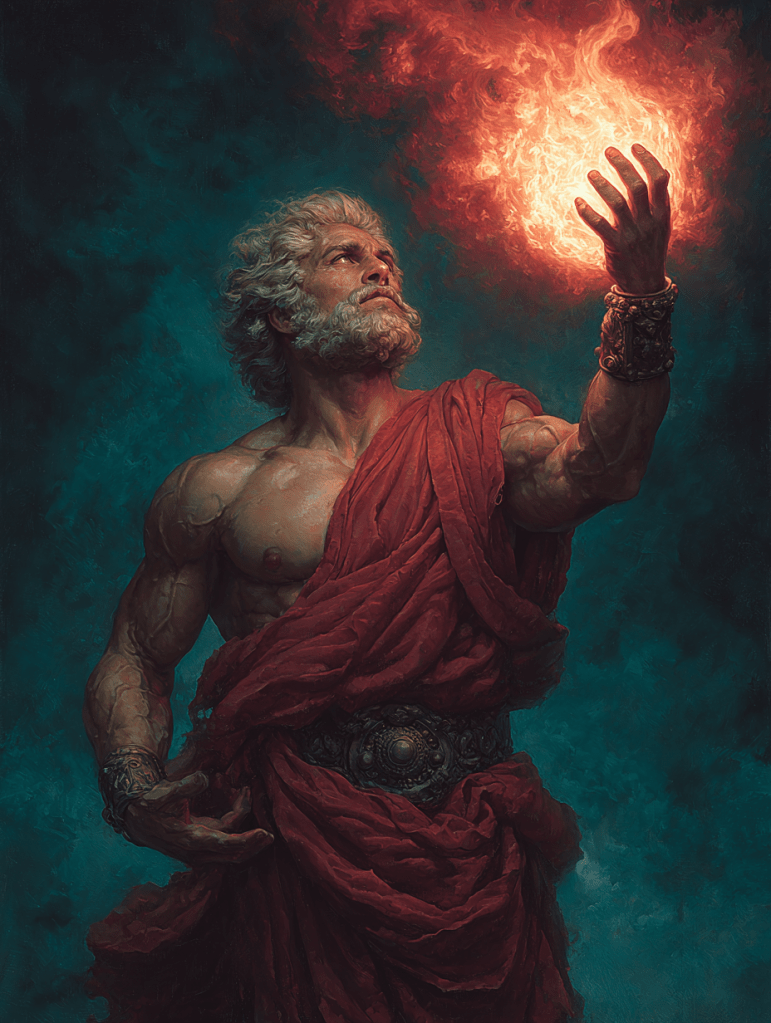
I WAS on my way to bed, but stopped by to do one more thing (set a schedule for tomorrow. LITERALLY just that.) and…
This was in my inbox. It said for immediate release, and of COURSE I had to share (Congratulations to one of my structural editors D. Jason Fleming, the editor of three of the finalists!):
2026 PROMETHEUS AWARD FINALISTS CHOSEN FOR BEST NOVEL
Works by Dave Freer, Karl K. Gallagher, Sarah Hoyt, J. Kenton Pierce and Harry Turtledove selected as finalists
The Libertarian Futurist Society, a nonprofit all-volunteer international organization of liberty-loving science fiction/fantasy fans, has announced five finalists for the Best Novel category of the Prometheus Awards.
Here are the Best Novel finalists in brief, in alphabetical order by author: Storm-Dragon, by Dave Freer (Raconteur Press); War by Other Means, by Karl K. Gallagher (Kelt Haven Press); No Man’s Land, by Sarah Hoyt (Goldport Press); A Kiss for Damocles, by J. Kenton Pierce (Raconteur Press); and Powerless, by Harry Turtledove (CAEZIK SF & Fantasy.)
Full-length reviews of each Best Novel finalist, explaining how each fits the distinctive focus of the Prometheus Awards, have been (or soon will be) posted on the Prometheus Blog. Meanwhile, here are capsule descriptions of all five finalists:
* Storm-Dragon, by Dave Freer (Raconteur Press): The Young Adult science fiction novel centers on a boy who saves and adopts an intelligent alien pet on an ocean-dominated colony planet with dangers both alien and human. In the spirit of Heinlein’s Farmer in the Sky and Alan Dean Foster’s Flinx novels, the story centers on Skut and Podge, two resourceful middle-school boys from refugee families. As they make friends in their new home, the boys confront class bullies and repressive teachers, cope with mob behavior and navigate the ocean’s tricky shores. In the process, they interact and communicate more with their orphaned young “dragon,” an electrosensitive six-limbed alien creature who may be more intelligent and formidable than it appears. Aimed primarily at ages 8 to 18 and avoiding explicit ideology, the novel gradually expands to include parents, administrators and other adults enmeshed in the colony town’s increasingly corrupt politics, which threatens livelihoods through onerous regulations, taxes and property confiscations. Ultimately, a violent invasion from human raiders threatens the colonists’ broader rights. With a strong career background in fishing and oceanography, Freer focuses more on the plausible ecology and boy-centered adventures than the politics of this plausible frontier planet, while allowing his live-and-let-live, peace and freedom themes to emerge naturally.
* War by Other Means,by Karl K. Gallagher (Kelt Haven Press): Finding ways to come to mutual agreements through diplomacy and trading rather than coercion is a central theme in Book 7 of Gallagher’s frequent-Prometheus-finalist Fall of the Censor series. Following the liberation of dozens of worlds from the Censorate oppression, newly appointed ambassador Wynny Landry strives to prevent the rebellion from falling apart. Her task: convincing their governments to cooperate and forge trade deals for excess missiles despite differing cultures, interests and pressures. The novel centers on problems arising on Fiera, which formed a world government following the Censorite attack and atomic-bombing of 16 cities. So many state-commanded resources were put into defense and so much manpower lost to conscription that Fiera’s economy is failing. Meanwhile local politics keeps warships nearby, preventing them from supporting the alliance’s interplanetary defense. The story reminds us that even good and democratic societies can falter when politics, taxation, conscription and pork-barrel politics undermine their freedom, strength and adaptability. Among the libertarian themes: war as the health of the state, how governments can slide into despotism, the evils of slavery, the dysfunction of pork-barrel politics, and how censorship only makes people lust for forbidden fruit.
* No Man’s Land, by Sarah Hoyt (Goldport Press): The three-volume novel blends science fiction, fantasy, suspense, mystery, romance, adventure, political intrigue and a plausible “alien” biology in a universe where sufficiently advanced science is indistinguishable from magic. In an interstellar future with settled human planets of widely differing societies, a freedom-favoring federation sends an ambassador to certify the final stages of induction of a previously lost colony. The first-contact story eventually focuses on a hidden world where the population has been genetically shaped to make everyone hermaphroditic. Both epic and intimate, with chapters alternating in perspective between the young human ambassador and an archmage, the novel becomes a love story about found family amidst a wider conspiracy threatening the federation’s commitment to equal liberty. Ultimately, in a multi-layered work launching her Chronicles of Elly series, Hoyt gradually weaves in a variety of libertarian themes while offering a radically different take on gender and sexuality than Ursula K. Le Guin’s classic novel The Left Hand of Darkness. Among them: the virtues and benefits of cooperation, individualism, private property, tolerance, equal justice and individual choice, providing a stark contrast with the evils of aggression, tyranny, slavery and discrimination against sexual minorities.
* A Kiss for Damocles, by J. Kenton Pierce (Raconteur Press): The science fiction saga, which launches the author’s Tales From the Long Night series, illuminates the ethics and efficacy of free trade and self-defense as a proper foundation for civilization. The novel is set on a colony planet where humans in towns and homesteading communities are struggling to recover centuries after a catastrophic attack and volcanic cataclysm that set back and severely limits their use of advanced technology. At the story’s heart is Shai, a young homesteader facing harsh frontier conditions, corrupt Townie politics, dangerous native species, and sinister forces amidst still-functional A.I.-powered orbiting war machines. Pierce celebrates the self-reliance and resilience of self-regulating frontier communities that survive and evolve based on the hard-won realities of voluntarism, mutual respect and cooperation. But this is also a cautionary tale about the deceptive idealism of a command-and-control ideology and the perennial tendency towards abuse of power, reflected in the Townies’ push for higher taxation, fiat money and indoctrinating state takeover of education. Narrating from her wry but hopeful perspective, Shai becomes a leader in her community’s struggles to defend their freedom, preserve their heritage and restore their world.
* Powerless, by Harry Turtledove (Caezick SF & Fantasy): Inspired by Vaclav Havel’s classic essay “Power of the Powerless,” this alternate history is set decades ago in a communist America where small moments of defiance or quiet resistance to governmental repression have unexpectedly big consequences. Set in the western United States dominated by a Soviet-Union-fostered socialist tyranny, the novel begins with one shopkeeper’s impulsive and fed-up act of taking down from his grocery storefront window a required propaganda poster expressing solidarity with the state revolution. In a dystopian society demanding utter submission and insistent on propping up its legitimacy, that simple act has a ripple effect on the shopkeeper, his wife and two children, and the wider world. Focusing on small acts of decency and honesty, the realistic yet inspiring story reveals how communism smothers the human spirit, denies reality, censors news, imposes lies and undercuts everyday life even when it doesn’t rise to the level of genocide or outright totalitarianism but strives to embody Czechoslovakia’s 1968 vision of “socialism with a human face.” Mirroring the psychological and political distress of many today for speaking the truth, Powerless is timely in reflecting the challenges in societies that claim to uphold freedom but suppress facts to enforce conformity.
Fourteen 2025 novels were nominated by LFS members for this year’s award. Other Best Novel nominees, listed in alphabetical order by author: Red Heart, by Max Harms; Forged for Destiny and Forged for Prophecy, by Andrew Knighton; All the Humans Are Sleeping, by John C.A. Manley; For Emma, by Ewan Morrison; Planting Life: Shut the Kingdom, by Laura Montgomery; Where the Axe is Buried, by Ray Nayler; The Underachiever, by David A. Price; and Caballeros del Camino, by R.H. Snow.
The Best Novel winner will receive an engraved plaque with a one-ounce gold coin. An online Prometheus awards ceremony, open to the public, is tentatively planned for mid-August. Science fiction fan and author Ilya Somin, a law professor at George Mason University and the B. Kenneth Simon Chair in Constitutional Studies at the Cato Institute, will be this year’s keynote speaker and celebrity guest presenter. The date of the ceremony will be announced in mid July once the winners are known for both annual categories, including the Prometheus Hall of Fame for Best Classic Fiction.
The Prometheus Award, sponsored by the Libertarian Futurist Society (LFS), was established and first presented in 1979, making it one of the most enduring awards after the Nebula and Hugo awards, and one of the oldest fan-based awards currently given in sf.
The Prometheus Hall of Fame category for Best Classic Fiction, launched in 1983, is presented annually with the Best Novel category. This year’s Hall of Fame finalists are The Star Dwellers, a 1961 novel by James Blish; Brave New World, a 1932 novel by Aldous Huxley; That Hideous Strength, a 1945 novel by C.S. Lewis; Salt, a 2000 novel by Adam Roberts; and Singularity Sky, a 2003 novel by Charles Stross.
The Prometheus Awards recognize outstanding works of speculative or fantastical fiction (including science fiction and fantasy) that dramatize the perennial conflict between Liberty and Power, favor voluntarism and cooperation over institutionalized coercion, expose the abuses and excesses of coercive government, and/or critique or satirize authoritarian systems, ideologies and assumptions.
Above all, the Prometheus Awards strive to recognize speculative fiction that champions individual rights, based on the moral/legal principle of non-aggression, as the ethical and practical foundation for peace, prosperity, progress, justice, tolerance, mutual respect, civility and civilization itself.
All LFS members have the right to nominate eligible works for all categories of the Prometheus Awards, while publishers and authors are welcome to submit potentially eligible works for consideration using the guidelines linked from the LFS website’s main page.
A judging committee, drawn from the membership and chaired by LFS co-founder Michael Grossberg, selects the Prometheus Award finalists for Best Novel from members’ nominations. Following the selection of finalists, all LFS upper-level members (Full members, Sponsors and Benefactors) have the right to vote on the Best Novel finalist slate to choose the annual winner.
Membership in the Libertarian Futurist Society is open to any freedom-loving science fiction/fantasy fan interested in how speculative or fantastical fiction can enhance an appreciation of the value of liberty and broaden public recognition of the dangers and evils of tyranny and the abuses more prevalent under the State’s centralized and coercive powers.
For a full list of past Prometheus Award winners in all categories, visit our site. For reviews and commentary on these finalists and other works of interest to the LFS, visit the Prometheus blog. For more information, contact LFS Publicity Chair Chris Hibbert (publicity@lfs.org).
 According To Hoyt
But but… I want to Shout Amen From The Pews!!!!
LikeLiked by 1 person
Very cool!
LikeLike
Preach it, sister!
LikeLike
Woot!
LikeLike
Two W00ts!
Nice showing by Rac Press, too!
LikeLike
👏👏👏👏👏👏👏👏👏👏👏👏👏👏👏👏👏👏👏
LikeLike
Brilliant! Congratulations !
LikeLike
Fantastic ! Congratulations.
John in Indy
LikeLike
Fantastic ! Congratulations.
John in Indy
LikeLike