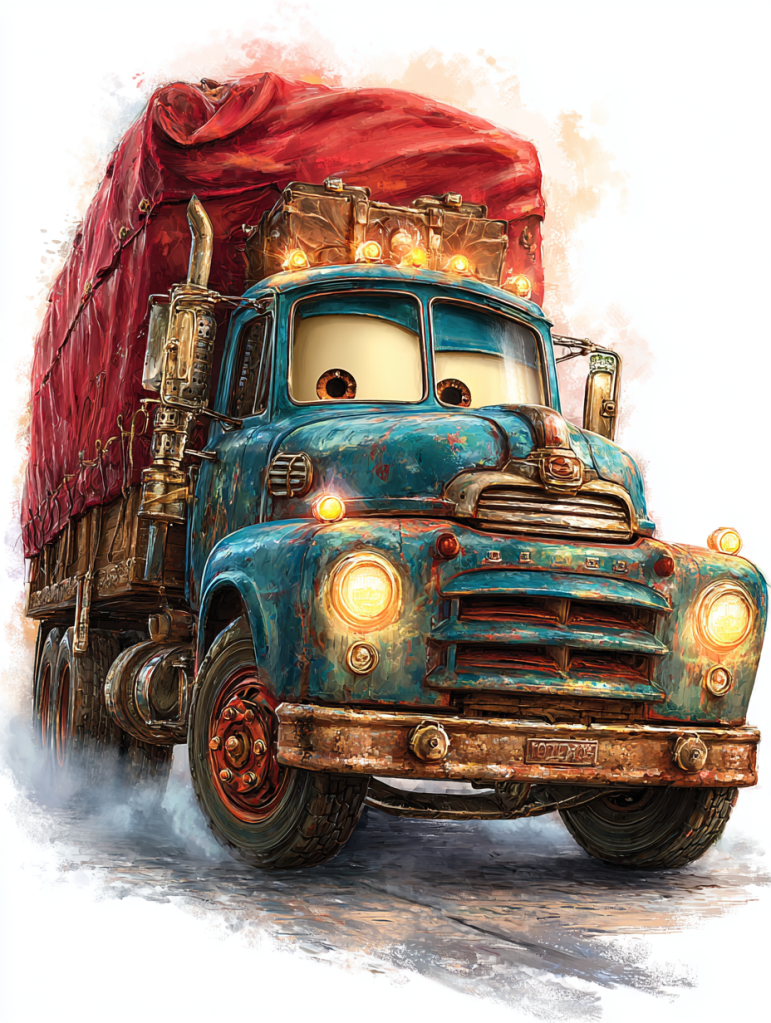
Yesterday, in my long puzzlement as to why Europeans don’t seem to get into big groups online (the kids do a little more than the older people but not like Americans where most of our friends might be spread throughout the country.) It was suggested this is because Americans form spontaneous organizations like mad people. And this is true and probably most of it. There are probably other contributing factors, including that Europeans have more “local community” things. Partly because they all live in countries so small you need a passport to swing anything larger than a ten week old kitten. And partly because the automobile took a lot longer to get widespread there, while here we have a century of it.
In fact by historical norms we are the weird ones. The very, very weird ones. Our own little mutant country. If you’re an American (since I don’t think there are any pure blood Amerindians left, except by bizarre genetic piling on accident) either you or your ancestors, when you decamped to America, left everything behind once already. So it’s perfectly normal for us to move all over. And when our kids grow up, they move too. Our families might be spread across distances that would make Europeans’ eyes water. (You should have heard me trying to explain to the family that my older kid didn’t move that far away. It’s less than ten hours driving, after all. We can do it in a single day if we start up early and only stop once for lunch. That’s nothing. Practically next door. We see him every couple of months. Meanwhile, the Portuguese family is trying to condole with me as if he’d moved… well, across the ocean.) Anyway, that combined with the fact we work way too much compared to Europeans, means that we have little time for local stuff or to establish local ties, even when we try. (We see our local friends once every three or four months.) On the other hand, we’re still humans with need for community, so in between the edges of our very weird lives, and around the corners of our work, we make friends online. Which explains why we have friends all over the country, including in some places you don’t expect to have conservatives. (Waves at Bill in New Haven and Ian in Chicago!) Which means we have on the ground reporting, which means that the “official truth” from on high increasingly gets us to snort-giggle.
All this long introduction has nothing to do with today’s post and Honorable Truck-Kun above. I had an allergy shot yesterday, and it hit me as it hasn’t since early on, in that the entire day reads fuzzy in memory and I committed some interesting howlers. As in, I realized I left a whole cup of coffee by my computer, which… let’s say it’s a good thing I covered it up. Since I sweeten my coffee, Indy would have consumed it and would probably be at the emergency vet today.
Anyway, this brings us to Honorable Truck Kun.
The other things Americans do that is not so common in Europe is self improvement. I figure it’s also because we (Hi, guys) and our ancestors came here as the ultimate self-improvement, leaving everything behind and reinventing ourselves.
All the books from Thinking Yourself Skinny (I do, I do. The body doesn’t agree) to completely reinventing some trait of your personality do big in … America. Oh, they sell overseas too, but the mechanic is different. They’ll catch fire in an entire country, and then the entire country will get disillusioned at the same time and ditch it.
Yes, sure, this also leaves us wide open for things like cults and very weird — I still think of them as California — manias, chakras and auras and heaven knows what else. There is good and bad.
Europeans tend to resign themselves. They usually know what their ancestors were like, and therefore accommodate themselves to “this is how we are.” Which is more tranquil but also more subject to despondency and manipulation. (Few people directly remember their ancestors more than three generations. Which is also why being blamed for your ancestors’ guilt is nonsense.)
Anyway, I am of the trying to improve and reinventing myself mind. Of course I am. I mean, I came here, all by my own self, didn’t I? (Okay, husband helped, but he was already here. Born here. Ancestors here for generations. Since… 1650? Very forethoughtful (totally a word) of him. He’s a planner. I like that about him.)
Now, is self-improvement extra specially effective and last forever? Are you kidding me?
We’re still human, with human bodies and human limits. And I don’t know about all of you, but my body doesn’t JUST ignore me on thinking myself skinny. It pretty much holds two middle fingers aloft when I ask it to do something, more and more as I age. It’s very annoying. It also never tells me anything like, you know “those disgusting sweats you’ve been having, waking you up at night? You should be taking an anti-histamine while doing these desensitization treatments.” Annoying meat-suit.
Anyway, yes, self-improvement only does so much. Most of it tends to rubber band by sheer inertia.
However it does something. Each time I try, it improves a little, and now looking back I’m a completely different beast than I was forty years ago, and largely, yes, for the better.
My perennial battle, more than anything else, is with the fact I’m ADD AF (As F***. My older son’s scientific classification of me. Apparently other people are ADD. People who can’t stand in line at the grocery store more than three minutes and wander off to look at things that catch their eye are ADD AF.) as well as with the fact that yes, to be sure, I’m cramming three lives and five jobs onto a normal day.
When you’re like that, mistakes are made. The mistakes accumulate. And after a while you can’t move for the debris of regret, guilt and depression. And unfortunately, at some point you become the walrus in Alice in Wonderland, wallowing and crying (and still doing more stupid sh*t, because who cares.)
And this is why I’ve come up with the Honorable Truck Kun and the Isekai Rag.
Note that ragtime (which is my husband’s favorite thing to play on the piano) is a repetitive, recurring rhythm. This will happen again and again.
As for Truck-Kun and Isekai, I don’t read this stuff (though I’m willing to try it. I just recently popped up from 3 years of Jane Austen fanfic, so…. I have a lot backlog to read) but my younger fans, my kids’ age tell me there is a whole range of being hit by a truck and waking up in a whole new life: Isekai. For a movie with this beginning, try Yesterday. (His decision is stupid, the mechanism of fate doubtful, the morality flawed, but the movie itself is a delight nonetheless. Just don’t think too hard on it.) For the other works, I’ll let the fans in the comments tell you.
BUT before I’d heard of Isekai I’d come up with this solution to cut the threads of regret and guilt and “if I could go back in time.”
Okay, you’re you but not really you. Your consciousness belongs to someone else who got hit by Truck Kun on the streets of some other world. You don’t have those memories. In fact the only memories you have are of the body you landed in.
But the important thing is that: You’re here. You’re not responsible for anything that created this situation. It’s not your fault. And you feel in your heart of hearts you came from greater things and are destined for greater things.
Yes, the house is a mess (how does someone not only not finish unpacking in five years, so that one room is just impassible, but accidentally create another such room? Guys, this chick was a mess.) The cats are — oh, yeah, cats. And the work is years and years behind.
But I’m here now, and it’s time to clean, organize, and set a schedule.
I’ll fall off the horse, of course, because the body I fell into has its own habits. But something will remain, and I’ll be a little more productive, a little neater, a little less verklempt.
And there’s things I want to do. Resume the art thing — turns out one of the few gifts I can give people is portraits. — Resume ancient Greek. Books I need to read. And oh, my heavens, books to write. Yes, it’s all a mess. That’s what happens when you drop in.
BUT– The Isekai rag is playing, and I’m going to do it.
Come with me. Wave at imaginary Truck-Kun as it speeds on to hit another dancer, and let’s get going.
We’re destined for greater things (DUH, we’re American) and we can’t stand around waiting.
Now — isekai rag!
 According To Hoyt
“So you’re really a dragon?”
“Well, I was a dragon until that Truck hit me and I woke up in this puny human body.”
“A Truck hit you? How big were you as a dragon?”
“Very very big but the Truck was bigger.” [Big Crazy Grin]
LikeLiked by 4 people
How big was the truck, it was delivering coffee to a dragon.
LikeLiked by 2 people
Cool idea!
And actually my preferred approach to either writing or reading characters hit by isekai. “Welp, here I am; what can I do from here?”
LikeLiked by 2 people
I had not thought of the clean slate philosophy of isekai, but it does make sense.
As an avid reader of isekai web serials, I will try to give some basic recommendations. Someone else will have to recommend anime options.
From what I am currently reading or have read:
Return of the Runebound professor: Mostly heroic main character. Really leans into building off his experience between dying and coming back. Per the title, he does actually have students to teach.
The Dragon Heir: More wordsmithy than many web serials. The main character has very limited memories of her life on earth. Descriptions of how delicious her food is are top tier.
Reborn As A Demonic Tree: Main character is a tree. Also very much an anti-hero, so could be off putting.
Building World Peace With My Bloodthirsty Demon Army: Parody of isekai tropes. You have been warned.
There is No Epic Loot Here, Only Puns: Delightful story of a young woman who is now a dungeon. Really leans into her nurturing her dungeon monsters into real people.
Mahael The Divine: Random guy becomes the last angel defending the last world.
In Loki’s Honor: Main Character lives many lives being born afresh in each one, while keeping memories, etc from past lives. Each life is almost its own short story, so even though the author seems to have dropped it, it is still enjoyable to read.
LikeLiked by 1 person
Well, I’ve been informed that No Man’s Land is Isekai, of a sort.
LikeLiked by 1 person
If you were a snob, you would both insist that it was portal fantasy, that the distinction matters hugely, and that you were only influenced by the most esoteric and ‘approved’ of the prior art.
(Narnia is pretty old, but the cooties would matter to the sort of person who thinks you can write an english essay and define how people read your book.)
(I’ve been reading a lot of very specific sorta isekai stuffs, and thankfully if it is by snobs, I don’t know about the snobbery. Not very relevant, but what I have been enjoying reuses a bunch of very specific tropes.)
Anyway, I am silly and maybe tired again, so my muse of the internet is giving me a bunch of random suggestions of what to say.
LikeLiked by 2 people
*Thumbs up*
I will take isekai or portal fantasy, I’m not picky. Characters in a different world, yay!
LikeLike
For anime, one of the best is probably Konosuba. It’s a huge send-up of the genre, and also common JRPG tropes.
Boy pushes girl out of the way of a truck (truck-kun!) and dies. He wakes up in the afterlife, and is greeted by a goddess named Aqua. Aqua informs him (through laughter) that the “truck” was actually a very slow moving farm tractor, and the girl was never in any danger. Further, he died not from being hit, but due to a health issue (heart attack, iirc). He has been granted the opportunity to return to life in a fantasy world that’s under threat by the local demon king, and if he accepts he can take one thing with him to help him. He agrees, and picks Aqua. Over her frantic protests, he is reborn.
LikeLiked by 1 person
Heh. I mentioned that one in a list of recommendations I tried to post a bit ago. We’ll see if WP ever decides to actually put it up. (WP delenda est)
I described it as “the opposite of Re:Zero. Everything is played for laughs. And it mostly works.”
LikeLiked by 1 person
My own favorite manga are simply high fantasy. In particular Witch Hat Atelier. Frieren, of course, is also good.
Kakuriyo: Bed & Breakfast for Spirits might be called isekai, but probably not. The heroine is drawn into the spirit world because of a debt of her grandfather’s.
For an odd-ball one, just beginning I Picked Up This World’s Strategy Guide. The heroine does not get isekai’ed. The game strategy guide was. She’s worried that it’s forbidden (after reading the copyright notice) but she finds it useful anyway.
Not-Sew-Wicked Stepmother (though it’s not so light as the title seems to suggest) and Kill The Villainess are two of an interesting genre where the heroine is thrown into a game or novel as the villainess, and has to figure out how to escape her sad ending at the hands of the heroine. (Nevermind that dating games rarely have villainesses, and when they do, the heroine can usually befriend her. For a story, it’s wonderful.)
LikeLike
Ooh, I’ve read more than half of the stories you’ve mentioned! I also recommend The Villain’s Survival Route, The Villainess Flips the Script!, A Wicked Tale of Cinderella’s Stepmom, For My Derelict Favorite, and Another Typical Fantasy Romance (it isn’t), Lout of the Count’s Family, I’ll Save This Damned Family, I Raised A Black Dragon, Ode to Snow White, and Bring the Love. All but the last are isekai. I further recommend the portal fantasy Death’s Lady, by Rachel Neumeier, which is excellent and lovely.
LikeLike
Not sure I was isekai’d. I don’t have any new powers or whatever. Darn it.
LikeLiked by 2 people
Oh. Oh, I like this. Thank you! :D
LikeLike
The truck looks like it could be a close relative of Tow Mater from the Pixar Cars series.
LikeLiked by 1 person
I can’t help but associate the letters “AF” with Midway Island.
LikeLike
[grin]
The crews of a few carriers might agree, but are unavailable for comment.
LikeLike
LikeLiked by 1 person
Audio Frequency, as opposed to Radio Frequency.
LikeLike
Isekai as a thing the kids are into? Dorothy Gale says hi.
LikeLiked by 1 person
And as for the rest now that I paid closer attention…I can dig that.
LikeLike
Toto concurs.
LikeLiked by 1 person
The concept is quite old, certainly as old as St. Paul in the first century: “Therefore, if anyone is in Christ, he is a new creation. The old has passed away; behold, the new has come.” [2 Corinthians 5:17]
LikeLike
Interesting article, I’m now wondering if this is why I love the “connecticut yankee” type of stories so much
LikeLiked by 1 person
In my opinion, Isekai is the Japanese version of what has been called Portal Fantasy.
https://en.wikipedia.org/wiki/Portal_fantasy
While it’s not mentioned in the article, I wonder if folklore about visits to Fairylands may be early Portal Fantasy.
By the way, Oz was said to be a land on Earth that was just hard to reach not part of a separate world. 😉
LikeLiked by 2 people
I would argue against that.
In a world defined only by your perceptions, anything that changes your perceptions, changes the world. Walk into familiar woods at night, or in fog, or while drunk, and who knows what might happen?
LikeLike
Isekai is a subset of portal fantasy. Most portal fantasy does not require the death of the traveler, though Holly Lisle pulled that one out in Minerva Wakes.
LikeLiked by 1 person
OTOH, I have certainly read works called isekai where the main character did not die. A summoning spell brought him, for instance.
LikeLike
Yes, there are a number of those. “Rising of the Shield Hero” and “The Wrong Way to Use Healing Magic” are both examples of that. In both cases, the kingdom is under threat, and the royal family uses a summoning spell to summon people from other worlds to serve as heroes. In the former, it’s four seemingly random people from different times and worlds (though each world is at least superficially similar to our own) who are each granted one of the magic weapons (or shield). In the latter, it’s three classmates, and the protagonist’s two classmates are the recognized heroes. The protagonist accidentally got brought along by the summoning spell.
LikeLike
Also see Arifureta, where a whole high school class gets summoned to a dark fantasy world.
GATE, where a portal to another dimension with magic and a medieval tech level appears in downtown Tokyo.
One of my favorites, How A Realist Hero Rebuilt The Kingdom. Not by being OPAF, but using economics and (literally) Machiavellian politics.
LikeLiked by 1 person
My Status as an Assassin Obviously Exceeds the Hero’s also goes for a whole class. (And those titles they give them. That one is just an observation, not so arrogant as it sounds on its own.)
LikeLike
Just discovered Realist Hero. Liked it up until about episode 15-16, where it became clear that yes, he’s going to end up with multiple wives. I’m a huge ANTI-fan of harem anime (I think it gives teenage boys very unrealistic expectations of what romance involves, which if nobody explains reality to them will actually harm their chances of finding and keeping a good wife later in life), so I quit watching at that point. Up until that episode I was holding out hope that he was going to kindly friendzone most of the women throwing themselves at him (no, that’s not fair, only the bodyguard was throwing herself at him) and devote himself entirely to his official fiancée. When she told him “Yes, the king can and should marry multiple wives, so as long as I’m the primary wife I don’t mind you marrying your bodyguard as wife #2″ (and it was abundantly obvious whom wife #3 was going to be as well) I quit right then and there.
Shame, because up till that point I was considering buying the DVDs or Blurays. But I’ve been burned once too often by anime that started out promising but disappointed me near the end, so now I don’t buy anything until I’ve watched a fansub translation all the way through, just to make sure it continues to be something I don’t mind my kids seeing.
LikeLike
Ironically, the fiancee’s response might have been accurate a few centuries ago in much of Asia. Powerful men were expected to have multiple wives, since it was a mark of status. However, as you note, there’s the unrealistic expectations toward romance issue. As I noted the other day, this tends to be a problem with harem anime in general.
On the other hand, based on the title it sounds like he’s got more to recommend him than “nice guy”. That avoids my bigger annoyance with many harem anime.
LikeLike
Yes. By that point in the show he has:
1. Successfully blunted the edge of the kingdom’s economic recession by teaching people about new, less-expensive sources of food so they won’t starve while the kingdom’s economy slowly recovers.
2. Started implementing a plan to improve the economy and speed the recovery from the recession, by building good roads across the kingdom to facilitate trade. (Which would have worked, and worked well, in real life. The interstate system was one of the best uses of federal money the US ever did. Most government spending would have been better off left in people’s pockets, but building the interstates is one of the only cases of government spending that produced economic returns FAR over 100%.)
3. Successfully fought off a rebellion by two of the three major duchies and a simultaneous invasion by a neighboring country trying to snatch land from the kingdom while they’re distracted by rebellion. (The neighboring country actually tried to encourage those two duchies to rebel, though due to some political maneuvering they weren’t as successful as they thought. To say more would be to reveal some spoilers).
4. Counter-invaded the neighboring country who invaded them, taking their capital city (which was close to the border) while their army was out of position.
5. Gotten the local superpower quite firmly on their side, so that when the superpower showed up (as they were required to do by pre-existing treaties) to demand that he return the neighbor’s capital city to their control, he managed to get the superpower to insist that the neighbor pay war reparations to his kingdom. War reparations that would go a VERY long way towards immediately pulling his own kingdom out of its recession.
That last point is kind of important. The superpower’s representative showed up saying “We have a keep-the-peace treaty in place, and we’re bound by it. If you don’t return their capital, we will have no choice but to take it from you by military force.” And they had enough troops with them to enforce that. From all appearances, he had no leverage: he could either return their capital or start a guaranteed-losing war with a superpower. Yet he managed to come out of that negotiation with the superpower promising to enforce war reparations on the neighboring country (who invaded first). All by simply understanding the mindset of the people sitting around the negotiating table with him, and being very, very good at diplomacy.
So yeah. With that list of accomplishments, it’s no surprise that powerful women want to marry him. And — I checked spoilers on TV Tropes once I stopped watching — the wives he does marry all make sense for political reasons. On both sides, his and hers. So that’s another point in favor of this show, that the “harem” (if it can be called that) actually makes sense.
LikeLike
On the “powerful men were expected to have multiple wives” thing: I do very much enjoy the show The Apothecary Diaries, which I believe I learned of through Crossover Creative Chaos’s blog sometime last year. But there, although the king in the show does have multiple concubines (official concubines, recognized as such), it is not a harem show because the king is not the main character. The main character is a young woman who is hired to be an apothecary for the women’s court (the area where the concubines live, where only women and eunuchs are allowed to work).
So although in theory one might think I would dislike that show for principled reasons, in practice it doesn’t portray polygamy as a positive thing. In fact, it pretty accurately portrays the kind of political maneuvering and backstabbing that would naturally happen in such a situation: part of the protagonist’s job is making sure food isn’t poisoned, that babies born to the concubines survive to adulthood (not at all easy in such a political environment), and so on. Throw in some other interesting plot twists and secrets (e.g., one of the highly-placed eunuchs working there is shown VERY early on to be working under an assumed identity, and hinted strongly to be someone very, very important, who might not even be a eunuch at all but is taking medicine to suppress any, well, reactions that might give that fact away) and you have a very, very interesting show. I finished season 1 a while back and have yet to start watching season 2, but that particular “eunuch” is apparently going to be very important to the plot.
I’ve wandered off the point. The point is, yes. The Apothecary Diaries (which I gather is set in a fictional version of China) is not the only place where I’ve seen a king having multiple wives (or official concubines) in Asian dramas. I’ve also seen it in a Korean drama whose name was something like The Royal Tailor. (I didn’t watch the drama myself, but my in-laws were watching it and I saw a scene at court where one wife/concubine was scheming to embarrass another wife/concubine). And I’m sure other shows have used it as well: it’s a situation ripe with potential for drama and plotting.
LikeLike
As Mary and others have pointed out, not all isekai requires the death of the traveler. For myself, I firmly do not believe in reincarnation, so any “he died and was reborn in another world” stories break my suspension of disbelief from the outset, and I have a very hard time getting into them. One of my favorite anime series of all time, The Twelve Kingdoms, definitely fits most of the definition of isekai, but since it first came out in 2002 it doesn’t follow some of the now-standard isekai tropes. For one thing, the main character doesn’t die and get reincarnated. Instead, a strange man shows up at her high school, kneels before her and says “I’ve been looking for you everywhere, Your Majesty. Come with me.” (summary, not direct quote). Then monsters attack the school, targeting her specifically, and it becomes “Come with me if you want to live” and he opens up a magic portal.
I won’t summarize the plot any further beyond the first episode, because it’s well worth watching. The only bad thing about it is that it ends after 45 episodes. On a high note, with the most important plot threads wrapped up, but with LOTS more storytelling potential still lingering in the world, and several minor plot threads unresolved (I’m told they get resolved in the original novels). But it’s worth seeking out a copy.
LikeLike
The song is Misty Lackey’s, but the video is 12 Kingdoms.
LikeLike
I collected the books in hardcover when they first came out in the US, though they only released 5 of them and the fifth had some quality control issues.
I wish they’d been able to translate them all.
LikeLike
Apparently someone new has picked up the translation license:
https://sevenseasentertainment.com/2024/11/20/seven-seas-licenses-the-twelve-kingdoms-novel-series/
I’ll link the currently-available volumes in a different comment so I don’t get automatically tossed into moderation for having two or more links in one comment.
LikeLike
Link to the new English translations:
https://sevenseasentertainment.com/series/the-twelve-kingdoms-novel/
I don’t have them yet so I can’t speak to the translation quality, but they have three books out, fourth one scheduled for March 3, 2026, and fifth one scheduled for June 2, 2026. Hopefully they’ll keep the pace up and translate all of them; there’s no reason why they shouldn’t be able to.
LikeLike
I love the Twelve Kingdoms! Did you know that there’s also translated novels? At least four of seven total, I believe.
. . . Annnnd apparently someone has kept up with it better than I have. New translations? I’ll have to check them out!
LikeLike
So is clanker music just for novels? Or can we now expect Isekai Rag clankertunes?
LikeLike
LOL. I’m still stuck on the sound track…. let me finish.
LikeLiked by 2 people
Anyway, I’ve been reading currently upwards of 25 serials that update once a week at webtoons.
I absolutely do not have sense to properly summarize the genre details, and explain the patterns that make be less known to every single person here.
Not all murim novels are isekai, but some of them absolutely are.
I can recall for sure three that are for sure isekai, and not simple reincarnation or regression within the same world.
There’s one of a venomous creature youtube streamer, who I think gets bitten by a snake, and winds up adopted by arranged marriage into the tang clan.
There’s a fitness trainer and youtube streamer who dies while eating fried chicken, and winds up in the sorim temple (1) in the universe shared by his three favorite webnovels.
And then there is something like ‘cultivation of the regressor’, which might be an original(2) scheme of sects in a more or less original cultivation/xianxia setting. Anyway, dude is isekaied from Korea, and then he spends a bunch of time regressing within the otherworld.
(1) English speakers might be more familiar with this as the northern shaolin temple at mount song.
(2) Authors exist who don’t just endlessly remix the Tang Clan, Shaolin, Wudang, Mount Hua, etc. I’m not sure how rare they are, versus different ways of translating or transliterating into English. One of the ones I am sure about is Grandmaster of Demonic Cultivation. (Grand master is the title of the novel, but it apparently is actually one of the many many unreliable bits of the narration.)
LikeLiked by 1 person
MDZS is cool that way. Yes, he’s called the Grandmaster of Demonic Cultivation (Mo Dao Zu Shi) by the sects, but he actually practices guidao (ghost-path) and demons have nothing to do with it. Which is your first clue that social perception and on-the-ground reality have a lot of mismatches!
LikeLike
“You should have heard me trying to explain to the family that my older kid didn’t move that far away.”
Ten hours will get you to Paris from Porto, won’t it? Maybe even Belgium? ~:D
LikeLiked by 1 person
“10 hours away”
From your Portugal relatives they might as well be in another country.
LikeLiked by 2 people
Ragtime as an ear worm, meh…could be worse.
LikeLike
In that sense we were primed for the Internet experience. Europe has been cheek-to-jowl and fighting the non-human things just over the hill for thousands of years.
My ancestors started out miles apart, with a trip into town maybe once a month, with a sleepover at a friend’s house before starting back home. A hoedown or a party was a Big Deal, and you made friends with everyone who came to the door because you might not see anyone else for a couple months.
The automobile made the world bigger and emptier, and they could visit the Big Town way over there. Then the Internet popped up and we could make friends all over the world. And the world got bigger and emptier. But we still have that trained obsession to greet everyone we meet because… our ancestors might not see anyone else until the barn rsising a month from now.
Actually 23 days.
LikeLiked by 3 people
Note that as no hominids evolved in the western hemisphere, “native americans” ancestors also immigrated, leaving Asia in various waves and quite further back than academe deems seemly, likely because they just could not stand their mothers in law one single more minute, i.e. for the same reasons their own ancestors left Africa.
LikeLiked by 2 people
Mother-in-laws as impetus for colonization. Someone should write a paper!
LikeLike
Mothers, too.
LikeLiked by 1 person
Jim Butcher drove the truck that hit me. When I read his old LiveJournal entries on genre writing, I had a dim spark of “hey, I can do this now that I’ve looked under the hood.” Although the transitional period was more like a 10 year spell in Purgatory than a gateway. I still enjoy other people’s stories, but they don’t satisfy me the way that finishing…or even just starting and framing…a story does.
LikeLiked by 1 person
Tongue in cheek of course if you do it you’ll be shot or stabbed by the peaceful…
https://www.breitbart.com/politics/2026/01/20/nolte-according-to-democrats-its-okay-to-storm-a-mosque-during-worship-service/
LikeLiked by 1 person
A small point but it bugs me: There seems to be different schools of though as to whether “Isekai” covers all portal fantasy, back to Narnia, John Carter of Barsoom, and Twain’s Connecticut Yankee, or whether it only applies to a specific Japan-flavored subset of portal fantasy.
LikeLike
I’ve seen some discussions on X recently regarding this, and the concensus was that John Carter was an isekai. It’s not entirely clear what happens to Carter, but iirc he has a sense that his body is left behind in the cave, and its his spirit that travels to Barsoom (where it evidently forms a new body). And when he returns to Earth at the end of the first book, it’s to his original body.
Narnia is an interesting situation. In the original adventure, the transition is voluntary (though unexpected). The wardrobe serves as a portal to Narnia (and an explanation as to why is provided in The Magician’s Nephew) that is unwittingly used by the children. But in every subsequent book except for The Magician’s Nephew, the transition to Narnia is involuntary. As an example, in Voyage of the Dawn Treader, the children notice that the ship actually seems to be moving within the picture, and then get sucked into the picture and to the titular ship.
Simon Tregarth steps through a portal, and does so voluntarily. But he can’t return home as the reason he left in the first place was to escape assassins.
So you can argue about whether stories like Narnia or Witch World are isekai stories. But the general consensus that I’ve seen is that A Princess of Mars definitely is.
LikeLike
John Carter as an isekai: agreed.
Never read Witch World so can’t comment on it.
Narnia: I’d argue that part of the definition of isekai is being trapped in the other world, or only being able to go back at great cost / with great difficulty. In Narnia, it was a matter of turning around and walking back through the portal you’d stepped out of. The four Pevensie siblings entered and exited Narnia a couple of times before finally staying: the only reason they were “trapped” there afterwards was because the White Witch was hunting them and they would be caught if they tried to go back. Then once the White Witch was defeated, they didn’t want to go back, and only went back years and years later by complete accident.
Now, Dawn Treader does involve one person being trapped in the other world: Eustace desperately wanted to go back, and couldn’t. But for the two Pevensies who went with him, they weren’t trapped at all, since they actively wanted to stay (and are very disappointed when Aslan makes them go back).
And you missed one, I think. In Silver Chair I feel like they could have turned around and gone back immediately, but didn’t want to because that would have put them right back into the path of the bullies they were escaping from.
So… yeah, Narnia wobbles around the isekai definition, but I’d end up calling it portal fantasy but not isekai.
LikeLike