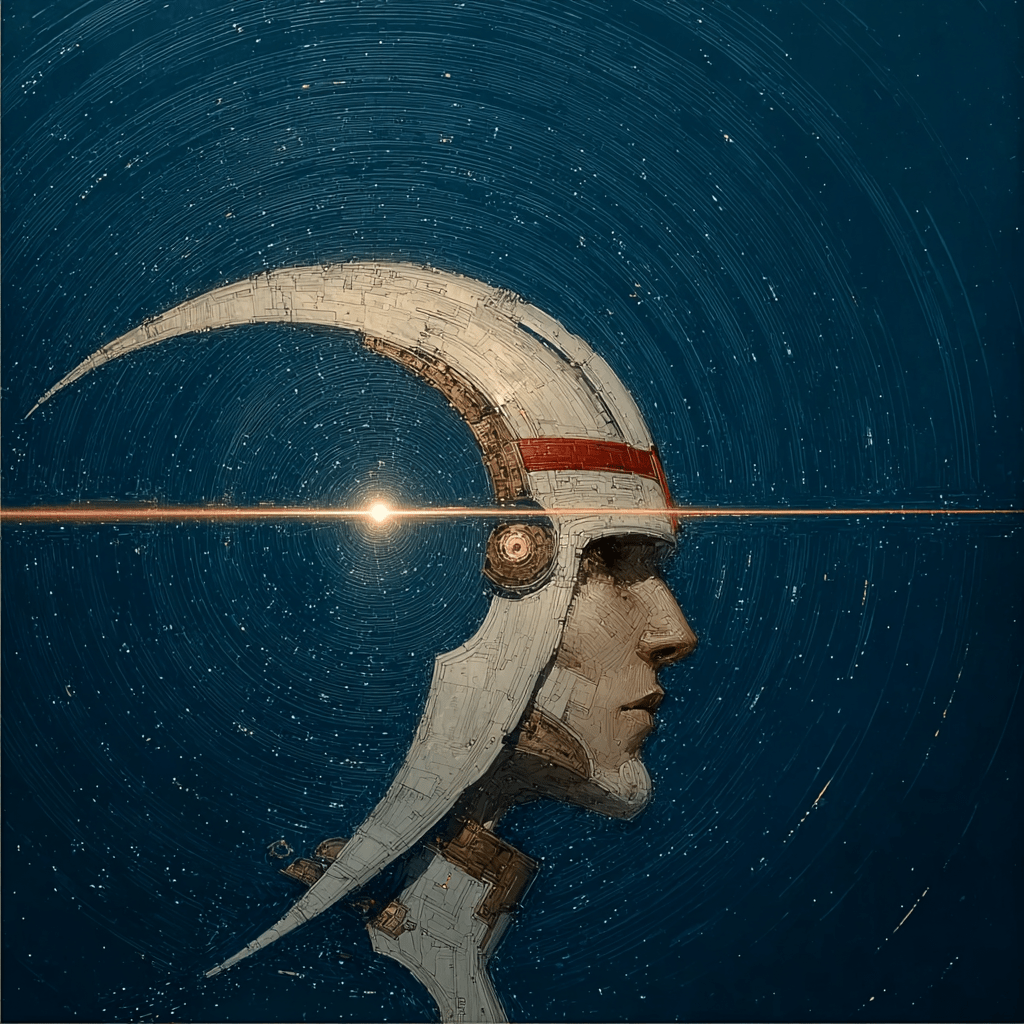
We are all time travelers. We start somewhere and learn it as our home, and then by the end of our lives we’re somewhere quite different, a place that feels strange to most of us, and in which we’re not quite at home.
That future arrives a day at a time, but our lives are composed of a lot of days. At the end, sometimes through our own actions, we all find ourselves as strangers in a strange land.
I was thinking of this while in Portugal, talking to dad about his mom, my beloved grandmother, the one I usually just refer to as “my grandmother.” And dad reminisced about trying to buy grandma “barrel sardines” when she was starting to get ill (they didn’t know that) and lost her appetite.
Barrel sardines? Well, apparently my great grandmother made her own, through the hard years. In the months sardines were plentiful, she bought a lot of them, and stored them in salt in a barrel. Layered close, with lots of salt between the layers. Apparently you ate them boiled.
I came after. How far after? Well, Great Grandma died eight years or so before I was born. Was she doing barrel sardines to the end? I don’t know. I know dad remembered barrel sardines as a treat from his childhood. Note the important thing here, dad was telling us about his quest for barrel sardines sometime in the 1990s through the delicatessen of the city of Porto and getting blank looks, where they were sold commercially less than fifty years before. … And it was the first time I heard of this.
Yes, I was alive during dad’s epic search for sardines, but I was in the US, so I’d never heard of it. Apparently my brother, who is a scooch less than 10 years older than I remembers barrel sardines.
Now I’ll admit, it sounds repulsive to me, but probably a lot of the things I loved and miss would sound repulsive to my kids. Also I suspect they were relatively starved for protein since dad grew up in the thirties, so any protein and fat would taste good. But that’s not the point. The point is that here I am over sixty, sitting in the kitchen, listening to my dad and brother talk about something they think I know, and to me it might as well be dispatches from an alien world. Even though obviously it was going on less than ten years before I was born.
We all live in slices of time as much as we live in slices of space. And not only is the time before us or the time after us alien to us, but the world becomes more alien as we go.
Look, I don’t think it affects me as much as other people, because I’m mad in love with the future, and always was. So I’m always trying to figure out what’s new and how it works. But even then– Well– Put a pin in this, but–
I think evolutionarily we’re supposed to learn our environment as kids, and that imprint helps throughout life. Think on, neolithic the span of a human life saw change, sure, but it wasn’t seismic change of the kind that shook the foundations of the world. Well, not usually, barring your particular little band being involved in a war and losing. But even then the conqueror’s culture most of the time wasn’t that different, say till the Romans who were different and also very up with the conquering and civilizing.
The Romans on an evolutionary time scale happened ten seconds ago, so our systems wouldn’t be adapted to it.
Why am I saying all this?
Well…. The last 20 years or so we’ve entered a warp drive of technological disruption. As in “She can’t go any faster, captain. I’m giving it all she got.”
Yes, there was more big, visible change throughout the 20th century. Dad lived through from cars being curiosities to airplanes being boring. I mean, 1968 we moved to “the new house” in an ox cart. I don’t even think there are any ox carts in the village now.
But in the way we live, the process of the every day? The last twenty years have been dizzying, and it’s still going on. And it built on the twenty years before that, which were pretty fast.
Things like, how I did my stupid little job changed so fast that we’ve been living off the same purchase of mail stamps for the last…. let’s see, younger son was six…. so 25 years. To explain, I’d bought my normal stamps for the business for the month. These were the stamps I used to send short story submissions and the occasional novel to my agent/editor. I don’t remember how much it was, but I was circulating north of 60 short stories, so… probably sixty or seventy dollars.
Yes, there were electronic submissions, but not for the big magazines, and my agent and publisher still wanted the submissions printed out and boxed.
And then within THAT MONTH it all changed to electronic. Despite the first class mail stamps being much more expensive now we’re still living from that purchase, because we send out maybe a first class letter a month. (It’s always a bill, though what it is changes.) We’re only NOW starting to see the end of that purchase, and the idea of having to buy stamps is by now almost alien.
Because things changed THAT FAST.
There was an intermediate, almost forgotten stage, in which I could remote-order the Fedex/kinkos near my agent to print the novel and pay with a card, and give her name for pickup. That seemed like the height of luxury and convenience, but six months later it was “just email the file.”
These future innovations are good and bad. I don’t have many local friends and rarely see the ones I have in person, but we talk on the net all the time. Them and the 98% of my friends who live … somewhere. But we talk every day, more or less.
What I’m trying to say is that the current pace of change makes all of us uncomfortable. Not because the change is naturally bad, but because our brains aren’t geared up for it. it feels like chaos, whether it is or not. And that makes us uncomfortable.
Much more so when we have to revise everything we were taught, which apparently was in large part hokum.
And though it varies by temperament, it’s going to hit older people harder. Me? I keep forgetting I’m an older people. The people I identify with are around 35. I know that’s not be because that’s my kids’ age group. But if you show me pictures na dtell me to pick out my age group…. yeah.
And I like innovation, so I’m always trying things, and truly we live in an age of miracles.
OTOH I feel weird and out of sorts because we’re living in a mid century modern house, and that feels wrong, since the ‘happy houses’ growing up were Victorian or older. So even I have triggers.
What can I tell you? Whenever you start feeling like everything is spinning out of control, examine the sensation. Is it true, or the result of too much change too fast? And if it’s the latter, what can you do to make yourself more comfortable. Yes, it might be as easy as moving to a place that feels more right. Or not. Or easing another point of tension in your life. To make room for the new.
But for now…. we’re all time travelers. The future arrives day by day. The time we came from departs. And no matter how much we love the new world, portions and bits that we also loved leave. And can never be reached again.
The corollary to this is the past is another country. No, no matter how hard you studied you don’t know how it worked. Look, there’s always some barrel sardines lurking somewhere that were integral to how they lived (or survived the great depression) that you never even heard of. Because they were so normal to people they were not recorded anywhere.
And the future is another country too. No matter your age, learn to acculturate and become comfortable in it. You’ll be more productive and arguably happier. (No, the past isn’t always better. I bet you if you were magically transported to your childhood a lot of it would drive you nuts or disgust you. You just don’t remember those parts.)
At any rate, traveling to the past is not possible. The ship has sailed and it’s well behind you. Make your home now, and embrace the future.
It’s where you’re going to have to live.


https://en.wikipedia.org/wiki/Future_Shock
Published around 1970. 😉
LikeLiked by 1 person
My big problem with Future Shock is that his solution is literally a government agency—in fact, a huge number of government agencies that he assumes will compete with each other—tasked with blocking progress that the public isn’t ready for yet, and promoting progress that they’ve predicted we’ll need fifty years or so down the road.
He’s an example of Chesterton’s dictum in Heretics that
He seems to also mistake a disenchantment with technocratic planners for a disenchantment with science, which was, I guess, ahead of his time.
LikeLiked by 2 people
yeah, no. I don’t want to give the governvarmint any more power.
LikeLiked by 4 people
The Reader notes we did exactly that, starting with the EPA.
LikeLiked by 1 person
I wonder if that’s at least a partial inspiration for CoDominium Intelligence?
LikeLike
Eh, it seems to me that that was a pretty simple, if pessimistic, projection of the USSR BARELY tempered by US policy in the merger. The USSR was certainly not above suppressing technology that would destabilize their control of their people, even if, in the real world, that failed due to outside forces.
LikeLike
The objective of the USSR would be to suppress -US- technology. They could see the US Tech/Industry avalanche happening in realtime. Their intelligence services put insane levels of effort into persuading us to -not- tech. For example (known Soviet ops)
No Nukes! Neither powerplants nor weapons.
No space weapons!
Environmental strict regulation! Cripple industry. Deny cheap products and power.
No Frankenfood! Stop the green revolution that let us sell grain like a cheap commodity, not a barely adequate pecious resource.
Mideast mayhem! Deny the West the oil it needed to keep things moving along.
Bad Coal Baaaaaad! We have something like 400+ years of proven and cheap high-quality coal. Which woudl reduce the need for Mideast oil.
Stop despoiling the land ! For heavens sake dont drill for oil in Alaska or anywhere inside the USA.
“Peace” movements. from surrendermonkeys and traitors. Nuff said
Greenpeace! Mashup the various efforts into a slogan/fundraiser.
Various violent underground orgs.
On and on and on.
Some of them were flat-out Soviet ops from day one. Others got “hijacked by radicals” leaving the Soviets driving.
When the Wall fell and we got handed lots of former Warsaw Pact intel hoards, (especially the former East Germany / GDR), we got confirmation that it was worse than we had imagined in our darkest fever dream.
LikeLiked by 1 person
And current day examples (or at least attempts) abound.
LikeLike
Frank Herbert’s “The Tactful Saboteur” had that in 1964, followed by “Whipping Star” and “The Dosadi Experiment.”
“Once, long centuries past. Consents with a psychological compulsion to “do good” had captured the government. Unaware of the writhing complexities — the mingled guilts and self-punishments beneath their compulsion — they had eliminated virtually all delays and red tape from government. The great machine with its blundering power over sentient life had slipped into high gear, moved faster and faster. Laws had been conceived and passed in the same hour.
Appropriations had flashed into being and were spent in a fortnight. New bureaus for the most improbable purposes had leapt into existence and proliferated like some insane fungus.
Government had become a great destructive wheel without a governor, whirling with such frantic speed that it spread chaos wherever it touched.
In desperation a handful of sentients had conceived the Sabotage Corps to slow that wheel. There had been bloodshed and other degrees of violence but the wheel had been slowed. In time the Corps had become a Bureau, and the Bureau was whatever it was today — an organization headed into its own corridors of entropy, a group of sentients who preferred subtle diversion to violence but were prepared for violence when the need arose.”
— from “Whipping Star”
LikeLike
In 6th grade about 1982 they showed us the film version of Future Shock in social studies class. Orson Welles preparing us for the future dystopia…
https://www.youtube.com/watch?v=fkUwXenBokU
LikeLike
Jeeze, I remember reading Toffler’s ‘Future Shock” and thinking even then (high school age, I think) that it was a big steaming pile from the south end of a northbound horse.
I was pretty certain even then that we are pretty adaptable critters. I only had to look at my maternal grandmother, who was born and raised on a farm in Pennsylvania, where the main motive power was horses … she would have been about six or seven when the Wright brothers flew successfully — and Granny Jessie lived long enough to see men set foot on the moon, and travel to Europe and then once to the Far East on an airplane, before she passed away.
Another local writer friend of mine and I once mapped out how really close that we are to history. My parents were both born in 1930 – and if at the age of ten or so, they spoke to the oldest person they knew about their life and times (say, someone who was 80 or 90) that person would have been born in (say – 1850) and might have grown up seeing the Civil War, might have seen Lincoln speak, or ride past in a carriage, recalled the wild West, when it was really wild. Now suppose that this person, born in 1850, at the age of 10 years spoke to the oldest person they knew – another 80 or 90 year old – that person would have been born around 1770 – and might have been aware of the founding of the US, and the Declaration of Independence, heard the church bells ringing when it was signed, seen Washingtons Colonial Army marching past their farm.
Three lifetimes removed from that history – close your eyes and imagine how lose that we are to history. (When I was 18 or so, I talked to an old man who was in the US Army cavalry when they were horse-cavalry; he had gone on the raid into Mexico, chasing after Pancho Villa, before WWI – he also had gone to France with the AEF in 1917…)
LikeLiked by 1 person
Some progress stalls.
The pinnacle of aeronautical engineering was the B-70 Valkyrie. It’s closer in time to Wilbur’s first powered flight at Kitty Hawk than it is to 2026.
On the other hand, the drone that was sent to Mars with the Ingenuity rover carried a piece of wing fabric from the 1903 Flyer as cargo.
Voyager 1 is 48 years, 4 months, and some change from launch, tooling along at a leisurely 38,000 miles per hour. And among other things, it carries a recording of Chuck Berry playing “Johnny B. Goode.”
LikeLike
Thee was a fellow who, near the end of his life, appeared on a TV show, “I’ve Got A Secret”…. his ‘secret’? As a very young kid, he was at Ford’s Theater one night… yeah THAT night.
LikeLiked by 3 people
Samuel J. Seymour, “I’ve Got A Secret” TV show, episode of February 9, 1956. He has a Wikipedia entry.
There’s a clip of the episode on Youtube.
LikeLiked by 1 person
Within the last couple of years, I was reading a couple of older books (written around 1960s-1970s) and had a bit of a “time traveling jumps”.
In the first book, a young woman had gotten off of a bus (in a small town) and wondered where her ride to her friend’s home was. I actually thought “use your cell phone”. [Crazy Grin]
The second book was set in a small English town where “regular” phones weren’t very common. In fact, the Main Character (later in the story) got himself looked into a small shop and couldn’t call for help as there wasn’t a regular phone he could use.
Also, there were several other “plot lines” that wouldn’t work today with all the smart phones. LOL
LikeLiked by 1 person
Doomsday Book by Connie Willis has the assumed problem of corded phones. Mind you, there are ways you could update that—there are always things like system overloads, and forgetting to charge the danged thing—but communications breakdown is so central to the plot that you’d have to figure out something.
She did manage to put a worldwide pandemic within 5-10 years of one actually happening, though hers was apparently far more virulent and deadly. She has a daughter who is an epidemiologist, and apparently they figured out roughly when travel + mutations would lead to something nasty. (Didn’t predict “gain of function” research, but then, who would have?)
LikeLike
Madison (Yellowstone NP) campground, last time we camped there, 2020. Happened to look at the payphones near the check-in cabin. Had two (new) posters. 1) bold and underlined “NO CELL SERVICE in campground”. 2) “How to use payphones for collect calls.” This is true of all the in-park campgrounds, and most the in-park resorts. Exceptions for the latter are Mammoth, and Old Faithful. Mammoth campground, might (huge might) get leakage coverage from the plateau above where park headquarters are located. (This is changing with cells including satellite coverage, but not there yet.)
My grandparents (1908, 1911, and 1913) grew up either riding a horse or taking the wagon “bus” pulled by horse team, if they weren’t walking up over the hill, to school. Not a car for transportation in sight. To seeing having a horse as a super luxury, and seeing a man walk on the moon. One grandmother died in ’87 (grandpa was 1888 to 1959). The other grandparents died in 2007.
The other disjointed piece was I considered maternal grandparent’s uninsulated 3 bed, one bath, Oregon home as a stinky shack (wasn’t just mildew). To them? It was a palace. I’ve seen the Montana log home they lived in when mom was a toddler, her sister an infant, when grandpa worked in the mines (mechanic). It was big enough for a double bed, trundle (for mom), and crib (baby), on one end. The other end was the wood stove for heat and cooking, a lower cabinet for storage, counter, and open shelves above. Small table for eating at. No indoor plumbing. Which means outhouse. There was also no well. Grandma had to go down a hill, across the road, and down to a small river/creek for water. In the winter (Montana) she sometimes get clean snow to melt instead. The small apartment they had in Colorado Springs during WW2, wasn’t much bigger, but it had plumbing (one bedroom, kitchen/dining/living, 1 bath).
In comparison, mine and my sister’s homes are comparable to our childhood home, that mom and dad built in the early ’60s.
LikeLike
“Madison (Yellowstone NP) campground, last time we camped there, 2020” Platte River Campground, Sleeping Bear Dunes National Lakeshore, last time I camped there, 2023. On that visit I noticed that the pay phones, formerly at the camper check in shack, had all been removed. My cell phone was able to link to the shack’s WiFi, but I had to be within 30 feet of the shack for that to work. My cell phone had “no service” everywhere in the campground. It was able to link to AT&T if I drove 3 miles out of the campground along the Lake Michigan shore line. I talked to other campers there, who told me they had no trouble contacting Verizon anywhere in the campground. When the shack was open for business, staff would let campers use the phone there, but not possible after hours. No notices were posted regarding how to get emergency aid in the event of a heart attack or accident. No notice about Verizon being reachable and AT&T not. This is a very rural area, but there are some homes within 2 miles of the campground, something visitors would not likely know about. Since then I switched to the Visible network, which uses Verizon. Haven’t been back to the campground since.
Oddly enough, I am a descendant of the “Platte River Band” of Ottawa Indians who in about 1850 had a settlement a few miles away from the current campground. As the county got settled, they up and moved east to the west arm of Grand Traverse Bay, where some descendants remain to this day.
LikeLiked by 1 person
One doesn’t have to be in one of our western national parks (even California, Yosemite valley) to not have cell coverage. Rural PNW is particularly bad. Travel from Eugene to Ontario Oregon through Bend, and Burns. Most of the route does NOT have coverage.
Yes, nothing general advertises which carrier is better where other than carrier promotion materials. Which are overly optimistic on the national maps. National maps show “holes” but those holes are smaller than facts. A lot smaller. We dropped T-Mobile for exactly that reason. Seriously. Even on the edge of Eugene, T-Mobile both 5G and “extended” are iffy. Verizon 5G is iffy too, but it at least downgrades to 4G, and still works. The problem with secondary carriers is in an emergency they can be auto bumped over the main carrier clients; also not advertised (we had Xfinity for a few years, Verizon backbone).
LikeLike
Highway 20 also notoriously has only a single rest area between Bend and Ontario. Which is a stack toilet.
Really isn’t much along that route except for Burns.
LikeLike
There are 3 rest areas between Brothers and Ontario now. One is not open all year, but two are better than one. There is a brand new one along the route. The other two are definitely pit toilets. Not sure about the new one.
Trust me. I know. It is a long freaking way between the farthest one west and Bend. Or why the “bathroom dance”. There isn’t anywhere to get out and “go behind a big bush/tree/rock” either; wide open, there aren’t any big bushes/trees/rocks. These days, I’m looking.
LikeLiked by 1 person
Speaking of pay phones there is a trick i remember for them. When I was between 6th and 7th grade I got to go with a YMCA camping group cross country and back for 5 weeks in campers. About twice a week I would find a pay phone (always plenty at camp sites) and place a call Person to person reverse the carges call to my home, asking for a non existant person (Basically using my middle name as a first name for example). Mother or father would answer and the operator (yes a human operator) would say <name> has asked for a person to person call to <nonexistent person> from <full pay phone number> do you accept the charges? My parent would say <nonexistent person> is unable to come to the phone we do not accept the charges and the operator would inform me my call was rejected. Then having my number my parents would call me back direct dial. It was still only 5-10 minutes or so (Long distance was expensive that was $2-3) but like 1/4 the cost of what a collect call would have been and saved me having to stuff quarters in the phone every couple minutes. This is c. 1973 or 1974.
LikeLiked by 1 person
A few years back I had a younger coworker ask, “Can you imagine life without smartphones?” He about boggled when informed that I didn’t have to imagine it, I’d lived it. And further, there times and places where we didn’t even have a landline phone.
“What if something happened?”
“We dealt with it.”
LikeLiked by 1 person
Same.We didn’t have a phone till I was ten.
LikeLiked by 1 person
My childhood home in the country had landline phone. If you were -very- lucky, the State Police or a volunteer ambulance could arrive in about 45 minutes. More often, it was 90 minutes. Local volunteer fire department was better at about 20-30.
That is a very, very long time if all you can do is sit and wait and pray.
Thus typically, the “cavalry” was coming for cleanup, not rescue. This had the effect of encouraging folks to solve the problem, then call. “No rush. The burglar is cooling on the porch.”
LikeLiked by 1 person
Family graveyard is .8 acres on a private ranch/farm on Eagle Creek Rd (old Hwy 99) south of Drain, north of Yoncolla (look for the historical site Jesse Applegate Homestead sign board). The owner gets paid to allow access to a cell tower on Old Baldy to the west that serves not only Drain, and Yoncolla, but the valley between Old Baldy and Sheep Hill (also known as poison oak hill). Verizon access at the graveyard works, if you glare at your phone long enough, and stand just right. Forget T-Mobile or AT&T. Location is less than 5 miles directly west of I-5 (note, no coverage on I-5 through that canyon either). Grandparent’s old place off Elk Creek road (about ~3 miles west out of Drain), north side of Sheep Hill, only had Verizon coverage too (same qualifications of glare at phone).
No idea what kind of coverage inlaws had out by La Pine State Park. This was before cell phones. They sold and moved into town late ’80s because MIL grabbed her head and collapsed. FIL and a neighbor (retired nurse) performed CPR for 1/2 hour before paramedics showed from Sunriver. Another hour before she was at the hospital. She survived. La Pine now has expanded abilities. Wouldn’t cut response time by much. How long for law enforcement? No clue. Probably longer than 1/2 hour.
LikeLike
Oh I can list a lot of things of my childhood that I would not want to return to:
Not being able to get a book when the library or book stores are closed, assuming they even have it.
Being limited to 2 TV stations on a staticky TV and having to watch on their schedules.
Being limited to only C&W or Pop-40 AM radio stations.
Let’s not even get into dentistry and medical care. Better than in most of history but still not up to today’s
Might be an interesting time to visit, but I sure as heck would not want to live there again.
LikeLiked by 3 people
Ah dentistry. Anesthesia at the time had one option: a whacking great needle/syringe full of Novacaine, that was more uncomfortable than doing without. The fallout from that entailed getting most of the childhood fillings redone in my 20s, with a crown for the most damaged tooth. (Later adventures: topical to start with, then lidocaine. Still seems to be the rule. Doesn’t help that my teeth suck rocks.)
Medical care: Dad died of his third heart attack in 1970. That was about 7 years before balloon angioplasty was tried, and 16 years before stents were used.
I grew up in a major metro area, so we had the alphabet channels, plus a big independent, as well as PBS and one or two UHF stations. AM radio wasn’t that bad, while FM was just starting to get rolling. Again, major metro. Quite different in the college town. Two FM stations, maybe one or two local AM. Not sure of TV, looks like it had CBS plus another, possibly indy or PBS.
LikeLike
We had 3 stations (one was PBS) and the radio here STILL plays the same junk. Instead of “Today’s Top Hits”, it’s “The Hits Of Yesterday”
LikeLiked by 1 person
Ah, but do you remember the top 40 DJs who had actual on air personalities? We had Happy Hare (Harry Martin), Seamus O’Hara, the Leader of the Little People who opened every show with freeway roulette calling out, “OK, everybody, change lanes!”, and Gary Allen, the self-proclaimed World’s Tallest Midget.
LikeLiked by 2 people
The Muzak of late plays a tune about ‘The Wolfman’ once in a while… and I wonder how many even are aware of Wolfman Jack.
LikeLiked by 4 people
I still clap for him once in a while so he’ll rate my record high
LikeLiked by 1 person
It’s been a long time since I saw it, but didn’t he play himself in American Graffiti? I don’t think I saw the show in the theater (my first Lucas exposure was THX1138, then nothing until Star Wars.) Saw AG on TV.
Regrettably, I also saw More American Grafitti.
LikeLike
He did.
LikeLike
Well, I still listen to Todd Rundgren’s Something/Anything fairly frequently, and “Wolfman Jack” is a pretty good track from that album. (cheesy grin emoji goes here)
LikeLike
“Wolfman Jack?” I remember him; he was the DJ in the first episode of “Galactica 1980.”
I was a big BG fan, but 1980 was a steaming pile of…
LikeLike
I don’t remember his name, but I do vaguely remember the DJ who would talk to 11 to 12-year-old me when I called the radio station, and was both patient and kind with my lonely self. May God bless and keep him.
I also remember managing to be the first caller for the contest and winning a 45-rpm record of the Beach Boys’ Good Vibrations.
Yeah, I guess I’m a boomer. Sue me.
LikeLiked by 2 people
My claim to fame in that department is being the first one to identify the instrumental song Glad by Traffic and winning two tickets to a Fleetwood Mac concert in the mid 70’s. SCORE! I’m sure I was far from the first caller, but because it was an instrumental, I guess other folks didn’t remember its name. Oddly enough I picked up the tickets at the radio station’s studio in a large office building where I ended up working some 30 years later for a defense contractor.
My wife actually won a a couple of dozen albums from KHJ in LA when she and a girlfriend were home alone. Her parents refused to believe her until the albums actually arrived. Probably didn’t believe her then either. Her parents were like that.
LikeLike
I am dating myself, I suspect, but when I was growing up my parents got me one of the early transistor AM radios, It was pink. I would lie in bed at night (way past my bedtime of course) listening to rock and roll on 1010 WINS NY. I also remember tuning in to Long John Nebel. He was known for discussing anomalous phenomena and reading poetry, including works like “The Hunting of the Snark”, which amused me.
LikeLike
Gary McKee on WQXI in Dixie…Great way to wake up!
LikeLiked by 1 person
Too small an area. All we had was Chicken Man [he’s everywhere, he’s everywhere] at 6am
“Hi mom, it’s Benton . . . Benton Harbor . . . your son,”
LikeLiked by 1 person
Oh my! I’d totally forgotten about Chicken Man. Thanks for the reminder.
LikeLike
You also made me remember a radio sketch having something to do with verbal dyslexia. I don’t recall all the details except it ended with “Wasn’t that a gachine mun hurst we burd?”
LikeLiked by 1 person
Dick Biondi “On top of spaghetti/all covered in cheese/I saw my first meatball/’til somebody sneezed” (who was fired after commenting about his boss’s wife. Crudely. On air.)
Larry Lujack owned the radio waves after Dick. Clark Weber–can’t remember what station he was on–might have been the one my Dad liked.
LikeLike
When I was in College (C 1979-1983) One of the stations you could get was WBCN 104.5 FM out of Boston. The most notorious of the DJ’s was one Duane Ingals Glasscock (a pseudonym obviously) who was ALWAYS pushing boundaries (such as playing Frank Zappa Dynamo Hum or similar). There was also his descriptions of the (absolutely non existent) Fools Day parade on April 1st in Boston which one year ridiculed the mayor of Boston (Menino?) by claiming he was riding a float covering his privates with only whipped cream. I think WBCN just payed the fines as it got them LOTS of listeners.
LikeLiked by 1 person
You forgot being parental channel and volume remote. Not to mention the rabbit attenna ears.
LikeLiked by 3 people
if you didn’t have tin foil on the rabbit ears…
LikeLiked by 1 person
We had an antenna on the roof which my father and older brother turned while I called up how well we got the channels through the chimney. (It was never very well because we were at the edge of both LA and San Diego TV broadcast range.
I took German in high school, so my father had me translating the German in the TV series Combat!.
LikeLiked by 2 people
We had an antenna next to our house that actually provided lovely access to the flat part of the roof when a frisbee inevitably got stuck up there. My parents didn’t get cable until this century (available well before that, but with four VHF and several UHF stations, they didn’t see the point), and my mom ended up selling the antenna to someone who both removed it and gave her a ladder in replacement for the roof.
LikeLiked by 1 person
I have opinions.
It is fun to note that it is a more open question whether I have good opinions.
Navigation, opinions, and how much stress one experiences interacting with reality are related. I dislike surprise, risk, and stuff out of my control.
LikeLiked by 1 person
As bad as GPS can be, where it works and is accurate? OMG if not lifesaving, at least marriage saving, VS maps. GPS even informs which lane you want to be in when you take the correct exit. Maps do not. With an RV being in the wrong lane at the correct exit, is as bad as the wrong exit. Only has to have happened once to say “OMG” in remembrance.
LikeLike
My wife and I are just six years apart in age, we grew up only about five miles from each other and in communities that were very similar, yet our memories of the past before our marriage are wildly different. It’s not just the years, it’s the way we perceive them at certain ages – the things she paid attention to in elementary school were much different than what occupied my thoughts as a high school student at the same time.
LikeLike
About stamps and how fast change is happening. A first class stamp is now 78¢. I can buy 100 stamps on Amazon today for $70. Somebody is aware how bad inflation is and is buying forever stamps and holding them to sell. They aren’t making a ton of money but it’s better interest than any bank will give you. Here’s the kicker… I bought a hundred stamps from them in July for $50. If you adjust your thinking to the new RATE of CHANGE you can do very well.
LikeLiked by 3 people
I have Forever stamps from when we paid < $0.50/per. Have to use my own glue sometimes, they are that old.
Rarely send anything with a stamp on it. We have checks to use, less than 12/year. But that is when we don’t have enough cash for whatever, the checks are hand-delivered, not mailed. The banks will mail checks for a payment, like utilities, most are direct transfers. When the bank sends checks by mail, the cost to us is zero (free check, free envelope, free bulk mail cost). If needed, we can still get a copy of the check verifying payment (recently happened to son, long story). Heck, I had to prove to a medical creditor that a months old co-pay had been paid at time of service, by credit card. The paperwork was long gone (I track it and dump paperwork). Found the statement it was on. Printed out the credit receipt to pdf and emailed it.
LikeLike
now that I pay my yard guy with Zelle, I don’t know what I’ll do with my checks.
LikeLike
I don’t use the payment apps. Bank sites/apps, yes (obviously). I pay the bug guy with a check. I’d pay the yard guy with a check too (if we had one).
I get minimum checks without carbon these days. I always carry a few with me, but takes awhile to use those few. Hubby pays his portion of the golf trip to the people who set things up with the condos (hotels, and the golf courses, are reservations and “pay as they go” credit card). Then there are auto services, which is one of the places that are following through on the “okay to charge 3% surcharge on credit cards” enacted by the state. Since they take checks, they get a check. Can also use debit card without a surcharge. Only one restaurant we go to that is doing the same. At least with restaurants, I’m still 1% ahead using credit. We haven’t been there nearly as much.
The problem is too many locations will not take a check.
LikeLiked by 1 person
Before I sold my old house I was told by my bank thay they would be phasing out checls within 5 years.
I moved to an area that mostly uses checks and cash. The county charges a percentage if you try to pay with a card, so that is definitely cash or check.6% on property taxes? Are you kidding me?
LikeLike
Our county does the same. Pay property taxes with credit card, the 6% “processing fee”. I trigger the payment through the bank. Don’t know if they send a check or direct transfer; triggered (tell the bank when to pay as soon as the notice arrives) so payment is on time regardless of method. At 6% that is a 9% cost swing. We get a 3% discount on property taxes if paid in full in November.
Mom has talked about applying for not paying her property taxes. Looked into it. While “no penalties” are applied, compounded annual interest on tax balance owed at 6% is. If she’d had started this at age 65, when they qualified. That is a future value of, taxes at 6% compounded, for 26 (and counting) years. Averaging her taxes, that is ~$181 thousand, as of last November; ~$225 thousand in another 3 years. Her taxable value is < $230 thousand (estimated real value is ~$425 thousand). (Note, this is just the county and school district tax payments, if she was within the city boundary, not just the urban growth boundary, the owed taxes after 30 year would be ~$582 thousand. This is not only more than her house is worth, it is more than her entire estate.) This is ignoring the 3% discount. The problem for the county is that all 3 of us, our husbands, and our adult children, all can do math, and know about future value calculations. We told mom, “No. If you can’t pay,” (she has to budget for it, but she can), “one of us will. We will settle up later.” Financially, she’s fine. If she goes into assisted learning, the money will drain quickly, including selling the house (feds, good luck clawing that back), but short of that, she’s fine.
LikeLike
I use checks to pay things like property taxes. The canceled check is a legal receipt.
LikeLike
We can print the transaction from the bank, which is also legal proof. We do not get our canceled checks back. Can print both sides, but we do not get them back.
How we learned that printing proof of bank sending a check and that being cancelled by the entity receiving it. Son got a new credit card. Paid in full, very much on time. Verified payment sent out and cashed by receiving entity. Imagine his surprise when he got a “due reminder”, a couple of weeks after. Went online to verify payment credited. Panic when not. Told him to PDF the proof of the receiving entity cashing the check payment and attach via an account inquiry to the credit card. That was enough proof to get proper credit and final resolution in his favor.
A lot easier now than it was in ’85. We’d taken in a check ($900) selling our large freezer (did not want to move it 100+ miles). Bank was the same as ours. Easy, transfer money to our account from theirs, right? Of course, that is not what happened. Went to get cash. Not enough funds. Wait? What? There is $900, cleared, same bank, clears immediately. What happened is the teller, deposited into our account, and withdrew from our account. Then not an immediate quick fix either. Did find the error and it was fixed. Back then $900 was not an insignificant amount. For the longest time that isn’t much lower than my net paycheck for a month.
LikeLike
I had the opposite happen yesterday. The auto place was charging a fee for credit and when I asked if a check was ok, they took it. (They weren’t charging for debit, but they were OK with a check as well).
Of course, this is the South, where people still get arrested for kiting checks.
LikeLike
The auto place (dealer) take checks and debit (pretty sure they aren’t charging fees). Charge fees for credit cards.
The restaurant does not take checks. Do not know if they’d charge a fee for debit cards. They do charge the fee for credit card.
Only two locations where the credit card fees are implemented, that we’ve seen.
A lot of locations will not take checks at all.
LikeLike
There’s a burrito shop in the next town. I stop there occasionally when passing through near mealtimes.
One time the owner was running the register. When he gave me the total, I said “Do you accept cash?” I was just making a joke, but we chatted for a while. (nobody was in line behind me) He said that >90% of his customers paid by card. They weren’t set up for phone-based transactions yet, but he expected to see much less cash after that.
I was gobsmacked, but I should have remembered the appearance of card slots on the menu at Sonic, and the Coke machines with card slots.
In my view, cards aren’t something to use for things like food or entertainment, but to most people now, it seems they’re just “money.”
My auto insurance agent takes cash, but they no longer have a cashbox. Someone has to run down the street to the bank to get change when I go in to make a payment.
LikeLike
Our insurance takes payments by credit card. We pay online. Did shock the new carrier agent, when we set it up. We pay upfront. Car, house, and umbrella. No monthly payments. Most give discounts if you do. New one does not. Some give discounts for autopay on monthly payments; new one does not. OTOH new one is quite a bit less than others.
Once we got credit established, we use it for everything that does not penalize us for it. I use Quicken to track spending and how much goes where. Lot easier to track than with cash. I have guesstimates (usually high) on credit card balances a week before the card closes.
If one cannot save the cash to pay credit charges when due, then they shouldn’t be using credit. We pay off all credit cards every month. I haven’t paid interest on credit cards in decades. Not since the first few years of our marriage and even then we were playing the system, earning more off the credit card than paying.
Called “know getting laid off”. Credit card had an insurance program if you got laid off that paid: Balance Due + Insurance Payment + Interest Accumulated + X% more, while laid off; we’d be laid off for months. But had to have a balance carried over the month before the layoff. We paid for the console color TV that way. Card company eventually caught on, they were losing money. They expected people to carry the insurance all year. That is not what happened (we didn’t). Then they changed the requirements and the payout, plus the primary card owner wasn’t getting laid off as long; we stopped using it.
LikeLike
What about the female stamps? How many classes and genders of stamps are there? 😛
LikeLike
Another advance – auto-corrupt. AI nos beter then U whut U ment.
LikeLike
And if you think that male stamps are expensive ….
LikeLike
Look, I offered to employ a proofreader, you guys said no. I would by no means suspend any pleasure of yours.
LikeLiked by 3 people
Just what this place needs, someone editing at 100 proof.
LikeLiked by 1 person
100 proof? Rookie numbers!!!!
LikeLike
Not everyone is ready for things at WISCONSIN tailgate intensity. Even the Iowans and Aussies have some limits.
LikeLiked by 1 person
307 Ale?
Oh, LIGHT beer. }:o)
LikeLike
My Dad wrote a short story of an autobiography full of stuff foreign to me, and after his death other than some very minor editing and adding scans of old photos and drawings completed it and made a pdf and small book for to share with family and descendants. Inspired perhaps by this I am constructing my own scrapbook of my life to hopefully complete before my days are done to also pass down, hopefully in electronic and printed form. Hope you all are doing the same. Time travelers need maps.
LikeLike
Love this.
LikeLike
The saying “The past is another place, they do things different there” seems to ring very true. In my life I’ve seen a lot of changes and so many things seem to be changing at an ever faster rate. I’m older than you Sarah and too often find myself somewhat out of place, left behind or just baffled by changes in technology I encounter daily. Some things just changed so fast I find it hard to adjust. At times I feel like a relic of the past myself even while enjoying things like the internet and being able to interact with people from all over and get more than the managed information that was our only source of news for so long. I want the future I dreamed about as a kid when the space race was just beginning and the universe seemed open to be a new frontier………… But I still carry bits of the past with me as things change.
LikeLiked by 1 person
“I bet you if you were magically transported to your childhood a lot of it would drive you nuts or disgust you.”
There’s a book series, the Middle Falls Time Travel series, by Shawn Inmon, where people go back into their early lives at various points, memories intact. In one case, going back to being in grade school was pure hell for one character. Imagine having to sit in a classroom all day doing elementary school work!
LikeLiked by 1 person
I hated school with a flaming passion. If I wound up doing it again, I’d probably go postal.
LikeLiked by 2 people
I was bored out of my gourd even back then. Now? I’d probably test out as soon as humanly possibly and stow away on a ship or something. Work until I could afford things, use future knowledge to buy stock and whatnot, fix up the old shack out in the woods and get internet, and write a bunch more.
So, essentially, just fast forwarding the past to now, really. Save I’d avoid dating that ex-fiance. That was a farce of a thing.
LikeLiked by 2 people
me too. But in Portugal you can’t test out. If I retained knowledge, though, I’d be submitting stories to the magazines in the US and pretending to be an American expatriate.
LikeLiked by 2 people
“Testing out” wasn’t a thing where I was incarcerated in the public school system. And I’d already been set back four grades when we came in from out of state, “because we keep the age groups together here.”
No, I wasn’t going to do the stupid make-work over again. What were they going to do, keep me back even more? Nope, you moved up to the next grade anyway, even if your card was all Fs. Fine with me.
LikeLiked by 1 person
I’d be fine. If I went back with memory intact, I’d use it to write novels in English. (I wrote novels anyway.)
LikeLiked by 1 person
A lot of kids, and even a few teachers, would end up hospitalized.
LikeLiked by 1 person
Charles F. Kettering — ‘We should all be concerned about the future because we will have to spend the rest of our lives there.’
LikeLike
My wife once noted that her grandfather was born the year before the Wright Brothers flew, and he lived to see men standing on the moon. I’m having my own time travel reflections because my next novel is set in 1968. No the novel doesn’t involve time travel. That’s just when it’s set, but I have to get my head back to 1968 even though I lived through it.
I find myself a cranky old geezer now just because I remember the internet before there was Tim Berners-lee and the web. “What do you mean you had to type a URL?” kids today ask. And yes, I remember SASEs. Ughh!
LikeLike
Netflex – Dark Winds
Set in the late ’60s/early ’70s. Navajo Nation. (Based off of books.)
I remember those years. Not that area. But still early teens. Cringe much?
LikeLike
[clickety] A TV series based off Tony Hillerman’s Navajo cop novels. There was a movie of “The Dark Wind” back in 1991.
Hig daughter(?) kept on writing the series, but it had lost its momentum well before Hillerman passed away.
LikeLiked by 1 person
The movie was better. Much.
And his daughter’s work… argh.
LikeLike
Do not have many. I’d read one or two before the series. Enough to recognize the series source. One of the series I buy on sale ($0.99).
One of the “extra” Netflex behind the scene clips (I think that is where I saw it), the actors talk about the problems getting the correct ambiance of the time period, ’70s and the fact the reservation were really more ’60s and ’50s. Too many of us around that were around then, and old enough to know.
LikeLike
I read a number of Hillerman’s books, but didn’t find them compelling. The interesting parts were the glimpses into Navajo culture. The plots were not much to write home about. But then I’m an Edward Abbey fan, so novels set in the Southwest desert are a draw for that reason alone.
Sharon and I also lived in Albuquerque for 6 months and drove all over central and northern New Mexico. It was a per diem assignment for me at Kirtland AFB. She, as always, acculturated fast and became a near-native in no time. She was like that. She never wanted to be a tourist anywhere, so her attitude was, “Home is wherever I’m going.” She did the same thing in Chinatown in San Francisco and later in Solvang. Damn, I miss her, but I know she’s in a better place and holding a spot for me.
LikeLiked by 1 person
I am the same for Hillerman books. They are good for “need something to read but don’t get tied up”. Like already said, only if free or $0.99. Without the show, wouldn’t bother.
Sorry about your wife.
Mom misses dad. We all do. He’s been gone 17 years this March.
LikeLiked by 1 person
I used to have to go to Albuquerque for TDY (Army), but that took me to Kirtland once. Also took me 40-odd miles west to the Laguna Reservation, where for a time they had a minority small business defense contractor.
After we went on the road, drove there several times and stayed at Kirtland. Still like Albuquerque, but it’s gone downhill like so many places.
Hugs.
LikeLiked by 1 person
Mrs. TRX just binge-watched Season 1. From my observation, they spent a tremendous amount of effort (for Hollywood, anyway) on sets, vehicles, and costumes. They riffed off the title of one of the books (“Dark WindS” vs. Dark Wind” and they kept some character names, but they did major changes to the “Jim Chee” character, for no reason I can imagine. And nothing in the series plotline matched anything to do with any of the books.
It’s not really bad, just don’t expect it to have much to do with Hillerman’s novels.
LikeLike
Season 3, Chee lines more back to the character in the book.
Leaphorn isn’t 100% true to character either. I was a bit shocked on season 2 ending. Not that the character (not Chee, Leaphorn, or Manuelita) didn’t deserve what happened, but not what I expected out of Leaphorn. Not shocked what happened in season 3, given season 1 and 2, from any of the main characters and that includes Mrs Leaphorn, and the native county sheriff.
Joe Pickett, paramount+, season 1 and 2, are more true to the books, than Dark Winds and Hillerman’s books. Season 3 is out, just not on paramount+ yet.
LikeLike
Last year I got into making wargaming minis. That involves painting them, so I started looking up tutorials on YouTube. I ran into a really good channel run by a guy about my dad’s age.
Then he makes a joke about ReBoot. And I got it. Because he wasn’t my Dad’s age: he was my age…
LikeLiked by 1 person
ReBoot ReBoot said the computer Frog
LikeLike
I think the 19th century was greater shift than 20th century, especially if you offset about 20 years.
In 1820, slavery was commonplace, most people in the USA lived on small family farms, grew their own food, used muscle or animal power, travelled over dirt roads, survived on their raw health instead of medicine, preserved their own foodstuffs for lean times, communicated in-person only or via written expensive letters, read little printed material, heated their home by a fireplace or small furnace they fueled with wood, lit the home at night (if the did) with candles or expensive whale oil, steel was a semi-precious metal, crossing the continent took months for people and nearly as long for information, they defended themselves with large knives and single-shot firearms (usually flintlocks), buried half or more of their children before adulthood, and died in their 40s worn out.
Contrast that with 1920. Urbanized population in true modern cities, plumbing, info readily available, near instant cross continent communication, cheap commodity steel, internal combustion engines, gaslight, electricity, petroleum, modern medicine, on and on and on.
-That- was the revolutionary “Industrial” era. 1920-2020 was mostly evolutionary. The Internet is merely the Telegraph net with very much higher bandwidth. We had basic computational mechanisms. The model A Ford of 1928 isn’t too far off the Durango I drive. Sure, there were a bunch of changes in the past hundred years, but the hundred -before- was far, far more intense.
LikeLiked by 1 person
Oh, yes – definitely EVERYTHING changed, from the start of the 19th century to the end. Wind power, horse power, river current – that was it. By 1899 – electricity, steam power, factory-made everything, telegraph, telephone … even a primative motion picture …
LikeLiked by 1 person
There’s a case to be made that the so-called technological singularity actually happened around 1880.
LikeLiked by 1 person
Oh yeah. One current home project spun off a project that added a subproject (you may see a pattern here) that had me looking at the files in the home office filing cabinet. Oh my. See, for any youts reading, once upon a time if you had it on paper, you had it, so you kept it, so stuff I ran across online in the course of things got printed out and filed, along with “vitally important records” like the working file for any vacation travel including boarding passes used for the flights, the big files of FAA flying information, and so on.
I have fully internalized that effectively all human knowledge is accessible using the phone in my pocket. If I feel a need to “keep” something, any of the multiple cloud storage systems suffices. But paper? Yeah, not so much.
So now the subsequent subsubproject is to cull the paper herd.
And explaining all of that to one of the younglings who has never been alive when there was not a fully populated internet with instant search access via mobile phones will seem like speaking Ancient Greek. And that’s basically now, not in a few years.
And all that is pretty recent, not like explaining why we “dial” a telephone number. Or what a “dial tone” was for. Or what a “busy signal” is.
Colonel Kratman’s latest has a chunk of one of the Roman legions lost at the Teutoburg Forest bumped forward 400ish years to the late western empire crisis, and (not yet having read more that the chapters he previewed) it struck me how little technology really changed over those four hundred years. That’s basically 1600ish to now. I can’t imagine some displaced 1600ish group of people being able even remotely cope with today.
And here we are, as Sarah notes, one second per second time travelers, with time to adapt and learn to cope, and still stuff catches up, like my paper files being totally anachronistic.
And don’t worry, you kids. The same thing will happen to you. And get off my lawn.
LikeLike
Our son, and sister’s children, have never seen either a rotary or tethered phones. We were all using handheld multi-set phones by then.
He does know what a hand crank party (not that he knows what a party line is) phone looks like. We have one hanging on our wall. Not a replica. It would work if there was a network to connect it to. Came from hubby’s side of the family. The one from my side of the family (used by son’s great-great-uncle) is hanging in son’s great-aunt’s house (if she hasn’t passed it down to one of the cousins, yet. I think the latter one had to be disconnected from the house wiring when it was taken down in ’73 when great-great-aunt sold and moved in with her son.
We didn’t get our first cell phone until spring of ’90. Son didn’t get one until he was 14 and a freshman in HS. Grandma had a smartphone before any of us did.
https://preview.redd.it/thatll-show-the-new-generation-v0-72t9a4hkfy8a1.jpg?width=1080&crop=smart&auto=webp&s=f28de99379682c1db02de5a18338b7401f9df051
LikeLiked by 3 people
In elementary school we were required to learn how to draw cursive characters, but we never had to learn to read them.
Cursive made sense with ink-and-nib pens, like cuneiform did with stabbing wet clay with triangular-tipped sticks. But neither technology is useful any more.
LikeLike
Son had to earn “cursive license”. Which meant he could write and read cursive. This requirement has been dropped. Like anyone can read either son’s or hubby’s cursive writings. Not new. The doctor jokes handwriting readability exists for a reason. My handwriting is legible, usually. But it is deteriorating too. There is a reason I print Tivoli handwriting our address. Cursive? It reads: “Twoli”; try it.
LikeLike
<i>I can’t imagine some displaced 1600ish group of people being able even remotely cope with today.</i>
Now try to imagine some poor Gen-Z kid displaced to 1600.
LikeLiked by 2 people
Galbaldon covers that in Outlander, Breath of Snow and Ashes (I think). The Modoc Seven the group was called. The group’s intention was to use the stones to return to time before the colonies got too big. They were going to teach the tribes what happened and how to stop manifest destiny before it got started. First few even made it. None made it together to the same time period. All died, at the hands of those they were going to save, except the one we meet. The one we as readers get introduced to is frantic to get back to modern times. His comment to Claire and Jamie is the tribes, and Europeans, of this time (1770’s) are crazy savage. He is a member of a tribe (all of them were). The Modoc Seven disappeared sometime in the late ’60s or early ’70s (I’d have to look it up). Bree had read and heard about them in the news after Claire had used the Scotland stones to return.
One gets glimpses of how different the 1700s people are by some of the reactions of Claire, Bree, and Roger, but the absolute panic of the other modern traveler, is a stark contrast. Pure comedy comes through with Amanda, stomping her feet in a minor tantrum, and stating “flush you down”. Luckily, the target is more outraged at the tantrum than what she is saying. But still 🤣
LikeLike
The whole 1632 series is based on that.
LikeLike
Stirling had savage (ahem) fun with that in Island in a Sea of Time, when the “hippies,” of Nantucket steal a yacht and take themselves and a copy of the Encyclopedia Britannica to Mexico to “save” the Olmecs.
LikeLike
Read that series too.
I may have applauded the Olmecs……
LikeLike
Me too.
But again, Nantucket is not blending in and not trying to. They aren’t forcing immediate neighbors to change. Mostly because they accidentally wiped most of the neighbors out, including Olmecs (even if not the town’s fault). Reader expect differences; or should.
LikeLike
Outlander VS 1632 is the few in Outlander, that are followed, try to blend in. 1632 they do not remotely try to blend in. They “force” those around to adapt to them.
In both, there are stark contrasts between future and past. I get a kick out “watching” Bree’s interactions with some of the Fraiser ridge families, and beyond. Amanda’s interactions are pure comedy. Bree has no clue of the shock of those around her. She is comfortable around anyone. She treats anyone with the same respect, regardless of station. Claire does too, but since she is a wise woman and a doctor, that is expected. Contrast between Bree and Roger is that Roger is not only a man, but he is a preacher. Bree is a woman and a mother, and her attitudes just can’t be placed by the others.
The other piece that stood out with Bree and Jamie was the scene where, while Jamie has some sympathy for Bree’s reaction when the family is found wiped out by illness, he is still shocked. He is absolutely floored and shocked into speechlessness when Claire informs Jamie why Bree reacts the way she did. Jamie has seen death, not only through wars, but in early childhood, and often. Death was expected. Children die of illness, and accidents; mothers die in childbirth. Sad, tragic, but life. Claire tells Jamie that the first person Bree had ever known that died was her step-father, and she was 20(?). No one, not one childhood classmate, had ever died of what was a preventable illness, let alone a multiple family group.
LikeLiked by 1 person
My first husband’s grandmother went from zero electricity in her village to going back to Scotland on the Concorde for a visit.
LikeLike
To quote, oh, someone or other*, ” A house cannot be made habitable in a day, and after all, how few days go to make up a century.”
I have never been happy in new houses. Perhaps it comes of growing up in one built around the turn of the century–that is, the nineteenth to the twentieth. Trailers are starting to age into acceptability for me–after all, they began to proliferate in the seventies. Which makes many of them over half a century old. Like myself.
*I was being snide. Stoker, in ‘Dracula.’
LikeLiked by 2 people
Ah. Well, grandma’s house was built during or JUST after the Napoleonic war.
LikeLike
Ah, well, giving real meaning and depth to the saying about how Americans think a hundred years is a long time and Europeans think a hundred miles is a long way. (This state only achieved statehood in 1889. I was graduating high school when it was celebrating its centenniel.)
I am honored by The Sarah’s personal reply, by the way. O.o
LikeLiked by 1 person
EIGHTEEN eighty-nine, DAMMIT. (Can’t figure out how to edit.)
LikeLike
Fixed it for you.
LikeLike
LOL. No reason to be honored. I’m one of you.
LikeLike
I tend to look younger than I am. The little girls and boys at job #2, the ones I teach and talk with? Ye blobs and leetle fishies, I am ancient. Decrepit and mouldering, a veritable lich-to-be despite my apparent not-quite-nonagenarian looks. At least, in their eyes.
*”At any rate, traveling to the past is not possible. The ship has sailed and it’s well behind you. Make your home now, and embrace the future.
It’s where you’re going to have to live.”*
Nuts. There goes the plans for subtle assassinations, researching lottery numbers, and mind control propaganda. Maybe be a mole in the woke movement and give them “bright” ideas like, “yeah, make it Diversity, Inclusion, and Equity! Just like that, they’ll never figure it out!”
I’m old enough to remember when DEI was really called DIE to start with. And also how to wash clothes in the winter time by hand, caulk the foundation every year with old newspaper, and how to pick rocks before tilling the field. Gah. Going back in time would suck. Let’s not.
LikeLiked by 3 people
For hanging out laundry in the wintertime, fill a soda bottle with hot water and stick it in the laundry basket. When your fingers start to hurt, clasp the hot bottle until they thaw and THEN continue hanging.
LikeLiked by 3 people
Yep. It helps. Doing the laundry with a washboard and a bucket ain’t fun, though. The hanging wasn’t so bad, after the wash and the rinse.
LikeLike
At National Jamboree the patrols each had a bucket and a plunger to clean clothing with if needed.
I learned how to handwash clothing, usually in a sink. Mostly because old enough that certain delicate clothing items back then should go in the washer or dryer. Used an electric wringer washer with a garden hose for water, summer of ’95. No less mess than the kitchen sink (no bathtub), just outside. I did not have a car to take laundry to a laundromat. Don’t care to use laundromats, but won’t complain (much) when I have to (trips, or current pair died. Complain about machines dying, but not that there are alternatives when needed.)
LikeLike
You had a pop bottle? And hot water? Those are fairly recent innovations. 😁
LikeLike
??? Bottles for beverages are millennia old. Even -glass- bottles go back centuries.
Coke machines used to have a box to return the empty, for reuse. Kids rounded up stray bottles for the 5 cent each deposit. Used to be real money.
LikeLiked by 1 person
No, no, it’s Inclusion, Equity, Diversity. That’s how it’s being used. 😡
LikeLiked by 3 people
This reminds me of waiting until after 9pm or weekends for cheaper long distance rates. Through my early teenage years, my parents did it when calling their (physically) distant family. Then we had a bit more money, and rates got cheaper, so so it wasn’t as rigid but still the pattern, then suddenly it was all over.
LikeLiked by 1 person
Same.
I was calling home from Corvallis to Eugene “long distance”.
LikeLiked by 2 people
Obsolete joke time:
“What can you tell me about nitrates?”
“They’re great! Much lower than day rates.”
LikeLiked by 1 person
We are all exactly where God placed us… Whether that thrills or terrifies me depends on what I’ve been up to just prior to remembering…
LikeLiked by 1 person
both. thrills and terrifies. Not so much because of what I’ve been up to, but what He expects. I’m not enough.
LikeLike
“My Hermano T-Walz is down in the hood protecting us people of color.” said the strange white man.
LikeLike
Back when I was in the classroom I used to describe the increasing pace of change to my students using the example of A Christmas Story. I was Ralphie Parker’s age in the late 1960s, and when I watched that movie I was struck by how much like the movie my childhood still was, despite the movie being set 30 years earlier.
Of course cars changed, TV replaced radio, and music was different…but on the other hand, once Thanksgiving gave way to the Christmas season out came the Sinatra and the Johnny Mathis…sure felt like the movie. Window shopping was still a big thing in downtown Akron, and lining up in the department store (Polsky’s for us, because my maternal grandma worked there, but O’Neil’s and Woolworth also had elaborate window displays) to see Santa: in large degree, it was my childhood. By the end of the 1970s a lot of it was gone, and things have changed only more quickly since.
LikeLike
One of my email taglines is “We all die in a foreign country.” Saw it SOTI.
LikeLike