Someone needs to do induce a clanker to do a Bing Crosby and the Andrews Sisters big band cover of Last Christmas. Including a Benny Goodman clarinet solo.
Reminds me a little of a comic strip that appeared many years ago in the European Command area of operations. I couldn’t find an adequate link for it, but “Tactical Santa” appeared at years end to dispense awards and decorations for soldiers who’d been hardcore over the preceding twelve months.
Amazing how little effort it took to tweak 10 meter equipment to run at 27 MHz.
My cousin was using SSB to talk to a neighbor. (Both with general tags) I have no idea why he thought using the linear amp at 1kW was a good idea, but the neighbor’s receiver didn’t appreciate the signal.
Yes, that sure looks like a ham shack I would like. All I have is one Collins radio (and it isn’t in that photo, it’s a previous generation).
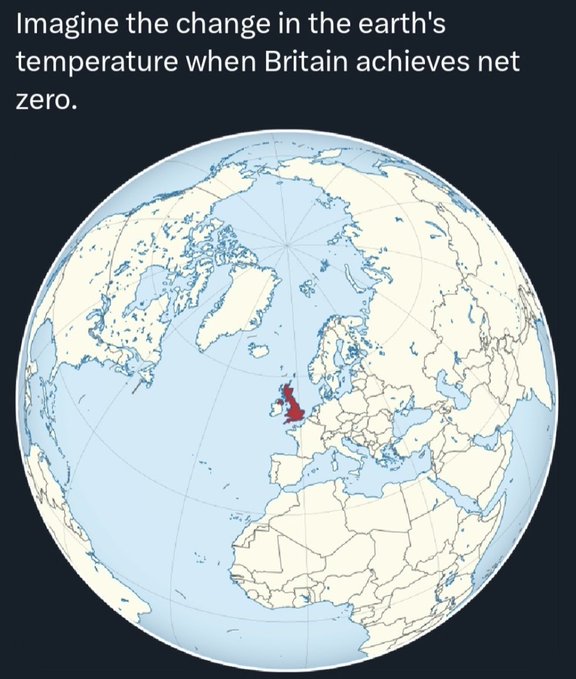
Re climate change: years ago I found a file at NOAA, “paleoclimate data”, specifically a reconstruction of temperatures, at intervals of a couple of years, between 50k years ago and 1920. It shows the last ice age very nicely. But my main interest in it is that it shows in the years since then (the past 12k years or so) significant temperature swings. And in particular, it’s clear that right now we’re not even in a particularly warm period (it’s cooler than the average of the past 8000 years). You want global warming? Talk to Leif Eriksson (ca. 1000 AD). Warmer still? Talk to Julius Caesar. Also: the supposed reference point for so-called “pre-industrial climate” is 1850, which very conveniently is within a fraction of a degree of the coldest time in 8000 years. Coincidence? I don’t think so.
The National Climate Research Center (NCRS) “corrected” the temperature records for the United States in 2011, dropping everything a few degrees so that the 1930s were no longer the warmest temps in the 20th Century. The official reason was to clean up the data and bring them in line with how temperatures were measured after 1950 or so (white box on legs, over grass). Note that this was at the same time as the National Weather Service (NWS) offices were failing to meet their own temperature recording requirements (the thermometer on the asphalt roof, next to the exhaust for the AC unit, was one example), so a lot of people had some doubts about the motive.
And that’s a “correction” we know about. East Anglia in 97 showed that they did everything they could to not only falsify the data, but make sure no one could get to the original readings.
What I’ve been told is that it’s not the absolute temperature of the Earth that causes severe weather events, but the rate of change. It’s certainly plausible that human activity (and our sheer numbers) has caused that rate to increase. (This does NOT mean that I support the Left’s proposed remedies.)
Based on the data I’ve seen and used (limited set, so not entirely useful for global-scale extrapolation), the rate of change has been minimal since the 1940s. At least regionally, the weather pattern shift after the Little Ice Age ended in the late 1940s.
Macro-scale patterns do change, and parts of the Great Plains and High Plains seem to be shifting to drier winters and cooler, wetter summers, BUT some of that is short-term thanks to the undersea volcano a few years back. We’re still not as dry in summer as the 1850s, which is the driest on record thus far for the southern Great Plains and upper Rio Grande Valley (records to the 1700s).
One problem with temperatures is that urban heat islands are also where most of the temperature sensors are. Even my rather small city affects the local storm tracks and temperature patterns, and has since the 1970s. Something like Phoenix, or the NYC metro, or other locals? More so, even allowing for the cushioning effects of large bodies of water (NYC, Houston, Hamburg, Singapore). If you remove the major urban reporting stations from the temperature record, there has been almost no change up or down since the 1940s. Arctic sea ice is still the same as in the 1940s in terms of total expanse, although specific areas covered can shift from year to year. [runs for door, chased by soapbox]
Yes, the issue of urban heat islands is what sent me looking for old climate data years ago, which is when I tripped over the data I mentioned. You can find that by searching for “GISP2”. There is a bunch of other data like it, from polar ice at both ends of the earth, and I would like to explore that further at some point.
The rate of change thing is not a real thing either, as far as I can tell. And besides, that’s a case of grasping at straws; even if it were so, what does it matter?
Looking at the graph I made of the GISP2 data (8000 BC to now), by eyeball it doesn’t look like the current rise is unusually fast. A quick & dirty attempt to plot dy/dx says that the current rise is typical, with the fastest shown at over 3x the current rate.
BLS says that there are 10k atmospheric science jobs, and 300k mechanical engineering. (IIRC, I am not a financial advisor.)
Mechanical engineering is less likely to have the whole area of practice captured by a monopoly funder, and by way of that capture taken over be invalid methods or practices.
Electrical engineering’s fundamental sampling theory for a simple periodic sample is sampling frequency is twice the highest frequeency of interest. Textbooks on this may go into more detail, but some of the standard ones might not discuss certain details. Like how many periods you might want for what trend estimation.
Mechanical engineering has a pretty simple sampling theory for temperature. By eye you can predict about half the finest marking indication.
Meteorology has a different scheme.
Instead of proposing that you can solve an initial value boundary condition PDE exactly, (which they never have the information to do) they combine a bunch of simpler models and average them statistically.
This gives you statistical inferences that you can test versus immediate future in a small area, and tune until good enough.
Aggregating spatially to global scale, and aggregating in time to forecast decades into the future becomes a different thing entirely.
In general, it is not clear that the propagations of unknowns and of errors in these models are well understood by the scientists in question. (There’s a subsetting exercise that can lead to an inference that meteorologists cause severe weather.)
Whether the statement (rate of change) is yes, no, or definitely unknown depends on what sorts of scales we talk about.
At tiny scales (just large enough where continuum mechanics is still valid), we can show that the navier-stokes equations do very clearly show transient changes in one variable causing changes in other variables. Sound is a propagating pressure wave, for example.
So yes signals propagating in gas, or transient temp changing pressure/humidity or transient pressure causing a transient temperature shift, this is well shown.
Weather scale phenomenology is maybe fairly well established, even if a lot of the datasets are sparse.
But the first period of temperature is the day, and the second global temperature period is the year.
Being able to demonstrate that the phenomenology of the thunderstorm is consistent, and well understood, is a different thing from sucessfully showing year over year changes connect back to hour and minute scales of changes.
In the absence of language for clearly seperating scales of phenomena, and in absence of statistical tests for evaluating those hypotheses, it is quite possible and plausible that the meteorologists are playing deceptive and silly games in describing their findings.
(You can also see non-specialists making spatial related mistakes when they repeat claims about ‘scientific consensus’ of surface temperature, or temperature. One, if surface is not specified, then what about the interior? Two, there is some scientific consensus about the surface once having been molten hot. It has long been found that in absence of radioactivity, the earth cools off. (Lord Kelvin famously did some age of Earth calculations.) Temperature estimates based on measuring transients in a very thin gas are always going to be a noisier source of average/long scale integration/trend estimates than a dense solid, or than a liquid with about the highest thermal energy capacity of all liquids. )
Drat. Automodded. tl;dr is that there’s NFW we’re doing predictive climate modeling any time soon, so let’s get Trump onto Nuklular* while we still have enough competent engineers–literate, numerate, acquainted with non-woke REALITY–to pull it off.
When you’re distracted, got writers block, the words won’t make sentences (or even seances), when the characters are being snitty and giving you the silent treatment, when the Real World Wants A Word when you’re trying to freaking write, when there’s eleventy billion other stories screaming they want attention, too, when the cat in your lap is making the horking hairball noise right in the middle of maybe starting to write…
But the freaking pen has got your back. Yes, you can fvcking do this, writer.
The one with the 1973 Chrysler, that is quite possibly the same model car I learned to drive on in 1987 (ours was the same color even). Steering that thing was an adventure for the inexperienced. 3 years later some guy crashed into my mom on her way to work and totaled it (side impact). Ruined my mom’s hip, but she already had weak bones in her pelvis and hips.
The Food and Drug Administration (FDA) late last week announced that a distributor is recalling its FDA-regulated products because of the presence of bird and rodent feces at a Minneapolis facility.
Minneapolis-based Gold Star Distribution Inc. said on Dec. 26 that it’s recalling all of its FDA-regulated products including over-the-counter cold and flu medications, dietary supplements, pet foods, cosmetics, medical devices, and foods that were distributed in locations primarily in Minnesota.







































































 According To Hoyt
Being familiar with the synthesizer in question, he absolutely did not use every button.
LikeLiked by 1 person
You mean it could have been WORSE?
I worked in a retail job a few Christmas seasons ago. Did you know that there are at least 4 covers of that implosion, and all are unlistenable?
LikeLiked by 3 people
yeah, he really didnt use the ring mod.
LikeLike
Good. I hate ring mod. It just feels lazy to me.
LikeLike
but the ‘sting’ in the Dr. Who theme depends on it…
LikeLike
Some techniques have rare uses.
LikeLike
(in case you’re wondering, same synthesizer)
LikeLike
I’m not fond of, “Wonderful Christmas Time,” but I’ll take it over, “Last Christmas,” any day.
LikeLike
Someone needs to do induce a clanker to do a Bing Crosby and the Andrews Sisters big band cover of Last Christmas. Including a Benny Goodman clarinet solo.
LikeLike
They don’t let you do covers of existing songs, not even those out of copyright, much less those in copyright.
LikeLiked by 1 person
I think the maker of the Brown meme should keep an eye out for a letter from Dewey Sue & Howe.
LikeLiked by 1 person
LOL. Dan thought he had.
LikeLike
Another fine crop, ripe for the picking … ;-)
LikeLike
Did someone come up with “Tactical Santa” after listening to Weird Al Yankovic? https://www.youtube.com/watch?v=OSRyE3vVpnE
LikeLiked by 1 person
Reminds me a little of a comic strip that appeared many years ago in the European Command area of operations. I couldn’t find an adequate link for it, but “Tactical Santa” appeared at years end to dispense awards and decorations for soldiers who’d been hardcore over the preceding twelve months.
LikeLike
LikeLiked by 2 people
ahhh, the memories…
LikeLiked by 1 person
G
LikeLiked by 1 person
bittersweet but real
LikeLiked by 1 person
Need more coffee. ☕☕☕☕☕☕☕☕☕☕☕
LikeLike
Definitely. Only on second cup. 🍵
Okay. Lets see if WP will let me get comments now.
LikeLike
SFBS!
LikeLike
The EU water closet transformation is on point, le n’est plus ultra; it perfectly depicts making it all worse to no advantage.
LikeLiked by 1 person
My sister, who walked down the aisle at her wedding accompanied by the triumphal march from the end of Star Wars, likes that traditional portrait.
LikeLike
And I do enjoy that room full of Collins radio equipment – used to work on those for the National Guard.
Nothing like running 1kw out on the local CB users.
LikeLiked by 1 person
Amazing how little effort it took to tweak 10 meter equipment to run at 27 MHz.
My cousin was using SSB to talk to a neighbor. (Both with general tags) I have no idea why he thought using the linear amp at 1kW was a good idea, but the neighbor’s receiver didn’t appreciate the signal.
RCPete, who uses 30W on js8call.
LikeLike
Yes, that sure looks like a ham shack I would like. All I have is one Collins radio (and it isn’t in that photo, it’s a previous generation).
Re climate change: years ago I found a file at NOAA, “paleoclimate data”, specifically a reconstruction of temperatures, at intervals of a couple of years, between 50k years ago and 1920. It shows the last ice age very nicely. But my main interest in it is that it shows in the years since then (the past 12k years or so) significant temperature swings. And in particular, it’s clear that right now we’re not even in a particularly warm period (it’s cooler than the average of the past 8000 years). You want global warming? Talk to Leif Eriksson (ca. 1000 AD). Warmer still? Talk to Julius Caesar. Also: the supposed reference point for so-called “pre-industrial climate” is 1850, which very conveniently is within a fraction of a degree of the coldest time in 8000 years. Coincidence? I don’t think so.
LikeLike
I recognized the KWM-2As immediately, and went poking around. One site called them ‘the B-52 of HF transceivers’.
LikeLike
The one I dream about is the big amplifier on the left (sitting on the floor).
LikeLike
The 30-L1; also a couple 30-S1 linears up over the desk
A fan site: https://collinsradio.org/cca-collins-historical-archives/the-equipment-of-collins-radio/the-grey-boxes/30l-1/
LikeLike
The National Climate Research Center (NCRS) “corrected” the temperature records for the United States in 2011, dropping everything a few degrees so that the 1930s were no longer the warmest temps in the 20th Century. The official reason was to clean up the data and bring them in line with how temperatures were measured after 1950 or so (white box on legs, over grass). Note that this was at the same time as the National Weather Service (NWS) offices were failing to meet their own temperature recording requirements (the thermometer on the asphalt roof, next to the exhaust for the AC unit, was one example), so a lot of people had some doubts about the motive.
LikeLiked by 1 person
In almost every instance, I have decided to default to “the result was the motive” until a preponderance of the evidence says otherwise.
I do not remember the last time such preponderance presented itself.
LikeLike
And that’s a “correction” we know about. East Anglia in 97 showed that they did everything they could to not only falsify the data, but make sure no one could get to the original readings.
LikeLike
What I’ve been told is that it’s not the absolute temperature of the Earth that causes severe weather events, but the rate of change. It’s certainly plausible that human activity (and our sheer numbers) has caused that rate to increase. (This does NOT mean that I support the Left’s proposed remedies.)
LikeLike
Based on the data I’ve seen and used (limited set, so not entirely useful for global-scale extrapolation), the rate of change has been minimal since the 1940s. At least regionally, the weather pattern shift after the Little Ice Age ended in the late 1940s.
Macro-scale patterns do change, and parts of the Great Plains and High Plains seem to be shifting to drier winters and cooler, wetter summers, BUT some of that is short-term thanks to the undersea volcano a few years back. We’re still not as dry in summer as the 1850s, which is the driest on record thus far for the southern Great Plains and upper Rio Grande Valley (records to the 1700s).
One problem with temperatures is that urban heat islands are also where most of the temperature sensors are. Even my rather small city affects the local storm tracks and temperature patterns, and has since the 1970s. Something like Phoenix, or the NYC metro, or other locals? More so, even allowing for the cushioning effects of large bodies of water (NYC, Houston, Hamburg, Singapore). If you remove the major urban reporting stations from the temperature record, there has been almost no change up or down since the 1940s. Arctic sea ice is still the same as in the 1940s in terms of total expanse, although specific areas covered can shift from year to year. [runs for door, chased by soapbox]
LikeLiked by 1 person
Yeah, I had a long draft, covering a different point.
This topic is one of the intersections of history and of both thermodynamics and fluid mechanics.
It can bear a lot of fruit where potential ambiguity is concerned.
LikeLike
Yes, the issue of urban heat islands is what sent me looking for old climate data years ago, which is when I tripped over the data I mentioned. You can find that by searching for “GISP2”. There is a bunch of other data like it, from polar ice at both ends of the earth, and I would like to explore that further at some point.
The rate of change thing is not a real thing either, as far as I can tell. And besides, that’s a case of grasping at straws; even if it were so, what does it matter?
Looking at the graph I made of the GISP2 data (8000 BC to now), by eyeball it doesn’t look like the current rise is unusually fast. A quick & dirty attempt to plot dy/dx says that the current rise is typical, with the fastest shown at over 3x the current rate.
LikeLike
Our numbers are not that high, impact-wise.
LikeLike
BLS says that there are 10k atmospheric science jobs, and 300k mechanical engineering. (IIRC, I am not a financial advisor.)
Mechanical engineering is less likely to have the whole area of practice captured by a monopoly funder, and by way of that capture taken over be invalid methods or practices.
Electrical engineering’s fundamental sampling theory for a simple periodic sample is sampling frequency is twice the highest frequeency of interest. Textbooks on this may go into more detail, but some of the standard ones might not discuss certain details. Like how many periods you might want for what trend estimation.
Mechanical engineering has a pretty simple sampling theory for temperature. By eye you can predict about half the finest marking indication.
Meteorology has a different scheme.
Instead of proposing that you can solve an initial value boundary condition PDE exactly, (which they never have the information to do) they combine a bunch of simpler models and average them statistically.
This gives you statistical inferences that you can test versus immediate future in a small area, and tune until good enough.
Aggregating spatially to global scale, and aggregating in time to forecast decades into the future becomes a different thing entirely.
In general, it is not clear that the propagations of unknowns and of errors in these models are well understood by the scientists in question. (There’s a subsetting exercise that can lead to an inference that meteorologists cause severe weather.)
Whether the statement (rate of change) is yes, no, or definitely unknown depends on what sorts of scales we talk about.
At tiny scales (just large enough where continuum mechanics is still valid), we can show that the navier-stokes equations do very clearly show transient changes in one variable causing changes in other variables. Sound is a propagating pressure wave, for example.
So yes signals propagating in gas, or transient temp changing pressure/humidity or transient pressure causing a transient temperature shift, this is well shown.
Weather scale phenomenology is maybe fairly well established, even if a lot of the datasets are sparse.
But the first period of temperature is the day, and the second global temperature period is the year.
Being able to demonstrate that the phenomenology of the thunderstorm is consistent, and well understood, is a different thing from sucessfully showing year over year changes connect back to hour and minute scales of changes.
In the absence of language for clearly seperating scales of phenomena, and in absence of statistical tests for evaluating those hypotheses, it is quite possible and plausible that the meteorologists are playing deceptive and silly games in describing their findings.
(You can also see non-specialists making spatial related mistakes when they repeat claims about ‘scientific consensus’ of surface temperature, or temperature. One, if surface is not specified, then what about the interior? Two, there is some scientific consensus about the surface once having been molten hot. It has long been found that in absence of radioactivity, the earth cools off. (Lord Kelvin famously did some age of Earth calculations.) Temperature estimates based on measuring transients in a very thin gas are always going to be a noisier source of average/long scale integration/trend estimates than a dense solid, or than a liquid with about the highest thermal energy capacity of all liquids. )
LikeLike
Drat. Automodded. tl;dr is that there’s NFW we’re doing predictive climate modeling any time soon, so let’s get Trump onto Nuklular* while we still have enough competent engineers–literate, numerate, acquainted with non-woke REALITY–to pull it off.
&42; Is the N-word an automodder?
LikeLiked by 1 person
Sounds correct to me, and sounds plausible to me.
I’m less enthused about the data center build out, but if we can get the nuke plants built, I would think that such would be a mitzvah.
LikeLike
shouldn’t be, but Lord knows.
LikeLike
Hmmm… I guess it didn’t just automod, it vanished forever into WP’s bitbucket. It SAID it had posted successfully.
It lied.
LikeLike
WP is the devil.
LikeLike
When you’re distracted, got writers block, the words won’t make sentences (or even seances), when the characters are being snitty and giving you the silent treatment, when the Real World Wants A Word when you’re trying to freaking write, when there’s eleventy billion other stories screaming they want attention, too, when the cat in your lap is making the horking hairball noise right in the middle of maybe starting to write…
But the freaking pen has got your back. Yes, you can fvcking do this, writer.
LikeLike
This explains Sowell’s observation on bottom meme:
https://www.jneurosci.org/content/early/2025/12/11/JNEUROSCI.1465-25.2025
LikeLike
Re: (Sir) Paul McCartney’s “Wonderful Christmastime”
It’s Beethoven’s Ninth Symphony compared to John Lennon’s “So This Is Christmas.”
I said what I said.
LikeLiked by 1 person
The one with the 1973 Chrysler, that is quite possibly the same model car I learned to drive on in 1987 (ours was the same color even). Steering that thing was an adventure for the inexperienced. 3 years later some guy crashed into my mom on her way to work and totaled it (side impact). Ruined my mom’s hip, but she already had weak bones in her pelvis and hips.
LikeLike
Minnesota: come for the fraud, and we’ll throw in the rat droppings for free!
https://www.theepochtimes.com/health/over-the-counter-medicines-other-items-recalled-over-feces-contamination-fda-5963560?utm_source=ref_share&utm_campaign=copy
LikeLike