*Well, I’ve let RES speak twice! I like the way she points out one thing we might forget in the heat of the approaching election. The way to change the culture is not the force of government but the “still small voice” of stories — in which, btw, I’d include non fiction as well as fiction. Win or lose, our fight is only beginning against the world of hatred-for-humans and the headlong rush to civilizational suicide. Narrate the world as you wish it, inspire others with your vision. In the world of ideas, ideas win. See how many children Heinlein who was biologically childless has left behind. Has any patriarch ever sired such a splendid tribe? Go you and do likewise. I’d change her “we have hope with a spine, to “we have hope with spikes” but that’s me…” And thank you — from my heart — to CACS for relieving me from my duty as a blogger on this very busy weekend, and for her eloquence and warm humanity too, both as a commenter and a contributor.*
CACS Speaks
by CACS
The United Stated has long embraced the thought that there is always tomorrow. People came here because they fully believed that this is a land of hope. Ongoing despair has not been one of our particular cultural characteristics. (I hope that this will remain the case.)
Momma, who had been a sickly child, only survived to adulthood because of the miracle of antibiotics. During WWII she became the one of the first civilians to receive a skin graft. (She had been bitten by a bulldog and almost lost a finger to gangrene that she developed while a patient in a naval hospital.) I received vaccinations for all sorts of childhood diseases that had been a real threat when my parents were children. My childhood things never had to be burned because they had been contaminated by scarlet fever, as Daddy’s had been. Why wouldn’t my parent’s generation believe that science could hold the answer?
Yes, science was going to be their savior, and there was a religious fervor to this belief. They had the promise of unlimited inexpensive energy through the safe unlocking of the power of the atom, which was just on the horizon. At the same time, because it had been so horrible, they believed that the unleashing of the atom bomb meant that going to war would soon become unthinkable.
Through scientific hybridization, pesticides, mechanization and farm management food was becoming cheap and plentiful. Farming was becoming much safer for the farmer. Refrigeration and freezing meant that a wide variety of fresh foods would be available to everyone year round. With better practices in food handling food-borne illness would become a thing of the past.
It was believed that with the proper management of nutrition, vaccinations to eliminate illnesses and advanced treatments long lives of good health would be in reach of all. We had even begun to unlock the mystery of the workings of the mind. Once we did that we would eliminate the scourges of mental illness and crime!
What reason was there not to hope, we had our hands on the key?
Sigh. I wonder if that was how people felt at the beginning of the age of industrialization.
I won’t argue that my generation does not have a certain stupidity/naivety/what-have-you about them. Like an adolescent wanting the answers yesterday, we were angry at the imperfections we perceived and lacked much in introspection and humility. Still we had grown up during a time of incredible changes and wonders. We were a generation raised to be idealists in a world of real dreams come true. We were taught that all the problems in the world would be solved by mankind through science and we were profoundly unprepared for disappointment. We reached the moon! And in the end we felt we might as well have collected the tee shirt: My country went to the moon, and all I got was Tang.
(I know, I know, we also got transistors, integrated circuits, and a wonderful data base on the human physiology. But we didn‘t know that.)
Hope lost, disillusionment, can be a terrible thing. A contributing part of the problem of the boomer generation came with the slow nagging realization that something was wrong and science alone was not going to be able to produce a solution. The good times were not unending. We had been promised it would be done, and as it had not, someone must be responsible for the failure.
Some have joined their parents and are simply holding on for dear life to the promises they grew up with, even when everything before their eyes should inform them that that ship has sunk. They were promised that if they lived their lives according to plan they would have their social security, medi-care and their pensions. They did their part, so what is wrong with this world?
Many of the boomers, looking for a reason to be hopeful, adopted a system of beliefs that is thoroughly enmeshed with a form of scientific socialism, believing that will be an answer to all our ills.
They also embraced the belief that we might even be responsible for bad weather. If our actions are responsible for floods, droughts, hurricanes and other inclement weather, then wasn’t it possible that we could address and fix those problems as well? With the ‘inequities’ of capitalism and the ‘burdens’ that overpopulation, carbon based fuels, improper waste management and industrialization continue to place on the planet to blame, no wonder their brave new perfect world had not been delivered.
Even if it was wrapped in what you and I consider gray goo, they had found something to hope in, a new illusion. If we just elected the best and the brightest, if we let them manage the economy, if we control the population, if we got rid of the superstitions of (certain) religions, if we went green and if we let the people of the world know that we wish them no harm everything could still become a paradise!
Sadly and largely without their realization, the path they have chosen, should we continue down it, will end with us coldly reducing man to purely utilitarian modes. They have shrouded their actions with cloaks of rationality and tied them up with ribbons of compassion. What they seek will lead to elimination of that and those which are viewed as having no worth because they are seen as non-productive and burdensome.
And, yes, a few have gone to a greater extreme and have given up, surrendering to the view that all of mankind is utterly at fault, an irredeemable anathema. The Daughter has kindly suggested that they set an immediate example for their cause by eliminating themselves posthaste. She insists that this would be the only ethical thing for them to do.
Those who hang out here don’t seem to have adopted the belief that we can or should be able to create a perfect world. They also do not think that mankind is entirely disgusting. They are quite willing to celebrate that which is good, and condemn what is evil. (Although we might argue at the definitions.) While we sometimes despair at what is going on at this moment, we do not see it as a reason to give up. We are not without hope–we have hope with a spine.
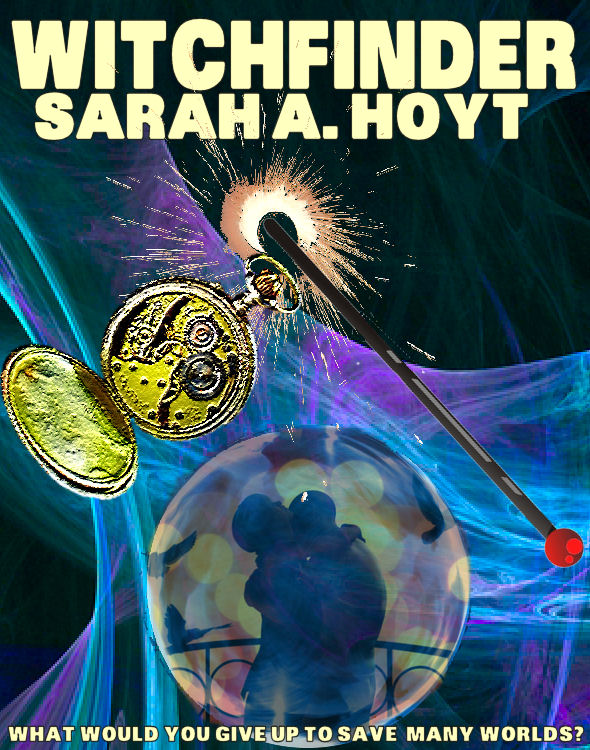
How to express, explain and possibly inspire that hope in others? Human Wave stories.
 According To Hoyt