Look, I’m older than dirt, apparently. So old that I remember the widespread introduction of computers. Okay this was Portugal and computers were only introduced in the 80s.
Every time something went wrong, like, say your bank balance was wrong, the answer was, “Oh, I’m sorry, it was the computer.”
By then I had had one programming class, during my stay in the US. Which is why I knew what they were dishing out was nonsense. I’d only programmed for a year, but I already understood “garbage in, garbage out.”
Of course there wasn’t much I could do about it. It was still Portugal, so I had to pretend to believe them while they fixed their screw up.
Well, today I found that my credit card and Amazon are both now using AI for fraud detection. And doing so stupidly.
I’ve had this credit card for forty years. I’ve only ever had a fraud phone call before, and that was when someone tried to use it to buy a pretty strange item that I’d never before bought and would never buy… in another country.
Today I had a fraud alert. To explain, I bought nine ebooks on Amazon. Seven were books I’ve read and enjoyed before. They used to be on KU, but are now only available for purchase. And there are two more. So I did what any sane binge reader would do (would you really like me to be trying to buy them from the kindle at 2 am?) and bought all nine. They stopped the purchase of five and six for suspected fraud.
Apparently the balloon went up from Amazon first, and the credit card company thought this made perfect sense: that someone was using my card to buy books that are entirely in my wheel house — cozy mysteries — for my kindle. Now I could have understood if AMAZON had called me or pinged me or otherwise tried to verify that I’d not lost my kindle, as I could see someone buying books on a stolen kindle: though why exactly on my taste set, I don’t know. But…. thinking the credit card was compromised is a special level of insane.
And then, when I tried to call, I was answered by an AI which gave me only two answers, neither of which made any sense, and had to scream into the phone “I want to speak to a representative” for three minutes before it got it.
The representative of course said “It’s the AI’s doing.” And the ever helpful “We’re only trying to keep you safe.”
I do appreciate they’re trying to keep me safe. But to keep me safe, they should have a thinking human being, one who understands the language and the culture well enough to make a decision without doing so based on “Well, it’s a lot of books all at once.” Stuff like “Oh, they’re all the same series.”
Because AI can be — and is — badly programmed. It’s like Amazon restricting people from putting up more than 3 books a day. This makes absolute sense to prevent Chinese scammers, but without a carveout to allow businesses that have always done this, it impairs services like pubshare or probably draft to digital.
All of this is crazy cakes.
It reminds me of when I hired someone many years ago to take my edited manuscripts (edited by me) and enter the changes on the computer. I had a bunch of things indicated like “Use search and replace to change this.”
I got back a digital copy that was missing words and phrases. I couldn’t figure it out, until he showed me what he was doing. He had used search and replace but didn’t fill the replace box. So instead, it replaced the word/phrase with nothing. When I — baffled — asked why what I was told was that “I thought the computer would know what to replace it with.”
Obviously, the computer didn’t know. In the same way that the AI doesn’t know.
I feel like the name “Artificial Intelligence” has led a lot of people to think that they’re somehow dealing with…. I don’t know. Mycroft from The Moon Is A Harsh Mistress. they expect reasoning. (And even Mike didn’t really get the world. Anyone remember his “jokes?”) And so, they train it badly and use too general a case set with no exceptions and MORE IMPORTANTLY they don’t have an informed human on the other side dealing with this.
This is sort of what we get with AI checking social media (or AI drawing programs. Midjourney had decided that man and kneeling is somehow salacious and won’t allow me to do it. Men, no praying on your knees, for you. What? I have no clue. And it was probably a momentary glitch because of what someone else was trying to do. (I was trying to have someone kneel and incline his head in defeat, okay?)) when there is no appeal, or the appeal goes to people in other countries (meta!) with a shaky understanding of English slang. I mean this is how I almost got my facebook account cancelled for telling a friend I might have to kill him for a bad pun, or for alluding to Pratchett with “We all know the young deserve to be whipped every day for going around being young.” This was judged to be “Coordinating harm.” Somehow. Despite the fact that the friend remained my friend, and that obviously I wasn’t coordinating to have all the young in the world be whipped. As any human being who understood the culture would get!
Now, am I annoyed at the disruption of my evening? Well, it went with the computer problems for the day.
But like the problems of the day — it’s the software — it’s not the computers. It’s the people who program the computers. And the people who train the AI. And the people who don’t realize that “thinking” machines are STILL machines, and therefore you can’t really leave them to make final decisions on complex human things.
Yes, outsourcing this kind of thing to AI saves money, but you still need to pay SOME people on the back-end to backstop the AI and understand when there’s an exception.
Because when you don’t, it’s not the AI.
It’s the humans who trained it. And who aren’t checking on it.
The diner was playing Christmas music, which seemed a little strange so early in December, but Peter Denniau was eating alone at the small booth near the corner table, and his thoughts kept drifting with carols. Sure, the shepherds had heard the angels on high, but had they believed them?
How many shepherds had heard? How many angels had fanned out to the countryside to proclaim the good news? Had an entire horde of shepherds descended on the nativity, or only a very few, wide-eyed and not fully believing they had come on ethereal strains that everyone else acted like they couldn’t hear?
None of this was making it easier for him to ignore the fact that a very pretty young woman was looking at him from a nearby table, her eyes a little wide with admiration, and her lips turning up just a little at the corners.
She was pale blond, and her eyes were a deep sort of amber, and her features were as perfectly symmetrical as they could be without making her look like a doll and hit the uncanny valley. More importantly, her eyes looked animated and intelligent. And she didn’t look like one of the many college students that infested Pete’s kitchen these days. Oh, sure, she looked young enough to still be in college, but there was something to her expression, something to the eyes, that gave the impression she’d lived a longer life and had thought about everything she’d experienced, too. A face that indicated she, as Peter was often accused of, thought too much.
(Removed because book — Christmas in Time — will be available for sale on Amazon 12-14-2025)
Yes, I was attacked by a short story, which is getting written, but more importantly, today has been a day of computer issues. First my printer stopped existing. (No, I don’t get it either.) And then my keyboard, and then… I spent most of the day doing other stuff while Dan poked at the computer.
Right now everything works, but I’m considering sprinkling some blessed salt around the CPU just in case. Or letting Indy take off the cover and play with it again. Whichever.
Anyway, sorry for the long silence. Short story coming.
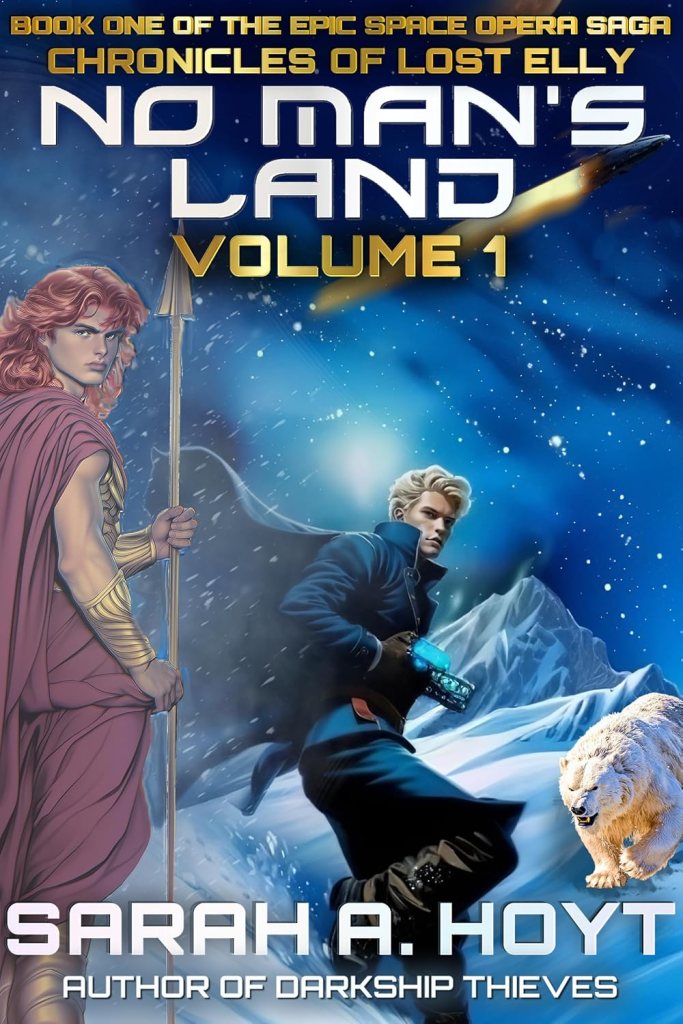
*A Story from the Schrodinger Universe. If you’ve read No Man’s Land, then yes– that is who you think it is. – SAH*
What Child Is This
Sarah A. Hoyt
They said all asteroid miners were running from something. And how hard you were running determined how far off the asteroid cluster was located.
That Christmas morning Myra Moss felt like what she and John were trying to run from was the size of the universe and had followed them here, to the farthest possible asteroid miner colony, at the very edge of the known universe.
Which to be fair made perfect sense because what they were running from was death. And death had been stalking humans since before there were humans. Or since the garden. Whichever you believed in.
She’d left John asleep in the bed – looking thinner and more ashen than he had just last night at their determinedly not sad Christmas eve supper – and come here, to the front room, to drink her coffee and look at the false dawn rise rosily over the sea.
It had seemed such a fortuitous thing, three years ago, when they’d found this place: a recolonized, abandoned space station near a massive asteroid cluster. The asteroid cluster abounded in the metals most prized on Earth, but also had enough chunks of ice to make the space station very viable.
No one knew where the space station had come from, to be honest. There was no record of it on any history that one could discover. The tentative idea – as far as the people living in the space station thought of it, and they were the only ones who cared – was that the space station had been built by a lost colony sent very far back in time, and then abandoned for reasons of their own. The darker idea was that the asteroids were what remained of the planet the colony had occupied. But that was unlikely, because there was no sun nearby, and the asteroids seemed to have accreted from disparate places, judging by their composition. Why they’d accreted was a matter of speculation. John said it was because the asteroid field sat in a wrinkle in the sheet of space time. And the space station was just over the ridge of the wrinkle. Convenient to spec out the asteroids and conduct short day-expeditions to it, without the need for Schrodinger drives.
(Removed because book — Christmas in Time — will be available for sale on Amazon 12-14-2025)
Blood rituals, black magic, and broken masquerades. Names to run away from really fast. And maybe the end of the world…. Welcome to Intrepid, North Carolina. Where autumn brings leaf season, tourists, and bloody sacrifice. Twenty years have passed since the Dark Day brought creatures of horror onto the evening news. Now vampires run nightclubs, alchemists deal potions on the street corners, and werewolf gangs lay claim to shady alleys. The honest cops of Intrepid enforce human laws on supernatural evil, and pray. Because the turn of the leaves brings Halloween, tourists… and the return of a serial killer who’s plagued Intrepid for over two decades. Yet the night holds darker secrets than even the best detectives have unearthed. Somewhere in Intrepid, a demonic sorcerer plans to bring Hell on earth. And the Demongate is almost complete. In the midst of a stakeout gone wrong, two mysterious wanderers drop into Detective Church’s life. Aidan, who moves like flames and holds secrets in his shadows… and Myrrh, a holy warrior born of ancient Alexandria. Enchantress. Heretic. Hell-raider. Welcome to Intrepid. Evil’s in for a hell of a night….
Some nights it just doesn’t pay to rise from the grave….Corbin wants to uncover the truth behind her death at a demon’s hands. But her memories have been shattered by the grave, and even with footloose Sighted mechanic Devon Fortunato helping her search for answers, a restless ghost is up against the darkest spells and lies of the living. If they can’t unravel who sabotaged the Cunning Folk circle’s spellcast defenses, the child Corbin meant to protect will suffer a fate worse than death. Corbin’s notes hold clues, but the broken circle would rather die than admit the truth….
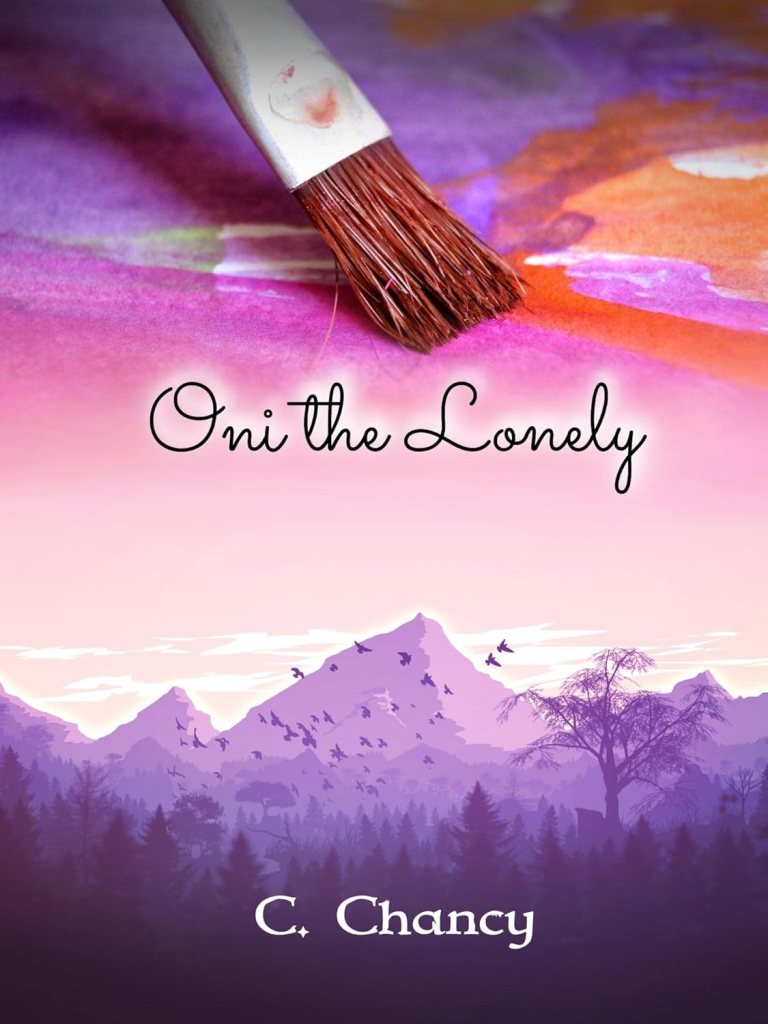
A grieving mountain cove doctor. A pair of wayward oni. A curse borne on the black wings of crows.
The Rivertown Shopping Village has seen a lot of strange proprietors. An oni painter on the run from a bad breakup is a new one. Maple Leaf Studio opened with blazing color, but will a haunting end Kyosai Momoji’s dream before it begins?
At the south end of Rivertown, Rain McKee delivers soap and perfume with a hint of mountain blessings, picking up her life in the wake of her grandparents’ deaths. Deaths that may have been from a firstborn curse….
Kyosai’s a firstborn, and oni attract trouble like lightning strikes. If either of them want to survive, they’ll have to face haunts, monsters, and a curse so ancient no living mortal knows its name.
The Appalachians are old; the evils lurking there, older still….
(If you want ancient folklore, modern magic, and a love story that prioritizes friendship first, this is the slow burn for you!)
Meg Turner has been a vampire for twenty years. Her favorite food is rapists. Which is how she met Andi Donahue, her new best friend/ girl Friday.
And then the nightmares start. And the bodies start showing up–bled out and raped. Just like Meg was. They don’t have a whole lot of time to stop the killer before he strikes again, and only one way to stop the killer.
But how can Andi help Meg stop a killer she can’t even see?
Ten years ago the Savients took over Niban, forcing the independent inhabitants into poverty and despair. Bass White saw the careless cruelty of the Savients kill his mother and his father. When a resistance cell is discovered in his city bloc, the Savients seek to make everyone pay.
With his wife Amie, Bass races into the caverns to escape the Savients’ brutal enforcers: the Atrasai. The couple barely make it to the limits of known territory outside their underground city, however, before the Atrasai catch up with them. It would take a miracle to save them…
…or a combat medic robot.
Join Bass and Amie in this sci-fi story of healing, hope, and wonder. After a decade of fear and pain, even a little light can bring out the best in man and machine. But will the best be enough to heal?
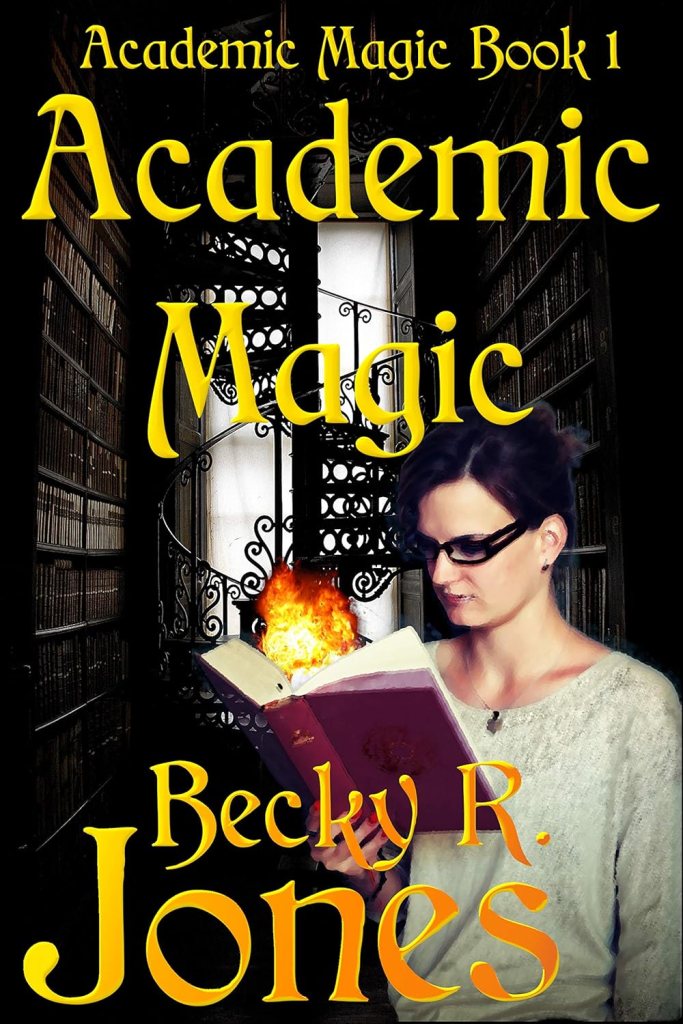
Zoe O’Brien has found her dream job at a small liberal arts college teaching the history of Medieval witchcraft and magic. Academic life is exactly what she expected it to be…until the squirrels stop by to talk with her and her department chair and best friend turn out to be mages.
Zoe discovers a world of magic and power she never knew existed. She and other faculty mages race to stop a coven from raising a demon on the winter solstice while simultaneously grading piles of final exams and reading the tortured prose of undergraduate term papers. Can Zoe master her new-found powers in time?
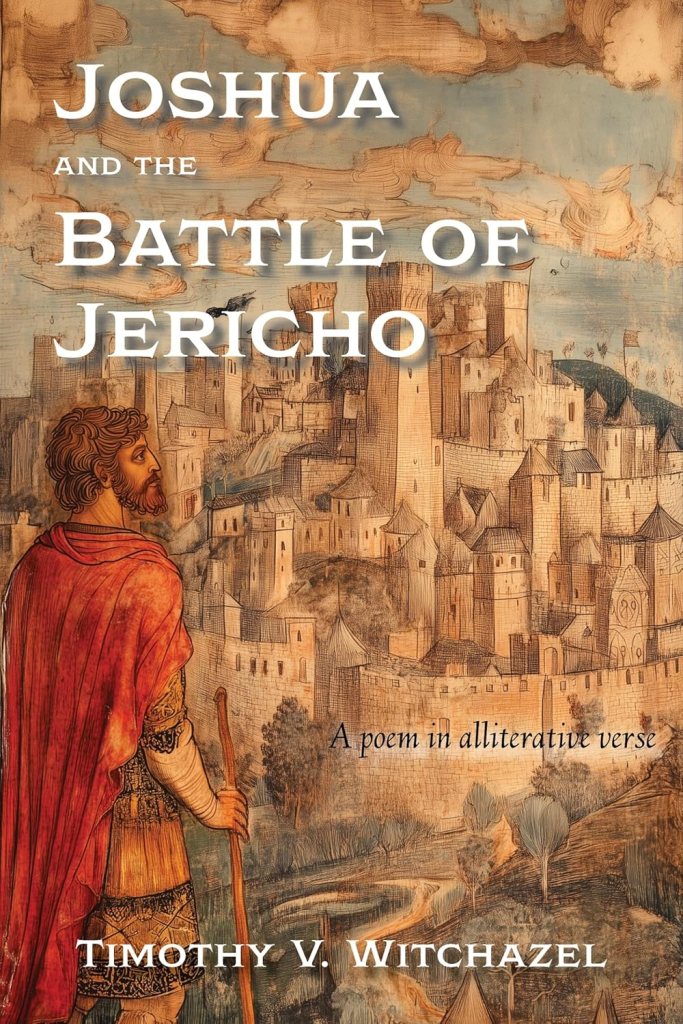
From author and poet Timothy V. Witchazel comes the story of Joshua and the Battle of Jericho in alliterative verse. Tracing the story of the Israelites from the parting of the Red Sea to the fall of the walls of Jericho, the story is retold in the style of Beowulf, Piers Plowman, and other Anglo-Saxon poems.
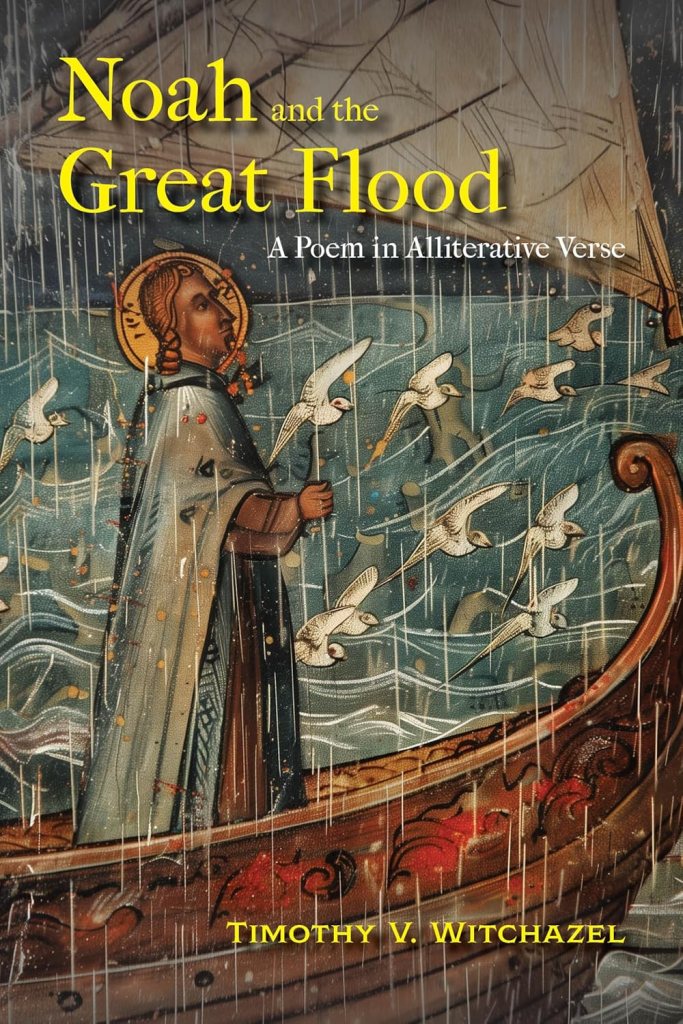
From author and poet Timothy V. Witchazel comes a retelling of the story of Noah and the Ark in the alliterative verse, the style of poetry used in Beowulf, Piers Plowman, and other Anglo-Saxon works.
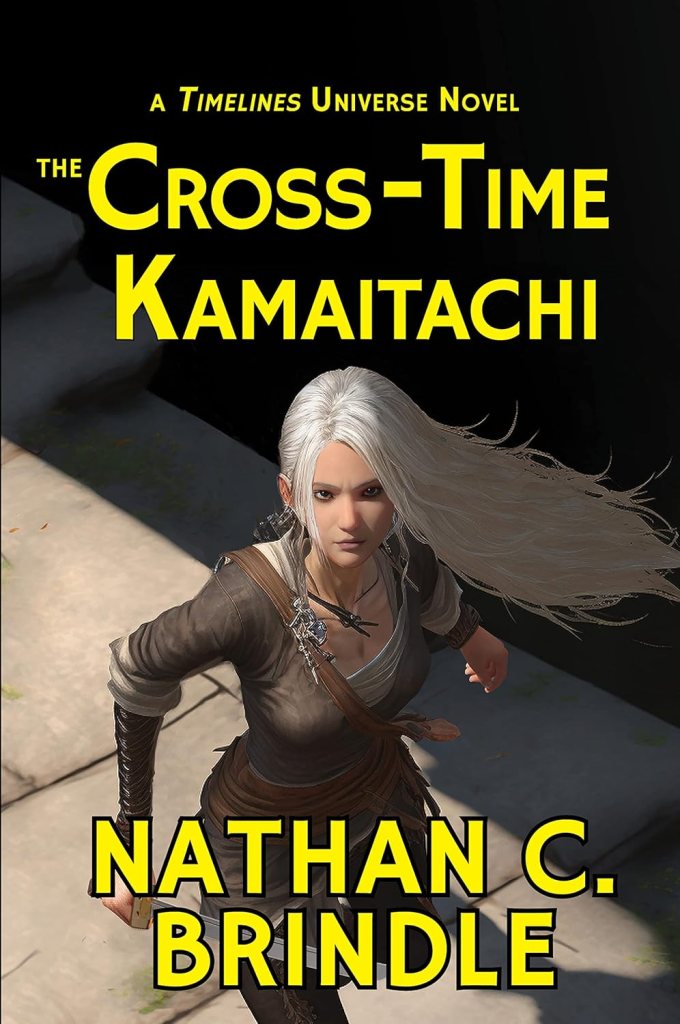
I did not land here as a warrior, but a warrior I so soon became . . .
One moment, Dr. Yukiko Yamaguchi was in her high-tech singularity research lab in California, busily adjusting an electronically-leaky fitting playing hell with her instrument readings.
The next moment, she was falling through space, and landing hard in a wilderness area she would quickly discover was her family’s ancient stomping grounds in Japan – but with an apocalyptic twist.
A hundred years later, there would be legends of a great yōkai, a demon, whom some called a kamaitachi – a sort-of whirlwind, weasel-like creature with blades for claws, which catches up unwary humans and slices their skin. But this kamaitachi is no ordinary yōkai – rather, she is
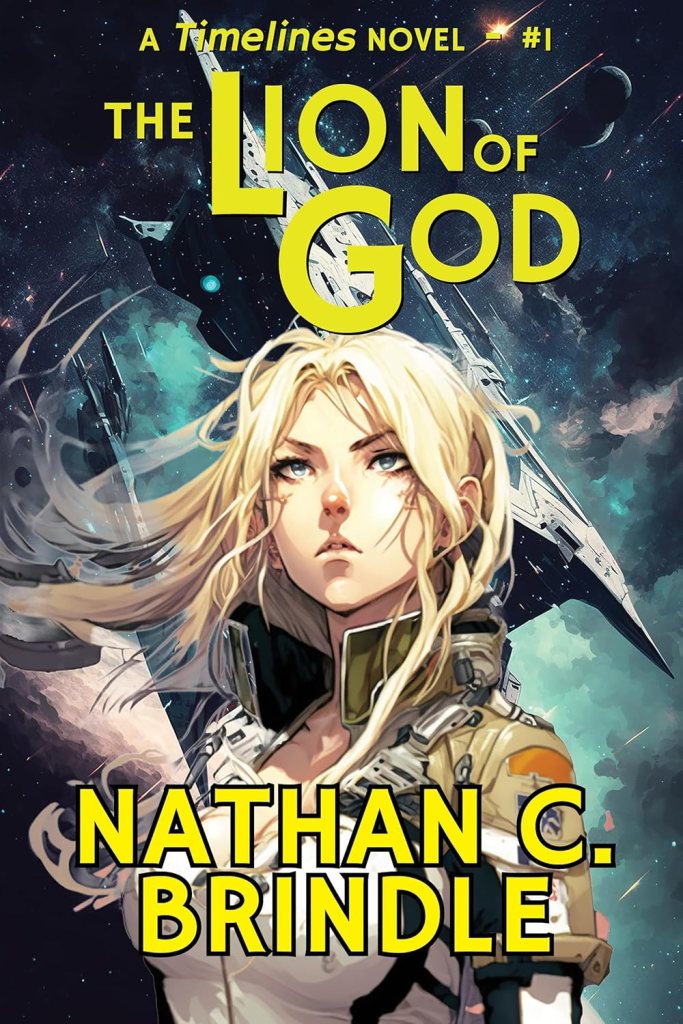
John Wolff has been handed a once-in-a-lifetime opportunity. Again. He’s already saved the love of his life from an early death – thirty years after she died. Now, a beautiful young woman, who is clearly his daughter, has appeared from the timeline branch where that same love of his life survived and married his counterpart. She says they need his help fighting off invaders from the far future. Who, by the way, are looking for him. Why? Because they want the starship drive he and a friend invented, the precursor to their time machine. Problem is, in her timeline, it hasn’t been invented yet. What man can resist a cry for help from his own daughter? Particularly when the invaders think she’s a saint. Or possibly, a devil wearing saint’s clothing. And they’re looking for her, too. Thus begins the Timelines Saga, and the story of the Lion of God.
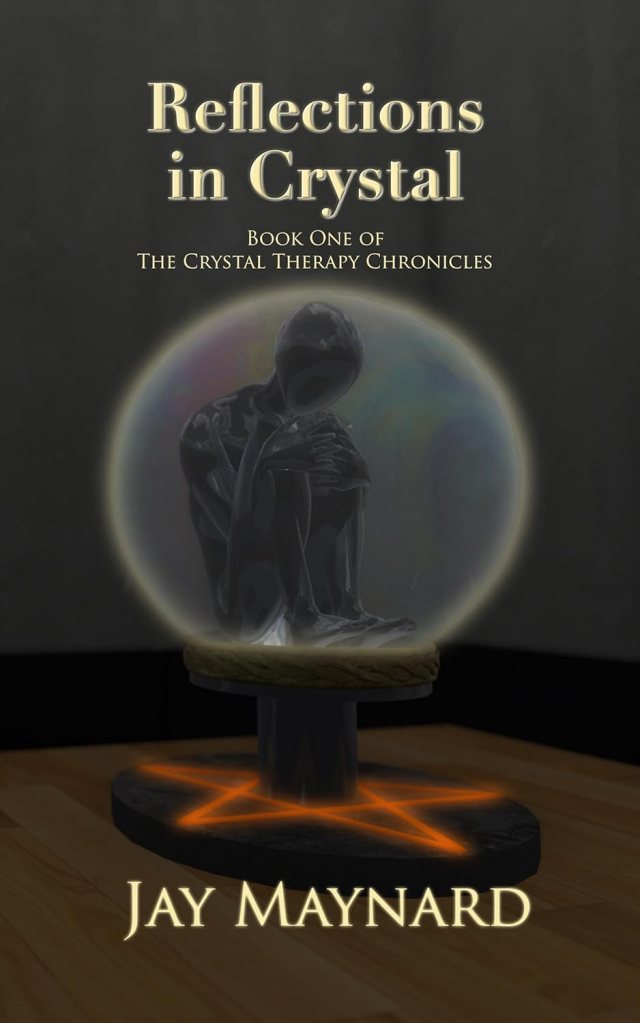
Alex Sullivan isn’t crazy — just angry. Angry enough to get arrested. Angry enough to be given a strange choice: prison, or an experimental magical program at a private facility in rural Missouri.
They claim to fix broken people not with medicine or therapy, but with silence, service, and a skintight suit of latex.
Inside the suit, Alex is cut off from the world — unable to speak, eat, or even cry in the ordinary way. Inside the crystal, time flows differently. There, guided by someone who seems to know him better than he knows himself, Alex must face his deepest wounds… and either heal, or shatter.
But this is no simple treatment. Alex finds himself on a journey into a hidden world where redemption is earned, the broken are made whole, and some choose never to leave the suit again.
Previously published as Foundational Laminate.
“One of the rare novels I hope becomes reality—a hard look at how to turn the antisocial into good neighbors.” — Karl K. Gallagher, author of The Fall of the Censor and Torchship
UPDATE, BECAUSE THE WRITER IS AN IDIOT AND FORGOT SHE’D DONE THIS:
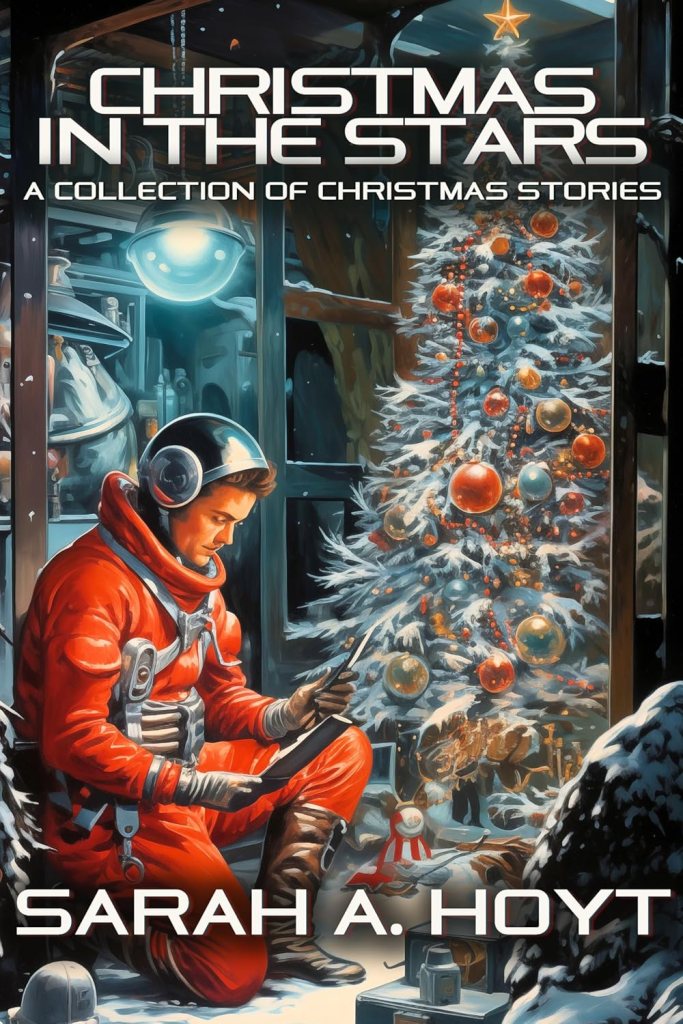
This is a collection of four Christmas short stories. It starts with a star-explorer stranded in unknown coordinates listening very hard for sleigh bells. Then there are two deserters of a doomed planetary war, in a forsaken planet, trying to do the right thing to secure peace and good will, even if one of them happens to be dead. And did you know there was a small, sweet robot at the nativity? Also, sometimes, all you need for a Merry Christmas is a cat. This is a short collection, but it’s heartwarming and cozy, and the sort of thing to read on a snowy afternoon, by your fireplace, with a cup of eggnog nearby.
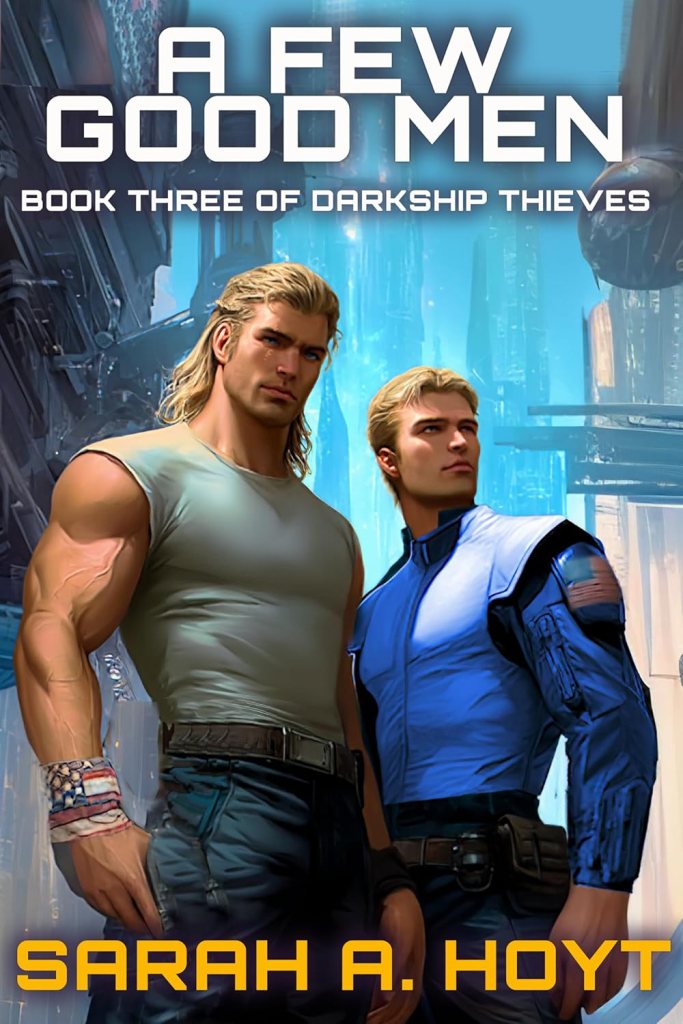
He spent 14 years in solitary. Now he’ll ignite a revolution. Born a prince among Earth’s fifty tyrants, Lucius Keeva emerges from imprisonment with a fractured mind and a deadly purpose. When assassins hunt him, fate delivers him to the USAians—secret keepers of America’s forgotten beliefs.
For 500 years, this underground faith has preserved the Constitution while awaiting their prophesied leader. In Luce’s madness, they recognize their messiah.
Now the son of tyranny becomes liberty’s champion. As the USAians rise from the shadows, their weapons of war finally unleashed, a broken mind and a fallen prince prove the perfect weapon against an unbreakable regime.
One madman. One ancient faith. One last chance to restore the republic from legend.
A FEW GOOD MEN —where belief becomes the ultimate revolutionary tactic.
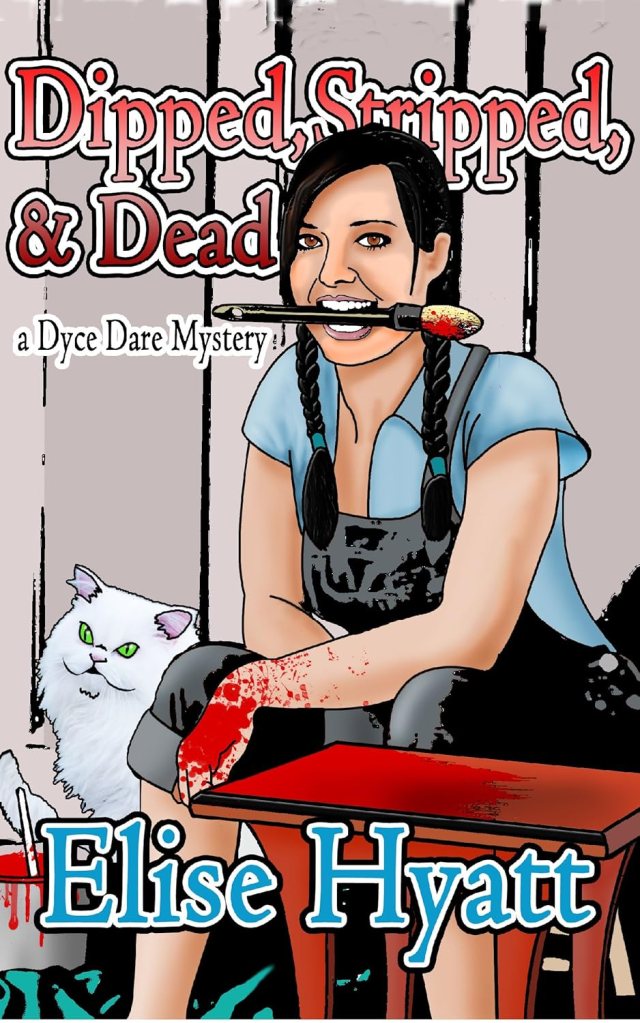
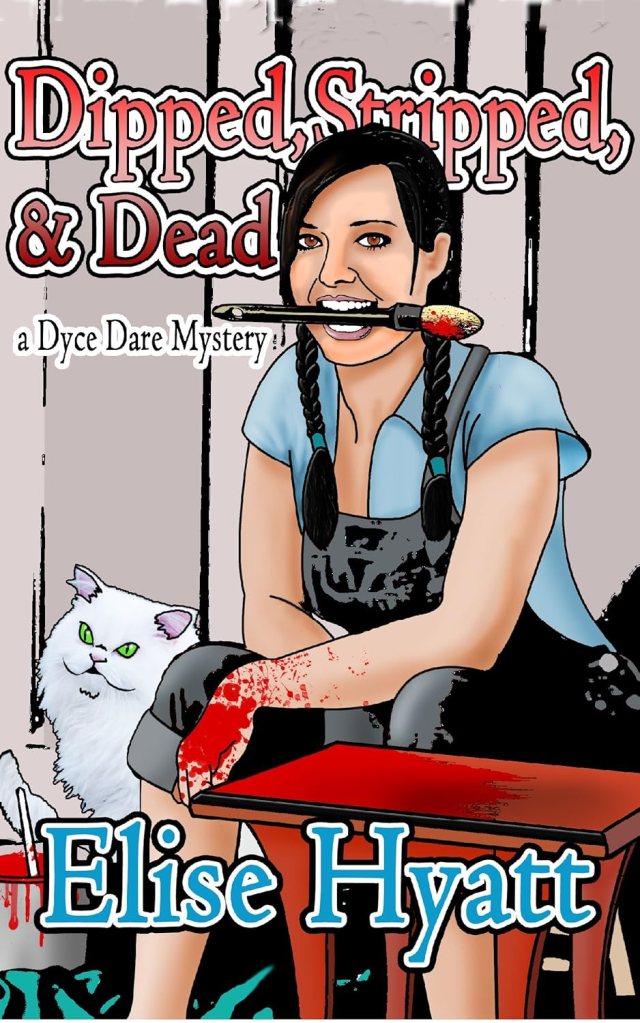
Some people find antiques. Dyce Dare finds trouble.
Ever tried fishing a Victorian sideboard out of a dumpster only to hook a dead body instead? Welcome to Dyce Dare’s life, where nothing goes according to plan—and never has.
At six, she wanted to be a ballerina (until gravity repeatedly suggested otherwise). At ten, she dreamed of lion taming (until Fluffy the cat staged a mutiny). Now at twenty-nine, she’s just trying to keep her furniture refinishing business afloat so she can upgrade her son’s diet from “pancakes” to “anything else, please.”
But when her latest dumpster dive yields a half-melted corpse instead of salvageable furniture, Dyce reluctantly adds “amateur detective” to her lengthy resume of career failures. Because nothing says “responsible single mom” like poking around a murder investigation, right?
Between dodging danger, dealing with her quirky neighbors, and trying not to embarrass herself in front of a certain handsome police officer, Dyce is about to discover that her talent for refinishing furniture might just extend to refinishing crime scenes.
Dipped Stripped And Dead – Sometimes the best way to clean up your life is to solve a murder.
(Warning: May contain splinters, sarcasm, and one very determined single mom who definitely didn’t plan on any of this.)
If you wish to send us books for next week’s promo,please email to bookpimping at outlook dot com. If you feel a need to re-promo the same book do so no more than once every six months(unless you’re me or my relative. Deal.) One book per author per week. Amazon links only. Oh, yeah, by clicking through and buying (anything, actually) through one of the links below, you will at no cost to you be giving a portion of your purchase to support ATH through our associates number. A COMMISSION IS EARNED FROM EACH PURCHASE.*Note that I haven’t read most of these books (my reading is eclectic and “craving led”,) and apply the usual cautions to buying. I reserve the right not to run any submission, if cover, blurb or anything else made me decide not to, at my sole discretion.– SAH
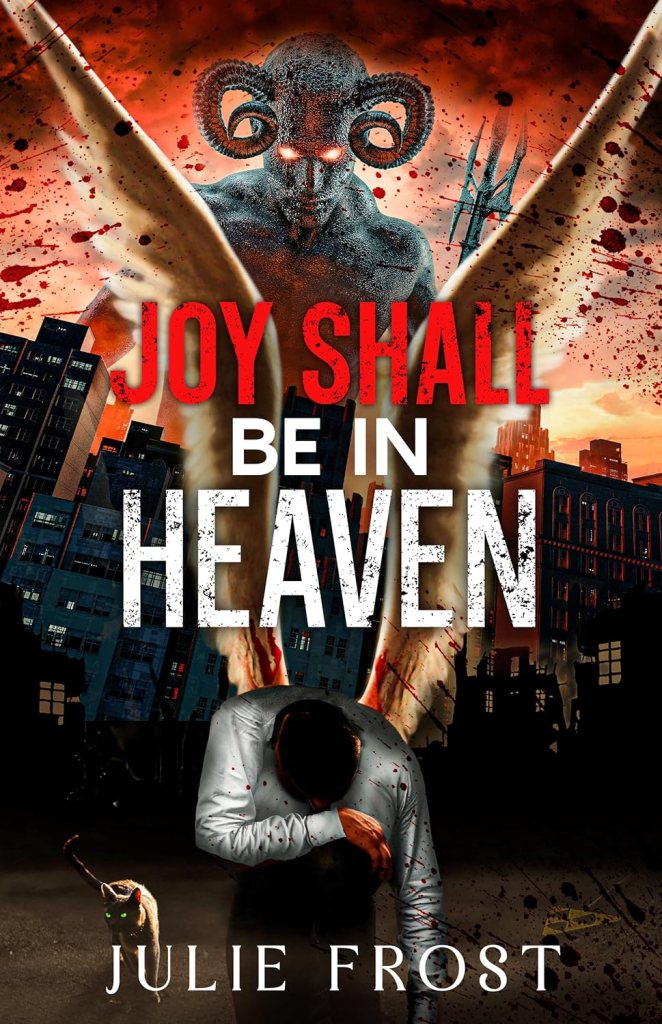
A Guardian Angel to serial killers His newest Charge And a grimoire with a Free! Demon! Inside!
Nachumiel’s job is to be the Still Small Voice whispering into the ears of sociopaths, in a vain attempt to turn them from the path of destruction they’re merrily traipsing down. Fresh off yet another assignment up to his hips in blood and buried in corpses, he’s beginning to wonder if he garners assignments like this because he’s a massive screwup who can’t damage these people any more than they already are.
His new Charge is different—but not in a good way. Gerry finds a malevolent spellbook holding a demon bound within, whose power even other demons are afraid of. Now Nachi has to team up with his argumentative opposite number and endeavor to undermine both Gerry and his damnable new friend before a child is sacrificed and the grimoire demon unleashes Hell on Earth. All he can try is what has always failed in the past…
And hope he doesn’t end up bleeding out on the floor himself.
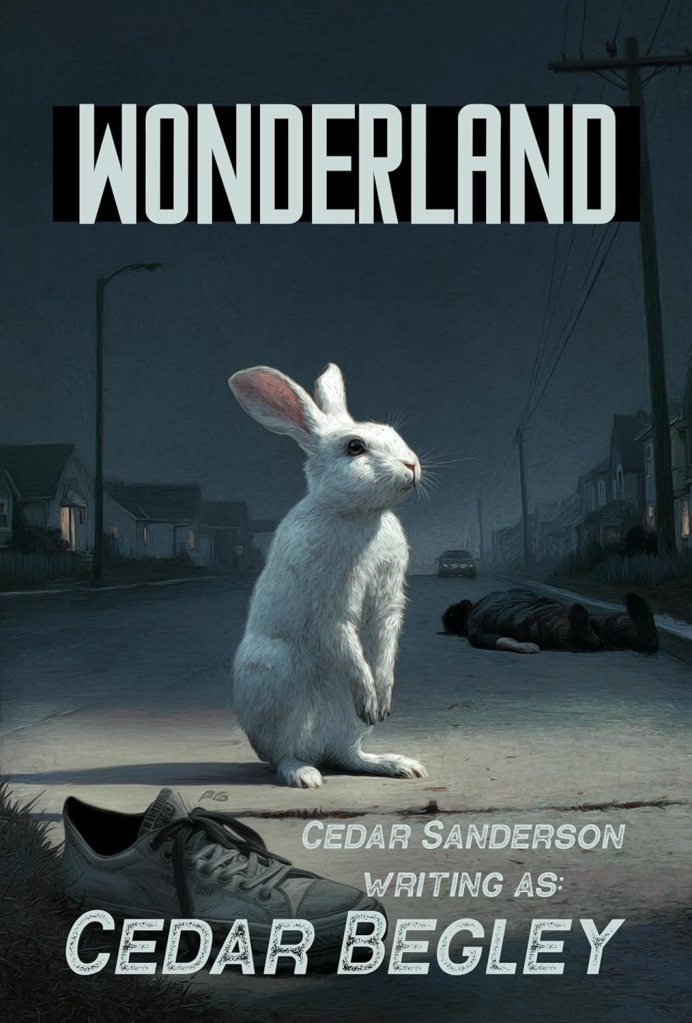
A white rabbit. A discarded gun. A detective who won’t stop digging.
When Detective Shelby Carroll follows a mysterious white rabbit to a suburban hit-and-run, she uncovers more than a simple crime. A mummified body in a red velvet room. Cryptic messages about a “Red Queen.” Neighborhood cameras watching every move. As cold cases collide with fresh murders, Shelby races through a twisted Wonderland of extortion, surveillance, and organized crime. Someone wants her silenced permanently. In this gripping police procedural, one detective must dethrone a ruthless crime boss before she becomes the next victim.
Perfect for fans of gritty female detectives, hard-boiled mysteries, and Alice in Wonderland thrillers.
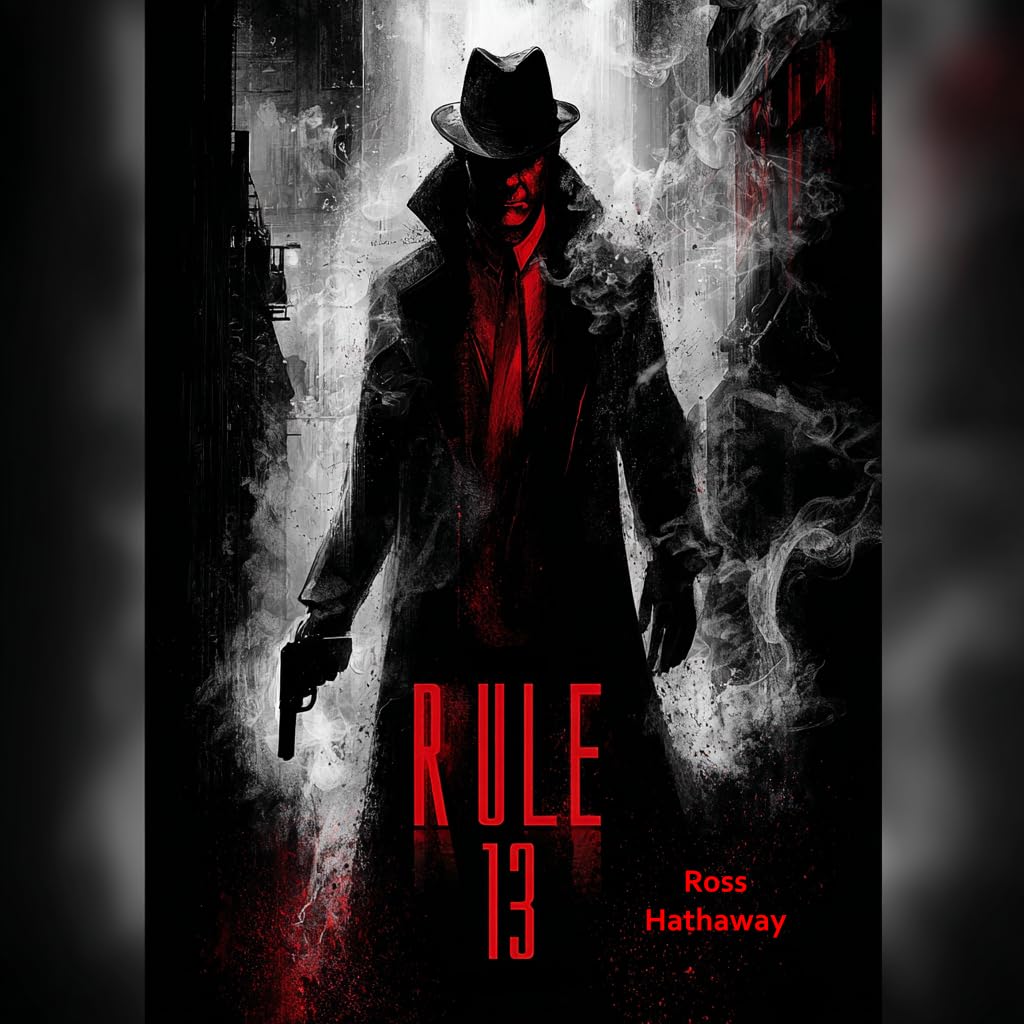
In Ashburn, the city doesn’t sleep—it twitches. It grinds men down, chews through their souls, and spits out what’s left with a crooked grin. Once, Robert Tucker wore a badge polished bright with idealism. Fresh out of the academy, he thought he could make a difference in a city built on vice, velvet lies, and rain-slick corruption. But a decade under the neon hum and coal-smoke skies of Ashburn turned that badge into a paperweight and that hope into bourbon. Now he’s a private eye working out of a one-room office with a bottle in his drawer, a secretary who files extortion notices under “routine,” and a conscience held together by the rules his dead partner left behind—Fallon’s Rules. Twelve of them. Not one guarantees survival. The syndicate boss Vincent Crowe owns the city’s shadows, but when Crowe gets in over his head the rot only deepens. Tucker’s caught between crooked judges, dying reporters, and a government experiment that makes the fog itself lethal. Everyone’s selling something in Ashburn—even redemption. In a city that eats its own, Tucker knows you don’t fight to win. You fight because you’re still breathing. Rule 13 — a hardboiled descent through smoke, blood, and brass where justice is a rumor, truth burns like cheap whiskey, and the only clean thing left in Ashburn is the rain that never stops falling.
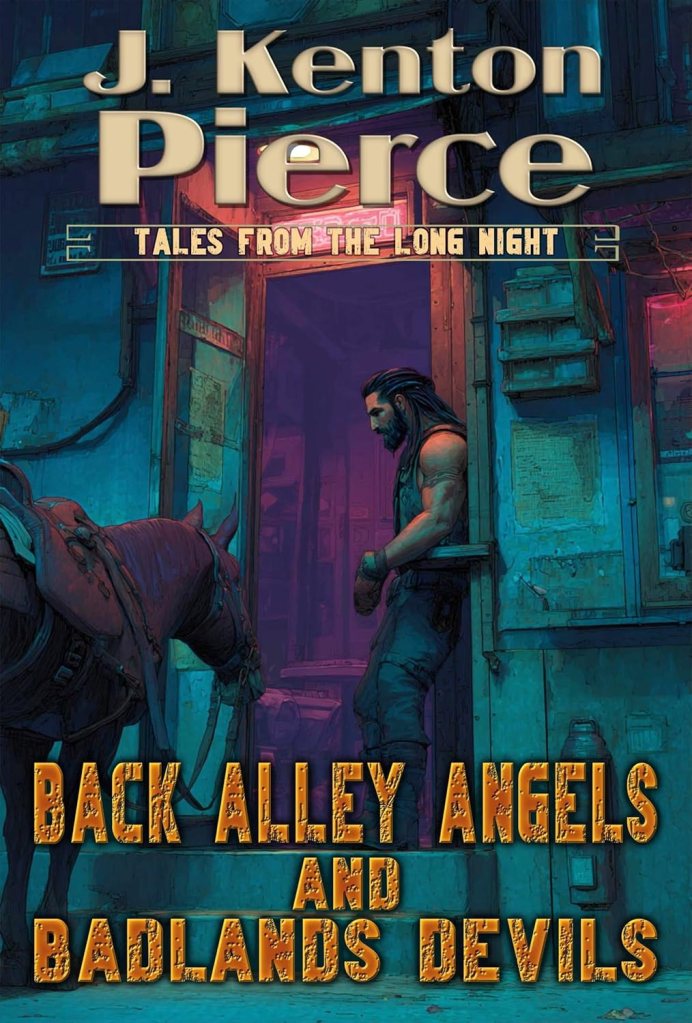
In a galaxy ravaged by fallen empires, endless wars, and a volcanic apocalypse, hope isn’t bestowed by fate—it’s forged by gritty survivors reclaiming their freedom and heritage. Welcome back to J. Kenton Pierce’s epic Tales from the Long Night universe, where ordinary heroes rise against the encroaching dark.
Back Alley Angels and Badland Devils delivers two pulse-pounding stories spotlighting the unsung warriors of Hesperides Colony, scarred by the Mutual Prosperity’s invasion. These raw tales of resilience pit flawed protagonists against hostile xenos, ancient horrors, and shadowy schemes.In “The Greenline Gambit,” set centuries into the Long Night, amiable brawler Kraitte thrives in the subterranean sprawl of Greenline Town—a former refugee sanctuary turned industrial hub. By day, he’s a heavy lifter; by night, a smuggler’s guardian. But when a mysterious brunette offers a high-stakes job, Kraitte plunges into a web of rival factions vying for underground power, testing his newfound sense of home and family.
“El Banquero del Diablo” rewinds to the invasion’s chaotic aftermath, amid ash-choked volcanic winter. Rugged cowboy Danny Bozeman, a former rider for Boss Rosenberry, joins the nascent Nuevo Tejas Rangers to rebuild society. Preferring simple brawls and bar tabs, Danny confronts capital-E Evil—an ancient darkness threatening innocents—armed only with unyielding grit and iron resolve.These standalone adventures weave into the saga’s larger arcs, proving heroes emerge from back alleys and badlands, not thrones. In a cosmos of implacable threats, the fight for dawn is eternal. Join Kraitte and Danny’s ruckus–and learn what it means to never quit.
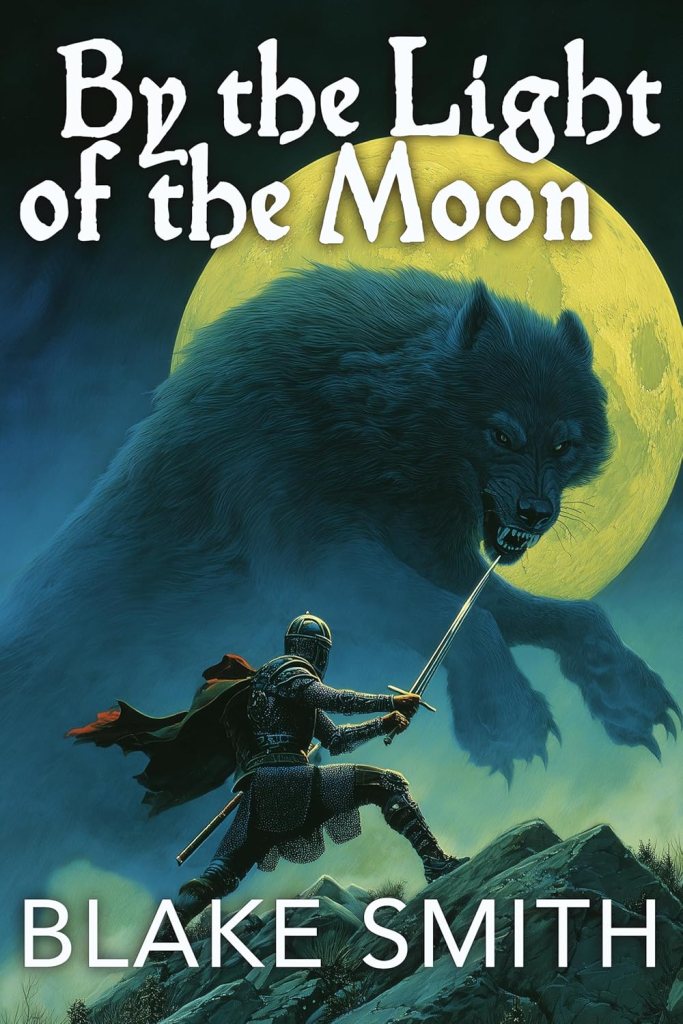
Aatu is eighteen years old, a respectable landowner, and about to marry the girl he loves. The south coast of Finland provides everything his little village requires.
It’s a peaceful life, until a band of ex-Crusaders land on the shore. With the harsh winter and lean times approaching, they cannot be allowed to stay for long. When their priests disturb things best left alone, Aatu fears a minor annoyance will become a disaster.
Aatu’s people turn to the old ways to fight the enemy, to teeth and claws instead of swords and spears. Though they are outnumbered and unused to fighting, Aatu is about to discover that wild wolves are not the most fearsome predators in this land, and even the most peaceful people can become ferocious in defense of the ones they love.
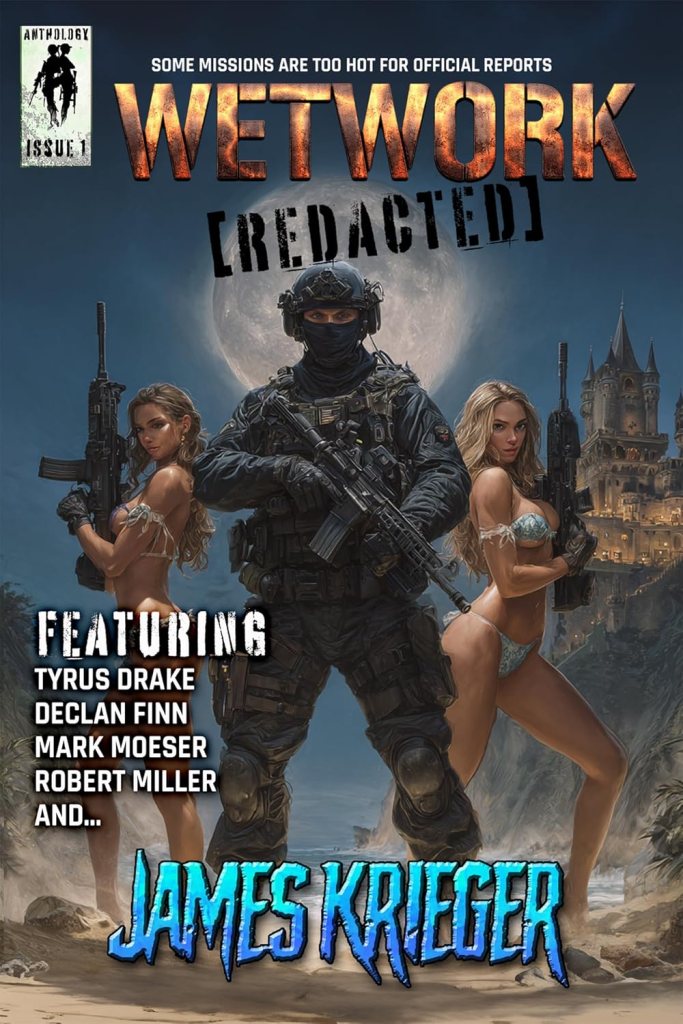
Classified missions and forbidden desires collide in these steamy tales of special operators who break all the rules. When the uniform comes off, the real danger begins as elite warriors navigate passion in the shadows of black ops. These adults-only stories blend tactical precision with explosive chemistry. Some missions are too hot for official reports.
Embark on a captivating adventure with the fourth installment of the Freedom Voyages series! Freedom Voyages Volume 4: Christmastime in Texas is a visual feast brimming with over 400 breathtaking photographs that capture the heart and spirit of America. These pictures showcase the landscapes, cityscapes, and vibrant cultural events that make Texas unique. It’s a visual record of a December road trip through Texas that will leave you in awe.
This 2000-mile road trip commences in the rugged beauty of Colorado’s Front Range, then continues through the otherworldly lava fields of northeastern New Mexico and into North Texas. Along the way, you’ll make captivating stops at the Capulin Volcano, small Texas ranching towns, and Dallas and McKinney’s dazzling Texas-sized Christmas light scenes. From North Texas, the journey continues south through the county seats of East Texas to experience its Christmas celebrations in quintessential towns such as Paris, Sulphur Springs, Longview, Nacogdoches, San Augustine, Jasper, Woodville, and others before concluding with a side trip to see Galveston fully decorated for the yuletide season. Freedom Voyages is not just a book — it’s a thrilling invitation to embark on an adventure. For those who yearn to experience America’s roadways vicariously through pictures, thoughts, and experiences, these pages are a gateway to your own Freedom Voyage. Get ready to be inspired!
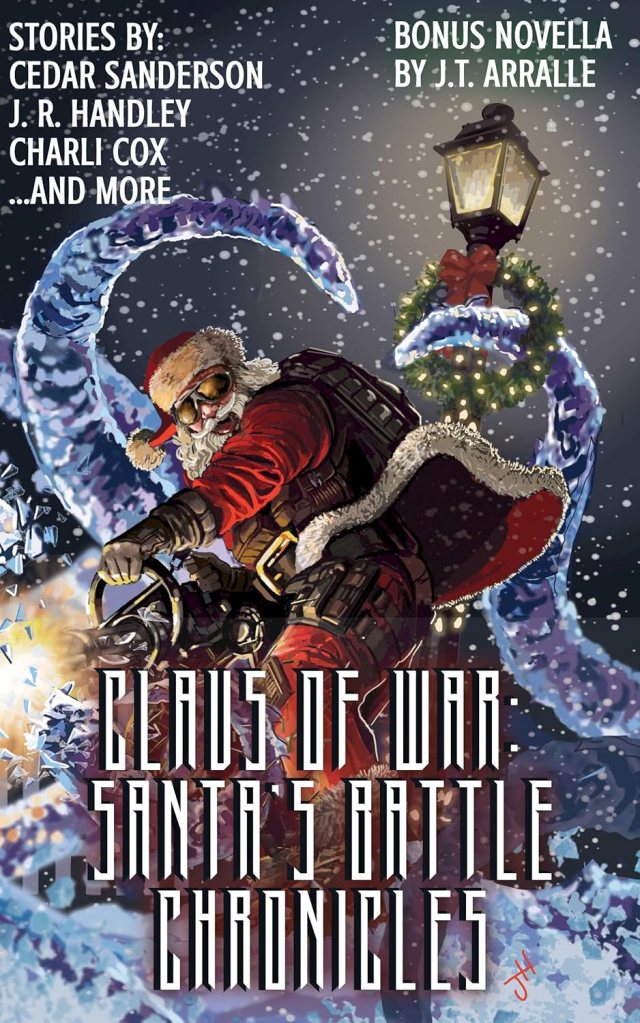
Unwrap the ultimate holiday thrill ride with Claus of War: Santa’s Battle Chronicles, Bayonet Books Anthology Vol 16!
Forget milk and cookies—Santa’s trading his sleigh for a war machine and his naughty list for a battle plan. From the icy depths of Europe to the jungles of Vietnam, 11 electrifying tales reimage Saint Nick as a battle hardened warrior facing cosmic horrors, mythical beasts, and relentless enemies. With stories by Alicia Kane, Charlie Cox, J.T. Arralle, and more, this anthology blends military sci-fi, dark fantasy, and holiday grit into a pulse-pounding collection that’ll keep you up long past midnight.
Perfect for fans of Dungeons & Dragons, Aliens, or Krampus Unleashed! When the stakes are survival and the enemy is ancient evil, Santa’s not just checking his list—he’s crossing names off.
Grab your combat rations, strap in, and buckle up for a holiday warzone.
Perfect for a modern audience who misses the tension, cleverness, and style of early espionage TV adventures.
When a rogue alliance drawn from Venezuela, Russia, China, and a web of proxy regimes quietly prepares a global triple-strike operation, the United States activates a team that officially does not exist.
Captain Grant Shaw, master of disguise and unflappable field leader.
Dr. Lucia “Lucky” Vega, Cuban-American cyber-engineer who can breach any system.
Malik Saint-James, actor and perfect impersonator.
Dr. Nadia Petrova, Russian émigré physician with psychological ops expertise.
“Baron” Delgado, explosive-ordnance virtuoso with nerves of steel.
Valentina “Val” Moreau, illusionist and contingency strategist.
Their mission: infiltrate an international summit in Caracas, uncover the operation known only as The Caracas Protocol, and stop a three-country chain reaction designed to destabilize half the globe.
Working from a mural-hidden safe house, swapping identities through flawless masks, staging live television illusions, and turning enemy arrogance against itself, the team races against synchronized attacks in Tijuana, Port-au-Prince, and the Caribbean.
Failure means chaos.
Success means no one will ever know what they prevented.
High-speed, clean, clever, and safe for younger readers while thrilling for adults, The Caracas Protocol launches the Rescuer Files, a modern espionage series built on style, deception, and perfectly timed reveals.
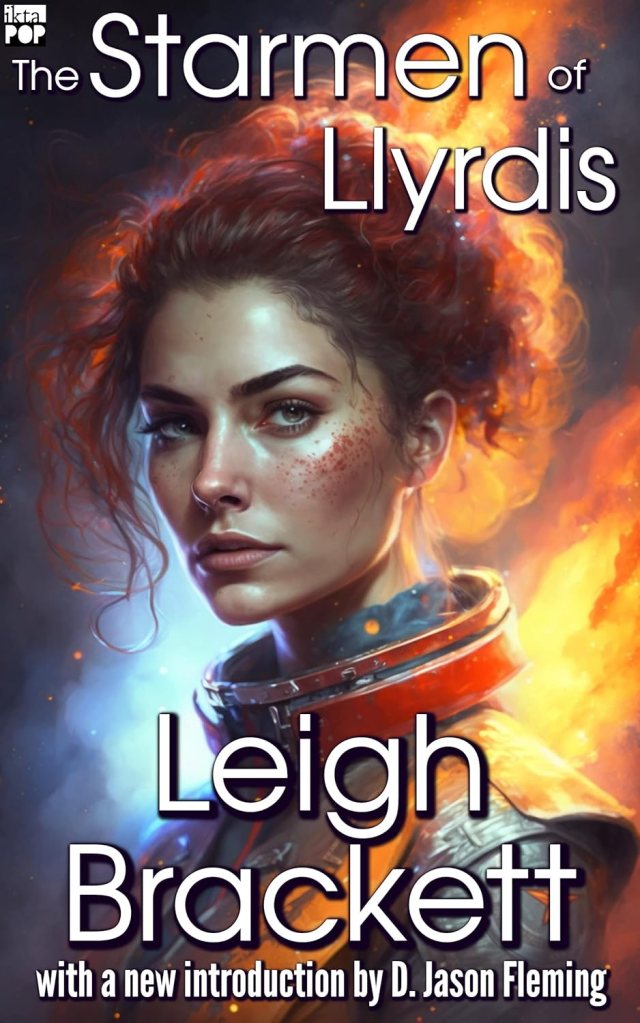
Michael Trehearne sensed his difference from other men, but he little knew he was a changeling of the only race able to conquer the stars!
Leigh Brackett’s 1951 novel, which first appeared in Startling Stories, not only prefigures books like Alfred Bester’s The Stars, My Destination and movies like Joss Whedon’s Serenity, it also makes a strong case for open source software and free culture in general, decades before either of those terms were coined.
This iktaPOP Media edition includes a new introduction giving the book genre and historical context.
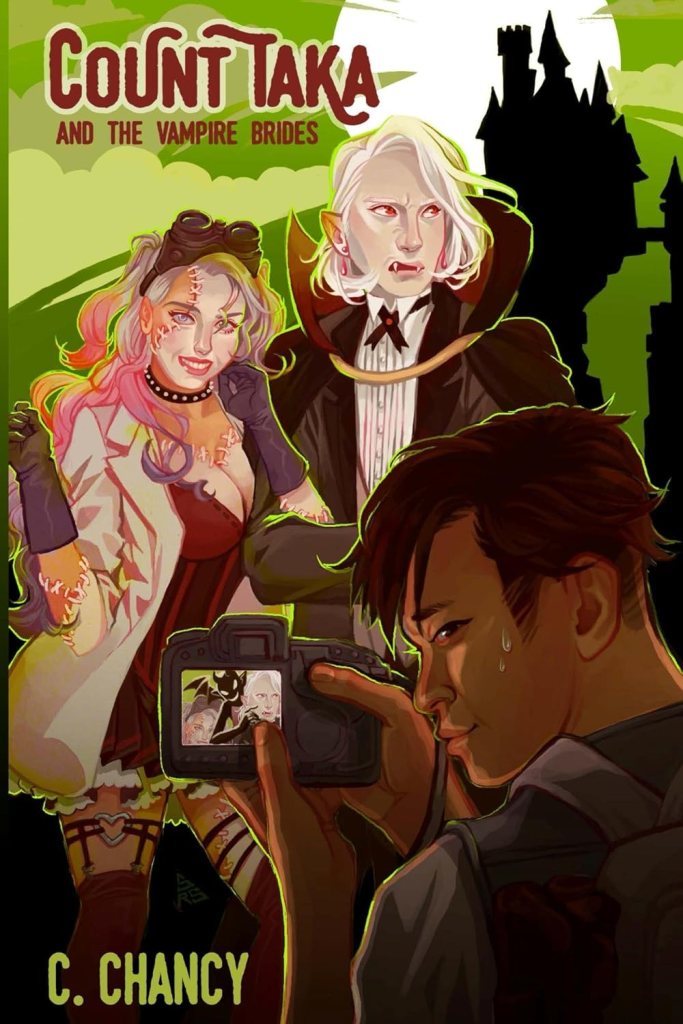
Here you will find snowclad mountains, roaring rivers, vast caves perhaps never seen before by mortal man! Here the strong Horses of Night roam the mountainsides – perhaps you can tame one to ride with your charms. Here the shepherds call to the long-fleeced sheep, the sheep to their sweet lambs – and you can find true telemea, the softest and freshest of cheese, in the gift shop, herb-flavored, a dozen special varieties-
Eh? You’re not here for the gift shop?
Ah, the cameras, of course! Forgive me, most of the photographers we see head straight for the ski lifts. Or the whitewater. Yet there’s so much more to Tramontana! The healthy farmers bringing in the hay, the soaring churches, the wild gypsy dancers – you must dance with the gypsies – and Raven Castle! Oh, there’s a place of history… and mystery.
It held the line against the Turks, they say, and the ancient lords rooted out all manner of uncanny beings… or bargained with them. Have you heard the rumors? That Count Herodes has ruled from that castle for over a hundred years? True, I tell you, all true!
…Monsters don’t exist, eh? Well, well, take your photographs, and we’ll see!
But you must visit the castle. The Blood Moon is coming, yes, and they say that’s when vampire lords can take a Bride! Other years have come and gone with no new lady in the castle, but this year… oh, you should hear Mistral sing the omens! A lass with your modesty and charms-
What’s that? Ah, temper, temper; location shots, yes, I see. Which way to the castle… there are maps in the gift shop, and tour schedules – but we can do better than that! Why, we’ll escort you there ourselves, no trouble at all, I insist-
Ooof. That’s a feisty one! Well, she’s packed off now. The other Brides should have some interesting weeks…. Mihail? What do you mean, Kae’s not a girl’s name?
…Oops.
(Vampire with annoying relatives meets photographer with terrifying relatives. Hilarity Ensues.)
Yona wondered why everyone kept steering him toward a military career, until one of his teachers noticed his aptitude for genetics. Now he’s the personal student of Academician Voronsky, working in a secret genetic engineering facility in a closed town.
However, Yona keeps having to spend as much time babysitting the Academician’s adopted son Kolya as actually doing genetics. When this extra assignment becomes a frustration, Yona learns just how quickly privileges can be retracted.
And then he starts learning just how deep the secrets of the Soviet human genetics program really goes.
A story from the Grissom timeline (Gus on the Moon universe).
Caution: Contains intense material that may be disturbing to some readers. Reader caution advised.
Some people find antiques. Dyce Dare finds trouble.
Ever tried fishing a Victorian sideboard out of a dumpster only to hook a dead body instead? Welcome to Dyce Dare’s life, where nothing goes according to plan—and never has.
At six, she wanted to be a ballerina (until gravity repeatedly suggested otherwise). At ten, she dreamed of lion taming (until Fluffy the cat staged a mutiny). Now at twenty-nine, she’s just trying to keep her furniture refinishing business afloat so she can upgrade her son’s diet from “pancakes” to “anything else, please.”
But when her latest dumpster dive yields a half-melted corpse instead of salvageable furniture, Dyce reluctantly adds “amateur detective” to her lengthy resume of career failures. Because nothing says “responsible single mom” like poking around a murder investigation, right?
Between dodging danger, dealing with her quirky neighbors, and trying not to embarrass herself in front of a certain handsome police officer, Dyce is about to discover that her talent for refinishing furniture might just extend to refinishing crime scenes.
Dipped Stripped And Dead – Sometimes the best way to clean up your life is to solve a murder.
(Warning: May contain splinters, sarcasm, and one very determined single mom who definitely didn’t plan on any of this.)
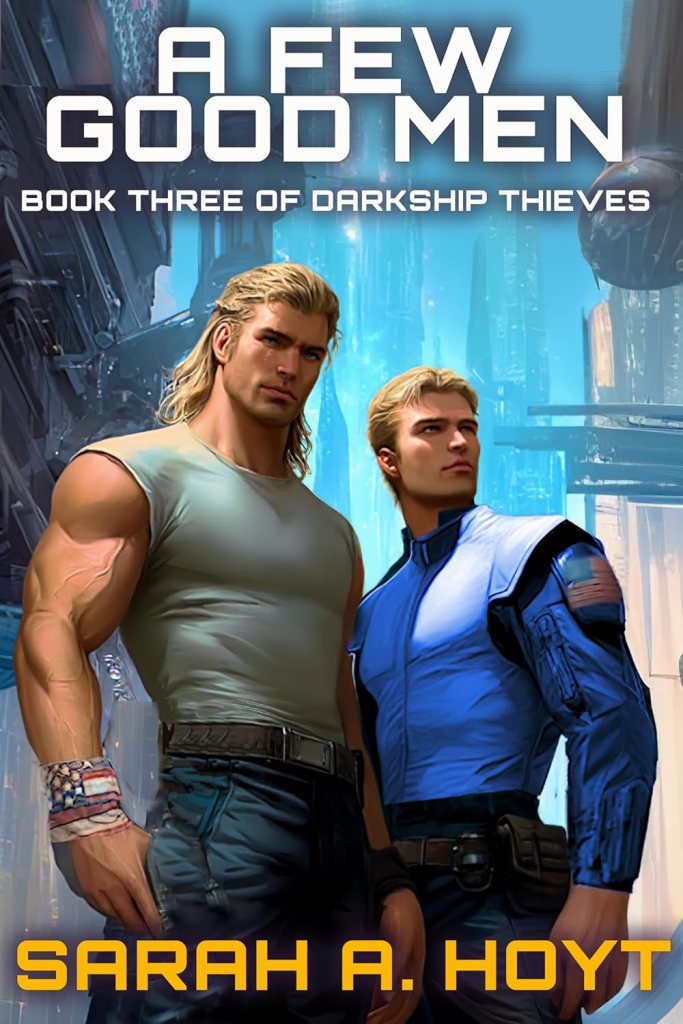
FROM SARAH A. HOYT, ON SALE FOR 99c AND PART OF THE BASED BOOKSALE BELOW (WHICH YOU SHOULD LOOK AT IF YOU CAN): A Few Good Men.
Ladies and Gentlemen, we declare the revolution!
He spent 14 years in solitary. Now he’ll ignite a revolution. Born a prince among Earth’s fifty tyrants, Lucius Keeva emerges from imprisonment with a fractured mind and a deadly purpose. When assassins hunt him, fate delivers him to the USAians—secret keepers of America’s forgotten beliefs.
For 500 years, this underground faith has preserved the Constitution while awaiting their prophesied leader. In Luce’s madness, they recognize their messiah.
Now the son of tyranny becomes liberty’s champion. As the USAians rise from the shadows, their weapons of war finally unleashed, a broken mind and a fallen prince prove the perfect weapon against an unbreakable regime.
One madman. One ancient faith. One last chance to restore the republic from legend.
A FEW GOOD MEN —where belief becomes the ultimate revolutionary tactic.
Sufficiently advanced science is indistinguishable from magic.
On a lost colony world, mad geneticists thought they could eliminate inequality by making everyone hermaphrodite. They were wrong. Catastrophically wrong. Now technology indistinguishable from magic courses through the veins of the inhabitants, making their barbaric civilization survivable—and Publius Cornelius Scipio Africanus Kayel Hayden, Viscount Webson, Envoy of the Star Empire—Skip to his friends— has just crash-landed through a time-space rift into the middle of it all. Dodging assassins and plummeting from high windows was just the beginning. With a desperate king and an archmagician as his only allies, Scipio must outrun death itself while battling beasts, traitors, and infiltrators bent on finishing what the founders started: total destruction. Two worlds. One chance. No time to lose.
Volume 1 The Ambassador Corps has rules: you cannot know everything, don’t get horizontal with the natives, don’t make promises you can’t keep. They’re a lot harder to follow when assassins are hunting you, your barbarian allies could kill you for the wrong word, and death lurks around every corner. The unwritten rule? Never identify with the natives. Skip’s already broken that one. Now he’s racing against time to save his new friends from slavery—or worse—while dodging energy blasts and political intrigue. One crash-landed diplomat. A world of deadly secrets. And absolutely no backup.
Some rules are meant to be broken. Others will get you killed.
So what’s a vignette? You might know them as flash fiction, or even just sketches. We will provide a prompt each Sunday that you can use directly (including it in your work) or just as an inspiration. You, in turn, will write about 50 words (yes, we are going for short shorts! Not even a Drabble 100 words, just half that!). Then post it! For an additional challenge, you can aim to make it exactly 50 words, if you like.
We recommend that if you have an original vignette, you post that as a new reply. If you are commenting on someone’s vignette, then post that as a reply to the vignette. Comments — this is writing practice, so comments should be aimed at helping someone be a better writer, not at crushing them. And since these are likely to be drafts, don’t jump up and down too hard on typos and grammar.
Some people find antiques. Dyce Dare finds trouble.
Ever tried fishing a Victorian sideboard out of a dumpster only to hook a dead body instead? Welcome to Dyce Dare’s life, where nothing goes according to plan—and never has.
At six, she wanted to be a ballerina (until gravity repeatedly suggested otherwise). At ten, she dreamed of lion taming (until Fluffy the cat staged a mutiny). Now at twenty-nine, she’s just trying to keep her furniture refinishing business afloat so she can upgrade her son’s diet from “pancakes” to “anything else, please.”
But when her latest dumpster dive yields a half-melted corpse instead of salvageable furniture, Dyce reluctantly adds “amateur detective” to her lengthy resume of career failures. Because nothing says “responsible single mom” like poking around a murder investigation, right?
Between dodging danger, dealing with her quirky neighbors, and trying not to embarrass herself in front of a certain handsome police officer, Dyce is about to discover that her talent for refinishing furniture might just extend to refinishing crime scenes.
Dipped Stripped And Dead – Sometimes the best way to clean up your life is to solve a murder.
(Warning: May contain splinters, sarcasm, and one very determined single mom who definitely didn’t plan on any of this.)
Time travelers shouldn’t marry, my father had told me forty years ago in this time line. But if they married, they should make sure it wasn’t to another time traveler.
As I flew into Colorado Springs in the morning, my hands so tight on the wheel of the flyer that my knuckles shone white through the skin, I sighed. The last ten years had taught me the truth of this, but the warnings were all for nothing. Who should time agents marry but other time agents? Who else could you marry on Christmas day 1943, when you were both 25, then retire with in 2202 when you were sixty? To whom else could you talk about that wonderful chick pea pie you ate on New Year’s probably 1231 somewhere in the French countryside? Who else would smile at you at reminiscences of Pompeii before the volcano? Who else would nod when you sighed about the beauties of European art before 2070? Who would even believe you’d traveled through time and seen all of that?
It was snowing lightly and the re-constructed downtown looked like a jewel under morning sun: self-consciously prim — if utterly false — Victorians gleaming under newly fallen snow. From this far up, it was impossible to tell if people walked the streets. Flyers were forbidden in the heart of downtown, and ground cars weren’t moving yet. It was too early for the people who agreed to believe in the living reconstruction to be moving.
But I could see the sudden flashes in Pikes Peak, and the ships rising, so the spaceport was working. To be fair, it worked night and day, twenty four hours, seven days, twelve months. So why would it not be sending ships to far distant colonies two days before Christmas at six am.
My destination was less lofty and more disquieting. Cheyenne Mountain had been decommissioned and recommissioned many times before I was born, mid-twenty second century. The last commissioning had been quiet, almost silent. The public knew there was a “scientific facility” under the mountain, but that was it. My parents had known better, since they’d both at one time been time agents.
(Removed because book — Christmas in Time — will be available for sale on Amazon 12-14-2025)
In case it’s not obvious, you’ll have to be thankful for a free short story TOMORROW since today I ended up cleaning and other stuff that means I’ve only sat down now for the first time.
So here’s my list of things I’m thankful for in no particular order, and surely incomplete.
I’m grateful for the results of the 2024 elections. The economy is no great shakes, but it’s no longer plunging into the abyss.
I’m grateful I finally got No Man’s Land out of my head, and grateful it’s selling if not amazingly, steadily and well.
I’m grateful for my husband (always), my sons, and the daughters my sons brought home to me.
I’m grateful for the cats, and grateful Havey is still with us.
I’m grateful I got to see my dad this year, and that he was doing well and mentally fit.
I’m grateful for the roof over our heads, the food on our table, for computers that work and heating that also works. (Because it’s brrrrrrr. That’s why.)
I’m grateful my health seems to be improving, and curious about whether it will get better once they desensitize me to what seems to be a major allergy to cats. (I always thought it was minor.)
I’m very grateful for my local friends.
And most of all, I’m grateful for my readers; the subscribers to my substacks (I PROMISE there will be earcs in the next week. It’s been a bit stupid since September.)
And I’m grateful to all of you my commenters, those who support this blog monetarily, and those who “simply” hang out and become a part of the family here.
I literally could have not have through the last year without you.
Story tomorrow. (I won’t promise to do one a day but I’m going to try to do five of them, then put them out on Amazon before Christmas. Hopefully.
Now go have your turkey. Pet your cats and dogs and cuddle your infants for me.