Black Rednecks and White Liberals, Part 2 by Amanda S. Green

spanish-moss-58463

Black Rednecks and White Liberals, Part 2  by Amanda S. Green

[Link to previous post here]

Thomas Sowell is one of those authors who manages to get us to think about a myriad of topics. I first began reading him because he is one of the few who can make economics not only understandable but almost enjoyable for me. When I started reading Black Rednecks and White Liberals, I discovered he continues that trend with social issues. Sowell isn’t afraid to look at the difficult issues facing our country, nor is he afraid to tell it like it is. He backs his conclusions up with facts, not feelz. His conclusions might not always be ones I agree with (okay, so far, I can’t say I’ve come to one I disagree with, but I felt I needed to say that, just in case), but I can respect his process. More importantly, I appreciate the fact he sometimes makes me think about things in ways I haven’t before.

Last week, I said I’d be covering the book, one essay at a time. What I hadn’t realized until starting today’s post is that some of these essays have so much information in them, they can’t adequately be covered in a single post. Or, at least not one that isn’t close to 10k words long. What I love about it is that, despite all the detail and data Sowell gives us, it’s presented in a fresh way. He gives information from early American history and shows how it has woven its way into today’s culture. He isn’t afraid to look at – and answer – the hard questions. Nor does he step back when something he writes might cause others to take issue.

The first essay in the book is the one for which the book is named, “Black Rednecks and White Liberals”. There’s no soft-pedaling the issues in the essay. Yet, as always, he makes you think. You know, or think you do, what he’s going to discuss when you read the opening quote:

These people are creating a terrible problem in our cities. They can’t or won’t hold a job, they flout the law constantly and neglect their children, they drink too much and their moral standards would shame an alley cat. For some reason or other, they absolutely refuse to accommodate themselves to any kind of decent, civilized life. (BR&WL, p. 1)

Most people reading that will jump to one conclusion – one built upon our own experiences, prejudices, news headlines, etc. – about who the passage refers to. I’ll tell you right now, you’re wrong. That passage, according to Sowell, was written in 1956 Indianapolis and refers to “poor whites from the South.” Now, this sentiment wasn’t an anomaly according to Sowell. In 1951, 21% of those surveyed believed white Southerners living there were “undesirable”. Only 13% of those surveyed felt that way about Blacks. (Disclaimer here. Sowell in this essay uses the term “blacks” instead of “African-Americans”.) Sowell offers more examples to confirm these two instances weren’t anomalies. Many in the North saw Southern whites, especially poor Southern whites as shiftless, lazy and undesirable.

More is involved here than a mere parallel between blacks and Southern whites. What is involved is a common subculture that goes back for centuries, which has encompassed everything from ways of talking to attitudes toward education, violence, and sex—and which originated not in the South, but in those parts of the British Isles from which white Southerners came. (BR&WL, p. 1)

A common sub-culture.

More than that, one that goes back for centuries.

According to Sowell, this sub-culture began in England and was transplanted to the South when the area was settled. Over the decades and centuries, it has died out in England and has “largely” died out in the South, no matter what the race. However, it has survived in the “poorest and worst of the urban black ghettos.” (BR&WL, p. 2)

Sowell’s first premise of the common sub-culture is followed quickly by a second. “It is not uncommon for a culture to survive longer where it is transplanted and to retain characteristics lost in its place of origin.” (BR&WL, p. 2) To support this idea, he gives examples of linguistic artifacts in Mexican Spanish and the French spoken in Quebec. There are German dialects that have died out in their homeland but continue to exist here in the U. S. In fact, there are examples of this in the South. But it goes beyond just linguistics. This permeation of the common sub-culture has fingers in all aspects of Southern life. And these differences between Southern and Northern life were noted more than a century ago.

Southern whites not only spoke the English language in very different ways from whites in other regions, their churches, their roads, their homes, their music, their education, their food, and their sex lives were all sharply different from those of of New England in particular. (BR&WL, p. 2) It was easy for Frederick Law Olmsted and Alexis de Tocqueville to say the differences had their roots in slavery. Sowell admits such a conclusion seemed reasonable but that it will fail under a “closer scrutiny of history”.

Imagine that. Someone wants to actually look beyond the obvious to see what the roots of the lifestyle and situation might be. It’s too bad our schools and universities aren’t teaching this sort of critical thinking to their students.

It is perhaps understandable that the great, overwhelming moral curse of slavery has presented a tempting causal explanation of the peculiar subculture of Southern whites, as well as that of blacks.Yet this same subculture had existed among Southern whites and their ancestors in those parts of the British Isles from which they came, long before they had ever seen a black slave. (BR&WL, p. 3)

With this as his starting point, Sowell turns his attention to the study of the nature of the “crackers” and “rednecks” in Britain long before they arrived in America.

According to Sowell, most of the “common white people” who settled the South, came from the northern border of England, that no-man’s land between England and Scotland. Others came from Ulster County, Ireland. To say those were areas where there was little law and order might be putting it mildly. They were at a minimum, resistant to authority. Yes, if you’re thinking of Mel Gibson in Braveheart right now, you aren’t the only one. The majority of these settlers came to the South before the “progress” of the 18th Century, the Anglicization of Scotland, Wales and Ireland. Professor Grady McWhiney, in Cracker Culture: Celtic Ways in the Old South, writes:

…had the South been peopled by nineteenth-century Scots, Welshmen, and Ulstermen, the course of Southern history would doubtless have been radically different. Nineteenth-century Scottish and Scotch-Irish immigrants did in fact fit quite comfortably into northern American society. (BR&WL, p. 5)

But what does this really mean?

What the rednecks or crackers brought with them across the ocean was a whole constellation of attitudes, values, and behavior patterns that might have made sense in the world in which they had lived for centuries, but which would prove to be counterproductive in the world to which they were going—and counterproductive to the blacks who would live in their midst for centuries before emerging into freedom and migrating to the great urban centers of the United States, taking with them similar values. (BR&WL, p. 6)

These attitudes, values and behavior patterns included “an aversion to work, proneness to violence, neglect of education, sexual promiscuity, improvidence, drunkenness, lack of entrepreneurship, reckless searches for excitement, lively music and dance, and a style of religious oratory marked by strident rhetoric, unbridled emotions, and flamboyant imagery. . . Touchy pride, vanity, and boastful self-dramatization were also part of this redneck among people from regions of Britain “where the civilization was the least developed.” (BR&WL, p. 6)

Sowell makes clear, however, (mainly because he has to clarify statements that shouldn’t need to be clarified because too many have taken easy offense and used that offense to attack and twist his words) that all this doesn’t mean cultures have remained unchanged over the years or that there are no differences between blacks and whites in this subculture. Even so, “what is remarkable is how pervasive and how close the similarities have been.” (BR&WL, p. 7)

The first of the attitudes and behavior patterns Sowell looks at is pride and violence. He notes that long – centuries, in fact – before “black pride” became a rallying cry, there was “cracker pride” and it was much the same as “black pride”. So how does he define “cracker pride”? it was “a touchiness about anything that might be even remotely construed as a personal slight, much less an insult, combined with a willingness to erupt into violence over it.” (BR&WL, p. 7) This behavior confused those from the North. They didn’t understand what the “crackers” had to be proud of, much less so proud they’d take violent exception to a perceived insult. An example given is of an Englishman tired of waiting for a Southerner to do work that had been contracted for. The Englishman hired someone else to complete the job and, once he learned what happened, the Southerner – the “cracker” – now felt he’d been dishonored by the Englishman and vowed to go to the Englishman’s location the next morning with men and rifles and either the Englishman would die or the Southerner would.

This tendency to not only take easy offense but for the pride to lead to violence is then coupled with an acceptance of the behavior. The example Sowell gives is that of the crowd gathering around a fight and egging everyone on. This behavior didn’t begin with the Southern “crackers”. It had been seen in the Scots, especially those from the “no-man’s land” where so many of the Southern settlers came from, for centuries.

What is important in the pride and violence patterns among rednecks and crackers was not that particular people did particular things at particular times and places. Nor is it necessary to attempt to quantify such behavior. What is crucial is that violence growing out of such pride had social approval. (BR&WL, p. 8)

Not only was there social approval but, in many cases, there was judicial approval as well. Or, at the very minimum, the judiciary turned a blind eye to it. In some instances, such as one pointed out by McWhiney where he recounts the story of a man who learned his wife had been having an affair with a neighbor and who sought out and killed the neighbor, such behavior was expected.

As Sowell notes, “what is important here is not the isolated incident itself but the set of social attitudes which allowed such incidents to take place publicly with impunity, the killer knowing in advance that what he was doing had community approval. Moreover, such attitudes went back for centuries, on both sides of the Atlantic, at least among the particular people concerned.” (BR&WL, p. 10)

But how does that translate to the United States?

In colonial America, the people of the English borderlands and of the “Celtic fringe” were seen by contemporaries as culturally quite distinct, and were socially unwelcome. Mob action prevented a shipload of Ulster Scots from landing in Boston in 1719 and the Quaker leaders of eastern Pennsylvania encouraged Ulster Scots to settle out in western Pennsylvania, where they acted as a buffer to the Indians, as well as being a constant source of friction and conflict with the Indians. It was not just in the North that crackers and rednecks were considered to be undesirables. Southern plantation owners with poor whites living on adjoining land would often offer to buy their land for more than it was worth, in order to be rid of such neighbors. (BR&WL, pp. 10-11)

Sounds sort of familiar, doesn’t it? All you have to do is change the “poor whites” with “blacks” or “African-Americans”.

Pride had yet another side to it. Among the definitions of a “cracker” in the Oxford dictionary is a “braggart”—one who “talks trash” in today’s vernacular—a wisecracker. More than mere wisecracks were involved, however. The pattern is one said by Professor McWhiney to go back to descriptions of ancient Celts as “boasters and threateners, and given to bombastic self-dramatisation.” Examples today come readily to mind, not only from ghetto life and gangsta rap, but also from militant black “leaders,” spokesmen or activists. What is painfully ironic is that such attitudes and behavior are projected today as aspects of a distinctive “black identity,” when in fact they are part of a centuries-old pattern among the whites in whose midst generations of blacks lived in the South. (BR&WL, pp. 12-13)

Putting aside all the rhetoric of today, all the hot button words and emotion, it is easy to see the foundation for today’s issues with one strata of our society having its roots in another society’s sub-culture centuries ago. Was slavery an abomination? Absolutely. But was it also the sole contributing factor for some of the problems faced by the African-American community today. In fact, it is only one of many factors to be considered. We’ll see more of that as we continue to explore this essay and the others in the book.


[For raising the tone of this blog — ATH is culture! — and helping me with the exposing of the roots of the current mess — in her case with more facts! — if you decide to  send the woman a drink–  And her Amazon author page is here –  Also, she has a new book: Light Magic, under her Ellie Ferguson pen name. SAH]

We Build!

teamwork-606818

Construction work is never glamorous work.  My mother, who grew up in a very poor area, and wanted to marry up, early on excised construction workers from her list of potentials, because they “get so dirty.”

I grew up in and around construction sites nonethless.  One of my grandfathers was a “historical restauration” carpenter.  It’s like this, the castles and monuments stay on, because they’re made of stone, but the bits made of wood rot away with time.  He was one of the few people who knew how to replace them, in the proper medieval (or whatever) way.  Yeah, he was usually foreman, but you get the point.

My other grandfather (dad’s dad) was a cabinet maker.  And because I tended to haunt his workshop and follow him everywhere, and because though retired, he took odd jobs, often “in exchange” I used to follow him on those jobs, and be his “boy.”

More importantly, my parents, who both abhor debt, had saved most of their married life (I was born almost ten years in) and for most of my early life to build a house.  Building that house, which has foundations like a castle, took years, and we visited the site often.  Improving the house took even longer, till about when I got married.

So there were construction workers around all the time, doing this and that and the other thing.  And because of we were, construction workers weren’t just people brought in.  They were usually friends of one or the other grandfather, someone they’d worked with at some place or other, or sons of friends, or some other connection. So they’d eat with us, and I’d follow them around to see what they were doing, and how they were doing it.

This is good, because I find that in a way my destiny was to be a construction worker.

Yeah.  Hush now.  Some of it literal (I’ve rebuilt two Victorians from the ground up almost.) but some….

Well…

If you go to New York City or another old place, where there isn’t much room (Lisbon and London even more so, or Paris) you get the impression the city is simultaneously being built and torn down.  And if you’re a construction worker in a country with lots of history you learn mostly what the new things are built on is old things. (You learn really quick not to say anything, too.  The big modern cow shed and milking works in the village are built atop a Roman cemetery (which means our house half a mile way, would probably be outside the Roman walls, but then I suspect that, because the whole village is called “farm” and I suspect htat’s what it was.) And they found Richard III under a parking lot in England.  (Bet you someone knew too, and shoveled and shut up.)

Western civilization is a very old philosophical space, and mostly what it’s built on is the ruins of itself.  Greeks and Romans, Medieval monks, the renaissance, all have added bulwarks of philosophy, machinery of commerce, foundations of technology.  In the age of empires we found we weren’t necessarily all that advanced compared to other races/civilizations, but our foundations ran deeper.  We had records.  (Okay, India and China had deep foundations and records too, but most of it was devoted to metaphorically speaking autophagy.  We are to an extent starting that road now, which is why this is important.)

And then came Marxism.

There is always a certain amount of wrecking and pruning that goes on into a living civilization.  Again, like building in those old cities, stuff gets cleared away, and new stuff built.  The renaissance was an orgy of such tearing down and building.  The romantics got a little silly with it.  But this is normal.  It’s like your brain pruning its own slower pathways, to let others take over.

Then came Marxism.

Marxism is a uniquely wrecking philosophy, because it’s not a philosophy.  Not really.  It’s a religion masquerading as a political theory.  It has its version of Eden (that pre-capitalist pre-history that never exist but which they believe in anyway), its version of original sin corrupting the world (this is why madness can’t be madness in capitalist countries.  It’s just the effects of capitalism corrupting human minds.  And why opposing communism is ipso facto madness, because you know, sane people want to be communists) and its unbreakable certainty in the great redemption and utopia of a communist future, which is inevitable as far as they’re concerned.

So, anything they do to bring about this wonderful future is justified, which is why they went ahead happily breaking eggs, though no one has yet seen an omelet cooked by the left, and also why, as in Islam, any amount of personal dishonesty and evil is forgivable if the ends justify the means.

This makes it uniquely dangerous, because they will stab anyone in the back, run anyone from an industry they wish to invade, and promote any no-talent or incompetent, in any industry, in order to have the right ideological color to bring about their big utopian culmination of their Marxist exegesis. And they’ll KNOW while doing it that they’re GOOD people and everyone who opposes them is evil.

This would be bad enough and destructive enough.  Like the romantics, but insane.

But on top of that, they can’t build.  They just can’t.  Their philosophy doesn’t match reality enough to allow a build.  Their fundamental misunderstanding of human nature makes it impossible to create anything that stands.

They might SEEM to build quickly (though mostly they take over quickly) because of their ruthlessness, but it’s much like Lucia Benedetti’s describing a house built with excrement instead of cement to bind the stones.  You don’t have to mix it, and it dries quickly, and for a while it seems to rise very quickly.  But inevitably the smell gets to you and excrement can’t hold anything, so it falls.

Which we’ve seen, over and over, and over again.  Foundations resting on corpses and destruction (either in reality or philosophically) doesn’t help either.

And then there’s the fact that in this current century they know that.  We know that, they know that.  They know their lovely vision isn’t materializing and can’t materialize in reality.

This is not admitted, of course, but it’s there, at the root of their frustration, their anger, their hatred of anyone happy and successful, and of anything that allows western countries to succeed.

They’re like the pruning mechanisms of the brain set on insane automatic, and turning on the brain of civilization itself.

And like those, the result is pathological destruction and forgetfulness.  It is also — almost in revenge — a nostalgie de la bue, a cultural longing for all that is deranged, destructive, primitive, low.  (Part of this they inherited from the romantics, but it’s now set on 11.)

My medical friends tell me that every human body throws out cancers every day.  Mostly our immune systems take care of those cancers, before they hit the radar.  I’m at a uniquely high risk of it because my immune system is deranged, and attacks good stuff, while ignoring the cancer.  …. most of Europe is at the same risk, and we’re not perfect, ourselves.

There is only one thing we can do to save the greatest civilization the world has ever known, the one that has saved most people from abject poverty and allowed us to raise our eyes to the stars and think of escaping earth: build.

Most of us — and I’m half a century old — were already taught faulty foundations.  It’s been chic and enlightened to run down your own civilization and turn kids into oikophobes, because comparing ourselves unfavorably to places that still practice slavery or where women are chattel is supposed to make children feel superior to those ancestors who could actually build things.  You know, sure, the founding fathers were intellectual giants bestriding the world, but every millenial knows they were slave-owners, and so the millenial can feel superior, without ever doing a lick of work or thought.  (They aren’t taught anything else but this unearned superiority — not unless their parents are crazy as I’ll admit to being, and challenge them constantly from five years of age on — which is why they can’t stand discussion.  Their entire superiority rests on “having the right opinions” but they don’t know why those opinions are right, or even what other opinions are possible.  They just live in fear of changing their minds, or even doubting, and hence falling from grace.)

It was already that way in my day, and it wasn’t until I dared question and started to learn that I became capable of discussion and of understand.  And of building.

Most of us, here, under sixty, probably had the same faulty education.

Whatever you do, wherever you are, the only antidote to Marxism in all its poisonous versions, from soft socialism to oikophobic poison, is to learn.  To learn and to build. To build solidly on the intellectual and moral foundations of the past before the cancerous growth.

It’s a lot of work.  It’s not glamorous.  Most of it is small no one will know you did it.  Improve a little thing here, connect a little thing there.  Teach the young.  Laugh at the absurd preening of the wreckers who can’t build.

The world will probably forget us, but if we win — and we will win! — our grandchildren will be able to build on with western civilization.

Learn, do, build.  In every facet of life, where you’re called, learn how to do it properly.  This might be me learning the lost art of ironing clothes, or the even more lost art of cooking from scratch, or teaching myself Latin and Greek so I can read primary sources.  Or it might be just figuring out how business is supposed to work, really work.  It might be learning technology, it might be learning classic story telling, it might be learning plumbing or how to create a brick wall.

Go back before everything go corrupted, and learn.  Learn to build.

And in every place you have a choice, choose building.  Choose life.  Choose creation over destruction.  The only exception to this is dismantling the machinery of despondence and destruction, including the ridiculous belief that humans are bad and a plague on the world.  (Compared to what?  If we go to the stars, we’ll be the biome’s salvation, their cause of expansion.)

And build. Build. Build.  Build knowledge, build friendships, build businesses, build structures.

It’s dirty and sweaty work, and you’ll go home smelly and tired.

But the west might be saved by it.  And the individualists of the Earth with it.  And we might yet conquer the stars.

We build.  Remember that and go do.  Be not afraid.


Being a Lady — by Dorothy Grant

angel-3194359

Being a Lady — by Dorothy Grant

To be a gentleman, you first need to be a man. You need to have the power and ability, the knowledge of yourself, before it can be tempered by restraint and courtesy. Otherwise, the traits of a gentleman are ill-fitting, easily donned and just as easily forgotten on the hat rack.

For more thoughts on that, see this excellent article on The Art of Manliness: https://www.artofmanliness.com/2015/06/29/youve-got-to-be-a-man-before-you-can-be-a-gentleman/

And to be a lady? It’s the other side of the same coin. The virtues of femininity include (but are not limited to) modesty, chastity, nurturing, peacemaking, mercy, and grace.

Because women are very sexual creatures – the ability to restrain ourselves from temptation, and from tempting others, as in modesty and chastity, is therefore laudable. Because we are naturally quite vicious, mercy and peacemaking are hard-won restraints. And grace? That is not merely the ability to move smoothly, but to set yourself and others at ease, and help them feel welcomed and able to be gentlemen and ladies in their own right.

On the one hand, we have ladies who can patiently encourage their children to explore the world, and entertain witty repartee and terrible puns. Who not only can rock out a corset or dress themselves, but also work to make sure children feel safe, welcome, and able to shine on the stage, in school, and in life. Whether they are discussing dinosaurs or compiling lists of exciting adventure books to entice boys to read, or discussing the particulars of entymology and rocket science, or making sure their husbands get food and to the next panel, keep everything in budget, on time, and on an even keel.

On the other end of the spectrum, you have harpies screaming in mindless outrage in the streets while wearing little but their badly knit pink hats, expecting men to clean up after them and fawn over their flesh, while holding the ability to accuse anyone of rape if they change their minds a year after fornicating… and having spent thousands to gather for their mindless orgy of rage, complaining about how dead broke they are and how they depend on their patreons to keep them fed, because their books that include all the correct screeds and all the art that was properly made to shock, offend, or instruct the audience aren’t selling.

Small wonder that they displayed complete outrage at Mike Resnick discussing “lady editors” of the past: they’ve rejected all the virtues of femininity, and are highly offended that the standards they don’t meet are celebrated by others.

To all the ladies out there: thank you, and bless you for making the world a better place. Like a light on a hill, you provide an example of what women can aspire to. Even when you don’t feel like it… no, especially when you don’t feel like it.

Buying a Sword

man-3190959

I’ve often been accused of being incredibly optimistic.  And yes, it’s an accusation.  I find this very funny (in a dark way) since, as a chronic depressive I fight depression and despondence ALL the time.

But maybe it is because of that that I’ve grown used to giving myself reality checks.  If I trust my own internal clock, then I assume everything is going to rack and ruin and become too despondent to move or work, or really do anything.  Sometime in my mid-thirties, I learned to look at facts and test reality against facts.  Just like in my mid-forties I learned to check incipient paranoia born of having social anxiety and being forced into a public role by my profession.  (It runs like this, “No, Sarah, not everyone in that room hates you.  Most of them don’t know you yet.”)

So listen to me now as I repeat old words of wisdom: If you have a cloak, it is time to sell it and buy a sword.

No, I’m not calling for you to buy literal weapons.  That’s your business.  If you feel you need weapons get weapons.

No, I’m not saying we’re headed for a civil war, though I’ll admit that I was once more sure this time would pass without physical violence.  I still think physical violence will be regionalized, temporary, and not the norm.  This is a very large country.  Yes, violence will happen (has already happened) in pockets, but given the lack of clearly divided territories to go with the cold civil war, it can’t go hot in the conventional way.  It will go hot in spots, as the cold war did, and nasty in spots, too.

But it will go ideological and crazy all over.  It’s already doing so.  Those of us who hoped — not thought, but hoped — the left would find some sort of rationality when their great prophecy — the future is socialist/communist — was disproven, have been disappointed in stages.

Mostly we had hope after the fall of the soviet union, but it’s amazing how fast the left regrouped to claiming that the Soviet Union too, their paragon of “progressivism” for so many decades, was an example of “not real communism” and we would do it right next time.

Or perhaps it’s not amazing when you think about it.  After all, by the time the Soviet Union fell, the left had taken the heights of culture, from arts to social sciences, to academia, to opinion, to news, to even entertainment, including most genre writing (they were still rare in Romance, and that onslaught didn’t come till the late nineties, but mystery had had it — and plunged from the most widely read popular category to almost irrelevant — and science fiction was theirs except for a few, rare holdouts.)

People past middle age, as most boomers (most of the wave that crested into the heights of culture were boomers, for various demographic and cultural reasons) were then do not adapt quickly, and certainly they weren’t about to give up the leftist privilege that carried them to the heights sometimes in the absence of talent or even native intelligence.

So they reformed and proclaimed the gospel of Marx with twice as much fervor.  They worked on the image of “cool” more than anything.  The kids under their influence in the educational industrial complex never got to see the squalor, the sheer stupidity of the centrally controlled economy, only the icons of revolution.  And no one enlightened them on the true opinions of that photogenic mass murderer, Che Guevara.

But the kids aren’t as dedicated as you think.  Sure they parrot what they have to to get through, but those that remain true-believers into their thirties aren’t the brightest bulbs in the field (any field, and look at mine, will you?) and are usually either quite clearly “mean girls” and/or privileged into imbecilic incompetence.  Their vision isn’t going to set any field on fire.  It’s not going to reach the general public.  All they’re doing is attacking each other for the position of highest “virtue” and going down with the industries they’ve infested, as their model proves more and wrong in modelling reality.  (I keep thinking of the line in Independence Day, “They’re like locusts” because it’s true.  Because their philosophy can only stay intact by denying reality across the board, they destroy what they take, and as the divergence with reality becomes wider and wider, they’re destroying them faster and faster.)

But as it’s becoming more and more clear, the more they fail, the more they reach out to destroy us.  All they have are war tactics, and they’re going to play them to the end. Not against the enemies of the nation, not against those who truly threaten them, but against free men and women, and people who actually make things work.

Part of this is their philosophy of envy and the belief anyone successful is evil (because they know they’re not evil — ah! — and they can’t make anything work, so we must be using the power of evil for competence.)

Part of it is that if their philosophy is proven wrong, then everything they’ve been doing in the service of it — and some of it is like a demon’s resume — is obviously wrong.  They must look in the mirror and see the monster.  They’ll do anything to avoid that.

So the crazy is going to amp up.  The evil is going to amp up.  The wilful destruction of anything that works is going to amp up.  If free individuals can’t function, the collectivists don’t have to admit they;re wrong.

Sell your cloak and buy a sword.  Mere deflection will stop working.  I know I told all of you if you’re not comfortable coming out as conservative/libertarian, don’t do so, because I don’t want to jeopardize your livelihood, or your ability to make a difference.

But I predict you won’t long be left alone.  The left has lost the plot and become a rabid beast with no sense or proportion.  See the snow flakes calling for the death of “climate deniers.”  (You stupid shits, we know there is climate.  We know climate changed a lot over the history of the Earth, long before the existence of man.  And we know that regardless of whether there’s warming and/or it’s human-caused (and no, it’s not proven.) socialism is not the answer.  Educating yourself on the environmental disasters in Russia, China and now Venezuela would help.)

Be ready for when you have to join the fight.  Buy a sword.  Study history, study philosophy, study civics and the constitution.  Be ready to defend yourselves. Start a side business if you can so your livelihood is not something the left can take away.

Most of the reconquering of society is and will be ideological, a war of ideas.  Moving out of places where the cold civil war will go hot, if you can, is also not a bad idea.

Get ready to stand your ground.  Get ready decloak.

In the end we win they lose, or civilization is done for.

And some of us will not go gently into the progressive night.


Book Promo by Sarah & Vignettes by Luke, Mary Catelli and ‘Nother Mike

dragon-2140928

Note these are books sent to us by readers/frequenters of this blog.  Our bringing them to your attention does not imply that we’ve read them and/or endorse them, unless we specifically say so.  As with all such purchases, we recommend you download a sample and make sure it’s to your taste.  If you wish to send us books for next week’s promo, please email to bookpimping at outlook dot com.  One book per author per week. Amazon links only.


ELLIE FERGUSON: Light Magic. (This is Amanda S. Green’s pen name, btw.)

51ryuxy4n0l

When Meg Sheridan arrived in Mossy Creek, Texas, she had one goal in mind: to fulfill her mother’s dying wish. Now, less than a month after burying her mother, all Meg knows about the town is that it has always been a haven for the Others, even before they made their existence known to the world. As an Other herself, that should reassure Meg. Instead, it raises more questions than it answers. More than that, she has one very large problem. She doesn’t know why her mother wanted her to come to Mossy Creek. Worse, she soon learns not everyone is willing to welcome her with open arms.

Faced with the daunting task of discovering not only why her mother sent her to Mossy Creek but also with uncovering why her mother fled there years before, Meg is determined to find the truth. Along the way, she discovers something else. Even in death, her mother is looking out for her – if Meg will let her.

And if she will accept the friendship and love of those who knew her mother all those years ago.

But danger awaits her as well. Secrets decades old and resentments going back generations seethe just below the surface. Do those secrets have anything to do with why Meg’s mother wanted her to come to town? Will discovering them help her understand why her mother fled Mossy Creek so long ago?

Or will they lead to something much more sinister. . . and deadly?


FROM ALLENE R. LOWREY:   Einarr Stigandersen and the Jotunhall.

51cvpocpr-l

Once upon a time, Stigander Raenson had been heir to a thanedom. Then a curse drove him and his family and crew out of their home. Dispossessed, the crew of the Vidofnir wanders the cold seas in search of treasure, glory, and a way to end the curse.

Einarr, son of Stigander, lives a vagabond’s life on the Vidofnir, never giving much thought to the home he barely remembers. That is, until an unexpected squall and the attack of a demon-headed ship send them to winter at the Hall of his father’s childhood friend.

Now Einarr has just a single season to convince the Jarl that he would be a worthy match for the Lady Runa, the Jarl’s only child. Will he return in one piece, or will the Jarl’s impossible quest be Einarr’s undoing?

PAM UPHOFF: Nowhere Man.

51fopxjjkvl

A Novella in the Wine of the Gods Series.

Fleeing the aftermath of heroism, Eldon Denison skids into a new Parallel Earth, into a cute chick’s car, and right into new trouble. The life of a multidimensional criminal certainly gets him into some interesting places!

NATHAN BISSONETTE:  Walking to Wisconsin.

61ywxoiuwsl

If the electricity went off and never came back on, life would change dramatically. What would it be like living afterwards, struggling to survive, remembering life as it was before?

What would you tell your children?

Vignettes by Luke, Mary Catelli and ‘Nother Mike

So what’s a vignette? You might know them as flash fiction, or even just sketches. We will provide a prompt each Sunday that you can use directly (including it in your work) or just as an inspiration. You, in turn, will write about 50 words (yes, we are going for short shorts! Not even a Drabble 100 words, just half that!). Then post it! For an additional challenge, you can aim to make it exactly 50 words, if you like.

We recommend that if you have an original vignette, you post that as a new reply. If you are commenting on someone’s vignette, then post that as a reply to the vignette. Comments — this is writing practice, so comments should be aimed at helping someone be a better writer, not at crushing them. And since these are likely to be drafts, don’t jump up and down too hard on typos and grammar.

If you have questions, feel free to ask.

Your writing prompt this week is: reproduce

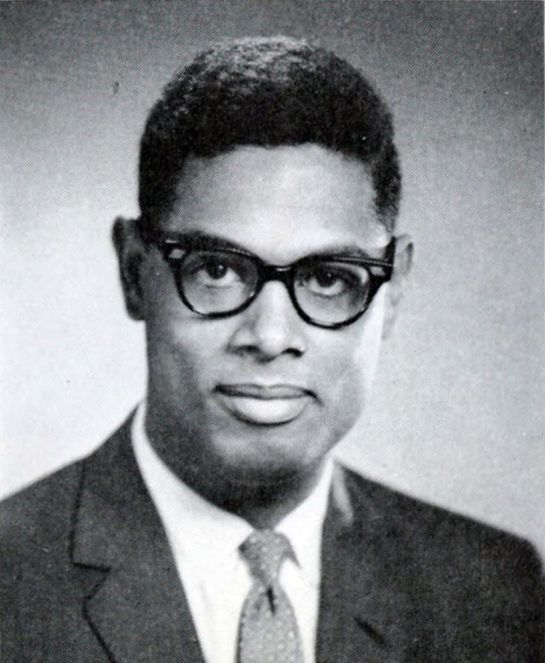
When Facts Fail and Knees Jerk An Introduction to Thomas Sowell’s “Black Rednecks & White Liberals” – By Amanda S. Green

800px-thomas_sowell_cropped

When Facts Fail and Knees Jerk

An Introduction to Thomas Sowell’s “Black Rednecks & White Liberals” – By Amanda S. Green

After a couple of weeks of angsting over what book to review next, the decision turned out to be easier than I thought. I knew going in I didn’t want to do another book on the last election, Hillary Clinton or Trump. I’ll come back to them, but not right away. I also knew I wanted something that didn’t send me screaming into the night, which is exactly how I felt while reviewing TSAR. Yet it had to be something timely and, more importantly, interesting. Then a headline in the local paper caught my eye and the decision was made for me. So, starting today, I’ll be spending the next several weeks discussing Black Rednecks & White Liberals: Hope, Mercy, Justice and Autonomy in the American Health Care System by Thomas Sowell.

I’ll admit, the title of the book intrigued me. I’d never heard the term “black redneck” before and wondered how in the world Sowell managed to get away with using it. I will also admit to being a fan of Sowell’s writing on economics. However, as alluded to earlier, I chose this book based on something that happened locally and, after reading the description for Black Rednecks & White Liberals, I wondered what Sowell’s take on current events might be.

Over the last year or so, we’ve been inundated with reports from around the country about statues being removed and parks and buildings being renamed. Why? Because politicians have been worried about those names and statues being racially insensitive in today’s enlightened age. I’ll even admit in some instances, they were right. However, as with so many other movements, things have reached the point of being ridiculous.

The latest case in point happened recently in Corsicana, TX. Corsicana isn’t a big town – the 2010 census placed its population at 23,770. Located an hour south of Dallas, it’s not one of those places you expect to see in the news, much less the national news. Yet that’s exactly where it found itself this week and all over the statue of a gorilla.

Yes, you read that right, a gorilla.

Specifically, Dobby the gorilla. A 500-lb statue that had been in place in a circus-themed public park for 19 years. During that time, there had been no problems with Dobby. In fact, the city took steps to insure the safety of children using the park as well as of Dobby by placing him in a cage. You see, Dobby hadn’t been reinforced when he was first brought to the park. So, what you had was a gorilla, one fist upraised, in a cage in an appropriately themed public park.

Suddenly, local government received complaints about how racially insensitive Dobby was. They were offended, I tell you, offended. Oh, and those complaints? There “about” 45 of them. Forty-five. If my calculations are correct, that’s 0.19% of the city’s population complaining, and that assumes those complaints came from citizens of Corsicana.

But, being concerned politicians, the city council removed Dobby. After all, they couldn’t be viewed as being insensitive to the concerns of their constituents, could they? What they didn’t expect was for it to blow up in their faces. Flowers, stuffed animals and balloons suddenly decorated Dobby’s now empty cage, a memorial to the beloved gorilla. One man staged a sit-in from inside the cage. There was a candle light vigil for Dobby. There’s even a Facebook page dedicated to Dobby’s memory. Part of the problem, beyond the fact Dobby had become a fixture at the park, was city government acted without actually letting the citizens give input on the issue. In other words, they knee-jerked based on a few complaints and, I have no doubt, memories of the protests about Civil War statues commemorating Confederate generals, etc.

As I said, it blew up in their faces. Reports now indicate Dobby will be returning to the park. Which he should, especially when you have local government officials admitting they don’t understand why there was suddenly concern about Dobby being “racially insensitive” and when those same government officials don’t detail what the complaints actually said. Was it because Dobby’s arm was upraised? What was it?

[No, it’s because Democrats are enormously racist and think black people look like gorillas.  Then they project this on everyone else.  Truth is, of course, all people look like gorillas.  There was a gorilla at the springs zoo who looked remarkably like my brother and had his expressions too.  My kids loved it.  BUT democrats are enormous racists, so they think it’s only black people who resemble gorillas, themselves having been evolved from fairies and unicorns.  I wouldn’t mind if they’d stop pushing their evil on us – SAH]

In other words, where is the context and what is the culture that not only brought about the complaints but caused the city council to respond in such a knee-jerk reaction?

And that brings us back to Thomas Sowell and Black Rednecks & White Liberals. (All quotes come from the preface of the Kindle edition.)

I knew I was in for an interesting read with the first sentence: Race and rhetoric have gone together for so long that it is easy to forget that facts also matter—and these facts often contradict many widely held beliefs.

Such a simple statement and one that, on its surface, appears self-evident. Yet, it points out the problem facing our country right now. Politicians are so afraid of being seen as racist or, at the very least, insensitive, they act without taking a moment to consider the complaint. Facts have been thrown out the window all too often (and not just in race issues but also in other hot button issues like gun control. We’re seeing that play out in the media right now with the latest press for gun control). No one wants to deal with those pesky little facts when the feelz are so much more important. (Sarcasm high here.)

In the preface to the book, Sowell explains his purpose “is to expose some of the more blatant misconceptions poisoning race relations in our time.” That is a huge task he’s set for himself. More than that, as I read the book last night, it dawned on me just how big of a risk he took in publishing it back in 2009. He doesn’t mince words. He doesn’t hesitate to place blame where he sees it – both within the African-American community and with white liberals. He brings forth facts that will shatter the beliefs of some people – if they would sit down and read the essays in the book. Most of all, he gives us something to think about and does so in a way that is not only readable but thought-provoking.

[E]ven a work seeking primarily to untangle a complex set of historic social issues can provoke the fashionable question: “But what is your solution?” Yet there is not the slightest danger that there will be a shortage of solutions. On the contrary, an abundance of uninformed solutions has been one of our biggest social problems.

Isn’t that the truth and aren’t we seeing so many examples of that today? It doesn’t matter how well-meaning a so-called solution might be, if it isn’t based in facts, it is doomed to failure. Perhaps not right away but eventually it will fail. The question then becomes how great the harm will have been.

One thing Sowell said in the preface really struck me, especially after having just re-read Lenin’s The State and Revolution:

Common sense can be more readily expected when writing for the general public than when writing for the intelligentsia.

Think about that single sentence for a moment. “Common sense can be more readily expected when writing for the general public than when writing for the intelligentsia.” It’s important that we ask ourselves why that is. Then we have to ask why, if that is the case, the so-called intelligentsia have failed to recognize that truth. Is it because they don’t want us to seek common sense solutions to the problems that plague us today? Are they afraid of losing status or power? What is it? More importantly, why have we allowed ourselves to be swayed by them?

Sowell does state certain facts about the essays contained in this book. They are something we need to remember as we go forward: [T]hese essays do not mean that (1) all Southern whites were or are rednecks, that (2) all black Americans today or in the past were or are black rednecks, that (3) Jews are exactly the same as the other groups with whom they are compared, or that (4) slavery is somehow morally acceptable because everyone was guilty of it. He states this because, as he points out, you can’t predict “the clever misinterpretations that others might put on one’s words.” Keep those premises in mind as we go forward with the book.

Next week, I’ll tackle the first essay, “Black Rednecks and White Liberals”. In the meantime, if you haven’t read this book before, I highly recommend it. Here’s a teaser from the next chapter:

Moreover, such cultural traits followed blacks out of the Southern countrysides and into the urban ghettos—North and South—where many settled. The very way of talking, later to be christened “black English,” closely followed dialects brought over from those parts of Britain from which many white Southerners came, though these speech patterns died out in Britain while surviving in the American South,143 as such speech patterns would later die out among most Southern whites and among middle-class blacks, while surviving in the poorer black ghettos around the country. For example:

Where a northerner said, “I am,” “You are,” “She isn’t,” “It doesn’t,” and “I haven’t,” a Virginian even of high rank preferred to say “I be,” “You be,” “She ain’t,” “It don’t,” and “I hain’t.” …These Virginia speechways were not invented in America. They derived from a family or regional dialects that had been spoken throughout the south and west of England during the seventeenth century.

Now consider these two paragraphs and think about speech patterns we hear today. We’ll be discussing that and much more next week. In the meantime, think about other instances where facts have been pushed aside in favor of rhetoric. What about where common sense has been tossed aside for the convoluted “solutions” of the intelligentsia?

Until later!

[For raising the tone of this blog — ATH is culture! — and helping me with the exposing of the roots of the current mess — in her case with more facts! — if you decide to  send the woman a drink–  And her Amazon author page is here –  Also, she has a new book: Light Magic, under her Ellie Ferguson pen name. SAH]

What Can’t Go On

sheep-2722073

A friend talking to me yesterday asked “is it me or have most institutions, stores and corporations, most large human organizations, gone stone stupid?”

This was after a conversation that involved the fact that our people, including friends and acquaintances are at war with something pretty much universally right now.  Something that they’d never dream of going to war against, something they didn’t want to fight, but have to, because “mistakes were made.”  Usually mistakes are made by the business or organization and they’re large enough that they’re either existential or very, very expensive if not fought back against.

And the one universal on these things is that they’re STUPID.  I mean, rock bottom, bizarrely stupid.

On the last trips to the grocery store, Dan and I, looking over our receipt at the end, have found big enough errors to justify losing half an hour in the customer service line.  We’re talking $50 to $100 errors on bills that were under $300.  (Yeah, we tend to buy meat for a long time and freeze.  NOT actually gold plated nightingale tongues.)  Errors against us, btw.  In one of those, we had to help the clerk with elementary math in order to get our refund right.  And half the time he was erring in our favor, so it wasn’t exactly, you know, a dodge.

It’s gotten so bad Dan and I joke about not needing to go to the ATM.  Since this company can only give refunds in cash, we’re always flush.

I’ve run into the same thing with online companies and various other things.  Even Amazon the unflappable has pulled a couple of strange shipping orders recently, where I look at the box and go “who? Why?”  Now, half the time, it’s true, I did order the thing, and I’m just suffering a Writer Moment (totally a thing) because my brain is in three worlds at once. (BTW if someone sent me the cat pee remover for tile grout and is reading this, thank you kindly.  I tossed the box before reading the gift receipt, because I assumed I’d ordered it.  It was only later going over my orders that I realized it must have been a gift.)

But the other half the time I got an order supposed to go to someone else across the country, something that never used to happen and now does.  Still very rarely for Amazon, more often for other places.  Startlingly often for more “respected” and older places.

Most of my friends have had run ins with employers in the last few years, and the reasons will startle you: they were doing too much and were too competent.

The charges ranged from “showing off” to “Causing trouble by doing too much.”  All of which boiled down to “You’re making other people look bad.

There is a pull towards mediocrity, as it were, pretty much everywhere, including the very strange (and familiar to me, because it’s Portuguese culture) notion that it’s better to be fast than to be accurate in some tasks.  In retail, and other places that are understaffed, the emphasis is on fast, even if sloppy.  Which is why I suspect we keep getting odd charges on our receipts.  (Mostly sales not ringing as sales.)

Sometimes if you’re efficient, and just keep your head down and work, you get accused of not being a team player.  Not socializing with your workmates is somehow suspicious and causes you to be on the outs.

And of course, in some industries — mine — not being vocally left will cause you all sorts of trouble.  I remember the ex-Baen contractor who came at me on FB at the height of Sad Puppies telling me how much she hated working with me and what a horrible person I was.  I checked.  She did copy editing for Draw One In The Dark.  That was it.  If I remember properly — I was concussed at the time, but I have the email trail — she sent the copyeditted manuscript, I looked over it, and didn’t stet hardly anything, because concussed and didn’t trust myself, and I sent it back.  That was the extent of our interaction.

Also at the time, I was politically in the closet, and the book — as most of you know, and if you don’t it’s free on Amazon and the Baen Free Library — is not even remotely political, though some people have found penumbras and emanations in the Great Sky Dragon.  (Mostly because they’re nuts.  Seriously, guys, the curtains are blue.  Or in this case, the Great Sky Dragon came about because at the time of writing I’d been reading a pile of Chinese mythology.)

However, apparently, just minimal interaction with someone who later turned out not to be hard left caused this woman to burn.  BURN I tell you.

So why are the wheels coming off?  Why is doing well sometimes considered a sin? Why is “social fitting in” more important than doing your job?

Well… there is the fact that no one knows what good is, anymore.  We’ve lost track of what we’re working for.

No, seriously.  What is the aim of civilization?

It used to be, in the age of empires, that everyone knew that: to take over all the world, bring it all to “civilization” and live better.

We used to build big things, like canals and bridges and refineries and large ships because no one doubted that was good.  We used to extinguish illnesses because no one doubted that was good.  Ditto with say, wolves in populated areas.

But at some point — I date it from the end of WWI, and you can sort of see it in books of the time and forward — we decided we weren’t sure that was the good of right thing.

Part of it, and I’ll die of saying this, I swear, was Soviet agit prop, softening the west for take over — note they never bought into this bullshit, even as they propagated it — stuff like extreme ecology and the idea we shouldn’t go to space because we were bad and evil and would just propagate our evil.

And part of it was getting comfortable enough that our crazies weren’t immediately shut down as crazy.  To put it bluntly, we had enough wealth and comfort to let even the crazy be heard.

So these days if you aim at something big, something that objectively improves the prosperity of all mankind, like say asteroid mining, you’ll get a chorus of “but what if we’re despoiling????”  And these people have enough pour that nothing much gets done, and very little of importance.

This process goes down, all the way down the line to our stores, our garages, our schools (where students can all do “too well” per CACS in her comment yesterday.)  It’s imbeciles and nincompoops all the way down.

People desperate for some kind of standard, be it in the arts or commerce, often fasten on to the latest politically correct directive as being “good”.  Hence the crazy stuff with companies dropping NRA discounts because they were twitter mobbed.  (Even though the NRA had nothing to do with the shooting, is not the only gun owner organization, and most gun owners don’t belong to ANY organization.  And even though twitter mobs are not known for their calm, sanity or for that matter large numbers.)

The problem is that “progressivism” is not an objective good.  Sure, it might be in a world where history came with an arrow and we knew how “the future would judge us.”  But even there, for it to be an objective good it would have to work.  But like it’s parent, Marxism, it just doesn’t.  It just adds a layer of malice to the incompetence tarnishing the world.

(EDITED to add, because I’m recovering from severe stomach flu and forgot to put it in: We saw this writ large with the Broward Cowards letting children get killed and then jumping on the politically correct gun control bandwagon to cover their (objectively) crime and dereliction of trust.)

The thing is, if a house divided against itself cannot stand, a house penetrated by derp and held down by insane people who have no objective standards and don’t even know what “good” is; people who don’t know if they are for humans or against them; people floundering in the clutches of an ideology that changes day to day to designate a new victim class, crumbles slowly and bizarrely.

In many places, not just my own field, it sounds like the wheels are coming off.  Things still trundle forward, kind of, but there is an accumulation of errors and faults that is starting to gum up everything.

It’s honestly amazing we’ve made it a hundred years or so with this mind set.  If there hadn’t been massive technological improvements, we probably wouldn’t have.  But it got easier to be relatively competent, even as the schools (one of the first taken) turned out less and less competent people.

But what can’t go on, won’t go on.

It’s not like it’s a surprise to any of us, right?

Thing is this won’t devolve into a mad max world, you know, just by stages into closer and closer to a third world nation, till we don’t notice when the inevitable TP shortages hit.

OR we can fight it.  And I don’t mean just going to war with city hall, though some of us are crazy enough to do that (and with their employers, and with retailers and service providers.  I once fought the post office.  Won too.  Let’s face it. Some Huns just like to fight.  I know you’re shocked.)

I mean BUILD.  Under, around, over.  So that when she cuts lose and the weight rests more and more on us, we can carry on.

For some fields that’s impossible, and it’s going to become very difficult, particularly where those fields impact every one.  For others… like mine, which is not terribly essential, we’re already managing.

It’s horrible, but the hope of civilization rests on the shoulders of the Odds, the Goats, the odd man out.

Because when collective madness sets in, our saving grace is that we don’t DO collective well.

When things get weird, the weird go pro.

Be not afraid.


Dropping the Chaff

Before I get someone horribly alarmed, as I go into this post, I’m not dying.  I just have the worst case of stomach flu I’ve managed to acquire in seven or eight years.  It introduced itself while I was away from home yesterday, and I almost didn’t make it to the public bathroom in time before I threw up all over the stall.

Right now going onto almost twenty four hours without food, and water is enough to make me queasy.  I’ll try sports drink after I nap, I think.

There is something to that “the prospect of being hanged in the morning concentrates the mind” but it doesn’t take that.

For the last five years, one way or another, I’ve been sick, and knowing you only have so many spoons means that you have to concentrate on what you need to keep going and what can drop.

Not everything I’ve dropped is good.  I’m late by a year sending books to some people.  Or two years, or so.  And my subscription page just sort of died on the vine, no matter how much I tried to revive it.  I simply didn’t have the strength.  So I would push and do it for a couple of days, then relapse into silence.

I did more or less keep this blog going, though, and I finished probably ten novels (I don’t feel like counting) which is low for me, but not bad.  However “mistakes were made”.  Stuff like series left to languish, which I need to recover, like Musketeer mysteries and Witchfinder.

In fact when I was really ill, only the books for Baen got done, because they were waiting for them.

Now I feel better — excepting today which is like a blast from the past, howdy! — my problem is having energy to do many things, and therefore being unable to concentrate on one.

It occurred to me, as I finished the post at Mad Genius Club that I was flagging, even though most of the words are quotes.  So I only had the time for maybe a short post here, and then I’d have to nap.

It reminded me of how many of my favorite artists did their best work on the last few years of life, when you have to concentrate with everything you have just to turn out product.  It makes you decide what is really important, and what is chaff and can be let go.  (Okay, things like dishes and cat boxes WILL get done, after the nap.)

Of course, the best thing to do is to organize yourself so you can get work done while you’re not dying.  It combines the best of health and the concentration of near death.

Ask yourself, if you were very ill (temporary or permanent) what do you absolutely need to get done today?  I bet it whittles down the to do list wonderfully.

As for me, I’m going to take a nap then work on Alien Curse.

How to improve your talent – by Wayne Blackburn

How to improve your talent – by Wayne Blackburn

android-3086433
You, in the third run from the back. Yeah, I heard the joke about ventilated boobs!

What’s that you say? You know how to improve? “Practice, practice, practice!”?

Well, you’d be right, of course, but that’s not the whole story.

I’ve heard (ok, read) Sarah and others talk about “the myth of talent”, with which I have had my disagreements. It turns out, though, that I have never actually encountered the myth of talent, which apparently says that if you have talent, you don’t need practice to be good at something. I’ve only encountered the reality of talent, which is that talent allows your practice to be more effective.

Now, how much is talent genetic and how much is early experience? We may never know, because the factors that determine it are probably incredibly complex and intertwined. So much so that it’s far too large for a blog post, so I’m not going to go into that here. I am, though, going to show you ways to improve the talents you have.

“Improving your talent” is actually something that will help you in a broad range of things, not just the thing you’re practicing.

My father was a Jack-of-all Trades. I won’t say, “Master of none”, because as far as I could tell, he was a master carpenter, even if he didn’t have a piece of paper saying so. He could have been quite wealthy, had he gone into business for himself and been able to bring himself to charging a reasonable rate for his work (which latter part is why he wasn’t building houses with his friend, because they couldn’t bring themselves to charge enough to make a living). Instead, he retired in 1989, after 25 years working for the YMCA, and when he retired, he was making $6.99/hr. Needless to say, when I learned that last, I was a very unhappy person on his behalf.

But living with my father was an educational experience. He was, as I said, a Master Carpenter in all but certification – he could decide on a project, start pulling out tools and supplies, and setting up workspace, and then, in an astoundingly short time, produce a quality piece of work. He may not have been a Master Plumber, but he could do general plumbing and do a quality job. He wasn’t really an electrician, but he could wire your house, and it would pass an electrician’s inspection.

But more than that, dad could look at something and figure out how to do it. My brother recently told me that dad once tore down and rebuilt a friend’s manual transmission because the friend couldn’t afford to replace it. Dad could also pack things into a smaller space than you would believe. I joke that he could pack a two-bedroom house into a pickup truck and a hatchback. So one of the things I decided early on was that I would become as good at doing things as dad was (I never really hit that mark, but I did better than average).

And on my journey, I came up with things that help. I’ll tell you up front that they work a lot better when you’re young and your body and mind are more elastic, but they’ll still help the old farts in the audience.

Much of this, I figured out on my own, but I also cribbed from several other sources, even including one little tidbit from Dune, though I suspect that it was originally from some Eastern martial arts practice.

This article is for physical talent. That is, the kinds of things that will help you learn to do physical labor, or sports, or things like martial arts or dancing. Not all of these will be for everyone, but most of them will be useful as standalone improvements. And these are by no means an exhaustive catalog. I’m sure there are tons of other ways to improve.

Let’s start with the bottom of the pyramid. I know I said they can all help separately, but they definitely work together, and this one will help the others the most:

FEEL YOUR BODY. (Sigh. No, stop that. I didn’t mean… Hey, you in the third row from the back! I DEFINITELY didn’t mean THAT! Ow, my eyes! OK, let’s start over.)

You can do this standing, sitting, or lying down, or you can move from one to the other. I don’t care. First, close your eyes. No, you don’t have to if you don’t want to, but for me, it makes it easier to concentrate. Now, starting with your toes, try to move each one individually. Now, for most people, this is hard, so don’t expect to do it immediately.

Here’s the important part – As you try to move your toes, concentrate on feeling your muscles as they move. Some people find this difficult, but it gets easier over time.

After you’ve tried that a few times, try to curl your foot under as much as you can, then uncurl it and extend your toes to the sky. Next, move to your ankle. Move it up and down, tilt it in and out, and roll it around. Do all this slowly, and focus on the muscles that are moving as you do it.

Work your way through your muscle groups like this. Slowly, focusing on the muscles as you go. It’s not necessary to turn this into a stretching exercise, but you certainly can. The point, though, Is not to push yourself to increase your flexibility (it will help, but you can work on pushing it later), but to learn how to pay attention to your body as you learn other things.

Once you have learned how to feel your body, you will be able to tell better how you are progressing as you learn physical things, and will be better able to tell what you are doing wrong when you make mistakes, which will help you figure out how to correct the problem.

Next, at the beginning of learning, if you have the opportunity, MOVE LIKE A ROBOT. (Hey, third row from the back – are you trying to get me to fling a carp at you? I did NOT say, “Do the Robot”. Sheesh.)

Moving on – what do I mean by “move like a robot”? Just this: Once you learn what movements are needed, you go through the motions slowly, deliberately, and as absolutely precisely and accurately as you possibly can. It’s possible that you may not be able to do this if you’re learning a new job, but often you can get the basics down and then do the intense part later.

To begin, push away all the distractions you possibly can from your mind (don’t push away things that would affect your safety, you need all the fingers and toes you still have to stay attached). Next, go through the motions in your mind, thinking about how to make them. Finally, go through the actual motions, making certain that you are doing all of them as nearly perfect as you can.

The previous exercise is very helpful, because you can feel when you are making mistakes, or if you don’t realize you’re making a mistake until later, you can tell how to modify what you’re doing to make it right. It also helps when you’re doing it right, because you can remember how it feels so that later, you can even tell if you made a mistake when you’re not paying as much attention.

Slowly speed this up as you go along, but for the first couple of hundred repetitions, do your best to focus on the job, and nothing else. Once you have programmed your muscles, you can loosen up and start paying less direct attention to what you are doing, because a) you will be doing it automatically, and b) your muscles will tell you if something is wrong – you won’t have to watch so closely any more.

I have used this technique to learn, in a single day, jobs that I saw other people take more than a week to learn, and some never did really learn to do them correctly.

Note: This technique can also be helpful later on, if you find yourself in need of hurrying. The absolute focus, the attention to prefect motions, perfectly repeatable, can bring you to a pace you would previously have found incredible.

Next, PRACTICE EVERYWHERE. (No, no, no! Man, you’re really starting to get on my nerves. It means to practice wherever you happen to be. It does NOT mean to practice on someone else’s person! You’re lucky you only got slapped.)

Some people. Anyway, this means to find ways to practice the components of what you want to do when you’re not in the environment where you NEED to do it. Now, this is one that many children do anyway. How often have you seen a child prancing around as if they are still at dance class? And many times, their parents tell them to stop.

But it’s a REALLY good thing to do! Most of you probably already know this, but studies have indicated that it takes about 10,000 hours of practice in order to become competent in a field of work or study. To put that in perspective, a standard full-time work year is 2080 hours (40 hours/wk, 52 weeks/year). So that’s just about 5 YEARS as full time, just to get COMPETENT (I’m talking about something that encompasses the full complexities of a professional job, not the packing job I said I learned in one day above).

So, how do you get better faster? You find ways to practice when you’re not practicing. This increases the number of hours you actually get practice in, overall.

Now, at home, you can probably at least practice the movements just as you would if you were doing the real thing, but in public that might be problematic, what with the pointing, and the laughing. More on that in the next section.

When you’re practicing at home, do your movements slowly, and perfectly, unless what you are practicing is timing the movements to something else, and then of course, you have to keep in time. I often will practice the two (movement and timing) separately for a time (that is, when practicing timing, paying very close attention to that and not so much to getting the movements perfect in placement), before combining the two.

One of the good things about practicing at home is that you don’t need to do it in a dedicated fashion. You can work it in while you’re fixing supper, while you’re watching TV, while you’re in the shower (maybe), or whatever else you’re doing, as long as what else you’re doing doesn’t take a lot of concentration. It may not give quite as much benefit as dedicated practice would, but it’s still better than not practicing.

Finally (and you’ve probably seen versions of this from self-professed self-help gurus numerous times): TURN PRACTICE INTO A GAME. (What, you again? Somebody load the carp launcher. I’ll show you a GAME, pal!)

Sigh. Where was I? Oh, yeah. Make it a game. This one is a very free-floating suggestion, really, because there are many ways to make games out of practice.

As an example: One of the things that I struggle with, and have since I was little, is controlling the force and speed of my movements. I can do gentle, or I can do nearly my full force (likewise for speed – either very slow or very fast), but I have a hard time moderating in between the extremes. So, one of the things I make a game out of is shutting doors. Yep, shutting doors. Here’s how: When I shut a door, I give it a single push, and attempt to gauge the force I use to make it shut perfectly. That is, it should completely shut and fasten, but with an absolute minimum of striking against the frame. This is particularly difficult with microwave ovens.

But, you say, what if I pack light bulbs for a living (something I’ve done)? Well, that IS a rather specialized motion, but you can still improve your ability to do it by setting yourself to do things precisely – when you’re at home, set an empty can that had vegetables in it, or maybe baked beans (soup cans will be too small), and set your drink in it. You may have to pick a particular glass or something so that you can easily pick it up and set it down. Then make a game of setting your glass into the exact center of the can every time. When you can do it without really thinking about it, you’ll find that the job that requires exact placement will be significantly easier and you can do it much faster.

The secret is finding things that are similar to things that you would do in whatever you’re practicing for. My baseball coach recommended that his players practice batting by taking a tobacco stick (a hardwood board approximately 1 inch square, and pointed at both ends), and some bottle caps (if you don’t know any beer drinkers, you might need to use pebbles, or maybe just wad up some paper balls), throw a cap into the air, and hit it with the stick on the way down. Why? Well, the tobacco stick is much thinner than a bat, and the bottle cap much smaller than a baseball, so if you can almost always hit the cap, you can surely hit a ball.

Now, the title of the article was how to improve your talent. How does this improve your talent? Well, to begin with, the first part, about learning to move your body more effectively, and to feel how you’re doing it, is the most effective part of improving your talent, because those exercises will feed into making it far easier to learn new physical activities from the bottom up. The others go towards learning techniques to add practice when you’re not formally practicing.  And turning it into a game makes it more fun, which makes it easier to motivate yourself to do the practice.

So there you go. Four basic components:

  • FEEL YOUR BODY.
  • MOVE LIKE A ROBOT
  • PRACTICE EVERYWHERE
  • TURN PRACTICE INTO A GAME

Follow these principles, and you’ll find that your activities become easier, more precise, less awkward, and more useful. And you can learn new skills faster and easier.