Trekonomics or How Star Trek is the Embodiment of Wut? – By Amanda S. Green

goingwhere

Trekonomics or How Star Trek is the Embodiment of Wut? – By Amanda S. Green

A month or so ago when I asked for recommendations for my next series of review posts, TRX offered to send me a copy of Trekonomics by Manu Saadia. I didn’t take him up on it right away but, after a bit, my curiosity got the better of me. When he once again offered to send the book, I agreed. Last week, I sat down and started reading. While the book has let me walk down memory lane, remembering different episodes of the various incarnations of the Star Trek franchise, it has also been a hoot and probably not in the way the author imagined.

As you can tell from the title, the book is about the economics of Star Trek. Now Saadia does make it clear about midway into the first chapter that the book isn’t about Star Trek: Enterprise. You see, the humans and their society and economy were just too, well, human.

Saadia, you see, looks at the worlds of Star Trek as a Utopia. In some ways, Saadia is right. At least from an economic standpoint. Think about it. How many folks in Star Trek, whether we are talking the original series, the Next Generation, etc., do you remember really working because they had to work? How about using anything resembling money? (I seem to remember one scene where they were gambling and using something to stand in for money or poker chips but I might be misremembering.)

There’s more and we’ll be discussing it over the next couple of weeks as we go through the book.

In the Forward, Brad DeLong sets the tone for the rest of the book. In writing about the 50 years (now 52 years) of Star Trek, he said, “Star Trek has woven itself into our sociocultural DNA. It provides a set of powerful, striking, and beneficial ideas that help us here in our civilization think better.” (pg. xi) Now, that statement is a bit awkward – or at least it seemed that way to me. Basically, DeLong believes Star Trek helps us think better and believe life can be better than it is now.

He goes on to state that the Prime Directive (No identification of self or mission. No interference with the social development of said planet. No references to space or the fact that there are other worlds or civilizations.) in the original series was a to process our “misadventures” in Vietnam. I don’t know about that. There is a paper by H. Bruce Franklin that appears in Science Fiction Studies (#62 = Volume 21, Part 1 = March 1994) that states there were four episodes reflecting that theme. Whether Roddenberry truly meant for such motivations to be ascribed to his episodes or not, I don’t know. That’s for future research. However, it wouldn’t necessarily surprise me to find it true. Nor does such motivation do anything but play into the belief that the series helps us believe there can be a better life.

The question is what sort of life and is it truly better? Whether you look at it from an economic point of view or sociological, that’s the one question that really matters.

Before we look at that, let’s look at what the book says Roddenberry’s motivations were.

In the Forward, DeLong says Roddenberry wanted to tell stories “that would be the dreamwork for a better future.” Okay, nothing wrong with that. A lot of writers and storytellers do that. He wanted to tell stories of a “progressive humanity”. Oookay. What does he mean by that? DeLong doesn’t say, at least not outright, but we can infer what he means as he goes along. You see, according to DeLong, Roddenberry also wanted a future where the government was “smart enough” not to get involved in future Vietnams, where people didn’t have to worry about “leaky roofs and food shortages”, where racial prejudice was “silly and stupid”. Roddenberry wanted a world where it wasn’t unusual for a woman to be at least a first officer (if you read the Forward, you will see DeLong leaves a little wiggle room for Roddenberry not having a female captain. It seems the oh-so-progressive Roddenberry wasn’t quite as progressive as DeLong would have us believe).

Here is the money quote in my opinion, and for several reasons: Roddenberry wanted a future in “which everyone—even the disposable Red Shirts—was an officer, a trained and well-educated professional treated with dignity and respect by her peers and superiors.”

Let’s take a moment and consider that statement. Everyone is an officer. Uh, what about the enlisted personnel necessary to do the dirty work? Oh, wait, I get it. In this progressive and enlightened world, there is no dirty work. Things like cleaning the sludge out of the water and air processors is now all automated. No one has to get their hands dirty. Everyone makes decisions and the computers and automated systems will carry them out. Riiiiight.

Everyone is trained and well-educated.

Hmm, am I starting to see a pattern here?

Maybe I’m a cynic, but this is starting to sound an awful lot like the socialist utopia of Marx and Engels. The state will give you all you need to be a productive and happy citizen. You want to be an officer? Well, comrade, all you have to do is sign here. We will train you and you will serve the State. Oh, we will have to test you and you will do the job we tell you to. But you will be happy and you will treat everyone with respect just as they will treat you.

But what about little things like ego and a competitive spirit?

Don’t worry. It seems that those who go into Star Fleet, especially those who take command, are the outliers. They don’t really fit into the utopian society we didn’t get to see all that much of on-screen, especially in the original series.

You see, according to DeLong, Roddenberry lets us wonder what it would be like to “have a society of abundance, of logic and reason, and of inclusion.” How he could write that with a straight face, as if Roddenberry was the first science fiction author to ever really put that notion out there, is beyond me. We’ve had this notion for as long as humanity has walked the Earth. Star Trek wasn’t the first and it certainly won’t be the last.

What Star Trek did, however, was appear at a time when the public’s viewing habits were changing. Most homes now had televisions. Many had or were in the process of transitioning from black and white to color. The other major science fiction TV show at the time was Lost in Space. It premiered, if I remember correctly, the season before Star Trek. By the time the original series hit the air, Lost in Space had transitioned from a black and white show that was grittier and darker than the color episodes would prove to be. The Original Series, on the other hand, wasn’t about a family lost and trying to survive but about man’s continuing exploration of space – something that also intrigued the country at the time.

1966 was the year when NASA first successfully docked two space vehicles. Surveyor I landed on the Moon and began transmitting images back to Earth. 1966 is also the year the Soviets made their first successful lunar orbit. This, as well as Vietnam, was the background of Star Trek and why many American watched the show. It allowed us to see a future where the sky wasn’t a limit. With the reality of the NASA space program playing out on the news, Star Trek and so much of what we had seen in science fiction before, was no longer an impossibility. The future was within our grasp.

Or so we thought.

And what does all this have to do with economics and Star Trek? Not much and yet a great deal. DeLong sets out some excellent points about what was going on in the country, even if he forgets things like NASA. In doing so, he also points out one of the problems I always had with the so-called economy of the Star Trek universe. There really wasn’t one, at least not that we saw often on-screen. Why? Saadia begins delving into that in the Introduction and we’ll jump into it more fully next week. But here are a few of the “money” quotes, so to speak.

“We owe a lot to Star Trek. It has had a tremendous impact in the real world. It has made it a better place.”

“The world of Star Trek is an economic utopia.”

“In Trek’s universe, most if not all of the real-world conditions that drive economic behaviors essentially disappear. In Star Trek, currency has become obsolete as a medium of exchange. Labor cannot be distinguished from leisure. Universal abundance of almost all goods has made the pursuit of wealth irrelevant. Superstition, crime, poverty, and illness have been eradicated. For all intents and purposes, the United Federation of Planets is a paradise.”

“What really matters, and what makes Star Trek uniquely utopian, is the social distribution of these impressive technologies.” Here the author is speaking of, among other things, the replicators.

“[T]he compulsion to work to the compulsion to work to ensure one’s survival has simply vanished.” Again, the reason is because free robotic helpers has made human labor obsolete.

There’s more, so much more, and we’ll discuss it next week. But what does all this sound like? A government that makes sure you have everything you want. No currency. Everyone has an education and a job. Oh, there’s no mention of universal healthcare, but it is there. Never doubt it.

Are you starting to hear Bernie on the campaign trail? Or maybe Hillary? Or maybe, just maybe, you are remembering sections from the writings of Marx and Engels or perhaps even Lenin himself?

Remember, too, that despite all this pretty language about what a Utopia, economic or otherwise, that the Star Trek universe might represent, it had a nasty underbelly. How often, during the original series, did Kirk and company violate the Prime Directive? If their progressive government was so progressive and so confident in its utopian ideals, why wasn’t Kirk disciplined? If nothing else, the ever-logical Spock should have removed him from command and placed him under house arrest to face charges.

But no. None of that happened. To the best of my recollection, there was only one time when Kirk was removed from command and it was all a ruse. (Again, I might be wrong here.)

Like most utopias, they are only as good as each and every citizen’s desire and ability to completely comply. If you have outliers, they either have to conform or they have to leave. So what does the Federation do? It sends them off into space in a quasi-military fashion and gives them ships with weaponry that can destroy on a grand scale. Am I missing something or is that not quite as utopian as the authors would have us believe?

Don’t get me wrong. I enjoyed Star Trek in almost all its iterations. I am looking forward to finishing the book and discussing it here. I will warn you. There may be snark. Why? Because it’s who I am. If you can’t laugh at some of the institutions of your childhood, what can you laugh at?

Itch

Those of you who have read this blog for a while know I have a full suite of auto-immune issues.  Asthma, eczema, arthritis, and random stuff as my autoimmune periodically decides to go and kick another organ, like a bored teenage delinquent on a Saturday night when there’s nothing good on TV.  A few years go it was my eyes.  They started drying out and I almost ended up with a detached retina, but eventually — thank you prednisone — the attack stopped.  Or at least was diverted elsewhere.

This probably comes from my having been very premature and — blessed socialized medicine, where the sick person is not the customer, and therefore they can treat it as a product, which in my case was of dubious soundness — not having any of the normal treatments for premature infants.

My mom thinks I was born at 8 months gestation, but there’s reason to doubt it (many reasons, really, including the fact there wasn’t an easy pee-on-the-stick test) because weight and such are… falsifiable (my dad had an attack of stupid Latin machismo and reported my weight as — I think — double because he was afraid the registrar would look at this man over six feet and think I must be illegitimate.  Keep in mind dad is very sensible and in the normal way of things very gentle and not macho at all, and shake your head at the culture that made the registrar likely to think that.)  However, I know I fit in dad’s size eleven shoe and also that years later I found my first clothes (in wool, of all things, which if I wear now next to the skin, I break out all over) and they didn’t fit my standard 12 inch baby doll.

Anyway, that type of thing apparently leaves … stuff, and apparently my body’s amiable tendency to attack itself is one of those things.

I wish I could blame mom’s habit of cleaning everything twice with bleach, but really, like all kids in the village I sailed paper (and leaf) boats in the sewage when it was let out of the storage tanks to fertilize the village fields, so, no.  I did not grow up in an hyper-clean environment.

At any rate, my body reacts to things that should make it defend itself by attacking itself.  The latest was caused by a leaking humidifier, which caused mold on the floor of my bedroom  and resulted in bad, bad asthma and eczema rash almost over my entire body.  The asthma has subsided but the eczema is still bad, all over my body, itching like heck, and making it hard to concentrate on anything else.

It will probably end up in prednisone, but the problem is I had it not so long ago.  So it has to age off my system first.  Maybe.  If this goes on, I’m going to end in an emergency room, because this is torturous to deal with.  And the benadryl I can take to cut the itch makes me incapable of working on fiction.

So, other than being like an old woman, talking about my ills what is this all about?

Vocations.

There is a reason I hate people who say you shouldn’t work for the money, you should follow your bliss.  Vocations aren’t bliss.  They are just what you do as a side effect of being alive.

Sure, there can be great joy in following them and working at them, but they — like any good long-term marriage — will also have their share of times you hate them, and times you want to be or do anything else.  Only you can’t.  They’re part of who you are.  Love them or hate them, it’s who you are.

I was raised thinking of vocations as religious or artistic.  I don’t remember not wanting to write/tell stories.  I used to feel the same push for art, and despite my attempts to short it/cut it off, it keeps coming up.

I didn’t know you could have a vocation for other stuff, until I raised my sons.  I think Robert was reading medical journals at ten, and lit up like a lantern when explaining some disease process.  He also did his baby best to care for us, and sometimes got very alarmed at my weird illnesses and tried to hound me into seeing a doctor.  (Never easy, since normally the answer to my weird body is ‘it’s weird.  We don’t know what caused that.”  This will probably be on my tombstone.)

Marshall, otoh, would rig the most interesting systems.  From the K’nex helicopter that took a bit “bite” off the antique chandelier (why son, of an entire house, under the chandelier?  Yeah I know, what he told me first “As G-d is my witness, I never thought it would fly.”) to the very complex rope and pulley system made out of several different construction toys, that allowed him to turn off his light from bed (instead of having to get up and do it.)  From the way that, in elementary, he devoured “how it works” books, to the fact that, as a toddler, he loved taking things apart and putting them together again, and once defeated the safety mechanisms in a grocery store, to manage to close their doors while we were paying for groceries.

I was talking to younger son about this on Sunday and he said “Yeah, engineers build things.  Even impractical things no one asked them to build.  It’s who you are.  It’s what you do.”

Which is the best definition of vocation.  If you go and read my madgenius post today —Stop Clawing–it will give you a glorious view of the system when I broke in.  Because see, vocations don’t CARE how cacked the system for exerting them is.  Read up on lives of Saints and you’ll find any dozen of them who fulfilled their vocation despite screwed up and twisted church authorities and the prejudices of the time.  (My “patron” St. Rita — yeah, you’re shocked it’s the saint of impossible causes? — is one of those.)

Vocations are like this thing on my skin.  It itches.  And when it’s big and strong and all over (like the eczema is right now) it can make it impossible to fight it and do anything else.

Dozens of times I’ve tried to walk away.  I once stayed quit two weeks, after which Dan and the kids (then five and one) ganged up and begged me (granted, one of them non-verbally) to go back to writing, because, just like the eczema will demand I stop everything and benadryl myself half to death to just stop the itch, to drown out the urge to write, I was cleaning everything with bleach.  Twice.  Including moving objects that stood still long enough, like cats and kids.  (Okay, the living things not with bleach, but all of them got baths three times a day.)  The house was sparkling, the food was elaborate, and I was miserable and snapping at everyone.  So I was sent back to writing and being a sloppy housekeeper, and stop hurting.

Right no, due to a bunch of ah… edits on my recent novels that made me really averse to revisions, and to the massive eczema itch, I’ve been trying to stay away from the office.  Yes, sure, the living room floor needs wood, because elderly cat has decided it’s THE place to piss, and the others are stupid and follow him.  But the obsessive wood work is… the smoke from another fire.  I have two colaborations waiting revisions, one of them forced for time, and I’m running from myself.  And from the pain of reworking stuff.

Only I can’t, because the writing is still there, even when I work myself half to death.

Like the eczema itch it will always be there, and it only grows stronger the more I ignore it.  And, as my grandmother told me, about quite a different type of vocation, if you run from it, it will literally drive you mad.  It will break you, step by step, until you are nothing but a howling mad person.  And the only cure is to give in, to break, to accept your vocation, no matter how screwed up are the times in which you try to exert it.

And so I will now shut up and write.  Then take benadryl, so maybe I can sleep.

Stop them before… Ah, who cares.

hopelessness-3028909

I’m a reader.  I’ve read ever since I can remember.  Back there, in the dim mists of time, I remember desperately trying to piece together a Disney comic story that my brother had read to me, from the pictures and what I remembered of the words, and relating those to the shape of the words.

I don’t remember precisely what Heinlein said about this in Glory Road, so I’ll paraphrase it: It’s an addiction.  It’s not as destructive as cocaine, and it certainly – okay, probably – won’t make aged before my time, as meth would.  I mean, there are side issues with reading, like sitting too long on your butt because you just hit the good part of that chapter, or, heaven forbid, sitting down to read when someone left a bucket of peanuts nearby.  Let’s say it’s probably not the best thing for your physical tone and fitness.  But it’s easier than most drugs.  It’s also cheaper, at least now.  Thanks to Kindle Unlimited Lending Library, I can keep myself to about $20 in reading budget most months, unless I fall head first into a series I really want to read and which is published traditionally, which means $10 a book.  Then I blow the budget in a week.

The last time that happened, I binged Dresden files in a week.  (I actually had some of the books, but they were in paper and somewhere in boxes at that time, in the middle of the epic move.)  My husband raised his eyebrows and sighed at the price, but since I was recovering from surgery and that was all that kept me resting…

So, what is this about.  Ah.

Apparently traditional publishing has decided they weren’t committing suicide fast enough.  Here, there and everywhere, they’re letting it be known that their books will now be devoted to the “resistance” and “educating people” so that we don’t elect another Trump.

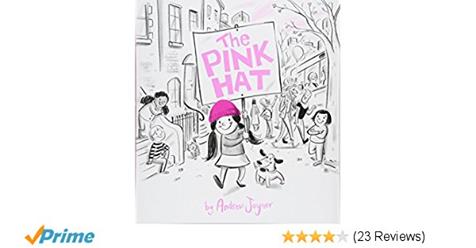
There is for instance, this gem, written, of course, by a male, who thinks little girls just can’t wait to read about pussy hatted “resistance” the “evil regime of Donald Trump.

pussy

Honestly, these people are all living in a giant bubble.  They have all gone to the same schools where they were all given the holy word of Marx, and all their friends are furious that trump was elected, and all their eight year olds (why is it always eight year olds?) were heartbroken when Hillary didn’t win (why are they convinced that other people, you know, real live adults want to hear the opinion of 8 year olds?) All of them are having hysterics and milling around and decided that everyone in the country is as unhappy as they are, and all of them want to read how terrible Trump is, or be “educated” so that no one will make the mistake of deviating from these people’s received wisdom again.

I’ve run into this attitude before, where publishers think they are teachers and the publishing house some kind of podium from which they should teach their “truths” to the public.  I don’t know if this is the result of very limited life experience, in which they were taught only people who attend the best colleges know anything, or if they are simply virtue signaling to the rest of their smaller, insular field with what “good people” they are.

Heck, it could even be that literature, having cast off the idea of judging quality by references to classical literature and history, started judging by how well it represented “the underdog” or rather “the underclass” and the class struggle and the oppression of capitalism, and all the Marxist rot they now teach in school instead of classical mythology (one mythology for another.  I liked Jove better.)

And you know, you always have to go a step further to be considered cutting edge, edgy, daring, or award worthy.  And awards I guess do matter for publishers, because with falling printruns and all the funny accounting it’s the only thing they can point to to say they’re doing a great job. Maybe.  Well, at least both editor and author can get jobs teaching college on the strength of that.

So they’ve forgotten they sell books to people.  Instead they think people will, of necessity, buy books.  They’re not wrong, at that.  You know how I said some people read compulsively?  It turns out we make most of the money for publishers.

The people who read one or two books a year?  Yeah, that’s fine and there’s a lot of them, but my people?  We read a minimum of two books a week  (If I’m on vacation I read that a year.)  Sure we re-read but we still need new fodder.  And we’ll read like crazy.  Except we don’t read anything and everything.

Most of the books I read are what I call “popcorn books.”  I used to buy bags of them or boxes at library sales.  They’re books that fit solidly in the genre and I read and forget.  If the experience is particularly pleasant, I will remember the author’s name and buy more of his/her books if I see them.  This is how I found people like Diana Wynne Jones or Jill McGown or… half a dozen others.

In the eighties I read mostly science fiction (and fantasy, but mostly science fiction.)  But the subtle messages that America was doomed, capitalism was evil, and oh, yeah, women were so much better than men at everything kept getting stronger and stronger till I felt I was being hit over the head with a politically correct hammer.

So I escaped to mystery.  It was a brief escape.  Mystery, at the time, if you limited yourself to cozies or funny mysteries, you found – of course you did – some politics and some crazy but if the rest of the book was good I’d still read it and even enjoy it.

Then cozies were declared “not real mysteries” tm and historical mystery was “just not selling” tm and the remaining mysteries went to “All of humanity is awful, and everyone would kill anyone given the chance” with breaks to preach about whatever the current politics were when it was written.  From the left side of course.  (What you think the author is crazy?  She wants to sell again.)

And I escaped to history.  But the kind of history I can read as popcorn is what I call “novelizations of history” and that too became preaching and also characters who, in their day, would have been killed for being crazy.  Yeah, I know.  I know.  New York city editors would think the Elizabethan woman you wrote and who thinks that getting beaten is quite normal and natural and possibly a sign of love is a reflection of your own beliefs, not history, and they’ll never publish you again.  But there’s still only so much nonsense I can take.

I held on, though, till just past 9/11, when every character no matter if middle ages or renaissance or whatever had a “magic Muslim friend”tm who was culturally enlightened and the voice of modernity in the book.

I bailed.  I bailed to Romance.

I’m a profoundly unnatural woman.  I didn’t read romance when I was young (beyond my cousin’s books, because… well… they were in the house) but by 2003, I was starting to dip my toes into Heyer, thanks to Dave Freer.

I bailed to regency romance.  (I tried contemporary and it was a mix of sex and preaching.)  Oh, regency had sex too, often apropos nothing.  But I just skipped those parts.

When I came to regency, it was I’m sure already silly.  But I had a backlog of years to read, and I read mostly used books.  Take $20 and buy 20 books.  Trade them in for half the value and get ten, continue till you have no more books.  Then repeat.

Eventually I ran out, or at least I ran out of anything I was willing to read and that took more than ten minutes, because I wasn’t skipping most of the over the top, ridiculous sex scenes.

So I bought some new romances.  Dear Lord.  Yeah. Every character was a 21st century feminist in petticoats.  They knew women were smarter, stronger, etc. than men, and they couldn’t wait to tell you.  They all ran shelters for abused women, they were all suffragettes, they all (even the noblewomen) started businesses.  Then there was the purely silly. You know, a duke was a doctor, and everyone was in awe of him.  (This was at the time the social equivalent of a duke being a coachman.  Never mind.)

Fortunately by that time, indie had come to be, and now I read in great jags from sf/f to mystery to romance and back again, as the spirit moves me.  As I said KULL has been a boon to my sanity and our budget.

And then…  And then I read declaration after declaration from publishers and writers that they’re NOW serious about educating us.  They’re going to write about the horribly oppressive Trump regime and their brave resistance to it. This time (they mean it) they’re going to really educate the lumpen masses, so they never have the temerity to doubt the wisdom of their betters again.

Look, some of the people who read compulsively might even be leftists or hate Trump.  Some.  Depends on the genre. Mostly the readership of romance looks like America, so I suspect you have Trump supporters and people who voted for him reluctantly making up a good half of the population.  The rest?  They probably look down on Romance and if they read it, they don’t admit to it.  Romance and cozy readers (they came back as craft mysteries) aren’t that different.  And most cozy readers are like me in cozy mode: we want fun, we want silly, we want escape.  If we wanted to ponder the great problems of the age, we wouldn’t be reading “Purl one, kill two.”  Science fiction?  I don’t know.  I know the numbers from the big houses are falling and that a lot of my indie friends writing either without politics or with a libertarian perspective are raking it in.  Is there a market for the traditionally published lefty stuff?  Sure.  But it’s a small market (most of the people who talk about it don’t even read it) and it’s being split by all the traditionally published books.

So what does “now we’ll preach more” and “now with more Trump derangement syndrome” do to that landscape?

Publishers think they’re in the heyday of the nineties, when all you could read was what was on the shelves, and publishers controlled what got on the shelves.  So addicts, like me, still bought some, because we had to read something.

But now?  Bah.  Most indie books are straight up apolitical.  (I suspect the political ones don’t sell and the writers give up. Because, you know, it’s a lot of work if you don’t get any return.  And I’m not saying the political ones are bad.  I’m saying at least those who are left are competing for readers in a saturated field.)  And we have tons of other things to read, without the ebooks being priced through the roof, either.

So… Traditional publishing has put a gun to its head and is threatening to pull the trigger.

And the worst part?

I don’t think I even care anymore.


Avengers Infinity War Review by Kal Spriggs

avengers

Avengers Infinity War Review by Kal Spriggs

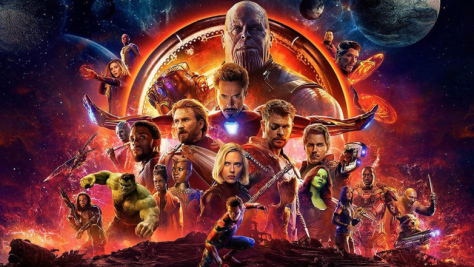
This review contains spoilers.  So reader beware, I’m going to go analytical on this one… but first I’m going to preface the spoilers with some generic comments.  Yes, I enjoyed the movie.  I think people should see it themselves.   Other (mostly) non-spoilery comments: I think Cap’s new shield(s) are lame.   I want a Wakandan energy shield.   Spider Man steals the show.

So, now into the actual review.  It starts out with a bang and with a mass murder of Asgardian survivors.  There’s a bit of continuity issues here (as later on in the film, Thor says that Thanos killed half his people, but Thanos blew up the ship and we don’t really see any survivors).  So there’s an issue.  Loki’s death was interesting, but there was an inevitable element of it, it wasn’t really a surprise and frankly, was pretty stupid of Loki.  I would have rather seen him join up with Thanos to betray him at a truly opportune moment, maybe even chuck Thor out an airlock.  Instead, we could see it coming.  There was no surprise in it.  Heimdal sort of stole the scene, too, in his sacrifice to send Hulk to Earth to give them warning.

The introductions and initial confrontations on Earth were good.  They set the scene well, and there’s enough humor and mixed desperation to make it all entertaining and engaging.  I would have liked to see Vision in full fighting form.  Having him barely limping along through most of the movie was a bit of a disappointment.  I get it, he was injured, but you would think they’d try to fix that.

The Guardians of the Galaxy really stole the show, them and Thor, anyway.  Pretty much every scene with them was highly entertaining.  The pace through the whole movie was fast, faster than I would have liked, but it wasn’t as frantic as people have complained about.  No, there’s not a lot of time for character growth and such, but that’s not what this movie is about.  It’s about the end of the world, it’s a disaster film more than anything else, and if there’s one thing that this movie does very well is to show the cost of a terrible disaster.

I’ve got to say, it’s almost Wagnerian Opera, at times.  From Heimdal through to the very end, we see the cost of fighting evil.  It doesn’t pull any punches and it doesn’t let up.  It’s dark, but the strong point of this film is that the heroes don’t flinch.  Most of them realize that they’re not going to survive, that they’re fighting to save others and not themselves.

The middle act is full of that sort of thing.  We lose a few characters, we see Thanos toy with some of them, letting them think they’ve done well, only to pull victory away from them, often in comical fashions.   Bubbles in Starlord’s pistol was the most brutal, I think.  The torment on Quill’s face as he worked himself up, only to have all that effort pulled away was heart-wrenching.  The return of Red Skull was a nice touch, but I would have liked to see more done with that.  Make him join up with Thanos, give Thanos a minion we actually recognize and already dislike.  Give Cap an enemy to fight that he knows and already hates (oh, and Bucky, too).

That brings us up to the final battle where Wakandan warriors start dying in droves.  We see them almost take the Gauntlet from Thanos (so close, yet I can’t help but think that Strange planned it, planned for them to lose so that Thanos could take the Time Stone, so he could then take the Mind Stone).  We see Thanos toss the mightiest heroes of Earth around like they are children.  Then he rips the Mind Stone right out of Vision’s head.  It’s all brutal, very metal, and terribly operatic.  The choices they made on who lives and dies were telling, though.  We knew the Hulk wouldn’t be one, not since Bruce Banner has character growth to figure out why the Hulk is gone all cowardly lion.  They kept Ant Man out of it all since he has a movie coming out in a couple months.  Scarlet Witch was obviously grateful to die after having killed Vision for no reason.  Doctor Strange was an interesting choice, especially since he saw this all coming.  He knew and planned for it, which makes me wonder what Wong is doing back on Earth as this all happens.  Bucky and Falcon just felt like cheap shots.  Neither of them have had enough screen time, their characters are both interesting, but Marvel doesn’t seem to know what to do with them, to give them a movie or what.

The Guardians… damn, if anyone paid a price for fighting Thanos, the Guardians sure as hell did.  Rocket is the only survivor.  Gamora’s death was similar to Loki’s, we saw it coming, it still had emotional impact, but her death was for Thanos’s sake, to humanize him somewhat, and it achieved that.  Peter, Drax, and Mantis *all* dying on Titan seemed rather harsh.  It would have been nice to see Drax and Mantis running around trying to save the universe without Peter Quill.

Spiderman… well, we know he’ll be back.  He’s got a movie due next year, after all.  (For that matter, we know many if not all of them will be back, because comics) his death was meant to humanize Stark, to humanize the cost of fighting Thanos… but it just let me down a bit on the writing.

Stark’s survival is the thing that leaves me shaking my head.  I get it, RDJ is sort of the backbone of this universe.  It all started with him… but come on, let some of the younger generation step up.  Tony Stark’s story and character have been complete.  There’s not much more for them to do with him.  I get it, I realize that Doctor Strange orchestrated Stark’s survival, getting a promise out of Thanos because of whatever he saw in those multitude of futures…but still, the writers made that choice because they wanted RDJ in the lead… again.

For the rest of it, Black Panther going down was a nice touch.  An emotional impact that I wasn’t expecting.  The others, including at the post-credits scene, showed the impact, well enough.

In the end, however, what do we come away with?  The fight isn’t over.  There can be no doubt about that.  Thanos may have had his way, but that means little when they left heroes like Steve Rogers and Tony Stark.  They’ll go after him and they’re going to find a way to fix things (in as much as that’s possible).  Avengers 4 is going to be focused on fixing all of this, and with the power of the Infinity Gauntlet, anything is possible.

I think that something many critics missed is that despite the title, this isn’t just an Avengers movie, this was very much a Thanos movie.  Thanos showed the biggest character arc, the most growth, and in the end, it was Thanos who achieved his goals.  We can argue all day about the rationality of his motivations (ridiculous in so many ways as to be utterly insane), but his drive and implacable resolve made the movie.

What would I have changed?  Oh my word, so very much.  I would have used Red Skull for more than a throw away here and gone character.  It would have been great if he joined Thanos and worked with him from then on.  The motivations for Thanos are a bit silly, but Josh Brolin lived it up well enough that we can accept them, the character was far more interesting in play than as a concept.  Stealing a few more moments for character growth, a scene with Banner and Natasha (Widow) would have been nice.  Use of some of the earlier enemies: Red Skull, Loki, Baron Nemo (whose motivations are similar to Thanos’s) and even an Ultron robot (whose motivation was basically the same as Thanos) as his lieutenants would have been interesting, especially with the scheming they would have done against one another and Thanos.  That would have also given us some real emotional hooks when one of them were taken down or switched sides.  Red Skull facing off against Steve Rogers and Bucky, backed with Thanos and Hydra goons would have been great.  Baron Nemo, granted powers by Thanos, would have been terrifying.  Ultron with alien tech?  Yes, please.

All in all, it’s a fun, fast-paced movie.  It hits you hard in the feels, though I think the writers played it safe a couple times near the end.  They’ve built the House of Marvel on RDJ’s shoulders and I think they’re terrified that if they kill him off, they’ll kill the franchise.  Overall, it was basically what I expected of the movie.  I enjoyed it, I give them props for managing so many characters and giving many of them engaging and awesome scenes.  I really want to see the impact of Thanos’s victory in the upcoming movies (plus the TV shows, which I need to get back to watching, assuming I ever have free time again).  I think it’ll hold up well, better than Age of Ultron.  It’s not my favorite Marvel movie, but it still beats the socks off of the DC cinematic universe.

Oh, and as a final thought, who else thinks they’ll use “fixing” everything as a chance to bring the Marvel X Men into the MCU?  I mean, continuity issues, Time Stone… what better way to get Wolverine and Hulk into a drinking contest?  Here’s to hoping.


Buy Your Mom A Book and PSA – by Sarah & Vignettes by Luke, Mary Catelli and ‘Nother Mike

mrs-2433959

Buy Your Mom A Book – by Sarah

First, happy Mother’s day to all of your out there!  Second:

*Note these are books sent to us by readers/frequenters of this blog.  Our bringing them to your attention does not imply that we’ve read them and/or endorse them, unless we specifically say so.  As with all such purchases, we recommend you download a sample and make sure it’s to your taste.  If you wish to send us books for next week’s promo, please email to bookpimping at outlook dot com.  One book per author per week. Amazon links only.-SAH*

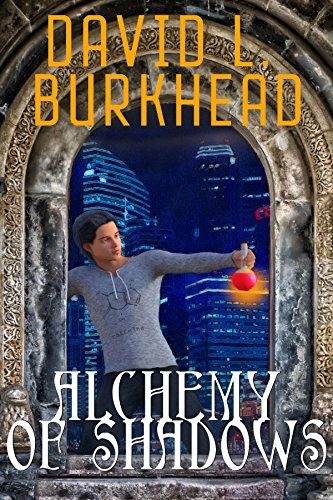
DAVID L. BURKHEAD: Alchemy of Shadows (Shadow Hunter Book 1).

61cjqhfs0ul

I was born in the year 1215 in a small town in Westphalia As a boy, my parents apprenticed me to the famed alchemist Albertus Magnus. Under his tutelage I grew to adulthood and learned the mystical secrets of alchemy including the manufacture of the Elixir of Life. I have gone by many names through the centuries.

I was already centuries old when I encountered the creatures of darkness made manifest that I know only as Shadows. They have chased me down through the years for reasons I have never understood.

Light was the only weapon I had against these Shadows, light that could drive them back but not harm them. And so I ran. Every time the Shadows caught up with me I fled to a new identity, a new life, until inevitably they found me again. At long last, with nowhere left to run, I had to find some way to fight the Shadows, not just for myself, but for the people I had come to care about.

My name is Adrian Jaeger. This is my story

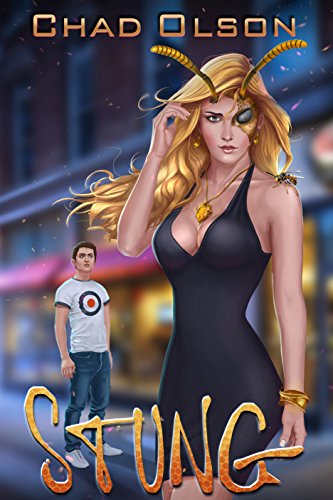
CHAD OLSON:  Stung.

517mnbyyzhl

Gary Schoenfeld is hoping for an express ticket out of his lonely life, but gets more than he bargained for when he strikes up a relationship with a beautiful Russian stranger named Natalya. Things go from super to supernatural faster than you can say perestroika when she rescues him from an attack by an insect as big as he is in a Chicago alley. But not before he is stung by it. Gary is determined to find out what happened, but is also determined to let nothing get in the way of his blossoming romance with Natalya. The questions continue to pile up, though. Why are police ignoring attacks by the same creature all around Chicago? Why has Gary’s body begun to change in remarkable and disturbing ways? Why has his soon-to-be ex-wife decided to reinsert herself in his life at exactly the wrong time? To find answers, he will face down insane gypsies wielding unearthly powers, human-insect hybrids bent on his destruction and a telepathic mutt who’s equal parts philosopher and finicky eater. Gary realizes it’s not just his own life at stake. The new love of his life might just be the greatest enemy humankind has ever faced.

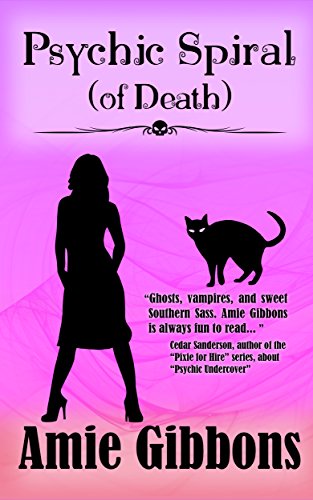
AMIE GIBBONS:  Psychic Spiral (of Death) (The SDF Paranormal Mysteries Book 5.

5192hyklswl

Karma’s a bitch, and she’s in town…

Psychic Ariana Ryder is down in Alabama for the last push of her daddy’s Senate race, and when a college staffer working on his campaign drops dead of a heart attack, it doesn’t take a psychic to smell foul play.

Karma’s in town and she has a problem, something has messed up fate in Montgomery, setting off a spiral of disaster that will kill thousands more and could bring the South to her knees if it isn’t stopped, and Karma doesn’t know what caused it. She has her own problems, so she hires Ariana and her vampires to figure it out.

With Ariana’s magic growing, the tension between her, Carvi, and Quil heating to a boil, a friend in the middle of a meltdown, not to mention an assassin after her and only days till the election, investigating this one sure ain’t gonna be easy.

And the life of more than one man she loves is on the line.

PSA- by Sarah

As the Wallaby (happy mother’s day to Mrs. Wallaby!) reminds me, I SHOULD tell you of my PJ posts.  So, if you follow those, let me link the recentish ones:

Are Extraterrestrials Democrats?

You Say You Want a Revolution

Book Plug Friday: Meet Christopher R. Nuttal

The President Is Not Your Daddy

Book Plug Friday: Meet Pam Uphoff

The Semantic Whoredom of the Left

Vignettes by Luke, Mary Catelli and ‘Nother Mike

So what’s a vignette? You might know them as flash fiction, or even just sketches. We will provide a prompt each Sunday that you can use directly (including it in your work) or just as an inspiration. You, in turn, will write about 50 words (yes, we are going for short shorts! Not even a Drabble 100 words, just half that!). Then post it! For an additional challenge, you can aim to make it exactly 50 words, if you like.

We recommend that if you have an original vignette, you post that as a new reply. If you are commenting on someone’s vignette, then post that as a reply to the vignette. Comments — this is writing practice, so comments should be aimed at helping someone be a better writer, not at crushing them. And since these are likely to be drafts, don’t jump up and down too hard on typos and grammar.

If you have questions, feel free to ask.

Your writing prompt this week is: beginner

The Writer Is Lazy

Okay, not exactly true.  I just have a ton of things to do, and most of them are a very physical list of cleaning, fixing, etc.

So, my mind is not tuning in to write a blog.

I’m going to leave you with a picture to have fun with and go scrub floors.


seaside

We Can’t Afford Socialism-by Amanda S. Green

iron-3339578

We Can’t Afford Socialism – by Amanda S. Green

If you think life is expensive now, wait till how much it costs when it’s “free”.

One of the most important reasons for studying history is that virtually every stupid idea that is in vogue today has been tried before and proved disastrous before, time and again. – Thomas Sowell


This morning, as I sat down to write this post, I stared at the computer screen wondering what in the world I was going to blog about. I didn’t have a book review ready to go (those will resume next week, thanks to the generosity of TRX). Looking at the headlines didn’t lead to anything I felt I could sink my teeth into – at least not without lots of cussing and Sarah sort of frowns on that. VBG. Then I saw the above quote posted by a friend along with this article on another friend’s wall. And, well, today’s post was born.

In her article, Carmen Alexe writes about what it was like growing up in Romania during the 1970’s and 1980’s. At that time, Romania was a country rich in resources and poor in so many other ways. Yes, there were lines for what we look at as basics – bread, milk, eggs, etc. Romanians couldn’t go to the neighborhood store and find anything and everything they wanted. The resources the country had were allocated by the government and that didn’t always mean that allocation was to the benefit of the citizenry.

The state controlled almost every aspect of our lives: our education, our job placement, the time of day we could have hot water, and what we were allowed to say. . . Despite the fact that Romania was a country rich in resources, there were shortages everywhere. Food, electricity, water, and just about every one of life’s necessities were in short supply.

How would any of us react if our landlords decreed there would be hot water available only two hours a day? Think about yourself as a teen, knowing that pack of gum you want is a luxury and might not be available for months – or longer. Consider having to turn to the black market to get blue jeans or other “fashionable” clothing. Consider living in a country where this is how you feel:

God bless our black-market entrepreneurs! They made our lives better. They gave us the opportunity to buy things we very much desired, things we couldn’t get from the government-owned retail stores which were either half-empty or full of products that were ugly and of poor quality.

According to Alexe, and just about anyone else with an ounce of common sense who has lived under the Soviet/Russian regime, economics is at the heart of many of the problems with communism.

Due to its profit incentives, capitalism encourages innovation. Innovation leads to progress and an increase in the standard of living. But progress and the climate which offers humans a high standard of living cannot be created without the capital to transform and turn resources into the final products that give us the—relatively—cheap energy and food, smartphones, fitness gyms, and overall the life we currently afford. Capital moves in the direction of less regulation, less government intervention, and less taxation. In short, capital moves to where there’s more economic freedom.

In contrast, communism, socialism, fascism, or just about any government-controlled system lacks the profit incentive. The people, who are the human resources, have no desire to engage in a business where the reward is not attainable (unless it’s done in the black markets). They accept the state and its bureaucratic cronies to dictate their faith.

Yet, what are we looking at in our country right now? We have politicians – yes, I’m looking at you, DNC – who want to tear down our way of life, strip us of our capitalist tendencies and turn us into Socialist “paradises”. They don’t even try to hide it these days.

In a recent interview, Hillary Clinton basically said she lost the election because so many Democrats are socialists and she admitted to being a capitalist.

“It’s hard to know, but if you’re in the Iowa caucuses and 41 percent of Democrats are socialists, or self-described socialists, and I’m asked, ‘Are you a capitalist?’ And I say, ‘Yes, but with appropriate regulation and appropriate accountability,’ you know, that probably gets lost in the ‘Oh my gosh, she’s a capitalist.'”

There’s a lot of ifs, ands and buts in there but when you get down to it. She said several things of importance. First, at least in Iowa – which has for decades touted as the indicator of how the Democratic Party leans – almost half the Democrats identify as socialists. Considering Iowa is more conservative than bastions of the Democratic Party like California and New York, that number is probably higher nationwide.

Now let’s look at what Clinton herself said. She identifies as a capitalist – coff, coff, Clinton Foundation – but with modifiers. She’s a capitalist but there should be regulation and accountability. In other words, the government gets to limit capitalism and, in turn, limit innovation and the improvement of our standard of living. Of course, with folks like Clinton, that limitation only applies to others, not to them. After all, they are the more equal among equal. Double standards are us.

But Clinton’s not the only one. We have Nancy “Crumbs” Pelosi, she who has her own fortune, turning her nose up at the $2,000 tax break most of the rest of us received under President Trump even as she has promised to take that tax break away from us. You know what removing a tax break really is? It is a tax increase. And this is one of the platforms the Democrats are running on.

To say the DNC and their candidates don’t get basic economics is putting it mildly. Or, if they do get it, they ignore it. We have them tossing out such proposals as universal healthcare, single payer healthcare, education for everyone, etc. Yet, when asked to specify how these programs will be paid for, we get – at best – handwavium. We’re told the government will pay for them. But, other than saying they will cut military spending, they don’t say where that money comes from.

We know where, don’t we?

It will come from our pockets. Worse, if they do cut funding for the military and other programs, what will be the result? Making our country even weaker than it is now. And that, I’m afraid, is their goal.

Think about it. Today voters in Maryland have a traitor running for U. S. Senate. Yes, a traitor. Bradley, now Chelsea, Manning, former member of the military, oath breaker and traitor, smiles for the media and spits (figuratively if not literally) on the graves of every man and woman who died in the service of the country. And what does Manning want to happen if elected?

  • No borders, no restrictions, nothing
  • No prisons.
  • Universal and single payer health care
  • No cops.
  • Abolish ICE because it is “ramping up for a massive ethnic cleansing in America.”
  • Universal basic income

There is more, but you get the idea. Sounds familiar on a number of points, doesn’t it? And how well have those policies worked?

The European Union is suffering greatly because of its open borders policy. Without some sort of immigration oversight, there is no way to protect the country and its citizens from those whose main desire is to destroy it. Yet the Democrats, and not just Manning, want to severely limit, if not completely do away, with border control. Yes, we need to do something about our immigration policies but simply throwing open the doors isn’t the answer. Besides, even in their demands for immigration reform, the Dems aren’t talking across the board. Despite their rhetoric of being so inclusive in their policies, they are focusing only on certain ethnicities. If they were truly going to be “democratic” about it, they would say we need to open our borders or reform our immigration policies where everyone is concerned – European and Asian as well as Hispanic, etc.

Universal healthcare? Nope. There is a reason so many Canadians and others come to the U.S. for treatment.

I could go on, but it comes down to this: who is going to pay for all these so-called wonderful programs politicians like Clinton, Pelosi, Bernie Sanders and even – gag – Manning propose? We are.

What will the result be? Less money in our pockets and more governmental control over our lives. We are already moving down the road to a country out forefathers couldn’t recognize, one where the Bill of Rights is nothing but a distant memory. Do you want the government telling you what doctor you can go to? Or, worse yet, what treatment you can or can’t have?

If the government is paying for your education, how long before it tells you what you are going to study and, by expansion, what job you will have upon graduation?

The Dems try to scare us with horror stories about what the Trump Administration will do (and I’m no fan of the man, but they are forcing me to support him). Yet, the only real danger I see comes from their camp.

As Alexe writes:

Aside from better economic and legislative policies, what America needs is a more intense appreciation of individual freedom and capitalism. Such a crazy idea is not acquired through public schools or becoming a public servant. Young people don’t need more years of schooling with more worthless college degrees and student loans in default. America needs more entrepreneurs and businessmen. It needs more people with drive and ambition, more self-starters, more innovators, more people who are willing to take chances.

It starts in our own backyard, in our home, in our small group, in our community. It starts with loving, involved, and dedicated parents who’d instill the values of personal responsibility and delayed gratification in their children. It continues with an education that entails both theory and hands-on practice in environments conducive to learning how to think independently and how to acquire life- and work-skills. It evolves into a purpose-driven life rich in learning and experiences. And this may be just the beginning of attaining the intellectual maturity to perceive the value that free markets and individual freedom afford most of us.

It also, as Sowell states, requires that we remember history. All the crazy ideas the Democrats tout today have been touted by crazies before. We’ve seen the path those ideas took countries like Russia and Romania. Do we want that to happen here? I certainly don’t. That means we have to get involved. We have to stand up and speak out. We have to vote and get people with our own core values running for office. It means we fight to take back the media. Most of all, it means we educate out children and not let them fall victim to the indoctrination of our public school systems. Teach them about looking at issues for themselves and doing their research before drawing a conclusion. Teach them about how there are consequences for actions and inactions. Teach them the value and importance of independence and of ambition. If we lose the drive, if we lose the innovation, we have lost.

I don’t know about you but I refuse to go quietly into the night and I sure as hell don’t want our kids to live in a system that doesn’t value them and allow them to do and be all they can.

Let’s not sit still while history tries to repeat itself here, in our own house.


Places of the Mind

photo-manipulation-3385832

Amanda is, unfortunately, not feeling well, so her guest post has been moved, hopefully till tomorrow, when she should be more human.

I should have done a post earlier, but I was dealing with administrivia this morning.  So…

Have you ever thought about the places that are part of us?  Some of those places don’t even exist.

I mean, sure, when I was really little I used to base all my imaginary places — hovels to palaces — on grandma’s house.  Considering that by three or four I was imagining empires in other worlds (I have a defense.  I was very sickly, and since I was just starting to read, and no one would tell me enough stories, I started telling myself stories) it was pretty weird to base all those buildings in what was basically an old-style Portuguese farmhouse.  But I did.  Kings received ambassadors in grandma’s large kitchen, with the throne placed about where the table was.  The rest of it tended to stay the same in my brain, so there were the cabinets grandad made, the large dresser where we stored bread and flour, and the Franklyn stove in a corner.  I just wish I’d written those early sagas because they made for interesting reading.  (Combined with the fact that the Portuguese word for Grocer — Mercieiro — on first hearing was completely opaque to me — we called our Grocer Sr. Antonio and the general store he managed a “butcher’s” which is weird, as I think the only meat it sold was cured.  I’ll have to assume it was an earlier building in the same place.  They did, however, sell everything from almonds to tobacco, passing through clogs and school composition books — I thought Mercieiro meant “he who grants mercy” so I had a series of kings with the title.  Yeah.)

But there are other places that stayed with me, some read, some I visited once or twice and I’m not even sure where they are.  Some — who knows?

For example, there is this vivid memory I have of climbing pine stairs, in a small cottage, to a tiny room (basically a single bed under a sloping roof.)  I remember it because the woodwork was flawless, stairs and all done and sanded and glowing, as if they were the finest piece of furniture, and also because some organization freak had designed them.  The risers of the steps had drawers.  The walls surrounding the stair case had shelves.  The bed had drawers under it, and drawers were built in to the woodwork around the tiny bed, everywhere they fit, even if some had really weird shapes.  And yes, the sloping ceiling was carefully fitted, sanded, etc. boards.

I’ve always had the idea that this was the upstairs of my great grandmother’s house, and have a vague idea that I slept there the night before her funeral, but I don’t know.  It could as easily be the upstairs of some cottage we stayed in while we were driving through roadless/trackless wastes in the mountains of Northern Portugal in 68, trying to trace my Brazilian aunt’s ancestry while she was visiting.  Her ancestors came from such tiny places that some of the villages, when they saw the car approach someone would run to ring the church bell, and everyone would come running from the fields, and it would be an impromptu holiday, even if it turned out she had no ancestors/relatives from there.  They were isolated and loved the break in the monotony.  And we stayed overnight in some of those places, so it could be there.

However, the beauty of the woodwork, the cunning of the storage stayed with me.  Now I’m older, I suspect that thing was designed (and possibly built) by naval builders.

Then there is the sea.  Lots of people reading my books assume I grew up by the sea.  That’s not… precisely true.

Sure, my parents are maybe ten miles from the sea, which in the states would make it really close, and have a major influence over my life.

Other than the fact that fish was the almost-free food, only more expensive than when a hunter-friend donated his excess hunted animals, not so much.

Sure, the village had a fishmonger who came down the main street everyday with her basket of fish.  Mind, she took the bus from the seaside where she bought the fish at 4 or 5 am, and got to our village around 10 or so.  But I don’t know if she hit other villages first.  It’s probable.  She’d start either in Porto, or the villages at the outskirts, because people were wealthy there, and I suspect things were fairly picked over by the time she got to the village. Mostly we ate sardines and mackerel.  The “good fish” was usually when mom went to the fair near the city where the big fishmongers sold their buys.  This fish/seafood being really cheap created some odd features of my childhood.  First, I don’t like fish (no really) second, my second-favorite treat was clams, which would be cooked on top of the hibachi.  If I was good I’d be allowed to buy a half-dozen clams.

But other than that, going to the sea by bus (or car, because it was all twisty back roads) took about 2 hours.

Sure, we did this in summer, religiously, for at least a month (usually September, because the rental of a beach shelter was cheaper) because Portuguese believe that if you don’t spend at least a month at the beach every year as a kid, you’ll be stunted.

So I loved the beach, sure, but as a vacation thing.  Later, when we had the money to rent places by the sea, dad and I would spend days climbing cliffs, exploring ruins, and/or finding picturesque little villages.  I suspect most of my seaside locations come from those days, which I did love.

Every writer should have experience of some weird places too, though I was lucky to be born in one.  This is because reality is not only weirder than you think it could be, but weirder than you could imagine if you tried.

Take my childhood. First favorite treat was olives, which came once a week, brought by the oil-and-olives-and-lupini-beans man.  The olive-oil man worked from a donkey pulled cart.  The donkey wore a hat and was very patient.  IF I’d been very very good?  I could give the donkey a carrot.

Third favorite treat?  Peanuts and orange soda, the treat of Sunday afternoons when I was really small.  The man who sold the soda came down the street on Sunday selling his wares.  Also the seller of waffle…. rolls.  Think waffle cones without the cone.  They were called lingua da sogra (Mother in law’s tongue.)  Other vendors did the same route and sold potato chips.  They carried their wares in these metal cylinders with lids which looked like small water heaters, with two straps they put over their shoulders.

Imagine a village where everyone sits on their stoop (Mediterranean, so no porches.  The house door is RIGHT on the street, but it has a stoop made of stone.  The cleaning and bleaching of those stoops was a MAJOR source of neurotic obsession to the women of the village.) except the elders might be in chairs, the back against the wall of the house (the look/cleanliness of those chairs was another form of obsession and social signaling.) The women crochet.  They might visit a door or two away, to gossip or exchange patterns.  Ditto the men, who mostly have the radio nearby and are listening to the soccer game.  Anyone who walks up or down that street (my family when mom dragged us to the trolley to go visit her family two villages away, or courting couples, or people who got bored and went for a walk) is dissected with the fervor that political wonks dissected soviet podiums at may day parade.  So you’d best be wearing your best, and if courting, you’d best be following the rules for the stage you’re at.  (I think holding hands was when you’d been dating for a year.  Arm over shoulder only if you were engaged.)

And then down that street come sellers of soda (mostly orange.  Might have been homemade) potato chips and waffle cookies.  And the kids swarmed them.

Then there was the Earl’s manor house across the street.  My mom was friends with the housekeeper, so I spent a lot of time there when the owner wasn’t.
I loved the kitchen, with its massive, spotless work table, the shelves of polished copper pots and pans, and the shelf upon shelf of jams and jellies (I was always given some jelly or jam on a cracker, too.)  It was sunny and looked out over endless fields.

The other room I loved was the “Chinese room.”  Yeah, it was decorated exactly as you expect.  Eighteenth century chinoiserie.  And it had the TV, which we were very often invited to come watch.

Then there were those amazing gardens, ornamented with statues and filled with fountains and carefully hemmed-in ponds and mini-rivers.  I loved those gardens.  Not for me, unless I become an incredibly wealthy person (like win big in lottery wealthy) because I’m sure it took an army of gardeners, but heavens, they were beautiful.  Maybe that’s why I love the Denver botanic gardens so much.  The conservatory is very like.

The place is now a b&b, btw, and very reasonable in price.  About what embassy suites costs in Denver, in the US.  Mind you those endless fields were sold and are full of skyscrapers, but part of me still wants to spend a night or two there when next I visit, and see what remains.  I know part of the garden does.

There are other places that are part of me, that I’ve never even lived in.  Don’t ask me how since they weren’t heavy on description, but not only did I get a second hand love for rural Wisconsin (which I’ve never even visited) from Simak’s books, but years later, when I got to see pictures of the English countryside, it looked exactly as I imagined.  There are places, like Miss Marple’s village (St. Mary’s Mead.)  I’m sure I’d not only recognize it on sight, but also the name of the various inhabitants would come back to me as though I were a long-lost-prodigal daughter.

It’s weird the effect places have on you, and how you often are not even aware of what history they had, but as a kid whatever you experienced becomes “the way things should be.”

My kids both love small mountain towns, because when they were very little we lived in Manitou Springs, in a funny house perched on the slope of a hill.

Those places become part of our souls, and — if you write or create — they live again in your work and may go on to be favorite places of people who never saw them.

What are some of yours?


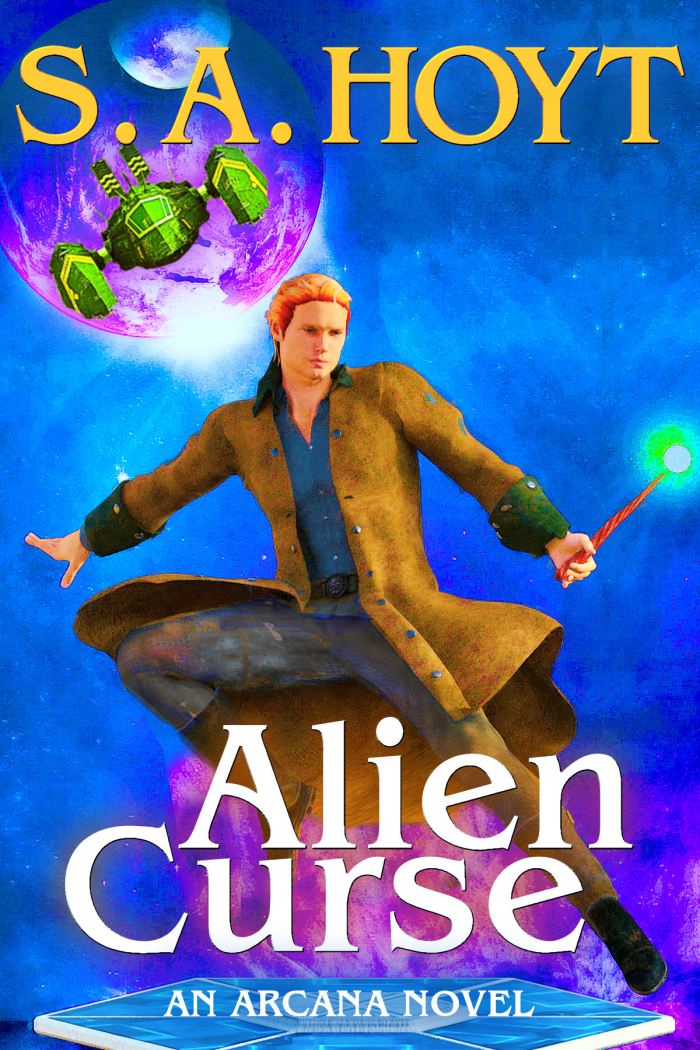
Alien Curse

aliencurselatestmarchfinal

This is probably NOT the final cover.  But it’s the one I have right now, so I’m using it.  I’m very close to finishing this, and yes, there will be more Dyce and second musketeer vampires shortly after.

Sorry this stuff has been so slow, I’ve been… um…. hassled by other stuff and having to take Benadryl to stop the auto-immune flaring up.  For some reason benadryl turns off fiction writing.

Anyway, I’m on about 3 hours of sleep — no, nothing really bad, we just haven’t set up the air conditioners yet, and last night was very hot, even without stupid Havelock cat on top of me.

So, have a first chapter.  Ignore the typos.  It will be edited.

Alien Curse

  1. A. Hoyt

I


The ship rolled and rattled so much coming out of teleport that I just knew we were going to be smeared somewhere between nowhere and reality, leaving our poor souls haunting the realms of shadow.

The glimpse I’d had of the Space Magician, coming in the side of the ship, back as we left Gioll didn’t fill me with confidence either. Sure, he wore the golden necklace with the wing-symbol of his profession. But his white hair was long and unkempt, it had probably been a month since he’d last shaved, and the way he weaved as he approached the ship told me he was probably drunk. I wondered in what alley they’d picked him up and if they were paying him in wine.

If I’d been a free man and this a ship I’d chartered, I’d have turned around and left then.

But I wasn’t paying for the transport, and I did not get the option of not boarding the ship. My escort had nudged me aboard, and onto the lumpy, not-properly-secured seat, and we’d rattled off up to orbit and into the total darkness of Between without my having any say on it.

We emerged from it with a blinding flash of light, a bang, and a sense of being crushed, while the spaceship went tonk, ting, plink all around us. I closed my eyes and prayed to the God I didn’t believe in that I wouldn’t die like this. Not like this.

They’d promised me freedom. To die now would be a bad joke.

It would have been easier if I didn’t know what was happening. But I did. Oh, I did. The idiot pushing this buggy was so senile or wasted that he could no longer hold together the simple spells that protected the ship from heat on reentry, or the spells that kept us from being crushed as the ship fell – more or less like a rock – from orbit to planetside.

I opened my eyes and glimpsed, though the viewport nearest, a green and blue globe towards which we were hurtling at speed. Then the crushing g-force lifted, leaving me at normal g, but the speeding of the ship didn’t slacken off.

Next to me, my escort had pulled out a rosary and was tolling the beads at speed. I could have told him it wouldn’t help and, depending on the amount and type of his faith, it might in fact hurt.  Magic and religion are not inimical, but the interact at strange angles.  Fervent enough faith collapses probabilities into the certainty of faith and pretty much nullifies the HEX matrix, making anything in the magical realm ineffective.

The man was white as a sheet, and his Department of Intergalactic Corrections uniform had sweat stains under his arms. From the smell there was also a stain at his crotch, but I wasn’t going to look. So I didn’t say anything, and instead tried to breathe normally as we hurtled down.  Almost without meaning to, I reached, delicately, carefully, for the spells the space mage was weaving.

At one time this would have been child’s play. In many ways literally child’s play, as I’d been feeling my way through spaceport spells and memorizing their patterns when I was still in crèche.  But five years with a limiter took its toll.  It was like wearing a blindfold for five years, and then learning to see again.  I could intuit the strands of magic in my mind, the weave of the spells, but it was all jumbled, a kaleidoscope of forces and powers, of light and energy, none of it making any sense.

From the view out the window we’d been falling for minutes.  It felt like forever, and the man next to me had started shouting his prayers in what I thought was Latin.  And he had definitely pissed himself.

The surface of the world came closer.  Gravity hit me again, slamming my middle, making it hard to breathe and sending a taste of bile into my mouth.  Heat climbed, suddenly, unbearably. Sweat soaked through my ugly purple coverall, till I was as wet as if I’d taken a dip in the ocean.  Sweat ran into my eyes, past my eyebrows, and salt of sweat stung my lips.

So I’m going to die like this.  What a waste.  What a stupid waste.

Suddenly, inexplicably, in my mage site, the magic I was sensing coalesced into a pattern I recognized, and my magic reached for the truncated part.  Stupid idiot had woven all the spells except the one to stop us burning and crashing.  I took hold of what he’d left unfinished, and wove it out, all the way.  The runes for safe travel, the invocation to Mercury, the image of the man in winged sandals under the ship, slowing the descent, fluttering us gently down.

The artificial gravity mitigation and heat-shielding kicked in at the same time.  The precipitous descent slowed so much it felt like we were stopped, though I could see the world growing closer by degrees.  I leaned back in the seat, and didn’t even mind the lumpy upholstery, as I pulled ragged breath into my lungs.  Smelly and stale as it was, the air felt like the ambrosia of the gods. Next to me, the warden slumped.  I wasn’t sure if he was relieved or had passed out.  I didn’t care.

The world beneath looked green and blue and lovely, much like mother earth.  Then again, from this far up in space so did Gioll.  It was the people who made it hell.

Closer on, I could tell the place was mostly unpopulated.  There was something that looked like a ruined – largish – city and no other sign of human – or any other type – inhabitation.

And then we turned, in a gentle type of pirouette as we came down, and I saw that we were close to another city.  Well, to call it city.  It wasn’t as such, just a kind of sprawling settlement, prefabbed bubble buildings, extruded from some machine, ugly and grey against the brown rock.  And then, closer down, the spaceport: a cluster of flat buildings, and a flat surface like a road, carved from the native rock, in the shape of the rune Raidho that facilitated arrival and safety.

We landed gently in the middle of it.  There were no other ships visible, which argued for either a recent colony or a poor one, one that had practically no trade with anyone else.

Well, that figured.  Why else would Earth send someone like me to resolve their problems?

“Up, Arcana,” the guard said.  And I realized I’d been so busy unwinding the remains of the spells from around the ship that I had been staring, straight ahead, with a completely blank expression.

I honestly didn’t know what my features look like, anymore.  Mirrors didn’t feature large in Gioll, both for their magical properties and because when you’re in hell with a limiter spell, unable to use your power, for all magical intents made blind, deaf, mute, and subjected to the power of people who might as well be demons, what does your appearance matter?

But from the reactions I’ve got from people, including this sorry crew transporting me, I didn’t think I was the pretty-faced young man who had been given life in Gioll for piracy.

My blank look must have read threatening, because the guard who had grabbed for my arm, had his hand in his pocket, probably ready to draw his gun.  Frankly unprofessional behavior.  Oh, not in Gioll, but for someone they allowed to interact with free citizens.  Then again, maybe the he was still rattled by our landing.  Not unlikely. I was still rattled by our landing.  I’d thought we’d end up dead.

In fact, the reason I’d been winding out the spells is that the ship was crusted with them, thick with the kind of sludge that careless or incompetent magicians leave behind.  Our space mage might be a loon, or simply drunk, but the fact was that the remains of old magic would have made it hard for even a young, competent magician to try to land smoothly.  And I’m a sap.  I had seen death really close at that landing, and I didn’t want the next guard, or for that matter the next transported prisoner, or whoever this ship served to die.

I stood up when the guard pulled me. No resistance.  You learn that “go limp and allow yourself to be maneuvered” dance really well, after the first ten times you get a baton across your face because some incompetent, excitable guard decided that you’re fighting him, just because you tried to stay on your feet and control your own walk.

It must have worked.  His hand came out of his pocket, and he marched me to the door of the ship, and then ahead of him, with little pushes, to the bottom of the arrival stairs that had been wheeled up to the dented, dinged shell.

Arrival stairs was dignifying them with a name they didn’t deserve.  They were made of wood, just planks of wood on a frame, all of it loose and creaking.  There was no spaceport personnel at the bottom, though there must be some around, otherwise, how did they get the stairs against the ship?

The guard looked disoriented at the lack of a reception committee too.  He looked around, like he expected someone official to appear.  When no one did, he marched me towards the biggest building, a grey blister against the horizon.

I wanted to tell him that the biggest building in a spaceport was almost always a warehouse.  It was one of those things I remembered from raids.  But of course, I was not supposed to talk.  I was not supposed to say anything.  Yes, it was unlikely he would just shoot me out of hand.  After all he’d been tasked with delivering me here safe if not sound.  But he was scared and – without daring to poke into his mind – I got the strong sense that he was not used to this kind of mission, to actually taking one of the hardened criminals from Gioll and escorting them somewhere, alone, being fully responsible for them.

Behind us, I was aware of the derelict space mage coming out of the ship and stumbling in some random direction.

I didn’t turn.  I looked towards the big warehouse as he pulled me towards it.  He was taller than I by a head, and larger by double.   He also obscured my sight from the left, since he was holding my left arm.

Which is why I heard her before I saw her, a slap of soles against rock, at a run.

My guard turned, and I did, and the woman who’d been running towards us stopped taken by a sudden attack of dignity.  She stood for a moment, then walked towards us in a slow graceful walk.  At least I think it was graceful.  I hadn’t seen a woman in ten years.  I suspect a female hippo would have looked graceful.

Not that she was a female hippo.  Anything but.  Oh, she was taller than I, but probably by no more than an inch or so, and I was not a short man.

The rest of her was proportional to her height.  Curvy, with curves that would be too large on someone of less heroic proportions.  Long legs.  Long, dark red hair, left free down her back.

She wore a straight, ankle-length skirt and a blouse of squarish lines, neither of which did anything to disguise her feminine lines.  Nor did her boots disguise the fact that her walk was, yes, graceful.

As for her face, as she approached, she was obviously struggling to discipline it into severe lines.  It didn’t work

To be honest, she wasn’t pretty.  No one would call her that.  She was rather handsome, with a straight nose, generous mouth, wide green eyes, and a ridiculous splash of freckles across the bridge of her nose to her cheeks, which made her look much younger than form or feature betrayed.

She extended her hand – first to me, then realizing her mistake – to my guard, as she approached.  “Clarity Cyan,” she said.  “Governor of Bliss.”

The guard mumbled something.  I didn’t think he liked giving his name to her any better than he liked giving it to me.  He didn’t shake her hand.  Instead, he shoved me forward, causing me to stumble and just stop myself short of colliding with her.  “This here is Arthur Arcana,” he said.  “He’s been delivered.”

And then he turned, leaving me standing there, my hands in manacles, and Clarity Cyan looking at me like she didn’t quite believe someone had left this refuse littering her lovely brand-clean airport.

She cleared her throat.  “Art Arcana?” she asked, in the tone of someone who remembered the name from somewhere, long ago.  Maybe she did, but I doubted it.  She was too young to have known of daddy’s career.  Much too young to know of granddaddy’s.  And in this far end of the universe our family wouldn’t have made much of a splash.

I cleared my throat, and looked up, very conscious of my convict’s outfit, of not having been allowed to take a bath before leaving Gioll, and all that before the sweating-out I’d got in the transport ship.  My hair was probably too long, too, and if I weren’t in handcuffs, I’d feel my beard, which I bet was also really grown out.  I’d been in the middle of the month between hair removal allowed to the prisoners.

“Art Arcana was my father,” I said.  “My name is Arthur James Arcana.  Call me Jim.”

“Really? Your father was Art Arcana?” she asked

I shrugged.  “My grandfather too.  Stupid family joke.”  I wondered what she had heard and about whom.  If she’d heard of grandad, maybe in school, she’d think we were a family of legendary scholar wizards, responsible for making Hollywood the glittering center of magical shows it was.  If she’d heard of dad… well, that would depend on what she’d heard.  Dad before he’d been caught, or after.

From the look in her wide-open green eyes, I couldn’t tell whether she was appalled or curious.  And frankly, I didn’t want to know.  She was the governor of a new colony.  This probably meant she was married, in the family way, and trying to stake out a farm somewhere.  In ten years she’d be twice as wide and have a passel of kids.  And none of it mattered to me.  In ten years, I’d either be back in Gioll or free and making my way through the human worlds.  Perhaps I’d have a small business.  Perhaps I could trade in something. Maybe even just magical tinkering.

I realized I must have given the impression of glaring again as she took a step back, and assessed me, looking me up and down.  “This isn’t what I expected,” she said.  “I thought they’d send—”  She took a deep breath and shrugged.  I didn’t know what she was going to say I thought they’d send someone more presentable? Or  I thought they’d send someone older?  Someone cleaner.  Instead, she said, “Well, we’d best get you presentable first.  If I take you out like this, everyone will be staring and no one will trust you.”

“Right,” I said.  Stupid idea, of course, sending a convict out to a small settler community.  But then again, who else were they going to send, if the job was dangerous?  Not like the big money judicial magicians would volunteer.  And military mages?  Forget it. Many colonies would interpret the presence of one of them as an outright act of aggression.

She looked down.  “I don’t suppose you have the keys to your manacles?” she said.

I just looked back at them, and she laughed suddenly, her eyes wrinkling at the corners.  “No,” she said.  “Of course you don’t.  Stupid question.  Well…  Well.  We’ll cut them.  I guess I’ll take you to lodgings first.”

Then she turned around and started walking away.  I almost didn’t follow.  It wasn’t like I was used to this.  Really?  She was not going to drag me?  She was not going to order me?  She was just going to walk away and expect me to follow her?  What did she think I was, or she was?

Through my mind, wildly, ran vivid fantasies of escape, of breaking out, of running for the edge of the spaceport, of making it out to those wide free expenses, breaking my manacles against some rock, and surviving out there, free, without guards, without dangerous obligations, without—

Without magic.  Oh, they hadn’t taken my magic away.  No way to do that, once you had attained the age of reason.  And I’d left the limiter behind in Gioll.

Which meant I had magic, sure.  But if I went out into the wild, and started using it, even if all I used it for was lighting the fire and killing prey, I’d eventually get tagged as a wild, unregistered magician.  Which was either a return trip to Gioll, or death.  Of the two, frankly, I’d rather have death.

No, this was my one chance to legally get out of Gioll, to be a free citizen again, and I was going to take it.

I followed Clarity Cyan.

As I expected, she headed for the smallest of the bubble buildings, and into the door that faced the landing strip.  Inside, the place was cavernous with – of course for a poured building – a rounded ceiling through which the sun shone weakly.  There were what looked like various stands and tables around, the kind that in a normal spaceport were taken up by competing spacelines.  They were empty and showed no signs of use.  I wondered if the spaceport had come out of a kit, and if these accoutrements would eventually be used, but possibly not for centuries.

“We’re a small colony,” Cyan said, as though guessing my thoughts.  “Only twenty thousand people in five settlements.  If we prove the planet, we’ll be able to take in more colonists, more specialists, and become a real, functioning entity.”  She flashed me a smile over her shoulder.  It wasn’t even remotely fair that she had dimples.  “I’ll probably be ninety by then.”

I didn’t say anything.  I had no idea where I’d be at ninety.  Hell, I didn’t know where I’d be next week.  Instead I concentrated on walking without tripping, which believe it or not is harder when wearing manacles.  It’s a balance thing.  You can’t move your hands to compensate for taking long steps.

She opened a big double door, and we walked down a broad, molded staircase that probably aimed for grand proportions, but still looked dingy made in grey toughglass, which hadn’t even been polished after being poured, so that every flow line was there, and now filled with red dust, and scuffed from shoes.

There were only twenty steps, which was a good thing, because it was really hard walking without tripping down the steps with my hands fastened in front of me.

At the end of the staircase, we were at the beginning of a long, very straight street, lined on both sides with bubble buildings whose placement and uniform architecture betrayed their having been built all together, all at the same time about two minutes before the ship of colonists landed.  There were people on the street, though no one nearby.

In fact, they were far enough away that I had trouble telling details of their appearance.  I thought the two people standing five? Six? Ten? house blocks away were probably women, from their posture.  The kids playing around them could be either.  A childish scream of laughter reached me, but attenuated, and I couldn’t hear the adults at all.

The man crossing the street two blocks away was almost for sure a man, very surefooted, not graceful at all, and large.

Other people, further than the women were hard to make out, except for a blur of movement.  No vehicles.  That wasn’t unusual in a new colony. There would be some flyers, and some private brooms, but not a lot.  Most transport between settlements would involve teleportation.

One advantage of having been a pirate – so to put it – was that I knew the structure of isolated colonies really well.

Cyan blew out air through her nose, in a clear sound of impatience that was the reverse of a sigh.  “Well,” she said.  “I thought—”  Then shrugged, rolling her shoulders back, as though girding herself for battle.  “Right.  That won’t work.” She looked over her shoulder, “Come with me.”

Again the prospect of running for the wild frontier presented itself, but I’d been a hunted man before, and had no intention of being one again.  I went with her.  Taking a sharp turn between the spaceport and the nearest bubble-house, she walked resolutely down what appeared to be a cross street, with fewer and newer looking bubble-houses, and finally down a long stretch with no bubble houses at all, except for one far off.

Yep, we walked all the way to that, even though the ground got pretty uneven under my feet and the quicksoles were never meant to last that long.  Up close, it was an ugly, grey bubble building, same as other, ugly, grey bubble buildings.  But there was a trefoil on the door, painted carefully and in green as vivid as her eyes.  And there was a mat in front of the door, also green.

She put her hand on the door, probably allowing the guard-spell to recognize her.  It surprised me, I’ll be honest.  I didn’t know that people in small colonies took the trouble to get their doors warded.  All the stories I’d read and seen said they didn’t.  Something about the frontier, where you trusted all your neighbors, or something.  Okay, I probably wouldn’t, but I also wasn’t the stuff of which your average colonist is made.

The door opened.

Inside—

It should have been your average colony home.  Okay, so, you know, most colony ships don’t have a lot of room for extraneous stuff.  Last I’d checked – granted before being caught – you were allowed twenty kilos plus any important implements of your trade, if you had one.  For most people that meant clothes, maybe a cherished keepsake or two, and whatever weapons you might need moving to an unproven planet.

The financiers who backed the colony would provide stuff, of course.  But not too much.  When they claimed their half share of the fees paid by better-heeled colonists on immigrating to a proven planet, they wouldn’t want to cut into their profit.  They certainly wouldn’t spend the money to make the lives of the people who’d claim the other half-share unnecessarily comfortable.

So there would be the bubble homes, and a lot of standard equipment, all molded of toughglass in grey or black, the cheapest colors.  There were those.  Table and chairs, in molded grey glass.

What I didn’t expect was the vast loom, made of some kind of dark red wood – probably native – nor the fabrics all around.  They shone in tones of green and blue—mostly – and draped over the chairs, hung from the wall, covered the grey toughglass floor, giving this place the feel of being very much a home, and not just a temporary shelter where people would stay while proving the planet.

One corner of the roughly semi circular space was cut off by counters, a cooker, a refrigerator, and other structures on whose purpose I was unclear.  A flat wall that bisected the sphere faced me, with three tall and narrow doors.  She gestured to the far door.  “The guest room is there,” she said.  “And there is a fresher.”  She looked down at my manacles.  “Now, how do I remove those?”

Which is when I did one of the stupidest things I’ve done in a life filled with some truly spectacular mistakes.  I smiled at her and said, “It’s okay.  They’ve removed the limiter.”  And then I looked down at the manacles.  They were metal, which made things kind of harder for most people.  But I wasn’t most people.  I was Arthur James Arcana III.

I took my power in hand.  It had been growing the whole while since they’d pulled the limiter off ten hours ago, and though I knew it wasn’t anywhere near what it had been when I was arrested, much less before, before the big battle in which The Rogue was captured, it was more than enough for the task.

I concentrated on the handcuffs, put all my mind to it, and willed “Vanish.”

There was an explosion, a flash of light, my wrists hurt like hell, and Cyan was thrown back ten feet, to land awkwardly against one of the toughglass chairs and push it back ten feet.

As I stared down in horror at the burnt circles around my wrists, she gathered herself up, came close up to me, and snarled, “What was that?”

I took a deep breath.  “I guess I had too much power,” I said.  There was something like a whine in my voice.  “I didn’t mean to.  I—”

“You,” she said.  “Will not do that again.  Nothing like that.  If this was your smart attempt at escaping—”

The vision of wide-open fields, of just running, presented itself to me, and I drew in a long, aching breath.  “No, I swear.  I just don’t have that much practice.  It’s been ten years.”

She swore under her breath.  Her eyes were guarded in a way they hadn’t been before.  For a moment, I thought she was going to march me back out to the space port and hand me back to the guard, if she could find him.  I’d blown it on arrival.  It was back to Gioll for me.

But then she pinched the bridge of her nose, inclined her head.  I got the impression she was counting to a thousand, or maybe a million.  Or maybe just thinking of whatever the problem was that had brought me here.

For the first time I caught a glimpse of an aura of power around her head, a delicate peach aura, which didn’t seem to correspond to any of the main powers. No big surprise, though.  During the proving stage, most planetary governors are usually witches or wizards.  After all, there usually isn’t a whole lot of money for law enforcement.  The question was, rather, why I hadn’t noticed it before.  Had she been veiling it from me?

She looked up.  “Fine,” she said.  “Fine, fine, fine, fine.  But if you do anything like that again, unless your life is presently and clearly threatened, I’m not even going to bother to send you back.  I’m going to kill you.”

I said “Thank you,” which got me the oddest look.  And I wasn’t even trying to be funny.  No, I am not suicidal.  But Gioll again?  No.  Hell would be better.

Her lips tightened together, making her look severe, and she gave me a small nod, as though acknowledging my point, then indicated the door again, “That is the guest room.  There is a fresher.  Use the fresher.  Make yourself presentable.  There will be clothes on the bed by the time you come out.”

I obeyed.

The fresher was really more a bathroom.  Which was another surprise, as these buildings usually had the smallest of facilities and the most Spartan arrangements possible, particularly in what she referred to as a guest bedroom.

But this bathroom was ten feet by ten feet, with a tub, a magiclean, a sink, and a toilet.

There was also a full-length mirror.

Shaken from my recent magic, the first real spell I’d done in ten years, save for helping land our ship, and that was more dealing with someone else’s spells, I wasn’t ready to ward myself for the mirror.  So, without looking directly at it, I grabbed the bath sheet folded on the edge of the tub, and draped it over the reflective surface, hanging it from the small ledge on top.

Non mages think mages are crazy about mirrors.  That’s not precisely true.  We’re crazy – for the purposes of paranoia being craziness, of course – about all sorts of reflective surfaces.  The science of it is only half understood – or was only half understood when I was free and could buy books on the subject – but reflections are a part of you but not you.  When you cast one you’re creating something of this world, and not of this world.  This means you open the way to all sorts of dangerous….  Things.   People, too, but mostly things.

Yeah, I can make reflective surfaces safe for my use.  I can use them for scrying, too.  Everyone can.  Well, everyone with magic.  I just didn’t want to have to do that while exhausted and out of sorts.

I stripped and used the magiclean first.  You know, it’s a horrible thing when your taking a bath will make the bathtub filthy and you not markedly cleaner.

The magiclean was surprisingly high-end, with selections for shave and haircut.  Since my hair brushed my shoulders, and I could now feel that my beard was three inches deep, at least, I set it to shave me close and to give me a short, even haircut.  And hoped it was better than the one in Gioll.

I also set it to clean me.  Which these things do, of course, but they never make you feel clean, for some reason.

Then I stepped into the pentagram drawn in silver lines embedded on the floor, next to the push button controls.

There are all sorts of magicleans.  Some make some kind of sound while they’re working.  Some give you a gentle light, and some kind of nice-smelling mist.  This one did nothing.  Or at least that’s what I thought, until I reached up, felt my face, and found it perfectly shaven.  Right.

I stepped out of the pentagram, filled the tub, climbed into it and washed.  My hair felt quite short too, as I shampooed it.

Look, she hadn’t said I couldn’t use water.  The fact there was a bathtub, and a large one in here probably meant that water wasn’t all that expensive.  And water, warm water, felt good, even if it stung a little on my wrists.  I should probably do something about those, of course, but you know, I was here on sufferance, and didn’t want to do unauthorized magic.

Climbing out of the tub, letting the water out, I collected myself and said the words, “Me, my center, my self,” grounding the Hyper Entropic Exclusion energy as I visualized a tall, transparent shield in front of me.

You don’t actually need to say anything to effect a safety spell.  Of course you don’t.  It’s all mind work.  Most magic is. You reach through the possibilities with HEX energy and shove reality to the outcome you wish.

Some people think that all outcomes happen somewhere, and that you’re in fact just forcing your consciousness the way you wish.

But, no matter how many scientific arguments of magic as mind-work you read, when you try to practice the art, you learn very quickly that you’re included among the people whose belief you need. And we’re creatures of senses as well as of thought.  Hearing something makes it that much more believable. If you convince your subconscious, you’ll make a stronger working.

I pulled the towel from the mirror and dried myself.

The man looking at me from the mirror was taller than I remembered, thinner than I remembered, but not slim.  There were muscles there, as there should be, considering all the work they’d made me do on Gioll.  They believed on wasting nothing, and mined our magical potential while they made us do hard manual labor in terraforming the cursed place.

My pale blond hair was cut very short.  My nose was… an interesting shape, from one too many batons across the face before I’d learned my lesson and started following passively.  My eyes were the same dark blue they’d been, but now looked wary; the eyes of a man who expected no kindness from strangers.

I gave him a glare, before drying myself vigorously.  I looked around for an instaclean for the towel and, not finding it, draped it over the edge of the tub.

Then I padded out of the bathroom naked, on my bare feet, into a bedroom not much larger than the bathroom, with a bed and a squarish cabinet about my height.  The floor was covered in a green-blue rug that looked like the waves of a stormy sea.

On the bed were clothes.  Normal underwear, male variety.  A pair of blue-green pants, a blue shirt, a long, brown jacket in something that looked like suede.  There were socks and a pair of boots, too.

None of it looked brand spanking new, but they didn’t look worn either, and they were the right size.  Pants and shirt were also of the same unidentifiable material as the hangings and decoration in this house.  They looked rough-spun but felt like silk to the touch.

I slipped them on.

As I was about to leave the room, I heard Cyan’s voice from outside, saying something about mommy looking after someone or other.  Which kind of figures, right?  What did I tell you?  Farmer’s wife, probably already started on her first dozen kids.

But when I came out through the door, she was alone, standing up from the stool at the loom – I guess she was the weaver – and looking me up and down, not in any way even vaguely sexual, or personal, really.  She might have given that look to a chair or a knife.

“Good,” she said.  “You’re presentable.  I presume you haven’t eaten.  Let me take you out to get a feel for the city.”

I nodded.  What else could I do?

As we left the house, we were caught by a wave of sound, and turning I saw a ship climbing up from the space port in a wave of light, a roar of displaced magics.  At the apex of its climb, isolated against the blue sky, it winked out of orbit.  And probably into destination.  Maybe.  Depended on whether the space mage had sobered up.

One thing was sure though.  I was stuck here, and at Cyan’s mercy for the duration, until I either solved the problem they’d summoned me for, or died.

Into The Woods

dawn-3356478

Today I woke up with sounds of my childhood — the call of the turtledove, and a lot of other birdsong.  Opening my eyes, I looked out the window at a line of pine trees not so different from my childhood pine trees.  Sure, the intervening ground here is more barren, but the line of trees on a ridge at eye level in the distance could have been the tree line visible from grandma’s garden.

In my distant childhood, when I was a little girl (rumors that say I sprang fully grown from the head of Mars are an exaggeration) I used to follow my grandmother around like a shadow.  One of my favorite things this time of year was to go get grass for the rabbits.  That involved going up the street, and through half-ruined gates and the remains of an arch.

Having goggled the aerial view of the village, I was shocked to notice that the woods were dotted with what had once clearly been foundations of houses, some of them very big, and churches, and what not.  The scars are easily visible from above.  I can’t tell you if it was the extent of the Roman settlement before the barbarians came, or if it is merely the extent of the village before the black plague.  Or yes.  I know that the woods were strewn with property markers, inscribed cornerstones, and sometimes gravestones, all of them in Latin.  But it would be in Latin, anyway, medieval or Roman.  And you might think I’m very dim for not realizing the woods couldn’t be immemorial, if there were remains of human habitation, but I assumed, of course, that these had been those isolated woodcutters of legend or such.

I always assumed were part of the great forests that one day covered Portugal — and some of it might have been, because there were still groves of Eucalyptus in the middle of the oak and pine.  Portugal — the strip of land that would become Portugal — was once attached to what would become Australia, and in the last great wandering of lands got ripped out and flung onto what would become Spain.  I have been too lazy too look if that was after plant life was to the point of trees.  If so, maybe that’s where those eucalyptus came from.  Or maybe they were seeded by Portuguese returned from long voyages.  The truth is that there are eucalyptus groves all over the country. Too bad no one ever brought pandas. (Portuguese were doing this long before the idea of invasive species was a thing.  Grandma’s house had been in the family for three generations, maybe three and a half — children kind of agglutinate things in their heads, so I’m not sure if my grandmother’s great grandmother or her grandmother built the house — and the yard was a repository of strange plants and things that relatives long forgotten had brought back as a gift to the lady of the house.  Sometimes something sprouted which had been long dormant, and we all tried to figure out what it was.  We had for instance a persimmon tree, which is how I know I’m allergic to persimmons.  It used to be summertime breakfast for the family (but not me.)  I’ve always wanted to write about a similar house and a similar family, only with starfaring, but can’t see it as anything but Bradburyesque stories, and well…. I’m not Bradbury.)

Anyway, so we’d go through these ruined gates and past fallow fields, to a meadow at the edge of the woods.  (Those gates and ruined wall could be neither medieval nor Roman.  Well, maybe the wall.  The gates were iron though.  From the ruins next to it, in which (in the rooms that still had roofs) a rabble of what I suppose we’d call “indigents” (Let’s face it, guys, the entire village were very very poor, by modern US standards) I suspect there had once been a manor house there, likely destroyed in the Napoleonic wars.

Anyway, we went in through those open gates, down a time warn path, across a little water-rivulet, and into the meadow.  There, Grandma would scythe grass for the rabbits, and … well, I was supposed to help and had my own little scythe and an apron, but I got bored and would pick daisies and make daisy chains.

In my mind there is a perfect day which might indeed have been such or a remembrance of a lot of days together, with grandma scything the grass, and my picking the flowers, and the sound of turtle doves and then a lark climbed up singing…

When I woke up the sound of the day was much like that day, the air about body temperature as it was then, and there was the sound of turtledoves.

For a moment, I was transported back in time.

And it got me thinking over breakfast.  Always dangerous my thinking, but listen: fairy tales are very old stories, and even when they’ve been Frenchyfied and tamed they still retain a pattern of truth.

One of my favorite fairy tale writers was the Countess of Segur, poor woman, who mostly wrote to support her many children, since her husband was one of those dissipated pre-revolution French noblemen.

There is a story whose name I can’t remember, where (this is common) the little princess is raised in a cottage and told never ever ever to enter the woods at the back.

But something happens and she goes in pursuing I think her dog.  She goes into the woods and helps many people/creatures, until she faces the witch who had kidnapped her and imprisoned her in the cottage, where her faithful dog (?) was actually the prince she’d been betrothed to marry.  All are returned to their forms and she goes back to the palace, which has a garden as beautiful as the cottage’s.

I was thinking that cottage was childhood, all hemmed around with prohibitions for our own protection.  Don’t go into the woods, don’t talk to strangers, don’t–

It’s a happy place, sort of, except it gets awfully boring fast.  I escaped into books and daydreams until the fence was down and I went pursuing my dreams through the opening and into the woods.

Which in this case are life and adulthood.  Did I love those woods?  Um…. mostly.  It was a lot of work, perhaps because I chose my way into particularly strange woods, far from the familiar garden.  There has been an awful lot of battling, the kind of thing that’s only fun in retrospect.  And you know guys, as well as I do the times we live in are… worrisome.

But by and large I got through the woods and helped whom I could along the way (even if sometimes I helped the wrong creatures.)

I now see the other end of the woods, where the trees are thinning and there’s hints of a garden.  That is, I’m not through battling (who is short of death?) but you know, the kids are almost raised.  And I’m almost at a place where I’ll have actual writing time, not running around, and writing a few lines here and there between other work.  Not quite there yet (this week I’m laying down floor in the living room.  Let’s say the previous owners had unfixed cats…)  But I can see it from here.  And I’m kind of ready for it.

It’s not a return to childhood.  Well, not yet.  We are lucky to have an extra ten or fifteen or for the really lucky twenty years of relatively healthy life after the children leave, where we can still work and produce and be, but without the frantic work of providing for a family and the panic that being responsible for other human beings you brought into the world induces.

I’m not there yet.  I can see it from here.  And I’m not complaining precisely.  Maybe in the far off future there will be a granddaughter I can take with me to… well… I don’t have rabbits, but when I have time I’d like to go to parks and draw.  And maybe a kid can play nearby and listen to the turtledove and lark.

It’s not a fairy tale.  But it’s not very different.  We come to a world we don’t fully understand, and where we make a lot of wrong assumptions.  We take all of that with us into the woods, and hopefully we emerge on the other side seeing more clearly and taking the pay back for the good things we did and the help we gave.

And after the woods, for a little while at least, maybe there’s a meadow with flowers.

Go forth into the woods.  There are brambles that will tear your clothes and skin, and wolves that can threaten you.  So be alert, work hard and help whom you can along the way.

You can’t stay in the woods, and you can’t make it into a meadow. Their fate rests with those who come after you, just like the ones who left the Latin inscriptions couldn’t control my life or that of the generations after.

But you do what you can, and you hope.  World without end.

Maybe even, the lark will sing.