In Time For Christmas — Free Complete short story

Time travelers shouldn’t marry, my father had told me forty years ago in this time line. But if they married, they should make sure it wasn’t to another time traveler.

As I flew into Colorado Springs in the morning, my hands so tight on the wheel of the flyer that my knuckles shone white through the skin, I sighed. The last ten years had taught me the truth of this, but the warnings were all for nothing. Who should time agents marry but other time agents? Who else could you marry on Christmas day 1943, when you were both 25, then retire with in 2202 when you were sixty? To whom else could you talk about that wonderful chick pea pie you ate on New Year’s probably 1231 somewhere in the French countryside? Who else would smile at you at reminiscences of Pompeii before the volcano? Who else would nod when you sighed about the beauties of European art before 2070? Who would even believe you’d traveled through time and seen all of that?

It was snowing lightly and the re-constructed downtown looked like a jewel under morning sun: self-consciously prim — if utterly false — Victorians gleaming under newly fallen snow. From this far up, it was impossible to tell if people walked the streets. Flyers were forbidden in the heart of downtown, and ground cars weren’t moving yet. It was too early for the people who agreed to believe in the living reconstruction to be moving.

But I could see the sudden flashes in Pikes Peak, and the ships rising, so the spaceport was working. To be fair, it worked night and day, twenty four hours, seven days, twelve months. So why would it not be sending ships to far distant colonies two days before Christmas at six am.

My destination was less lofty and more disquieting. Cheyenne Mountain had been decommissioned and recommissioned many times before I was born, mid-twenty second century. The last commissioning had been quiet, almost silent. The public knew there was a “scientific facility” under the mountain, but that was it. My parents had known better, since they’d both at one time been time agents.

I flew over Heinlein park, with its giant statue of a man and woman in twentieth century attire, looking up at the stars. It had been so familiar to me my whole life — I’d played there as a child — that it had taken meeting Robert and Virginia Heinlein in a mission to the twentieth century for me to appreciate and get misty eyed at the statue, both of them looking up, with six tiny kittens climbing his pants, and the inscription saying “To Robert Anson Heinlein, for showing us the way to the stars.” After meeting them I felt he’d approve. Particularly of the kittens, but also that his wife was portrayed beside him.

The parking lot of Time Central was almost empty. Only a few ovoid flyers — probably Ankers, the car of preference of the service — hunkered under the snow like dinosaur eggs forgotten by time.

I parked my Ford next to it. Just a practical farm vehicle, with the cargo capacity to handle two horses or several bales of hay, but looking like momma dinosaur had come home to roost next to the light flyers. Honestly, it had been so many years since I’d driven something tiny and nimble, they looked like toys to me.

The man at the entrance was younger than my son. Looked young enough my back brain told me he shouldn’t be out unaccompanied. But I knew, rationally, he must be eighteen, perhaps older. Even trainees weren’t accepted younger. And there was no one in Time Central who wasn’t an agent. No one who hadn’t had the hypno indoc. No one we didn’t know we could trust with absolute certainty.

He looked up, his very short blond hair just a shine on his scalp, his eyes wide and innocent and guileless. He raised eyebrows, no doubt at my great age. No one retired after sixty. No one was allowed. White hair and lined faces were a rare sight.

“I’m here to see Commander Cathay,” I said, and presented my com which I’d just unlocked to show my discharge and the letter I’d received from Cathay the day before telling me to come in and why.

The kid was thorough. He had been wearing his seeing lenses the way we all did on guard duty, pushed up on his head like a superfluous pair of sunglasses, but now he pulled them down and looked at my com through them, for the subtle marks that would identify them as authentic, and then to my surprise sighed, a deep, sad sigh. as he pushed the lenses back up.

His expression seemed older somehow, as he met my gaze and said, “Everything in order madam.” Then visibly hesitated, his hand still lifted, holding the lenses up on his head. “And I’m sorry. Sorry that– I had to do it for my– For my mother, madam. It’s the last duty.”

I upgraded his age from eighteen to thirty at least. No way they’d send a recruit or a trainee for the last, final call.

“Commander Cathay is in his office. Do you need–?”

I shook my head. I’d gone to that office so often I could do it in my sleep. And had, many times, when I arrived exhausted from a mission. Often with Ilario, both of us tired, stumbling, holding hands and dreaming only of going home to the kids and the dog, and our familiar bed.

I walked into the vast entrance hall, and it shouldn’t have surprised me that, despite the almost empty parking lot, it was bustling. After all a lot of the people didn’t live nearby and might not go home between missions, staying instead in the vast accommodations under the mountain that looked like a five star hotel with several hundred rooms. In fact, most single agents lived there.

But I was surprised nonetheless, unused to seeing so many people, much less so many young people in one place, anymore.

The hall was a confusion of attires, hairstyles, postures and manners from the last three thousand years at least. A group of young men in Roman Legionnaire attire were talking to a group of women dressed in 19th century Japanese attire. World War One soldiers openly flirted with young women in dancer attire that could be from any century in the last five, and I was practically mowed down as a young man in Tudor court attire ran to embrace a young woman in Phoenician skirt, her upper torso bare.

I dodged and ignored and walked past all of them, with only a few glancing openly at me, and most probably assuming the aged look was makeup required for a mission.

The door was exactly as I remembered, and it still didn’t have Caspian Cathay’s name on it. Just a dark polished plaque engraved with the one word all in capitals COMMANDER. When he’d been promoted, thirty years ago, linearly, he’d joked with Ilario and I that he probably wouldn’t last long enough for his name to make a difference. He was the successor of three commanders who had all exited longitudinally in various dishonorable ways, in less than ten years each. So it had seemed likely. But here we were, and here he was.

My knock on the door elicited a call in a familiar, if older, voice, “Come.” Opening the door revealed him, sitting behind the desk. He had three monitors, of course, and there was a computer built into the desk itself, of course, but there were piles of paper all around the monitors and in every square inch of the desk, sitting in tumultuous confusion. Some of them were probably the same papers that had been there twelve years ago, when Ilario and I had our exit interview.

Behind it Cathay’s salt and pepper hair and his dark, intent eyes were visible. He made an exclamation of surprise, and if he hadn’t summoned me, and stood up to meet me, revealing that he was still in shape — so was I. The habits of the service were hard to shake off — his posture still straight, though he must be pushing retirement age. “Anya,” he said. Anya, my dear.”

He sat at one of the four chairs in front of the desk, while motioning me to the one next to it.

“Ilario,” I said.
Cathay looked sad. He nodded. Then sighed. “Denver. 1995. Hasn’t moved from there in almost three months. It’s a good time, while he’s stable.”
“I don’t– I started. it was cowardly.

Look, sometimes time travelers don’t retire in time. They might think they have. And Ilario was on the verge of danger. That’s what they told us when they tested his brain function when we retired. “On the verge of danger.”

Which was why we’d retired at fifty five, a little early. And we’d bought the farm still in Colorado but down towards the plains. And we’d have have been fine. Except for Roric and for that last try. If Ilario had told me. I could have done it. All right. Maybe not. A trip to the trenches of WWI as an older woman might have been difficult. But–

“He’s not himself,” Cathay said. His face looked very pale, as if he’d died some years ago and only continued moving through mind-power. I wondered what it was like. How many executions he had to order on friends. It was rumored he’d executed his own wife and his first born child. It might be a rumor, of course. But I knew of at least three people he’d had to order executed, all from the old group. And now Ilario.

My mind, unbidden, flashed back on Ilario and Cathay — Caspian, as we called him then — wearing the uniforms of American GIs on leave, in London, leaning against a wall, talking, until they spotted me — and I mean spotted me for what I was, because I’d unconsciously reached for a com I didn’t have on me — and laughing together. The years of friendship. Ilario and Cathay and I and Cathay’s wife Mirna sitting around the refectory table in this facility, telling stories of our missions and laughing.

Cathay sighed, as if he could read my mind. “We can’t leave him out there, Anya. He might hurt something the next time he trips back or forward. And– and you know what they become when the mind breaks. One more trip, and he might not even be human.”

I knew. I knew all too well. My first mission had been to fix the mess made by someone in Kansas City in the twenty first century.

Very few people not involved with the Time Corps even know it exists. Perhaps the president does. I’ve never actually asked. Though we work for and receive a retirement pension from the US government, I’ve never asked how we were founded. Or how we’re funded.

The ultra secret notion of what we are precludes asking too many questions, or even knowing the history of our own organizations.

However, in the old fiction about a time Corps, it was all about changing history for the best, or perhaps fighting against another, opposite corps that tried to improve on the vast sweet of human civilization.

It’s not like that. Whoever discovered time travel — rumors are it was Russia, which would make sense, because they’re a country enamored of the past, to the extent they’re even still a country and not a howling emptiness with a few troglodytes very proud of their so called culture — was well and away damaging history by the time the US back engineered and the corps was created to put out the fires.

Look, it’s not that you can change the main time line. But you can divide it. And if you divide it enough, all time lines go….. weird. How weird? I refer you to the history of the first thirty five years of the twenty first century, at the end of which someone realized if this went on civilization itself was endangered. Fact and fiction had started merging in a horrible way, and the next move might be the landing of little green men. Or the emergence of the Kraken from the deep blue sea.

But fiction had got it wrong in another fundamental way: there were no time machines. there had never been.

Time is inextricably linked with the human mind. It was something we’d suspected for a long time. That the human brain made time sequential, instead of everything happening at once. Mostly because we couldn’t handle everything happening at once.

So the time machine such as it was was an implant in the brain. It also contained something that allowed communication through time — and kept the sequence of what felt a lot like a phone call — straight. What it did was allow us to translate through time to given coordinates. Most of the training was learning to recognize the call, then jumping accurately, so you’d be able to do it when tired, when sick, when near-mortally wounded.

The problem was that it became part of the brain itself. You couldn’t remove it. But time travel itself caused the brain to change, to decay in very specific ways. It’s not like dementia was unknown before. But the dementia of time travelers was special, as it both created the usual forgetfulness and illusions.

Work too long in the field, and one more mission might put you over the top where you forgot your name and your spouse, your child and your purpose. But you still had the machine in your brain. And you’d move back and forth through time, insanely trying to do something and convinced you’d been sent to do something.

Now, all the time agents — at least the United States time agents — did was fix the things broken either by rogues — the secret of time travel had been discovered or recreated by various organizations and countries, and most of them weren’t what I’d call sane, but fixing the breakage done by a time agent with dementia was something yet again.

Take the fellow in Kansas city that Ilario and I had been sent to clean up after someone else had executed him. He’d rang some doorbell in the middle of the night, babbling about being from two thousand years in the past — which he most certainly wasn’t — but also about invisible police cars. It would have been crazy enough if he’d rang any other bell, but he’d rang a mathematician’s doorbell. It had taken us more than a year of interfering with his research to make him conclude invisibility was impossible. And thereby prevented his inventing the invisibility shields with all its dangers.

“I understand it might be needed,” I said. Though to be honest, my heart refused to admit it. “But must it be me?” I rushed into speech. “I know it’s normal, to let the spouse do it, but–“

He was silent a long time, then looked at the ceiling. “Roric volunteered,” he said, softly. “He doesn’t want it left to a stranger who might hurt him.” He paused. “I told him you’d already volunteered.”

I bit the inside of my cheek, hard, so as not to make a sound. Roric– Roric was our son. Our only son. I should say our only surviving child. His sister, Leda, had gotten killed in her very first mission. No one’s fault, just one of those things that happened. The coordinates for her translation were slightly wrong, the events not well known, and she’d translated into a firefight in the middle of Chicago at the end of the twenty first century. She’d not lived long enough to call for help.

Roric was thirty eight and looked exactly like Ilario at that age, tall and dark with deep set brown eyes, and a gentle way of speaking. He’d been a time agent for twenty years now. And other than the injury in the trenches of WWI ten years ago, which had caused Ilario to self activate and go find him, and save his life, he had a distinguished career. And a wife. And two children, who spent time at the farm when both their parents were on mission.

Roric felt guilty enough about Ilario’s condition being brought on by saving him — Ilario had stopped recognizing me within the week, and gone wandering through time within two — that he didn’t need Ilario’s execution on his conscience.

“I’ll do it,” I said. “You were right to tell him that. I’ll do it.”

*******

Christmas eve in Denver in 1993 looked nothing like the Denver of my timeline. Denver in 1993 was still in many ways a hick town, though starting to take on some trappings of a metropolis. And in Denver of 1993, Colfax Avenue was still dangerous. Unusually dangerous for such a relatively safe town. Of course, Ilario had been seen in Colfax, so I translated to a deserted alley and set off looking for him.

The only thing on me that was from time was the shot. And it wasn’t likely to be identified as such, even if I should suddenly drop dead an all my effects end up in a police station’s evidence room. Yes it was an injector. But it looked like a beautiful colored glass ball. And would continue looking that way unless it was pushed just right against someone’s neck, and a thumb was placed in a very precise location. The chances of that happening by chance were almost none. And at any rate, it disabled itself twenty four hours after translation, and became just an inert, beautiful glass ball. Even the lethal liquid in it solidified and vitrified after twenty four hours. Don’t ask me how. I’m not a chemist.

Other than that, I wore a flannel shirt and a suitably worn winter jacket. Just a farm wife on a jaunt to town. Which in fact I was.

When I came out onto Colfax, there was no trace of snow. Just a sharp, cold wind, blowing the Christmas lights and the the decorations of the shops around. Most shops were closed, its being close to ten pm on Christmas eve. Only the headshop across the street and the diner just ahead or me seemed to be open. The diner had a neon sign with a pig in a chef’s hat flipping pancakes. I blinked at it, while I tried to sense internally where Ilario might be. He’d been placed on this block by the machines back in the Time Corps office, but more importantly, the sensor in my head told me he was near.

I walked forward looking around which was perhaps silly since there weren’t even that many people out. And besides, a time traveler who’d gone wandering should be visible. This was well before the period in which American cities were overtaken by vast hordes of the homeless, so someone talking nonsense and dressed in strange clothes should stick out like a sore thumb.

“Hi, beautiful!”

I turned, and there was Ilario, grinning at me. He wore…. I realized his last port of call must have been in the Nineteen forties. He wasn’t wearing a uniform, but, of course, even if he’d gone back to that time, no one would enlist a seventy year old. But he was wearing brown pants and the tailoring and fabric looked like that time period. He also had on a t-shirt, and over it what looked like a neuskin from the twenty second century.

And he was standing in the recessed, well lighted area near the diner’s door. In full view of perhaps twenty diners inside. I groaned again, but only internally. We’re instructed not to perform executions in public, and certainly, don’t leave the body behind. Not that I intended to. He was supposed to go back with me. I’d already arranged for permissions for a private cemetery on our land, and for us to be buried side by side when my time came.

“Hi handsome,” I told him. “Want to walk with me?”

“No,” he said. “Come in. Have some baklava and coffee. They make very good baklava!”

Ten minutes later, I’d figured he wasn’t so far gone that he’d say they had very good coffee. Their coffee tasted like the result of a coffee pot that hadn’t been cleaned in 20 years and whose dregs had developed secret and unexplained depths probably inimical to humanity.

Ilario was being charming. Talking at me, and trying to talk me up, just as if I were an attractive stranger he was charming. It was both heartbreaking and wonderful. Heartbreaking because he didn’t recognize me. And wonderful because he obviously thought at seventy I was as attractive as I’d been as a young woman of twenty.

We ate baklava and talked and I’ll say he didn’t say anything out of time. But once, when I pseudo-casually mentioned the name Roric, his expression got very intent, as though the name meant something but he couldn’t remember what.

When we finished, I told him I had an apartment nearby, and did he want to come with me for a nightcap?

Outside it had started snowing heavily and I led him away from the lights. I still did not want to execute him. But it wasn’t just the danger he might pose. It was that one more translation, two more jumps, one more attempt at moving in time and he might destroy his brain to the point where nothing of him remained. Only a body that soiled itself and walked around, unable to control even its most basic functions.

I reached for the injector in my pocket as we walked away from all lights, in the middle of blowing white snow. Which is when I felt something touch my neck. I immediately stopped all movement. It wasn’t Ilario. He stood by my side, and from his posture, he’d also been touched by something. Looking out the corner of my eye, I could see a hand holding a needler, and the needler was touching the back of Ilario’s neck. I presumed the same for mine.

“What do you want?” I said, using all my indoc to sound as much like a local as possible. “We don’t have money.”

What answered was a low laugh. “Mr. and Mrs. Ilario Falco!” the voice said with a sound like gloating. “We know who you are and what you’re doing here.”

Like that things changed. Because they obviously didn’t know what I was doing here, since they thought Ilario was still an active agent. Which also meant they were not part of the corps. But I couldn’t let them know that, or they would probably just kill us both. And while it might be easier than my killing Ilario, there were those graves 200 years in the future which awaited us and which we weren’t likely to ever occupy if this went on.

“Walk,” the man behind me said. And whatever was going on in Ilario’s head, he obeyed as I did, both of us walking side by side down the street. He gave me a side look that in the old days would mean, “I head-butt mine, and you take yours out.” But I didn’t know what they meant now.

And then he moved. The way we’d been taught in the service. He went rigid for a second, and then threw his head back suddenly, hitting the head of the man holding him. He hit the man on the nose withe back of his head so hard the man went down, blood pouring out of his nose.

The man holding the needler on me turned around and fired at Ilario, and it couldn’t have been a needler, because there was flash of blue light that enveloped Ilario, who shook, then dropped.

By then, I had the sphere out and pressed against the neck of the young man still standing. I put my thumb in the right place.

The execution injectors are supposed to be fast and painless. He made a sound like sighing and went down to his knees, then fell sideways like a sleeping child.

Some things you do reflexively. I took the gun from his hand and put it in my pocket. Then I removed the gun of his partner, after using it to make him very sincerely dead.

Then I moved to Ilario. I checked for a pulse at his neck, and was shocked to find it still beating. Later I would find that the zap must be held for a certain amount of time, or the result was just a strong electrical shock.

I was thinking, then, that I could use the gun on him, but it looked painful, and I didn’t want to do that to him. He was unconscious. It was possible for an agent to transport something or someone he was touching, if he so willed. With my hand on his neck, I could take him back with me.

So I did. We landed — him on his back — in time central, and I opened my mouth to call for help, when Ilario blinked, “Anya?” he said. “Anya? How is Roric? Did the meds save him?”

I blinked. His expression had changed. This was the Ilario who had gone back to save our son. The one who’d never come back. It was Christmas even in our own time, and a miracle had happened.

There followed twelve hours of testing. Whatever the electrical charge had done, it had killed the machine in Ilario’s head. He could no longer travel in time, but the time-traveler dementia was gone.

The corps was trying to find who the men were who stopped us. They seemed to be from the 27th century. And Cathay was excited about a strong electric shock stopping the machine and instantly curing dementia.

In the long ride home, I told him of the missing ten years. His erratic travels in time and space all over the world, while I tended our farm and sometimes watched our grandchildren.

Now it’s midnight on Christmas eve, and we stand by the tree I decorated for the children when they visited on Christmas day. “Two grandsons,” Ilario says, smiling. “I can’t wait to meet them.”

Then he kisses me.

“The strange thing,” I tell him. “Is that you never tried to do something to change history or fix it or anything.”

Ilario gives me a thoughtful look. “That’s because I didn’t think I was on a mission. You see, Anya, I was trying to find you. I couldn’t remember what you looked like or your name, but I remembered I loved you. And I was sure if I kept looking, I’d come home to you in time.”

And so he did. In time for Christmas.

a Brief List of Thanks

In case it’s not obvious, you’ll have to be thankful for a free short story TOMORROW since today I ended up cleaning and other stuff that means I’ve only sat down now for the first time.

So here’s my list of things I’m thankful for in no particular order, and surely incomplete.

I’m grateful for the results of the 2024 elections. The economy is no great shakes, but it’s no longer plunging into the abyss.

I’m grateful I finally got No Man’s Land out of my head, and grateful it’s selling if not amazingly, steadily and well.

I’m grateful for my husband (always), my sons, and the daughters my sons brought home to me.

I’m grateful for the cats, and grateful Havey is still with us.

I’m grateful I got to see my dad this year, and that he was doing well and mentally fit.

I’m grateful for the roof over our heads, the food on our table, for computers that work and heating that also works. (Because it’s brrrrrrr. That’s why.)

I’m grateful my health seems to be improving, and curious about whether it will get better once they desensitize me to what seems to be a major allergy to cats. (I always thought it was minor.)

I’m very grateful for my local friends.

And most of all, I’m grateful for my readers; the subscribers to my substacks (I PROMISE there will be earcs in the next week. It’s been a bit stupid since September.)

And I’m grateful to all of you my commenters, those who support this blog monetarily, and those who “simply” hang out and become a part of the family here.

I literally could have not have through the last year without you.

Story tomorrow. (I won’t promise to do one a day but I’m going to try to do five of them, then put them out on Amazon before Christmas. Hopefully.

Now go have your turkey. Pet your cats and dogs and cuddle your infants for me.

We are all so blessed.

Holding Pattern with sales

I’m working on something for you guys. But it will probably tomorrow before I can put it up, because today is a day of doctor’s appointments.

As a teaser it starts with “Time travelers shouldn’t get married.”

Oh, and don’t panic. It’s just the allergist for, well, allergy testing. They’ll come back saying I’m allergic to stress and Portugal, but it must be done anyway.

In the meantime, I want to point out that the based book sale is ON and I’m in it.

With A Few Good Men. Okay, yes, gay protagonists (though if you decide they’re just good friends it works too. I know because several of my readers do that) but also the USAIAN religion, and I don’t know anything more based than that.

And if you wish to go directly (but you should check out the sale. There’s a lot of people familiar to you in it.) it’s here: A Few Good Men.

As always remember you can order it delivered on Christmas morning, and no one will know you got it on sale. :D And if you haven’t read any of the Darkship Thieves, you don’t need to. It’s a stand alone. Yes, it fits in the series, but it’s a stand alone.

Also, FYI, Draw One In The Dark is still on sale. It’s the first of my Shifter series, and set in an analog of what used to be my favorite diner in Denver, Pete’s Kitchen.

Anyway, in case you need your slice of red meat which I’m not providing due to doctor things and other stuff…. Go here. No seriously. GO HERE. Oh, yeah, warning, language, but this woman fulfills my repeated warning that good enough profanity is POETRY and just as difficult. If you’re on X you might want to give her a follow.

Oh The Clankers, They Do Sing

Oh, come on. I’m only one sixth through the plot. You didn’t think I was done, right?
My head just hasn’t been right for poetry.

This concludes the first album, though. As soon as I get them converted to MP3, I’ll put them in bookfunnel for download. (Yes, I AM trying to build shop before Christmas, but it takes time.)

Now, the first one is …. well, if you can’t sing happily about defenestration, you should just pack it up and go home. ;) (Yes, I DO know Imaginos is going to yell at me. It’s good for his vocal chords! It’s exercise!)

The second is not AS bouncy. It’s not about someone almost dying, after all.


Triggering

It is a known fact — or at least heaven knows I’ve talked about it enough — that when I’m out of it either physically or emotionally I read… shall we call it? Unsurprising stuff. Like Jane Austen Fanfic or true crime.

The fact I’ve been doing that more or less non-stop for three years, with occasional forays into classical SF is a measure of how weird these three (or four) years have been. And yes, i promise to get back to reading the future of the past soon. I hit a snag because the book a friend sourced was scanned and it’s pdf and my eyes aren’t good enough to read that, so I got sidetracked and need to figure out what’s next after that skip.

But anyway, I get that sometimes — sometimes — you just can’t handle shocks or revelations. You need to know the book is going to end in a predictable way. (Weirdly true crime is mostly about “justice restored”.) Which is why people read genres like regency romance, or yes, Jane Austen fanfic. Or to an extent Western. Or….

But I’ve noticed a creep up of trigger warnings in fanfic. Some of these would be incomprehensible to non-Jane-Austen fans and are actually not so much trigger warnings as sub-genre warnings. There are subgenres some fans (sometimes I’m some fans) hate, like “Lizzy is not a Bennet” or “Bingley is evil” or…. whatever. That’s fine. It saves me the trouble of reading a fanfic that’s going to annoy me. Unless I’m in the mood to be annoyed, in which case I will read it so I can grit my teeth and mentally yell at the writer. (Bingley is evil is a problem because it usually turns into a revenge-fest on EVERYONE. Everyone is evil. Etc. I don’t think there’s ever a time I want to read that. You find yourself wanting to take a shower for the soul. With a wire scrub brush.)

We make fun of trigger warnings, often, but it’s a real measure of how stupid things have gotten. When I’m having to read a trigger warning for say “kissing without consent.” or “violence against children” (Okay, you’ll think that last makes perfect sense, until you find out it’s because a kid gets slapped once in the novel) or “verbal violence” or–

And you start wondering, on the serious, if the ideal novel for these people has no plot at all, just people sitting around having a nice meal and talking.

This is disturbing, because the whole point of a novel is to make you feel emotions and experience things you either can’t in your real life, or which wouldn’t be safe to experience in your real life, followed by resolution and catharsis. That’s what a novel offers you. The opportunity to be the someone else far away experiencing “Adventure” (which as we all know is really a series of unpleasant events.)

Anyway, I’ve slowly come to the conclusion all this demand for warnings and screeching about offense isn’t by real readers.

No, seriously. Real readers know that no one can insulate them against all surprises in a book (or blog) and that in fact the point of reading is to get out of your head and experience different things, different events, different emotions and different points of view. You might disagree vehemently with them (I actually do with most of the really old science fiction. Really, scientists in charge? Who thinks that’s even safe? Oh, yeah, the Soviet Union. But even they didn’t DO IT. They just paid lip service. They might have killed a lot more people if they’d done it, at that.) but that forces you to think about why you disagree and how you’d do it differently. If you’re of a certain frame of mind, you mind end up becoming a novelist and writing your response to what you disagree with. Though if you are worth spit, even then, your “response” will be less of a response and more of this whole new thing it became, with the response buried somewhere inside it. And if you’re not of that frame of mind, you’ll still end up a more considered and self-reflective thinker than you were before. For one, while you might think that the other POV is stupid, if you read a whole novel with it, you’ll be aware that thought went into it, and might even have to confront that the worst stupid takes a lot of thought and self deception.

Anyway, the point is, I don’t think the offense-monsters read. Because the whole point of their screeching is to shut down the thinking and prevent ANYONE ELSE from being exposed to the material, and maybe thinking.

That’s not what they say, of course. They say “I’m offended.” And “I’m hurt.” And “You’re mean because you offended me.”

But what they really mean is “this you cannot think” “This you cannot see” and “this you cannot read” and “this you cannot write.” And “this you cannot say.”

They have, you see, completely surrendered their very core to the herd. They have given up their right to think and feel and be, in favor of belonging completely to the herd. (They used to have a term for this and said it as though it were praiseworthy: “mind-kill”.) So being exposed to contrary things hurts, and they have no defense, because they have taught themselves not to think and/or reason through things.

The pain they feel at the slightest hint of disagreement is true. It is also a symptom of what they have done to themselves, and has nothing to do with being mentally or emotionally healthy.

Just like the pain of withdrawal of a chronic alcoholic denied alcohol is real, and continued and too fast withdrawal might kill him, however continuing to feed his drinking habit will also kill him, faster.

To give them trigger warnings, apologize for any offense and handle them with kid gloves is not only bad for them but bad for society in general.

How?

Well, because it establishes some points of view as incapable of being questioned. Even when those points of view are right, if they are never questioned, they can slowly become well…. evil. Take for instance the point that “More children are better.” While in general this is true, or the human race goes extinct, if no one ever questions it, in 50 years or so, people will be shunning couples who have been married ten years and have no kids, without regard to possible fertility issues, or even ability to raise a kid. (Or other things.) Or telling all women married and unmarried, young and old to have a kid NOW, which …. well, it’s better than extinction, we’ll say that.

All points of view, regardless of good, bad or neutral status, should be questioned, mocked, played with in your mind regularly. Why? Because if nothing else, it helps you establish why you believe what you believe. It makes society aware of its own boundaries.

That was the genius of the first amendment.

So if you write a kissing without consent, or a kid gets swatted in your book and the screechers descend on you? The best answer is “That’s cool. You’re offended and I should care why?”

And the same for something someone overheard you say; a fit of temper on your twitter account (it happens); a joke; something you said at thanksgiving; a sign on your lawn; your t-shirt.

The only healthy answer to “I’m offended” is “That’s fine. You’re allowed to be.” Because they are. And you’re allowed to offend them.

The royal family of Spain, being related to Queen Victoria, had a set of hemophiliac heirs. In order to protect them they had every tree in the royal gardens padded.

In the long run that just delayed the inevitable. It’s very sad, but hemophiliac heirs couldn’t carry the royal line, and certainly created all sorts of vulnerabilities, in terms of the royal rule.

In the same way, emotional hemophiliacs are going to bleed out. You can’t stop them. If you pad everything in the public sphere, they’ll just become sensitive to smaller and smaller blows. Eventually they will bleed out in a pile of anger and depression.

But emotional hemophilia is treatable and curable.

Refuse to pad intellectual and emotional life. Don’t be cruel for no reason, of course, (See where I hate “Bingley is evil” fanfic and why.) But if you have something to say you know someone is going to take offense to (I think these days that is every single thought and perhaps every single word, including “a” and “the”) ignore it. Just speak, think, dream, create.

If they’re offended? The only possible answer is “I really don’t care.”

And carry on.

Go On, Do It

It is not right to say I was overprotected as a child. At least, not if you count the many things I got up to that I shouldn’t have, including exploring tunnels in the woods and walking alone from the city through areas that were less than safe, and such.

However my life was relatively controlled and um… predictable? Look, women of my generation in Portugal didn’t have a lot of options. If I didn’t marry — oh, I could talk about how well I “read the signs” with Portuguese men. TBF I don’t read them well with anyone, but it seems worse with Portuguese men — I would live with my parents my whole life, and probably end up teaching in either high school or college. I could see the vast panorama of the next 80 years or so unfolding before me, by the time I was 18. And it was all predictable.

So, one day when I was sixteen I saw a poster. All it showed was a woman coming out of a suitcase and it said, “Come out of your shell” and had a phone number. (The woman might have been coming out of an egg carrying a suitcase. look, It’s been over 40 years, what do I know?) It was in the least used entrance of my high school, by the exit to the gym. During summer. Someone just put it on a cork board.

Now, the parent I now am flinches at this, because I can imagine a dozen schemes that would be wrong and dangerous, from that poster. But I was 16 and curious. And I only saw the poster at all because a bunch of friends came in during summer to play a friendly game of badminton in the gym, then everyone needed to go to the bathroom, and I didn’t. Like so many things in my life, it started because “I was bored.”

So I called the number. They told me they were an exchange student organization, and did I want the forms to apply? This is fairly insane, because I’d never even gone to camp in summer, but– they pushed. So I said sure, and gave my friends’ address because why freak out the parents?

When the forms came I was just going to throw them away. But the problem was — I’ve mentioned this right? — I could see my entire life unfolding in front of me, and…

And it wasn’t living. Not really. So I told myself I’d do something exciting, ONCE. Something to remember the rest of my life. I applied. Which is how (And there are a lot of stories in this) I ended up being an exchange student to Ohio. Where I met the Mathematician. And then…. well, things changed.

The way I look at it, my life was on path of high probability and I didn’t like that path of high probability. I’ll be honest, it might have fit someone else just fine. In fact, it probably would fit most people just fine. But I knew I’d never marry, and though I loved my parents and I had friends, I had a sense of unending loneliness on that track. Forever. I didn’t fit in Portugal very well, which is where the unending loneliness comes from. Being odd man out. Pretending to fit in. Forever.

So I stepped out fo the track, out of my comfort zone, took a step into the unknown. And here we are.

Better or worse? Only G-d knows, and He might be scratching His head. But different. Very different. And unpredictable, and — in my opinion and having lived it — it’s been a good life and very not a lonely one, because I got the Mathematician. And the kids. And a lot of you.

And though I remain an Odd who will never fit anywhere? I fit better here.

So, why am I telling you all this? Today I ran across this piece of advice. Here, let me show you a screen shot:

She’s not wrong you know? I mean, we can quibble on the details, and as people have pointed out,t he most important thing is to ask. Women don’t. So you have to. But yes, having something special about you helps. I mean, look, most of you can’t help it, but you might not be showing it, because odd protective coloration is to hide the weird.

Believe it or not in the comments there is a guy arguing that he’s just average. There’s nothing special about him. And that women used to go for the average guy and now they don’t.

I pointed out this was not true. My dad, in the forties, wrote letters for his friends to impress their would-be girlfriends with beautiful language (caused a lot of marriages that way.) And I know of people who painted beautiful things for people, and–

It was always about having “a thing” about sticking out. Having something you’re good at or passionate about. (And no, don’t talk her ear off about Spiderman. Unless you first establish she’s ALSO a Spiderman geek. Yes, sense. But there are female Spiderman — or whatever — geeks, and if you find out she’s one, let her know you’re one too. That’s glorious.) And not being afraid to show it.

The poor kid — he revealed he was 30 — came back and told me no, it was much easier before cell phones and–

Sure, writing letters won’t get you there (Or it might, who knows? It’s quaint enough now. Like in my day, a guy could get way ahead in Portugal by singing a serenade under his lady’s window, even though that was way outdated.) But there are new ways for tech.

And there are cons, and hobby classes and classes on whatever you’re really passionate about in your community college. And unless your main hobby in life is “Dick, having one” and you’re interested in girls, in which case going to a class for your hobby won’t help, you can find one through your interests. Okay, so it might be your secondary or tertiary interest. Like, if your local gaming or comics community is wall to wall leftists, consider signing up for, I don’t know, a car maintenance class at your community college (The sort where they teach you to change a tire, not the really involved ones. Those beginner ones often have women.) Or take up ham radio. Or go to a history club.

The point is poke around in enough places that you have a chance.

And sometimes do something you’d never ever do, like answer a stupid poster and consider going out as an exchange student. (I really can’t describe how far out of my comfort zone that was. I think my family is still in shock over it all these years later.)

Because if you’re lonely or don’t like where you are in life, sure: It probably isn’t your fault.

I have spoken — at length — about the problems with both the dating and the job market in the current day and age. And I don’t hold it against any young person who is unhappy and struggling.

However, even if it will be harder than it was even for my generation, the solution remains the same. As grandma would put it “If you’re not happy, put yourself in the way of happiness.”

Which means stepping out of the way you’re on.

It might take asking a lot more women out. (Apparently men get a lot of yeses by getting a lot of nos on the way there.) It might take applying to a lot of places, sometimes crazy places.

And, hey, I know: You’ll get rejections and that hurts and sucks. You’re not giving me any news. I spent 13 years getting rejections for my writing before my first acceptance. There was the day that 60 rejections came back all at once. It was my birthday too. Did it hurt? Oh, heck yeah. But you know… I continued (I don’t know. I probably have brain damage, okay?) and eventually there was an acceptance, and a little further on, it was all acceptances.

… and if you never get acceptances? Well, at least you tried. Sometimes that’s all you can do: try.

But if you’re going to try? Really try. I mean, you know the concept of “Fight like a cornered cat”? Well, try like a cornered cat. Try all avenues, even the seemingly impossible or strange ones: Take courses. go out and meet people. Talk to people you’d not normally talk to. Take up a new hobby. Go visit that church down the block. Take walks. Consider going abroad as a volunteer for some cause you believe in. Get that degree. Learn that foreign language. Take a fascinating detour into competition tiddly winks.

Try like you mean it.

If you’re not happy with your life, shake out of it. Test other avenues. Try a new life.

Ultimately, life is all you got. You got this life, this unknown span of days. Sure you can spend it hiding in your corner and simply surviving.

But what’s the fun in that? Get out there, take damage points, max your stats, level up.

Make something of yourself and the time you have.

Will it be better? Only G-d knows, and He’s not answering surveys.

But chances are you’ll enjoy it more. Go.

Book Promo And Vignettes By Luke, Mary Catelli and ‘Nother Mike

Book Promo

If you wish to send us books for next week’s promo, please email to bookpimping at outlook dot com. If you feel a need to re-promo the same book do so no more than once every six months (unless you’re me or my relative. Deal.) One book per author per week. Amazon links only. Oh, yeah, by clicking through and buying (anything, actually) through one of the links below, you will at no cost to you be giving a portion of your purchase to support ATH through our associates number. A COMMISSION IS EARNED FROM EACH PURCHASE.*Note that I haven’t read most of these books (my reading is eclectic and “craving led”,) and apply the usual cautions to buying. I reserve the right not to run any submission, if cover, blurb or anything else made me decide not to, at my sole discretion.SAH

ON SALE FOR 99C FROM SARAH A. HOYT: Draw One In The Dark (The Shifter Series Book 1)

Deep in the Colorado Rockies, Kyrie Smith has mastered the art of keeping secrets: like how she turns into a panther at will, or how she’s trying to solve a string of shifter murders while serving up the daily special. But she’s not the only one with something to hide.

Take her coworker Tom Ormson—your typical guy next door, if your typical guy could transform into a dragon and might have accidentally killed someone. Then there’s the lion-shifting cop investigating the murders, a guilt-ridden father, and a trio of dragon shifters hunting for something called the Pearl of Heaven.

As if navigating a world of supernatural intrigue wasn’t complicated enough, Tom’s falling for Kyrie, discovering powers that shouldn’t exist, and learning that trust is a two-way street paved with decades of secrets. In Goldport, Colorado, where the coffee’s always hot and the shifters are always watching, solving a murder might be the easiest part of Kyrie’s day.

Welcome to small-town life where everyone has something to hide—and some of those secrets have scales, claws, and a tendency to roar.

FOR REASONS I DON’T UNDERSTAND, IT INSISTS DARKSHIP THIEVES IS ALSO STILL 99C. SO: SARAH A. HOYT – Darkship Thieves.

Athena Hera Sinistra never wanted to go to space. Never wanted see the eerie glow of the Powerpods. Never wanted to visit Circum Terra. She never had any interest in finding out the truth about the Darkships. You always get what you don’t ask for.
When an intruder in her bedroom forces Athena to flee her father’s luxury cruiser in a tiny lifeboat, her escape leads her straight to the legendary Darkships—mysterious vessels that steal Earth’s power supply. And into the life of the pilot of the Darkship.

Thrust into a hidden asteroid colony and hunted by powerful enemies, Athena discovers shocking truths about her father’s empire and her own identity. As she navigates this dangerous new reality, what began as a fight for survival becomes a battle for freedom that could transform humanity’s future.

^^^^^^^^^^^^^^^^^^^^^^^^^^^^^^^^^^^^^^^^^^^^^^^^^^

REMEMBER YOU CAN BUY THESE BOOKS ON SALE AND HAVE THEM DELIVERED CHRISTMAS MORNING. NO ONE WILL EVER KNOW.

WITH A STORY BY NICHOLAS ARKISON AND A LOT OF OTHER PEOPLE KNOWN TO THE BLOG: Fantastic Schools Familiars

Have you ever wanted to go to magic school? To cast spells and brew potions and fly on broomsticks and – perhaps – battle threats both common and supernatural? Come with us into worlds of magic, where students become magicians and teachers do everything in their power to ensure the kids survive long enough to graduate. Welcome to … Fantastic Schools.

Come explore the world of familiars, and how they help their human to make magic. Meet a young apprentice whose life is changed forever by her familiar, and the treachery of her closest ally. Meet a bonded couple who isn’t sure which is the patron and which the familiar, then follow the adventures of a familiar helping out from beyond the grave. Learn what it takes to have and hold a familiar, and how to take care of them, and then follow the adventures of two students who take each other as familiars, which will either save their educational careers or destroy them beyond repair.

All this, and more, in Fantastic Schools Familiars …

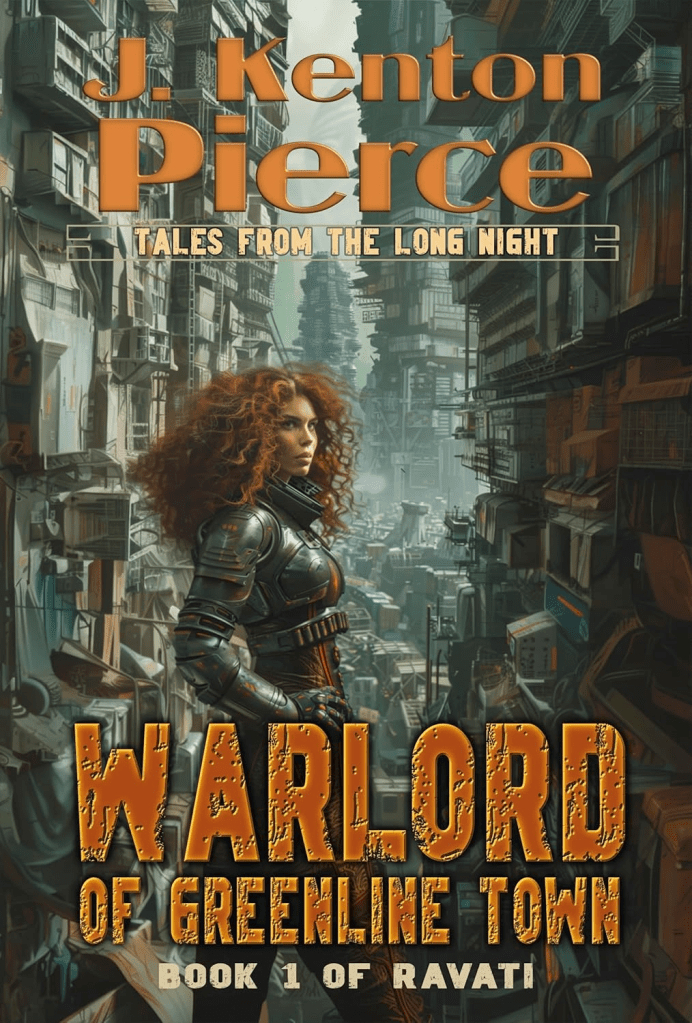
FROM J. KENTON PIERCE: A Kiss for Damocles (Tales From the Long Night Book 1)

A Kiss for Damocles follows the journey of Shaifennen Roehe, a young homesteader who is the right girl in the right place to serve as a catalyst in her world’s, and eventually, her civilization’s, restoration. She must adapt from merely struggling to survive in a harsh world as her simple homestead becomes a boomtown, and then the keystone of a restored colonial government.

Meanwhile, competing Townie politicians and merchant princes have other plans for Hesperides Colony’s future and take a very personal interest in her as she inadvertently kicks over a few of their apple carts. And all the while, sinister, hidden forces watch and calculate and a centuries-old shadow war comes to a head.

Shai’s universe is one filled with fallen empires, implacable war machines, lost civilizations, hostile xenos, the occasional ancient unspeakable horror, and she’s going to bring the ruckus to every corner of it.

FROM STANLEY WHEELER: Accidental Pirates: A Pirate & Dragon Adventure for Boys

Accidental Pirates: You don’t choose the adventure. Sometimes the adventure chooses you.
Two brothers. One flat tire. One mysterious cave.
What starts as a summer hike with Grandpa turns into the ultimate wrong turn—straight through a crack in the rock and into the Caribbean, 1770s style. Suddenly Chris and Kenny are dodging bloodthirsty pirates, outrunning razor-feathered dragonlings, and facing the fire-breathing Green Lady herself.
With only a pocketknife and a quick lesson in loading flintlock pistols, the boys must outwit Captain Ross and figure out how to get home again. Fortunately, they have an ally.
A rip-roaring, edge of your seats adventure for every boy who ever dreamed of swords, ships, and a chance to be the hero.

EDITED BY D. JASON FLEMING: Bourbon and Lead (Raconteur Press Anthologies)

The dames were trouble. I knew that the moment I saw them. But they knew exactly the siren song that would get me to follow.

“Dime Detective Stories,” one of them said.

“And you can pitch it to the scribblers any way you want,” the other purred.

Yeah. I was doomed from the start.

And that’s more or less how this anthology happened. It was held special for me to edit, because my love of the hardboiled school of writing is well known to my friends. But since noir has been covered six ways from Sunday in various RacPress anthos, I chose both to open up the concept a bit, and to reference the kinds of crime and adventure writing I especially love, but which are disreputable and disdained by the same academy that acknowledges (long after his death) the value of Raymond Chandler.

FROM NATHAN C. BRINDLE: I’m The Beautiful But Evil Space Princess Who Rules A Galactic Empire But Really Wants To Leave People Ruthlessly Alone!

Alice is the Imperial Princess Regnant of the Galactic Empire. At 22, she has been thrust into power after her father (the Emperor) and her two older brothers have all died in various ways. Her Imperial Chancellor, Lord Rupert, does everything he can to support her, but has somewhat different ideas about how the Empire should be run than did his late Emperor.

Alice has one major problem: She cannot be crowned Empress Regnant until she marries and produces an heir.

But Alice, being kept busy three days a week by interminable audiences with petitioners, and the rest of the week with what she terms “mostly busy work”, has no real way to meet young men — well, reasonably eligible young men, anyway, and of her own age — with whom she might eventually take up and form a household. And she chafes at the necessity of trying to rule, hands-on, an Empire so huge it cannot be truly ruled by any one person to begin with.

She just wants to leave people alone, as her father and his predecessors did for centuries.

Then, into her life walks the Crown Prince of a planet many, many parsecs away from the Capital Planet…and her life begins to take on a life of its own…

FROM JAY MAYNARD: Royal Crystal (The Crystal Therapy Chronicles)

A princess is breaking.
The crystal is her last chance.

Princess Helena of England has everything—status, duty, lineage.
What she lacks is the ability to feel anything at all.

Shattered by trauma only her family knows, Helena enters the Laminatrix Mental Hospital, where healing means surrendering mind and body to the seamless black suit and the silent depths of the crystal. Inside, she must confront the memories she has hidden from the world—and from herself.

At LMH, Dalton Ward has taken the white suit to understand the truth behind the magic he once defended in court. His transformation will force him to choose who he is when every illusion of control is stripped away.

And as Helena’s treatment pushes the boundaries of what the crystal was ever meant to do, LMH faces a question with national consequences:

Can crystal magic heal a princess…
or will it remake her into something the Crown never expected?

A story of trauma, duty, and rebirth—
Royal Crystal expands the Laminatrix world into its most powerful, emotional, and politically charged form yet.

FROM CAROLINE FURLONG: Stone and Sky (ExtraOrdinary Beasts Book 3)

They watch. They guard. They endure.

From ancient cathedrals to far-flung planets, gargoyles stand sentinel between the world of stone and the endless sky.

In Stone and Sky, discover tales where winged guardians wake, monsters find new shapes, and legends are reborn in the clash of magic and machinery. Inside these pages you’ll find fantasy, urban fantasy, and science fiction stories that prove gargoyles are more than carved stone—they are protectors, rebels, and sometimes, the greatest danger of all.

Step into the shadows where stone takes flight.

FROM JOHN BAILEY: Castellano, Maestro (The Fantasy Books)

In a quiet Central European village where the night belongs to peculiar guardians, one voice rises above all others—passionate, operatic, and utterly impossible to ignore.

Castellano is Bělov’s most celebrated nocturnal performer, a creature of artistic temperament and boundless ego whose serenades shake windows and test the patience of every sleeping soul. His rival, the massive and mysterious Lord Percy, prefers silence and solitude but is constantly drawn into confrontations with the village’s insufferable maestro.

When a plague threatens their territory, these bitter enemies must choose between rivalry and cooperation. Alongside Grace of the Chimney, Old-Mistress Milka, and a community of guardians who maintain the delicate balance between human settlement and wild nature, Castellano begins a journey from solo performer to reluctant team member—learning that true artistry might require harmonizing with others rather than drowning them out.

Told with romantic ambiguity that slowly gives way to delightful revelation, Castellano, Maestrois a tale of community, growth, and the surprising friendships that emerge when we set aside pride for the greater good. Perfect for readers who love stories where animals have rich interior lives, villages feel like characters themselves, and redemption comes not through grand gestures but through choosing, again and again, to be better than our worst impulses.

For fans of: Watership Down, The Wind in the Willows, Mrs. Frisby and the Rats of NIMH, and cozy literary fiction with anthropomorphic sensibilities.

FROM HOLLY CHISM: Gods and Monsters (Modern Gods Book 4)

Here there be dragons…again, damn it.

Deshayna has her sanity back, and forces older than the gods have granted her a new purpose. Chronos, his freedom restored, fights for his sanity, and with it, a purpose in helping Deshayna—now called Shay—with hers. The gods are starting to pull together more…and it’s about time.

Millennia after the last dragons to threaten human existence have been hunted down, they’ve started to reappear, hinting to the surviving gods that something more sinister appeared first: Tiamat.

Instead of a confrontation, though, the gods—major, minor, and genus loci—are drawn into a frustrating hunt for a predator that flees rather than attempting to strike.

FROM MARY CATELLI: The Princess Seeks Her Fortune

In a land where ten thousand fairy tales come true, Alissandra knows she is in one when an encounter with a strange woman gives her magical gifts, and another gives her sisters a curse.

And she knows that despite the prospects of enchantments, cursed dances, marvelous birds, and work as a scullery maid, it is wise of her to set out, and seek her fortune.

BY ROBERT ORMOND CASE REVIVED BY D. JASON FLEMING: The Rider From Hell (Annotated): The classic pulp western revenge novella


A gripping novel of outlaw revenge!They had heard, those Mexicans, of Gringo honor—and one at least, was willing to gamble that young Dal Givens would return with the many good American dollars for the release of his friend, John Thurston—who otherwise would die of dry rot and torture in the great new Federal prison of Carrizal!

  • This iktaPOP Media edition includes a new introduction giving historical and genre context to the novella.

FROM BLAKE SMITH: An American Thanksgiving

It is Thanksgiving Day, 1865, and Margaret Browne isn’t feeling very thankful. The war is over, and her grown-up sons have returned from the fighting, but her beloved husband remains absent, last seen a captive in a notorious prisoner-of-war camp. The Browne family muddles through their uncertain path, lost without their leader, but when everything begins to go wrong all at once, Margaret must hold together the farm and her family, and turn a disaster into a true day of thanks-giving.

FROM KAREN MYERS: Tales of Annwn – A Virginian in Elfland (The Hounds of Annwn Story Collections Book 1)

A Collection of Five Short Stories from The Hounds of Annwn.

The Call – A very young Rhian discovers her beast-sense and, with it, the call of a lost hound.

It’s not safe in the woods where cries for help can attract unwelcome attention, but two youngsters discover their courage in the teeth of necessity.

Under the Bough – Angharad hasn’t lived with anyone for hundreds of years, but now she is ready to tie the knot with George Talbot Traherne, the human who has entered the fae otherworld to serve as huntsman for the Wild Hunt. As soon as she can make up her mind, anyway.

George has been swept away by his new job and the people he has met, and by none more so than Angharad. But how can she value the short life of a human? And what will happen to her after he’s gone?

Night Hunt – When George Talbot Traherne goes night hunting for fox in Virginia, he learns about unworthy men from the old-timers drinking moonshine around the fire and makes his own choices.

Who could have anticipated that the same impulse that won him his old bluetick coonhound would lead him to his new wife and the hounds of Annwn? Every choice has a cost, he realizes, but never a regret.

Cariad – Luhedoc is off with his adopted nephew Benitoe to fetch horses for the Golden Cockerel Inn. He’s been reunited with his beloved Maëlys at last, but how can he fit into her capable life as an innkeeper? What use is he to her now, after all these years?

Luhedoc needs to relearn an important lesson about confidence.

The Empty Hills – George Talbot Traherne arranges a small tour of the local human world for his fae family and friends, hoping to share some of the sense of wonder he discovered when he encountered the fae otherworld.

He’s worried about discovery by other humans, but things don’t turn out quite the way he expects.

Vignettes by Luke, Mary Catelli and ‘Nother Mike.

So what’s a vignette? You might know them as flash fiction, or even just sketches. We will provide a prompt each Sunday that you can use directly (including it in your work) or just as an inspiration. You, in turn, will write about 50 words (yes, we are going for short shorts! Not even a Drabble 100 words, just half that!). Then post it! For an additional challenge, you can aim to make it exactly 50 words, if you like.

We recommend that if you have an original vignette, you post that as a new reply. If you are commenting on someone’s vignette, then post that as a reply to the vignette. Comments — this is writing practice, so comments should be aimed at helping someone be a better writer, not at crushing them. And since these are likely to be drafts, don’t jump up and down too hard on typos and grammar.

If you have questions, feel free to ask.

Your writing prompt this week is: PAINSTAKING

The Uncomfortable Truth

I have a lot of friends in the commentariat. And their being interesting and intelligent people, everything else being the same, I often share their takes on something or other. It saves me from writing a ton of stuff myself. (I mean, more than I write.)

So two nights ago I ended up passing on articles from two of my friends, which were BOTH on the same thing and alerted me to a push going on in the blogsphere which I think is — if not part of a lefty psyops. I don’t think it is in this case, because I don’t see the usual stronk accounts pushing it — profoundly stupid strategically (that’s the first point), profoundly blinkered (that’s the second point) and the first time I heard the guys sound like for real old men. Which is not so much a point — I’m sixty three. My friends are sometimes a little younger — but a point of irritation. They can BE old, sure, they shouldn’t sound it. Because sounding old is when you stop being heard. Also it prompted me — me! — to say “Okay, boomer” even though one of them is younger than I and I’m not a boomer except via the generation slowly annexing another year in the 90s.

Look, guys, let’s level up. I do absolutely get that talking trash about the younger generation is a privilege and pasttime of the old. It’s been recorded as far back as the Romans and frankly I think if we ever decipher some of the rock squiggles that MIGHT be writing, we’ll find “The younger generation has no pride. They wear their furs sewn not tied like G-d intended. And their mammoth hunting is a disgrace. No more do they chase the whole herd over a cliff. Instead it’s this poking at a young or sick mammoth with spear.”

However, we don’t live in Roman or pre-historic times. And while a lot of people still die around their sixties (or younger) as people did who were wealthy enough to eat well in older times, a lot of us can expect to kick around for twenty, thirty or forty more years.

That’s way to long to sit in a corner screaming at the young. By any measure of past ability to function/move around, work, you are young compared to your 30 year old ancestors 200 years ago, even in your sixties. So stop sounding like oldsters sucking your gums by the fire.

But that’s an aesthetic concern. I might have let my hair go white (I earned it. Also dye is a pain) but I’m not about to stop trying to create new stuff and understand the world we now live in. (Part of the reason for the songs and the poking at clankers is that if time comes that clankers do my job, I intend to use the to produce movies and tell my stories ANYWAY.)

And that’s the second point above, but the point I’d like to start with: the world we live in.

I do enjoy as much as anyone else a good chest thumping and a declaration that “We did it uphill both ways.” It’s cute and amusing. And, yeah, I don’t like it at all since I heard this from the boomers (the real ones) as I hit the worst job market in generations in the mid eighties.

I have my own stories of “uphill both ways” and because I’m a story teller I can make it amusing and funny. Or at least I hope so. Part of the Dyce mysteries is my selling such stories. While I was never a single mom and I’m nowhere as colorful as Dyce Dare, (On sale for 99c Nov. 29.) but I furnished our first house from discards and work. (And sold the stuff when we moved. For enough to buy a car that would make it to Colorado from North Carolina. And for three years after.) And yes, there were the weeks of living on pancakes so we could buy a single paperback. We’ll elide the years of reading exclusively from discard book racks which gave me a profound knowledge of gothic romances and westerns not to mention early 20th century science.

Now I want you to sit back and consider: the kids have it worse.

No, stop. Just stop right there. I know you’re already pouring lighter fluid on your heads and running around in circles screaming about expensive phones and designer coffee and and and.

Bullshit!

No. You heard me. Do I need to say it louder for the back row? Then fine. BULLSHIT. BULLSHIT on stilts with bullshit sprinkles.

You can put your hair out and wash out that lighter fluid. You didn’t have much hair to begin with. And you can take your little horse out of the rain. And then you can LISTEN.

Yes, you do hear the regular whines from precious flakes who cannot — cannot — go without their triple ice soy lattes. Ignore them. I don’t know what percentage of the population they are, but the nepo babies have always been with us and will always be with us. As are the ones that waste their money. Newsflash, no the new generation (and new is pushing it, since both my kids and their friends are in their thirties though some barely) isn’t going to “If only everyone just.” AND YES they do have their share of wastrels and they’re the loudest. Aren’t they always?

However, I know a good number of young people and most of them DO NOT buy fancy designer coffees any more than we do. (And some do it way less.) The only time they indulge is when parents (yeah, us) give them a gift card or in lieu of going out to eat for a date night.

They do, all of them, have smart phones. Guys, stop yelling about smart phones. It makes you sound like you’re eighty. I don’t know what the hell you were doing ten to twenty years ago. I know some of you are retired and CAN have a flip phone. My dad has a flip phone too. (Dan will forever be favorite son in law — he’s the only one! — because he figured out how to schedule meds on it, so dad doesn’t space them and end up in ER.) I don’t. I got my first smart phone ten years ago, because it was time. My kids got theirs a year earlier. (We pay for them, yes, because they’re in — for real — business with us. So we can.) Why? Well, because they needed it for school.

I’ll wait while you put your hair out again. It’s cute really to be that exercised over the fact things have changed.

Look, study groups coordinate by text, which is super-hard if you pay-per-text (and more expensive too.) And professors are fond of sending out things to be completed on the phone. If that were all, they would have devised work arounds. The problem is that professors no longer give people time to copy from the board. They write on the board or flash the slide, and expect the students to take pictures.

Now I don’t know, haven’t asked every one of their friend group (some of them become unable to talk in my presence anyway. It’s cute. I’m not used to being a revered elder) but I suspect the same applies to various work things.

Heaven and hell, people, we need the stupid smart phones for things like digital discounts in the stores, and taking pictures of damaged stuff that we’re not returning but want refunded. (What possessed Amazon to package molasses bottles in a paper envelope with no padding? Sometimes one wonders.)

And yes, it might be worth to not have one if it were just us, because we can nudge a flip phone to do at least some of the stuff. But now you’re supposed to pre-check online for your doctor appointment. Medication? You review it online. And no, I’m not going through the gymnastics Dan went through to schedule Dan’s meds. I’m getting old. The time I had I’d rather spend writing than fighting tech to save ultimately once I pay for all the texts (I’m deaf, more and more every year) maybe $10 a month.

The kids? They kind of have more time than money. Except truly they don’t have much of either.

Let me explain: One of my friends was talking about how there are houses available for 700k and plenty of young people buy them. I’m sure they do. Back then we had friends buying million dollar homes, too. Mostly nepo babies who lucked or managed to claw into highly lucrative jobs. And usually both.

I’ve never yet been able to afford a 700k house. (Though we came close for a shining moment. The house had, of course, serious problems.)

Now I realize it’s different parts of the country, etc. And yes, in some parts there are homes for $250k that are livable, if your kid is lucky enough to be able to work remote. (One of mine does.)

But the average salary for young people is around 50k in those areas. And out of that comes the Obamacare insurance. Which by your thirties you start to need. And most of them are paying on student loans that usually start at 40k and can be much, much higher.

Yes, there are young people making 100k, but the job market is more f*cked for them than it was in 1984. No, trust me on this. Somewhere along the line America also managed to go from “knowing someone is nice to give you a leg up” to “you have to know someone to get a job.” Yes, I know why. It was things like #metoo and other crazy stuff that makes employers scared to hire strangers. BUT IT’S STILL A MAJOR PROBLEM. You’re limited to the people you know. And if your parents aren’t very sociable, you’re going to get hind teat. And heaven help people like Dan and I were, far away from both families, both in fields our parents didn’t understand much less have a foothold in. Pity them. They deserve it.

On top of which we — and by we I mean everyone from 1950 on. I’m certainly not taking personal ownership of this f*ck up, since I’ve been fighting it as hard as I can — managed to depth bomb the relationship between the sexes.

This was already going on in my day, okay? Any woman who had good grades in high school much less college was mocked and derided if she wanted to be a “wife and mother.” This was already so bad by the eighties that most of us who did very much want to be wives and mothers didn’t dare talk about it. And that people assumed my drive and very real work to be a published author was just cover to make it sound like I had a career. Because a lot of women were doing that.

Now? Ten times worse. Every woman has been told and convinced and harangued that her highest purpose is to be a corporate drone. And not only has every boy been indoctrinated that he’s to blame for everything, he’s also been persuaded that every woman hates him.

Pretend you’re in your twenties and thirties, approaching an attractive stranger with that in your head. Go on. No, they’re not forming lasting relationships at the level we were. (And my relationship was already effed. Dan and I used to joke that we had a trial marriage like everyone else. It was just with each other. (We had two wedding ceremonies, so…)) Which makes thinking of the future, applying themselves and saving much harder. PARTICULARLY for males. Males seem to need to work for SOMEONE’s future, not theirs. They need to be protectors and providers.

Oh, on top of that, yes, indeed, rents have gone through the roof. Why? Well, 2020 and deferred maintenance. The landlords have to make up for that. And they need the money to. But rents are truly outrageous, compared to ours. Even in the hinterlands.

There’s other stuff: Those beater cars we bought? Even if they could find them — they can’t, because of Cash for Clunkers, which mostly took functional, cheap used cars off the road — they can’t keep them running like we did. I mean Dan kicked, prayed and seduced total wrecks into working for ten years or so with the application of a few hours a weekend cussing and sweating in our garage (and before that our driveway.) At the same time I was patching dry wall and painting and replacing flooring in the house, yes.

The problem is most cars today you can’t fix unless you have a computer that talks to the innards. And even then, you often need proprietary tools. It’s not easy or cheap to fix cars, and mostly you need to take it to expensive — and often larcenous — professionals.

And houses… well…. they will be wrecks at the level they can afford. Probably more wrecked than ours were, because a lot of people have lacked the money to fix them and passing them on to the next buyer. I know because I know how much we sank into the current house, and all the others we passed on that were more obviously wrecks. And this was not that cheap a house.

The problem being with their other obligations they can barely afford a mortgage, much less the fixes.

Guys, in the early eighties we had our butt in a trap, and kept getting told we were lazy and stupid.

Trust me when I say the kids are in much, much worse straits. No amount of your chest-pounding at them is going to make them do what’s impossible.

Take the “I worked three jobs retail and slept on alternate weekends.” That’s super-cute. Except these days you can’t. Obamacare scared companies of going over 30 hours consistently for part-time or unskilled or even beginning help. This mean they adopted “management by computer.” And this is now being used by less than brilliant (I have other words. Oh, I have other words.) people to schedule by whim. They will treat the employees like widgets, schedule them randomly, no consistent schedule. And drop them if they “miss” coming in more than twice when called out of the blue.

Yes, retail employees ARE flaky. I worked retail in the eighties, and we had people who came in a couple of times and then never again, not even to pick up their check! I’m sure that hasn’t improved.

But management by computer makes it impossible to have two jobs, much less three.

Also not to join in in screaming at boomers, because this is one of those demographic things that they can’t help: boomers are healthier than past generations. A substantial number of them are still working. That means, though that my generation didn’t move up. Many of us are still “the kid” at work, in our fifties and sixties. And the real kids? They’re beginners, even when they’re not. There’s no room to move up. It’s a side effect of longevity.

The kids are — most of them — in a much worse position than we were at their age. And the things we did to get around it aren’t even legal in this ridiculously over-regulated work.

Sure, the snow flakes complain about the price of lattes. But be aware there’s any number who aren’t screaming and are quietly plugging away and doing the best they can.

What is the point of screaming at the entire generation? Even if they were the wastrels of your imagination, what are you, stupid?

No amount of screaming would make them walk uphill both ways while leading a horse or whatever you think would be a simpler life. What it will do, though, is build immovable resentment. Which honestly you’ll deserve. (But I don’t.)

I’m not going to do the math for you, but even the snow flakes buying lattes every day, if they saved every cent of that, would not be able to get a house much sooner. Maybe a month?

And as for “but they should not have any pleasures” PFUI. Even we went to movies and went out to eat on occasion. Their pleasures are different but adjusting for inflation they are probably cheaper. (That’s one thing that has genuinely gone down in price. I can read a lot more now for cheaper than I did back then.)

People don’t live of promises and determination. That’s people. Again: Not in the history of ever has “everyone just.” And the young people are just as human as we were. Sometimes they need something to keep up their mood. And sometimes they just want it. No one has perfect will power, ever. (I will say the kids I know seem to have more than our generation, though. I remember.)

Stop telling them to buy clunkers, ditch their phones, not buy games or coffee. One is impossible, the other is inadvisable, and the last two are not universal expenses, and if they were they might be what keeps someone going day to day. When I was about their age I came across Heinlein’s “Budget luxuries first” and it was both a revelation and might have saved my sanity. And Heinlein was — coff — a little older than I and had already evolved that strategy when he was young.

They’re complaining life is too expensive, because it is. Their going is harder than it was for us.

If you want to scream at them, scream at them to start a business on the side. And then be ready to put your money or your help where your mouth is and at the very least GUIDE them in doing just that. Because that’s one way to beat scheduling by computer. And introduce nice boys to nice girls. Having two incomes helps, and maybe we’ll get lucky and they’ll have kids.

That’s constructive screaming. Telling them to have nothing and love it is leftist screaming.

Don’t be a leftist. Not even once.

Be your age, which I know is not mid-nineties. Learn how tough it is for the younger people.

Help if you can. And if you can’t, stop heaping coals of fire on their heads.

Enough already.