Terry Pratchett, in one of his books (I want to say it was in the Tiffany Aching series) said that the secret to success in life was to be yourself as hard as you could.
I find myself wholeheartedly agreeing with it, which is odd in a way.
Why is it odd? Well, because I’m the person who says things like “Don’t chase your passion” and “Don’t take that degree in creative writing, take a useful degree” and “First take care of yourself and those who depend on you.”
Mind you, that’s not how my life works. Every time I try to be responsible and do the things that I’m supposed to do, it backfires on me wildly. Every time I do the wildly inadvisable: say marry a foreigner and move across the ocean with no plan other than “we’ll figure it out”, or have a kid when we can barely support one, or buy a house that is deeply distressed and trusting I’ll figure out how to fix it, or set out to be a writer in my third language … it turns out all right. On the other hand, when I take the degree that will be guaranteed to get me a job… I marry a foreigner and render my credentials moot. When I buy the house that’s a sure thing to appreciate… cover your eyes, because I don’t want to revisit that debacle. And on and on–
But that’s just — as my kids put it — I have luck that beats the odds. Not good or bad. Just highly improbable. So the sure things flop, but the wild risks pay off. That’s fine. No, it’s not. I’m a nervibore, living on my nerves, but then again after sixty two years if things suddenly became calm, I wouldn’t know what to do. (Though I could do with fewer emergencies. They do seem to be slowing down. Kind of.)
I do think when you’re twenty or so and you decide you want to follow your passion being a living statue or playing tiddly winks on the international stage, you’re not likely to find yourself. Well, not immediately. Somewhere between failing, finding out that even succeeding wouldn’t be the thing you would want and eating your millionth meal of cheap ramen, you’re going to find you really have a vocation for industrial design. Or 3-D printing the ideal tiddly winks and selling them to professional players.
Mostly what’s wrong with pursuing your passion when you’re young and so green that certain kinds of lettuce think you’re their kin, is that you don’t yet know what your passion is.
This comes mostly from the fact that when you’re young — and these days that can extend to your early thirties — you have no idea how the world works. So what you think you will really do is often not what the profession actually is. Partly because a lot of what people actually do in the world and how fields actually work are not only not widely known, but often — these days, and I suspect in every time, TBF — work in the most backassward and confusing way possible.
So you planned on being the world’s greatest tiddly wink player, but find they only want skinny blondes for the cameras, while you’re a zaftig brunette. And then…. you tumble. And eventually you figure out who you are. And how to be yourself as hard as you can.
You start out with the idea you should be good at a ton of things you were never good at and can’t even begin to do. Like, you know, I remember my life being destroyed over my inability to jump rope. Or my inability to memorize chemical formulas. Or–
But none of that matters. Because I eventually found my talents, and those things did not matter in the slightest.
So, be yourself as hard as we can, but first find out who you are and where you fit in. So start with something you can do to begin with, and then learn to tumble with circumstances.
Here’s the thing though: when you find out who you are, and what you do well? It’s going to take courage. It’s not just settling into the easiest thing.
At some point you’re going to find out who you are and what you really want to do. And I can almost guarantee taking that step is going to scare you spitless.
Do it anyway. Step out.
You might be on thin air. And you might fall. But at least you’ll have tried.
I’m not a hundred percent sure what’s happening, but I’ve had this sense building, building that when Trump actually made it past inauguration and started getting briefings — was he getting them before the election? I know he was supposed to, but did he? — he became highly alarmed.
Now, understand that we’re trying to read tea leaves. Some of this we have no way of knowing, and frankly it’s a good thing we don’t know. Because we can’t do anything about it, and worrying about it will just make us ill and solve nothing.
And some when we try to see the shape of them, we realize that we can’t second guess the decisions this administration is making. And that burns me up something terrible, because I like trusting but verifying and governments are dangerous things that we should always keep an eye on.
But I have a feeling that something hit him really big, and from the … shape of things, including his trying to end two wars in a hurry and playing mad tariff chess and ignoring a couple of other things that I’d expect him to be all over? … I think it’s China.
First of all, let me point out I’m not particularly worried about China’s conventional abilities, just like — and I do know all of you are absolutely sure I’m a crazy optimist on this — I’m not that worried about Russia or… anyone in the conventional sense. Yes, yes, some or all of those might have a few functioning nukes. It’s possible. But they know what our retaliation will look like, and it takes a level of insanity even totalitarian regimes don’t have to challenge us.
But… China doesn’t really do conventional unless they know they have massive superiority.
And they have so many other ways to get us. I still don’t know what the whole spy balloon was about. And no, neither do you. But then there’s stuff that we know is there and makes me scared sh*tless.
Like the fact that they seem to be addicted to a My Little Genetics Kit of their own when it comes to illnesses. I don’t think that it’s as easy or that they’re as capable of creating lethal viruses as they think. But– They can make things uncomfortable and difficult at very bad times.
More worrisome is the back switches and various other backdoors they have in literally all of our electronics. And what is in our medicines. And everything else that China has been putting its fingers into.
In the seventies Heinlein wrote up a thing saying we’d bear any cost, etc. for the sake of bringing up our nuclear arsenal to USSR’s level. That might have been uneeded and misguided — maybe — but it was the fact that we ramped up our investment in the cold war that broke the USSR, so–
Right now, I want you to keep in mind how vulnerable we are to China, because of how stupidly we gave them everything to produce.
And I want you to realize that any pain we bear is worth it to decouple from that slave-state. Any pain short of death of everyone is worth it.
It’s not just what they can do to us at a whim — do you remember the pagers Israel used? Are you sure ours aren’t mined? No? Neither am I — it’s what their culture is doing to ours.
No, I don’t mean their “ancient culture” though even that, depends what parts. They have a tradition of treating individual humans like dirt. But their culture as it is now, with the communist implant?
They are destroying us. Part of the reason all our companies are such sh*tshows when it comes to how they treat employees is because it’s easier and cheaper to buy Chinesium. Yes, they steal our stuff, and the stuff they make isn’t very good, and we have to take it on faith they’re putting in what they say they’re putting in. And sure, we know they use slaves and political prisoners and everyone in the most unethical way possible. But they sure are cheap, aren’t they? And if a company is using them, it makes a lot more money than everyone else around. And so, the next company starts using it, and then the next. And the next.
Even if they wouldn’t use every bit of what they have against us — and they will — they are destroying our culture, our industry, our ability to innovate and survive, because slaves are cheaper to buy. Yes, sure, their product is never as good, but they’re cheaper.
We need to decouple from China. We need to decouple from China hard. It’s going to hurt. But it is absolutely worth it.
Our survival depends on it.
UPDATE: If it needs to be said — and it should not, but I remember the time an arrant idiot thought I was being racist towards the Chinese by using CHICOM, aka the State Dept. abbreviation for Chinese communist, and therefore, to prevent such idiots — for disambiguation: I have nothing against the Chinese people. In fact, I know I have several first, second and third generation Chinese immigrant fans because every time I do one of these posts they email me to thank me. I do however loathe and despise their regime, which is one in a chain of several exploitative and horrifying regimes they’ve suffered throughout their long history. Chinese people away from China and set free tend to do better than anyone else. Their current affliction combines the worst of their previous bad regimes and the worst Western regimes: communism. I wish the people of China the best. I do realize on the way there there will be pain for both nations. But we must decouple from them before their evil regime does its worst or we shall both be lost.
If you wish to send us books for next week’s promo,please email to bookpimping at outlook dot com. If you feel a need to re-promo the same book do so no more than once every six months(unless you’re me or my relative. Deal.) One book per author per week. Amazon links only. Oh, yeah, by clicking through and buying (anything, actually) through one of the links below, you will at no cost to you be giving a portion of your purchase to support ATH through our associates number. A COMMISSION IS EARNED FROM EACH PURCHASE.*Note that I haven’t read most of these books (my reading is eclectic and “craving led”,) and apply the usual cautions to buying. I reserve the right not to run any submission, if cover, blurb or anything else made me decide not to, at my sole discretion.– SAH
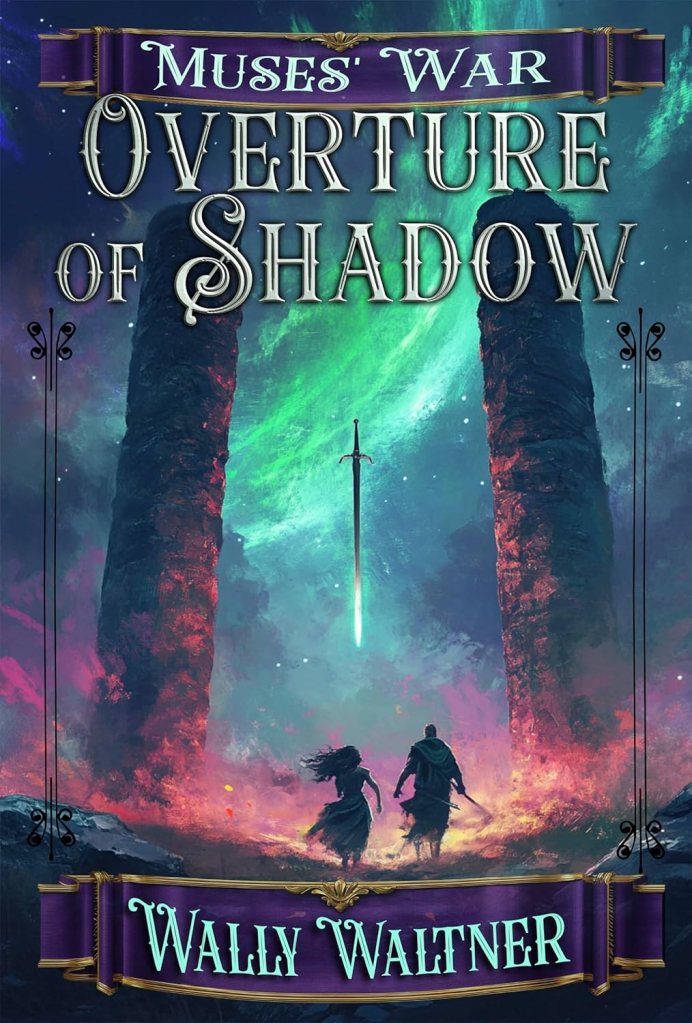
Light reveals, shadow conceals. What we illuminate, we become.
In Breheimen, artisans and craftsmen aren’t just respected. They are revered. The Muse-touched are individuals whose creativity seems divinely inspired, capable of conjuring beauty so profound it borders on the mythical. Their gifts shape culture, hold political sway, and define the kingdom’s identity—the very spirit of the realm.
But when Master Bard Dorian Silversong is summoned to the capital by his mentor, he walks into a world unraveling. That same mentor, the head of the prestigious Collegium Bardica, has been murdered. Muse-touched artisans are vanishing. And at the heart of it all lies a web of courtly machinations and unseen forces determined to twist the bond between creator and creation for malevolent ends.
What if the power to create was the greatest one of all?
The planet Sanddoom. Desert exile world for most of Earth’s Radical Islamic Fundamentalists. Run by Mad Mullahs, who repay the favor of American leniency by creating a world of slavery, insurgency, and export of dangerous drugs via their own outmigrating people, headed for other colony planets.
The first two are covered by a hands-off agreement with the Americans.
The last, not so much. And Captain Delaney Wolff Fox’s special assignments fire team, FTSA1, aren’t going to stand for it. Their job is to hunt down and eliminate
Fresh out of college, Evelyn Alexander’s first order of business was finding a place to live. One she could afford on her small inheritance before her job started. None of the local rental agencies had anything in her price range, but…she found a small Victorian house for sale, the only one mostly untouched in a decaying neighborhood of subdivided rental houses.
Complete with a ghost. A very attractive ghost. A very attractive ghost with a strong dislike of the idea of anyone changing his house. So, of course, she bought it. A cranky ghost for a roommate was still a better option than the tiny studio with criminal neighbors.
Between working to restore her new house, embezzlement at work and a murder next door, Evelyn has her hands full. As she works to get on her feet as a productive adult (and not fall in love with a ghost she can’t have), the problems start to snowball. And it’s only compounded by learning that her house has far more secrets than just a single, cranky (attractive) ghost…
Ten years ago the Savients took over Niban, forcing the independent inhabitants into poverty and despair. Bass White saw the careless cruelty of the Savients kill his mother and his father. When a resistance cell is discovered in his city bloc, the Savients seek to make everyone pay.
With his wife Amie, Bass races into the caverns to escape the Savients’ brutal enforcers: the Atrasai. The couple barely make it to the limits of known territory outside their underground city, however, before the Atrasai catch up with them. It would take a miracle to save them…
…or a combat medic robot.
Join Bass and Amie in this sci-fi story of healing, hope, and wonder. After a decade of fear and pain, even a little light can bring out the best in man and machine. But will the best be enough to heal?
Once, they were hated and hunted by mage hunters and Plain folk alike. Now, former bounty hunters turned renegade mages Silas and Lainie Vendine finally have the life they dreamed of – a home and ranch of their own where they can live in peace and raise their family, and the friendship and respect of their non-magical neighbors.
When a company from across the western sea comes to Prairie Wells, bringing marvelous new inventions, Silas and Lainie figure it only means more prosperous times ahead for the town and for them – until an old and vicious hatred of mages rears its head.
As troubles stirred by unseen enemies divide the town, many of Silas and Lainie’s neighbors turn on them. When danger strikes at the heart of their home and family, Silas and Lainie must fight to protect everything they love, everything they’ve worked for, before it’s all destroyed.
If you love fantasy filled with romance and adventure in a unique setting, come join Silas and Lainie Vendine in this new tale from the Wildings. Mages’ Home is the first book of Defenders of the Wildings, a follow-up series to the epic romantic fantasy-western series Daughter of the Wildings. It is a self-contained series and can be enjoyed even if you haven’t read Daughter of the Wildings.
Contains language, violence, and mild sensual content.
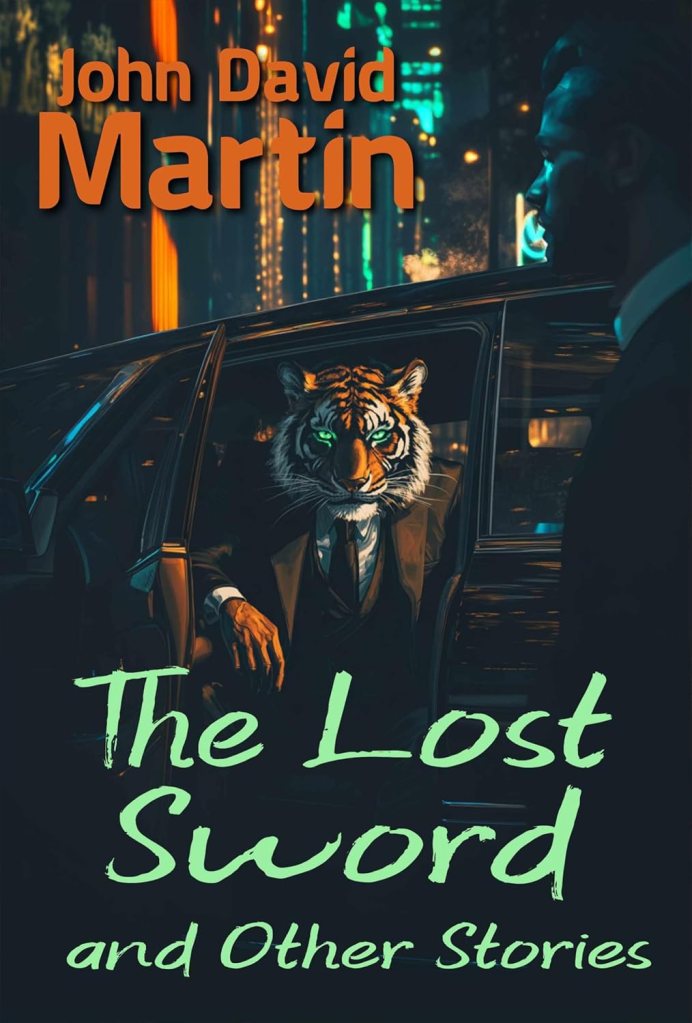
Jared Thorne: A para-human detective and his dryad wife hunting for a legendary lost sword in a multi-dimensional city. Eysteinn Bjarnarson: A descendant of the viking who settled North America fighting to win the love of the town beauty. His only opposition? A monster of Indigenous Canadian legend and…her father. Captain Faust of the North American Marine Corps: A descendant of one Dr. Johannes Faust who learns some deals are heriditary. But can they be re-written? Milo “Wolfkiller” Patel: A teenage bullrider on an alien world facing the challenge of his young career. Pawel and Tamar: Newlywed asteroid miners whose wedding cruise from the trans-Martian orbit out to the belt turns deadly. These are the characters whose stories I have faithfully recorded for you here.
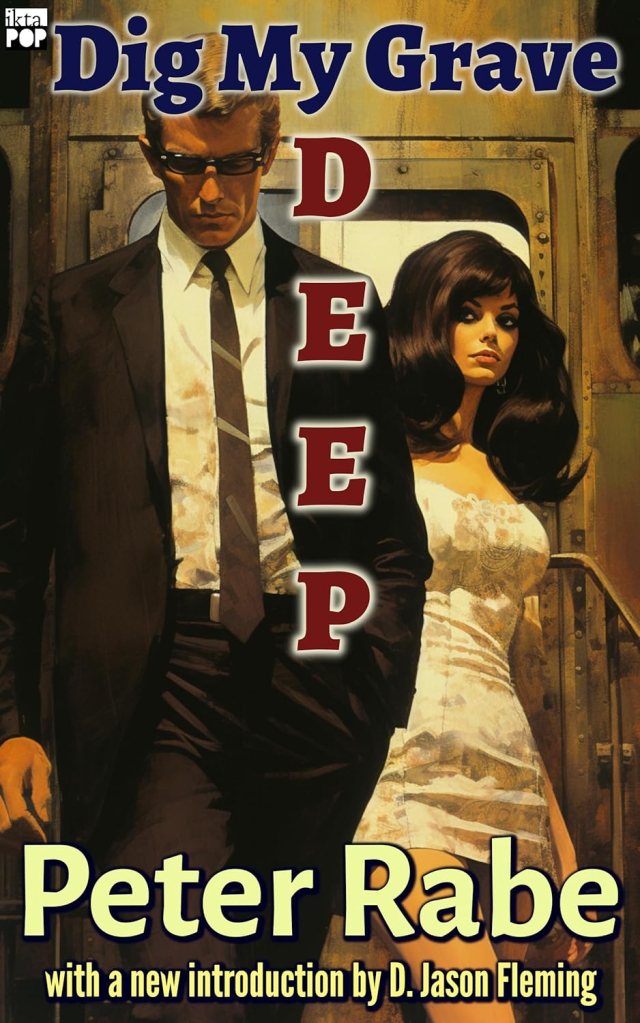
Danny Port wanted out. Being the right hand man to the boss of a political machine in a second rate city was no longer interesting, let alone exciting. But Boss Stoker wanted him to stay. And Stoker’s main competition, head of the local Reform Party Bellamy, wants him to switch teams. And nobody, but nobody, is willing to let him leave. Worst of all, every one of them knows about Shelly, and some of them even know what she means to Port.
This iktaPOP Media edition has a new introduction giving the book genre and historical context.
After a bold but costly raid, Morgan captured Hillman’s ‘Comrade Father.’
With him in custody, the war will soon be over… …but the real challenge has just begun.
Convincing the rest of Hillman’s Navy to stand down will be the easy part. Healing the deep scars left by the war will be much harder. Between the righteous fury of Parlon’s people to the bitter divide between Hillman’s elite and the miners trapped below, revenge seems far more likely an outcome than reconciliation.
Can Morgan help her new home and her homeworld heal?
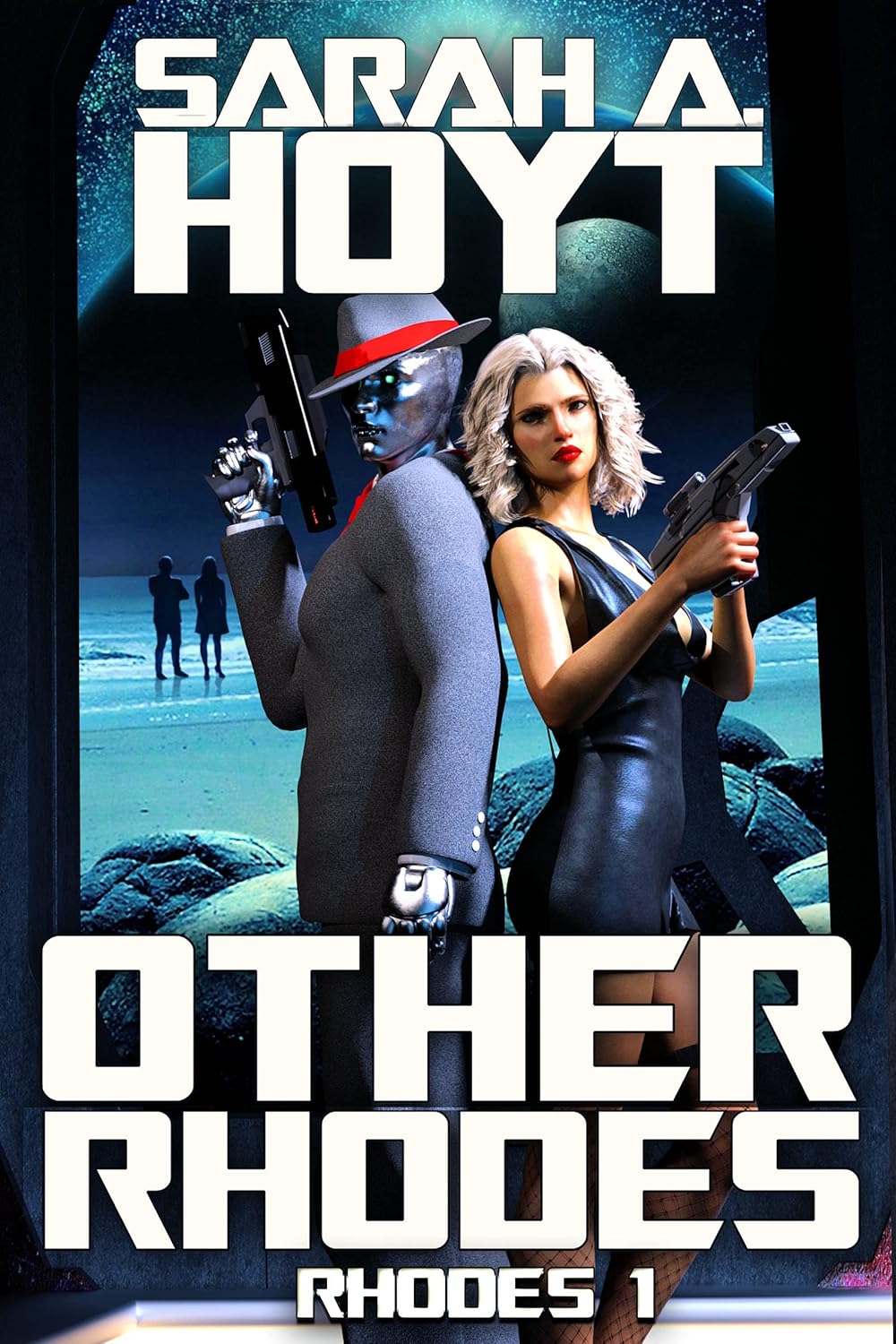
Lilly Gilden has a half-crazed cyborg in her airlock who thinks he’s Nick Rhodes, a fictional 20th Century detective. If she doesn’t report him for destruction, she’s guilty of a capital crime.
But with her husband missing, she’ll use every clue the cyborg holds, and his detective abilities, to solve the crime her husband was investigating when he disappeared.
With the help of a journalist who is more than he seems, Lilly will risk everything to plunge into the interstellar underworld and bring the love of her life home!
Vignettes by Luke, Mary Catelli and ‘Nother Mike.
So what’s a vignette? You might know them as flash fiction, or even just sketches. We will provide a prompt each Sunday that you can use directly (including it in your work) or just as an inspiration. You, in turn, will write about 50 words (yes, we are going for short shorts! Not even a Drabble 100 words, just half that!). Then post it! For an additional challenge, you can aim to make it exactly 50 words, if you like.
We recommend that if you have an original vignette, you post that as a new reply. If you are commenting on someone’s vignette, then post that as a reply to the vignette. Comments — this is writing practice, so comments should be aimed at helping someone be a better writer, not at crushing them. And since these are likely to be drafts, don’t jump up and down too hard on typos and grammar.
My husband has a Mike Rowe habit. Normally this doesn’t affect me at all, even though we share an office. If I’m writing, I put headphones on and do writing, which is fine.
However, sometimes I’m doing non-word-things, like redoing covers or fixing typesetting issues, or whatever. Which means I don’t have the headphones on.
Normally I also don’t pay any attention to whatever is going on in Mike Rowe’s world.
Note in general he’s either fairly anodyne or says things I largely agree with. I mean being a a writer in a time when breaking in and staying employed demanded a lot of money involved a lot of work. And having written things that I had not the slightest interest in, so I know to bring my passion along, etc.
In fact, I agree with most of the SWEAT pledge. Most? Well….
Take rule 9:
Sigh. He’s missing one very important thing. Well, two. One of them is emblematic of the biggest issue I have with a repeated theme in his talks where they touch on our outsourcing to China. The other, the “library cards are free” thing it just makes me giggle and wonder if he was preserved in amber.
So, we’ll go after the first one, first, then continue to the other which will roll us into the reason I’m writing this post. (Because he annoyed me THAT much and here, at According to Hoyt we believe in punching UP because punching DOWN is for suckers.)
So, the library cards are indeed free, Mr. Rowe. They are also largely useless. Your not revising that point on the pledge makes me wonder if you’ve gone into a library in the last … 20 years?
Because not only do libraries increasingly not have any books, but the books are increasingly not useful at all. I say this as a writer who used to use the library extensively for research and then suddenly 20 years ago found it less useful, and then eventually — six years ago? — couldn’t find anything to do real research on. Craft books, sure. Videos, sure. Music, sure. I hear some places lend out kitchen equipment and tools. But books? Useful books for an education? Pah.
While an internet connection isn’t free, you’re more likely to find useful things to learn, from household repair to how to build things on youtube. And if you’re careful an internet connection can be free.
The second issue I have with that part of the pledge is more directly related to the follow up — though the fact he seems to be TOTALLY out of touch with the times and common people’s lives (like those who have gone to libraries) also comes into it — is that he doesn’t quite seem to connect with the fact that most people who pay for an “education” aren’t paying to LEARN. They’re paying for a certificate. Because without the magic sheep’s skin, you can’t get a job, even as a clerk.
Okay, now to roll into the part that made me furious: twice!
The first time I heard him say this, he was talking about this was on his just talking about how we’re too dependent on H1B visas — agreed. ABSOLUTELY agreed — and then he smoothly slides into how the problem is that Americans don’t want to work, so we absolutely need all these H1Bs and illegals.
As proof he comes up with various surveys; how many young men have given up on even finding work. AND brings up Obama’s “shovel ready jobs” and then says, straight up that this failed because no one wanted to or was ready to do the work.
At that time, I was doing something under time pressure and I yelled at bit about how “I was alive at that time, Mike. That’s not WHAT HAPPENED!” but I let it go, on the understanding that everyone is allowed to be stupid once.
Then yesterday I was doing some needed graphics work, and too sick to do writing, Dan had a program on where a guest was exposing the true horrors of China, from slave labor camps, to transplants that take organs of living political prisoners, to–
And again, Mike Rowe comes out with how he talks to all these people who are contracting jobs to China, and while he deplores this, it’s not entirely their fault, because Americans JUST don’t want to work. Look at Obama’s shovel ready jobs, and how he got no takers, so his stimulus did not work, because Americans are unprepared to work, and complete layabouts. (my term, but it was implied in what he was saying.)
This is when I hit the roof. And I said I was going to write about it. I don’t care if he never reads it, but I’m sick and tired of this meme.
I honestly don’t understand how he doesn’t know that Obama’s “shovel ready” jobs were vaporware. Everyone even vaguely aware at the time KNEW that.
This was found on a cursory look through the internet. I remember other issues with “shovel ready” including that apparently it couldn’t exclude… pin collar jobs.
In other words, Obama scam that doesn’t say anything about Americans interest in working.
For THAT I’ll point out to 2019, before the lockdowns, when the economy was heating up. People who had been “out of the job market” for various reasons, from people who had criminal records, to people very young and very old were suddenly working. We all saw them, at restaurants and grocery stores, and pretty much everywhere.
Why? Because there were jobs, the job market was tight and employers weren’t being picky.
Then of course, we got the open border, and people that can easily be used and abused at will and can’t complain, and we’re back to “Americans” Particularly males, somehow. “Just want to play games in their parents’ basements.”
Well, while I understand that every generation has layabouts, and that complaining about the young has been the pasttime of old people since there have been people (the theory is that all the screaming increases their circulation and substitutes for exercise) I’ve had enough of this abusive myth.
Americans, even young Americans, aren’t lazier or less prepared than anyone else. As horrible as our education is, people keep learning anyway. Ten years out of school, unless captured by the diploma factories, people have acquired skills. And most people — not the idiots talking about how much work is bad because capitalism — are willing to and want to work. As proven by the hot labor market at the end of 2019. By the fact that Americans have voted three times for the guy who promised jobs, not handouts, and frankly by getting out there and looking around.
So, why do companies “need” to contract to China or get H1B Visas?
Frankly because companies want to get work cheaper and they want to be able to have very stupid managers.
Stupid managers? Sure. Managers who want to set schedule by computer and notify workers at the last minute, which makes it impossible for people to work two jobs or even have time off for medical appointments or school. Stupid managers? Sure. Managers who insist people have to come into the office to do work that’s easily and more cheaply done from home. Stupid managers? Sure. Managers who prefer to hire illegals at wages too low to live off of, but can do it because the border is open and the government is giving welfare and health care to illegals.
All of this is objectively stupid. It’s short term gain for long term pain. None of it is sustainable, and while it produces a bump on the profit line, overtime it destroys industries, the country and, yeah, people.
So faced with impossible situations some people — particularly young men who have been abused and marginalized from kindergarten on — give up. “Staying in the basement and playing games” is fairly typical depression behavior.
And then the abusers turn around and say “but we have to contract with the slavers and sellers of human parts. If we don’t no one will do the work.”
It’s time to stop repeating their lies.
You want to yell at the young? Do. They dress funny. Their music is weird. And they keep telling me there’s certain words I shouldn’t use because they are “offensive.” Which means they’re also namby pamby. (Ah!)
But do not pile on on the side of the abusers who are trying to justify their abuses.
Americans — young and old — want to work. And are a more creative and hungry work force than any abroad. No, not the slaves of China, and not the imported and often rather desperate workforce they brought here.
Americans will step up and work, if the jobs are there, and if companies don’t have cheats that allow them to exploit people.
The whole “But we don’t have a TRAINED workforce” is nonsense too. Education in China is not what we’d call education. And most people are objectively less educated. Yes, kids picked to show off certain skills are better. I for one remember the Soviet and East German athletes and how good they were. Because that’s all they did, and they were raised for show. Grow up.
Now, can Americans work as cheaply as enslaved political prisoners or literally indentured servants in China?
Well, no.
On the other hand, they won’t install back-door switches on our infrastructure critical hardware. They won’t sell our trade secrets. And they (probably) won’t go to war with the country.
This doesn’t mean companies can’t get the work done cheaply. It’s time to bite the bullet and invest in automation. More than time.
And it’s time for management that doesn’t eat the seed corn and does invest in the future.
It’s time, in other words, to enable Americans to work and stop selling them vaporware and guilt.
And Mike Rowe as many good things as he says and does should be ashamed for propagating the myth that you can’t find good workers in America, and for aiding and abetting abusers and sucky managers.
(Sarah got attacked by probably pollen, possibly a virus, and the weirdest but maybe most effective unrequested tech support personal–Indy now fixes computer hardware, and said I should share a bit of the book. Something funny and self contained, which, well, Skip generally is, until he isn’t, so herewith, trials of future academia. If it isn’t your tastes, well, you got an Indy here to fix your computer fan photo for your time today!)
Schrodinger Path
Skip:
It is not true that the engraved plaque you see when you come into the IDS buildings devoted to the training of future diplomats of Britannia says Abandon all hope ye who enter here.
I do understand why that has become widely believed, and to be fair, given how strict the testing of incoming students, it could be that. But my guess is that it would be too much blunt truth-telling for the IDS.
What the plaque, a fine sheet of silver, or perhaps a glassteel imitation of silver says, in raised golden letters – it is also not true that the IDS has ever had any aesthetics – is: You Can Never Know Enough.
This was certainly true for me. Through the year of my initial training I was often grateful that the initial problems, first contacts and negotiations were virtual, done in mersi chamber, and with species, worlds and issues created from whole cloth by instructors. This is good, because no matter how much I studied on the upcoming situation, learned all the trigger words I should never use, the relationships I shouldn’t mention, implied we’d consider their just cause – even if their just cause was wanting to eat their neighbors raw – or whatever I did, it ended with food thrown at me, elaborate insults offered to me, or me running out of the mersi room with a virtual lynch mob at my heels. Fortunately they evaporated on the threshold. Unfortunately, after a year of this, I started thinking whatever I was suited for it was not being a diplomat.
I might have said that failing wasn’t an option. Not for my Mother, at least. But at almost nineteen, I was starting to get a feeling Mother’s view of reality might be unrealistic.
So I read the card she sent me to congratulate me on finishing my first year of training with flying colors – what kind of bilge were the instructors selling her? Oh, yeah, under no circumstances is the IDS truthful – and tell me she was proud of me. I set it on the table, looked at myself in the blue uniform of a diplomat trainee – why did I always end up in blue uniforms? – and thought well, it was time to find something else to do with my life. Which was a pity because the small room with its single bed, its reader and its music system had been a refuge of sorts. Since I didn’t use my title here and went by Skip Hayden, no one seemed to know me. Because the IDS frowned on lack of self control, I’d been celibate as a monk, which I found oddly restful. Out there, or on the estate, I’d have to become the viscount Webson, and – yes – the prodigy war hero. And I’d probably have to hide in someone’s bed again.
But one thing my father had told me is that many people spent their lives in pursuit of careers they weren’t suited for and that it was a waste. He was speaking of a particularly thick-headed student at the Academy, but considering my performance here, I was sure he would say it applied to me and diplomacy.
I walked out of my room, stepping crisply. That was one of those things they’d told me to change – among the other hundred things. My walk was apparently too crisp and “military.” Which since I’d lived in a military academy for most of my life, should be no surprise for anyone. But one of the many mottos that the IDS threw around was: A Diplomat Always Looks Relaxed.
Well, I wasn’t going to be a diplomat, and I didn’t feel particularly diplomatic. I didn’t try to correct my walk – which attempt at any rate meant that instructors told me I was walking like a sick duck – and just left the dormitory floor, in search of the first instructor whose face I knew. I was going to ask for a resignation form and then I was—
Well, probably going to go back to the estate and figure out what to do with the next 100 or 150years. The impulse to become a diplomat had probably been stupid, anyway.
Of course the instructor I ran into was Matt Crowe, who was walking out of the mersi room with his own crisp step, probably just having set up hell for the next patsy to walk in for a simulated diplomatic interaction.
Crowe or Mr. Crowe – though none of the instructors had less than a doctorate, mind – as he preferred to be called, was one of the youngest instructors. He was about forty, had dark hair, grey-blue-green eyes which could assume a laser-point intensity if he thought I was being particularly stupid, always kept close-shaved and looked like a military academy graduate, as I should very well know. Which meant I was always tempted to salute and call him “sir.”
I controlled with an effort of will, as I came to a stop in front of him, and of course, predictably, what came out of my mouth was a weak and wandering, “Er…. Mr. Crowe?”
“Hayden?” he said. As though it were a big surprise to find a student wandering the halls of the instruction wing.
“Yes, sir,” I said, and there must have been something to my voice because he didn’t correct me. “I wonder if I could have a few minutes of your time, sir? Or do I need to make an appointment?”
He frowned at me. “Is it vital that you see me right now?” he asked.
“Yes, sir. We could wait, but it would be a waste of both our times.”
His frown got more thunderous and I swear he’d had someone install laser light behind his eyes. That kind of look, with a glow should hurt. Him, I mean. It did hurt me. Or at least made me sound like an idiot.
He nodded once, pivoted on his heels and said, “Come.”
I followed. We walked past the mersi room, past the study rooms where we had to read over the records that we weren’t trusted to take to our private rooms, and past a rowdy group of just-enrolled trainees making jokes about their last mersi experience.
We stopped by a row of doors at the back, in front of the one that read Matt Crowe. Like most things at the Academy, they were low tech wood doors – I guess they didn’t want to get us used to unnecessary gadgets – and he pushed the door open and gestured for me to go in.
Inside it had the look-feel of an interrogation chamber, with a battered wooden desk, and two chairs one on each side. I took the one in front of the desk, and looked around to make sure there was no glaring interrogation light to point at my eyes. Crowe took his seat behind the desk, looked at me, as if that would tell him anything, and then leaned back – I guess a diplomat must strive to look relaxed, or something – and said, “What is wrong Hayden? How may I help you?”
All my instincts from Academy days reared up. When an instructor asked how he could help you, you inevitably found out he wished to help you improve your attention to detail by making you hand sew a whole new uniform between night and the morning, or perhaps clean all the restrooms in the building in two hours, given only a small sponge and a bottle of breath freshener.
But I took a deep breath, told myself I was being an idiot, and said, “I would like to resign, sir.”
He looked…. I wasn’t sure how he looked. It wasn’t exactly surprised. But it was…. Okay, I was a failing diplomat, but I’d lived with humans before. If I weren’t talking to an instructor, I’d think he was angry.
I cleared my throat, “I signed up for instruction voluntarily, and it is my right to—”
He nodded, once. And then he did the most bizarre thing.
He took something out of his pocket, got on a chair and, reaching to what looked like a completely featureless piece of ceiling, stuck the something on it. From my perspective, it looked like a round, colored paper dot. Green dot.
Then he stepped down from the chair, walked to the door, and locked it. He took his chair back behind the desk, and sat on it. Then he leaned across the desk, “Please, don’t.”
I blinked, looked up at the dot, back at the door, and then at Crowe, wondering which of us had taken leave of his senses.
He smiled, but it was a weird, restrained smile. “I suspected that’s what you wanted to do. Which is why I brought you to my office, instead of to one of the learning rooms, which is more common for this sort of interview. You see, for whatever reason video pickups just don’t work in my office, and the audio becomes oddly random and choppy, even when I’m not here. They’re used to this, so I doubt it will be noticed.”
“Sir? Is this an exercise?”
The smile became rueful, “In a way. Something you’ll learn, Hayden, is that at the IDS nothing is ever simple. Or at least that’s what I’m learning. Look, I looked at your file. There are weird whispers about you… Someone tipped us you’d been visiting houses of ill repute in certain quarters.”
“Sir, I haven’t—”
He waved it away. “I know. I checked. I’ve crawled over your records and everything you’ve done the last year. You’re Viscount Webson, right? And your mom is a countess who is sixth cousin to the queen or something?”
I blinked again. “Something like that.” It was actually third cousin, but who was counting?
“Then what I suggest is that you tell your mother someone is trying to make you wash out of the training. And tell her to have the Queen send word she would like you to graduate as soon as possible.”
I was about to say that my mother wasn’t in that kind of relationship with the Queen. And it was true. Although there was a blood relation, Queen Eleanor might be a cousin – a lot closer than sixth and probably on three sides, because Father despite being a mere commoner, had some royal bastard blood and relatives who’d married into the nobility or bought into it – but I didn’t think that Mother had the sort of friendship where she could ask a favor of the queen. Mother didn’t have that sort of friendship with anyone. Mother commanded, she did not plead.
On the other hand, it occurred to me that I might. Well, not that sort of friendship, but that sort of reach. After all I was a war hero. Things being done against a war hero would be bad news for the monarchy’s image. I had a feeling – though I’d never paid much attention to politics – that the Queen wouldn’t like this.
I sat up straight. “Tell me exactly what’s been happening, besides my rather unspectacular performance.”
He made a face. “They have been ordering you to be put through 3rd year mersis. The ones given to the trainees who have done both three months rotations in the field.”
I blinked.
“Frankly the fact you have lasted almost the full simulations is a sign of enormous talent. Which is why I’d prefer you don’t resign. Queen Harmonia left us in a hell of a mess. To clean it up we need real talent. Which is why I was brought in, from the Space Force, having finished a doctorate in diplomacy while deployed. And why I am an instructor despite my having no title, amid all you noblemen, instructors and students alike.”
I narrowed my eyes as the picture formed. Crowe had been given a sponge and a bottle of breath freshener. “You’re on cleanup duty?”
“Of sorts.”
“But why would anyone put me on third year—” I stopped. “Did they misjudge my ability?”
He snorted. “Oh, no. I can’t find the details, on account of not being a director.”
Really, a small sponge and a tiny bottle of breath freshener. “But?”
“But it bothered me. Both the completely unsubstantiated rumors and that they were ordering this course of action, and I poked around enough and spied at doors enough—”
“Sometimes good diplomats listen at doors,” I said, piously, another plaque in another room of the complex.
He made a face which exactly reflected how I felt about the plaques, too.
“Anyway, I get the impression that one or more of the directors were…. We won’t say bribed but something very like. There would be a donation coming, sort of thing if you were made to wash out.” He opened his hands on the desk. “Nothing I can prove, or take to her Majesty. Not with the directors all being noblemen and women at the highest levels. And I very much suspect the bribe was less tangible than money changing hands.”
I sat back. Well. That could have come from anyone, though my main suspect would be Mother, complete with the card complimenting me on finishing out the year. It was just the sort of thing she would do, since she would much prefer I go back to the estate, and learn to do estate things, not to mention marry and set about producing a long line of heirs. Though the marrying might be optional. I had no idea if she knew my proclivities, but even without, I suspected she’d be absolutely happy with my having a lab contracted for children which would be wholly hers to raise, while I managed the estate, or perhaps went back to the Space Force.
For the first time I wondered if Father had stayed so long in the Force for a reason.
But if Mother was behind this, I obviously couldn’t go to her. And if Mother was behind this I definitely didn’t want to expose her. Our relationship was fraught enough.
Well.
I looked up. Crowe was looking at me, eyebrows slightly raised, as though trying to divine my calculations.
“Look,” I said. “It’s a very long gambit, but I can send a note to Queen Eleanor through some contacts.” From what I understood, my great uncle, the Judge, took tea with her majesty fairly regularly. “I need a half day pass. But I warn you, it might not work.”
He made a face. “Very well. I will, at the same time, pass a message through my contacts. It is all a very long shot, but I’d prefer the diplomatic service of the Star Empire not lose you, Viscount Webson.”
“Just… Skip Hayden,” I said, and offered him my hand. Yes, I knew this might all be some complex lie, but somehow it didn’t feel like one.
He shook my hand and did his best to break it, the bastard, then nodded and got a disposit pad from his drawer. He set it on an away pass, and signed it with his gen-print, then handed it over. It was a little thing, smaller than my palm. I slipped it into a pocket.
Yes, that did mean I had to endure tea with Great Uncle Zymon. And yes, the tea in his ornate office, with a footman behind each of us –making sure we didn’t drop crumbs or throw the cups on the floor, I guess? – felt unaccustomed and oppressive, though I’d done this once a month when I’d been in the Academy.
Great Uncle Zymon had a completely different idea of who and what was causing my issues at the Academy. He was fairly sure it was that the directors themselves were jealous of me, and afraid the Queen would appoint me to the board. Which would make perfect sense, of course, if I had a doctorate, which I didn’t. Or have any intention of getting one.
But my – paternal – uncle thought the Haydens were the most illustrious and brilliant family in all the Star Empire, and all the other families conspired to bring it down. Pretty much constantly. It was a pet paranoia which I suspected he kept in his bedside table, fed on chocolate, and only admitted to other Haydens, that is to me, otherwise someone would have locked him up long since.
But the end result is that he took my note to the Queen and I returned to training at the IDS, not expecting much of anything to result from that afternoon. I’d planned that if nothing changed, I’d resign in a week.
However, things changed.
The first thing that changed was that I found I did indeed receive stellar grades for my first year, each of the exercises being graded on a curve, for being far above my ability, and therefore the portion completed counting as more than enough.
The other change is that the mersi experiences became more…. Related to how much I had studied and how much I concentrated.
Growth Mindset and Evil In the Guise of Good by Charlie Martin
I think it’s more of an effect than a cause, but academic education’s terminology gives me a pain in the brain. You know what I mean. So I admit I wish I could come up with a better way to talk about this, but we’re going to have to go with it. It does have the one advantage that it is the common terminology.
I’m talking about growth mindset and its opposite, fixed mindset.
Growth mindset is simple. It simply means that you believe that applying effort and learning enables transforming ability. In other words, in order to learn, you have to believe learning is possible, and that learning thrives when you — and those around you — believe your abilities can grow.
Its opposite, fixed mindset, is the belief that you are genetically or culturally limited—that your abilities are static and unchangeable.
The original idea and the research supporting it were reported in a book, Mindset: The New Psychology Of Success[1] by Carol Dweck, a book I recommend very highly to anyone who is either teaching someone a new subject or anyone who is learning a new subject.
Early in the book, Dweck proposes four statements:
Your intelligence is something very basic about you that you can’t change very much.
You can learn new things, but you can’t really change how intelligent you are.
No matter how much intelligence you have, you can always change it quite a bit.
You can always substantially change how intelligent you are.
She suggests that if you agree more with statements 1 and 2, that’s a fixed mindset; 3 and 4 indicate a growth mindset.
Now, this has a problem for anyone who has paid much attention to the whole debate on intelligence over the last decades, going back at least to The Bell Curve[2] by Hernstein and Murray, a book that has been widely — and wildly — misinterpreted, which is probably a topic for a whole other article, but it does propose there is a quality of general intelligence that they denote that is fixed and invariable.
The Bell Curve was instantly controversial because they suggested that this correlated with race and economic class.
Clearly, to the extent that you believe Herrnstein and Murray, that leads to a fixed mindset, although there are a lot of issues with that conclusion that don’t necessarily follow.
Dweck makes the whole argument more difficult because she clearly equates having learned new skills and gained knowledge with “intelligence,” which — whatever you call it — is clearly not what Herrnstein and Murray identified as .
This confusion is hardly limited to The Bell Curve vs Mindset. Oddly, for all the objections to The Bell Curve that were raised, the education establishment adopted the conclusion they spuriously ascribed to The Bell Curve — that non-white kids were constitutionally unable to learn like white kids.
This toxic assumption led to a whole host of pernicious effects. It’s the assumption underlying most affirmative action programs — that somehow some people needed extra privileges to make up for their inherent or imposed disabilities.
And there we come back around to growth mindset. If teachers, administrators, and educators start with the assumption that certain kids simply don’t have the capability to learn and achieve, that is a fixed-mindset assumption. And one of the things Dweck learned in her research is that a fixed mindset assumption on the part of teachers was just as harmful as if a student believed they weren’t capable of learning a topic.
Basically, students respond to the teachers’ expectations. If the teacher’s expectations were low, the students would succeed in meeting the teachers’ expectations.
If the teachers’ expectations were high, the students would succeed in meeting those higher expectations.
Wilson was the founder of the Ascend charter schools in Brooklyn, where [this link and others to New York Times are to archives pages since the articles are behind the New York Times paywall.]
5,500 students, 84 percent of them living in poverty and nearly all children of color [emphasis mine], who were reading “The Tempest” and Auden and studying African masks and the Dutch masters by fifth grade.
But by demanding high standards, Wilson was accused of the crime of “white supremacist rhetoric”—and fired.
In schools where students were saved from “white supremacist rhetoric” and given “anti-racist” curricula, scores — surprise! — plummeted.
At one school that went anti-racist, “the percentage of students meeting or exceeding standards on the math section of the SAT plummeted from 41 percent in 2017 to 4 percent in 2024,” [Wilson] says.
In theory, the SAT is supposed to measure critical reading, writing, and mathematics skills, but the scores correlate highly with IQ as measured by standard IQ tests, and thus are a measure of .
So maybe Dweck’s observation that a growth mindset includes believing that it is possible to increase “intelligence” is not as far off the mark as I suggested earlier.
I think the real point is that anything that encourages a fixed mindset — whether it’s based in race or class or just damn stubbornness — is damaging.
The “anti-racist” approach, like so much of the “progressive” project, has or purports to have good intentions. But it appears these good intentions have paved the road to illiteracy and a permanent underclass it wanted to help.
[1] Dweck, Carol S.. Mindset: The New Psychology of Success (p. 12). (Function). Kindle Edition.
[2] Herrnstein, R. J., & Murray, C. (1994). The Bell Curve: Intelligence and class structure in American life. New York, NY: Free Press.
No, you’ll wait for that. Chill. First we’ll get to the real stuff.
On what I’m doing with this attempt to reading myself back through the one Portuguese science fiction imprint available when I was a kid, and therefore responsible for catapulting me into reading then writing this crazy stuff, you can read my inaugural post.
The Voyage of the Spaceship Beagle is what I think D. Jason Flemming calls a “Fix up” (?) ie a stitching together of four stories. Which, on the whole are pretty good star trek episodes. Which we later find it was one of the inspirations for.
Actually in reading it, I could see the series of a lot of other, later science fiction.
Anyway, these are the voyages of the Spaceship Beagle, its five year mission….
The spaceship is staffed by scientists and
In each of the stories, it meets an entity. Each entity is hard to defeat, in each entity the Nexialist on board comes through brilliantly.
The book is by A. E. Van Vogt, and while discussing the book with a friend afterwards, I found out that A.E. Van Vogt was not in fact a Dutch national translated into English, something I had in my head probably from the first time I came across his writing, and which was so deeply lodged I never questioned it.
In fact, having grown up reading him (the people who did the Portuguese imprint I’m following, the only official Portuguese imprint of science fiction had a weird fascination with Van Vogt) when I first read him in English I was disappointed and — wait for it — attributed it to his translating better into Portuguese than English.
I honestly have no idea where this came from. It’s not like there were science fiction conventions in Portugal or that science fiction, that weird sub-field of fiction that most people didn’t even know existed, had biographies of its writers aired or printed anywhere. So, where did this strange idea come from? I’m going to assume it was, like a lot of other strange ideas — such as Heinlein having three sons — the result of hearing people talk while waiting in line when there was a new and popular book release. Because Portugal didn’t have organized fandom — honestly, Portugal pretends a lot but it doesn’t have organized anything unless the culture itself has changed a lot since I lived there — but it had vibrant fan gossip network. And the only thing both faster and more inaccurate than fandom gossip is…. I don’t know. I’m fairly sure it’s faster than the speed of light. And more inaccurate than…. science fiction predictions.
Anyway, it’s entirely possible the fact he was raised Mennonite and that’s close enough to Pennsylvania Dutch for Portuguese to agglutinate it all. Or it’s entirely possibly it’s a misunderstanding I came up with all on my own. Who knows?
So, here’s a linked bio of Van Vogt — Alfred Elton? REALLY? — in case you need it, or want to review it. Not Dutch. Definitely not Dutch.
I will point out that I have a very firm idea of Van Vogt as a writer acquired when I was very young — under twenty — and that is that he throws off more interesting ideas per hundred words than any other writer in science fiction, and mostly doesn’t carry them off to their conclusion because it would be impossible.
In that sense, this novel was a disappointment. And, btw, I figured out almost as soon as I started reading it, that I had in fact read it before, but did not in any way associate it with Van Vogt.
The reasons for this are sane but also unfair. Sane because by the time I read it Star Trek was running on TV, as well as stuff like Space 1999 (yes, I do know it was lame, but I felt obligated to support it, because it was science fiction, and we weirdos had to support weirdness.) And the novel sounds like a science fiction exploration series with four episodes-of-the-week. Unfair, because this was the seventies, and of course the stuff was based on this work (and others like it.) On yet the third hand — shuddup, iz science fiction — the truth is these stories, except for the outlandishness of the extra terrestrials encountered, each of which has the potential for destroying the expedition, and all but the first having the ability to destroy humanity if not stopped, read as “generic space exploration” and even the title of the book in Portuguese — interplanetary mission — conditioned me to expect that.
Anyway, so other than that how did I like the play? It was interesting enough to qualify as a “Darn good yarn” and painless to read. The ETs are imaginative and well set out and it works well as see-problem, solve-problem science fiction.
There was a fly in the ointment. Nexialism. Grosvenor, the wonder kid, the go-to-guy for solving everything is a Nexialist, the only Nexialist on board, and his “science” is so much better than all the old traditional sciences at solving these problems.
The problem, of course, is that his science is a dessert and a floor wax. It sings, it dances and it diapers the baby. Nexialism! Is there anything it can’t do? Apparently not.
The ideas I walked away with of this very weird “science” are — Weird. Like, it is a form of what Heinlein said Friday or her boss were “general specialists” — people who could take the other sciences and integrate them — this is okay as the quirks of overachieving and not quite wired correctly geniuses, but I had trouble thinking of it as a science. To justify it he had some form of trick learning, like Heinlein’s Renshawing but more so combined with learning in your sleep. The conceit being that Nexialists could mainline all of human knowledge in a few short years and integrate the whole thing, but guys, seriously? If that were possible, why would it be a specialty? Why not do that to every human? The explanation left me baffled.
I will confess that all this “learning while you sleep” which was in vogue at the time has been “discredited” but I wonder if it really was, or which one is a lie, the learning while you sleep or the thing that assures us that just makes you tired. At some point I’ll do a deep dive into this. Today is not the day.
Anyway, Nexialism bothered me, not just at the level of making no sense whatsoever, because if it was so good why wasn’t everyone trained in it, but at the level where the man used an awful lot of hypnotism, mind control and various other things that disturb me at a gut-level, not just against the various ETs but to adjust his fellow crew of the Beagle. And while it is presented as the only way to save the ship, it made me squirm.
I also disliked the classifications of civilizations that the archeologist onboard relied on. I don’t even like that whole “hard times makes hard men” BS. I think any such view of history is severely reductive to the same point as saying “there are only two plots in science fiction” or something equally zany
Of course, in a way this was a disease of the time: both the belief that the soft disciplines like semantics and history and psychology could be made diamond hard, perfectly predictive and completely useable to control and manipulate men into a perfect SCIENTIFIC society devoid of human problems.
This whole “next stage of evolution” where we will be like gods knowing good from evil was brought home to me by stumbling, yesterday, on this episode of the Why Files. If you don’t want to watch a video, even on 2x the speed as I usually do it, it is the case of Paul Amadeus Dienach. And while I fully believe he hallucinated that while in a comma (though there are doubts the person ever existed) it is more a stew of ideas that were already in the air at the time, and which informed a lot of early science fiction. (Not believable. Among other things the world is supposed to be overpopulated.)
Now, I don’t want to make that sound like I hated the book, because I didn’t. I rolled my eyes at some of the ideas because they are very much ideas of their time. But the book is still a “good yarn” and enjoyable enough to read.
I will point out this is one of the reasons for writing a “darn good yarn” and enjoyable first and worrying about whatever the ideas are later. Because the ideas will age and shift and annoy some of the readers. But the good yarn will carry it through even if people are personally opposed to one of your tricks, like, say, mind control. The story still carries the reader through.
Now, of course, it’s entirely possible that if your ideas are super dooper humdingers you will convert the reader too. But that shouldn’t be your main purpose for writing. Your main purpose should be to tell stories. If you convert anyone, that’s secondary. And it’s more likely that whatever you did will cause them to think and change their ideas but not necessarily to what you’re selling….
If you want to sell a philosophy write pamphlets. Or blogs. If you write novels, write them for enjoyment.
And Voyage of the Spaceship Beagle was pretty enjoyable.
Now, remember They pointed WHAT? at the alien?
I want to say I am absolutely, totally against (with spikes on) changing the original words of a book because they offend the sensibilities of later readers.
HOWEVER–
The good men of the Spaship Beagle carry weapons that emit vibrations. Guess what they call them. Com’on, guess!
In a way this was illuminating, because I wasn’t aware of hallucinating VIVIDLY while reading books. No, not like a movie. It’s more like an immersive hollograph. I’m there, in the middle of the action, and hearing the thoughts of the character in whose mind I am, and–
And when they pull out their vibrators and point them at the alien…
The whole scene dissolves, and I’m laughing hard enough for Dan to be alarmed. Particularly since I was reading this at night, in bed.
I think, since this is a recent ebook edition, it would be sane and well…. it would be sane for the people editing it to call them something like vibro-pistols and footnote they’d changed it from “vibrators” which has a new widespread meaning. Because now I have that image in my head. And I’ll never, ever, ever get it out. Sigh.
The cover and title in the Portuguese collection is this:
So they somehow refrained from translating it as something like “SCAM IN THE HEAVENS”, though to be fair those wild titles are later in the series and I suspect under quite different management. They also SOMEHOW refrained from giving it a cover pulled from a psychadelic dream. Heck, to my eye, they seem to have made the guy resemble RAH and the woman has a look of Ginny. (Though perhaps that’s coincidence.)
I incidentally found out that the people doing these covers were full on (many of them surrealist) painters. I hate one of them with a burning passion and have opinions which will probably be aired tomorrow at MGC. (I like some of the others, but unfortunately they don’t work for covers in the US now. However they reveal much about what the publishers thought of science fiction readers.)
While on that, incidentally, I’ve revised my position on “I don’t want these books in paper even if you guys want to give them to me.” Look, I’d prefer to borrow them and return them to you when I’m done because we’ve been seriously cutting down on paper books (except for those I think still hypothetical grandchildren might treasure). But there are too many I’m running across that are just too expensive for me to buy for this quixotic project, and too many books that are British or weird, and I simply can’t find in ebook. This will change as we get to more recent books, but not for the early ones.
The ones I’m missing so far, some of which I suppose have no English translation:
L’univers vivant by Jimmy Guieu
Tomorrow Sometimes Comes by F. G. Rayer
David Starr : Space Ranger Paul French, a.k.a. Isaac Asimov.
Antro The Life Giver – Jon J. Deegan
From What Far Star by Brian Berry
The Metal Eater by Roy Sheldon
World at Bay E. C. Tubb
Again, please don’t go and buy these to send to me. But if you have them collecting dust in some backroom, email me at bookpimping at outlook dot com, and I’ll make arrangements for you to mail them to the Vegas address, from which in the fullness of time it will make it to me, and I can return it to you when I’m done with it.
Anyway, onward and upward! We’ll continue the reading project!
These are the Voyages of Reader Sarah, her five year mission to revisit all the reads that pulled her into the science fiction circus and have got her performing with the high wire elephants!
Today we thank the Lord for men who will march and die to stand between the desolation of war and home. For men who believe they were entrusted a precious legacy and will fight to preserve it.
And we pray to Him — and vow to do what we can to make it so — for leaders who hold American lives precious and don’t spend them profligately.
If you wish to send us books for next week’s promo,please email to bookpimping at outlook dot com. If you feel a need to re-promo the same book do so no more than once every six months(unless you’re me or my relative. Deal.) One book per author per week. Amazon links only. Oh, yeah, by clicking through and buying (anything, actually) through one of the links below, you will at no cost to you be giving a portion of your purchase to support ATH through our associates number. A COMMISSION IS EARNED FROM EACH PURCHASE.*Note that I haven’t read most of these books (my reading is eclectic and “craving led”,) and apply the usual cautions to buying. I reserve the right not to run any submission, if cover, blurb or anything else made me decide not to, at my sole discretion.– SAH
A novella about a Master Mentalist who has lost his ability to collect the Power for the magic that keeps the True Men in control of the Three Part Alliance. He’s lost his job, his family has distanced itself from him . . .
Ivan Zima didn’t quit, he adopted his servants and got on with life. And when those kids went off to college, he adopted more kids. After all, who doesn’t need a horse-crazy teenager, a juvenile delinquent, and three cute little girls as your empire crumbles and falls?
In the Alternate History novel, two weeks after the D-Day landings, 1944 Britain disappears, replaced by a version of Britain from the distant past, before modern humans made it to Europe. Billy Chandler, like all Allied soldiers in the Normandy bridgehead is suddenly in a desperate situation, cut off from British-based air support, reinforcements and supplies. Meanwhile, deep in the past, 1944 Britain is in its own fight for survival, isolated in a time when Neanderthals rule Europe and no humans have reached the Americas and struggling to feed itself.
The Allies in Normandy struggle to hold out against increasingly powerful German attacks, running low on food and ammunition. Meanwhile, 1944 Britain struggles to survive, a modern nation in a Stone Age world.
Join Elak on perilous quests across the ancient world! These four classic sword-and-sorcery tales by the masterful Henry Kuttner take us to realms of wonder and terror.
Across the mystical landscapes of lost Atlantis, Elak faces down ferocious monsters, cunning foes, and alien magical arts. With his unmatched skill with a sword and unyielding will to survive, Elak battles to protect the innocent and vanquish evil in this action-packed collection.
With their unique blend of swashbuckling adventure, fantastical world-building, and Lovecraftian horror, Kuttner’s Elak tales have captivated fans of fantasy and science fiction for generations.
This iktaPOP Media edition includes a new introduction giving the stories genre and historical context.
Here you will find snowclad mountains, roaring rivers, vast caves perhaps never seen before by mortal man! Here the strong Horses of Night roam the mountainsides – perhaps you can tame one to ride with your charms. Here the shepherds call to the long-fleeced sheep, the sheep to their sweet lambs – and you can find true telemea, the softest and freshest of cheese, in the gift shop, herb-flavored, a dozen special varieties-
Eh? You’re not here for the gift shop?
Ah, the cameras, of course! Forgive me, most of the photographers we see head straight for the ski lifts. Or the whitewater. Yet there’s so much more to Tramontana! The healthy farmers bringing in the hay, the soaring churches, the wild gypsy dancers – you must dance with the gypsies – and Raven Castle! Oh, there’s a place of history… and mystery.
It held the line against the Turks, they say, and the ancient lords rooted out all manner of uncanny beings… or bargained with them. Have you heard the rumors? That Count Herodes has ruled from that castle for over a hundred years? True, I tell you, all true!
…Monsters don’t exist, eh? Well, well, take your photographs, and we’ll see!
Six stories of dragons hiding in today’s world: A Friend, Indeed–A little girl meets the best friend she could ask for when she finds a dragon sleeping in her wagon. Tempest–What do you do when you find a dragon in your favorite teacup? Clowder–These are absolutely not cats, no matter what they look like, and will take offense at your mistake. Back Yard Birds and Other Things–If the dragon defends your chickens, you invite it to stay. Houdini–When the pet supplier sends the wrong kind of dragon, the pet store’s got a problem. Hoard–Not every dragon cares for gold, gems, or cash.
April is an exceptional young lady and something of a snoop. After a chance encounter with a spy, she finds herself involved with political intrigues that stretch her abilities. There is a terrible danger she, and her friends and family, will lose the only home she has ever known, and be forced to live on the slum ball Earth below. It’s more than an almost fourteen year old should have to deal with. Fortunately she has a lot of smart friends and allies. It’s a good thing because things get very rough and dicey. They challenge the political status quo, and with a small population the only advantage they have in war is a thin technological edge. The entire “April” series is building towards a merge with the future series that starts with “Family Law”.
THE HONEYMOON FROM HELL COMES TO AN END! THE FINAL BOOK IN THE EXPLOSIVE SERIES.
Something has been hunting Marco and Amanda before they were married. It has stalked them across the country. It sits in the dark, hiding in the shadows.
The two of them need a plan to drag the monster into the light. They need bait … and they may be it.
It’s time to hunt the darkness down, once and for all.
A tween boy’s Christmas gift opens a world of wonder and brings joy to a whole town fallen on hard times. A young New Englander in the early Twentieth Century discovers that some parts of human history don’t bear too close examination. A literary critic in the old Soviet Union must confront his own moral cowardice.
These stories, along with a multitude of bite-sized works of flash fiction, carry you from the most prosaic of events to the moments of awe that offer glimpses of matters larger than ourselves.
Deep in the Colorado Rockies, Kyrie Smith has mastered the art of keeping secrets: like how she turns into a panther at will, or how she’s trying to solve a string of shifter murders while serving up the daily special. But she’s not the only one with something to hide.
Take her coworker Tom Ormson—your typical guy next door, if your typical guy could transform into a dragon and might have accidentally killed someone. Then there’s the lion-shifting cop investigating the murders, a guilt-ridden father, and a trio of dragon shifters hunting for something called the Pearl of Heaven.
As if navigating a world of supernatural intrigue wasn’t complicated enough, Tom’s falling for Kyrie, discovering powers that shouldn’t exist, and learning that trust is a two-way street paved with decades of secrets. In Goldport, Colorado, where the coffee’s always hot and the shifters are always watching, solving a murder might be the easiest part of Kyrie’s day.
Welcome to small-town life where everyone has something to hide—and some of those secrets have scales, claws, and a tendency to roar.
Vignettes by Luke, Mary Catelli and ‘Nother Mike.
So what’s a vignette? You might know them as flash fiction, or even just sketches. We will provide a prompt each Sunday that you can use directly (including it in your work) or just as an inspiration. You, in turn, will write about 50 words (yes, we are going for short shorts! Not even a Drabble 100 words, just half that!). Then post it! For an additional challenge, you can aim to make it exactly 50 words, if you like.
We recommend that if you have an original vignette, you post that as a new reply. If you are commenting on someone’s vignette, then post that as a reply to the vignette. Comments — this is writing practice, so comments should be aimed at helping someone be a better writer, not at crushing them. And since these are likely to be drafts, don’t jump up and down too hard on typos and grammar.



















































































































 that is fixed and invariable.
 correlated with race and economic class.
 .
. .
.











 According To Hoyt