What is now, unbelievably, 15 years, maybe 20 years ago, I had reached my limit with science fiction and fantasy I could find on shelves. Oh, not my favorites, which included most Baen authors as well as people like Terry Pratchett were fine, but you have to understand I read very fast. (I still read fast, but thanks to two concussions and resultant eye issues, not that fast.)
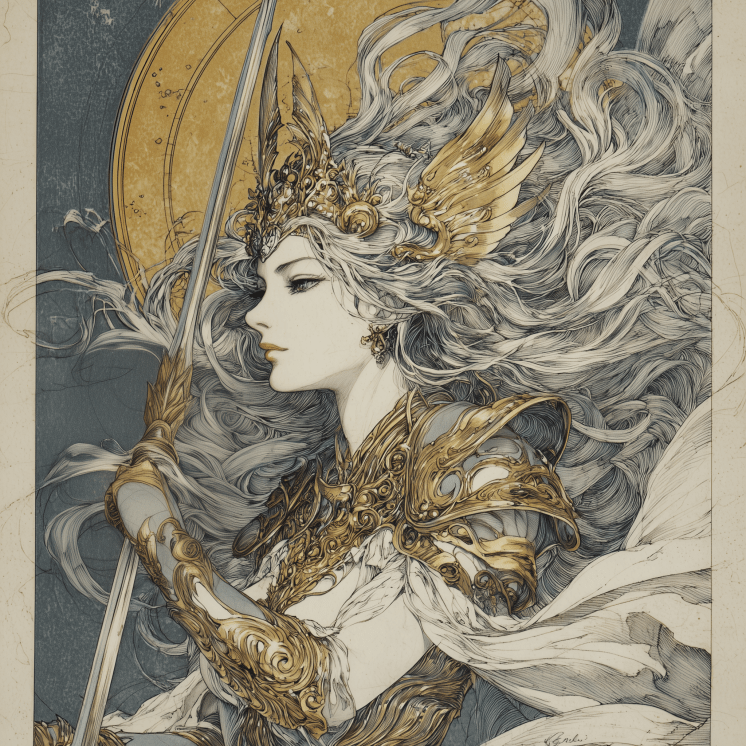
I couldn’t even tell you why I was tired of it, though if you’d asked I’d have told you I was tired of “women with a sword.” I remember five or ten years before that going on a rant at a panel at a con about how all these women who grabbed a sword and set out to save the world were sissies. What they needed was to have an hyperactive, smart two year old boy and try to keep him alive through the happy suicidal years, and then they’d learn the limits of their abilities. (As you can imagine this got me very shocked looks and might have started the rumors I was “not one of us, deary.”) But I hadn’t vocalized my issues beyond that.
The next time I abandoned a whole genre, except for those few favorites I kept, many of them re-reads, was mystery. I had bought more and more over the years, and to be honest had a long backlog of it to fall into as until then it hadn’t been my preferential reading. But eventually it caught up to me there also. Every woman was some sort of heroic fighter against a terrible and oppressive league of men. (Most men, tbf, could not find their own way to their sock drawer much less form a league against women. In fact, men not having a concept of “solidarity among men” is what allowed feminism to become institutionalized. They might mouth “bros before hos” but in real life it’s the not-ho every single time. And it should be, as we’ll get to later.) It was unendurable, and so I fell into the one field sort of left.
Surely in romance they couldn’t have the woman go out with a sword to save the world every other day and twice and Sunday. And the men were love interests so they had to be admirable, right?
People, I sure picked the wrong time to stop sniffing glue start reading romances. The contemporaries were all about…. well, sex. Had to be because the men were fairly despicable. The women too, to be fair. It was as though the women writing them were vaguely embarrassed to be attracted to men (five years earlier I’d been rejected by a romance house because my female character was too heterosexual, after all!) and therefore must continuously try to prove they were better than the love interest. Which left the love interest as the bumbling dad of commercials, but with a tight bod and amazing bed skills.
Look, I’m not a prude. I’m just no biblio-sexual. Reading other people’s exploits is interesting when they’re looking for the Roc’s egg or trying to find who murdered the guardian of the egg, but not so much when they’re putting tab a in slot b and moaning about it. I get bored and flip through for the next bit of non-bed action. It made some of these books very short. Pamphlets, really.
So I fell into regencies, which were slightly better except…. not really, because unfortunately I know history. There is no way on the Green Hills of Earth that every woman under the rule of the Prince Regent was a feminist, aggressively rescuing soiled doves (who are all, all very noble and done ill by. (I’ve read historical accounts, biographies and surveys. They were in habits and behavior the same population as our homeless. Yes, there were hapless innocents. They were few and far between.)) caring for the downtrodden and afflicted and teaching other women not to be oppressed.
There were in fact feminists of that era. You’d be shocked how different from our feminists they were. Or rather they’d be, as all of them without exception had their characters read The Vindications of The Rights of Woman by Mary Wollstonecraft and then treat it as if this book made the women into modern day feminism. (The problem is not that the kids don’t write well. The problem is that they either don’t read or can’t process what they read.) Mind you, it’s full of nonsense and weird assumptions about women, but they’re wholly different from the weirdness we now deal with.
So if you’re guessing I eventually got pitchforked out of romance, you’ll be right and wrong. I got pitchforked out of contemporary romance and into “regencies of the seventies” is the best way to put it. There is a vast group of women (or there was) centered on used bookstores. I ran a sort of tab for these. I’d go in and buy 40 old romances for $20. Read them and take them back in at the end of the week, trading them for twenty. When I got to ten, I’d use money to bring it to 40 again.
And then Indie happened in sufficient force that if I go through one of my depressive phases I can read regencies end to end. But more frequently I read Jane Austen fanfic. Oh, it has the same issues as contemporary regencies, in a way, but it’s more just lip service: “Lizzy hated embroidery and loved learning about her father’s job managing the estate.” Cool story, bro. Now show me her getting together with Mr. Darcy. … Nine out of ten times they do, and the genuflection towards the altar of feminism causes no more than an under-the-breath huff.
I mean there are other things that drive me insane and again “For the love of heaven, people, if you’re going to read historical, read a book about the time period (There are now a few specifically about Jane Austen’s time that give you manners and modes and are simply written. They even have pictures.) Yes, I know you watched the movie of Pride and Prejudice and think you know everything about it. (At least watch the A & E mini-series. No, seriously. Not only didn’t Lizzy go traipsing barefoot in the muck of the farmyard — they were a manor family, not tenant farmers, people! — but no one in that book EVER said “We are all fools in love.” In fact that’s so anti-Jane-Austen she’d probably beat you across the face and head with an inkpot for putting that in her story. And you’re deserve it.) I’ve had my fill and beyond of exploding carriages, people — in the regency, people! — writing letters on parchment or vellum and in one notable occasion papyrus, and… this is very pervasive lately, Mr. Darcy going on vacation and living in a little cottage with no servants or help of any kind, cooking and cleaning for himself. (Tell me you know nothing of what housekeeping used to entail without telling me you know nothing of what housekeeping used to entail.)
But when I’m non-depressed, I also found all sorts of interesting things to read that aren’t romance. We live in a much better age. (Though my latest non-Austen binge was in fact Lynn Austin. Eh. But I’m very ecumenical when it comes to genres. My favorite genre is “written in English and it interests me.”)
However, this last week a friend who was reading regencies stumbled onto the “And of course she hates embroidery and needle work, loves estate management and horse racing.” She had a worthy mini-rant. And I bobbed my head along with it, because I know the music and the words. But it was her “It’s all so tiring” that hit me.
That is exactly as I experience this sort of thing “It’s all so tiring.”
And then thinking about it I realized what is tiring and what makes me huff and want to reach through the kindle screen and hit the author on the face with a very dead fish (very dead. Practically lyophilized.)
It’s the extreme effort of trying to hold a world that makes no sense — either in historical or modern sense — in my head at all times to make the story work. Look, I know I’m supposed to suspend disbelief. But must it be with an hemp rope, by the neck, till dead?
Modern… well, guys, you’ve been out in the world. You know not every man is a bumbling fool. And you know that not every woman — perhaps not any woman — can go from 19 year old temp receptionist to managing his billionaire empire better than he does. (Some women are amazing, yes. So are some men. But humans in general are not that precocious and the entire idea of being able to do things you never had occasion to do without learning is outright pernicious.)
Regency/historical… Hits head on desk, because it hurts less.
Guys, I didn’t grow up in the regency, but when I was a kid we didn’t have TV (we had radio, and if you can imagine a family clustering around the radio at night doing various things and listening, you’re exactly right. I just realized I treat TV and movies exactly like this (to my husband’s confusion) with only occasional looks up when something is unclear.) And books were expensive. Even when you came from a family of bibliophiles that had stashed books everywhere including the various outbuildings of a small farm (of sorts) eventually you ran out of them or at least ran out of books that interested you in any way shape or form. (Turns out nineteenth century books about medicine are fascinating in a morbid sort of way but not for sustained reading.)
So what did most women do in the evening? Sew. What did most men do? Oh, not in my family where they were all thumbs, but usually whittle or do some kind of manual work similar to that. Sometimes read. Or … racks brain…. oh, yeah, organize their stamp collections or other collections, repair a radio, clean a gun. That sort of thing.
Women mostly sewed for a reason. And 90% of the sewing they did was mending. You see clothes were expensive too. After my mom — to supplement our pathetic income — bought a knitting machine (from her savings. Look, there’s a reason sometimes dinner was stale bread fried in tallow. Not complaining. We didn’t starve) and took the course to use it — people would bring her old sweaters to unravel, redye and re-knit into a “new” sweater. THAT expensive. Most of us, even people living in relative poverty can’t imagine how the middle class of a small, unimportant country of the mid 20th century lived. And — here’s the thing — we were in no way poor by historical standards. Nowhere close to it. (Incidentally, that’s why women wore aprons. It had nothing to do with oppression. A lot of men wore aprons too, particularly those who worked with their hands. And those who didn’t wear aprons usually had a really old, horrible-looking version of their every day clothes that they wore while doing the inevitable dirty chore. (Except my maternal grandfather who once emptied the septic tank in his Sunday suit. The fact that I was told that story multiple times 30 years later tells you how unusual that was. I also wonder what — probably stupid because he was a genius and so… — point he was trying to make and/or how mad he was at grandma.)
There was a Portuguese comic I read when I was little which made a joke you’ll only understand if you know that “role” in Portuguese is “paper”. The joke was the little girl learning about women in history and saying “Ahah, the problem is that women don’t have a role in history. They have a cloth.”
That was supposed to be cutting and feminist, (the stupid has been with us a LONG time) but seriously cloth: producing it, fashioning it, etc. has been a big job throughout the centuries. And because it can be picked up and put down and combined to advantage with watching kids or minding the cooking or whatever, it mostly fell to women. (Not always. Sailors and shepherds famously knit. And I imagine on long voyages sailors mended their clothes.) The point is that clothes are the tech that allowed humans to live out of the climate they were designed for, and that processing the fabric for clothes is mostly for various reasons of convenience a feminine task.
And, like the male tasks of the time and now up to and including yes “managing estates” or fixing tools or going out and slaying the mammoth in whatever form, the job isn’t wildly interesting or amazing or mind-expanding.
Most jobs aren’t. The stories that try to sell you on finding your life’s satisfaction in a career might as well be selling you that your life’s purpose is to weave endless lengths of cloth and mending your husband’s socks. They’re just jobs. That’s all.
Now…. embroidery…. Unless it was your job, which it never is because the women in these books are always upper class, embroidery was something you did in the precious time you managed to carve out of your chores, which, yes, even for the upper class included mending and also writing endless letters because women kept society connected.
Embroidery allowed you to express yourself, to create something beautiful and something people would admire. Mind you, Regency ladies did a lot of other things under that heading, including painting tables (why did they need so many tables, anyway), playing music and dancing and drawing and other such pursuits. BUT embroidery was also useful as in you could wear it, or your child could wear it, and it made every day a little better.
From my experience — though due to family dynamics I didn’t do this till I was married — embroidering was something smart women did. And the smarter the woman the more complex and innovative the stitches and the design. It was much admired and any woman in the village could point you at the best embroiderer in the village. (Mostly because a favorite activity of unmarried women was showing each other our stash, aka the hope chest. (No, not me. I distracted them with hand written novels. But again, this was not because I was smarter but because of weird family dynamics.)
Could a regency lady despise embroidery and want to manage an estate instead? Well, some number of them managed estates because they were the only manager either through accident of birth or weird turn in life. But would they prefer it? And would it be, as ALL these writers assume far superior and indicative of a greater intelligence? Pardon me while I make a very rude sound.
Managing an estate, like leading men in battle was simply a matter of necessity of time and position. And wasn’t what women in our time imagine, either.
Yes, throughout history queens led armies in battle. So, famously, did Joan of Arc. But mostly their role was to be inspiration and a sort of banner. Any real generalling (totally a word) they did was conveyed through underlings who were inevitably men.
In the same way, women in the regency who managed estates usually just kept a close eye on the books, and had detailed instructions for their stewards. They might ride around and see what needed to be done too. What they almost certainly except perhaps in very rare occasions didn’t do was go out in the fields, in the muck, and personally command tenant farmers and servants on what to do. They would if wealthy enough to have them, instruct gardeners and maybe do a little gentle weeding and such. And possibly if not wealthy keep their own herb and flower garden though even then the servant of all work would do the digging, etc.
The thing that these writers misunderstand is that this was not because women were “kept out” of these highly desirable tasks. It is because in a time when most tasks done outside required strength and stamina more typical of men, women took the other set of tasks that needed doing. And mind you the other set of tasks ALSO needed doing.
Managing a manor house was not piddly work. They lacked most of the things we have, and among them they lacked all the chemical cleaners we have. This means even if you had a ton of servants you needed to stay on them through things like routine cleaning which was more or less constant. Otherwise it wouldn’t get done and your family would catch the never-get-wells. Also linens needed to be mended and replaced on the regular. Menus made. Parties planned and, under “maintaining social connections” letters written. I remember grandma — and mind you, much longer after, when calling was a thing for close-by relatives and friends — had an entire day blocked out just for keeping up with her correspondence.
Was it possible for a woman to want to manage a manor house, instead? Well. I suppose anything is possible. Though she’d better have someone to do the tasks that normally fell to her.
But what it begs the question is WHY? Why were male tasks preferable to or supposedly indicative of higher intelligence?
Why in the name of all that is holy SHOULD the highest aspiration of a woman be to become a man?
And that’s what’s so tiring about it all. At the back of all this rah rah rah “Women can do everything” is the dripping, whispered poison of “But you shouldn’t though. You should do what men do, because that’s what’s amazeballs and super-satisfying.”
And you have to read this while looking at the men around you who, honestly, aren’t any more satisfied than you and your friends are and who certainly don’t think their every day jobs are some sort of holy vocation. Just what they do for a paycheck. Like most women.
It’s like reading about aliens that no one acknowledges are aliens.
Which is the problem with this entire “Feminism” project as being exerted in this year of our Lord of 2025. As a group we’re supposed to be amazing and special and forever fighting back against the oppressive restraints men impose on us.
And because that’s our group mission we can’t, of course, ever fully win. We must forever be fighting. Which is why women are always fighting to “Break into” science fiction, even though by the time I came in it was already female dominated, now almost 30 years ago.
We’re somehow not supposed to want to do anything feminine, but we should be displacing every male in his job.
And then they wonder why women in the civilized world manage to be more unhappy than were life is brutish and short.
Look, the problem is not trying to “liberate” women. The problem there is in the PLURAL “women.”
There is the woman here and there (most often there, and you know exactly WHERE) who needs liberating. There are a lot of men in the same boat at that.
There are people everywhere suffering horrible oppression by other people. And then there is the sheer oppression of this material world that doesn’t yield to your dreams.
But it’s mostly a matter of individual circumstances and individual choices and individual — yes — oppression. I’m mostly descended from women who couldn’t be oppressed and if you tried you’d regret it. Which means we more or less did as we pleased despite an authentically chauvinistic and patriarchal overculture. None of us had a marked interest in horse racing, though most of us ran our own business which I suppose is the equivalent of running a manor, while raising kids and keeping house. This was possible because increasingly through time we could afford housekeeping aids. (In mom’s case a succession of teenage mother’s helpers who worked in exchange for new clothes.) And none of us was so stupid as to tell our husbands they couldn’t help with the accounting and other boring tasks, like tax liability estimation. (Which at this point is a second job for my poor husband.)
And mostly it was really tiring, not particularly indicative of high intelligence (though perhaps of drive) and just what we did to keep body and soul together.
Because I work in words and in a highly abstract product I’m not any smarter than the ancestresses whose businesses were in large-scale resale, or commercial art, or clothes making/design/creation. We each did what we could do at the time to supplement family income and make a better life for our kids and grandkids. (Okay, I’ll confess to being broken so writing is all I could do.)
There isn’t a set of jobs — male — that means success and satisfaction and a set of people — women — who are automatically downtrodden and mistreated.
In the past — and even today — everyone is mistreated by life and reality. And there is no eternal satisfaction in any task, though some of us work at our dream jobs and even have moments when it’s all worth it.
We need to — NEED TO — stop treating people as homogeneous groups. Particularly groups based on physical characteristics that have absolutely nothing to do with individual circumstances, needs and abilities.
We need to stop telling women, all women, across the wide world, that they’re uniquely oppressed and need to “heroically” seize… the other sex’s roles.
We need to stop this in educations and entertainment and life.
Men and women aren’t Marxist classes. They’re different forms of the species, and have a lot of complementary strengths and a lot of reasons to come together and work together towards the future. (No, we’re not doing phrasing anymore. It’s 2025. When we do phrasing, it’s with intent and malice.)
For the sake of women, for the sake of men and — truly, desperately — for the sake of children, let’s stop lying to each other and the young.
Let’s stop trying to hold up an insane, fractured illusion and live in the real world.
There is a future to build and the stars to conquer. Petty bitterness is not generative. Of life, interest or children.
And besides it’s such a complete lie.
Let’s live in the light of truth, instead.


























































































 According To Hoyt