The problem with humans…. No wait, if I start like that, it’s like answering “what do you know” by starting with “in the beginning there was chaos” Ala Mycroft in The Moon is a Hard Mistress.
One of the problems with humans is that we are part clankers.
No, hear me out. It’s like this: we have our basic hardware but we learn. We learn constantly, and we learn from the things we’re fed.
This has been our greatest strength and what has made us masters of the planet. Even more so when we learned to forge stories, so we could absorb them and not have to make all the mistakes ourselves.
And so, we learned from stories: don’t bring the wooden horse into the citadel; don’t mistreat guests; don’t trust the enemy, don’t go into the forest alone, don’t trust the tiger.
And the cultures that learned best from stories were the ones that survived best, and whose children went forth and populated the world.
Which is why our ability to be trained like clankers. Because as with clankers, it’s all what we’re trained on, isn’t it?
And we’re addicted to stories, and continuously try to tell more and better stories.
I tell you people, visual story telling might be the end of us.
There are complex theories as to how the texts exchanged between Charlie Kirk’s assassin (don’t say his name. Let him be consigned to damnatio memoriae) and his lover are faked because “no one talks like that.”
But they do. They do in movies and probably in games (I don’t know about games, because I don’t play them, but I see a lot of movie telling in them. Perhaps it is an exigency of visual story.) They write things that normal human beings wouldn’t write, because they’re signaling to the audience.
They’re the good guys. He’s committed an heroic deed, in his own life, and he’ll escape detection, because the good guys always do.
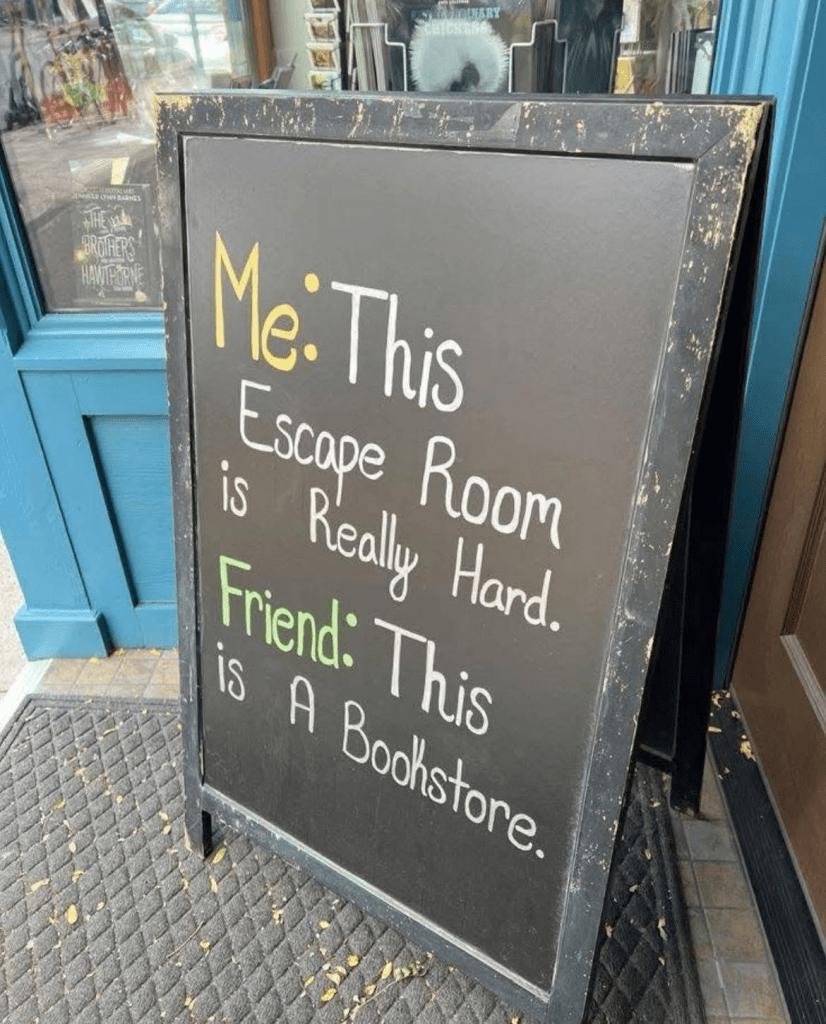
It’s like this story, of the collapse of an ultra woke bookshop that you have to have a heart of stone not to laugh like an hyena:
What is riveting about this is that they seem completely baffled that the bookstore is failing. Because, think about it, in movies it works that way. You signal you’re the good guys — and they’re doing everything movies told them the good guys do and saying everything the good guys say — and then you win.
Of course, in Hollywood you have the filmmaker’s magic on your side, and of course it works for them, because it is their beliefs and their logic.
I’m saying this on our side too: They keep shooting our guys! We need to shoot theirs or we’ll lose.
Ah, but that’s in games, and in movies. In reality, in the seventies, they killed and blew up the forces of order, who never responded in kind and instead fought them with law and reality, and they went away for decades. And this form is weaker, and frankly stupid.
The true battle is ideas. They want to silence us because they’re that scared of our words. If we fight them with bullets, we give them the opportunity to say there is no choice, to paint us with their crimes and their evil.
They are losing. Falling into war now will only let them win. Because it will destroy the society they want to destroy. Why should we fight on their side.
This is not a movie, nor a game. We don’t have storytellers on our side. It’s not a matter of evening the score.
The true battle is of ideas, and ideas will shape the next battles, the next century and beyond.
Real life is not a movie. Real life is not a game.
And they were never told about reality, much less taught reality.
Look, I have nothing against movies or games. And each art form has its own short hand, or stories would be just “reality” and who wants to play in that? Most people with a soul want to play in something where the result is what you want.
The problem is that our movies and our games, and all our story telling has been high jacked by a philosophy that’s contrary to life and reality.
And what it teaches our children is how to hate their culture; how to do things that don’t work; how to destroy and die.
Consider this your clarion call: If we don’t counter this poison in our culture right now, we will be committing suicide. It’s like teaching clankers who control cars that there other cars are sponge. It is like teaching clankers that launch satellites that gravity has been abolished. It is like taking poison and expecting to thrive.
Yes, we need new stories, stories that aren’t shaped by the old gatekeepers who forced us to kiss the ring and build nonsense into our stories, but there’s more than that. This is the third generation raised on leftist poison. They abjure the obvious things, of course they do, as we did in our time, but they don’t know anything else, and so their touchstones for how reality works are all the basic, old leftist lies.
It’s time to teach: teach about true history, true economics, true stories. Do it in conversation, do it in lessons, do it in your life and your actions, do it in everything, and hope, hope the children absorb enough that we can correct for the evil lies poured into the world these last hundred years.
The neighbors thought that 6:30 am was the time to start demolition work this morning. I’d gone to bed at one. If my kid reads this, yes, I’m aware I’m supposed to be in bed by ten, but a chapter hit. Mistakes were made.
The result is that I’m walking into walls, bumping into cats, and Dan had to explain to me the very simple remote for my treadmill, because I was in tears, insisting it was broken. (Oh, yeah, bought a tiny treadmill that fits under the desk.)
There are things I want to write, but they are… confusing and difficult, mostly relating to the “no, we’re not in a civil war yet. We’re no worse than the sixties were” (and in many ways better because the left is repeating by rote what they did then, but the situation on the ground is completely different.) “Pray we don’t get to a civil war.” But as you can tell, it’s a difficult and fraught topic. And it won’t happen today, when I couldn’t figure out where the power button for the treadmill was.
There will likely be a nap later today. Likely.
Meanwhile consider this an Open Thread for discussion. I’m sorry this week is so scattered. It’s probably going to be a little glitchy till the end of October, when we come back from Portugal (no, we’re not there yet, but… it’s needed. The whole country makes me itch inside my head, but it’s needed. I want to see my dad once more on this side. And while he might last years, and I hope he does, that’s not the way to bet, and mom’s death proved it can all be too sudden to go over then.)
I realized yesterday I couldn’t give you the second chapter, because it TOO has spoilers, if you haven’t read part three.
I’ve been receiving…. best way to put it… snippets of things in Elly (the ever growing file is called It Came Through the Portal In Head)
I think this one inflicted itself on me because Nikre Lyto is one of the view point characters for book two.
This is a story about three years after his adoption. (In the second book, the character he’s stuck traveling with keeps calling him “sireling of a king” in a scathing tone. And is going to get himself shivved. Or worse. MUCH MUCH worse.
Anyway, this is narrated by Eerlen Troz, to use their term “Archmagician” which means he leads all those who can use “power” which…. let it rest. It’s part of the easter eggs in the book proper.
The ruby is the memory and power control for the whole thing, and is always worn by the Archmagician. It also has a personality and a logic of its own.
Oh, and though Ellyans are hermaphrodites, they have no breasts and therefore I chose “he” to translate their “people pronoun” which is genderless. (they have genders in the language but only use them for animals.) I didn’t want to use one of the neo-pronouns, because they were always a distraction, and these days they’re likely to be an annoyance, also.
For those who have no idea what I’m talking about: Ellyans are the bio-engineered human breed in the lost colony in No Man’s Land. I’m not going to do a hard sell, or any kind of sell on it. Just read the reviews.
And now, if you’re bored, here’s the snippet that came through the Portal In The Head.
I need to finish typesetting the third volume to put up. Which is what I’ll do after a nap. (The hammers have stopped. Maybe they’re at lunch.)
Child of The Ruby
Eerlen:
It was impossible to look at Nikre for any amount of time and not feel angry. Not at Nikre. Nikre was a beautiful child. Brinarian, and therefore smaller and darker than most children in the royal palace: his skin an even gold, his curly hair dark brown, and his eyes a deep, dark amber that seemed to change with the light and his mood.
But beyond all that, he was a quiet child, attentive and pliable. He never complained of anything, to the point that it was imperative to watch him at all times, in case he had any difficulties. Because he’d never tell you. In fact he’d endure any discomfort and pain in an attempt not to cause trouble. And he had archmagician level power, though he was nowhere near the stability where he would be ready to inherit, and at any rate archmagician was not just a matter of power but of learning. And on that, Nikre studied hard, and never complained or asked for a day of rest.
Which is why it was impossible to look at the child and not get angry. Not at the child but at the circumstances under which Nikre had come into Eerlen’s life.
Eerlen had heard rumors of a child with archmagician power in a small fishing village in Brinar, where no one else had magical power. If he’d known what was happening, he’d have gone the same day. As was, he had to go and investigate because non magicians and an archimagician child – whom reports said was variously two, three or four years old – could spell trouble. You never knew when the child would start using magic, and if he wasn’t linked to the ruby where he would find the power. Highly gifted children could kill by accident. And did.
As was he’d gotten there just in time. It wasn’t an unusual situation. Nikre’s body-parent had died when Nikre was two years old. His sire had almost immediately sworn a new lover. After which they seemed to have, between the two of them, decided to dispose of the toddler, so that Nikre’s sire could gift his new sworn a brand new fishing boat which Nikre had inherited from his parent by line right.
They’d tried starving and beating first, anything that would, quietly, cause the child not to thrive and die, in a way the small village wouldn’t blame on them. When that failed—
When Eerlen arrived he was told the child had been taken out to fish with his parents. But the neighbor who told him of it was suspicious and told Eerlen the family situation and they’d never before had spent any time with the child, willingly. In fact, the small, poor village had been feeding the child, quietly, behind his family’s back, and they all felt something was very wrong.
So the neighbor had taken Eerlen out in his own boat. They’d still been a long distance away when Nikre’s sire and his new sworn had thrown the three year old – as Eerlen had found later – overboard and into the sea. If Eerlen hadn’t been a magician – if he’d not been the archmagician – Nikre would have been dead. As it was, it had taken throwing his power, encircling Nikre, and pulling him – coughing and sputtering and streaming seawater – into the neighbor’s boat. Eerlen had sent Nikre with the neighbor, to dry and warm at a fire, and waited to meet the criminals.
“What did you do with them?” Myrrir had asked when he had time to speak to Eerlen, after Eerlen, covered in blood, had dragged the child in during a formal dinner. “Precisely? I take it not a mere magical killing? Judging by how your tunic looked…”
Eerlen had shaken his head. He had, as clan leader and as archmagician, killed before. Of course he had. But this was different.
They’d been sitting on the cushions in Myrrir’s room – their room, since Eerlen slept there, though for formality sake, he had a small room adjacent – and Myrrir had touched Eerlen’s tunic over his ankles. “Did your wicked little knives take action?”
Eerlen sighed. “It had to be done. In front of the village. It had to be known it would not be forgiven. I did mind-ask head of fourth for consent. I had after all witnessed attempted murder. As had the neighbor.”
“Very correct,” Myrrir said, his mouth quirking on the right side, and the kind of amusement in his voice he often showed about what Eerlen did, though Eerlen rarely understood what was so amusing. But then Myrrir’s expression clouded. “I would not have been, Eerlen. I’d have strangled them with my bare hands, and hang the fourth circle authority over attempted murder.”
Eerlen had laughed, because it was impossible not to, and leaned into Myrrir. “Not gory enough.”
That night they had decided that Nikre would not be put up for fostering in the brotherhood, that he would be adopted by the Archmagician and the king of Elly, themselves. Eerlen would be his adopted parent and Myrrir his foster sire.
Perhaps it hadn’t been the best for the child. Or perhaps it had. Perhaps what Nikre had endured as a very young child had already made him who he was. Though Myrrir threatening anyone with death who so much as looked at the child in a wrong way couldn’t have helped. It had taken a good two years for the children of the palace to approach Nikre or play with him.
But at six he did play with children now and then. Mostly he played with Brundar Mahar, Myrrir’s three year old child, and, that day, with Kahre Sarda, Myrrir’s sireling by the late governor of Karrash. Kahre was a year older than Nikre and was visiting that day. From Eerlen’s seat, on one of the stone benches, he watched the three children play near the Koi pond. Kahre and Nikre were trying to teach Brundar to play with dolls, but Brundar’s idea of playing with dolls was to undress them and then fling them at one of his play companions. Which was fairly normal. Little Brund viewed dolls as projectiles. Though the undressing was a new thing, and he’d have to tell it to Myrrir who doubtlessly would make it into a funny story to tell all visitors.
Other older children might have lost patience by now, but Nikre would pick up the doll, and Kahre would dress it, and they’d bring it back to Brund, and demonstrate how to hold the doll. He couldn’t hear what they said, but the older children must have been speaking of why dolls should be held and not thrown, because he caught the words “Baby, Brund. Baby. You don’t throw babies.”
Eerlen was fairly sure between now and his late teens or early twenties Brundar would work through to that idea. Hopefully. Otherwise the court would be very shocked indeed.
As he stretched his legs, he watched Brundar do what he did, lie down on the grass and go to sleep, thumb in his mouth, with the suddenness of very young children.
The older children settled down to play with the doll and Eerlen was lost in his own thoughts, until he felt someone sit next to him, and looked. Kahre was sitting on the grass rocking the doll and singing something that, from this distance, sounded like a lullaby.
Eerlen looked to his side, where Nikre had slipped to sit beside him on the stone bench. “Didn’t you want to play?”
Nikre shrugged. “It’s Kahre’s doll,” he said. Then hurriedly, “He’d share. But the doll has a name, and—” He shrugged. “He gets to be the line parent.”
“You could bring out your own doll,” Eerlen said. And realized immediately that he’d said something wrong, because Nikre gave him a quick look, then blushed and shrugged. And Eerlen realized they’d never given the child a doll. And of course, he wouldn’t ask. Most of the time he followed Eerlen around or pored over his studies of magical formulas. But– That quick longing look had said enough. Eerlen would have to figure out where the best dollmakers were. Long ago, Eerlen’s parents had made him cloth dolls, but Eerlen didn’t have the time.
Nikre had got off the seat, and leaned against Eerlen’s shoulder. He looked at the Archmagician’s ruby over Eerlen’s tunic. “He says I’m his.”
Eerlen blinked. “He?” He removed the ruby over his head and held it in his hand, his idea being to keep the child away from it. The ruby was… strange and impaired in ways Eerlen didn’t understand.
Nikre pointed at it. The ruby shone.
“Don’t,” Eerlen said. “Don’t touch it. What did it tell you? How did it tell you?”
Nikre looked up, his eyes amber and concerned. “He. He’s a person. No… not a person… but he talks.”
Eerlen nodded. “He does. What did you hear. Was it words?”
Nikre nodded, solemnly. “He… it said that I need to study hard because…” He looked up, and Eerlen realized there were tears over the amber. “It says if you die I will have to be the archmagician and … and wear the ruby. And… and be master over the brotherhood.” He sniffled. “But I don’t want you to die.”
Eerlen put the ruby on, and slipped it under his tunic, then gathered the child in his arms. “Nikre. Wearing the ruby and being the archmagician is a big responsibility, and it is not fun, but when the time comes I’m sure you’ll do a wonderful job.”
Nikre shook his head. “Not that. I mean, I’ll try.” He looked up and the amber was drowned in tears, “But I don’t want you to die.”
Eerlen thought of many things. Birthing was perilous. And war was perilous. And Eerlen needed to do both. He could die at any moment. But there were times to tell children the truth. And times not to. Or to tell it in a different way.
He pulled Nikre onto his lap. The child was small. Brundar was already almost his size. “I can’t promise not to die,” he said. “But I’m going to do my best not to.”
The little hand clutched at Eerlen’s tunic. “You promise?”
“I promise. Not for a good long time, not until you’re older than I am.”
Nikre sniffled again. “An Myrrir won’t die either?”
“Not for a good long time. Not until you’re all grown and don’t need us.”
Nikre said something in a whisper. Eerlen said, “I’m sorry, I didn’t understand that.”
“I’ll always need you,” Nikre said, and clutched desperately at Eerlen’s tunic. Eerlen rocked him until he was asleep. Kahre had fallen asleep next to Brundar, clutching his doll.
All was peaceful in the garden.
And Eerlen felt suddenly that though perhaps they weren’t the family that Nikre should have had, they were his family. And it was good.
I can’t get the video AI not to give them facial hair. :D Though to be fair, Eerlen is half Draksall
I’m so tired of people writing things about the current, not very good, pretty bad, etc. state in the country, and diagnosing the problem pretty well in saying we have an educational establishment indoctrinating people to hate America; and information/entertainment educational complex that lies about the past on the regular and stirs up idiot group grievances with neo-Marxian fervor; corrupt politicians; power concentrated in the hands of a well connected elite.
And I’m following along, nodding, completely agreeing, and suddenly they start on their solutions. And my head hits the desk so fast I give myself concussion.
Because the solutions are always things like: invite your neighbors to a barbecue. Join a neighborhood group. Turn off the internet. Touch grass. Shop only locally. Listen only to local news.
I think part of the problem is that I’m not nor have I ever been a conservative. It’s a peculiarity of America that “I’m for the most individual liberty” shoves me firmly on the right. And I read way too much history to try to destroy all structures in the belief the new ones will be perfect. Because you know, I might be temperamentally a Sans Culotte, but I know what happens when Madame Guillotine is well fed.
So, since I’m not allowed to burn things to the ground and play fast and loose with society — mostly because I was raised with a sense of history and morality — I instead am half in love with the future, and forever studying the trends and the technologies for the ways they can be used for liberty.
And guys, guys, guys? We live in an age of wonders, an age that promises to give back to us what the Industrial Revolution took away, but better, and deeper, and more interesting, and with us having longer and healthier lives to do things in.
Look, yes, I could give a barbecue for the neighbors, but what the actual hell? This idea you have of neighborhoods where everyone has kids about the same age and brings them to the barbecue, and they all have similar interests is probably from your parents’ childhood, transmitted in their stories and the stuff you read as a little kid.
This type of thing made sense when there was one big industry in the area and people worked at certain levels, and lived in stratified neighborhoods. It is prime industrial age mass living.
You’re now sulking and telling me that it was a happier and better time.
Sure. I didn’t say it was hell. And your great grandparents would tell you stories of tiny villages where, after work, the villagers got together and sang hymns. Think of all the togetherness! They were exhausted, underfed, probably by our standards filthy, but they had TOGETHERNESS.
Well, excuse me, I lived in a village growing up. And while I miss some things, sometimes, if you think for a little very Odd kid it was an ideal environment, you’re out of your ever loving mind. In fact, it wasn’t an ideal environment for anyone, judging by the epic fights and factions. Because people in point of fact had very little in common, and were together by utter necessity, which means that the group enforced absolute conformity and you couldn’t escape.
Then the industrial revolution came in and ratcheted things harder. Because mass production requires standard consumers. And it requires people who live all concentrated in one location. And if you don’t think conformity was enforced and would kick at any of us who are a little different, you are looking at it with the eyes of childhood.
Sure, there were good things going, though most of them were because the culture remained from previous eras and the vile progs hadn’t started working at it yet.
However, opportunities were… lacking. You could have any color provided it was the color they sold. You could read what everyone else read. You could watch what everyone else watched. You could work in the neighborhood factory.
But the real poison was that you could read and watch whatever they wanted you to.
What you’re feeling now, about the current era is due to the fact we’re in the middle of catastrophically fast change, and everything is unstable. I will give you that humans don’t like that.
But the really bad things, like the current situation, have nothing to do with that. They have to do with the evil being spread by the vile progs through the mass-communication things they still control. Including education.
They wanted to change society to their own deranged template and by gum they almost managed it. Until the internet broke their little — eh — red wagon.
Without the internet, without distributed information, Hillary would just have finished her second term, and we’d be under the boot of some horrific commie mediocrity.
Without the internet, the young wouldn’t be able to create their own paths to success, escaping the channels the left poisoned and the institutions and the industries they corrupted.
And without the internet, ladies and gentlemen, I probably would have given up and be dead.
Sure. The group that Charlie Kirk’s assassin was in was crazy. Many such cases. Sure, those people need to get out of their crazy surroundings.
But here’s the thing: even in the good old days crazy people found each other. Look up follie a deux and find out how many criminals were activated by their lover, their friends, whatever.
Modernity isn’t terrible. The new technology gives us the opportunity to find those who get us. And to create our own paths to success.
It is inverting the damage of the ever centralizing 20th century (And wasn’t that a time of hugs and kisses. Do you want me to give you the butcher’s bill? And yeah, it had pockets that were decent, but the way it was going sooner or later the butcher would have come for each of us.)
The good old days? Were good in spots and if you fought to make them good.
The bad new days? Are good in spots, and if you fight to make them good.
The good new days have the advantage of having a lot more tools at our disposal; of greater health; of more freedom to innovate.
You want to go and touch grass, go. But don’t forget to check your favorite blogs for the news. Or x. Or–
And yes, you can have barbecues with the neighbors (I think mine are feds! No, seriously.) if you want to. I’m not a raging extrovert. I’ll have my local friends for dinner, but not the neighbors. They’re the ones who asked if our son was our servant when we moved in. (He tans. Really dark.) In their defense they (the non-feds) are about 90.
But don’t throw away the blessings of the modern age.
Be aware of possibilities opening up. And don’t curl up in the fetal position dreaming of the old days.
The new tech is the best thing that could have happened to liberty lovers. It single handedly stopped the boot that would have stepped on the human face forever.
We had a routine medical appointment and Dan swears I’m misremembering this, but I SWEAR the receptionist was the sloth from the DMV in Zootopia… We were supposed to be out by eleven, noon at most. We didn’t even get in till three.
I’m so sorry.
Anyway, so here’s what happened today. First the good news: Volume 2 of book 1 is out. And if you’re very good sometime very soon I’ll give you the second chapter of book 2. (Because the first chapter gives way too much away for those who didn’t read the earcs, that’s why.)
Sufficiently advanced science is indistinguishable from magic. On a lost colony world, mad geneticists thought they could eliminate inequality by making everyone hermaphrodite. They were wrong. Catastrophically wrong. Now technology indistinguishable from magic courses through the veins of the inhabitants, making their barbaric civilization survivable—and Publius Cornelius Scipio Africanus Kayel Hayden, Viscount Webson, Envoy of the Star Empire—Skip to his friends— has just crash-landed through a time-space rift into the middle of it all. Dodging assassins and plummeting from high windows was just the beginning. With a desperate king and an archmagician as his only allies, Scipio must outrun death itself while battling beasts, traitors, and infiltrators bent on finishing what the founders started: total destruction. Two worlds. One chance. No time to lose.
Volume 2
Skip thought he’d figured out the rules of survival on Elly.
He was wrong.
Now his potential allies from the Star Empire are turning up dead, one by one. Spies and saboteurs have infiltrated every level of Ellyan society, and Skip is running out of people he can trust.
As he races to save the king and archmagician—his only remaining allies—disturbing secrets about Elly’s culture emerge alongside buried truths about his own family’s past. One moment he’s explaining the bewildering concept of binary gender to confused Ellyans, the next he’s making impossible choices that could strand him on this world forever.
His last gambit is reckless. The odds of success are slim. And failure means losing everything—his mission, his allies, his only way home.
But some fights are worth the risk, even when the deck is stacked against you.
Sometimes the most dangerous enemy is the one you never see coming.
And since yesterday I gave you the songs (I typed it the sins, first) of Britannia, these are the songs of Elly, which both the two-part one and the other one, show up in Volume 2.
The first set, Missa’s confession/lament is the story of their culture hero. Let me see if I can find the text…. Ah, yes, here’s the snippet: Skip, from Volume 2: The day after that, we had an eighth circle cast illusions. Brundar had to do something to my mind so I could see it, and I understand from what he said that it was always a little thinner for me than for most people.
The story done was Amissar Mahar. And it was exactly like a mersi, except you weren’t in the mind and body of the character, but an invisible spectator, in the middle of the story.
Even so, it was powerful to see Amissar Mahar, an Ellyan slave, fall in love with his Draksall master and have his love reciprocated, so that the Draksall had taught Amissar magic and got him inducted into the Draksall brotherhood. It wasn’t until the brotherhood refused his oldest child and confirmed the child as a slave that Amissar fought it, creating a rebellion that allowed him to lead about half his people from Draksah back to Elly, and seal Elly against Draksalls for a hundred years. In the process, he’d killed his lover, who was the Archmagician of Draksah.
After establishing the Elly brotherhood and kingship, he’d killed himself by jumping into the sea in Lirridar, and the ruby teleported to his middle child, his apprentice.
The whole thing brought Missa’s Confession into sharp relief, and I could have done without Brundar performing it immediately after. Particularly since Brundar had explained “I let our souls become one” meant “we swore.” Which was part of his confession since at the time it was culturally frowned on for Ellyans. By the end of it, my tears were as abundant as everyone else’s.
And now, the songs/videos. As an aside, Dan badly wants a movie of this, but judging by how hard it is to render Ellyans so they don’t look WRONG (Part of the issue I had with the cover and then with this) …. I don’t think it’s possible. Oh, this cycle: Missa’s Confession/Lament is usually played at swearings (their equivalent of weddings, if you haven’t read the first.) Also, as above, family/clan reunions. (For those who’ve read the e-arcs, the singer (eh) in Lament is Kahre Sarda, Myrrir’s Lord of the Land Sireling (One of them.) Still not willing to shell out for software that will do lip movements. Maybe it will get better. I mean midje. They’re always improving.
Missa’s Confession:
Missa’s Lament:
The next one is Master of Illusions. I did an earlier rendition of it, but the clanker does NOT understand that you don’t shake babies.
Um… what you need to know…. Their power bends (not levels, though they correlate to levels AND abilities) Eight Circles, in their brotherhood of Magicians (which sits in spiral “circles” is people good at illusions and mind manipulation. Ellyans are barbarians, living close to the bone. Babies take a huge toll on the birthing parent, to raise till weaned (usually one or two years, though most people go longer.) So they cull defective children, and the occasional single sex sport is “defective” because it won’t fit with Ellyan society. The directive is enforced with varying zealousness by the elders of the clan. (More enforced if they don’t like you.) This is the story of an eighth circle who was very, very good at illusions, not very well liked, and pays the ultimate price to save his female child when the clan elders catch up to him just as the babe is weaned. (Yes, I know it says “he” because they only have one pronoun for humans. And I chose to render that “he” for reasons of mental image and lack of breasts.) Inexplicably — to me at least — they mostly use this as a dance tune for a very fast dance. Anyway, without further ado, Master of Illusions:
And now I’ve showed you my pretties, I’m going to try to finish the chapters for Witch’s Daughter. Needless to say, having spent the day in the doctor’s office, I feel like I’m coming down with something.
Why am I doing this? Because I made a pretty and I want to share. I’m SORRY. (Also, because, to be bluntly honest, my brain is still not up to working)
I couldn’t get it to do bagpipes. Or rather, I could, but the clanker thinks “bagpipes” means “jaunty, happy tune.” SIGH.
Anyway, look, it’s my world, and I love showing it off. And aren’t the tools AMAZING?
THIS is the relevant part of the first chapter:
When I woke two weeks later, they told me that Father was dead, but I already knew.
I wore the blue uniform with the half-cape once more, on a freezing winter day, in blowing snow, as I stood in the family cemetery next to the Earl’s palace of Aeris, and watched Father’s coffin lower into the grave, while space force captains and countless infantry stood at attention, wedged awkwardly between statues of angels and spacemen, of kings and imperious women holding aloft wreaths of victory.
There, in a deep hole, they buried what remained of the most important person in my life to that day.
When it was done, they let loose a twelve-cannon salute, Earth cannons, the kind not used in battle since Old Earth. Then a military band played the sweet, haunting “Home of the Spacer,” consigning Father’s memory to the stars.
I stood at attention there, and then I stood beside Mother and received the condolences of a grateful Empire. The Queen herself, with frost-blued fingers, pinned the Wreath of Valor upon my chest, the big one, in gold, with the replica of the first colonizing ship in the middle.
I removed it after the funeral. And then I removed my uniform. I sent my resignation to Her Majesty.
And then I lost myself in the fleshpots of New London, the Empire’s capital city.
UPDATE: Of course, my husband made me do this, because he says they’ll need this kind of high flung ideals to see them through when everything goes wrong. (This is Strains of Earth, and it’s only referred to in part three when Skip is contemplating his own funeral.)
And THIS is a bit of an inside joke, which those who read the first volume might or might not get, since Skip’s self-threats in internal dialogue get more outrageous as the story goes on. No, no. it’s REALLY not that kind of book. BUT son found this hilarious, because of the hyperbolic, impossible threats, and husband finds it hilarious because of earnest guitars, so you’re stuck with it. (And I’m not fixing the sword. What, you think I’m made of credits?)
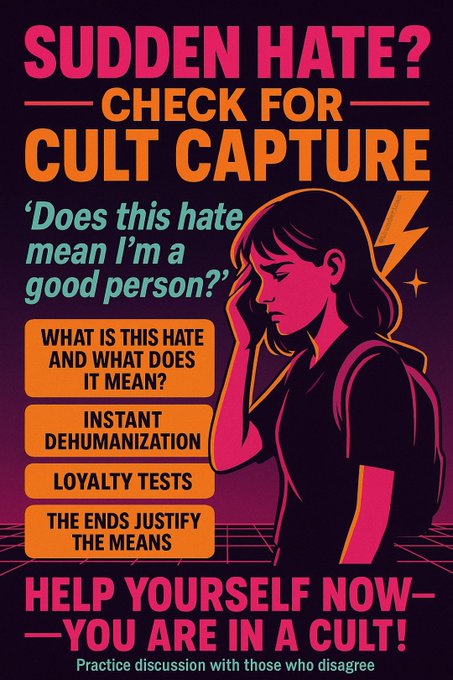
The left keeps throwing around the word “Hate” and defining ITSELF as being against haters.
As in so many things, from outside it looks like they’re projecting like an IMAX.
To make it clear: I’ve been accused at various times of hating this or that group. This is actually and for real insane. “Hate” has a precise definition of wishing the worst on others, wishing to harm, kill them, obliterate their existence. I’m saved from it, even when really angry, by the fact I’m extremely lazy. Most of what I want is for the people I’m supposed to “hate” to leave me the heck alone and go play with themselves. (In any sense you wish to take it.)
But I do hate some THINGS. Hell, (the Capulets!) and Marxism, for instance. Note I hate the ideology — justifiably, as 100 million graves cry to the heavens against it — not the people holding it. I don’t pray for them to be obliterated, but for them to abjure their inhuman, evil ideology and to join the human race in spirit as well as in biology, once more.
At my worst, I wish people would sit ALL THE WAY DOWN and shut the heck up till they grow up.
But I’m not a good person — I’ve mentioned that, right? — and my dark humor is a load bearing structure, so I do occasionally joke about Pinochet and helicopters. And pray it never comes to pass we’re pushed against the wall (I speak advisedly) that this becomes a thing.
BUT to my knowledge, Charlie Kirk never joked about Pinochet or giving people halfway helicopter rides. I’ll be honest, I thought him a little optimistic and soppy, kind of like my kids are sometimes, and thought he’d eventually see some things and get over “reaching across the isle.” And at the same time hoped he wouldn’t.
Well, they did prove him wrong on some thing. A lot of them proved and keep proving they are not rational actors and can’t be reasoned with. And I hope he was right and a lot can.
But I’m sick and tired, and a bit beyond, of hearing him called “Hater.” I don’t care how much propaganda you were fed, and if you bring up the New York Times, I’m going to shove Walter Duranty whom they never disavowed down your idiot throat until you vomit up all the Marxism, exorcist-like.
Charlie did believe Marxism was wrong; he believed coercion and tyranny was wrong. Yes, he was Christian, which meant he didn’t believe people should engage in homosexual acts, or “transition” into the appearance of the other sex (or none.) This did not mean he hated the people doing it. In fact, he argued that gay people should be welcomed into the movement.
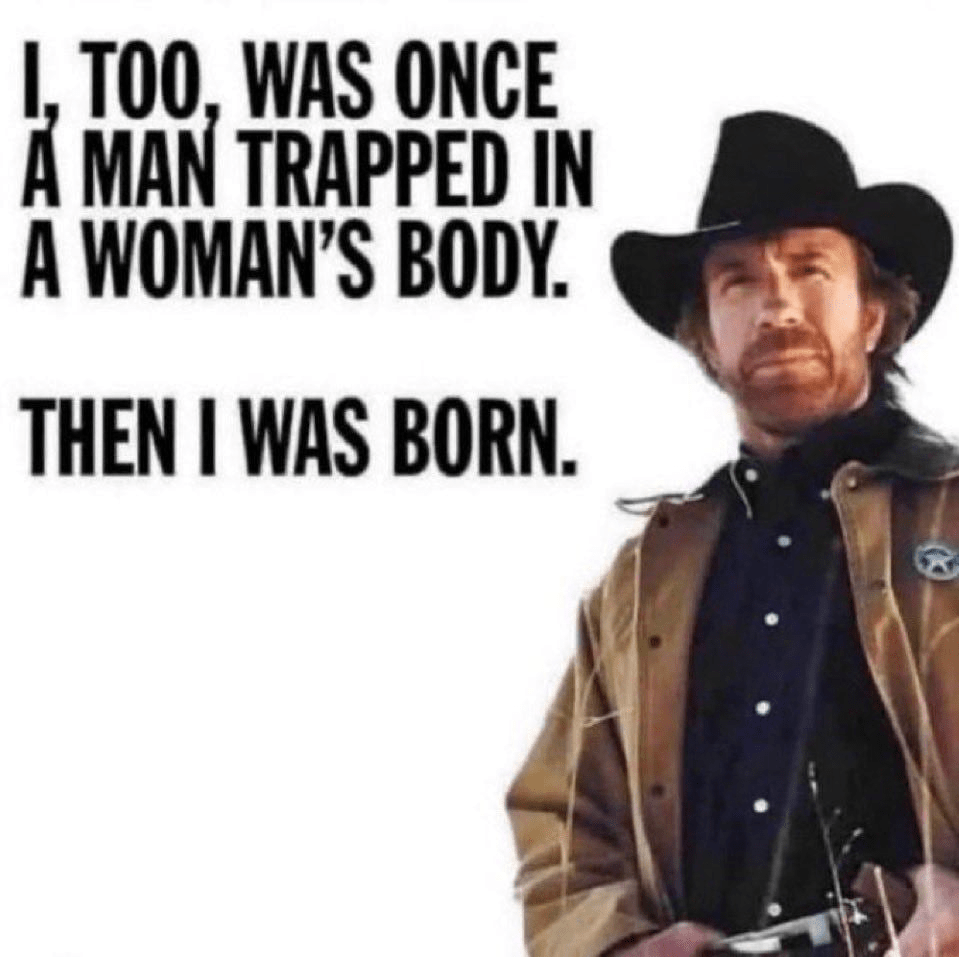
(Me? I don’t actually care what people do unless they do it on the street and scare the horses (Or to the horses, who can’t consent.) But I hate the lies the “trans” movement rests on. I know I have trans fans, and those seem to have some brain cells, but most of the people in the “movement” seem to believe that they will become REALLY and not just cosmetically the other sex, able to reproduce as the other sex, because “science.” That’s a lie. It’s a horrible lie, and people who tell it need to stop already. The only change available is cosmetic. IF adults, in full understanding of this are willing to trade the functional for the cosmetic, I wish them well. No one beneath the age of reason should do this. Ever. And no one should do it based on lies.)
And while Charlie might have hated the fact we put someone in the Supreme Court of the US who seems to have so little brain that when she turns her head a certain way music plays as the wind whistles in one ear and out the other, and that we did so because the walking corpse of a corrupt Senator installed by fraud as “president” had promised to nominate a justice based on color and sex, he never said anything against black people in general. Mostly because opposing someone being nominated on race and sex is ANTI-racist and ANTI-sexist. And not hate of any kind.
In fact, nominating someone because she’s a black female is as bad as nominating someone because he’s a blond, blue eyed male. I want more qualified, thoughtful justices, not more “looks good on a poster.” And telling black people the only way they can be nominated is for their skin is quite possibly the most racist thing I ever heard. And wrong. I’d trade ten Roberts’ for one Thomas and call it a good trade.
But the left screams “Hate” and calls us “haters” while saying we must be killed, obliterated, destroyed. While demanding that our blood be spilled in the streets.
The baying demon of hatred possessing them seems to stop them understanding what people actually say and hearing what they, themselves are saying.
I’m not going to call for “lowering the temperature” because it would do no good.
I’m going to call for challenging them to prove that we “hate” them in any way shape or form. And to point out that hating their mistaken beliefs is NOT hating them.
Oh, they think their beliefs aren’t mistaken? Fine, then defend them, rationally, as beliefs, not as a part of their anatomy much less the core of it. Go on, engage in dialogue. DISCUSS things. And put away the knives and guns. Because you don’t want to shove us into a corner. You just don’t.
Guys, we have a really tough road, really odd-shaped boots to fill.
When Breitbart died, I — and a hundred others — took up his flag before it touched the ground. Talking, yelling, mocking?
Those are my core competencies. And I’m not alone in that, on the Odd Right.
But taking up Charlie’s role? That’s a lot harder. It forces us to believe what they’re fighting so hard to disprove: That they are merely misinformed. That they can be reasoned with. That they will eventually understand disagreement isn’t hatred.
On the other hand, if there weren’t a grain of truth in it, if he weren’t succeeding, they wouldn’t have whipped up their lunatics against him and got him killed.
So we should try. I don’t know how. You probably don’t either, if you’re one of my regulars.
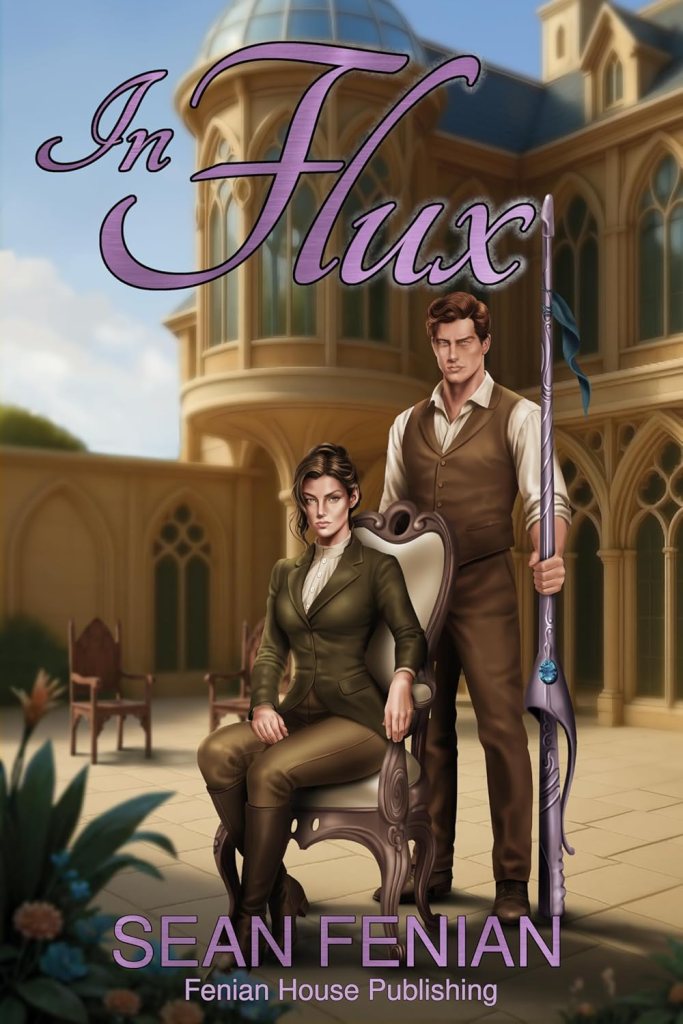
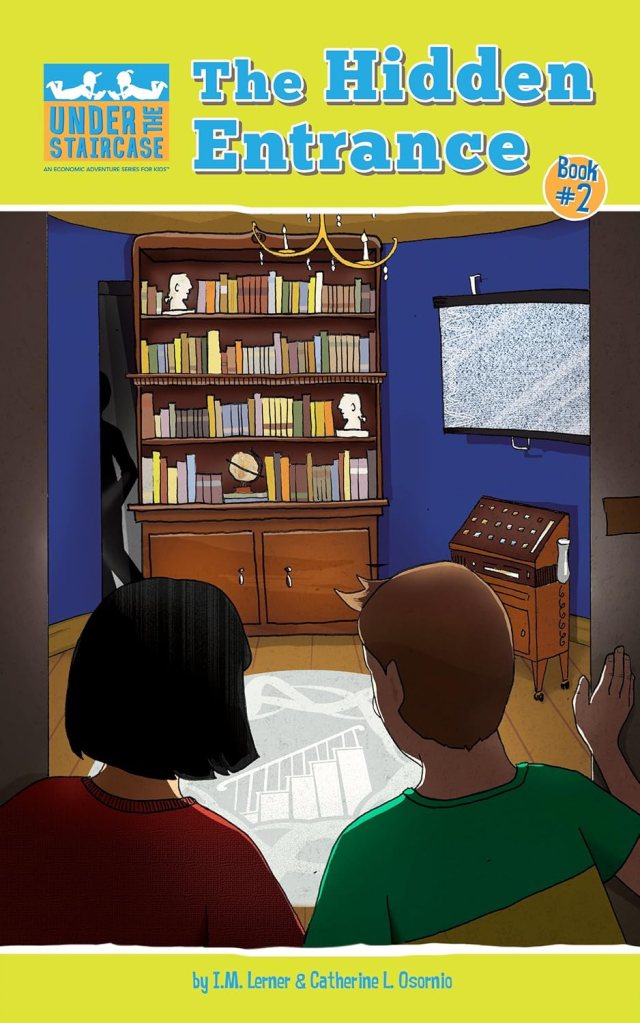
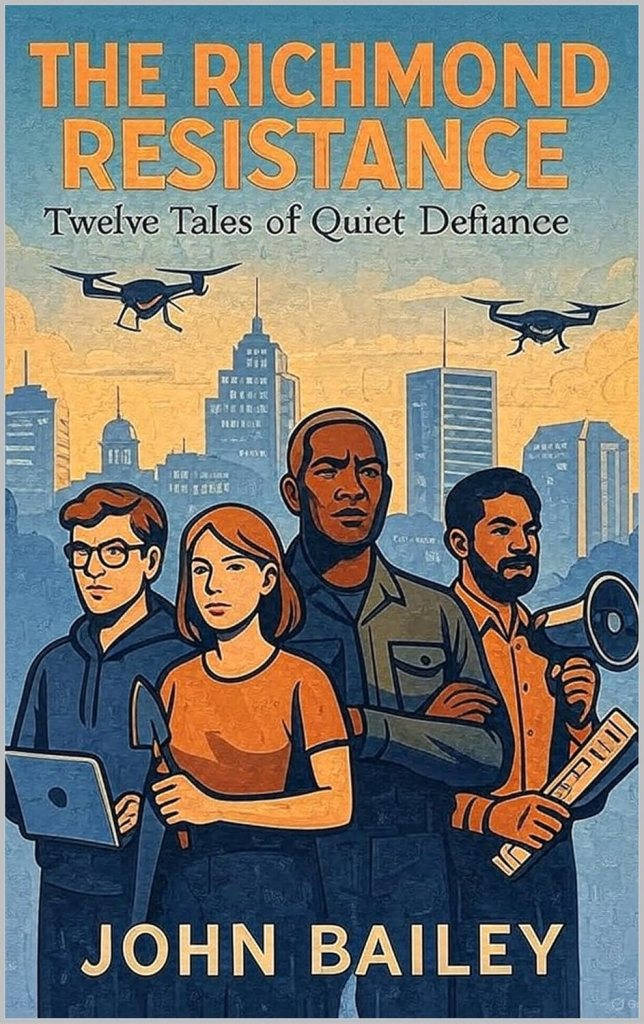
If you wish to send us books for next week’s promo,please email to bookpimping at outlook dot com. If you feel a need to re-promo the same book do so no more than once every six months(unless you’re me or my relative. Deal.) One book per author per week. Amazon links only. Oh, yeah, by clicking through and buying (anything, actually) through one of the links below, you will at no cost to you be giving a portion of your purchase to support ATH through our associates number. A COMMISSION IS EARNED FROM EACH PURCHASE.*Note that I haven’t read most of these books (my reading is eclectic and “craving led”,) and apply the usual cautions to buying. I reserve the right not to run any submission, if cover, blurb or anything else made me decide not to, at my sole discretion.– SAH
Sufficiently advanced science is indistinguishable from magic. On a lost colony world, mad geneticists thought they could eliminate inequality by making everyone hermaphrodite. They were wrong. Catastrophically wrong. Now technology indistinguishable from magic courses through the veins of the inhabitants, making their barbaric civilization survivable—and Publius Cornelius Scipio Africanus Kayel Hayden, Viscount Webson, Envoy of the Star Empire—Skip to his friends— has just crash-landed through a time-space rift into the middle of it all. Dodging assassins and plummeting from high windows was just the beginning. With a desperate king and an archmagician as his only allies, Scipio must outrun death itself while battling beasts, traitors, and infiltrators bent on finishing what the founders started: total destruction. Two worlds. One chance. No time to lose.
Volume 2
Skip thought he’d figured out the rules of survival on Elly.
He was wrong.
Now his potential allies from the Star Empire are turning up dead, one by one. Spies and saboteurs have infiltrated every level of Ellyan society, and Skip is running out of people he can trust.
As he races to save the king and archmagician—his only remaining allies—disturbing secrets about Elly’s culture emerge alongside buried truths about his own family’s past. One moment he’s explaining the bewildering concept of binary gender to confused Ellyans, the next he’s making impossible choices that could strand him on this world forever.
His last gambit is reckless. The odds of success are slim. And failure means losing everything—his mission, his allies, his only way home.
But some fights are worth the risk, even when the deck is stacked against you.
Sometimes the most dangerous enemy is the one you never see coming.
And posted to an Outer Tier World with an orphaned guardian’s store–the official name of the oft rumored “Doomsday Cubes” so popular in cheesy spy movies.
He hadn’t counted on children in danger, buying a hundred race horses, or running head on into a corrupt colony government. But with newly acquired sidekicks, it’s full speed ahead to save an entire World as Plagues and Invasions hit the entirety of the Three Part Alliance!
A gripping blend of alternate history, science fiction, and military adventure set in a world where time travel, alien invasion, and World War II-era conflicts collide.
1944 Britain spent twelve grueling years in the Stone Age, leaving its World War II Allies to fight on alone and forcing brutal decisions: dispatching stranded US troops to ancient North America, while wartime factories crumbled to rust. When the nation snaps back to 1944—mere weeks after it left—it’s a superpower, boasting jets, nuclear reactors, advanced computers, and television, light-years ahead of the world.
But this Britain is a fragile giant, its defenses geared for Neanderthal raids, not modern warfare. As Nazi Germany eyes the vulnerable country, eager to exploit the chaos, an even greater peril looms: a huge, derelict artificial moon orbits Earth, self-repairing with each orbit. Whoever seizes it could dominate the planet—or doom it.
In this pulse-pounding alternate history, survival hangs on getting rusting equipment back in the fight while turning Britain’s advanced technology to war.
For centuries, the ancient gateway between worlds has been kept a carefully guarded secret from the vampiric gods of the gray lands. But when its existence is revealed, it’s only a matter of time before the unthinkable happens and the exiled powers are unleashed upon the cosmos.
Honor and revenge, hope and despair, duty and sacrifice all meet at the crossroads of destiny in this thrilling sequel to Bid the Gods Arise.
Forsake Not the Gods is the second novel in The Wells of the Worlds, a dark sci fi fantasy series for adults and new adults
Terra Vonn is fighting to survive in a destroyed world, surrounded by unspeakable horror . . . and things are about to get much worse. After witnessing the vicious murder of her mother, Terra has a singular focus—exacting revenge on the killers. But before she can complete her plans, savagery intervenes and she is cast alone into a brutal post-apocalyptic world. As she trails the men south through a land filled with cannibalistic criminals, slave traders, and lunatics, the hunter becomes the hunted. Terra quickly learns that she is neither as tough nor as brave as she thinks she is. Worse, she may be the only one who stands between what little remains of civilization and destruction
Raised in a house where even the thermostat testified to control, a boy learns to perform obedience without ever growing a spine of his own. Freedom at college exposes the hollowness beneath the manners, and a hard fall sends him home in shame, face to face with parents who are out of words and patience.
What follows isn’t a miracle turnaround but a painstaking rebuild: community college instead of prestige, small habits instead of grand vows, showing up before the fire starts. Momentum comes one ordinary decision at a time.
Work begins on the sales floor of a computer store, where he’s a terrible closer but a natural fixer; skills and empathy take root that no quota can measure. That stubborn, useful competence opens the door to a first real IT job—and to a perilous climb that wins praise while slowly costs him his marriage, his health, and his peace.
Then the diagnosis drops, and later—when he thinks he’s finally back on his feet—the layoff. Illness and unemployment strip away the old measures of worth, forcing him to find identity in endurance, honest community, and a quiet faith that becomes a lifeline. Scraping back is anything but cinematic, yet meaning returns in service, in telling the truth, and in the work of another ordinary day.
By Degrees is a first-person novel about learning to live without borrowed scaffolding—about failure, effort, and the kind of resilience built not in leaps, but by steady, imperfect steps.
Ten years ago the Savients took over Niban, forcing the independent inhabitants into poverty and despair. Bass White saw the careless cruelty of the Savients kill his mother and his father. When a resistance cell is discovered in his city bloc, the Savients seek to make everyone pay.
With his wife Amie, Bass races into the caverns to escape the Savients’ brutal enforcers: the Atrasai. The couple barely make it to the limits of known territory outside their underground city, however, before the Atrasai catch up with them. It would take a miracle to save them…
…or a combat medic robot.
Join Bass and Amie in this sci-fi story of healing, hope, and wonder. After a decade of fear and pain, even a little light can bring out the best in man and machine. But will the best be enough to heal?
A drunken Irishman named Sweeney — well, to be fair, he was only five-eighths Irish, and only three-quarters drunk — made a resolution. Sticking to it took him through murder, and blood, and tracking down a sculptor on the far side of nowhere, and delivered him right up to the doorstep of a serial killer!
This iktaPOP Media edition has a new introduction giving the book genre and historical context.
An optimistic collection of six stories revolving around leaving Earth, or living (and making a living) further out in the solar system.
Xanadu–Sometimes, making a profit just needs an outside perspective for why it hasn’t yet. Turing’s Legacy–It takes love to make a person. And maybe an accident. Theory in Practice–Psychological care may well be more important in a closed environment. Reasonable Accommodations–Microgravity could be an answer to some disabilities. You Can’t Go Home Again–The effects of long-term isolation on asteroid miners explored. Everyday Miracles–What could push someone to emigrate to a new off-planet colony?
Over 200 years ago, a Plague overran the world, and 9 out of 10 human beings died.
In a small Japanese village on Shikoku, a group of American tourists found themselves stranded — and in grave danger of being murdered, merely for the sin of being 外人 (gaijin).
Luckily for them, their Japanese hosts took pity on their plight, and took them in as their own.
This is the story of their descendants — who still, more than anything, wish only someday to go home. That is . . .
All three books of the Space Race Trilogy, now together with two exclusive new essays.
Time Slips
What if our most treasured verities were in fact wrong?
To be selected for Project Mercury and be one of America’s first astronauts was a dream come true for test pilot Deke Slayton. But fellow Mercury astronaut Al Shepard kept telling old stories from his native New England, tales of monstrous entities like Cthulhu and Yog Sothoth. Earlier generations had viewed them as demons, but might they in fact be aliens, here long before humanity?
Soon Deke discovers evidence that something is watching the US space program. Something that begrudges humanity the stars and would put a ceiling on human attainment. Something that can manipulate time itself.
HP Lovecraft wrote that we dwell on a placid island of ignorance amidst the dark ocean of infinity, and that we were not meant to travel far.
What might the US space program have looked like in a cosmos filled with hostile eldritch entities? Would they notice us as playthings? Or as a nuisance to be dealt with?
The Secret of Pad 34
Who would put a ceiling on humanity’s expansion into space?
That’s what Gus Grissom wants to know. While fishing offshore from Cape Canaveral, he glimpses a mysterious undersea city of unearthly geometries, marked with a strange three-armed cross symbol.
His efforts to research it bring him veiled threats from strangers at his door. Trouble blights an exemplary career. However, Gus refuses to be cowed into silence, and pursues every lead he can find.

HP Lovecraft wrote that we live on a placid island of ignorance and were not meant to travel far. This is the Space Race in a world where the Soviet Union is not our only adversary.
Beach House on the Moon
The Moon is a dead world, airless and desolate. Emmaline Waite has known this fact since childhood, when she watched the Apollo landings.
But here she sits on the shores of the Sea of Tranquillity, looking up at the gibbous Earth as the waves roll in. What madness can this be?
She gets no time to contemplate that question, for she is not alone. She is about to enter a realm of love and fear, of mind-bending secrets that change her understanding of human history, and of self-sacrifice.
Her life will never be the same.
Miskatonic University in the Cold War and Contemporary Era
How would H.P. Lovecraft’s famous fictional institution of higher education have developed through the second half of the Twentieth Century and into the Twenty-first?
Space: Gernsbeck vs. Lovecraft
A look at the fundamental worldviews underlying the approaches of Hugo Gernsbeck and H.P. Lovecraft to the portrayal of outer space, aliens, and space travel.
Vignettes by Luke, Mary Catelli and ‘Nother Mike.
So what’s a vignette? You might know them as flash fiction, or even just sketches. We will provide a prompt each Sunday that you can use directly (including it in your work) or just as an inspiration. You, in turn, will write about 50 words (yes, we are going for short shorts! Not even a Drabble 100 words, just half that!). Then post it! For an additional challenge, you can aim to make it exactly 50 words, if you like.
We recommend that if you have an original vignette, you post that as a new reply. If you are commenting on someone’s vignette, then post that as a reply to the vignette. Comments — this is writing practice, so comments should be aimed at helping someone be a better writer, not at crushing them. And since these are likely to be drafts, don’t jump up and down too hard on typos and grammar.
Withe the book pimping email, and need to dress and go to church, so book promo after.
Meanwhile, OH MY GOSH, GUYS! THANK YOU:
And thank you, whoever you are who wrote this review. My head is so swollen I go through doors sideways now. This might be the BEST review of my lifetime:
And while I go dress and to church, yeah, yeah, I beat the clankers into a futuristic tavern video and….
People have been baffled as to why Jimmy Kimmel didn’t just apologize and avoid being fired. Also why a lot of the left is doubling down on what’s obviously the 20% side of an 80-20 issue, like…. Oh, standing for illegal immigration. or the 10 side of a 10-90 issue, like outright standing for more criminality.
What you’re failing to understand is that there is a strategy to it. It’s a defective strategy that no longer works, but it was such a good move for so long that it got deep-embedded in the left’s culture and they no longer know the reasons behind the action. They just do it because it always worked before.
At the same time that people were coining “Get woke, go broke” to show that wokeness was not in fact a bottom-up movement, I was coining “Roll left and die” but it actually should be more appropriately named “Roll left TO die.”
They’re not the same thing, but since they happened at the same time they’ve gotten conflated and the first kind of massively took over, because it’s a caution.
Roll left to die is more a description of what I saw happen over and over, primarily n publishing.
Someone who was hard left would take over a magazine. Over the course of his (or more commonly her) tenure, the magazine would decline to the point of dying. Just on the point of death, the person in charge would roll even harder left. The magazine would, of course, go down in flames. BUT before the ashes had cooled, this person would be offered a bigger, better job, with a bigger, better magazine. Where the process repeated.
This was also true of writers whose career was dying. Make sure your next book is redder than Mao’s Red Book, and even though it sells almost nothing, people will line up to give you big advances/support your future endeavors.
Because I don’t like things that make no sense, I analyzed the phenomenon and realized while it was a bad strategy for magazines/institutions, it was a great individual career strategy. How?
Well, the first thing you have to understand is that the left doesn’t give a d*mn about “the thing” whatever “the thing is”: science, industry, endeavor, institution, art. They don’t care about “the thing” that they just took over. The only thing they care about now and forever is revolution.
Add to that that by the fourth generation of dominating certain fields and hiring only on ideological compliance ALL OF THEM ARE ARRANT INCOMPETENTS.
Sure, sometimes, by accident, they find one of their true believers who has talent and sometimes even genius. But they tend to destroy those, because well, because their ideology views envy as a cardinal virtue. Be too talented and suddenly there will be rape accusations, or someone will have heard you mutter a slur, or… (These might even be true. As we learned this last week, the left are the most amoral sh*theads in existence. They don’t even know what morality is and can’t find it with two hands and a seeing eye dog.)
So the fact that you just destroyed the magazine/enterprise/institution doesn’t matter to them. They do that all the time themselves, often without meaning to. What matters is that before the thing died, you virtue signaled as hard as you could to the left.
That means that they MUST support you and give you a bigger position. They can’t allow people to think you might get fired for being hard left. So they have to do whatever they can to make you BIGGER.
This strategy worked for close on to a 100 years which is why people did the roll left to die as hard as they could.
Signs it was breaking down came when people like Keith Olberman or Don Le Lemon started having to “go to vlogging from their basement” to obviously no attention whatsoever.
And now a days it’s a crap shoot whether rolling left to die will get you more money, or just ignored.
But people like Kimmel whose career was dying anyway instinctively do it, because it worked so well so long that it just became “the thing to do” like some sort of deranged ritual.
They do it because the strategy solidified into ritual. And because they don’t know what else to do.
This btw explains the Biden administration too. Everything they did was a disaster and they knew it, so they rolled left as hard as they could, so they’d be seen as martyrs of the revolution and have cushy jobs/donations after. The fact that the Biden library is not getting funded at all and that Kamala is giving up on political — crazy cakes — aspirations, like governor of California, tells you it’s not working there either.
However, watch for it to happen more. The dying dinosaur rolls hard left to die.
Because its walnut-sized brain tells it that it always worked before!