Neo Wishful Thinking

Some weeks ago on twitter, I ran into the fascinating, mildly horrifying phenomenon of “neo feudalists” which like “Democratic Socialism” means institutionalized oppression, but with sprinkles and fun confetti. Yes, I’m being dismissive. Brutally and bluntly dismissive, just as I’m dismissive of the idea that us becoming monarchists would fix everything that hails us and be much much better than what we have.

I am mildly horrified that these strains of so called “thought” occur at all. The mechanism seems to be “Well, you know what we’ve been doing and what it claims to be has not worked, so the things that our teachers said were terrible must really be the way to go.” This is applying for everything, btw, from the relationships between the sexes to government, to how to find happiness.

Sometimes, if you’re lucky and your teachers/influences were exceptionally malicious you might, like a blind pig, happen onto the truffle of happiness, but that’s not the way to bet. Because the reverse of “so wrong it’s not even wrong” is more “so wrong it’s not even wrong.”

But despite the fact I slept only about four hours (apparently May was cursed. All of it can be summed as “it’s always something”) I’m going to try to take this from the top.

First on the monarchy will solve everything that hails us. It will too. In a fantasy land, in which the king is a magical being wedded to the land, etc. In the real world? Francis Turner yesterday pointed out the succession problem, but there’s another one that none of the would be faithful monarchists have given a thought to.

Okay, as far as I can tell one of their “ups” for monarchy is that kings are national, so at least you have a champion who, viewing your country as his fiefdom is of course pro-your-country.

In theory this is absolutely true. Note “in theory.” In practical fact, over the course of history kings viewed the country not as an extension of themselves but as their farm. And depending on whether they’re a good landowner or not, that can be very bad, very fast. Countries were impoverished by kings sucking any and all bits of wealth they could, regardless and using them on what they liked. Usually stupid wars (and some were incredibly stupid) because they viewed that as increasing their prestige. See all the contesting of far flung kingdoms to which the king had a tenuous claim. Look, ultimately the truth is that administering the competing legal rights of your subjects and keeping the law impartial is not sexy. Leading in war is sexy.

Francis Turner either in the article or in our talk before he wrote it (note I slept four hours last night, and not the hours you’d expect. Sleep started at around six I think) said at least monarchy wouldn’t have the “deep state” but this is not true. A lot of kings, at times grew a “deep state” as a way to avoid work/be able to drain the treasury behind the cover of the bureaucrats/creating a baffle of bullshit so the parlous state of the kingdom didn’t attach to them.

BUT no one has seemed to realize what monarchy would mean in the modern world. Look, kings and queens were already all cousins/linked, even in days with really, really slow travel. They honestly weren’t nationals of that country, but practically their own breed. (One of the reasons I laughed like an hyena when some idiots claimed Portuguese used to be all blonds, because look at picture of Portuguese kings.) Now have that in a world with flights and instant communication. You think we have a detached more interested in each other’s opinion than anything else international elite? Oooh, boy, you ain’t seen nothing yet. If you want to be governed by Hollywood? Go ahead. Because regardless of what you start out with, you’re going to end up with that kind of insular, super-rich elite. Only now they have not just propaganda and money, but actual de facto power that you gave them. At birth.

Are you people actually on drugs? And why are you boggarting them?

I can now hear “But we want a constitutional, parliamentary monarchy!” My throat clearing and coughing might be “Great Britain.” And if you think the king is an impartial figure head, you’ve not heard the British opinions of say King Charles III. Yes, some royals will become very popular. But it’s hit or miss. Like presidents, you know?

Okay, now I hear “but monarchy is natural to humanity.” So are lice, intestinal parasites, and sleeping naked in trees. Just because evolution predisposes us to it and there’s a hole in our heads marked “king” there’s no reason to indulge it, much less give it power.

As for republics only lasting x amount of time? Yeah. Well, you know? Monarchies, even if you have a dynasty that lasts however many years? The system only lasts about that long, between getting rid of main branch of family, younger son is installed, all the bureaucracy changes/advertises itself as totally new thing. So, pah.

As for Neo Feudalism…. My answer was “You want to jump to late stage communism?” and I was told no, because in Feudalism the upper classes had duties they were honor bound to obey, etc.

It’s like the idea Monarchy will be fine, because the kings will be Christian.

People, I can’t believe I have to say this explicitly: You can’t mandate that someone be Christian. Not really Christian, to the point that it puts internal stops on their ability to be tyrants. You can mandate that to hold office someone be outwardly Christian, sure. But that might only accelerate the level at which everything is taken over by non believers who make the right mouth noises. Because real believers will ask themselves if they’re really Christian and can call themselves that, while someone doing it for the power will just say yeah, they’re super duper Christian. (We’ll leave as an exercise for the reader WHICH brand of Christian, which at this point is not even just an American thing. Even in technically very Catholic Portugal, you got all sorts.

So if you’re counting on the oaths and mutual duties being enforced by the fact that everyone is “really Christian” I have some swampland in Florida I’d like to sell you, gators and all. Because no. You don’t get to mandate what is in other people’s minds and hearts. That’s not how any of that works. And if you read medieval treatises, while believe in “God” was more or less universal, at least in written documents, people often didn’t act as if they REALLY believed. Or they came up with really interesting ways to carve themselves exceptions.

“Oh, but it will be written. The rights and obligations will be written down!” Looks meaningfully at the US constitution. Yeah. Sure. Spelling out rights and obligations in a written document will avoid all problems. It’s not like people in power have ignored that before. Not at all. It’s all unicorns and pretty flowers.

Also the way things were arranged in the middle ages was three classes: nobles,(those who fought) farmers (for simplicity let’s say workers, since farmers barely registers now) (those who fed everyone) and clergy (those who prayed). We’ll not even poke at clergy, because who is going to certify that? Again we come up with “Which denomination?” (Note feudalism broke down in any country in contact with other countries with different religions. Because a powerful Church (and that broke down too, see Henry VIII) punishing transgressors with excommunication was necessary for the whole thing. So what’s your substitute for the Church? The UN? (Laughs out loud.)) Who is going to arbitrate all the mutual obligations and such? The king? See above. And who is going to invest in industry, particularly when it changes? Do you really want to depend on the nobility all being genius planners who understand technological innovation? Because I don’t. I’ll point out the “best people” in France had a carefully planned central communication thing with computers, that got end-run by the chaotic innovation called the internet.

What is the advantage of this neo-Feudalism? “Everyone knows what their rights and obligations are!” Is that it? Because, what you just said is “If only everyone” only in a more complicated way. Look, I had toddlers. They knew exactly what should be done/shouldn’t be done, etc. BUT, get this, they were really good at rule-lawyering. If you think that adult humans aren’t just as good at rule lawyering, you might never have met humans. (And your human-suit is wearing thin.)

But but but… Neo Feudalism. Like old Feudalism, super-stable (It wasn’t. Let me sing to you of horrible peasant revolts.) BUT Neo, which means everyone gets sprinkles and cupcakes.

I’m just saying it sounds better in the original Frankish, okay.

Ultimately ANY form of government works great is small and voluntary. Even communism works great in those circumstances.

No form of government works well for large nation-states. Not really. And all of them deform over time, as the powerful try to become more powerful and the less powerful fight back as best they can.

ULTIMATELY, stripped down, there are two basic forms of government:

The one person as leader, born that way (or can pretend to be), chosen by G-d or the international bodies, or the best people, or whatever you want, has power over everyone else. There’s the succession problem, but it’s relatively stable and fills the niche in our instinct trained by evolving in ape/early human bands. “A strong leader protects us all!” In practicality, it depends on the leader. And it always devolves to the king not being particularly interested in the welfare of his citizens. ALWAYS. Yes, there are exceptions to stupid/glory-seeking kings. They are exceptions. And usually have trouble accomplishing much, because by then the system is designed for the default.

The other option, relatively recent and feels super risky — let’s call it “The American Way” — is “Every man a king.” Every little potentate can choose to surrender his or her power to someone for governance and to deal with other people/nations. It works mostly in the default. I.e. it kind of functions while falling apart. And it feels super-risky to the primeval monkey in the back brain. As in “The leaderless band gets destroyed.” But we’re not a primitive band.

The second one has the advantage that you can take back the power you surrendered. And that the people in power know it. Also called “Why the Biden Junta still hasn’t accomplished what they would like to have done to us the first month, even if nothing has gone kinetic yet.”

Neither is ideal. Both have issues, because both are designed for humans. There is no ideal system.

Given no ideal system, I choose the one where I can take back my power at least in theory over the one where I’m born fitted with a saddle someone can ride by “custom and religion.”

You make your choice. And you pay the price.

The Problem With Monarchy and Democracy – By Francis Turner

The Problem With Monarchy and Democracy – By Francis Turner

Winston Churchill had, I think it is fair to say, mixed feelings about democracy. In addition to the quote above he also said that the best argument against democracy was a five minute chat with the average voter. This no doubt explains why he considered democracy to be the least bad as opposed to being actively good.

Anyway, I don’t recall a Churchill writing where he explained why democracy is least bad so I’m going to explain.

The fundamental positive of the democratic process is that it solves the succession problem

The fundamental positive of the democratic process is that it solves the succession problem. I should note that this is not a new thing thought up by me, it’s a moderately well known concept in political science and similar fields.

What is the succession problem?

The succession problem is the issue of how to transfer power from one leader to the next. It’s an issue that affects any organization from a local volunteer club to a vast nation state/empire but it is generally more important for the nation state. If a gardening club gets the wrong leader then typically it fails and some of the former members form a new one (making a note to absolutely NOT allow crazy to join). If a nation state tries the same thing that’s a civil war and those rarely end well.

Monarchies are well known for having good kings/queens and bad ones. Often a bad one is the son/grandson of one of the good ones. That’s because monarchies usually use direct primogeniture (oldest son is next king) as the way to ensure succession. This has the advantage of being easy to understand but it has the major disadvantage that not every oldest son is the most competent or wise. Hence the bad king. It also suffers from the failure mode of “no sons” which leads to various nephews, cousins and so on fighting it out. I.e. civil war. See also “king dies while heir is still a small boy” and the installation of a regent to rule until the child comes of age. Regents may be competent and loyal but history suggests they often aren’t.

Monarchies that try to avoid the single heir issue by splitting the kingdom between all heirs rapidly end up with dozens of pocket kingdoms that are ripe for takeover by a neighboring realm that has primogeniture and therefore is larger. No successful monarchies have extended the “split the kingdom” trick beyond a single generation. It can work fine as a once off (see William the Conqueror splitting his Norman and English lands, though that wasn’t a massive success) but never more.

Some monarchical traditions (see e.g. the Ottoman Empire) allowed someone such as the previous ruler or a council of elders to select the best son of the previous king. Sometimes they could even (in IIRC the Mongol tradition) pick nephews and other relatives who were not direct descendants of the previous ruler but were part of the royal family. This seems to solve the “oldest son is a moron” problem and potentially the “no sons” or “too young a son” problems, but it comes at a clear cost because there’s an obvious literal game of throne to be played in which potential future rulers have a strong incentive to kill off all their siblings. This is actually worse than the traditional primogeniture system. The “oldest son is a moron” issue gives you a chance of a bad king which is somewhat random. The “kill all your relatives before one kills you” issue pretty much guarantees the king will be a paranoid schemer because all the non-paranoid schemers will have been killed by their relatives. Paranoid scemers rarely make good monarchs.

Monarchies have one other problem. King goes ill/senile/mad but doesn’t die. At which point you are looking at the regent problem only often the “regent” is some combination of heir, queen and courtiers who spend much of their time fighting each other and/or other potential regents.

These problems are inherent in how monarchy is defined. A single ruler for life, followed by another such. There is rarely a system to replace the monarch and if there is one (see Japan and the various retired emperors) it generally results in monarchs being forcibly “retired” prematurely and a power struggle as they object to this.

People who don’t like kings and don’t like democracy may try other approaches but so far all the ones tried seem to suffer from the succession problem too.

Your standard issue dictatorship always hits the problem of who succeeds the glorious leader. It is actually worse than a monarchy because there is no particular expectation that the eldest son inherits so as soon as the glorious leader is unable to exercise authority the would be successors start fighting it out. Plus every glorious leader knows that competent underlings are likely to replace the glorious leader before the glorious leader is willing to step down so (see Putin) glorious leaders tend to arrange accidents for underlings who might make good successors. That means that the next generation is almost certainly less competent than the current glorious leader. A couple of generations of that and (see Africa) you have really stupid rulers.

So people try ways to avoid the glorious leader dictatorship. Take, for example, communist countries where a politburo rules and the General Secretary (or President or…) is the leader. The General Secretary can, in theory, retire at any time and allow another member of the politburo to become the leader. There may even be rules that say that the General Secretaryship has to rotate or that it has a limit of some number of years. This is something that the post Mao communists of West Taiwan tried. It worked pretty well for the first two or three changes of leader and then Winnie the Flu engineered his rise to the top and, magically, the requirement to step aside for the next leader went away as did all the other checks and balances designed to stop someone becoming ruler for life.

About the only way that sort of works is the high priest model. But that only works well if the priesthood is somewhat democratic in how it selects the next high priest (see the Pope and College of Cardinals as an example) and it can often lead to a de facto monarchy as the high priest’s son becomes the expected next high priest.

Democracy Solves The Succession Issue

In a democracy representatives (and presidents / prime-ministers) serve for a limited time before having to be re-elected. Assuming that elections happen periodically and mostly honestly when the leader is too old he (insert your own “or she”s if desired) retires and a successor is elected. Moreover if the leader’s policies are unpopular he will lose the next election and power is transferred to a new leader who has different policies. Or maybe the same policies but is more charismatic and/or less corrupt.

A critical difference between democracy and monarchy is that democratic leaders expect to retire and live on in the country ruled by their successors. As a result the incentives for power transfer are quite different. A democratic ruler wants a trouble-free succession because he likely has several years if not decades of life ahead of him after he loses his position. That same factor of life afterwards, and often the possibility of a return to a leadership position after another election, means that he won’t want to prosecute his predecessors for wrong-doing either, unless the wrong-doing is so egregious that a majority of the electorate agrees that the predecessor needs to be punished.

With succession solved, and with regular elections to permit the option of change and provide feedback to the rulers by chucking the bastards out when needed, it would be hoped that democracy would be rather better than Churchill’s “least bad”, but it isn’t

Where Democracy Fails

Just because democracy appears to solve the succession issue doesn’t mean it is all sweetness and light. We can look at a certain swamp on the Potomac and see how democracies can fail at the successor problem to a degree. Lust for power and money has resulted in representatives that gerrymander districts to ensure their re-election and/or not retiring until death but so far – despite all the histrionics – changes of representative and president have happened without serious repercussions. Now we are right up against that line with the hate for OrangeManBad but so far the norms are holding and the US still has a form of representative democracy (yes I know “it’s a republic” – elections happen to choose rulers which is a basic bit of democracy, deal).

However, the US is not the only nation where democracy seems to be having issues. Not just the US but also the UK and much of Europe seems to be stuck in a situation where the faces at top may change but the policies don’t and where, if they look like they might change, the bureaucracy exerts itself to stop that. See Brexit, Trump, the AFD in Germany and so on. In the UK, Liz Truss was almost certainly set up for failure in large part by a civil service and related bureaucracy that feared what she wanted to do. In that regard, what she says in this video is absolutely fascinating (source)

About the only (minor) positive of the bureaucratic state is that probably also solves the succession problem too because bureaucrats like to retire. Unfortunately (see Fauci, A) some bureaucrats seem able to stay on in positions of power and influence when they should have retired and some allegedly retired bureaucrats (e.g. Brennan and numerous other past CIA heads) seem to wield considerable power despite lacking an official position.

So far the only solution appears to be the Milei one – fire the entire bureaucratic establishment and deal with the fall out. However in order to get someone like Milei elected with a clear enough mandate that he can remove most of the bureaucracy you need to be circling the drain in failed state territory. That’s not a place we want the country to be in.

It’s Not Some Grand Plan

So, let’s talk conspiracy theories…

Largely what we’re facing is not a conspiracy, but a prospiracy. Yes, there are conspiracies within it, before you start screaming. We all know about journolist. That one was easy. Look, it’s a highly incestuous field, where people can only get jobs by toeing the political line. Trust me on this, I have friends who are journalists. Any hint of being on the right, and you’re doing the weekly articles with the shopper ads in Podunka Kentucky. Or you do your thing for tips on substack. It is of its kind as controlled a field as traditional publishing. More really. So, yeah, the fact that already fully controlled assets conspire to make their reporting more uniform is not surprising. (And if you think there isn’t still an active list, you’d be naive.) That they were caught at it is the only surprising thing.

Mostly though it’s a prospiracy: people thoroughly indoctrinated in “the proper response and what signals to watch for” all do the same thing, because they’re all trying to stay in and signal louder. Or strike a blow against the other side. the end result is…. well. What we have.

But it is not an actual conspiracy. A conspiracy would be both more dangerous and less.

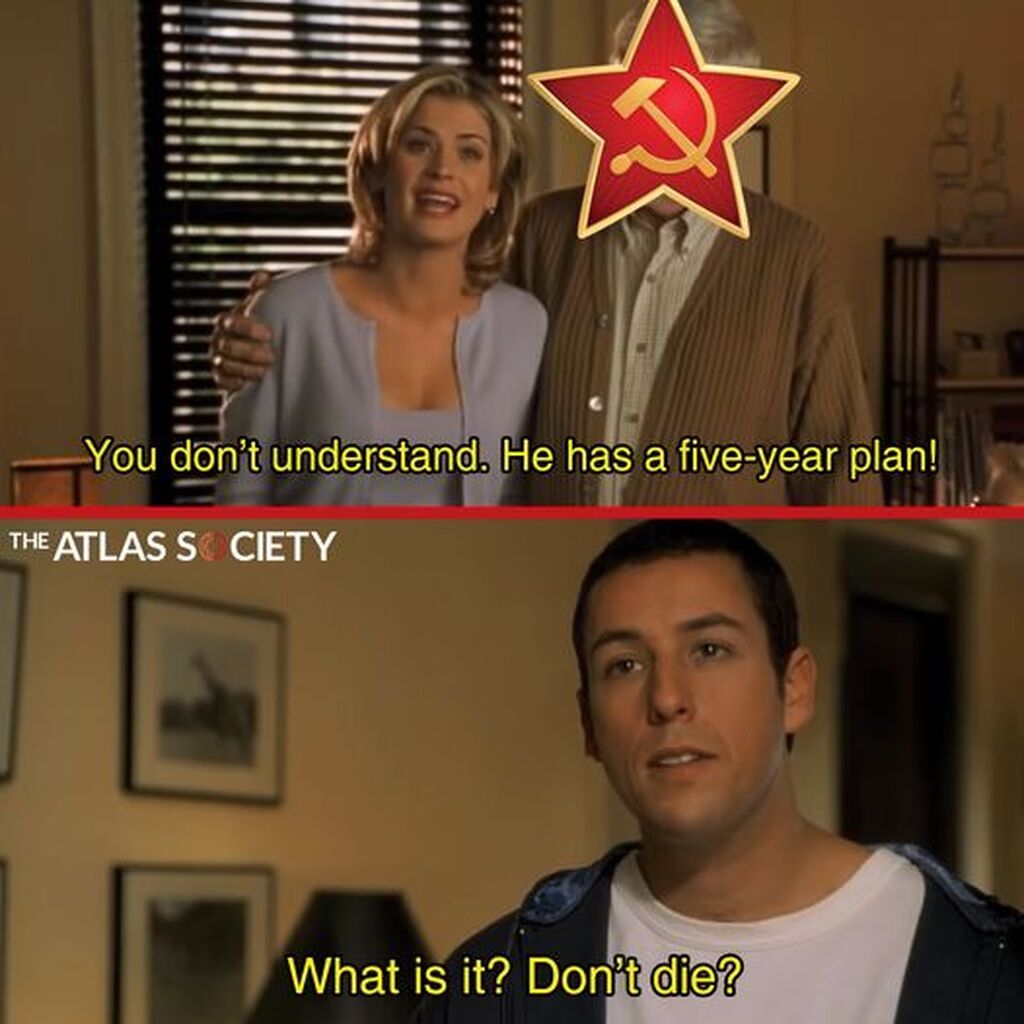
What do I mean that? Exactly that. If they were a coordinated conspiracy, their responses would make more sense and be less insane. (Take this. They’re just throwing things at the wall.) Yes, they talk about five year plans and how it’s all coming true, but seriously? They always have five year (ten year, twenty year) plans. They’ve never worked, ever.

No, we’re not living through the end of a USSR plan. None of the USSR plans ever worked, and this is no exception. But the USSR was always good at rewriting whatever happened as “we meant to do that” and it’s entirely possible the person talking about how this is all a plan actually believed it. (To think it fits you also need a highly — highly — skewed view of events. You need to cherry pick a lot.)

They would be less dangerous if it were an actual conspiracy because leftist conspiracies have never worked, ever. They tend to think the intention is the thing and ignore that individuals have agency, and it kind of destroys all their beautiful shiny plans.

Most of the things that we think are conspiracies really aren’t. They’re just people being people over structures that aren’t designed for much of anything.

Look, the Great War. The left has this theory, or did in the sixties, that old men send young men to die in war, so they can shape the future without the disruptive youth.

It’s neat, clear and false. Wars happen because nations want resources or powerful men wnt more power. Or yes. Young men are the ones who fight, because they always are. The powerful men don’t want young men to die. They want their young men to win. And be loyal to them forever for the great Victory.

That young men die in great numbers comes from the fact that no centralized authority is very good at it in any way.

In the same way, take the cold war. We kept the USSR going for probably a good sixty years extra, with all our aid, our help, and our — frankly — kowtowing to them.

Was this some grand conspiracy because we wanted to stay at war? Not hardly. Because it was some great profiteering? Sure there was some of that.

BUT MOSTLY? It was the knowledge problem.

Heinlein said, and he wasn’t whistling Dixie that our intelligence services have always sucked. He was not wrong. Well, I don’t know ALWAYS. But they’ve sucked my entire life.

And part of the reason for this is that we’re a very large country and the three letters themselves are huge, complicated and contradictory.

Worse, they’ll all part of the mind set that we’ve had inculcated into us. So you know, the three letter agencies in the mid twentieth knew central planning was more efficient. So they bought into the USSR’s claims of great production, etc.

It’s important — very — to recognize that in a centralized, top down system errors get passed along and magnified. Hence, if someone overestimated the USSR, everyone else worked around that. No one dared question it, because what if they were right?

That’s what we’re prisoners of. Not some grand conspiracy, but prospiracy and the flaws inherent in the system.

The good news is the distributed information system we call the internet and we call various electronic means of communication is breaking that.

When you feel like everything is falling apart, it’s because it is. And it’s not because the enemy is so powerful, but because they’re losing control, don’t understand what’s happening, don’t know how things are going to change, and are losing their minds.

It’s not some grand plan. It’s the little plans blowing up. It’s the beliefs we all were taught falling apart.

The future is terrifying. And the blow up of all our corrupted information and all our corrupted structures is going to hurt badly.

But this is not anyone’s plan, and certainly not the enemy’s. The left hasn’t been hoodwinking us for decades. They’ve been careening through information errors and trying to cover their asses.

It’s just they controlled the media and that covered for them.

But we? We’re distributed. We’re chaotic.

And the future is unscripted. But we have an advantage.

Keep your clothes and weapons where you can find them in the dark, and stay frosty.

We got this.

In Flander’s Fields

It’s now over 100 years since WWI.

We still haven’t digested it.

Some people think that the trauma of WWI is what set the West on the road to insanity. I used to think so, but it’s not that simple.

The path was laid. The war happened because the world was already saturated with hubris and progressivism, and partly the war happened because the idea of world-spanning empires that transcended nationality.

Oh, it was newspapers, and trains, and fast ships. It was conceiving of a world that could be conquered, of people that could be integrated into a great, progressive project.

Everyone blames WWI on Nationalism, mostly because the Marxists — ascendant in the aftermath — were so mad people fought for nations, and not class against class. But the truth is that the royal families who started the music and pitched everyone into the pot were dreamers of international empires that spanned the world. Kind of like they still are. (Joined in by the super rich and the pretend “intellectuals.” Same as it ever was.)

WWI was an attempt to leave traditional culture behind, to transcend, to become “civilized” and industrial, and regimented, and– Oh, what’s the use. It is what it is. A product of the time and particular knowledge that made them have a certain view of the world.

In a way they only doubled down after WWI, only then we were supposed to be communitarian, and not care about nationalism, and–

The long war of the twentieth century was a struggle to remake humans.

They’re still at it, still trying to form us into units of production or something. But we are fighting back, at last. Unorganized, and all thumbs, but we’re fighting back.

It’s easy to look back at the 20th century and mourn the loss of life, and think we wouldn’t have been part of it.

But the truth is, there was no room for pacifists. There still isn’t. Wars don’t start and end because “everyone decides to”.

And in that time and in that place, fighting Germany was the most ethical thing to do. Now, the way they fought, and how, and the ridiculous war tactics, sometimes make one wonder if it was on purpose, if eliminating the youth of Europe was intentional to make it easier to rebuild Europe in a progressive image. But the truth is they aren’t that smart. They never were. They were trying to devour each other, to conquer the world. The dead people were just a consequence of the fact that they don’t much care for individual humans. They’re not that good at planning. Otherwise we’d be in the world of 1984.

None of which means it wasn’t honorable and right for the individual men, in the trenches to fight for their land and their friends and their family. Because once the machinery is in motion, it can’t be solved if one side refuses to fight. Yes, it could be solved “if only everyone” but that’s not how humans have ever worked, ever.

We live each in our capsule in time. We can’t judge the past any more than it could understand us.

The best we can do is honor those who sleep in Flanders Fields and those since and before who fought the best they knew for freedom and a future.

For our lacunae and our mistakes, for our losses and our despair, may future generations forgive us.

And may history be kind.

Today let’s us honor those who went before, lost in their capsule in time, who had the courage to fight for their beliefs. And fell for them. Their fight is now done. Ours goes on.

Book Promo And Vignettes By Luke, Mary Catelli and ‘Nother Mike

Book Promo

If you wish to send us books for next week’s promo, please email to bookpimping at outlook dot com. If you feel a need to re-promo the same book do so no more than once every six months (unless you’re me or my relative. Deal.) One book per author per week. Amazon links only. Oh, yeah, by clicking through and buying (anything, actually) through one of the links below, you will at no cost to you be giving a portion of your purchase to support ATH through our associates number. A COMMISSION IS EARNED FROM EACH PURCHASE.*Note that I haven’t read most of these books (my reading is eclectic and “craving led”,) and apply the usual cautions to buying. I reserve the right not to run any submission, if cover, blurb or anything else made me decide not to, at my sole discretion.SAH

FROM DALE COZORT: Devouring Wind

“They’re coming for us, from the sky and emptiness.” Ten months ago, technology guru Sharon Mack and her autistic and strangely prescient daughter Bethany were trapped in the wild alternate version of Earth called Bear Country. They took refuge at Fort Eegan, an outpost built by a peculiar cult with mysterious ties to the US government. Now a new Exchange brings terrifying new consequences.

The new Exchange blocks Fort Eegan’s water supply, threatening deprivation now and catastrophic floods in the future. It also pits Fort Eegan against beings with superior technology, inhuman ruthlessness and a weapon capable of devouring everything in its path, including Fort Eegan.

In spite of the danger from the new Exchange, the humans of Bear Country are nearing a war with one another. Ruthless escaped convicts hold hundreds of women hostage. With supplies dwindling, they eye Fort Eegan’s already limited resources. Inside and outside the fort, conflicts fester among the isolated humans, including a deadly love triangle. Fort Eegan’s only hope is to unite before it is blown away by the devouring winds.

FROM SCOTT MCCREA: U.S. Marshal Ezra Flint: Hard As Flint: A Western Adventure (A U.S. Marshal Ezra Flint Western Book 1)

Introducing an action-packed new Western series by master storyteller Scott McCrea and introducing his new character, Marshal Ezra Flint—a rough, tough lawman who fights for what is right and never gives ground to a wrong-doer.

Marshal Ezra Flint keeps the mean streets of Misery safe, but things get personal when his ex-lover runs off with one of the most dangerous bandits in the territories. Flint goes on a quest to bring her back, but each step of the trail is dogged by paid killers. He traces her to a flyspeck town in Kansas, but can he bring her back before the killers find him?

Hard as Flint is the first in an exciting new series of westerns featuring Marshal Ezra Flint by Western Writers of America Spur Award finalist Scott McCrea.


“Hard as Flint is a noir western with an especially hardboiled marshal. It’s a story of the violence of the West and of the passions that make men do dirty deeds. I hope you’ll like it,” said author Scott McCrea.

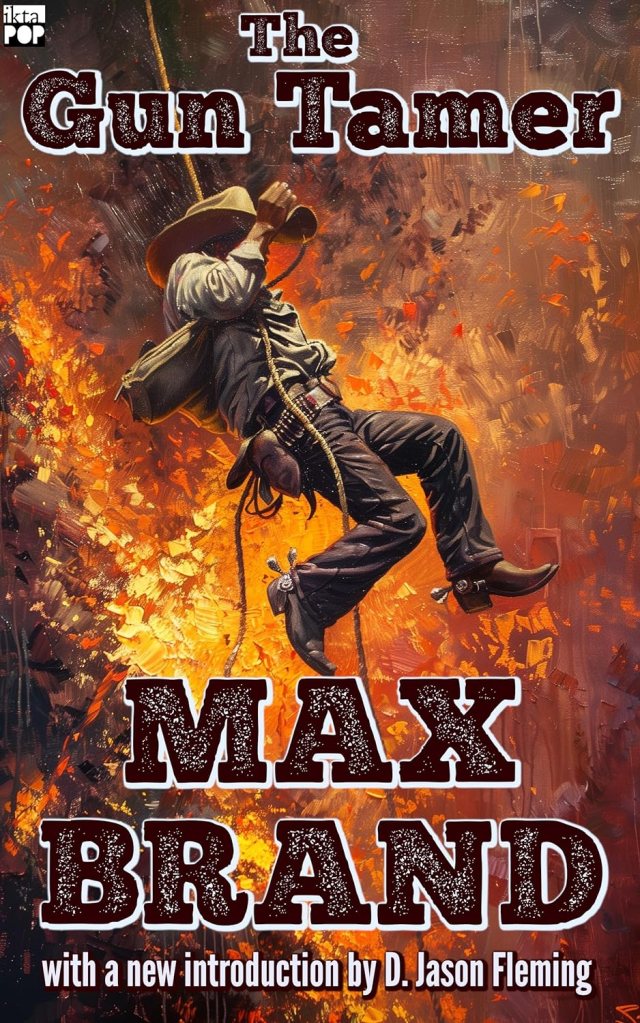
BY MAX BRAND, REVIVED BY D. JASON FLEMING: The Gun Tamer (annotated): The Classic Pulp Western

When Don Felipe Christobal Hernandez Consalvo appeared at the local dance, every young lady noticed him. Most especially did Mary Mackay notice him. Lydia, her mother, could tell immediately that, no matter how charming and elegant, there was something off about the man. Her husband, the colonel, saw only Consalvo’s regal heritage, and invited him into their home. Now Lydia must play a complicated game, doing nothing to push her daughter away, enlisting outside help from the sheriff, and trying to solve the riddle of Don Consalvo, who claims to be the merest fop, yet is a crack shot capable of defeating the fastest draw in the land.

  • This iktaPOP Media edition includes a new introduction giving the novel genre and historical context.

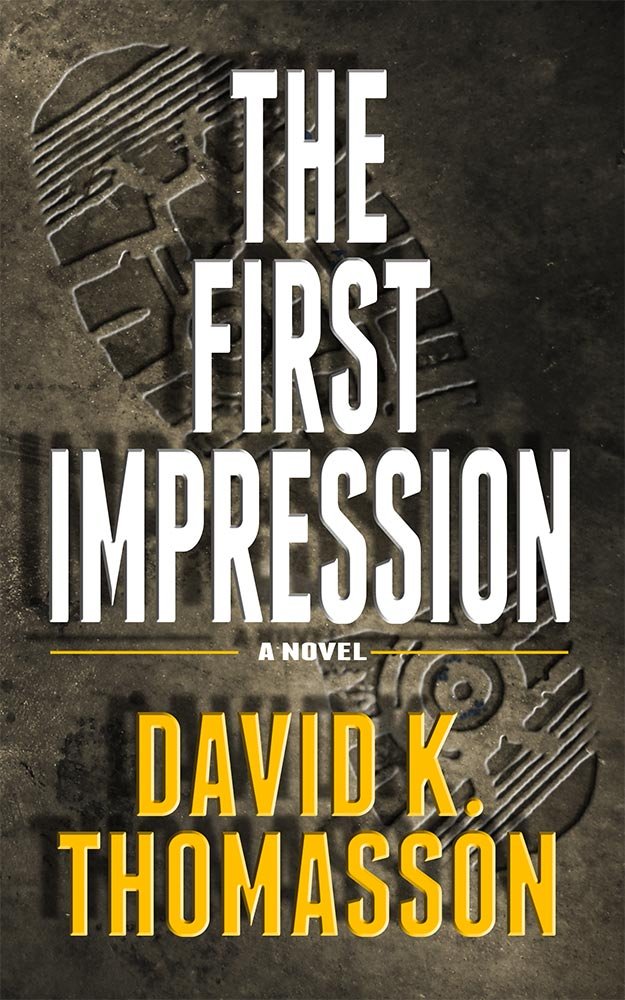
FROM DAVID K. THOMASSON: The First Impression

A man framed . . . his life ruined . . . and then the twists begin.

Jack Bolt rose from a hillbilly childhood of poverty, neglect, and abuse. Thanks to his unusually keen mind and the faith of a teacher and a bookstore owner, his future looks bright. At age 25 he’s working maintenance in a college town, studying on a scholarship, and about to marry the girl of his dreams.

During a routine service call at a church he runs into 13-year-old Sarah Ellison. Moments after he leaves, Sarah is brutally murdered. Bolt is charged with the crime and convicted by a brilliant prosecutor who uses his own honesty against him.

He’s been framed with tainted evidence, but this is no whodunit. Bolt knows exactly who did it—Conrad Baylor, church deacon and deputy chief of police.

Held in jail during his trial, Bolt is haunted by the ‘howdunit’: How did Baylor manage to tamper with the evidence and frame him? And how can he discover the secret and clear his name if he goes to prison?

But then, in a strange turn of events, Bolt is offered a chance to prove his innocence and recover his once-promising future. That’s when a deadly game of cat-and-mouse begins . . .

FROM LAURA MONTGOMERY: Long in the Land: A Science Fiction Lost Colony Adventure (Martha’s Sons Book 2)

He’s a man on the run. But on this harsh alien world, freedom doesn’t mean he’s safe.

Peter Dawe can’t face his mother’s relentless grief. With her anguish deepening his guilt and the colony’s governor out for revenge, he’s desperate to escape a deadly situation ready to explode. So he jumps at the chance to journey north away from danger, chasing the rare sight of a long-lost aircraft.

Buoyed by the glimpse of a machine he’s never seen before, Peter discovers the pilot desperately needs aid for his newborn son. But with sinister agents searching for them both, the remote planet may not be big enough to preserve the young fugitive from his enemy’s vengeance.

Can Peter find them refuge before they all fall to their doom?

Long in the Land is the thrilling second book in the Martha’s Sons science fiction series. If you like captivating world-building, edge-of-your-seat tension, and memorable characters, then you’ll love Laura Montgomery’s high-stakes tale.Buy Long in the Land to make a stark choice today!

FROM HOLLY CHISM: Bite Sized (Liquid Diet Chronicles Book 1)

Meg Turner has been a vampire for twenty years. Her favorite food is rapists. Which is how she met Andi Donahue, her new best friend/ girl Friday.

And then the nightmares start. And the bodies start showing up–bled out and raped. Just like Meg was. They don’t have a whole lot of time to stop the killer before he strikes again, and only one way to stop the killer.

But how can Andi help Meg stop a killer she can’t even see?

FROM KAREN MYERS: To Carry the Horn – A Virginian in Elfland (The Hounds of Annwn Book 1)

AN ENTIRE KINGDOM BUILT AROUND A SUPERNATURAL NEED FOR JUSTICE, ENFORCED BY THE WILD HUNT AND THE HOUNDS OF HELL.

What would you do if you blundered into a strange world, where all around you was the familiar landscape of the Blue Ridge Mountains of Virginia, but the inhabitants were the long-lived fae, and you the only human?

George Talbot Traherne stumbles across the murdered huntsman of the Wild Hunt, and is drafted into finding out who did it. Oh, and assigned the task of taking the huntsman’s place with the Hounds of Hell, whether he wants the job or not.

The antlered god Cernunnos is the sponsor of this kingdom, and he requires its king to conduct the annual hunt for justice in pursuit of an evil criminal, or else lose his right to the kingship, and possibly end up hunted himself.

Success is far from guaranteed, and no human has held the post. George discovers his own blood links to the fae king, and he’s determined to try. But Cernunnos himself has a personal role to play, and George will have to sort out just why he’s the one who’s been chosen for the task.

And whether he has any chance of surviving the job.

Find out what it’s like to live in a world where you can help the Right to prevail, even if it might cost you everything.

FROM WILLIAM STROOCK: The Great Nuclear War of 1975

In a Different 1975…
Superpower relations breakdown and a nuclear war all but annihilates the Soviet Union and devastates the United States.
100 million Americans are dead.
After Washington is destroyed, a smalltown judge delivers the oath of office to Vice President Rockefeller.
Surviving American forces on land, sea and in the air await orders from the new president.
Americans across the nation climb out of the rubble looking for a homeland that no longer exists.
In surviving capitals across the globe, governments ponder the implications of a world without the superpowers.
In Britain, a rump cabinet meets in the Cotswolds to plan a way forward without the United States.
Commonwealth Prime Ministers in Canberra, Auckland and Ottawa look to the UK for leadership.
In Buenos Ares, a weak government plots the takeover of the Malvines.
As radiation sweeps down from Siberia, the Chinese government faces unprecedented famine.
In New Delhi, Prime Minister Indira Gandhi wonders how she will feed India.

In Rhode Island, one man will start a trek halfway across North America to reunite with his family.

William Stroock is the author of 15 novels including the World War 1990 alternate history series.

FROM LEIGH KIMMEL: The Shadow over Leningrad

In Stalin’s Soviet Union, Tikhon Grigoriev lives a precarious life. He knows too much. He’s seen too much. A single misstep could destroy him, and if he stumbles, he will take his family down with him. With Leningrad besieged by Nazi armies, the danger has only increased.

He’s not a man who wants to come to the notice of those in high places. But when he solved a murder that seemed supernatural, impossible, he attracted the attention of Leningrad’s First Party Secretary.

So when a plot of land grows vegetables of unusual size and vigor, and anyone who eats them goes mad, who should be called upon to solve the mystery but Tikhon Grigoriev. However, these secrets could get him far worse than a bullet in the head. For during the White Nights the boundaries between worlds grow thin, and in some of those worlds humanity can have no place.

Vignettes by Luke, Mary Catelli and ‘Nother Mike.

So what’s a vignette? You might know them as flash fiction, or even just sketches. We will provide a prompt each Sunday that you can use directly (including it in your work) or just as an inspiration. You, in turn, will write about 50 words (yes, we are going for short shorts! Not even a Drabble 100 words, just half that!). Then post it! For an additional challenge, you can aim to make it exactly 50 words, if you like.

We recommend that if you have an original vignette, you post that as a new reply. If you are commenting on someone’s vignette, then post that as a reply to the vignette. Comments — this is writing practice, so comments should be aimed at helping someone be a better writer, not at crushing them. And since these are likely to be drafts, don’t jump up and down too hard on typos and grammar.

If you have questions, feel free to ask.

Your writing prompt this week is: SATISFY

What Comes After

Twenty ears ago, my mother and nephew visited us for a month, from mid-June to mid-July. As you know this is the time of flags out everywhere, even in neighborhoods you’d not expect a lot of them. This amazed the Portuguese contingent, filling them with culture shock.

Portugal flies its flag like most European countries, at various governmental institutions, maybe some large companies. Unless, of course, there is a soccer championship going on, and then you see it everywhere, but as a team symbol, not as a country symbol.

In Europe, love of country is … complicated… as it is in most places where the obvious fraud — let’s call it what it is. They might have less visible fraud than here, but they have more controlled information, and their elites surely behave like they can’t be unseated — and lies from above have long — long — ago convinced the people they stand no chance of controlling their destiny.

There’s a love of the people that almost amounts to chauvinistic pride of “race” if you believe — and they do — that nationalities are “races” or “breeds.” So they are nationality-supremacists, believing their genetic breed (a largely imaginary construct) is superior to all others. But the country itself is viewed as a sort of imposition. And the flag pretending thereto is part of the nationality thing, which is so gauche, so embarrassing to be devoted to. The government is known as “Those bastards” or “Those idiots” by and large, by most people. (Okay, that’s not so different from us.) Unless comparing them to other governments, in which case theirs is the best of a bad lot.

If there is need of the military, draft is instituted. In fact most of the countries still have a nominal draft, though they draft very few people. But the possibility is there.

So– why did I title this “What comes after?”

It’s not what comes after America. My gut feeling is that what comes after America is more America, and harder and more seriously than before. I could be wrong. Making predictions is difficult, particularly about the future. But that’s the movement I’ve seen in the much maligned grass roots. I think there’s a revival of culture and nationality in our future, and what comes after will make people look at the century from the mid twentieth to the mid twenty first and scratch their heads and ask what they were thinking. (Though the revival will have to reach far further than that, but that’s something else.)

It’s the time in the middle, that’s a worry. The next 20 to 50 years, as clown world waxes and wanes, or if you prefer waxes on and waxes off.

Say Biden gets frauded in in November, and between thinking their compatriots are idiots, or knowing there was fraud, people lose hope for a while. Will our flag too become a symbol of shame? Our military recruitment has not yet reached European levels, but it’s headed there.

I don’t know.

I think the military recruitment is a reflection of the lack of trust in the clowns in charge, more than disillusionment with the country. I could be wrong, but that’s my feeling. After the withdrawal from Afghanistan the last thing I’d expect is for anyone to give themselves over to the stellar decisions of the FICUS and his Junta.

I think by and large Americans still are proud of being Americans. Will that change?

Having grown up in Europe — and mind you, I left almost forty years ago, so not only is my information dated, it is dimmed by time and the fact I was a kid for most of the time I lived there — my feeling is that what causes the disillusionment, the giving up, the “I’m done with this” is the feeling that the rest of the country continues voting for “those bastards over there” or at least supports them.

They forget, if they ever knew, that their information is highly controlled and that their news are mostly pravda. There is a belief in reporters that I haven’t (fortunately) seen here in decades. Their disillusionment with and mental divorce from their homeland is partly because they believe their countrymen have inexplicably all chosen this deranged path.

Now I’ve seen glimmers of it here at times. Idiots — many who purport to be on our side — who swallowed the 81 million votes for basement Joe and who beat their chests and ask like everything was fair and above board.

And most people, to be fair, don’t realize how extensive the fraud is. When it comes to frauding themselves in, the left aren’t leaving anything to chance. It’s belt plus suspenders used for destruction. It’s ax and chainsaw, I suppose. Everything from the easy false registrations of Motor Voter to software shenanigans, to the ever-green letting illegals vote, to the vote harvesting that makes grandma in the nursing home vote the way the pink haired nurse’s aid says, to vote-ahead or vote-by-mail that as well as massive opportunity for fraud also allows them to know exactly how much fraud is needed ahead of time.

How slick and sewn up an operation is is became obvious in 2020 where they didn’t even feel the need to campaign because they had it in the bag thanks to the fraud.

It is because of this that it’s amazing to see how panicked they are. But since they drink their own ink, it’s possible the peons have no idea how extensive the fraud is and believe they won fair and square.

However it’s also why I don’t hold much hope for the elections. Yes, I think we should vote. All of us. Because I think the more of us vote, the more the fraud will have to be open and in your face.

I personally am hoping for 400 million votes for the nearly dead pedophile-mummy.

Why? Why vote at all if it won’t carry the will of the people?

Other than my twisted sense of humor in seeing them trying to sell that the population is now 700 million, overnight?

Well…. Because it matters. It might not carry our will, but it will do several things.

It will serve them notice of how many people oppose them. They will lie about it, and have fake polls and heaven knows how many propaganda operations, but they will know. In the dark of night, in the privacy of their diseased brains, they will know and fear. To the extent they haven’t tried to start gulags and haven’t attempted to carry their commie agenda by force of arms it is because they know the size of the opposition, and what they’ll meet with anywhere outside the easily cowed cities.

It will also let those of us in opposition know how many of us there are. This too is important. The big cities are a great illustration of this.

I’m utterly convinced that most of the big cities have been frauded for the left since the beginning of the twentieth century. Machine politics is and has been a thing forever. Now BGE doesn’t think they’re that frauded. And maybe he’s right. Or maybe not. The idea that they’re solid dem is so implanted that people will falsify their preference in speech and normal life, because they think they’re surrounded by the left.

It’s hard to say once it gets to a certain level of fraud. Because if people think they’re surrounded by one kind of thing, they try to fit in. This is how you see sudden, overnight reversals, when people realize they’re not alone.

But in any case, things like Ante-fa and Buy Large Mansions and the nascent nazis of Hamass do what they want and inflict depredations on large cities and often minority neighborhoods because people in those cities and neighborhoods who are in opposition to the left think they’re alone. And therefore instead of standing defiantly and telling the rat bastards to quit their shit show and get out of town, they stay quiet and hunker down and try to go unnoticed.

You don’t want the country to become like that. Even if the control of our own polity gets frauded away from us, it is important for people to know they’re not alone, not surrounded by idiots who support the left and their outrageously damaging project.

Because I think that is ultimately the problem in Europe. Each one thinks they are the only one who sees the horror and the bad things. And so they hunker down, and they despise their polity. They don’t fly the flag. The don’t sing the anthem. They hide and seethe.

Let’s not be like that. Vote. Vote as hard as you can. And speak out. Denounce the fraud. All of it. And when and opportunity to make something like “Let’s go Brandon” viral do so. Don’t be intimidated by whispers of how uncouth it is or shouts that we’re bigger than that. Tokyo Rose — left Rose just sounds weird — comes in many forms, and are always followed by useful idiots who think they’re being delicate or kind or whatever the heck. Ignore them.

Tell the truth whenever you can. Or at least don’t lie. And given half a chance, make a noise to let others know that they’re not alone. I’ll note that if you are embedded and can’t decloak, you can use the “isn’t it a shame” to propagate something like “Let’s go Brandon.” “Isn’t it a shame that those uncouth people didn’t let the reporter — who was just trying to save them from their folly — cover up their nonsense with ‘Let’s go Brandon”? Imagine children hearing them shout F*ck Joe Biden! What a shame, how uncouth. And they are supposedly pro family.” (For more helpful techniques, I refer you to Comrade Don Camillo by Giovanni Guareschi.) This is likely to fly under the radar of the true believers, who maybe wish you wouldn’t mention it, but you’re just being a little enthusiastic after all! However, anyone who like you is embedded and in the dark and who hasn’t HEARD of FJB (you wouldn’t believe it, but yes, there are people who haven’t) will be cheered and know they’re not alone.

This blog will stay on as long as humanly possible, and yes, there are plans for different hosting/blogsite should it become needed. At some point there will a non-live secondary site built, hopefully this summer so the switch if needed is seamless. Not yet, because we’re still living through the after shocks of moving. But THIS light will stay on as long as I can remotely keep it on. I’ll try to be more timely, too. As soon as book that kidnapped my brain is finished.

You too, do what you need to do to let others know they’re not alone.

Sometimes, a light, seen in a great distance is all you need to not lose hope. And to keep the faith in our miraculous country.

Be not afraid.

You’re not alone.

Excellence

When I was an exchange student, I borrowed a lot of books from the library. First, because I have a wicked reading addiction and I certainly couldn’t afford to buy books, and second because I was curious about the culture and particularly fascinated by the type of book I didn’t normally find in Portugal.

One of the things I binged on because fascinating was the self-help section.

Yes, even at seventeen I found a lot of it was absolute hokum. Other stuff was basically proto-Jordan Peterson: do this, do that, and some things about your life will move in the right direction. The things were fairly innocuous to obvious (doesn’t mean I hadn’t missed one of them by a mile. In this case “people will judge you by your appearance and put you in fairly broad categories.” It had never occurred to me that my habit of dressing like and engineer — is every relevant part covered. Cool — would lead people to think I wasn’t interested in boys, or that I was slovenly.)

However the subgenre that drove me nuts, because I couldn’t figure out what they meant by that was the whole sub-genre that existed at the seventies, which classified people into “winners” or “Losers” and claimed — in some strange spasm of misguided pseudo-freudianism — that whether you were a winner or a loser was set before you were vocal.

Look, yes I know. Your attitude towards life changes a lot of what you get out of life and how people view you. And I do know it’s possible to break a child’s perception before the child is verbal. But it was the almost astrological nature of the thing: if your destiny was set this way, you could never change it. Also, what was all-important was how others perceived you. Not whether you could actually do the thing you set out to do, not whether you were good at whatever the task was, but how much people perceived you as being a “winner.”

The feeling I got was that these self-help manuals were either mostly aimed at salesmen, or that the writers had a weird perception of life as “forever in high school” and worse, as the sort of high school you saw in movies. Now I think about it, a lot of the current advice on how to date, etc. seems to hinge on the same thing. Not how to be happy/create a happy life with another human, but how to be seen with all the cool babes/hot guys.

In the same way these manuals were how to trick the social signals into being thought “the cool one.” It might have worked or not. I won’t dispute that demeanor and how confident you are affect your success in every career. BUT none of it seemed to have anything to do with “be competent” or the actual work of doing …. well…. the work. I think the self-improvers assumed one already could do the work and they were just fixing the social stuff. Maybe that was true. Or maybe it would have been in a society that hadn’t already for two generations been hiring for “makes right” (left) “noises because those signal an excellent education.”

However the truth is at our point in time, fifty years later, we have a lot of people who signal very competent and who can’t tell their elbow from a flying elephant. And worse, in more recent years we have a vast number of people who are exquisitely trained to believe that “acting” is the same as being; that mumbling a certain amount of mumbo jumbo will change reality for reasons they don’t understand — and no one does, because they aren’t real — but which worked in school, and therefore must work in real life.

Part of this is how ridiculously borked our education system is. And no, if your kids didn’t go through school in the last 30 years (I hear it’s worse in the last 20) you have no idea how bad it is. (There appear to be some areas of “okayness” too, but since the bad comes from education schools, it’s extensively propagated. Okay is about the best you can hope for in most cases.) Like, everyone knows that “whole word” doesn’t work, but they might not realize that the buzzword by kids’ time had been changed to “whole language.” And it was…. the same thing. Any system where the teacher tells the kid to “just guess” it’s whole word. Because there’s no guessing in reading. Yes, sure, some words are pronounced differently, have different emphasis than you expect, but if you pronounce it, you either recognize it and change it, or you can correct the kid on how it’s pronounced, but kid is in general area. (As in, people KNOW what you’re saying, as all of us know, they just sometimes laugh at how mangled it because you never heard it aloud.) If the teachers tell you that phonics doesn’t work because “the kid can read everything, but he won’t know the meaning” the teacher needs to be told that’s what dictionaries are for. Learning to read shouldn’t give you an immediate meaning. For one a lot of meanings change with the other words around them. If you memorize “shape of word” and “meaning” together, not only are you going to make a lot of mistakes — a lot of words in English have the same general shape but are very different: wards and warts for instance — but also you’ll think of the word as a pictogram for the meaning.

How can I tell this is a rampant problem? Well, it was already a problem 20 years ago when I found myself reading/grading people’s essays or stories. I would come across sentences that made ward/wart mistakes that weren’t easily explainable by spell check. And it wasn’t a mistake per sentence, but a mistake every other word, so that you started at it and tried to divine the meaning by a process similar to reading the entrails of the sentence. Reading whole essays like that was…. uh. Mind boggling. Being expected to treat them as though they were in English was even more mind boggling. The fact that these were written by young people who presented as rational, even bright in person just made it very clear it was a literacy thing. They were not, in any functional sense literate. And at least 50%, sometimes 80% of the ones I interacted with wrote like this.

This is my private explanation for why we have a plagiarism crisis in colleges right now. These people who got graded/passed all the way through graduate school, but who aren’t in any way literate, are expected to produce work. … so they steal a sentence from here, another from there, (and sometimes the sentences contradict each other but how would they know) because the entire writing process is essentially magic to them and they can’t figure out how to do it.

The process is actually familiar to me both as a teacher and as a student of foreign languages. There is a level at which you generally get the gist of what you read, but you can’t get every nuance, and you’re not in any way shape or form competent for writing in it. If at that stage you’re compelled to write anything more than two/three words long, you’ll desperately regurgitate sentences you read that stuck in your mind, in what you hope is a coherent whole. Needless to say, mostly it’s not? The most I’ve managed is when I need a character to say a word or two in another language in a book, and even then I’ll run them by a speaker to make sure that it’s the right sense/connotation/tense.

Our schools have managed to make normal, bright students who have finished 12 years of schooling — and who don’t count as failures to learn — into the equivalent of ESL students with maybe a year or two of instruction.

Even with how much our tech enables voice to text and video communication, we still depend on writing in most professions. The result of each profession being hit by a wave of illiterates is unimaginably bad, and probably at the back of a lot of things from how strange corporate leadership is, to bridges that fall down.

Worse yet, because the teachers who get these people down the line are either themselves already illiterate or can’t figure out how to fix the problem, so that the students can “learn the thing” they concentrate instead on telling the students how to fix everything by thinking the right thoughts/saying the right words, mostly words that signal or integrate into a Marxist world view.

I honestly think that’s how we’ve arrived at “math is racist.”

But anyway, predictably, we have a crisis of competency everywhere. And we have already lost two, maybe three generations to this. And if you’re a member of those generations who can read, write and — rarer still — think it’s no fun for you either. You’re not even going to get ahead, because these people are not looking for competency. They might think they are, but no. They’re looking for things they “understand” as competent. Which… “Do an interpretive dance of bridge design” might be the kindest image for what they’re looking for.

And in the middle of all this, starting in the 90s or so we’ve been bombarded with mission statements for people, for companies, for small tiddlywink clubs. These “mission statements” are the equivalent of those “look like a winner” things of the 70s. As though putting on your mission statement “We strive for excellence” means that excellence is magically conferred. (Maybe the “write your own vows” thing is a subset of this general lack of competence. First, I never understood why anyone would want to. Second, what they write are not vows. Usually they’re weird prose poems that make no sense. Third, the ones that are vows are bizarre. “I promise to always love your smile.” Does this mean if her teeth get knocked out in a freak bicycle accident, the marriage is annulled?)

Anyway, this long rant — brought to you by “Why, yes, I do have a sinus headache” — is to say that things are bad, and the only way out is to really strive for excellence.

But wait, things are worse than that. Because the last three years have taken a massive bite out of the sanity of those of us who are “generally competent” at our thing. We’re enervated, depressed, and between the state of the state and fears for what the zanies will do in the future, not to mention living and working in clown world, a lot of us are phoning it in, barely functioning and doing the bare minimum.

I personally keep getting sick, which is probably stress and annoying, but not nearly as impairing as the fact I go through vast stretches of time when I can only read Jane Austen fanfic. This happened in the past, of course, but not to the point I did it for years at a time, unable to pull up. And I know it’s psychological/overstimulated/vaguely depressed because I’d also live on crackers and milk if I didn’t force myself to eat more rationally (at least some of the time.)

So I know I’m not “striving for excellence.” And mostly this post is for me, but I think it might help others too. Yes I do understand sometimes you can’t. Often I can’t, these days. But we really need to make an effort and strive to do the best we can at– well, everything. Because we know how to. And so many others don’t. And we need to bridge what’s going to be some very tough years when most people don’t have what it takes to keep civilization even pretending to continue.

Whatever it is you do, do it as well and as competently as you can. Yes, you’ll have bad days, but try — at least try — to work at things and do them well.

Do it for the children, do it for the future, do it for humanity. Do it for spite.

Go on.

Masquerade

Again and again these last few years, my mind turns to the part of Heinlein’s Puppet Masters where a large part of the country doesn’t realize that they’ve been invaded by aliens.

Their news are controlled. The entire apparatus of civil society, too, has been captured by the aliens (who — spoilers for a book 11 years older than I, really? — are a sort of parasite that attaches to the central nervous system and puppets the human) and therefore use all their power to enforce the idea that the aliens don’t exist and everything is normal.

When our hero, from an area that knows it’s occupied, or at least where the centers of power haven’t been captured (or totally captured) visits, it’s the little tells that let you know something is rotten. While everyone goes about their daily business, and everything is seemingly normal, it’s the little things: the pools are all closed for a reason or another, because the slugs (the name for the brain-puppeteers) can’t afford to have anyone see them, when people strip down. People are more dressed than normal. Some people wear humps under their clothes. Though as the novel demonstrates it’s often hard to figure out which of them are just a hunched back.

Yes, it’s an allegory for communism. Sure. And every time I hear that said with a sneer about “gimmick books” and “allegories” and sometimes the lip curled and the words “red scare” uttered, I want to put the idiot against the wall — no, not that way. Just grab him by the shoulders and throw him against the wall — and ask him exactly when did he (or she) decide that communists were sort of fuzzy sweet pets, who never meant no harm. Then beat them about the face and head with the Black Book of Communism. After they stop trying to be superior, I’d point out to the last … 16? 20 years, when the masks of those in public have been progressively yanked off (the most marked period being when they were all demanding we don masks, of course.) have proven that in fact the worst thing about McCarthy’s red hunt was that it was much too late. Similar to trying to expose the puppet masters when they control all the key positions.

More importantly, Heinlein was a good enough writer, that no matter with what intent he started writing, the novel reads true. As in “If this unlikely premise was true, it would go exactly this way.”

And because of that, it does significantly mimic a free country whose positions of power are taken by humans who had — alas, unlike in the Puppet Masters — willingly made themselves slave to an inhuman and evil philosophy. One that renders them less able to understand or function as human beings.

Again and again, my mind turns to it, as even a lot of the “right wing” (ridiculous term for the side to the right of Lenin, which spans such a gamut of opinions it might as well be an entire world.) say things like “contesting the election was wrong” or talk about the “insurrection” of January 6, and in general try to make out that the world is completely normal, and our normal processes are still working, and what the media reports and obsesses on has some relation to reality.

But the important thing to remember is that the masquerade has been on for a long time.

Things didn’t become glaringly in your face until 2020. But it was there, if you looked. Before entering a lot of places of power you needed to have a puppet master controlling your brain, or at least roll up a piece of cloth, put it between your shoulders and try to pass. And most places of power were hard controlled. If you knew where to look, you saw the humps, you saw the closed pools, and people wearing coats in the middle of a hot summer.

And the unified media was obviously mind-controlled and obviously all spinning the same story. Whatever the cause of the left at the moment, it was in every movie, every book, every news report, whether it be “abortion not being legal kills people” or “women must have careers” or — lately and er… abortively — a lot of propaganda for cute, cuddly illegal immigrants, who are being deported and leaving behind defenseless children. Children, I tell you!

Now it feels crazier because more people are seeing it. The happy go lucky media is still happily putting its mind-controlled morons out, to talk about the great things Biden has done, or how wonderful the economy is, or whatever the message of the day is, but most of us are watching the hump between their shoulders, and looking around at a social landscape ravaged because the aliens don’t understand humans or the economy. And the more they stomp and tell us that there are no aliens, the more obvious they are, standing there, in front of G-d and everyone with the brain-controllers between their shoulders.

I think part of the insanity and horrible sense of impending doom of the last few years is precisely that dual view, or the world the media and mass communication describes, and the increasing awareness of more and more of us of the grim and unavoidable truth beneath it.

The good news is that though we feel stupid, looking for the signs for closed pools, and the humps between shoulders, ultimately the truth wins, because reality is what doesn’t go away when you don’t believe it.

The other good news is that the masquerade is falling apart. And once you see the horrible things the puppet masters have done in the name of “our democracy” or really (just) their lust for power you can’t unsee them.

And so in the end we win. Perhaps slower than any of us wants, and yes, sure, with more casualties. But we win, the Republic wins. Government of the people for the people shall not perish from the Earth.

The masquerade is breaking. Yes, the dual view makes you crazy, but in the end it’s best for everyone.

Reality can be hard to accept and cause us to have to do things we’d rather not. But it exists, unlike the lies.

Be not afraid.

Isn’t It Funny?

This is not a real post. I woke up late, and we had overnight guests, so there was breakfast talk, which we all needed… and well….

But yesterday night, just before going to bed and related to yesterday’s post, I was thinking “Isn’t it weird? We’re not just living in strange times, but hilariously funny ones.” Granted, you need to have a bit of a black sense of humor, and also it will probably be funnier in 100 years, but really.

Isn’t it funny that they tried to start a “misinformation” czar and got ratioed to hell and back and had to walk it back?

Isn’t it funny that they keep screaming the economy is great and not even crazy people believe them, and they can’t figure out why?

Isn’t it funny they’ve now tried to restart the panic about an unknown disease… five? times and it doesn’t take and they can’t figure out why not?

Isn’t it funny that both here and in France, the people spontaneously have come up with “Wife of political leader is really a man” to the point of driving the politician nuts? I mean what do Michelle Obama and Madame Macron even have in common? And why is this the annoying thing people latched on?

Isn’t it funny that all over the world, people who used to scream about the Will of the People and sometimes still do are raging and frothing at the mouth about “populism”? (The word doesn’t mean what they think it means.)

Isn’t it funny that most of the “populist” leaders have the most absurd hairstyles? Even Boris Johnson while he was worth spit couldn’t control his hair. Is that where the alien probe/G-d/the author injects sanity? It leaves the hair in a mess?

I’m sure there’s a lot more funny things, that I can’t think of right now, because I came up with like a dozen more last night but don’t remember them. Feel free to add.

Yes, we’re going through very strange times, and it’s still possible a number of us might die. But at least we’ll die laughing!