Turn The Boat Around

It is universally agreed on the right that we need to change the culture. It is also universally agreed by most sane people that politics is downstream from culture. This falls under not giving orders that won’t be obeyed.

The part where I seem to be the voice screaming in the desert, to the point where I feel like … well me, twenty years ago screaming “We’re not at risk of population explosion. The population is probably already falling and we’re at great risk of population dearth!” is this: The culture is already changing, and for cultural change, it’s changing at a FAST clip. And it’s changing our way, at that.

Instead, every time I try to say this I’m met with screaming, fits, tantrums and destructive rages and assurances that no, we’re more broken than ever and the only solution is to burn it all down.

Right. So part of that — only hell itself who spawns them knows how large a part — this psyops agents for the other side. And by other side I mean foreign agents opposed to us and perhaps our very own entrenched, insane commies. Though if you want to believe the other side has a more theological dimension I’m certainly not going to stop you.

My response to that psyops is: if it were already lost they wouldn’t be shelling out for such a large fifty cent army to convince you to burn it all down. They’re evil and delusional, but not that stupid.

So, past the psyops, what is at work here? Why are people so despairing about changing the culture if I’m right and it’s already changing?

Because they don’t understand the breadth, the span and the limits of cultural change.

Look, I was born to a nautical culture. Not that I grew up by the seaside. I mean, we spent at least a month in summer going to the seaside every day for most of the day. This was considered (maybe still is, in Portugal) absolutely necessary if the child is to grow up even middling-healthy. The trip there, given the roads and transport available to us at the time was over an hour and sometimes over two. (Yes, there and back every day.) Now it’s fifteen minutes, to the point that it would be a practical way to live “by the sea” without spending too much money. Times change, in physical plant at least. But the area I came from still doesn’t consider itself seaside anything. The culture looks inward, towards land and farming and the closest they come to the sea is buying fish carcasses to fertilize the fields. This makes sense. The highway system has existed (to this extent) for less than 40 years. And almost universal car ownership for less than that.

Bear with me, this has a bearing! (And not exit pursued by a bear.)

However, all of Portuguese metaphors, culture and images is nautical. For obvious reasons.

So, when i think of turning a culture around I visualize turning a sizeable sail boat around. Under a certain technology and for a long time this was basically impossible. Not really, but it amounted to being impossible. At least if the wind were a certain way. Then tech was invented (I believe, though not my metier an arrangement of triangular sails) so one could tack against a contrary wind. And it became possible, but for large boats still difficult to do a you turn. It has to be done slowly and carefully lest it pitch us all in the drink.

Now imagine a boat the size of the US and all the minds in it, and cross winds and currents composed of all the countries (and enemies-domestic) who wish us ill.

It’s going to take time.

Normally culture takes a very, very long time to change. Things learned with mother’s milk are almost impossible to eradicate and the only thing that comes close is INDIVIDUAL immigration and acculturation. Even immigrating with your family slows that process. For an entire group of people… you have to wait for people to die is what it amounts to.

“But Sarah, they changed culture without waiting.” Are you sure about that? They’ve been at this, one way or another for 100 years. But to an extent you are right, as the last sixty years the changes have been lightening fast culture wise.

There’s two reasons for this: It’s not change so much as destroying which is different. Hold on, I’ll explain later.

Second: they had full control of innovative and pervasive CENTRALIZED tech and organizations that they controlled UTTERLY.

On the first: they weren’t actually aiming to build and replace, not after the first thrust was effectively defeated in WWII (because the thrust was eugenics, scientific government and control of industry and business by government, not the specific flavor. And granted it was defeated in varying amounts and not completely anywhere, though the US came closest.) What they were aiming was destroying current and old culture, so that the “new thing” could grow. All they really achieved, predictably, was the destruction part. Even then, this was only possible because the culture, even before what we’ll call for the sake of disambiguation the “progressive” project (which was left and right at least until Reagan really), was in massive crisis, still convulsing at the shock of easier transport and the full blooming of the industrial revolution. (Heck, it hadn’t fully recovered from the black plague. That’s how slowly culture changes.)

Thing is that culture changes very slow because assumptions get embedded everywhere from nursery rhymes to stories adults listen to, to LANGUAGE ITSELF. And that’s hard as heck to get out.

By that definition, we’re achieving turning the ship around at an almost unheard clip, even faster than the progressive project did.

The reasons for that are even more technological change that doesn’t accord with the centralized everything that the progressives used AND — very importantly — the fact their “change” was a hastily applied patch. They could force public and outward compliance, but all the stuff from the late 19th century remains in ferment underneath and returns in weird ways.

Now the patch is breaking we’re seeing crazy cake stuff, of course, because to the shock of the industrial revolution we have added more and spicy tech shock, so that people are all reeling and the culture hasn’t resolidified. This is why we see clever fools arguing for monarchy, which culturally speaking is like a twelve year old becoming so traumatized that they decide to un-potty-train themselves. We’ve done that sh*t before. Enough.

But there’s also, somehow, healthy culture coming back. Or perhaps it never left, just was afraid to show itself. Underneath it all, people generally speaking have their head on straight, far more than you see in the visible parts of the culture. (Visible because they scream, cry and throw themselves on the floor, or threaten others.)

So why are those, shall we call them institutional? parts of the culture not only so broken but so resistant to being kintsugied?

Well… it’s the culture thing. In this case institutional and workplace and specialty culture.

In a time when our education institutions taught almost nothing practical, the repository of “how to do things” is almost exclusively “learned by doing” which means my generation (roughly X, okay) and older are the ones holding the keys to “it’s done this way.”

These are also the people that are most unwilling or unable to see who things have changed and that the progressive project has failed everywhere. PARTICULARLY in the fields that were wholly taken over by the left to the point that people were promoted on ideology rather than competence. And yet they still have some competence…

Let me explain: All of us are sick and tired of things that Amazon does and youtube does, not counting the funny gals over at netflix and such.

BUT what they do is absolutely predictable and will only be resolved by time and replacements.

Or put it another way: When Jeff Bezos created some kind of video/tv/movie dpt for Amazon, who could he hire? Well, people who had come up through the system in such fields. The only way to be sure they knew what to do ws to go to the heads. And of course, those were ideologically chosen and so– the new thing was as lefty as the old.

Same for who he put in charge of the book division, which is why they’re favoring trad pub, and say that ebooks have hit a natural ceiling. (Screams in “it’s all so tiresome.”)

When you guys rage against Amazon and I say “they’re not that bad’ I’m not saying they’re NOT bad. I’m saying they’re the best of the field. Because they all hire from the same tainted pool.

This will change. BUT the change takes time.

At the speed of filling graves? Maybe. In this case I think it will be faster as it’s becoming obvious even to those who wish to be blind that expertise in the field as used to be doesn’t have anything to do with the field as is.

And AI animation is about to kick the entire process into turbo by making every guy with time and a computer a movie maker.

I suspect it’s the same for almost everything including even stuff like manufacturing, which in turn will change the process of innovation, because if you can build a better gizmo in your garage and compete with the big boys, chances are a few million people will.

And culture will change, or at least back away from the progressivist nonsense. It will, of course, find other nonsense. And there’s still the problem of potty training all those monarchists again.

However, things are going our way. Just slower than any of us will like, but that’s the way life is.

Cultural boats turn around very slowly. Particularly in crosswinds. Mind the tiller and take care not to fall into the drink.

Steady as she goes.

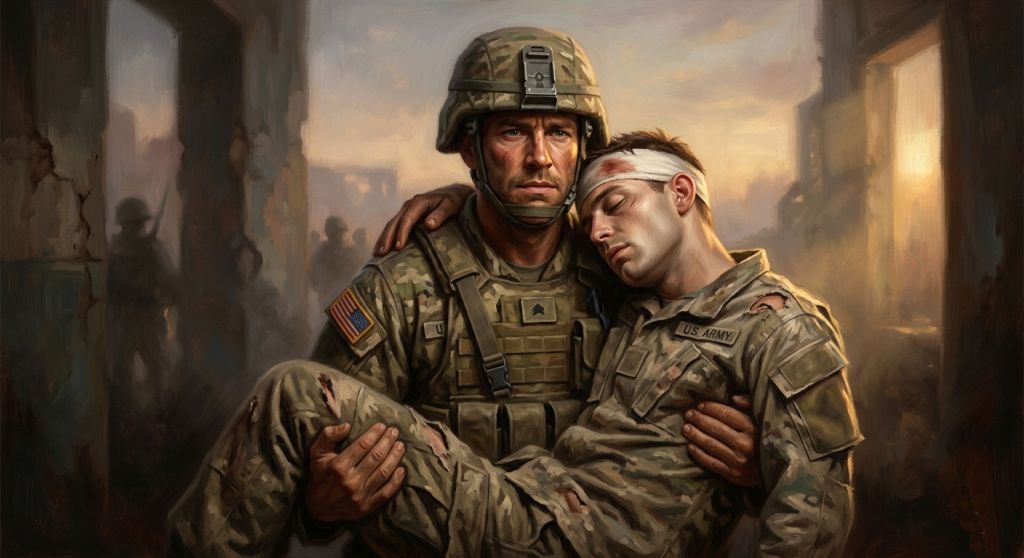
Never Leave a Fallen Comrade, or Yet Another Reason America is the Greatest Country in the World. -A Rant by Padre0875

Never Leave a Fallen Comrade, or Yet Another Reason America is the Greatest Country in the World. -A Rant by Padre0875

News broke on Sunday morning that the US had rescued an American pilot who was shot down during combat operations in Iran. (Seriously, God? Shot down on Good Friday, brought out alive on Easter Sunday morning? You need a better editor. No one is going to believe that.) I’m glad he’s home and that we got him out.

But, there are a ton of hot takes from liberals and foreigners online about how America lost and destroyed a bunch of equipment during the rescue operations. “Is it worth the millions of dollars of equipment just to get him out? You lost two C-130s and an A-10.”

First, I know that looks like a lot. That’s probably your entire air force! But also, by even asking that question, you show you know nothing about America and its values. America, from before its birth, has prized human life over treasure.

During World War 2, American aircraft were at a significant disadvantage early in the war compared to the Japanese Zero fighters. The Zero was faster and had a better climb rate. But, those advantages were bought a price. The Zero sacrificed its armor and this made the pilots more vulnerable. The Americans won the war because our pilots would come back and get another aircraft. But, after June 1942, a significant portion of the experienced Japanese carrier pilots were dead and their fleet carriers were at the bottom of the Pacific and those that were left could not compete with the improved American aircraft that were coming. The US had an advantage that it would never lose, though it took three more years for the Japanese to realize this. The US was willing to sacrifice performance to bring its pilots home and that proved decisive in the end.

This is also seen in how the American soldier knows that the US will move heaven and earth to come and find them if they are wounded, captured, or dead. We know that we are valued at a level that foreigners will never understand and that our sacrifices are valued, which means we will fight harder and endure more in return.

The movie (and book) Black Hawk Down is a classic example, but it goes further back. The US launched a punitive expedition on Tunisia in the early 1800s because they were attacking our ships and capturing our sailors. We went to war with the greatest power of the day in 1812 because they were taking our sailors to serve on their ships.

The Son Tay prison raid also shows both of these points. During the Vietnam War, the US found out where the North Vietnamese where holding some of our pilots. So we trained up a raiding force to go in and rescue them. During the early practice runs, the raiders realized that crashlanding a helicopter directly into the compound would significantly increase the likelihood of success, so they wrote off the helicopters as the cost of doing the raid. The leadership chose to sacrifice equipment to make it easier to rescue our people.

No American prisoners were rescued as the Vietnamese had moved them a couple days before, but the raid was regarded a complete success. The compound was destroyed with minimal casualties on the part of the American forces, only a twisted ankle and it led to some critical changes in how the North Vietnamese dealt with American POWs.

The Cabanatuan prison raid in World War 2 is another example. When intelligence told the American Forces in the Philippines in 1945 that the Japanese were going to execute Allied prisoners, they sent Rangers in to rescue them. At the cost of two dead, they were able to rescue over 500 Allied prisoners.

Some people might argue that rescuing pilots in particular is critical because they are elite and important members of society, as well as being highly trained. However, that loyalty to your fellow soldiers transcends ranks. When I was in Afghanistan in the last 00s, every soldier who deployed was given a rescue beacon and basic training in how to signal rescue forces in case you got caught behind enemy lines. We knew that the US would do whatever it took to bring us home.

And it wasn’t just the rescue equipment. We were given high-grade body armor, improved equipment, and the best medical care available if we got injured. We had plans in place to evacuate the wounded to trauma hospitals, then back to the US.

Also, we know that even if we are killed, the US will do whatever is necessary to bring us home or make sure we are not forgotten. Submarines that don’t return home are regarded as “still on patrol” and a message is sent yearly to them, letting them know we haven’t forgotten. The US has entire units dedicated to finding and identifying the remains of those who are MIA. This is how Father Kaupin’s body was identified and brought home for burial.

We have plans in place to bring the dead home from combat theaters. The dead are brought home to their families who are flown out to meet them and senior governmental leadership is there as well, including the President at times. A plane flying a body home has precedence over any aircraft other than Air Force One.

How many times have we seen a military member be brought home for burial in a community that is not their own, perhaps because the family is new to the area and the community shows up because it is an American Soldier? The loyalty of America to its service members is unlimited. (You can make the case that this was not how it was done in Vietnam, but I would argue that this is an exception and the result a foreign occupying belief system that is at odds with America and the sooner it is expunged from our society, the better.)

The loyalty goes both ways. The American soldier and veteran is often the foundation of the community. They believe that they have taken an oath that will never expire- an oath that is not to a person, but to an idea. You might say, USAian-ism. And it is that attitude that is at the base of why the US will spend unlimited amounts of treasure to take back its people.

It is born from the belief that no man is better than another, that no one is better simply because of what family they come from or where they were born. That “All men are created equal, that they are endowed by their creator with certain unalienable rights, that among these are life, liberty, and the pursuit of happiness.”

From its very inception and in its founding documents, America has believed and put into practice that human life has value simply because it is human. It is a gift that we have gotten Judeo-Christianity, that Man was created in the image of God and that that Imago Dei conveys worth in and of itself. And therefore, we will (must, even) sacrifice any amount of treasure to get our people.

Not paying the Danegeld, but going in and taking them back with the skills of the greatest army on earth because we know that once you pay the danegeld, you’ll never be rid of the Dane. If it means sending in a Marine Expeditionary Unit, SEAL Team 6, or some other highly trained unit, if it means sending a multiple waves of close air support or B-52s to provide cover or a distraction, if it means paying whatever price is needed to get our people back, we will do it.

So when you see people mouthing off online about how we lost equipment and questioning why we would go in and get one pilot out? Understand that those who ask these questions are not Americans. Answer them as such.

What A Time To Be Alive!

A couple of weeks ago we drove to have dinner with Charlie Martin. We normally try to do it once a month or so, but lately I’ve been fighting the sinus infection from heck again (I suspect it’s the fact that my CPAP doesn’t have adequate humidity, since this trouble started when we changed our machines. Yes, it’s being dealt with.)

So it’s been a couple of months, but we went to dinner at one of our usual places (we like dives. It’s a thing) and as we were eating, I was talking about the uses I’ve found for AI which is mostly images, but also research. So long as you verify the research (don’t be an idiot!) you’re fine. And also the keeping of story bibles for my myriad worlds and how much easier it makes it to start finishing things. I’m excited because research and or patient cataloguing that would take me years can now be done in a week.

Look, yes, I know it hallucinates. EVEN when reading my books. But there are techniques to make it more reliable. (Honestly? Mostly feeding it small chunks at a time. it loses the plot at about 40k words.) And if you want to feed up your book (local LLMs only, for reasons) and ask “What’s the description for Innkeeper of Inobart?” a minor character on book 4 that you want to revisit? It spits it up and/or the page you should look. Yes, always verify. LLMs lie like a two year old who doesn’t know what to say and just says a thing, never mind what. But used carefully it’s a fricking game changer for my job. I might be able to finish some of the historicals that have sat unfinished forever. Given a couple of weeks without coughing my lungs out, say.

And that’s without touching animation. Oh, Lord, people ANIMATION. Right now the tools I have access to because I don’t want to pay 20k a year (Mostly because taxes leave me very little more of my money than that, since I have to pay social security both sides, etc.) it’s clunky and often weird, but even so, what I do say in the videos for the clanker songs? (Yes, more coming soonish. I’m working on two) I’d have given a body part to be able to do stuff half as good in the eighties. It would be considered impossible, not just then but FOREVER. Air-dreaming. Insanity.

Now? If I live long enough, I should be able to put out my stories in book, graphic novel and movie at the same time, with very little more work in about … ten years. And that’s the PESSIMISTIC outlook. I think it will be more like five. Maybe less if I can write more and spin up more money to fund this stuff. (And maybe hire a local kid to help with some of the administrivia. We’ll see. Right now the Little Pickle (Younger DIL) refuses to be the kid. Eh.

And then Charlie and Dan got to talking about things I don’t understand. Calculations and programming that’s beyond my reach.

And Charlie said “What a time to be alive!”

He’s not wrong.

Yes, it also has serious issues. I’m not denying that. All technologies do. The type of warnings I’m hearing about AI I’ve heard before — being in the creative professions — about … visual arts programs and short cuts; about wordprocessors; about desktop computing.

But hear me out: Most of the AI risk is not about the AI itself. It’s about the intersection of AI and human.

If you weren’t alive and/or banking in the 70s you’re probably unaware of how many times we got told the horrific mistakes in our accounts were “computer error.”

Were they computer error? Oh, hell no. They were human error in intersecting with the computer.

And part of this is that humans tend to think of every new technology as magical. If any of you know boomers (real boomers, not the generations they co-opted) you know they STILL think that computers are magical and “so intelligent.” Because that was the propaganda of their youth.

I once had to explain to a friend he couldn’t do search and replace in the word processor with the replace field empty, because the computer DIDN’T KNOW WHAT TO REPLACE IT WITH. Because in his head, the computer was smart and should know it.

This led to endless “computer errors” which were actually “human errors in thinking the computer is magical.”

We’re seeing the same thing with AI. And we’re going to see the same thing in AI. Because it’s human.

Most of the panicking AND the insanity about AI? Comes from science fiction of AI, just like the insanity about computers came from science fiction about computers. (People, if you write science fiction, lie responsibly, please.)

I keep running across people screaming and running in circles, because we’re “building skynet.” Are we? Oh, for f*ck’s sake. Sure, we can, but it will be an exceptionally retarded (used advisedly) Skynet. It will actually be a universal brain acting like a two year old terribly eager to please you. THAT will not work like the super-smart Skynet of the scary SF. That comes from the same smart computer mythos.

And yes, lonely kids are confusing LLMs for friends. The problem is the lonely kids, not the LLM. And the adults that drop into complete psychosis by talking to LLMs are the same sort that abused hallucinogenics in the seventies or joined cults in the eighties, or whatever. The crack is in the human heart. LLMs are just as inadequate at navigating it, as ANYTHING ELSE.

I think LIKELY Grog standing around his campfire was terrified of what fire would do. “We’ll eat differently. Kids don’t have strong jaws anymore. And think of the danger. Fire might decide to just kill us in the night. I mean we don’t really know what it is.”

But it’s not just that. Look, as f*cked up as medicine is — and it is right now, partly because they’re at a crunch time before the technological innovation explosion — and as much as it shat the bed during the Covidiocy (look, it’s like the church shat the bed just prior to the enlightenment. Yes, it did. BUT the government enforced it, and most people aren’t born to be martyrs.), there are things coming on line that as as revolutionary as anti-biotics, and as amazing.

Just the anti-diabetes, weight loss drugs…. boy! (Even if they don’t seem to work for me, since my issue is NOT eating too much. I often forget to eat, in fact. I think eventually, long after my death they’ll find what made it so difficult for me to lose or even stop gaining weight is that my brain thinks I’m supposed to be seven feet tall and controls caloric absorption accordingly.)

I know more people surviving and living with serious conditions than ever before. Now part of it is my age, but unless I’m very wrong, a lot of it is that people are surviving those more, particularly the big C. (Which really cheers me up since my dad’s family when they go early — defined as sixties — go from cancer. Normal cancers, like breast and uterine, yes, but also lung, brain and one over achieving great uncle of SKIN cancer which is almost impossible if you’re of Portuguese ancestry, by reason of we’re a lot darker than Northern Europeans.) Particularly since every “Gateway writer” I know either died of or survived brain cancer. This is hard to prove since “gateway” writing is self reported, but the congruence with those I know were gateway has me terrified.

I mean, my brother has lung cancer. Even ten years ago, they’d be “managing” it to an easier death. Instead, it’s stopped. He will die WITH cancer, but not of it.

And some of the weird glitches with my genetic kludge of a body would already have killed me any time but when they hit. In fact, the tendency of things to come online just as I need them is making me lift and eyebrow at the Author.

Are we going to live forever? Unlikely. It’s always on the horizon, but I don’t think it’s likely ever. But can we live later and better? I’d bet you.

This is not just in writing, or programing, or medicine. It’s not just LLMs. This is going on in every field. And don’t make the mistake of the left of saying that this progress will leave a lot of people unable to work.
Did you know this is their explicit reason for favoring black people for make-work jobs in the government. They thought the 20th century would leave black people behind because they weren’t smart enough. THE SHEER RACISM OF THAT IS BREATHTAKING. But beyond that, the left makes a fetish of intelligence and IQ. And it’s bullshit. Even with new and shiny tech? It doesn’t take a genius, once it’s created. That’s the whole point.

Will people be left behind? Sure, those who give up. The way tech is moving it’s more like the people who are now baristas will be able to have their own mini, mobile coffee shop and be as creative (or not) about it as they’re able. And that, infinitely, into the future, in ways we can’t even imagine. Maybe plumbers will become herders of plumbing humanoid robots. (Humanoid, because humans are more comfortable with those.)

And that’s the other thing. Most of the problems with people dying rapidly, in fact a lot of the aging seems to be lack of interest in life. They stop wanting to do things, and the wheels come off, and then–

But now?

PEOPLE! What a time to be alive!

Things can be dangerous — they always are when things are moving fast in the tech department — and they can be crazy, and they can require attention. But they are not boring.

We’re not stuck in a position of “been there, done that.”

Tech increasingly compensates for the “disabilities created by aging.” And we can do and learn new things all the time.

What a time to be alive!

It’s not for us to control the day or hour of our demise, but I’m going to try to stay alive as long as I can, because I want to see as much of the story as I can. I want to create as much of the story as I can.

The future is so bright I got to wear shades. And I look good in shades.

I have so much to do and create. And G-d willing I get to.

I Have a Post Started But It’s Not Happening Today

It’s already been a strange day. Nothing bad, mind you, just…. weird. And it’s afternoon, and I have a gazillion things to do including re-typeset Witchfinder, finish a novella and– maybe a couple of songs.

I’m still cleaning up from big dinner yesterday. (The dishes. No, really. I use all the dishes, you know?)

So I’m not going to post now. I’m going to do the beginning of the world’s most epic promo post tonight, with writers who volunteered for this (If you want to volunteer, post either in comments or in Twitter) and Holly will collect you into a list. You don’t even have to be indie, the only requirement is that you not be afraid to associate with this blog.

For now, to mollify you, I’m posting mildly salacious pictures. See the boobies above.

There’s also:

And:


On the serious side, consider this an open thread to discuss the rescue of our airman or other amazing good news.
I’m going to go do work, and will be back this evening.

Love you all.

Book Promo And Vignettes By Luke, Mary Catelli and ‘Nother Mike

*First of all, a blessed Easter to those celebrating, and for those who celebrated Passover this week, I hope you passed dry shod from slavery to freedom. And now, the promo!- SAH.*

If you wish to send us books for next week’s promo, please email to bookpimping at outlook dot com. If you feel a need to re-promo the same book do so no more than once every six months (unless you’re me or my relative. Deal.) One book per author per week. Amazon links only. Oh, yeah, as an Amazon Associate, I earn from qualifying purchases. By clicking through and buying (anything book-related, actually) through one of the links below, you will at no cost to you be giving a portion of your purchase to support ATH through our associates number. A COMMISSION IS EARNED FROM EACH PURCHASE.*Note that I haven’t read most of these books (my reading is eclectic and “craving led”,) and apply the usual cautions to buying. I reserve the right not to run any submission, if cover, blurb or anything else made me decide not to, at my sole discretion. Remember though all of these submissions are from people willing to be associated with this blog. So if you’re trying to buy from people who don’t hate you, this is a good place to start.– SAH

FROM SARAH A. HOYT, ON PRE-ORDER COMING OUT APRIL 23: Witch’s Daughter

Some letters come from the living. Some come from the dead. This one comes with a formula that turns a rowboat into a miracle.

Seventeen-year-old Lord Michael Ainsling — youngest brother of the Duke of Darkwater, builder of mechanical marvels, survivor of fairyland — receives a letter from a man sixteen years dead. The inventor Tristram Blakley has not perished; he has been imprisoned by his own genius and begs the one mind in all of Avalon brilliant enough to understand his work to set him free. All Michael has to do is find seven missing brothers first and walk a magical path..

Fifteen-year-old Albinia Blakley has spent her whole life under her mother’s iron thumb — and her mother is a witch. The day Al finally escapes down a rope of knotted sheets, she lands in a world she doesn’t recognize, with no money, no magic kit, and no idea that the stranger who catches her is about to become her greatest ally.

Together, a girl with more secrets than she knows and a boy who builds machines that try to murder him must outwit a sorceress, navigate the treacherous courts of Fairyland, and unravel an enchantment years in the making — before a family is lost for good.

Witch’s Daughter is a gaslamp fantasy brimming with wit, warmth, and wonder, for readers who love their magic wrapped in velvet and their adventures served with morning tea.

WITH A STORY BY L. JAGI LAMPLIGHTER: Amelia: Counterrevolution

The UK gambled.

The UK lost.

The right people won.

That didn’t backfire at all.

In a critical moment for British society, the UK government created, not a video game, but a propaganda tool intended to prevent youth from being “radicalized.” In the most stunning of unintended consequences, that game introduced to the world Amelia, now a digital icon for the conservative ideas the creators feared as having too much influence.

Amelia: Counterrevolution is an anthology of Tales from the Lemurverse, celebrating irony, farce, and the embrace of Western civilization, culture and history that the Amelia meme has now triggered world-wide. In Amelia: Counterrevolution, readers will find a varied, entertaining approach to the latest internet phenomenon.

FROM TALEENA SINCLAIR: Everything Beautiful In Its Time

Everything Beautiful In Its Time

A Collection of Poetry

In Everything Beautiful In Its Time, the ancient rhythms of nature interweave with timeless spiritual wisdom to create a contemplative journey through both calendar and conscience. This collection moves from the observable world—spring’s capricious winds, summer’s dappled light, autumn’s memory-harvest, winter’s patient stillness—into deeper territories of the heart where biblical wisdom meets personal experience.

Drawing inspiration from Ecclesiastes’ meditation these poems explore the appointed times of human experience: birth and death, planting and harvest, mourning and dancing, silence and speech. Through intimate narratives of family, marriage, and faith, the collection traces how divine purpose unfolds in particular moments—a child’s escape from garden labor, the forgiveness cycle walked along Pacific Northwest cliffs, the gamble of loving deeply.

Rich with sensory detail and anchored in place, these poems speak to anyone seeking meaning in both the sweetness and sorrow that come to every table life spreads before us.

FROM LEIGH KIMMEL: Never Bind a Fox

If you inherited an antique puzzle box from your world-traveling uncle, would you open it? And if you did, what would you do with the things you found inside it?

Everything started when Terry inherited just such a box, beautifully lacquered with images of foxes. With some help from his buddies, he was able to get it open and discover the treasure inside it: a plate, a comb, and a tiny booklet in Japanese. For a group of college students more accustomed to art-book grimoires and cosplay-prop wizards’ trunks, it seemed like great fun to act out the spell that little booklet described.

Then Yumiko showed up. Cute, cheerful, and a cook like none of them had ever known, she seemed like a dream come true. But then things started getting very strange….

FROM LINDSAY PETERSEN: Shadow Chasers: Steampunk Excursions to View the 1878 Eclipse

A once-in-a-lifetime experience! Adventure you’ll never forget! Irresistible – to some.
In 1878 a solar eclipse was predicted, the shadow’s path to sweep from Alaska across the Rocky Mountains, promising an enthralling event guaranteed to strike envy into the hearts of others for the rest of your life. But how to get to the edge of the frontier safely?
Victoria Bearskin of the Wyandotte tribe and a student in Vassar’s astronomy program is forbidden to go. Nofina Nolana, an oyster pirate scoundrel from San Francisco orders his crew to hijack a ship to Juneau – which turns out to be Captain Nemo’s long-lost Nautilus submarine. From New Orleans Lurie and Clark ride paddle steamers up the mighty rivers of America’s heart to preserve images of the event.
While all eyes are on their sweet moments in moonshadow they overlook chance encounters with bad men, big animals and birthin’ babies. After all that, who would emerge from the mad gambles?
All learn there are no promises in this life, but there are second chances and new beginnings are born from once-in-a-lifetime experiences.
A stand-alone novelette of 14,000 words by Lindsay Petersen.

FROM FAY ELLEN GRAETZ: Brave New Farm

BRAVE NEW FARM chronicles the family of Rose and Sonya, guardians of the Anders’ generations-old homestead in the rolling hills of the Midwest.
The sisters are thrust into a contentious debate when they learn the government chose Greenleaf Township as a test site for clean energy production.
The entire farming community is at odds, pitting families in need of a financial windfall against those who choose to protect the pastoral environment at all costs.
When tragedy strikes Rose, the balance of power shifts and resentments fester.
Suspicions arise after another “farm accident.”
If justice is served, who will be left to tend the farm?
Who will mind the legacy of the homestead?

FROM NATHAN C. BRINDLE: The Cross-Time Kamaitachi (Timelines Universe Book 5)

I did not land here as a warrior, but a warrior I so soon became . . .

One moment, Dr. Yukiko Yamaguchi was in her high-tech singularity research lab in California, busily adjusting an electronically-leaky fitting playing hell with her instrument readings.

The next moment, she was falling through space, and landing hard in a wilderness area she would quickly discover was her family’s ancient stomping grounds in Japan – but with an apocalyptic twist.

A hundred years later, there would be legends of a great yōkai, a demon, whom some called a kamaitachi – a sort-of whirlwind, weasel-like creature with blades for claws, which catches up unwary humans and slices their skin. But this kamaitachi is no ordinary yōkai – rather, she is

The Cross-Time Kamaitachi

FROM HOLLY CHISM: Bar Tabs: A Modern Gods Story

Brief back stories on the characters from the Modern Gods universe.

FROM MARY CATELLI: The Enchanted Princess Wakes

Once upon a time, a princess was cursed at her christening — but not the one you heard of.

When the fairy decreed that Rosaleen would fall into an enchanted sleep, and how she would wake, the grand plans of kings, to unite kingdoms, failed. They sent her to an out-of-the-way castle in the mountains, in hopes the curse would do no harm to anyone else.

There, alone, Rosaleen lived and learned, and realized that she herself had to be ready to face the curse, and when it broke.

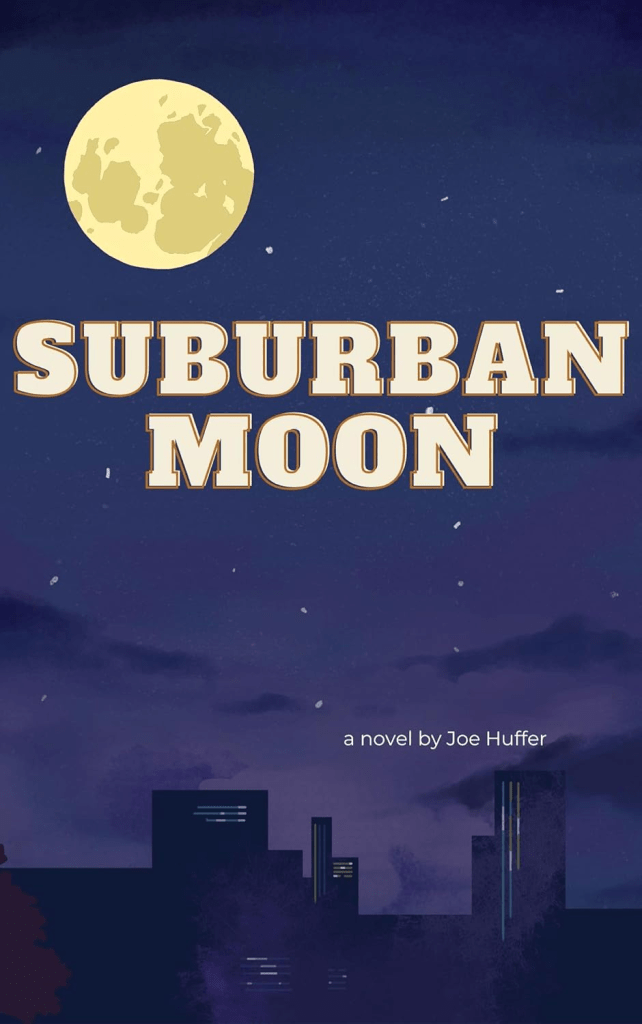
FROM JOE HUFFER: Suburban Moon: The Autobiography of Sam Wyatt (Hoosier Flats Book 2)

Sam Wyatt wasn’t always a lonely, one-legged drunk clinging to the dim light of the suburban moon. Once he was a husband, father, and a man who believed the world still held room for hope. Losing his wife shattered that world, and the year that followed buried him in bourbon, bitterness, and memories that cut as sharply as they comfort.

When a new neighbor with troubles of her own moves in next door, Sam is forced out of the bare existence he has lived in for too long. Their budding friendship forces Sam to face the hardest truth of all: If he wants a future he has to let go of the past.

Poignant, funny, brutally honest, and deeply human, Suburban Moon is a sweeping story of grief, redemption, and love. For anyone who has ever lost deeply, loved fiercely, or wondered if second chances happen — this is a story that stays with you long after the last page.

Vignettes by Luke, Mary Catelli and ‘Nother Mike.

So what’s a vignette? You might know them

someone be a better writer, not at crushing them.

And since these are likely to be drafts, don’t jump up and down too hard on typos and

grammar.If you have questions, feel free to ask. 

Your writing prompt this week is: Canvas

Geronimo for Hope! -by Caroline Furlong

*I hope Caroline doesn’t mine my revealing that she’s a member of the Chinchilla of Hope group. This group of insane people cheered me through No Man’s Land and convinced me I shouldn’t in fact give the project up because “it will never sell.” As we know they were right. How they got their name was because I threaten them with Chinelos (the Portuguese version of chancla) when they misbehave. One of them is tragically dyslexic — I’ll let her out herself IF she wishes — and so got this as “chinchilla”. Next thing I know, I’m moping and she’s threatening me with the chinchilla of hope.
As such things do, it took wing, and now members of the Chinchilla of hope are writing stories. Caroline posted a tiny bit of this as a throw away thing, and I asked her to write the full story. Here it is! (You’re welcome.)

Geronimo for Hope! -by Caroline Furlong

Nose twitching in the waning light, Geronimo held his stick still, willing his whiskers not to move. The rest of the 15th Hope Regiment were in the trees, waiting for his signal.

Winter clung to the land even though spring’s first breath brushed the grass and trees. By far, the grass was in better condition, with the trees still mostly naked. A few had buds sprouting on them here, and up the street a couple of ornamental pears had already bloomed, their snowy flowers missed in the mass of gray by all but the most attentive humans.

The sky had begun to gray over. It wasn’t a natural gray, not at all, and certainly not in the afternoon of a nascent spring day. Rain wasn’t due today, they had checked with the air sprites. That had been…interesting. Dealing with the Fair Folk often was, but these sprites had tested everyone’s patience with their forgetfulness. Poor Corporal Terrence had barely avoided shouting, he became so frustrated.

Flighty things, air sprites. Must come with the territory, Geronimo decided, scanning the ground. Sniffing, he tried to see if he could scent their prey.

No good, there was no wind. This gray mist over the sky was all the warning they were likely to get.

His chinchillas were good, though. They wouldn’t so much as twitch without the signal. Hope Corps knew they could rely on Geronimo’s regiment to get the job done, with minimal to no casualties, too. Not that he liked to rely on or brag about that; he had worked his way up through the ranks from Felix’s squad. Bragging tempted fate and made chinchillas less likely to watch their tails. Some pride was warranted – they did good work. But too much was bad for everyone, especially their clients.

Today’s client was a Mrs. Halifax, a codename, for safety’s sake. In this case, the target seemed to be Mrs. Halifax’s oldest son. He wasn’t doing well – not seeing friends, barely leaving his room, constantly arguing with his sister and brother. The latter wasn’t entirely unusual for a young teen boy but combined with the rest, it was cause for concern.

Mr. Halifax had tried talking to his son, several times. It had seemed to work, only then he had been deployed, and what progress had been made had slipped away. The Black Dog had returned with greater power than before.

So far it appeared there was only one dog. They had done recon, of course. Geronimo wasn’t going to risk his chinchillas’ tails like that. Regiments that didn’t get the lay of the land were asking to lose members. If it was necessary to rescue a client, then he would accept the loss. Otherwise, no.

Geronimo swept his eyes over the gray/brown ground between the trees. Lawns were showing green more than these areas, where last year’s leaves still lay deep and thick. Squirrels, those annoying cousins of his race, raced across the ground, setting up a cacophony and making hearing difficult. Blast those daft creatures, couldn’t they do their kinoodling some other time…?

Almost as he thought that, the squirrels paused. Held still, except for the odd flash of a tail. Geronimo felt his chinchillas tense.

Squirrels took off, bolting for holes or climbing up trees. A stealthy shadow moved over the ground, hardly disturbing the leaves beneath his paws. That was the trouble with Black Dogs. Unless they were looking for them, humans couldn’t see them. Sense them, hear them, yes – if they paid attention. Most didn’t because the aura a Dog brought in its wake only magnified the lies they whispered in their heads.

Unaffected by the squirrels’ panic, his chinchillas readied themselves. Branches didn’t move as paws gripped, relaxed, then gripped again. Teeth flashed in grimaces or grins while fur fluffed or smoothed down, each member of his regiment preparing ahead of their jump.

After a quick look at his men, Geronimo zeroed in on the Dog again for a better look. He blinked. Oh, he knew this one!

Wagging an ear, then another, Geronimo raised the stick. His chinchillas caught the message, shifting minutely. The Dog continued on, looking nothing so much like a pitch-black Doberman that had been on a diet of meat. He was thickly muscled and bore himself like a king.

Light seemed not to touch him, except where his eyes were concerned. Now they burned almost black but in the dark they would be coals of red. Geronimo grinned, remembering the last time he had looked into those eyes.

The Dog walked beneath the regiment, and Geronimo dropped the stick.

Dark eyes tracked toward the sound the stick made when it landed in the leaves and so the Dog didn’t see the 15th Hope Regiment jump, the glamour falling from their pink suits. Pink would not have been Geronimo’s first choice for a color, but it always caught the enemy off-guard. Tended to send some Black Dogs running with their tails between their legs, too, which did help with missions occasionally.

But this time their prey was too slow. By the time the Dog looked up they were on him, cutting loose from their parachutes with the ululating war cries that caused humans to say “Aww!”, Fae to wince, and Black Dogs to fall to the ground whimpering.

While his ears pinched and he shook, this Dog was too strong to simply fall. He put up a good image of a fight, snapping and whirling even as Scathlock and Pip landed on his collar. Some were thrown off but not with such force that they risked harm.

They made it look good, though. Had to. If word got back to the Dogs, he would be in trouble. Geronimo himself howled out another war cry as he didn’t bother deploying the parachute, jumping and aiming for the snapping jaw.

He hit him with enough force to stun and then hung on as the rest of the Regiment swarmed up and onto the Dog’s back. Each of them swelled in size, feeding off one another’s triumph and strength, rallying with cheers and encouragement. It was enough to make the Dog stumble, his knees buckling. He tried to stand up….

Zena was faster. Geronimo’s second in command had retrieved the stick and now used it to open a portal directly to headquarters. A foolish move, if this had been any other Dog, but perfectly safe with this one.

They landed in the base’s deployment bay as Rufus fell to his belly, huffing a laugh. “You got me,” he wheezed, eyes flashing bright as he finally grinned. “Mind getting off so I can breathe, at least?”

Geronimo hopped off his snout. Most of the Regiment followed suit, but some clung to Rufus regardless – including that scamp, Pip. Geronimo glared at him but his nephew grinned back and dug his claws in. With an annoyed eyeroll, Geronimo accepted his stick back from Zena as the team’s sorceress passed it on. “What’s the situation, Rufus?”

“Boy’s dissatisfied with his life,” the Dog rumbled, shaking his head sadly. “Can’t entirely blame him, he’s being bullied at school. Won’t tell his parents, thinks he should handle it himself.”

“Friends?” Zena asked, materializing a pen, clipboard, and paper in her paws.

“None bigger or stronger than he is,” Rufus said, settling on his haunches. That caused most of those who had hung on to finally slide off, but Pip used it as the opportunity to climb higher and settle on the Dog’s shoulder. “They’re at more risk than he is. It’s part of why he’s being bullied. He’s protecting them.”

Whistling through his teeth, Geronimo looked over Zena’s shoulder as she dashed off the information. “Going to need Randy and his Specialists for this, I think,” he told her. The Hope Corps had Regiments to fight Black Dogs and Specialists to deal with purely human problems. Most got into position by acting as pets, but others found different ways to help humans more directly. Randy and his team were particularly good at it.

Nodding, Zena looked up at Rufus. “Anything else we should know?” she asked.

“If you don’t get him help quick, Command’s going to send a whole pack,” Rufus said grimly. “They know if they push the kid, they get more than despair. They get him dead at least, a lot of others hurt or dead at worst.”

“Our information suggests he’s stronger than that,” Sergeant Terrence said, frowning.

Rufus’ smile had no humor but also no menace. Just a weary sadness. “Even better, as far as they’re concerned. If they can’t break him, they get to train pups on him – and maybe spread influence to the ones he’s protecting.”

“Put a priority note in there for Randy,” Geronimo growled. “Thanks, Rufus. You were the one assigned…?”

“The only one,” Rufus confirmed, nodding. “I did my best, made sure to keep it down, but…he’s in a bad way, Ger. You need to get people on it, now.”

Geronimo made a sharp gesture and Zena put the clipboard in her mouth before taking off for the elevator that would bring her up directly to the General. He refocused on Rufus. “And how long has it been since you were, ah, in our custody?” he asked the Dog.

Ears drooping, Rufus let his exhaustion show as he bent his head so they could look one another in the eye. “Too long. Geronimo, please. I don’t think I can go back.”

“I told you last time there might not be any more fight left in you,” he said gruffly. Then Geronimo moved forward to put a paw on his leg. “Talk to the General. We can work something out, I’m sure. Some of your brothers are meant to keep up the fight, but you’ve more Dog than Black in you. Let Zelie do her work while we talk with the Powers That Be about arranging a home for you.”

A sigh whooshed out of the canine’s mouth, ruffling his fur. The big Dog nodded and his ears perked up. “Zelie’s back in charge?” he asked.

“Did I hear someone call my name?” a voice caroled – literally. Zelie’s shouts were almost always pitched with magic to ring around a room to get attention, mostly because even by chinchilla standards, she was tiny.

Rolling his eyes, Geronimo turned toward her, putting his paws on his hips as the Regiment and all the other workers in the deployment bay parted for Zelie and her troop of makeup artists. All wore feathers, makeup, beads, or ribbons in one or another shade of pink. The diminutive figure at their head wrinkled her nose at Geronimo before turning her face up to Rufus. “Dahling, it has been too long! You look awful, this won’t do! What do you want this time? The full treatment? Or the Special?”

“Special,” Rufus answered as Pip, seeing his aunt had come and not wanting his own makeover, slid down from the Dog’s shoulders. The rest of the miscreants had scattered long before.

Geronimo reached out and snatched the boy’s ear, causing him to yip as Rufus stood up. “Do you have any more of that hot pink nail polish? Please tell me you have that same raspberry conditioner….”

“You’re in luck!” Geronimo’s sister said, eyes sparkling. “We just got a new delivery. LADIES!” she sing-songed louder. “We are running the Special! I need the hot pink nail polish, the rosette bow, raspberry conditioner – and a perm?” she asked, squinting up at Rufus. When the big dog nodded she snapped her fingers. “Hup hup! Daylight is burning! Move it, ladies!”

Murmuring, the chinchillas behind her soon had Rufus surrounded as they ushered him down the hall to the private baths. Thankfully, those were reserved only for agents or defectors, so he would be safe. If they put him in with the regular captives, it’d be a slaughter.

None of which made Geronimo shake his nephew any less firmly, still holding him by the ear. “And what did you mean by that tomfoolery, you chipmunk?” he growled at Pip. “You know protocol dictated that once he’d let his head down and gotten the despair out of his chest, you were supposed to get off.”

“But it wasn’t all gone!” Pip yelped. “I –”

You,” Geronimo growled, “are lucky you’re getting KP duty and that I didn’t let Zelie take you to the baths.”

The young chinchilla gulped, then looked up at his uncle, determined. “We’re supposed to bring hope to everyone. Sir.”

“Hmph,” Geronimo said, finally letting go of his ear to glare at him. Pip winced and rubbed the ear, then looked up at his uncle defiantly. “I think it’s time I had a talk with Randy,” Geronimo told him grudgingly. “He was right, all those years ago. You’re Specialist material, not Regiment.”

Pip’s ears fell, then lifted, his eyes lighting bright. Geronimo couldn’t hide a smile. After all, they were the Hope Corps, and they were in fact meant to bring hope to everyone. His nephew qualified as part of “everyone.”

Which didn’t mean he got off lightly. “Report for KP duty, stat,” he barked at the youth. “I want tonight’s nuts peeled better than they ever have been. Then we’ll see, once Randy gets done with his assignment for the Halifax boy, if he’ll take your ungrateful hide into his unit.”

Chest puffing out, Pip saluted. “Sir!”

(And if you’re curious, this is Caroline’s Author page on Amazon.)

Bleeding Heart

As we know, this little assembly that gathers here semi-regularly, we’re all heartless.

Just listen to the left any day — and dear Lord, all day on Sunday. Don’t they have a life? — and you’ll find our positions come from the fact that we are, all of us, absolutely uncaring of what happens to whosoever the current “downtrodden” group that’s always “most affected” by whatever happens.

To wit, we don’t want government to pay for everyone’s health care. (I’m told women and children most affected.) We don’t want open borders and importing the poor and crazy of the sh*tholes of the world onto our land. We don’t think we should accommodate the “homeless” by letting them camp, sh*t and feraly attack people in public. Instead we’d like to see city regulations on vagrancy — from 1910 — sternly enforced, vigorous encouragement to get treatment for addiction, very vigorous mental health initiatives and let private charity pick up the rest. We think anyone stealing, murdering or raping should be punished to the heaviest extent of the law. Oh, yeah, and barring assistance on some very specific disasters, we don’t think we should be sending pallets of US taxpayer cash to “poorer” or “more needy” countries.

Therefore, we clearly don’t care about women, children, the elderly, immigrants, people of other colors (in my case not caring about people of other colors, depending on how you squint means not caring for white people,) the “unhoused”, we despise people suffering from “substance abuse”, we don’t understand the pressures society puts on criminals, and we want foreigners to die screaming.

I might be missing one or two groups we’re supposed to hate, in there. Oh, yeah, because we generally don’t want sex-f*ckery be it transitioning or indoctrination into all sorts of kink and fetishes done to people under the age of reason we’re also sexist, homophobic, transphobic, kinkophobic (I made that up) and repressive prudes.

In fact, the honest to G-d truth is that we’re bleeding hearts, each and everyone of us. We’re just bleeding hearts that think, instead of jumping from whatever propaganda image of kiddies with big tearful eyes is being shoved in our faces that moment.

Before I start this, I want to make one thing VERY clear: Although some functions, like the confinement of the irredeemably insane or intractably criminal MIGHT have to be done by the government and although things liek border enforcement BELONG to the government — government IS force, after all — in general, grosso modo, I prefer solutions that don’t involve the government. And if we have to involve the government, I prefer it be small, local and extremely well aware that its victims citizens know where government officials live, making torches is not that hard and any garden center has pitchforks aplenty.

There is a reason for this beyond my being — DUH — governmentophobic. You see, the further from you the government is, and the larger its apparatus is, the more it has to relie on bureaucracy for whom each citizen becomes a number on a colum.

And that kind of thing — ALWAYS — ends up with considering humans for their practical, material value. Let’s face it, a lot of us, (including me) when it comes to value to a distant, tax-farming government, are only suited to be fertilizer. And it always ends up in that. Always. The kind of shenanigans the Germans got up to in second world war ALWAYS happen in a government that’s too big and out of control, regardless of its alleged philosophy.

Being a bleeding heart, I oppose big government and all its works, and its false glamor, and its empty promises. Remember that as you read the following, since for some functions we still do need government, and I bitterly have to assent to that. For instance the defense of our borders is specified in the constitution. And just because we were assaulted with weaponized human waves it doesn’t mean it wasn’t an invasion and a novel weapon to deploy against a country which is stronger than all of them combined.

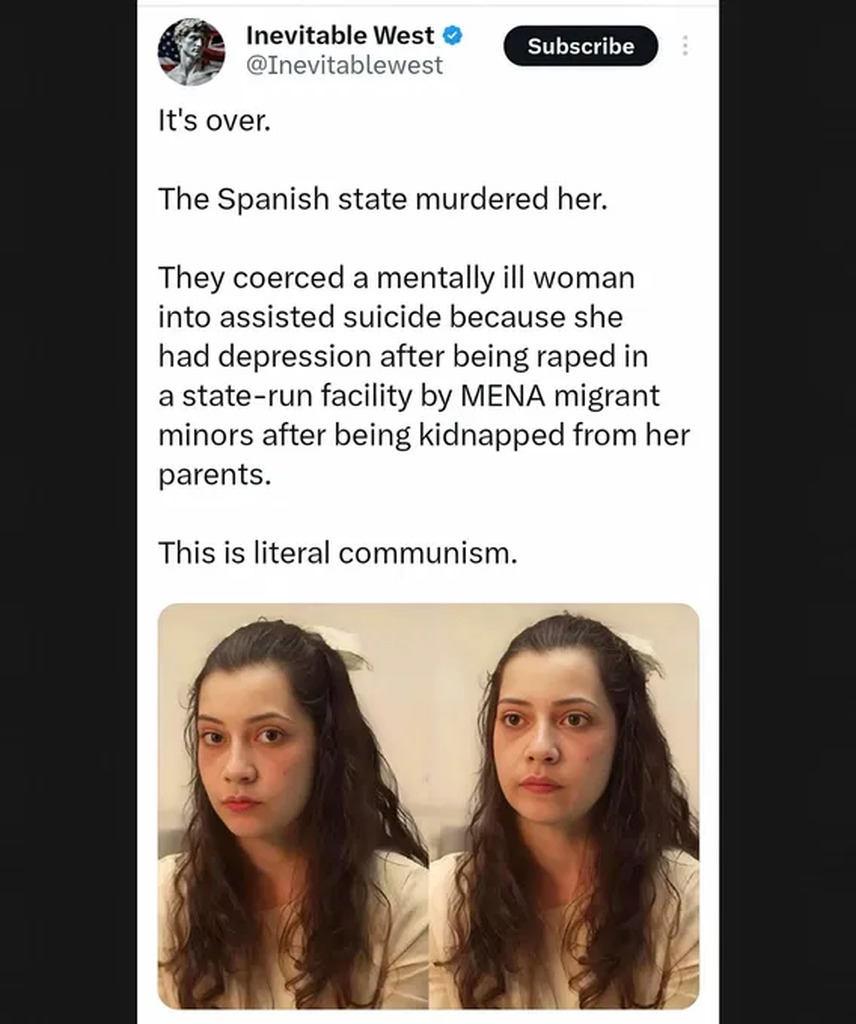
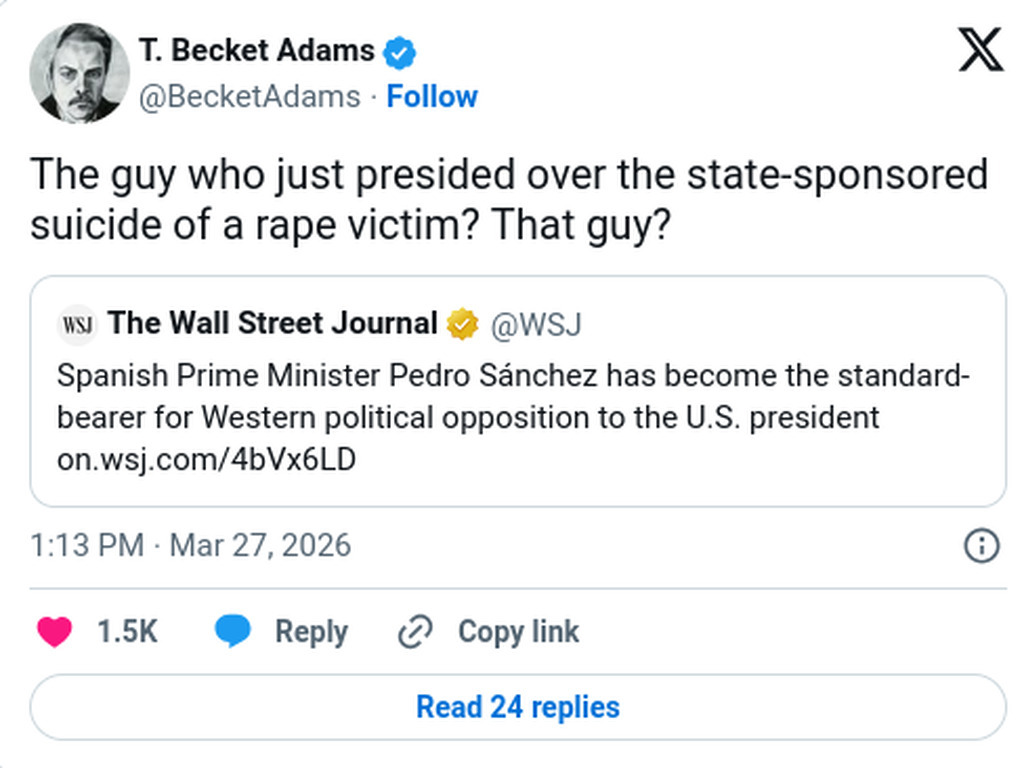
So, in order, I oppose so called “universal health care” on the government dime. You’d think after the horrors we’ve seen from Europe and Canada — ranging from children being denied treatment and their parents prevented from seeking treatment abroad, to euthanasia of the poor and depressed — you’d think this would be self-obvious.

Yes, medical treatment is very expensive, a lot of people go into debt to save their lives, etc. etc. etc. But giving it over to the government is ALWAYS the wrong way. It is at its most basic stopping belonging to yourself and belonging to the government. He who pays the piper calls the shots, which is what we’ve seen over and over again.

No, I don’t have infinite money for health care, or even as much money as Elon Musk, but I should be able to choose the options I can have, and how much I’m willing to sacrifice for it.

My bet, because each person’s health matters most to each person, is that overall returning choice — real choice — to the people, getting government money and government insanity out of health care would save lives. And I’m a bleeding heart. I want to minimize suffering. I want more people to be healthy.

I don’t want us to keep our borders open to the suffering multitudes of the world, because — honestly — there’s nothing for them to do here, other than draw welfare. Oh, lawns and such, sure, but they’re not actually NEEDED for that. They’re taking that work away from local teens that the government for… reasons… decided no longer should be allowed to work.

But what I meant is there is not the kind of work they can do that will lift them out of their wretched condition, allow them to integrate fully and be able to be as productive as our citizens are or can be. Look, the beginning of the twentieth century gave a lot of people a lot of wrong ideas. The wretched multitudes of Europe didn’t need to be skilled or even speak English to do line work in factories. And that work was, back then, valuable enough to allow them to rise and integrate.

Now it’s no such thing. The people we need are highly specialized and far fewer than we’re raining H1Bs on (that’s a weird scam to maximize profits and control over workers, and though a subset of this nonsense, is its own post, eventually.)

What they do is create a vast indigestible group dependent on welfare and (because illegal) various illegal scams and schemes for simple survival. Which is bad for the whole country.

BUT it goes well beyond that. The open border is demonstrably bad for the people coming in. Not taking in account that most women, girls, and a not inconsiderable amount of boys get raped on the way here, a lot of them are basically imported as slave labor.

That link is just one instance. There are countless others, even though no one is looking into. And yes, I know that’s from Canada, but it’s the same here. People arrive to the US in debt for their “fare” to be smuggled in, and have to work in indentured labor to pay it back. And even though the work they can do isn’t particularly valuable, you can still turn a profit if you treat them like slaves. Various criminal organizations DO. (Anyone remembers the kids rounded up working on POT FARMS in California?) And that’s if you’re lucky. For women and children the great danger is sexual slavery. If you think that the open borders didn’t start a river of that, you are dreaming.

It’s bitterly funny that the people who obsess about past slavery are creating the conditions for slavery in this country at this time. “Undocumented” — what a ridiculous word, as though they’d forgotten their drivers license in the other purse — people are people ripe for the taking, exploiting, abusing and worse by bad elements in society. They’re not officially here. No one knows where they are. They have no ties. Read up on serial killers. This is what their dream victims are made of. It’s what every bad guy’s dream victims are made of.

The administration of the Bidentia created more slavery and oppressive conditions than any time since that small disagreement between North and South.

I’m a bleeding heart. I don’t think people should be enslaved, exploited, raped, tortured and ill treated. I say close the borders and keep close track of everyone who comes in.

This by the way doesn’t take in account what the foolishness did to other countries, the countries of origin, many of whom lost all their young people. Who also came here for what turns out to be a lesser future.
Send them home. It’s the bleeding heart thing to do. In their culture, where they belong, they’ll have a better chance to thrive. Yes, some of those places are hellholes, but who should change that other than their young and dynamic population? Yes, I know it’s not guaranteed, but at least they’d have a chance.

As for the homeless, a friend pointed out yesterday the horrors of life for them. Just utter danger and hunger and disease and all the problems of raw, barbaric humanity.

We treat diseased dogs and cats better. Look, as much as I want to respect people’s civil liberties, etc, the problem we have right now is not one of “homelessness”. Or worse “unhoused.” You could give each and every one of those people a house tomorrow, and 90% of them would be back on the street in the same condition within the month if not the week.

In fact we do a deep deservice to the other 10% — some of my friends have been THAT for a time — who are genuinely homeless due to spectacular bad luck or a combination of toxic relationship/unemployment. Those people in fact can be helped and should/could be helped often by private charities, if it weren’t for the fact they get lost in the sea of the rest: the mentally ill, the drug addicted, and the inexplicable. (People who don’t seem to have any of the higher functions at all, and whether they were born that way or rendered themselves that way function at the level of animals.) THOSE people cannot be helped by throwing money at it, giving them a house or giving them a hand up.

Some percentage probably can be helped simply by refusing to let them camp in cities, letting them defecate in public, allowing them petty theft and threatening of the general population. Breaking the inertia might cause some of them to look for drug rehab programs, or such. While I do believe you should be able to put in your body whatever you want, this is predicated on — so long as you don’t force others to endure the consequences of your behavior. (For instance, prohibition was a disaster, but no one is suggesting DUI is fine.)

Others, and no one knows how many are simply a danger to themselves and others, but mostly themselves.

I hate to suggest madhouses for various reasons, but mostly because it curtails human self determination. However, there is no constitutional right to stand on the corner pissing yourself and yelling at foot traffic. Further, by doing so you are violating the rights of the people going about their lawful occasions, notably those of merchants and food vendors doing a productive job. I think it’s time to admit that throwing the mentally ill to the “community” was more throwing them AT the community with a trebuchet and it didn’t end well for anyone.

It’s time to stop throwing money at it and start looking after the people who can’t look after themselves. And yes, if we allow it and create the legal framework, a lot of this will be done by private charity. The remainder is a legitimate function of various levels of government. A lot of the mentally ill, notably a percentage of schizophrenics can be productive and relatively happy if they’re kept on medication. Unfortunately that requires a level of quasi-imprisonment to make sure the meds are taken on time, because the condition itself precludes them taking them regularly.

I’m a bleeding heart. I don’t want people rotting in street corners while still alive and dying of the most bizarre crap no one in the 21st century should die of. It’s time to bring back rehabilitation, madhouses and anti-vagrancy laws.

This incidentally also allows the poor (it’s almost always the poor) to live and work in city centers without being in fear for their property and lives.

As for criminals, I think they need to be severely enough punished to stop doing it. By criminals in this case — did I mention our penal code needs a severe pruning — I mean those who commit crimes against others. Theft, destruction of property, assault, rape, murder: all of these need to be punished swiftly and decisively. Heck, i think we should bring back public flogging and public hanging.

Some people are more prone to criminality than others. No, you’ll never prevent all of those people from doing evil. But a fear of public and horrible punishment will stop a lot of people from taking that path who would otherwise have taken it.

That not only spares those who would have been their victims, but it spares those people themselves from what is now an unproductive, unhappy and generally disordered life, in and out of jail or prison.

I’m a bleeding heart. I think it’s time to punish crime and protect the innocent.

As for sending money to all those disadvantages places as a matter of course, there is arguably a point that doing so has kept those places from developing their own industry, their own agriculture, or much of anything. We’ve made them resentful pensioners of the first world.

On top of which, look, most of those lands aren’t poor because they lack wealth but because they’re Kakistocracies and those in power steal everything.

If you send more over, you’re just giving money to the worst. And some of the worst might even be honest enough to take the money you sent them to put on an LGBTQ opera for the poor (of Bolivia!) and actually only embezzle half of it and put on the opera. Will no one think of the suffering of the public, not to mention the actors?

I’m a bleeding heart. I think we should let the working people of America keep as much as possible of their own money. And the kakistocracies abroad should be deprived of a teat to suck. Minimize unhappiness in the world.

And this is just scratching the surface of ways in which I’m a bleeding heart, so disturbed by the suffering of people that I think we need to remove every vestige of Marxism from our societies and– appropriate for the season– let the people go.

Because I’m a bleeding heart.

On The Unreal State of Ohio

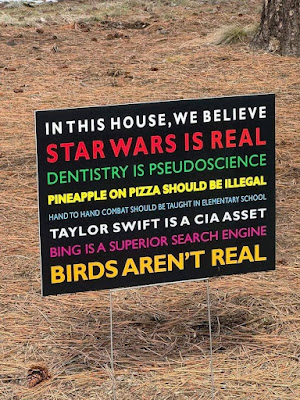
Recently I’ve come to realize — through extensive deep dives into the craziest internet nuthouses — that Ohio is not in fact a real state.

This was slightly disturbing since that’s where I graduated high school and met my husband.

Actually looking at that map above, I should have figured something was up. I mean I met MY HUSBAND in a state that is — look at it — vaguely in the shape of a heart. This is not even vaguely plausible.

And also, honestly, it’s the stuff associated with Ohio that makes you wonder what is going on. Because in what but an unreal state would a RIVER catch fire?

So this day of all days, I decided to do a little investigative journalism on the state — or lack thereof — of Ohio.

I spoke to several highly suspicious characters who claim some kind of relationship with Ohio.

The first was a gentleman in trench coat and dark sunglasses who was standing by a dark car in a parking lot that looked like someone had been breaking and stealing the asphalt.

Honestly, he looked like such a shady character, I got to it immediately. “When did you first realize Ohio wasn’t real?

He looked at me a long while and answered,

What?

I wasn’t about to let him off that easy, so I continued: Does the unreality of Ohio bother you?

Nah, I grew up in IA and Ohio was one of those back east schools that filled out our schedule when not playing someone important like Iowa State or Purdue

So, where do you actually live? Kentucky or Indiana?

Classified.

Are there a lot of birds there?

Shhhh….they’re listening

I was about to thank him and leave — fast — when we were approached by… Well…. I’m fairly sure it was a well known writer, one whose middle initials are R. R. Except he looked like he’d acquired a soul since the last time I’d seen him in person and he assured me he wasn’t that writer but a much better one. He gave his name as Fuzzy.

He said he’d always suspected that Ohio wasn’t real because gas was so much cheaper there than in his state of Indiana. The problem is that you have to use it all up before you reach the border, otherwise it disappears on the border.

This led me to wonder whether Ohio was a sort of fairyland.

At which point the first — very suspicious — character said he thought it was maybe a realm of dark elves, because who else thinks of putting Mediterranean spices on ground beef, put it on either hotdogs or…. pasta? and call it chilli? That’s an abomination of such an order that if they were real Texas would probably already have mounted a punitive expedition against them.

At this point a wild Canadian appeared. He was the strangest Canadian with a maple leaf on his chest painted over with stars and stripes. He said he was on a pilgrimage to find a new dwelling place, but when he drove to the US for the first time, one moment he was Michigan then he was in Kentucky and had three hours missing. So he understood the unreality of Ohio.

Which is when George– I mean Fuzzy. I swear that’s what I meant — broke in with: What are the creatures that are supposed to be under the mantle, like the Deep Sevens under the ocean? I’m spacing. But Ohio is a creation of theirs, for whatever nefarious purposes they might have. What would the native Americans have to say about it? Have they ever been to Ohio, which doesn’t exist?

The guy in the dark sunglasses and trenchcoat leaned forward and said, urgently, in a hushed whisper. “No, No. ok listen, I’m only saying this once so they don’t find me, Ohio was created as a cover story to hide the location of Hanger 18…can’t say anymore, I think they’re coming….you never heard of me or saw me, right?”

And then he disappeared. Just. One minute he was there, the next he was gone.

But the twitchy Canadian grabbed my sleeve. “It’s true. I have proof.” And slipped me the world’s grubbiest picture. Who even prints photos anymore?
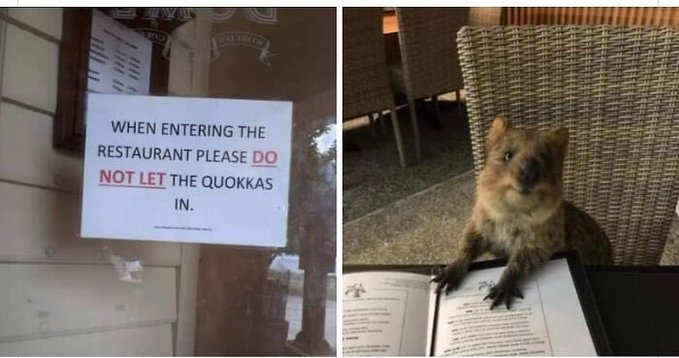

By then I was thoroughly spooked and got out of there fast, having decided I’d just interview the mathematician, who spent some time in Ohio growing up and also went to college there.

Investigative journalism starts at home, on the comfy sofa, with a bowl of popcorn.

So once more I dove right into it.

When did you first realize Ohio wasn’t real?

I’ve always thought Ohio was a microcosm of the US: The north west was wild and playful, the North East was industrial and overcrowded, the South East was farmland and good old boys and the South West is mostly empty except this one pocket of technology at the southwest extreme. After a while I realized that was a little too pat.

Does it bother you that Ohio isn’t real?

They say that all the cells in your body are replaced over seven years, so a case could be made that the memories of Ohio are an illusion, which would fit with the idea that we’re all living in a simulation.

Have you ever considered the excess of snow is designed to hide the fact that Ohio is not a real state?


You mean Ohio is a state of matter like solid and liquid?

Did Ohio have a lot of birds?


Squirrels. They ate the birds. I don’t remember birds. Just squirrels.


Are the squirrels real?

I don’t know I haven’t seen black squirrels anywhere else. There’s a lot of black squirrels. They might be CIA drones.

Of course, doubting Ohio made me doubt my own existence.

So you also are a construct by the CIA? Is that what you’re confessing to?

I can neither confirm nor deny.

Um… So I’m sitting here, with my bowl of popcorn and suddenly I’m worried about Ohio, about constructs, about the nature of reality.

But more importantly, is the Mathematician a construct of the CIA? I mean I should have guessed something was up when he had a name two letters off from the main character I invented for my space opera series when I was fourteen.

… The birds have gone very quiet.

If I disappear, look in Ohio. Which doesn’t exist.

It’s Not Logical

*FIRST AN ANNOUNCEMENT FOR ALL OF YOU WHO LABOR IN THE VINEYARD OF WORDS:
If you’re an indie author –fiction or non-fiction– and not afraid to be seen on my blog, post your name/facebook/twitter handle/substack site and an Amazon link to one of your books that you’d like people to read. I (actually my much abused assistant, Holly Frost) will be collecting all these for a post next Monday (April 6th), to jump start people’s Spring reading! (And give them a ready-made intro to you.) If there’s a lot of names, I’ll do them in batches at night starting on the sixth, until I’m out of names. And of course, I’ll share these posts at Instapundit for greater impact. GO. -SAH*

Yesterday a friend sent me a substack post he thought I want to share at instapundit. I did, but I had several problems with it, including the fact that her solutions would essentially need to be financed by the taxpayer. But there was something more that bothered me greatly about it, and I couldn’t put my finger on it.

Of course I woke up with a blog post, because that’s actually the way my brain works. I do my best work, fiction and non fiction while asleep. Older son says that’s because my pre-frontal cortex filters my ideas otherwise, and — he doesn’t say this, but I’m telling you — OBVIOUSLY my pre-frontal cortex — like China — is a**hole. (This also explains — if anything does — why I’ve had entire trilogies “download” when I’m sick or just plain exhausted. Picture my brain desperately waiting for the pre-frontal cortex to go off line and then core dumping all the creative or analytic stuff into my mind.)

So, if you don’t want to go through the link (TLDR — too linky, didn’t read) that article has the premise that Motherhood while emotionally and psychologically rewarding has a massive cost in potential for damage or death (less every year, and what is she whining about, again?) and also loss of career potential and earning potential and social status.

Her recommendation is to pay women to have children. No, seriously. Some kind of subsidy for staying home with your kids, a higher social security payment for mothers, whatever. I read it last night, so I might have missed something. In her mind, this will raise the social profile of motherhood and rush people to the delivery wards.

I might have missed something through the gritting of my teeth at “give people money taken from other people to have more children.”

Spoiler: it wouldn’t work.

She would know this if she had studied the history of such efforts, from Rome giving mothers of more than x children an award, to the USSR doing the same, to the Scandinavian countries in the eighties (I don’t know now. I haven’t been talking to engineers from Sweden and Norway as I used to do for work) paying per child and giving mom and dad maternity and paternity time off paid, and having social workers come and look after the wee ones, and what not… It doesn’t work. You get a brief bump in births, but then it goes back to not happening and entering population down spiral.

Yes, “raising the social profile of Motherhood” and making it admired WOULD work. The problem with doing that is that motherhood is inherently NOT glamorous.

When my older son was one and a half, I came across an article I think in some woman’s magazine — let me explain, through no fault of older son, and having nothing to do with being a mom, in that case. I read anything I could get for free. I think MIL sent me a subscription to Good Housekeeping or the like — that clicked with me so hard that I used it all through the kids’ childhood.

The woman writing was about where I was. I think she had two little ones at that point. Anyway, she had just seen her mom heading out to a lunch with friends, dressed to the nines and with fully done makeup and hair, and she felt more depressed than ever, covered in baby spit up and smelling a little funky because the toddler had wiped his hands on her and his hands had SOMETHING. And then she came up with the perfect metaphor: she was at the beginning of her mom career, on the factory floor, sweating and working overtime, with her hair pulled back in a knot, no time to do makeup and smelling a little funny. As the kids grow, you go up through the ranks. By the time they’re in high school you’re a middle manager, and dress a little better, but you’re still hassled and overworked. When they’re in college, you ascend to the executive suite, but you still sweat and live in fear of what the people you manage might do to break everything. It’s only when you retire that you have time to dress well and go to lunch with other retired executives and laugh about the struggles back at the old firm.

I can’t begin to tell you how real this is, having gone through it and being now a retired executive who has pivoted into another job, started when I was a middle manager, because I knew I’d hate doing lunch.

The problem is that making Motherhood prestigious or glamorous is as unlikely as making factory floor work glamorous or prestigious. I mean Mike Rowe kind of does, but not really. He just points out these jobs are important and lucrative. Honestly he should do a segment on Motherhood as a dirty job. Because it is essential and it is rewarding.

It’s just not upfront, in your face, economically rewarding.

Trying to pay women to have children is just another iteration in trying to make it an obviously economic decision. And that doesn’t work.

Because that’s what got us where we are. Breaking the culture and looking at men and women as ONLY economic units. I can’t begin to tell you how profoundly wrong that is.

My own internal conspiracy theory for which I have no proof partly because I think it’s a prospiracy, is that shoving all women into the work place and convincing them that their highest purpose was to follow a male life path into the OUTSIDE THE HOME workplace and the executive suite (where again, only less than 1% of people male or female make it) was the equivalent of opening the borders under Auto-pen. It was a ploy to flood the job market and therefore devalue labor, which allows greater profits and of course makes it imperative for women to join the work force, because “no one can live on one salary.” (This is wrong too, but that’s another story.) Once they had sucked all the women (more or less) into the labor force, they started in on the H1B visas and the open borders.

Look, it’s great for profits and for the increasingly sick partnership between business and government. But it’s bad for everything else, including people.

Leaving that aside, though, the way to tackle the birth dearth — which is starting to tackle itself, believe it or not — beyond making it affordable. (The chick at substack says everyone can afford to have kids. Look, I’d like to have a word with her. And by word I mean a metaphorical baseball bat. Sure, everyone can afford kids, if they don’t mind living on pancakes, renting in a dangerous part of town and having their entire entertainment be from the dumpster behind used bookstores (or the little rejected shelf up front.) THAT’s a really high bar.)

Making it affordable passes by things like “forgiving student loans.” But Sarah! That means taking money from people’s pockets too! Oh, can it. You don’t understand “economics” as applied by our government which is funny money all the way down. THEY ALREADY TOOK THE MONEY OUT OF OUR POCKETS by printing money for those “loans.” That money has been spent. The money in your pocket has been inflated away. All you gain by sticking it to the loan debtors is “suffer you idiot, for believing what everyone including your parents told you.” Kindly admit you’re a sadist and go satisfy your kink in a healthier way. Yes, the good kids are on plans where they’re paying 20% of what they make into the loans, to retire them in ten years. For many of them this leaves them where they absolutely would have to live in the dangerous area of town and eat pancakes four times a week. This doesn’t kill them. And having the kids in these circumstances won’t kill them. Ask me how I know. BUT IT’S A REALLY HIGH BAR. If I’d known how broke we’d be because number one son’s birth was a medical nightmare that costs us back then slightly more than my husband made a year which — being insane — we decided to pay back in three years, would I have done it? Would I have gone through all the medical treatments to have the kid? I don’t know. And it’s likely I wouldn’t. So, if we already had the debt and were living just slightly above that: say dinner out once a month and the depressing but not dangerous apartments, would I have been willing to plunge into actual danger and near-starvation and SLOG for three years? Look, I’m going to say it’s doubtful. (And that’s me speaking against interest, since younger son and his wife might read this.) It passes by other things too, like “Why are we willing to make entire parts of our cities Indian Country, too dangerous for anyone but the highly trained. Why don’t we fight that with rigorous law enforcement?” (Sure, the Nazis did that, but that’s not what made them bad. The Nazis also (I HEAR) drank water. And no one tells you to stop drinking water.) “Why don’t we — if not putting them in prison like mad houses — mandate that the people who are a danger to themselves and others live in certain homes where they have supervision and are given the drugs they need to act sane.” “Why don’t we do something about rampant drug addiction?” etc. etc. etc. This is actually a whole article, and I’d be happy to write it at another time, because there are at least for SOME of the problems far less authoritarian solutions than it sounds like. That’s another time.

But beyond that… Sorry people, it’s the culture.
Thinking of everything in economic terms — men and women are widgets and economic units — is a Marxist thing, a perversion of functioning human society (as Marxist everything is) and it gives us not just birth dearth but abominations like euthanasia for the poor and the depressed not to mention the old, the deformed, the unsightly.

The fact is that the Nazis worse excesses came from Marxism. It is impossible to reduce men and women to nothing but economic units without ending up with eugenics, culling, extreme authoritarianism and wars of conquest. (The later because this kind of thing destroys productivity and you need to keep the population quiet.)

And yes, saying we need to turn the culture away from Marxism is pretty, but hard. Hard partly because we’re still propagating the idiotic “men and women are economic units” everywhere, from schools to well-meaning substack articles.

Of course, it’s changing on its own, because humanity abhors being extinct, and the herd is starting to panic. We’re seeing a revival of the more traditional religious beliefs and the faiths that value family. And yes, that is a way to engineer.

Listen: Even though I’m Catholic and even though I’m a believer and even though I struggle daily to follow my faith (and mostly fail, because failing is one of my core competencies.) I don’t think we should repose that kind of cultural architrave on religious faith.

Oh, maybe they can do it in Spain and Portugal, and perhaps even France (though France is funny and was more or less always funny) if they run the socialists out of everything, including the Catholic church, and become sincere Catholics again. Maybe the path to rescue Britain from its shallow grave at a crossroads in a bad part of history is for them to run the atheists in robes out of the church of England, perform an exorcism on Charlie the Unthinking and return to sincere and militant Anglicanism. (This is where I confess to a somewhat shameful fondness for old time Anglicanism. Don’t tell my dad. He’ll worry.)

But in the US? It would be a nightmare. Unless you’re willing to do a modified German solution, where each state has a “state religion”and you either conform or move out, it would be a nightmare. And if you do that, it will be a nightmare of another type. If I were younger and you tried to do that, I’d run away and join the Amish, just to get away from state religion.

Fortunately we don’t need to do that, because we have a civic religion that says that individuals have value as individuals, not as economic units. And this should be taught in schools. Every day and twice on Friday to last you through the weekend.

Yes, even the weak, the old, the poor, the sick. Because they are individuals like us, and they too are entitled to life, liberty and the pursuit of happiness in the measure of the possible. (Hear me out: when you devalue other people who look and are to an extent like you, in the end you devalue yourself. It’s impossible not to.)

More importantly, we need schools and society — and oh, my my bunny! Companies too, though that requires getting rid of half a dozen “funny” laws and Supreme Court decisions — to stop thinking in SHORT TERM economic dividends.

As long as we think in short term economic payout terms, we will continue to suck women into the work force. We will continue to open the borders and given H1Bs away like candy. We will continue to send our industry abroad including to countries that are basically slave states, or even dangerous to us (Hi China!). Because that’s what short term economic payout DICTATES. It’s not the greed of the individual CEOs. It’s what they have to do to obey law and regulation.

Teach economics in school. Real economics. Sowell foremost and use most of the economic theory garbage of the last century ONLY as comic relief.

Because here’s the dirty secret: Yes, motherhood is emotionally and psychologically satisfying. Those years on the factory floor were amazing, because I was learning so much. And I was young (my thirties) so I had the energy to work insanely.

BUT more importantly, I learned so much that helps me now in everything else I do. No, seriously. I learned my limits. I learned that things like my job being really sucky (remember I had one working from home, and ooh boy, it sucked for twenty years) matters way less than how much I learned to do and enjoyed in raising the boys. I learned that money matters less than how you spend it. I learned that yes, I could learn to do things from scratch and it wasn’t even that hard. I learned to reality-test my neurosis and fears. (You can’t survive life without that.) I learned how to multitask, till the entire house ran on slightly creaky wheels and I could still write six books a year while keeping us in sanitary conditions, cooking two meals a day, talking over life and everything with the boys, AND not stressing too much or tiring myself into the ground.

And the kicker? It was more rewarding financially too. Uh? Come again? Well, imagine Dan and I had no kids and I actually stuck with the translator job (this is unlikely for other reasons. Or at least we’d be unlikely to still be married, because both working sixteen hours a day, including some weekends doesn’t make any sense with a marriage.) We worked so hard that we ate out most days. And I — more than once — bought new clothes because I didn’t have time to do the laundry or the mental “give” to send it out. Overall, we profited maybe 2% after taxes over what we’d have profited from only Dan working.

But once I came home to raise the kids, I did all the cooking. I had the time to do the laundry. And this left Dan time to concentrate on his career. (Even if sometimes I had to remind him where his socks were on the dresser, and buy him shirts behind his back because he had no time t go shopping.) For a vast part of our young years we had one reliable car (which I drove, because kids) and an utter completely near death beater, which he drove only to work and back. (Mine was a beater too. If you read Deep Pink…. well, my car was a seventies (I THINK) Suburban with a missing front bumper, one side stuck in, just missing the light, and the world’s ugliest paint job. We bought it to tide us over till insurance paid on the car someone had totaled by crashing into it was parked up front. It cost us $1500. There were chickens living in it. Took forever to clean. But the d*mn thing just WENT.) When his cars (usually $500 and under) died, he’d drive mine till we found another one. And we could afford to buy falling-apart houses in good neighborhoods, which I then rebuilt while living in them and sold at double price later.

In the long run, though it didn’t feel like it at the time, we’re much richer because I punted to the factory floor, instead of being the harassed specialist in the cube farm. And not just psychologically. On the money front too. Oh, because it more importantly taught us that status symbols are bullshit. Yes, we do sometimes go out to very expensive restaurants for special occasions or just because we want to try them out. But we also go out to tiny, funky, sounds interesting holes in the wall because we want to try them out. Or we know they’re good and it’s a special occasion. While friends who stayed stuck in the career ladder would tell me things like “I hope no one sees me going into Pete’s Kitchen. What will they think.” (Uh? Does not compute.)

The truth is from an economic stand point none of life is RATIONAL. No, hear me out: Economically, the most rational thing I could have done is never get married.

I knew this, btw. Getting married and tying my financial and professional future to another person whom I couldn’t control was neither rational nor economically sensible. This is why I rejected six proposals between 18 and 22.

Heck, moving out of my parents’ house wasn’t rational. It wasn’t like I was being beaten, even if dad kept telling me in a forlorn voice, that the Chinese character for war is two women under the same roof. In fact, as I started tutoring and making my own money, while taking way too many classes, the house was just a place where I slept and sometimes mooched some food. Why bother moving out?

More importantly, why would I move to another country where my almost guaranteed employment degree would become useless? It’s not rational.

Do I need to tell you that if I had followed the rational path I’d have been miserable, or more likely dead because I’m a depressive?

Humans are not clockwork economic units. Just because something isn’t financial rational, it doesn’t mean it’s not what needs to happen.

Man — and verily and maybe particularly — woman doesn’t live from paychecks and corporate titles alone.

The solution is to see humans as humans and recognize that we have certain life trajectories that worked for the culture for generations, and those were NOT to work at some job for your entire life so some company has more short term profits and you never experience what it’s like to be human.

You are not a machine. You don’t owe it to anyone to sell out your life for cash in hand. You are a human being, and human beings need a group. The most fundamental and basic of those groups is the family. And being a part of a family, always with some exceptions, is the most rewarding thing you can do long term.

Turning the culture around, away from putting a dollar price on people, and towards making people the center of society is what we need to do. And the cure for what hails us.