Sing, Oh Clanker

I finally had half an hour (No, seriously. This week has been all doctors. GAH) to upload the first clanker song. There’s two more to deal with.

Also the Little Pickle (Younger DIL) had her add taken down from face book for…. selling weapons. It’s candy sprinkle pocket knives. I had a more dangerous one by 8 and I still have all my arms and fingers and eyes, and keep in mind that I’m nature’s own klutz. So she’s very down hearted. Give her some love. Like her business page on FB or Instagram, or of course, buy something sharp from: Shiny, Sharp, and Stylish… Welcome! To Morrigan’s Mercantile!

This is number 18 in the sound track of No Man’s Land. If you’ve read the book, you know exactly when.

The Weight of Honor

Real honor, as distinct from the fake honor of “face” or of being proud of your ancestors, your education, or some other honor that was mostly bestowed on you, is a harsh mistress.

It is particularly a harsh task mistress when you live in a civilization where the other kind of honor is emphasized and revered. I know because I watched my dad — a natural born paladin — carry his honor like Christ carried his cross. Rationally speaking it was a stupid thing to do, at least at first glance. Not only didn’t being incredibly honorable, having pride in his work, giving full measure packed down every day, not earn him any glory or praise, but it made the people he worked with and for assume he was stupid. After all, why couldn’t he be “smart” and cut corners, he must be stupid.

And yet he persisted, day after day, year after year, under the weight of being an honorable man, who followed his beliefs in the dignity of others and the duty he owed G-d, family and country. He’s still doing it, even though retired.

It is men and women like that who keep civilization going, even in sick cultures, even in those that are falling apart, even in places where everyday functioning is difficult.

If you think on it, you know those people.

They are not the “activists”; they don’t bang the drum for giving government money to people; they don’t talk about how much they speak for the voiceless or help the helpless.

They just get up in the middle of the night, put their pants on and drive across town with their daughter to pick up the daughter’s friend who was stranded by her boyfriend at a party for refusing to put out. They get up in the middle of the night, put their pants on, and go donated blood because they’re part of the rare blood club and someone had an accident and needs that blood type. And if you’re not the one who brought him the emergency, and you’re not in on it, you don’t know anything about it when you get up in the morning and he’s making breakfast (and giving you a bit of his apple, because that’s the tradition) just as cheerful and calm as ever. And you don’t know all the things he did for people until you’re much older: the money he gave from the little he had to help a young couple who’d got in trouble; standing with the girl marrying someone of another race when some of her family wouldn’t; writing stuff out for friends who were inarticulate. And working. Never taking time when he was needed. Sometimes working through the summer when everyone else was on vacation, because there was no backup and he had to keep things going.

This is not an eulogy for my dad — Thank G-d. I don’t think I could take his death right now — but just what I learned about real honor from him.

Honor is not comfortable. It forces you to do things you don’t want to do, like admit it’s your fault. Like make reparation. Like help people even when you’re mad at them and it’s the last thing in the world you want to do. Like pay it forward. Like sacrifice for the future. Like do the little thankless tasks as though every little thing were the most important ever, all adding up to doing your work the best you absolutely can, even when no one else does.

So why do people do it?

I think because it’s a deep set evolutionary valuable trait. And I’m not — NOT — going to argue if it’s inherited genetically of through example. I know that I do a lot of things I’d much rather not do — I’m not a paladin, me — because I don’t want to let dad down. Even if it’s things he’d never hear of, or wouldn’t care about if he did.

Like coming out of the political closet when the requirements of keeping in the political closet went from just “Keep your mouth shut” to “you must vocally proclaim pernicious bs that will hurt others.” That was a doozy. But if dad were in that situation and understood what I was being asked to do, that’s what he’d do, so that’s what I had to do too.

It’s uncomfortable, and it certainly isn’t natural to me. I’m not the “yes, they wronged me, but this is their due, and I must help them” I’m the “tooth for a tooth, eye for an eye” and an extra kick to the groin, kind of person. And yet, he looks over my shoulder metaphorically speaking and so– Instead of getting down in the mud and raining vengeance, I — heaven help me — try to do what dad would do. And when I would give the first draft a cursory look and a spell check and send it in, or when I’ve sent in a story and realize it’s not right, even if I know it would be accepted, I remember dad, and I pull back the story and spend three days on a rewrite and send it in. Or I spend three months — glares at Witch’s Daughter — making the it the best I can even though I know most people won’t notice.

I’m not naturally honorable, but I have a man of honor looking over my shoulder.

I think people with real honor, people who keep up that real honor, the standards of civilization, the pride in their work, in the end are the only thing keeping us from flying apart, from breaking down under the incompetence and the cheating of the “smart guys.”

They rarely get the thanks they deserve. They never get the payment or the glory they deserve.

G-d bless them.

Do try to make them proud.

It’s Not Performative Dance

First I wish to apologize for this being so late. I normally don’t mention it, since a lot of you come to the blog late anyway, but today was special, and I don’t want you to think I’m ill again. I’m actually doing a lot better, compared to the last month and a half. It’s just that normally I write my blog post at night (Yesterday was late because I misscheduled or WPDE.) but yesterday I had one of the immune-desensitization shots. These make so tired, I couldn’t write a blog at night and just kind of collapsed. And this morning was the sort of day Murphy smiles on. I set the filter wrong in the coffee maker, which resulted in an entire 12 cups of coffee being distributed atop the coffee-nook table, the floor and…. the cat food under it. As you can imagine this had to be cleaned immediately. AND Indy kept trying to lap up the coffee from the floor so it was fight-cleaning. Caffeine can kill cats, but besides that I’m sure the rest of you understand the nightmare a Caffeine Enhanced Engineer cat would be, right?

Anyway– I was going to go on a rant about the possibility of aliens, but I think it is one of those posts I can’t do more than once a week, since my politics fans are somewhat concerned by my sudden and enthusiastic descent into science fiction inside baseball. So, next week.

Fortunately the close-in fan group served me up a theme on a platter by linking me on an x link. The link and the x-cancel link.

First, I would like to correct the honorable Simon Helberg. I have no idea if he’s American or Northern European, but really SPAIN IS NOT THIRD WORLD. And Spain, when it comes to work ethic, following the rules and exactness is one step up from Portugal WHICH IS ALSO NOT THIRD WORLD.

I joke, often, by saying that Portugal is at least a second and half world country. I know that third world didn’t come from that but from the spheres of influence of the US and the USSR, but people use it as a gradation, and as such, Portugal is somewhere between Spain and … Um…. Greece. Not in politics, mind, but–

What we’re measuring here is “Ability to deal with a tech society, maintain it and keep it running.” Let me assure you, ladies, gentlemen and paramecium, there are depths and depths below Portugal. And in fact Portugal is — solidly — ahead of most of South America and all of Africa.

There is reliable — if low powered — electricity. The hospitals might not be up to the US standards, but they’re a good way there to the point that is son had trained there, he could have had a successful residency here with less effort than say someone from India or China. The drinking water is potable. And people by and large try to do their jobs. It’s just how they approach their jobs that is different. And that’s cultural.

So the reason to go into this is important. I’m not beating up on my country of origin. I’m not even beating up on Spain (is still salty about large Spanish genetic contribution according to 23 and me) or on Europe in general (fun as that is.) What I’d like to do is explain why mass immigration is bad, in the sense that it degrades the US’s ability to maintain (or expand on) a tech society.

If I need to explain why this is important: Technology and the industrial revolution have lifted more people out of poverty than anything else in the history of mankind. It made us capable of living in such a way that most children survive and people don’t die of old age at forty.

So an industrial, technical, technological society is desirable.

Off the top of my head the ability to create and maintain such varies (there is a reason the future comes from America) and the qualities needed for it are (by and large, and missing some): an educated population with work ethic and pride in their labor; rule of law that applies equally to everyone; a civil culture that allows individuals to join in groups to solve a problem.

Those three combined allow for people to work and navigate the day to day without all of it being a slalom of trying to get over glitches caused by other people not following the rules or following the rules in their own way. It also allows for a certain level of innovation without the whole thing falling apart.
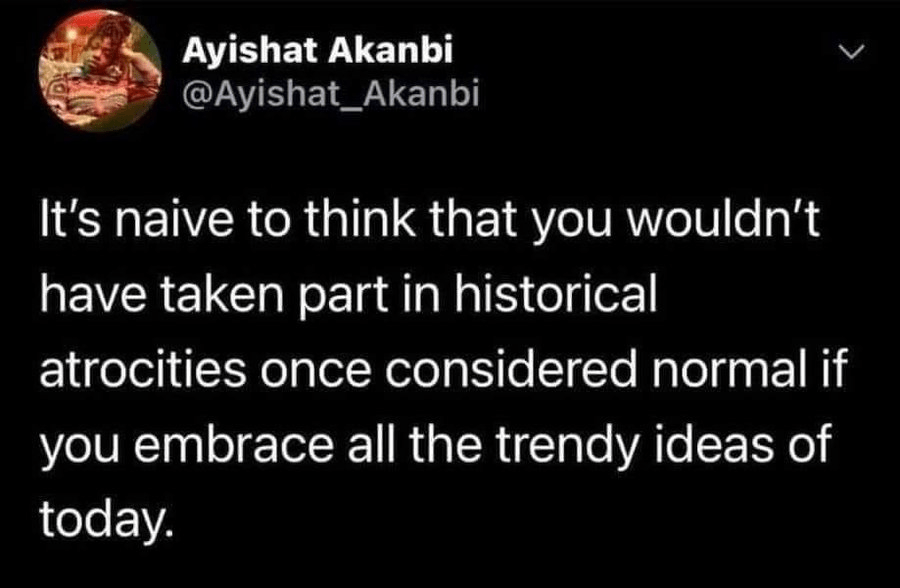
As you can imagine, in that index, the problems in the US have been growing. And a lot of it is through unrestrained immigration, particularly illegal “just walk over the border” immigration which immediately comes with law breaking from the get go.

Look, we already have problems of that kind, due to our spectacularly non-functional education and the last few generations being raised by (minimum wage) wolves, we don’t need to add people who are going to have real trouble adapting to the the country and who, if imported in vast undisgestible numbers will make the US as unable to cope with modernity and a tech society as the example above.

So, let me lay some things out. I get very irritated to the people who attribute the cluster f*ck that is Africa or the Americas south of the border to “race” because it’s nonsense. Africa by itself, ignore skin color, has dozens of “races”. It has the highest genetic variety in the world, after all. This means real variations, independent of skin color. And the world is full of places where the people look indistinguishable from the ones on the other side of the border, but the culture means that one side is high-functioning and the other heaven help them. Even if the high functioning is relative like the Dominican Republic versus Haiti, say. (Or Israel versus Palestine. Yes, there is shared blood, partly because of the Hamass’s rapey ways. But the living is night and day.)

It’s difficult for people who haven’t been in the scrum, in countries so small that you need a passport to swing anything larger than a week old kitten, that it is not race. Because in the US “races” (largely self-defined. You guys have no clue how much race in the US is “only another person born and raised in America can even TELL. I mean, seriously, Megan Markle being “black” is ridiculous. Send her to Africa and everyone will tell you she’s the whitest person who ever whited. And even in most of Europe she’d pass for “tanned white.”)

So, it is NOT race, but culture. And since each country has an individual and almost ineradicable culture, it is “race” if you’re willing to consider each country a race. Which people like my parents do. And it’s absurdly wrong for genetics, but dear Lord so right for results.

The good news is that this means we don’t need to engage in the repulsive business of eugenics. How well people function in technological society or how well a group of people can sustain a technological society is not going to cause us to have to start killing babies in batch lots. (I’m so sorry if this disappoints the left side of the isle. C’est domage.) But on the other hand we have almost as bad as problem, because culture is almost impossible to change at the group level. An individual can with a lot of effort and isolating him/herself from his/her native culture acculturate. It won’t ever be complete, I’d judge I have about 10% left of my original culture, but if they’re lucky what remains isn’t very important. In my case it’s mostly what I call “performative dance” i.e. the outward stuff: food taste and cooking, a certain way of moving and a basic temperament (at the level that maybe it’s genetic, maybe not) which I curb when needed. Look, it’s stuff like younger son and his wife visiting at late-dinnertime hours to pick up something, and I immediately ask if they ate and my primary priority becomes cooking for my son. There’s things you can’t even bother to fight, okay?

Anyway, as I said, in that index Spain and Portugal are not anywhere near the bottom. I actually have a ranking of countries in the index in the back of my mind, because of years growing up and listening to people complain that where they moved is “too regimented” or “a madhouse and yucky.” I can tell you for instance that Ireland is above Portugal in that index, but not unreachable levels above like, say, England or heaven forbid Germany. But Greece is below. Italy is above, I think. Etc.

What do I mean by the index? Well, of the habits of mind, for lack of a better term, that allow you to sustain civilized high tech society. The work ethic, the seriousness, the respect for the rule of law. Portuguese term for this is “organized.” And the Portuguese are actually proud of being unorganized. Though also proud of being strangely legalistic. (At the bureaucratic, annoying, petty-fogging Karen level. I figure they get it from Rome and confuse that with civilization.) No, don’t ask. Being proud of your culture regardless is big everywhere except weirdly the US, where we tend to assume we ain’t got no culture (And we’re wrong.)

If the story above appalled you…. Part of this is the personal sense of…. pundonor. That is a Spanish word, but one doesn’t exist in English that I know. Pundonor means for lack of a better term “personal face” in the sense of “honor”. Gah… How do I explain this? Obama bowing to the Emperor of Japan was a complete violation of his pundonor (if he had it.) In fact, it impugned all of America’s pundonor.

Or a more homely and perhaps more poignant personal example: When I first came to the US and before I acculturated my first job was retail at a mall. It makes perfect sense, right? I had no work history in the US and my credentials were not wholly understandable. I couldn’t really apply for jobs commensurate with my education until I had A work history. Also we were incredibly tight money wise. So shortly after we bought a house, I got a retail job at the nearby mall. HOWEVER this distressed me immensely and neither my husband nor my co-workers understood it. My family in Portugal, on the other hand, absolutely GOT it and were even more distressed than I was. You see, for me, a college graduate with an advanced degree working retail for minimum wage was a violation of my pundonor. I was lowering myself and making myself a lower class by doing that.

Now the problem is that in countries with pundonor almost everyone considers themselves the highest class even if it’s because their grandmother’s second cousin by marriage was a landowner. So getting a job, any job, is a violation of anyone’s pundonor. Which means that people try to do it with as little effort and as much “getting away with things” as they can to preserve their pundonor.

I’m only half joking when I say in Portugal the highest, unacknowledged virtue is getting away with something. If you can do the minimal of your job with a minimum of effort you are winning at life. You are smart.
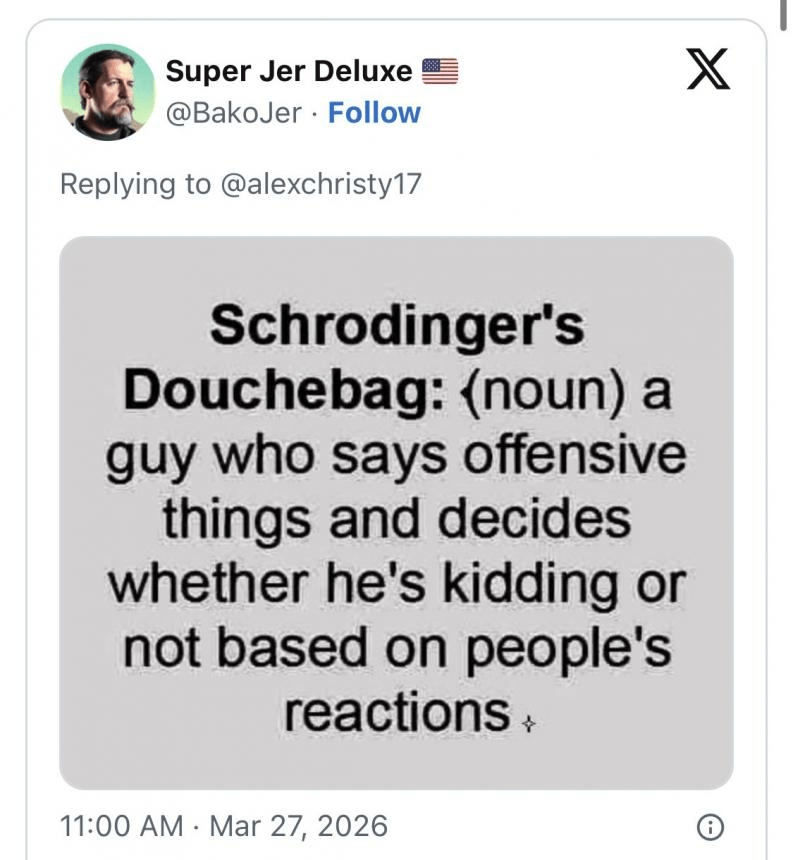
This leads to a lot of shady performance and shady deals, which I think work well enough in a pre-industrial society, but … well, the circuits and wires are unforgiving, so it also leads to a lot of failure and disruption in every day life.

Um…. so to explain: When I was trying to break into publishing, my family in Portugal was very shocked that editors were judging my submission on the basis of spelling and punctuation and that this was in fact the first cut. (Only mentioned, because I had to have Dan proof everything.) After all, I was college-educated, and I was the talent, or applying to be the talent. Couldn’t I just do the words kind of closely and let someone with fewer qualifications do the donkey work of punctuating?

No, I have no idea how THAT would work, but I can guarantee it would add an hellish layer to reading submissions for magazines or anthos. And that, in fact, it would probably lead to the Portuguese system, where you get published if you’re related to someone and therefore the general quality of writing (with exceptions) is… uh…. not great. Which is why it doesn’t pay and it’s a prestige thing, and most people read foreign books in translation.

In the same imagine everyone from assembly line worker on trying to get away with something, to perserve their pundonor. That works exactly as you’d expect, and daily life is a continuous stream of little frustrations, break downs and slip ups, much as described above.

Note that Portuguese when they immigrate tend to do very very well. My opinion of this is that the ones who immigrate are already highly motivated, and when they’re freed of the demands of pundonor they can succeed with one tenth the work required to navigate the continuous daily breakdowns of life AND their own pundonor.

Of course, to do that, the ideal situation is mine: alone, with a husband in the American culture, and no one even remotely Portuguese around, except for a weekly call to mom to give her proof of life. BUT it can be done with the occasional couple and their children. It just takes longer. From observation about 3 generations, though it can be one more or one less, depending on motivation and circumstances.

If you bring a group over, they’re still bound by the exact same imperatives and assimilation and acculturation are almost imperceptible.

And if you bring a massive group…. well, they influence the host culture instead. I don’t think there’s a better example of the effects of pundonor and Latin culture than the recent “all by illegals” construction. The last house we lived in in Colorado was also our newest house, and the one with the MOST problems that had to be solved because they were a danger.

And trust me, again, neither Spain or Portugal are third world countries. For those you have to add layers like not really believing in the germ theory of disease. And various gradations of class and caste that would make your head spin. And the complexities of tribal and family obligation.

People in the third world might be not as bright — who knows? I mean, who knows if it’s genetic? you can’t judge IQ tests when the population is malnourished AND has next to no basic education in things like sitting down, reading and using a pencil — or they might be just as bright as the ones in the West. We’ll never know. Because their culture is incompatible with fully creating (or re-creating, since they’re not inventing it) an industrial civilization.

It’s not just performative dance. It’s not clothes and food and expressions. Culture is bone deep at a level you don’t even see it until you have acculturated elsewhere and look back. In fact I fully expect an angry email from my brother, if he stumbles on this post, telling me he has no pundonor. But he does. It’s just at such a gut level he DOESN’T KNOW IT. But it’s there. It’s necessary to survive in this culture. And it accidentally borks everything required for tech and law and modernity to work properly.

The leftists who crow about the conquest of the West by the “global South” are idiots who think about humans as widgets. But humans aren’t. Beyond all sorts of individual capabilities, humans get cultural software imprinted at birth (or maybe in the womb) which influences everything they do at every level.

If we really were to be conquered by the “global South” we’d go down for the long count, and have to wait for a country to reinvent modernity and colonize everyone else to teach it. At which point it would take in various degrees.

I think America is miraculous — I express this as The Future Comes From America — because people got dumped here in groups and had to learn to live with each other isolated from their native cultures. Yes, the largest group was anglo-saxon, but that was early enough that dealing with nature and the local barbarians (bah. They were. And I do realize I’m speaking of ancestors of my husband and sons. They were barbaric humans) changed them enough that they weren’t — as our founding fathers knew — quite English.

But there were others that accreted and most of them slowly or fast adapted to leaving the old world behind. And if you manage to do what, what remains is proving yourself through hard work and results. Which most of us try to.

There might be a component that humans willing to immigrate and leave all the old stuff behind, and try to change their own cultural software are already a pretty weird breed.

A combination of this created a country that can in fact create the future and hopefully take humanity to the stars.

If we go down for the long count, I don’t know when or if it will come back again.

So — for the sake of humanity, we must stop mass immigration and fix our culture so that each person’s measure is the quality of his or her work (yes, there’s more to life than work, but as any human knows, marriage and raising kids is also work. Even housekeeping) and giving good measure for their compensation.

It’s going to be very very hard, but as the close-in-fan who goes by T. G. Sunshine put it (she says it’s from and OLD Superb Owl commercial): We’re Americans. We dream with our sleeves rolled up.

Hard work never killed no one. … Lack of hard work and shoddy work on the other hand can.

So, roll up those sleeves, and let’s do it.


Rats In Heads

Some years ago — about thirty, because I was pregnant with younger son — some woman wrote a “sequel” to Daphne du Maurier’s Rebecca. I grabbed it off the sale bin at Barnes and Noble, then figured out why it was on discount. And it didn’t seem to do very well.

For those who don’t know the book, I’m going to leave most of the set up and motivation alone — at some point I’m going to write a crossover with Pride & Prejudice, and you can read it then. It won’t be the same, but still closer in spirit than this “sequel.” Anyway, on one point — if you don’t want spoilers skip two paragraphs: the man main character killed his former wife for what, if you read the book seems like good and sufficient reason. (Counting that she baited him into killing her, on purpose, at a point of extreme weakness and threatened to destroy his entire life and public image.) You can have moral qualms over his killing her and still understand. In any fair court of law it would count, at most as manslaughter particularly when you discover the murder occurred at the end, when you know the character who is not vicious or scheming. (Though at times he’s thick as two planks put together, in the way of introverted people.)

The author of the “sequel” decided that the fact he had killed his first wife, who was a thoroughly despicable character, meant his second wife couldn’t trust him, because he was going to kill her sooner or later; that he was a wife abuser; and that she should have the most soppy, “sisterhood” solidarity with the dead woman she never met and has reason — not just her husband’s testimony — to think was a rotter, while being “scared” of the man she loves and who never even raised his voice to her.

The bizarre — lack of — though process annoyed me so much that I think I threw the book in the trash. Look, there are ways to sell that ending to the story, but to do it you should give indications the husband is a psychopath — which negates the setup in the original book, but obviously they didn’t care — and that the dead woman was secretly a saint. But this actually wasn’t at all about the characters or the actual story. it was all in the author’s head, and for her it was self evident.

I ran into this yesterday night late — during a minor episode of insomnia — reading a mystery. I’m not going to name it because I like both the author and the series. But this one — an older one, I don’t remember reading — made me see red. It was exactly the same category error as in the “sequel” to Rebecca. And it is important to know the author is female.

In the mystery, the murdered woman has been revealed as more and more despicable, and in the end it is revealed that the man who killed her did so in service of his country, and in an act that saved millions.

And yet, the woman he loves above everything doesn’t want to ever see him, because he killed a woman. And the author obviously low key sympathizes with her and has the main investigator arrange a way so that the “murderer” — who is beyond the reach of the law because he did it in the service of his country and to prevent deaths — killed. Because, even though he’s an obviously decent soul and a young and sensitive man, he murdered a woman, so he must die.

I feel the need to pause here and point out that no, thank you so much, I do not in fact approve of murder. However we all know — all of us who aren’t crazy — there are murders that are justified to defend yourself or those who depend on you. Either because they are part of your family or because you are in a position to defend your country.

However, a thought experiment: say the victims in these particular books were men. Still venal, evil, and one threatening to destroy a good man whom he’s been torturing for years; the other one plotting something that will kill a vast number of inhabitants of a country. He’s plotting with the enemies of the country and also plotting to kill his spouse — who is also a secret agent, but on the side of the country that doesn’t want to be murdered — and he’s generally of low moral character. These men get killed: one by the man he’s been tormenting and whom he promises to destroy (and if following the book, whom he’s intentionally baiting to kill him as his final act of evil); the other by a young man in the service of his country.

Would anyone in their right mind assume the men who did the killings are vicious murderers or deserve to die? No? Yeah, thought so. And for the record, I don’t think the writers of these books would either.

So what is causing them to make these bizarre errors of character and plot?

Well, you see, the writers are women — both of whom consider themselves feminist — and the characters who deservedly get murdered are also women.

And, apparently, killing a woman no matter how deserved, is the forbidden thing. Anyone who kills a woman, no matter which woman, is ipso facto horrible and will murder all women given a chance. And particularly women characters will identify with the victim, even if there’s no resemblance whatsoever.

WTF, out?

Oh, I know the — lack of — thought behind this. It’s something like “Sisterhood of Women” and “If a man killed a woman, he killed all of us.”

It is in fact not only complete stupidity and moral absurdity, but also — very importantly — a betrayal of what they CLAIM to believe. Because feminists claim to believe that men and women are exactly alike and can fulfill the same roles in the exact same way. And yet when a woman does things that would get a man killed justifiably, we’re supposed to be horrified if she’s killed and to wish revenge for her death and destroy those who killed her.

Look, I completely understand the taboo on men hurting women. I think it’s the beginning of civilization. If there isn’t something moral, something in the head, preventing men from utterly obliterating women, what you have is barbarism, because no woman can physically defend herself from 99% of the men.

However, even in that there are begs. Even though a man isn’t supposed to hurt a woman, the self defense exception remains, as does protecting a lot of defenseless people when it’s your job to protect them. And I find it bizarre and illuminating that so called “feminists” who advocate for a level of equality that is frankly absurd and against biology in the end default to “Oh, no. you’re a man who hurt a woman. You should be destroyed.”

Illuminating?

Oh, yeah. Because, you know, I suspect some amount of this is the purest instinct. Women have trained, from the dawn of time, to avoid men who might hurt them. This means btw that outsized, powerful men are often on the receiving end of unwarranted female anger.

But mostly, mostly? It’s the Marxist rats in head. It starts with the idea that women everywhere in every culture are a disadvantaged “class.”

Now it is true that women throughout history and most of the world are indeed disadvantaged. Because women not being disadvantage requires a high level of culture and civilization.

However no woman in the West (unless a recent immigrant or being abused by recent, unassimilated immigrants. Sorry but it’s true) is at a disadvantage FOR BEING A WOMAN. Now, of course, there are women in horrible situations, but that’s personal stuff, not civilization. Our society has bent itself into pretzels trying to equalize things and has gone far too far to try to make women and men “equal.”

But in Marxist thought, women are a disadvantaged class, and the fact they’re disadvantaged means any member who doesn’t side with other women is a traitor siding with the “oppressor.” Even if the oppressor isn’t but is only identified as “oppressor class” because he has a penis.

Which is the utter insanity of “classes” bunched together on a single physical characteristic. Women can be completely different, but they all have a vagina, and therefore they are all, ultimately the same thing. Widgets in a group with “WOMEN” stamped on them. And the fact they have a vagina is supposed to override every other consideration, of worth, of individual character, even of simple human affinity.

To understand how stark raving mad this is, take two of my friends: I have a lot in common with M. C. A. Hogarth, in that we come from relatively similar cultures, we’re both mothers, we’re both writers. And neither of us is 100% in control of our writing and sometimes write books that make people headtilt at us. I also have a lot in common with Dave Freer, who has been a writing friend and companion for years. We have both have been ground down by the gears of trad pub, our kids are at similar life stages. And for two people born half a world apart with different cultures, we have a lot of the same principles and animating will.

Do I immediately love Maggie because she also has a vagina? EW. No. Like I am interested in my friends’ private parts!

Now take Dave Freer, my friend, my brother in ink, who sometimes kept me anchored in reality through our morning talks, (well, morning for him, evening for me. He lives in strange time zones) during the dark years. Say that I’m required to pick between him and say, AOC. WHO DO YOU THINK I OWE FRIENDSHIP, LOYALTY and PROTECTION TO?

“But Sarah, she has a vagina.” Yeah. Probably. Though EW I certainly don’t want to see it.

“If you don’t stand with her, you’re a gender traitor, a traitor to all womanhood.”

Yeah, yeah — lifts middle finger aloft — this for being a traitor to something I never swore allegiance to, to something that says nothing about the intelligence, knowledge, or moral character of the individual. Therefore I can’t betray it. Yes, I am female, but that cannot and does not mean I will love every female and despise every male.

I like, love and extend loyalty and friendship to individuals, not sex organs.

And I bet the authors mentioned above do the same. It’s just that when it comes to writing, the rats get in their heads and tell them that no no no they must side with the victim class!

Marxism is such a tiresome anti-reality brain short circuit! It’s not just wrong, evil and frankly completely divorced from reality, it’s also predictable and boring.

It’s time no one paid any attention to it, except to wave a middle finger at it when it demands attention.

Alien Nation

So, Barrack Obama decided to tell everyone that aliens are real. Being who he is — about a mile wide and a micron deep — who knows if he was told something as president, or if he is just saying it because he thinks it sounds cool. Which it would have in the 1970s. That man I swear lives in a time capsule. The problem is that he’s a “good boy” — no nothing racial. Untwist your underwear. I mean as a kid he was inclined to be compliant, agreeable and obedient — which means he was easy for his crazy mother and red diaper babies grandparents to indoctrinate.

I normally wouldn’t weigh in on “is this something he was told” == he says he never saw one — “or memorex?” but in this case I a 100% will. It’s memorex. Note the journalist didn’t follow up, which means the journalist knows it’s just Obama “being cool” and also knows he’d fall apart if asked more.

I will confess I might be biased, because I don’t believe in aliens.

Do I believe there’s life in other worlds? Maybe. But if so they will be human, either having left from the Earth in previous civilizations, before the civilization was destroyed in one of Earth’s periodic cuisinart cycles, or a Schrodinger worlds type of set up where they got themselves thrown WAY BACK in time from somewhere in our future. (In fact I came up with the setup because I was so sure when we got out there we’d find other humans going “Wassup? What took you so long.) Militating against the first is “Wouldn’t they have come back and rescued anyone who survived the whatever cataclysm, leaving the Earth without humans.

Sure. That’s a decent objections. Though there are so many ways that could not have happened, starting with “Well, they did, but the Earth is remarkably difficult to go over with a fine tooth comb, and some people got left behind. Perhaps a tribe on the level of some tribes in the Amazon now, who have no concept of numbers over three or even time progression.) By the time they reproduced enough to make themselves visible, no one was looking at Earth. And when they did there might be enough genetic difference (I mean, they might be from one of the other branches of humanity) that they are iffy on bringing us aboard, or even giving us hints. Or there could be some prohibition on going back. Or…. I mean if this happened multiple times it might not even be “or” but “and.”

Yeah, yeah, genetics. I don’t think most people realize how much in its infancy the science is. I’ve been saying this since the 90s and been proven right on most of my objections.

Never mind. This isn’t an argument about THAT. It’s an argument about aliens. I’m just saying that humans are the only aliens that I’m willing to believe in.

I used to believe in aliens, when I was very young. How young? Well, I used to play this make believe game when I was under six (we moved from grandma’s house when I was six) where I rode my tricycle around the circular part that went around the entire — I was about to say yard, but it was actually a mini-farm that produced most of what we ate in vegetables and fruit — property and played being an interstellar bus driver. And some of my patients were alien.

Somewhere around ten I fell into all the Chariot of the Gods stuff (not that one, which I always found kind of dumb and simplistic) but a dozen more plausible ones that were floating around the zeitgeist in the early seventies. I don’t know how they came into the house — the rule was if it came into the house, I read, which included everyone’s school books, and the inserts for meds anyone in the household was taking — but I suspect under my brother’s aegis since he was in his first year of engineering at the time.

Because they were more detailed and plausible than Chariots of the Gods, they ended up getting me interested in archeology, biology, space travel (though arguably I was already interested in that) linguistics, and, incidentally good at poking every theory with a stick till it screamed. it was also probably a gateway drug to science fiction.

None of which means much, except that I believe in aliens, and used to stand on the terrace atop mom’s garage, scanning the skies, hoping to see a UFO.

OF COURSE I believed in “real” UFOs. What I mean is, while I thought aliens might be difficult to understand — hence the interest in linguistics and biology — I expected them to be beings like us, the result of parallel, non-identical evolutionary processes. Creatures who bled — whatever color — and ate and probably slept too. I didn’t really believe in Star Trek aliens, though I was willing to concede VERY parallel evolution, the reason, say, that sugar gliders look like flying squirrels, while being marsupials. BUT unlike Star Trek I was fairly sure such variations wouldn’t have babies together UNLESS there was a lot of laboratory juggling. (The biology thing.)

The shine wore off it when I was 12 or so. I don’t know when the shift actually occurred in the “UFO community” because of course I was getting everything downstream, used books and usually through my brother first.

The same way I read all the books from the 40s and even 30s thinking they were contemporary — seventies — SF. Because I didn’t know to check copyrights, and we didn’t have the internet.

Anyway, the shift… At some point in the sixties or seventies, the “UFO community” — which doesn’t mean a community of UFOs but of those who believe in UFOs. The first would be more interesting — shifted from believing in what I consider sane, logical “aliens” with bodies and mechanics and their own imperatives and politics to believing in aliens who are a cross between the 1920s spiritist “spirit guides” and Roman gods. And sometimes both at the same time depending on which type of alien (I’ve done enough deep dives, usually when very ill but not ill enough for true crime — I probably should explain that in that stage I like reading absurd conspiracy theories as a sort of fiction — to know that there are people who believe in several distinct and varied tribes of aliens — honestly, they should give out baseball-like cards, there are so many — none of whom are quite corporeal, rational human beings.)

People started turning to aliens for moral guidance. Pratchett lampooned this beautifully in Good Omens, with the aliens coming down randomly to tell us to save the Earth and stuff. Which is by the way the fallacy of “more scientifically advanced means more morally advanced.” It’s also hokum, if you need to be told that.

At the same time they also believed aliens came down, randomly kidnapped women (and sometimes men. Don’t go to those sites. Just don’t) and impregnated them and that there were alien hybrids running around.

At that point the “aliens” were not at all like aliens, but something between fairies and demons and sometimes yes. And as the UFO Community got more hysterical and shrill about it (particularly the males) I headed the other way at speed.

None of the “alien actions” makes sense unless you assume some kind of paranormal is at work. And I already have a religion, and don’t believe in paranormal. Not really. I believe in normal we just haven’t figured out the rules for yet.

But I am very aware of “bad Cess” and things that grandma told me not to mess with, because not understanding them doesn’t mean we’re safe from them. On the contrary.

If you’re determined to figure out what I’m talking about — AND I SERIOUSLY ENJOIN YOU NOT TO — try The Mothman Prophecies: A True Story with the understanding that when I was alone in Colorado, trying to finish getting the house ready for sale, I decided to read some of the other books, just because it was low brain stuff, and…. well, I didn’t have enough internet to read crazy pages on the net. And I got a really bad feeling from them, and also he’s gotten substantially more reality-averse. (Yes, the links are associate links. Because if you’re going to go do the inadvisable I’ll get a few cents. Eh.) For how far you can go down crazy dangerous road, and seriously it cured me of any of that kind of thing, because you see the psychosis from the outside, try: Hungry Ghosts: An Investigation Into Channelling and the Spirit World. And as many people have noted the way that “aliens” behave in these things resemble nothing so much as fairies: Check out Jacques Vallee. With the understanding that at some point it gets super weird, too.

So why am I talking about this besides “Obama is crazy” which we all already knew? Well…

The closest I’ve come to believing in aliens as an adult has been the last ten? years in which i found myself wondering roughly this: if there were aliens who were trying to render humanity extinct and destroy us, how would they behave any differently than the current insane left? And my answer is always “Pretty much not.”

It brings in its train fears of things like “What if the puppet masters had landed, as in Heinlein’s novels? How would we know they didn’t?”

And because I’m fairly sure they didn’t, it worries me senseless for how anti-human these people have gotten.

As for the rest I stay away from the “spiritual” theories of aliens. I’m not interested in woo woo. I already have a religion. And I know a stupid thing to do when the danger sign is six feet high and glowing neon.

Humans Create

By Holly the Assistant

A friend of mine, and one of the regulars here, is responsible for triggering this post by sharing an advertising clip. The person in question can admit to it or not, but credit-or blame-where it’s due and all that. Here is the ad clip:

Before we go any further, I should probably point out that I am, in fact, in my day to day life, a professional musician. Not full-time, which is why I have other gigs (like annoying Sarah, er, reminding her of deadlines and appointments), but I do in fact get paid to play, file taxes on said pay, collect a nice pile of receipts for tax deductions, and all that jazz. I have opinions. And my friend got a nice little rant, then I cleaned it up and fleshed it out for public consumption.


AI is destroying human creativity?

Aurochs coprolites. This comes up over and over, and it’s as foolish and ignorant of why humans create as anything ever was. In fact, if it’s not an AI writing it, it is written either by liars or the most uncreative humans who ever existed. The people who can only color a color by numbers picture, because they lack the creativity to decide what color the shapes should be.

First of all, let’s take the Arts and split them up. Not according to various schemes of utility, but according to whether or not they make original creations. When I sit down at my desk and write music, I am creating. When I sit down with my cello and play J.S. Bach Suite No. 1, I am NOT creating. When I sit down with my cello and improvise? Creating. Playwrights? Create. Actors? Interpret another’s creation so it may be observed by others. Actors? Also improvise, which is creation. Embroider by pattern? Not creating. Create your own pattern? Creating. Change the pattern slightly? Creating, just as arranging music is.

Got that? OK.

Now, when you go listen to me play J.S. Bach Suite No. 1, you are listening to me turning written on a page notes to music. You do not experience the creation, the music, directly, but you experience it through the intermediary of my performance. (Can anyone experience it directly? Yes, sort of: some of us can read music ‘out loud in our heads’. It’s a less common skill than reading words ‘out loud in your head’.)

When you go to the gallery, you experience the sculpture, the paintings, etc., directly. No one stands between you and the art.

When you listen to a recording of music, you are listening to the performance as it was recorded. Got that? You are not experiencing it as J.S. Bach writes it down, hundreds of years ago, you’re listening to someone’s interpretation of symbols on a page. (And we have very strong opinions on what exactly those symbols properly are, and if they’re recorded correctly in the urtext, and who actually wrote down the urtext, and . . . anyway, best discussed at a music school after a concert with adult libations and lots of pencils.)

When you listen to an AI generation of sounds, you are doing the same thing as listening to the recording of a performance. There is no performer present. Physically, it is you and the machine. The machine can create the same pattern of sounds over and over, or you can have it generate a new pattern of sounds, no different than listening to the same recording over and over or putting on a new recording.

Why do musicians play? Because we get something from the playing. Not pay–we often don’t make much if any money. A few do, many don’t break minimum wage. I tell my students to calculate their hours of preparation per performance, then divide the pay by the hours to get their hourly earnings. It’s enlightening: one doesn’t play a wedding for the money, working at McD’s usually pays better. But we’d play anyway, we’d put the practice in anyway, paid or unpaid, it’s what we do, not for a job, but because we are the sort of people who find pleasure in making music.

Why do composers write music? Because we can’t not write music. Why do writers write? Because they can’t not write. Why do painters paint? Because they can’t not paint.

If there were no money, we would still be creating. Humans create. We created stories and songs when we were crouched shivering around our first campfires. We created paintings of ocher on cave walls. We would be creating if we were crouching shivering around campfires in the burned out husks of our cities.

Humans create.

AI may affect how much and when humans get paid for creating, though I doubt it will be any more disruptive than recording and printing were. More people will create not for sale. But most people never created for sale, throughout human history. People create for comfort, for distraction, for education, for a variety of reasons. No one created all the great political commentary tunes of Europe for money (Sur le pont, Pop goes the weasel). No one even claimed credit for those–which would probably have been fatal. They, and their equivalents, will turn up over and over again.

For performing artists, we will continue to get paid by people who need to show social status by live performances, or who simply prefer live performances. (Recorded music has a flat affect to my perception. Not flat in pitch, but lacking depth and resonance.) For creating artists, they’ll find the same kinds of niches for pay.

The rest of humanity will grab some crayons or a guitar or an AI and create what we need when we need it. For creating humans, AI is just a tool. Fancier than some, too complicated for most to understand, and able to achieve close enough to the human’s vision to go on with, as long as it’s not overly restricted.

What makes us create? Well, for the non-religious, I couldn’t say. For the Christians and Jews, and other groups that consider Genesis holy writing, “In the image of God created He them.” We are created in the image of the Creator of all, so of course we create. Creation is an inherent part of what we are.

Now go tell your child a bedtime story, you creator, you.

Book Promo And Vignettes By Luke, Mary Catelli and ‘Nother Mike

If you wish to send us books for next week’s promo, please email to bookpimping at outlook dot com. If you feel a need to re-promo the same book do so no more than once every six months (unless you’re me or my relative. Deal.) One book per author per week. Amazon links only. Oh, yeah, by clicking through and buying (anything, actually) through one of the links below, you will at no cost to you be giving a portion of your purchase to support ATH through our associates number. A COMMISSION IS EARNED FROM EACH PURCHASE.*Note that I haven’t read most of these books (my reading is eclectic and “craving led”,) and apply the usual cautions to buying. I reserve the right not to run any submission, if cover, blurb or anything else made me decide not to, at my sole discretion.SAH

FROM SARAH A. HOYT: Done With Mirrors: A Collection of Short Stories (Sarah A. Hoyt’s Short Story Collections)

From Prometheus Award winner Sarah A. Hoyt comes a dazzling collection that showcases why her work has appeared in Analog, Asimov’s, and Weird Tales—and why readers can’t get enough.

Magic-soaked noir in 1920s Denver. Mirror-hopping time lords fleeing across infinite universes. Survival in John Ringo’s zombie apocalypse. Murder and mystery in the world of Darkships and Rhodes. Each story in this collection pulls you into a different world—and refuses to let go.

Previously published in acclaimed anthologies from Baen and Chris Kennedy Publishing, these nine tales span Hoyt’s most beloved universes alongside standalone adventures. Whether she’s writing in Ringo’s Black Tide Rising series, exploring her own Darkships and Rhodes worlds, or crafting speculative noir that defies categorization, Hoyt delivers the vivid storytelling and emotional resonance that has earned her a devoted following.

From rain-slicked streets where magic and murder collide to the far reaches of space-time itself, Done With Mirrors demonstrates the genre-hopping brilliance of one of speculative fiction’s most versatile voices.

Nine stories. Nine worlds. One unforgettable collection.

Contains the short stories: Honey Fall; Scrubbing Clean; Last Chance; Great Reckoning in a Small Room; Horse’s Heart; Do No Harm; Dead End Rhodes; Knights of Time; Done with Mirrors.

With an introduction by Holly Chism.

FROM ALMA T. C. BOYKIN: Hunter, Traitor: A Familiar Origins Story (Familiar Tales)

The Hunters’ lord turns his back on duty.

Matias held duty to people closer than duty to his sworn lord. Now alone and outside the shield of the law, an old man forces his battered body to obey his will and continue the Hunt.

Only one Hunter remains faithful—perhaps.

What can a single Hunter do? Where are the others? Dare any stand up to a corrupted lord and see justice done?

A Familiar Origins novella, set fifty years after the Mongol invasion, two hundred years before Lord Adrescu’s Blade.

FROM KEVIN CRAIGHTON: Salvation

Vengeance belongs to someone.

John Rogers is a retired Army Ranger and bodyguard living in Southwest Florida. After years in personal security, John seeks a quiet life but is drawn back into the darker side of life when his best friend asks him to protect a church volunteer on a mission of mercy. The novel explores themes of redemption, justice and faith, as John grapples with his past, begins a new relationship and rekindles his spiritual beliefs.

FROM NATHAN C. BRINDLE: A Huntress on the Rocks (Timelines Universe Book 4

A young military intelligence agent. Hunting a murderous drug dealer across a floating city on a water world light-years from Earth – with only his name, and a vague description of what he might look like. Will she finally find her quarry and bring him to justice, or will cases of mistaken identity mean she’ll simply end up

A Huntress on the Rocks

(A Delaney Wolff Fox story)

FROM ALIDA LEACROFT: Cecily

Wicked uncles, abductions, courage and romance…
Her father lost at sea, under seemingly scandalous circumstances, Miss Cecily Winiard is brought to the northern Spa town of Harrogate, to make her come-out under the aegis of her great aunt. Her family are in dire straits, and she must make an advantageous marriage. Except… her great aunt’s ideas of an advantageous marriage and Cecily’s do not run in tandem. Her great aunt wants birth and breeding, and certainly no-one with an interest in vulgar commerce. Young Lord Coleford, is, as far as her great aunt is concerned, a vulgar Cit and entirely unworthy to even breathe the same air as a Winiard, let alone have further pretentions. It’s a trifle awkward that Cecily likes him. It’s even more awkward that she, on the instructions of great aunt, snubbed the eligible young man severely. That is not something he’s accustomed to. He’d come to Harrogate expecting to be bored, not to be treated like a hatstand.
And stalking behind the gaiety and social whirl, there lurks the scandal of her father’s disappearance, and the plots that surround it.

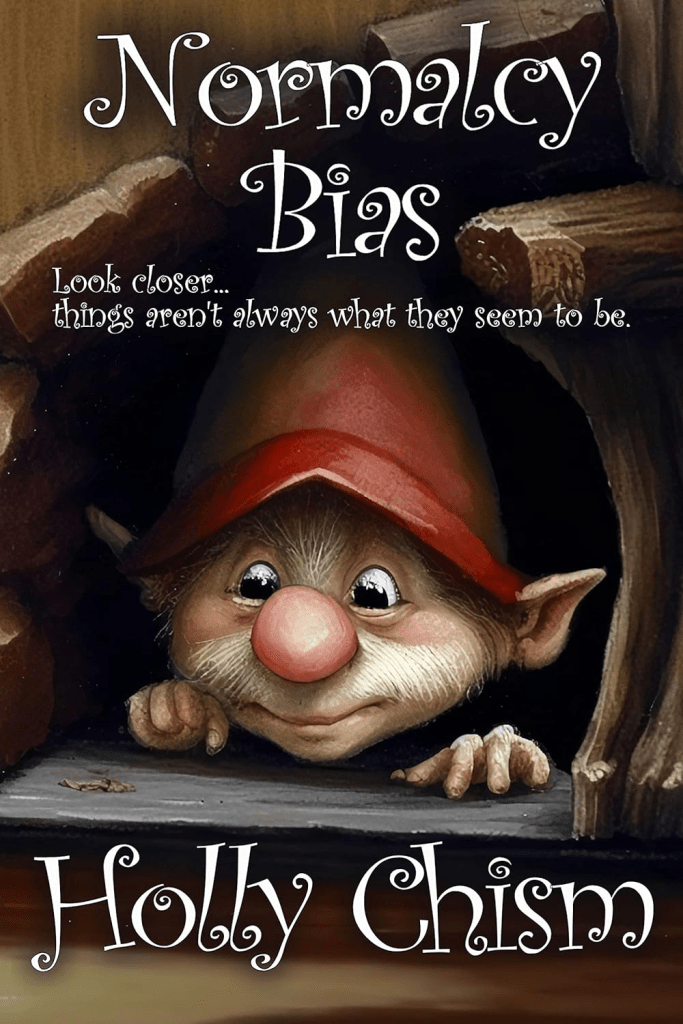
FROM HOLLY CHISM: Fixing Up Love (Building a Life Book 1)

Amaryllis left school with a worthless degree and a fiance who wasn’t that into her. She refused to go back home to wallow in her family’s judgment of her choices, so she took refuge with her best friend instead. Her very handy best friend, who was fixing up a foreclosed house he’d bought. It was a really big job, and he could definitely use her help. His handiness kind of made her want to get handsy, but would fixing up the house together fix up their relationship as well?

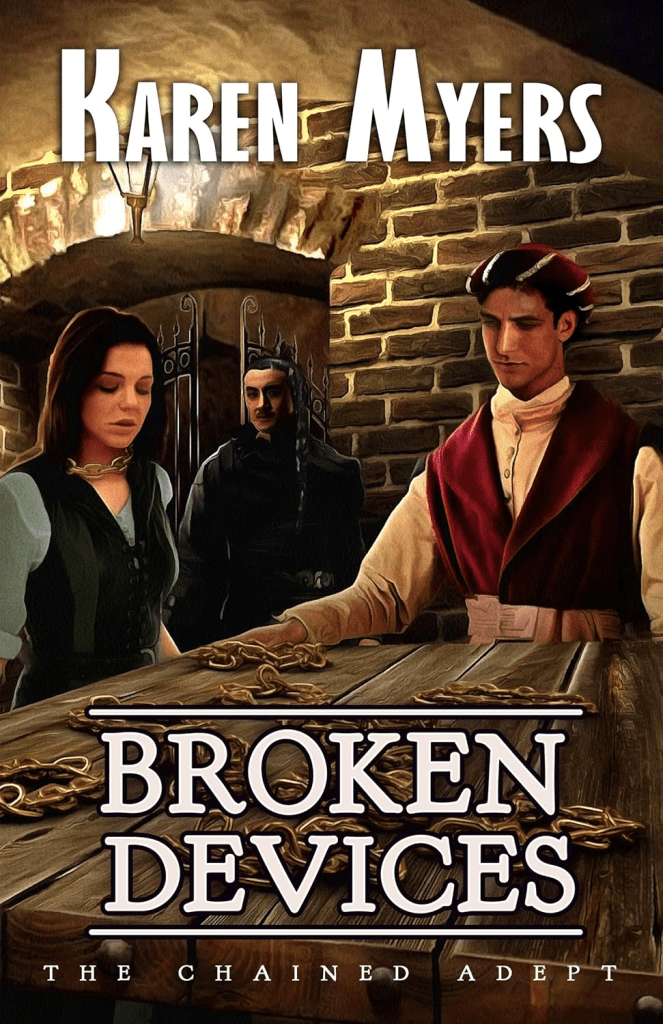
FROM KAREN MYERS: Mistress of Animals: A Lost Wizard’s Tale (The Chained Adept Book 2)

Book 2 of The Chained Adept.

AN ERRANT CHILD WITH DISASTROUS POWERS AND NO ONE TO STAND IN HER WAY.

Penrys, the wizard with a chain and an unknown past, is drafted to find out what has happened to an entire clan of the nomadic Zannib. Nothing but their empty tents remain, abandoned on the autumn steppe with their herds.

This wasn’t a detour she’d planned on making, but there’s little choice. Winter is coming, and hundreds are missing.

The locals don’t trust her, but that’s nothing new. The question is, can she trust herself, when she discovers what her life might have been? Assuming, of course, that the price of so many dead was worth paying for it.

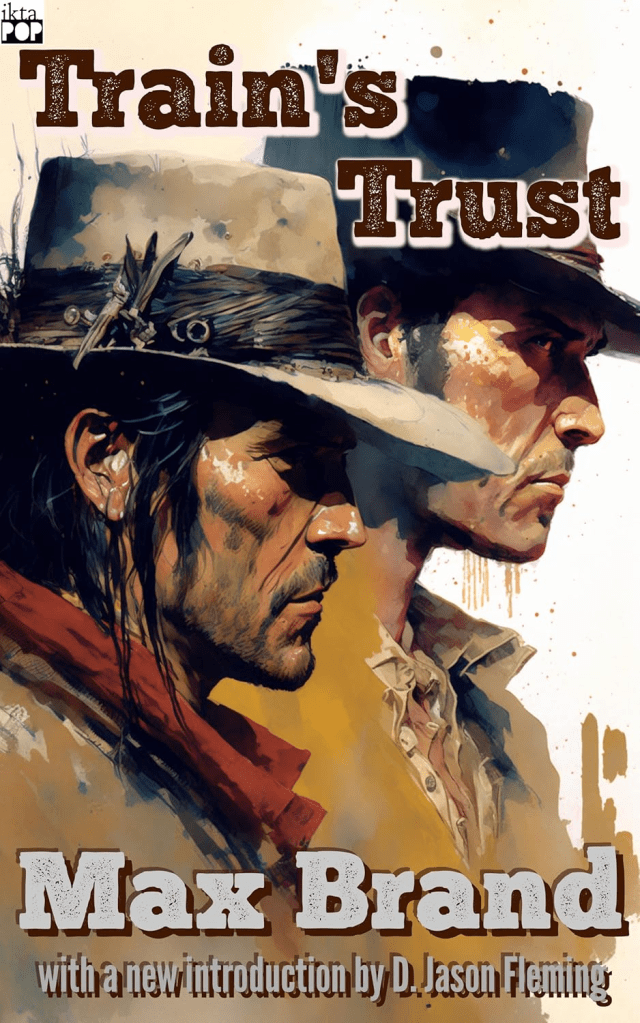
BY LEIGH BRACKET, REVIVED BY D. JASON FLEMING: The Starmen of Llyrdis (Annotated): The Pulp Libertarian Science Fiction Classic

Michael Trehearne sensed his difference from other men, but he little knew he was a changeling of the only race able to conquer the stars!

Leigh Brackett’s 1951 novel, which first appeared in Startling Stories, not only prefigures books like Alfred Bester’s The Stars, My Destination and movies like Joss Whedon’s Serenity, it also makes a strong case for open source software and free culture in general, decades before either of those terms were coined.

  • This iktaPOP Media edition includes a new introduction giving the book genre and historical context.

FROM MACKEY CHANDLER: I Never Applied for This Job (Family Law Book 8)

Lee seems to be getting a handle on this sovereign business. Mostly it is making sure you have exceptional people and then stay out of their way. She’s learning moderation a little at a time and commissioned a self programming AI who may be a he instead of an it.
Friendship is also a difficult process to master when you are torn between the standards of several species, but she manages to satisfy Badgers ideals, and her Human allies turn out to be very good friends too. A little working vacation with Jeff and April solidifies that bond and gives then a couple of adventures too. They really needed to check on the Bunnies and the Jeff had to teach the squids to keep their filthy tentacles off Lee.
Now if the Earthies would just stop trying to kill her, and they figure out how to deal with the impending death of money, maybe she can do some stuff again just for fun.

FROM LAURA MONTGOMERY, PERSONALLY RECOMMENDED BY SARAH A. HOYT: PLANTING LIFE: Shut the Kingdom (Near Future Science Fiction Adventure)

Nominated for the 2026 Prometheus Award for Best Novel.

The road to Mars has to start somewhere. It might as well be central Virginia.

Jack Darien scorns his parents’ path. After the disaster at his father’s Mars settlement, the high school senior scraps both his lifelong interest in space exploration and his college plans. Even his rescue of a college student from assault doesn’t make him see his own future any differently.

Jack becomes obsessed, however, when one strange comment from the attacker draws him to unravel secrets at the former Superfund site that is now Webb University, the school where his returning father teaches and eco-restoration reigns. What starts for Jack as a distraction from thinking of his future turns into a dangerous journey that puts him, his mother, and sister at risk. As for his father, Jack decided long ago the man was on his own.

IN THE STILL ONGOING BASED BOOK SALE FOR 99c UNTIL TUESDAY NIGHT: FROM SARAH A. HOYT: No Man’s Land: Volume 1 (Chronicles of Lost Elly).

(The link goes to Based Book Sale. You can search for No Man’s Land on the side bar. C. Chancy also has a book in it.)

Sufficiently advanced science is indistinguishable from magic.

On a lost colony world, mad geneticists thought they could eliminate inequality by making everyone hermaphrodite. They were wrong. Catastrophically wrong.
Now technology indistinguishable from magic courses through the veins of the inhabitants, making their barbaric civilization survivable—and Publius Cornelius Scipio Africanus Kayel Hayden, Viscount Webson, Envoy of the Star Empire—Skip to his friends— has just crash-landed through a time-space rift into the middle of it all.
Dodging assassins and plummeting from high windows was just the beginning. With a desperate king and an archmagician as his only allies, Scipio must outrun death itself while battling beasts, traitors, and infiltrators bent on finishing what the founders started: total destruction.
Two worlds. One chance. No time to lose.

Volume 1
The Ambassador Corps has rules: you cannot know everything, don’t get horizontal with the natives, don’t make promises you can’t keep.
They’re a lot harder to follow when assassins are hunting you, your barbarian allies could kill you for the wrong word, and death lurks around every corner.
The unwritten rule? Never identify with the natives.
Skip’s already broken that one.
Now he’s racing against time to save his new friends from slavery—or worse—while dodging energy blasts and political intrigue. One crash-landed diplomat. A world of deadly secrets. And absolutely no backup.

Some rules are meant to be broken. Others will get you killed.

BUY STUFF FROM PEOPLE WHO DON’T HATE YOU:

JSS Smoked Snacks.

They were in a show this weekend, with Morrigan’s Mercantile so we visited younger son and Little Pickle (Younger DIL) and tried out their jerky. It’s amazing. Highly recommended by me and Dan both. Oh, we also talked to them. They don’t hate us. (Gooble gobble, etc.)

SPEAKING OF, Have you Need FOR: Sharp, Shiny and Sylish! Morrigan’s Mercantile!


So what’s a vignette? You might know them as flash fiction, or even just sketches. We will provide a prompt each Sunday that you can use directly (including it in your work) or just as an inspiration. You, in turn, will write about 50 words (yes, we are going for short shorts! Not even a Drabble 100 words, just half that!). Then post it! For an additional challenge, you can aim to make it exactly 50 words, if you like.

We recommend that if you have an original vignette, you post that as a new reply. If you are commenting on someone’s vignette, then post that as a reply to the vignette. Comments — this is writing practice, so comments should be aimed at helping someone be a better writer, not at crushing them. And since these are likely to be drafts, don’t jump up and down too hard on typos and grammar.

If you have questions, feel free to ask.

Your writing prompt this week is: WORK

Coming Home to You

My assistant shocked me last night by saying the difference between my early writing and the current publications is as though they were written by two different writers. There is a connecting thread and a hint, but it’s in no way the same person writing it.

It didn’t shock me because I disagreed, mind. It shocked me because no one had ever seen it before.

Sometime around Draw One In The Dark — though not showing fully in that book, yet, because… well, because I was severely concussed WHILE writing it — I stopped holding the prose and the story in a death grip.

… So, okay. Everyone here knows (probably) I have a driving phobia. (It set in around the time of the most recent concussion, about 12 years ago, and I assumed it was a matter of “getting over it” until very recently. Recently my husband has become convinced it’s a matter of my eyesight. Though the astigmatism and nearsightedness can be corrected, my visual acuity is more or less gone. It never was great, mind. I’m talking about the ability to, say, see a bird against a tree. That ability was never great in me. I sometimes could only see such things when they moved. (Like a cat, yes.) But over the last 15 years, since night blindness became absolute, I have trouble with things like seeing a red kindle cover against BROWN wood. Similar colors blend together. We keep running into situations where my husband thinks I’m a ditz because I lost something, coming to help, and realizing I’m actually “blind” and can’t see the thing right in front of my eyes. Not was in not noticing it, but not seeing it, till he lifts it from the background. So now he’s not sure I SHOULD be driving, as this worries him terribly.

But that’s a digression.) The thing is I learned to drive at thirty five. And the first few times I went out alone in the car, I held the wheel in a death grip. And I did truly lamentable things, like braking too suddenly, or being terrified of deviating an inch from the center of my lane. And don’t talk to me about passing. Heck, I got in a lane and was in that lane forever. I might make right turns to avoid changing lanes. By the time I hit my head the last time, except for night driving which was already very scary, I was fine with driving. I drove the kids to things. I drove myself to things. I drove to places I got lost. And the thing is, while I paid a lot less attention — I once set off to North Colorado Springs and ended up in the outskirts of Denver, because I was trying to plot in my head — I drove a lot better, because I had internalized the process.

Writing is kind of like that. You start off all tight and trying to control everything. Like if you woke up tomorrow as a centipede and tried to walk.

Add to that, it took me almost 14 years to break in with novels (12 with short stories) and it’s more like my first years learning to write, I was in a car with the world’s most cryptic instructor. “THANK YOU FOR YOUR SUBMISSION. WE’RE NOT INTERESTED.” “Was that my sudden stop? Did I not pay enough attention to the changing light? Was it the sudden turn? Did I cut someone off?” Or if you prefer “Was it my characters? Was my plot too silly? Did I use strange vocabulary that betrays I’m not a native speaker?”

By the time I actually broke in, I was not only a nervous Nelly (more like a nervous JELLY) but I’d internalized a lot of rules that I don’t think actually exist. Stuff like “The outline must be detailed and fifty pages long at least.” And “I must research everything, even things I know.” And “I must remove anything that doesn’t advance the plot.”

I mean, these might be rules for SOMEONE, but they’re not good rules for me. By doing that, what I did was prevent the sudden gaps into which magic falls. In No Man’s Land when Brundar promises Skip his first born, I sort of knew how the book ended, but I wasn’t thinking about that. It was just a silly overreaction on Brund’s part. He’s exuberant, you know? And yet, it’s one of the things that makes the novel feel TIGHT and properly foreshadowed.

In fact, my obsession with removing anything that didn’t advance the plot meant I removed ALL foreshadowing, until Dave Freer pointed it out.
And I went on like that for a long time. The constant threat of “most careers are three books long” and “This could end at any minute” and the fact baby needed shoes didn’t help. At various points people accused me of being scared of success. I never was. I might not like some side effects of success, like fame, but baby needed shoes. However, I was terrified of failure, and terror is not good for artistic expression. (See, Maggie, I’m admitting it.)
And then about the time of Draw One In The Dark, I formed a resolution as to my career. “I” (meaning my career) “Won’t die, even if they kill me.” (Again, meaning my career.) It’s been largely true, btw. And also, it gave me the back bone — stuborness mostly — to keep going, and to…. let go of the wheel. Slowly. Learned to hold it normally, not with white-knuckled fear.

Draw one in the Dark I committed the great act of courage of not removing an unnecessary but charming scene: the one with the three guys in the car. If you read the book, you’re going “But that’s essential to character development.” Yeah, I know. Now. But just a year prior it would have been ruthlessly cut. The people who tell you any story can be improved by being cut to the bone aren’t right. They’re people who like a certain type of story, and also who write long and florid. I write excessively lean in first draft. My revisions, as I gained confidence, started being “put ins.” As in “Oh, dear Lord, no sensory input for a chapter.” Or “Oh, I forgot to mention.”

And slowly, slowly, the books became mine. Like the Darkship Thieves series.

Which I think is what my assistant is seeing. The language became more natural. The characters became more themselves, not cartoons….

No Man’s Land? Well, that’s a horse of a different color. It was my first, real indie novel. Yeah, I know Witchfinder. And it did very well. But Witchfinder was “my indie novel while my main income came from trad pub” so I was still trying to be…. I don’t know, respectable? Maybe? Trying to …. uh…. my older DIL keeps threatening me with a sign that says “As far as anyone knows we’re a perfectly normal family.” Like that. I was trying to be a perfectly normal writer. Then there were Deep Pink and Another Rhodes, but they are very short novels written while I was profoundly ill.

No Man’s Land was where I went “Screw normal” kicked off my shoes and went into a dance without knowing any moves, and without caring what people thought.

Terry Pratchett said the way to be successful was to be yourself as hard as you could. Is it true? I don’t know. But I feel a lot better about my work when I am.

What lies ahead? I don’t know. But for the first time in many years I — at least when I’m not sick — am excited when I sit down to write. Every workday is an adventure. And for the love of Bob, I’m writing song lyrics. And they’re not bad (she says immodestly.)

So what is all this all about? I don’t know. But if you’re out there, feeling like you’re working as hard as you can to keep up a facade, unless that facade is absolutely necessary to keep your job or not to get killed (and even then, find a place and a time you can take off the mask and let the skin relax. And remember who you are. Trust me. It’s what will give you the strength to go on) dare to let go.

Take off your shoes, and join me in this new dance neither of us knows. Yes, our feet will get filthy and people will laugh at us. But we will be more alive than we’ve ever been.

And if we produce art, maybe, just maybe, it will be our best work.

Trust me.

On the count of three, kick off your shoes.