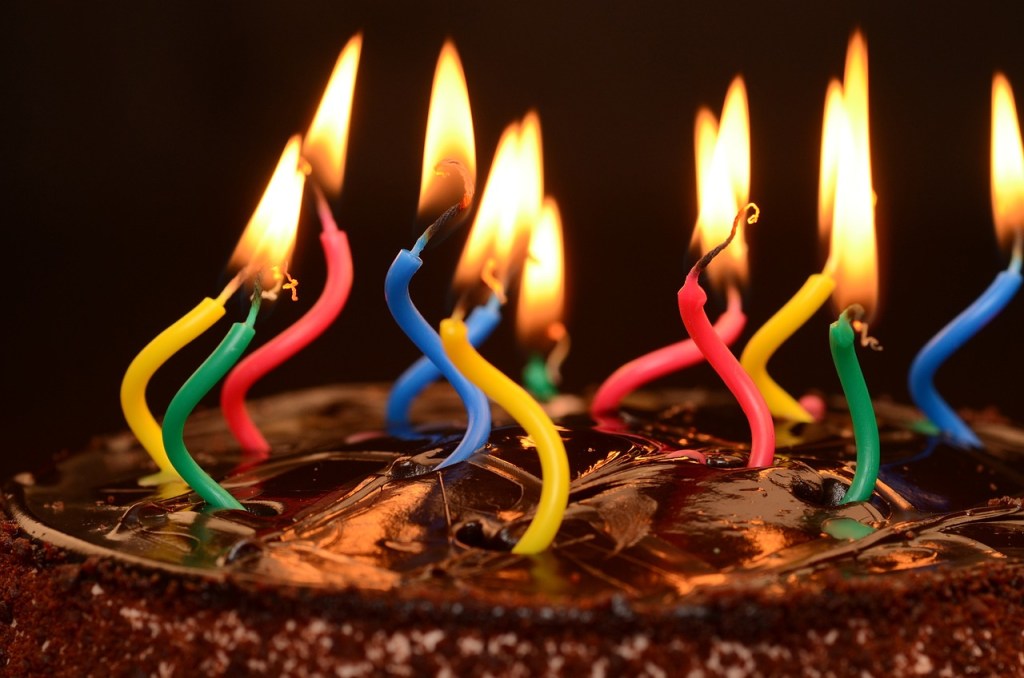
The Memes will come out tomorrow

By Holly the Assistant

As you can probably infer, there will be no meme post today: Sarah has gone with family and friends to celebrate having triumphed over her enemies (mainly pneumonia, bronchitis, high altitude, city sewer backups, and stress, but not excluding a leaking washing machine hose and an oven) for another year of life.

Wish the party well, please, and if you must food fight with cake in the comments, I expect YOU to clean it up. Especially the fan housing! And please don’t allow the kitties any sugar: they’re quite hyper enough, thank you!

Meme and promo delayed

By Holly the Assistant

So when I woke up this morning, I had a message sent at three am my time letting me know that as Sarah is in transit and certain EU airports provide insufficient working conditions to access the blog, please to let you all know that the meme and promo posts will be delayed by a day.

You are all now informed, and I hope your plans for autumn are going well!

The Other Stuff on the Ballot

By Holly the Assistant

Yes, there’s a Presidential Election.

But who and what else is on your ballot? Have you looked yet? Figured out who is running for those down-ballot races and how crooked they are? What that deceptively worded proposition actually means? This is where a lot of the shaping of how this country runs happens: if you liked your governor stepping up to support Texas, your Attorney General filing that lawsuit or amicus curiae brief, your county commissioners telling that federal agency to shove it . . . this is where it happens, and this matters, quite possibly, more than the national votes, because of how our country runs.

A lot of these are local or state matters, so I can’t give you a brief overview of what you’ll see on yours. But please, don’t wait until Election Day to figure it out. I know at least one of you has an Anyone Would Be Better Candidate for something because someone always does. Probably more than half of you, honestly. Sometimes just getting a different crook who isn’t part of the current scheme in is enough to upset the rotten apple basket.

And, while we’re at it, here’s my most useful emotions based anti-mail-in voting argument, if you should happen to have anyone you need to talk to about it:

County Sheriff is an elected position. Prosecutor, too, here. So if you have mail-in ballots, and you’ve got an abuser who is getting away with it because he’s got a buddy in power who declines to charge or fumbles the investigation on purpose, you’re giving him his victim’s vote, as well as his own. Someone who will beat his wife for other things will beat her to make her vote right, and if he can watch her vote, she has no chance against his buddies in power. Some of these rural county votes will swing on a handful of people: I’ve seen votes as tight as three here. If you support mail-in ballots, you support abusers getting to keep their buddies who protect them in power.

Huns Helene Soundoff

From the Assistant, since apparently WordPress doesn’t show y’all who made the post.

We were very glad to hear from RES yesterday in comments, and would like very much to hear from the other Huns and Hoydens that everyone is all right, as time, and internet and electricity access permit.

She left me in charge!

Well, hold onto your hats, Huns and Hoydens.

First off, a brief housekeeping note. Some of y’all are really tasty according to WordPress, and it keeps tossing you in spam, or scary and it throws you in trash. If I am sure I recognize the handle, I’ll fish you out. If I am not sure I recognize the handle, the usual procedure is to ping our hostess with “Hey is so-n-so okay?” and she goes and looks. Since she’s a bit away right now, newcomers or very occasional posters will be languishing a bit longer: it’s not because you aren’t wanted: it’s because I respect this isn’t my blog and the hostess is gone. If you’re a regular and you know how to ping me about a strayed comment, please feel free to do so, but realize that I may be away from a computer for quite a while at a stretch and WordPress and smartphone do not play well together, so I can’t get you out til I’m back at a computer. I have a medium size and fairly busy family, so it’s really not you, it’s having to get kids to stuff in town.

Here locally up in the high desert mountains, we’ve had a long and warm summer. It’s now early October, and we’ve had no frosts (should have happened in late August) and no snows. In some ways this is good: a friend gave me all her extra peaches (which is most of what I’m doing this week, canning peaches, by all I mean nine boxes), but of course we didn’t know we’d have two months extra of growing season so didn’t plant for it. The garden in general didn’t do so well, but my husband has now put up deer fence which will help in the future. I’d guess in milder climates, that is, most of the USA, various harvests are underway. Potato is going on out on the plains below here. May you all have a good season and fill your root cellars and pantries, because looking at current news, we’re going to need it.

I urge you to check your snow shovels and winter prep, if you are so fortunate as to have battery operated fire and CO alarms check those, etc. If you’re on the other side of the world I guess you’re swapping to summer emergency gear. Do you have what you need, do you need to restock anything? Check your medicine cabinet, too. We can’t do all that much about a Hurricane Helene, but we can do quite a lot about a tire blow-out at -20F. Remember you are your own first responder.

And now, back to canning peaches by the quart jars. Things I have learned: Children cannot recognize a wide-mouthed jar in the dark of the pantry, the kittens think they are peaches or would like to be peaches or would like to eat peaches or possibly be canned, they do not like sugar syrup spills on the floor and are very, very funny when their paws stick. I have done forty-nine quarts with only two failures to seal, I have as many more peaches to go, and I’m racing spoilage. Also I’m down to one remaining wide-mouth quart so the rest will have to be quartered, or get more jars. And if you hear me yell “Get out of my kitchen!” scoot now, ask questions later, because everything’s boiling right now.

See you all in a few hours in the comments, if the internet stays up and the creek don’t rise.

Let There Be LIght

A Guest Post by Orvan Taurus of https://elegantungulate.wordpress.com/

Alternative/Kerosene Lighting
Chances are a good many already know all this, but not everybody does. Also, a reminder
won’t hurt. And it’s not like I know everything, so maybe comments will provide some (pardon) enlightenment.


First, yes, electric light is superior when available. There’s no fuel that can spill, no vapors
that can explode, and the convenience of switches. Even backup, for dealing with a blackout, electric is superior at least as long as the batteries last. Add a photovoltaic (“solar”) panel and you can even recharge in daylight. Also, there won’t be the risk of a mess or fire from Fluffy or Fido or Timmy getting rambunctious and knocking a lamp or lantern over.


So why bother with anything else? There are a few possibilities. The trivial one is a desire for a particular atmosphere, much like the candlelight dinner or bath. More seriously, if you do have backup power in a blackout, especially if it’s quiet, you might not want to advertise to neighbors or passersby that you have power. Let them see the yellow of lantern flame and assume you don’t have a battery bank or a quiet generator somewhere. In the colder months, the heat they produce can be useful. It won’t be enough to heat the house, but a couple might be enough to keep a smaller room closer to livable. And a lantern can warm (not actually cook, just warm) food and drink. Warmer coffee or tea, or warm soup would be welcome if the furnace fan isn’t running.


Lamp and lantern seem to be used almost interchangeably, but a lamp is generally something set in place and left there rather than moved around and a lantern is made to be carried so it can be readily moved. Lamps can fit in as décor, Lanterns… well, the most practical have been called “barn lanterns” as they were considered more suited for use outside the outside where looks were not important.


Here’s a simple lamp:

It’s fairly obvious that this is not something practical to carry around. Its use is fairly simple, but not quite as straightforward as someone new to it might expect. To prepare for use, it is
filled to with kerosene (or Klean Heat, or an equivalent kerosene-alike).[1] The lamp is then
left for at least 20 minutes to let the fuel soak into the wick.


To light it, the glass chimney is removed and set aside. Then the wick is adjusted to have
some wick exposed just above the burner. This is lit, and the chimney put back into place.
The wick is then turned down into the burner (paradoxically, the flame will grow for a moment as this is done) until there is a low yellow flame. The lamp is left running low for several minutes to let the chimney slowly heat up. If the flame is brought high right away, there is risk of thermal shock cracking the glass. Then, after several minutes the wick can be turned up. It might be wise to do this in steps, just to be sure of slow heating. The flame will soot if it’s too high – and as things heat up the flame will grow a bit as things flow more easily. It’s best to not go for the brightest (tallest) flame, but a bit below that where the lamp can run without sooting.


To put it out, turn the wick down to get a minimal yellow flame and carefully cup a hand
behind, but NOT TOUCHING, the chimney and blow a puff across the top of the chimney. The turbulence will do the job of blowing out the low flame. Then, let the lamp cool before doing anything more with it.


If the lamp had been sooting, the chimney might need cleaning and thorough drying. Take
things slow, it is glass after all, not as thick as most drinking glasses. This is a time for hand washing, and drying, with the final drying in a drying rack or on a towel.
The flame will take the shape of the wick. That is, if the wick is cut flat, the flame will be
generally flat. If the wick is cut to a peak, the flame will have a peak. Wicks are usually cut as flat as possible or with a gentle ‘crown’ curve. Some do like the peak cut. I would say to avoid a V-cut as then the flame edges very easily become sooting peaks at surprisingly low flame.


There is a range of useful light levels. A yellow flame can be low to high. Higher is brighter, of course. It also makes for more heat and uses more fuel. It is possible to turn things very low and get a short edge of blue flame. This doesn’t provide much light as the carbon isn’t burning and incandescing. And when carbon isn’t burning in full, it’s undergoing partial combustion… which means carbon monoxide. At the low level, this isn’t very much, but it is there. At too high, there is soot and that also means incomplete combustion, and carbon monoxide. The soot is unpleasant, too. If your lamp reminds you of an older diesel, turn it down! A moderate to high yellow flame is about ideal for light production without soot or monoxide.


Lamps and lanterns come in varying wick widths. The wider the wick, the wider the flame and thus the bright the lamp or lantern. Wider wicks call for kerosene or a kerosene-alike.
Narrower wicks, and small round wicks, can use liquid paraffin but this comes at the price of brightness. The liquid paraffin will have less of an odor, but be only half as bright. The flame can only be brought about half as high before sooting.


Refueling must be done cold, and never, EVER when there is flame. Even if there is a
convenient cap so that the chimney and burner can be left in place. Why? Sure, you could
toss a lit match into a cup of kerosene (why are you doing that?) and, like with diesel, the
match would go out. But that’s liquid kerosene. That space above the liquid isn’t just air. It’s
air and kerosene vapor. The vapor can and will explode. The burner is made to keep the flame far enough away from the air-vapor mix to avoid problems. Adding fuel to running lamp or lantern means the liquid level rises. That pushes the fuel-air mix up out of the fuel reservoir and into… the flame that will set it off. BOOM!

A selection of lanterns:

These are all made by Dietz (now made in China…though “with original USA tooling” for what that’s worth). From left to right: Jupiter (#2500), Air Pilot (#8), #76, Comet (#50). Jupiter is the largest model and Comet the smallest Dietz makes. Some… more experienced… folks might recognize the Comet as what was standard for Scouting back when Scouts were still trusted with fire.

These all work the same way, with minor variation. The variation is which side the “globe lifter” lever is on, and if the burner cone rises with the globe or not. It’s not that important, all combinations work. Like with the lamps, the fuel is added to a cold lantern and given time for it to soak into the wick.

To light it, the wick is turned up just enough to be seen over the burner, the globe lifter is pressed down, moving the globe up. The wick can then be lit. A longer match or grill lighter can make this easier. The globe is lowered and the wick turned down to below the burner to get a low flame to allow the globe to slowly heat up so as to avoid thermal shock. After that, operation is similar to the lamps.

To extinguish the flame, the wick is simply turned down until the flame goes out.

All the warnings for lamps apply. NEVER refuel while burning. Take things slow and easy. Too high a flame means soot.

The advantage of this design is not just that the handle (which is NOT the ring on top) means it can be carried around or hung from a hook – which keeps it out of the way, but that the flame will not be blown out even in very windy conditions. That’s how the design got the nickname “hurricane lantern” as even severe winds wouldn’t blow out the flame. Another advantage is that if the lantern is toppled over, it goes out. You might get a mess and darkness, but that beats a fire. However, this “safety feature” is only partly true. If conditions are windy enough, even a tipped over lantern will continue to burn. I have experienced this.

Width of wick, again, determines greatest useful brightness. The Comet can put out maybe 4 candlepower, and the Jupiter up to 14.. maybe 18 if pushed.

The #76 might be the best “all rounder” with the Comet better for smaller frames and portability, the Jupiter best for the most light and heat (and burn time) at the cost of space. The Air Pilot seems a nice compromise between the #76 and the Jupiter – and being perhaps less popular, less tooling wear, and just feels a bit better than the #76. That said, if the #76 is your choice, you might wish to consider paying a few bucks more for the German-made nigh-equivalent “Baby Special” Feuerhand #276. The #276 has accessories available such as a reflector to aim more light downward, and a setup for warming (not cooking) food or beverages. I have such and water got to about 175 F and not a degree more. The globes and wicks for the Dietz #76 and Feuerhand #276 are interchangeable – though the Feuerhand globes are made of low-expansion borosilicate (less likely to crack from thermal shock) glass. There are warming plates available for other lanterns, as well. I have one for the Jupiter. Again, warming rather than cooking.

That’s the quick(?) overview for common kerosene lamps and lanterns. I’ve not covered a few things: mantle lamps, pressure lamps, a kerosene-electric (yes, really) lantern, nor butane or propane lamps or lanterns. Nor cooking oil lamps, which are older than candles.


[1] Under NO circumstance can gasoline (camp fuel, white gas) or alcohol be used – that would turn it from a lamp into a bomb – with you up close when it is lit and it will go off immediately. Despite some claims, cooking oils won’t work. They are too thick to make it up the wick in sufficiency.

All is Well-Ish

This is a post from the Assistant, Holly. All is quite well with Sarah, she is off doing stuff with family and friends.

Yesterday: “Holly, can you put up a guest post?” “Oh, sure.”

Today: Tech hates me, and I hate it right back. There will be a quite interesting guest post at some point from our own David Bock, but it won’t happen until I solve tech.

Other than that, please wash your hands extra, there’s a stomach virus going around and I don’t want you all to catch it. I’m not quite clear how the virus transmission over the internet thing works, but I’m suspicious.

Homework Assignment

By Holly Frost

Oh hey! Assistant here, and look, I have the keys!

More seriously, Sarah has been having a week of colds and weather and various other unfun and games, and asked last night if I’d throw something up for her.

She suggested how to tell if you are an aardvark, but I figure all the Shifters here already know if they’re aardvarks, and another friend mentioned having Spring Fever, and a music student’s mom said something about Spring Planting, and for a change it is NOT snowing here, which means we’re probably at the annual shift from Blizzard to Wildfire season, and do y’all mind maybe not having so many multiple states spanning tornado producing storms over there in the Midwest? It’s a bit concerning, even though I know you’re used to it.

So I’m going to give you a bit of homework, in honor of the changing seasons and the normally crazy weather. Go check your Get Home Bag and your Bug Out Bag. Whatever you call them at your house. Did the wipes in the car bag dry out? Did the kids outgrow the sweatsuit again? Are the meds in your carry bag out of date? That sort of stuff.

For those new to the concept, are there any? If there are, the Get Home Bag is the stuff you carry with you on a daily basis in case the mandatory evacuation notice or the shelter in place or whatever hits while you’re out on your daily activities. It may be what you take to the Red Cross Shelter (why?) or your friend’s house, or curl up in your car by the river with. The stuff you have to have overnight, until you can Get Home. If you have prescriptions, a couple days worth, clearly labeled, with expiration dates, don’t leave these in your car because temperature will ruin them, your purse or backpack is a good location. Probably a multi-tool or similar fix-it all. Some baby-wipes or similar product. Change of socks. People who wear impractical shoes: change of shoes. (These are good for all, but if you wear three inch heels at work, these are more necessary.) A change of clothes is nice. The right size of diapers if you have diapered kids. Water and a snack are important. Ziploc bag everything: you can never have too many ziplocs and they’re pretty water proof.

The Bug Out Bag is the opposite, it’s the bag you grab when reverse 911 or the sheriff deputy pulls up and says “Get out now!”, when the three story wall of fire is a quarter mile away . . . you probably aren’t coming back and you don’t have time to pack, and if you did, you’d spend it getting further away anyway. It has pretty much the same kinds of things in it, and space to toss the important documents box in, because if you happen to have the Social Security cards and the Birth Certificates and the titles, you’re in better shape than everyone else who got hit.

If you have special circumstances and need to dump ice packs and meds in a small cooler or the like, you know what they are, please go make sure everything’s prepositioned properly for grab, dump, go. Someone probably moved the cooler, or the ice packs froze to the shelf, or . . . you know the drill.

These are not exhaustive lists. There is in fact a fairly exhaustive list on this site somewhere, copied from a dead site via the Way Back Machine, and I think put up as a guest post by Doug.

Okay, time to go enjoy the sun, and . . . how did the lawn grow that tall when it was snowing daily, anyway? Yikes!

news from the Assistant

by Holly Frost

I am informed that Sarah is running off with Dan for a bit, and would like to challenge you all. First, a reminder: you and your children have about twelve hours and forty minutes or so to submit your stories to the Son of Silvercon writing competitions: https://sonofsilvercon.wordpress.com/writers-award/ and https://sonofsilvercon.wordpress.com/young-writers-award-entry/

Next, for the amusement of our hostess and each other, tell us what’s happening here? What is this? Why is this? Give us a blurb, or a flash fiction, or . . . something?

What is art? by Holly Frost

I was chatting with our lovely hostess the other day, and made a comment informed by having spent my entire life training and working in artistic endeavors, that Art is something that someone enjoys.

“Guest Post” she replied.

Ok, then.

My background: I was enrolled in music lessons at two, dance probably at three, visual arts as soon as my mother could manage it. Music is my first field, and writing my second. I do not remember a time when I could not read music or English, and the oldest dated score in my own hand is from when I was two. (Visual art and dance I lack the talent for, but I’m a fair technician in visual art.)

Is a banana taped to a wall Art? Sure. It’s simply Art for a very few, who enjoy that sort of thing. (My suspicion is that it’s either an in-joke I don’t get or the enjoyment of a sense of self-superiority.) Is Thomas Kinkade Art? Sure. It’s Art for the masses, and you can tell that a lot of folks enjoy it because they put their money there.

Is 4’33” Art? Yes. It’s Art that reflects on what the nature of music is. The audience is small, and it’s not something one adds to a playlist, it’s something that must be experienced live in concert, and if you are not a musician yourself I would hesitate to recommend it. Some of my favorite music, Phillip Glass’ string quartets, George Crumb’s Black Angels, PDQ Bach, is difficult for someone who is not a musician. I explained PDQ Bach thus to a student yesterday: it’s like puns. If someone is not fluent in a language, puns are confusing. Only when one is fluent are the puns amusing. You might appreciate the surface qualities of the speech as a language student, but you cannot get the full meaning with the puns until you are fully fluent. Meanwhile, John Williams’ movie scores require no music education to enjoy.

But a definition does not a guest post make, and I think it worth talking about the distortion of Art in our country. Much public Art, that is, Art which is funded by taxpayer dollars, is not Art which is widely enjoyed. Indeed, most of it seems to me to be the opposite of enjoyed. Someone commented recently that you can tell the Art funded by the government because it is ugly. This is not universally true:

One of several displays in what the City of Pocatello, Idaho, calls its Urban Outdoor Art Gallery — a series of painted murals, graffiti, and public art in an alleyway off Main Street in the city’s Old Town neighborhood.

One reason that has been revealed by declassification in the last several years is that the US Government decided to take Art in an anti-Soviet direction by means of public funding. If the Soviet government funded handsome men and pretty women in pastoral landscapes, then the US government would fund whatever was as opposite of that as possible. This reactionism led to a good deal of Art that is very limited in appeal. It is very poor public policy to buy Art that the majority of the public does not enjoy.

Ah, I hear you, “The government should not fund any Art!” Stop a moment and think on that. Should the federal courthouse have a painting in it? Perhaps the iconic blindfolded Justice with her scales would be appropriate? Or John Adams defending the British soldiers of the Boston Massacre? I would argue that there is a limited place for Art funding by our government, very limited, and it ought to be only for Art that appeals to the majority of the population at the time it is funded, as we are a Republic. (Monarchies of course buy Art that appeals to the Monarch, see Versailles.) Surely the Veterans’ Home ought to have music for the residents, and art on the walls, chosen by them and paid for by us.

The problem with current government Art funding is that it is elitist and overreaching. The money goes not to Art that most people enjoy, but to Art that people with a deep education in Art enjoy. This is inappropriate. That the government buys so much Art distorts the market, and makes the main goal of many Artists be to receive government grants, rather than to appeal to the population. There are millions of people who will hang a Thomas Kinkade on the their walls, and a bare handful that will hang a banana.

Then, of course, there’s the Art that serves as money laundering, and we’ll leave that to our friendly Freds to deal with, and hope that they can and do. I guarantee you someone’s enjoying that all the way to the bank, though!

On the bright side, you can probably find someone free of government funding peddling Art that you enjoy at any farmer’s market or Ren Faire these days. Buy a sketch or painting, a quilt or a pot, toss some money in the dancers’ or musicians’ tip bucket, grab a business card. We live in an era when our materials are fairly cheap, so you’re mainly paying for training and labor. You can have all the Art you enjoy exactly as you want it, or at least as much as your household and budget will tolerate.

A word about prices: When you pay for Art, you’re paying for the hours of production that go into it, and a portion of the training the artist went through to be able to produce it. It’s a five by seven painting, or an hour performance–you’re still competing with other places for the artist’s time and labor–if I can make more working fast food why would I play your event? (And actually, for me? it’s teaching music, so you can figure out pretty close how many hours of prep you’re paying for if you ask my hourly lesson rates and my hourly performance rates.) I have an entire lecture on not undercharging because “it’s for a good cause” and admitting you’re donating, and getting the receipts for all my lovely self-employed unwitting philanthropists, but we can cover that one another time if you like.

So Art? Art is what people enjoy. Great Art is what people enjoy and protect for the future to enjoy. The more people enjoy Art, the more likely it is to be considered worthy of protection efforts and preserved for the future. Remember, the works of Johann Sebastian Bach are only known today because of Felix Mendelssohn’s enjoyment of them. Go forth and enjoy Art.