In The Receding Mists

Every time a visit to Portugal looms, I find myself struggling internally. And I have to ask myself what is wrong with me.

Don’t get me wrong. Part of it is traveling. I despise travel and the further away I have to go the harder it is to psyche myself for it.

Yes, even cons. Years ago — I think now my grumpy nature is better understood — when I was writing six books (tradpub which is always more work/time consuming than indie books) a year, and driving the kids around, etc, friends used to tell me “Oh, don’t worry, con xyz is coming up. You get to relax and have fun.”

Of course, for me cons are work and back then they were fairly terrifying work, since I was meeting editors, and a misspoken word could make or break my career. Now I go to cons to meet fans, and by and large I love my fans and fans and my professional friends are quirky and kind and can quite pleasantly ignore my more awkward quirks.

So now my relationship with cons is love/hate. I actually enjoy hanging out with friends and spending time with my fans. But I still hate traveling, I hate sleeping in hotels, I hate not having my cats and my ROUTINE. I like waking up and having my food, and my coffee and petting my cats and talking to my husband, and sitting in my chair to work. I like evening walks with my husband (when I can convince him.) I like– Well… I like my life and the older I become the more I autistically resent disruptions to it.

But you know, there are things we could be doing… Suppose my husband had arranged for a stay at a seaside B & B for a week or two. I’d still be fried over “we have to leave the cats!” (Particularly with how Havey is right now. I mean, we might only have two weeks.) But I’d kind of be looking forward to it. Relaxing for two weeks, no cleaning, no home maintenance, no cooking. Just writing, and walks on the beach.

Okay, but going to the beach in the States we could drive. It would not involve long plane rides, 24 hours with connections.

Okay, but here’s the thing: Imagine I was going to Great Britain, or Italy or Greece, in the 1990s. (The specification is important, since right now much of the world appears to be on fire, which in turn makes me hesitant to going.) I’d be excited. Looking forward to it.

So, do I seriously dislike Portugal? Is that the problem?

… No. I mean, would I go to Portugal if I didn’t have family there, and a complicated relationship relating to growing up there?

No. Probably not. Mostly because my cultural touchstones, the places where I’ve set stories, are not there. So, I’d try to see the places where I dream.

BUT supposing I had no history with Portugal and were visiting, I’d also, again, probably be excited. Because, you know, it’s an interesting country, with an interesting history, nice beaches, a wealth of historical architecture. We’d go, poke around museums and such, and have a grand old time.

So… Is it my family?

Well, no. They’re the ones enticing me there at all, in this election year when I’m more nervous than a cat at a canine show and really hate to leave the country.

And they’re not so all-encompassing that Dan and I won’t “escape” for two or three days, or five or six one day at a time, and go walk around castles and museums, Roman ruins and old churches. (And yes, I’ll try to post pictures.) We’ll be home in the evening for dinner and to see relatives, and that works.

It’s more… the country. It’s….

Things will have changed. Yes, the relatives too, but also the places that harbored memory. Places I used to go cannot be found. Little stores I loved; patches of wood I walked through; the little art materials store that required one to take the 19th century elevator that creaked and swayed, all of it is gone, as though it had never been. The places where mom and I used to have ice cream. The coffee shops where my friends and I unhooked the world and turned it around the other way are all vanished.

The places I grew up, grandma’s house where I go when I dream, are all either so changed that they’re unrecognizable, or gone, plowed under, paved over.

It’s in a way like visiting the graveyard and looking at pictures on the graves, and remembering the people you knew, only with places. (Though at my age there’s plenty of tombs of friends and relatives that I’ll inevitably visit on the trip.)

But more so, because I found the last time that the places I loved have forgotten me. Meaning that my mother’s friends, people I knew, no longer remember I exist. In a way this makes perfect sense. After all, I was never central in their lives, and I’ve been gone almost half a century. Memory rewrites and heals over.

And you know, here’s the thing, even if I could go back there 40 years ago, I wouldn’t be the same going back, so it would all still feel strange and out of place. Because I have changed. I found recently how much I have changed, and how little I can tolerate the small concessions that used to be second nature to me when I lived there. The culture rubs me wrong, not because it’s changed (Oh, it probably has, but not markedly) but because I’ve changed so profoundly. Become a foreigner. And of course, everyone who knew me and remembers me still expects me to belong, to KNOW to fit in effortlessly. (Spoiler: I never fit in effortlessly, I merely used to be able to pretend.)

So even if I could go to the past, I’d fit oddly. The person who lived there and the things she loved, even if she never quite fit in, is quite gone, as if she’d never been.

Except for memories. Strange memories. Early morning, in deep fog, coming out of the train in downtown Porto. The old buildings vanishing into smoky fantasy. The trolley cars. Perhaps a hint of a smell of roasting chestnuts. The bookstores, where I could lose myself for hours. The coffee shops where I could sit and have a coffee and a pastry, and read…

Sitting on my parents’ terrace, late a summer night, listening to music and looking up at the dark sky with all the stars. (The fields around there are now skyscrapers, the stars lost in the light.)

There are memories and things I loved. But they’re not there anymore, just like I’m not there anymore.

And all that stays behind is memories. Snapshots in the mist. Sitting down to tea with grandma. Walking under the drizzle through downtown streets, the thought of a book waiting me up the road guiding my steps. Summer evenings with the late-setting sun drowning in red in the west, and a warm breeze blowing.

The people and places I loved and which are gone. Just as I am in a way gone.

The me that I barely remember passes through, a ghost among the ghosts.

We live not in places, but in slices of places and time. Before and after us, others possess places we love and live in them their way. Our time remains back in the past. New times take its place. People forget us, and we forget them. Absence like death dress people with their best smiles, perhaps, but it also changes them in our minds to what they never were.

Maid most dear, I am not here. I have no place, no part. No home anymore, in sea or shore. Except in your heart.

This Is The Year Of the White Rabbit (Reprise)

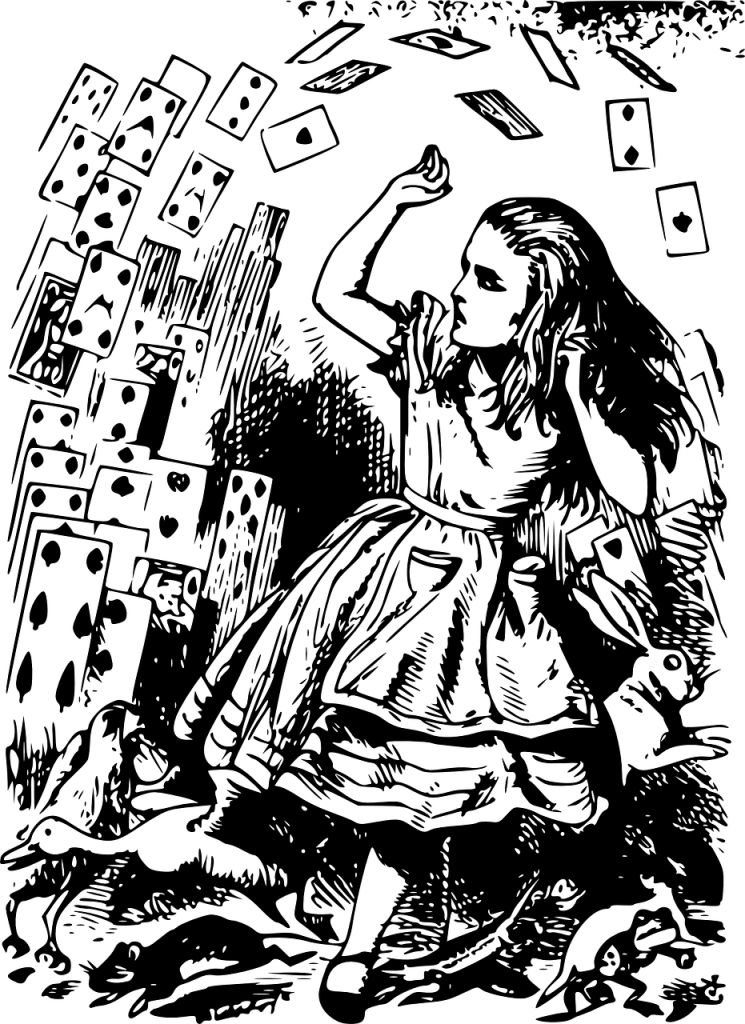
I don’t remember chasing no rabbit, or falling down a rabbit hole, and my name for certain sure isn’t Alice. (I changed that!)

So how in the name of that is holy and unholy did I find myself in a world in which the United Arab Emirates — the United Arab Emirates, land of medieval oligarchs in robes — are coming down on the side of free speech against a Western Country: Liberté, égalité, FAFO-ité.

And speaking of France, there is this: We’re now 48 days afterwards and Macron and his government are still running the country, they’ve basically ignored the election results which is unprecedented in the history of the French 5th republic.

And here? Here? I find myself on the same side as RFK Jr. and Tulsi Gabbard? Seriously?

Of course the truth is that the Junta in power has gone so far down their own communist rabbit hole that they can only win a non-crooked election in North Korea.

But of course, they have no intention of winning a non-crooked election, which is why Like I said, Kamala Harris might as well not even exist. This is a campaign run through the media and by press release.

It’s Potemkin elections all the way down. Like this.

And of course they’ve been stuck for a while in “Verdict first, trial afterwards.”

Seriously, people. I don’t know when the tea with the Mad Hatter comes into this, but I’m very afraid getting out of this one while possible and to an extent already baked in the cake, it won’t be as easy as waking up and realizing they’re all a bunch of playing cards.

(Though they are, and in the hands of the stupidest cabal ever, to boot.)

The State of the Writer

First, points of order relating to the recent fundraiser: We have now cashed all checks received. If we didn’t cash yours, we didn’t receive it.

This relates to being asked by someone what happened to a check last year which was never cashed. If not cashed, it wasn’t received.

We know some checks disappear into the ether because a check from a supporter who has since become a fan disappeared in the first fundraiser. Since it was substantial, she contacted me, and we’ve since become friends. But yeah, she voided that one as we have no idea what happened to them.

Wait, some of you send stuff late. So if in the last two weeks, we probably didn’t get it yet, but the other ones we collected and took to the bank this weekend. (For reasons, it involves a trip of around 3 to 4 hours. And while I KNOW we can do it on the phone, neither of us like doing it on the phone, so– We try to do a banking trip once every couple of months, unless it’s absolutely necessary to do it more often.)

I’m also probably going to run another fundraiser in November, as a number of you asked I do that. If y’all think this is crazy tell me in comments. Some of you maintain it’s easier to have at least two widely divergent in time fundraisers, because people donate more in two small chunks. (It’s easier on the budget.)

Still relating to fundraising: one of you sent me a SASE and asked for answers on how to get published. I will answer that soonish. It’s … complicated and depends on what you want out of publishing. If it’s money the answer is “Go indie,” but unfortunately guiding someone through that is not easy, simple, nor can it be done via snail mail.

WHILE ON THAT: Someone last year sent me a small pack of coffee and asked me not to try it till I’d emailed the email enclosed for the backstory. I emailed. Twice. No answer. Now keep in mind my hotmail is flakier than heck. So, if you’ve been answering, I haven’t got it. (On that and as a permanent thing: if the email that’s out in the ether does not work, try the book promo email. If neither of those get you to me, my assistant’s email — which I think she’s posted at times, for various submisisons — will get you to me. If nothing else she has my phone number and can voice-nag me.)

And still on fundraiser but sideways: If you’re a subscriber to my substacks or patreon, I honestly am not ignoring you and THERE WILL BE POSTS this week. To explain, and relating to the state of the writer, we have been pursuing some symptoms that make no sense, and right now all tests have come back very clear. The symptoms, which include waking in the middle of the night in a panic, and anxiety and depression not related to ANYTHING psychological might have a physical cause (it’s the sort of thing that recedes into nothing, the more you approach, but sometimes there is a very odd physical cause, and sometimes a life-threatening one, hence all the tests. It is apparently often a sign of hidden cancer, and since all forms of cancer gallop through dad’s family line, we’d like to eliminate that. Though sleep problems are first on the line.)

In the end, it might not be physical, but the last four years country-wise (or if you prefer, career wise, as far as I’m concerned, the last 9) and PTSD and such. I’m taking steps to deal with THAT anyway. But you know… medical tests eat your life. So it’s sent my ability to get stuff done in a reasonable time into a vortex of crazy.

At the same time we’re dealing with dual bureaucracies relating to getting younger son to have a wedding that very aged, not in great shape grandparents can attend (My parents. His other grandparents are gone). I’m entirely unsuited to dealing with ANY bureaucracy, much less two. My reflexive answer is to hoist middle fingers and scream “You’re not the boss of me.” Curiously that doesn’t work well. But we have a pathway to get it done, and if it doesn’t work, we’ll visit and son will get to introduce his bride that he’s (justifiably) so proud of. And the world will go on. HOWEVER it’s still taking up a lot of cycles and “Today we have to file this.” Which is tiring for everyone, particularly me, as I’m the one who can deal with ONE side of it.

By early October it either happens or doesn’t, and things will get more regular. Before then I HOPE barring you know sewage flooded basements (We were right, it was city problem, but apparently they’re sliding it under act of G-d. Ask why considering second fundraiser!) or MAJOR illness (minor is just life) to have a couple books out.

We’re also investigating non-Amazon print on demand for blog collection (this one on patriotism and acculturation) to be out before Christmas.

Other balls that have been in the air for a while, but then life got crazier: My doing regular (not sure what that means, could be every month, or every week or–) readings and interacting with fans over video/sound. A script for what will be a series of comics, largely covering the novel A Few Good Men. Finishing the next two Dyce mysteries. (The middle of the night waking up is messing me up.) Launching a series of “radio plays” for the heck of it.

These things will come as soon as I can, but it will take time.

I know I still owe a USAian stories antho, and my problem has been that having a world kidnap my brain means the new short story became impossible. But I HOPE I can finish the all consuming book this week. It’s moving again, even with lousy sleep. So probably will get that out in October (fingers crossed.)

And yes, I owe tuckerizations, but that depends on writing books set in the real world, which, yes, are coming. Again, the last two years got very weird in unexpected ways. Things are settling, in a new pattern, but that’s life.

So, the state of the writer: Guardedly optimistic. Working again. Still very tired, but trying to change things and improve habits to fight that.

Wish me luck.

Why Don’t You Come Back to the War

Yesterday I stumbled on this post by Devon Eriksen on Twittex.

For those who don’t wish to follow through, he claims there were no real fat people in the fifties/sixties, when mothers cooked for their families, etc. It’s one of the those things of “he’s right and wrong” because he’s much younger than I and I can assure him the having home cooked meals was not universal, or even close to it, food was already processed by the time people bought it to use as ingredients, and there were indeed fat people (though very rarely as abnormally fat as now, but you do see those throughout history too. And I can go into that if anyone wishes me to write on fat, and why our society is exceptionally “fat”. It’s a number of circumstances, including that we’re as a rule older (the very fat people of the past were usually very wealthy, meaning they could live longer with serious physical issues. Like Henry VIII with a debilitating, never-healed leg wound) and that … well, the pictures that Devon uses to illustrate the “there were no fat people” are part of the problem. Because those pictures of the sixties and seventies show people who were by and large on extreme diets due to the worship of “thin.” We do know there are serious metabolic consequences to whip-saw dieting — trust me, I’m a case study — and to early-life anorexia, as well as to extreme dieting while pregnant, which screws up the baby.)

The post is still worth reading, and I’m very glad it can be said. It’s just his being younger than I, I think, and also falling into the writer trap of “there was a master plan.” This is usually true in novels, never true in reality.

Sure, there was a short of prospiracy of cult devotees of the communist manifesto in places of power in entertainment and mass communication which led to the poison of “Marxist feminism” inserting itself into the dynamic and making everything objectively worse.

Note henceforth I can refer to it as simply “feminism” because “feminism” in modern society is Marxist. But there was, before that nonsense, a sort of sensible feminism. It curbed the greatest excesses of societal oppression of women (which happened because women are the most precious resource of any society. Do I need to unpack? You don’t let the people who can literally give your tribe a future wander off on their own and be captured by the enemy, for ex. This leads to curtailing the movements of women, historically) and advocated for stuff like a widow’s ability to manage her own household and money, without needing to return to her parents’ home or be subordinate to her inlaws. My grandmother was a feminist in that sense and at points it was opposite what is considered feminist nowadays. How opposite? Well, you see Victorian feminism was for women and children. So, it actually encouraged a woman to have children, treat her children well, stay home with the children and have no other employment, if the husband could at all manage to support her.

This was most often not possible, btw. The mid 20th century ideal of the housewife who stayed home and did nothing but watch her kids, cook for the family, decorate and maybe garden is the ideal of a very wealthy society. As such it was probably transitory and illusory, both. It was also, and Devon is absolutely right on this, aspirational and amazing. Because if you can afford to do it — and are temperamentally suited to it — what is better than to spend your life making the life of your family and community better?

It is particularly suited — center mass — to most female personalities. Women tend to be more social than males and like to perform acts of service for the community. It’s not that we’re saintly, it’s just what evolution selected for in females probably from the time we climbed down from the trees, if not before.

While women’s work tends to be indoors and non-dangerous, most women throughout history worked. And I’m going to lay down a marker here that I’m not even sure most women watched over their own children, in the sense we tend to think of it, the sense of the mid century housewife doing everything for her own kids. (And here, as with my thinking those very thin people of the sixties and seventies — I have my own pictures and honestly it looks odd, because people a generation before and after were if not “fat” more “normal”. I think that thinness and all the dieting are reflection of “listening to experts” who indulged their own fancy — being the seed of weight problems later, that housewife having nothing to do but mind her kids seeded the boomers neuroticism.)

While people tended to raise their own kids, and certainly (as I’ve said many times) the societies (upper class Victorian, Roman) that outsourced the raising of kids to hirelings did NOT fare well long term, child raising was more… flexible in the past.

I still caught the edge of this, to an extent. I mean, my mother, like my grandmothers, worked from home in her own business, and minded me in the sense that mom — and grandma — were there and provided meals at set times. But to be honest, from the time I was four or five, I played with other kids in the neighborhood for entire days. They played at my house too, sure, but that meant mom watched us all maybe one day out of six (Sunday was for extended family.)

More importantly, going back to former times, the children were expected to help with household work at about four, and often were apprenticed/had jobs/were in serious school (how serious? Well, people often entered university in their pre-teens. And don’t tell me they didn’t learn as much. They didn’t learn the same, but the amount was maybe more than we do as preparation) all day, etc.

It is a mistake to look at the middle years of the 20th century as “the way things ought to be.” To an extent we were already seriously off course.

To the point of fat and there not being a fat gene, etc. True. But at the same time there are things that break the system and predispose people to accumulate fat.

I’m not going to defend pre-packaged food, which is a thing regulated by the government and therefore by “experts.” Like, the ones who decided in the eighties that fat was bad for you but sugar just “got used up” which is a metabolic misunderstanding of epic proportions. For me and my family I always preferred to cook from scratch, because it’s healthier and often cheaper. But let’s face it, the diet of our ancestors wasn’t particularly wonderful, between lack of refrigeration and often being limited to what grew locally. Sure, they got limited amounts of protein, which might be good in a way, but which we’ve also find stunts growth and perhaps brain development.

Go ahead and cook from scratch and local if you can, but the fat epidemic is probably more related to see saw dieting in an attempt to reach the standards of thinness the experts said we should have, and the fact our health care has gotten good enough people survive with serious illnesses. My metabolism has never been the same, for ex, since I was put on strict bed rest for six months with first son. It is likely at a less wealthy time I, myself, and my son would both have died of eclampsia.

However, there is one contributing factor that absolutely can be blamed on feminism and that Devon hit on, though glancingly: the fact that all of us work, and work ridiculous hours.

Someone else mentioned that Americans define themselves by their job, as if that justified our existence. They’re not wrong. I figured that out in the aftermath of 2018 and being let go by the two main purchasers of my work. I realized I was suffering from middle aged unemployed man syndrome, as I’d defined myself by my jobs, even though they were in many ways crappy and stress filled.

And it’s interesting that Devon pointed out corporations jumped all in on “Women should have jobs” because it expanded the workforce and therefore lowered wages for everyone, because my friend Bill Reader had tentatively told me the same a few weeks ago. As in “Was it all a ploy like importing a lot of third worlders? A way to depress wages?”

I don’t think it was a “ploy” as I don’t think it was calculated. I think it was partly, sure, the communist manifesto at the back of a lot of influential brains, but also the fact life had got so good. Women not only could stay home, but were under-utilized. Look at recipes from the fifties and these people weren’t really cooking from scratch, but buying a series of canned things and combining them, with the result that a meal that would normally take half the day to prepare (Still does to me, if I’m doing something big from scratch, which is why nowadays it’s so hard, because we don’t eat that much, and it seems a waste of time.) And cleaning the house had gotten exponentially easier with machines (Seriously. I washed clothes by hand. You don’t have any idea how much time it took.) Women found themselves seriously under-employed, and therefore started casting their minds to what else they could do.

Now, if that prosperity had hit fifty years later, when there was an internet, there would have been a flourishing of work-at-home jobs, and I still think that’s where we’ll end up. But in the sixties, seventies and eighties, what it caused instead was bored women to start ENVYING their husband who got to go out and have jobs. (The fact most men’s jobs were no longer difficult and arduous helped with this. Women are still not hankering to be construction workers, truck drivers or trash pickup workers.)

Did corporations step on the accelerator and aid and abet this ethos? Yes. But corporations are served by university graduates, and the universities had already come up with the narrative of the oppressed woman freed by work.

And this in turn depressed wages, which in turn made it absolutely necessary for everyone, male and female to be “married to the job.” Because there’s always someone who is willing to work harder/make more sacrifices than you.

Recently we found ourselves explaining to both sons that yeah, though in very different jobs, we too worked 18 hour days in our late twenties and up through our late thirties. It’s what you have to do to establish yourself. And to be honest, because of increased longevity “establishing yourself.” and gaining credibility in your field, no matter what it is, takes longer and longer and longer. I mean, Dan is still working way more hours than he should be, and he might still (I haven’t checked) be considered “the kid” in his office. (Even if he works from home.) I know I suddenly crossed from “Raw beginner” to “Old woman of science fiction” somewhere in my mid fifties, and I’m still working raw beginner hours.

As I tried to tell my parents at one time — with marked lack of success — that Americans aren’t overweight because we’re lazy but because we work too much. It’s just most of our jobs are so all-absorbing.

So, in the essentials — aside from quibbles on the “fat” thing — I’m in accord with Devon that feminism has caused a break in American life, and by extension destroyed the family in our health.

It’s more that feminism was not so much an intended thing as a trend that picked up after World War Two.

Part of the problem is that all reproduction is a war between men and women — or in the animal kingdom males and females — in that each sex tries to have the most babies with the least expenditure of energy and effort, so at the expense of the other.

If you study evolution, this is how some species ended up with things like…. well, eating your mate right after copulation, or completely atrophying and becoming a pimple on your spouse’s side, but a pimple that can still impregnate her.

That kind of war is all very well, but the point of it is that it leads to more children.

This broken situation where each man and woman is an independent and competing economic unit is not leading to more children, or even a healthy and connected life.

Instead, it’s led to a life of anomie where humans have value only as economic production units, and can be discarded when no longer (or not yet) functional. Where it’s a shame to not be “employed” and “producing.”

This type of life is obviously completely compatible with communism/Marxism, in which the individual only matters so long as he produces, and where he’s a widget who is the same as everyone else.

And like all forms of Marxism, it leads to death and unhappiness. (Not necessarily in that order.)

The bitterly funny part of it (more bitter than funny) is that the entire left blames this on “capitalism” and doesn’t realize their version of feminism does nothing but feed all humanity into the maw of faceless corporations.

It would be funny if we weren’t living it and at risk of dying laughing.

(Pardon the lateness. This week will be weird as it’s a series of medical tests and stuff. And the stuff is weirder than the tests. – SAH)

Book Promo And Vignettes By Luke, Mary Catelli and ‘Nother Mike

If you wish to send us books for next week’s promo, please email to bookpimping at outlook dot com. If you feel a need to re-promo the same book do so no more than once every six months (unless you’re me or my relative. Deal.) One book per author per week. Amazon links only. Oh, yeah, by clicking through and buying (anything, actually) through one of the links below, you will at no cost to you be giving a portion of your purchase to support ATH through our associates number. A COMMISSION IS EARNED FROM EACH PURCHASE.*Note that I haven’t read most of these books (my reading is eclectic and “craving led”,) and apply the usual cautions to buying. I reserve the right not to run any submission, if cover, blurb or anything else made me decide not to, at my sole discretion.SAH

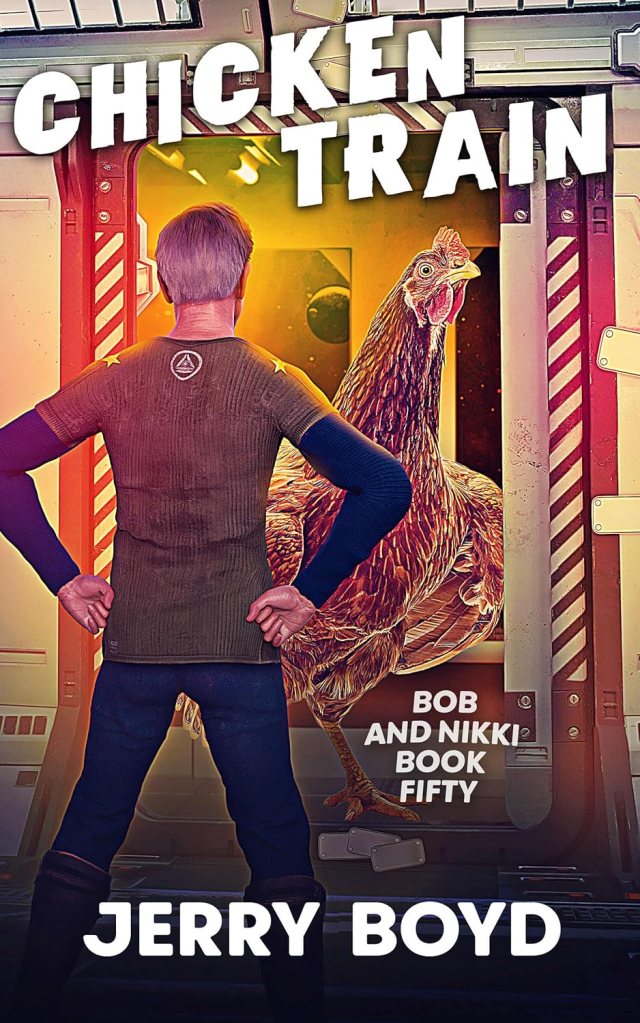
FROM JERRY BOYD: Chicken Train (Bob and Nikki Book 50)

BSR sets off on a mission to keep the peace in their corner of the galaxy. Their first impressions of the situation turn out to be badly in error, and the their shepherd uses the opportunity to provide them with an education. Their best efforts miss the mark, until Bob turns to a new friend for help. Ride along with the fleet, while they figure it out.

FROM JOHN D. MARTIN: Charis Colony: The Battle for McGuire Point

Raj and Shirin thought they were safe. They thought their son was safe. They had fled their family home in Mondal’s Landing and to the protected enclave of McGuire Point, out of the reach of Colonial Security. But when Colonial Security attacks the Point and the cost of ending hostilities is returning the couple and their son to the Landing, what decision will Governor McGuire make? And will their newfound home stand by them or sell them out?
From the review of Charis Colony: The Landing at ricochet.com:
“Charis Colony: The Landing” offers a story that is fast-paced and cerebral. Raj Mondal is forced to confront long-held beliefs and challenge authority for the first time. Martin offers readers several competing views of society in this novel.

  • Mark Lardas, at ricochet.com and at marklardas.com

From libertyisland.com;
“The novel takes up a number of themes that have been occupying my mind in the last couple of years. One is this: Suppose the answer to the Fermi Paradox is that there are no technological civilizations within 1,000 light years of Earth? Suppose the smartest life-form inhabiting the nearest Earth-like planet is about as smart as one of the great cats? Or a racoon. Well, that planet is Charis, and in the novel it’s been colonized by humans for a little over 277 local years. The next theme is the trouble resurgence of eugenics as a medical, ethical practice. The third major theme is how countries like China – and now the Netherlands and Canada- are institutionalizing a downright predatory corruption of medicine: Mandatory organ donation. The sort of thing Larry Niven was already warning about over fifty years ago in A Gift from Earth and the Gil the Arm stories. Finally, it’s all wrapped up in a struggle between a soft totalitarianism that gives citizens material comfort and security and a classically liberal free society where life is less certain and more risk-fraught. And it’s a love story between Raj and Shirin, the protagonists, and it also deals with the future of religion.”

FROM TIMOTHYWITCHAZEL: Noah and the Great Flood: A Poem in Alliterative Verse

A retelling of the story of Noah and the Ark in the style of Anglo-Saxon Alliterative Verse.

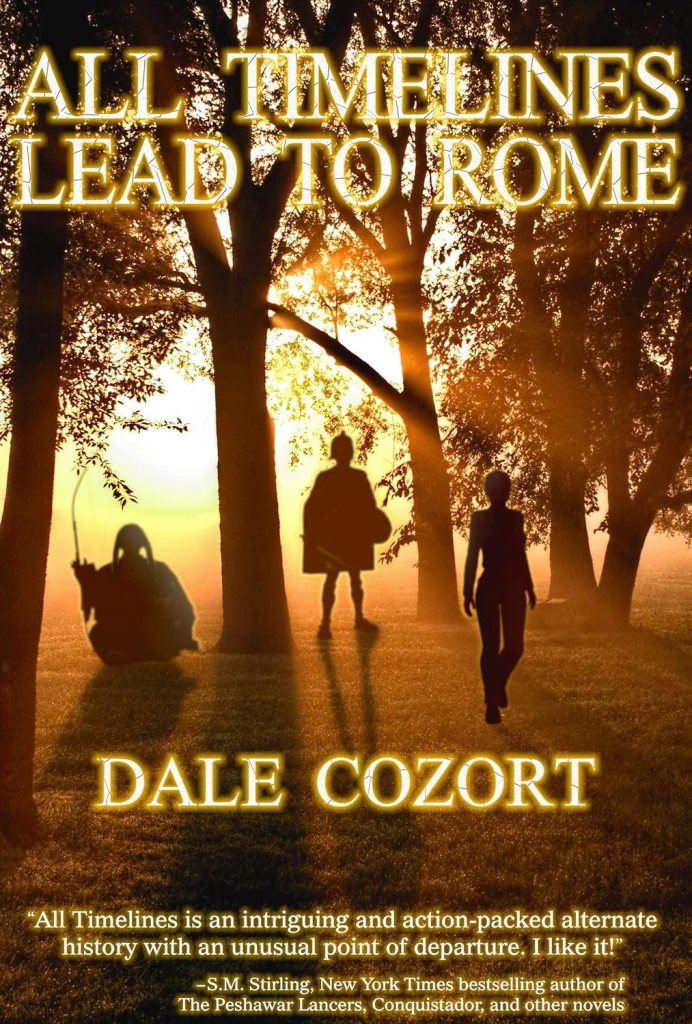
FROM DALE COZORT: All Timelines Lead to Rome

A dead woman’s cell phone chip leads to a mystery spanning the U.S. rustbelt, a surviving Roman empire and a North America without Europeans.

FROM LIANE ZANE: The Guardian Initiative (The Unsanctioned Guardians Book 3)

Prequel to the Elioud Legacy series

In the end, you don’t need a hero in the field. You need a team.

A year after high-risk missions to stop terrorists, arms dealers, and criminals, CIA officer Olivia Markham no longer operates in the field. Instead, she runs a clinic for immigrants in a backwater Balkans capital. Olivia has also found a modicum of peace—and someone to love. Her career trajectory? A safe desk job at Langley.

Until the day terrorists attack the clinic, upending Olivia’s world and sending her back into active fieldwork.

Olivia, whose protective instincts often collide with her duty, now finds herself once again walking a tightrope between pursuing Agency operations and her own. When Captain Alžběta Czerná of Czech military intelligence calls for help to free a young trafficking victim, Olivia convinces Anastasia Fiore of Italian foreign intelligence to join their unsanctioned mission.

But Olivia has made more than one enemy during her short career—inside and outside of the Agency. Shocking allegations rocket her to the top of the CIA’s most wanted list just when a terrorist targets her. And more than her career is at stake. Much more. As Olivia sets out on what could be her final mission, Stasia and Beta initiate their own operational protocol for their friend.

Set a year before THE ELIOUD LEGACY series, THE GUARDIAN INITIATIVE tells the story of how Olivia Markham, Beta Czerná, and Stasia Fiore team up to aid the victims of their intelligence targets—regardless of the consequences.

FROM ANNA FERREIRA (PERSONALLY RECOMMENDED BY SAH WHO READ IT): The Root of All Evil

When murder comes to Stockton, it brings long-buried secrets in its wake…

Kate Bereton leads a busy but unexciting life as the clergyman’s only daughter in a small Dorsetshire village. She’s grateful for the break in routine heralded by the arrival of her stepmother’s latest guests, but when Kate discovers a dead body in the parsonage one morning, she finds herself in much more danger than she could have ever anticipated. Terrified and desperate, she turns to the local magistrate for help. Mr. Reddington is eager to aid his dear friend Miss Bereton, but can they discover the murderer before it’s too late, and the secrets of the past are forgotten forever?
With a dash of romance and a generous helping of mystery, The Root of All Evil is a charming whodunit that will delight fans of Jane Austen and Agatha Christie alike.

FROM HOLLY CHISM: The Schrödinger Paradox: Heisenberg’s Point of Observation

To save the future, sometimes you have to reach to the past.
Thomas Sutton was not your average fourteen year old, not even in an Ark City. Born in one of the three refuges of the last remnants of life on earth, deep underground, he knows his history. A century after an asteroid shattered and struck the earth, they have been trapped below by volcanic eruptions, toxic gasses, and radioactive dust. But what if he could…change things? What if he could reach the past, to prevent the asteroid’s impact?

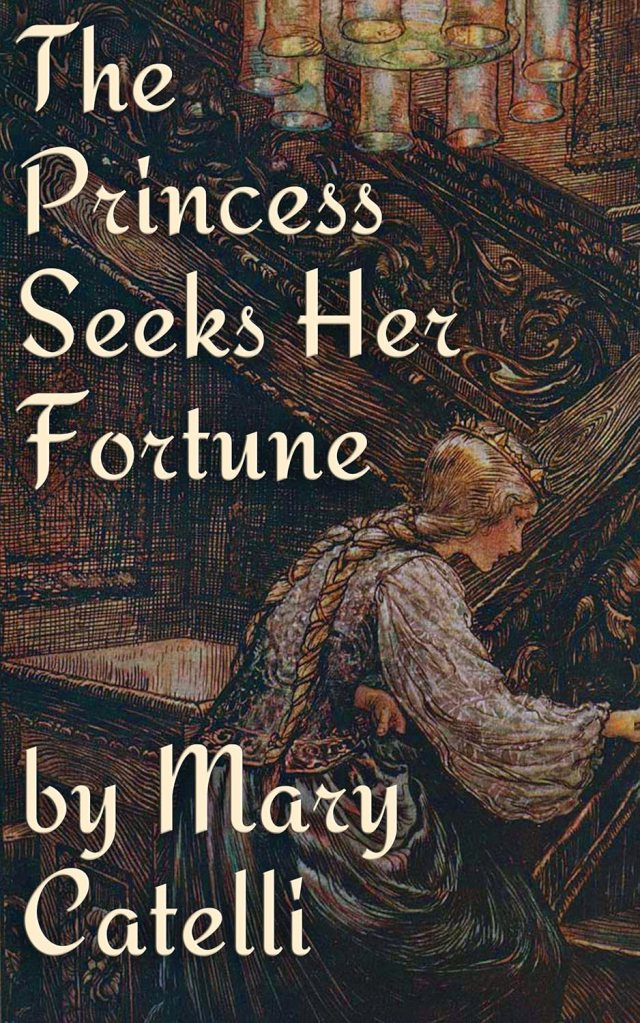
FROM MARY CATELLI: The Princess Seeks Her Fortune

In a land where ten thousand fairy tales come true, Alissandra knows she is in one when an encounter with a strange woman gives her magical gifts, and another gives her sisters a curse.

And she knows that despite the prospects of enchantments, cursed dances, marvelous birds, and work as a scullery maid, it is wise of her to set out, and seek her fortune.

FROM LEIGH KIMMEL: The Shadow of a Dead God

What secrets lie beneath an alien world?

A routine archeological dig on a world once ruled by the mysterious Star Tyrants. For Moon-born Liu Shang, working on a planetary surface might be unsettling, but she could manage — until the dreams started.

Unwilling to drag others into a harebrained search, she headed out alone, contrary to mission rules. Just as she was about to give up, she found an unlikely artifact.

Handling it connects her to the mind of a long-ago rebel against the Star Tyrants’ rule. Nothing will ever be the same.

A short story.

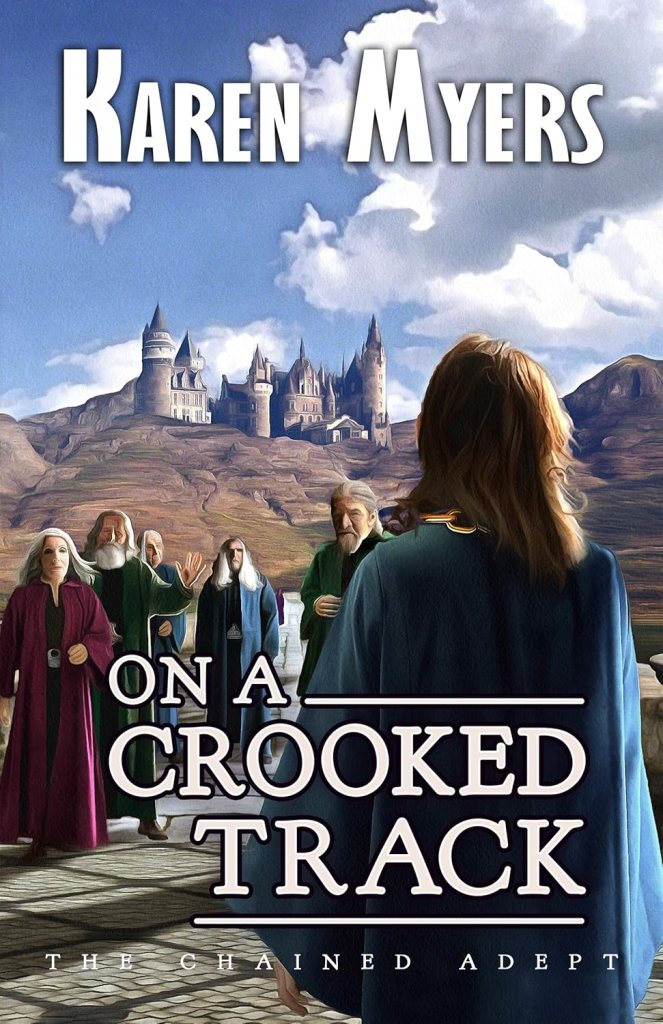
FROM KAREN MYERS: On a Crooked Track: A Lost Wizard’s Tale

Book 4 of The Chained Adept

SETTING A TRAP TO CATCH THE MAKERS OF CHAINED WIZARDS.

A clue has sent Penrys back to Ellech, the country where she first appeared four short years ago with her mind wiped, her body stripped, and her neck chained. It’s time to enlist the help of the Collegium of Wizards which sheltered her then.

Things don’t work out that way, and she finds herself retracing a dead scholar’s crooked track and setting herself up as a target to confirm her growing suspicions. But what happens to bait when the prey shows its teeth?

In this conclusion to the series, tracking old crimes brings new dangers, and a chance for redemption.

So what’s a vignette? You might know them as flash fiction, or even just sketches. We will provide a prompt each Sunday that you can use directly (including it in your work) or just as an inspiration. You, in turn, will write about 50 words (yes, we are going for short shorts! Not even a Drabble 100 words, just half that!). Then post it! For an additional challenge, you can aim to make it exactly 50 words, if you like.

We recommend that if you have an original vignette, you post that as a new reply. If you are commenting on someone’s vignette, then post that as a reply to the vignette. Comments — this is writing practice, so comments should be aimed at helping someone be a better writer, not at crushing them. And since these are likely to be drafts, don’t jump up and down too hard on typos and grammar.

If you have questions, feel free to ask.

Your writing prompt this week is: NOISELESS

If The Worst Happens

When I was little, living where I lived, we notionally had electrical power.

Notionally because it was often more in default than not. Meaning that the electrical power was almost exclusively used for light, and that the light as such we would now here, and probably there, consider grossly inadequate (sixty watt naked light bulb in the middle of a huge room,for instance) and it went down all the time, on the regular.

It particularly went down during summer, not because of air conditioning — I think the first time I encountered air conditioning I was 17? It was a dress shop in Porto and they advertised air conditioning on the door. — but because people stayed up later/kept lights on longer, and also might run a fan or two.

So we were prepared. As in, it wasn’t a matter of “shoot, the light went down” but just going to the kitchen cabinet and getting the candles or oil lamps, etc. and lighting them up. In a deranged way, I learned to enjoy when the light went down. For one, the family would go for long walks. (Took me years to figure out that was because my parents didn’t trust me around candles, mostly because I really, really liked them. And was very clumsy.) For another, well, I could take a candle to a corner and read, and it excused me from socializing.

So, why do I bring this up? Well, first of all because there’s enough socialism in the air, and we all know what socialists used before candles. But for another because everyone I know is really, really scared.

It’s not that we think the American people want or would vote for communism. It’s that we’re seeing the fact the socialists/commies are again running a potemkin campaign, and you only do that when you know you have got it all sewn up.

Sure we hope and pray — boy do we pray — they fail, but …. you know?

And we saw the big steal go through once. And it’s reasonable to fear it will happen again. And, boy, oh boy, is their program pure communism straight up, guaranteed to immiserate everyone.

So, some hope is more that their program has been failing to take hold for four years — not for lack of trying — and that “push harder” is not likely to work any better. Some hope is that they are truly, truly stupid and some of their attempts will mar their other attempts. Like, no the invaders they enticed in won’t stay in as spiral deeper and deeper into depression.

But that is bitter hope, in both cases, and it’s impossible not to feel scared/out of it/panicked as the election draws near.

First of all, prepare. Just prepare. As much as you can. And I do realize some of us are preparing on a severely injured budget. But try anyway. And it might be stuff like “Gardening supplies and seeds for next spring” because honestly even if Trump pulls a miracle, we will go through hard hard times before things straighten out. It’s already baked in.

Second, remember you’re not alone.

I figure that second is my function. To remind you you’re not alone. Because being alone with the bad thing, in the dark, is the worst thing ever.

I promise I’ll keep the lights on in this blog as long as I’m not forcibly prevented from doing so. And even if I’m forcibly prevented from being on the net, I know several of you are keeping address lists of commenters. I’ll get those somehow, and you might get this blog once a month, on mimeographed sheets (are there still mimeographs?) or more likely printed in a 3d printed guttenbergish press, stapled together, like old style fanzines. (I figure it’s the only way to continue selling fiction too, if everything collapses.)

And if I go silent, if the really worst worst possible happens, I hope someone will pick up the pen and continue.

Because, yes, more needs to be done than talking about it. We all know that. And for Fed the Fred, I’m not even talking violence. For instance some people here have been working with TrueTheVote for years. (Though Fed, honey, you should consider how hard we’re being pushed, and incentives.)

BUT all forms of resistance, even passive, start with knowing you’re not alone.

You’re not alone. There are other people out there feeling the same. I suspect we’re the majority.

If the worst happens, keep the lights on.

Likely the light will be seen through the night and inspire others into lighting their own light. Even if it’s a little candle, or an oil lamp, it reduces the darkness overall.

And if the worst of the worst happen, the light we keep on as long as possible will be seen through the dark times to inspire generations still unborn.

Be not afraid.

Light a candle.

My Brain is Missing

My brain is probably under the sofa with the cats. Look, it’s been a very weird week. So weird that “dealing with cleaning up and fixing basement flood” is a minor inconvenience and definitely not the one that’s making it hard for me to sleep and eat.

As usual, if you’re the praying kind, keep me and mine in your prayers.

Meanwhile, yes, I like messing around with AI art, and so, there follow a few visual prompts for you to play with. Or not. I’m not the boss of you.

I just need a day to regain my equilibrium and stop being salty at the world.

The Illusion of Control

A lot of people here are older than I, but even I remember the ethos I grew up with: the idea that top people rose to top positions, and that “experts” in the government knew what was going on and could forecast how things should be done, and what to do for “progress.”

I never put much faith in it, but that’s probably both because of a problem with authority (A very small problem. I neither like it nor trust it. While understanding not all authority is bad, and that it’s impossible for me to verify everything for myself and trust no one. So, you know, a tiny problem about the size of the universe) and because of early experiences.

Also I suspect because of growing up in a society that recognized “given” authority derived from birth or credentials, which I always found to have a hollow sound when tested if you know what I mean. When you’re eight, in an argument with an expert, and realize he missed some great big honking discrepancies in the data, you’re going to give authority the side eye forever. Being in a society that forces you to show outward compliance just gets you very salty and low-key mad forever.

But anyway, even I seemingly gave “people in charge” far more credit than they deserved. Than they ever deserved.

Last night, and for reasons of being inexplicably and profoundly depressed, which causes me to fall down rabbit holes, and usually depressing ones, I fell into a rabbit hole about Lebensborn.

I knew about the program, which apparently puts me in a minority. In fact, I don’t remember when I first heard of it, though I have a vague, somewhat hazy idea I’ve “always known” which would mean I first heard of it in elementary school. And there’s a sense I based the upbringing of the Mules/Good Men on it.

For those too sane to follow the link, the Lebensborn homes/program were an attempt to create more babies of “good Aryan blood” and it turned out just as evil as the Holocaust, though from another perspective. I mean, one is tempted to call it opposite, because they aimed to create human lives, rather than eliminate them, but in the end it was exactly the same thing and perhaps even more arrogant.

Killing people in batch lots and attempting to eliminate an entire sub-race (of sorts. The genetics are more nebulous than that) is arrogant, but it is also to an extent understandable as a goal for a state to undertake. At least, killing off people in batch lots — normally in war, but sometimes internal minorities — has always been a thing that the state has done, even when the state was as small as a kingdom scarcely larger than a family.

But that humans would presume to breed other humans like cattle, that seemed oddly overreaching and strange.

It was of course the manifestation of a really old impulse, but now layered with “scientific.”

Some people hate it when I talk about the early 20th century, or the mid-20th century and point out it was a time of diminishing freedom, a time when people expected even less freedom in the future, a time when we expected “experts” to run every aspect of our lives in the future.

People of a conservative bend have gotten so used to blaming everything that’s wrong on the sixties/seventies, than they don’t realize that while bad and worsened by Soviet agit-prop, was a reaction to what had been happening before. (And before my unreconstructed hippie readers question the “bad” — yes, tearing down of all norms and rules, but worse, casting doubt on the very foundations of humanity is wrong and bad. Casting pair-bonding as slavery, casting having children as more slavery, and making the ideal human completely ideally isolated and self actuated was very bad and led directly to where we are, in this atomized, broken society where the species seems quite likely to not-reproduce itself into oblivium.)

It was a reaction to letting the best men run everything, and to treating humans as a sort of gadget that could be put in places, and would act in predictable ways. All at the behest of the “best” and “smartest” of people.

What we’re seeing now on the left is nothing new. It’s the reassertion of all these ideas. Part of the reason I object to saying the Nazis were “right wing” (besides their being another species of Marxist) is that they were the flowering of this idea of expert-rule and “best men in charge”.

We say current leftists look at 1984 and treat it as an how-to manual, but that’s not quite true. It’s more that that 1984 and the ideas of the left about society all come from the mass-production era where, because making widgets in bulk was cheaper, humans made the leap of thinking planning everything centrally was better.

The truth is it never worked. It’s not even a matter of it worked poorly, or it had bad side effects. The central thing itself never worked. I remember hearing about Lebensborn early enough that people assumed the kids who went came from it would be healthier, or stronger, or live longer. Sure, breeding humans like animals was wrong, and raising them in batch lots was wrong, but it got a superior product right?

Well, no. It got a bog standard product, humans like the rest of us, suffering from the same diseases and defects heirs to the same frailty. (The human genome is complicated. Even if we get to designing it, it won’t be better.)

The idea of central planning and of group guilt persisted, and in some cases was even stronger after the war. Which is why the Lebensborn children were treated so badly in so many countries, as it was presumed their “German blood” now made them naturally evil. (Many of them were actually Polish. Or other nationalities. Also, no. Germany did not fall into Nazism because it was uniquely evil. If I had to guess it was more susceptible to falling for the central planning thing because it was one of the later-united polities, and in fact a sort of empire all by itself. The shocks of WWI didn’t help.) But there it is.

And central planning never worked. Mostly because it makes it easy to fall victim to ONE PERSON’s obsessions or insanity. Like, did you know that Fauci speculated you could use face masks to avoid AIDs back in the 80s? Because he did. It seems to be his own personal idiocy. Now, he has others, and he’s far from clean, but even the best of men will have blindspots and obsessions. Giving anyone that kind of control over a country or a civilization just leads to bigger and more bizarre failures.

It always failed. The US, as far as it remained free, has propped and fed a lot of evil central-control experiments, including the European illusions of “limited socialism”.

Now it’s all falling apart. And it’s important to remember not to go back to the sort of “but we were united and there was order” society of the early twentieth century.

We have the tech and the ability to organize in many, agile, small polities. While the federal government in the US has its uses, those uses should be strictly limited to the duties appointed to it by the constitution. Everything else should devolve to the smaller possible polity, and eventually the individual.

Aim small, miss small.

Instead, the 20th century is a study in aiming huge and missing … entire countries. Look at China’s population games.

The past has a way of being covered by our memories in glossy, soft and glowing tones. Mostly because when we were young enough we imagined things worked way better.

But they never did. The ability of dissemination of information now allows us to see how poorly central planning always works.

It’s time to ensure that message sticks and we don’t careen back into the illusion that all the best men have got our back.

A couple of centuries is enough for failed — and evil — experiments.

Let’s not ride that carousel again.

When The Psyops Breaks

I read somewhere that Obama had authorized our three letter agencies to run psy-ops on American soil.

If true — I’m not sure how one does that precisely, or why no one made a big stink about it at the time — that is not an admission they’ve got more powerful, but that they’ve got weak enough to need to use the apparatus of state for their gaslighting.

Because the gaslighting was going on before. Just more efficiently. Things like, oh, remember when they convinced the world that Ford, an athlete, was too clumsy to live? or that Nixon was the greatest crook ever to occupy the presidency and had done something so horrendous no one else had even thought about it? how about that FDR was an honest man who had only the nation’s best interests at heart?

And that’s without counting the great deceptions of my life time. There is a reason most Americans think every show should have a gay character, or that races should be represented 50/50. That is the previous gaslighting telling them that.
And sure, there are still people convinced that all illegals are coming in to work, and that they are all a kind of saint because of the gaslighting that still works.
But most of it doesn’t.

It started falling apart during Obama’s administration. Yesterday Dan was watching some movie, and there was an hagiographic comment on Obama and I realized I haven’t heard any of those. Not even that many in his second term, much less after he left office. With Clinton, the glowing comments continued for decades.

I remember they tried to make Obama into FDR, but it didn’t stick. None of it has stuck. With TV, radio, movies, everything trying to prepare for the ascension of Hillary — no? Most of those movies with Madame president? What do you think that was about — and it didn’t work. It still isn’t working. They were willing to keep Biden in place, and they tired the narrative of “he really won the debate” but it didn’t work.

So, when you hear about how popular Kamala is, or how great her polls? Remember that.

It’s all a psyops.

The psyops is in the service of making you believe there was no fraud. You must, in self preservation point out over and over and loudly that fraud is the only way they’ll win. You need to shame the “respectable right” in their attempts to hide the fraud, because, well, gentlemen (and ladies) wouldn’t believe something so uncouth. And they certainly wouldn’t protest.

Be uncouth my friends. The psyops is breaking, and our salvation lies in telling one and all that the king is naked. And he’s an ugly sight. Gigantic, indeterminate gender sibling is ugly and its parent, the state, dresses it funny.

This week they’re going to try really hard to blast the DNC at us from every angle, but already they’re treading Babylon Bee territory, with their free abortions and vasectomies. They have no clue how WEIRD they sound to normal people. Which makes the psyops hard to stick.

Be uncouth. And don’t let them get us mad at each other. They only have one thing they can do now, to try to save themselves, and that’s to get us fighting. Don’t let them.

Be not afraid. They might still fraud their way in. That’s a battle they might yet win. I have a feeling it will just be a more complicated way of losing the war, though.

We in this blog are fairly resistant to psyops, anyway. Just make sure we inoculate others.