I am a novelist with work published in science fiction, fantasy, mystery and historical "novelized biography". I've won the Prometheus award and the Dragon award. I also write under the names Elise Hyatt and Sarah D'Almeida. http://sarahahoyt.com/
They say death and distance dress people in their most winning smile. I’m not dead and neither country is dead, but from afar, looking back, it’s weird what stands out.
I could and would have deeper thoughts on this if I were here for longer — which pray G-d I will not be for more than a few days more — and I’m sure if I were forced to return — again, pray G-d and make obsequies this never happens — my view of America from here would evolve and evolve again, and now one aspect and then another would be foremost, like remembering the face of a lost loved one, one now remembers the eyes, now the hair, now the way they used to smile.
But right now what stands out for me most from here, looking longingly at home is how comfortless and random I find my surroundings.
Now, some of this to be fair is that I’m a writer of a certain age. Writer is relevant here because we are — to be fair — of a solitary and taciturn disposition and likely to enjoy our own company. This, once you add a certain age — over fifty really, but over sixty starts to be serious — becomes the tendency to want our things the way we like them, and our schedule predictable and also just as we like it, until we’re used to getting up at a certain time, having a certain breakfast and–
I’m not quite that bad — though I can fall into it — because my life is never that excruciatingly predictable. Things happen and throw my day into disarray so often that the more pertinent question is whether my day is ever arrayed.
But still this great a dislocation and it will make me feel uncomfortable. The thing is this happens whenever I travel anywhere, and it’s not normally THIS uncomfortable.
What I find is that even the newly built, expensive houses, seem to lack a basic level of comfort. Now a lot of this is Euro-eco regulations. Another part is… they simply don’t demand it, or they even feel a certain pride in not having it.
Take heating and air conditioning, for instance. Or rather don’t take it, give it to me. Because we’ve been here for what must be the greatest deluge of rain outside the hurricane zone. The humidity would make a southerner go “Too much” and on top of that it’s what we’d consider “somewhat chilly” 40 and 50, except it feels colder here.
The windows don’t fit QUITE right (they’re almost my age.) So last night, trying to sleep involved ignoring what sounded like a dozen energetic drum players all over the house.
Now, it was an exceptional storm and as I said, the windows are almost my age. But we found the same going out anywhere. I don’t know how to put it but “things aren’t designed to cater to comfort and convenience.”
I’m not QUITE complaining. I don’t live here. It’s their life, and they arrange it to their comfort. It’s just they … don’t.
On top of that anytime we’ve interacted with officialdom in any capacity, you have to approach as a supplicant and proffer the proper degree of humble abasement and it never works the same way twice. It depends on whether they like your face, or something.
The whole experience is kind of forlorn and somewhere between camping and trying to live in a house.
And I’ve been watching their news. I won’t go into details. No one needs to cry. But let’s say that perfect audience that the left wishes for? Yep. Brandon is an upright statesman and no sane person would listen to that wanna be Hitler Trump.
The things they believe are somewhere between bizarre and “that never happened.” BUT it is what their media sells. And they buy it verbatim.
No one blogs about current events or politics (or even so far as I can tell history.) It’s just food and mommy blogs and “today I did.” No one voices a contrary opinion, because that would mark them as “crazy” for standing out from the pack.
In the end? They live like this, because this is how they wish to live. They have the life they deserve.
People don’t protest when they get pushed around. They don’t expect something better, or try to bring it about. And they shut up when lies are told in public because they don’t want to be thought “crazy.”
There are people in our country who say that the Republic is dead. It is mortally wounded, but dead is something else.
The Republic is not dead so long as there are Americans. So long as we are those people the world complains about: loud, demanding, refusing to settle or be sensible…
As long as that remains, the Republic can be brought back to its former glory.
Stay salty my friends. The rest of the world might think we are reprehensible, but we are still, and will remain the last greatest hope of mankind.
If you wish to send us books for next week’s promo,please email to bookpimping at outlook dot com. If you feel a need to re-promo the same book do so no more than once every six months(unless you’re me or my relative. Deal.) One book per author per week. Amazon links only. Oh, yeah, by clicking through and buying (anything, actually) through one of the links below, you will at no cost to you be giving a portion of your purchase to support ATH through our associates number. A COMMISSION IS EARNED FROM EACH PURCHASE.*Note that I haven’t read most of these books (my reading is eclectic and “craving led”,) and apply the usual cautions to buying. I reserve the right not to run any submission, if cover, blurb or anything else made me decide not to, at my sole discretion.– SAH
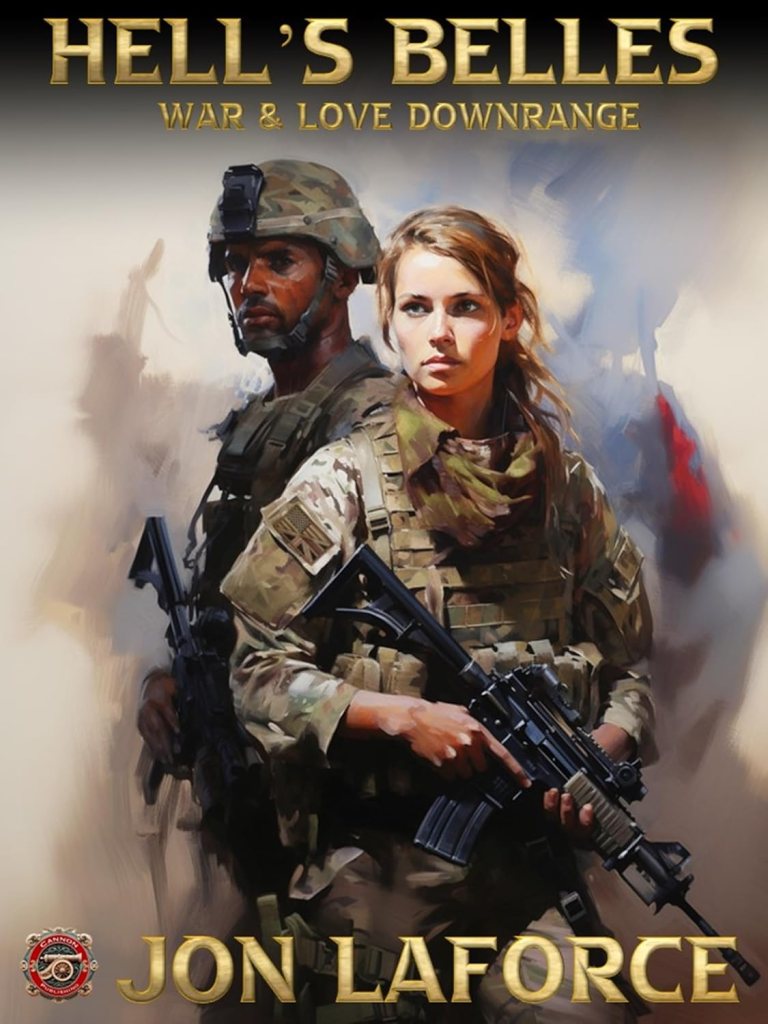
Sergeant Sylvie Lyons of Her Majesty’s Royal Engineers wishes she’d listened to her grandda’s advice and stayed away from the military.
USMC Sergeant Hondo Cassidy wants nothing more in life than being a Marine and fighting.
Hondo and Sylvie find themselves thrown together when his artillerymen are assigned to provide security for her engineers deep in the desert of Afghanistan.. Amidst death, destruction, cultural misunderstanding and the inevitable that happens when you mix an all male unit of Marines with an engineer unit that is mostly female, Sylvie and Hondo find in each other a reason to live.
Invasion from an alternate timeline? It’s December 1937 in a world exactly like ours except that it is about to veer wildly into alternate history. It’s less than two years before World War II broke out historically in Europe. War has already come to much of Asia, with Japan invading China. An isolationist US fears it will be drawn into that conflict, especially after the Japanese sink the US gunboat Panay. Just when President Franklin Roosevelt thinks he has that crisis under control, he faces a bigger issue. High tech descendants of the Wokuo, Japanese pirates and smugglers who should have vanished over three hundred years ago, flood into the Pacific coast off California.
The Wokuo are both refugees and invaders, fleeing from war in an alternate reality where they survived and grew strong, while looking for new conquests to replace their lost empire. They set their sights on California. President Roosevelt sends disgraced former Colonel Martin to California to organize resistance to the invaders, but the Colonel has his own issues, buried deep in his brain and waiting to cause disaster.
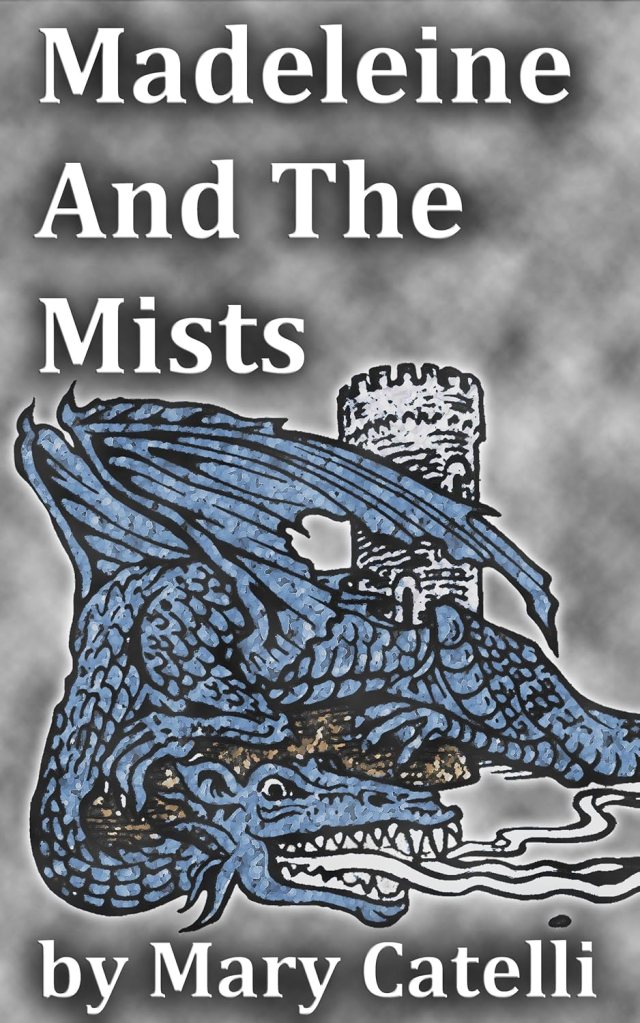
Enchanted pools, shadowy dragons, wolves that spring from the mists and vanish into them again, paths that are longer, or shorter, than they should be, given where they went. . . the Misty Hills were filled with marvels.
Madeleine still left the hills, years ago, to marry against her father’s will. If her husband’s family is less than welcoming, she still is glad she married him, and they have a son, two years old.
But her husband’s overlord has fallen afoul of the king. And all his men fall with him, including her husband.
She sets out, to seek the queen and try to bypass the king — and the Misty Hills.
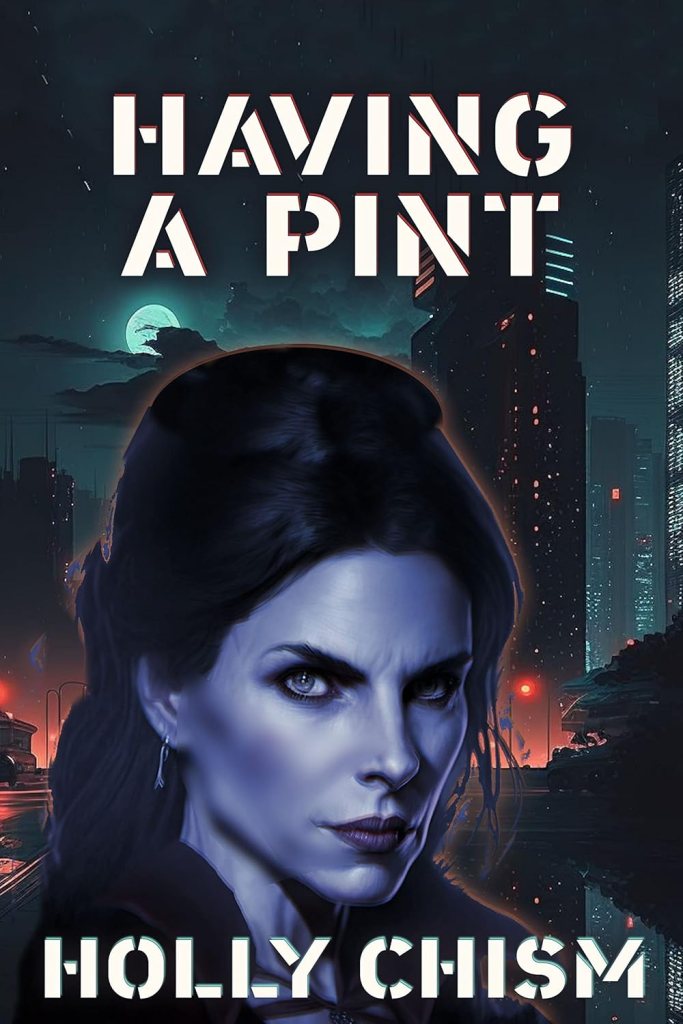
Meg Turner, vampire accountant and investments advisor, has plenty of living clients, but not many among her fellow undead. That’s about to change: she’s been invited to a regional business fair for her kind. She’ll get to meet and greet more bloodsuckers than she really wanted to (hopefully without having to suck up to any of them). than just the two Vampire cops she helped track down and stake her late, unlamented sire—and hopefully make some friends and answer some questions.
Unfortunately, she’s got a Line Progenitor who’s begun invading her dreams, and a serial killer stalking her future clients to distract her from growing her business. Throw in a sick roommate not long before the conference starts, a mafia messenger boy left on her front porch, and only one car to juggle all of her responsibilities toward her roommate and unexpected guest. And then on top of that, she has the business fair over an hour away that features vampire karaoke, nosy, pushy elder bloodsuckers, and one particular elder who’s friends with her unwelcome dream guest. Seriously, it’s enough to drive her to drink something other than coffee or blood.
Just why did she think this whole conference thing sounded like a good idea, again?
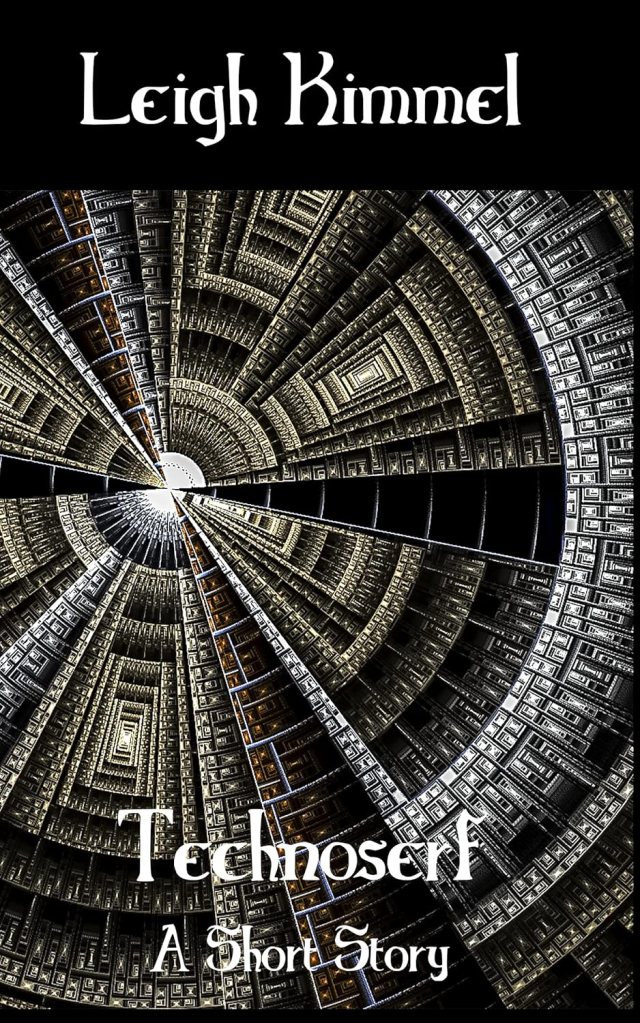
The Madrian Empire rules worlds as numerous as the grains of sand on a beach. When the Madrians conquered Roby’s homeworld, they brought him to this godforsaken lump of a world, to toil at their will.
Now the Gate has failed, leaving them without communications or transport to the rest of the Empire. When Roby identifies the problem, he’s offered a chance to fix it.
Roby now faces a quandry. Even if he can repair the damage, should he? Will he be better off reunited with the masters’ metropole? Or will he only complicate a difficult life?
Almira Hartington was heir to the largest fortune in the galaxy, amassed by her father during his time as a director of the Andromeda Company. But when Sir Josiah commits suicide, Almira discovers that she and her siblings are penniless. All three of them must learn to work if they wish to eat, and are quickly scattered to the far reaches of the universe. Almira stubbornly remains on-planet, determined to remain respectable despite the sneers of her former friends.
Sir Percy Wallingham pities the new Lady Hartington. But the lady’s family will take care of her, surely? It’s only after he encounters Almira in her new circumstances that he realizes the extent of her troubles and is determined to help her if he can. He doesn’t know that a scandal is brewing around Sir Josiah’s death and Almira’s exile from society. But it could cost him his life, and the lady he has come to love.
Radmir Gagarin is not an Exec, he just does the job of one. Working for the richest man in the Alliance, Lord Diomid Devi, is not easy, even though he’s retired. And it gets a lot harder when the Plague strikes the World Lord Diomid purchased as his personal retirement home. And then the invasion . . .
As the Three Part Alliance crumbles, it’s every world for itself, and even a man so rich he can buy an entire parallel Earth to retire on, can find himself in a lot of trouble!
Vignettes by Luke, Mary Catelli and ‘Nother Mike.
So what’s a vignette? You might know them as flash fiction, or even just sketches. We will provide a prompt each Sunday that you can use directly (including it in your work) or just as an inspiration. You, in turn, will write about 50 words (yes, we are going for short shorts! Not even a Drabble 100 words, just half that!). Then post it! For an additional challenge, you can aim to make it exactly 50 words, if you like.
We recommend that if you have an original vignette, you post that as a new reply. If you are commenting on someone’s vignette, then post that as a reply to the vignette. Comments — this is writing practice, so comments should be aimed at helping someone be a better writer, not at crushing them. And since these are likely to be drafts, don’t jump up and down too hard on typos and grammar.
As usual when I’m away from home, particularly in Europe, I’m…. Uh…. At the rate my Americanness and libertarianism are intensifying, I won’t need a plane to fly back. I’ll call an eagle to me through utter, intensity of my love for the Constitution, and it will then fly me home.
I’ve been trying to be good and behave, because we’re guests, but the country makes me itch inside my skin, and the level of governmental interference in every day life is a thing we not only don’t imagine but can’t imagine.
It’s stupid little things, like I found out that they have three trash collections a week, and have to separate in more bags than I can keep in my head at any one day. Then there is the fact that their bottle caps have a tether to the bottle so it doesn’t get discarded separately and maybe polute the oceans.
And I keep getting unreasonably angry, then telling myself I can endure it for a few days, but if it were longer, there would be a revolution.
This morning, when my poor husband got up for breakfast, he was treated to a “I don’t stop to breathe” rant on the subject of “these people spend so much time obeying the pointless commands of their government that they’re never ever, in the eve of ever be productive or invent anything or– Which is why our country is the engine of the world. Because by 8 o’clock in the morning local time, I had just about enough and a little beyond.
And as I hear well intentioned things about how America should be run — and let me point out that their news here make our news sound like they’re rabid right wing. Their news have my parents — my parents — convinced that Biden is a nice man, and a very smart one, who just recently became slightly impaired — and my blood pressure climbs to the level that I expect a little whistle to come up atop my head and whistle, Merry Melodies style. — and I start fuming.
It wasn’t till a few hours in that it occurred to me: Forgive them, George (Washington). Not only don’t they know what they do, they have absolutely no idea who and what we are.
That thing when my parents call me because there’s a fire in California? They imagined, when we lived in Colorado, that we might go for a nice Sunday drive, of an afternoon, and accidentally stray into California. If there’s a shooting in Pennsylvania they ask if we might accidentally be near it, perhaps because we took a wrong turn on our way to the grocery store.
They don’t at all understand not just American geography, but the scope and SIZE of our country. And they’re exactly the same for the size of our economy. The variety of law in our states. The amazing scope of our economy.
When they say something like “We don’t understand why a country the size of yours can’t avoid school shootings” what they’re actually saying is “We don’t understand you’re not half a dozen school children who can be scolded into better behavior.”
Part of the problem with this is that they don’t understand their post WWII little socialist dream was a thing facilitated and ultimately paid for by the US. Without our creating the future, improving continuously on processes to do everything, without us creating the internet and making this amazing transmission of data across countries possible, without us buying and selling and growing, and creating untold wealth, their relative impoverishment due to their hyper controlled economies would have become so dire they’d have starved or revolted already.
And they don’t understand if they could drag us down into their socialist dream of the state looking after you in all circumstances and you not being permitted to fart unless you have a fart permit and then only on alternate Wednesdays, it wouldn’t be paradise.
They would have killed the goose who lays the golden eggs, and things would get dire very rapidly.
Forgive them, George, they know not what they do. And let them never find out, because we remain free and obstreperous enough we’ll never sink to their level.
Now excuse me, I need to go out to the terrace and invoke Ayn Rand’s name of power, and call out in the name of the George, for the eagle of freedom to come and fly me home. I’ve been here 48 hours. How much longer am I supposed to endure?
Sure, I like seeing my parents and spending time with them, but you see, I have this medical condition. I am allergic to unwitting, willing serfdom. And I’m about at my limit.
Or why Spanish, like birds, isn’t real. Or it’s entirely possible that not having slept in close on to 48 hours I’m tripping…. but…..
Hey guys?
What’s wrong with Spain? No seriously?
I grew up thinking of them as Portugal’s more forceful and organized brother but I just flew to Portugal via Madrid, and something has gone seriously wrong with that country.
Portugal isn’t very organized. I’m used to that. It took them close to two hours to locate the rental car we’d reserved, and then they forgot we wanted a GPS and finally brought us one, I swear, from someone’s personal car. Even though we’d paid for a GPS.
But that’s…. organization, non compliance, and what I decided to call ADD Nation.
The Spaniards seem to not only have lost all their capacity for organization, but also even a vague attempt at making sense. Madrid seemed to be a flux of competing power satraps, in which the ticket girl is at war with the luggage handlers, is at war with the schedulers is at war with the people at the gates is at war…
Caught in the middle of this, mere passengers have no clue if they’re herded towards baggage claim, passport control or, you know, an outdoor entrance. Or of course, their doom. We not only could have left through door to the street in the middle of a supposedly secure place, but conversely anyone could come in, as we opened the door and peered, confusedly, outside.
And everyone yells at you all the time, in Spanish, which I understand just enough to get p*ssed at being treated like a toddler. And there are no signs anywhere.
By comparison our destination airport, in Portugal, was clean and modern, and had signs telling us where to go, even if the customs guys were too busy arguing soccer to actually do their job and just waved everyone through. (We GENUINELY didn’t have anything. We brought gifts for the little kids, but I don’t think anyone cares about dinosaur puppets. Well, other than the kid. But I’m sure other people did.)
So, first question: Is Spanish a real language, or is it a ruse, designed for being maximally annoying, and loosed on the world, and they are behind our backs speaking English like normal people?
Second question: Is Spain having a nervous breakdown? Is it something the EU did? Is Spain an abused spouse. Does the EU go down to the pub, come home worse for the wear?
Does anyone know if Spain has bruises and says it’s just clumsy and it walked into a doorknob?
Come on. Check with your Spain today, and make sure it’s okay.
Also, I’ll write a real post tomorrow, after I’ve slept more than two 20 minute catnap.
Don’t demolish the blog. There will be posts, I swear.
In the 2000 election my brother told me he didn’t understand why I was so worked up. Both the candidates were basically technocrats and their program was very similar.
As we’ve come to find out, he was right. Wrong also, of course, but ultimately right.
Of course there were differences between Bush and Gore, beyond the question of which noses would be on the through. The left in the US seem to be the only true believers in communism left in the world. Even those at the top seem vaguely shocked when they try to implement extreme left measures and not having the success they’ve been assured should come. One must blame the universities. The rest of the world, by and large, those on top are aware that communism doesn’t work, it’s just a racket to keep the masses down. The intellectuals still believe, but that’s because by and large they need something to put their faith on, and religious faith is considered uncool.
Anyway, for one, Gore was industrial strength stupid, and wholly sold on using the climate cult to stomp on us, completely unaware of repercussions.
But other than that, and as far as we can deduce, they believed largely the same things and were largely “technocrats.” I.e. they believed in rule by the “educated class” and the “experts” who could “solve all the big problems.” And they shared — as we can tell from Bush’s post-presidency friendship with Clinton, of all people — a certainty that the little people should be ruled and not listened to.
The problem of course is that Obama was brought in by the same people. Who are the faces behind the Junta now. As well as those controlling most of the world. Badly.
Part of the hatred for Trump — particularly among the University educated class — is a sort of back-of-the brain certainty that he’s ruining the program. It’s the only reason I can find for the frothing mouth and glazed eyes, the screaming of how terrible he is and how he’s going to burn down the world, when he’s been president once, and all he did was stop the waves of illegals, stop the wars, and make us energy independent. This is terrible?
Yeah. For the international would be technocrats it is. You see, they need to dislocate people, make them rootless and disconnected. They need to herd masses of people here and there like sheep — a technique for breaking up nationalities that has worked since the ancient world (except, by and large, on the Jewish people) — broken from traditions/beliefs/ customs and social bonds. Only then will the masses be utterly dependent on their wisdom and able to be indoctrinated in the new beliefs of the….
Well, they don’t call it that, but of Homus Sovieticus in a new suit and tie, with a bit of computer savvy.
It is essential to them to make as many people as possible dependent on pay offs that are wholly divorced from labor or production. They need you to have nothing to live for. To, as they put it, own nothing and (pretend to) be happy. Only then can they direct every minute instance of your daily life.
Why? Well, they’ll give you all sorts of reasons. By and large the same reasons as communists: it’s a more efficient way to allocate resources, so we don’t all starve when the (non existent) population bomb goes off. It’s best for us to be kept in hygienic surroundings. It’s best to not let us get racist/sexist/homophobic ideas. Etc. etc. etc.
In other words, you’re a sheep they want to feed what they want, shear when they want, and eat when they want.
A curious thing happened on the way to the technocracy, though.
Humans don’t herd well. You can break humans and give them Stockholm syndrome, but you have to be offering something pretty strong for them to attach onto. Which “own nothing and be happy” ain’t.
Humans are in fact refractory apes, and have been breaking out in rebellion all over.
And the technology never worked as the technocrats thought. You see, they’re not in themselves technical. They just thought they knew how to control humans through tech.
They’ve already failed. Oh, they’re fighting a rearguard action, composed of vote fraud, violence, lawfare, spying, etc. etc.
Their problem is that it’s already out in the open, because they are fairly desperate. And the more it’s out in the open, the more horrified people become at the smile on the face of the tiger.
In a way the covidiocy was their high water mark, the complete coup of the technocracy. It worked, but not uniformly, only briefly, and the actual compliance outside big cities was — as I found out — notional. Their attempt to roll it into a “climate emergency” lockdown was shrugged off. Their attempts to spook us into locking up again have been… laughable.
As almost always, but now faster, the humans failed to comply.
Plus they burned their “expert rule” by revealing most “experts” are no such thing.
The insurgence — the real one, not the one they tried to gin up as an excuse in 2020 — is alive and well, composed of set faces, clenched fists and feet planted in the ground, refusing to be moved.
I don’t know if they’ll manage to fraud themselves into power in November. They might. But it will do them a whole heap of no good, you know?
In China rulers lose the mandate of heaven. Throughout the west… you can piss off people enough that they don’t put up with your bullsh*t anymore. So it’s been throughout history.
The only remarkable thing about our would be expertocracy is how fast they burned a clout that took them a hundred years to create.
We are not sheep. We are not in the mood to be herded. We are not going into their profoundly stupid future.
We are chaos. We are liberty. We are — us here — Americans.
If you wish to send us books for next week’s promo,please email to bookpimping at outlook dot com. If you feel a need to re-promo the same book do so no more than once every six months(unless you’re me or my relative. Deal.) One book per author per week. Amazon links only. Oh, yeah, by clicking through and buying (anything, actually) through one of the links below, you will at no cost to you be giving a portion of your purchase to support ATH through our associates number. A COMMISSION IS EARNED FROM EACH PURCHASE.*Note that I haven’t read most of these books (my reading is eclectic and “craving led”,) and apply the usual cautions to buying. I reserve the right not to run any submission, if cover, blurb or anything else made me decide not to, at my sole discretion.– SAH
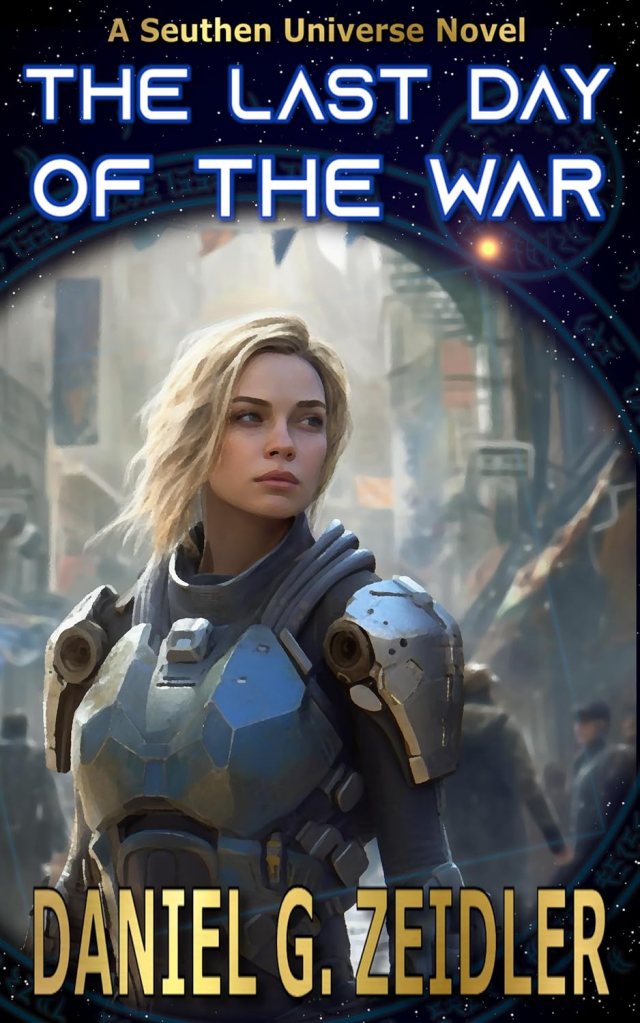
When a fleet of human colonists, lost and growing desperate, found an Earth-like world to settle, they named it Aurora in honor of what they were certain was the dawn of a new Age for humanity, an era of peace and prosperity. For a time, it seemed as if their dreams had come true, but then came Jarma Kaarl and General Adain, and with them came war and the cult that worshipped it above all else. A century after the war began, art thief Aleris Tynet was arrested and sentenced to serve a term in the Army. There, she saw things others did not, and realized that her world and her civilization were dying. She had no way of knowing the war would soon come to an abrupt end and a countdown had begun to its last day; a day that would forever change both Aurora and her people…
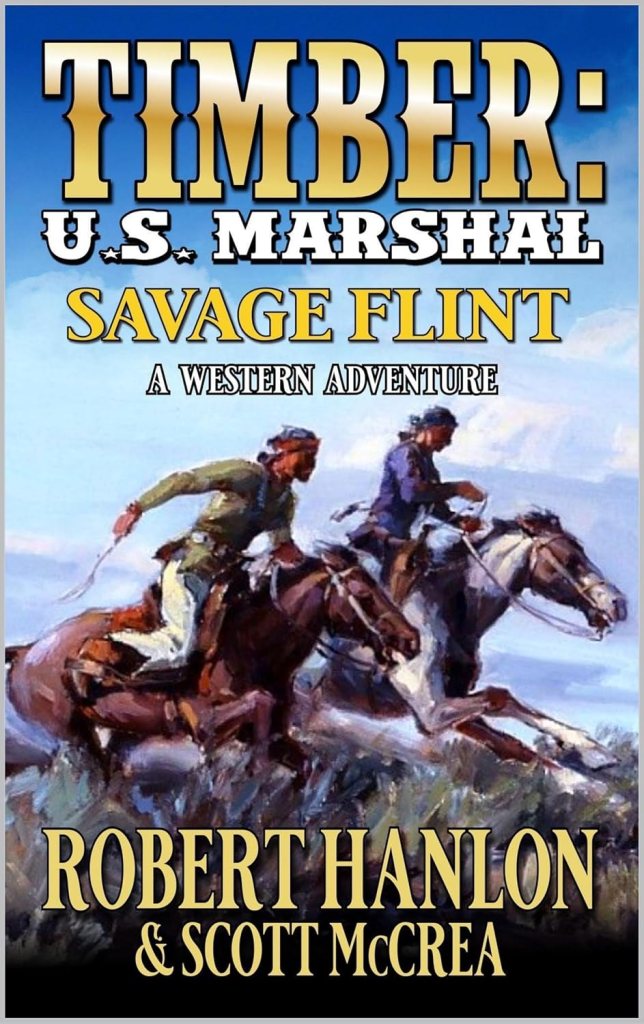
Western adventure goes to new levels when Marshal Timber teams up with Marshal Ezra Flint to investigate the murder of penniless prospectors. The men had no money and no future … why would killers target them? The two legendary lawmen follow the trail of dead bodies until they face-off with Edmund Arthur Carew, a crazed killer conceived in a grave and with a taste for carnage!
Master storyteller Robert Hanlon and Western Writers of America Spur Finalist Scott McCrea bring you a pulse-pounding tale of the Wild West at its very Wildest!
After World War 2, Charley and Joe made a good living on the black market in Italy. They didn’t like each other. Didn’t even trust each other. But they worked well together.
Now it’s been ten years, though, and after Martha shows up, things are starting to come apart.
This iktaPOP Media edition includes a new introduction by indie author D. Jason Fleming giving genre and historical context to the book.
Meg Turner has been a vampire for twenty years. Her favorite food is rapists. Which is how she met Andi Donahue, her new best friend/ girl Friday.
And then the nightmares start. And the bodies start showing up–bled out and raped. Just like Meg was. They don’t have a whole lot of time to stop the killer before he strikes again, and only one way to stop the killer.
But how can Andi help Meg stop a killer she can’t even see?
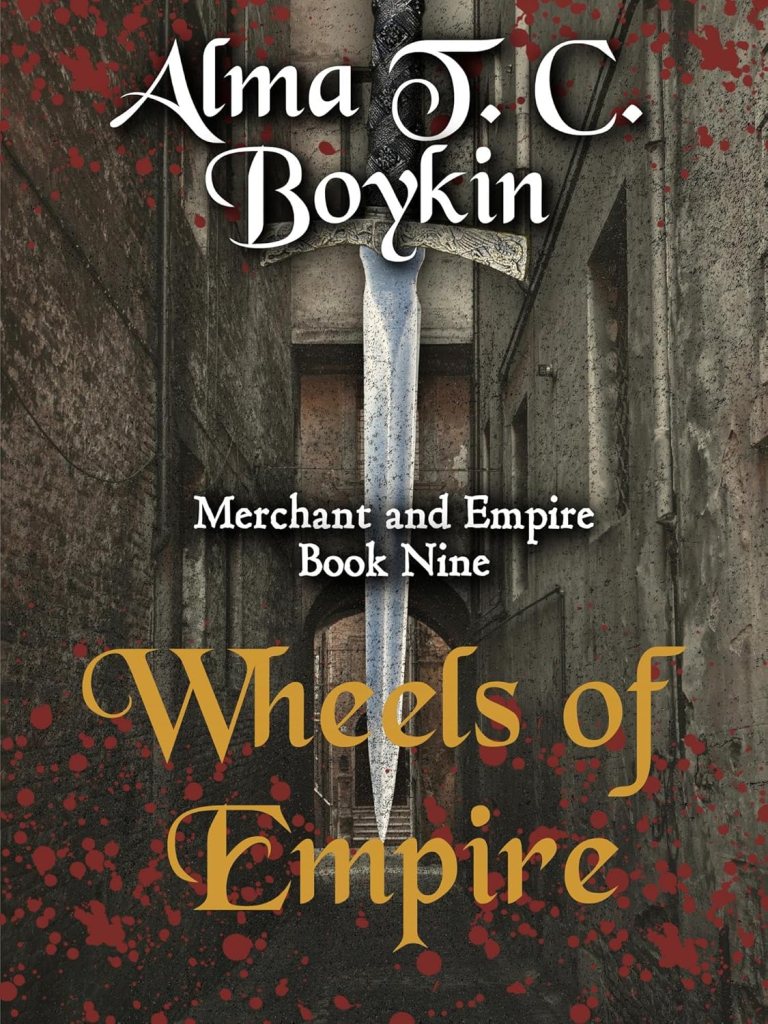
Without bread, hunger stalks the people of Jerwood. The old grist mill burned and a new one must be built. Count Ealdred of Jerwood hires Harald Tolson, called Halfpaw, to construct a larger, modern mill. A mill that the count will own.
Harald and his journeyman walk into trouble when they enter Jerwood’s gates. Why did the mill burn? Who doesn’t want a better, larger mill built? And what lengths will those people go to in order to get what they desire?
Harald finds himself battling the elements, suspicion, and danger in order to complete his contract. But his opponents underestimate how stubborn and determined a millwright can be. The Wheel always turns, something Harald knows full well.
Magical doors and other mischief mix badly with tales about murder, as young scholars return to Graytowers.
Kenneth, as prefect, thought he had his hands filled with the beginning of the new session, but when one magical door takes him and another scholar far past the bounds of a prank, they barely escape with their lives, and their escape means only that they are in graver danger. They must hide, leaving the school, and casting all their spells in secret.
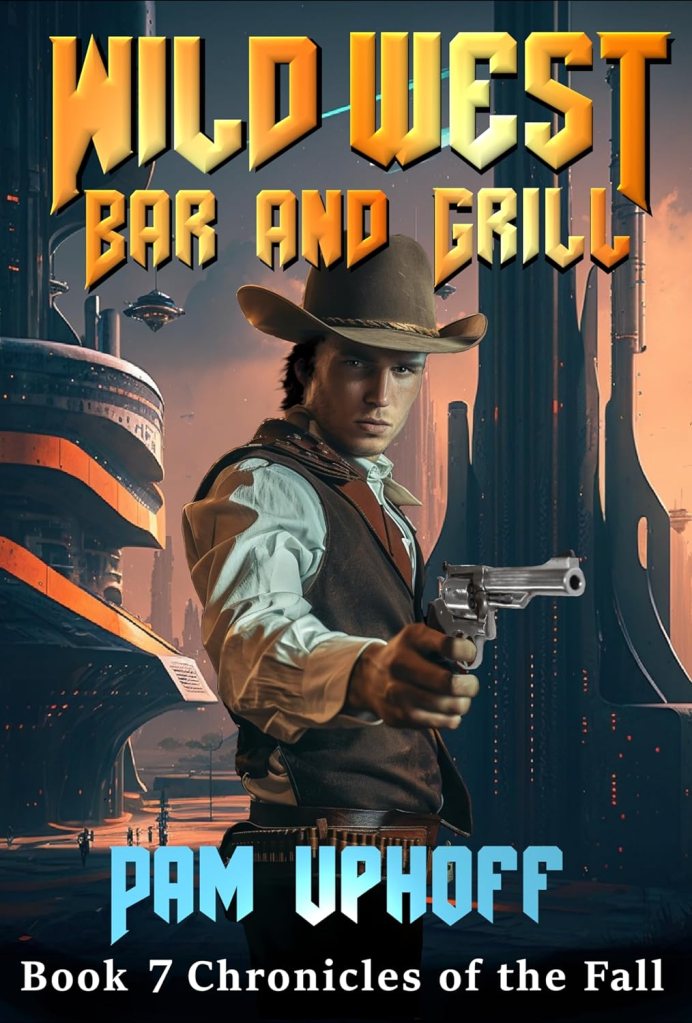
Horst Aslanov is a seventeen-year-old criminal. Or at least he aspires to be one. But his mentor is missing, the number two boss is a dictatorial idiot, and it’s hard to say if the possibility of a police raid is better or worse than the violent criminal gang moving into their area.
The Wild West Bar and Grill is a restaurant in a cross-dimensional future Moscow. Serving authentic barbeque, and tiny shows of wild west shootouts. It’s also a cover for an unlicensed brothel . . . which is an extra layer of cover for an ID hacking and brainchip forging operation. But the old forger is missing, and now Horst has to decide if he’s going to try to keep the business running . . . or go straight.
Sherry had planned a quick trip to her home town for her forty-year class reunion, to see the current classes’ Homecoming game. Instead, she arrives to find the high school just as she remembers it, complete with long-demolished buildings and long-retired teachers. It’s Homecoming, all right — her senior year.
For someone with happy memories, revisiting one’s younger days might be pleasant nostalgia. Sherry dreads the thought of being stranded in the past, forced to reassume the old roles after decades of independence.
How can she return to her own time when she has no idea how she got here? Worse, a hostile entity is making its presence known — and it may not want to let her go back. And the Homecoming game isn’t the one she remembers from four decades ago.
There wasn’t much of an outlet for an ordinary American woman with ambitions in the 184os; marriage and family was as good as it got back then, for most women … But Minnie Vining wasn’t an ordinary woman. A spinster in her forties, of a respected old Boston family, possessing an independent income and an education worthy of any man among her peers. Minnie took up a noble cause – campaigning for the abolition of slavery. The matter of slavery roiled political and social life in the United States for more than thirty years, splitting apart families, friends, comrades … and eventually the nation. And when the war began in earnest, Minnie followed her heart and her calling … as a nurse, tending to sick and wounded soldiers … but at what personal cost?
Vignettes by Luke, Mary Catelli and ‘Nother Mike.
So what’s a vignette? You might know them as flash fiction, or even just sketches. We will provide a prompt each Sunday that you can use directly (including it in your work) or just as an inspiration. You, in turn, will write about 50 words (yes, we are going for short shorts! Not even a Drabble 100 words, just half that!). Then post it! For an additional challenge, you can aim to make it exactly 50 words, if you like.
We recommend that if you have an original vignette, you post that as a new reply. If you are commenting on someone’s vignette, then post that as a reply to the vignette. Comments — this is writing practice, so comments should be aimed at helping someone be a better writer, not at crushing them. And since these are likely to be drafts, don’t jump up and down too hard on typos and grammar.
One of you left a comment, which unfortunately ended up in moderation, so I didn’t even see it until I was rescuing something else. (For obvious reasons for me, less obvious things for her (because she doesn’t post her reasons/life here on the regular) neither my assistant nor I have been QUITE on top of pending and held comments these last few weeks.) Anyway, so I answered him late and it probably fell through the cracks.
His comment was that he often shares my posts, but in a group someone said I had quite the wrong idea about Marxism, because nowhere did Marx say that economics was a finite pie. So, he wanted me to tell him the passage in Marx’s writings that said this. No, he was not an hostile, he’s someone I’ve known forever online.
Did Marx ever say it explicitly? I don’t remember. I used to have eidetic memory, but two concussions did for that. And also I will confess to having studied Marx in three courses in high school, but having hated it so much I probably blotted out a bunch of it, even before the concussions.
I doubt he said it explicitly though, for the simple reason that Marx didn’t say the most outrageous parts of his philosophy outright and explicitly. It was just such a deep assumption of his psyche that it never was questioned by either him or those who follow him.
First of all let’s dispose of the idea that Marx was an economist. That’s a canard when the man understood about as much of economics as I do of advanced physics. (Maybe less.) What he was was a polemicist who leaned heavily on his natural resentment and envy.
And inherent in all his writing was the idea that not just economics, but life in general, was a finite pie, that value was inherent in objects and labor (meaning that each had a value that could be assigned by the person possessing/doing it), and that innovation and value creation was impossible.
How so?
Well, what would be the point of taking the means of production from the evil “capitalists” controlling them (and underpaying the workers) if you could in fact just create different means of production and out-earn the “evil capitalists”? Which is in fact what happened in history and is still happening to a great degree, where the government doesn’t make it impossible?
More importantly, why does he assume that having acquired the means of production, the workers will then continue producing and receiving the like profit only now without an evil capitalist twisting his mustache and stealing the value of their labor?
Yes, the man was an idiot who didn’t understand distribution or commerce. This all came from not understanding relative value as determined by those who buy. As in, if you don’t understand the proverbial transaction (not actually true and far more complex, but let’s imagine it was as reported) of buying the island of Manhattan for a bag of beads was fair on both sides, you don’t understand value or distribution.
To unpack that: Land was valuable for the colonists who came from a place with land rights and settled agriculture. Land meant nothing for roving bands of hunters. (Shush. I told you to go with the cartoon version. I know NE Amerindians were agriculturalists, and also the transaction probably never happened, and they didn’t own that particular island, and– Not the point.) So for them what they were selling was valueless. Meanwhile the colonists also came from an industrial society, where beads could be produced by the bucket load for very little. The natives OTOH came from a society where beads were only manufactured one by one, at great expense, were a symbol of wealth, and often were used as currency.
It would be like aliens who cr*p gold buying your weekly trash from you for a kilo in gold. You were throwing the stuff away, anyway, and for them gold is literally waste, while you can put it in a Swiss bank account and retire in style. Of course, over time, the aliens who cr*p gold will make it valueless, and once your descendants have the drive that makes trash into power to travel the stars, they’ll hate you for selling your potato peelings and used cat litter. But that’s because value is not static, and the economy is not a fixed, limited pie.
Marx failed to get that. He failed to get that value didn’t inhere in objects. He failed to understand that labor didn’t have a fixed value.
Yes, when you’re starting a business, and also in Adam Smith’s formulas, price is raw materials plus labor. BUT that all is subjugated to the reality that you can’t get any of that unless someone is willing to pay you. To which I’d add that the value of both the raw materials, the labor and the finished object very much depends on supply and demand, which depend on … location, location, location.
We’re kind of getting a course in this, since some things that were scarce and expensive in Colorado are cheap here, and vice versa. More obviously, as we’ll experience over the next few days, things that are expensive here are cheap in Europe, and vice versa. To wit, in Portugal anything that depends mostly on human labor — most services — is very cheap, while industrial products are more expensive than here and I can’t imagine how they can afford to live with that disparity, which is something I’ll touch on in a minute.
This is because some things — say labor — are more abundant some places than others. As explained above in the parabola of the Manhattan Island purchase.
But if you don’t understand positional value, nor that value is what someone is willing to pay for it, you fall into the error of current Marxists, so that even educated people have rocks in their heads about economics.
Now keep in mind most economics being taught in school are actually Marxism. I read my kids’ books. Under no circumstances should the lesson on hiring people direct you to take into account who “needs it more” unless humans are fungible and all labor is the same, for instance.
And their geography book talked about how Europe and America stole all the raw materials from indigenous people in colonized lands, which is a belly laugh. Look, dudes, dudettes and dudekins, even the potentially more valuable in the west raw materials are still plentiful in Africa and Asia and Latin America. For a stupid but real example: South Africa still — I’m sure — has diamonds rolling around on the ground in ridiculous abundance. It had them when it was first colonized. It had them when it was first-world-wealthy. And it has them now when it is impoverished via Marxian rage, Gramscian variant. All they need is to be picked up to be worthy trade goods…. Or let’s take Venezuela. I remember the relatives who immigrated there talking in awe about the fertility of the ground, where even a backyard garden could produce enough for a family, and did so year around. … it had that when it was the envy of Latin America. It has that now, when people are reduced to eating their zoo animals or starve. Obviously it isn’t the raw materials.
But the idea that once they take your “raw materials” you’re poor forever is pure Marxism. And pure finite pie. (You can’t find new utility in other raw materials. You can’t find/grow more raw materials. You can’t do anything, but starve, because someone bilked you of your all precious “raw materials.”)
Granted, it is the Marxism Gramscian variant, since Marx was more concerned with the early industrial state and its (within the country) inequities. And he was obsessed with the means of production.
If the workers could only control the existing machines, and be paid for their labor enough that no one was stealing for them — i.e. making a profit from investment — there would be pie in the sky by and by.
Note his followers, not as sophisticated, didn’t laser-focus on the “means of production” but on the end product. Communist revolutions often took both, and talked about taking the goods of the rich and “distributing” them.
But both are ULTIMATELY closed pie. If you can (or let’s face it, have to. Those seized means of production, weirdly didn’t last forever) build new machines, seizing the old ones is a bit silly. And if you steal the stuff from the rich and distribute it, yeah, sure, poor people will have more stuff, but there’s scale there and–
Look, people are rich and become rich by being able to save a bit off the extreme needful and accumulate capital to invest.
I know that Marx thought that this was impossible for the working class, and granted for some it was very very difficult, but there was mobility even in the Victorian working class, and it absolutely was possible to save, start your own business and slowly move up.
These things are possible because there is humanity innovation and cunning and wealth is not a finite pie.
And if you — like the guy who protested my reader sharing the post — think I’m making a straw man, and that no one really thinks the economy is a closed pie, and that the result of Marxism being taught everywhere hasn’t put big fat Marxian rats in people’s heads…
There was a tweet this week I won’t link, mostly because I can’t find it in my history (I answered it) meaning it’s buried, where some “artist” was saying that “art” was an essential good and “artists” should demand to be paid high amounts for their labor.
This is pure Marxism. Art is needed, therefore art is essential. Artists labor long and hard at their work. Therefore they “deserve” to be paid a high share of the value going around.
This only makes sense if there is a finite pie and some benevolent and all-knowing entity is assigning shares of it to occupations that are “high value” as determined by the value inhering to the goods, which is of course a fixed portion of that fixed pie.
In fact, that tweet was so wrong it wasn’t even wrong. To be merely wrong, it would need some contact with reality.
Art is more intangible even than normal “production” because what people are willing to pay for it varies so much depending on so many things.
Take my occupation. I’m told it is art. I wrote for free for over a decade. Not because I thought my stories weren’t worth anything, but because no one else thought they were worth anything. As judged by speedy rejection letters.
Did the stories have inherent value? I don’t know. Do you? Was the value the printing paper plus the electricity the computer used plus what I would like to be paid an hour? Wait a minute, I need to stop laughing. Okay, no. As judged by the fact that when I started selling my “value” was 1/10th of a cent a word. Later upgraded to 1/4 of a cent a word, until I was selling for 6c a word, and now when I can make thousands from a short story.
What changed?
Weirdly some of the stories I sold for 6c a word had been rejected by magazines that paid 1/10th of a cent a word. The fools! Not. You see the value had changed. Young Sarah Hoyt sending out 4 new stories a month, had no name or recognition, and no fan base who would buy a magazine or antho because her name is on the cover. She was, therefore, objectively worth less, regardless of the fact the material she produced was not only “As good” but objectively the precise same. (I have no trunk stories left, except three that I deemed too stupid to circulate. Oh, and two I’ve genuinely lost. I think they disappeared in one fo the computer crashes.)
If at the beginning of my career I had sent out a note saying “This is my short story, and you can buy it for the $3k I know it’s worth” (what I can get from a long short story indie. Keep in mind I still sell them for less to anthologies. It’s just I can reprint them later and average that over five or six years. I’ve also made more from a story first year out, but those are outliers.) I’d never have sold to trad pub. And it’s not because the publishers were “exploiting” my “labor.”
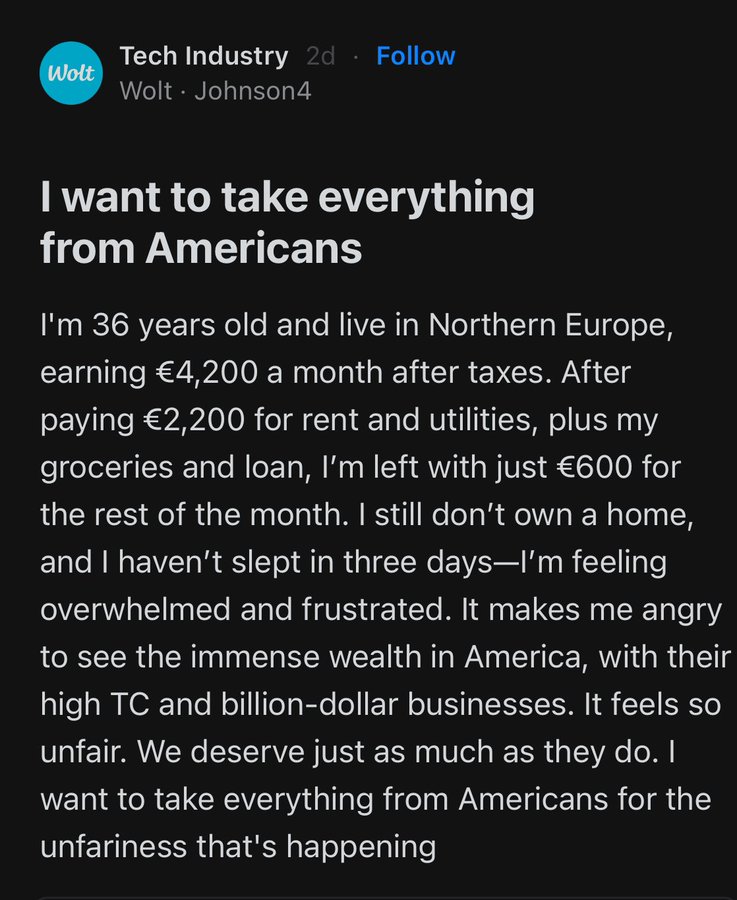
And then there is the tweet one of you (Thank you Ian!) called to my attention this morning. It is a thing of beauty and it perfectly exemplifies the “closed pie” mentality in people educated in Marxian pseudo economics which always transmit a heavy dose of his inherent envy and malice like a viral infection. The link to its being shared is here.
Again, it is so profoundly wrong, it’s not even wrong. To be wrong, it would need a much higher share of contact with reality.
The wrongness starts with his not appreciating that the “immense wealth” of America is not by and large at this moment in the hands of young working people. In fact, our working people are having problems finding A job, let alone one that keeps body and soul together. (This is largely due to too much socialism sewage in the wine barrel.) Then there is the fact that American wealth is not a thing lying on the ground, inhering to the soil, and just existing, waiting for envious Europeans to come steal it.
The idea of finite pie is baked in into his idea that if Europeans could somehow storm America and take our “immense wealth” they’d be equally wealthy, in “fairness” forever. And the brilliant idea that distribution should be “fair” by which I think we’re supposed to understand “equal.”
It makes no sense whatsoever, unless wealth is a) static. So if you steal your “fair share” it is forever fixed. b) finite. Because once you redistribute it, it stays the same forever.
Another “fixed pie” idea involved in that tweet and which is also pure Marxism is the idea that if one region is rich, it causes others to be poor. In this poor sob’s head, he’s being paid less and barely able to afford to live BECAUSE American “corporations” are so rich.
Of course, this also assumes corporations are sort of alien entities, roaming the world, vacuuming up “wealth” which they presumably store in money bins, into which they go for a swim on the regular.
No, think about it. It has to be, because he’s raging at the billions the corporations “have.” Seemingly without realizing corporations are by and large a way to organize to do business. (My corporation, for instance, is right now extending its little bowl and saying if all corporations have billions, it would like its share, please. Heck, it would be quite happy with millions. And considering how bad this year has been because the loooooong book ate my brain, thousands would be kind of nice. (And why have a corporation: If something happens to me it makes it trivially easy for my heirs to continue the business.))
He also doesn’t understand the notional “billions” these corporations have are often in property assets that are in use to produce whatever the profit is the corporation actually pays salaries (and taxes) from. Say a company owns a big Manhattan office. This might be headed to a worth of some beads in another 100 years, but for now at least it’s likely to have a notional (theoretical until they find someone to pay it) value of billions. Then there is the billions invested in research/paying scientists salaries/paying employee salaries/creating new product/marketing new product. etc. etc. ad nauseum. Point being that none of, or a very small portion of a corporations worth is in fixed wealth waiting to to be seized, be it by envious Europeans or our ludicrous governing Junta, which was indoctrinated the same way as the above twit.
Also not mentioned is that the money corporations have is often actually owned by small investors who own part shares of the company. Some young people who are making about as much as the creature above, and from their spare $600 manage to squeeze a couple hundred a month to invest, with the idea that when they’re older and unable to work, they will collect the increased amount of their investment. I know several young people squeezing just such investments by incredible amounts of self-discipline. If you seize the “billions” you are in fact taking their few thousands and rendering them paupers.
So, ultimately what does this person envision, if Europe took everything from America? That Europe would now be rich, and Americans would be poor scrabbling in the dirt?
All supposing we can prevent the Junta from stomping harder on our necks, I can tell you with absolute certainty what the result would be. Within 10 years, Europeans would be scrabbling to survive while America would have “immense wealth” they wished they could come over and steal.
The real difference is in America having a Constitution that — however barely respected now — prevents their ruling class from stomping around stealing everything from the productive people. And (again much curtailed by people who think that socialism is workable) leaving people able to invent, invest and create.
Meanwhile, if the “poors” (I can’t tell you how much I hate that term) of Europe want to make a difference in their livelihood and lifestyle, the easiest method with the biggest result would be to get rid of VAT.
And then, one by one, start cutting off their unproductive, redistributive departments and institutions. Hey, it seems to work for Argentina, despite its having “lost” all its all precious “raw materials.”
Perhaps giving up some of the inefficient and costly “services” like “national health” which are mostly the means of producing ineffective service while enriching bureaucrats might help?
Nah. Never mind. Of course, Marx was right, and if they just seize American wealth, they’ll now be much wealthier forever and ever.
In another world. In which humans aren’t humans, and nothing works as it does here.
Now, excuse me, I have a — metaphorical — pie to bake, so I can acquire the raw materials (in my case? mostly books. And piece of mind) to make many many more pies.




































































































































 According To Hoyt