The Way To The Future

It is said that the past is another country, they do things differently there.

The same can be said of the future. And both the past and the future are ultimately unknowable to us. Even the past we lived in changes in memory as we go along, and we often forget what doesn’t accord with the way we live now. Nothing crucial mind, it’s just… remember when there were little pumps for toothpaste? You pressed a button at the top, and it dispensed toothpaste? It was available for maybe five years, and sometimes now I wonder if I dreamed it, or if it was a regional thing.

But the future is more so, because we will never live in it. Not past a certain point. I mean, look, maybe I’ll be wildly lucky and live to 100. That means anything past the 2060s, or maybe the 2050s — EVEN IF I LIVE THAT LONG — will be, for me, an undiscovered country. I can dream it and think of it, but I’ll never see it.

I don’t even know if there will be anything of me — biological descendants, writing — that will survive that long.

This doesn’t matter. The future will exist, if not for us, for someone, and it is part of being human to try to make that future as good — for our conception of good — as we can make it.

The obsession with the end of the world, the destruction of all things, the absolute certainty that there will be no future, or that the future should not be, since no part of us will be in it (An increasingly common situation for people my generation and younger) is deranged and increases the chances of a bad future for everyone.

It is part and parcel of the falling apart of Western civilization, which in turn seems to be a form of survivor’s guilt inexplicable to or by any civilization before us (Though some of them did similar). It’s part that and part “Rich child guilt.” It’s like the west found itself so triumphant, so rich that it had to self efface so as not to make the rest of humanity look bad.

So instead of taking the triumph and pushing it further, we sat down and started meditating on our end and telling tales of how it would all inevitably go wrong and horrible.

We’re not the first people to do this, and what hits as “rich” and “triumphant” is much lower than you’d think it is. And for those who are going to tell me it was from losing religion, I’ll point out the ancient Israelites, a theocracy, did in fact do exactly the same thing and start meditating on the end and why they deserved it. It is where we get our entire notion of eschatology.

I think it comes from humans being descended from scavenger apes. For scavengers, by definition, if times are too good and they’re finding many kills to scavenge, the ecosystem is overloaded and there will follow a time of famine.

So every time we push through and avert the end; every time our children (or someone’s children) live better than we did, it activates the fear it’s all going to collapse and the perverse human need to see dire predictions come true.

I don’t have a prescription to avoid it. I too am human. I too am beset with fears. Most of my fears for the future center on my kids, as I suspect it’s normal. But even if there’s no one related to me past the next generation, I still care about humanity and I still fear for them.

The problem with fear is that it can be self-fulfilling. I’m still convinced a lot of the destruction and attempted destruction we see is because of the dystopian fiction and the dingy futures of seventies and eighties science fiction. Note Elon Musk is, like me, a child of Heinlein and the belief in a better future. More importantly, the fear, despair and certainty of a worse future is bad for you now, in the present. It constricts the soul, it damages the vision, it impairs the ability to work and create.

So I wish I had a magic wand and could make it go away in each and every one of you.

I can’t. I can’t even do that for myself.

All I can share with you is what I do when the dark closes in, and the way to the future is obscured, and I no longer believe there is A future: Work. Work as if the future were there, and you could make it the future you want.

You and I will never see the future. Not the long future, where things are better (if we’re very lucky.) We’ll probably never see humanity go to the stars, though if we’re lucky we might see the beginning.

But we can hold on to work even when hope fails us, and work for it, as hard and as steadily as we know how.

I find if you work through the tears and the terror, where the path is invisible beneath your feet, sometimes, through it all, you catch a glimpse of what might come after.

And it makes it all worthwhile.

Real or metaphorical, go plant a tree today that you’ll never live to see the fruit of.

Let the vision and hope of that future reach backward to nourish you.

Go.

Book Promo And Vignettes By Luke, Mary Catelli and ‘Nother Mike

Book Promo

If you wish to send us books for next week’s promo, please email to bookpimping at outlook dot com. If you feel a need to re-promo the same book do so no more than once every six months (unless you’re me or my relative. Deal.) One book per author per week. Amazon links only. Oh, yeah, by clicking through and buying (anything, actually) through one of the links below, you will at no cost to you be giving a portion of your purchase to support ATH through our associates number. A COMMISSION IS EARNED FROM EACH PURCHASE.*Note that I haven’t read most of these books (my reading is eclectic and “craving led”,) and apply the usual cautions to buying. I reserve the right not to run any submission, if cover, blurb or anything else made me decide not to, at my sole discretion.SAH

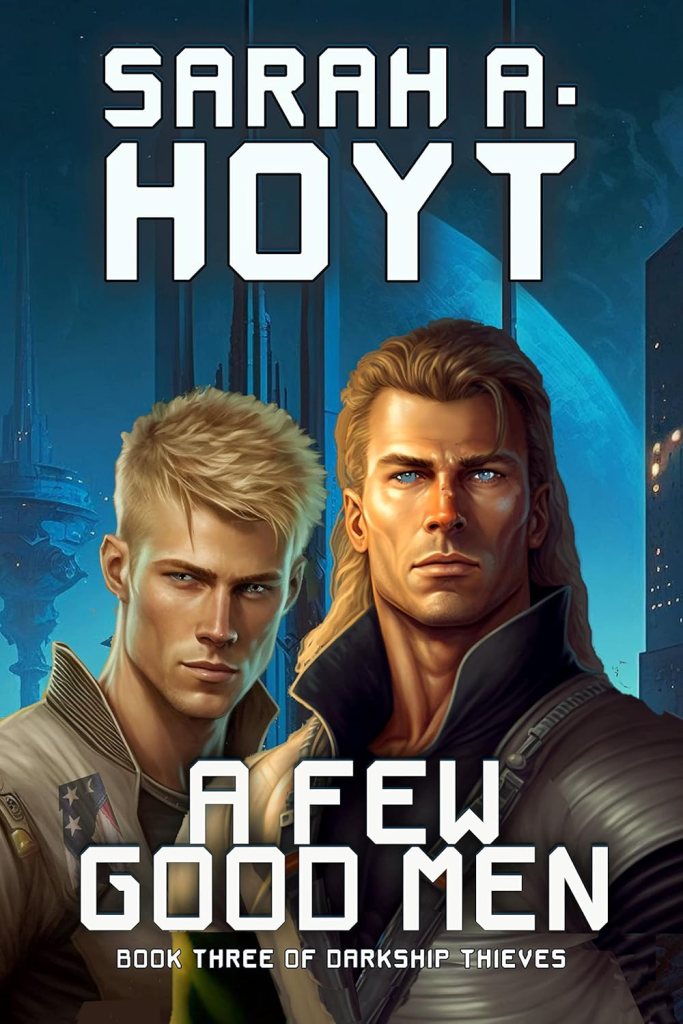
FROM CEDAR SANDERSON: Giant Counting Robots

The robots are coming! The robots are coming! Whatever we do, we’ve got to be cunning!
Count along as they thunder into your town! Then translate into binary to communicate with them. This book is intended to be fun to read aloud, engage with, and grow along with a young reader until they’re ready for code-breaking!
From simple numerical concepts to the more complex, this is a read-aloud, learning, teaching book.
Most of all, though?
IT’S GOT ROBOTS!
So many robots of all shapes and sizes!
Count all the robots, they’re full of surprises!

This picture book will appeal to ages 3 to 10 as it can be read aloud, used to teach numbers and counting, and later, binary coding! Fun, educational, but most of all… The robots are coming! We can’t stop them at all!

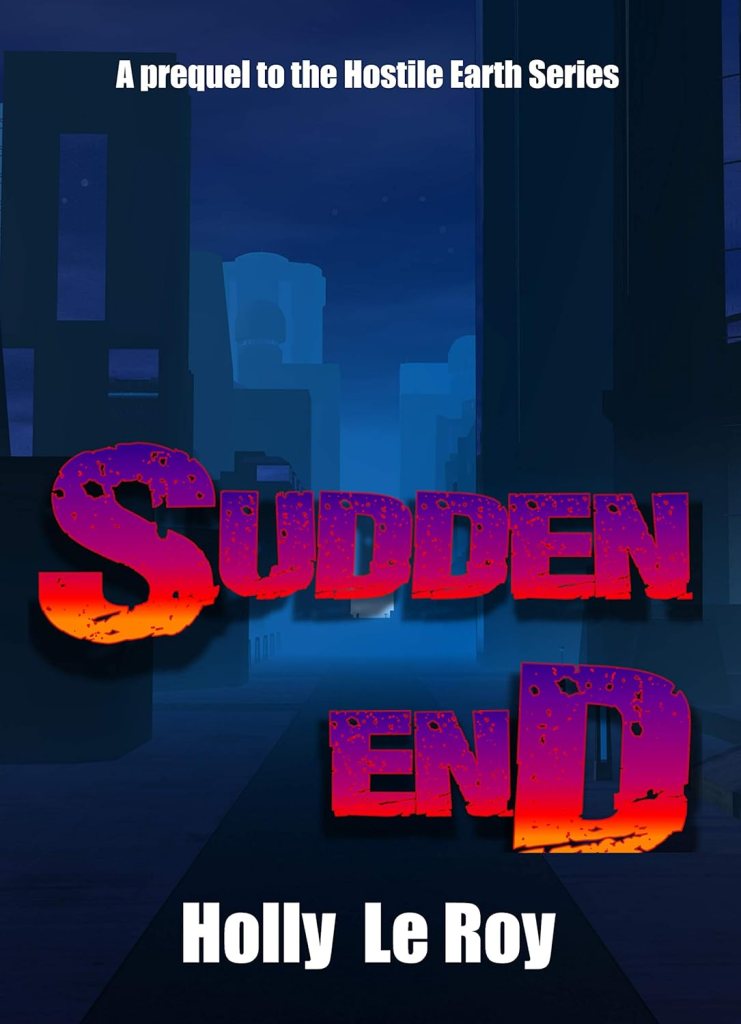
FROM HOLLY LEROY: Hostile Earth

Terra Vonn is fighting to survive in a destroyed world, surrounded by unspeakable horror . . . and things are about to get much worse. After witnessing the vicious murder of her mother, Terra has a singular focus—exacting revenge on the killers. But before she can complete her plans, savagery intervenes and she is cast alone into a brutal post-apocalyptic world. As she trails the men south through a land filled with cannibalistic criminals, slave traders, and lunatics, the hunter becomes the hunted. Terra quickly learns that she is neither as tough nor as brave as she thinks she is. Worse, she may be the only one who stands between what little remains of civilization and destruction.

FROM P. L. KENNY: A Deadly Dish: A Rafe Merritt Thriller

“She’s some dish.”
“Make sure you don’t take a bite of that dish, Lake.” Rafe lowered himself into the sedan’s backseat. “Remember she’s suspected of murdering a dozen men that we know of. I’d hate to have to tell your mother you were lucky thirteen.”

Police Commissioner Rafe Merritt has his hands full when a dangerous beauty comes to town. With the bodies piling up and a target on his back, can the young commissioner put an end to the murder spree before he becomes the next victim of the “Deadly Dish”?

A mystery thriller short story in the pulp tradition of The Shadow, The Whisperer, and Bulldog Drummond.

FROM L. DOUGLAS GARRETT AND NICKY ROBINSON: Remember the Dead: A Collection (Remember The Trade Book 1)

What was The Project? How did it start? What happened to forge the man known as David Cox? Six short stories and a new novella, alongside the original Remember When tell the tales that begin the Remember The Trade series.

His job was to be a bad guy for a good cause. David Cox was a mercenary soldier and agent, selected and trained for the dirty jobs of clandestine operations. But David was only supposed to be a cover identity. And once he’d learned how powerful it was to be ruthless, how could he resist bringing that home?The Remember The Dead collection contains the eponymous new novella of a pivotal mission in 1980, the formative year of David Cox’s career. The short stories and vignettes of other missions and characters help paint the picture of his early years.

WITH A STORY FROM CHARLI COX (AND ONE FROM MARK WANDREY): Express Elevator to Hell (Universes at War Book 1)

Attack! Attack! Attack!

The shortest distance between two points is a straight line, and for the people on a starship waiting to make a planetary assault, that trip will be as fast as possible so they can—hopefully—make it through the enemy’s defenses. Some liken such a trip as being on an express elevator to hell.

But a planetary assault is a dangerous thing, and it can have consequences for the assaulters as well as those being assaulted. Are you ready to join the attack?

Fifteen of today’s leading scifi authors take you on a variety of science fiction assaults that will have you on the edge of your seats as you go in with the first wave. Are you ready to jump on board the express elevator to hell?

You better be, because it’s going down!

FROM MARY CATELLI: Dragonfire and Time

An angry dragon demands justice of the king.

Mae, a royal wizard, is assigned the task: the dragon had metted out her own justice, burning a thief with dragonfire, but she had seen him since, whole and sound, and this she will not tolerate, so Mae must put an end to it.
Mae goes to discover the truth of this before the dragon leaves its lair to extract her own justice. And in her search of the spring festivities, learns more secrets than the dragon had even guessed of.

FROM HOLLY CHISM: Holidays and Holy Days (Modern Gods)

Hera was hard at work in her counseling office when her clients started cancelling for Thanksgiving travel. She…hadn’t realized that a) that was coming up, or b) what it actually about…until she did a little research and decided to celebrate. In the process, she learns about Christmas coming, and decides that it’s high time somebody threw Christ a birthday party.

Of course, nothing goes as planned, but when does it ever?

Vignettes by Luke, Mary Catelli and ‘Nother Mike.

So what’s a vignette? You might know them as flash fiction, or even just sketches. We will provide a prompt each Sunday that you can use directly (including it in your work) or just as an inspiration. You, in turn, will write about 50 words (yes, we are going for short shorts! Not even a Drabble 100 words, just half that!). Then post it! For an additional challenge, you can aim to make it exactly 50 words, if you like.

We recommend that if you have an original vignette, you post that as a new reply. If you are commenting on someone’s vignette, then post that as a reply to the vignette. Comments — this is writing practice, so comments should be aimed at helping someone be a better writer, not at crushing them. And since these are likely to be drafts, don’t jump up and down too hard on typos and grammar.

If you have questions, feel free to ask.

Your writing prompt this week is: DOMINEERING

The Chinchilla Of Hope

*I really have no excuse for this. Not a single smidgen of a little bit, of a suggestion of an excuse. Except that my fans — you know them, right? — can’t spell (Maybe that’s why they like me?) Back before I gave in and started referring to the slipper I threaten them with as a chancla because everyone knows the Spanish word, I used the Portuguese word. As in, Portuguese moms are experts in the art of the slipper as well, but they call it a chinelo. My fans rapidly started threatening each other with Chinchillas. From this we evolved to threatening people with Chinchillas of hope when they were depressed. And from there, well, heaven help me, the plot bunny Hatchery in my head took over. So, below is the story of the Chinchilla of Hope. This one goes out to Foxfier and Ian Bruene and Amy B. And Holly Frost and a few other reprobates I’m forgetting just now.

I’m writing it in the name of giving y’all something free at least every other day while doing the Winter Fundraiser. It makes it feel more…. organic. Like sitting down in the market place and telling a story, with a bowl for coins upfront. Anyway, this is the fundraiser, and the link, there’s a Give Send Go for the Winter Fundraiser and well, if you need anything else including a snail mail address and the why and all, please go here. And now sit back and enjoy the short story!- SAH*

by Sarah A. Hoyt — Complete Short Story

Some places are not entirely bad to wash up in when your luck finally runs out.

You can do pretty well on no money, no job and no self respect in Far Itravine. No one much cares if you go naked on the beach all the days of your life, and the vegetation runs enough to the kind humans can eat that you’ll be well fed, if you just add a fish or two now and then.

Then there was this place — Gabriel Ciriac remembered it fondly — where you could live like a king while doing absolutely nothing but sleeping and eating. In Moriando in the Deep Sirens Cluster, they held destitute beggars as being sacred. Gabriel had no idea how such a system of beliefs had even come to exist, much less why anyone would believe in it. Except that Moriando was such a prosperous world, they rarely got to exert their imperative of giving charity to the needy. So any needy that washed upon the shores of its massive spaceport became the recipient of everyone’s charity. At once. Had Gabriel gone ashore there, that last time before anyone stopped hiring him, he’d have lived very well indeed. Maybe well enough to forget how useless he was.

But no. Like a piece of space flotsam, he’d washed ashore in the world of Chronydia, in the Weeping Weaver system, in the Lost Io Constellation.

It was a world of granite and iron, a world of dire necessities. Started as a colony to build spaceships for further exploration of the universe, it had been left hopeless, ruined, as the jump points moved on for further discoveries had moved on, and it was no longer viable to build spaceships here. The spaceship yards closed, leaving the landscape littered with half constructed ships, from scouts only ten times the size of any human house to the colony ships that looked like palaces on their side in the snow.

Oh, it snowed all the time. At least in the part of the world near the spaceport. There must be other parts because there was food, at least some of it, so some part of this forsaken planet must be used for agriculture.

Not that Gabriel had ever seen it, or was likely to ever see it. His life was in the city built in the wreckage of the ship yards, and he’d found what jobs he could, to keep body and soul together. It was here, after completing a run, that he’d found himself unemployable by any other ships as a navigator.

It wasn’t the drink, though he’d drank enough at bustling ports, when he landed with a purse full of coins and stories of exotic worlds. And it wasn’t the women, though there had been many, blond and dark haired, short and tall, and all colors of the races of Earth, plus some of the exotics, like the purple of Artmadon in the Far Borneo Constellation. All beautiful, in his bed and on his arm. All delightful. Some delightful enough for him to have half formed plans of maybe, some day, when he retired.

But he didn’t expect a single incident, a bad calculation, and suddenly finding himself denied his one job, the one job he could do. The job that had brought him women and wine, and also a sense of pride and purpose.

He did what he could. Back there, before navigator school, before the complicated calculations of space and time to work the jump points, before he’d been certified and served with distinction in a dozen different ships, he’d been the son of a colonist farmer, on a hard scrabble planet. He remembered his father telling him, “A man earns his keeping.”

When it became obvious no one would hire him to pilot a ship out of forsaken Chronydia, Gabriel had turned his mind and his hands to finding work, well before his money ran out. He’d done the accounting for the barely profitable establishments around the spaceport: diners, and various repair shops, and what were probably brothels, but advertised themselves as companionship clubs. None of them paid very well, because few ships came into the spaceport, but they paid something. When there was no accounting to be done, he’d worked a smelting the glassteel to change the carapaces of never finished ships into makeshift residences. He’d carried packages. He’d cleaned. He’d worked briefly at a laundry.

But now it was five years later. His clothes were in tatters. His savings had run out. As he left his job — an accounting one, in a miserable warehouse on the outskirts of the inhabited district — Gabriel realized two things: one that what he’d been paid wasn’t enough to buy a meal, much less a bed for the night; the other that unless his calculations were very wrong — and they’d never been wrong but once — that tonight was Christmas eve.

The wind whipped icy snow in his face, and he walked as far in the shadow and protection of the glassteel structure next to him — a warehouse of some sort — pulling the rag that had once been a Royal College of Navigators jacket around himself. He wasn’t going to cry. He wasn’t going to add cowardice and whining to his descent into hell. He was going to find a place to sit that was protected from the bitter wind and ice. It wouldn’t be warmed, and his clothes wouldn’t protect him enough. He’d be dead by morning. But if he could mitigate the bitter weather somewhat, he could maybe fall asleep, and slip quietly into a sleep from which he’d never wake.

The people of Chronydia weren’t unkind. But all of them were losing a battle with inevitable starvation, and there wasn’t anything to spare for a stranger.

He found what he was looking for in a junction between two walls of an enormous abandoned ruin of a ship. It created a niche, and he wedged himself into it, his back to the building. It was cold, very cold, but not so cold that he couldn’t close his eyes and dream of his parents farmhouse. On Christmas his father bought a couple litters of cheap wine, and they’ d spice it and sugar it, warming it over the fire. And his mother made cookies with lard and flour and precious sugar and spices. After their simple dinner, his parents and his siblings would sit around the fire and eat and drink. He wondered if his siblings were alive. He knew his parents had died, within a year of each other. He’d gone back for the funerals but not stayed. He didn’t know if Michael, Paul, Felix, Joanna and little Amelia still lived. It was ten years at least. If they were still hardscrabble farmers in a world that had never been very good at providing for them, they might well have succumbed to famine. He should have checked on them while he had the money to help, see if one of their children qualified for navigator school. He’d always meant to, but he’d been flying back and forth across the universe. And now was too late. And they’d never even know what he’d become of him.

He banished the sadness. In his last few hours, forget the regrets. Instead, he imagined in detail the warmth of the fire, the taste of the cookies, the consolation of the spiced wine.

“Excuse me, I seek a Navigator to hire!” The voice was high, like a little girl’s, but it sounded unbelievably smug.

It took Gabriel a while to open his eyes. They felt as if they were frozen shut. And then when he did, he realized he hadn’t. Not really. He was hallucinating this, and his mind was losing coherence as he died. Had to be.

He had heard of chinchillas once. read about them in an Earth book, that had a picture. They looked like cute little mice drawn by a gifted artist who enhanced the cuteness. Only this one was the size of a ten year old child, and wore a space jumpsuit, with a lot of weird insignias in it.

It twitched its nose at Gabriel, in what felt, somehow, like a smile, “Ah. You’re awake. The honorable spaceport master said that you were the only navigator for hire in Chronydia right now.”

Which was true, insofar as all the other ones either got hired very quickly, or hadn’t been balked of their last payment and had money to get a ticket elsewhere. Anywhere else. Gabriel blinked at the chinchilla. It twisted its little fuzzy hand-paws together in front of itself. “We know we’re not your kind, but please sir. Our navigator died, and we cannot liftoff without one.”

Did Chinchillas cry? Because this one looked like it was going to. Of course, it wouldn’t be a real chinchilla, not even an uplifted one. Just an alien who looked like a Chinchilla.

“Navigator died of a heart failure,” the Chinchilla said, and his hands twitched around each other. “It is not our doing. We’ll pay well. Please sir!” And it named an amount in Korythan florins that made Gabriel’s teeth ache. It was more than he’d ever been paid for a single trip. It was weird of the chinchilla to mention that they surely hadn’t killed their navigator, but then he didn’t know their culture, and anyway if they killed him, it was likely to be less harsh than dying of cold here. If this wasn’t all a dream anyway.

Gabriel sighed. He dragged himself up, though his joints seemed to be frozen, and then despite himself, heard himself tell the poor chinchilla the mistake he’d made, bringing an entire ship cargo of rare candies to this backwater planet, and ensuring they had to jump five times to get back on track, thereby wiping out all the profit from the trip for the owners of the ship. He told it all even as he heard himself rage inside his head, and ask himself if he was an idiot who wanted to die. The chinchilla listened, quietly, and seeming attentive — how did you know if a chinchilla was attentive anyway? — and then twitched its nose. “Ah, but everyone makes a mistake once. It doesn’t mean it will happen again. How many times did you not make a mistake before? And you’re our only hope. we can’t stay here while we wait for another navigator. The spaceport master said it could be months before a ship lands with a spare navigator, and my people have very specific food, a berry that only grows on our planet. We’ll die in two weeks. Please sir!”

What was Gabriel to do? If they wouldn’t be deterred by his appearance, or his history, he’d have to take the job.

He found himself going with the chinchilla, whose name was Sylfarian Poppyran De Toratim, to the ship her family group owned. The ship was small. No. The ship was short. It was designed for chinchilla height, which meant about half his height. So he had to walk everywhere bent in half, and decided it was easier to kneel on the command room floor, rather than sit in the tiny chair. But the chinchillas — there were twelve of them, and they were all very cute and sweet and tried to make him feel welcome — had gone to the trouble of getting his food. And they had the data, and told him where they needed to go. It was three jumps in five days. It would be easy.

The fact that it was easy was his clue that he was really still dreaming.

But when he got them to the Chinchilla world, he was acclaimed as a conquering hero, given a truly amazing amount of money. And what was more, a glowing recommendation.

And because the Chinchilla world was a hotbed of commerce — apparently the Chinchillas berry-food was a pleasant hallucinogenic for other species — he had immediate offers for several other jobs, should he wish to take one.

He’d tried to confess his miscalculation, but strangely no one had heard of his other ship or anything bad about him. Given how small the navigator community was, the only way no one would have heard was if the company itself had kept it quiet. And the only reason they’d have done that is if they’d fed him the wrong coordinates and wanted to go to Chronydia. He’d dropped some of his fantastic fee on an investigator to track the outfit on, and still dubious and a little afraid of a miscalculation somewhere, had taken one of the jobs.

Over the next two jobs, he’d worked close to Ceres his planet of origin, where he’d found his entire family thriving, and met all his nephews and nieces, still too small to go to navigator school. But he’d brought them gifts, and left his family a fund for emergencies, and a way to reach him should they need him.

While there, he heard from the investigators. The outfit who’d claimed he’d miscalculated had been trafficking in illegal drugs which sold better in places like Chronydia. They wanted an excuse to stop there, unnoticed and needed a Navigator who didn’t know better, and whom they need not pay.

And then he got on his next ship, and the next.

Eventually he did retire, and married a beautiful woman who had become his friend and understood him and what he wanted to do. Which was good, because by living far more frugally than they could afford to, they could put money aside into a fund, to save stranded navigators and to pay the way to navigator school for hopeful young and talented kids from the outer worlds.

The symbol of the organization showed a happy little Chinchilla alien. And the name was The Chinchilla of Hope.

Meme-etic

*I’m going to rattle the tin cup. I’m doing my winter fundraiser. And while I mean to give free ice-cream every day, I haven’t recovered from Thanksgiving (I know… But hey.) Anyway, there’s a Give Send Go for the Winter Fundraiser and well, if you need anything else including the why and all, please go here. Tomorrow I hope to do a Christmas short story and another reading. We’ll see. I spent most of today sleeping. And now the memes!- SAH*

Seeing America by Foxfier

Follow the admirable advice of Mr. H. G. Wells, who said, ‘It is not much good thinking of a thing unless you think it out.’

About a century ago, GK Chesterton came to visit America.

As it happens, being a fellow who wrote for papers, he wrote about it. I often suggest the preface-essay, What Is America?, describing it as his love-letter to our lovely country. Quotes are from this Gutenberg online copy.

It is a little depressing to see that many people– Americans themselves– don’t manage to reach his level of understanding of what America is.

First, he guided folks into his setup:

Let me begin my American impressions with two impressions I had before I went to America. One was an incident and the other an idea; and when taken together they illustrate the attitude I mean. The first principle is that nobody should be ashamed of thinking a thing funny because it is foreign; the second is that he should be ashamed of thinking it wrong because it is funny. The reaction of his senses and superficial habits of mind against something new, and to him abnormal, is a perfectly healthy reaction. But the mind which imagines that mere unfamiliarity can possibly prove anything about inferiority is a very inadequate mind. It is inadequate even in criticising things that may really be inferior to the things involved here.

This shouldn’t be a shock to anybody, Chesterton is rather well known as the patron saint of paradox, using laughter to ease the pain of stretching one’s mind.

In this case, he takes aim at the fascinating world of… filling out a form.

Be still, my racing heart. How thrilling and insightful can you get, with entry paperwork?

Well….

The officials I interviewed were very American, especially in being very polite; for whatever may have been the mood or meaning of Martin Chuzzlewit, I have always found Americans by far the politest people in the world. They put in my hands a form to be filled up, to all appearance like other forms I had filled up in other passport offices. But in reality it was very different from any form I had ever filled up in my life. At least it was a little like a freer form of the game called ‘Confessions’ which my friends and I invented in our youth; an examination paper containing questions like, ‘If you saw a rhinoceros in the front garden, what would you do?’ One of my friends, I remember, wrote, ‘Take the pledge.’ But that is another story, and might bring Mr. Pussyfoot Johnson on the scene before his time.

One of the questions on the paper was, ‘Are you an anarchist?’ To which a detached philosopher would naturally feel inclined to answer, ‘What the devil has that to do with you? Are you an atheist?’ along with some playful efforts to cross-examine the official about what constitutes an ἁρχη [Greek: archê]. Then there was the question, ‘Are you in favour of subverting the government of the United States by force?’ Against this I should write, ‘I prefer to answer that question at the end of my tour and not the beginning.’ The inquisitor, in his more than morbid curiosity, had then written down, ‘Are you a polygamist?’ The answer to this is, ‘No such luck’ or ‘Not such a fool,’ according to our experience of the other sex. But perhaps a better answer would be that given to W. T. Stead when he circulated the rhetorical question, ‘Shall I slay my brother Boer?’—the answer that ran, ‘Never interfere in family matters.’ But among many things that amused me almost to the point of treating the form thus disrespectfully, the most amusing was the thought of the ruthless outlaw who should feel compelled to treat it respectfully. I like to think of the foreign desperado, seeking to slip into America with official papers under official protection, and sitting down to write with a beautiful gravity, ‘I am an anarchist. I hate you all and wish to destroy you.’ Or, ‘I intend to subvert by force the government of the United States as soon as possible, sticking the long sheath-knife in my left trouser-pocket into Mr. Harding at the earliest opportunity.’ Or again, ‘Yes, I am a polygamist all right, and my forty-seven wives are accompanying me on the voyage disguised as secretaries.’ There seems to be a certain simplicity of mind about these answers; and it is reassuring to know that anarchists and polygamists are so pure and good that the police have only to ask them questions and they are certain to tell no lies.

And that leads to something I wish more folks would embrace:
Now that is a model of the sort of foreign practice, founded on foreign problems, at which a man’s first impulse is naturally to laugh. Nor have I any intention of apologising for my laughter. A man is perfectly entitled to laugh at a thing because he happens to find it incomprehensible. What he has no right to do is to laugh at it as incomprehensible, and then criticise it as if he comprehended it. The very fact of its unfamiliarity and mystery ought to set him thinking about the deeper causes that make people so different from himself, and that without merely assuming that they must be inferior to himself.

America is weird.

We are not a nation of land.

We are a nation of an idea— a creed, which we spelled out rather nicely.

To, again, quote:

America is the only nation in the world that is founded on a creed. That creed is set forth with dogmatic and even theological lucidity in the Declaration of Independence; perhaps the only piece of practical politics that is also theoretical politics and also great literature.

And he is right, there, and in continuing:

It enunciates that all men are equal in their claim to justice, that governments exist to give them that justice, and that their authority is for that reason just. It certainly does condemn anarchism, and it does also by inference condemn atheism, since it clearly names the Creator as the ultimate authority from whom these equal rights are derived. Nobody expects a modern political system to proceed logically in the application of such dogmas, and in the matter of God and Government it is naturally God whose claim is taken more lightly. The point is that there is a creed, if not about divine, at least about human things.

Claims of America being a “blood and soil” nation “like any other” have been popping up, with a range of scrambles to create evidence for this idea– it runs into issues when it hits America’s history, from before we were founded.

We are an idea. We have a nation, and it has land; but a thing does not become American by being done here. One becomes American by being an American— following our creed.

To point at Chesterton’s meditation on this, explaining it to his countrymen:

Take that innocent question, ‘Are you an anarchist?’ which is intrinsically quite as impudent as ‘Are you an optimist?’ or ‘Are you a philanthropist?’ I am not discussing here whether these things are right, but whether most of us are in a position to know them rightly. Now it is quite true that most Englishmen do not find it necessary to go about all day asking each other whether they are anarchists. It is quite true that the phrase occurs on no British forms that I have seen. But this is not only because most of the Englishmen are not anarchists. It is even more because even the anarchists are Englishmen. For instance, it would be easy to make fun of the American formula by noting that the cap would fit all sorts of bald academic heads. It might well be maintained that Herbert Spencer was an anarchist. It is practically certain that Auberon Herbert was an anarchist. But Herbert Spencer was an extraordinarily typical Englishman of the Nonconformist middle class. And Auberon Herbert was an extraordinarily typical English aristocrat of the old and genuine aristocracy. Every one knew in his heart that the squire would not throw a bomb at the Queen, and the Nonconformist would not throw a bomb at anybody. Every one knew that there was something subconscious in a man like Auberon Herbert, which would have come out only in throwing bombs at the enemies of England; as it did come out in his son and namesake, the generous and unforgotten, who fell flinging bombs from the sky far beyond the German line. Every one knows that normally, in the last resort, the English gentleman is patriotic. Every one knows that the English Nonconformist is national even when he denies that he is patriotic. Nothing is more notable indeed than the fact that nobody is more stamped with the mark of his own nation than the man who says that there ought to be no nations. Somebody called Cobden the International Man; but no man could be more English than Cobden. Everybody recognises Tolstoy as the iconoclast of all patriotism; but nobody could be more Russian than Tolstoy. In the old countries where there are these national types, the types may be allowed to hold any theories. Even if they hold certain theories, they are unlikely to do certain things. So the conscientious objector, in the English sense, may be and is one of the peculiar by-products of England. But the conscientious objector will probably have a conscientious objection to throwing bombs.

And, Chesterton being English, and not entirely insane, must follow with this:

Now I am very far from intending to imply that these American tests are good tests, or that there is no danger of tyranny becoming the temptation of America. I shall have something to say later on about that temptation or tendency. Nor do I say that they apply consistently this conception of a nation with the soul of a church, protected by religious and not racial selection. If they did apply that principle consistently, they would have to exclude pessimists and rich cynics who deny the democratic ideal; an excellent thing but a rather improbable one. What I say is that when we realise that this principle exists at all, we see the whole position in a totally different perspective. We say that the Americans are doing something heroic, or doing something insane, or doing it in an unworkable or unworthy fashion, instead of simply wondering what the devil they are doing.

I wish to heaven more folks would bother to actually think, rather than assume they already know and go from there.

Things To Be Thankful For

As noted in the post below this (yeah, it is a blog funding post. Life is like that just now.) this has in many ways been a brutal year. Mostly in “things fail around the house” and “health” ways.

But as we come to the close of the year, there have also been very good things, and at least two extraordinary miracles, full measure, poured over. And this is the day to remember those.

I’m not going to demand you believe in extraordinary providence, but miracles exist, even if it’s in “This was highly improbable, and it is good.”

So–

Trump did not get shot. By an inch or fractions thereof, Trump didn’t get shot.

Note that I’m not saying this because Trump or his life are that important, but because I’m convinced, from all the factors I can sense and think of, that we’d by now be knee deep in ACWII electric boogaloo. And no one wants that.

And Trump won the election. Again, I don’t know what or how much Trump can do, but I’m absolutely sure he’s better than the Junta that seized power by fraud being able to keep it, world without end. We have a chance. It’s just a chance, but it IS a chance. And we’re American. Give us a chance and we’ll take the universe.

Not coincidentally, despite the triple infection, since the election my blood pressure is once again low normal after years of doctors trying to talk me into treatment because “arrrr she’s gonna blow.

While on that, my glasses no longer require prisms. I have no idea what this means, but it seems good after years of my eyes crossing both directions (up down, and side to side.)

Other things to be grateful for: Younger son is married, and they got to have the ceremony in front of my parents, who are both still alive.

We lost Valeria, but Havey is still with us, and we certainly didn’t expect to have either of the older cats last year at this time.

And… I’ve finished the very long book. I don’t have any idea if it’s good. And it’s certainly very weird. BUT after almost 50 years, it’s out of my head, and getting edited.

And we have enough food for tomorrow, and friends (and one of the kids/spouse) coming to dinner.

I’m very thankful, even while looking forward to greater blessings.

We’ve been blessed and our work has proven fruitful. Let’s go forward, and work just as hard, and meet here next year, with even great blessings.

Go enjoy your thanksgiving.

The Great, Extraordinary Winter Fundraiser

Back when I did the normal Summer fundraiser, a curious phenomenon happened: I think I had more people donate than at any other blog fundraiser before, but the amount was lower, as everyone donated about a third what they normally would.

At the time, you guys told me I should do another fundraiser in winter to take smaller bites, as it were.

I will confess I intended to forget that, but …. what a year this has been. We’ll just say the house we bought apparently hadn’t been maintained at all for fifteen years or so. This year included dealing with the happy fun joy of having the pipe of water INTO the house burst. That resulted in a lot of things, including the cracking of a cement pad in the yard which we’re not even attempting to replace, and if one of my local friends hadn’t helped me fix the back porch, we’d still have a big gaping hole back there.

Well, other things have happened, including a sewage backflow into the house, which will now necessitate the reflooring of the half of the bathroom that is living space (To wit a guest bedroom and Dan’s workshop and music composing room.) Recently and after several attempts we got someone to walk through the house and mark everything that needs doing including the painting of the facade, which might need wood replaced. I never got up on a ladder to paint it (it’s 20 feet. No. the house is not that big. It’s complicated, okay?) and it’s just as well as I think they’re going to need to replace the wood. Today I spent shifting things around (when not cooking and/or recording a story reading) so they can get into the attic and figure out why the ceiling of the main bathroom gets wet, particularly when it hasn’t rained in a good while, there are two windows in the basement STORAGE area that leak, there’s minor roofing repair, and at some point I’d REALLY like to hire someone to replace the chandelier that was wired with speaker wire.

All of this to say, they’re things I’d either normally put off — only these can’t be put off without getting much worse — or do myself, possibly by indenturing younger son to help. But this year has not been good, and I’d like — I’d much prefer — to get writing done.

We could rustle up the money, mind. This IS NOT a rescue fundraiser. We can pinch a bit and turn over a few sofa cushions and find it.

It… would be easier if my brain hadn’t been eaten by the endless book — now in revision, and there will be an e-arc for the first third (my first readers have shouted me into breaking the 250k words into three books) in January — and had I published something — anything — this year. Alas, I didn’t. So, the income from books is very low for the year. It will recover, but…

Anyway, it’s not a fundraiser for need, so much as it’s a fundraiser because I do the work. Weekends and holidays and all I’m here doing blog posts. And if I am sick, and can’t, I feel terrible about it.

I’m not holding the blog hostage. And if you can’t donate, that’s fine. I’ll survive. And I’ll still write every day. It’s just that I wish very much things had gone differently and I could have “forgotten” to do a winter fundraiser. Consider the long list of ills above not so much my whining as my being really mad I couldn’t forget the fundraiser, dang it.

I’m also very much hoping it’s the first and last of its kind.

I’ve created a Give Send Go for it here. (Yes, the other one is still and will remain active, as it’s an easy link to donate to the blog for those who remember/want to during the year. Since I can’t risk having paypal. Well, maybe I can in the future, but since they made noises about confiscating funds of blogs that offended them, I don’t dare have a button.)

For those of you too paranoid about electronic donations (I’m occasionally one of those), the po box address is:


Sarah A. Hoyt

Goldport Press

304 S Jones Blvd #6771

Las Vegas, NV  89107

Note that if you decide to send me gifts there, particularly chocolate in summer…. don’t. Ping me and I’ll send you an address closer to where we live so that it can be mailed to us in a timely manner and not get hurt. We’ve been fortunate in the chocolate so far because it arrived unscathed (And was enjoyed) but we can see a couple of days delay making it disastrous. In winter otoh, the only danger of chocolate is to my waistline…

And because of course I feel guilty and mildly embarrassed to ask for blog funding, despite well, providing the blog, I’m going to try to give you guys a bunch of freebies as this consarned fundraiser runs for… I suspect two weeks it’s the most I can endure….

So, I did a reading of my very odd — from 1998. Boy was I weird then — short story, The Littlest Nightmare. You can go there and listen to it, or download it and hopefully enjoy it. It makes me smile to think of you guys doing your thanksgiving cooking, or estivating on the sofa after too much turkey, listening to me reading a silly short story.

It’s not an audio book, but much like the experience of being at a reading with me. You’ll also find out I’ve no idea how to pronounce “porcine”. Or rather, if the i is pronounced as an i my mouth can’t DO that. I can write it, but I can’t say it. This is either funny or pathetic, depending on how you look at it, but it MIGHT amuse you.

Anyway, thank you, and please, under no circumstances give money you can’t afford to give.

Eighties Democrats

Can we put to bed this idea that Trump is an eighties democrat? You see, I remember the eighties. I have a memory. I have writings.

I keep hearing it over and over again from our side. “Well, he’s an eighties democrat. It’s just the democrats have moved so far left that–“

I’m not going to dispute that in the eighties he was a democrat. Or that the democrats have moved further left since then. Though that later is perhaps not exactly true.

(It’s more “they were always this far left, but recently through lack of concern or ability to hide it, they started showing their true colors.” And it’s complicated by the fact that they started harping on things like sexual minorities and transexuality which were never a concern of theirs before and which, honestly, seem to be more of a stalking horse than anything else, considering how hard-left societies treat those.)

But when Trump was a democrat, he was what I call a default, no thought democrat. He was a democrat because democrats were “the good people” as pushed by the culture, and anyway that was the only way to get anything done in the circles he moved in.

However I doubt very much he was an eighties democrat politician.

For those of you who weren’t alive then, the democrat politicians were always trying to push something that would absolutely destroy the US in some way. Even if “only” surrender to the USSR so that the USSR wouldn’t “destroy” us. (Which they never could do, unless we surrendered.) But there were other things that will sound startlingly familiar to you, from unionizing all the things, to creating universal basic income, to giving everyone “universal” health care, and other things that depend on the labor of others.

If you want to see what eighties democrat politicians, look at what happened in Europe: the continuous reduction of individual liberty, the disarmament of citizens, the making everyone a pensioner of the state. That’s what democrats in the eighties were pushing.

Does Trump have some rocks in the head? Likely. There are things he doesn’t seem to have thought through from his early ideas.

More importantly I look at his cabinet appointments and I see a lot of horse trading going on. He still has to get it through college.

But you know what? There are some very good appointments and we have a chance.

Just a chance. It’s all we wanted, right?

And he’s not an eighties democrat. Even back then most of them didn’t love the country, didn’t love anything but their own profit and power.

Trump, for all his faults, loves this country. And he’s going to try to get us out of the straits we’re in.

Sure, it might not be possible. And sure, he’ll do some really stupid things by our lights. But our lights are also not perfect and–

Again, we have a chance. Hope and pray it is enough.

Book Promo And Vignettes By Luke, Mary Catelli and ‘Nother Mike

If you wish to send us books for next week’s promo, please email to bookpimping at outlook dot com. If you feel a need to re-promo the same book do so no more than once every six months (unless you’re me or my relative. Deal.) One book per author per week. Amazon links only. Oh, yeah, by clicking through and buying (anything, actually) through one of the links below, you will at no cost to you be giving a portion of your purchase to support ATH through our associates number. A COMMISSION IS EARNED FROM EACH PURCHASE.*Note that I haven’t read most of these books (my reading is eclectic and “craving led”,) and apply the usual cautions to buying. I reserve the right not to run any submission, if cover, blurb or anything else made me decide not to, at my sole discretion.SAH

https://amzn.to/3APaQEHFROM MARY CATELLI: Over the Sea, To Me.

A novelette retelling an old ballad.

A castle of marvels, by the sea — full of goblins and sprites. Many young knights come in search of adventures, and leave in search of something less adventurous.

A knight brave enough to face it could even woo the Lady Isobel there, but when Sir Beichan and she catch the attention of her father, the castle has horrors as well as wonders, enough to hold him prisoner. Winning freedom may only separate them, unless its marvels can be used to unite them, over the sea.

FROM BLAKE SMITH: An American Thanksgiving

It is Thanksgiving Day, 1865, and Margaret Browne isn’t feeling very thankful. The war is over, and her grown-up sons have returned from the fighting, but her beloved husband remains absent, last seen a captive in a notorious prisoner-of-war camp. The Browne family muddles through their uncertain path, lost without their leader, but when everything begins to go wrong all at once, Margaret must hold together the farm and her family, and turn a disaster into a true day of thanks-giving.

EDITED BY JAMES YOUNG, WITH A STORY BY YOURS TRULY: The Violent Blue Yonder: Aerial Alternate History (Arc of Ares)

Victory, speedy and complete, awaits the side that employs air power as it should be employed-Marshal Sir Arthur Harris, Bomber Command

War in the air, like any other domain, is subject to the whims of Fate. Throughout history, humans have always asked “What if?” Violent Blue Yonder explores what happens when that question gets asked hundreds (or thousands) of feet above sea level.

Do you like the age of “canvas falcons?” Come along as Sarah Hoyt, the 2018 Dragon Award Winner for Alternate History, surmises what could have happened had The Red Baron survived World War I. Or alternatively (pun intended), let Rob Howell (“In Dark’ning Storms”) and Joelle Presby (“Friends In High Places”) lay out opposite sides of early American intervention in airpower’s first conflict.

More a fan of closed canopies and superchargers than flimsy, flammable death traps? See how the German Luftwaffe gains the upper hand in a Second Battle of Britain in “Londonfall.” Or see different events in the Pacific as William Alan Webb cuts in with “Sword of the Sun,” a tale set in his A World Afire universe. Finally, if worlds afire are your thing, we have 2010 Sidewise Award Winner Eric Swedin having the Cold War go brilliantly hot in “Foolish Games.” Prefer your Cold War to have less thermonuclear annihilation? See what happens when former Flying Tigers and Tuskegee Airmen team up in Justin Watson’s “Red Tailed Tigers.”

Bottom line: Whether you like your aviation fiction to “make kills” or “make history,” there’s something for you in Violent Blue Yonder. As the first of three Arc of Ares anthologies, this book sets the alternate history tone in a way that would amuse the Greek war god himself. So grab a helmet and map case, as these twelve tales are about to take you on sorties you won’t forget!

FROM WILLIAM LEHMAN: HARVEST OF EVIL: Book one of the John Fisher Chronicles

For John Fisher, it’s just another day at the office. But his “office” is a black Dodge Durango, rolling through the wild heart of the nation’s federal lands. Legends aren’t myths here; they’re reality. Creatures of shadow and blood, granted their place in the world after the Civil Rights Movement.

The law’s clear: magic is legal… until it’s used against the land, the people, or the rules of the natural order. Then, it’s his job to bring them in.

John’s not just any cop. He’s got the skills of a SEAL, the instincts of a predator, and a network deep inside the supernatural world. Werewolf, vampire, sorcerer – it doesn’t matter. No matter what you are, when you break the rules, he’s coming for you.

FROM RACONTEUR ANTHOLOGIES: Fission Chips: Space Cowboys 6 (Raconteur Press Anthologies Book 42)

The story lines in this anthology run the gamut, from planetside, to open space, to Mars and beyond:

An old cowboy and his dog teach the new kid how to handle rustlers. Cowboys defend their ranch and others against predators and thieves. Good guys and gals vs. the bad guys while they learn about horses. ‘Ranching’ creatures come among the asteroids, lousy neighbors, and rustlers. Frontier sheriffs step up and solve a crime before things go badly for everyone in town. ‘Rodeo’ takes on a whole new meaning with LBJ in an alternate history. Learning occurs on a cattle drive, with a surprise ending. With rustlers in space, technology is in play, with the equivalent of Rangers. A cowboy and his girl take on train robbers to save the passengers. An old cowboy comes out of retirement for one more cattle drive on Mars.
(from the introduction by J.L. Curtis)

FROM HOLLY CHISM: Gods and Monsters (Modern Gods Book 4

Here there be dragons…again, damn it.

Deshayna has her sanity back, and forces older than the gods have granted her a new purpose. Chronos, his freedom restored, fights for his sanity, and with it, a purpose in helping Deshayna—now called Shay—with hers. The gods are starting to pull together more…and it’s about time.

Millennia after the last dragons to threaten human existence have been hunted down, they’ve started to reappear, hinting to the surviving gods that something more sinister appeared first: Tiamat.

Instead of a confrontation, though, the gods—major, minor, and genus loci—are drawn into a frustrating hunt for a predator that flees rather than attempting to strike.

FROM LEIGH KIMMEL: The Other Side of Midnight

Life has been a nightmare for Mitya ever since he was arrested on trumped-up charges and exiled to Siberia. But this labor camp in the far north of Magadan Oblast hides a secret far more terrible than the merely human evils of the Great Terror. For the universe we know is not the only one, and there are places where it interpenetrates with universes where the laws of nature as we know them do not operate, where humanity has no place. Worlds inhabited by beings ancient and terrible, to whom humanity are slaves, playthings, food.

FROM KAREN MYERS: The Chained Adept: A Lost Wizard’s Tale

MEET A POWERFUL WIZARD WITH UNANSWERED QUESTIONS–AND AN UNBREAKABLE CHAIN AROUND HER NECK.

Have you ever wondered how you might rise to a dangerous situation and become the hero that was needed?

The wizard Penrys has barely gained her footing in the country where she was found three years ago, chained around the neck and wiped of all knowledge. And now, an ill-planned experiment has sent her a quarter of the way around her world.

One magic working has called to another and landed Penrys in the middle of an ugly war between neighboring countries, half a world away.

So what’s a vignette? You might know them as flash fiction, or even just sketches. We will provide a prompt each Sunday that you can use directly (including it in your work) or just as an inspiration. You, in turn, will write about 50 words (yes, we are going for short shorts! Not even a Drabble 100 words, just half that!). Then post it! For an additional challenge, you can aim to make it exactly 50 words, if you like.

We recommend that if you have an original vignette, you post that as a new reply. If you are commenting on someone’s vignette, then post that as a reply to the vignette. Comments — this is writing practice, so comments should be aimed at helping someone be a better writer, not at crushing them. And since these are likely to be drafts, don’t jump up and down too hard on typos and grammar.

If you have questions, feel free to ask.

Your writing prompt this week is: Rod

2025: A Moment Of Opportunity In Space by Jeff Greason

(Originally posted here: https://twitter.com/JeffGreason/status/1860439949100896479?mx=2)

Since 1969, a ritual of American politics is the re-examination of American space policy with each change in the presidency. A panel, commission, or task group gives recommendations. New initiatives are announced—to be mostly forgotten. The focus often shifts from the Moon to Mars or vice versa. Very little of this results in lasting change. While it is often said that “personnel is policy,” and certainly, leadership (or its lack) matters enormously, changes to the structure of policy matter more. The structure of the bureaucracies that carry out space policy in the U.S. and the incentives with which they operate matter immensely.

We are now at a moment of tremendous opportunity in space. Years of wise policy, combined with good fortune and the ability of U.S. business leaders to raise the capital needed for private ventures, have placed the U.S. back in a leadership position. SpaceX dominates world launch markets, and competitors are rising to chase after them. This superior position will not last if the US makes unwise policy choices—as Heinlein wrote: “The laws of physics work as well for others as they do for us.”

Goals should drive policy choices, so what are our goals in space? We want the U.S. commercial space industry to continue to lead the world. We want it to provide the industrial base for our defense needs in space. We want to lead the setting of norms of international behavior in space—rules-based international order with relationships between nations that create mutual benefits. We want the U.S. to lead discoveries of natural resources and phenomena in space, and put them to economic use. We want U.S. citizens and U.S. companies to pioneer the space frontier, free to innovate, risk, and thrive—and free to fail when risks exceed our grasp.

Achieving these goals requires us to foster the development of markets for new commercial space ventures, remove regulatory barriers that slow the pace of development of U.S. space-related businesses, provide a predictable and supportive legal and regulatory framework, and enable the U.S. Space Force to ensure the freedom of navigation in space and protect our space assets.

Lasting solutions require more than wise administrators; we need wise policy that survives even in their absence.

Five executive orders

First, I recommend moving the Office of Commercial Space Transportation (OCST) out of the FAA. Give OCST back to the Secretary of Transportation, where it belongs by statute. Placed within FAA by an executive order by Clinton, it can be removed from FAA by executive order. Unfortunately, the Part 450 regulation of space launch and reentry was a step backward—the U.S. should return to a more performance-based regulatory structure. After decades in which every launch and launch site license has received a Finding of No Significant Impact (FONSI), we should either seek a categorical exclusion, like we have for aircraft, or change to a “shall issue” structure where the government may deny a license application for cause, but, if it takes no action, the license is approved by default.

The experimental launch permit regime could have been used to cover Starship flights 1-5 with a single approval. If additional regulatory work is needed to revitalize the experimental permit regime, do it. Rather than adding staff to solve licensing backlog and delays, reduce the number of staff hours it takes per application by making greater use of existing authority to allow one application to cover multiple launches.
Second, a core tenet of U.S. space policy since Eisenhower is that space-based reconnaissance is a stabilizing capability, we thrive in open societies without secrecy , and taking pictures of the Earth is not a hostile act. As such, eliminate all licensing requirements for space-based imagery. No one should have to ask NOAA for permission to take pictures. If the commercial satellite imaging capabilities become as good or better than those of government satellites, we maintain access to the best imaging systems in the world. An executive order could direct NOAA to immediately approve all applications for Earth observation licensing, regardless of how good the imagery might be. Then, change the legislation so the requirement for licensing cannot be easily reinstated by a future administration.

Third, the U.S. space industry labors under tremendous disadvantages due to ITAR. The “technical assistance” category for ITAR control requires government review and approval for something as simple as describing a product on a website. Eliminate this category completely to restore freedom of speech to U.S. citizens—speaking about space capabilities is not a criminal act and attempts to make it so are unconstitutional. Note: This has nothing to do with keeping government secrets, which are governed by secrecy agreements, clearances, and the like. Instead, if companies want to talk about their products, or engineers in private industry want to talk about their work, let them. This is necessary to ensure the U.S. maintains a culture of technical leadership and finds markets for made-in-the-USA products. At a minimum, some kind of financial relationship needs to be in place before the U.S. government can claim speech constitutes “technical assistance.” An executive order could immediately redefine technical assistance to ensure the regulations do not infringe on free speech. Then, change the legislation.

Fourth, the FCC has expanded its own authority, making licenses for radio transmitters contingent on compliance with additional conditions imposed by the FCC that have nothing to do with managing the radio spectrum. The FCC’s domain should be to manage radio spectrum, not space debris or other aspects of what US commercial companies do in space. An executive order could eliminate this overreach immediately. And since the Supreme Court ended Chevron deference to such things, these rules are unlikely to return without congressional authorization.

Fifth, U.S. obligations under the Outer Space Treaty call for us to provide “authorization and continuing supervision” of our commercial space activities. Within the space industry, there is reasonable consensus that the Department of Commerce should take on this role, because a regulatory regime is not warranted yet. Instead, we need a mechanism for deconflicting potentially interfering uses. The Biden administration encouraged consultation among many agencies with none empowered to say “Yes.”

Pending legislation, an executive order could designate the Department of Commerce as the responsible agency for in-space commercial activities, just as Reagan made the Department of Transportation the responsible agency for commercial launch before the Commercial Space Launch Act codified it. Such an order must make clear that no permission is required from the government. Instead, the DoC would maintain a registry and check to confirm that a proposed activity doesn’t conflict with other registered activities or treaty compliance, such as no weapons of mass destruction. In the absence of a conflict, the activity is registered. When reviewing launch licenses, the Secretary of Transportation can check that the activity has been registered with DoC– that’s all that is needed. “Continuing supervision” can be maintained by requiring parties to update their registry when they change the nature of an activity. This process would create clarity for the space industry and provide the first steps towards a system of recognizing that entities operating on celestial bodies are entitled to do so, can expect to continue to do so, can transfer or sell their operations to others, and that others should not interfere with peaceful space activities.
All these measures have negligible impact on the federal budget.

NASA’s role

Other more challenging aspects in U.S. space policy have to do with NASA and are not free of cost. Since Kennedy’s redirection of NASA to go to the Moon in 1961 and the end of the Saturn V production in 1968-1970, we have struggled as a nation with the questions, “Why does the U.S. need a civilian space agency and what it is for?”

A detailed discussion of the purpose of civilian space agencies would be a much longer article, but in brief, the U.S. established NASA for three main reasons:

· To set the precedent for peaceful uses of space and be a leader so we can set norms of behavior. (In 1958, this was most urgently about creating the precedent that space reconnaissance and overflight of territory in space were peaceful uses.)

· Improve the technology for air and space vehicles to ensure that the U.S. industrial base was the most capable. (This was essentially a continuation, in space, of what the predecessor to NASA, the NACA, had done for aircraft.)

· Learn more about space, what is up there, and how we can benefit from it.

Kennedy repurposed NASA into a mission-conducting agency. NASA would conduct a high-profile, very expensive and complex mission—sending humans to the Moon and back—so as to forestall Soviet claims on the Moon and to ‘win’ the arena of perception of the U.S. as a leader in space.

Now, unfortunately, the mission-conducting elements of NASA for human spaceflight and space science missions consume the bulk of NASA’s budget. The original purpose—maturing technology to support the U.S industrial base—is underfunded. Human missions became ends in themselves, and a constituency in themselves, so that we pay for effort not results. Science missions also became their own constituency, conducted for the benefit of the science community alone—not to mature technology or to learn about the things in space from which we might derive economic benefits.
To forestall any claims by China, we have an urgent need to return humans to the Moon and on to Mars, and to support the peaceful use of space by like-minded nations, signatories to the Artemis Accords. A shift is needed from “pay for effort” to “pay for results.” To improve the performance of air and space vehicles, we need NASA to mature technologies, an activity that conflicts with its mission-conducting efforts. But, NASA’s technology development effort is focused on “technology needed for NASA missions,” and paradoxically, NASA missions are selected on the basis of “what can be done without any new technology.”

Either NASA mission selection and design needs to be subordinated to maturation of space technologies that benefit parties outside of NASA or the maturation of such technologies needs to be assigned to a new entity, funded and chartered for this purpose. If a new entity, note that the U.S. Space Force as well as U.S. industrial partners are likely customers for such technologies and should share in the development of roadmaps that describe the technologies that need maturation.

While it may be a step too far to reform NASA, the rest of these measures are policy changes, have negligible cost, and most can be commenced at once by executive order. The opportunities for accelerating U.S. efforts in space are greater than ever, and I hope the incoming Trump administration will take note of the opportunity.