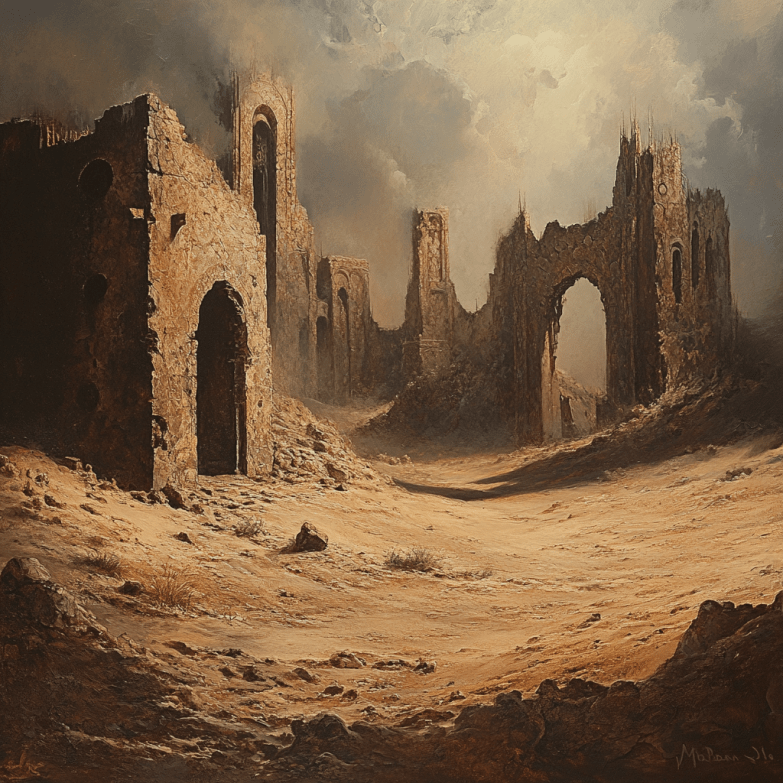
A snippet from 9 AD: The Crossing of the Rhine by Tom Kratman

9 A.D.: The Crossing of the Rhine, Copyright © 2025, Thomas Kratman

Dedication: For my friend, General Claudio Graziano, of Turin Italy, and, further, of Italy’s fine Alpine Troops.  22 November, 1953-17 June 2024

Chapter One

[W]ho would relinquish Asia, or Africa, or Italy, to repair to Germany, a region hideous and rude, under a rigorous climate, dismal to behold or to manure [to cultivate] unless the same were his native country?

— Tacitus

Northwest Germania, September 9th, 9 A.D.

Rain poured from a leaden sky onto twenty thousand miserable, shivering soldiers of the Roman Empire.  To add to the misery, a cold northwind swept around them, finding the holes in their cloaks and the chinks in their armor, chilling them to the bone.  The forest around and above them did nothing to shield them from either wind or rain.

Two men, a junior officer and what later generations might have called a
“regimental sergeant major,” stood in the rain, trying their best to look unworried.  The five or six thousand men with them might collapse if they saw fear on the faces of their remaining leadership.

“What was the name of that town, Top?” asked the officer.  “The one on the Lupia River, about a week’s march east of the castrum at Vetera?  I think it was two days’ march before we went into summer camp on the Visurgis.  I’d been thinking I’d liked to have retired there, after my time with the legions was up and Lower Germany pacified and brought into the Empire.”

Military Tribune Gaius Pompeius Proculus’ face was ashen, though the centurion to whom the question had been addressed thought the boy was doing a commendable job of keeping the panic out of his voice and fear from his dark brown eyes.  Which was good because, with the senior tribune butchered by the Germans, early on, the legate, if he was still somehow alive, stuck somewhere out there with Varus, and that newly worthless turd, Camp Prefect Ceionius, looking ready to bolt, command would like as not fall on the young tribune’s shoulders before nightfall.

Proculus was young, in his early twenties, and swarthy, like many Romans from the city, proper.  And, though he now carried a shield courtesy of a dead or badly wounded legionary, he wore a very high-end gilded muscle cuirass, partially concealed by a fine quality, red-dyed sagum, or cloak.  Repelled by the lanolin which had been left saturated in the wool, rainwater ran off in rivulets, gathering at the bottom seam to drip onto the ground in a heavy stream. 

In his right hand Proculus carried an equally high-end short sword, ivory-gripped and from steel forged in Toledo, Spain, much like the blade of the one carried by the senior centurion he had addressed as “Top.”  Atop and around his own head the tribune wore a crested officer’s helmet, below the muscle cuirass hung a kind of skirt made of strips of white-washed leather, reinforced with small metal plates.   

“Forget that town, sir; it doesn’t exist,” answered the first spear centurion, the centurion in charge of the first century, of the first cohort, of the legion, removing his transverse-crested helmet from his reddish blond head to let the sweat evaporate.  At over fifty-three years of age, his hair was shot with gray and had gray at the temples.  “All that exists is that idiot Varus, dying back there with most of the Seventeenth and Nineteenth, and our own commander.  And the impedimenta with the bulk of our tents and rations, of course.  Oh, and the twenty-five or thirty thousand hairy, smelly barbarians in the process of killing them; they apparently exist, too.”

Primus Pilus Marcus Caelius Lemonius pointed with his chin to the east, whence came the sounds of battle – the clash of stone and iron on bronze and steel, the terrified neighing of horses and lowing of oxen, the screams and shrieks of wounded and dying men and men gone mad – clearly, even through the thick, confusing fog.  Even at this range and even with the trees, the fog, and the sound-absorbing mud of the ground, it wasn’t hard to tell Latin from German.  Nor, from the rising inflection and volume of the Germanic war chant, the barritus, to grasp that the Romans in the main group were losing.  Badly.

But they haven’t given up the fight yet, thought Caelius.  That would be a whole different sound.

Caelius scorned anything resembling a muscle cuirass.  Instead, he wore a lorica hamata, a chainmail hauberk, as did most of the legionaries of the Eighteenth.  A few of the newer men, those in the Second and Seventh cohorts, had those new-fangled things, the loricae made from face-hardened steel bands around the abdomen and over the shoulders, the whole assembly being held together by leather straps to which the bands were riveted. 

The men who wore them never ceased their complaints about how beastly uncomfortable they were. 

Caelius also wore a single greave, on his left, or forward, shin, adding a measure of protection where needed beyond what the scutum could provide.  He’d bought a pair, but had found he didn’t need the one for his right leg and that using that one slowed him down more than he liked.  He still kept it, for use on parade and such.

“Be our turn, too, soon enough.”  Caelius looked around, outwardly sneering at the futile efforts of the men of the Eighteenth, along with the few hundred cavalry, two of the auxiliary cohorts – archers and slingers they were, in one case, and simple light troops, Germans who had taken the oath to the Emperor seriously and unto death, in the other.  Flavus, the brother of the arch-traitor, Arminius, kept the cohort of German light troops well in hand, aided by an old sub-chieftain of his tribe, Agilulf.

On his own initiative, Marcus Caelius had pulled in the perimeter to form a camp for about six thousand men, which Legio XIIX might have  chance to build and defend, from the initial one planned, for twenty thousand men and no small number of brats, tarts, and suttlers.  Even so, progress, amidst all these trees with their tough and entangling roots, was slow and inadequate.

Not even the legion’s own small wagon train, the impedimenta, could add much to the defense, though it helped to strengthen the vulnerable corners a bit.  And Marcus Caelius was pretty sure he didn’t entirely trust the German auxiliaries, Flavus and Agilulf or no. 

“Even if we get so much as a half-assed camp built,” Caelius continued, “we’ve got maybe enough food for a week or ten days, on the men’s backs and in the wagons.  So we’ll still have to try to break out.  And there are too many of those shitty-assed Germans to have a hope of that.  And, no, sir, there aren’t any legions close enough to march to our aid.”

“But,” countered the tribune, “Surely these barbarians will starve before we do.  They’ve no logistic skill or foresight; barbarians never do.”

“I’m not so sure of that, sir,” replied Caelius.  “In the fourth place, they’ve been learning from us.  In the third place, they’ve been here for some days.  Couldn’t have built that wall to the south that’s given us so much trouble all that quickly.  Probably started stockpiling food here when Varus sent that treacherous bastard Arminius to prepare matters for our arrival on the Visurgis.  And didn’t that son of a pitch prepare matters for our arrival?  Maybe even before that.  Maybe for the last couple of years; this ambush was planned.  But in the second place, they couldn’t have known when we’d show up so, for something this important, probably brought enough for several weeks, at least. But in the first place…”

“Yes?” the tribune prodded. 

“In the first place, they’re likely going to have captured all – most at least – of our food.”

“Fuck,” said the tribune.

“Fucked,” corrected the centurion.

While, outwardly Caelius might have sneered at the men’s efforts at building a camp, inwardly he was deeply proud that the men of his beloved Legio XIIX were still trying, hadn’t given in to the panic clutching at their vitals.

“Is there any—” Gaius’ words were cut off by the cry, picked up at one or two points of their irregular perimeter and echoed across the lines: “Here they come again!”

Men who had been digging in their armor dropped their picks, mattocks, and shovels, on the spot, retrieving their red-painted shields from where they’d been placed, stripping off the leather covers that protected them from the wet.  Still others had gone forward to retrieve previously cast pila.  These last now scampered back to their own lines, some with four or five heavy javelins in their hands and arms, some with as many as a dozen, and some with only one or two, the one or two shanks still stuck in German shields.  Those men had also spent some of their time out in front of the lines usefully finishing off any wounded Germans who hadn’t been able to do a convincing job of playing dead.  And some who had; this was called “making sure.”

The men who had retrieved the javelins hadn’t bothered taking back any that looked broken or bent; no time for that.  They passed around what they’d brought back to their comrades.  Some of those struggled to extract the still functional pila from the shields they’d pierced.  Even with the encumbered ones, once freed, there wasn’t quite one pilum for each man.

“What was that, sir?” asked Caelius, putting his helmet back on and tying the chin cord.

“Nothing, Top.” 

“Right.  Sir, why don’t you stay here?  I’m going to walk the perimeter.  I also want to have a chat with the chiefs of the auxiliary cohorts and the senior centurions trying to organize the escapees and advanced parties  from Seventeenth and Nineteenth into something like military formations.”

“Sure, thing, Top,” the tribune replied, though he was loathe to lose the first spear’s steadying company.  Moreover, he always tried to be honest with himself; “Know thyself, that’s what Menandros, his tutor in philosophy, had tried to drum into his head.  So Gaius Pompeius understood perfectly well that he lacked the first spear’s presence, charisma, and way with the men.  To say nothing of battlefield insight.  It’s one thing to have read about Nero Claudius Drusus’s campaigns in Germania, quite another to have been a part of them.

Gaius wasn’t stupid, he was pretty sure, so figured he’d learn these things eventually.  But for now?  Let the experienced non-com handle matters and take his advice when a decision was called for that required an officer.

Well, I would have learned those things, eventually, he thought.  But I’m going to die here in an unmarked grave.  Wait, who am I kidding?  The Germans aren’t going to bury us; they’ll just leave us for the wolves and crows. 

As Caelius turned to go, one of his freedmen, Thiaminus, also called Caelius, ran up and tugged at the sleeve of his tunic.  “Sir, the Camp Prefect would like a word with you.”

“Where is the wretch, Thiaminus?”

The freedman – Caelius had freed both Thiaminus and his other servant, Privatus, largely because he didn’t think you could hope to trust an outright slave when the going got tough – made a subtle little gesture with his head, adding for emphasis, “He’s hiding in that thicket over there.  Next to the legion’s eagle.”

“Of course he is,” Caelius agreed, genially. “What else would he be doing?  Lead the way, Thiaminus; I may need a witness.”

Even as Caelius turned, a chorus of centurions ordered their men to “loose,” which led to a strong volley of pila, and a good deal of most satisfying and exemplary Germanic screaming. This was followed by the sounds, much closer than where the men with Varus were dying hard, of clashing metal and stone. 

The way led past the legion’s small battery of scorpions, small torsion driven artillery, capable, under ideal conditions, of throwing a heavy bolt with quite respectable accuracy a distance of four hundred and fifty or so yards.  Sadly, in Germany’s miserably wet climate, accuracy and range both fell off dramatically.

Even as Caelius arrived at the battery several twangs sounded as the scorpions shot their bolts.  To the first spear, the sounds seemed off. 

“Not that it makes much difference, Top, the endless rain,” said the chief of the scorpions, a senior centurion named Quintus Junius Fulvius, from Caelius’ own cohort.  “Beyond that this damp has the skeins all floppy and as loose as an old whore’s vagina, I’m just about out of ammunition.  I’ve got some of the boys out cutting some wood but, you know, without a metal head and fletching, it’s probably not worth the effort.  And even with the skeins in poor shape, we still shoot further than I’d care to send any men to retrieve the bolts.”

Suppressing a sigh, Caelius answered, “Just do the best you can, Quintus.  Nobody can ask more.”

Silently, Fulvius nodded then tramped off to see to the tightening of the skeins on one of the further scorpions.  He felt the skein with his fingers, then flicked his forefinger at it, several times in different places.  As he did, he muttered under his breath various curses aimed at certain gods and goddesses, and especially Tempestas, which Caelius feigned not to hear.

The first spear, led by Thiaminus, suppressed a smirk and continued on to the thicket within which cowered the camp prefect, Ceionius.

Without stopping Caelius saluted the legion’s eagle, with its plate underneath reading “XIIX.”  Even as he did, he wondered, Should I have a fire built so that we can at least keep it and the imperial images out of the barbarians’ hands?  Or at least get one ready we can torch off at need and toss the eagle into?  Well, first things first.

With an audible sigh, Marcus entered the thicket.  He noticed immediately how old Ceionius had gotten.

“Sir?” Marcus asked of the camp prefect, the praefectus castrorum, inside the thicket.  He kept his voice carefully neutral, lest his contempt for the man shine through.  This was made slightly easier by the sight of Ceionius’ ears, sticking preposterously far out from the sides of his helmet.

“We’ve got to surrender,” said Ceionius.  The terror in the man’s voice was palpable.  “We haven’t got a chance, not a chance, Caelius.  We don’t even have enough food to march to a river.”

“Are you out of your fucking mind?” asked the first spear, heatedly.  “Don’t you remember what the Germans did to Legio Five when they destroyed it twenty-five years ago?  They crucified the survivors, the lot of them.  We’re not surrendering shit.”

The words seemed to go in one of Ceionius’ ears and out the other.  In any case, he acted as if he hadn’t heard.  “Yes, that’s our only chance.  Surrender.  Then the emperor can ransom us.  That’s it!  That’s the only way!”

“The fucking Germans don’t care a fig for gold or silver, you idiot.  There’s nothing much to buy with them, except what our merchants sell…and I don’t imagine they’ll survive the month.  And the emperor is not going to give them what they do want, arms and armor.  No, it would be a bad death or slavery for the lot of us if we were stupid enough to surrender.”

Now those words, Ceionius did hear.  And didn’t like. “I outrank you, you pissant centurion and you will do as I order.”

“I will not, you overaged and overpromoted coward.  We’ll stand here and fight.  This is the bloody Eighteenth Legion; not a man will obey you.”

“They’ll obey or they all will find themselves decorating a cross, and you, too, you insubordinate son of a whore.”  At this, the camp prefect drew his gladius, not so much with intent to do harm as a form of punctuation. 

No matter, thought Marcus Caelius.  He gave Thiaminus a quick glance.  The former slave shrugged, You know what’s best, boss.  And, at least, since I’m not a slave anymore, they won’t torture me for testimony.

This is hard, hard, thought the first spear.  I can remember better days with Ceionius.  Sharing wine.  Telling stories, some of them pretty tall ones.  What happened to turn a former first spear centurion into such a…such a…well, frankly, such a girl?  If I let this, this girl out to start giving orders to the troops some will obey.  Others won’t know what to do.  We’ll be weakened and then destroyed without even a decent fight.  So…

Caelius’ hand leapt to his gladius.  In a single, seamless motion the sword then leapt from the scabbard to Ceionius throat.  A quick and deft pull to the prefect’s left completed the destruction, slicing neatly through both a carotid and a jugular.  Blood gushed to fall to the muck below, the softness of the ground dulling the sound.  Ceionius fell equally silent, only the clattering of his armor and the phalerae adorning it making any sound.  And the wood of the thicket and the mud below absorbed that.

Gently, Caelius took one knee beside the body. He wiped his gladius on Ceionius’ tunic, where it showed past his right shoulder, then re-sheathed the blade.  Gently, almost reverently, Caelius used the same hand to close the prefect’s eyes.

“He was a fine soldier once.  Let’s see if we can’t make sure that’s the part people remember.”

“I saw it all, Centurion,” said Thiaminus.  “He was clearly out of his mind, lunging at you like that. Why, you couldn’t help yourself.”

Caelius smiled and said, “You’re a shitty liar, Thiaminus, but I appreciate the thought.  No, if it comes to it, I’ll just tell the truth, that he had to be killed to put an end to pusillanimous conduct in the face of the enemy.  But I hope the question will never come up.  I’d prefer he be remembered for the soldier he was, once upon a time.”   

“Now come on, we’ve got a line to troop.”

Stepping lightly from the thicket, Caelius told the aquilifer, “The camp prefect is indisposed.”  Which is, come to think of it, as true a statement as has ever been.  “Come with me.  Let’s see if we can’t find some opportunity for you to earn your four hundred and fifty denarii.”

It was said lightly, with a grin, which prompted the aquilifer, one Gratianus Claudius Taurinus, to likewise grin and answer back, “But however will you earn your thirty times as much, Top?”

Marcus looked about, then seemed seriously to consider the problem.  Rubbing his chin, thoughtfully, he answered,“Well, let’s see; thirty thousand Germans, give or take…at a denarius apiece, butchered, skinned and cleaned…that’s thirteen thousand, five hundred for me to kill and butcher.  Meh, all in a day’s work.  Let’s call it another sixteen thousand for the legion and auxiliaries, two and a half each…and so you’re going to have to murder nearly five hundred of the bastards, yourself.  You up to it, Claudius?  I’d hate to have to have your pay docked.”

“Fuck, yes, Centurion!”  The aquilifer grinned even more broadly under the lion’s head draping his helmet; the creature’s skin cascading over his shoulders and down his back. 

“Good lad; knew you were.”  With a hearty clap to the aquilifer’s shoulder, Caelius said, “Well, come on then, let’s go see to the troops!”

Marcus deliberately steered his little party away from the tribune and towards as assemblage of refugees and the advanced party from the Seventeenth, resting their leather-covered shields while standing in ranks and being harangued by a senior centurion of their own. 

Earthy, bragging, and to the point; that’s what they need to hear.  Caelius headed over to listen for a bit…

“…You pussies are not going to embarrass me and the rest of the legion in front of the Eighteenth, d’ya hear?  Yeah, we took it in the shorts for a bit, and, sure, you need a moment or two to catch your breath, but we’re going to take a piece of the line and give some of the boys from the eighteenth a little break.  We going to get organized.  We going to scout, and, soon as we can, we’re going back to get our comrades and our eagle.  Oh, and our tents and our whores.  Any fucking questions?”

The centurion from the Seventeenth caught a glimpse of Caelius and the eagle.  He ordered a more junior centurion up, then trotted over and reported in: “First Order Centurion Quintus Silvanus, Seventeenth Legion.”

“I don’t think we’re going to be able to go back and save the Seventeenth,” said Marcus, leaning in and whispering.  “Wish to Hades we could.”

Silvanus’ voice was full of grief.  “I know that.  You know that.  But the troops don’t know that, and they need some kind of hope to hang onto.  Hell, we’re all going to die but we can at least keep fighting until the Germans finish us off.  Now where do you want us?”

Before Caelius could answer, Silvanus pointed and said, “By Vulcan’s blue balls, that’s some of our men.  Those are our white shields.”

Caelius’ gaze followed the other centurion’s pointing finger.  He saw, staggering out of the woods to the east, several hundred, at least, of the legionaries of the Seventeenth, some likewise with white-painted scuta,  beset on all sides by Germans content to throw their primitive javelins and whatever rocks they could find, plus the occasional flint axe. More Germans beset the front ranks of the cohorts of the Eighteenth, with the Germans’ backs to the new refugees.

Before Silvanus could ask for permission, Caelius said, “They’re yours; go get them, as many as you can. Don’t get massacred in the getting, though.”

“Yes, Top!  Thank you, Top!”

To Thiaminus, Caelius said, “Go get a couple of the medical types here to do triage when Silvanus brings his lost sheep home.”

“Yes, sir,” answered the freedman, who then ran off for the field hospital.

Meanwhile, turning to his ad hoc cohort from the Seventeenth, Silvanus bellowed, “All right, you pussies, you see it yourselves.  Those are our men.  Forward…march….At the double, follow meeee!”

Meanwhile, Caelius and Claudius bolted ahead of Silvanus for the cohorts that stood between the new refugees and the more organized refugees under Silvanus.  When they arrived, Marcus knew there was no time to follow the niceties of the chain of command.  Ordinarily, he’d have given the order to the senior centurions of those cohorts to let Silvanus’ men pass,  But, since there was no time, he just shouted out, “You men know my voice.  When I give the order, I want you to shift right, those who are uncovered, to cover down by files.  Yeah it’s tough with the Germans on you like a stud on a bitch, but…no more explanation; Cover….DOWN.”

Automatically, the men of two cohorts shifted right, leaving about half the Germans facing them a little nonplussed.  Almost instantly, a wave from the Seventeenth surged through the gaps, bowling over Germans and not even bothering to finish them off.  That didn’t matter, though, as the red-shielded men of the Eighteenth were more than happy to stab and slice as much as needed to finish off the discombobulated barbarians.

Caelius took careful note of Silvanus’ approach to unruly Germans.  He attacked with maybe three overstrength centuries, line abreast, and six ranks deep.  They all struck to the right side of the approaching mob of fugitives from the Seventeenth. 

The Germans were a brave people; Marcus hated their guts, for the most part, but still could concede the truth of that.  But they weren’t idiots; absent some signal advantage they had less than no interest in standing up to a metal wave sporting razor sharp teeth coming on at the double.  Casting whatever javelins and axes they may have had left and to spare, unencumbered by armor, they took to their heels to await a better opportunity. 

Silvanus continued driving the Germans back and to the flanks until he reached the rear of the mob.  He continued then another fifty paces to make sure the Germans were continuing to run, then had his group execute a smart about face, to charge down on the barbarians besetting the other side of the mob.  These took off, too, and perhaps that much faster for having seen their fellows on the other side routed.  With the mob now free of harassment by the Germans, Silvanus formed his men on line, in a loose order to allow the mob to pass through.  This they did, some running, some limping, and some being helped by their fellows.  As the last of them passed, the centurion began giving orders for the centuries to leapfrog back to the safety of the Eighteenth, but moving slowly enough for the mob to keep that one critical step ahead. 

The Germans began to cluster and come on, then, but tentatively, as if expecting the legionaries still in good order to charge them or even to hurl some of those frightful heavy javelins they usually carried.

While Silvanus kept his little command in hand, Marcus met the refugees as they filtered through the lines of his own cohorts.  He wasn’t especially bothered by their wounds, their blood, and the occasional legionary trying to hold his guts in with both hands.  No, what he found shocking was how few of them still carried their scuta, and how every last one of them had lost their furcae and sarcinae, their packs and the poles to which those packs and other necessary gear was affixed. 

Bad sign.  Very bad sign.

“Sit down, boys,” Marcus ordered, “but over there where the medics can see to you.”  He gestured in the general direction of a cloth standard attached to a pole, the standard showing the medical symbol, the caduceus.  Marcus also noticed that the legionary haruspex, Appius Calvus, what a much later generation would have called a “Chaplain,” of sorts, was standing by with the medicos, presumably to lend a hand.

This one isn’t bad, thought the first spear.  I’ve seen some that were just lazy shitheads, but he’s willing to pitch in where he can.  And the troops are pretty sure he’s really got the sight, to boot.  After all, he did warn the legate about Arminius, even though he probably got the idea from Segestes.

Turning back toward Silvanus, he saw the men of that makeshift cohort filtering back through the lines of the Eighteenth.

“You saw,” said Silvanus, obviously meaning the wretched, demoralized state of the refugees. 

“I saw,” agreed Marcus Caelius. 

“A day of rest,” said Silvanus, “and some re-equipping, and they should be fine.”

“I agree but…”  A murmur from the lines distracted both men.  They looked generally eastward, to where Varus and the bulk of the army lay, entrapped, and saw smoke, thick, dense smoke, rising upward and billowing to the south.  The setting sun illuminated the smoke in a way that, under the circumstances, was positively creepy.

“Fuck,” said Silvanus, “that’s not some random bit or arson from the Germans, not in this weather.  They’re burning the baggage to keep it out of the Germans hands.”

“Fucked,” corrected Marcus Caelius.

A German, one-eyed and bright blonde, strode up to Caelius and Silvanus.  He carried his crested helmet under one arm, letting the rain run down his golden locks.  He towered over the two Romans.  The German wore Roman armor that hadn’t been looted, carried a Roman sword, was clean shaven in the Roman manner, and wore his hair close-cropped like other Romans. 

“Hail, Flavus,” said Caelius and Silvanus, together. 

“Ave, Primus Pilus,” answered the German.  “Ave, Centurion.”  His Latin was flawless and without accent, except that of the upper crust of Rome, the city.

Cutting to the chase, Caelius asked, “Can you tell us what happened?”

The German nodded and sneered, then said, “Well…it all began when my father knocked up my mother and then neglected to strangle my bastard treacherous brother in the crib.  Or it could be that he acquired his lust for power from you, when Rome was educating us, as boys.  But you mean more recently, yes?”

“Yes.”

“I don’t know how long my brother’s been planning this; years, I think.  Maybe ever since he saw how poorly the legions fared in dense woods down in Pannonia.  Maybe longer still.  He always kept his own counsel. 

“In any case, he somehow managed, under the guise of diplomacy on behalf of Varus, to form an alliance of tribes most of which hate each others’ guts but apparently hate Rome and civilization more.”

At the mention of Varus’ name, both Caelius and Silvanus spit.

“Don’t hold the governor too much to account,” Flavus said.  “If Arminius could fool his own brother, how much chance did a near stranger have to understand him?”

“No, excuses,” said Caelius.  “It wasn’t your job to ferret out Arminius’ intentions, even if – maybe especially because – he was your brother.  It was his.”

 “Maybe,” Flavus conceded.  He then laughed.  “They’ll be fighting amongst themselves ten minutes after they finish us off, you know.  That’s a good deal of why half of my tribe supported Rome from the beginning.  The carnage we Germans inflict on each other is just appalling.”

Caelius found himself a little warmed by the German’s use of “us.”

“Maybe not,” said Silvanus. “not this time.  Maybe they’ll all march west and then south, as the Teutons and Cimbri did in the time of Marius.”

“True,” said Flavus, bitterly.  He had learned truly to love Rome during the time when he, like Arminius, had been what amounted to student hostages, since early boyhood.  “Hades, that is true.  What the hell are we going to do; the forces on the frontier must be warned!”

“How reliable is your deputy,” asked Marcus Caelius, “the big bruiser in the bear skins under his lorica?”

“Agilulf?  I wouldn’t trust him to fight Cherusci, men of our own tribe, but he’d happily gut any other Germans.  Buuut…he doesn’t speak all that much Latin and doesn’t know much besides line up and poke the man in front of you. On the plus side he keeps good discipline.  Which gets into what you asked me originally; what happened?”

“I didn’t see it myself, mind” the Romanized Cherusci said.  “Got it from some stragglers and runaways.  But my brother had command of the German auxiliaries nearest to Varus, a whole cohort of them.  Big cohort, too, eight hundred men, maybe.  At a signal from him – no, I don’t know what the signal was – my countrymen came pouring out of the woods in their thousands.  Right after he gave the signal, he gave some orders and, instead of forming up to face north and south, that cohort faced east and west and drove into the legionaries that had been ahead of and behind them.  Instant chaos.  Instant break in the line.  Instant inability for Varus to give any commands to Nineteenth Legion, too.  Varus did manage to escape to the Seventeenth, but they were so distorted by the attack he can’t have lasted too very long.”

A sudden thought came to the German.  “Centurion, have you talked to any of those men from the Seventeenth you saved yet?”

“No, not yet,” Silvanus answered. 

“Talk to them.  I’ll bet you that they aren’t just some stragglers and runaways, but that they’re just about every man that’s still free and alive from the Seventeenth.”

“Shit!” the centurion cursed, seeing the truth of what Flavus had said.  “My legion is gone, that smoke from the baggage from some fires set by the last survivors.”

“Cool men, then,” Marcus Caelius said, consolingly.  “Brave ones, too, to keep their heads about them and try to help us as much as they could.”   

“Hmmm,” Caelius continued, “if the Nineteenth had already gone under the Germans would be on us like flies on shit.  They aren’t, not yet, so the Nineteenth still stands.”

“That seems likely,” both Flavus and Silvanus agreed.  “So what?”

“So maybe in the morning we can fight our way up over that hill, flank the Germans, and bring the Nineteenth out to us.  Silvanus, if I leave you three cohorts, both the auxiliary cohorts, and your own men plus the hundred or so from the Nineteenth who were with us, do you think you can hold this…you should pardon the expression, camp?”

Without hesitation, the centurion answered, “No.  The perimeter is too long, the woods too much in and around, and the camp itself is much too weak.  Leave me five cohorts, plus the others, and I can.  But that won’t leave you much, not enough to get through those Germans behind their wall.  Especially when the ones further east join them.”

“Well,” mused Flavus, “what if I disguise myself as one of the tribesman?  There’s plenty of bodies here.  Some skins.  A round shield.  A little war paint.  I do speak the language, too, after all.  So we disguise me up and I make my way to the Nineteenth, tonight.  I tell them to strike southwest, across that hill, to link up with you.  Then, somewhere near the summit, you link up and march back to here.  I can probably scout out the best place for them to attack, though I doubt I’ll get back in time to do much to help you.” 

“Fuck it,” said Caelius, suddenly. “Fuck the camp, too.  It’ll be all of us going over that hill.  Yeah, the trees will break us up some, but at least we won’t be strong out in a file of twos and threes.  I saw it when you went out to bring your men in, Silvanus; the Germans don’t like facing legionaries in good order for beans.”

“The wounded?” asked Silvanus.

Marcus Caelius was a hard man but even he balked for a moment at the prospect of leaving their wounded to the tender mercies of the barbarians who would flood the camp once the legions and its attachments marched off.  But then…

“Few hundred wounded.  Okay, maybe closer to a thousand, but half of those are walking wounded and can still fight.  On the other hand, five to eight thousand legionaries and auxiliaries to be saved.  The five to eight thousand have it.  We strike at first light.  We’ll load the non-walking wounded into whatever wagons we have and the walking wounded can guard them.  Best I can do.”

“Sun will be in our eyes,” Silvanus objected.

“Leaving aside that the trees will shield us from the sun, Flavus, will this rain keep up?”

“This time of year?  This part of Germania?  Nearly certain to.”

“All right, then.  Flavus, you disguise yourself and slip out after the sun goes down.  Find the Nineteenth and ask for Lucius Eggius; he’s a good man.  Explain what we’re going to try, from our end, and tell them where and when to attack.  Silvanus, you go get as many of your men as can be used, including the ones you just rescued.  I want you to put on a good show, that’s all, not to slug it out with the Germans.”

“Before you leave, Flavus, get your Agilulf and make him understand to follow Silvanus.  Silvanus, I want you to stretch out in as solid a line as you can make it from the swamp to just west of the edge of the Germans’ wall, to guard our flank, as it were.  Meanwhile, I’m going to go explain to the tribune what his orders will be – oh, he’s a good lad, and willing enough, but new – and then see that he gives those orders to the other senior centurions.  Finally, Flavus, if this doesn’t work steal a horse and get to Aliso.  When you get there warn the commander there –  I think it was Lucius Caedicius – about what’s coming.  It will be up to him to decide whether to hold the fort or pull back behind the Rhine.  If this works, we’ll strike for the open agricultural country in the middle of Cherusci land, resupply ourselves by any means necessary, then to the Lupia River.”

If there was anything Flavus wanted in like beyond the glory of Rome, it was that the legions should stay far far from Cherusci lands.  What he hadn’t mentioned to Marcus or Silvanus was that his and Arminius’ father, Segimerus, was also arrayed against the Romans.  If they found that out, and they might, and they found their was to the land of the Cherusci, even these woods might not provide enough wood for all the crosses. 

Flavus thought and he thought quickly, then said, “No, the bulk of the enemy are to the east.  There is probably another ambush site prepared there, too.  Morevoer –  give my treacherous brother his due – I’d be bloody amazed is there were not more than one, and a like number to the west.”

“So what do you suggest?” asked Caelius.

South,” answered the Roman Cherusci. “South for sixty miles.  Yes, you may go hungry going that way, but once you reach the river you can cross it, to put it between you and my brother’s army.  Wait, you do have engineers with the legion, still, right?”

“We do,” Caelius answered.  “For that matter, the advanced parties from both the other two legions were about a third engineers.”

“Right,” Flavus enthused.  “You can bridge it, burn the bridge after you cross, and then be supplied by water as you march to the Rhine.”

“I think he’s right,” said Silvanus.

Thank you, Odin and Jupiter, thought Flavus.

“Makes enough sense,” agreed Caelius.  “We’ll do that.  But first we need to extract the Nineteenth.”

From the other side of the camp came the cry, “Here they come again!”

*Tom has his own substack at: https://yourrightwingdeathsquad.substack.com/ SAH*

On Being An Example

Lately and for various reasons I’ve been thinking a lot about Europe.

I’m not here to rag on Europe — mostly because I’ve been told that’s just plain mean — but rather to reflect how very fundamentally different they are from us. Mostly because they are. And the differences infuriate them and worry their “leadership” while we mostly aren’t aware there are any differences, take everything Europe says at face value and sometimes think there’s a lot we should learn from them.

Or believe their opinions of us…

Way back, when the US formed, Europeans were both astonished at the appearance of something that was supposedly formed on the lines that Rome had been founded, and the fact we didn’t implode immediately. They waited for the implosion a long time. Then settled back tow ait for us to become an empire instead. Just.Like.The.Romans.

Partly this was based on USSR propaganda, and their telling people we were decadent just like Rome and would fall just like Rome, and because that was the only form of republic that Europe knew of that lasted more than a minute, give or take. So, of course we were the same.

We are not the same as Rome. Mostly our software in the head is very different. Rome was amazing for its time, but the structures our funding fathers copied were the idealized form of Rome. In practice Rome had more in common with the Soviet Union than with us: a heavily militaristic and rapacious entity that actively sent out colonizing forces and which stripped occupied territories of wealth to reward the populace at home.

We’re far more of a trading people, far less interested in colonizing (Americans are terrible imperialists. All they want to do is go home.) We also innovate and grow enough that we can feed ourselves (and a few other people.)

Stop expecting the US to go Imperial. The problems with Rome before the Empire were not even vaguely correlated to our issues.

Like Rome, we tend to assume Europe is just the same as here. After all, a number of us came from there. Sometimes only a few decades ago.

And apparently even those people who acculturated, never reflect on how very different it is.

Part of what makes visiting Europe so difficult for me — besides the fact that my immune system is apparently made of kleenex and air planes are my mortal enemy; and the fact I live in fear that someone over there is going to read what I wrote here and I’ll run afoul of their anti-free-speech laws — is that it’s like having my face sand papered with the differences on the regular.

Deep conversations on TV over whether more homes should be built with the strong implication this is somehow the government’s business, either through direct financing or regulation. This while I sit there scratching my head, going “If people want the house built and have money to build it–” A Sunday morning panel on whether the nation needs more “kindergarten slots”. (I THINK that was while running through Holland? Maybe? That or Spain. Maybe France. The airports all have TVs) And me going “Or, hear me out, people who want their kid in kindergarten when there are no slots, if the need is that great, get together in a group and finance their own kindergarten.”

And always, always, the pervasive appeal to authority, to an extent that makes even our TV talking heads positively “don’t tread on me.”

You see, it’s not, like here, “We brought in this celebrity we tell you it’s an expert” it’s the underlying current of being sure there is an ultimate expert on something, someone who could tell you, off the top of his head and with absolute certainty that the country needs precisely 234 kindergarten slots, and be RIGHT.

There is a vast space in European programing that’s marked “ruler by divine right” goes here. These days they call that person “expert” or “genius” or a million other words, but what they really mean is “ruler by divine right.”

Sure, we have had more deference to experts than we should for the last 100 years, here on this side of the Atlantic, but if you looked beyond the glossy barrage of coordinated, all pervading media, Americans were never 100% on board with it. Tons of reasons, including the fact that our country is so vast and fractured we’re very deeply aware that local conditions might not at all match what … coff rich men north of Richmond see or think they see. But also the experience of colonizing and taming the continent set a certain skeptical “You and whose team of mules” base character to the country. And frankly a lot of us late imports came here because we like that character.

We are — as the meme goes — not the same. We always think it would be best if we could do it locally. We chafe and grumble under the necessity for any vast centralized mandate. And frankly, the market for such mandates, including the spicy mostly peaceful fire setting and murder might have been financed by the government issuing those mandates, once we track where all the dark federal money was going.

Europe? Europe has a hole where a king should be. They resent us, because they blame us for their having got rid of their kings.

Is it true? Well, kind of, kind of. Except the French revolution, while claiming to imitate us was in fact its very own crazy cakes European thing. And they never got the point of the revolution over here, which was LIMITED government. Instead, they try to stick bigger and bigger centers in their concoctions, and call them “republic” like it’s a magic word.

But the hole remains. Europe crawled up from the mire on the idea of strong tribal leaders and tribal affiliations. The Romans destroyed that, but the Romans passed. And strong tribal leaders (even if countries had to be imagined as being all related) persisted, and came back stronger than ever.

Now even the European countries that are technically monarchies aren’t, really. Instead, they’re supposed to be governed by these slick, fast talking people that even they know are bullshitters.

And they keep falling behind.

There is a “king” shaped hole at the heart of their malaise. To sooth themselves into uneasy sleep they convince themselves that someone somewhere is a secret king. “The best authorities.” “This genius” “This person who knows everything.”

What they get, of course, is more of the slick fast talking people. And they keep getting more and more weasel-like.

It’s not holding very well, mind. Better than here, but not very well. However the poor bastages have no first amendment, and the lights keep going out… And the crowds get more restive.

Yes, it’s going to end in tears over there. Would already have ended in tears if they hadn’t exported everyone with a smidge of initiative, and if they hadn’t stopped reproducing under socialism.

But even the wormiest of worms eventually turns.

However ending in tears is exactly what it will do. In all these centuries, they’ve tried to subvert us, forecast our demised, envied us, and hated our guts when we rescued them and financed their socialist dreams.

What they’ve never done, not even a little bit, is understand why we are who we are, and how we tick. They’d never for a second consider our constitution and our bill of rights.

So, it will end in tears.

Unless we can somehow demonstrate once and for all that we are better and beyond their dreams. Unless we can take a step so obvious, so immense they can’t deny it.

Planting the American flag on Mars would just about do it. Planting the American flag on Mars while, once more, performing a revolutionary cleaning of our government, taking us back to our principles? Outstanding. Planting the American flag on Mars, cleaning our government back to our own principles, and creating excellent culture that explains why our way is better and will always be, and how to follow? Perfect.

How fast do you think we can do that? Because it should be fast.

When being an example to the world you have to go big or go home. Or, in this case, go big AND go to Mars.

Let’s go.

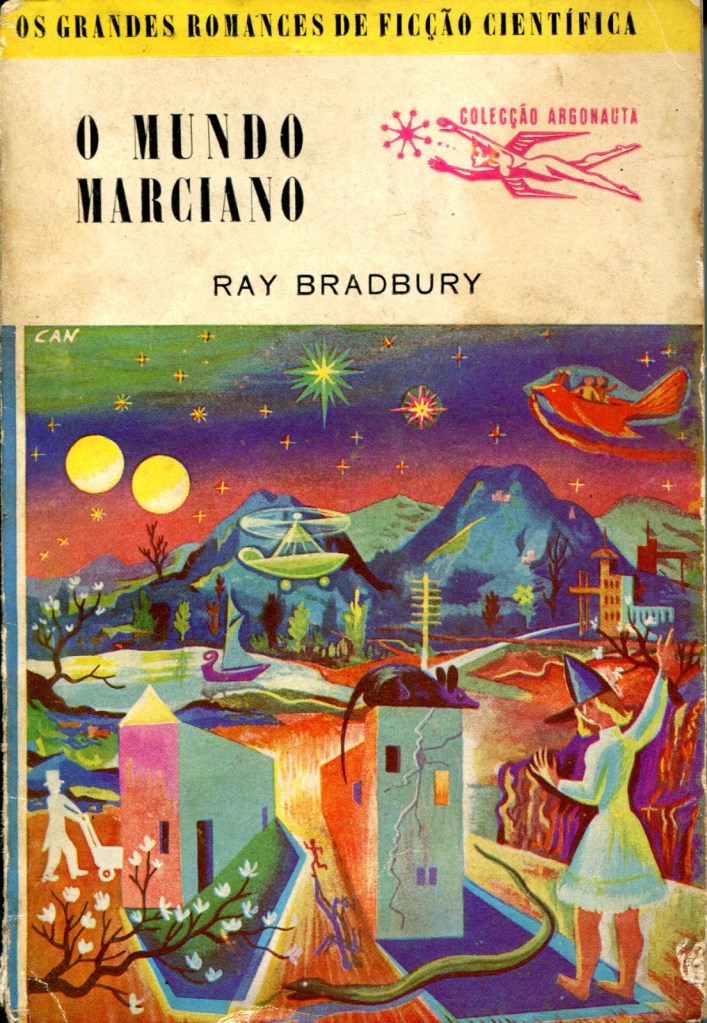
The Green Man of Greypec — reading the future of the past

And in my reading myself back through my own origins in science fiction, we now come to number two in the Coleccao Argonauta that formed my childhood reading: The Green Man of Greypec.

Before I go any further let me point out that the next book up is City At World’s End by Edmond Hamilton. Tuesday or Wednesday next week, depending on the state of revision, snot, etc.

So, now we’re to the Green Man. When i revised it in 2016 I was profoundly upset by a bit in the book about eugenics and socialism. This time it didn’t bother me at all. See, before I read (re-read, though i only had the haziest memory) it I read the author’s biography and found he was an enormous fan of H. G. Wells, so of course he would pervaded by early 20th century socialism.

To get past the intro: the book was first serialized in 1936 (and bears the marks of it) but revised in 1950 for book publication. I’d say still being in print almost 100 years later, and people (not just me) still talking about it is a good run.

The book was written by a British police clerk. Festus Pragnell, the author, actually wrong under his father’s name, as I guess he thought Festurs was more distinctive than Frank William Pragnell. And he’d be right. Though weirdly, he went by it in real life also.

From this site:

Working name of Frank William Pragnell (1905-1977), UK police constable, clerk and author who was known all his life by his father’s first name, Festus (even in the 1911 census, his wedding banns and his own will: “Frank William, known as Festus”).

So, you know, science fiction writers have always been weird, one way or another.

Anyway, the fact that he was from the UK is germane for the very weird things he does to the character, who is of course — for coolness (I thought it was mandatory when I was young, to be fair) an American — and they’re the sort of weird things someone from Britain who didn’t know a heck of a lot about America would do. For instance, his character’s name is Learoy Spofforth and he goes by Lea. This doesn’t seem to be an attempt to mock the character, just what he thought was a good, convincing American name.

Now, I will grant you all I know about the America of the thirties is from reading biographies, but even so that struck me as a fairly bizarre name to give anyone. Add to it that this man’s profession, and the reason he’s “well known in America” is that he’s a “lawn tennis champion” and I’ll give you a minute to roll on the floor laughing or at least scratch your head and wonder how big tennis was in the America in the thirties. And again, I’m right there, scratching my head along with you, but in all the books written in America at that time, I hear them talking about baseball, occasionally football, but mostly baseball. I don’t know if there was enough of a golf fandom. But I can honestly say never have I heard of tennis as a sport that fascinated people or made someone nation-famous. Eh. Perhaps he just assigned this guy the first sport he could think of.

Anyway, the book opens with a bang. Poor Lea is waiting trial for having bashed his brother, Charles’, head in.

He tells us he’s 28 but lived 80 years. And then he talks about his brother being a scientist and discovering worlds in atoms. From there we go to his brother saying he’s found life in one of these worlds, human like life. And his machine should be able to send a mind into the mind of one of the humans in the atom.

After various alarums and excursions poor Lea finds himself in the head of a green man. Now if you’re thinking green men after a lifetime of the culture talking of little green men. This green man is not little but a sort of massive green primitive ape, living in a green primitive culture that has caves lit by electricity speaking either of a greater culture or a decayed one.

The green ape, Kastrove, is in the middle of a raid to capture a woman who has landed in a flying machine, and who has yellow hair and looks fairly elfin. The minute Kastrove, or Lea perhaps, sees her he’s taken with a great desire to have her.

He does in fact capture her, which leads to various things including fights in his tribe, but he takes her for a mate and keeps her.

Now, since we know we’re going to be going through sixty two years, I hope you don’t expect a carefully introspective romantic relationship. We are in fact told that she comes to love him because he’s so kind to her, and they have a baby who looks — he tells us — as a normal human.

She comes from an elfin culture that lives in the ruins of an ancient, decayed civilization and no longer knows how to use any of it.

When a supervisor/agent of the larbies — the overlords over both apes and her people — comes to greypec, Kastrove’s village, for reasons of primitive politics, he takes Kastrove and Issa his mate with them to be trained as soldiers. They also take Kastrove’s and Issa’s son to train as a village leader as he grows. That’s the last we hear of them.

Throughout there are mentions of Gorlems, the enemy.

The training of Kastrove makes it obvious most of what’s happening is the Larbies mind controlling the apes and the elfin creature by hypnosis and mind control.

After several adventures, Kastrove helps a Gorlem prisoner (they’re sort of a wizened humanoid) escape.a The escapee dies in the escape, but Kastrove ends up working with the Gorlems to help them win the war against the Larbies.

The Larbies btw are intelligent molluscs and utterly ruthless.

Kastrove’s mind — Lea’s — retains all the science subconsciously, and when the Gorlems extract it, it allows them to win.

Anyway, Kastrove gets Issa back and they have a passel of kids, and then he gets back to his own time and world. I can’t say that is a spoiler, since of course the book starts with him back in Britain.

I won’t tell you the resolution which at any rate I really didn’t like as it falls under “strange psychobabble nonsense.”

So, it’s less outdated than the Adrift in the Stratosphere book. I wonder if I did read it as a kid, because I remember thinking of the atoms having worlds, and of a universe being born every time I struck a match, then dying when I blew it out. But of course there have been other book with those ideas. Curiously, his view of the atom is more current than what I was taught in middle school, but never mind that.

Most of the science fiction in the book is… well, space opera intensive. The guns fire both pellets and green gas; the cars are interesting and of different kinds; there are ruins of a greater civilization; the Grolems are what you’d expect of an “advanced civilization” as seen in the 30s.

There is the bit about how their civilization got in this trouble, because they didn’t have socialism and racial hygiene, but those were just the ideas in the air at that time.

One of the more curious ideas I found that strikes me as a distortion of the concept of evolution was his belief that given time all animals in a world would evolve sentience and intelligence to some degree.

Another point that amused me is that I might have found the “Women don’t do anything” book that allt he feminists go on about. And even here it’s not true. Yes, Issa serves as a prize of sorts in a bunch of sections of the book, but she also gets trained as and serves as a soldier (even if indoctrinated) and she chooses Kastrove, in the most unlikely romance.

The advice given about women is so quaint it’s almost hilarious. We get a bit of funny early 20th century advice from Kastrove’s father who says you shouldn’t count on getting good at relationships until your fourth. And then the end punch is kind of highly complimentary and silly about how women work.

Meanwhile really I do understand why this would upset feminists nowadays. Because most of the action is in a man’s world, so to put it, with women as accessories of sorts. But part of this reflected the world the author lived in. I figure police work at that time was mostly a male thing, with some women but not enough to impinge too much on the consciousness. Even married men lived in more separate spheres from women than men today. This is something we underestimate now, how sex differentiated society was back then.

And they were writing for men, mostly. Not that women didn’t read, but then (as frankly now, except for some side sub-genres) they didn’t read much science fiction. So to an extent it was written and read by men who lived in very male spheres.

They had women in as prizes, as unattainable goddesses, and when they were in they were often brave and valorous. But they were peripheral to the main action.

However to not see the difference between that and the current fiction, which is almost obsessively female centered and keep harping for more and more is sort of like winning lottery and keeping whining that you need more money for a cup of coffee.

The story itself is a rollicking adventure of the sort you might find in any pulp magazine, not deep thought and not pretty words, but entertaining nonetheless. And again, he must have done something right as there were at least four foreign language translations that are easily found, and he’s still read today.

To the extent it is unsatisfying is that it reads, to modern eyes, almost like an outline. There is no exploration of anything, including the setting (actually characters are relatively well fleshed compared to the settings) or the various social pressures. I mean, things are there, but they come at you at such breakneck speed that things kind of fall off, and often you find out what is happening as you’re in the middle of it, and not in a good way. Like you find out they were starving not while they’re looking for food, but after they find it.

I think this is more than anything the result of movies and TV being all prevalent. At the time it was enough — more than enough — to have a movie in your head and for it to move fast and be really interesting.

Nowadays books are a different experience from movies, and we expect more emotion, even if the emotion is suspense and fear in action sequences.

Yet and again, though it might not set the twenty first century apart, Festus Pregnell’s Green Man of Greypec is an eminently enjoyable, or enjoyable enough book. I still read it without getting a need to throw it across the room, and it is still being talked about.

May I be so lucky.

April Fools

I never much understood April Fools (which existed in Portugal too) in the sense of actually fooling someone.

Look, it’s not even that a lot of them are strictly aimed at a group where it’s a great joke, where everyone else is left wondering if it’s true or if they’re stupid; it’s that some of these are so accepted that they get cited, and people then think that it’s the absolute truth and base other stuff on it, and it pollutes the entire system.

My favorite April first joke is one that you consciously know isn’t true, or one that de-hoaxes itself at the end.

Take for instance the theory of phantom time (Actually this youtube channel does a lot of “ooh, big scary thing” that turns out to not be real, as they explain in the end.): According to a German historian, the year is actually 1724. He says our calendar is a lie and a big chunk of the Middle Ages never happened.

Then there’s completely out there stuff that frankly has mostly turned into a conspiracy to sell t-shirts, like the idea that Birds aren’t real.

My absolute favorite right now is the Tartarian conspiracy.

Frankly, I think there needs to be a lot more you tube videos talking about this extensive empire from the nineteenth century that everyone has forgotten, the memory of it washed away presumably in mud floods.

Also, in light of the recent mumbles about stuff under the pyramids, I think everyone should watch this video.

Of course, we’re finding out a lot of the crazier conspiracies like the idea the US government was funding ESP research…. just happen to be the pure truth.

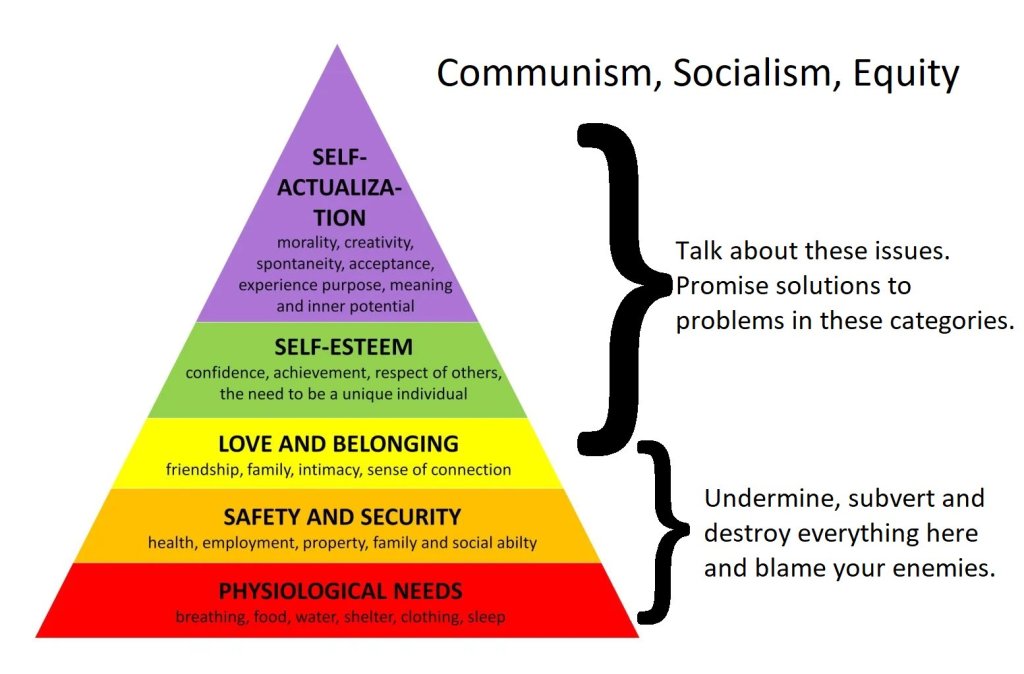
Of course, none of these compare to the idea that communism has never been tried and that we should break a few million more eggs, in case the utopian omelet finally appears!

Book Promo And Vignettes By Luke, Mary Catelli and ‘Nother Mike

Book Promo

If you wish to send us books for next week’s promo, please email to bookpimping at outlook dot com. If you feel a need to re-promo the same book do so no more than once every six months (unless you’re me or my relative. Deal.) One book per author per week. Amazon links only. Oh, yeah, by clicking through and buying (anything, actually) through one of the links below, you will at no cost to you be giving a portion of your purchase to support ATH through our associates number. A COMMISSION IS EARNED FROM EACH PURCHASE.*Note that I haven’t read most of these books (my reading is eclectic and “craving led”,) and apply the usual cautions to buying. I reserve the right not to run any submission, if cover, blurb or anything else made me decide not to, at my sole discretion.SAH

FROM JAMES YOUNG: On Seas So Crimson: Usurper’s War Collection No. 1 (The Usurper’s War: An Alternative World War II)

“[A]uthor James Young shows himself to be a master of that science fiction sub-genre called ‘Alternate History’.”–Midwest Book Review

Adolf Hitler is dead. Great Britain lies prostrate, subdued under a storm of poison gas and incendiaries that have turned the great city of London into a blazing abattoir. The Royal Family’s whereabouts are unknown, while Heinrich Himmler, new Fuhrer of the victorious Reich, prepares to dictate terms to Lord Halifax’s government.

For RAF Squadron Leader Adam Haynes, London’s destruction is the nightmare outcome of years spent fighting the specter of Fascism. With his own combatant status uncertain, Adam must rush to save as many of his Polish-speaking pilots as he can.

For Lieutenant (j.g.) Eric Cobb, Great Britain’s subjugation has immediate and deadly effects. After his flight leader is murdered by Kriegsmarine anti-aircraft fire, Eric must decide between remaining neutral or helping his British rescuers. His choices will dramatically alter the course of history.

In the Pacific, Rear Admiral Tamon Yamaguchi witnesses firsthand the myriad opportunities that Germany’s victory has provided for Japan. Defeated in China by Soviet forces after the Imperial Army foolishly attached northwards in December 1941, Japan has not only changed governments to a Navy dominated cabinet, but also changed strategies. It is to the south, in the oil rich Dutch East Indies, that Nippon will find her destiny. Yamaguchi, as the new head of the Kido Butai, must develop a plan that prevents American interference while simultaneously husbanding the Imperial Japanese Navy’s strength for a single, great Decisive Battle.

BY MANLY WADE WELLMAN, WITH AN INTRODUCTION BY D. JASON FLEMING: Sojarr of Titan (Annotated): The Classic Pulp Planetary Romance

When the spaceship crashed on Saturn’s largest moon, the pilot adventurer died. But his infant son did not. Raising himself in the wilds of an alien world, Sojarr survives, and thrives, discovering a strange tribe of gypsy humans, and battling roving bands of monstrous natives…

Until the day another ship falls from the sky and threatens to throw two worlds into chaos!

  • This iktaPOP Media edition contains a new introduction giving the novel genre and historical context.

FROM HOLLY CHISM: Bar Tabs: A Modern Gods Story

Brief back stories on the characters from the Modern Gods universe.

FROM KAREN MYERS: Bound into the Blood – A Virginian in Elfland (The Hounds of Annwn Book 4)

DISTURBING THE FAMILY SECRETS COULD BRING RUIN TO EVERYTHING HE’S WORKED SO HARD TO BUILD.

George Talbot Traherne, the human huntsman for the Wild Hunt, is preparing for the birth of his child by exploring the family papers about his parents and their deaths. When his improved relationship with his patron, the antlered god Cernunnos, is jeopardized by an unexpected opposition, he finds he must choose between loyalty to family and loyalty to a god.

He discovers he doesn’t know either of them as well as he thought he did. His search for answers takes him to the human world with unsuitable companions.

How will he keep a rock-wight safe from detection, or even teach her the rules of the road? And what will he awaken in the process, bringing disaster back to his family on his own doorstep? What if his loyalty is misplaced? What will be the price of his mistakes?

FROM RACONTEUR PRESS WITH STORIES BY CHRISTOPHER R. DINOTE AND JOSH HILL: Wyrd Warfare (Raconteur Press Anthologies Book 49)

“I was born in the late 1970s, which means I grew up in a family that held living memories of World War II, the Korean War, and the Vietnam War. My generation was exposed to a plethora of culture and entertainment much earlier than we probably should have been. War filled many of those books, comics, games, songs, and films. The historical, the fantastical, what was, might have been, never happened, should have happened, and thanks be to God didn’t happen. World War III was always imminent. War Games and Missile Command reminded us there was no way to win. We expected the end to come like The Day After or The Terminator. Maybe it already happened, maybe we were already dead and just didn’t realize it.
The stories in this anthology draw from a multitude of inspirations: real-life deployments, places, things, people. Monsters. Events. Incidents. Sacrifices. Heroism. Horror.” From the Introduction by Chris DiNote)

FROM PAM UPHOFF: Origin Stories (Chronicles of the Fall Book 11)

Six stories in the Troystvennyy Soyuz on the run up to and during the Fall of the Alliance.

Young people with problems with the brutal society, and all too often their own families. Young men and women reaching for a better future, as everything changes around them.

FROM ANNA FERREIRA: The Flight of Miss Stanhope: A Short and Sweet Regency Romance

Marianne Stanhope is in trouble. Her family is urging her to accept the attentions of a most odious suitor, so she turns to a gentleman of her acquaintance for aid. But Mr. Firth has his own reasons for assisting Miss Stanhope, and it falls to her childhood friend Mr. Killingham to convince her that she’s made a dreadful mistake.

FROM SARAH A. HOYT: Draw One In The Dark (The Shifter Series Book 1)

Deep in the Colorado Rockies, Kyrie Smith has mastered the art of keeping secrets: like how she turns into a panther at will, or how she’s trying to solve a string of shifter murders while serving up the daily special. But she’s not the only one with something to hide.

Take her coworker Tom Ormson—your typical guy next door, if your typical guy could transform into a dragon and might have accidentally killed someone. Then there’s the lion-shifting cop investigating the murders, a guilt-ridden father, and a trio of dragon shifters hunting for something called the Pearl of Heaven.

As if navigating a world of supernatural intrigue wasn’t complicated enough, Tom’s falling for Kyrie, discovering powers that shouldn’t exist, and learning that trust is a two-way street paved with decades of secrets. In Goldport, Colorado, where the coffee’s always hot and the shifters are always watching, solving a murder might be the easiest part of Kyrie’s day.

Welcome to small-town life where everyone has something to hide—and some of those secrets have scales, claws, and a tendency to roar.

FROM LEIGH KIMMEL: Red Star, Yellow Sign

Whom the gods would destroy, they first drive mad.

It’s 1934, and the assassination of Sergei Kirov, Leningrad’s Communist Party chief, has rocked the Soviet Union. When an up and coming young Party official is assigned to investigate, it looks like an open and shut case.

The further Nikolai Yezhov looks into the case, the stranger things become. Mysterious entities lie beneath the swamps upon which Leningrad was founded. Because he has stumbled upon these secrets older than humanity itself, Yezhov must be eliminated. But first he must be led to commit acts that will ensure that history will forever remember him as a vicious criminal.

Vignettes by Luke, Mary Catelli and ‘Nother Mike.

So what’s a vignette? You might know them as flash fiction, or even just sketches. We will provide a prompt each Sunday that you can use directly (including it in your work) or just as an inspiration. You, in turn, will write about 50 words (yes, we are going for short shorts! Not even a Drabble 100 words, just half that!). Then post it! For an additional challenge, you can aim to make it exactly 50 words, if you like.

We recommend that if you have an original vignette, you post that as a new reply. If you are commenting on someone’s vignette, then post that as a reply to the vignette. Comments — this is writing practice, so comments should be aimed at helping someone be a better writer, not at crushing them. And since these are likely to be drafts, don’t jump up and down too hard on typos and grammar.

If you have questions, feel free to ask.

Your writing prompt this week is: equable

Promo Post Tomorrow

Sorry. We have people over today and tomorrow and the day ran away from me. I meant to do this very early morning, but my body decided this was a good time to be sick as a dog.

So–

Promo post tomorrow. I’ll go to bed early (we have people leaving early, anyway) and hopefully will be more functional.

Right, Left, Right — a Blast From The Past From October 2015.

*I started to write a post in response to a “European right” blogger who says that Trump’s attitude is making it hard on the European right. But it devolved into yelling a lot of swear words, so.
1- I know it’s necessary to join the “orange man bad” wave, particularly in Europe, or you’ll get attacked. I’m not impressed. We’re not going to elect another George W. just to please you.

2- Trump is not showing Europe half the hostility Europe has SHOWN US OVERTLY for the last 100 years.

3- Dear Europeans, we don’t think paying your bills and allowing you to suck sweet, sweet socialist tit while dissing us makes us strong and powerful. We don’t LIKE you there in our basement. MOVE OUT. Get a job. Stop lecturing us.

4- You know what the European right could do? Get off the ground, close their legs, shoot the bastages in the face. If you stop responding to the left’s pressure and insults by lying down and giving them everything they want to stop from being “hurt” it will make a much bigger difference than anything any American does.

5 – The European right is slightly more tolerable, because they’re not (as) internationalist. But they’re still natural enemies of the AMERICAN Right. Hence, this blast from the past. Because we’re not the same.

6- Least it be thought I hate Europe. I don’t hate it. I don’t love it. I love some Europeans, but Europe collectively has a tendency to run off with the occasional Bull(shit.) Okay, so do we. Fair is fair. But when their bullshit consists of blaming all their problems on us, I’m going to get seriously salty.)

So, instead of the post I started which I think was very funny, but also couldn’t be read by anyone under the age of 45 due to profanity, I’m repeating the post below – SAH*

Someone asked me to write this a while back, and I’d completely spaced it until he reminded me on Facebook.

But sometimes, particularly when dealing with multinational twitter mobs, I feel like we’re speaking different languages and terms like “right” and “left” wing get wildly misinterpreted, leading to a certain twit(teriac) for instance saying I hated everyone to the left of Jeb Bush (Hate, no.  Despise their politics, yes.  And I include Jeb Bush and quite a few people nominally to the right of him in that.) while others claimed I was a big Jeb Bush fan because they think that’s what “right wing” means and they’ve self-obviously decided I’m right wing since I hate Marxists.

First, right-left have almost no meaning to where I stand.  I define myself in the authoritarian/non authoritarian axis, which is completely separate, and where I’m just a little shy of the “no government nutters” (I can call them that because, you know, they differ far less from me than the “government in your face” weasels, so I can say they’re totally crazy.)  Round about where the founding fathers were.  Government is a good servant but a bad master, and all that.

Of course, in the American spectrum, uninfected by the European Spectrum, that is indeed what should be called “right wing.”

The problem of course is that the spectrum is NOT uninfected, since we’re in an era of global communications and the meaning of Right Wing in Europe has started to seep in over here, both in leftists minds and in the minds of those who are self-defining as the right.

The other problem is that technically, if you go by the original meaning, the sides should be flipped.

Clear as mud?

Don’t worry, I can confuse it more.

Let’s start with the ever-reliable wikipedia: In France, where the terms originated, the Left has been called “the party of movement” and the Right “the party of order.”[1][2][3][4] The intermediate stance is called centrism and a person with such a position is a moderate.

Let’s first correct the obvious problem.  If you’re precisely in the center, the position is called “dunderhead” — and this applies to anything, not just politics. That out of the way, if center is defined by “not following an exact party line” I think most of us would be.

OTOH look at that definition again.  “The party of movement” and “the Party of order.”

First of all impossible, since life is movement.  This is where I think the left gets their bright idea reality is leftist, except they’re missing the point of where these definitions originated and what “movement” and “order” really mean.

This was of course in revolutionary France.  Movement had a very specific meaning — mostly towards Madame Guillotine, obviously — in terms of you wanted to change everything, the hours of the day and the names of the days of the week included.  Order, meanwhile was the “not so fast, this structure works.”

So, what that actually means is that left is the side of “let’s change everything” and the right the side of “let’s keep everything as it is.”

If you apply that to the current spectrum in the US (and most of the west) where socialist-like-structures and “leftist” ideas have permeated the political lives of the citizens for far longer than anyone reading this has been alive, the spectrum does a tilt-whirl and suddenly we who are don’t tread on me libertarians and who think the cause of liberty could be justly served by taking everyone from office and putting them in jail become left wingers, in the mold of the ones who shouted “Aristo, aristo, to the lamppost.”  (And since I’ve often felt like shouting that, I empathize.)

BUT that is not really a good picture.  We know how the French revolution ended.  Having dived down that rabbit hole in order to write Through Fire, it became obvious that the French Revolution, the “leftist” movement of our time par excellence, the grandmother of the Russian Revolution and of every other movement that has fed the graveyards of the 20th century was very much a STATIST revolution.  If you ask yourself what the difference between the American and the French revolution was, it would be that in the American revolution the people were set free to pursue happiness and equality before the law, while in the French revolution, both happiness and absolute equality were ENFORCED.  (If you think happiness wasn’t enforced, read some of the trials of people who declared themselves less than ecstatic in post revolutionary times.)

So, left would be best defined as “movement towards an imaginary utopia in which the government grants all sorts of happiness, equality and other boons.”

And the right?

Ah, there we hit on the crux of the problem.  While we’re fairly sure what the left is (and btw, the definition above is why they believe they are the party of the future and they will inevitably win, because in their eschatology any “progress” ends one way, with the government as a sort of smiling goddling dispensing benes to the happy people of Brutopia.) “right” can mean many things.

First let’s dispense with the left-enforced definition of right which ends in Hitler.  To quote a public figure “that’s just retarded, sir.”  Just because Hitler and Stalin had a big tiff and pulled each other’s hair, it doesn’t mean they weren’t both leftist, socialist bastards.  They were just arguing whether socialism — that utopian final stage of the revolution where the state looks after everyone like a mother or a father, depending on your language of origin — should be national or international.  And in this case “international” meant “Russian” — or at least it did in the seventies, and I have no reason to think it changed — while national meant “of the genetically related people.”

(For instance when Bernie Sanders announces he’s a socialist but a nationalist then says he’s not a communist, I believe him.  The appropriate name for his announced ideology is Fascist.)

That fascination of the fascists with nationalism, btw, explains why the left can’t seem to accept national love/pride (i.e. they’re not NATIONAL socialists) and why so much of Europe thinks patriotism is a precursor to war.  Europeans are taught that in school too.  I was.

Okay, so that’s disposed of, now … if the right isn’t National Socialism, what is the right?

If I had to hazard a definition that would fit both Europe and the US I’d say the “right wing” meant “a clinging to the essence of what the nation means and to the nation’s original idea”, as it were.

In Europe, of necessity, right wing means a lot of “our people, our land” and really in its ultimate expression “our king.”  Right wing parties in Europe are often associated with keeping or reviving ancient traditions, with the country’s state-religion and with the “way things have always been done.”  There will almost always be a reflexive xenophobia, for instance, which is not necessarily a bad thing.  It is not racist to say “our land, our customs.  You want to live here, you conform to us.”  (The left’s reflexive oikophobia tends to chew the ground out from what people know they can count on, from language in everyday interactions to things like protection of children and women. It is time the European right learns to say “No, not all cultures are alike.”) If you’re thinking that this is the same as us saying “if you want to live here, speak English and conform to our laws”… not quite.  In Europe an immigrant will never be “of the land, the people, the traditions.”  You could be Yoless from Pratchett’s Johnny Maxwell, and learn Morris dance, and you’d still not be “quite British.”  Assimilation takes generations, and sometimes not even that.  Other things come with that definition as freight.  The right will still prefer to keep women and men in traditional roles, and they’re often shocked half to death by differing sexual personas.

Now if that description sounds familiar, it is because it is what the left assumes the right here is.  And some right wing people, reflexively, will embrace it and claim it.  Just because the left hates it.

But by and large, as someone who has cruised right of center blogs in this country for a very long time, no.  That’s not what right means in the US.

This is why when the leftists (who true to their origins only understand themselves as in opposition to the European right) come cruising in, they’re always shocked when we don’t rise to the bait of “racist, sexist, homophobic.”  They’re always terribly confused a lot of people here in fact are of “non conforming religions” (or none at all) and non-conforming sexual habits, and varying shades of tan.  And the only explanation they can find is “self-hating.”

That is because the left (worldwide, really) since the collapse of their model, the Soviet Union, has gone a little loony and fallen down a time-space-funnel, in which they’re fighting “right wing” in Europe (and probably circa the eighteen hundreds, but never mind that) not in the States.

The right in the US is the side that clings to the origins and the founding.  This is the side that believes ultimately sovereignty rests in the individual and the government should bow and doff its hat to us. We’re the side that believes that no matter what color, size, sex or whomever you decide to sleep with, you’re still an individual, entitled to equal protection under the law.

We believe in life, liberty and the pursuit of happiness.

Which means in many ways we’re the horror of the European right.  If it weren’t for the fact that both “rights” are fighting the much greater evil of the Marxist theology unleashed upon the world (and yes, it is more evil than even the European right) we’d be going at it like two equal weight boxers in a ring.

My dad, who is Europe-right (mom weirdly is MOSTLY American-right.  Not fully, because she still thinks morality, etc. should be enforced, but I think that’s a generational thing.  And no, I don’t know how she ended up don’t-tread-on-me in Europe.  She didn’t even read Heinlein) for instance believes it is not only the government’s right but the government’s duty to look after things like health care.  Oh, and if the government periodically shoots the wrong guy, well, that’s the cost of keeping other people safe.  He’s not a bad man, understand — but he’s a man of his time and place.  He draws the line at communism, not just because it’s evil, but because it’s a stranger to his country and enforced from outside.

We’ve gone the full rounds (one of the few times we’ve yelled at each other) because he can’t understand that I don’t view the government as some thing that should “look after” me, but as something that should do the minimum possible to ensure I have the space to look after myself, and anything more than that is a violation of my rights and a thwarting of my duties as a free human being.

And that’s the difference between our right and their right.  I’ve found it easier and far more conducive to familial harmony to pretend there is no difference, and to nod along with their serene belief that “right wing” in America means the same it does there.

Since our left doesn’t see the dividing chasm, they often refer to the “right” as monolithic and what they get in their press (which is to the left of ours) is convenient in obscuring the differences.

No reason to shock mom and dad by letting them know their daughter has become a USAian radical, after all.

BUT the actual meaning is radically different (quite literally RADICALLY different.  We are the “radicals” who turned the world upside down by believing authority flows from the individual up, not from the state down.)  As I hope it shows above.  Though being a word more often defined by opponents and people with the “feels” it has the imprecise quality of a mirage rising from asphalt on a hot day.

One caveat is that the American right wing might never make any sense in Europe.  Culture is something that changes very slowly and often doubles back.  So I restrain my evangelizing impulses there.  They might come to be like us, but it won’t be in my life time.

And the right in Europe only makes upside-down sense in America.  It would be impossible to create a right-wing-in-European-terms country out of the US.  Our multi-cultural, multi-religious and multi-racial country couldn’t turn into an European traditional country.  Not for a few hundred years at least.  Which is why all movies that do that are profoundly unconvincing.  And why it’s so weird that the left doesn’t see the difference between the two rights.

It is also, unfortunately, why the sf books from the fifties or so, particularly the ones by Heinlein, which show the whole world unified under the American system are such a pipe dream.

It might have seemed logical and even attainable after WWII but as he himself seems to have realized in Tramp Royale, the real world is too diverse and culture and cultural differences too real for that utopia ever to have been possible.

America is a place in the heart*, and as such it can only be won one heart at a time.

*Note for idiots: not denying we also have a territory that should be defended. But being American necessitates believing in the constitution as its ultimate expression.

Gone Ghibly

So, I should write a post, but I’m feeling downright peculiar. I think I’m coming down with whatever is going around. It’s that or the thyroid meds suddenly stopped working (Honestly, could be either.)

Normally I’d spend till 2 pm writing a post, but we have guests coming this weekend and the house must be useable. Okay, no way the front room is getting done. That’s where I’m unpacking the library. However it is a goal not to put everything that doesn’t fit the rest of the house in there.

Honestly, just dusting, running the vaccuum and sorting laundry is going to be a chore.

So:

1-why is everyone on line suddenly making pictures in the style of Studio Ghibly?

2-Is it a bastardization of the studio’s art?

3- Why is everyone putting it on memes?

4- Can it be taken too far?

5 – OMG Sarah, why?

1- Well, so far this is our best guess:

2- Yes. Absolutely. And? Look at it this way, Studio Ghibli is getting more publicity than it’s had in…. well. than it’s ever had. If it’s somewhat smart, it can make money from this.

3- This is my best guess:

4- oh, Lord, yes.

5- Did you see the thing up top? Right now I’m coming down with something bad. I thought I was just very depressed (had some bad and utterly unexpected health news for someone in birth family. No, not parents. They’re in their nineties bad news is not unexpected.) Then yesterday I found myself just watching endless stupid you tube videos about lost civilizations and catastrophes.

I’ll grant you it’s not so bad as when I spent a 2 months last winter watching videos of someone walking through cemeteries and talking about old graves. But then again, I’m hopefully not as ill as I was back then. I hope. Since that almost put me in the hospital and whacked my thyroid. (Which would explain why my hair is falling out again.)

Instead it was an endless array of “why the CIA is suppressing proof of Atlantis.” (I mean for all I know the CIA thinks it is. I mean, they believed that the Soviet Union was unbeatable!)

But once I realized I was doing that, I decided to Ghibli myself. Which, yes, I do realize is restricted in five states and illegal in New Jersey. But there it is…

The results are …. weird. I mean, it strangely does better at this than at doing a pen and ink sketch of me. It only Ghiblis me alone, though. If I try to use one in which I’m with Dan, it either turns him into a bunny or a giant Pikachu. Why? I DON’T KNOW. Studio Ghibli have something against mathematician?

Anyway, here’s what I got other than the picture above:

It looks more like M. C. A. Hogarth!
This one doesn’t look very far off me at about 26 or so….

The last might be my favorite. I’m fighting an urge to replace my icon with it on all social media, honestly.

Okay. I’m going to quick-clean the house then take a long nap. Maybe when I wake I’ll feel better.

See you after the Ghiblificallypse.