There’s No Such Thing as a Clean War by Amanda S. Green
If you follow the news, you know one of the trending topics today is word our government might be close to coming to an agreement with the Taliban. As I noted over at Victory Girls earlier this morning, this should be something to celebrate. In this case, it’s not. How can it be when you tie bringing home our troops from what has turned into a 19-year mission where their hands have been tied and victory has not been an achievable option?
Our politicians are to blame but so is the media and certain segments of the general population. Or, as Thomas Sowell wrote in his essay Pacifism and War (Controversial Essays, pg 122)
Although most Americans seem to understand the gravity of the situation that terrorism has put us in—and the need for some serious military response, even if that means dangers to the lives of us all—there are still those who insist on posturing, while on the edge of a volcano. In the forefront are college students who demand a “peaceful” response to an act of war. But there are others who are old enough to know better, who are still repeating the pacifist platitudes of the 1930s that contributed so much to bringing on World War II.
We saw that attitude on full display in the Democratic debates the other night when Elizabeth Warren pledged to not use nuclear weapons in a “first strike”. According to her, there are diplomatic and economic solutions that are better, more effective means of settling a dispute. “[W]e should not be asking our military to take on jobs that do not have a military solution.”
While I agree we shouldn’t ask the military to take on “jobs” that don’t have a military solution, we also can’t tie their hands. That is especially true when you have an enemy determined to destroy our country and all it stands for.
Of course, that becomes increasingly more difficult when members of our own government want to destroy the country and the foundations upon which it’s built.
This isn’t a new problem. Far from it, in fact, as Professor Sowell points out when he writes about a former ambassador under Jimmy Carter after the 9/11 attacks. According to this paragon of diplomatic virtue, it was our responsibility to look into the “root causes” behind the attacks. You see, there are many in the Middle East who have a feeling of “alienation” and “sense of grievance” against us. (Essays, pg 122)
In other words, it was all our fault. Forgive and forget about what was done to us, to non-military targets and civilians. Our capitalist ways were the reason why terrorists targeted our country that awful day.
But, following Professor Sowell’s example, let’s go back further. We’ll have to cross the Atlantic but he gives us a shining example of just how bad this search for the root causes and search for non-military solutions can blow up in our faces. In this particular example, we have British Prime Minister Neville Chamberlain.
Now, I know our public schools aren’t giving our children the education they need, so they probably have no clue who Chamberlain was, much less his role in the events leading up to World War II. They don’t know he spoke a good game but that it was just a game in the end. One where the enemy didn’t play by the same rules he did.
“It has always seemed to me that in dealing with foreign countries we do not give ourselves a chance of success unless we try to understand their mentality, which is not always the same as our own, and it really is astonishing to contemplate how the identically same facts are regarded from two different angles.” (Essays, pg 123)
It all sounds good, doesn’t it? And, in many ways, he was right. We do need to understand the motivations of those who would act against us. It helps anticipate what their next move might be. However, it is what we do with that understanding that’s important. If we don’t use it to protect our nation and our allies, we have failed. Good intentions matter not when people are injured or killed because we didn’t act.
Chamberlain, as Sowell points out, approached negotiating with Hitler in much the same manner someone would negotiate a business contract. He wanted “remove the causes of strife or war.” He also wanted “a general settlement of the grievances of the world without war.” (Essays, pg 123) The problem was Hitler didn’t want the same thing. He used those negotiations to delay Britain’s entry into the war. He had no intention of living up to his part of any agreement that saw anything but the complete victory of Nazi Germany.
For 40 years, we’ve seen the same scenario play out in the Middle East. The Taliban, al-Qaeda and ISIS have no desire to play nice with the United States and its allies. Not in the long term. The Taliban will say what is needed to get our troops out of Afghanistan. Then it will return to business as usual, but on a grander scale. We have to ask ourselves if we are willing to pay that price.
Terrorism is alive and well in the Middle East. We would be fools to think it is contained there. We have first-hand experience with it here on our own shores. Giving in to the Taliban for a promise they will enter into a ceasefire with the Kabul government is folly. Believing they will disavow al-Qaeda is believing in a pipe dream. All you have to do is look at their actions to know this diplomatic solution won’t work. The Taliban doesn’t recognize the Kabul government as anything more than an American puppet government. It continues daily attacks against Afghan forces, not to mention our own forces there.
But we are willing to continue the pull-out. Once again proving we are quick to respond but fail at the follow-through.
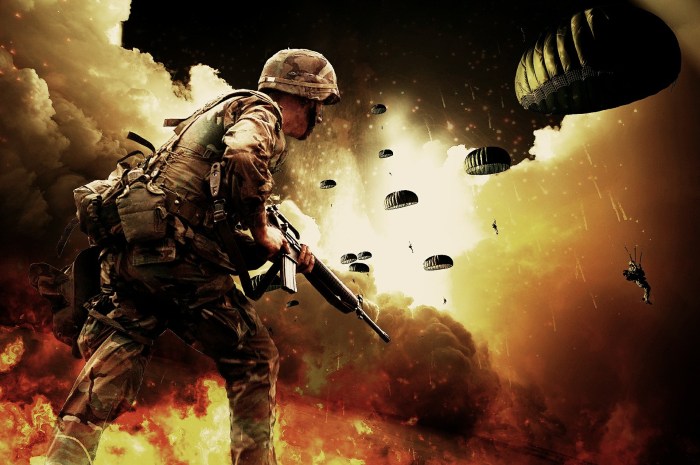
This isn’t a knock on our military. It would much prefer either being given free rein to go in, kick butt and defeat the enemy to becoming a peace keeping force with its hands tied. This is on the government, the media and the vocal minority who want us to fight only “clean wars” where no one is hurt and no property is damaged. They would prefer us being compliant little sheeples like those people in the original Star Trek where computers fought the war and simply listed who was killed in the latest “strike”. The war was nothing but a war in cyberspace with no explosions, no bullets flying and people willingly walking into the death chambers because that was how to fight war the “right” way.
Whether we were right or wrong to go into Afghanistan, or anywhere else in the Middle East, we’re there. We committed troops to fighting al-Qaeda and ISIS. We tasked these men and women to a mission our government wasn’t ready for them to actually win. That is an insult to them and a disservice to not only our allies but our nation.
Professor Sowell understands the mindset of our enemy better than many in government and certainly so many of those who tell us the war is our fault:
What Winston Churchill understood at the time, and Chamberlain did not, was that Hitler was driven by what Churchill called “currents of hatred so intense as to sear the souls of those who swim upon them.” That was also what drove the men who drove the planes into the World Trade Center. (Essays, pg.123)
These pacifists who, like Chamberlain and like those in the Carter Administration, have blood on their hands. They failed to take into account that we must do more than understand why someone hates us. They failed to understand that there is some hatred that runs so deep, is so pathological in its origins, that diplomatic solutions simply aren’t going to work. They will play the game, just as Hitler did, and laugh at us behind our backs. They will lose respect for our leaders and for our country (Does any of this sound familiar, Obama?) and all the while they will plot our downfall.
As dangerous as the possible agreement with the Taliban is, the thought of having a president who swears in front of the world that we won’t be the first to use nuclear weapons, even if it is to protect ourselves, scares the shit out of me. Hell, even Obama knew better than to change the policy that we reserve the right to use our nukes in a first strike if necessary. But good ole Lizzie, showing her true socialist roots and her true loyalties, apparently has no problem weakening the country in the eyes of its allies and its enemies.
“We don’t expand trust around the world by saying, ‘you know, we might be the first one to use a nuclear weapon,’” she said. “We have to have an announced policy that is one the entire world can live with.”
Riiight. Let’s build trust in our enemies, trust that they can take the first strike against us, making sure we aren’t able to respond. Way to go, Lizzie. You just announced to the world that you have no problem with the US being nuked.
Her comments are much too close to those of George Bernard Shaw, who advocated disarmament in the years leading up to World War II, when asked what the British should do if Hitler’s troops crossed the Channel. His response? “Welcome them as tourists” or words to that effect.
Or, to put it in more current terms, Warren wants to hang a big sign over our country, proclaiming us a “gun free zone”. Sure our enemies will respect our borders then. They’ll respect them exactly the same way shooters have respected gun free zones in schools or businesses that prohibit their employees from concealed carry.
We need to heed Professor Sowell’s words at the end of the essay:
What a shame our schools and colleges neglect history, which could save us from continuing to repeat the idiocies of the past, which are even more dangerous now in a nuclear age. (Essays, pg 124)
What a shame indeed, especially when what little history they are taught follows an agenda aimed at weakening the country and ignoring its fundamental foundations of freedom of the press, of speech, of the right to assemble, the right to bear arms, etc. Yes, recognize and understand the enemy but do not cave to him. Do not show a weak hand. As Senator Lindsey Graham said with regard to the Taliban, we need to keep our boot on their throats. It is the only way to win that particular war.
But first, we need to win the war at home. The war too many of our own politicians are waging against us. That is the one war we can’t afford to lose.