Book Promo And Vignettes By Luke, Mary Catelli and ‘Nother Mike

Book Promo

If you wish to send us books for next week’s promo, please email to bookpimping at outlook dot com. If you feel a need to re-promo the same book do so no more than once every six months (unless you’re me or my relative. Deal.) One book per author per week. Amazon links only. Oh, yeah, by clicking through and buying (anything, actually) through one of the links below, you will at no cost to you be giving a portion of your purchase to support ATH through our associates number. A COMMISSION IS EARNED FROM EACH PURCHASE.*Note that I haven’t read most of these books (my reading is eclectic and “craving led”,) and apply the usual cautions to buying. I reserve the right not to run any submission, if cover, blurb or anything else made me decide not to, at my sole discretion.SAH

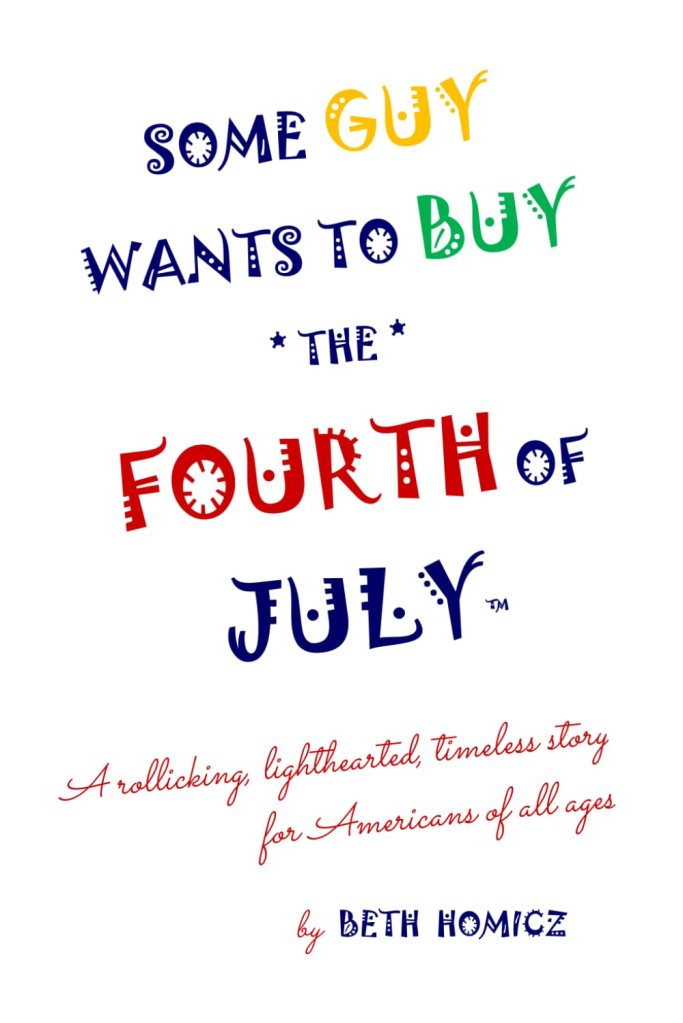
FROM BETH HOMICZ: Some Guy Wants to Buy the Fourth of July: A rollicking, lighthearted, timeless story for Americans of all ages
SOME THINGS SHOULD NEVER BE BOUGHT — OR SOLD.
When ten-year-old Allie Campion wins a finalist slot in the Friendly Family Freedom Franks national Fourth of July essay contest, she and her dad, Dan, depart their small Virginia town, embarking upon a zany whirlwind adventure in the nation’s capital. During their week in Washington, Allie and her spirited fellow finalists discover a conspiracy of crony corruption in high places, and – inspired in part by a curmudgeonly American bald eagle – gallantly set about revealing the truth and righting the wrongs, all while navigating betrayal, defamation, and their own growing desire for independence.

Intelligently and charmingly written by a former licensed D.C. tour guide, Some Guy Wants to Buy the Fourth of July™ offers readers a heartwarming, wholesome, laugh-out-loud tale of the indefatigable American spirit.

“A bedazzling book! A fun read for all freedom-lovers… Former D.C. tour guide, Beth Homicz, takes readers on a rousing ‘tour’ of the capital that includes political chicanery, vile villains, an eloquent eagle, and some very smart, determined children.”
— Claire Wolfe, author of Hardyville Tales and other books

Children’s / Middle Grades / Young Adult
American patriotic adventure fiction
Suitable for independent reading by ages 8 and up. Family-friendly, educational, enjoyable entertainment.
Highly recommended for helping young readers to build vocabulary and civic knowledge.

FROM AMANDA S. GREEN WRITING AS ELLIE FERGUSON: Witchstorm Rising (Eerie Side of the Tracks Book 6)

For generations, Mossy Creek was a haven where Others, people with “special” talents, and Normals lived in peacefully. Unknown to most, trouble brewed just under the surface and is now about to erupt. Outside forces are determined to destroy the town in a vengeful plot that goes back generations. The only thing that might save Mossy Creek and those living there are the town’s “wayward children”.

Over the last few years, Annie Caldwell, Meg Grissom, and Jax Powell have all returned, facing down their personal demons and rising to the challenge to protect their town and loved ones. Now the storm clouds once again gather. Trouble from the past returns. Trouble the town isn’t ready for. Trouble that is determined to destroy the Others and the town they love.

Shay Griffin is the last of the town’s “wayward children”. She is also the one with the best reason not to return. Will she be able to put the demons of her past behind her and help protect her family, friends, and the town she still loves despite everything that happened? Or will she turn her back on those who betrayed her?

FROM FRANK HOOD: Advance Guards

A young man and woman abandon a near-future Los Angeles that is so addicted to technology that human needs are met at the cost of everyone’s humanity. After 40 years in the wilderness that has been abandoned by the population, the family they raised returns to the city one by one to either revolutionize the dying city or be consumed by its seductive allure. Does all hope rest on their youngest son?


“Seth, everything I have, and everything I am, I now bequeath to you. Do you understand?”

“Yes Father,” Samuel managed to stammer despite his father’s mistaking him for his eldest brother, the brother he had never met, the brother that had died before any of his siblings were even born, the brother that had never had the chance to grow up.

“Take care of your mother. She’s your responsibility now.”

FROM JOHN BAILEY: The Siege of Proxima Colony (The Proxima Chronicles Book 2)

The Siege of Proxima Colony

The dream of a new world has become a desperate fight for survival.

On Proxima Centauri, humanity’s fragile foothold is shattered when mysterious machines descend from the skies, laying waste to the colony’s domes and towers. With weapons useless against the invaders, the settlers are driven underground, forced to endure starvation, fear, and the creeping sense that hope itself is slipping away.

As leaders falter and factions divide, ordinary colonists must find the courage to endure. From desperate raids to haunting discoveries, their struggle reveals that Proxima is more than a hostile frontier—it may be the key to humanity’s survival, or its final grave.

Blending the tension of classic survival tales with the wonder of golden-age science fiction, The Siege of Proxima Colony is a gripping chronicle of resilience, sacrifice, and the strange partnership between humankind and an alien world.

Perfect for readers who enjoy Kim Stanley Robinson, Arthur C. Clarke, or The Expanse, this is science fiction with a human heart—where the true frontier is not the stars, but the courage to endure.

FROM VICTOR TANGO KILO: The Baddies

He joined the enemy to take them down from the inside. It’s not going great.

The Imperium of Greater Scorpius is brutal, relentless, and bent on galactic conquest. Their massive interstellar army, the Scorpion Horde, uses overwhelming force, bureaucratic ruthlessness, and a complete disregard for ergonomics.

Ogden “OK” Kevitch meant to join the rebellion and fight Imperial tyranny. Really, he did. But due to some bad decisions and misunderstandings, he joined the Imperial Horde instead. Assigned to food service, he’s slinging tuber-tots in the mess hall of a Scorpion Horde battle cruiser.

Still a rebel at heart (but an engineer by nature), OK tries to sabotage the Horde from underneath a hairnet. Unfortunately, his efforts have a tendency to backfire—and accidentally make things better for the Horde and worse for the rebellion.

His latest scheme involves smuggling out the stolen brain of a dead rebel scientist. It’s risky, it’s stupid, and it just might be exactly what the Horde wants.

The Baddies is a darkly satirical military science fiction novel about failure, rebellion, and the quiet horror of being employee-of-the-month for the bad guys.

The Baddies and its companion novel, Hell Yeah! We’re the Baddies, explore the light side of the dark side—where one hapless food tech and one disgraced intelligence officer try to outmaneuver an empire built on cruelty, incompetence, and performance reviews. Together, they tell two distinct stories wrapped around the same set of events: a Rashomon-style exploration of different perspectives inside the Scorpion Imperium.

FROM MACKEY CHANDLER: A Sudden Departure
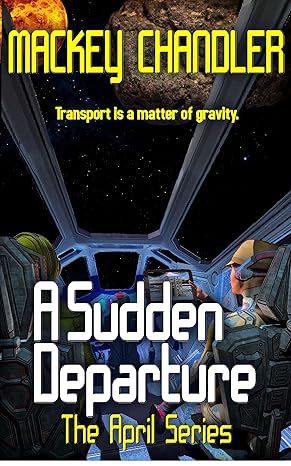
The Earth below is a house in disorder. The spacers increasingly just want to be left alone. They need less from Earth all the time so many don’t really care what they do down there on the Slum Ball, but what if improving technology made it easier for them to bring all their old factions and sects and rivalries among the stars? The three partners April, Jeff and Heather hope to beat them at that game and find a firm foothold out there before the Earthies arrive. The book is also laying out details leading up to the merge of the “April” series of books with the story of the “Family Law” series.

FROM MAX BRAND, REVIVED BY D. JASON FLEMING: Train’s Trust (Annotated): The classic pulp western adventure
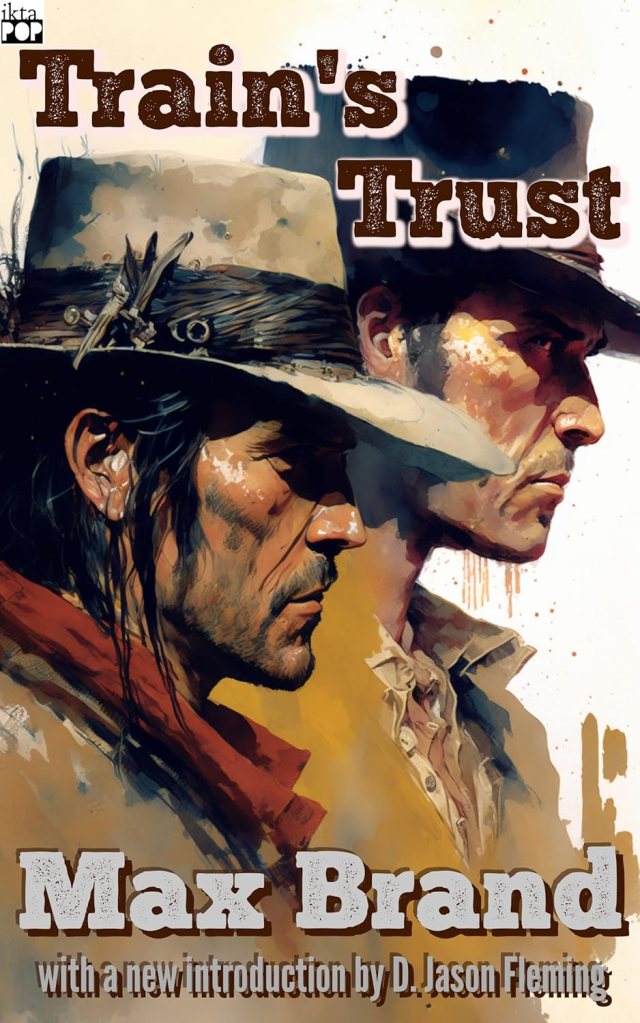
Steve Train, gambler, adventurer, clever rogue, didn’t care much for work. But then he was offered a job with no work, but plenty of danger. The job: track down outlaw Jim Nair — and hand him a pile of money!

  • This iktaPOP Media edition includes a new introduction by indie author D. Jason Fleming giving historical and genre context to the novel.

FROM NATHAN C. BRINDLE: The Lion in Paradise
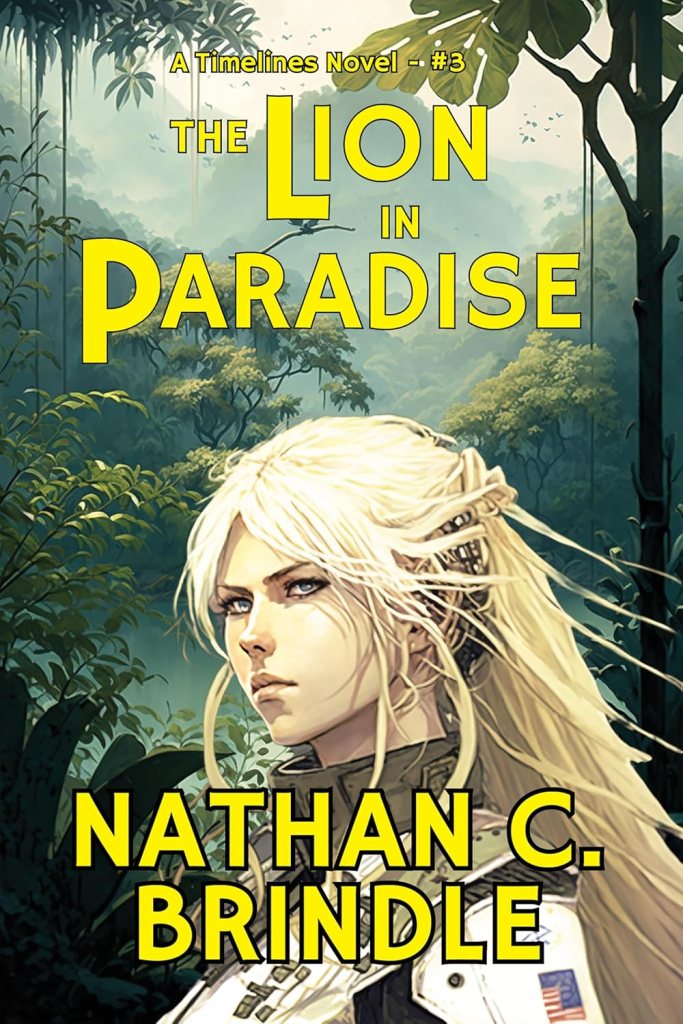
All Col. Dr. Ariela Rivers Wolff, M.D., Ph.D., USSFM – the Lion of God – wanted was a little piece of paradise to call her own.

Being stuck on a desert world – even if she was the CO of the premiere battalion of the 1st U.S. Space Force Marines that was based there – was not getting her any beach time. Mostly because, without an ocean, there’s really no beach at all.

But she’s got a fix for that problem.

Now, if only the academics studying the problem of terraforming the exile world of al-Saḥra’ would get out of her way . . .

. . . and if only the religious fanatics who want their planet left as a desert, despite all the water from the planet’s former oceans being accessible only a few miles down, will leave the terraforming project alone long enough to see the good it will bring them . . .

. . . then, the Lion would truly be in Paradise.

But even in paradise, black clouds – and black ships – can herald danger for the Lion, herself, and for her daughters as well.

FROM SARAH A. HOYT: No Man’s Land: Volume 1
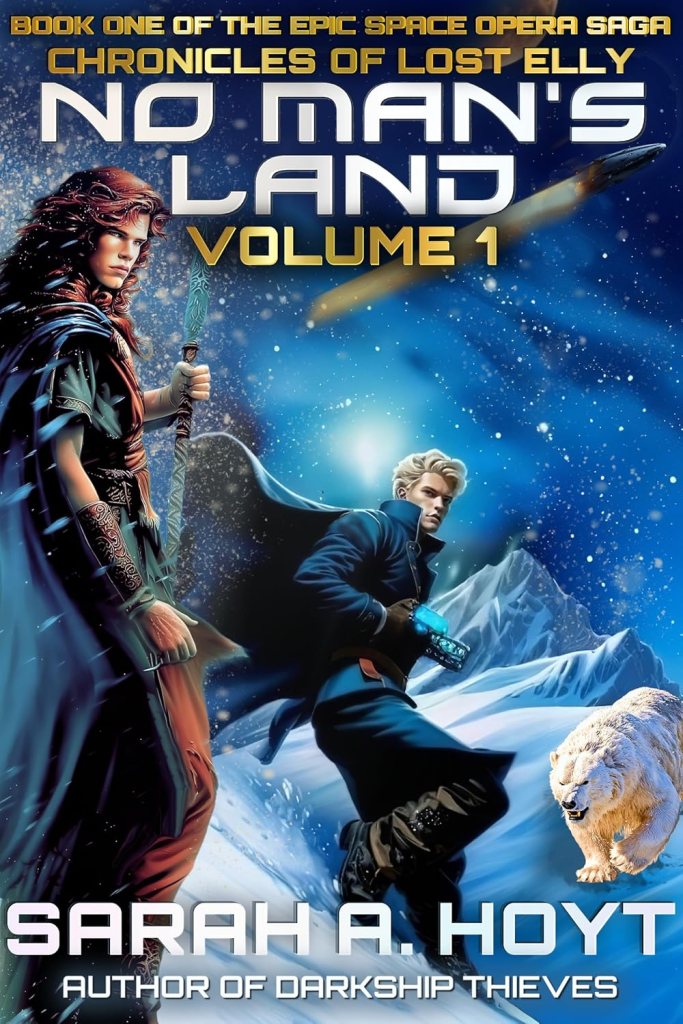
Sufficiently advanced science is indistinguishable from magic.

On a lost colony world, mad geneticists thought they could eliminate inequality by making everyone hermaphrodite. They were wrong. Catastrophically wrong.
Now technology indistinguishable from magic courses through the veins of the inhabitants, making their barbaric civilization survivable—and Publius Cornelius Scipio Africanus Kayel Hayden, Viscount Webson, Envoy of the Star Empire—Skip to his friends— has just crash-landed through a time-space rift into the middle of it all.
Dodging assassins and plummeting from high windows was just the beginning. With a desperate king and an archmagician as his only allies, Scipio must outrun death itself while battling beasts, traitors, and infiltrators bent on finishing what the founders started: total destruction.
Two worlds. One chance. No time to lose.

Volume 1
The Ambassador Corps has rules: you cannot know everything, don’t get horizontal with the natives, don’t make promises you can’t keep.
They’re a lot harder to follow when assassins are hunting you, your barbarian allies could kill you for the wrong word, and death lurks around every corner.
The unwritten rule? Never identify with the natives.
Skip’s already broken that one.
Now he’s racing against time to save his new friends from slavery—or worse—while dodging energy blasts and political intrigue. One crash-landed diplomat. A world of deadly secrets. And absolutely no backup.

Some rules are meant to be broken. Others will get you killed.

FROM BLAKE SMITH: In Pursuit of Justice: A Novel of The Garia Cycle
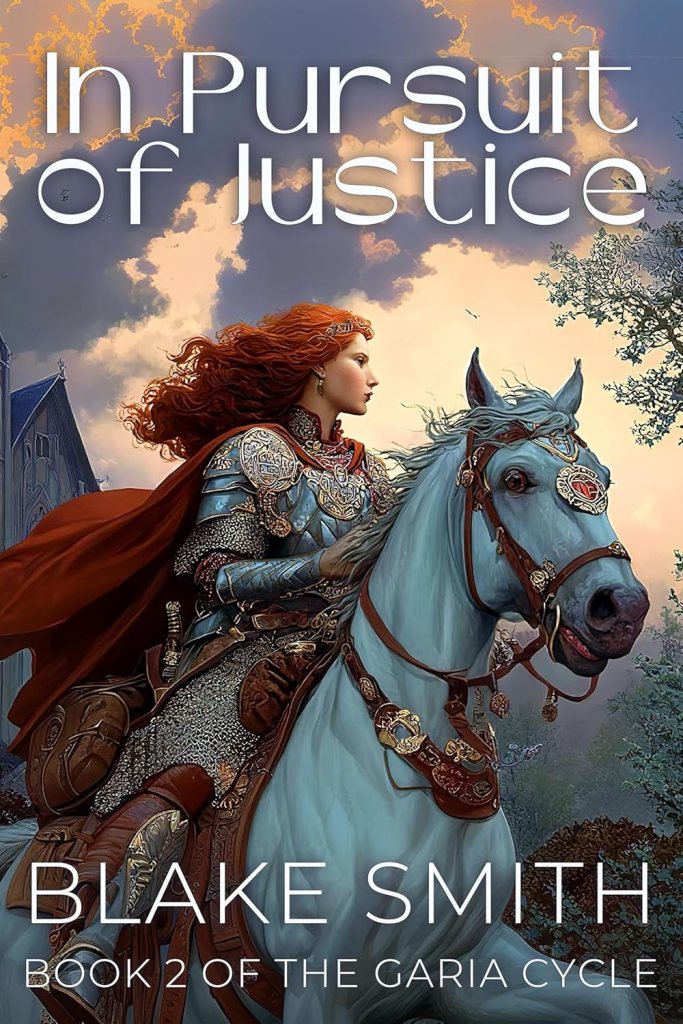
When love sparks a war, can four hearts survive the flames?

Zara thought escaping to freedom with Téo was the end of her story. She was wrong—it was only the beginning.

Their forbidden love has ignited a war between two kingdoms, and now they’re refugees fighting for survival in a hostile land where every shadow could hide an assassin and every stranger might be the end.

Meanwhile, back in the marble halls of the East Morlans, Prince Hanri races against time to contain his father’s burning thirst for revenge before it consumes everything in its path. And in the glittering palace where whispers are weapons, Alia must navigate a maze of deadly rumors and half-truths to uncover the secrets that could save them all—or destroy everyone she loves.

With armies gathering and alliances crumbling, four young hearts must learn that sometimes the greatest battles aren’t fought with swords, but with courage, loyalty, and the unbreakable bonds of love.

In a world where kingdoms clash and hearts collide, who will you trust when everything falls apart?

War changes everything. But love? Love endures.

Perfect for readers who crave epic romance, political intrigue, and characters who will fight to the end for what they believe in.

FROM KAREN MEYERS: Broken Devices: A Lost Wizard’s Tale (The Chained Adept Book 3)
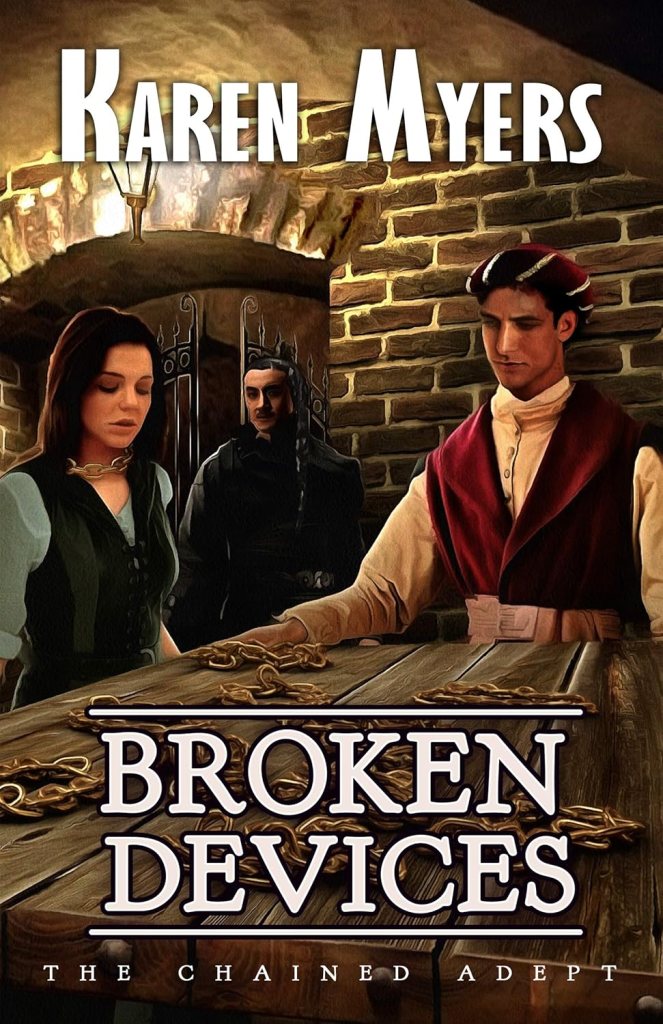
Book 3 of The Chained Adept

CHAINS WITHOUT WIZARDS AND A RISING COUNT OF THE DEAD.

The largest city in the world has just discovered its missing wizards. It seems the Kigali empire has ignited a panic that threatens internal ruin and the only chained wizard it knows that’s still alive is Penrys.

The living wizards and the dead are not her people, not unless she makes them so. All they have in common is a heavy chain and a dead past — the lives that were stolen from them are beyond recall.

What remains are unanswered questions about who made them this way. And why. And what Penrys plans to do to find out.

FROM LEIGH KIMMEL: The Other Side of Midnight
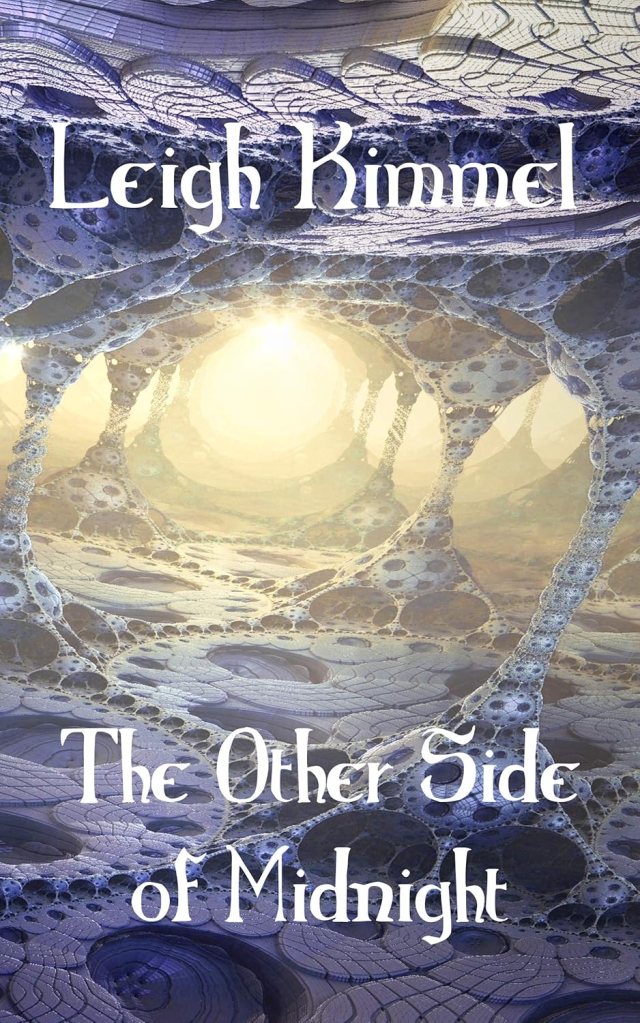
Life has been a nightmare for Mitya ever since he was arrested on trumped-up charges and exiled to Siberia. But this labor camp in the far north of Magadan Oblast hides a secret far more terrible than the merely human evils of the Great Terror. For the universe we know is not the only one, and there are places where it interpenetrates with universes where the laws of nature as we know them do not operate, where humanity has no place. Worlds inhabited by beings ancient and terrible, to whom humanity are slaves, playthings, food.

ALSO THE BASED BOOKSALE COMETH. IF YOU’RE A WRITER, CONSIDER PARTICIPATING: Based Book Sale.

Vignettes by Luke, Mary Catelli and ‘Nother Mike.

So what’s a vignette? You might know them as flash fiction, or even just sketches. We will provide a prompt each Sunday that you can use directly (including it in your work) or just as an inspiration. You, in turn, will write about 50 words (yes, we are going for short shorts! Not even a Drabble 100 words, just half that!). Then post it! For an additional challenge, you can aim to make it exactly 50 words, if you like.

We recommend that if you have an original vignette, you post that as a new reply. If you are commenting on someone’s vignette, then post that as a reply to the vignette. Comments — this is writing practice, so comments should be aimed at helping someone be a better writer, not at crushing them. And since these are likely to be drafts, don’t jump up and down too hard on typos and grammar.

If you have questions, feel free to ask.

Your writing prompt this week is: WEIGH

From The Prometheus People

News update: 45th Prometheus Awards show set for Zoom at 2 p.m. Saturday (EST) Aug. 30

For immediate release:

The 45th Prometheus Awards ceremony will take place Saturday Aug. 30 at 2 p.m. Eastern time (11 a.m. Pacific) via Zoom and is open to the public.

This will be the first ceremony in the Prometheus Awards’ 46-year history in which both of this year’s winners – Poul Anderson (1926-2001) and Michael Flynn (1947-2023) – will be recognized posthumously, with eloquent, personal, revealing, amusing and inspirational speeches about their lives and works by the family members who loved them.

Among the speakers for the awards show, expected to run about 40-45 minutes:
guest presenter David Friedman – a leading economist, law-and-economics professor, libertarian theorist, and Prometheus-nominated fantasy novelist
Astrid Anderson Bear – daughter of the Hugo-winning SFWA Grand Master Poul Anderson (Tau Zero, The Broken Sword, The Psychotechnic League, Ensign Flandry, Time Patrol, The High Crusade, and wife of the late sf author Greg Bear (Eon, The Forge of God, Darwin’s Radio, Anvil of Stars)
Kevin Flynn – brother of the late SF author Michael Flynn (Hugo Best Novel finalist for Eifelheim), Denver City Councilman, a retired journalist and co-author with Gary Gerhardt of the books The Order: Inside America’s Racist Underground and The Silent Brotherhood: The Chilling Inside Story of America’s Violent, Anti-Government Militia Movement.
Shahid Mahmud – publisher of CAEZIK SF & Fantasy, which has published its first Prometheus-winning novel with Michael Flynn’s In the Belly of the Whale
* emcee and LFS president William H. Stoddard – a freelance editor and author of half a dozen SF role-playing-gaming books on GURPS
* Prometheus Blog editor-contributor Michael Grossberg – an award-winning, retired journalist and theater/film/book critic who chairs the Prometheus Best Novel Judging Committee.

Astrid Anderson Bear will accept the Prometheus Hall of Fame award for Best Classic Fiction for her father’s 1983 novel Orion Shall Rise.

Kevin Flynn will accept the Prometheus Award for Best Novel for his brother’s last novel, In the Belly of the Whale (CAEZIK SF & Fantasy.)

Orion Shall Rise – the fifth work by Anderson to be inducted into the Prometheus Hall of Fame, following Trader to the Stars (in 1985), The Star Fox (in 1995), “No Truce with Kings” (in 2010) and “Sam Hall” (in 2020) – explores the corruptions and temptations of power and how a free society might survive and thrive after a post-nuclear-war apocalypse on a largely depopulated Earth with the emergence of four drastically different socioeconomic societies.

In the Belly of the Whale – the third work by Michael Flynn to win a Prometheus award for Best Novel, following In the Country of the Blind (in 1991)and Fallen Angels (in 1992) – offers an epic drama and cautionary tale about challenges, conflicts and threats to liberty among 40,000 human colonists aboard a colossal generation ship during a long 12-light-years voyage to another star.


David D. Friedman (son of Milton Friedman and a leading libertarian theorist himself since the 1970s) will present the Hall of Fame category. Friedman’s speech will discuss libertarian science fiction and how he was influenced in his economic thinking by Prometheus-winning authors such as Robert Heinlein and Vernor Vinge.

Among Friedman’s books: The Machinery of Freedom, Price Theory: An Intermediate Text, Future Imperfect: Technology and Freedom in an Uncertain World, Hidden Order: The Economics of Everyday Life and the fantasy novels Harald, Brothers and Salamander.

Shahid Mahmud, CAEZIK publisher, will speak about Michael Flynn’s final posthumous novel and legacy.
Michael Grossberg, who will present the Best Novel category. contributed to six books, including essays in four editions of The Burns Mantle Yearbook of the Theater and a critical-essay afterword to the 2nd edition of J. Neil Schulman’s Prometheus-winning 1984 novel The Rainbow Cadenza (notable as perhaps the first sf novel to envision a future where gay marriage is normal and legal).

The 45th Prometheus Awards ceremony is open to the public (with subsequent reports and transcripts on the Prometheus Blog at www.lfs.org/blog/)

Here is the Zoom link to access and watch the 2-2:45 p.m. Saturday (EST) Aug. 30, 2025 event:

https://us06web.zoom.us/j/87344910540?pwd=rD6ckCN7j8k5Ytyh2n2YaQbpqoGkjr.1

Meeting ID: 873 4491 0540

Passcode: 396343

This totally is a post

So, what on Earth is going on….

Well, I had a doctor’s appointment this morning which went on to mid afternoon. Normally I’d have posted last night and scheduled, but I got pulled away by a minor emergency and ALSO ….

Hearing someone in your duct tape family died is a little sapping to the focus. Even if you were if not expecting it, aware he wasn’t doing well.

And then last night. Oh, dear Lord. I’m sitting here on three hours of sleep. THREE HOURS. And that’s a high estimate.

You see, we had a massive storm. And Indy is afraid of thunder. So he tried to break into our room. But he must have skipped his paw day recently, because he couldn’t manage enough strength to lift and open the metal gate in front of the bedroom door. (He’s done it before.)

So he just lifted and dropped it, with a clunk. ALL NIGHT LONG.

And he howled, because he was terrified.

So, clunk clunk HOWL every time I was starting to drift off again. And I had to get up early because appointment.

The appointment went well. The writer is non compos mentis.

I will at some point do a post on Uncle Lar. Might even be tomorrow. But I’d like to do him justice.

I remembered, late at night, that he did a post for me, on No Man’s Land. He thought I’d need help selling it, because it’s … wholesome, really (Save for ONE shady chapter in the beginning, but to be fair, the character knows he’s doing stuff he shouldn’t, for so many reasons. And it’s in no way graphic.) and definitely not woke, but people are weird and might perceive it as being either risque or strange.

So he did a post. I meant to read it and get back to him, then life went off the rails, he had a stroke and wasn’t processing, so I let it chill.

I will confess I’m still not up to reading it. Probably next week, sometime.

… I knew he wasn’t doing well. he hasn’t been doing well for several years. I think 21? 22? was the last year he came to Liberty Con. But he wasn’t that much older than I, and–

I don’t like saying goodbye to my friends.

I’d like to think somewhere on the other side there’s a little room set up where Huns departed (we have a growing contingent, alas) can go in and see old friends. I hope he and CACS are amused by our antics.

Until we meet again. (I will eventually stop crying like someone is cutting onions. It’s just lack of sleep, really. Honestly. I swear.)

An OLD Kind of Dumb

First of all, sorry this is so late. Yes, yes, I am still fighting the clanker. DEAL.

I’ve changed the cover of No Man’s Land, but I’m still not happy. To be fair, it’s a big ask for the thing to produce Ellyans. But…. well, I wish I were a little less autistic about it, okay? Or obsessive. This might just be “obsessive.”

Anyway I’ve been staying up late and beating on the clanker, and I’m cranky and a bit out of it. I need to write — for my own sanity — and haven’t been able to.

All of which makes me unreasonably cranky. Those of you in the back row who just rubbed your hands together and giggled should be ashamed of themselves! And sit up straight. And no, don’t put in orders for popcorn.

That said, yesterday, on Twitex — stop giggling — I ran across a particularly old and pernicious form of idiocy.

The context was of course the idiots who seem to believe no one can change cultures, and acculturation is utterly impossible. Look, I’m not saying acculturation is easy and yeah, mass migration curtails it by immersing people in their culture of origin and therefore making it impossible.

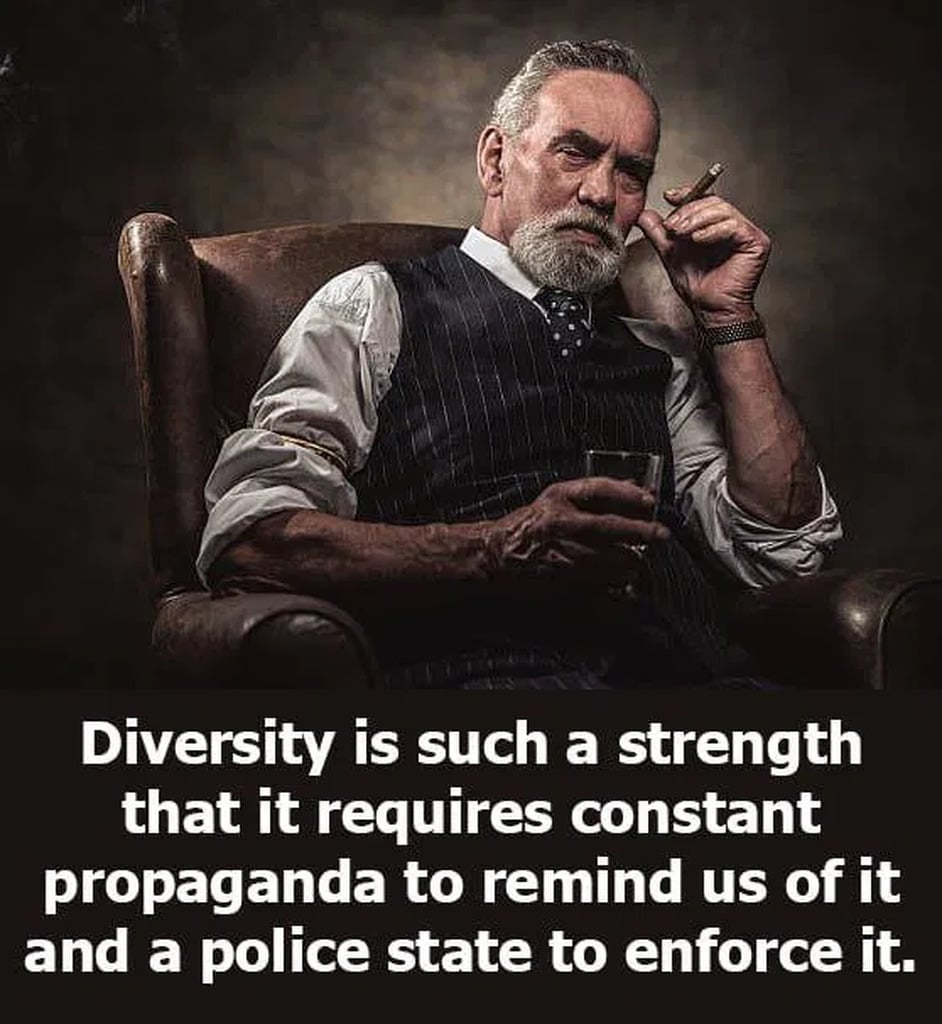
Also, this “acceptance” and “diversity is our strength” bullshit curtails acculturation because frankly humans don’t change unless they’re uncomfortable. Make them comfortable with their old culture in the new environment, tell them they’re special and bring wonderful things to these heathens they’re now living among, and they’ll not only never change, but view it as a terrible imposition to accommodate their hosts in anything. (Which is why you get these ridiculous entitled illegals flying the flag of their homeland and acting like we should all bow.)

Those are absolutely true. But it is equally true that humans are adaptable. The oldest saga of mankind, the Epic of Gilgamesh, is a story of acculturation, of bringing the “wild man” in to civilization.

The story of MANKIND is one of acculturation. Humans move to a new climate and adapt. Humans move to a different society and “go native.” We wouldn’t even have that phrase if this weren’t true and a known effect.

Sociologists — who say a lot of nonsense — call humans the animal who domesticated themselves. And supposedly domestication comes with physical changes, yeah, but you know I question the extent of those and the rapidity of those. Yes, I know, the Russian Foxes. But as far as I know that experiment hasn’t been replicated and Soviet Science should be printed in the same roll to disbelieve library as English High Cuisine.

But one thing is absolutely true: We don’t live the same way our ancestors lived in the fertile crescent or the Neolithic. Pretty much anywhere over the world. Yes, some societies seem more barbaric than those were, but if you study history, they’re really not. In some ways they’re far more barbaric because only people who have civilized and then rebarbarized can be that appalling. In others they are a vast improvement over, yes, even Ur of the Chaldees.

And besides, most of us, even in the “single origin” (AH!) nations of Europe, have blood from many other places. In fact, that is the “normal.” And in the US? We’re the original, spicy blended flavor. Not that diversity is our strength, but that bringing in many potentialities and forcing people to keep only constructive ones does improve the country. (This assumes we bring in the best, not whoever can walk across the border with their flag and a grievance.)

People adapt. They shed languages, habits, ways of being.

I was mentioning to Dan only the other day that The Three Guys are gone from Portugal. No, this is not a burger chain. It used to be you couldn’t walk outside anywhere in Portugal without three guys leaning on a wall looking at you appraisingly. And if you were a woman alone between eight and eighty, no matter how obviously “above their touch” they saw it as their sworn duty to shout graphic remarks of sexual things they’d like you to do to them.

I’m sure this was a survival of Arabic culture, where a woman alone is assumed to be a whore, but it persisted through all the centuries of Christendom. And while they didn’t dare attack you or touch you, it put a definite pall into such excursions as going out for groceries on your own, or even walking to class.

They’re gone. Completely vanished. And it’s one of the things I’ll praise the EU for. Of course, it’s partly the EU and their feminism, and partly the fact that Portugal’s primary industry is now tourism. I’m sure the police cracked pretty heartily on those more enterprising souls who shouted suggestions in bad English or bad French. And from that, they likely expanded to everyone doing that, in case some tourists spoke Portuguese or enough Spanish to understand the disgusting drivel.

And no, it’s not because they all died. They were around 20 years ago, and some where 20 years old. But they’ve adapted because being harassed back by the police was not to their taste.

Dogs, old and new, learn new tricks. They simply have to be taught.

Anyway, the conversation on twitter devolved to someone saying that he was descended from people on the Mayflower (my husband, not being a show off is descended from people on the next boat) and one of these new deep thinkers telling that was impossible since his profile says he’s Catholic and the pilgrims, of course, being all Protestant.

Because, y’all, religion is inherited. Other things I’ve found are inherited (And this was from the left, trying to slam my kids into Spanish — SPANISH! — language only classes) is language, way of dressing, propensity to crime, etc. etc. ad most definitely nauseum. (And how. I need anti-nausea medication at that drivel.)

No one — NO ONE — denies some tendencies are hereditary. I grew up in a village — channels Miss Marple — and you get to see this play out over generations, because your grandmother likely knows the grandparents of your school friends, and her mom knew the grandparents’ parents. And even with influx from outside — by my time quite common — it’s amazing how consistent some lines are. Grandma’s had a tendency to be flaky depressive story tellers. Fortunately I got none of–

Stop laughing. It’s rude.

Dad’s father’s line was known for its steady application to everything, its detailed intelligence and its taking on of very difficult professions. (Going way back a tendency to law, engineering and doctoring.)

On my mother’s side, they’re brilliant and crazy, but tend to dull the first and heighten the second with alcohol. That particular curse passed me by. They did however give me the berserker and an inability to keep my mouth shut when something pisses me off. (And my fondness for knives and axes. Not that I make use of them. But they’re ready, in case an opportunity should arise.)

Going into school we were known quantities. The teachers knew they could expect flakiness on schedule and keeping track of our possessions, great ability of memorization, a fondness for languages, history and math, that our lowest level of achievement would be a B for all academics, and that our gym performance would suck. No, listen… suck on ice. We’re a family mostly known for tripping over both feet while standing still.

But even in that limited gene pool those are TENDENCIES not genetic imperatives. My dad excelled at soccer, my brother in handball. Dad and his brothers were all natural sharpshooters. None of them could ride a bicycle, not even with the help of all the angels and saints, so they walked everywhere. And that I know of none of us, ever, could jump a rope. I remember mom trying to teach my brother and I by demonstrating it and being utterly puzzled it unobtanium to us.

What I’m trying to say is yes, some characteristics are inherited, but they they’re either way more granular than you can apply even to the inhabitants of a largely inbred village — or family — like, being unable to ride a bicycle or jump a rope, but great at soccer or, contrary to family history, sucking at geography, but excelling at everything else — or they’re far more general and frankly overcomable. (Totally a word. Deal.)

Look, yes, my tendency to depression is inherited. As is the ADD. I cope with both as best I can. I have a tendency to excessive amiability and conflict avoidance — stop laughing. To the extent I can do this it’s because I’ve acculturated — because of being raised as a woman in Portugal in the sixties and seventies.

But culture can influence you to a level that overcomes whatever you were born with. And I do actually have proof in myself. Until my fifties I did NOT have the slightest clue I was an introvert, much less an extreme introvert. In fact, most of you who’ve met me will refuse to believe that.

And yet I am. As I found out accidentally while reading that introversion makes you exhausted after being with people.

So, how come I didn’t know it? Because introversion as is possible in the US was simply not allowed. Portugal as a culture lives in each other’s pockets all the time. The extended family and the friends who are like family are in your face all the time twenty four seven. You can’t tell them to go away. That’s unthinkable. And my habit of locking myself in my room so I could read in peace made mom try to drag me to a psychiatrist.

I was trained, before I was even verbal, to be able to put on a front and act extroverted, even though all my instincts are to introversion.

I’ve been slowly becoming more myself in a culture that allows introversion — and it’s a relief — but it took almost thirty years to even realize my natural inclination.

People change. People adapt. People even civilize.

The people who believe otherwise, or pretend to (I suppose that was the snide intent of the guy who came over to tell me Portugal was so backward and why had I come here) are dirty, evil eugenicists who want the right to kill everyone who doesn’t conform to their version of what an American should be.

And you know that once it starts going down that path no one is safe. Absolutely no one. Because you might be Catholic or able to tan (despite ancestors going back to the revolution) or even — gasp — have a thought they didn’t approve of.

I recommend the insane eugenicists move to tribal Africa. It’s the only place the majority absolutely agrees with them that every aspect of behavior is inherited. I’ll even chip in for the spray-on-tan.

The fact that we don’t demand assimilation and adaptation to our culture has been pushing everyone, newcomers and old residents, in the other direction. Barbarism has advantages when you can act “natural” (Jean Jacques Rousseau must die) and get rewarded and treated as a victim.

Humans don’t change unless they have to. Once they have to, though, the changes will astonish you.

It’s time to start demanding changes of newcomers and old. Adherence to our founding documents, civic behavior of free citizens who are responsible for themselves, eschewing criminality and taking your hands off other people’s taxes.

It’s time to start demanding that people who come here and claim to want to join us speak English if not without an accent — listen, I’d get rid of it, if I could — at least fluently enough it doesn’t matter.

It’s time for Americans to be unapologetically American and make people fit in or fuck off.

Because humans are adaptable, and our culture is the best in the world and worth adapting to.

David Starr, Space Ranger – Reading the Future of the past

(Like the Nidiot I am I scheduled this…. and forgot to flip pm to am. And for this I stayed up till midnight actually two am. Which means I carefully changed am to PM because…. Yeah. There’s a proud tribe of Nidiots and I’m their chief….. Sigh.)

For those of you who just dropped (from outer space!) in here, this is what I’m doing and why.

Yes, we did a double reverse and went back to this book, since one of you (Thank you Uncle Lar) sent me a copy. I refused to buy one because they run upwards of $30. And I’m cheap.

Anyway, for those not wanting to go through all of it, I’ve been reading myself back to my origins in science fiction, or what I read in science fiction. Until I was about 12 or 13 there was only one collection (after that there were others, often of Brazilian imprints. I remember fondly the blue-paper imprint that was designed for “night reading.” Fondly because, as advertised, it didn’t reflect the glare of the bedside lamp.)

For those wondering about only one imprint of science fiction, remember that there, as here, science fiction is a minority taste and when I was growing up Portugal had barely 10 million people. So, counting only those who read for pleasure, and only those who read science fiction… it was a very small readership. The side effect of this is that they did from the beginning what companies in the US only started doing in the oughts: print to the net. Which meant if you wanted to grab a book, you had to be there in time to pick up one of the limited copies. This led to lines on the day of the releases of the people everyone read. Sometimes books hung around in spinner racks in less travelled locales — I scored Glory Road (and other books I don’t remember) — in a small village we were traveling through. It was in the tobacconists. Why I don’t know, since in the big city any Heinlein sold out in mere hours.

Anyway, since I came on the scene a long time after the series started publishing, I missed a lot of the early ones, though I did find them afterwards in weird ways, like when I scored a box of old sf books by helping someone move.

Anyway, all this to say: I’d never read this book. In fact, until you guys told me I didn’t realize that David French was Isaac Asimov.

So, before we dive into this, let me say Asimov was never one of my favorites. I found him generally competent, and he wasn’t on my list of “I’ll read this under protest” — there weren’t enough books available that I could say I wouldn’t read a book — but he also didn’t light up my day. I can’t tell you why, even. This is a highly individual thing and his stories just didn’t interest me as much or stay with me. I did enjoy his short stories more than his novels and remember enjoying the puzzle science fiction mysteries.

Anyway, that out of the way and with the understanding he wasn’t one of my favorites, let’s plunge in.

If you need to refresh your memory on who Isaac Asimov was, go here.

The short version:

Isaac Asimov was born on January 2, 1920, in Petrovichi, Russia. He immigrated to the United States with his family in 1923, settling in Brooklyn, New York. His parents were Orthodox Jews, and he was the oldest of three children. Asimov graduated from Columbia University, earning a Ph.D. in biochemistry in 1948.

Asimov was a prolific writer, authoring or editing over 500 books. He is best known for his contributions to science fiction, particularly the Foundation series and the Robot series. His first published story, “Marooned off Vesta,” appeared in 1939. He also wrote extensively in popular science, making complex topics accessible to the general public.

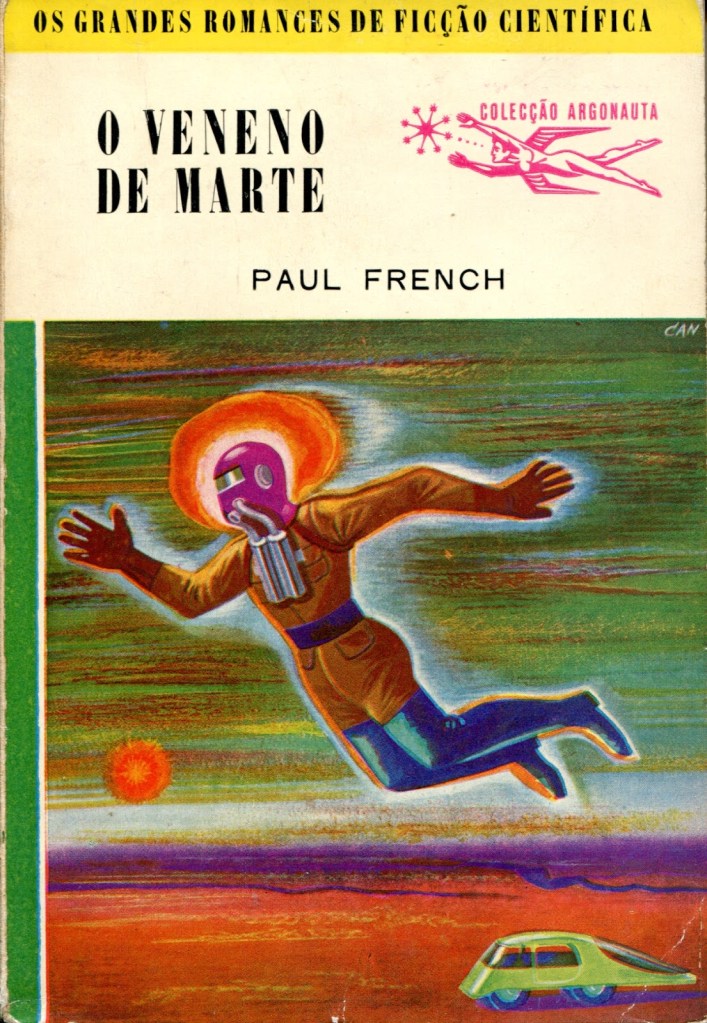
Anyway, this book published in Portuguese as O Veneno de Marte (The Poison from Mars) was published in America for the first time in January 1952. (It was published in Portugal in 1954 which is very fast and perhaps relevant. The taste of the people selecting these books were WEIRD even aside from their mad pash for French and obscure British books. Put a pin in this.)

The story starts with David Starr newly admitted to the council of science. (In all the human worlds, there’s a Council of Science which is … never mind. An interesting concept.) He was raised by two of the scientists in it, because his mother and father were killed when their ship was boarded by the pirates from the asteroids.

(Here let me insert that perhaps it’s not an accident that the rest of us consider the asteroids the symbolic bastions of freedom, but Asimov put the pirates and evil doers there.)

Anyway, David Starr is in a restaurant when someone dies of poisoning. There have been a lot of these poisonings and they all originate with products from Mars. The Council of Science sends him to find the origin of the poison in Mars.

There follows an unlikely set of adventures…

I think I should say that part of the problem I had with reading the book is that he seems to spend a lot of time tripping over what would be mundane stuff. Like, I really don’t need to hear about the force field tables in detail even once, much less repeatedly, while we’re dealing with someone who just died of poisoning, unexpectedly. I don’t know. It’s a matter of taste, but maybe this is part of what bothered me.

Another thing that bothered me was that though Mars is supposed to be “arm country” there isn’t much in the way of reality to the “farms.”

Perhaps Asimov simply hadn’t spent long enough in farms? I don’t know.

Anyway, while escaping an attempt on his life, David Starr ends up in a cave where he meets the Martians, who became… Well, it’s hard to tell? Either beings of the ultraviolet/energy or mind-beings, who live in caves under the surface and have absolutely no stake in what is happening on the surface, let alone in other worlds. They give him a…. scientifically cloaked magical invisibility device. (Look, I feel better about the science in No Man’s Land, suddenly.)

With the help of this, he solves the mystery of who is putting poison in the food to Earth.

I want to take a break here to note that the reason he’s called Space Ranger is not, as you might expect, because he joins a force of Space Rangers. Oh, no. It’s because one of the Martians names him “Space Ranger” because he ranges over space. Head>desk.

So, to return to that pin in the beginning: I find it weird that the people curating the publishing line chose David Starr over … Red Planet.

Though perhaps it makes sense since Red Planet is the American revolution turned into Science Fiction for kids and that might not have resonated with normal Portuguese people?

Anyway, this is relevant because when I was reading the book, it struck me as condensed, kind of floating over the top Red Planet fanfic. It was in fact published 2 years after.

Here I must insert that I don’t think Isaac Asimov did anything wrong. Look, ideas aren’t copyrighteable, and the story is not even the same. Not really. Except insofar as young spunky kid gets stranded in Mars and has to spend a night, and gets through it by strange means.

It’s more I feel like he read Red Planet and thought “I can do this better” and then wrote David Starr Space Ranger. Which… to my mind isn’t better, but that is obviously a matter of taste, and I’m sure there are people who prefer this book to Red Planet.

And it’s okay, because I feel like Heinlein read David Starr’s history and then decided to write it better for the character in Citizen of the Galaxy.

Anyway, on the salient point of the book: it was okay. It certainly wasn’t painful to read like the French one. Unfortunately it also failed to rock my world. I mean, it wasn’t bad, precisely. It just didn’t rock my world.

Anyway, um… if you decide to read David Starr Space Ranger, it’s okay. (It’s probably more worth the money in Audio, tbf.) It’s not like I want my time back from reading it. And I’m certainly in no position, being who and what I am to throw stones at a legend of science fiction.

It’s just I have a feeling our personalities don’t mesh, and what he was fascinated by (Council of Science. Pfui.) leaves me indifferent.

Oh, for the record, I think I would have liked this book much better if I’d read it when I was much younger and that might be part of the problem. I think he was going for a YA feel, and few YAs play well past their intended target.

One point of interest is that in this story, there was life on Mars before humans, of course, and there still is. Spores and bacteria and the like. And I practically flinched when Asimov’s people blithely talk about this not mattering at all, as they set about essentially terraforming Mars piecemeal to grow Earth food.

It is a mark of how much we’ve changed over the decades, that even I flinched from that and thought “well, that’s wrong” while Asimov, who — were he alive — would be still very much on the left and probably claiming the right of every microbe to avoid “colonialism” at the time was happily envisioning Earth life driving this other, inferior life to extinction. (Another point there being that the Council of Science isn’t even vaguely excited about thiis potentially completely different life and what they can learn from it.)

I don’t know. Perhaps I’m reading too much into all of this, but what went through my mind was “Well, yes, the left was all for colonialism and the extinction of any aliens that were in our way, until the USSR started to obviously fail, denying their ultimate ideal. And then slowly they changed their view and put on the skin of environmentalism over the same old tired Marxism.”

Note I’m not even accusing Asimov of this, just noting that this might be the mechanism through which our culture changed, and through which the left came to believe a bunch of quasi-religious ideas (some nonsense. Though I find that if there is life with a different origin than ours it would definitely be big scientific news and worth of study, duh) that coalesced in an attempt to find another vehicle for the socialism/communism that had failed as “scientific governance.””

In any case, the left today sure ain’t like the left back then. Not even the “scientific left.”

Which is why things like a Council of Science, centralizing such decisions, is a bad, bad idea. Because scientists are still human and emotionally susceptible to their peer group’s culture and decisions.

The best science is distributed science, where mavericks and Odds can find the things that “Official” science laughs at, and which often prove to be true after all.

So, next week!

That is From What Far Star by Bryan Berry.

A friend secured me a copy, as it doesn’t seem to be available anywhere, except used and pricey in print from Amazon. (Keep in mind that the Brian Berry listed on Amazon is not actually the same person. I don’t know who he is.)

For some reason clicking on his name there is no link to these books, but a search for his name brings up other used ones.

Anyway, I’ll try to do that for next Tuesday. Sorry this one took so long. A lot of things got in the way, mostly stupid things like really bad sleep. Which has also been getting in the way of doing Witch’s Daughter. I hope I can tomorrow. I’m “this” close to the end.

Steel Sharpens Steel

I was thinking today that the problem is we tell kids that they should choose something they love as a job. Then they’ll “Never work a day in your life.”

Leave aside for a moment the fact that you can’t always pick what you work at. People don’t seem to realize that, or that the circumstances of your job aren’t always under your control. When I was in trapub people kept telling me to take charge of my career or write what I was most passionate about. And I kept going “you do realize that’s not how any of this works, right?” I mean I could choose not to accept contracts — except for this wicked addiction to eating and a roof over my head — but I couldn’t choose to make the house publish something they didn’t want to.

The job market is kind of like that. Frankly, no one cares if you are the most talented cat rotator in the world. If the cats don’t want to be rotated, and the owners of the cats won’t pay you to rotate their cats, it is at best an aspiration, but it is not a job.

I just realized this is where all the aspiring poets come from whose real 24/7 occupation is screaming on Twitter that capitalism has failed because no one is paying them to write poetry written entirely in Gzoffian, their invented fantasy language.

If there is no market for what your “dream job” is, ain’t no one going to pay you for doing it. And I should know because when I started out there wasn’t much market for my writing. Partly because my writing was of the kind people didn’t want to read. Partly because if there were people eager to read it, I had no way to get at them.

So I spent decades, fighting and working and–

And I realized today that minus a few utterly disgusting periods where I couldn’t win for losing, because of other circumstances independent of my control, and as hard as things were at times, I am who I am, and as capable as I am because …. I worked every day of my life.

That is, I realized the problem with “Do something you love and you’ll never work a day in your life” is that if you’re doing something you love and are already good at, if you’re “playing” every day, you’re going to get bored. You’re going to get sloppy. And then you’re going to be bad at it, very very bad. And then you’re going to end up resentful, because your dream job turned into a nightmare. (This is also known as the Gifted Child’s Curse and why so many of us have interesting trajectories.)

Or, you’re going to try to coast through life without ever doing anything that is unpleasant or challenges you. And you’re going to fail. And again you’re going to end up bitter and blaming everyone for your failure.

So… Instead of doing “what you love” find something you love enough — a purpose, a job, an avocation, even an hobby — to struggle to do it and do it well even though you objectively aren’t very good at it, or need to learn it from scratch, or about a million other people would be better suited to it. (But they ain’t doing it.)

Note that a purpose is not necessarily a job. This crazy idea of subordinating everything to your “career” is not only a modern thing, it’s a crazy thing. Man — and woman, for that matter — is more than an economic production unit.

Sure, you need to do enough to keep body and soul together and that’s sometimes very difficult. Sometimes that’s the challenge. Other times?

Your purpose could be to keep your family fed. Or to give your kid, sibling, friend, the life they only hope to become accustomed to. For that you’ll have three jobs, and struggle, and work hard and hustle. It’s a purpose. It’s a challenge.

Or your purpose could be to become the best d*mn poet possible in your invented language. To be so good other people will want it. I don’t think it’s possible, but who knows? Prove me wrong. Your purpose will require you to work and keep body and soul together and in your spare time to study how languages work and get a good self-taught (or not) knowledge of linguistics and–

Or it could be a job you want to do badly enough that you fight through not being particularly good at it and replace your native language with another, and learn all cultural things needed to “ping” right to people in your new country, until you can be published and more importantly sell.

Is it sane? Is it even vaguely something you should do? Probably not.

But if that’s what you need to do and need it badly enough…. it’s a good goal to strive for, a good impossible line to work towards. Who knows you might get there. (I surprised myself.)

The point of this? Man is made to strive. Woman too. And those of you who just looked down your pants because you’re not sure which one you are this morning? You too.

Human beings weren’t made for easy. Evolutionary, for most of our history on this ball of mud, we were one step ahead of total extinction. Each and every one of your ancestors was one step ahead of starvation and enemy attack every minute of his life until fairly recently.

That is what your body and nervous system and brain were designed for.

Historically, everyone who didn’t “work a day in their lives”: the pampered princelings, the parasites, the people who were at the apex of the money their daddy or granddaddy made? At best they were just wastrels. At worst they were…. well, dangerous to themselves and others. And in some cases — I’m looking at Karl Marx — they became dangerous to the whole of mankind.

So–

Choose the difficult. Do the difficult. The more difficult the better. And then fight for it.

Fight hard. It will change you, and you will change it, and where you arrive might not be where you’d planned, but it will be be interesting. And sometimes it will be better than what you were aiming for.

Yes, it will hurt. it won’t be easy. And you know a lot of it won’t be fun. You’ll work every day of your life, and eat the bread you earn with the sweat of your brow.

And in the end? Whether you get there or not? You’ll be better.

Reach high. You might not get there, but you’ll end up higher up than you were to start with.

Book Promo And Vignettes By Luke, Mary Catelli and ‘Nother Mike

Book Promo

If you wish to send us books for next week’s promo, please email to bookpimping at outlook dot com. If you feel a need to re-promo the same book do so no more than once every six months (unless you’re me or my relative. Deal.) One book per author per week. Amazon links only. Oh, yeah, by clicking through and buying (anything, actually) through one of the links below, you will at no cost to you be giving a portion of your purchase to support ATH through our associates number. A COMMISSION IS EARNED FROM EACH PURCHASE.*Note that I haven’t read most of these books (my reading is eclectic and “craving led”,) and apply the usual cautions to buying. I reserve the right not to run any submission, if cover, blurb or anything else made me decide not to, at my sole discretion.SAH

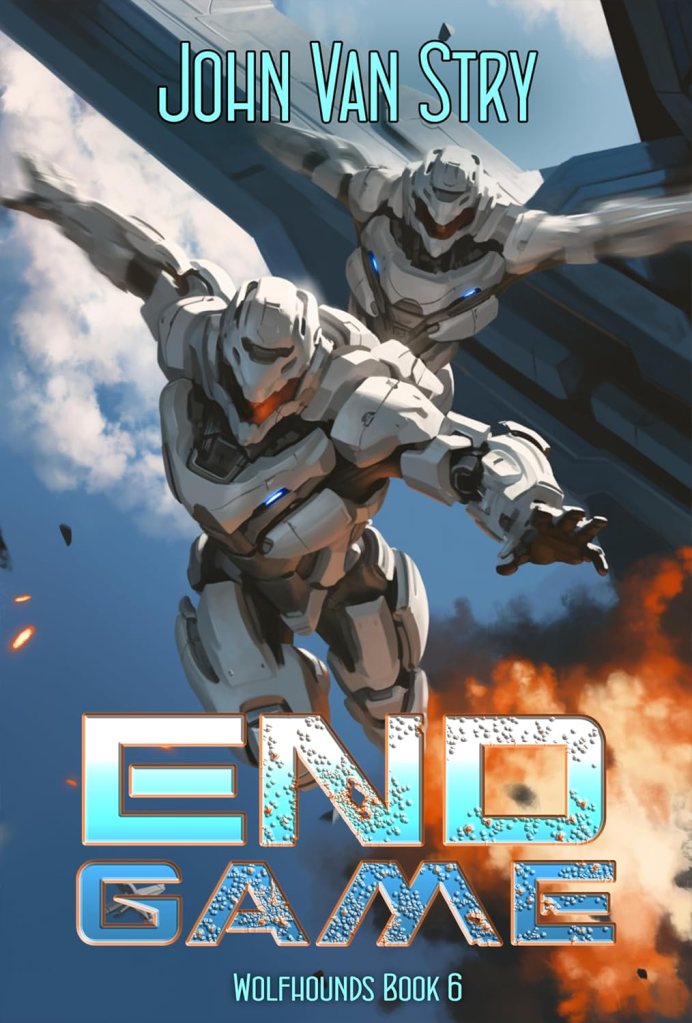
FROM JOHN VAN STRY: End Game: Wolfhounds – Book Six

The fight has been a long one and a hard one with many unseen events along the way. The end however is here. The last battle of the war. The most important battle of the war. Soon they will leave for Cor Imperii, the capital of the empire. Soon they will launch a head-on attack against Speaker Phillip T Neill of the Democratic People’s Republic of Solaria. Soon Chase will do what he swore to do: Kill Neill, personally, tear down the DPRS, abolish the Secret Police, the Loyalty Officers, and re-establish the Empire of Solaria.

There’s just one last battle to fight to win the war.

Or is it? The last battle that is. Neill has his doomsday weapon, out there, somewhere, being developed in secret. It could kill billions, maybe more. Whole planets could be wiped out if it’s not found and stopped before it can be finished, before it can be used.

There’s also other players about. Other star kingdoms who have seen the inevitable decline that Neill and his government started when they lost access to the Tomb after killing off the prior emperor. In a hope to survive, or perhaps just seeing the state of the decaying Democratic People’s Republic, they’ve decided that some of those planets are ripe for the taking.

Which means that this battle may still have a few more rounds left in it before the Wolfhounds can, once and for all, return home.

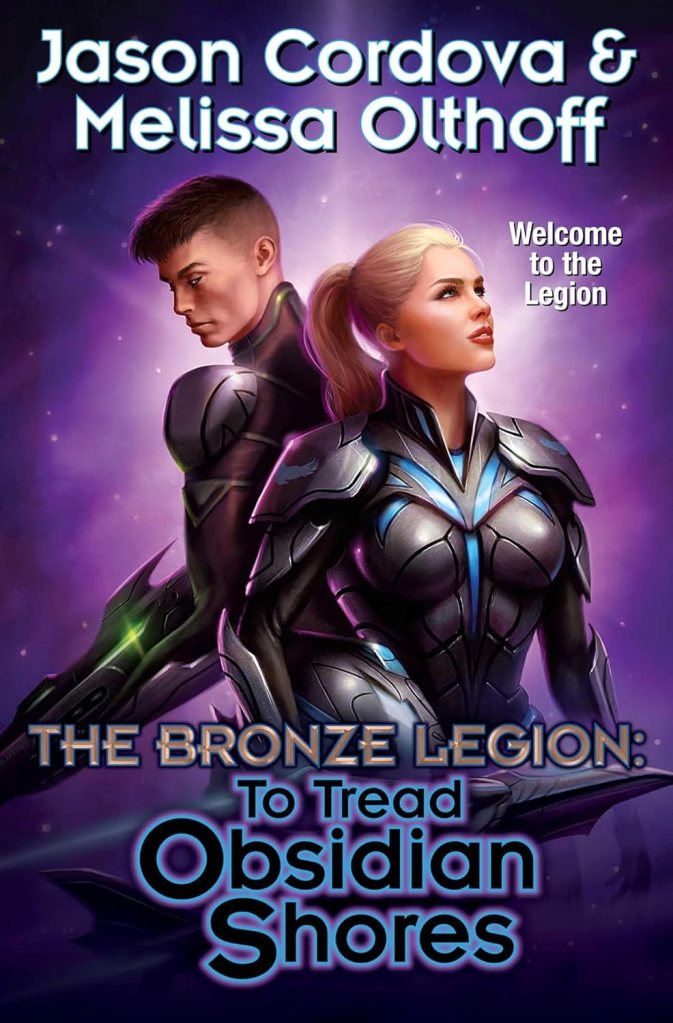
FROM JASON CORDOVA AND MELISSA OLTHOFF: To Tread Obsidian Shores (The Bronze Legion)

Brand new military SF from two veterans with a proven track record of excellent storytelling!

WHAT DOES IT MEAN TO BE A WARRIOR?

The Protectorate of Mars Foreign Legion: A path to citizenship. A fresh start. Defending the Protectorate of Mars against all enemies, foreign and domestic.

HOPE

With itchy feet and a vagabond soul, all Blue ever wanted was to join the Survey Corps and explore the universe. But when she failed the entry exam, becoming a dropship pilot for the Legion was her last chance at achieving that dream. It was only supposed to be a stepping stone . . .

DUTY

All he ever wanted was a home. But when Tavi is driven from his world by murderous revolutionaries, he only has one chance to escape: the Legion. Searching for a new life, he soon discovers something even better—a family.

WELCOME TO THE LEGION

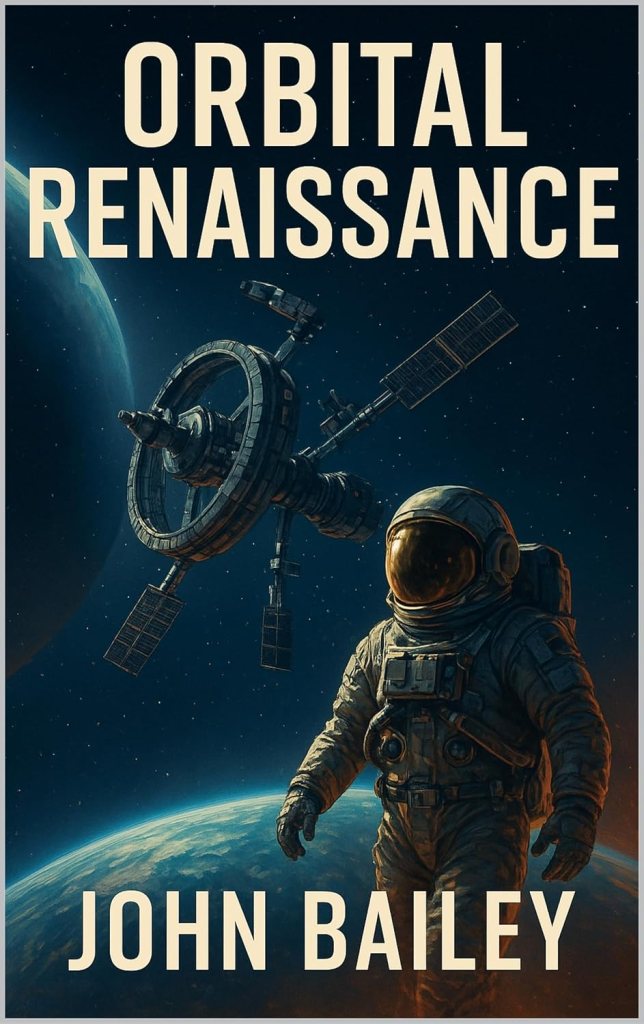
FROM JOHN BAILEY: Orbital Renaissence (Space Stations)

In the mid-21st century, Earth staggers under collapse—cities failing, governments powerless, and corporations competing for control of the skies. Commander Elena Voss and her crew aboard the orbital wheel Von Braun Prime fight to prove that humanity still has a future beyond the dying planet below. But whispers of sabotage spread through the station like wildfire: oxygen scrubbers tampered with, stabilizers overridden, crops nearly torched.

At the center of it all are those who would see Von Braun Prime fall: Gideon Crowe, a populist firebrand rallying Earth against the project, and hidden agents working from within. Trust fractures. Factions form. And when a young technician is unmasked as a saboteur, the crew must decide whether to stand united—or watch the station collapse from within.

Orbital Renaissance is a gripping, cerebral science fiction mystery that blends political intrigue, human drama, and the timeless struggle between hope and betrayal. Perfect for fans of Kim Stanley Robinson, James S. A. Corey, and classic space operas with a sharp, contemporary edge.

BY JULES VERNE, REVIVED BY D. JASON FLEMING: The Vanished Diamond

In 1880s South Africa, French chemical engineer Victor Cyprien has discovered the process to create a synthetic diamond, creating a very large diamond that gets christened “The Star of the South”. When it is stolen, he and his compatriots pursue the thieves across the African veldt.

This lesser-known classic by Jules Verne is remarkable not for its science fictional speculation, but for its singular portrait of its main character.

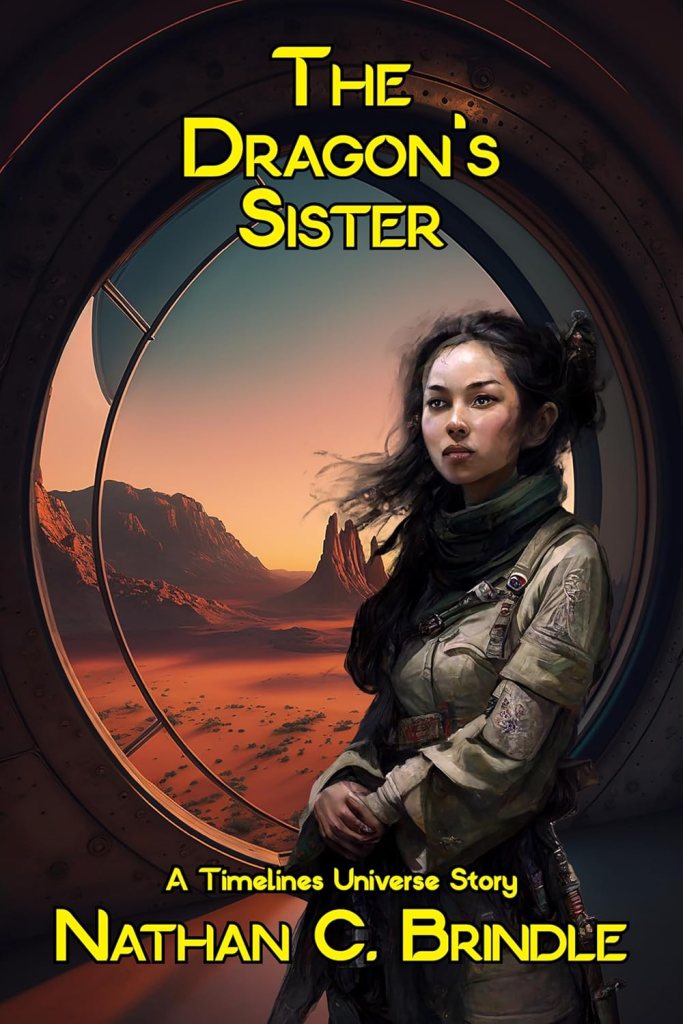
FROM NATHAN C. BRINDLE: The Dragon’s Sister (Timelines Universe Book 7)

Two Sisters, Separated By A Timeline

When most people find out they have a long-lost twin sibling they never dreamed existed, reactions can range from happiness to anger.

In the case of US Space Force Marines Brigadier General Mei-Lin Lai, her “twin” is her timeline analog she was told did not exist. And because of that reassurance, the expatriate Chinese taikonaut migrated to Timeline Zero from Timeline One Right, to take command of United States Space Force Base Terra Meridiani, on Mars.

But her analog did exist. And was pulled out of a cold-stasis chamber in Chicago eighty years after she’d been recruited into a failed plot to disrupt an American presidential election.

Twenty years later, Mei-Lin must grapple with a woman who is her genetic twin and wishes to join the Space Force Marines as a medic — and will go through Basic Training on the planet where Mei-Lin is the boss Marine.

Will the two women, identical but different, be able to form a sisterly bond? And will Mei-Lin finally come to grips with the very existence of her other-timeline twin?

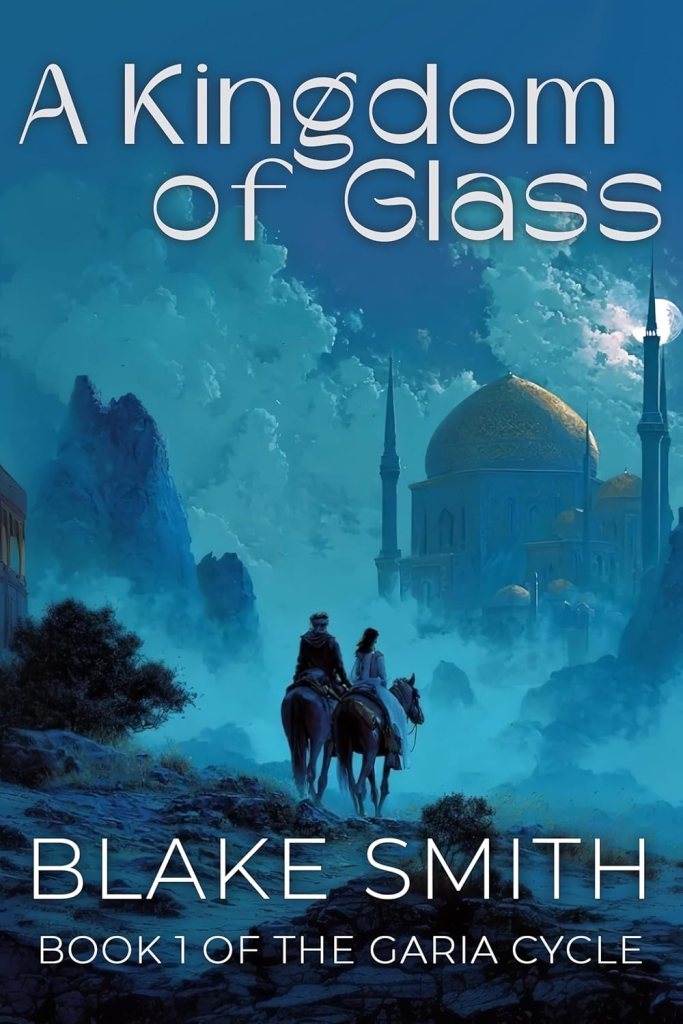
FROM BLAKE SMITH: A Kingdom of Glass: A Novel of The Garia Cycle

In a kingdom of secrets and silk, one girl must choose between duty and her heart.

Zara has spent eleven blissful years in the sun-drenched kingdom of Garia, where she rides free across a vast grassland, shoots her bow beneath starlit skies, and calls her foster family’s castle home. But when a royal summons arrives, her golden world shatters like spun glass.

Thrust into the cold, formal courts of the East Morlans—a realm of rigid etiquette and deadly politics—Zara must navigate an arranged marriage to a stranger, reconnect with a family she barely remembers, and survive the unforgiving world of noble society.

Gone are the warm winds and open skies of her beloved home. In this land of marble halls and suffocating tradition, every word is measured, every gesture scrutinized, and falling in love might be the most rebellious act of all.

As court intrigue swirls around her and threats close in from every side, Zara must discover who she can trust—and what she’s willing to sacrifice—to reclaim the freedom she left behind in the endless plains of Garia.

Some cages are gilded. Some prisons are palatial. But Zara’s heart belongs to the steppe.

Perfect for fans of court intrigue, swoon-worthy romance, and heroines who fight for their own destiny.

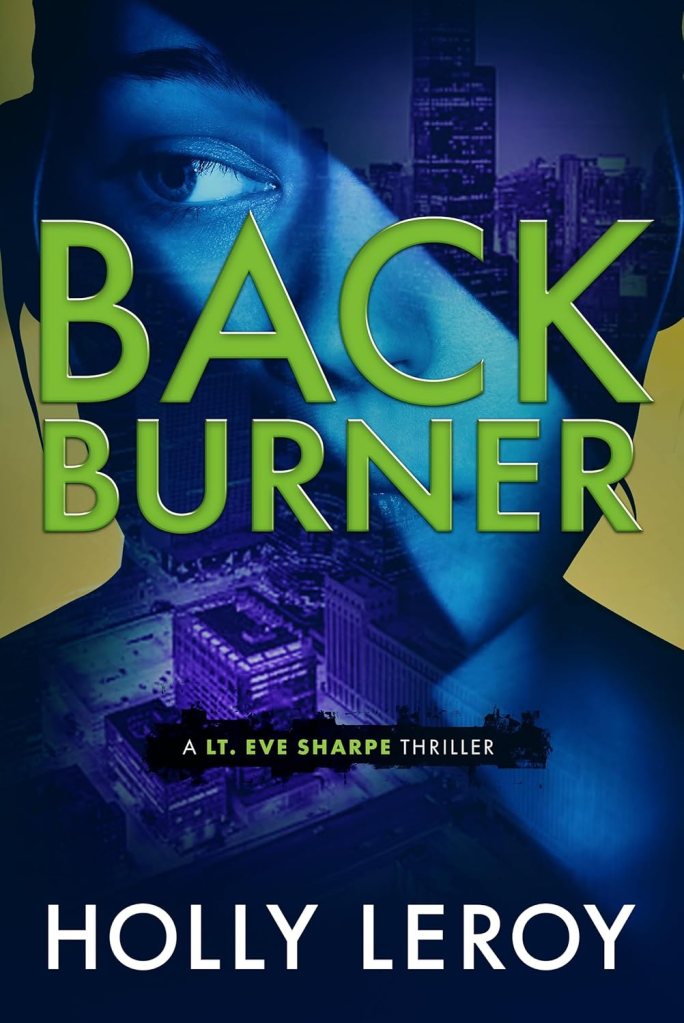
FROM HOLLY LEROY: Back Burner – A Lt. Eve Sharpe Thriller: Book 2 (Lt. Eve Sharpe Thrillers)

You don’t become a Homicide legend without surviving your first monster.

A gripping crime thriller full of emotional stakes, razor-sharp tension, and a killer you’ll never forget.

Before Lieutenant Eve Sharpe earned her reputation for solving Chicago’s toughest cases, she was a rookie cop trapped in a dead-end beat and ready to quit. But when a close friend is found murdered and the case is buried by Homicide, Eve refuses to walk away.
Driven by justice and a gut feeling that something isn’t right, Eve launches her own investigation. What she uncovers is a pattern of brutal killings stretching across the city, all tied to an elusive, sadistic killer who doesn’t leave survivors.
Now, Eve is no longer chasing justice. She’s racing the clock.
Because the killer has a list—and her name is on it.

•Perfect for fans of gritty police procedurals and psychological thrillers.

•Loaded with suspense, dark twists, and a fierce heroine who won’t back down.

•Appeals to readers of Michael Connelly, Lisa Gardner, Karin Slaughter, and J.A. Konrath.

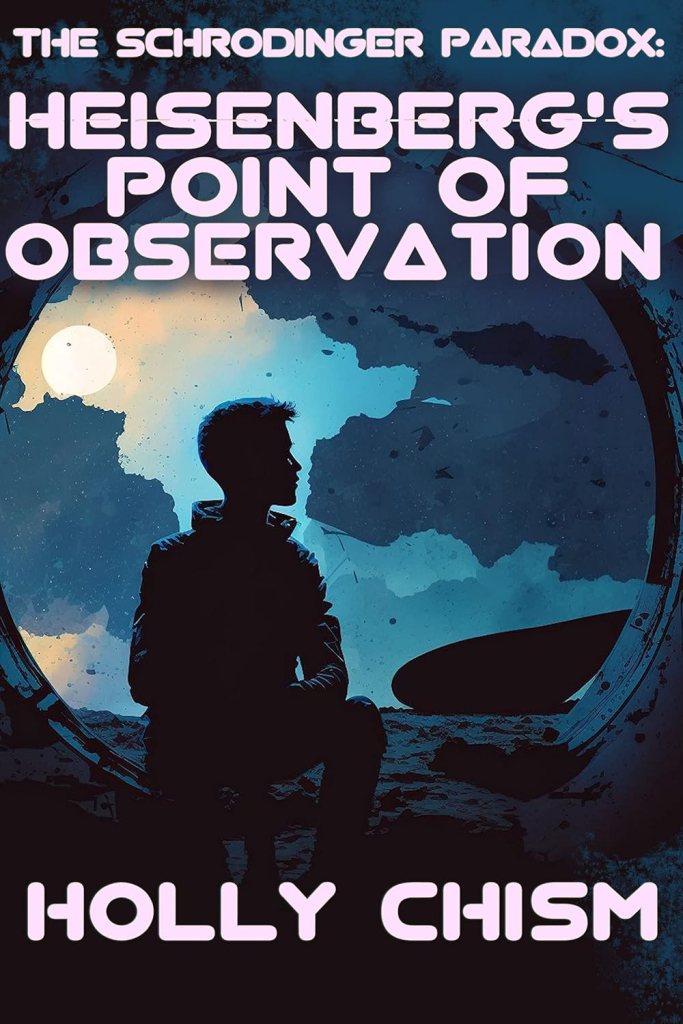
FROM HOLLY CHISM: The Schrödinger Paradox: Heisenberg’s Point of Observation

To save the future, sometimes you have to reach to the past.
Thomas Sutton was not your average fourteen year old, not even in an Ark City. Born in one of the three refuges of the last remnants of life on earth, deep underground, he knows his history. A century after an asteroid shattered and struck the earth, they have been trapped below by volcanic eruptions, toxic gasses, and radioactive dust. But what if he could…change things? What if he could reach the past, to prevent the asteroid’s impact?

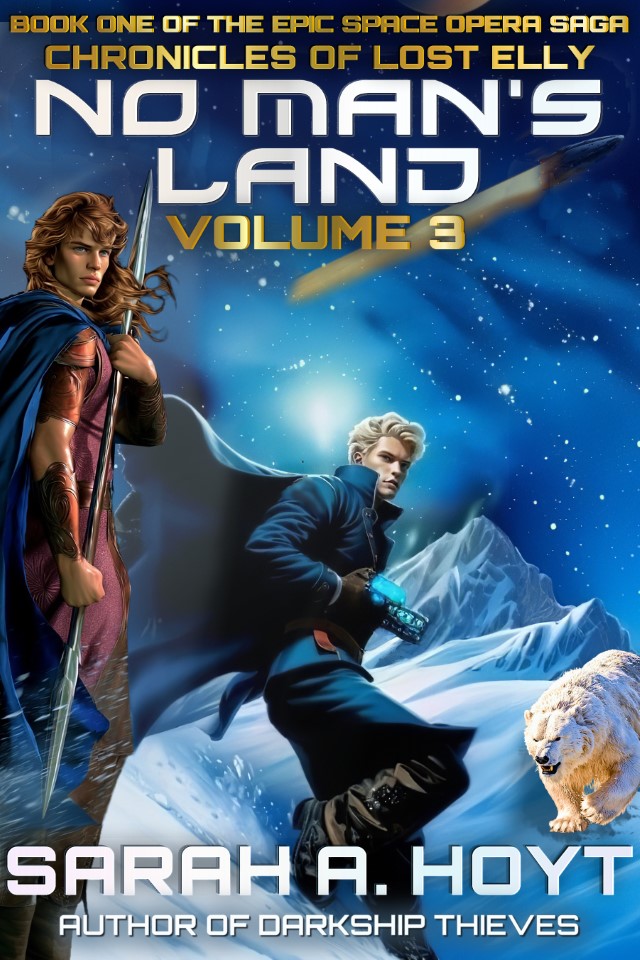
https://amzn.to/3JsvQoFFROM SARAH A. HOYT: No Man’s Land: Volume 1 (Chronicles of Lost Elly)

Sufficiently advanced science is indistinguishable from magic.

On a lost colony world, mad geneticists thought they could eliminate inequality by making everyone hermaphrodite. They were wrong. Catastrophically wrong.
Now technology indistinguishable from magic courses through the veins of the inhabitants, making their barbaric civilization survivable—and Publius Cornelius Scipio Africanus Kayel Hayden, Viscount Webson, Envoy of the Star Empire—Skip to his friends— has just crash-landed through a time-space rift into the middle of it all.
Dodging assassins and plummeting from high windows was just the beginning. With a desperate king and an archmagician as his only allies, Scipio must outrun death itself while battling beasts, traitors, and infiltrators bent on finishing what the founders started: total destruction.
Two worlds. One chance. No time to lose.

Volume 1
The Ambassador Corps has rules: you cannot know everything, don’t get horizontal with the natives, don’t make promises you can’t keep.
They’re a lot harder to follow when assassins are hunting you, your barbarian allies could kill you for the wrong word, and death lurks around every corner.
The unwritten rule? Never identify with the natives.
Skip’s already broken that one.
Now he’s racing against time to save his new friends from slavery—or worse—while dodging energy blasts and political intrigue. One crash-landed diplomat. A world of deadly secrets. And absolutely no backup.

Some rules are meant to be broken. Others will get you killed.

FROM LEIGH KIMMEL: The Wolf and the Well-Tempered Clavier

With the coronation fast approaching, the Cathedral of St. George the Dragonslayer cannot afford trouble. But come it does, while the cathedral choir director is at the Dragon’s Breath Organ, practicing the anthem he wrote at King William’s own request. While explaining some technical terms to his understudy, the choir director decides to show off a little.

In the process, he releases an ancient menace from long before humanity came through the worldgate to this place. An entity that strikes him blind, and threatens further harm to anyone who tries to play the Dragon’s Breath Organ.

However, they dare not disappoint His Majesty, not on the most momentous day of his reign. Someone must cleanse the Dragon’s Breath Organ of this malicious entity, and the choir director cannot. So the task falls to Miss Anne Teesdale, understudy organist.

Now she must delve into the history of the cathedral, and the mysterious ancient magic that fills the organ’s windchest. A secret that may well cost this young woman her life.

Or worse, her sanity.

An Ixilon story.

FROM RETRO ROCKETS: Retro Sci-Fi Pinups Volume #1: Yesterday’s Women of Tomorrow

Retro Sci-Fi Pinups, Volume #1″

Making use of the latest 21st Century Artificial Intelligence’s ability to generate images, And assisted by some merely Human Intelligence’s ability to curate and edit said images, We’ve attempted to recreated the thrill and wonder of the Golden Age of Science Fiction combined with the Universal Allure of Pretty Girls in Short Skirts and Skin Tight Spacesuits,

Here is a collection of 100 AI rendered art works featuring Yesterday’s Women of Tomorrow.in all their Winsome Glory. Inside you will find

  • Intrepid Space Cadets,
  • Amazing Astronauts,
  • Comely Cosmonauts
  • Space Babes
  • Mini-skirted Moon Base Operators and Starship Crew Members
  • and other Sultry Sirens of the Spaceways.


Inspired by fond memories of:

  • Sci-Fi Covers of books, magazine and comics. (Amazing Stories, Planet Stories, Weird Science)
  • Sci-FI B-Movie stills and posters, (Forbidden Planet, Flash Gordon, Queen of Outer Space, Barbarella, Star Wars)
  • Sci-Fi Television shows (Star Trek, Space Patrol, Dr. Who. Buck Rogers)

We hope you enjoy our featured presentation.

Vignettes by Luke, Mary Catelli and ‘Nother Mike.

So what’s a vignette? You might know them as flash fiction, or even just sketches. We will provide a prompt each Sunday that you can use directly (including it in your work) or just as an inspiration. You, in turn, will write about 50 words (yes, we are going for short shorts! Not even a Drabble 100 words, just half that!). Then post it! For an additional challenge, you can aim to make it exactly 50 words, if you like.

We recommend that if you have an original vignette, you post that as a new reply. If you are commenting on someone’s vignette, then post that as a reply to the vignette. Comments — this is writing practice, so comments should be aimed at helping someone be a better writer, not at crushing them. And since these are likely to be drafts, don’t jump up and down too hard on typos and grammar.

If you have questions, feel free to ask.

Your writing prompt this week is: Heat

Winning Is A Possibility

Listen here: Everything is not crappy. That’s just a lie Big Crap tells you.

The future isn’t written in stone. Or if you prefer there is a strong possibility that, in the words of my generation, “The future is so bright I got to to wear shades.”

Look, it’s not guaranteed. The future never is. And we will have to work a lot and do our best to get there.

But the work might not be as insanely difficult as you’re anticipating right now. And we’re not going to have to be hip deep in blood most of the time or — possibly! — at all. And it’s also likely we won’t be metaphorically speaking walking uphill in snow both ways most of the time (or — possibly — much time at all.) And — hear me out, okay — it’s just possible, just vaguely possible that everything isn’t shit and getting worse. It’s possible that things are going to get better. Are getting better all the time.

Not perfectly better, of course, because we’re human and this is a fallen world, so it’s two steps forward, one step back (I know whence I speak. I said what I mean) but better.

Look, if I were a believer in massive conspiracies, I’d say that we’ve been under a concerted barrage of entertainment/news/propaganda designed to convince us the world is a terrible, dark place; all humans are shitty beings; nothing is worth it; we might as well give up.

Actually I am a believer in conspiracy theories of sorts, by virtue of being a believer. And if you are, you know exactly what that conspiracy is, and who the author of it is. He never did like humans much, and if he can get us to descend to his level, it’s all to the best.

But other than that, and leaving aside woo stuff, it’s not a real conspiracy theory. Though it might be a prospiracy.

You see, under mass media, all the information/entertainment industrial complex was taken over by Marxists (Communists, socialists, the whole damned mess of them, if indeed there is any difference but in speed of implementation. Every socialist I know calls himself a communist when amid fellow travelers) with the idea, way back then, of leading humans to the great glorious communist future.

Except the great glorious communist future never materialized. And in fact all their plans keep turning to ashes and dust. Since they never can figure out it’s the philosophy that’s broken, they keep being disappointed in all the world and everyone in it.

In that way they’re a lot like the crazier Christian sects. They’ve become disillusioned with the world and all in it for refusing to live up to their concept of adamantine perfection. And they know people are doing it on purpose to be difficult, because after all, it’s so easy, “if only everybody.” So people are terrible, the worst, and the world is a place of suffering and punishment. They’re different from the crazy Christian sects (Why do I say that’s crazy? Well, chilluns, because He created the world and “saw that it was good.” Even if the fall made it flawed, some/a lot of the good remains. So kick the black dog and stop spiraling) in that Christians believe in redemption and hope eternal. While the Marxists don’t, so it’s all terrible, it’s always terrible and then you die.

This also combines with a spiteful wish to punish the world and humanity in general for breaking their little red wagon. (I mean what I say and say what I mean.) So, humans are terribad, and they should all die and leave the world to…. termites or bacteria or whatever they deem is far away enough from humans to be untainted today. After all, humans could be perfect and leave in perfect communism “if only everybody” so they’re all horribad, obviously.

This is the mindset behind all the information and entertainment complex, and we drank it with our mothers’ milk, even those of you who were bottle fed, and even those of us on the right and swimming against the current.

So, of course you think everything is bad and getting worse, and everything is dross and horror.

If you let Ian Bruene have five minutes, he’ll rattle off all the improvements in the last fifty years in gun rights. And I can rattle off all the improvements in education — yes, education. I don’t mean public education, cawkers, but education is so much more than that — and access to information and to like minded thinkers in the last twenty years. I can also tell you that not only is it much easier not to be a leftist NOW than in the rest of my life, but ALSO that things are turning, and our star is ascendant. Doesn’t mean we won’t have to eat live frogs for a decade or two, depending, but I’m more convinced than ever that Reagan was right and in the end we win, they lose.

As for humans? No, they’re not perfect, but a majority of humans are just trying to be decent and do the best they can for themselves and those that depend on them. And a good number are willing to extend that kindness to total strangers.

Humans as a whole are not actually evil, if for no other reason that that being utterly evil takes too much effort. And humans as a rule don’t wish for the worst for everyone else. Humans have SOME control over their thoughts, impulses and wrong doing. Humans, as a whole, are individuals. And as individuals they present a fascinating array of behavior and belief that includes the possibility of heroism, kindness and joy.

One of the things responsible for this post is people who have read the three e-arcs of No Man’s Land thanking me for not having pointless evil just show up in characters we care about; not having pointless deaths just to show I’m serious; not taking the whole world to sh*t just to pretend it’s deep. I was shocked at first, and then I realized 40 years ago I’d absolutely had done that, because it’s what I was taught, and it’s the way I’d been taught serious writing should be done.

Which explains the panoply of grey evil ragged blah that has invaded all our entertainment. I’m sick and tired of husband watching something that looks like it will be a fun adventure and fifteen minutes later I look up and realize what I heard wasn’t a mistake. All these people are committing atrocities because THEY CAN even though they’re supposed to be the good guys. (People, the Stanford Prison experiments were fake and a lie. Get them out of your head.)

It explains the crapification of our culture.

And then this morning my husband told me, out of the blue, apropos nothing: Everything is not crappy. That’s just a lie Big Crap tells you.

He has no idea why he said that. It just struck him out of the blue. But it’s true.

They’re in a big depressive pet, rolling on the cultural floor and throwing a fit.

It doesn’t mean you have to give them mind space. In fact you absolutely shouldn’t.

Like the Lady of Shallot’s their mirror has cracked from side to side, and their doom is coming upon them.

But their doom is not ours. Us? We’re going to the stars. We have only just begun. And our future’s so bright we’re going to have to invent better shades.

Go forth and build and create. The future can be better than you imagine. It can be better than you can imagine.

And it’s up to us.