Book Promo And Vignettes By Luke, Mary Catelli and ‘Nother Mike

Book Promo And Vignettes By Luke, Mary Catelli and ‘Nother Mike

Posted on by Sarah A. Hoyt

Book Promo

If you wish to send us books for next week’s promo, please email to bookpimping at outlook dot com. If you feel a need to re-promo the same book do so no more than once every six months (unless you’re me or my relative. Deal.) One book per author per week. Amazon links only. Oh, yeah, by clicking through and buying (anything, actually) through one of the links below, you will at no cost to you be giving a portion of your purchase to support ATH through our associates number. A COMMISSION IS EARNED FROM EACH PURCHASE.*Note that I haven’t read most of these books (my reading is eclectic and “craving led”,) and apply the usual cautions to buying. I reserve the right not to run any submission, if cover, blurb or anything else made me decide not to, at my sole discretion.SAH

FROM PAM UPHOFF: Outer Tiers (Chronicles of the Fall Book 18)
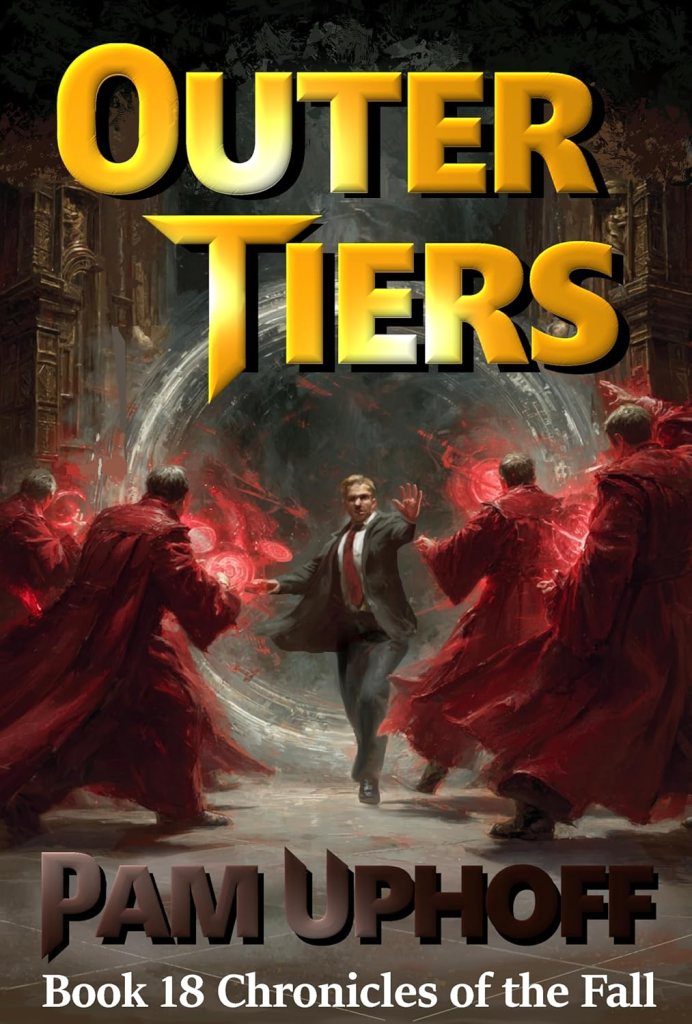
Konstantin Aslanov is back!

And posted to an Outer Tier World with an orphaned guardian’s store–the official name of the oft rumored “Doomsday Cubes” so popular in cheesy spy movies.

He hadn’t counted on children in danger, buying a hundred race horses, or running head on into a corrupt colony government. But with newly acquired sidekicks, it’s full speed ahead to save an entire World as Plagues and Invasions hit the entirety of the Three Part Alliance!

FROM NATHAN C. BRINDLE: All Precious Stones and Peoples (Timelines Universe Book 11)
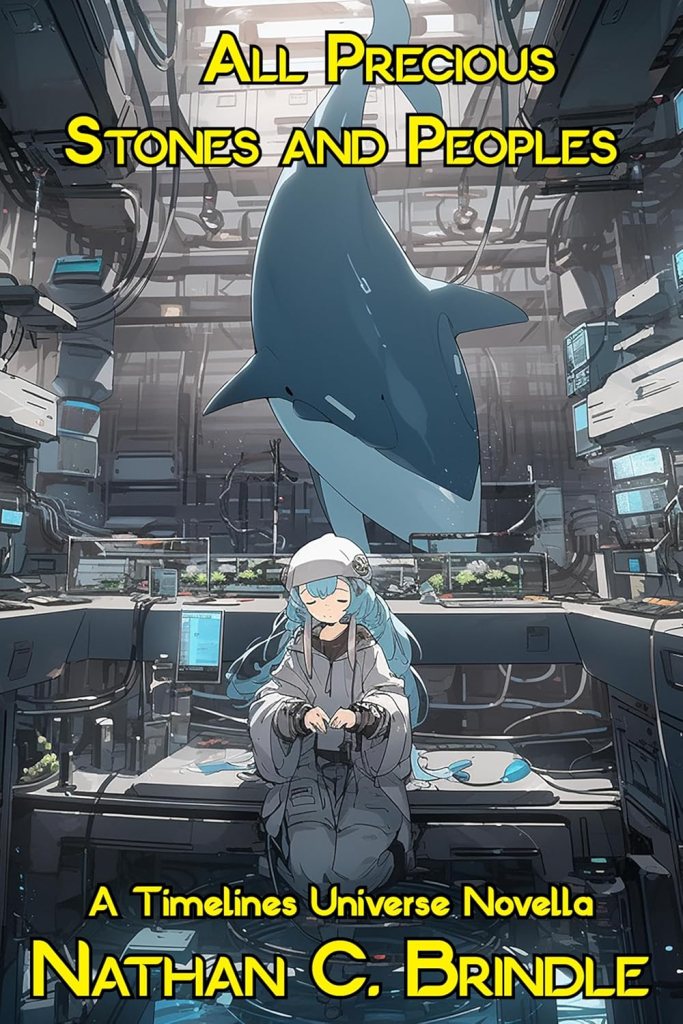
Once, a million years ago, a water world populated with dolphin-like beings, the product of gene-alteration by their Progenitors on the Earth-like world one orbit closer to the sun, was flung into the cold and dark of interstellar space by the passage of a rogue star.

And four thousand years ago, its engineers were awakened from suspended animation to bring the world into a new orbit around a giant, blue-white star, where the waters of the World Ocean could thaw and life could continue to flourish.

This is the story of the A’ka’pa’i’ka’ti, and their Foretold Saintess, Speaker to the Dry Ones, born to communicate with the Progenitors when they finally arrived to reclaim the lost . .

FROM DENTON SALLE: The Summoned Sage: The Summoned Sage Book 1
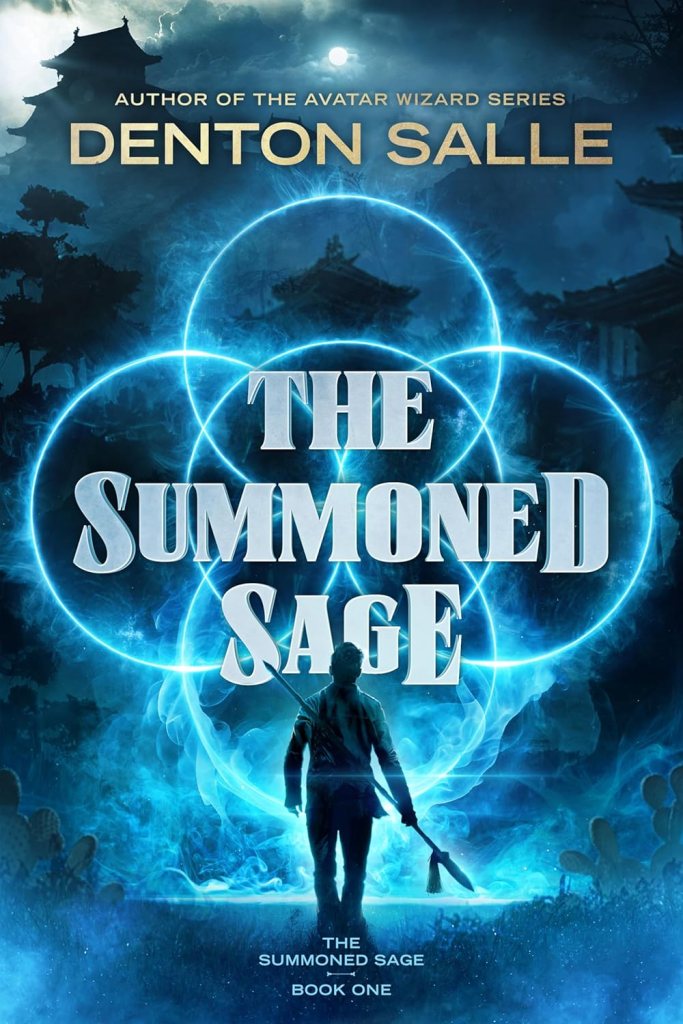
“Don’t bother. I’m already dead,” the man said. “Only a spell keeps me here.”
I froze and he continued speaking. “I am sorry I had to summon you. I wanted a young hero, not a sage. But someone must carry the scroll to my teachers, lest the world end in blood and terror.”

A dying scribe-magician ripped me from my retirement in Texas to help save his world. A world kind of like Old China, where the legends and tales about cultivators are real. And I have no idea how this works. All I have is some years of practicing an internal martial art.

But I’m trying to complete his quest as thugs from a tong, monsters, and other cultivators hunt me before some catalysmic event destroys the world. They killed him for this scroll, and I’m pretty sure I’m next. If the foxes or fu dogs don’t eat me first.

And I’ve picked up this girl by mistake, which complicates things even more. Maybe I don’t want to go home? But can I even survive in a world like this? Assuming I can complete this quest before it all goes to hell?

If you enjoy Beware of Chicken or the Unintended Cultivator, you’ll love this isakai adventure where a man from Texas finds the magic powers of taoist myth are real and a world depends on his choices.

Scroll up and one click to start reading this fantasy adventure today!

FROM CELIA HAYES AND JEANNE HAYDEN: A Full Dozen of Luna City (The Chronicles of Luna City Book 12)
The final chapter in the modern day chronicles of Luna City; where Richard Astor-Hall and Kate Heisel plan their wedding, Police Chief Joe Vaughn discovers that he is famous, the fabled Mills Treasure may have been found at last, and Miss Letty McAllister reveals all, in explaining the mystery of a rarely-seen ghost in the Cattleman Hotel.

BY CASEY NASH, ROBERT HANLON AND SCOTT MACREA: U.S. Marshals Timber, Flint And Jubal Stone: Showdown at Red Hollow: A Western Adventure (A U.S. Marshal Ezra Flint Western Book 7)
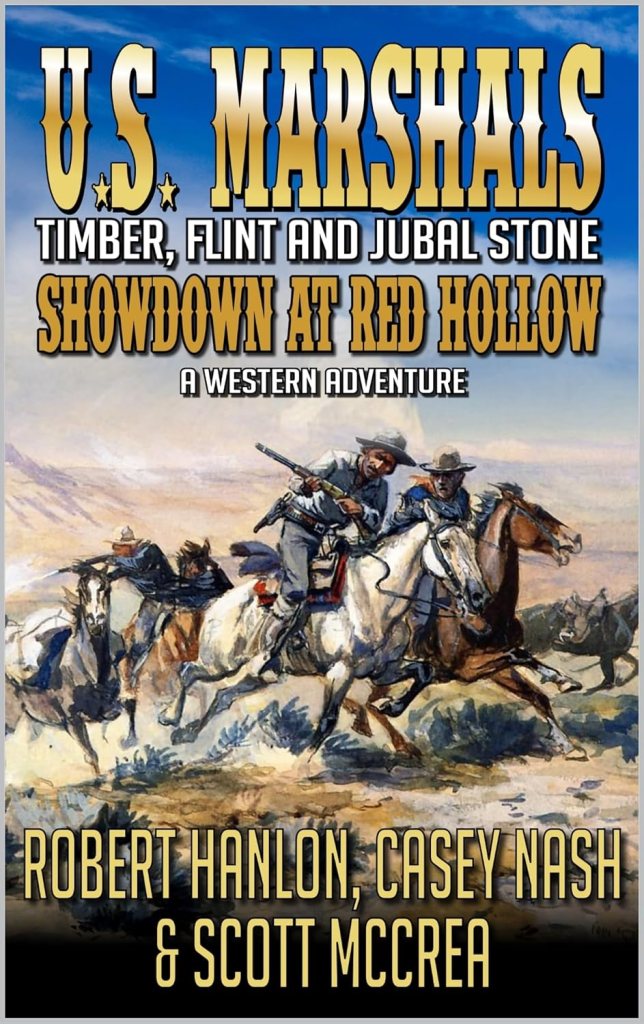
If you thought the stakes could not get higher when Marshals Timber, Flint and Stone teamed up for The Long Trail to Justice, then you haven’t imagined the dangers of their next adventure, Showdown at Red Hollow!

Jake Timber, Ezra Flint and Jubal Stone join forces to investigate the murder of a fellow marshal just outside the boomtown of Red Hollow. It looks like the work of the outlaw band The Crimson Veil, but soon the marshals realize they are caught in a bigger, more dangerous conspiracy.

Facing a ruthless team of hired killers, a renegade band of Comanche, a crooked politician bent on crippling the town, and the most efficient killing machine of the Wild West, Timber, Stone and Flint race to their ultimate confrontation… the Showdown at Red Hollow.

Showdown at Red Hollow is the pulse-pounding follow-up to The Long Trail to Justice, the first-ever teaming of Jake Timber, Ezra Flint and Jubal Stone. Now, acclaimed authors Robert Hanlon, Scott McCrea and Casey Nash come together to produce another white-hot, classic Western Adventure!

EDITED BY D. JASON FLEMMING: The Victober Collection 2023: 3 Classic Victorian Novels
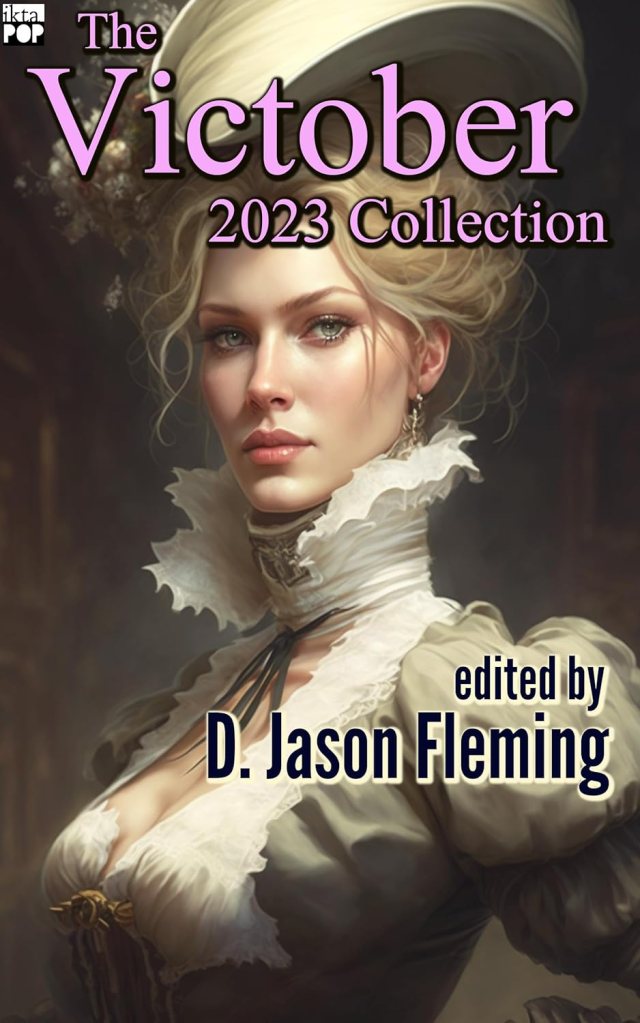
Three classic Victorian novels, almost in time for the month of Victober!

Black But Comely

Born to gypsies, raised by Jews, Jane Lee turns eighteen and decides to win her way into the upper classes of Victorian society. Her heritage won’t let her go, but her single-minded will and cunning are a match for any gypsy plots against her.

Marmorne

The British Segrave brothers were as different as could be. Emil, the eldest and a solicitor, was passionless and precise. Julius, the middle brother, had enough energy for three normal men, so his decision to mount an expedition to Africa was no surprise. Youngest, Adolphus, was the peacemaker between the other two.

How their fates became tied to the quaint French village of Marmorne, and the Prussian invasion of France, none of them could have foretold…

Sweet Anne Page

Sweet Anne Page is an ideal to everyone who meets her. To Stephen Langton, she is the youthful ideal of love. To Humphrey Morfill, she is the ideal way to marry into money. To Claudia Branscombe, she is the ideal foil, a distraction that enables her plots and intrigues. And to Raphael Branscombe, she becomes the ideal path to revenge…

FROM LEIGH KIMMEL: Everything in 24 Frames
Twenty-four frames equals one second of motion-picture film.

Cather Hargreaves learned that fact for class, but as an abstraction. Now that he’s going on a tour of a movie studio and its back lots, he’s about to get real-life experience in just how movies are made.

What he didn’t expect was being tossed into a real-life horror, as the war against sectarian violence suddenly comes home to the City of Angels. It’s a moment that will change the course of his life forever.

When life is on the line, 24 frames can be an eternity.

A short story of the Grissom timeline.

FROM DALE COZORT: Wokuo Incursion

Invasion from an alternate timeline?
It’s December 1937 in a world exactly like ours except that it is about to veer wildly into alternate history. It’s less than two years before World War II broke out historically in Europe. War has already come to much of Asia, with Japan invading China. An isolationist US fears it will be drawn into that conflict, especially after the Japanese sink the US gunboat Panay. Just when President Franklin Roosevelt thinks he has that crisis under control, he faces a bigger issue. High tech descendants of the Wokuo, Japanese pirates and smugglers who should have vanished over three hundred years ago, flood into the Pacific coast off California.

The Wokuo are both refugees and invaders, fleeing from war in an alternate reality where they survived and grew strong, while looking for new conquests to replace their lost empire. They set their sights on California. President Roosevelt sends disgraced former Colonel Martin to California to organize resistance to the invaders, but the Colonel has his own issues, buried deep in his brain and waiting to cause disaster.

FROM BLAKE SMITH: The Hartington Inheritance (The Hartington Series Book 1)
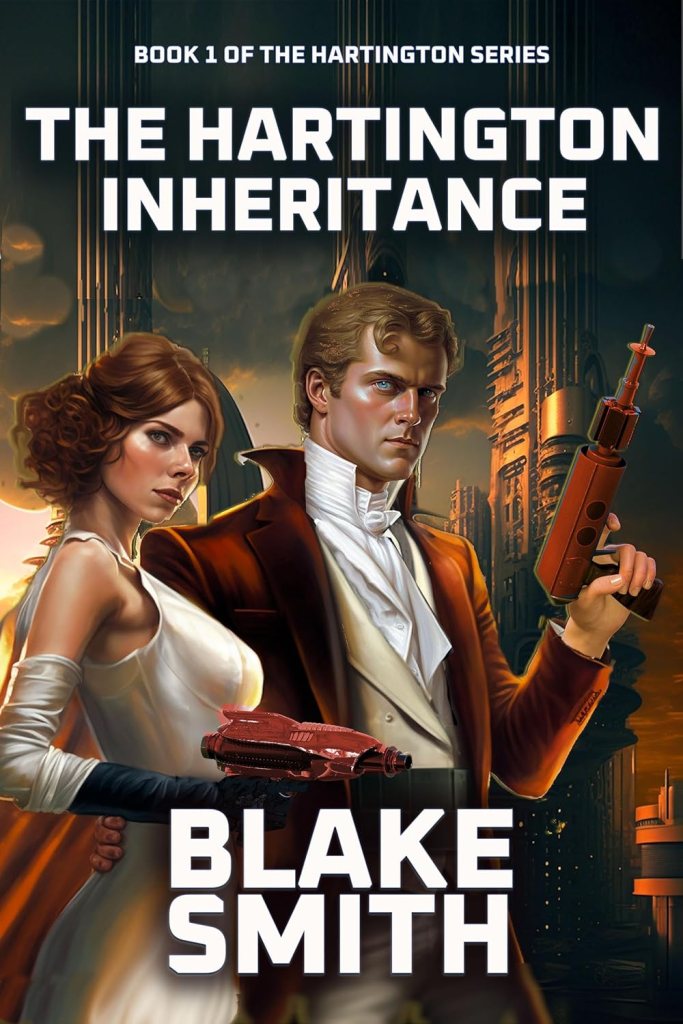
Almira Hartington was heir to the largest fortune in the galaxy, amassed by her father during his time as a director of the Andromeda Company. But when Sir Josiah commits suicide, Almira discovers that she and her siblings are penniless. All three of them must learn to work if they wish to eat, and are quickly scattered to the far reaches of the universe. Almira stubbornly remains on-planet, determined to remain respectable despite the sneers of her former friends.

Sir Percy Wallingham pities the new Lady Hartington. But the lady’s family will take care of her, surely? It’s only after he encounters Almira in her new circumstances that he realizes the extent of her troubles and is determined to help her if he can. He doesn’t know that a scandal is brewing around Sir Josiah’s death and Almira’s exile from society. But it could cost him his life, and the lady he has come to love.

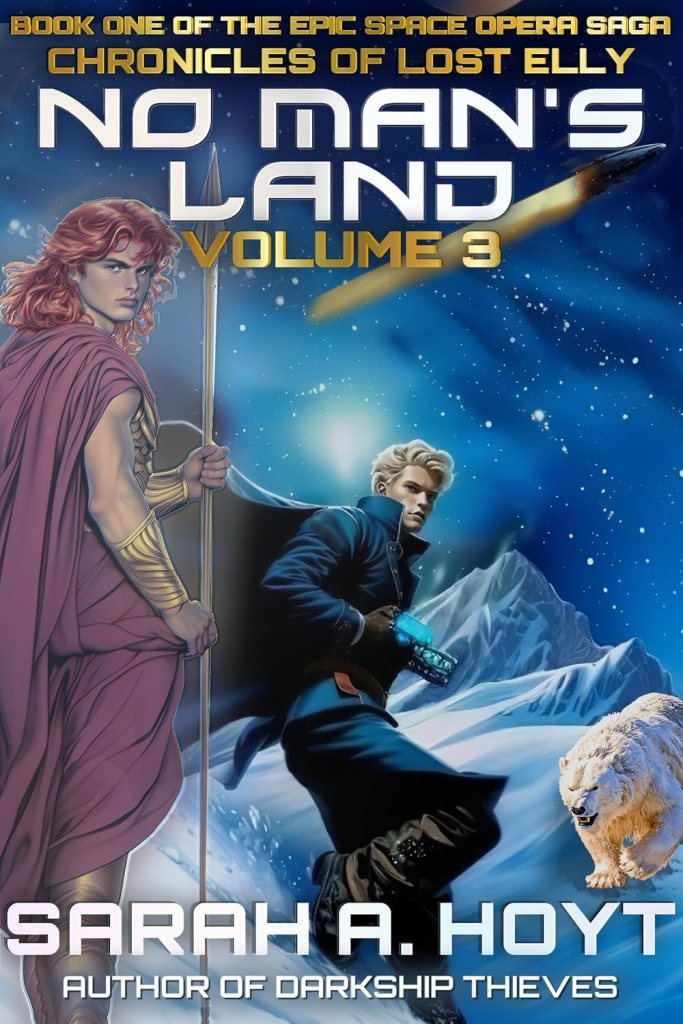
AND YES I’M GOING TO REMIND YOU: No Man’s Land: Volume 3 (Chronicles of Lost Elly) is out.
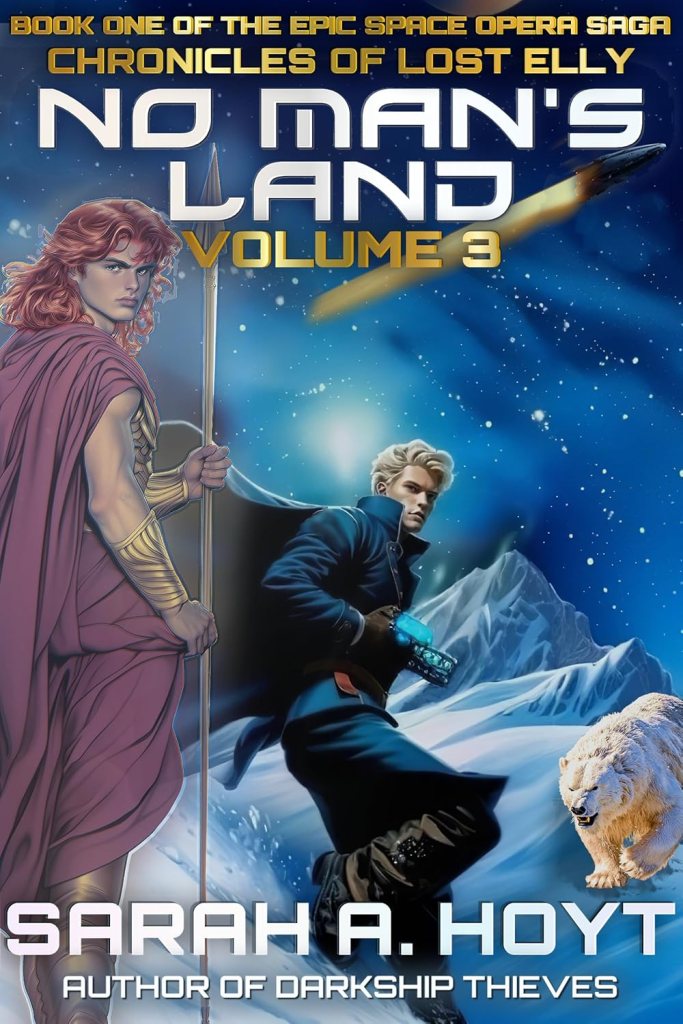
Sufficiently advanced science is indistinguishable from magic.
On a lost colony world, mad geneticists thought they could eliminate inequality by making everyone hermaphrodite. They were wrong. Catastrophically wrong.
Now technology indistinguishable from magic courses through the veins of the inhabitants, making their barbaric civilization survivable—and Publius Cornelius Scipio Africanus Kayel Hayden, Viscount Webson, Envoy of the Star Empire—Skip to his friends— has just crash-landed through a time-space rift into the middle of it all.
Dodging assassins and plummeting from high windows was just the beginning. With a desperate king and an archmagician as his only allies, Scipio must outrun death itself while battling beasts, traitors, and infiltrators bent on finishing what the founders started: total destruction.
Two worlds. One chance. No time to lose.

To compensate, if you’ve missed the first three tracks of No Man’s Land Sound Track (WHY do you monsters suggest stuff like this to me when I’m stressed and weak?) they’re on youtube. (And yes, they will be up for sale and given for free to my paid substack subscribers. BUT first I need to deal with the sequella of mom’s death (sorry. It’s eating my life.)) And there are two more I need to put up before I go clean the grotty house. If I get them up before tonight, I’ll put up a post later today.

No Man’s Land Sound Track.


Vignettes by Luke, Mary Catelli and ‘Nother Mike.

So what’s a vignette? You might know them as flash fiction, or even just sketches. We will provide a prompt each Sunday that you can use directly (including it in your work) or just as an inspiration. You, in turn, will write about 50 words (yes, we are going for short shorts! Not even a Drabble 100 words, just half that!). Then post it! For an additional challenge, you can aim to make it exactly 50 words, if you like.

We recommend that if you have an original vignette, you post that as a new reply. If you are commenting on someone’s vignette, then post that as a reply to the vignette. Comments — this is writing practice, so comments should be aimed at helping someone be a better writer, not at crushing them. And since these are likely to be drafts, don’t jump up and down too hard on typos and grammar.

If you have questions, feel free to ask.

Your writing prompt this week is: CARVE

Oh Deary Me. Clankers Again

Y’all are MONSTERS. MONSTERS. I was standing on the corner, minding my own business (probably reading my Heinlein) when suddenly some baaaaaaaaaaaaaaaaaaaaaad commenter (You are a baaaaaaaaaaaaaaaaad thing. Baaaaaaaaaaaaad.) mentioned the words “sound track for books.” And that I really should do a sound track for No Man’s Land.

It’s not like y’all don’t know I’m slightly on the spectrum (like people are slightly pregnant while screaming into the delivery room) and likely to become obsessed with stuff involving writing poetry and playing with clankers for music and–

Well! Now there are three tracks (though the chapter with Skip hiding in beds made me profoundly uncomfortable, it makes a fun song. The “He came to me in a dream” Probably called “Prodigal Son” but not written YET (unless I’m sitting down tonight and hit hits me) links up with his training for the Interplanetary Diplomatic Service. It will be the refrain.

I hope y’all are happy with yourselves. And yes, chapters WILL get written, today hopefully. The reason they’re late is more that I’ve been helping the Littler Pickle (younger DIL) fix up a space for storage for her stuff.

Dan says I’m actually writing a Rock Opera and wants me to do a screen play. If I kill him I was playing poker with y’all all night, right.

He also wants me to do videos with the lyrics, and that I CAN do it’s just going to take learning how. Chapters for Witch’s Daughter first, because it’s “this” close.

So, from the Top, what I have Right NOW on the No Man’s Land Playlist:

Track 1:

Track 2: (And if you haven’t read the book, read the description, otherwise you’ll be MIGHTY confused.)

Track 3:

THAT’s it. For now.

Until our next episode of “Pointing the writer at clankers and not even saying we’re sorry!”

That’s Not How Any of This Works!

There are reasons to be afraid of AI. None of them are inherent to AI, though. They lie at the intersection of AI and human stupidity.

No, you are not at risk of AI going sentient. Would you people stop with that? That’s science FICTION, not reality. AI is like a giant calculator that can absorb everything you feed it, including words and images. But it’s still a giant number-sorter. It’s not going to become our overlord. And those of you who are pushing this are driving my poor priest insane, so please stop it. I don’t like being asked to pray that AI doesn’t become an impious intelligence ruling us, okay? I can hear the Author laughing in the back of my mind when he does that.

No, you are not at risk of AI trying to kill you because it’s jealous of humanity. When Heinlein implied a danger of that sort it was with cyborgs. Kindly look up cyborgs to understand why that would be a risk. There’s a human brain involved.

And no AI is not going to do any of the scary things that “science fiction warned us about” anymore than cloning is going to create someone who looks exactly like you, is your age and can pass. At most — if they iron out the rapid-aging kinks — it can create your baby-identical-twin. I figure it could be great for parents who lose their only (adult) child, say or couples who want to avoid some horrible genetic issue with one of them. But for having your replicant show up at the door wearing identical clothes to what you have on and knowing everything you know? NO. It’s great fiction, but it’s based on Doppleganger legends, not science anything.

“But Sarah, in the future–“

That’s bull with a side of sh*t. The future still has hard biological limiters, like humans aren’t born at age forty. Unless of course you just way “future” when you mean “magic.” Sure, maybe in the far far future, but that hardly matters. If we get to that point there’s other things to worry about. (And there’s the reason most of my books are 4 to 5 hundred years in the future. Sometimes more.)

Guys, let me give you a tiny hint here “Science fiction warned us” really means “Guys and gals who were writing by the rule of cool and trying to make their next month’s rent warned us.” Now, is that scary? Of course not. It’s people writing drama to pay their rent.

Do most of them know what they’re talking about? Well, people like Heinlein did. That’s why he doesn’t have any big insanity like that. But most of my colleagues? Dear Bob (Heinlein.) Remember these are the people who write regencies with exploding carriages and the duchess taking the gig to the supermarket. Stop it, just stop it.

Where AI is dangerous is when people assume the same things the alarmists do but flipped. We’ve already had a spate of suicides, losing your mind from people who think AI is real and their only friend. (This should be spelled fren for the level the reasoning is at.) And who piously believe everything AI tells them. Mind you, no, we can’t legislate against that, and if we try, these people will believe the guy on the corner, the cat, or the I-ching in exactly the same way, leading to similar results. Investing something with “human” and “loves me” and “must follow instructions” is a way humans break. And a lot of humans broke of loneliness and losing their moorings after 2020. Worry about the broken humans not AI. For AI you need only keep repeating “it’s not alive. It’s just a giant, complex calculator.”

Other dangers also come from thinking AI is an independent intelligence and “so smart” and you’re starting to see companies wanting to turn things like…. Air traffic control to it.

Now it’s fine to have AI scan and give alerts, but for the love of Bob (Heinlein) do not give it ultimate decision powers. IT CAN’T THINK. And it makes really strange errors no human would make.

Which leads us to the other part of it: STOP RUNNING AROUND WITH YOUR HEAD ON FIRE SAYING THAT AI WILL STEAL ALL THE JOBS.

The thing to do when your head is on fire is stop, drop, roll. Then put your head under water till the fire goes out or bubbles stop coming up. What? Oh…. see, this idiocy has just got on my nerves so badly.

Look, yeah, AI might take YOUR job. There are some highly specialized fields that AI can do better. I’m aware of them, because one might have been mine, if I’d taken a very clear fork in my life about 34 years ago. Scientific translation can’t be done entirely by AI, but it can be done now well enough that junior translators can do the verification run, and therefore senior — highly paid — translators can be laid off.

This sucks, of course, if it’s your job they come for. And if you are my age or older and tired you might decide it’s all over and retire. But you don’t have to. It just means you have become inviable for a large company to pay you a huge salary. But — hello! — AI means you can set up your own shingle and start your own company and make the same or more, because you, in your house, in pajamas, can have the work of a team of “junior translators” at your fingertips.

I understand it’s more or less the same for programmers and I understand it from my husband who has a degree in math and has been walking the fine line between math and programming for 40 plus years. He knows that AI “junior programmers” can be trusted even less than human junior programmers, but on his own time, with the fifteen or so projects he plays with in the basement (he swears one of them ISN’T a time machine, but I know the conversations I’ve overheard between him and younger son) he uses them a lot, to cut time and effort that he’d have to donkey-carry himself line by line otherwise.

It is not in any way shape or form an ender of work, but a modifier. It makes some things much, much easier, saves a lot of boring, repetitive work, and frees the people who can do more to do more.

Like…. every other major innovation in the history of humanity.

Stop throwing sabots into AI. It’s not here to steal your jobs. It’s here to make sure (metaphorically speaking) cloth is way cheaper, everyone can have more than two sets of clothing, and no one has to work dawn to dusk in dark satanic mills.

Here’s the secret: Humans will find other things to do.

And for that matter, no, it won’t mean people don’t develop skills. Yes, younger people are grossly maleducated, but you don’t get to blame AI for the malfeasance of the NEA and the department of education. (You don’t get to blame the young either. They’re the victims here.)

The truth of it while AI is MAJORLY labor saving, it’s not MAGIC. Humans still need to learn about “the thing” that they want AI to do, so they can stop it making errors, or perhaps fix the errors. Or understand what about your prompt sucks raw eggs.

I was talking to friends about this with Midjourney this morning (which I use specifically for labor saving. Because I can draw images for covers — or clanker movies. sigh — but it would take me MONTHS and I’d rather be writing which pays better for me, anyway). Prompts are…. something you sometimes need to analyze very carefully. If the AI insists on putting a giant beast and your guy in a position like they just met for a snog, it’s probably because something in your front failed to give a hint of what the relationship between these two forms is. Think of the AI as an alien. It doesn’t think that it’s improbable for humans to consort with giant bear-lions. It has all the covers of fantasy romances to scan, after all. So you need to say something like “the giant bear lion he’s hunting” and after the next horror “He wants to shoot.” instead of hunting. And sometimes the AI in alien-fashion associates something with a specific sexual perversion, and then you have to carve out your eyes with a melon baller. The word can be something like “Muscular” or “Barefoot.” And apparently it thinks evening dress means bare breasts. WHY? I don’t know. My guess would be juxtaposition with “lady of the evening.” So prompt crafting is WORK. Even if you’ve trained the AI to YOU and gotten pretty good at it. It has days too. Like the day it refused to believe women existed and I had to give it image prompts until it went “Oh, one of those.” No I don’t know what people had been running on the poor clanker that erased women from its idea of the world. And sometimes it’s like that for a day, then comes back. Right now it doesn’t understand “Super-hero comic style.” Or it didn’t yesterday. Probably will today. But again, you have to work with it, it’s not magic.

And this means it’s creating a whole class of workers, which is someone who can both dissect and rearrange word prompts and work with images to know what works. And be able to fix portions that don’t. One thing midje has done is show me that my friends who say they can’t draw really mean they can’t SEE. Even if it’s obvious an image is horrendous (I sometimes share for funsies) they go “oh, that’s pretty good.” Which probably means…. the percentage of atrocious covers won’t go down. (Let’s face it, they roamed the face of the earth long before AI. And I don’t mean “I don’t like your cover. It’s horrible.” type of art opinion, but OBJECTIVELY atrocious covers. Like you can’t tell what’s happening, or you wish you couldn’t.)

But in everything…. look, I learned to write with a quill pen partly because Portugal is nuts in a very specific way. In the 1960s there was no reason for this.

BUT in general, we learn skills that tech has superseeded, so we can check on the tech or make do if it fails. Now, I think kids should learn to write by hand, even if they’ll spend most of their lives typing. BUT I don’t think we should make them chisel the letters out of rock or write them in clay. They didn’t even do THAT to me.

So AI doesn’t mean kids shouldn’t learn art — most of art is learning to read — or poetry, or music, or definitely writing. (There might be a way to make a clanker write a novel, chapter by chapter, but from using it to write book descriptions (Y’all don’t know HOW BADLY I suck at those, for some reason) it would be torturous and painful. (I mean I need to correct about half the sentences in a couple hundred words, I just can get the “feel” which I can’t do on my own.)

There might in the future be a way to push-button write a novel. Honestly, if he who is known as Speaker to Lab Animals would hurry up with the neural interface, it’s likely to be better. But for the foreseeable future an AI writing a novel without a world-mountain of editing after belongs in the same realm as “A clone, indistinguishable from yourself including knowledge shows up at your door wearing the same clothes you’re wearing.”

I use writing as an example because I KNOW that. But talking to people who do other things affected by AI it seems to be the same everywhere. Sure, you can just “supervise AI” and do the clean up work after. And if that’s what you WANT to do, you do you. I prefer writing the thing, which then needs (relatively speaking) remarkably little clean up. But it’s a horses for courses thing.

For some occupations, right now, like for…. Oh, people who pumped gas in states not as crazy as Oregon, or buggy whip makers, or…. tech will eliminate their occupation, yes.

Just like typists were run out of jobs in the thousands…. and side stepped into “personal assistants” because their bosses still want to dictate emails. (No, no joke. Have seen it.) But also do a lot of other things that go beyond pushing keys.

AI might eat your job. So? Stack your skills into something else. Journalists probably can’t learn to code, no. (It’s a different type of mind, most of the time) but (note journalists are NOT being run out of their jobs by AI but by meretricious behavior of their own.) if they’re halfway good and honest, lots of jobs need investigative skills. And oh, yeah, AI can in fact HELP with that. Also if you bide a while websites will realize they need someone with a pulse and a human brain to check/fix AI content. So half of the idiot stories pushed make some sort of sense. (Of course this is for the rare journalist who cares about reality. I know a few.)

Stop saying AI will take/destroy all jobs. Economics doesn’t work that way. Economics — as a friend reminded me this morning (hi Jeff) exists to mediate infinite human wants with the possible. That means if your job in the realm of the possible is rendered obsolete, you have to look for unserved wants that you can use your skills on. And unless you’re profoundly depressed, you’ll see there are some.

AI isn’t the only reason that people lose jobs, and there’s always a way to work around setbacks. (For inspirational story, go here.) Staying locked in the fetal position screaming won’t help, though. And neither will demanding the government do “something”. You know what the government ALWAYS does. Its only competence is hurting its own people and taking their stuff. If you had government run the Sahara there would be a sand shortage. When you demand the government interfere, you’re more dangerous than AI will ever be.

Yes, sure, you’ll have to change, and learn and grow. But it’s always been like that. No one gets a life where they don’t do that. We just seem to be hit harder both because tech innovation is moving very fast, and because we now live long enough each of us can get to have three or four careers per life.

It’s a good problem to have. It’s a sign life is better.

So stop sulking and imagining AI is lurking under your bed, waiting to pounce. If you gave AI those instructions, it would promptly lurk under your flower bed waiting to ponce. Whatever that is.

Do not attribute magic capacities to the thing. For good or ill. But learn what it actually is. And work with it.

Have Some Clanker Songs

There will be a real post later. (We’re all out of schedule!) For now have some clanker songs.
And curse those who gave me the idea of a sound track. You know who you are! Have you no shame?
So here is the first track, Space Admiral’s Son.

And here is a redo of Forever Through No Man’s Land which youtube, inexplicably, decided was a short!

The Neolithic Flex

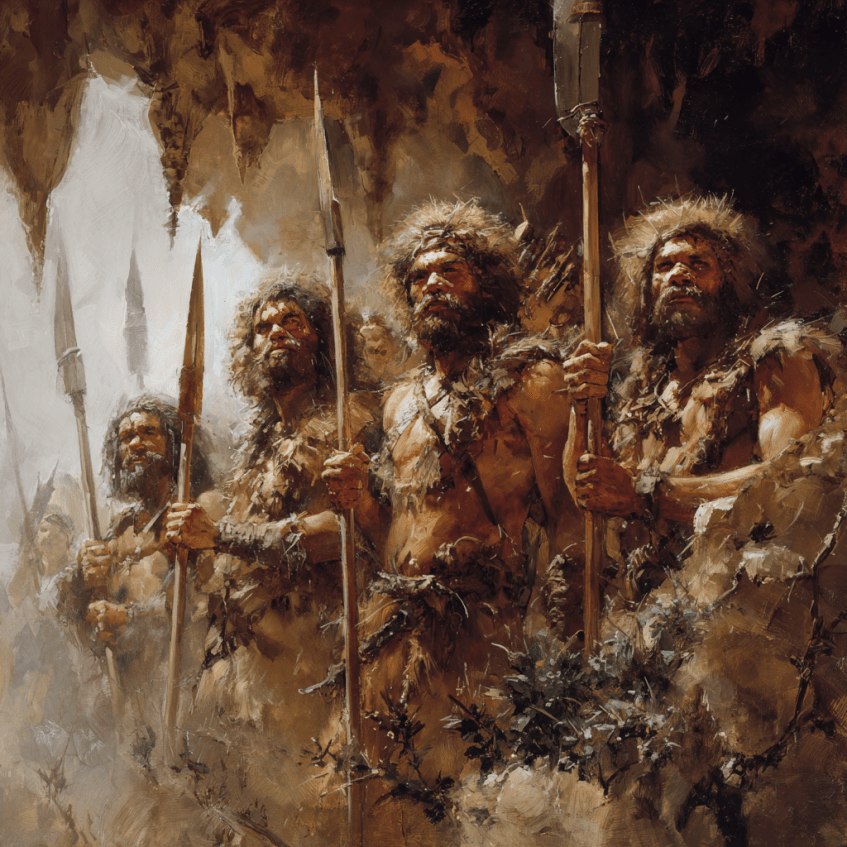
Yesterday was two yeas since we saw the the tribal neolithic way of war on full display, reaching for us out of the brutal and horrific past. And now we see our own left gleefully fall into it and thinking it’s an amazing flex that will give them everything they want.

To explain, for those who aren’t aware of what the neolithic way of war: for almost (or more than) a century anthropologists, more out of wishful thinking and ideology than anything else, maintained that there was no war before history. But people who are sane and have met humans have instead started pushing back on this nonsense with the truth.

We know exactly what war in pre-history was like, not only from horrendous anthropological finds, but also from our civilization having met neolithic tribesmen in the recent past, where they lived isolated in Africa and the Americas and definitely Australia.

No, barbarians didn’t march in serried ranks, and they certainly didn’t have military organization and discipline, at least for anything above small tribes. (And unlikely, since the ethos of Personal Bravery is against military discipline.)

Instead they had attacks that we would call arrant and horrible terrorism. It was all “War by war crimes.” Instead of rational objectives or working to conquer ground or strategical resources (whatever they are for the time) their means of war were to descend on civilians and commit horrific atrocities.

I have talked about this in the past, because having read about the first encounters with African and Amerindian tribes, I’ve figured out that atrocities were a RATIONAL way to prevent encroaching on their territory or attacks on themselves.

Look, these were small bands and tribes. Of course they didn’t have borders and couldn’t defend those borders. Instead, they had vast territories, through which they largely wandered in the way of hunter gatherers.

If finding another people, potentially (almost surely) hostile given the time, their best bet was to attack and make their attack so horrible that however big the group that wandered in will run back out and as far away from them as possible.

Sure, if they could without or with little risk, they killed all the intruders. But this wasn’t needed and of course, warriors fought back. So, by preference they attacked groups of unaccompanied women and children and committed horrible acts upon them, not only killing them but making their deaths horrible and mistreating their remains.

This sent the message of “Your women and children aren’t safe here.”

This worked great — and so kept being done — until they ran up against modern, western civilization, where humans by and large recognize the humanity of other people. I.e. we identify with other humans worldwide, not just with our tiny little family. And we’re a bigger, more connected group than the neolithic mind can comprehend.

This means that their big showy horrors and attacks that were supposed to scare the enemy instead turned the vast majority of humanity against them and destroyed them.

I want to emphasize this is always the end of tribal attacks on humans who recognize themselves as more than a tribe. Every single time.

The horrendous attack by Hamass on Israel was exactly this type of attack: an attack on the unsuspecting and those who would not fight back. Something from the deep memory of mankind, the kind of memory we hoped was long buried in the past. The atrocities they committed were a sign of utter and complete rebarbarization. Which, before the usual suspects talk about the Palestinians horrible oppression or claim a genocide that GREW palestinian population is in fact a sign of mistreatment. They are being mistreated by their Hamass overlords, who use them to farm international aid. They export nothing but misery and made up stories of oppression, while living on hatred, breathing hatred and feeding off hatred.

This has brought them to the level of cavemen with modern weaponry, and they are a horror and a reproach on the face of the left that adores them and the international Islamo-fascists who use them. Anyone who can and will say they support Palestinians and Palestine and PARTICULARLY Hamas after the horrors of 10/7 is no longer human but someone who was possessed by a demon of hatred and can no longer think.

Of course most of the people “supporting” them are kids and the oldsters who have never seen or heard of the real atrocities committed by these savages and are instead running on a script of “pity the poor noble savages” because that’s what they were taught. We must stop teaching Rousseaunian nonsense to the young. There are noble people and there are savages. The best you can say for savages is that they’re not inherently bad. Sometimes they are simply in dire need and living with a broken culture. But there is nothing noble about cruelty and dire need. Stop teaching kids that.

As for being victims, well, you can be good and be a victim. You can be bad and be a victim. Victimhood does not grant moral high status. It is an injury and you may be deserving the support of men and women of good will to stop being a victim. But it in no way makes you a hero or wonderful.

Hamass has tried to avoid the backlash that is the due of barbarians and their atrocities by claiming they are the real victims and hiding in the niches of modern minds that believe no one should ever be punished for their crimes, or that perhaps the vast majority of Palestinians are innocent. (Innocent they might be. They are also deeply indoctrinated into hatred, which makes them dangerous instruments. And we do not know how to minister to a culture diseased. Thought uncorking the sun on them seems to have fixed Japan. Alas not permissible in tight confines of the Middle East.)

But in the long run, the “demonstrations” in their favor and the people trying to defend them are a tiny, if excessively vocal minority, amplified by the leftists in the media who think this might help them bring down the west.

What they did and what they planned and celebrated as though it were a great achievement, exactly like primitives at the dawn of history, was so atrocious, so horrific, such a violation of all decency and morals that the rest of us who live in the 21st century saw the face of their movement for the monster it is. And you can’t come back from that. You just can’t.

Curiously, over here antifa and the other dead end — poisonous — tail of the dying communist dragon have decided that this type of war is the way to destroy human civilization.

Part of it is, as Eric S. Raymond pointed out that they are running the script of previous communist revolutions and since they live in a context free world and don’t study history (because history runs up against Marxist technology that they can’t question or their entire mental map falls apart,) they don’t realize that the conditions and countries under which these terror attacks worked are very different from our connected, ease of communication, largely socially flat world (by comparison to the past.)

Which means that they like the barbarians of Hamass are providing cold buckets of water to the dormant and self-satisfied modern mind. Reminding us of the things that howl in the night and that cannot be negotiated with, compounded with and must never, ever be pitied.

They won’t like the results.

Every time savages doing war the barbaric way meet with modern humans they lose. The only question is if they lose before making civilized people commit acts that scar them and which they’ll forever regret.

With the understanding that again we’re dealing with a tiny minority — not even a rump movement, but a pimple on the ass of the already dead rump movement — let’s hope that in America at least — I’m not making predictions for the rest of the world — we manage to once more walk the knife’s edge over the abyss without falling in.

Until then, be careful in crowds.

And keep your clothes and weapons where you can find them in the dark.

Triple Point Day At Amazon!

I swear I’m working on a post as we speak. This day is already at least two weeks long. It started with calling the doctor about stupid insurance tricks relating to a med, then calling the pharmacy about another med, then–

So, while I’m working on the other post, remember it’s triple point day for the rest of the day at Amazon, and I have some books you should buy. And new Clanker songs at the end. Odd ones. I mean, I made the poor thing say “Half Crossibling.” Pity it.

Of course, first, by contractual obligation (with my husband and first readers) I have to promote the FULL release of No Man’s Land.

All Three volumes are out: No Man’s Land.

Humanity reached for the stars with ships that could cross the galaxy in an instant.

They called them Schrödinger Ships—because half of them vanished without a trace.

For a century, no one knew where they went. Then the truth emerged: the ships hadn’t just traveled through space. They’d traveled through time.

Scattered across millennia, lost colonies had grown into star empires spanning thousands of years. Some had forgotten Earth ever existed. Others had evolved beyond recognition.

In the 26th century, explorers discovered Elly—a world where genetic experiments created functional hermaphrodites who wield powers between science and magic. Now this dangerous world must rejoin human civilization, though Ellyans can never truly integrate.

But some things are lost for a reason.

The Chronicles of Lost Elly Where science becomes magic, and the past holds the key to humanity’s future.

And now, for other people, so you can earn those triple points! ;)

FROM HOLLY CHISM: Certified Public Assassin

Molly McGuire: murder for hire…

Working as a Certified Public Assassin was, after all, the fastest way to pay down millions of dollars of medical debt. Between that payment and the student loans from getting her associates’ degree, she’s barely making enough to keep body and soul together, but the debt’s almost gone.

Except…she’s paid her student loans. Many times over. There’s something going on, and her handler can’t figure out what. Hiring a hacker to track whatever’s glitching in the student loans database and programming seemed to be a logical next step; however, it isn’t just a glitch. Somebody’s got it in for Molly…and for everyone that has a license to kill.

This has barreled from circumstance through happenstance, and straight into enemy action. But who’s the enemy?

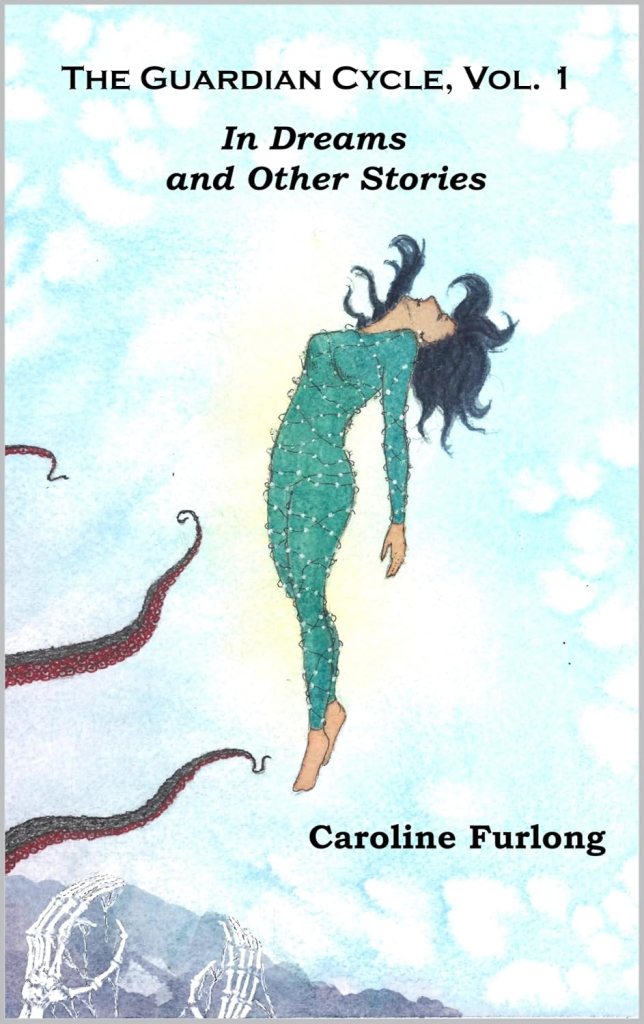
FROM CAROLINE FURLONG: The Guardian Cycle, Vol.1: In Dreams and Other Stories

A man whose debts must be paid by vengeance. A woman desperate to save her husband. A grieving father finding a young enemy soldier on his veritable doorstep…

These fantasy and soft sci-fi stories wonder whether or not heroes need families. Are we not told that families slow the hero down? Is it not typically implied that they get in the way of the adventure? Are they a burden, or truly the greatest strength from which the hero and those he loves can draw?

Six tales in this collection center on family, faith, and self-sacrificing love as men and women fight for the ones whom they hold most dear. Whether the enemy is inner turmoil, a nightmare, or a demon really does not matter. If the threat seeks to harm a member of the family, it is going to pay dearly.

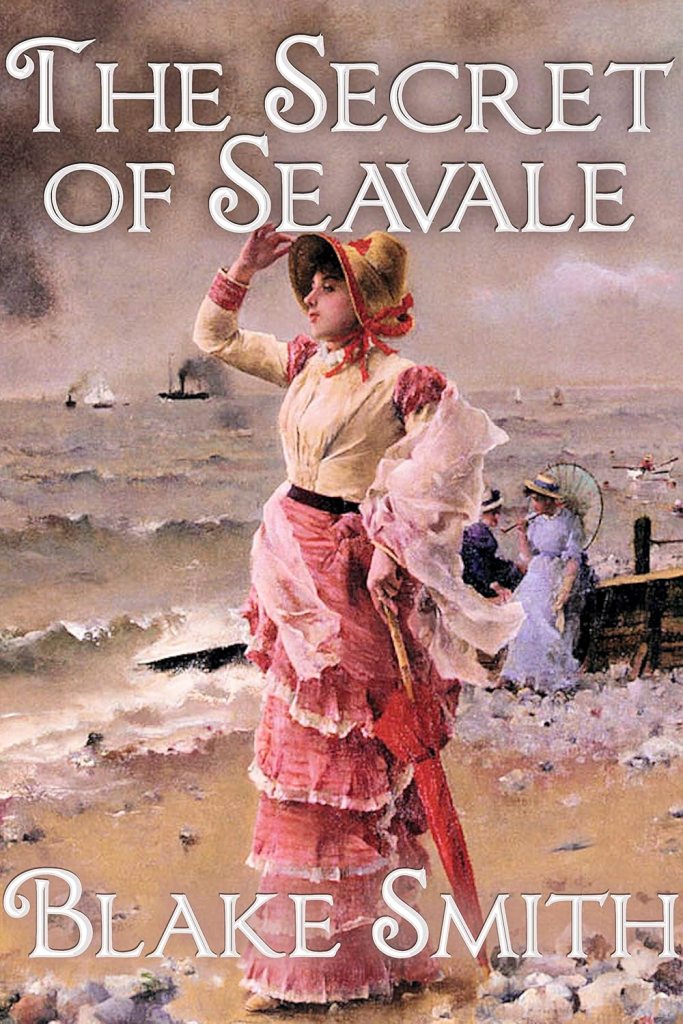
FROM BLAKE SMITH: The Secret of Seavale (The Markham Series Book 1)

A cottage by the sea, nestled in a respectable neighborhood. It should be a safe haven…

Elizabeth Markham has run away from school and seeks the house of her godmother, six miles outside of Portsmouth. Seavale Cottage is a place of peace, and Elizabeth will be safe under Mrs. Brownhurst’s care.

But she arrives at Seavale only to discover that Mrs. Brownhurst has gone away, leaving Elizabeth to fend for herself. She finds assistance in her servants and in her very obliging neighbor, Captain Randall, and all is well until Seavale is beset by strange nighttime happenings. Elizabeth is about to discover that her place of refuge holds more danger than she ever dreamed, and she must gather all of her courage and resources if she and her friends are to survive the secret of Seavale.

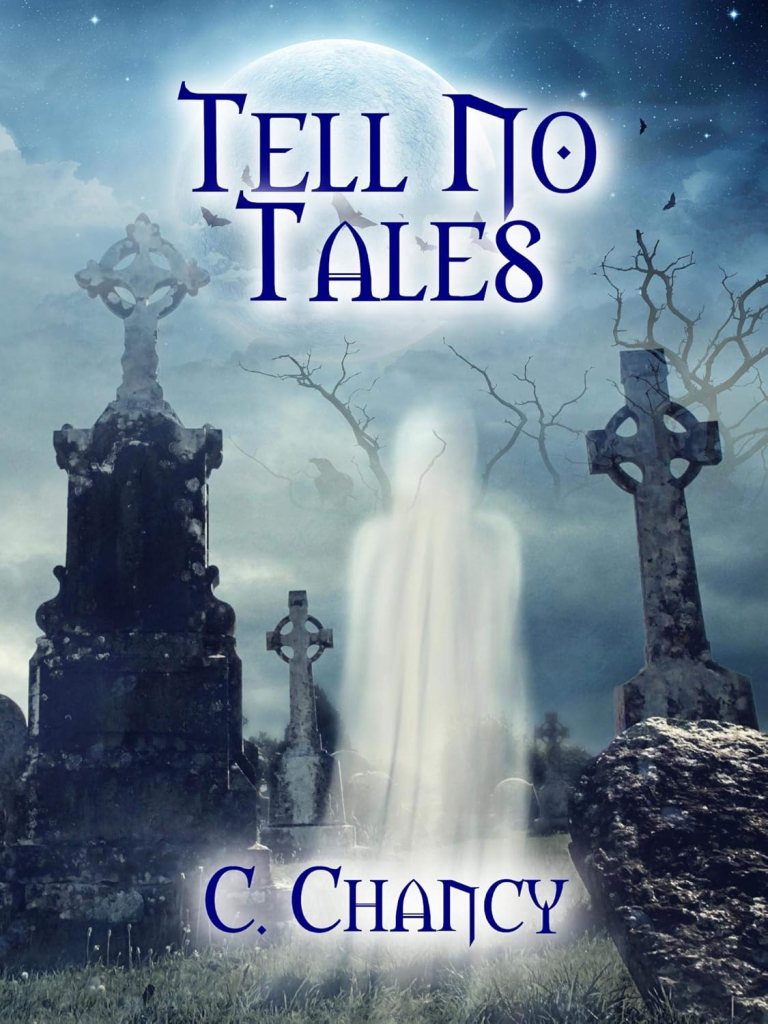
FROM C. CHANCY: Tell No Tales

Some nights it just doesn’t pay to rise from the grave….Corbin wants to uncover the truth behind her death at a demon’s hands. But her memories have been shattered by the grave, and even with footloose Sighted mechanic Devon Fortunato helping her search for answers, a restless ghost is up against the darkest spells and lies of the living. If they can’t unravel who sabotaged the Cunning Folk circle’s spellcast defenses, the child Corbin meant to protect will suffer a fate worse than death. Corbin’s notes hold clues, but the broken circle would rather die than admit the truth….

FROM CEDAR SANDERSON: Possum Creek Massacre: A Paranormal Police Procedural (Witchward Book 2)

Renowned for her witch hunting skills, Detective Amaya Lombard knew that being summoned from the coastal rainforest of Oregon to the backwoods hollers of Kentucky meant the case was something special. From the moment she arrived at the magic-drenched scene in an abandoned farmhouse she knew how bad it was going to be.

She had no idea just how complicated it was going to get, professionally and personally. Now she must catch a killer before they catch her. The roots of evil plunge deeply into the past, and the blood soaked history of Kentucky’s witch warded houses and barns may hold the key to keeping her alive in the present.

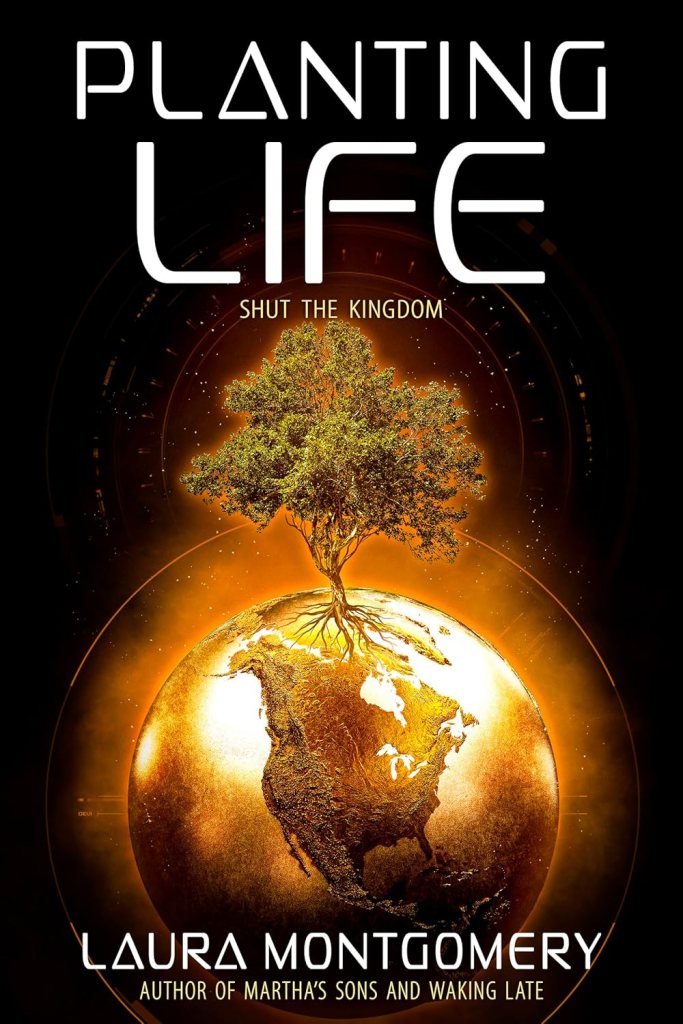
FROM LAURA MONTGOMERY: PLANTING LIFE: Shut the Kingdom (Near Future Science Fiction Adventure)

Nominated for the 2026 Prometheus Award for Best Novel.

The road to Mars has to start somewhere. It might as well be central Virginia.

Jack Darien scorns his parents’ path. After the disaster at his father’s Mars settlement, the high school senior scraps both his lifelong interest in space exploration and his college plans. Even his rescue of a college student from assault doesn’t make him see his own future any differently.

Jack becomes obsessed, however, when one strange comment from the attacker draws him to unravel secrets at the former Superfund site that is now Webb University, the school where his returning father teaches and eco-restoration reigns. What starts for Jack as a distraction from thinking of his future turns into a dangerous journey that puts him, his mother, and sister at risk. As for his father, Jack decided long ago the man was on his own.

Jack’s determination to chart his future clear of his father’s failures hits a snag when he learns the school’s hidden mystery. Unfortunately, those determined to bring Webb down learn it, too, and ratchet up their own efforts toward Webb’s destruction.

Planting Life is an immersive young-adult science fiction adventure. If you like unearthing secrets, a dogged hero, and reckless courage under threat, you’ll love Laura Montgomery’s near future coming-of-age saga.

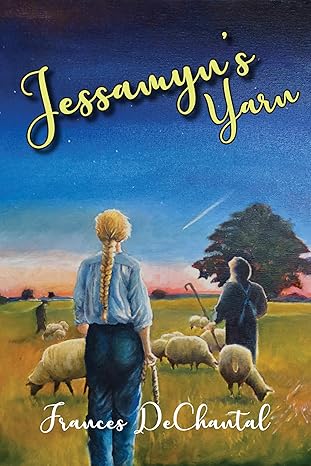
FROM FRANCIS DECHANTAL: Jessamyn’s Yarn

How far do you go to help a relative you haven’t seen for sixteen years? On the verge of making promises to a chosen community, twenty-five year old Jessamyn drops everything and rushes to help her Great Uncle, when he is attacked and injured, on his Iowa sheep farm. Some of her best memories come from his long ago kindness. Once there she struggles with his concussion, his sheep, his handsome neighbors, and his acquaintances, some of whom would love to steal the sheep, or take over the farm. What is she going to do when the crisis is over? Will she stay on the farm or return to her previous life?
Enjoy this warm tale of family and friends rearranging their relationships, and watching a few shooting stars as they do so.

FROM LIANE ZANE: Helsing: Demon Slayer (The Dragon’s Paladins Book 1)

Book One of The Dragon’s Paladins


A warrior bound by duty. A woman marked by fate. A world on the edge of darkness.

When the sky burns and the earth trembles, old powers stir beneath the surface. In the wake of a devastating solar flare, ancient evil rises to take advantage of a broken world. But the Elioud, a hidden race of angel-blooded warriors, have not stood idle. In the mountains of northern Albania, a stronghold has formed under the drangùe and his consort—a sanctuary where harmony and heroism might hold back the coming dark.

Ryan Helsing, a decorated Army Ranger with a past forged in fire, is sworn to that cause. Battle-tested and emotionally scarred, he never questions his orders—until he’s sent to retrieve Dianne Markham, the younger sister of the drangùe’s wife. What should have been a simple escort mission turns deadly when daemons strike Dianne’s cruise ship just as it docks in Split, Croatia. Ryan barely gets her out alive.

Now they’re on the run across a crumbling Europe, hunted by forces both human and inhuman. Dianne never asked to be part of a war between supernatural powers. All she wanted was to survive the chaos and find something real in a world of shallow pleasures. But when Ryan storms into her life with steel eyes and a haunted soul, she’s drawn into a world where ancient bloodlines, harmonic technology, and dark angelic forces collide.

Marked by an unseen enemy and carrying secrets even she doesn’t understand, Dianne may be the key to everything. And Ryan will risk his life to protect her—even if it means confronting the echoes of his past, and the possibility that fate has more in store for them than either imagined.

Helsing: Demon Slayer launches a pulse-pounding romantasy of survival, sacrifice, and the fierce first strike in the battle to hold the light.

Sometimes, one man is all that stands in the way.

FROM FRANK HOOD: A Geek’s Progress: Navigating a Software Career from the 80s to the 20s

This is what I call my work biography. It’s about how to survive in the business world and, inevitably also about the changes in technology that I went through in 40 years of software development from punch cards to Artificial Intelligence. If you’re young and reading this, I hope it shows you what to expect–not how to climb the corporate ladder, but how to contribute to making things people want while making life better for you, your family, your fellow employees, and the company you work for–whether they want you to or not. If you’re farther along in your career and reading this, I hope you nod in recognition at many of the things I’ve been through.

Many books purport to tell you how to innovate, but most of us will never be Elon Musk, Jeff Bezos, Steve Jobs, or Bill Gates. I never had any interest in being among those folks. I just have always wanted, like most of us introverts who develop software, to be able to do a good job, making things better and getting a little recognition along the way. So if you’re a future high risk/high rewards entrepreneur, this book is not for you. It’s for the rest of us little people who just want to have a good life.

The technical side is not neglected, but I have tried to put most of it in what I call geeky asides for those who are not software developers but want to still read about a long career in the business. Software development itself is an inherently innovative business. Everything a software developer does is about crafting a unique product or way of doing things. I have found, over my career, that I had to learn a new technology stack every 5 years of my career as the rest of the software world innovates around me. Yes, that means I’ve had to relearn how to do my job 7 times. Actually, the last 5 years of my career, I knew retirement was looming, so I made use of my hard-won knowledge of AI and turned my focus on what’s next to the technologies needed for my post-retirement writing career, rather than learning more than a bare acquaintance with the newest techniques in software development. Still, on my last work project before retirement, I turned out to be valuable because we were tasked with interfacing with 30 year old technology that is still out there and necessary.

My hope for anyone reading this book is that you have a good life, and that, maybe, what I’ve learned the hard way helps you with that.

FROM MARY CATELLI: The Enchanted Princess Wakes

Once upon a time, a princess was cursed at her christening — but not the one you heard of.

When the fairy decreed that Rosaleen would fall into an enchanted sleep, and how she would wake, the grand plans of kings, to unite kingdoms, failed. They sent her to an out-of-the-way castle in the mountains, in hopes the curse would do no harm to anyone else.

There, alone, Rosaleen lived and learned, and realized that she herself had to be ready to face the curse, and when it broke.

FROM TIMOTHY WITCHAZEL: Noah and the Great Flood: A Poem in Alliterative Verse

From author and poet Timothy V. Witchazel comes a retelling of the story of Noah and the Ark in the alliterative verse, the style of poetry used in Beowulf, Piers Plowman, and other Anglo-Saxon works.

FROM HEATHER STRICKLER: Lift High the Candle (Wyrd Rhymes)

When the storm rages onward
And the world comes tumbling down
And there seems no future forward,
And you’re deep enough to drown.

Some times a simple song uplifted
Can ease the burdened soul.
So here a book has drifted
With rhymes to ease the toll.

FROM M. C. A. HOGARTH: Earthrise (Her Instruments Book 1)

“The thrills are nonstop, the alien cultures and races are well developed and fascinating, and there’s just the right amount of humor to keep the whole thing fizzing.” — Analog Science Fiction and Fact

Reese Eddings has enough to do keeping her rattletrap merchant vessel, the TMS Earthrise, profitable enough to feed herself and her crew. So when a mysterious benefactor from her past shows up demanding she rescue a man from slavers, her first reaction is to run for the hills. Unfortunately, she did promise to repay the loan. But she didn’t think it would involve tangling with pirates over a space elf prince…

Book 1 of the Her Instruments trilogy is a rollicking adventure set in the expansive Pelted universe, and kicks off an epic space opera series where the fate of worlds hangs in the balance. Fans who enjoyed Firefly or Andromeda will like this series.

AND NOW, LET THE CLANKERS SING

These two songs are weird. The first one I’ve had for a while, and it might be a little deep In-Elly baseball (No, not literally, they don’t have baseball.) Maybe. Anyway, I am trying something new with the video, which is more or less matching video and event in song. Except I don’t have unlimited midje credits and don’t want to spend a week making it, so re-usage happened, as well as selecting the Ellyan images who don’t make you (me) want to crawl backward away from the uncanny valley.

But, anyway: Ballad of the King of Elly

And the next one is all sorts of strange subject, but since it shows up in book 2 (and three) here goes nothing:

The Watcher’s Song:

It’s All Out!

No Man’s Land: Volume 1 (Chronicles of Lost Elly)

Sufficiently advanced science is indistinguishable from magic.

On a lost colony world, mad geneticists thought they could eliminate inequality by making everyone hermaphrodite. They were wrong. Catastrophically wrong.
Now technology indistinguishable from magic courses through the veins of the inhabitants, making their barbaric civilization survivable—and Publius Cornelius Scipio Africanus Kayel Hayden, Viscount Webson, Envoy of the Star Empire—Skip to his friends— has just crash-landed through a time-space rift into the middle of it all.
Dodging assassins and plummeting from high windows was just the beginning. With a desperate king and an archmagician as his only allies, Scipio must outrun death itself while battling beasts, traitors, and infiltrators bent on finishing what the founders started: total destruction.
Two worlds. One chance. No time to lose.

Volume 1
The Ambassador Corps has rules: you cannot know everything, don’t get horizontal with the natives, don’t make promises you can’t keep.
They’re a lot harder to follow when assassins are hunting you, your barbarian allies could kill you for the wrong word, and death lurks around every corner.
The unwritten rule? Never identify with the natives.
Skip’s already broken that one.
Now he’s racing against time to save his new friends from slavery—or worse—while dodging energy blasts and political intrigue. One crash-landed diplomat. A world of deadly secrets. And absolutely no backup.

Some rules are meant to be broken. Others will get you killed.

No Man’s Land: Volume 2 (Chronicles of Lost Elly)

Volume 2

Skip thought he’d figured out the rules of survival on Elly.

He was wrong.

Now his potential allies from the Star Empire are turning up dead, one by one. Spies and saboteurs have infiltrated every level of Ellyan society, and Skip is running out of people he can trust.

As he races to save the king and archmagician—his only remaining allies—disturbing secrets about Elly’s culture emerge alongside buried truths about his own family’s past. One moment he’s explaining the bewildering concept of binary gender to confused Ellyans, the next he’s making impossible choices that could strand him on this world forever.

His last gambit is reckless. The odds of success are slim. And failure means losing everything—his mission, his allies, his only way home.

But some fights are worth the risk, even when the deck is stacked against you.

Sometimes the most dangerous enemy is the one you never see coming.

No Man’s Land: Volume 3 (Chronicles of Lost Elly)

Volume 3
Skip’s idea of crisis management?
Stress baking. While he’s kneading away his anxiety, Eerlen Troz is fighting for his life—and his unborn child’s—in an ancient and familiar battle.
When saving Eerlen’s life requires forging an unexpected blood brotherhood, it creates something neither person anticipated: a memory bond between two worlds.
Through shared consciousness, they uncover a conspiracy that threatens not just Elly, but the entire Star Empire.
The plot runs deeper than anyone imagined. Lives, fortunes, and freedom itself hang in the balance. But exposing the truth means surviving long enough to tell it—and their enemies have other plans. Two minds. One mission. A universe-spanning conspiracy that someone will kill to protect.
When the fate of worlds rests on an unlikely brotherhood forged in blood and baked goods.

(Excuse me while I run around madly for a few minutes with my head on fire. Okay, done now.)

For those on the ledge, not sure if they should stay or they should go, try Charlie Martin’s Review:

Sarah Hoyt’s New Book: ‘No Man’s Land’ — It’s Not What You Think.

I don’t know if there will be another post today. No, let me explain: Yes, I know I’m super late with feeding my poor subscribers, but I HOPE to have an earc of Witch’s daughter by the end of the month, so it can come out next month. HOPEFULLY.

The fly in that ointment is that my thyroid is out of whack again. Which means my energy is very limited. And I’m helping younger DIL with a home reno thing, which…. well, you know?

Anyway, if I have energy after writing a couple of chapters and the two or three hours of schleping and fixing and organizing, I’ll do a post. if I don’t however, be aware I’m probably alive just exhausted.

So to amuse you, I’m going to link my own favorite clanker songs, starting with Home of the Spacer, because it’s played in the first chapter of the first book. (At Skip’s father’s funeral.) I have incidentally managed a bagpipe version, I’m just not happy with it yet. So still tinkering.

Then there’s the Strains of Earth Anthem of the Interplanetary Diplomatic service which Skip joins and which is played at his funeral. (Ah. If you haven’t read volume 2 it’s your problem!)

Then there is this lullaby, which plays a pivotal part in the emotional punch of volume 3.

Erradi the Cold

And, tying in with Charlie’s review above:

And for a friend who likes this one best of all:

There are other clanker songs in the works, but today midje was exceptionally stupid on videos, and I only had a minute or two here and there, while helping with the reno, so it didn’t happen. Maybe tomorrow will be better.

(I didn’t forget what an awful anniversary today is, though I confess I did when booking book release, but that’s because I was looking at the calendar and counting two weeks and two weeks and two weeks, instead of looking at the actual date.
That’s why there will PROBABLY be a post, but it depends on energy and day cooperating. I think it was the first of several milestones that let us know this is not a game and it’s time to wake up. Yes, I know whence I speak. You could say it was one of a series starting with nine eleven, but if you go there, you will never finish because it starts further back. I think 10/7 was the bucket of cold water that woke up a lot of people sleep walking for 25 years or more. Not that it was a good thing, mind. But it was a full measure of our danger. Anyway, more tomorrow if I have the spoons.)

For The Sake Of Women

What is now, unbelievably, 15 years, maybe 20 years ago, I had reached my limit with science fiction and fantasy I could find on shelves. Oh, not my favorites, which included most Baen authors as well as people like Terry Pratchett were fine, but you have to understand I read very fast. (I still read fast, but thanks to two concussions and resultant eye issues, not that fast.)

I couldn’t even tell you why I was tired of it, though if you’d asked I’d have told you I was tired of “women with a sword.” I remember five or ten years before that going on a rant at a panel at a con about how all these women who grabbed a sword and set out to save the world were sissies. What they needed was to have an hyperactive, smart two year old boy and try to keep him alive through the happy suicidal years, and then they’d learn the limits of their abilities. (As you can imagine this got me very shocked looks and might have started the rumors I was “not one of us, deary.”) But I hadn’t vocalized my issues beyond that.

The next time I abandoned a whole genre, except for those few favorites I kept, many of them re-reads, was mystery. I had bought more and more over the years, and to be honest had a long backlog of it to fall into as until then it hadn’t been my preferential reading. But eventually it caught up to me there also. Every woman was some sort of heroic fighter against a terrible and oppressive league of men. (Most men, tbf, could not find their own way to their sock drawer much less form a league against women. In fact, men not having a concept of “solidarity among men” is what allowed feminism to become institutionalized. They might mouth “bros before hos” but in real life it’s the not-ho every single time. And it should be, as we’ll get to later.) It was unendurable, and so I fell into the one field sort of left.

Surely in romance they couldn’t have the woman go out with a sword to save the world every other day and twice and Sunday. And the men were love interests so they had to be admirable, right?

People, I sure picked the wrong time to stop sniffing glue start reading romances. The contemporaries were all about…. well, sex. Had to be because the men were fairly despicable. The women too, to be fair. It was as though the women writing them were vaguely embarrassed to be attracted to men (five years earlier I’d been rejected by a romance house because my female character was too heterosexual, after all!) and therefore must continuously try to prove they were better than the love interest. Which left the love interest as the bumbling dad of commercials, but with a tight bod and amazing bed skills.

Look, I’m not a prude. I’m just no biblio-sexual. Reading other people’s exploits is interesting when they’re looking for the Roc’s egg or trying to find who murdered the guardian of the egg, but not so much when they’re putting tab a in slot b and moaning about it. I get bored and flip through for the next bit of non-bed action. It made some of these books very short. Pamphlets, really.

So I fell into regencies, which were slightly better except…. not really, because unfortunately I know history. There is no way on the Green Hills of Earth that every woman under the rule of the Prince Regent was a feminist, aggressively rescuing soiled doves (who are all, all very noble and done ill by. (I’ve read historical accounts, biographies and surveys. They were in habits and behavior the same population as our homeless. Yes, there were hapless innocents. They were few and far between.)) caring for the downtrodden and afflicted and teaching other women not to be oppressed.

There were in fact feminists of that era. You’d be shocked how different from our feminists they were. Or rather they’d be, as all of them without exception had their characters read The Vindications of The Rights of Woman by Mary Wollstonecraft and then treat it as if this book made the women into modern day feminism. (The problem is not that the kids don’t write well. The problem is that they either don’t read or can’t process what they read.) Mind you, it’s full of nonsense and weird assumptions about women, but they’re wholly different from the weirdness we now deal with.

So if you’re guessing I eventually got pitchforked out of romance, you’ll be right and wrong. I got pitchforked out of contemporary romance and into “regencies of the seventies” is the best way to put it. There is a vast group of women (or there was) centered on used bookstores. I ran a sort of tab for these. I’d go in and buy 40 old romances for $20. Read them and take them back in at the end of the week, trading them for twenty. When I got to ten, I’d use money to bring it to 40 again.

And then Indie happened in sufficient force that if I go through one of my depressive phases I can read regencies end to end. But more frequently I read Jane Austen fanfic. Oh, it has the same issues as contemporary regencies, in a way, but it’s more just lip service: “Lizzy hated embroidery and loved learning about her father’s job managing the estate.” Cool story, bro. Now show me her getting together with Mr. Darcy. … Nine out of ten times they do, and the genuflection towards the altar of feminism causes no more than an under-the-breath huff.

I mean there are other things that drive me insane and again “For the love of heaven, people, if you’re going to read historical, read a book about the time period (There are now a few specifically about Jane Austen’s time that give you manners and modes and are simply written. They even have pictures.) Yes, I know you watched the movie of Pride and Prejudice and think you know everything about it. (At least watch the A & E mini-series. No, seriously. Not only didn’t Lizzy go traipsing barefoot in the muck of the farmyard — they were a manor family, not tenant farmers, people! — but no one in that book EVER said “We are all fools in love.” In fact that’s so anti-Jane-Austen she’d probably beat you across the face and head with an inkpot for putting that in her story. And you’re deserve it.) I’ve had my fill and beyond of exploding carriages, people — in the regency, people! — writing letters on parchment or vellum and in one notable occasion papyrus, and… this is very pervasive lately, Mr. Darcy going on vacation and living in a little cottage with no servants or help of any kind, cooking and cleaning for himself. (Tell me you know nothing of what housekeeping used to entail without telling me you know nothing of what housekeeping used to entail.)

But when I’m non-depressed, I also found all sorts of interesting things to read that aren’t romance. We live in a much better age. (Though my latest non-Austen binge was in fact Lynn Austin. Eh. But I’m very ecumenical when it comes to genres. My favorite genre is “written in English and it interests me.”)

However, this last week a friend who was reading regencies stumbled onto the “And of course she hates embroidery and needle work, loves estate management and horse racing.” She had a worthy mini-rant. And I bobbed my head along with it, because I know the music and the words. But it was her “It’s all so tiring” that hit me.

That is exactly as I experience this sort of thing “It’s all so tiring.”

And then thinking about it I realized what is tiring and what makes me huff and want to reach through the kindle screen and hit the author on the face with a very dead fish (very dead. Practically lyophilized.)

It’s the extreme effort of trying to hold a world that makes no sense — either in historical or modern sense — in my head at all times to make the story work. Look, I know I’m supposed to suspend disbelief. But must it be with an hemp rope, by the neck, till dead?

Modern… well, guys, you’ve been out in the world. You know not every man is a bumbling fool. And you know that not every woman — perhaps not any woman — can go from 19 year old temp receptionist to managing his billionaire empire better than he does. (Some women are amazing, yes. So are some men. But humans in general are not that precocious and the entire idea of being able to do things you never had occasion to do without learning is outright pernicious.)

Regency/historical… Hits head on desk, because it hurts less.

Guys, I didn’t grow up in the regency, but when I was a kid we didn’t have TV (we had radio, and if you can imagine a family clustering around the radio at night doing various things and listening, you’re exactly right. I just realized I treat TV and movies exactly like this (to my husband’s confusion) with only occasional looks up when something is unclear.) And books were expensive. Even when you came from a family of bibliophiles that had stashed books everywhere including the various outbuildings of a small farm (of sorts) eventually you ran out of them or at least ran out of books that interested you in any way shape or form. (Turns out nineteenth century books about medicine are fascinating in a morbid sort of way but not for sustained reading.)

So what did most women do in the evening? Sew. What did most men do? Oh, not in my family where they were all thumbs, but usually whittle or do some kind of manual work similar to that. Sometimes read. Or … racks brain…. oh, yeah, organize their stamp collections or other collections, repair a radio, clean a gun. That sort of thing.

Women mostly sewed for a reason. And 90% of the sewing they did was mending. You see clothes were expensive too. After my mom — to supplement our pathetic income — bought a knitting machine (from her savings. Look, there’s a reason sometimes dinner was stale bread fried in tallow. Not complaining. We didn’t starve) and took the course to use it — people would bring her old sweaters to unravel, redye and re-knit into a “new” sweater. THAT expensive. Most of us, even people living in relative poverty can’t imagine how the middle class of a small, unimportant country of the mid 20th century lived. And — here’s the thing — we were in no way poor by historical standards. Nowhere close to it. (Incidentally, that’s why women wore aprons. It had nothing to do with oppression. A lot of men wore aprons too, particularly those who worked with their hands. And those who didn’t wear aprons usually had a really old, horrible-looking version of their every day clothes that they wore while doing the inevitable dirty chore. (Except my maternal grandfather who once emptied the septic tank in his Sunday suit. The fact that I was told that story multiple times 30 years later tells you how unusual that was. I also wonder what — probably stupid because he was a genius and so… — point he was trying to make and/or how mad he was at grandma.)

There was a Portuguese comic I read when I was little which made a joke you’ll only understand if you know that “role” in Portuguese is “paper”. The joke was the little girl learning about women in history and saying “Ahah, the problem is that women don’t have a role in history. They have a cloth.”

That was supposed to be cutting and feminist, (the stupid has been with us a LONG time) but seriously cloth: producing it, fashioning it, etc. has been a big job throughout the centuries. And because it can be picked up and put down and combined to advantage with watching kids or minding the cooking or whatever, it mostly fell to women. (Not always. Sailors and shepherds famously knit. And I imagine on long voyages sailors mended their clothes.) The point is that clothes are the tech that allowed humans to live out of the climate they were designed for, and that processing the fabric for clothes is mostly for various reasons of convenience a feminine task.

And, like the male tasks of the time and now up to and including yes “managing estates” or fixing tools or going out and slaying the mammoth in whatever form, the job isn’t wildly interesting or amazing or mind-expanding.

Most jobs aren’t. The stories that try to sell you on finding your life’s satisfaction in a career might as well be selling you that your life’s purpose is to weave endless lengths of cloth and mending your husband’s socks. They’re just jobs. That’s all.

Now…. embroidery…. Unless it was your job, which it never is because the women in these books are always upper class, embroidery was something you did in the precious time you managed to carve out of your chores, which, yes, even for the upper class included mending and also writing endless letters because women kept society connected.

Embroidery allowed you to express yourself, to create something beautiful and something people would admire. Mind you, Regency ladies did a lot of other things under that heading, including painting tables (why did they need so many tables, anyway), playing music and dancing and drawing and other such pursuits. BUT embroidery was also useful as in you could wear it, or your child could wear it, and it made every day a little better.

From my experience — though due to family dynamics I didn’t do this till I was married — embroidering was something smart women did. And the smarter the woman the more complex and innovative the stitches and the design. It was much admired and any woman in the village could point you at the best embroiderer in the village. (Mostly because a favorite activity of unmarried women was showing each other our stash, aka the hope chest. (No, not me. I distracted them with hand written novels. But again, this was not because I was smarter but because of weird family dynamics.)

Could a regency lady despise embroidery and want to manage an estate instead? Well, some number of them managed estates because they were the only manager either through accident of birth or weird turn in life. But would they prefer it? And would it be, as ALL these writers assume far superior and indicative of a greater intelligence? Pardon me while I make a very rude sound.

Managing an estate, like leading men in battle was simply a matter of necessity of time and position. And wasn’t what women in our time imagine, either.

Yes, throughout history queens led armies in battle. So, famously, did Joan of Arc. But mostly their role was to be inspiration and a sort of banner. Any real generalling (totally a word) they did was conveyed through underlings who were inevitably men.

In the same way, women in the regency who managed estates usually just kept a close eye on the books, and had detailed instructions for their stewards. They might ride around and see what needed to be done too. What they almost certainly except perhaps in very rare occasions didn’t do was go out in the fields, in the muck, and personally command tenant farmers and servants on what to do. They would if wealthy enough to have them, instruct gardeners and maybe do a little gentle weeding and such. And possibly if not wealthy keep their own herb and flower garden though even then the servant of all work would do the digging, etc.

The thing that these writers misunderstand is that this was not because women were “kept out” of these highly desirable tasks. It is because in a time when most tasks done outside required strength and stamina more typical of men, women took the other set of tasks that needed doing. And mind you the other set of tasks ALSO needed doing.

Managing a manor house was not piddly work. They lacked most of the things we have, and among them they lacked all the chemical cleaners we have. This means even if you had a ton of servants you needed to stay on them through things like routine cleaning which was more or less constant. Otherwise it wouldn’t get done and your family would catch the never-get-wells. Also linens needed to be mended and replaced on the regular. Menus made. Parties planned and, under “maintaining social connections” letters written. I remember grandma — and mind you, much longer after, when calling was a thing for close-by relatives and friends — had an entire day blocked out just for keeping up with her correspondence.

Was it possible for a woman to want to manage a manor house, instead? Well. I suppose anything is possible. Though she’d better have someone to do the tasks that normally fell to her.

But what it begs the question is WHY? Why were male tasks preferable to or supposedly indicative of higher intelligence?

Why in the name of all that is holy SHOULD the highest aspiration of a woman be to become a man?

And that’s what’s so tiring about it all. At the back of all this rah rah rah “Women can do everything” is the dripping, whispered poison of “But you shouldn’t though. You should do what men do, because that’s what’s amazeballs and super-satisfying.”

And you have to read this while looking at the men around you who, honestly, aren’t any more satisfied than you and your friends are and who certainly don’t think their every day jobs are some sort of holy vocation. Just what they do for a paycheck. Like most women.

It’s like reading about aliens that no one acknowledges are aliens.

Which is the problem with this entire “Feminism” project as being exerted in this year of our Lord of 2025. As a group we’re supposed to be amazing and special and forever fighting back against the oppressive restraints men impose on us.

And because that’s our group mission we can’t, of course, ever fully win. We must forever be fighting. Which is why women are always fighting to “Break into” science fiction, even though by the time I came in it was already female dominated, now almost 30 years ago.

We’re somehow not supposed to want to do anything feminine, but we should be displacing every male in his job.

And then they wonder why women in the civilized world manage to be more unhappy than were life is brutish and short.

Look, the problem is not trying to “liberate” women. The problem there is in the PLURAL “women.”

There is the woman here and there (most often there, and you know exactly WHERE) who needs liberating. There are a lot of men in the same boat at that.

There are people everywhere suffering horrible oppression by other people. And then there is the sheer oppression of this material world that doesn’t yield to your dreams.

But it’s mostly a matter of individual circumstances and individual choices and individual — yes — oppression. I’m mostly descended from women who couldn’t be oppressed and if you tried you’d regret it. Which means we more or less did as we pleased despite an authentically chauvinistic and patriarchal overculture. None of us had a marked interest in horse racing, though most of us ran our own business which I suppose is the equivalent of running a manor, while raising kids and keeping house. This was possible because increasingly through time we could afford housekeeping aids. (In mom’s case a succession of teenage mother’s helpers who worked in exchange for new clothes.) And none of us was so stupid as to tell our husbands they couldn’t help with the accounting and other boring tasks, like tax liability estimation. (Which at this point is a second job for my poor husband.)

And mostly it was really tiring, not particularly indicative of high intelligence (though perhaps of drive) and just what we did to keep body and soul together.

Because I work in words and in a highly abstract product I’m not any smarter than the ancestresses whose businesses were in large-scale resale, or commercial art, or clothes making/design/creation. We each did what we could do at the time to supplement family income and make a better life for our kids and grandkids. (Okay, I’ll confess to being broken so writing is all I could do.)

There isn’t a set of jobs — male — that means success and satisfaction and a set of people — women — who are automatically downtrodden and mistreated.

In the past — and even today — everyone is mistreated by life and reality. And there is no eternal satisfaction in any task, though some of us work at our dream jobs and even have moments when it’s all worth it.

We need to — NEED TO — stop treating people as homogeneous groups. Particularly groups based on physical characteristics that have absolutely nothing to do with individual circumstances, needs and abilities.

We need to stop telling women, all women, across the wide world, that they’re uniquely oppressed and need to “heroically” seize… the other sex’s roles.

We need to stop this in educations and entertainment and life.

Men and women aren’t Marxist classes. They’re different forms of the species, and have a lot of complementary strengths and a lot of reasons to come together and work together towards the future. (No, we’re not doing phrasing anymore. It’s 2025. When we do phrasing, it’s with intent and malice.)

For the sake of women, for the sake of men and — truly, desperately — for the sake of children, let’s stop lying to each other and the young.

Let’s stop trying to hold up an insane, fractured illusion and live in the real world.

There is a future to build and the stars to conquer. Petty bitterness is not generative. Of life, interest or children.

And besides it’s such a complete lie.

Let’s live in the light of truth, instead.

Book Promo And Vignettes By Luke, Mary Catelli and ‘Nother Mike

Book Promo

If you wish to send us books for next week’s promo, please email to bookpimping at outlook dot com. If you feel a need to re-promo the same book do so no more than once every six months (unless you’re me or my relative. Deal.) One book per author per week. Amazon links only. Oh, yeah, by clicking through and buying (anything, actually) through one of the links below, you will at no cost to you be giving a portion of your purchase to support ATH through our associates number. A COMMISSION IS EARNED FROM EACH PURCHASE.*Note that I haven’t read most of these books (my reading is eclectic and “craving led”,) and apply the usual cautions to buying. I reserve the right not to run any submission, if cover, blurb or anything else made me decide not to, at my sole discretion.SAH

FROM ALMA T. C. BOYKIN: City and Secrets: Shikari Book 7

Lost cities, ancient secrets, and rumors of treachery …

Auriga “Rigi” Bernardi-Prananda finds society—and trespassing wildlife—a trial. When Lieutenant Colonel Tomás Prananda suggests going to the wilderness on the tropics of the north coast in order to investigate a ruined city, she quickly agrees. After all, Shikhari’s native fauna only kill. They do not indulge in slander, gossip, and intrigue.

A storm sweeps the sea onto the land, and a military storm sweeps the Prananda family into greater danger. Failed energy shields and jammed communications are only the first hints of trouble. Soon, Rigi finds herself trying to support her family—both human and native Staré—as Tomás awaits trial for dereliction of duty. Yet the neglected duty was never his.

As predators native and human stalk closer, Rigi finds herself playing the Great Game once more. Could a slingball tournament and tail wrestler lead to the real culprit? It will take all of Rigi’s training, faith, and determination to meet the challenge.

Secrets and cities, storms and shadows, are no match for a determined mother and wife. The female of the species may well prove more deadly than the male!

FROM JOHN C. WRIGHT: Starquest: Scourge of the Spaceways

Athos, now Captain of a cutthroat pirate band, slays devil priests and burns slavers’ palaces! How long before the menace of Ahab, King of Pirates, lays him low?
Ansteel, exiled from life as a legionnaire, approaches the jeweled world where his destiny awaits. Will he hold to the Empire of his birth, or enter a strange, new life?
Nightshadow has lost a useful agent, but Napoleon has lost a lovely girl! What faceless force corrupts even men of sterling honesty in the senate?
Has Lyra lost all hope? Will her foster father be never found? Will her dead world be forgotten?
Where is Arcadia?

DIRE DEATH AND DARK DEEDS TO BE SEEN
IN OUR NEXT EXCITING INSTALLMENT:

STARQUEST: SCOURGE OF THE SPACEWAYS

FROM RICHARD PAOLINELLI: Of All The Gin Joints In The Universe

One detective. Two suspects. A conspiracy big enough to kill them all.

In the 25th Century, Galactic Justice upholds the law across the Milky Way.

They use the HALO to extract confessions from the guilty. For the most heinous of crimes, the guilty are erased and a new personality is uploaded in their place.

Samuel Archer Spade is a private detective on Space Station 1964 on the far edge of the galaxy. He’s a former GalJus Inspector whose conscious couldn’t square with using the HALO.
Spade is at his usual spot, his unofficial office on Norma, when a knockout blonde in a red dress, walks into The Galaxy’s Edge, the station’s bar. She’s on the run from an unwanted admirer.

But when the man arrives on the station, he’s looking to hire Spade himself. He’s claiming she has stolen something from him, As Spade tries to sort out who is telling the truth, GalJus arrives looking for both of his clients for a murder committed on another planet.

Trying to find the truth will lead Spade to discover a dark secret. Some elements within GalJus are using the HALO to frame innocent people. Even worse, they’re programming people to commit murder.

That’s a secret GalJus is willing to kill for and both Sam, and his clients, are right at the top of their list.

FROM JAMES Y. BARTLETT: The Song of Asaph: A Musical Mystery Featuring Johann Sebastian Bach (The Bach Musical Mystery series Book 3)

An ancient song composed by King David’s chief musician Asaph, discovered by the Teutonic Crusaders to the Holy Land, returned to Germany, then divided into four fragments and hidden to prevent the fearsome powers of God unleashed if the Song is ever played …
This is the legend pursued by the 15-year-old Johann Sebastian Bach and his schoolmate Georg Erdmann in 1700 as they walk the 250 miles from their small town of Ohrdruf to the northern city of Lüneburg to join the St. Michael’s School choir. Piecing together the song one fragment at a time, the boys find themselves pursued by the relentless Black Monk, Absalom, who is desperate to protect the Song’s powerful secrets. The Song of Asaph is a page-turning, musical thriller that will appeal to readers of all ages.

FROM DALE COZORT: Wokuo Incursion

Invasion from an alternate timeline?
It’s December 1937 in a world exactly like ours except that it is about to veer wildly into alternate history. It’s less than two years before World War II broke out historically in Europe. War has already come to much of Asia, with Japan invading China. An isolationist US fears it will be drawn into that conflict, especially after the Japanese sink the US gunboat Panay. Just when President Franklin Roosevelt thinks he has that crisis under control, he faces a bigger issue. High tech descendants of the Wokuo, Japanese pirates and smugglers who should have vanished over three hundred years ago, flood into the Pacific coast off California.

The Wokuo are both refugees and invaders, fleeing from war in an alternate reality where they survived and grew strong, while looking for new conquests to replace their lost empire. They set their sights on California. President Roosevelt sends disgraced former Colonel Martin to California to organize resistance to the invaders, but the Colonel has his own issues, buried deep in his brain and waiting to cause disaster.

FROM RANDY BROWN: The Drop: Season One

Twelve people. Randomly dropped on an unexplored alien planet in the ultimate test of survival. Some will live, some will not. First one to the flag wins.

Embark on a survival contest like no other in the galaxy, where twelve contestants are thrust into the ultimate challenge on the uncharted planet Alpha. As they navigate treacherous terrains, from icy wastelands to arid deserts to thick jungles, and face unknown creatures, their every move is streamed to billions on Earth. With high stakes, unexpected dangers, and the constant threat of elimination, this gripping tale of adventure and human resilience will keep you on the edge of your seat. Will someone conquer the wilds of Alpha and claim victory, or will the planet’s mysteries prove too formidable? Dive into the suspense and discover who will rise to the top in this thrilling saga.

EDITED BY STEPHEN DIAMOND: Glitched Grimm: Twisted Fairy Tales with Terror (Raconteur Press Anthologies Book 62)

I’ve always been fascinated with fairy tales. No, not the sanitized versions with singing raccoons or whatever. I mean the cautionary tales. The ones where the point of the story is to warn. Don’t trust strangers. Elves and fairies want to eat you. Witches don’t sing showtunes just because they are “misunderstood.” Monsters are monsters. If they are sexy, it’s for the purpose of killing you easier.

And so we come to the point of this anthology.

The idea of taking fairy tales back to their dark roots—to the horror and dread in them—was one of the premier goals of the stories presented beyond this introduction. Twisting them in dark and imaginative ways. Another of my goals was to have a few stories that would make the reader chuckle as things go horrifically bad for the characters. Horror and humor are often found skipping arm-in-arm over the river and through the woods together, after all.

https://amzn.to/4pUNAJVFROM CEDAR SANDERSON: Days of No Ink: A Sketchbook

Every year I make art every day during the month of October. This book contains five years of selected art from those months, along with the prompts which guided my hands. Watch me grow, and hear me tell you that you can do this, with any kind of art you choose.

Black and white. No pen. No ink. Five years of artworks to amuse, spark a story, and hopefully inspire you, too, to take the prompt challenge with me. Come along and see what you can do!

BY HENRY KUTTNER, REVIVED BY D. JASON FLEMING: Elak of Atlantis (Annotated): The complete classic sword & sorcery tales

Join Elak on perilous quests across the ancient world! These four classic sword-and-sorcery tales by the masterful Henry Kuttner take us to realms of wonder and terror.

Across the mystical landscapes of lost Atlantis, Elak faces down ferocious monsters, cunning foes, and alien magical arts. With his unmatched skill with a sword and unyielding will to survive, Elak battles to protect the innocent and vanquish evil in this action-packed collection.

With their unique blend of swashbuckling adventure, fantastical world-building, and Lovecraftian horror, Kuttner’s Elak tales have captivated fans of fantasy and science fiction for generations.

  • This iktaPOP Media edition includes a new introduction giving the stories genre and historical context.

FROM MARY CATELLI: Writing And Reflections: Essays on the writing process from world-building to words

Reflections on the many and far-flung fields that writing can touch upon, from original inspiration to the final work.

Wizards. Metaphysics. Verbs. Fairy tales in all their varied glory. Royalty. Time, how to measure it and how to talk about it. Elves. Piracy. The end of empires. The sword and the sorcery and how they might work together, or not. Past perfect voice. Blue curtains. And more.

FROM JOHN BAILEY: The Key to the Rift: A Fantasy Adventure Novel (The Fantasy Books)

The Rift is more than a wound upon the earth—it is a gateway to ruin.

When an aged and cursed traveler delivers a dying warning, Paladin Eldric and his companions are thrust into a perilous quest. The barbarian hordes march toward the kingdom, seeking relics of ancient power—an unbreakable shield, a staff of sorcery, and a sword forged in light. Hidden deep within the ruins of a fallen palace and guarded by a red dragon, these relics are the last hope for the realm’s survival.

Eldric, Mira, Toren, Liora, and Garrick must risk everything to claim the relics before the barbarians arrive. But the Rift holds shadows older than memory, and even victory comes at a terrible cost.

Heroism, sacrifice, and cunning will decide their fate—yet the dragon’s fire is not so easily quenched, and the storm of war is only beginning.

The Key to the Rift is a fast-paced, classic-inspired fantasy adventure filled with danger, ancient magic, and the courage of unlikely heroes.

COMING OUT ON THE 7TH FROM SARAH A. HOYT: This volume completes the saga: No Man’s Land: Volume 3 (Chronicles of Lost Elly)

No Man’s Land

Sufficiently advanced science is indistinguishable from magic.
On a lost colony world, mad geneticists thought they could eliminate inequality by making everyone hermaphrodite. They were wrong. Catastrophically wrong.
Now technology indistinguishable from magic courses through the veins of the inhabitants, making their barbaric civilization survivable—and Publius Cornelius Scipio Africanus Kayel Hayden, Viscount Webson, Envoy of the Star Empire—Skip to his friends— has just crash-landed through a time-space rift into the middle of it all.
Dodging assassins and plummeting from high windows was just the beginning. With a desperate king and an archmagician as his only allies, Scipio must outrun death itself while battling beasts, traitors, and infiltrators bent on finishing what the founders started: total destruction.
Two worlds. One chance. No time to lose.


Volume 3
Skip’s idea of crisis management?
Stress baking. While he’s kneading away his anxiety, Eerlen Troz is fighting for his life—and his unborn child’s—in an ancient and familiar battle.
When saving Eerlen’s life requires forging an unexpected blood brotherhood, it creates something neither person anticipated: a memory bond between two worlds.
Through shared consciousness, they uncover a conspiracy that threatens not just Elly, but the entire Star Empire.
The plot runs deeper than anyone imagined. Lives, fortunes, and freedom itself hang in the balance. But exposing the truth means surviving long enough to tell it—and their enemies have other plans. Two minds. One mission. A galaxy-spanning conspiracy that someone will kill to protect.
When the fate of worlds rests on an unlikely brotherhood forged in blood and baked goods.

FROM ANNA FERREIRA: The Root of All Evil

When murder comes to Stockton, it brings long-buried secrets in its wake…

Kate Bereton leads a busy but unexciting life as the clergyman’s only daughter in a small Dorsetshire village. She’s grateful for the break in routine heralded by the arrival of her stepmother’s latest guests, but when Kate discovers a dead body in the parsonage one morning, she finds herself in much more danger than she could have ever anticipated. Terrified and desperate, she turns to the local magistrate for help. Mr. Reddington is eager to aid his dear friend Miss Bereton, but can they discover the murderer before it’s too late, and the secrets of the past are forgotten forever?

With a dash of romance and a generous helping of mystery, The Root of All Evil is a charming whodunit that will delight fans of Jane Austen and Agatha Christie alike.

FROM HOLLY CHISM: The Schrödinger Paradox

To save the future, sometimes you have to reach to the past to change it. And in the face of extinction, you do what you must, regardless of who stands in the way.


Cataclysm

Unlucky jerk Tom Beadle was on watch at NASA when the collision alert sounded: a new asteroid, bigger than the dino-killer, headed for Earth. Big problem, but that’s why we have NASA, right? Except, after decades of budget cuts, NASA has no way to shove it off course. That job has to be contracted out. Will the private sector company his best friend from college works at succeed where the government option failed? Might be best to have a backup plan, just in case…

Heisenberg’s Point of Observation

Thomas Sutton was not your average fourteen year old, not even in an Ark City. Born in one of the three refuges of the last remnants of life on earth, deep underground, he knows his history. A century after an asteroid shattered and struck the earth, they have been trapped below by volcanic eruptions, toxic gasses, and radioactive dust. But what if he could…change things? What if he could reach the past, to prevent the asteroid’s impact?

Entanglement

Tom Beadle only volunteered for NASA’s neighborhood watch program when his department said it would maybe help him get tenure.None of them counted on the Neighborhood Watch becoming a mortifying political liability when a malfunctioning probe accidently reveals an asteroid hiding behind the larger outer planets, setting off impact alarms– and politicians looking for blame. When their answer is to defund the Watch program and fire all involved, Tom’s only chance to save the earth is to lie through his teeth and try to deflect the asteroid under cover of harvesting rare not-of-this-earth elements. And even that may not work.

FROM C. CHANCY: The Words of the Night (Colors of Another Sky Book 1)

It’s 1618. Do you know where your historian is?

Retirement wasn’t supposed to have dragons….

Historian Jason Finn crossed the planet to escape the Black Dog of depression – and almost got there. Over the mountains of Korea, a monster out of nightmares tore his plane from the sky… and into another world.

Hunting down ravenous shapeshifting pirates, Night Magistrate Lee Cheong found survivors from elsewhere. Survivors who say pirates are not the only threat. Over twenty years ago Hanyang burned in dragon flames… and that monster still lives.

Now the young magistrate must lead demon-hunters on a desperate chase, aided by a bandit sharpshooter, a seafolk medic, a Heavenly cultivator on the run for her life… and a time-lost historian.

Jason’s willing to help, but he’s cursed, fighting to survive, and struggling to understand a land of magic and monsters. All the while doing his best to keep a teenage girl alive.

Upside? Jason’s definitely not depressed….

FROM LEIGH KIMMEL: Perfect Darkness

When Pavlik becomes obsessed with the idea of seeing perfect darkness, it becomes a distraction from the pod’s duty as asteroid miners. Little does he know that danger lies in opening one’s mind to the things that lurk in perfect darkness. Things that endanger his pod-brothers, even all of Briar’s Children.

Vignettes by Luke, Mary Catelli and ‘Nother Mike.

So what’s a vignette? You might know them as flash fiction, or even just sketches. We will provide a prompt each Sunday that you can use directly (including it in your work) or just as an inspiration. You, in turn, will write about 50 words (yes, we are going for short shorts! Not even a Drabble 100 words, just half that!). Then post it! For an additional challenge, you can aim to make it exactly 50 words, if you like.

We recommend that if you have an original vignette, you post that as a new reply. If you are commenting on someone’s vignette, then post that as a reply to the vignette. Comments — this is writing practice, so comments should be aimed at helping someone be a better writer, not at crushing them. And since these are likely to be drafts, don’t jump up and down too hard on typos and grammar.

If you have questions, feel free to ask.

Your writing prompt this week is: DIVISION