Book Promo And Vignettes By Luke, Mary Catelli and ‘Nother Mike

If you wish to send us books for next week’s promo, please email to bookpimping at outlook dot com. If you feel a need to re-promo the same book do so no more than once every six months (unless you’re me or my relative. Deal.) One book per author per week. Amazon links only. Oh, yeah, by clicking through and buying (anything, actually) through one of the links below, you will at no cost to you be giving a portion of your purchase to support ATH through our associates number. A COMMISSION IS EARNED FROM EACH PURCHASE.*Note that I haven’t read most of these books (my reading is eclectic and “craving led”,) and apply the usual cautions to buying. I reserve the right not to run any submission, if cover, blurb or anything else made me decide not to, at my sole discretion.SAH

FROM KEN LIZZI: Dekason (Twilight Galaxy Book 1)

On the feudal world of Kvasir, lowly armsman Carkston Monitor steals an ancient glider and launches a one-man raid to shatter two enemy armies—hoping to win a baron’s daughter and a seat among the Peerage. His audacious strike succeeds… and utterly ruins a secret plan of the nobility. Banished in disgrace, he’s dumped on the decaying planet Dekason, where stagnant syndicates duel with dueling swords and forbidden electromag pistols.

Now Carkston is done playing by anyone’s rules.

He forges a deadly alliance with an Unsanctioned House, turns rival nobles’ own vendettas against them, and unleashes a whirlwind of sabotage, estate raids, and blazing gunfights that threaten to topple the rotten aristocracy of a dying world.

One outcast. One stolen glider. One chance to seize the stars—or burn both planets down trying.

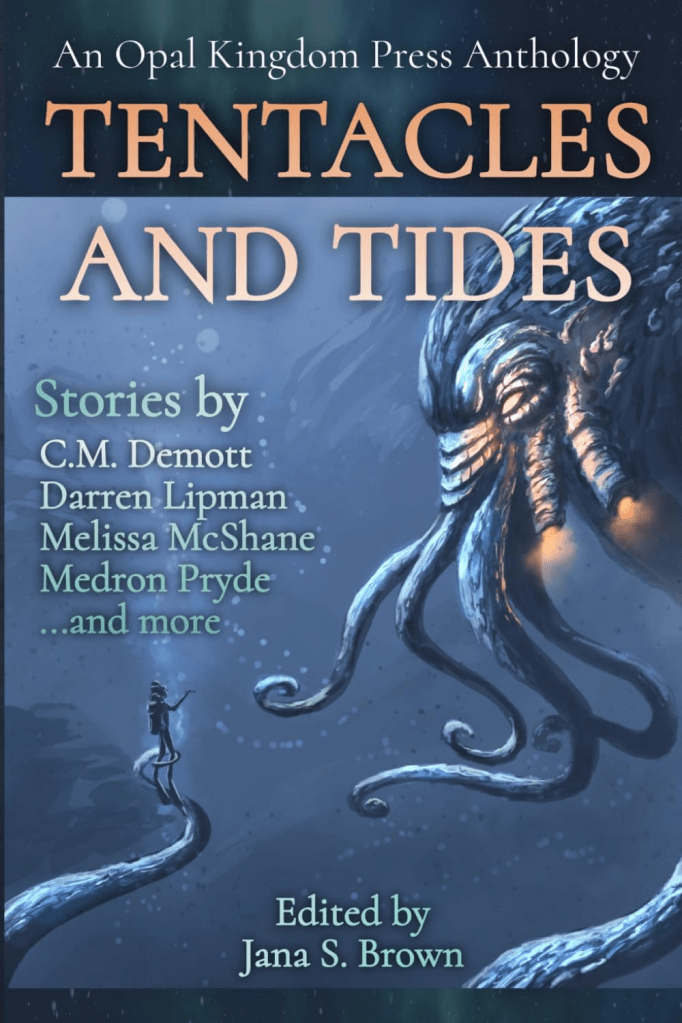
EDITED BY JANA S. BROWN: Tentacles and Tides (ExtraOrdinary Beasts) Paperback

What lurks beneath the waves?

Krakens. Sea serpents. Megalodons. Spirits of storm and tide.

In Tentacles and Tides, the ocean is anything but empty. Sailors glimpse impossible shapes below their hulls. Coastal towns bargain with ancient powers. Great whales guard secrets humanity was never meant to find.

And sometimes…

the monster is the one telling the story.

These speculative tales explore the creatures of the deep as heroes, villains, guardians, and forces of nature—where survival, awe, and terror swim side by side.

The sea is vast.
The sea is powerful.
And something beneath the surface is always watching.

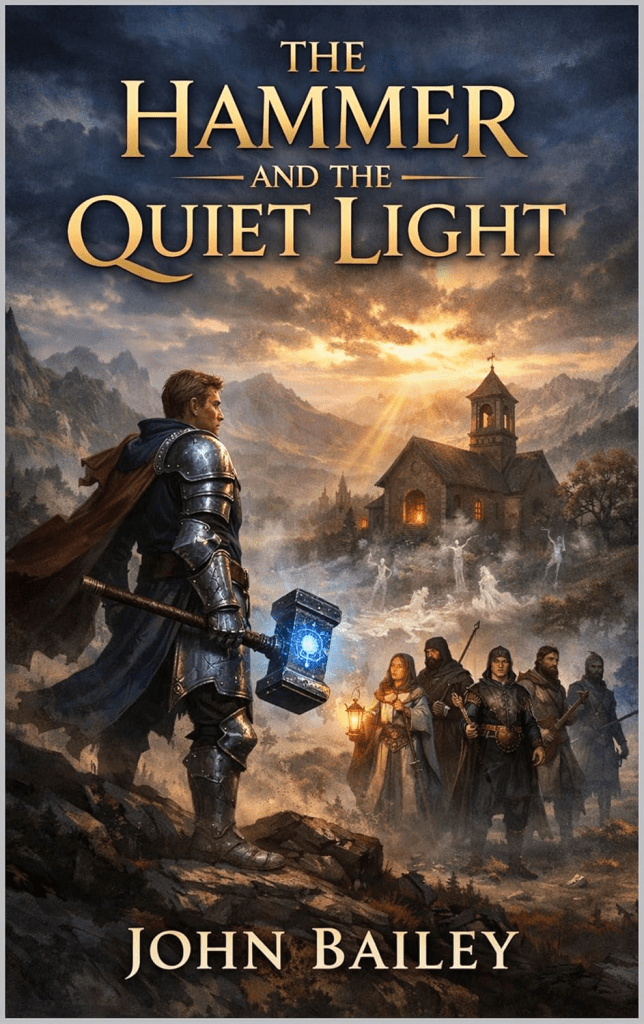
FROM JOHN BAILEY: The Quiet Shape of Consequence (The Detective Stories)

When Daniel Whitaker receives the call that Richard Halse is dead, he responds exactly as expected: measured, cooperative, quietly attentive.

He answers every question.
He offers every reasonable detail.
He helps the investigation move forward.

What no one realizes is that Daniel is not uncovering the truth.
He is constructing it.

As suspicion shifts and the narrative tightens, Daniel refines his account with increasing precision—editing, shaping, and redirecting events with the calm discipline of a man who believes control is the same as innocence.

But truth does not disappear simply because it is managed.
And the story Daniel tells begins, slowly and inexorably, to resist him.

Told in a chilling first-person voice, The Quiet Shape of Consequence is a psychological thriller about self-deception, moral narrative, and the fragile distance between who we are and who we believe ourselves to be.

Because in the end, the most dangerous story is the one we tell ourselves.

BY MAX BRAND, REVIVED BY D. JASON FLEMING: Train’s Trust (Annotated): The classic pulp western adventure

Steve Train, gambler, adventurer, clever rogue, didn’t care much for work. But then he was offered a job with no work, but plenty of danger. The job: track down outlaw Jim Nair — and hand him a pile of money!

  • This iktaPOP Media edition includes a new introduction by indie author D. Jason Fleming giving historical and genre context to the novel.

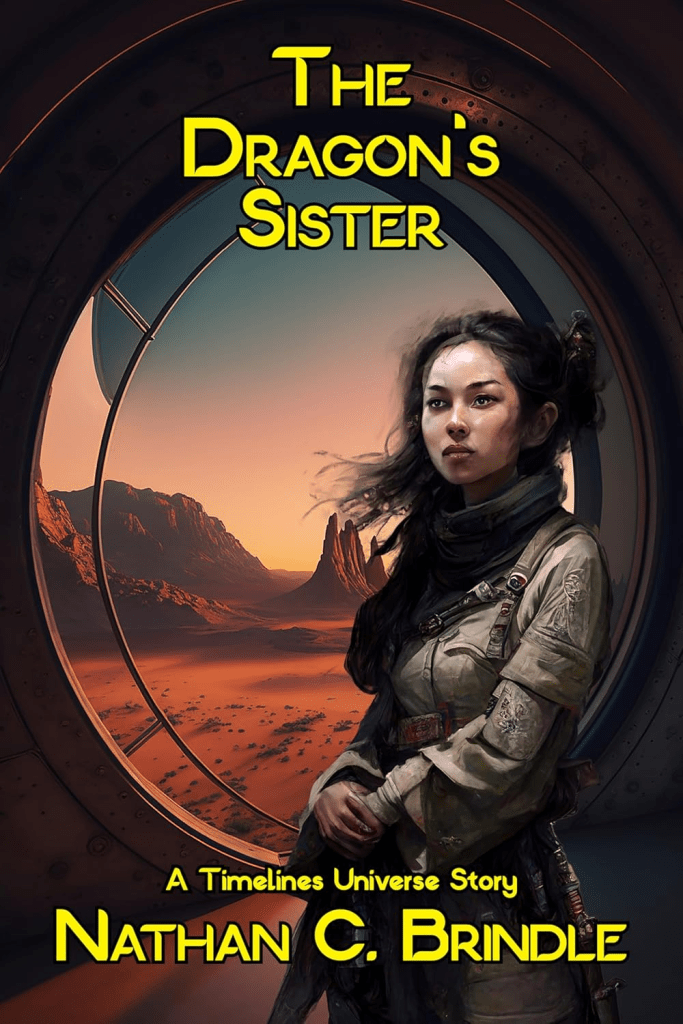
FROM NATHAN C. BRINDLE: The Lion in Paradise (Timelines Book 3)

All Col. Dr. Ariela Rivers Wolff, M.D., Ph.D., USSFM – the Lion of God – wanted was a little piece of paradise to call her own.

Being stuck on a desert world – even if she was the CO of the premiere battalion of the 1st U.S. Space Force Marines that was based there – was not getting her any beach time. Mostly because, without an ocean, there’s really no beach at all.

But she’s got a fix for that problem.

Now, if only the academics studying the problem of terraforming the exile world of al-Saḥra’ would get out of her way . . .

. . . and if only the religious fanatics who want their planet left as a desert, despite all the water from the planet’s former oceans being accessible only a few miles down, will leave the terraforming project alone long enough to see the good it will bring them . . .

. . . then, the Lion would truly be in Paradise.

But even in paradise, black clouds – and black ships – can herald danger for the Lion, herself, and for her daughters as well.

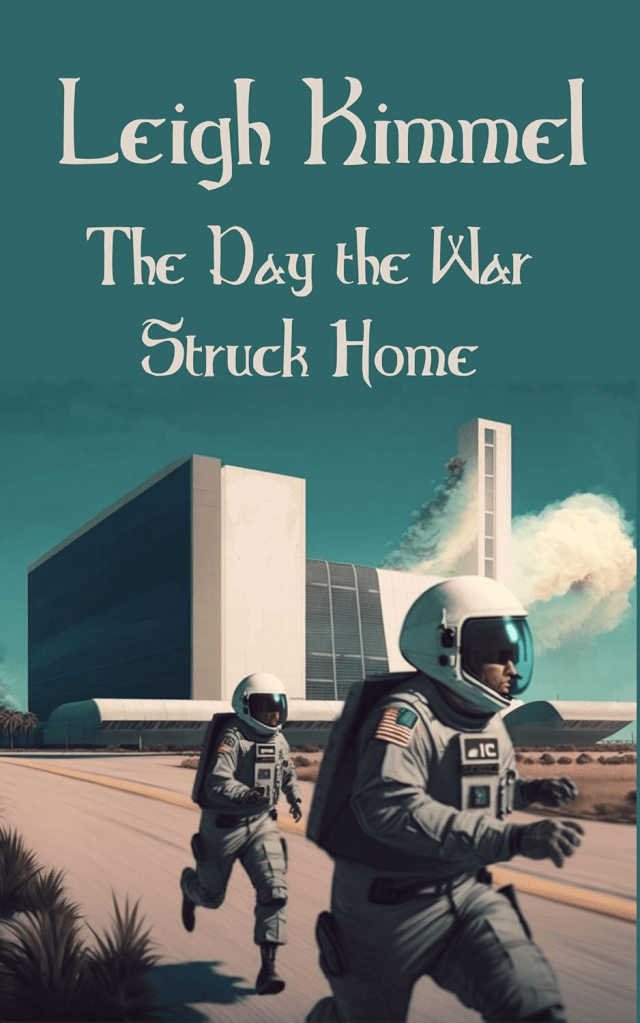
FROM LEIGH KIMMEL: The Mesopredator Hustle

A dying star, and a station harvesting its planetary nebula for resources vital to a centuries-old war.

Amidst this beautiful but deadly stellar environment, a spy has infiltrated the star-lifting operations, creating “accidents” to take the lives of the crew. Can two troubleshooters from Engineering, one a human and the other a member of the feline Chongu, track down the killer when Security is certain the real problem is carelessness?

A short story of the Chongu Empire.

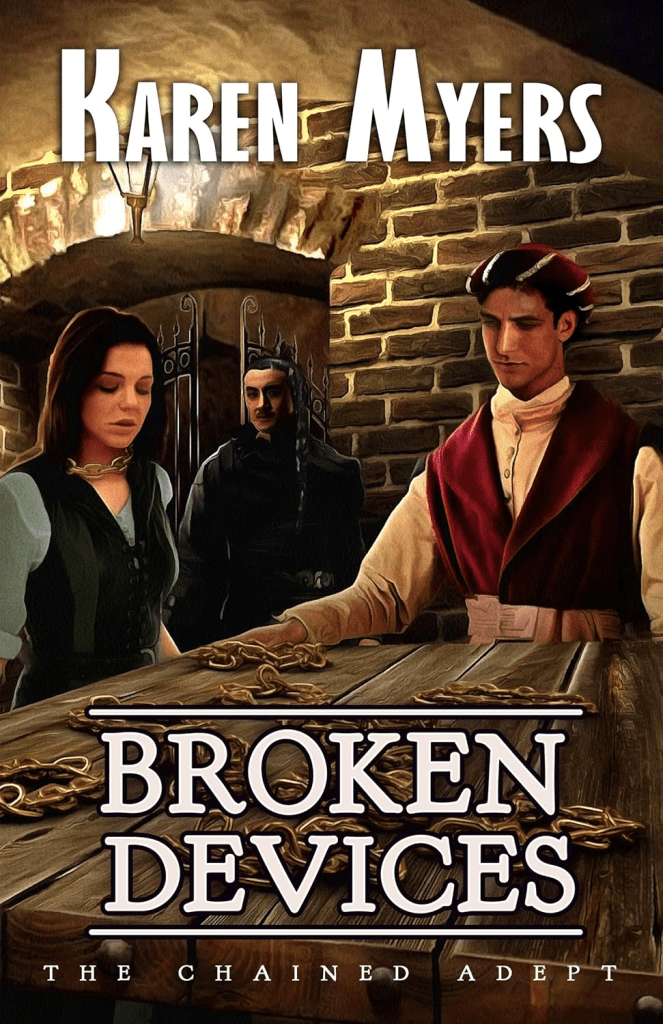
FROM KAREN MYERS: Broken Devices: A Lost Wizard’s Tale (The Chained Adept Book 3)

Book 3 of The Chained Adept

CHAINS WITHOUT WIZARDS AND A RISING COUNT OF THE DEAD.

The largest city in the world has just discovered its missing wizards. It seems the Kigali empire has ignited a panic that threatens internal ruin and the only chained wizard it knows that’s still alive is Penrys.

The living wizards and the dead are not her people, not unless she makes them so. All they have in common is a heavy chain and a dead past — the lives that were stolen from them are beyond recall.

What remains are unanswered questions about who made them this way. And why. And what Penrys plans to do to find out.

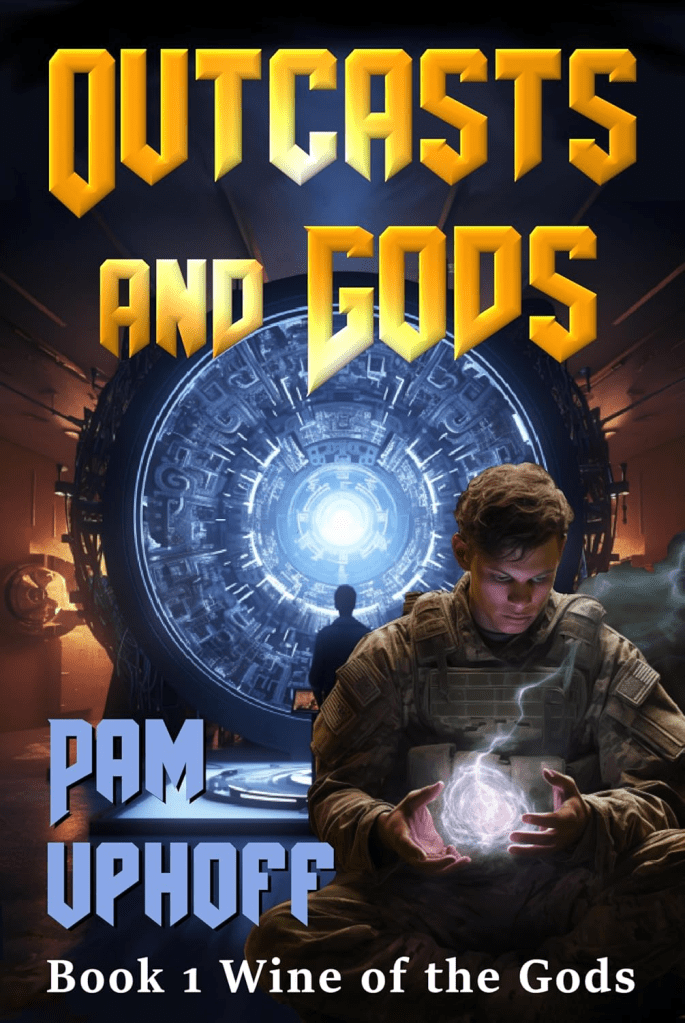
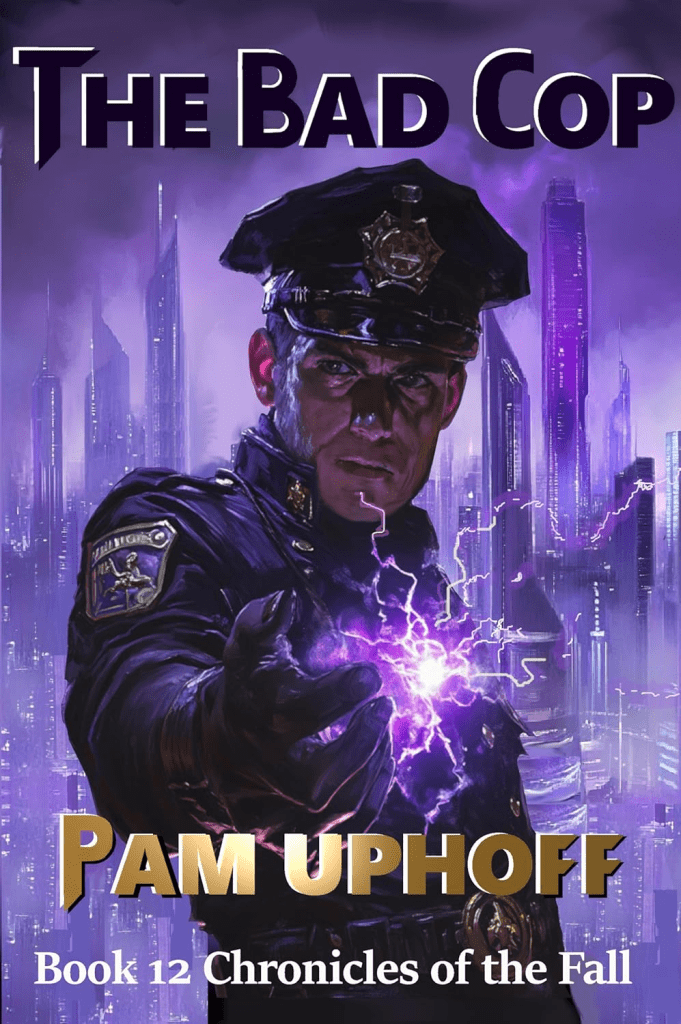
FROM PAM UPHOFF: Outcasts and Gods (Wine of the Gods Series Book 1)

First book of the Wine of the Gods

Wolfgang was a nice kid–until they decided he wasn’t even human.

Genetic engineering. First they cured the genetic diseases. Then they selected for the best natural traits. Then they made completely artificial genes. As the test children reached puberty, abilities that had always been lost in the random background noise were suddenly obvious. Telepathy, telekinesis. At first their creators sought to strengthen these traits. Then they began to fear them. They called them gods, and made them slaves.

Wolfgang Oldham was sixteen when the company laid claim to him. He escaped, and stayed free for three years. When he was arrested, identified and returned to the company, they trained him to be useful. They didn’t realize that they were training him to be dangerous

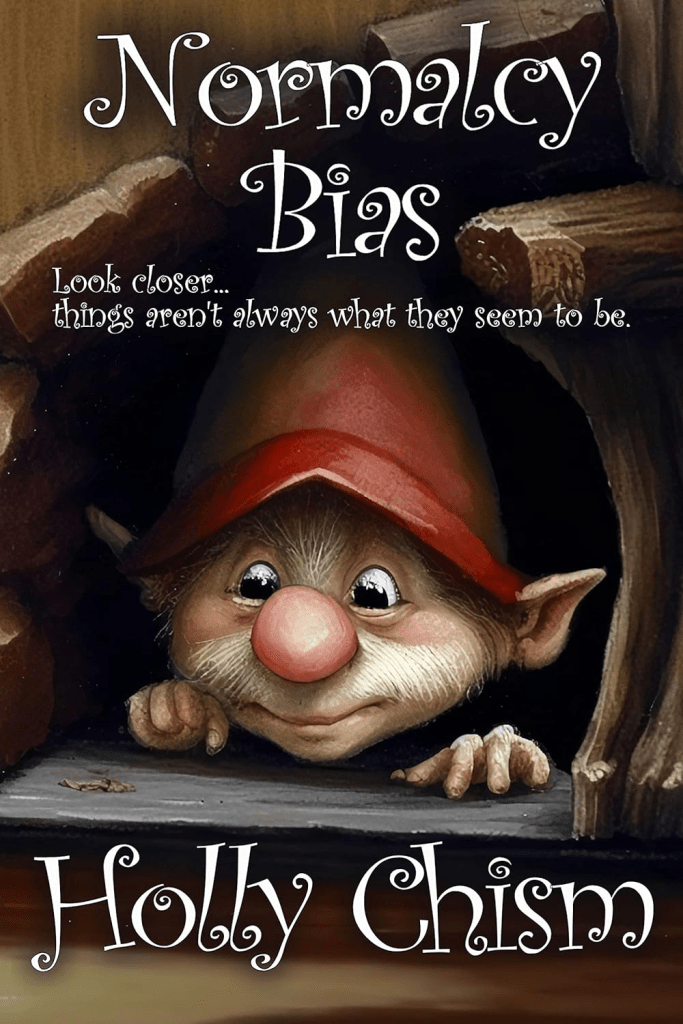
FROM HOLLY CHISM: Normalcy Bias: Look closer…things aren’t always what they seem to be.

Look closer. The things that you’re assuming you’re seeing? May not be what you think. Is that really a mouse, or is it a Brownie? Is that really an owl? Is that polished gemstone a stone…or an egg?

We take so many things for granted. Some of them may be harmless, but many are a lot less so. I wonder how many people ignore red flags every day, because they only see what they expect to see?

This collection takes what’s “normal” and asks “What if it’s something more?”

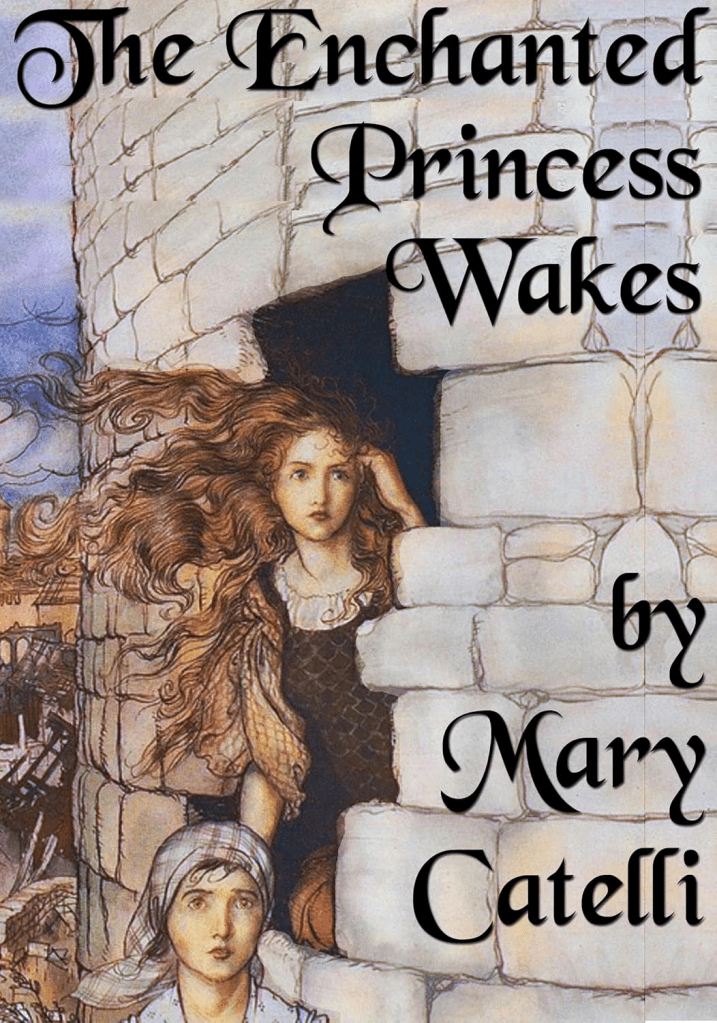
FROM MARY CATELLI: The Enchanted Princess Wakes

Once upon a time, a princess was cursed at her christening — but not the one you heard of.

When the fairy decreed that Rosaleen would fall into an enchanted sleep, and how she would wake, the grand plans of kings, to unite kingdoms, failed. They sent her to an out-of-the-way castle in the mountains, in hopes the curse would do no harm to anyone else.

There, alone, Rosaleen lived and learned, and realized that she herself had to be ready to face the curse, and when it broke.

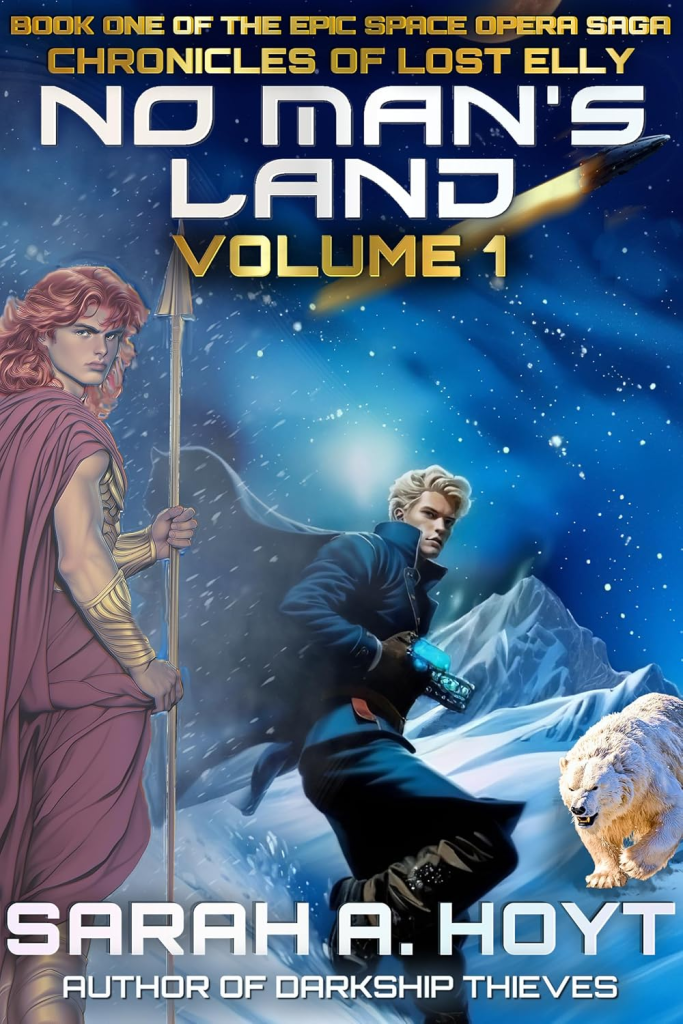
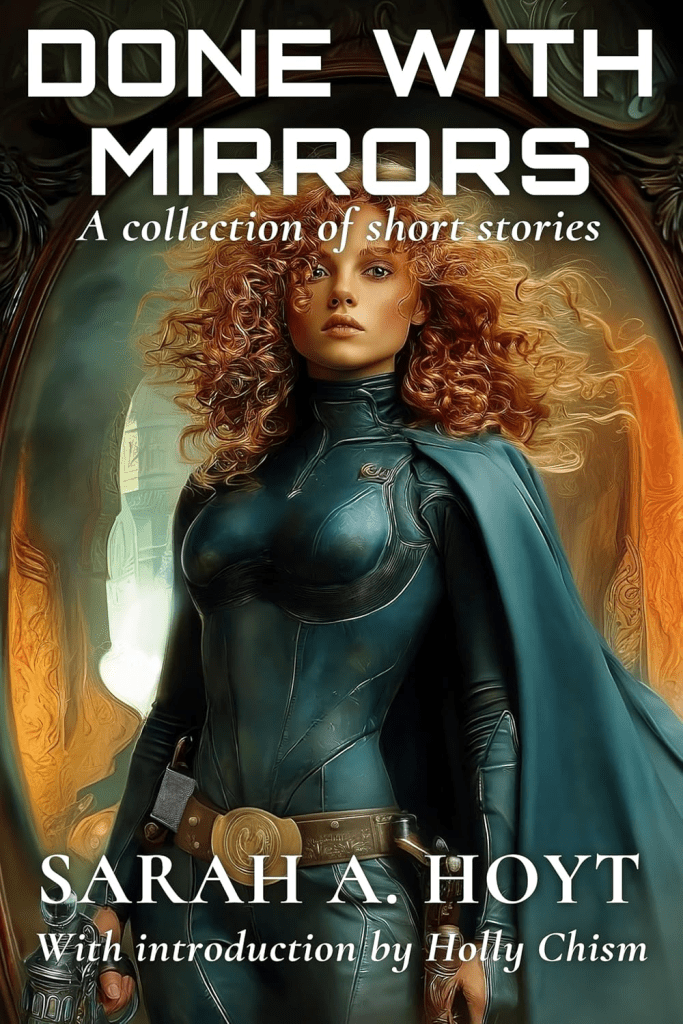
FROM SARAH A. HOYT, YES AGAIN! No Man’s Land: Volume 1 (Chronicles of Lost Elly)

Sufficiently advanced science is indistinguishable from magic.

On a lost colony world, mad geneticists thought they could eliminate inequality by making everyone hermaphrodite. They were wrong. Catastrophically wrong.
Now technology indistinguishable from magic courses through the veins of the inhabitants, making their barbaric civilization survivable—and Publius Cornelius Scipio Africanus Kayel Hayden, Viscount Webson, Envoy of the Star Empire—Skip to his friends— has just crash-landed through a time-space rift into the middle of it all.
Dodging assassins and plummeting from high windows was just the beginning. With a desperate king and an archmagician as his only allies, Scipio must outrun death itself while battling beasts, traitors, and infiltrators bent on finishing what the founders started: total destruction.
Two worlds. One chance. No time to lose.

AND BUY FROM PEOPLE WHO DON’T HATE YOU:
Shiny, Sharp, and Stylish…

Welcome! To Morrigan’s Mercantile!

Now with a lot more journals!

Vignettes by Luke, Mary Catelli and ‘Nother Mike.

So what’s a vignette? You might know them as flash fiction, or even just sketches. We will provide a prompt each Sunday that you can use directly (including it in your work) or just as an inspiration. You, in turn, will write about 50 words (yes, we are going for short shorts! Not even a Drabble 100 words, just half that!). Then post it! For an additional challenge, you can aim to make it exactly 50 words, if you like.

We recommend that if you have an original vignette, you post that as a new reply. If you are commenting on someone’s vignette, then post that as a reply to the vignette. Comments — this is writing practice, so comments should be aimed at helping someone be a better writer, not at crushing them. And since these are likely to be drafts, don’t jump up and down too hard on typos and grammar.

If you have questions, feel free to ask.

Your writing prompt this week is: SCARCE

We Need Non-inflationary Cash by Francis Turner a blast from the past from February 2022

*Francis and I decided we needed to reprint these. but also the crud did a u-turn on me. Less cough, but utterly exhausted. Better tomorrow, hopefully. SAH*


We Need Non-inflationary Cash by Francis Turner a blast from the past from February 2022

We Need Non-inflationary Cash

by Francis Turner

This essay makes the case that we are in the process of needing a non-governmental form of cash. This is because governments are busy tracking what we do with the money they print and because they are mostly printing a lot more of it than they should so its purchasing power is going down (inflation). These factors make it a poor store of value and hence an unreliable unit of account and medium of exchange.

Note: readers who didn’t read my essay from about 7 years ago on Money and Cake, should probably do so, and it won’t do any harm for those that did to reread as a refresher. It’s a light-hearted introduction to most of the key concepts of money.

Note. I am not a tax lawyer. Nor do I even play on on TV. Your local tax-gatherers and governments may object to you trying to implement your own non-inflationary cash. This should not necessarily stop you from doing so, but you should plan accordingly.

What’s the problem

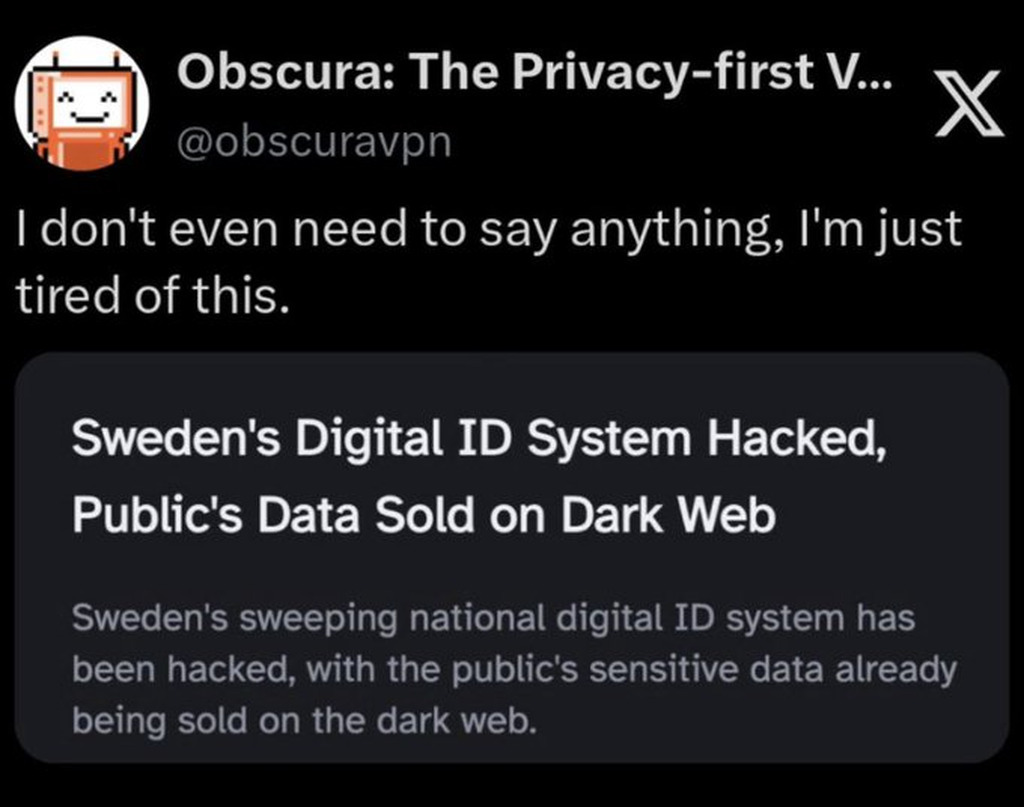
The fundamental problem is the governments and large commercial organizations are unkeen on the concept of people exchanging clinking and folding cash money for products and services as opposed to balances of electrons being changed in various locations. There is a global push for going ‘cashless’. I.e. doing what The Register called “Pay by bonk” or possibly pay by QR code or other mechanism. In Sweden the switch away from cash is very well advanced; if I recall correctly, a majority of shops, cafes and the like no longer accept cash at all. Other countries in the developed and developing world are not far behind.

This isn’t just a government thing there are lots of large companies who also like the idea of consumers not using cash. Companies like it because they can take a cut of every transaction. It’s small on a per transaction basis (1-3% usually) and usually taken from the seller, but it adds up enormously over millions of users and billions of transactions. In addition they can often track spending habits and target ads and offers to entice consumers to buy more. In fact it seems to be popular with most of the “bureaucratic-commercial” complex everywhere, particularly in the land of Winnie the Pooh, err West Taiwan.

In Canada Truckistan, the government has declared an emergency which allows it to tell banks to freeze arbitrary bank accounts without any evidence presented to a court or similar (and to let banks do the same thing on their own if they feel like it, with no fear of court order reprisal). So you can put your money into the bank but you may not be able to get it out. Of course they justify this as “temporary” and “only going after the evil REEEE bouncy castle protestors” but

a) this pretty much defines “thin end of the wedge” and
b) how does anyone appeal when they make a mistake (not if, when because they will)?  

Meanwhile in the land of the ‘free’, the ‘Let’s Go, Brandon!’ administration and their buddies in congress are trying to get banks to report all transactions into and out of bank accounts with more than $600 in them.

This is, clearly, a potentially huge problem. It’s a problem two ways. First is the obvious government tracking one. Even if you assume the government is a wonderful organization staffed purely by the most competent and morally pure the chances of them making a mistake and bringing the full force of the law down on some poor housewife buying, say, fertilizer for her garden and a can of kerosene for emergency heating is higher than one might prefer. Given that in the world we live in the government is not staffed purely by ethical angels, the chances for abuse and error are very high indeed. And that doesn’t even get into the government criminalizing transactions that should be perfectly fine and so on.

Then there’s the problems of availability and fraud in a cashless society. If the power goes out you can’t buy a candle in a cashless society. You can’t buy anything if the internet goes down, if your financial provider has a problem and so on. Also if your provider is hacked (or your cash payment token is, or…) then you stand to lose more than just the cash in your wallet.

Fundamentally there’s a centralization and a corresponding lack of local personal control. There are benefits but there are plenty of drawbacks even before you worry that the government might abuse its knowledge of your financial life.

So keeping cash sounds like a good idea. However, there are potential downsides. Any replacement for cash needs to be able to avoid those downsides

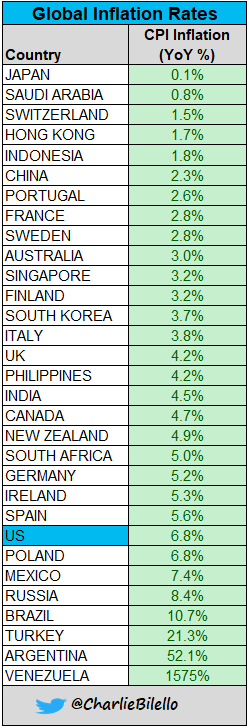
The most obvious is to do with the supply of it. Currently there is, as mentioned earlier, a certain upward spring in the prices of things these days if you buy them in dollars (or pounds or euros – though here in Japan, in yen, not so much yet).

And that is a problem for people who like the idea of cash. As Zimbabwe, Venezuela, various other South American nations, Israel and Weimar Germany all can attest to, cash is a complete disaster if the currency is suffering from hyperinflation. In all these cases cash quickly became useless. Indeed even in times and places where inflation is in the 5%-20% per year range (i.e. much of the 1970s and early 1980s for most of the world) cash is a poor store of value although it still works as a method of payment. Cash coins are slightly better than notes though because the metal will have a base value, so much so that at various times people have taken low denomination coins of various countries and melted them down to sell as refined metals.

Plus the other problem with cash as a strictly physical object is that it is hard to pay for things remotely using it. Which is why bearer bonds, letters of credit, cheques/checks, hawala and so on developed all the way back in the 17th/18th centuries (or about a millennium earlier in the case of hawala).

So to sum up, we have a requirement for something that can act as a reasonable store of value and unit of account (in Japan the yen has been amazingly stable for the last three decades but most other currencies have not, and in Japan the cause has been periods of no growth and deflation), be easily exchanged by buyers and sellers for good and services and yet not fall under the control of the government.

Fundamental requirements

Our cash needs to be the following:

Non-inflationary (and non-deflationary).

A ton of things work better if the cost of something is predictable because the currency itself is stable. This doesn’t apply necessarily to every transaction, but the ability to be able to plan investments and calculate expected returns is made far, far easier when the unit of account remains constant over time. In most of the developed world people who are younger than about 40 have no idea what even fairly moderate 5-10% annual inflation does to your financial planning (though in a year or two they will) but it is an important issue. It is worth noting that some currencies have historically been reliable (the pound sterling for the long 19th century up to ~1914, the US dollar for much of the twentieth) while others (the French Franc, the Italian Lira) have not.

As noted in the last 30 some years the Japanese Yen has been amazingly stable in terms of in country pricing. I first came to Tokyo in 1991 and prices for all sorts of things – from soft drinks from vending machines to train tickets to restaurant meals to property prices – have remained very much the same. Some have probably gone down a bit (property in some places, some restaurant deals) but generally speaking things have been stable.

The key seems to be that the money supply should not expand (or contract) in relation to the underlying economy. As we are (re)discovering with all the covidiocy money printing, when you increase the amount of money in circulation without increasing the economy to absorb it, you see prices rise. And, as we will undoubtedly see in the next few years, having got on the inflation train it is very tricky for a national economy/currency to get back off it again. [We know how to do it though. You raise interest rates and cut government spending (and government money printing) and it stops. But it is a painful adjustment as was discovered by all the countries in the 1980s that did it to end their 1970s stagflation.]

For our replacement money we want something that is a good proxy for the underlying economy. An example could be crude oil or the various refined products of it. It is true that the crude oil price varies considerably in dollars or other currencies but crude oil itself has tended to be produced (and consumed) in roughly proportionate amounts to the size of the global economy (see this graph). So if you had a currency of pints of crude then it would not be inflationary or deflationary (also it is worth noting that prior to the end of Bretton Woods and the 1970s oil shock, crude was remarkably consistent in US$ as this graph illustrates)

Independent and Decentralized

Independent means independent from governments. See above note about covidiocy and inflation for reasons why this is bad. It would be nice if it were hard to track by governments so they couldn’t tax you but that’s a nice-to-have, a must-have is that governments (or anyone else) cannot print more of it to suit their own needs.

It would be good if the currency had no single control point but could be replicated by anyone. That makes it hard to shut down if (when) governments get upset about it. They may manage to stamp out Alice’s Spondoolicks, but Bob’s Quatloos (which are readily convertible to/from Spondoolicks) can continue to be used just fine. Also if it turns out that Charlie has been sneakily coining extra Charlicrowns the only people who are impacted are those who have some. Owners of Spondoolicks, Quatloos or Dave’s Doubloons are just fine.

Decentralization also helps with scalability. While it is true that in the past a reference currency (the Thaler, thePound Sterling, the US Dollar) was extremely helpful, in a world where information is easily passed everywhere and where we all have handy dandy massively powerful computers in our pockets, it’s quite not a problem for everyone to have the exchange rates of Doubloons to Quatloos, Quatloos to Spondoolicks and Sponddolicks to Charliecrowns and therefore calcluate how many Doubloons make a Charliecrown.

Based on Something Physical

Actually this may be a nice to have, rather than a must have. But currencies based on actual gold (or wheat or cowrie shells…) have built in warning signs for when they are being inflated because you can do the sums and see that 1 billion ounces of gold probably doesn’t fit in that warehouse over there. Relatedly it is also possible to audit banks etc, and actually count the reserves of gold or wheat or cowrie shells. People can, of course, have fake bars of gold, plastic cowrie shells etc, but it is trickier to do compared to just modifying a few electrons here and there.

Hard to counterfeit or fake

I’d prefer impossible to counterfeit, but I’m prepared to go with hard. Most current cash can be counterfeited but the percentage of counterfeit cash is probably well under 1% of all cash. Again the point here is that someone (a government) cannot simply make more without investment in whatever backs the currency. A currency that can be faked is one that will soon be one that people lack trust in so we need to avoid that. One benefit of a decentralized system is that it should be possible to decouple and deprecate specific instances if they turn out to have been abused without losing trust in the entire currency. There are examples of this working in various places with existing currencies. For example in both Scotland and Hong Kong bank notes can be printed by a number of banks not just the government/central bank. If a particular bank gets into trouble then its notes may end up trading for less than face value.

Functional when the power is off

As you may have noticed significant parts of the world are learning the downsides to “green” energy with respect to its intermittency and general unreliability. The PRC has shot itself in the foot by trying to boycott Australian coal thinking that domestic suppliers and other countries could provide it instead (narrator voice: but they couldn’t). The Europeans have shut most of their coal, some of their nukes and gone for a mix of renewables and gas. And the gas all comes from that beacon of good governance and free-markets: Russia. Parts of the US (California particularly) are doing the same.

If the power flickers on and off that will affect everything that requires electricity including the internet and services based off it, as well as smartphones and so on. It would be really nice if, when push comes to shove, you can pay for that gallon of fuel, roll of toilet paper or loaf of bread in some kind of off-line token. Ideally (see below re remotely transferable) there would be a way to print out tokens, use them and have the recipient scan them back in and destroy them.

Anonymous

We need to not be able to track the origins of cash or who pays whom with it. See above re: governmental oversight. But it isn’t just governments. Any number of large commercial organizations (e.g. Amazon, Walmart or your friendly local supermarket with their loyalty card) love the idea of tracking what you spend your money on so they can target ads and offers to entice you to spend more. All of this tracking has privacy implications. Given that you can’t trust institutions to either hold the data securely or use it ethically, anonymity is a really really good idea.

Remotely transferable

There has to be a way to pay a distant supplier for a product they will ship you that does not involve you, the supplier or a middleman trucking a physical lump of money from point A to point B. It must be noted that systems like Hawala have done this mostly successfully for a thousand years or more so you don’t need an internet (or even a telegram system) to do this. But – obviously – it will be better if it is possible to use the internet if it is available.

Convertible into fiat currencies when required

Paying for things in quatloos, spondoolicks or whatever is fine as long as the other party accepts them. Unfortunately in the near future people you want to pay for goods or services are likely to insist on dollars, euros, pounds, yen etc. so there ought to be a good way to swap quatloos for the required currency. There will also be a need to convert dollars, euros, pounds, yen etc. into quatloos. It is perfectly fine for the conversion process to be costly but it needs to exist.

Usable for small purchases

It seems obvious now but in the past less divisible coins have been a problem. If you get paid 10 spondoolicks a day you probably want to be able to buy things in small fractions of a spondoolick. So the currency needs to be able to support denominations that are small enough. Roughly speaking the current major currencies all have their smallest coin as something that is too small to buy a single thing these days (but you could 40 or so years ago), but where a small number of them can buy say, a single candy or something equally minor.

Why not Bitcoin? or $otherCryptocurrency

Current blockchain based cryptocurrencies don’t work well as quickly transferable cash and have a bunch of other issues. This long blog post covers a fair number of them (you may ignore the glowball wormening part).

A few of the issues: Transactions take a while to be confirmed (minutes to hours) and it is typically complicated to handle fractions of a coin. If you want 1000 widgets to be delivered next Tuesday then a cryptocurrency is fine. If you want to buy an ice-cream or a cup of coffee to eat/drink right now it is not so easy.

Bitcoin is designed to become progressively harder to mine. That’s not stable because it’s not tied to the size of the economy.

No current cryptocurrencies that I am aware of are designed to be turned into physical tokens.

Most cryptocurrencies (bitcoin particularly) are not anonymous either. They are pseudonymous which is similar but not as strong on the identity protection front. It is possible to track every bitcoin transaction back to the origin and people do that, which is why ransomware crooks no longer want bitcoins.

That’s not to say a new cash currency would not use cryptography – in fact it almost certainly will use it for something – but not as the source of the underlying value.

So what do we want?

We want some kind of hard to fake physical token that is based on possession of a physical thing of value.

That physical thing needs to be something that is universally understandable, and available. And it should be reasonably portable at need (think bars of bullion vs say ownership of a plot of land) even if most of the time it doesn’t get transported

That physical thing needs to be (roughly) tied to the size of the economy so that it won’t cause or be subject to inflation or deflation

There should be a mechanism to transfer promises of tokens to distant locations (“I promise to pay the bearer 1oz gold”).

Energy as the fundamental physical base

I think a good thing to base the currency on is energy. That could be just a measure in Joules or BTUs or it could be physical things that have known energy values such as gallons of gasoline or pounds of coal, or it could be both.

I do not claim that an energy based currency will work. But I think it meets most, if not all, of the criteria above. It’s readily understood, readily available, easily transportable and energy usage is tied to economic activity. Its also easy to understand exchanging it, so 1 gallon gasoline == N KwH of electricity == Y lbs of coal and so on.

Tokens

You can print any token you want, but if you add a serial number that includes some crypto validation key that will be helpful for identifying fakes. There probably should be an online “validate this token” thing that can be used to confirm that the serial number is legit.

But it’s you who is on the line to produce the energy if requested. So potentially bank runs could happen but that doesn’t necessarily destabilize the whole system. It would make sense if the people who backed the tokens were people with ownership of energy (e.g. the owners of fracking wells). But you could run an electricity generator and a hydroelectric dam or simply build a load of tanks and store gasoline (or diesel or..) in them if you wanted to. Or people could trust you when you promised to pay for them to refill their car at a gas station. Or… there are lots of options and lots of ways to store energy and use the store to back a currency.

Online resources would be useful to confirm the validity of non-local tokens and some might not be always accepted by everyone. Perhaps you would discover that only special dealers would accept weird Nova Scotian tidal power tokens and then only at a discount to their face energy value. On the other hand the local Stop’n’go tokens would be accepted by everyone and regularly exhangeable for BP tokens from the nearby town or Duke Energy ones….

Energy tokens are easily printable in small amounts and easily understandable. e.g. 1 KwH would be about a (US) dime. 1 fl oz of gasoline is of similar magnitude. Energy tokens are easily exchangeable from one type to another. Swapping a 1000 KwH of electricity for 20 gallons of gasoline (note I have NOT checked the exchange rate, this is an example) is dead easy and in fact you can have some guy with a gasoline powered generator do it very precisely for you.

Remote transfer

We know how to move energy. We know how to trade ownership in energy. All we need is a way to trust the exchange of physical token to virtual one. This is actually a place where the blockchain becomes useful because it allows everyone to confirm that X tokens have been deposited at store S and store S has transferred the value to user U. At some point later when store S receives a withdrawal request it can also log that transaction in the blockchain. Note that

Works when the power is out

Indeed can be used to get the power back on because you can easily swap 20 gallon tokens for 20 gallons of gasoline right now. etc.

How to set up your cash system

See disclaimer at top of post. Talk to a practising tax lawyer. Pay them for their time. This will help you avoid steps that will bring the wrath of the government down on you. However in general, despite the disclaimer, this is how I would work (and these steps are not particularly ordered).

Start small and local. Use barter and IOUs as the basis of your system. “IOU 5 gallons of diesel” is unlikely to be considered a legal currency. Nor is “IOU 5 lbs of zucchini”. Or even the handing around of actual zucchini (or the traditional cigarettes and bottles of booze).

Code words. Squids, zuchinis, etc. have innocuous meanings that can mean they will be ignored when the authorities read your emails/text messages. Use archaic counting: score, dozen, gross. Use Roman numerals. “I want LIV dozen squids and a score zuchini” is less obviously cash that 648.20 $currencyname and so on.

The key is to keep local commerce working when the national/international stuff is not. So work on blockchains and electronic transfers later. For now having a trusted person at the other end (a la Hawala) will suffice.

If you need to make coins then washers that are engraved would work well. A modern CNC engraving tool could easily engrave the serial number of the coin if you wanted to do that along with a pattern that would be hard for a foger to replicate if he doesn’t have the pattern.

When you get to electronic banking, transfers etc. avoid all the things that have allowed crypto currencies to be insecure, most of which turn out to be stupid software bugs. Even large banks can write insecure code for this kind of thing so try not to need to write software of any sort. Or to have online portals etc. If you have to have an online thing open source the s/w and get someone to review it

Know your customer/trading partner. This reduces the chance of informants and criminals.

Other options

I like the idea of energy. But I’m sure there are other things. Even perhaps cryptobased things that I haven’t thought of. Also I’m sure there are things I’m missing. Don’t be shy. Comment away

Something about Money (and cake) – Francis Turner – A blast from the past from December 2014

Something about Money (and cake) – Francis Turner – A blast from the past from December 2014

Money is one of those human inventions that is about as fundamental as the taming of fire. Every civilized society and many (possibly all) savage tribes of humans have some form of money. Societies that have attempted to do away with it have generally ended up both failing to and in the process killing people. Yet not many people understand money properly and, as a result, much suffering is brought into the world.

So what is money?

The glib answer from an economist’s text book is something like this:- money is a medium of exchange and a unit of account. Which is fine except that it’s got lots of words or more that one syllable and some of them have various meanings. So lets go back to basics (as the politician said to the archbishop).

The root idea of money is to store IOUs so that we can have distributed barter efficiently.

Without money, if Alice wants Bob to build her a table then she needs to have something that Bob wants in exchange. It could be that she offers to cook him four cakes. Which is fine if Bob likes cake. Alice and Bob have agreed that one table is worth four cakes and both are happy. Alice has her table and Bob has his cake.

Except that Bob doesn’t like cake but does like beer. But maybe he knows that his mate Charlie the brewer needs cakes so Bob swaps those four cakes for a keg of beer from Charlie. Charlie in turn feeds two of the cakes to his three children and offers the other two to Daphne in exchange for her cutting his hair and the hair of his cake-stuffed offspring. Daphne now has enough cake that she can stuff herself while watching some mindless romantic drama on TV. Everybody is happy (well apart from Bob because he’s got a hangover but he was happy earlier), and Alice has her table.

That second chain is where money steps in. It was only because Charlie heard Bob moaning about being offered payment in cake and then offering the swap that things worked out. Otherwise Alice would have had to offer something else to Bob or would have to have found Charlie directly and offered to trade beer for cake. And even then Daphne might have been left out except that she heard Charlie’s children griping about how they hated cake, particularly when they had to ingest it through greasy hair.

In an isolated small village (or tribe) it is possible to do this kind of barter chain with some success. It may take a while for Alice, Bob, Charlie and Daphne to figure out the relative value of cake, beer, tables and haircuts and who will do what in exchange for what, but it could be done in an afternoon in the village square. It would have been much more efficient if everyone sold things for some known unit of money (say a spondoolick). Alice sells her cakes at one spondoolick each, Bob sells tables for four spondoolicks, Charlie sells beer kegs for four spondoolicks and Daphne cuts hair for half a spondoolick a head. Now Alice simply goes to Bob and offers him 4 spondoolicks for a table. Bob takes the spondoolicks and hands them to Charlie for the beer. Charlie pays two spondoolicks to Daphne so that she cuts his hair and his children’s hair and buys two cakes from Alice for another two spondoolicks. Finally Daphne also buys two cakes from Alice for a spondoolick each and is much happier because her scissors aren’t all cakey.

Spondoolicks as a medium of exchange make things much better. Not only can we now have chains of transactions that also involve Edwin, Fiona, Gerald, Henrietta and Ian, it is quite possible for Fiona to be in the village on the other side of the hill and for Henrietta, Gerald and Ian to be in the local market town. So long as the two villages and the market town agree (more or less) on the value of a spondoolick Alice can sell her cakes in the market town on the table Bob built to Fiona and everyone is happy.

Trade occurs when the two villages and the market town disagree on the relative value of things as priced in spondoolicks. The only reason Alice takes a day to go to the market town and sell her cake is because in town she can sell them for 2 spondoolicks each, especially to idiots like Fiona who have more spondoolicks than sense. On the other hand Charlie used to hate the town because Edwin, the brewer there, sells his beer at a discount, especially if you buy 10 kegs at a time. But then he realized he could buy 10 kegs for 6 spondoolicks and sell them back in the village for a spondoolick each and even with the spondoolicks he had to pay Bob for loan of his cart he can sell beer at a profit and have more time with his children because he doesn’t need to actually brew beer any more. And next week he suggests to Alice that rather than she struggling to market with all her cakes and that stupid table, why doesn’t she just sell them to him for one and a half spondoolicks each and let him deal with the table and dogooders like Gerald who try to tell Fiona that two spondoolicks a cake is a rip off.

And this is where we get to the concept of the merchant and the idea of money as a store of value. The merchant (i.e. Charlie) acts as the middle man between people in Aliceham who need something (e.g. beer) and people in Brewersville who have too much of it. The merchant buys the excess of beer from Brewerville at a price which is lower than he can sell it at Aliceham and then in reverse takes all the extra cake from Aliceham and sells it in Brewersville.

Later, as the fame of Alice’s cakes spreads far and wide, Charlie and Ian from the land Faraway come to an agreement so that Ian buys most of the cakes from Charlie at a price of 20 spondoolicks per dozen and transports them to Faraway and sells them to would be gourmets at 10 bongoes a cake. He uses those bongoes to buy tools, spices and hops which he brings back to Brewersville market and sells to Charlie (who then resells the spices to Alice and the hammer to Bob) and Edwin the brewer and so on. As a result his initial outlay of 20 spondoolicks turns into 30 spondoolicks. Again he buys a dozen cakes but that leaves him with a profit of 10 spondoolicks which he leaves with Gerald so that next time he comes back to Brewersville he can buy two dozen cakes. Similarly when he gets back to Faraway he can save up his bongoes and buy even more spices, tools and so on.

Of course it isn’t totally clear what the exchange rate of bongoes to spondoolicks is. One way to look at it would be to use a cake-index and say that since Ian buys cakes for 1 ⅔ spondoolicks and sells them for 10 bongoes then the rate is 10 bongoes == 1 ⅔ spondoolicks (i.e. 1 spondoolick = 6 bongoes). But that ignores the fact that Ian makes a profit of 10 spondoolicks on his sale of Faraway goods in Brewersville. So perhaps a better way to get to the equal value thing would be to look at the price of hops (etc.) in Bongoes and Spondoolicks as well and then take the verage of the two. In fact probably 1 spondoolick is worth between 4 and 5 bongoes and taking a look at the retail price of cakes in both Brewersvile (2 spondoolicks each) and Faraway (10 bongoes each) 5 bongoes to 1 spondoolick sounds about right,

Of course when Daphne wants to travel to Faraway, Charlie, Ian or someone like them will charge her a commission on the trade so she only gets 4 bongoes per spondoolick and when Jessica comes to Brewersville from Faraway she finds that her bongoes are only worth 1/6 of a spondoolick when she tries to exchange them – unless of course she meets Daphne. And that of course is the point. A currency is worth what you are willing to exchange for it and the person on the other end of the deal has to agree.

We will note that in this example we haven’t yet said what a spondoolick is (or a bongo for that matter). It could be a lump of metal, seashells, leaves, pieces of paper with the words “! spondoolick” written on them or some electrons or magnets sitting in a computer somewhere. The critical thing is that we trust that a spondoolick today will be worth (more or less – famines and other major events excepted) the same tomorrow and next month. Related to that we have to be able to be sure that someone (e.g. Charlie) doesn’t produce a few extra spondoolicks now and again because his kids need a haircut and he doesn’t have any spare right now.

Historically lumps of gold and silver (and copper etc.) of known weight/purity have been a popular choice for what to make a currency from, but the temptation for someone to use slightly less precious metal than there should be (or even none at all) has also been popular. Similar issues have plagued every other way to keep track of currency though electrons (in the form of bitcoins) have generally proven to be less vulnerable although they have proven to be relatively easy to steal or lose. Either way one critical thing about money is that once we agree on what it is and what it is worth (more or less) a spondoolick from Alice is just as good to Daphne as one from Jessica, you can trust them equally and financially we don’t care about their past life (except for when it turns out the money is fake or substandard). Moreover paying with them is anonymous or can be. Apart from people seeing him sneak in the door, no one can tell that Charlie has a beer at Edwin’s place every market day. As long as he gets paid there’s no need for Edwin to care who it is he is serving and likewise no need for Charlie to care which pub he goes to in Brewersville because only one will accept his spondoolicks.

Something else we haven’t mentioned yet is “Government”. While, historically, governments have generally had a big say in money that is mostly because governments are what we trust to stop the Bobs of the world from getting away with counterfeiting money – both by setting standards for what money is and by punishing the fakers when caught. Although of course governments have also historically done an absolutely bang up job in debasing currencies themselves and a cynic might say that the reason why governments go after private counterfeiters and the like is that they hate competition. Governments are not required to do the whole thing for money to work. A number of countries (e.g. Hong Kong and Scotland) allow banks to print banknotes themselves and while this can cause problems when the bank gets in trouble or when someone tries to use, say, a Scottish banknote to buy a round of beers in London (though it probably works in Carlisle or Newcastle), it is generally not a major issue. Indeed when you consider the use of US dollars in countries like Iran or Zimbabwe, sometimes the fact that the local government has nothing to do with the currency is a major plus.

The key thing about money is that it only works when there is trust. When trading both parties to a transaction have to agree than the monetary object in question is genuine and worth an agreed amount of stuff. Similarly when storing money somewhere the person storing the money has to trust that the place he is storing it is safe and will give it back to him when he needs it. When we all stick our money in a bank and then, later, decide we don’t trust the bank that produces a bank run and it gets nasty when (as is often the case) the general lack of trust in the bank turns out to be well founded. Stopping bank runs from turning nasty is, actually, one of the things that we probably do need government for. The bank runs in the bitcoin world have been pretty catastrophic.

Mention of banks leads us to the concept of loans and interest. Again this isn’t anything complex. Alice cooks Katherine a cake today because she happens to have all the ingredients and a week from now Katherine cooks one for Alice. Effectively Alice loaned a cake to Katherine for a week. Assuming the cakes were the same then there was no interest on the deal. If Katherine’s cake was bigger than Alice’s then difference in size is interest on the loan (if it was smaller then the interest was negative and Alice makes a note to never bake a cake for Katherine ever again). Interest is a way of measuring the different value of money over time. Katherine really needed a cake today but didn’t have any flour. Next Sunday she’ll have loads of flour so she can bake a bigger cake for Alice than the one Alice cooked for her.

We can extend the example further – say Alice cooks a big cake for Katherine and in return Katherine gives Alice a sticky bun every day for a week. If 6 sticky buns used the same ingredients as a cake then that 7th sticky bun is Alice’s interest and the profit on the deal. If Alice did this a lot then (apart from becoming overweight and sick of sticky buns) she’d get called a loan shark or worse because 1 cake in 6 is 16.7% and 16.7% interest for a week works out at something like 6000% on an annual basis. Of course if she got paid one bun a month it would still be steep but much more reasonable (~30% annual rate).

Now lets assume lots of people deposit excess cakes with Alice and agree that they’ll take back either sticky buns or cakes when they feel a touch peckish. If Alice now had 30 cakes which she loaned out to Katherine and 29 other people, she’d get just a single sticky bun every day but in 7 months she’d have a 5 extra cakes (or cake equivalents – remember 1 cake = 6 buns and 30 loans of a cake for 7 buns gives you 30 extra buns). Nice work if you can get it especially if the other cakeowners who gave Alice their cake only ever want a sticky bun at a time and no more than one of them wants a bun each day. It goes a bit wrong however if one of the other cakeowners (Louise) shows up with no warning on Saturday a month down the road and demands her entire cake back now because it’s her child’s birthday party. Unless Alice has a spare cake (or can make one quickly) she can’t pay Louise back as she promised which will make her very unhappy – and of course she’ll tell the mothers of the other 5 kids who were invited to her birthday party and they’ll start wondering what happened to their cakes and on Monday Alice will have demands for 5 more cakes which she won’t have either and that news will spread and so on. That is what we call a bank run and it probably results Alice getting a load of sticky buns in places she won’t enjoy.

Now Alice could avoid this situation by not loaning out all the cakes she got (perhaps she gets 40 cakes but only loans out 30) or by writing a contract that says that you can’t get your cake for 6 months or that you have to wait 6 days after you request a cake for it to be provided to you or some combination. For example Alice might say that if you want your cake back now you get nothing, but if you leave it with her for a year you get a cake and a sticky bun. In other words Alice is paying you interest for leaving the cake with her for a fixed period of time and she might make a rule that you can only withdraw one bun a day unless you give prior notice. With these sorts of rules and with 10 spare cakes sitting in her freezer Alice can be confident that Louise will be satisfied when she wants her cake back. Alice will get a decent surplus of sticky buns even assuming that some people decide that they’d rather have a cake and a sticky bun next year than just a cake today.

But it also assumes that all the 30 people Alice loans cakes to give her a bun a month. If Maria doesn’t pay after 3 months and Nina doesn’t pay at all then Alice is out a cake and a half. If that’s all it’s not too serious. The other 28 people will pay their full amounts so instead of ending up with a surplus of 30 sticky buns Alice ends up with 19 (7 lost from Nina + 4 from Maria). But if she gets it wrong and another three are like Nina then that 19 bun profit will turn into a loss of 2 buns.

Of course Alice could solve this by paying Bob a couple of sticky buns to go around to Maria and Nina and stand over them menacingly while they cook their buns (a 2 bun loss is far less bad than an 11 bun loss) and if Bob does it right to Nina when she hasn’t paid for 2 months then maybe Maria hears about how nasty it all was and manages to pay off her loan even though she really wanted those sticky buns herself. Either way Nina and, possibly, Maria now have a terrible credit rating – no one will lend them a cake again unless they show they really have turned over a new leaf and they probably have to pay 8 sticky buns back instead of 7 to cover the risk that they don’t pay back any sticky buns unless (or even if) Bob goes around and (threatens to) beat them up..

Right now we know what money is, how it works, how loans and interest work and things like that. This is all a basis for what we need in a possible new currency. Our new currency needs to be trusted, consistent in value, storable and able to be used anonymously. Sounds easy….

Notes: Richard Tol in http://www.the-american-interest.com/2014/12/10/hot-stuff-cold-logic/

In a barter economy, one needs to know the price of everything relative to everything else. How many eggs for a liter of milk? How many slices of bread for a liter of beer? How many iPads for a yacht? In a monetary economy, however, one needs to know the price of everything in money only. In a barter economy, there are n2-2n prices (with n being the number of goods and services for sale). In a monetary economy, there are only n prices. That is why, at some time in the deep past, many human civilizations of diverse origins independently invented money.

Sleep Walking to Suicide

How do you get someone to go to their death with a smile on their lips? You convince them it’s heroism, and for the greater good.

How do you get someone to kill their country/their culture/their home with fervor and so full of altruistic fervor that given another aim they would be saints? The same way but more so. The indoctrination starts early, the meaning of words is subverted, the ideals implanted unsustainable and wrong. Until they can’t have any thoughts that don’t lead to killing all they came from.

There are times the first is justifiable. All the Christian martyrs who went to the lions with smiles on their faces and singing hymns had a very realistic victory over the Roman Empire. They planted seeds in the minds. They subverted. And lets face it, Roman culture as it was needed to break and be born again. (Though the fall of Rome at the time still marked a very real increase in barbarism. But for Rome to become civilized it needed boundaries and a marked decrease on authoritarianism. Actually debatable whether it got that, but that’s a long discussion and not what I wish to talk about. Pardon me. It’s early and I’m not focusing well yet.) But it’s never justifiable when it’s “Kill yourself and the world will be better off.” That’s always a lie, even when it’s me thinking it at three am. Knowing it’s a lie is what has kept me this side of the sod.

The second can be justifiable also, and it can be a quick betrayal, a stab in the back. The long slow betrayal we’re seeing, is never justifiable. It’s the same “Kill everything that made you and the world will be better.” It’s compassion turned on its head. It’s lies forged and beaten into a knife to cut your throat.

Which brings us to this: https://x.com/Bubblebathgirl/status/2036417548040733081

Or if you prefer: https://xcancel.com/Bubblebathgirl/status/2036417548040733081

Go look at it. This is Senator Chris Murphy, D- Connecticut, and you can say he said “the quiet part outloud”: “The people we care about most, the undocumented Americans that are in this country.”

But the amazing thing is how he said it. He said it like it was matter of fact, and of course, everyone is going to agree with him. Of course that is who is there to serve, the “undocumented Americans.”

Now he doesn’t look any smarter than your average soup cockerel in any yard, and has the same kind of rooster-intelligence — I peeked at his bio. — He doesn’t come from money, or at least not openly so. His mom was an ESL teacher, though his dad was a manger or something or other. But he went to public high school, though I note a year abroad at Oxford, which denotes ambition and some money from somewhere (we could never afford a year abroad for the kids. Much less at Oxford, which is a step beyond.)

But still. How do you say the words “undocumented Americans” with a straight face and not realize what you’re saying contains several fallacies in those two sentences?

Stupidity? Undoubtedly, of course. As I said, there is an unreflective quality to his expressions. But not he’s been winning elections since class president, so it’s not only that. And while elections in CT are doubtless as rigged and fraudulent as everywhere in the country (maybe more. They’ve been rigging them for two centuries plus) there is also, I betcha, a lot of people who vote for this guy. I know because these people are my kin by marriage. (Maybe not literally. I don’t know if any of the blood kin are left in CT. Well, documented blood kin.)

My husband’s family on the paternal side has been in the country since the second shipload of colonists. (They weren’t vulgar, so they wouldn’t be in the first. Too showy. (Yes, that’s a joke, but they’d laugh.)) So I know the personality and the character. They were Puritans with the P for purpose branded in the soul. If what I’ve gleaned between the lines of the family history and the online boards devoted solely to the argumentation about said history (don’t if you prize your sanity. There are weaponized autists who have devoted their entire productive lives to arguments over the problem of the two Walters. I’m serious, don’t go there) they were survivors on the losing side of the aftermath of the Glorious Revolution. I.e. they’d been defeated but still weren’t sure they were wrong.

Their blood, and more importantly, their basic personality traits infused New England, shaping the culture, sculpting it, absorbing later waves (like the ones that led to Chris Murphy) and integrating them into the same Purpose-driven, tightly focused, vaguely autistic quest for Utopia on this Earth.

There’s much to admire in the New England character. I admire it myself to the point of marrying into it. Look, the Mathematician and I dampen each other’s worse excesses and by being very alike yet almost opposites — we’re both Odd, we both fail to understand how other people don’t see what we see, and we agree on general principles of what would improve life, the universe, etc. BUT he arrives at things fact by fact and as emotionalessly as human flesh can contrive, while I lurch from lunatic intuition to sudden inspiration, and check the facts afterwards — We taught each other over the decades that other people aren’t being STUPID: they’re genuinely different. And we taught each other to dig down on what we think is already proven, the received wisdom drunk with mother’s milk. That’s one of the advantages of multicultural marriages. But there are other ways to get at it.

That strain from the absolutely Odd puritans in a way infused all of American culture. And provided the faith those people receive before they’re old enough to think about it is functional, it can achieve great things. It doesn’t necessitate great intelligence (that’s arguably a down check. One thinks too much) or great wealth: it gives you the ability to work madly, to ignore sacrifices, to do what “is right” even when it hurts you and to not count the years lost for what you consider great purpose.

Arguably it’s why Dan was the one to bury his dreams of music and math so I could write my way to professional. (Was it the right decision? No. I can say that looking back. Could I have made the like sacrifice? I don’t know. you see I’m not GOOD. He is. I try to be good, but the basic character isn’t there, ready-made to purpose.)

The problem then is not the character. Arguably, that autistic strain is what makes America great and what will take us to the stars, if we go.

No, the problem is that our every institution and our very culture has been weaponized to be an engine of destruction. Not just ours either. All of the West.

Chris Murphy said that and counted on a great number of his voters to hear it and think he’s a great man and more importantly GOOD because it’s true. Because they will. And they will because they absorbed the same swill — never explicit but there — from nursery school on. To us, on this side — most of us Odd, and therefore having rejected the Koolaid we were fed with formula in our bottles or with mother’s milk because she’d ingested it — it seems like a self-own, like saying the quiet part outloud. To them, his constituents, dour New Englanders who live conservative but vote Marxist, it seems like an obvious comment. And praiseworthy. Look, what a good man he is, speaking for the voiceless, looking after the powerless and all that swill.

They will pass, unremarking, over that “Americans” without ever pausing to think that people who are here “undocumented” because they didn’t stop long enough at the border to get documents, or burned the documents that told them to show up for an hearing on their “refugee” status in ten years, AREN’T IN FACT AMERICAN.

They actually don’t think of that “American” at all. That’s just something you append to the end of a group to be polite. It doesn’t mean anything. It started with African-Americans, the most INSULTING moniker for black people ever conceived of. As though having African blood made them somehow African forever, even if some of their ancestors have been here the full two hundred and fifty years, and not a few of them having actually participated in the war for freedom. It’s like saying “Oh, but they tan, so they are forever African. Never full American.” (I want that moniker to be sharpened into all corners and shoved up the rear of anyone who pushes it. Black is fine, and all of my black friends call themselves black. If white is okay and black isn’t, it’s the “polite” people who are racist.) And was popularized with every group of immigrants: Irish-American. Italian-American. French-American. Etc. Etc. Etc. Can you call me Portuguese-American? Sure. Lots of people do. Never to my face, the cowards. It is in a way an appropriate description because I’m a first generation immigrant. I started out Portuguese and am now mostly American. (About 95%? I don’t know if the last 5% will ever come online. Who knows? Maybe before I die.) But honestly, at 63 and having lived here twice the time I ever lived in Portugal (and much more if you consider “conscious adult) and all of it in utter isolation from Portuguese culture (I went back very rarely, for various reasons, though money was foremost, and I self-consciously isolated from any Portuguese immigrant groups, most of my instincts and immediate responses are American. (Yes, it annoys my birth family. It doesn’t matter.)

But the thing is, I’d be the first to tell you it was neither immediate, or predicated on crossing the border, nor accidental. I WANTED to become as American as possible. It was insane amounts of work, often painful. Even then it was a good 10 years before I even had a clear picture of what I was aiming for. And probably 20 before I passed when alone, by myself, in a grocery store. And then only because “American” is a broad church. We encompass a lot of body-language, a lot of unconscious expressions, an immensity of tones of voice. Other countries have a much narrower and more uniform group of “acceptable” and it’s harder to change to fit there.

Heck, I would say the work couldn’t be completed until I raised kids in the US. Through them I got the experience of growing up in America, vicariously, and it helped immensely. (It’s why when I’m being casual my mannerisms and short-hand speech tracks 20 years younger.)

So, am I Portuguese-American? In the broadest sense, perhaps. What remains of Portuguese is that I count and pray in Portuguese. I have a bottomless store of grandma’s sayings and aphorisms, but weirdly I’ve found a lot of them are bog-standard… Irish? (Really? No idea. I guess it’s general Celtic under-culture. Fascinating but not relevant.)

Mostly I’m American. Odd, sure. But American.

However that took, besides the legal process, which was easy — easier than it should be, if I’m honest — a lot of self-conscious adaptation, learning, studying, imitating. Oh, and living with the Mathematician.

To be blunt: America is a culture as much as anything else. If you reject the culture or aren’t even aware of its boundaries, you can’t claim to be American.

And here I differ from the people who scream that “it’s not magical dirt, you don’t become American by walking over the border.” They are right of course, in that statement. Every inch of it. But most of them believe it’s magical dirt, and you become American by being born in it or having a number of ancestors who were born in it. To them I say “BAH.” You can be un-American or even anti-American having been born here, and having generations of ancestors born here. Having in fact ancestors who fought in the revolution. Many people are that.

And it’s not even a conscious rejection of the founding or of American culture. It’s American culture weaponized against itself. I give you Chris Murphy as an example. He’s American. Born here. Of parents born here. Went through school here. And his schooling, his learning, his education brought him to this stupid place where he not only thinks those who walk over the border — singing the anthems of other countries, and unfurling their flags — are Americans merely lacking documents to be fully American, but also that they should be his primary concern. Doubtless because they are “underprivileged” and “Downtrodden” And–

Each of these is a term of art, which means nothing unless you buy into the whole Marxist framework born again under the stupid but persuasive hand of Gramsci. “Under Privileged” doesn’t stand rational scrutiny. Is there a mark on the tank of privilege that tells you when you’re just privileged enough? “I’m sorry mom, your privilege is two tablespoons over. We need to adjust that.” And what is “privilege” anyway? It seems to be “having enough to eat, and a little over to save” From everything the left says, if you’re not living under a bridge and pooping on the street, you’re “privileged.”

It only makes sense if you think of people as widgets and possessions as immutable, and coming from nowhere. In that scheme any material wealth (understood as a pot to piss in and above) in one group that another group doesn’t have is stolen from the other group.

OF COURSE THAT’S NOT REALITY. Any six year old knows that’s not reality. Even in childhood, where most material goods are in fact handed to you already made, they know there are kids who break their toys as soon as they get them, and kids who treat their toys with near-reverence, so that in two three years the second kids have a lot more than the first, and there was no stealing involved.

And any adult knows that. Even those of us who aren’t very good at keeping our eyes on the ball, and who know that when we hare off after some crazy artistic goal we’re leaving money on the table, know that we could have done better and had more. And we all know, even now, people who make a lot from very little. My mom and dad count on that. Insanely hard work and denying themselves all fun for years to build a house and retirement accounts. (Look, I was fourteen the first time we went to a restaurant as a family. Before that their guilty pleasure was the equivalent of dollar theaters, playing movies so old some of them were still silent. And it was just them, a date night.) And mom worked all the hours G-d gave and sometimes squeezed a couple of them no one knew from where. They did better than their peers, but they never stole any of it.

Because, of course, wealth can be created. Otherwise we’d all be fighting over the same set of flint tools.

Anyway, the point is, the cant we receive starting in elementary, the very language has become corrupted. “Underprivileged.” “Unhoused.” etc. etc. each one a lie that reduces humans to having no agency, to being widgets, just members of a group.

Think I’m exaggerating? Well, feast your peepers on this. https://x.com/covie_93/status/2036441375021957518

Or for the x-less: https://xcancel.com/covie_93/status/2036441375021957518

Yes, the poster, either black or wearing black-digital-face says:

Seeing Black ICE agents doesn’t sit right with my spirit.

Why would black ICE agents be any different than white ICE agents, or Latin ICE agents or purple pokadotted ice agents?

Interesting question that. Particularly since, if you go by groups black people in America have the MOST reason to be upset at illegal immigrants. Why? Because black people for various reasons (and if you say institutional racism you’re correct, but not the way you think. More because Democrats, controlling the institutions have made a lot of effort to prevent black people from following the path of every other minority group to integrating with the majority. Segregation didn’t get encoded into law because people WANTED to segregate but because people didn’t want to, and the democrats preferred them segregated.) have lagged the other groups in integrating with the American population at large, and a lot of them got caught in the welfare trap. The way out of the trap is minimum wage jobs to begin with. And illegals undercut, undermine and make the real minimum wage what you get paid under the table while drawing from every welfare program possible and sending it all overseas except what you need to hot bunk with sixteen guys in a one-bedroom apartment. Black people are literally the most affected by illegal immigration and open borders.

So why would they not help enforce immigration law?

Ah, now you need to be up in Gramsci up to your neck to get that. Unless of course, like the poster you just take it as a law of nature, because you were spoonfed Gramci from your cradle.

Every time I post on this, I get someone glitching that that’s not taught, and it’s not Marxism, and they were never taught Marxism and/or Marxism is just a sophisticated method of economic analysis. They’re the fish screaming they don’t in fact live in water. And water doesn’t exist. And it’s just H2O.

But the fact is they grew up and were fed on the end product of Gramscian Marxism.

Marx was actually both a racist (I know you’re shocked, right) and a British chauvinist. The communist revolution was supposed to come about using the British Empire as a vehicle. It was the British workers that would usher it in and the rest of the world would follow because they’d by then be British in all but name. Hence the workers of the world would unite and– BUT Marxists really bought that international proletariat marching shoulder to shoulder. And of course the Marxist revolutions came about in countries that were to put it mildly backward and not through workers at all. But more importantly in WWI the “workers of the world” fell in each behind their own country. (This is the reason the Marxists go foam-at-the-mouth crazy at the mention of nationalism.)

And then Gramsci saved the whole thing by retconning it. It wasn’t workers. It was the “Downtrodden masses”, the people of poor countries, those that tan, the dark skinned people. From a distance, tribal culture looks like primitive, utopian communism. From a distance, their poverty is because white people, the “colonialists” stole everything.

None of this stands examination, any more than any other form of Marxism. Tribalism is not communism, except in the sense that end-stage applied communism resembles the worst tribal cultures. And colonies aren’t poor because the colonizers stole anything of value, but usually because they are tribal. (And these days imbibed more Marxism than allows them to be functional.) But it looks good. From a distance. And Western Marxism love their Italian-flavored Gramscian Marxist koolaid.

So Chris Murphy? OBVIOUSLY he should be in the service of the darker skinned people, who are natural communitarians and will usher Utopia to America, once we stop being over-privileged and share our all with the “undocumented Americans.”

I’m not saying this to excuse him. It’s inexcusable, and I hope whoever runs against him crucifies him on that. Though don’t be surprised if his CT constituents don’t understand he said something wrong.

They imbibed the same gospel starting with The Giving Tree, one of the most evil books ever written, and passing through every school text on the downtrodden and under privileged. They collected toiletries and treats for the underprivileged — read junkies, strung out — under the bridge and learned that working the soup kitchen was the acme of virtue. If they are a little better off, they worked for the Peace Corps where they were told the people over there are poor because we are wealthy (Have had Peace Corps graduates parrot that at me.)

The problem is not Chris Murphy. He’s part of the problem, sure, and people like him will kill us if we continue allowing them power.

They will destroy the last best hope of mankind in the name of Utopia that they think will come if they work for the “downtrodden” without ever asking WHO actually trod down on them. And they’ll do it with a smile on their faces and thinking themselves virtuous.

The problem is that people of that bend of mind, people who infused America’s backbone with that ability for great sacrifice for a great cause have been mind-jacked by an inimical ideology. They don’t even realize they’re killing everything they love in the name of utopia that will never come.

The solution is to teach your kids well. For the love of heaven, if they’re in public schools make sure you know everything they’re taught and counter it vigorously at home. Do not withhold in the name of “but I want them to fit in” or any such stupidity.

Teach your kids well.

But teach them what? I’m tempted to say take them back to Judaism or Christianity (depending on your flavor.) Because while that’s corruptible (what isn’t in human hands?) it’s not aimed at Utopia in this world (the puritans learned) but Utopia in the ever after or after a salvific event that changes the very nature of humans.

However if you’re not a believer yourself that’s a bitter pill to swallow. And might be impossible, because mostly kids learn what you don’t teach but live.

So?

Teach them USAianism. Teach them the virtues of our country and culture. Teach them that no, not all cultures are alike and Western culture is demonstrably better — for all our faults — because it lifted the most humans out of dire poverty.

And teach them that in Western Culture, American Culture is the apex — for all our faults — because we are the engine of that prosperity — both through innovation and sheer focused work — that lifted most humans out of dire poverty.

Teach them our history, our founding documents. And realistically, not through the warts-only lens.

For people to stop walking to death with a smile, they need to learn they are worth it and the black dog lies.

For cultures to stop committing suicide, convinced they’re doing it for the greater good, they need to know they’re the best and Gramsci lied.

Go make it so.

Springing Eternal by L. A. Gregory

Springing Eternal by L. A. Gregory

Even when you worked for the Reality Interface Bureau, Tuesday mornings were boring. When you worked at the accounting desk, they were excruciatingly boring. But somebody had to keep the beings of folklore, urban legends, and memes contained, fed, and—where possible—gainfully employed. That could be anything from Sirens doing pest control to the disgruntled, talking white cat who handled customer service (somehow, they never called twice).

But Tuesday mornings were boring. Usually.

Something short and fluffy jutted over the battered melamine top of Andie’s customer service desk, but she couldn’t see whatever the fluff was attached to. “And you are?” She rose on her tiptoes and leaned in an attempt to see over the chest-high surface.

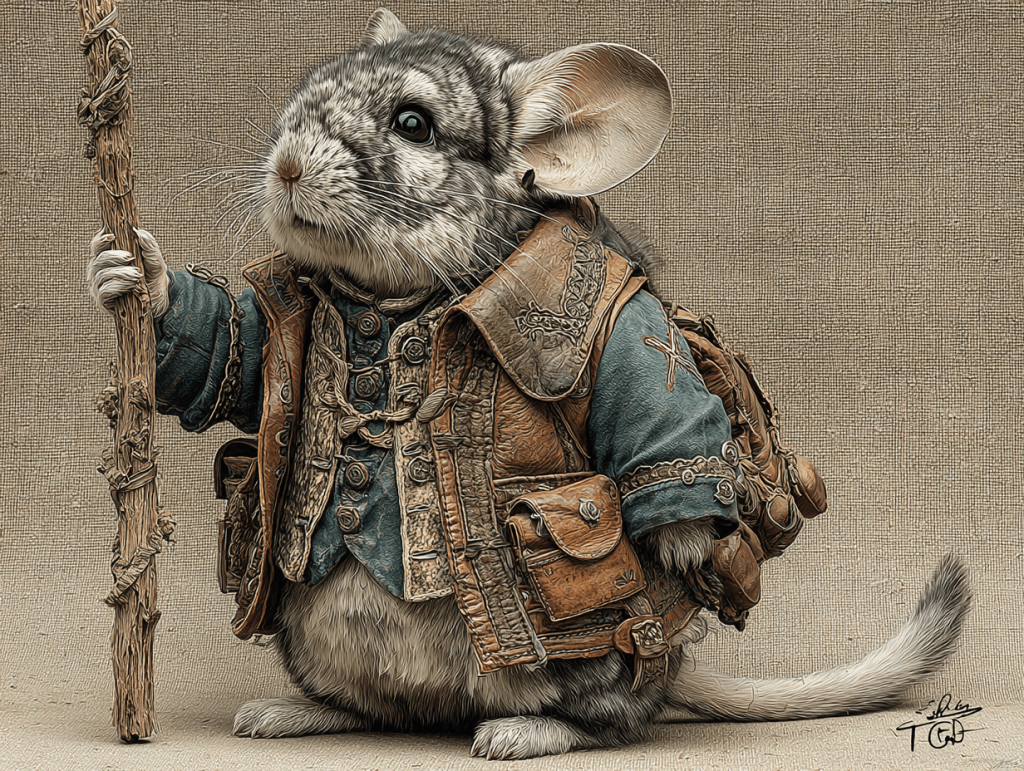
“Sergeant Bartholomew, ma’am. Chinchilla Special Ops Squad.” There was a grunt of effort and a scrabble of claws on the top of the desk, and the fluff resolved itself into a fat, furry rodent with a leather vest, a rodent-sized staff, and an expression of stout determination. “We need to talk about our food allotment.”

Andie nodded, already dragging the “Food and Housing” menu down from its corner. “Unless you’re feeding on the souls of the dead–”

“–Ewwwwww.”

“–we can probably work it out.” She cross-referenced the menu, scrolled through the Cs, frowned, and scrolled again. “I’m sorry, there’s nothing here under ‘Chinchilla’. Are there any other names you go by?”

“We used to be the Chinchillas of Hope,” Sergeant Bartholomew said. “But somebody said that sounded boring.”

“It is!” a female voice piped up from floor level. Another grunt, considerably more scrabblings, and another chinchilla clambered up to perch on the edge of the desk. This one was, improbably, even fluffier.

“That’s Sue,” Sergeant Bartholemew informed her.

Andie blinked. “How are you getting up here?”

“Chinchilla ladder.” Sergeant Bartholemew craned what neck he had to peer toward the floor. “Pogo and Larry and Fred.”

A chorus of chirpy greetings sounded invisibly from below. Andie opened her mouth, closed it again, and scrolled instead.

“Got it,” she said in a moment. “It’s under ‘Hope, Chinchillas of’. So what’s the problem?”

“We need dog food,” Sue announced.

“…I… can print you a form for pet requisitions. It’ll take several weeks, though. Most of our clients don’t even have pets.”

“Not pets,” a deeper voice announced. “Targets.”

A larger chinchilla came into sight as he trundled away from the partition, heading for the chairs at the back of the waiting room. His iron-gray fur was interrupted by a bandolier slung around his torso.
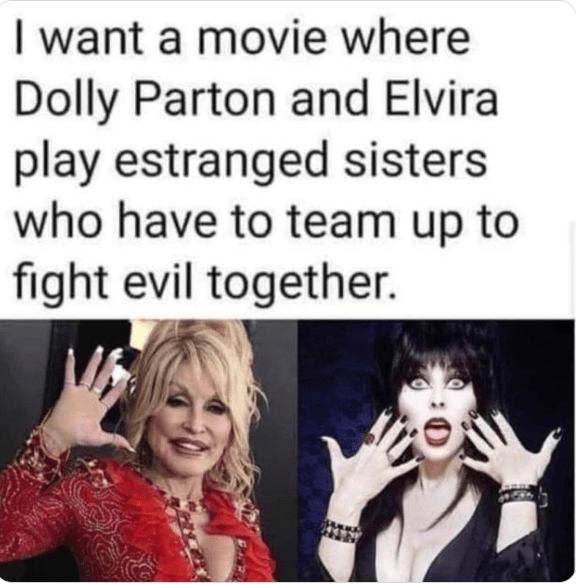
He wrapped his paws around one chair leg and began to pull. “So the thing is,” he explained between pants, “we apply hope.”

“We bring hope.” Sue folded her paws beatifically together.

“Potato, potahto,” Larry—it had to be Larry—answered dismissively. “We’ll make the poor sods hopeful whether they ask for it or not.” Chair successfully moved, he swarmed up the back to peer at Andie from her eye level. Two more chinchillas followed him, curling up comfortably on the seat cushion. “Depression means hopelessness, right? And a lot of the time, that means Black Dogs.”

“Barghests?” Mentally, Andie checked the “canine” catalogue of the RIB.

“Not if we catch them in time. And if we take them out, we can do our job right.”

“I have done paperwork,” Andie said carefully, “for banshees, muses, tooth fairies, and a bunch of no-account goblins who were fighting over who got to be Slenderman. I’ve got nothing in my records about Black Dogs.”

“Because we get rid of ‘em,” Larry rasped.

“Ma’am, you’re speaking with a talking chinchilla. With opposable thumbs.” Sergeant Bartholemew waved stubby, clawed fingers at her. “Is an anthropomorphic–”

“Cynomorphic!” yelled a chinchilla from the chair seat.

“–personification of despair that much worse?”

“I was talking,” Larry grumbled from his perch. “Anyway, the newbie here–”

“Sue!” insisted Sue.

Larry folded his ears and sighed. “Sue had the bright idea of rehabilitating the beasts instead of what we normally do. Black Dogs ain’t friendly, but they’re persistent. Make good service dogs if you can turn ‘em around.”
“And… how do you do that?”

“Love and patience,” said Sue.

“And sitting on their heads until they stop trying to eat us,” said Pogo. Or maybe Fred.
“Which is why we need the pet food budget, you see,” explained Sergeant Bartholemew. “Last time we got one immobilized, Sue brushed it and painted its toenails pink and that cheered it right up, but we can’t always be that lucky.”

“Yes we can!” cheered the last chinchilla.

Larry shot it a skeptical look. “Maybe we can, but so far we ain’t.”

Andie meant to just print off the requisition form (“Subsidiary Expenses 23B, Animal Manifestations (Canine), Service Subcategory”). But she thought of slumped shoulders on the city bus, phones scrolling in a meaningless blur of images, Internet friends whose words grew fewer and slower and sometimes stopped altogether. “As I said, it’ll be some time before we can get those supplies delivered for you. In the meantime, my roommate’s a mobile groomer, if you think that would help? And I can chip in for dog food while you wait.”

*For those who are curious, L.A.Gregory has some novels on Amazon. Yes, that is my associates link, and I’ll make some scents if you buy through it. It won’t cost you anymore. Thank you. – SAH*

Odd

If you’re a regular reader of my blog, there’s a very good chance that you’re Odd. Yes, I spelled that capitalized, because you’re not slightly odd. You’re not odd in the sense you aren’t even (though occasionally you can’t even.) And you’re not odd in the sense that you try to be, or you dress funny to call attention to yourself. You’re just Odd.

Something in you is at fundamental odds with the world. You try to do the same things everyone else does, and they come out different. Sometimes this is good and people look at you in wonder and tell you how creative and amazing you are. Other times they stare at you as though you’d completely lost your mind and ask you why you thought it was a good idea to balance the antique teacup on your head at the formal tea. And you look back and don’t say anything because if you did it would go like this. “The teacup was empty. Everyone was talking about things I don’t care about. I got bored. And then I got past bored to the point where I forgot to watch my body. So it went AWAL. The teacup was in my hands, and my body wondered if it would balance on my head. There was no intervention from my rational mind. It had long since fallen asleep.”

People accuse you of looking at them funny, and you can’t say “I was actually working out Pi as far as I could go in my head.” Or “I was trying to choreograph a space battle to write the next chapter of my epic.” Or “I was wondering what color would look good with salmon and which should go on the walls and which on the ceiling.” Or even “I was just thinking of this movie/book/comic I saw/read and wondering what happens next/why the MC did that.” Whatever is your jam, of course. Instead, you turn red and mumble something about “didn’t even see you” which can backfire super badly.

So, are these the things that make you Odd? No. As I said, Odd is being fundamentally at odds with the world. It’s like everyone else got a manual for how to do this existence thing, and you’re missing it.

It’s very hard to explain, really easy to spot from the outside, if you know what you’re looking for. And science fiction is rife with it. Or was, back when it was the refuge of weirdos and misfits.

Decades ago (I have a feeling it wouldn’t be this way now.) I went to a science fiction conference somewhere in the North East. Afterwards we had a forever wait at the airport. It was a small con and a small airport, but near enough to NYC that a lot of editors had come.

I was sitting there, and got tired of the book I was reading, so I started people watching. And I found I could identify people from the con with unerring accuracy. No, I don’t mean they were wearing t-shirts or carrying books. Some of them were. But even the ones that were NYC editors, in their professional attire and trying to look oh so suave had something that gave them away. (And I don’t remember why but the airport was really crowded and there were all sorts. But our people stuck OUT.) I’d watch them until they pulled out a book, or talked to someone I knew was from the con, with the appearance of great familiarity OR — in two cases — got called to the counter for something and I recognized the names. No, my watching didn’t make them act weird because I have great practice at people watching. More on that later.

Anyway, I can’t explain it, but the way we hold ourselves, the way we move, is different. Autistic? Well, there are things in common, but most of us aren’t that obviously on the spectrum. Though we share some characteristics.

If I had to put it in a brief quip, imprecise as all such quips are, it would be this: We all act like the world is an unwanted distraction from what is going on in our heads at any given time.

This is imperfect, but it’s sort of a guide.

Whatever it is, most kids, Kindergarten or Elementary, at the age when they’re mostly ruled by instinct, see it and sense it. And ooh, boy, they hate it. In retrospect, a lot of adults sense it too. They just don’t know what they’re sensing, and ooh, boy, they hate it too, which explains some very weird and sudden antipathy or outright hostility that seems to come out of nowhere at us. (And which plagues the lives of historical figures I suspect were of us.) I was fortunate in being massive so I was mostly left alone or (merely) laughed at and played underhanded pranks on. It’s worse for the little ones.

As we get older, a lot of us carve niches for ourselves and often end up more functional — if by functional you mean contented and doing something we like — than the rest of the culture, at least now when the culture is incredibly dysfunctional. But it might take us a good while to get there. I think I’m just now reaching some sort of peace with myself. Until then our life experience is of being a square piece repeatedly trying to pound yourself into a round hole. And sometimes ejecting hard enough to bounce across the room.

We tend not to fall for social narratives; social panics; social insanity. We tend to refuse to believe anything we’re told without doing a deep dive ourselves, according to our own inclinations (which means the deep dive can be effective or not.) This comes with bad sides: sometimes we careen from the main stream narrative into a non-mainstream but far crazier narrative. We join cults, come up with weird theories of everything, invent bridges across the ocean made entirely out of soap, spend years chasing some wild hare that turns out to be a bouncy ball. It comes with good sides too: we sometimes stumble, unannounced and often unintended into a a discovery no one else has made, a side door of research or creativity everyone else walked by without looking. And sometimes, rarely but sometimes, it is good.

In real life, we might not be any smarter than anyone else, but we tend to be slightly obsessive. (Or massively obsessive.) We read strange stuff. Not just science fiction. Just weird stuff. If you’re in a room with a hundred people and mention The Man Who Walked Around The Horses, you’ll get 98 blank stairs, a person who says “oh, yeah, that, he disappeared.” And one who says “Actchually it was probably a political assassination disguised as an unexplained event. If you look at the political situation at the time–” Those two are Odd, and the second has never learned to disguise it.

Because most of us learn to disguise it. To some extent. You see, most of us are not rich enough to be eccentric, so we’d just be Weirdos, if we didn’t learn to disguise it. I learned to disguise it a little better than the rest of you, because Portugal has less room for Oddity than the United States. (In fact one of the first reasons I fell in love with the US is that the culture gives you a lot more leeway to be slightly “off.”) It’s a small country, full of people immersed in an hyper-social culture. Everyone lives in everyone else’s pocket. My mom’s kitchen where she did most of her work (yes, she had a workshop. Never mind) had a continuous stream of neighbors dropping by all day and into the night. Why? My guess, they didn’t have anything to occupy them and were bored, so they drifted from friend to friend around the village.

In that type of environment and where everyone talks about everyone else, you learn to disguise. I people watched. A LOT. I remember being little, hidden under a table, watching the adults. You learn expressions and what constitutes conversation. And you start imitating. At some point, probably in school, you realize this stuff comes naturally to those around you, and that you’re still slightly off. So you learn harder. Until you ALMOST pass. ALMOST.

I’ve come to suspect I’m more disquieting because I ALMOST pass, then something creeps in that makes the whole act uncanny valley. Eh. That’s life, right?

There is nothing solid about it, and I’d think we’re just defective monkeys. I mean, there’s a weird correlation to above-normal Neanderthal DNA, but even that isn’t solid.

But then years ago I was talking to Dave Freer who is a biologist, and he explained that yes, every ape band has apes that are like us. Kind of.

He explained that — bear with me — metaphorically speaking and for shortness of explanation, most social animals are sheep: they live for the band, believe with the band, do what the band does. But there’s always some social animals (weirdly even sheep) who behave more like goats. They strike out on their own; try the new path or the new plant; and (if you follow Sama Hoole on twitter, think of Keith) always test the gate or the fence, because who knows what’s on the other side?

In human-ape terms, we’re the goats. The ones who don’t quite fit in, and therefore see things slightly askew, and therefore can see the hole in whatever beautiful dream everyone else is following. If the pied piper is leading our peers away, we’re the ones who can’t even hear the music. We might be following just as dangerous a music, but it’s not the same music. We marsh tot he sound of a different kettle of fish, so to put it.

Dave says that kind of person is essential. Societies without them — there’s no society really without them, but there’s groups that manage to get rid of them — can go down terribly dangerous paths, and there’s no one to scream the cliff ends, or the king is naked, or whatever.

This is why, btw, our First Amendment is just an amazingly good piece of social engineering. Why the censorship around the Covidiocy was a piece of nasty, and why Great Britain should repent and turn back now.

Actually the Covidiocy is a good demonstration of what we’re for. Not that all of us saw the problem with it. We were evenly divided between those on whom propaganda didn’t work at all and those on whom while the propaganda didn’t work, their need to fit in and fear of not convinced them Covid was WAY WORSE than they were told. Those poor souls careened right into insanity and were horribly unpleasant to be around.

BUT some of us were the voices that cried out in the desert and that was important. It seems that when sophisticated psy-ops are applied they shed off our brains like rain. We don’t fall for it. Heck, most of the time we don’t perceive it and can’t figure out why everyone is acting so goofy.

People like us have existed throughout history. You can find us, if you read enough biographies. And no, it had nothing to do with “witches” or witch trials. Oh, it could be deployed against us, sure, like it was deployed against the isolated, the lonely, the poor. I suspect, I mean, that some of us were “real” witches, meaning people who did very nasty things that might or might not have had a peternatural component. For a perspective on this read a book called “The affair of the Poisons” by Anne Sommerset. (This is the link. I get no kickback from it because Amazon is too dumb to distinguish a book on an historical event from one advocating these subjects. SMDH.) But mostly probably not, since these people tended to be adept social manipulators.

It’s more the recluse who did something that no one else could understand. Either the village oddity or the eccentric squire. (And sometimes both.)

Sure, 90% of what we did was design intricate bridges out of soap, to span the Atlantic. BUT sometimes we did the brilliant thing. More often we discovered the small thing everyone thought utterly irrelevant which in turn spurned a true genius to do something completely new and useful.

We’re the square pegs in a world of round holes. But sometimes when the rare square hole appears we’re there. And when all the round holes are on fire, we can scream hard enough the little round pegs don’t get burned. (No. It’s YOUR mind that’s in the gutter.)

We’re sometimes tolerated, sometimes hated. But where we’re tolerated and given leeway as we are, by and large, in America in a way we’re not in most of the world, we can come up with the most innovative things, the most amazing ideas. Now and then. Amid bridges made out of soap.

Look, you’re an Odd. That means you have amazing potential. Sure. Everyone does. But chances are yours is unique and unexplored and strikes out in pathways no one else’s does.

As long as you don’t kill anyone and don’t start any cults, that’s a good thing.

You’re an amazing, bizarre, unique creature, with a different perspective on the world. Don’t beat yourself up for being who you are; for not fitting in.

Sure, do the minimum not to be a source of distraction or fury to the rest of the herd. Ixnay on the pantsonheaday.

But other than that? Cherish who you are. Be aware of your oddities and embrace them. Be glad you see what others don’t; think in strange ways.

Sometimes the rest of the herd needs those of us who don’t fit to tell them when they’re being spooked of the cliff.

It might not be needed in your time, but if it is, you’re there. Be ready.

Book Promo And Vignettes By Luke, Mary Catelli and ‘Nother Mike

If you wish to send us books for next week’s promo, please email to bookpimping at outlook dot com. If you feel a need to re-promo the same book do so no more than once every six months (unless you’re me or my relative. Deal.) One book per author per week. Amazon links only. Oh, yeah, by clicking through and buying (anything, actually) through one of the links below, you will at no cost to you be giving a portion of your purchase to support ATH through our associates number. A COMMISSION IS EARNED FROM EACH PURCHASE.*Note that I haven’t read most of these books (my reading is eclectic and “craving led”,) and apply the usual cautions to buying. I reserve the right not to run any submission, if cover, blurb or anything else made me decide not to, at my sole discretion.SAH

FROM ALMA T. C. BOYKIN: Hunter and Hart: Familiar Generations Book 11

“Uncle Jude, Beth saw a glowing white deer.”

When his student reports her classmate’s tale, Jude feels a chill. Deer from Celtic mythology rarely bring good fortune, even when seen by multiple people. Still, he hesitates. Could it be a transformation? An illusion? A practical magical joke? The duties of father, husband, Hunter, deputy, and employee keep Jude—and his Familiar Shoim—occupied.

Then the first teen, a sorcerer, goes missing.

Tangled magic and a summoning “from long away” draws Jude’s family deeper into danger. When the deer and the magic behind it threaten his wife and children, the stalk among shadows turns into a Hunt. One that draws on lore of the Old Land and power from the New.

Ancient darkness and modern evil both lurk behind the glowing white hart. The Hunter in Shadows must go wary, or he may loose more than just his life in the gathering storm.

FROM NYM COY: Mumbai Singularity

This starts as a murder investigation.
It doesn’t stay one.

Inspector Krishna Mehta’s mesh antenna is broken. In a Mumbai where augmented reality overlays every surface, his glitching connection strands him in the raw city underneath.

That’s when he sees the marks.

Faint rainbow shimmers on people’s foreheads, invisible to everyone else. When the marked start dying from catastrophic brain haemorrhages, Krishna follows the pattern to a hospital shrine, a corporate conspiracy, and uploaded human consciousness running on living minds.

Someone is hijacking the gods themselves.

And the deeper he investigates, the more he realises the conspiracy isn’t just killing people.

It’s already inside his partner’s head.

FROM MICHAEL MORGAN: The Castaway Files: Space Junks

In the far reaches of space, survival favors the stubborn, the clever, and the slightly unhinged.

Space Junks is the first volume of The Castaway Files, a collection of gritty, pulp-inspired science fiction adventures where desperate crews, scheming governments, mercenaries, and machines collide in the debris fields of the future.

A scavenger freighter crew discovers that the most valuable salvage in the system might also be the most dangerous prize imaginable.
A team of post-apocalyptic mercenaries hunts for lost technology while shadowy bunker elites prepare to reclaim the world.
Two bored soldiers accidentally trigger a catastrophe that could reignite a forgotten war.
And somewhere in the background, someone may be pulling the strings—turning humanity’s greed and fear into the most dangerous weapon of all.

From derelict stations and orbital junk rings to battlefields littered with the relics of old wars, these stories celebrate the grand tradition of classic pulp science fiction: bold ideas, dark humor, scrappy heroes, and impossible odds.

Strap into the jump seat and keep your salvage hooks ready.

Because in deep space, one person’s trash might be another person’s fortune.

Welcome to The Castaway Files: Space Junks.

FROM JEFF DUNTEMANN: The Everything Machine

Carrying 800 passengers and their household goods, agricultural animals, and farm-related supplies to Earth’s first interstellar colony, starship Origen’s hyperdrive self-destructs, marooning its passengers near an Earth-twin planet orbiting an unknown solar-twin star. While settling in, the inadvertent colonists name their world Valeron, and discover that Valeron is scattered with hundreds of thousands of alien replicator machines—but there are no aliens nor any other trace of them.

Each replicator is a shallow 8-foot-wide black stone-like bowl half-full of fine silver dust. Beside the bowl are two waist-high pillars about 8 inches in diameter, one pale silver, the other pale gold. Tap on either pillar, and the pillar makes a sound like a drum, one pillar high, the other low. Tap 256 times on the pillars in any sequence, and something surfaces in the bowl of dust. Simple sequences create simple and useful things like shovels, knives, rope, saws, lamps, glue and much else. Complex or random sequences create strangely shaped forms of silver-gray metal with no obvious use. 256 taps on the pillars can create any of 2E256 different things; in scientific notation, 1.16 X 10E77.

That’s just short of one thing for every atom in the observable universe.

The artifacts are dubbed “drumlins,” for the sounds the pillars make, and the replicators called “thingmakers.” Drumlins have strange properties. Although virtually indestructible, drumlins can change shape, especially when doing so will protect a human being from injury. Drumlin knives will not cut living human tissue, but they will cut living animal tissue or human corpses. Press a drumlin knife against your palm, and it will flow and flatten out to a disk. Pull the knife away, and it will slowly return to its form as a knife. Some claim that drumlins read human minds and grant wishes. Others insist they are haunted by invisible and perhaps hostile intelligences.

After 250 years on Valeron, the colony prospers. Starship Origen is still in orbit, and a cult-like research organization called the Bitspace Institute vows to repair Origen’s hyperdrive and return to Earth. With millions of drumlins catalogued using the thingmakers, Valeron’s people live well and begin to lose interest in returning to Earth. This threatens the Institute’s mission, prompting it to launch a covert effort to undermine public faith in drumlins. A low-key war begins between the Institute and those who value drumlins–including farmers, rural folk, an order of mystical women, and several peculiar teen girls who have an unexplained rapport with the thingmakers and their mysterious masters.

FROM JOHN BAILEY: The Hammer and the Quiet Light (The Fantasy Books)

In a kingdom where the dead will not rest and history itself is quietly unraveling, a small band of travelers chooses to stand where others turn away.

A disciplined paladin following an uneventful patrol.
A cleric who keeps the names of the forgotten dead.
A scholar whose magic bends perception rather than force.
A ranger guarding roads that no longer remember where they lead.
A mediator who believes words can prevent bloodshed.
And a veteran warrior seeking redemption without recognition.

When graves are disturbed without theft and records are erased rather than destroyed, these strangers discover a threat more dangerous than war: an enemy that feeds on forgetting. As undead stir and truth begins to vanish, the fellowship must decide whether goodness is still worth defending when it offers no glory and little reward.

Set in a classic medieval fantasy world of chapels, borderlands, and ancient roads, The Hammer and the Quiet Light is a story of quiet courage, moral clarity, and the enduring power of remembrance.

This is the first book in a character-driven epic fantasy series centered on faith, justice, and hope without naïveté.

FROM NATHAN C. BRINDLE: The Dragon’s Sister (Timelines Universe Book 7)

Two Sisters, Separated By A Timeline

When most people find out they have a long-lost twin sibling they never dreamed existed, reactions can range from happiness to anger.

In the case of US Space Force Marines Brigadier General Mei-Lin Lai, her “twin” is her timeline analog she was told did not exist. And because of that reassurance, the expatriate Chinese taikonaut migrated to Timeline Zero from Timeline One Right, to take command of United States Space Force Base Terra Meridiani, on Mars.

But her analog did exist. And was pulled out of a cold-stasis chamber in Chicago eighty years after she’d been recruited into a failed plot to disrupt an American presidential election.

Twenty years later, Mei-Lin must grapple with a woman who is her genetic twin and wishes to join the Space Force Marines as a medic — and will go through Basic Training on the planet where Mei-Lin is the boss Marine.

Will the two women, identical but different, be able to form a sisterly bond? And will Mei-Lin finally come to grips with the very existence of her other-timeline twin?

FROM PAM UPHOFF: The Bad Cop.(Chronicles of the Fall Book 12)

“There was a shield piercing Impression on the bullet. Karl had a shield up, too, and it wouldn’t have stopped that bullet.” A faint snort. “I think he’s a little indignant that the ‘Bad Cop’ saved him.”
Police Captain Lord Daniil Ambrose Vinogradov grinned. “As opposed to the Good Cop? I’m afraid that when it comes to double teaming on a suspect, the role of Bad Cop does come rather easily to me. And Nix is a damn good cop.”
“Ah. I thought you two disliked each other?”
“We’re rivals for the next promotion, and, well, I am more aggressively ambitious and less well mannered. Or to be less polite, a ladder-climbing asshole.”

As the attack on the 300, the Government Council, leaves the Three part Alliance without leadership, a runaway teenager leads a police detective deep into trouble, and romance.

FROM LEIGH KIMMEL: The Day the War Struck Home

Astronaut Peter Caudell comes home to find his daughter struggling with a school assignment. She’s to write an essay for Memorial Day, and her teacher suggested astronauts — but she wants to write about combat heroes, not REMF’s. So Peter suggests the NASA Massacre and relates his own part in those events.

It’s the summer of 1994, and the Energy Wars are raging in the Middle East. On the home front it’s the Summer of Fear, a season of continual terrorist attacks. All eyes are upon Kennedy Space Center, where a Space Shuttle is launching for a critical on-orbit repair of a spy satellite. When it goes up without a hitch, everyone breathes a sigh of relief.

However, the intelligence proves incomplete — the actual target is Johnson Space Center. Suddenly Peter is in the fight of his life, as the presence of multiple police agencies further complicates the fight to stop the terrorists from slaughtering the astronaut corps.

It’s a story of courage, patriotism and self-sacrifice that proves a much greater lesson than the teacher imagined.

A short story of the Grissom timeline.

Originally published in Liberty Island Magazine as an Honorable Mention for the Memorial Day contest. This version includes a bonus essay on the genesis of the Energy Wars.

FROM ANNA FERREIRA: The Root of All Evil.

When murder comes to Stockton, it brings long-buried secrets in its wake…

Kate Bereton leads a busy but unexciting life as the clergyman’s only daughter in a small Dorsetshire village. She’s grateful for the break in routine heralded by the arrival of her stepmother’s latest guests, but when Kate discovers a dead body in the parsonage one morning, she finds herself in much more danger than she could have ever anticipated. Terrified and desperate, she turns to the local magistrate for help. Mr. Reddington is eager to aid his dear friend Miss Bereton, but can they discover the murderer before it’s too late, and the secrets of the past are forgotten forever?

With a dash of romance and a generous helping of mystery, The Root of All Evil is a charming whodunit that will delight fans of Jane Austen and Agatha Christie alike.

FROM HOLLY CHISM: Bite Sized (Liquid Diet Chronicles Book 1)

Meg Turner has been a vampire for twenty years. Her favorite food is rapists. Which is how she met Andi Donahue, her new best friend/ girl Friday.

And then the nightmares start. And the bodies start showing up–bled out and raped. Just like Meg was. They don’t have a whole lot of time to stop the killer before he strikes again, and only one way to stop the killer.

But how can Andi help Meg stop a killer she can’t even see?

FROM SARAH A. HOYT: Done With Mirrors: A Collection of Short Stories (Sarah A. Hoyt’s Short Story Collections)

DONE WITH MIRRORS

From Prometheus Award winner Sarah A. Hoyt comes a dazzling collection that showcases why her work has appeared in Analog, Asimov’s, and Weird Tales—and why readers can’t get enough.

Magic-soaked noir in 1920s Denver. Mirror-hopping time lords fleeing across infinite universes. Survival in John Ringo’s zombie apocalypse. Murder and mystery in the world of Darkships and Rhodes. Each story in this collection pulls you into a different world—and refuses to let go.

Previously published in acclaimed anthologies from Baen and Chris Kennedy Publishing, these nine tales span Hoyt’s most beloved universes alongside standalone adventures. Whether she’s writing in Ringo’s Black Tide Rising series, exploring her own Darkships and Rhodes worlds, or crafting speculative noir that defies categorization, Hoyt delivers the vivid storytelling and emotional resonance that has earned her a devoted following.

From rain-slicked streets where magic and murder collide to the far reaches of space-time itself, Done With Mirrors demonstrates the genre-hopping brilliance of one of speculative fiction’s most versatile voices.

Nine stories. Nine worlds. One unforgettable collection.

Contains the short stories: Honey Fall; Scrubbing Clean; Last Chance; Great Reckoning in a Small Room; Horse’s Heart; Do No Harm; Dead End Rhodes; Knights of Time; Done with Mirrors.

With an introduction by Holly Chism.

Vignettes by Luke, Mary Catelli and ‘Nother Mike.

So what’s a vignette? You might know them as flash fiction, or even just sketches. We will provide a prompt each Sunday that you can use directly (including it in your work) or just as an inspiration. You, in turn, will write about 50 words (yes, we are going for short shorts! Not even a Drabble 100 words, just half that!). Then post it! For an additional challenge, you can aim to make it exactly 50 words, if you like.

We recommend that if you have an original vignette, you post that as a new reply. If you are commenting on someone’s vignette, then post that as a reply to the vignette. Comments — this is writing practice, so comments should be aimed at helping someone be a better writer, not at crushing them. And since these are likely to be drafts, don’t jump up and down too hard on typos and grammar.

If you have questions, feel free to ask.

Your writing prompt this week is: INSPIRE

Telling us it’s raining

There is a reason I don’t watch TV much. No. Seriously, there is a reason I don’t watch TV much. Because when I do, I start threatening to throw shoes at the TV or … or write rants at my blog about it.

Stop popping popcorn right this minute. You’re all BAD people. You should be ashamed of yourselves.

Besides most o you will say that I got what I deserved for watching a romance series. Guilty as charged, but you have to remember I read EVERYTHING including regency romances. It’s just I tend to read regency romances when I’m on low brain-effort mode. This doesn’t mean, btw, I’m calling people who read regencies preferentially stupid. People like what they like and it has nothing to do with how smart they are. I’m saying I, personally, read them on low effort or low-emotional-give mode, because they are predictable. I know they are going to end in HEA (Happily Ever After) and usually nothing too terrible will happen. It’s the equivalent of putting on something in the background when I’m cleaning that I know is not going to make some jump-scare sound and upset me. Mysteries (depending on the level of mystery) and science fiction require more engagement because the formulas are more complex, and have the potential to do things that really upset me. For me, Romance is my easy-listening. I prefer them clean, or I flip past the sex, as written sex doesn’t do much for me, and it rarely advances the plot.

Oh, the other thing is that I don’t usually read what I’m writing at that time. I’m not even sure why, but if I’m on a scifi writing jag, like now, I read mystery for fun. And vice versa. And if I’m cycling fast between sf/f and mystery for writing (which I did for much of my writing career, due to contract commitments) I STILL have to read SOMETHING. So I spent years on end reading romances, and of those mostly regencies.

Anyway, when the Bridgertons was being talked about, I watched a show, was mildly baffled at the racial thing and thought it must take place in a parallel world, which actually made it sort of cool, even if I grumphed at their not giving me the world building for how we’d got here. (I have the same complaint against 90% of Urban fantasy, so… I think I’m more of a world building geek than other people.) I asked if the racial thing was in the books and someone (I think older DIL) told me they were bog standard regencies. So I looked them up, and realized I’d read them during one of my binge-reading regencies… Well, when we still lived in downtown Colorado Springs.

It was from there that I followed through to the gobsmacking realization that the mentally impaired producer of the show (sorry, but the truth must be told) had decided Queen Charlotte was black due to two bad portraits and a rumored MOORISH ancestress FIVE HUNDRED YEARS IN THE PAST. Chilluns and babies, Moors ain’t black. Most of them are Mediterranean looking. Since this was a Portuguese “Moor” she was likely redheaded because uh… both sides kidnapped women from the other side and the Moors really liked Germanic and Celtic blonds, okay? But sure, let’s play along and pretend Moors were black from the deepest Africa. FIVE HUNDRED YEARS. That’s seventeen generations. I have black ancestry from Africa much closer than that, and look bog-standard Mediterranean. Because that’s I presume what most of my ancestors looked like. In a Northern European country a black ancestor can disappear into the background in three or four generations. Our neighbor who was in fact black and married a blond man had very light children of “undefinable race” and her grandkids look “light Portuguese.” FIVE HUNDRED YEARS. Only an idiot who believes in one-drop would believe that someone with a black ancestor five hundred years in the past would still be “black” even by the standards that Americans consider people black.

Five hundred years an ancestor from Africa might not even show up in your 23 and me. And if he does it will be in the less than 2% range.

But the producer is obviously mentally impaired by racial notions and obsession, so she decided that there must have been secret black nobility and gentry around England at that time, and that the Queen was outright black. And then ran with it.

As annoying as I found this — and I did find it annoying — I could enjoy it at the level of “this is a parallel world where things are very weird.” I still wished she had given more alternate history to go on, something that made sense. And I resented the fact that people who tend to think what they see on TV is true — mostly because of our appalling educational system — would believe that there was always parallel white and black nobility in Europe, but what the heck. The costumes aren’t realistic. The society isn’t realistic. The dances, instead of being the synchronized walking of British Regency (seriously what is with Northern Europeans and inability to dance), are this strange, beautifully choreographed thing to modern music. As a fantasy it was visually gorgeous and the male love interest for the first season, sure, was black but also gorgeous. So low brain power eye candy. And besides Dan was watching it, and I could watch with one eye (on eyestalk) while I wrote the blogs at night.

The second season was actually more believable, since the female love interest was Indian (dot) which did happen in British families at the time (particularly if the girl was only half Indian and had a considerable dowry.)

But now we’re in whatever this season is, and I’m getting p*ssed off. Why? Oh, I’ll tell you why. It’s like this, it’s okay if there’s a few drops on your neck, and they tell you it’s raining. You try to believe it and go along.

BUT when there’s a stream on your neck, and you look back and there’s some grinning bastage with his pizzer out and telling you “Nah, dude, it’s raining.” you’re liable to get upset.

The first thing to piss me off came on gradually. At some point it dawned on me that EVERY couple — except the one in which the girl is morbidly obese! — is bi-racial.

Do I disapprove of bi-racial couples? Brother! If I did, and depending on how you counted it, husband and I would have to get a divorce. Also, I wouldn’t be here if my ancestors had had that attitude.

No. What I disapprove of is contrived and unnatural emphasis on race. The first one was okay. The couple had chemistry, and were both very good looking. After that it started slowly impinging on my consciousness that a-historicity aside, this was neither casual nor aesthetic, but fetishism. Race fetishism. And not even for sexy reasons. Just because someone has racial rats in their heads and wants to inflict them on others.

And then there’s the ridiculous. I’d be willing to pretend that there was a parallel world in which somehow there was a parallel British gentry that was black and that there had been some sort of apartheid that was broken by the Queen marrying the white king. (Except that of course, in the other miniseries they make the king black also? I think?)

Anyway, fine, whatever. But now there’s apparently also a parallel Chinese Gentry. All in England, which frankly was the size of a tea-tray. And among the gentry which were also known as the “upper ten thousand” because they were more or less ten thousand people, or the size of a small town.

Look, I’ll suspend my disbelief, but you don’t have permission to leave it dangling there till dead.

Then there comes the throw away stupid that one of the grand-dames of the show — who happens to be black — is retiring and going back to Africa. Africa! in the late 18th century! Someone who is the highest of the British court! I ASK YOU. My poor disbelief might not come back, even with the paddles of life. Also, I think we could kill the producer of the show by sneaking a general history of the world into her room and leaving it near her for the night. Because it’s obviously kryptonite to her.

And then comes the crowning insanity which hasn’t happened yet, but I could see them preparing for, and apparently Dan has found the producer bragging about what they’re doing and I’m right.

So, stop reading here if you are following the show and don’t want spoilers. But having read the novels… One of the daughters, the shy, bookish one, marries a man who is much like her. He then dies of brain hemorrhage and she feels guilty, because by then she was attracted to his male cousin, who is a bluff soldier and lives with them.

The romance with the cousin is one of the last books.

When this season the cousin was introduced and was female my hackles rose. For one, because the male character being really close to this cousin gave it a completely different aspect.

But there were other clues, like the cousin getting really upset at match making her with some guy, etc.

I told Dan “they’re going to make that a lesbian romance”. He didn’t believe me, till he read the producer bragging about it.

So, do I have anything against lesbians? No. There is only one person in the world whose orientation means anything to me, and as long as he likes me, other people are free to sleep with whomever they want. It’s not how I relate to other people. I relate to them as individuals. If I like them i will be nice to their significant others. If I like both of them, it’s a bonus. If Dan and I like both of them, it’s a miracle. (Those of you who are married know how rare that is. We have maybe four couples where we like both members of the couple equally. Wait, eight if you count kids young enough to be our kids.)

I am however way beyond sick and tired tv shows making the bookish, introverted girl a lesbian. It wasn’t cute or edgy when they did it to Willow on Buffy and it’s even less so now.

This might not be obvious to the grand-poobahs of Hollyweird, but here in the real world, even back in my day, any girl who was awkward, bookish, or not particularly into makeup and clothes, was ASSUMED to be a lesbian. I suspect these days it’s lesbian-or-trans. And if you’ve attended public school, you know that being one of the best students is already hell on Earth. If the kids have another way you’re obviously different to fasten onto, you will be tortured at least psychologically and often physically too. I suspect nowadays being tortured by telling you how accepting they are and how you MUST come out to their idea of who you are the most exquisite torture.

Please stop. Stop it already. Stop pissing down our neck and pretending it’s raining.

If you want to do all interracial romances? Set it in the present day in a college town. Or if you absolutely must put it in the past, tell us it’s an alternate history. Or at the very least, stop claiming that you’re telling the “real” history.

And, hey, why not? Make the quiet bookish girl, or the tomboy REALLY heterosexual every once in a while. Heck, have some of them be in happy heterosexual marriages. Because I am here to tell you it can happen.

Yes, I do realize that in your bizarre tiltawhirl circles all this bs seems realistic and inevitable. But do strive to look in on reality every once in a while. Or at least send it a postcard.

Because I’m really, really, really tired of your stilted lack of imagination combined with attempt to shock people who have been seeing this stuff since they were kids and are now grandmothers.

Have an original idea. I beg you for the love of Bob. Because I can’t afford to put a shoe through the TV.