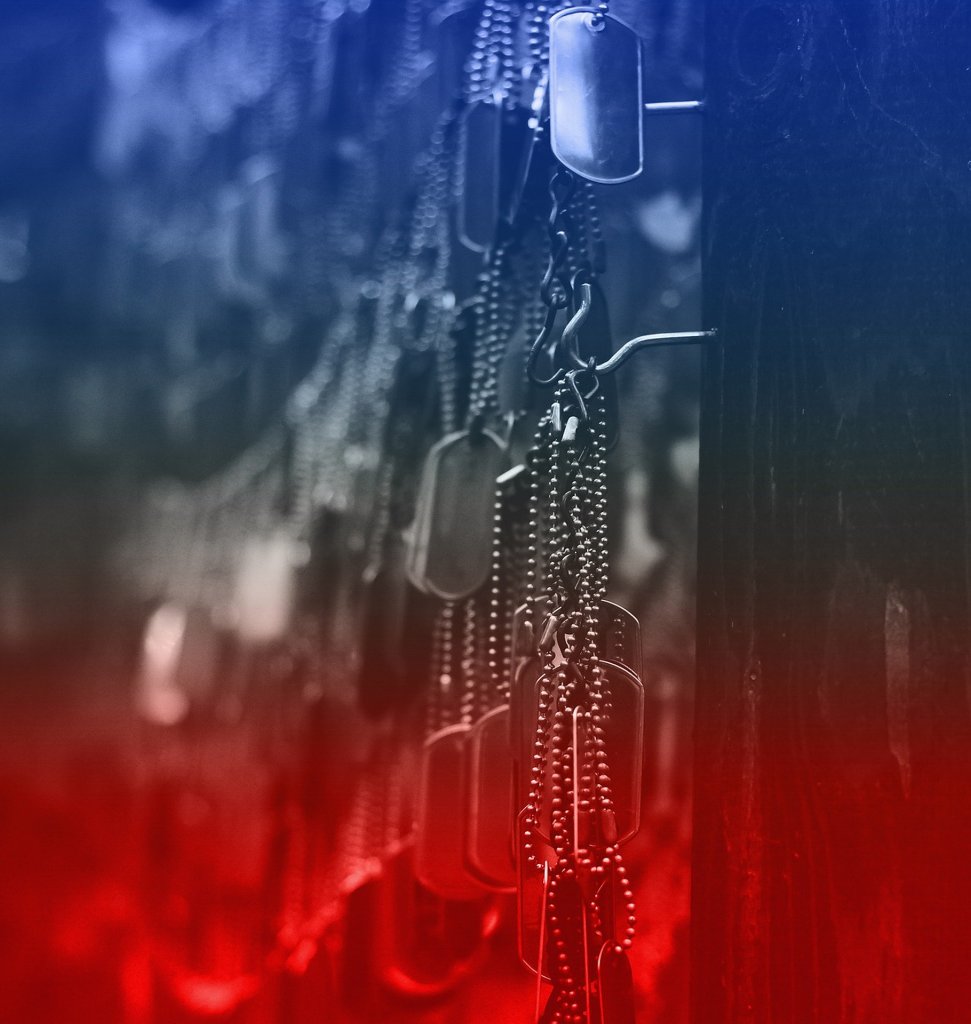
Today we thank the Lord for men who will march and die to stand between the desolation of war and home. For men who believe they were entrusted a precious legacy and will fight to preserve it.
And we pray to Him — and vow to do what we can to make it so — for leaders who hold American lives precious and don’t spend them profligately.
And we remember.
That is all.
 According To Hoyt
Amen.
LikeLike
Amen
LikeLike
We remember all that we have lost.
LikeLike
LikeLiked by 1 person
LikeLiked by 1 person
Amen.
LikeLike
Amen.
Long live the Republic.
LikeLiked by 1 person
LikeLiked by 1 person
Originally Memorial Day was called Decoration Day, In 1868 General John Logan set aside the day of May 30th for the memorializing of those soldiers lost in the Civil war with this set of orders
Over time Memorial Day was generalized to ALL of those who had fought and died to defend our nation. As Gen Logan suggested
If other eyes grow dull and other hands slack, and other hearts cold in the solemn trust, ours shall keep it well as long as the light and warmth of life remains in us.
LikeLike
Amen
LikeLike
Amen.
LikeLike
Below is the General Order issued by May 5, 1868 by General Logan, head of the Army of the Grand Republic, which was the first observance of what is now Memorial Day:
Washington, D.C., May 5th, 1868
Headquarters, Grand Army of The Republic
General John A. Logan’s General Order 11 (Memorial Day Order)
I. The 30th day of May, 1868, is designated for the purpose of strewing with flowers or otherwise decorating the graves of comrades who died in defense of their country during the late rebellion, and whose bodies now lie in almost every city, village, and hamlet church-yard in the land. In this observance no form of ceremony is prescribed, but posts and comrades will in their own way arrange such fitting services and testimonials of respect as circumstances may permit.
We are organized, comrades, as our regulations tell us, for the purpose among other things, “of preserving and strengthening those kind and fraternal feelings which have bound together the soldiers, sailors, and marines who united to suppress the late rebellion.” What can aid more to assure this result than cherishing tenderly the memory of our heroic dead, who made their breasts a barricade between our country and its foes? Their soldier lives were the reveille of freedom to a race in chains, and their deaths the tattoo of rebellious tyranny in arms. We should guard their graves with sacred vigilance. All that the consecrated wealth and taste of the nation can add to their adornment and security is but a fitting tribute to the memory of her slain defenders. Let no wanton foot tread rudely on such hallowed grounds. Let pleasant paths invite the coming and going of reverent visitors and fond mourners. Let no vandalism of avarice or neglect, no ravages of time testify to the present or to the coming generations that we have forgotten as a people the cost of a free and undivided republic.
If other eyes grow dull, other hands slack, and other hearts cold in the solemn trust, ours shall keep it well as long as the light and warmth of life remain to us.
Let us, then, at the time appointed gather around their sacred remains and garland the passionless mounds above them with the choicest flowers of spring-time; let us raise above them the dear old flag they saved from hishonor; let us in this solemn presence renew our pledges to aid and assist those whom they have left among us a sacred charge upon a nation’s gratitude, the soldier’s and sailor’s widow and orphan.
II. It is the purpose of the Commander-in-Chief to inaugurate this observance with the hope that it will be kept up from year to year, while a survivor of the war remains to honor the memory of his departed comrades. He earnestly desires the public press to lend its friendly aid in bringing to the notice of comrades in all parts of the country in time for simultaneous compliance therewith.
III. Department commanders will use efforts to make this order effective.
By order of
JOHN A. LOGAN,
Commander-in-Chief
N.P. CHIPMAN,
Adjutant General
Official:WM. T. COLLINS, A.A.G.
LikeLike
Amen.
LikeLike
via NY Post, re Memorial Day and Gunnery Sgt. John Basilone:
https://nypost.com/2025/05/25/opinion/death-before-dishonor-john-basilone-was-a-true-us-hero/
If I recall correctly, he was awarded the Navy Cross posthumously after Iwo Jima because policy at that time was not to award more than one Medal of Honor to the same person.
LikeLike
Amen to all; freedom is never free.
LikeLike
— Laurence Binyon, “For the Fallen”
LikeLiked by 1 person
LikeLiked by 1 person
Those who went.
Those who returned forever changed, physically and/or mentally.
Those who did not return.
And those who waited.
I cannot honor them enough – all I can do is try, and do so every day of the year.
LikeLiked by 1 person
<blockquote>Here dead lie we because we did not choose
To live and shame the land from which we sprung.
Life, to be sure, is nothing much to lose;
But young men think it is, and we were young.</blockquote>
LikeLiked by 1 person
Amen.
O thus be it ever when free men shall stand/Between their loved homes and war’s desolation/Blessed with vict’ry and peace, may the heav’n rescued land/Praise the power that hath made and preserv’d us a nation!/And conquer we must, when our cause it is just/Let this be our motto- “In God is our Trust”/And the Star Spangled Banner in triumph shall wave/O’er the land of the free and the home of the brave!
LikeLike
Amen.
LikeLike
And I find it interesting that, like three of the six stanzas of Battle Hymn of the Republic, those never seem to make it into performances…
LikeLiked by 1 person