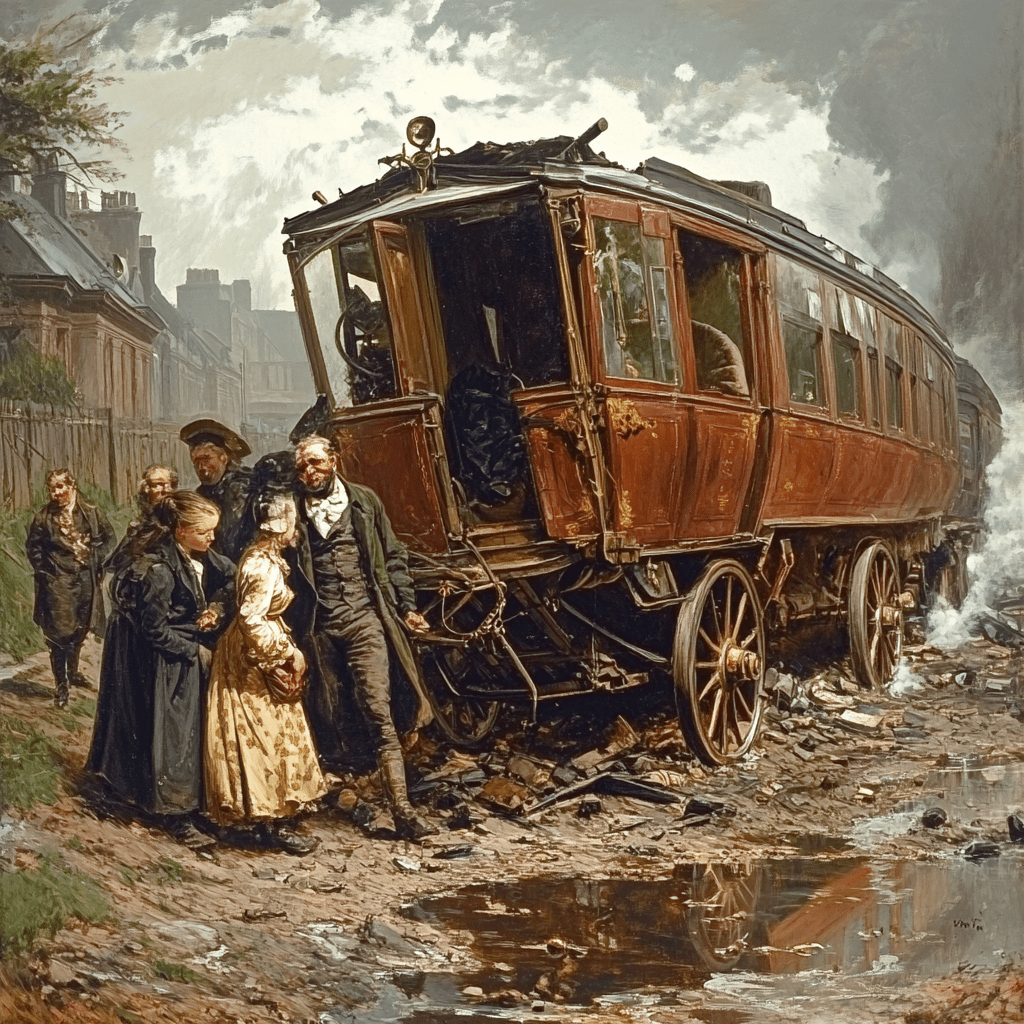
Having caught a friend’s cold — the best method to get rid of a cold is to pass it on, apparently — I’ve been reading … say it with me: Jane Austen Fanfic.
It’s illuminating, since a lot of the newer people writing it are young. Like, my kids age.
This is not a post about how uniquely bad these kids are or how they don’t do their work. I mean, it’s true some of them are a little … loosey goosey but frankly so were we at their ages, and but for there not being indie publishing at the time, we’d have our own juvenile mistakes all over the place. Heck, I need to republish a couple of my things, and have been delayed by health reasons, and have some of my own mistakes out there (Mostly mistakes of typesetting, to be fair.)
No, the fact is that I can read past typos and strange punctuation. I mean, I read my own first drafts, okay?
But it’s a fascinating window into the younger people’s image of the world and of history. Which, yes, ties up with “what do they teach them,” but also…
Look, people talk about the singularity, but I wonder if it’s already happened. Because it seems absolutely impossible for most people, to be fair, my age and under to conceptualize how different life was in the past.
I only have a little more insight on it because Portugal is consistently twenty years behind Appalachia and playing a game of catch up. They’re weird, because every time I go over there’s something that’s utterly new and they act like it’s always been that way. I guess an adaptation to living in catch up mode. The latest was “laundromats.” They’ve always known them from the movies and TV, so they act like they always had them, but Pepperidge Farms remembers.
Anyway, I have SOME though not enormous view into the past because until I was ten cars were rare, and my parents one and only house move was accomplished by borrowing an ox cart. And most travel was by tram or train. And while in my time, thanks to antibiotics, childhood death was rarer than in mom’s time — though not unheard of — if mom’s childhood stories are real, she lost half her friends to illness and accident before the age of 18.
But most people don’t. And this is particularly true for younger people. Say 40 and below. They grew up in a world that would be considered a paradise by all of mankind that came before the 20th century. An unattainable paradise. And they don’t realize it. Not just how much more they have, but how different their lives are.
The title, and illustration are from one of my “favorite” pet peeves. If for some reason you need to kill someone early they ALWAYS die in a carriage accident.
I about reached my limit with the one where the character’s father (probably in his fifties) died suddenly in a carriage accident. First, this man doesn’t like to travel. And second– argh.
Okay, it’s not that there weren’t carriage accidents. Of course there were. Nor that people couldn’t die in them. They could.
It’s just that… well, guys, fifteen miles an hour was a crazy speed. A carriage accident was in fact far more likely to kill the horses than the people inside. Carriages didn’t, as a rule, careen into each other or t-bone each other, unless there was something seriously funky going on. Mostly accidents were due to breakage or pushing the horses too far, or trying to go through too narrow a passage. They were rarely fatal to the passengers, unless the carriage fell down a ravine or something (and how many ravines were there?) which was more likely to happen in long course travel.
But if you take the fanfic, the level of deaths in carriage accidents was higher than any car accidents nowadays. And it’s ridiculous. Because the reason they’re all over is because these writers reach into “What could cause so and so to be an orphan in his twenties?” and immediately come up with “his parents died in a carriage accident.”
Okay, to begin with and to get it out of the way, in the early 19th century, carriage accidents were rare ways to die mostly because extensive drives by carriage were rare. Let me interject here that they were slightly higher for sporting age and type gentlemen who might be driving high perch phaetons or other vehicles that had no shell and had a high risk of turnover. Heck, the risks of horse back riding deaths were higher. All you had to do was fall wrong. And I understand as with motorcycles, if you ride you will have a spill, the question is where and how.
But you don’t need accidents to justify early — meaning before 60, let alone our normal now of around 80 (Yes, I know what statistics say. Also pfui.) — death. Death was startlingly easy to come by.
It has become normal these days to claim that people always lived “about what they do now” and claim the difference is because childhood death skews statistics. Bullshit. Again, I say to you, bullshit.
In fact this claim is ALMOST a perfect test for strong Marxist convictions. I guess having realized they want to take people back to the middle ages, they have to convince themselves it’s not all bad.
Look the truth is that there’s no way to tell how long people in the past lived. What we have are at best “hints.” Time keeping and records weren’t a big thing for most of human history and what skeletons show (even assuming we found all of them, not about 2% of them) is debatable. What we have — mostly, kind of — for Europe is church records of baptism and death. But you’d be shocked how flexible and shoddy those can be. Not to mention how many get lost.
But those of us born in the middle twentieth century — THE MIDDLE TWENTIETH CENTURY — can give you some hints. Particularly those of us born in less affluent places/times. I can tell you for instance that when someone died in the village at 60 or older, they were “old and full of years” and while it was sad, it wasn’t unexpected. Also I was 14 the first time I saw an 80 year old, and he was a wreck. He sat on a chair and shook, unable to do anything for himself. Yes, there are 80 year olds like that now too, but guys, we see eighty year olds on the regular. The man was a rarity and from a very wealthy family.
Then there is the congratulatory calls when someone turned 100. It was on TV. Like, once every few years. And the person usually looked half dead, or wasn’t 100 at all but they were surmising. Recently someone on our side was holding forth on twitter that anyone who thought they were 100 or more were either lying or it was bad records. PIFFLE. No, more than that, piffle with piffle on top. We know for a fact there are a lot centenarians, because the records in 20th century America were way better than in Europe at the same time, much less before that either place. Now, I don’t know if we’ve broken the upper limit of 114 consistently, and there records don’t help, because we enter the realm of shaky records. However, your local hospital on any given day will have a couple, three, half a dozen centenarians. It’s not that rare. It’s probably more common than 80 year olds when and where I was little. And while 100 is still rare there, it’s also not THAT rare.
This has happened in 50 years, everywhere. I can give you guesses as to why, and it would have to do with better hygiene, better food and ANTIBIOTICS. (Yes, I am in sympathy with the folks in MAHA and I think we eat a lot of overprocessed crap that doesn’t need to be so, particularly since the fad of having things packaged/mixed in China means … well… nothing good. But just simple refrigeration and worldwide transportation of food means we eat fruit and vegetables in winter, which makes a huge difference.) Less physically punitive work, even for those in physically demanding professions. And antibiotics. Most of all, I’d guess antibiotics, from various things, like seeing pictures of people in the past, the size of the interior of cars and how it changed from the 30s to the 40s. Etc. etc.
Look, being sick all the time has a wearing-down effect. Put a pin in this but: by the time you reached ten, as a child in the regency, you’d already have survived ten or twenty SERIOUS life-threatening illnesses. It is stupid — no matter how stupid the not-vax was — to claim that vaccination and herd immunity for children had no effect. And sanitation — clean water, and the ability to bathe at least once a week — was also instrumental in reducing not just childhood death, but continuous childhood illnesses.
The illnesses extended to middle aged years. It seems to me from their mid thirties on, people were never quite well, and were managing more or less serious conditions. Now thirties still counts as young age, and barely past your teen years.
Then there was for men — almost every man — serious every day risks. Even noblemen and the well to do rode horses, which as we’ve established aren’t death machines, but are, as a means of long transportation, far more dangerous than carriages. In addition most of them engaged physical activities even if well to do. From shooting to supervising around the estate, to “sport” which often meant boxing. And every woman who married spent most of her life pregnant or nursing. Unless very, very well to do and hiring nurses.
Activities that we consider quite harmless could turn around and bite you when antibiotics weren’t a thing. President Coolidge’s son died from a blister that got infected. This is unthinkable for a healthy young person in the 21st century. It’s not just unthinkable. It’s laughable. And when Jane Austen says “People don’t die of trifling little colds” it’s supposed to be a laugh line, because people could and did on the regular. This is why colds in her books were treated like life threatening illnesses, with isolation and careful bed rest, and protecting from all chills while recovering. They didn’t do this because they were zany. They did it because there was a serious risk of death.
But even if you didn’t die it left you “shaken” kind of like I’ve been the last two and a half months: weakened so something else caught you. And even if you survived them all, it aged you prematurely and left you aged and ultimately dead “before your time.”
Where I put the pin: You see people like the main love interests in Pride and Prejudice, orphans in full control of their money in their mid to late twenties. And the modern mind immediately scrambles for catastrophic explanations and seems to land, unthinking on “died in a carriage accident.”
BUT for the love of holy Bob, we don’t even know that young man was their first son, and that therefore they were in their forties. It’s entirely possible they had and buried five or six children older than him and that they were in their early fifties or sixties when they died.
I really heartily recommend anyone who wishes to write historical fiction, or even simply to know how blessed our age is, to read historical biographies. The things you discover will be worth it. Things like even in upper class families, fertility might be low because (no refrigeration, no transportation) they often were malnourished (no fresh fruit and vegetables, and “fresh” meat depends on how fresh is fresh.) Women might have countless failed pregnancies before they had a child who lived. And the child who lived might not live very long or die well before the age of reason. So the oldest son and heir in his twenties might be not at all the first born. Again, I like to point when a well brought up girl, of the upper classes sewed her trousseau before marriage, that trosseau typically included a few child shrouds, because she might be too weakened or tired from birthing to sew one for her children who would die at birth or shortly after. IN THE UPPER CLASSES.
Second, explaining death of people in their forties or older (or younger, to be fair) isn’t the hard thing. The hard thing is how in heck these people even survived. Go and look at the report on Czar Nicholas’s remains. The man had massive teeth problems and raging infection probably for years. And he was undeniably one of the wealthiest people of his time, who gave his wife golden, jewel encrusted eggs for Easter.
But all the wealth in the world couldn’t buy dental care that even not particularly well off people can get in the 20th century. Or the benefits of regular brushing and flossing and well-designed tooth care products. Oh, and again nutrition and antibiotics.
Look, if we don’t listen to the siren song of the Marxists, it’s quite possible my kids generation will view living to 120 in relatively good shape (Yes, it’s possible. My parents are still living independently in their nineties, and they don’t live anywhere as well as lower class Americans (though they’re not lower class for their country.)) as “Oh um, so that’s a thing.”
Not common, probably, but maybe around 50% of people will attain that kind of longevity in the next thirty to forty years.
Look, what disturbs me is not just bad fiction. I wouldn’t rage at you guys for that, since many of you don’t even write. Though if you do, please find better ways to kill people in the past than the apparently feral carriages that ran around the countryside in England, attacking and eating humans.
What disturbs me is that most people, even those who think they do, don’t realize what an amazing time we live in.
We are living in paradise, people. Act like it.
And work to stop the sh*theads who want to take us back to “a state of nature.”
Nature is okay, but it’s something that should be enjoyed from a position of superiority not one of need.
And the human animal does best when in a civilized setting. So let’s keep civilization going.
 According To Hoyt
No no no, there were Dragons in the regency period, which could be hired to CARRY people in little boxes from hither to yon. Sometimes the dragons twitched a massive talon, failing to continue in the carriage of the box, dropping same, which was recorded as a CARRIAGE ACCIDENT in official records.
Dragons who dod so had to pay a penalty, of course, and as we all know dragons abhor parting with any money, so they eventually ended this carriage trade.
Everyone knows this.
LikeLiked by 1 person
To carp or not to carp, that is the question.
/snerk
LikeLiked by 2 people
Whether ‘tis nobler in the mind to suffer
the slings and arrows of outrageous silliness,
or take carpapults against a sea of troubles,
And by opposing end them?
LikeLiked by 1 person
?
(swings large carp like bat)
“Grunt SQUISH!”
LikeLike
But how do you swing a bat? By the feet, or one wing, or… :-P
LikeLike
Okay. You brought this on yourself. May G-d hve mercy on your soul as I have to figure out how to put this in….
https://cdn.discordapp.com/attachments/1010012974624288828/1316158758350749776/krampus.png?ex=675a07dd&is=6758b65d&hm=ccc790efa2418383c3f139cefadb115b400d39a817fe6b87628700ed136fd6ba&
LikeLiked by 1 person
This is why all in Regency England dreaded the sound of a low bass rumbling “Oops” from above, as who knew where the bad would land?
LikeLiked by 1 person
^the box would land.^
LikeLike
(all above muffled, from inside the Krampus Bag.)
LikeLiked by 2 people
You brought it on yourself, Mr.
LikeLiked by 2 people
Ask not on whom the boxed carp lands; it lands on thee.
LikeLiked by 2 people
“Not again!” (Hitchhikers Guide reference)
LikeLike
(trying to get it on her screen)
LikeLiked by 2 people
Katherine Kurtz seems to have done her research. It was slightly startling to read a couple of her last few Deryni books and watch people drop like flies. One young man died of peritonitis- and he was nobility, so had the best of what little care was available. (In his case, it worked out to the monk saying, “They always die when this happens.”) Death in childbirth or shortly after from childbirth fever? Check. Just getting sick, pushing too hard, dying? Check. And everyone just accepts it as a normal part of life. People die, that’s all.
Also note one of the 1630 series had a plausibly fatal carriage accident, but it was due to icy roads and distracted driving. So the carriage careened into a wall, basically, with the death being something of a fluke.
LikeLiked by 2 people
Thinking of pushing too hard, a few years ago, my first cousin’s daughter put herself in the hospital from working out too much. There’s a number that checks your kidney function (creatin or kreatin, maybe). It’s suppose to be less than one. Affected cousin’s was like 25; her urine was dark like sweet tea.
So, yeah; one can push too hard.
LikeLiked by 2 people
Rhabdomyolysis
https://my.clevelandclinic.org/health/diseases/21184-rhabdomyolysis
Its pretty rare, but one place you see it is people who are training for or trying to qualify for elite military units.
LikeLike
I gather that an ancestor (I don’t know the number of “greats”) had the rural, very rough equivalent. He was heading home from the tavern, passed out and fell into a snowbank, where his body was found later.
Childbed fever was also a thing, pre-Semmelweiss. Lost an aunt (insert “great”s to suit) that way. And premarital sex was also a thing. In both cases, Denmark (sort of; Holstein-Schleswig was the prize in a fair number of wars).
LikeLiked by 1 person
Farmwagon vs carriage accident. Suitability for Jane Austen fanfic is up to the writer.
LikeLiked by 2 people
Death in childbirth was distressingly common well into the 20th Century. In the ‘Republic of Texas Navy’ series, the main character’s mother and first wife both died during childbirth, which explains his extreme nervousness over his second wife’s pregnancy.
LikeLiked by 1 person
I read a fairly good article a few years back talking about the physical state of people of the Victorian era, just based on the health challenges they would have faced. We’re not just talking the vaccine-preventable diseases, or tuberculosis, but nutritional deficiencies such as rickets, scurvy, or beri-beri, auto-immune issues (rheumatic fever!), and just sheer physical issues.
The average height of every country that has been introduced to vaccines, antibiotics, and available variety of food has shot up. EVERY country. You don’t grow when your body is fighting off infection.
And it shows in the bones. Sure, we may not have much older than the 19th century, but we have a LOT from the 19th century, let alone the early 20th. And everything, including broken bones, does damage to your overall health profile. The more insults to your health, the less recovery ability you have.
It shouldn’t surprise anyone with a decent historical knowledge that the nursemaid Ruth in the operetta The Pirates of Penzance is considered ancient and decrepit… at the age of 47. (I can sing my age in opera right now! :D) But with a modern cast, you can’t put anyone much under the age of 60 in that role without age makeup. (Heck, only a few years ago, one of the orchestra, who could see me OFF stage and without any makeup at all, was astonished that I wasn’t a decade younger than my true age! Having seen a number of the other actors all at 50, I credit good skin care and keeping up my flexibility.)
And my mom turned 80 this year. Pictures of her mother at 60 look a lot older than my mom does at 80, and she still had to deal with a few of the childhood diseases. It’s not just clothing and hairstyle, either. My Nana was hunched, had only two teeth, and a whole host of health issues. My mom is a little stooped, sure, but she still has all her teeth, and her major complaint is a motion issue that she wants some physical therapy for so she can get back to walking.
LikeLiked by 2 people
Heck. My mother at 90 VS her mother at 90!
Grandma was definitely hunched, not bad, but it was there. Grandma’s decline, while she lived to be 93, was visible at 90.
Mom absolutely does not have the same decline showing at 90 that grandma had. Can this change in an instant? Yes. Just like you can go to a doctor appointment, get a healthy report, walk out the door and have a heart attack and die. FWIW, involved in a social group with mom. Was just going to do it for a few years. Gone longer than that. Hubby asked when I was quitting. Answered “When mom dies.” Response “So never?” Just about.
LikeLiked by 3 people
You can see the whole “good nutrition equals height” thing in comparing pre-WWII Imperial Japanese with post-WWII Japanese.
Same with pre-1970s Red China vs post-1970s Red China.
The ‘pre’ portion? All shorter than your average European of the time. The ‘post’ portion? Heights from good nutrition see a massive increase in height.
LikeLiked by 2 people
I went to a museum once that had a display of Roman artifacts. One was a display of sandals, shrunken down of course. The display said that accounting for shrinkage the LARGEST of their feet would have been about six inches, making the tallest of these “fearsome soldiers” less than 5 feet tall.
LikeLike
Given that the Roman pace was just about five feet long, I don’t think this makes sense.
Also, Roman soldiers wore hobnailed boots (caligae), not sandals. Sandals wouldn’t tell you a darned thing about the height of Roman legionaries.
LikeLiked by 1 person
what era of Rome? IIRC their gear changed quite a bit,
LikeLike
FIVE feet? That’s way too long for anybody, no matter how tall. You try it. Or, try taking strides 5/6ths your height, whatever that is. You won’t take very many. A modern military pace is just about 3 feet.
Maybe that ‘pace’ was what we would consider two paces, back to the same foot again.
LikeLike
I always considered a “pace” as two steps. My pace has been 4′ (2 per step). Makes it easy to “pace” off 10′ (2 1/2 paces) on flat ground.
LikeLike
So did the Romans. A thousand (“mille”) such paces defined the distance of, and gives us the word for, a mile.
LikeLike
OK, by that definition the modern military pace is about 6 feet. I should know; I did enough of ’em. I can rough-measure distances by 1 step = 1 yard and it comes out pretty darned close.
LikeLike
Hubby’s is 3′ per step too. OTOH I’m 5’4″ (barely). He’s 6’1″.
LikeLike
Sandals, boots, whatever. I was 15, so details are foggy. Footwear.
LikeLike
Roman footgear:
https://en.wikipedia.org/wiki/Caligae
More sandal than boot. High-ankle sandals with hobnail/stud tread
Wiki, FWIW
LikeLiked by 1 person
One reason why Victorian working class families would yank their sons from school in their teens is that the boy could out-earn not only his mother, but his father. Thus would start the grinding physical labor that would leave him unable to earn as much as his own sons.
LikeLiked by 2 people
Nutrition matters a lot. When Norway’s food exports were limited by WWI, its TB death rate plummeted.
LikeLiked by 3 people
Carriage-kun, ancestor of truck-kun, for when you are transmigrated into a novel. Sorry, I’ve been reading a lot of romance fantasy manhwas lately.
LikeLiked by 2 people
LOL. I love it.
LikeLiked by 1 person
So re trucks, I hit word use a while back in a something I was reading: Where is a pickup truck bed called “the truck tray”? It was one of those “the whating what?” jolt-you-out of the book things, which made me wonder where the author was raised.
Anyone have any intel?
LikeLiked by 2 people
DDG points to outfits that make slideout trays that fit (some installed, others temporary) in a bed. Temporary : truck-trays dot com, installed: extendobed dot comh
Didn’t see any that replaced the bed with a tray. Was this a Chekov’s Prop sort of thing, or was the author smoking the good stuff?
Installed:
LikeLike
It was just the MC’s word for that open walled section behind the cab that you could throw stuff in, or sit in while the truck was in motion.
Story was set back east in the US, so I wondered if it was a weird east coast thing.
LikeLike
That’s a few thousand miles from my neighborhood. I don’t do Google (after “don’t” morphed into “do” for XXX be evil, but Bing points to some custom manufactures, with some of their creations known as trays. One’s a flatbed* for a pickup (around here, it’s called a “flatbed” to nobody’s surprise), others having low maybe-removeable rails.
Both of the products mentioned come from Oz, so mutated Britspeak might be in play. :)
((*)) An nlet ball for a gooseneck trailer is pretty common on these.
LikeLike
Carriage-kun, then truck-kun (with maybe jeep-kun or T34-kun for those WW II stories), then air car-kun…maybe even transporter-kun for Star Trek stories…
LikeLiked by 1 person
Transporter-Kun fits into Star Trek canon way too well.
LikeLiked by 2 people
I wouldn’t be surprised if transporter-kun was a common issue in the series…
LikeLiked by 1 person
Transporter-kun was basically canon-canon.
“Mirror, Mirror.”
LikeLiked by 1 person
That and transporter out of order. “The Doomsday Machine” with one of my favorite Kirk lines: “Gentlemen, I suggest you beam me aboard.” (While he was on the Constellation and TDM was preparing to eat it.)
LikeLiked by 1 person
I was thinking more of the Deep Space 9 episodes, and considered waxing poetic about how “Amazingly” it was the darker, grittier, kinkier version, but didn’t want to get too much into it.
LikeLike
A quick look at my male-line genealogy shows that a lot of my ancestors, dating back to the 1700s, died in their late 60s to early 90s(!), with a lot of them making it to their mid-70s. The one notable exception pre-1900 was the one who was killed at 53 by “Bloody Bill” Cunningham during the Revolution in 1781.
On the other hand, I can think of at least a couple of times I probably would have died or been crippled, if not for modern medicine. At least two staph infections – both on the end of my nose.
Staph infections there can go through the sinuses and get into your brain – and that’s a pretty quick and nasty way to go without antibiotics.
LikeLiked by 1 person
On my mother’s side, her mother, her mother’s father, his father, his father’s father, all lived to their 90’s. My mother is still alive and is 96. All of the people listed were fat, way fat, cranky, grumpy and had blood sugar issues along with various cancers. Grandma kicked from her third bout of leukemia at 97. (There is a hypothesis between my wife and I that there’s a possessive soul that travels from one to the next as all, rumor has it, nice and uncranky and ungrumpy until their parent died and suddenly… cranky and grumpy. Hypothesis only as I am the only one of my generation to be… fat and have blood sugar issues. We’ll see if this is a provable theory once my mom passes.
Dad’s side? Fit, can eat anything and stay reasonably thin, all croak around 65 years.
Good nutrition, bad nutrition, doesn’t seem to much matter. Of course both families had great access to proteins and carbs, mom’s being well off up and down the line while dad’s lived in the bayous and could hunt/trap/catch much more fresh proteins than city folk.
LikeLike
Mom’s family. Already said she’s 90 and grandparents died at 93 and 95, respectively. Their siblings were past the 80 and 90 markers too, before dying.
What I haven’t said yet, is her “younger sister”, age 87, and younger brother, age 78, are doing great too. Both are current heavy smokers. Aunt has smoked since before I was born. Don’t know when uncle started smoking, but given he was only 10 when I was born, I doubt it was that early.
Dad’s family OTOH tend to die late 50’s to early 70’s, whether they smoke or not, are fat or not, exercise or not, work majority outside in healthy air or not. Paternal grandmother missed her 80th birthday by a few weeks, an exception.
LikeLike
Although I enjoy reading about past times, I am glad I do not live there.
In another century, I would have had two chances to be dead already:
–dead of pneumonia at age two.
–dead of ruptured appendix/peritonitis at age fifteen.
Hurrah for modern medicine!
LikeLiked by 1 person
Thinking about it, best odds would be a dental abscess for me. My teeth are naturally not very good, but I still have them all due to modern dentistry.
LikeLike
Absolutely! The antibiotics totally wrecked my gut for years, but I would’ve been:
-dead of pneumonia at 18 months
-dead of the flu and ensuing bronchitis at 14 (I nearly DID die, even with said antibiotics)
-dead of the tonsil rot soon after.
LikeLiked by 1 person
Although I enjoy reading about past times, I am glad I do not live there.
In another century, I would have had two chances to be dead already:
–dead of pneumonia at age two.
–dead of ruptured appendix/peritonitis at age fifteen.
Hurrah for modern medicine!
LikeLike
Although I enjoy reading about past times, I am glad I do not live there.
In another century, I would have had two chances to be dead already:
–dead of pneumonia at age two.
–dead of ruptured appendix/peritonitis at age fifteen.
Hurrah for modern medicine!
LikeLike
It has rather infested the rofan manwhas lately, hasn’t it? Every time I read ‘carriage accident’ I think, ‘but it could have just been a sudden fever?’
Of course, in many cases the ‘carriage accident’ turns out to have been enemy action in those stories.
LikeLiked by 1 person
My wife is an avid, and hard-core, geneaologist, and has traced her entire family tree back at least seven generations in all lines. She is a fanatic for getting very solid confirmation of who really was this “John Kline” who might have been a 4-greats grandfather. A side effect is seeing all of those things that happened to the families from the mid 17th century on to today. These families were essentially all Pennsylvania Dutch farmers (with a few entertaining characters, like the counterfeiter who was so good that when he was finally caught, the government hired him), and the numbers of families that had multiple children not make it to age 10 showed they were the rule and not the exception. Of course, since she exists, there is plenty of survivor bias in the ancestral tree, but even including that bias few of the ancestors saw 70.
And those were the ones living the good, idyllic, farmer lifestyle. Food wasn’t a big issue for them (relative to the more urban populations), butto say life was hard would be a huge understatement.
LikeLiked by 1 person
Idyllic? What are they smoking? Just one aspect of 19th century farming life: In Pennsylvania, from May to July, the sun rises before 4:00 AM and doesn’t set until almost 10:00 PM. That’s how long you work. From ‘can see’ to ‘caint see’. With half-ton horses that don’t really want to work those long hours either. And after all that work you raise just enough food to feed your family with a bit left to sell (or barter) for what you can’t make yourself.
People flocked to the cities and their ‘dark satanic mills’ because factory work was 10 times better than farming.
LikeLiked by 1 person
I guess I should have put “idyllic” in scare quotes. My father-in-law worked a full time job AND farmed, so I got to see how idyllic it was in practice. My surmise is her family all had enough land to farm so they could feed themselves, even in years of want. But those lean years always came, and unless you had prepared for them, you could likely not see the next set of years of plenty.
LikeLiked by 2 people
Ah, but if you had access to meat, dairy, and fresh food in season, the dietary benefit was impressive. Did it balance the work and accident and infection danger? Probably not, depending on where you were and what kind of farming was done. If you had a dairy herd? Probably yes.
LikeLiked by 1 person
Look at the Netherlands as compared to farm-farming neighbors. There’s an epigenetic reason why the Dutch have been taller than the populations around them for hundreds of years: more dairy protein over the centuries. (Granted, they may be the exception that proves the rule.)
LikeLiked by 2 people
My wife’s ancestors were indeed dairy farmers, and while they were far from “wealthy” – most definitely working class – they did have food.
LikeLiked by 1 person
Plus they tended to catch cowpox which immunized them from smallpox. Milkmaids were renowned for their beauty due to the lack of smallpox scarring on their faces.
LikeLiked by 2 people
Hence the term “vaccine” which comes from the Latin for “cow.”
LikeLike
THIS.
LikeLiked by 1 person
American context is different, but in Europe, farm laborers moved to the city, the farmers mostly didn’t. A farm laborers life was not an easy one, especially the day laborers. best, if you could raise the fair, was to come to America since our dark, satanic mills were much less dark and satanic than back home.
LikeLiked by 2 people
THIS. I’ve DONE manual labor intensive, hand tools, rock picking, old school farming. It sucked. Majorly. The “Do Not Want” was so strong I fled farming as fast as my young legs could carry me.
Farming like that is back breaking soul killing labor for longer than you can stand, long past “this sucks,” long past “I can’t feel my legs anymore,” and long past “the only reason I know I’m not dead is it hurts so damn much.” All that just to grow enough food to live on and maybe a little to sell?
Screw that with a rusty metal pinecone. I’d not go back to the 1970s let alone the middle ages, subsistence farming stage. I’ve too much love for central heat and air conditioning, washing machines, reliable infrastructure, clean water, and indoor plumbing (yes, we lacked all of that back then).
LikeLiked by 1 person
Yes. But compared to life in the mega cities, where plagues ran, because of being packed and not having anti-biotics, “idyllic” for longevity.
LikeLiked by 1 person
Up until the mid-20th century, cities were always a mortality sink. In a lot of cases, cities really existed because disruptions in the countryside due to war and famine drove people to where there might be food and a place to live.
LikeLiked by 2 people
Now they’re more of a morality sink.
LikeLiked by 1 person
I always liked this letter from a farm kid talking about the military:
Dear Ma and Pa:
I am well. Hope you are. Tell Brother Walt and Brother Elmer the Marine Corps beats working for old man Minch by a mile. Tell them to join up quick before all of the places are filled.
I was restless at first because you get to stay in bed till nearly 6 a.m. But I am getting so I like to sleep late. Tell Walt and Elmer all you do before breakfast is smooth your cot, and shine some things. No hogs to slop, feed to pitch, mash to mix, wood to split, fire to lay. Practically nothing.
Men got to shave but it is not so bad, there’s warm water. Breakfast is strong on trimmings like fruit juice, cereal, eggs, bacon, etc., but kind of weak on chops, potatoes, ham, steak, fried eggplant, pie and other regular food, but tell Walt and Elmer you can always sit by the two city boys that live on coffee. Their food, plus yours, holds you until noon when you get fed again. It’s no wonder these city boys can’t walk much.
We go on “route marches,” which the platoon sergeant says are long walks to harden us. If he thinks so, it’s not my place to tell him different. A “route march” is about as far as to our mailbox at home. Then the city guys get sore feet and we all ride back in trucks.
The sergeant is like a school teacher. He nags a lot. The Captain is like the school board. Majors and colonels just ride around and frown. They don’t bother you none.
This next will kill Walt and Elmer with laughing. I keep getting medals for shooting. I don’t know why. The bulls-eye is near as big as a chipmunk head and don’t move, and it ain’t shooting at you like the Higgett boys at home. All you got to do is lie there all comfortable and hit it. You don’t even load your own cartridges. They come in boxes.
Then we have what they call hand-to-hand combat training. You get to wrestle with them city boys. I have to be real careful though, they break real easy. It ain’t like fighting with that ole bull at home. I’m about the best they got in this except for that Tug Jordan from over in Silver Lake . I only beat him once. He joined up the same time as me, but I’m only 5’6″ and 130 pounds and he’s 6’8″ and near 300 pounds dry.
Be sure to tell Walt and Elmer to hurry and join before other fellers get onto this setup and come stampeding in.
Your loving daughter,
Alice
LikeLiked by 3 people
Always like that one too.
LikeLiked by 1 person
One French 19th-century writer talked about how you could always tell, among the peasants, which men had served as soldiers, they were more stalwart, virile, etc. etc.. The writer I read this in observed that men were inducted into the army at an age where army rations could still make a difference in their growth.
LikeLiked by 1 person
Going to pick a nit: 4AM to 10P is a stretch. Using Naval Observatory values, astronomical times range from 5:38 (EDT) to 8:40PM. This for 41N 77W. I’d guess Can to Can’t might let you get to 4AM to 10PM*, but for one of those times, I’d rather be sleeping. (And that’s the 10PM one.)
((*)) Artificial light strongly advised. We’re 1.5 degrees further north, and 9 PM is getting sketchy for ambient light.
LikeLiked by 1 person
OTOH. Milking cows happened twice a day at aunt’s and uncle’s place. Easily can happen at early dawn and late dusk, (40 acres west of Baker, OR). Slopping the pigs happened sometime during the day, after whenever aunt pulled the separated cream off the milk from prior days that hadn’t sold, plus tops of greens from the garden and some oats. Making sure the cow who wasn’t being milked fed not only her calf, but the other two cows calves and the calf purchased (Rosie was not accommodating at all). Put feed out for the horses, and chickens, collect eggs. Even bucked hay bails (took younger cousin and on one bail, I was 11 year old city girl, she was 6. I was 16 the last summer I was there.) Weeding the garden and moving field sprinklers, took place during full daylight (and heat since I was only there during summer). Did not count cleaning main part of the house. Bonus, Horses. Riding. Never as much as I wanted, but better than what was available at home (none). Oh, they did not have a bull (steers, but nothing intact). A lot of fishing too. I got a glimpse, not the full picture by any standard. I didn’t spend my summers just reading.
LikeLiked by 1 person
You harness the horses before dawn, and return to the barn when it’s too dark to see. Then get the harnesses off, take care of the horses and any needed repairs to the equipment.
The farm wife works even longer hours; she has to have breakfast ready before hubby goes out to harness the horses. At least she can go back to bed for an hour or two after breakfast. Then it’s clean, clean, clean, milk the cow if you have one, collect eggs, tend the garden, take lunch to hubby in the field because he can’t stop working…
They’re stuck in those ‘traditional gender roles’ because a woman has neither the strength nor stamina to labor in the fields all day. She’d get half as much work done, at best.
LikeLiked by 1 person
So it’s working from Still Cain’t well into Early(I hope) Cain’t.
We have too many coyotes (plus the one I saw that was part wolf) for me to be doing anything outside in the dark. It’s 10′ to the kennel (built to be raptor-proof, and too near the house for coyotes) and we’re both pretty quick at the “Kennel” and “Back Door” evolutions. Once in the kennel, Kat-the-dog has her own ideas because border collie.
If I have to go to the barn or garage (600′ or 200′) in Cain’t, I’ll dress in honor of John Moses Browning.
LikeLiked by 1 person
“she has to have breakfast ready”
And not just for one person, if the farm is large enough to employ laborers, especially at planting and harvest. My grandmother could expect a half dozen or so.
LikeLiked by 1 person
I’m not so sure that the women had to get up even earlier. I read some books about early farmers years ago and was said that the man would go out and do work close to the house while the wife made breakfast, then eat, then go out the fields. I can’t see any woman back then letting the man sleep once she was up. The kids and breakfast would make a lot of noise and she wouldn’t want to have to keep quiet.
I’m afraid my information is just anecdotal, but it does make sense.
LikeLike
In Korea, when my grandfather was a boy, the truly poor families had both husband and wife go out. They were often too poor to have any kind of plow beast so they literally hitched the wife to the plow, because she didn’t have the upper body strength to push the plow DOWN and keep it in the ground. She pulled he pushed, then once it was plowed he planted and she went back to the house work.
LikeLike
Way back in the dark ages (before Internet) I worked for my Uncle on the family Dairy farm for a couple of summers. It was everyone up, do the chores and then breakfast around 7:30 after the morning milking was done.
I don’t see anybody not starting the day at the same time, and eating right after getting up? Ugh no. Give time for the coffee to kick in please
LikeLike
There was a blog-post that I read back in the day, which pointed out how very tall, healthy and robust that Colonial-era Americans were, when compared to their English cousins; and it was because of their dietary health. Fresh fruit and veg, plenty of dairy, eggs and meat … compared to the scanty and poor diet afforded to English country folk and working people of the same era. And British taxation would have wrecked all that prosperity and good health. And that was why so many American colonists got down their long rifle from the shelf and snarled, “Bring it, Georgie!”
LikeLike
A local fan took me through the old pioneer cemetery, in Fredericksburg, Texas a couple of years ago. Said cemetery was the Catholic one, only in use for about twenty years, around the time of the Civil War – say. 1850-1870. About 50 marked graves, of which 40 were for children of every age from a birth and a couple of months, to ten or twelve. There had been a diphtheria epidemic around 1964 – so bad that the local doctor (according to reminiscences) had to have his wife drive him around to house calls – so that he could catch naps in the buggy between visits. I thought the most heartbreaking graves were for several pairs of children of different ages during that period – who died days and weeks apart. Obviously in the epidemic of a disease that our present-day children are routinely vaccinated against. I’m also of an age to have been among the first to be vaccinated against polio – and recall very well how my grandparents bothered my mother: “Had we gotten the shots? Were we vaccinated?” I remember seeing slightly older children with leg braces, or confined to small wheelchairs … and knew what my grandparents dreaded. And how happy they were, that there was a vaccine against polio.
LikeLike
In one of Stephen Ozment’s books about pre-modern Germany, he describes a patrician family in Nüremberg that had 11 children die before one lived to age three. That boy made it to adulthood, but the parents hesitated about naming him, because so many had died within days of birth. The father fretted later because the toddler wanted milk instead of wine, and wine was so much safer (goat milk, fresh from goat when available.)
I wonder what the poor mother thought, to get pregnant and lose every one. She may also have miscarried a few times, although the records are vague. Especially since after 5 or 6, it’s Russian Roulette for the mother as the odds of infection or hemorrhage catch up.
LikeLiked by 2 people
That’s why my grandfather was the youngest of 12, from his father’s second wife.
LikeLiked by 1 person
I don’t know why women keep going to Childbirth, since they always die there! You’d think the travel agents would want some repeat business and give them some warnings about it.
LikeLiked by 1 person
It’s the hub-and-spoke routing – everyone goes through Chilbirth one way or the other.
And the carriage accidents there are simply horrendous.
LikeLiked by 3 people
I walked to my retina appointment and past the corner medical center. Several different practices in the building as promoted on the e-billboard. Ironic that the cremation outfit got its advert in the queue, too.
You have your black squirrel. I’ll settle for black humor.
(Re retina: no improvement seen, so the drops are cancelled. Not bad enough for surgery, with cornea scarring much worse of a problem. The fix seems to be a partial transplant (inner layer(s)), but yikes. I now understand Jerry Pournelle’s reluctance to get cataract surgery. (Shared a couple of emails. I don’t know if he went with it.)
LikeLiked by 1 person
We had a couple on a project who had been missionaries in Africa (the lady spent childhood in Zimbabwe/Rhodesia). The husband helped put together a midwives’ training program using co,ic book format to overcome the language barriers. The program required the local chiefs to provide a candidate for training and a place for her to work.
He said one result was parents quit waiting until the age of five to name the kid, since the odds of its survival got so high.
The bad old days aren’t that far off in some parts of the world.
LikeLiked by 2 people
You see that in a lot of European and American cemeteries. Baby (last name) or Baby boy/girl (last name), followed by death date. No first names for a lot of dead babies, baby being up to 2yo in some places.
All that changed when good nutrition (like fortified bread in America, so suck it you wanker Euros who laugh at our sandwich breads, they’re fortified to keep us alive) and good antibiotics came along.
LikeLiked by 2 people
Or you see three boys named John in a row, or two daughters named Alice. Odds are, two of ’em didn’t survive.
Okay, fortified breads are all well and good, but it is a fact that our farming practices have depleted the soils of essential nutrients, which is why there was that problem in the first place. Of course, some regions are just going to be naturally deficient in certain minerals, but excessive tillage has not helped.
LikeLike
My mom has the same name as her sister who was born exactly a year earlier. And died at 3 months of age.
LikeLike
In many cases you can identify the miscarriages (and/or stillbirths, depending on the culture) by gaps. C1 and C2, 12 months apart. C2 and C3, 15 months apart. C3 and C4, 25 months apart. Likely at least one child in that gap. The wider the gap, the more likely. Many cultures didn’t even record stillbirths, so sometimes there’s no other way of identifying them. The other scenario is no children after 2 years of marriage, then C1. Likely children or miscarriages in that gap.
Of course, the closer you get to modern times the less help this is.
The Italian records made it simpler because of naming conventions. 5 Eliza’s in a row likely meant four children dead. Then maybe a Maria, and another Eliza. Likely the surviving Eliza died after Mary was born. So you know what time period for all those deaths.
LikeLike
Genealogists reckon two years as normal between births. When you are short on food, you frequently can’t conceive until you wean.
LikeLike
I’ve done genealogy for nearly 40 years, and I have never been told that two years was normal. At least, not in the areas I researched. 12-15 months, in my experience. With a gap of two years I am almost always able to find another child between, usually stillbirth, infant death or miscarriage (if those were recorded in the area). You also have to look at the pattern, as mentioned above. If a woman is having a child every 15 months, and skips to 2 years, the pattern is broken. Definitely look for another child.
The general guidance I have seen is that a two year gap is too wide. Look for another child.
LikeLike
But then you get these idiot novels (set in the Napoleonic Era) where the author has a woman not wanting to have children because “women always die in child-birth”. [Frown]
LikeLiked by 2 people
As if you really had a choice; if you got married, there were GOING to be children sooner or later.
LikeLiked by 2 people
Actually, this woman “didn’t want to get married because having children”.
And yes, it was somewhat implied that she wouldn’t have sex outside of marriage.
LikeLiked by 2 people
I read those books. That wasn’t the worst part, in terms of the author not understanding the setting she was writing in. The one that cemented my feeling of “these are 21st century characters plopped down in an early-19th-century setting” was when the protagonist figures out that his brother, the duke, never married because he exclusively prefers men. The protagonist just… accepts this, and decides to help conceal his brother’s preferences from society because that’s a capital crime (which the protagonist finds to be stupid) and he doesn’t want his brother hanged.
I would have been willing to accept the protagonist going “Oh dear. That’s a sin, and I don’t like it… but I don’t want to see my brother hanged for it. So I guess I’ll keep it quiet for his sake.” Would have had the exact same effect on the plot, even: no major plot changes would have been needed. But no, the author didn’t want to be seen as homophobic (because we all know that when you write a character, you endorse every action taken and opinion expressed by that character, right?) so she had him just accept this situation, and never have any moral qualms whatsoever about it. A man born in the 18th century, coming of age around the start of the 19th. Yeah, right.
LikeLiked by 2 people
And never mind that historically, gay nobles would marry to provide heirs and have a male lover on the side.
Of course, “moderns” talk as if gays are unable to have sex with a woman.
Note, one of Mercedes Lackey’s gays was able and willing to have sex with a woman to provide a friend an heir when the friend (a man) was sterile.
LikeLiked by 2 people
Yep. That was even brought up as an option and the duke rejected the option, saying it wouldn’t be fair to the lady to provide her with a husband who was unable to fulfill his marital duties to her in bed.
To which I respond, are you freakin’ kidding me? History is full of examples to prove that he certainly could. If he had said it wouldn’t fair to her to deceive her like that, that would have been one thing. Or if he had had scruples about “Well, I refuse to drag a lady into such a situation without being forewarned what exactly I’m really offering her, and it’s too risky to tell her everything; I don’t want to run that risk” then the plot could have moved forward, with no changes needed, even. But no, the author has no clue about history.
LikeLiked by 1 person
Not to mention how many ladies would have leapt at the offer of being a duchess, even if she knew going into it that her husband would never share a bed with her. I repeat, are you freakin’ kidding me? In that era, that’s a deal that would have had ladies lining up around the block to sign on for.
LikeLiked by 2 people
And there’s more than a way to turkey baster. He could have told her he just couldn’t, make up reason. SHEESH
LikeLike
If no military service history was available to provide a convenient combat injury excuse, just off the top of my head: Horseback riding injury (ouch, ouch), wounded in a duel, childhood pox, wounded driving off robbers on the road…
LikeLiked by 1 person
Mumps.
LikeLike
She’d be guarantied their were no bastards out in the world to challenge the right of her offspring to their inheritance. She’d be able to have her own affairs. Too often even having her bastards from any affairs accepted as legitimate heirs.
LikeLike
I’ve been reading Andrew Wareham’s Pinchbeck Peer books, and if those are as accurate as they seem, there was a noted, and openly discussed in Society, overabundance of eligible young ladies compared to eligible males. Combine this with how few of those bachelor males there actually were with each step up of peerage status and the result was the somewhat cutthroat competition among the ladies during “The Season” for the attention of any eligible male who would inherit a title, especially a Duke-to-be.
The stuff Wareham describes are situations where the male has the title, but his actual wealth is limited, so the female brings inheritances and income producing lands to the table to make the titled household wealthy again. Towards the later years in this series the rising merchant and banker classes start to enter their daughters into the competitions, since they are making so much money, but they would not usually be in the running for a ducal heir. It was just not done.
I suppose if the male hated London and refused to attend “The Season” he might be hard for the ravening hordes of young ladies to track down, but it was absolutely expected that male peers would wed a socially appropriate female, so the social pressure would be astounding on a title-inheriting son who declined to even attempt to find a wife.
LikeLike
There was a shortage of males due to the Napoleonic wars.
LikeLike
Or Staenbridge in Drake and Stirling’s The General books.
LikeLike
Drake and Flint did that too in the Raj Whitehall novels. One of Raj’s best officers is married, and has a male lover (also becomes an outstanding officer). But the first guy will have sex with their mutual concubine….if there’s nothing better available.
LikeLike
That was Staenbridge…. and he specifically picked up the concubine to teach his lover how to be comfortable enough with a woman to produce an heir when needed.
LikeLike
In fact, he did it twice.
LikeLike
Yep. There are exactly 4 characters in Outlander, who actually know for sure) that accept Lord John as gay (not even his brother knows, or doesn’t acknowledge the fact even to himself). That is Roger, Claire, Bree, and Jamie. Jamie because of the first three. First three? All 20th century born and raised (open lifestyle may not be accepted, even ’50s, Claire, or ’60s – ’80s, Roger & Bree, but all three would be horrified of the 1780s consequences). The past truly is a foreign country.
LikeLike
I recently read a work of non-fiction, and the author was discussing why on earth a cunning woman waited until her husband was asleep until she began a working. It was not against the law at that time.
The possibility that the husband thought it was evil witchcraft did not arise even to be dismissed.
LikeLike
There is a Child Ballad, Fair Mary of Wallington, where two sisters swear to never marry because they are the only survivors, all five of their sisters having died in childbed. Their father forces the older to marry, she dies in childbed, the younger repeats her vow, and her father swears he will marry her off.
LikeLike
Jane Austen wrote in that era, and poked fun at the trope.
“She had three sons before Catherine was born; and instead of dying in bringing the latter into the world, as anybody might expect, she still lived on—lived to have six children more—to see them growing up around her, and to enjoy excellent health herself.”
LikeLiked by 2 people
I’ve mentioned before that great-great-great-grandmother and her SIL’s, not only had at least 10 children each in 1843, they traveled across the US to the Columbia river keeping them all alive. Ggg-grandma was even pregnant with #11 before they got to the Willamette. Unfortunately they lost the 2 older boys on the Columbia, one of ggg-grandma’s and a nephew, plus an uncle-inlaw. One of the boys was never found.
Ggg-grandparents did lose daughters later on, when the girls were in their early/mid 20’s to “consumption”. Going on to help the SIL’s raise the grandchildren left behind. The historical family graveyard where the ggg-grandparents are buried has a surprising lack of headstones for infants, toddlers, or even younger children (the one boy and uncle are buried along the Columbia, somewhere). Only two children buried there are my generation of cousins. Both age 12. One 1980 from birth defects complications. Second was a pedestrian killed by a hit and run driver in 2000. Never checked the other bigger historical cemetery established by gggg-uncle. Might be a lot more children headstones there.
LikeLiked by 1 person
One of my great-grandmas raised 20 (!!!) children after her sister died – I think 8 were cousins and 12 were her own. My aunt has memories of her setting out sack lunches along an outside bench for them to take to school in their one-room schoolhouse, which was undoubtedly nearly filled by my family members alone.
LikeLiked by 1 person
I’d have to pull out the books written that have the family tree to know exactly how many Ggg-grandma had after they reached Oregon (at least 3). All of whom survived. Took miss adventure for them to lose a child (small raft overturned in a whirlpool). Not all married. They helped raised (fathers were off earning money to support the children) at least 3 of their daughters children. The reason why the graveyard is on the original homestead because it was established before ggg-grandfather lost most the *original homestead to the state (which still owes ggg-grandfather money, but digressing), before he and his wife died.
(* State tried but they couldn’t get the graveyard, nor the acres subdivided and already deeded to sons, including gg-grandfather Robert. Last of that the latter was sold in ’73. $1k/acre, $80k, including house, was more than the folks could afford. I cringe to think of what it will sell for now.)
LikeLike
We used to spend the summers in Ireland until I was in prep school and things were different there, horses were still common on the roads and you had to wait for years to get a telephone. I remember when they put a hot water heater in my grandparents house and everyone from the town came to gawk. We were already the only people in the town with an indoor toilet. This was 1967 or so.
Anyway, I had a dose of scarlet fever when I was about five. They had doctors and antibiotics and such, but the doctor cost a Guinea — 21 shillings or £1.05 in the new, fake money. They didn’t see the point of paying the money, after all children got childhood diseases and mostly lived. Now, my da would come over to Ireland for a couple of weeks during our stay and when he arrived that year and heard the explanation of why they weren’t taking me to see the doctor, well, they still talk about it. Epic. You see, my da was American and he had a completely different view of the whole thing. I was soon medicated and mitigated and had no long term effects from it.
they didn’t mean any harm, and they were educated, professional people so were not talking about ignorant peasants, it’s just that antibiotics weren’t a real thing to them, children got sick, and sometimes died, that’s how it was. I guess fish don’t see the water they swim in.
LikeLiked by 3 people
Oh, yeah. When I was a kid, I was more likely to spend weeks in bed than mom to give me antibiotics. In her case “Antibiotics are unnatural and can hurt you.”
Honestly, if she lived here she’d be all in on RFK Jr.’s wilder theories.
LikeLiked by 1 person
I’m gladd to be off the eyedrop. No improvement, it stung, and the package insert had a lot of suboptimal side effects as listed. In my case, just dry eye. Whee. Others entailed blindness in that eye.
I’m willing to deal with Warfarin’s risk because the alternative is so much worse, but not this stuff. (Ketoralac, a NSAID).
LikeLiked by 1 person
As a young sprout, I remember being having throat swabs taken whenever I had a sore throat and being given an antibiotic right away “just in case it turns out to be strep” because the swab test would take a day or two to come back with the results. If it was a virus (as it usually was) the attitude was “the antibiotic didn’t hurt things even if it didn’t do any good.” But potential strep they wanted to jump on right away.
LikeLiked by 1 person
Have you ever heard of PANS/PANDAS? It’s basically sudden onset autoimmune neurological disorders for kids as a result of strep throat. Still considered “controversial” by a lot of doctors in spite of the fact that traditional medications for neurological disorders don’t work for treatment, yet antibiotics and immunotherapy do.
I have not one, but two friends whose kids ended up with that diagnosis, after years of fighting the medical system to figure out what was wrong. They know each other, so one told the other about PANDAS.
(In my vague understanding, strep is very good at changing itself to outwit your immune system. The problem is that sometimes it makes itself look like various bodily tissues, like heart tissue, which is how you get rheumatic fever, or neurological tissue, which sets your brain to mental disorder. Your immune system gets trained to attack YOU.)
LikeLike
My brother had scarlet fever and Mom and I had to boil his dishes (this would have been late 1960s). Didn’t help much, both of us got strep.
LikeLike
:(
LikeLike
As contagious as Strep is I am actually surprised no one else on the crew got it when I got so sick Sept ’76. Granted outside crew. But we were packed in crew buses and trucks going to/from the work site for the day. Not to mention the people I was paired with the day before, when not symptomatic, and the entire day that it hit me like a load of bricks. I was running a fever most the day, high enough that the hot 100 F air temperature was cold.
LikeLiked by 1 person
And every house had a room easily convertible to a ‘sick room’ and only the parents went in there. Or a spinster aunt. And one thing that was consistent was in dry weather the afflicted was sat outside wrapped in blankets to bake in the sunlight and get fresh air.
I remember those days.
LikeLiked by 2 people
I don’t think it would be a bad thing to design houses with sick rooms again.
More convenient than trying to keep kids who share a bedroom from infecting each other.
LikeLiked by 2 people
meh. put them in a large dog carrier.
WHAT? it works for the kids. (Runs.)
On the serious side, I remember those days and it’s not even the other kid. I always ended up sick…
LikeLike
I discovered on writing my ACW novel, about a woman abolitionist campaigner who was later a battlefield nurse volunteer, that a good few women went into nursing during the war having had years of experience in caring for invalid relatives. Essentially, they were qualified by hard experience, not formal training. (I have two other comments in this thread stuck in spam h*ll)
LikeLiked by 1 person
“Miss Shrewsbury had sadly contracted consumption, and everyone in Shrivelwood Parish expected that in a matter of weeks she would be completely consumed.”
LikeLiked by 2 people
Galloping consumption, as Mrs. Lynde puts in the Anne of Green Gables books.
I notice that in the 19th century and early 20th, authors had no compunctions about killing off characters between books into order to simplify writing the new book.
LikeLiked by 1 person
“Though if you do, please find better ways to kill people in the past than the apparently feral carriages that ran around the countryside in England, attacking and eating humans.”
It could be worse. They could be gazebos.
LikeLiked by 2 people
Heh. I once subcreated an antioch named Gazebo.
What’s an antioch, I hear you cry? Basically it looks like a Loch Ness monster, but with antelope horns.
How I came to subcreate it is a long story, details numerous and dull, but I will say that America Online was involved.
LikeLiked by 1 person
I still remember the line the human heroine in Dinotopia: The World Beneath utters about how roofs separate us from the sky and shoes separate us from the ground. I was a child and that threw me out of the book, because HELLO. I live in the SOUTHEASTERN UNITED STATES. Do you know what can get into your bare feet down here and make you sick, or outright kill you? Let’s start with hookworm and move up from that, shall we? Or how about tetanus, if you cut your foot moving around a junkyard (I know of several in my vicinity)? Or puncturing your foot while walking up a stream? Sean Astin was wearing large fake feet to play Samwise Gamgee and he slit one foot open on broken glass in the scene where he runs to try to follow Frodo as the other sets off in his boat.
That was in New Zealand. I know a lake with places where I can look down into the silt-covered bottom, where all the beer cans get thrown by the partying kids. Silt doesn’t hold your weight and it offers no protection for bare feet. I will not be giving up my shoes, thank you. Not today, not tomorrow, not ever. Ditto on roofs – even without hurricane level winds, you DON’T want to be missing a roof when the wind starts blowing, and gusts on a CLEAR DAY can go well above 20 mph here in the winter. Throw in storms, tornados, and hurricanes, and you WANT a roof, darn it.
So it’s very, very poetic to state that a roof separates you from the sky and shoes from the ground. It is NOT realistic to say it is PREFERABLE to having a solid roof over your head or good shoes on your feet. And too many people take those seemingly minor things for granted. Why shouldn’t they think all the death comes from carriage accidents, when that’s the quickest modern way to die, short of murder?
LikeLiked by 1 person
People who rhapsodize about the “romantic rustic lifestyle” need to be put to work on a farm for a year.
LikeLiked by 1 person
Shoot! A month thawing out hog waters in January or scraping manure in July would do in 90 percent of them.
LikeLiked by 2 people
Oh, I want them to get both experiences…..
LikeLiked by 2 people
Yes. And if they want to do it the old-fashioned way, let ’em. See what they think of it once they’ve done that.
LikeLike
The Reader thinks a week would send the message.
LikeLiked by 1 person
You see that on all the ‘Homesteading’ shows. People think homesteading, especially ‘organically’ (no pesticides…) is easy and their life turns into Hell.
Growing large amounts of food ‘organically’ is a total pain in the arse.
LikeLiked by 1 person
There’s a reason why the image of Arcadia was pastoral.
Because sitting around watching the sheep was the most leisurely life they could imagine.
LikeLiked by 1 person
My mother would sometimes mention her cousin Max, who died of lockjaw, aka, tetanus. I keep my shots up to date; I ma klutz anyway.
Go read strategypage.com’s calendar (it’s under “other”). Look at the last group—who died on today’s date. Lots of Civil War (US—and apologies to my military history professor) generals lived to be sixty something. Eighty? Perhaps a few.
LikeLiked by 2 people
Lockjaw. Gah. On a list of ten scariest ways to die, that’s near the top. Brr. There’s a REASON to keep up-to-date on the tetanus shot….
Found it. Ack.
LikeLike
There are, really and truly, anti-shoe activists out there. I ran across one a few months ago that stuck in my mind.
Because of just how wildly impractical and sheltered that idea even IS. Broken glass, hot asphalt, mud, gravel, entering the chicken run, frosty mornings, snow….there are DOZENS of reasons to wear shoes. (We don’t have hookworms here that I know of, but that’s just ONE.)
LikeLiked by 2 people
I spent most of my yoot’ mostly shoeless. I don’t recommend it, mind, but it can be done. My feet were tough as hooves back then, though. Could walk on hot asphalt, gravel if needed- painful, sure, but wouldn’t get bloody.
Of course, you still had to know where to step. The fields was fine to run in. But not the barn or where the dogs ran and did their mess. You could walk in the creeks if you wanted, but only fools did that. You swum in them and climbed out, then jumped back in again.
If you didn’t have actual shoes, you wrapped your feet in rags and made do with hobo shoes when it was cold. Also not recommended. Shoes rock. Even in the house, where catpersons are like to drop all kinds of sharp pointy things where your feet can find them in the dark at 0200.
LikeLiked by 2 people
I carry her or put shoes on my Dog in certain situations.
Smaller dog. Too big to carry in my arms far, but she can be carried.
LikeLiked by 1 person
My son’s troop went to a summer camp this year that required water shoes. There’s no beach; there are only oyster rocks. That stuff will slice you up fast without protection.
LikeLiked by 1 person
I think of stuff like this every time I read someone on the socials somewhere hopping up and down yelling, “You have to go barefoot for your vibrational frequenciesHURRRRRRRR!”
Okay, I do go barefoot when I can, but I pay attention to when and where I am before I do.
LikeLiked by 1 person
The smoke emanating from the barrel of my flintlock blended with the steam from my nostrils. I lowered the weapon and placed it on the ground against a tree. Not taking my eyes from my fallen prey, I reached for the pistol in the scabbard at my belt. Glancing down, I checked the flash pan. The powder was dry.
The great beast lay still; no sign of breath stirred, and no twitch revealed a spark of life. Cautiously, I approached, cocking my pistol as I came. If the mighty beast were to stir, I wouldn’t hesitate to put another ball into it.
Finally, I reached out with a toe and nudged. The wheel turned freely under the sole of my boot, freewheeling as I backed a half-step. There was no reaction; the squeak of a poorly-greased hub was the only sound in the damp morning.
The mighty carriage was dead. No more would it menace the population of our village. Never again would it rampage across the landscape, indulging its thirst for the blood of young parents, unleashing an epidemic of orphans on our little town. I had avenged no less than thirty new mothers and fathers this day.
LikeLiked by 5 people
Heh, heh heh.
LikeLiked by 2 people
At least it wasn’t a gazebo.
LikeLiked by 2 people
Flintlocks were definitely inadequate against fire-breathing gazebos. I wouldn’t go up against one without AT LEAST an antitank rocket.
LikeLike
So, this reminds me of Isekai, and the issue of stock tropes run amok.
Related, portal fantasy, and WWI or WWII characters blown to another world by a shell, or otherwise dead and transmigrated because of battlefield fatality.
Anyway, I was tired of the transportation deaths, either to isekai people, or to explain orphans.
(In Sailor Moon, Mamoru Chiba and Makoto Kino lost both parents in transportation accidents. Rei Hino’s mother died from cancer, and she grew estranged from her father over that. Kaname Chidori from Full Metal Panic also has a politician father, and grew up in America, but her mother died of cancer.)
Isekai is hit by a truck, bus accident, plane accident, etc., very very commonly.
Anyhow, so I tried to look up ‘deaths by misadventure’, or accident deaths.
Whelp, turns out there is a reason for the transport accident. The big three in the data I looked at were vehicle accident, poisoning, and falls.
Poisoning and falls are kinda not very good choices for a healthy observant, or a not murdered character. Therefore, transportation accidents are commoner in fiction.
Add to that, lots of people don’t have the first principles training and information to go “oh, vehicle velocity is gonna matter a bunch”.
So, one death is the airplane fails, and you fall to the ground. It is the ground impact that maybe kills you.
Related, being thrown from a train or a car, and not having a lot of vertical distance to be accelerated by gravity. You eventually decelerate to match the speed of the ground, but you get injured by the impact dissipating your initial kinetic energy from the speed of the vehicle and person.
Well, if you actually stay in the vehicle, and the vehicle is fast, then the deceleration is gonna put energy into the vehicle and you, an dyou can potentally shatter vehicle parts that can penetrate your body. This is not happening as much in the 19th century, because lower speeds and no seat belts.
Turn over, even with low speeds, maybe the mass or momentum of the vehicle traveling with you can supply the oomph to break bones.
So, giant mecha, accidential deaths, yes. Dragon rider, accidental deaths, yes. Motorcycles, trains, airplanes, yes, even with fairly good safety engineering, and operating only when well maintained. But, with trains it probably matters whether majority passenger, or majority frieght.
But, carriage wheels of the nineteenth century? Spoke designs, like bicycle wheels. Those do not handle side loadings on the wheels. Modern automobile wheels are mostly designed for the side loads that happen when you have a four wheeled vehicle that needs to turn at speed. The fundamental design of carriages as we commonly assume, cannot have modern automobile operating speeds.
LikeLiked by 1 person
So Ulysses Paxton (The Master Mind of Mars) would be considered to be an isekai? WWI battlefield “death.”
LikeLike
Broad definition, yes.
Narrow definition, we can say that the Japanese word describes some of the Japanese stories of the type.
There’s a similar Korean word that can describe the Korean stories of a near category.
Now, there is a Chinese genre, xianxia (immortal chivalry, maybe), that fairly regularly has a main character reincarnated from earth, and is still pretty distinct from isekai. See the reincarnation in those is often fairly pro forma and soon forgotten, and the character is otherwise deeply rooted within the story world.
LikeLike
How about getting thrown from a horse (Christopher Reeve, almost fatal); getting kicked by a horse (neighbor, lived & ok, I think); getting stepped on by a horse (with infection would do); getting bit by rabid dog/fox/raccoon; hunting accident; stepped in a stump hole (broke leg, shock or exposure).
Getting attacked by dogs happens now! Also, hogs have been mentioned as omnivores on this site.
Falling off a ladder broke both of my doctor’s legs a decade ago—the fall wasn’t too bad, but ladder hit him—he’s fine, but back before antibiotics, might not have been.
lots of stuff.
LikeLiked by 1 person
In my immediate family it is not what were you doing when you had the accident, it is what horse were you riding or working with. We have had everything from smashed toes, through broken bones, up to accidental death. My orthopedic surgeon, circa 1973, was convinced that horses and motorcycles were equally dangerous. After my broken back, he was not pleased to find that I went back to riding horses, or that I wanted to do compete in swimming (flip turns). However, he was perfectly ok with me doing downhill skiing. I never could figure how he thought downhill skiing was safer than horseback riding.
LikeLike
Have you seen the video shorts (picture memes do not quite do proper justice) where a doctor and witness (nurse) are in with a battered patient, gently inquiring how the various current bruises, scars, healed bones (scans taken), happened. Trying to admit the woman was being abused. Answers, not limited to:
All acknowledged by the “victim”.
All to have medical personnel hear one part of the statement “how victim go bit saddling ….” realize that the “abuser” was a horse.
Heck. My aunt would gleefully show off the huge hip bruise their yearling colt administered after tossing his head and throwing her across the corral. It was an impressive bruise.
Not meant to down play what abuse victims go through and the difficulties of medical or police have getting acknowledgement that abuse is happening. Definitely to highlight not everything is as they appear.
I got some of the same questions both times when I took out my knees. First one “IDK exactly what happened, I went ass over head after I got of the green lift chair just fine …” Yes, skiing. More recent one, “By myself (at the stairs at any rate). Missed a step. Down I went.” Kept getting asked over and over “how it happened”. Story never changed. Order might have “Did I fall because my knee failed? Or did my knee fail because I fell?” Damn if I know.
LikeLiked by 1 person
I had a huge bruise on my arm. Doctor asked about it. I told her to look at it. It was a paw shape.
She said “Dog?” “no. My cat. He’s 16 lbs and he JUMPED on me from another sofa.”
“Do you feel safe at home?” “Of course not. I have cats.”
LikeLike
Almost 5 years ago, June. Then kitten, Tj attacked left foot as I was walking by, underneath my foot. Which meant I stepped wide to prevent stepping on him. That tweaked my first bad knee. Upon which I was tasked with trying not to fall my 230 (ish)#s on a 4# kitten. Ended up with swollen knee, bruised thigh, hip, and cheek. I did NOT go to urgent care. I can hear the conversation now (being an obviously elderly woman). Similar to what son went through when he was 5 and cracked his little finger falling playing cul de sac asphalt pickup basketball with other 5 year olds. No thank you.
We also have a small dog. When she gets the zoomies, do not move. Do not move. She’ll avoid you if you stand still (usually, there have been some slides …). As small (18 – 25#s) as she is, she can take you down. At least the cats bounce off you when they get the zoomies and accidentally hit your legs. Unless of coarse the cats (5 of them) are tag teaming you.
Not helped by the onset of “Where did that bruise come from?’ these days. Not experiencing hubby’s problem. He not only gets this, but “why am I bleeding?” Usually cats, but not always.
I swear I’m going to have a t-shirt and hat made for urgent care visits that says “Cats and Dog’s at Fault! (Which makes it MY fault.)” Front and back. (Not an original idea. Only in the case of son’s classmate’s mother, she was grousing about putting her son in a tankard stating “It happened at School!” Kid broke both arms falling off the jungle gym at recess. No shenanigans, as his twin was there as witness. Just being a boy.)
LikeLike
As I mentioned, horses were far, far scarier than carriages.
LikeLike
True; I never heard of a carriage actively trying to kill someone. Horses, OTOH, while not as bad as bulls, aren’t bunnies. And fluffy cows are Right Out…
LikeLike
Bunnies, you say?
https://sl.bing.net/hLwy17EOifQ
LikeLike
??? Nothing but a blank black screen.
But in case it was about the Rabbit of Caerbannog (https://montypython.fandom.com/wiki/Rabbit_of_Caerbannog), point taken.😉
LikeLike
yep. Stupid bad link…
LikeLike
I took horse riding for PE freshman year college (English Hunt style). One big mare (how I ever got on her without a ladder, I’m 5’4″, her withers were at neck height, I now have no clue, although I was 18 …) I loved riding. But she easily spooked. Normally I could handler her (not an expert rider, but not a beginner either). One class however … She took off for the far end of the enclosed arena, and swerved at a fence. I came off. Next thing I know I’m wrapped around a 4×6 fence post waist (did not hit my back). Instructor is yelling “Do Not get up!” I did. Also got back on and finished the class. Then rode a bike to my next class. No I was not wearing a helmet (’75). Also, did not have the “padding” I do now (weighed maybe 130#s). Oh, did I pay for it the rest of the week! I was extremely lucky! Still rode that mare whenever she was available, until the end of that year. The only thing I regret is not being able to afford to continue taking subsequent classes in the following years (lack of money for the extra fee).
LikeLike
Stepped on foot by cow being milked …. There is a reason why one does not milk a cow in anything other than good cowboy boots. Steel toe would be even better.
Sarah is 100% correct. Horses may not be trying to kill you. There be rules on how to be around them for a reason. They still manage to step on you, slam you into a wall or fence, kick, and bite. All points for potential major open wounds. Even severe bruises where bones and skin are not broken, can ultimately be a problem.
LikeLike
Mom can afford the special shoes that let her walk normally at age 80+ despite an unset foot, courtesy bovine bone restructuring.
I 🥰 engineers.
LikeLike
Was at a local stable recently for a service project. Big sign saying “If it has a mouth, it WILL bite.”
(They had some smaller animals too, but they were mostly warning about the horses. Especially Charlie.)
LikeLike
And think about Beth in Little Women.
She initially recovered from scarlet fever, but it weakened her heart, and she died three years later.
LikeLiked by 2 people
MomRed, permanent heart scarring from strep throat that then “settled in her heart” as they used to say. She was bedridden for six weeks to try and limit the damage.
LikeLike
Back in the 1940s, in the wilds of far western Lewis County Washington (up near Morton, to be specific), my uncle had a childhood case of the mumps, which left him sterile so he never had any kids of his own.
LikeLike
I’m pretty sure I had at least one uncle with no kids for the same reason. Dad also had a sister die of measles.
I am VERY CLEAR to my kids why we do vaccines.
LikeLike
heh.
Over a decade ago, I had a cousin confront me at Thanksgiving, criticizing the contents of my plate, and asking me if I *wanted* to die young.
She was very taken aback when I responded, “Absolutely. With our family’s history, I prefer to lose my life before I lose my mind.” It was not a perspective she was prepared to encounter.
As for modern medicine being an absolute miracle, I’m very much in agreement. I’ve recovered from several injuries that would have crippled me, and one that would have killed me. Not to mention a couple of diseases that would have likely cashed my check without antibiotics.
LikeLiked by 1 person
And I am now trying to picture how you’d get standard TV car crash results with a box pulled by horses.
LikeLiked by 2 people
think SHREK
LikeLiked by 1 person
TV standard? That’s simple – one carriage’s horses stop before they really hit the other carriage, being somewhat intelligent critters, barely bumping it, and then one or both carriages explode in a giant jellied-gasoline fireball.
LikeLiked by 4 people
….. my kids have discovered Mythbusters, and now I want to see them make this explosion.
LikeLike
Mythbusters, or your kids?
LikeLiked by 1 person
Yes, if safe.
LikeLiked by 1 person
I cannot recall now if it was the ever delightful Mr. Pournelle, or another gent of his era such as Mr. Paulsen, who used the Encyclopedia at his library to such dramatic effect at the farm’s pig wallow.
“It seemed like it rained pig shot for a mile”
Kid stuff.
Mom has stories like that too, albeit sans exothermic chemistry.
LikeLike
Heh. See the Kublewagen bumping into the Yugo in Top Secret
LikeLike
WHY are you out of the bag. Into the bag with you! :D
LikeLiked by 1 person
<SPLORK!>
Dammit, you owe me a keyboard!
🤣🤣🤣
LikeLike
For which part?
“carriages explode in a giant jellied-gasoline fireball” (👏)
or
Horses “being somewhat intelligent critters” (🤣🤣🤣)
And?
LikeLike
The fireball. While horses are at best semi-intelligent (although intelligent enough to balk at a pike hedgehog), that didn’t rise to the level of carriages exploding a la Ford Pintos.
LikeLike
In Frozen, Kristof’s sled had just been freshly shellacked, and then when it fell off the cliff the lamp oil spread all over it. Between the two, it *might* explain how it burst into flames at the bottom of the cliff.
LikeLiked by 1 person
One of the few things stronger than Plot Armor is Comedic Effect.
LikeLike
It’s part of what bothers me. I’m sure it’s what the authors are seeing in their heads, but how even?
LikeLike
He was obviously a smuggler carrying Chinese black powder. Destination unknown.
LikeLike
EXACTLY!
It doesn’t help that the “carriage physics” in my head seem to be stolen from clips of Ben Hur’s chariot race.
LikeLike
It’s probably just extrapolation from movies and TV. You can’t tell how fast a carriage is going onscreen, so the scenes where they go fast get lumped in with car chases, even though “fast” for a carriage is way slower than “fast” for a car. Couple that with the occasional carriage or chariot crash thrown in for excitement, and you’ve got a precedent for something that doesn’t actually exist.
LikeLiked by 1 person
I mean, they existed, but mostly as fall off a bridge, careen down a ravine. Just not very common, and usually long distance travel not “three miles away at the booksellers.”
LikeLike
In one of my books, I had a woman injured in a carriage accident – when the light single-horse curricle that she was sitting in got run into by a panicking and run away horse team hitched to a wagon. She was thrown onto the ground, suffering a concussion and a broken arm.
LikeLiked by 1 person
A light curricle, or a high perch phaeton I could see, which is not what an entire family would be riding in. And it’s usually”His parents died in a carriage accident.”
LikeLike
My paternal grandmother died in ‘20 in her 90’s. She was the youngest of around a dozen kids because her mother died a few days after her birth. She had three siblings that died in childhood. Her dad and older siblings were still farming with horse drawn plows in the 30’s. One of my maternal great grandmothers made it to 100, and was still living by herself in her 90’s. She was the first in her family born in the US, and the family homestead, built out sod blocks, was still standing in the 80’s and being used as a chicken coop. But then again, I’m in my mid 50’s, and no spring chicken.
LikeLike
Like most good lies, it’s partly true.
Deaths before about two are going to catch all your allergies and such, AND they’ll have a bigger effect than the guy who dies at 17 or the gal at 29.
So if you made a, like, a pie chart of years lost, it will mostly be from them….
LikeLiked by 1 person
(and this is why I hammer so hard on accurately describing a problem!)
LikeLiked by 1 person
Curious thing is, it was recently found that most allergies aren’t the primary immune system. Apparently we’ve got a dedicated section of the immune system for hunting and nuking poisons. And a number of the common allergens are close.
The tetanus shot isn’t even a true immunization like most vaccines; it’s stimulating that allergy system to freak out and nuke the toxin. Which is why it wears off, unlike other vaccines.
My working theory now is that we’re seeing a lot more allergies because we’ve got more irritants stirring that system up. The question is, which ones are they?
Would probably be worth some research.
LikeLike
The other hypotheses I’ve heard are that (1) we’ve become such neat freaks, relative to the historical norm, that our immune systems go casting about looking for something to attack, and (2) the adjuvants that stimulate our immune systems to respond to vaccines can cause them to imprint on other allergens we’re exposed to at the time.
I’d love to see some research that sorts this all out. To my layman’s mind, this seems like a more tractable problem than some of the other medical mysteries out there.
LikeLike
I think that explains a lot of today’s galloping allergy problems. Like George Carlin said, “That’s what you’ve got an immune system for. To kill germs!”
If there aren’t any germs to kill, your immune system gets weak, so it can’t kill germs when they show up; and it gets bored, so it goes after things it shouldn’t.
LikeLiked by 1 person
That really wouldn’t describe the friend I have who has some nasty and unusual allergies. She’s incredibly allergic to pot smoke, for example, but they won’t even prescribe an Epi-pen for her because they don’t have a blood test for it, and the only way to “prove” her allergy is to expose her to it.*
But while she keeps things clean, she also goes camping and so forth, so she’s not living a super-sterile life. Plus she’s definitely getting the typical diseases that go around in a normal portion.
*So… she asked me for a ride home from an event last week. Turns out that someone had used the car her husband’s job had rented for him to make a smoke box, and the four or five miles she had to ride in it necessitated unfortunate actions upon arrival. Seriously, why would you assume that just because you rented a car, you can make it nasty?
LikeLike
Presentism we have long had with us. Consider all the Middle Age to Renaissance painting masters who would put Biblical figures into contemporary clothing. It may be more noticeable now because the pace of change is far outstripping even the most reckless runaway carriage for speed. There are so many more things to get wrong.
I think some part of the current phenomenon is because today’s cultural powers that be actually inculcate ignorance of the past. Society has somehow always been the way it is now, especially in areas where they are riding their hobbyhorses even harder than the poor ones pulling those carriages. That’s how people think Britain was 15% black in the days of Shakespeare or, yes, Austen; that’s how Queen Elizabeth and Joan of Arc are now considered transgendered. (Decades ago, the same people were insisting Beethoven was black. Someone finally ran the DNA. They forgot they ever claimed that, and went on to Queen Charlotte or Richard III or whoever.) If it’s always been like it is today, there’s nothing off-kilter about today, so you’ve got no cause to complain about it, right?
Republica restituendae.
LikeLiked by 1 person
Reverse presentism, at least fort anything before gunpowder came to Europe – see the first Gladiator movie, or especially anything purporting to be late-Western-empire, with late-imperials traipsing around in early-imperial clothes and military gear.
If you talk to people on movies such as the 2004 King Arthur movie with Clive Owen as Arthur, where he was a Roman officer, and his mostly-ahistorical armor and completely ahistorical helmet for that late (pic hopefully below) they will tell you they had to make it look like early-imperial stuff because thats what the audience expects all battlefield Romans to look like:
LikeLiked by 1 person
Actual late western empire armor:
LikeLike
Specifically tagged as an officer, thus plume and gold washed scale armor:
LikeLike
I went through Mom’s genealogy paperwork before we sent it off to another family member years ago.
Just reading the histories of people that died at 30, 40 years old of things like the flu, “diarrhea” (probably cholera), “consumption”, etc, etc, etc…
LikeLike
It can be heart-breaking.
LikeLiked by 1 person
Most of the adults? Not heartbreaking.
The children? Many of which didn’t make it to ten or twelve? Yes.
LikeLike
I’ll just make the point that, in Patrick O’Brian’s The Hundred Days (Aubrey/Maturin #19), which takes place in 1815, Maturin’s wife Diana — who is an accomplished, but crazy driver — dies in a particularly horrific carriage accident.
“But do you know a place called Maiden Oscott?”
“Only too well, with its damned awkward bridge.”
“The report gives no details, but it seemed she pitched over — the whole shooting-match, coach, horses, and all, pitched over right down into the river, and only the groom was brought out alive.”
(Not really Austen Regency but…)
LikeLike
The only way to die in a carriage accident is to fall down a ravine. But it wasn’t nearly that common, obviously.
LikeLike
1815 is Regency. I count it. Aubrey/Maturin is basically Austen for guys. O’Brian himself said Austen was an inspiration.
And the best part? O’Brian foreshadowed that accident. A few novels earlier, he had the always reckless Diana taking that bridge at literal breakneck speed and surviving the experience. It wasn’t just a dashed-off erasure of a long-established secondary character. It was premeditated.
(That sounds worse now that I state it openly.)
(And of course O’Brian killed Bonden in the same novel, but that was bad luck of war, and just one more reason to hate Napoleon for making that last fight necessary.)
(I will stop talking about Patrick O’Brian now. And stop parenthesizing.)
LikeLike
Ms. Sarah, I read this post with great appreciation.
The average age of my family members, male and female, who passed away after adulthood, excluding war wounds, was 55 up until 1945.
After that, most of the men passed away in their late 50s until about 1990 when it began to be closer to 75. My father died 13 years ago, less than 60 days shy of 80, after having lived with “congestive heart failure” symptoms for 15 years.
Many of the woman after WW2 lived into late 80s, early 90s, and one poor old dear died at 104, quite afflicted with something like Alzheimer’s for the last 10. My mother passed last February, a few months short of her 90th birthday. She survived several cancers, blood pressure issues, medical malpractice, and having been the caretaker of her grandmother mentioned above and her mother-in-law who had similar circumstances.
Modern medicine, indeed! Stuff that would previously have “slain entire villages” is now just a “sneeze” or a “24-hour bug” due to the things you mention. Wash your hands and drink lemonade when you remember.
I have survived several illnesses (some possibly self-inflicted or self-exacerbated) that should have ended me by 60. Hit 7.5 years cancer-free last week from a type of cancer incurable before 2014. Just had another “renal calculus” (no wonder I hated mathematics!) eradicated with ESWL today. Grace of God I was born when and where I was.
Romans 6:23. Quit before payday. Merry Christmas.
BTW, I’m buying the seasonally-appropriate office beverages through New Years, if you find me (I’m a large, slow-moving target).
LikeLike
I was just telling one of my kids the other day about the time I worked on Christmas Eve and Christmas, having shown up with a nasty cold/mild flu, where it was by myself at a radio station, I didn’t have to read the news because of Christmas Eve/Christmas music reel-to-reel playback, and my boss, upon seeing how miserable I looked, leaving me some TheraFlu packets and a mug.
That’s the sort of thing that prior to modern medicine would definitely have laid you up for a week or more, certainly no traipsing in the snow to a job. But honestly, it was pretty good for a first Christmas from home; warm room, nice music, comfy chair, hot medicated drink, and all I had to do was push a few buttons and warn the next person to sanitize everything with handy cleaning wipes.
Of course, the hilarious part was discovering on the morning after Christmas that my voice had entirely disappeared. I had to call my boss at five in the morning (and someone picked up cheerfully within 15 seconds!) and try to convey my issue without a voice. He not only figured it out, he said “I’m surprised you lasted that long,” and took my shift himself. Nice guy. Pity that radio is mostly run by soulless bean counters, not the actual people there.
LikeLike
For all his socialist ideas, in his late (and non-SF) novel Joan and Peter, H.G. Wells has a very Heinleinian passage: Oswald Sydenham is talking with the parents of his unofficial godson Peter, and Peter’s father Arthur advocates a Rousseauian upbringing. Oswald protests that Mother Nature is inept and ““It’s only when you come to artificial things, such as a ploughed field, for example, that you get space and health and every blade doing its best.” This leads to Arthur saying that he doesn’t consider a ploughed field to be artificial, and the family doctor pronounces that “A ploughed field . . . is part of the natural life of man.” Which leads to Oswald saying that “I’d like to know just what does belong to the natural life of man and what is artificial . . . If a ploughed field belongs then a plough belongs. And if a plough belongs a foundry belongs—and a coal mine. And you wouldn’t plough in bare feet—not in those Weald Clays down there? You want good stout boots for those. And you’d let your ploughman read at least a calendar? Boots and books come in, you see.” At which point the doctor suggests that the discussion has become fanciful . . .
Heinlein says some very similar things in The Door into Summer, as I recall.
I’ve read some archaeology, and as I understand it, the big change from the Neolithic to the Bronze Age was the discovery of techniques for manufacturing fertile soil, instead of relying on the patches that occur spontaneously: plowing and animal traction, irrigation and drainage, manuring and crop rotation. Most of which turn on having large domesticated herbivores, which is part of why the New World was slower to develop. But the key idea there is manufacturing.
LikeLiked by 1 person
“I only have a little more insight on it because Portugal is consistently twenty years behind Appalachia and playing a game of catch up.”
For y’all that don’t know, up until the late 90’s deep pockets in Appalachia was on average a generation behind the rest of America. There were folks still subsisting on iffy well water, washing clothes by hand, in homes heated by wood stoves still in the late 80s. Subsistence farming was only a bare generation or so away.
Sure, we had tv. In one room in the whole house, occasionally. We knew what things were. We just didn’t have them for ourselves. We okayed catchup, and eventually it turned out to look mostly like the rest of rural America. Mostly. We can be a weird bunch at times.
LikeLiked by 1 person
Tombstone near (all four) grandparents’ graves: “Sarah Johnson, beloved wife of John, mother of Jane, August 22, 1868 – May 7, 1888”. Below inscribed, “Jane Johnson, precious daughter of John and Sarah, May 7, 1888 – May 8, 1888”. No sign of John.
And I think I’m due for my Tetanus booster . . .
LikeLiked by 1 person
Another thing was the utter omnipresence of dung. Cities were particularly bad before the invention of automobiles—everything that moved, just about, had to be pulled by horses. There were about a million or so horses in London (or so I remember reading) and each of them dropped a ton of dung on the streets every year. The streets were so covered with it that a poor person could make a living by staking out a well-traveled street crossing and keeping it swept clean, taking a tip from everybody who used it. Even if it was a farthing a time, after a day that could mount up to more than enough for a meal and a bed in a common lodging house.
And with the dung came flies. EVERYWHERE. Since there were no good window screens before about the turn of the twentieth century, the flies could fly in and deposit disease on any food that was left about. They also bit. A lot.
LikeLike
Death rates were distinctly higher near stables.
LikeLike
NYC (and other large cities, no doubt) welcomed the internal combustion engine… for being so much LESS polluting.
LikeLike
And for major cities, any river running through it was an open sewer. The Thames was notoriously bad, with people routinely dying from the biological effects of falling into it. I don’t know enough about London to try and confirm by looking at a map, but I have read one can rank the worth and social rank of the upper class twits who built period houses in London so they could attend “The Season” by how far away they were from the river Thames, further away being better.
LikeLike
Willie Lincoln died while President Lincoln lived in the White House in DC. Most likely cause, bad drinking water, Diphtheria.
https://www.abrahamlincolnonline.org/lincoln/education/williedeath.htm
LikeLike
Abe and Mary Lincoln had 4 sons and only the eldest (Robert) made it past age 18. Their 2nd son, Eddie, died at age 4 (in 1850) of what was probably tuberculosis and their third son, Tad, died at age 18 in 1871 of an illness that has been variously described as TB, pneumonia, pleurisy or congestive heart failure. Willie’s illness was typhoid, which is contracted from contaminated water. For them to lose 3 of 4 children before adulthood was not unusual for that era.
LikeLiked by 1 person
Yes. Read that. My point was that Willie, died despite his dad having been President.
What was interesting was the article didn’t say exactly what he died of. I remembered it was due to bad water, but not the actual cause (which is why I guessed and “likely” label).
LikeLike
They lacked diagnostics, too.
We have descriptions of the symptoms for both Justinian plagues, and it’s still hotly argued whether they were the first outbreaks of smallpox and measles, and if so, which was which.
LikeLike
One way people did die in carriage accidents was from riding on top on public stagecoaches. Those things were often crowded enough that people (men) would ride on top, and if the coach tipped over or came to grief in some way (which wasn’t too uncommon; a lot of coachmen were overworked and “muzzy” from too much ale) they could easily fall off and have all sorts of injuries.
LikeLike
This hardly applies to gentry couples, which are most of the people who die in carriage accidents in fanfic.
LikeLike
The percentage of non-aristocrats in any “historical” fiction would lead me to believe that no one else existed, with maybe a few villages to provide servants. Or maybe the servants were themselves robots, manufactured in secret under the manor house.
LikeLike
That I would argue was historically accurate.
Not the reality, but the depiction.
LikeLike
Well, it’s austen fanfic. So it’s what would now be the middle class, largely
LikeLike
If you read Jane Austen with great care, you will note a lot of servants. But you have to read with care.
LikeLiked by 1 person
this.
LikeLike
Believable.
One thing pointed out in 1632 series is why the “uptimers” are so appreciated by the masses. In general the uptimers of certain levels can’t avoid using servants. No different than the downtimers. Difference? Not pay. Not benefits. Servants privileges were the castoffs of their employers. But treatment. Servants were invisible. Servants were not acknowledged below the household manager, and butler. Of coarse a story would and should treat the servants the same depending on the level the story is being told at. FYI, 1632 series uptimers talked to their servants, called them by name, asked for services, and thanked them. Servants were treated as valued employees, not non-entities.
LikeLike
1633 – they were talking about Admiral Simpson’s wife, I believe
LikeLike
They were talking to her, and others. When it was explained one of the uptime miners stated due to “beaten into the manager class” by the unions. Also why servants made such good, um, sources of household and other information. Just listening to the gossip. Not direct spying, although they did suborn that too. Also why they knew to not let servants listen.
Couldn’t remember if it was 1633 or 1634.
LikeLike
Oh, they knew how servants had ears. Witness that Mrs. Bennett is watched over by the housekeeper and no other servant during the Lydia todo.
LikeLike
Actually, I always thought that was pretty stupid. The treatment of servants varied widely, depending on where you lived, how different in status you were, whether your servants were distant relations or kids of family friends, and so on.
For every time and place that was obsessed with not seeing their servants, there were plenty of others who were obsessed with seeing and training and supervising them. Obviously, if you had a great estate with hundreds of employees, you were less likely to know everybody. But plenty of lords and ladies did, all the same. (Possibly it depended on how nosy you naturally were.)
Obviously I’m not an expert in the times and places of the 1632 series, but it was amazing how much stuff he would say that was directly contradicted by biographical sources for the people he had making appearances. And I only knew stuff about a few of those folks, so I assume it was worse than I could tell, myself.
LikeLike
Which servants they were.
The personal attendants of kings got a lot of grief for undue influence — but while it was easier to blame them in your conflicts with the king, they were in a position to be more powerful than most people in the kingdom.
LikeLike
Current time: Private Investigators get gobs of info from wait staff and other folks, because some people treat them like (HONK!).
Ever spot a table of bigshots at a restaurant, talking shop and stuff that ought to be discussed only in a SCIF? And treating the wait staff like nobodies or dirt?
Stupid.
How very many times I have flat out told my IT peers “Just shut up about -that- until we are back at work. Every ear in this room is hearing you.” (stunned looks)
Pro tip: some really clever starting-out investors take wait staff tables at lunch/supper places near stock exchanges, or other places where business folk congregate and talk shop. The insider tips they gain are absurdly valuable.
As I told one rudedude co-worker: “Your soon-to-be-ex is smart enough to hire a lawyer smart enough to pay a PI to follow you around and query the minions. That you treat like (HONK!) Sleep tite.”
LikeLike
G.K. Chesterton was once in a hansom cab when the horse bolted. He was uninjured except for being somewhat dazed. He told a policeman at the scene that he owed the driver money and the policeman said he’d show up. It was somewhat later that Chesterton realized that the man had been thrown and might be dead.
LikeLiked by 1 person
I keep saying we live in Age of Miracles. The line that sufficiently advanced technology is indistinguishable from magic? Today’s *morons* have nigh wizard-like powers… which is both amazing and terrifying.
LikeLiked by 1 person
I find it depressing to think that magic would be as buggy and temperamental as, say, a smartphone keyboard. Although our technology being possessed by malign spirits would explain a lot…
LikeLiked by 1 person
Where else are malign spirits going to find work these days? It’s not like the old days, where every village had some idiot doing a summoning or trying to cast a curse or some other underinformed mystic ceremony.
The fifties and sixties were notably dry spells for the malign spirits community, reducing many to trying to glitch the AT&T long haul switching network, which with those monster electromechanical switching relays was some heavy lifting indeed.
But now, with all this tech, there are plenty of opportunities, and it’s all down at semiconductor scale where the odd spirit only has to kick quantum uncertainty with one horned toe to get results.
LikeLike
Oddly enough, a childhood friend was the son of the inventor of one particularly clever “bluebox” phone phreak method. It was a truly “YGBFSM” level once you knew how it worked.
LikeLike
For encouragement I note that I have seen discussion of Wentworth’s being an orphan and how it would indeed pass without notice in the day.
LikeLike
When I was a child there were still many reasons for childhood deaths. Diphtheria, chickenpox, measles, polio, infections, “lockjaw”, strep throat, and a dozen other diseases large and small were yearly events in the town. We had no vaccines until we moved to Texas and that was a smallpox scratch on the leg. I still have the scar at 88. Even my children didn’t have much in the way of vaccinations, but they did have antibiotics. In Texas they still had to have a smallpox vaccination to attend school. My sons ran 104 temps with chickenpox and it was a scary time for me, in the 1960’s. They were that sick with the smallpox vaccination, too. My children all had polio vaccines, the two older had the shot, the youngest had the “new” under the tongue vaccine. He wound up in the hospital after, and now has some post polio syndrome symptoms.
I contribute my long life to modern medicine, especially surgeries and insulin. Penicillin plays a part but insulin is definitely the life saver of millions, but what about the genes we are passing on. My mother became diabetic with type 2, my brother with type 1 when he was 21, he died 2 years ago at age 81, insulin be thanked! Me type 2 at age 35, now type 1. My nephew and niece both type 1, my granddaughter type 1, of the grandchildren of my siblings two type 1’s. What other bad genes are we multiplying?
And to end this, I can tell you that my great grandfather was actually killed in a type of carriage accident. He was deaf and didn’t hear the street car coming. Don’t laugh.
LikeLike
I still have the scar on my arm from the small pox vaccination. Also had the polio vaccination via sugar cubes when I was 7. I’ve also had the DPT (diphtheria/tetnanus/whooping cough) vaccination. OTOH I’ve had whooping cough, twice. Both measles. Mumps. Chickenpox. Strep. Scarlet Fever. Sisters got the new vaccines for measles. They also had mumps and chickenpox. Son had all vaccines available in ’89/’90 and ongoing, except chickenpox, because he had chickenpox (’91, still has scars, not a light case) before the vaccine was available in ’94. He, like me, has had whooping cough even though he was current on the vaccine (whooping cough is not fun).
Don’t remember, but suspect we did, attend a “chickenpox party” because all 3 of us got chickenpox at the same time. There wasn’t a “mumps party” but the initial neighborhood instance wasn’t kept isolated either. Every child in our neighborhood had it that summer. Middle sister getting it the worst. To this day she glares at the mention of the neighbors hamster “Tazzy”.
Son did not attend a chickenpox party. In fact the infant room was kept isolated from the other daycare class attendees as it swept through spring/summer of ’90. However, did not miss the infant room in ’91. Those who were sick did not come in while they had unhealed spots or fever. But chickenpox is one of those that is (very) contagious before symptoms seen.
Problem with whooping cough is “it is just a bad cold” cough until it isn’t. Also contagious before symptoms seen. When son & I got it, I brought it home from the office where it was going around. Son caught it from me (for a change).
LikeLiked by 1 person
Anyone who has read Outlander series, gets the difference thrown into our faces in book 8. The Fraiser Ridge residents, at least Jamie as Factor, Claire as a physician, and the immediate family, Bree, Roger, Ian, and other adults, to deal (bury) with the death of an entire family from illness. Jamie does not understand Bree’s reaction when she over does using scalding hot water and soap afterwards before going home to her small children. Claire insists everyone use soap and hot water before heading home, most grumbling, except Roger, but Bree takes it to extremes. Jamie is shocked speechless when Claire lets him know that this is Bree’s, a woman in her mid-20s, first experience of this type of death, ever. That she’d never lost a friend or classmate to “preventable” illnesses. Bree was terrified of taking the contamination home. On the flip side that concept is something that Jamie, not from the 20th century, can understand. In his world you grew up with losing friends and family to illness, it was part of life.
LikeLike
The pertussis vaccine is unfortunately the one with the lowest success rate, somewhere in the low 80th percentile. I know four people who have gotten it despite vaccination, three of them from the same family. My husband, his sister, and his niece.
On the plus side, our kids seem to be taking after MY family’s health profile. Pretty much screwed in regards to dental, though. Not great on either side.
LikeLike
I too have the scar. Which is how I know, because my mother remembered my older sister did, and my younger didn’t, get the vaccination, but she couldn’t remember for me.
LikeLike
I don’t, but I have one on my upper lip, at the edge, from actual small pox. It’s the only one I have, which is very lucky. Oh, a bunch on my stomach, but no one saw that when I was young.
LikeLike
Son has scars from chickenpox. Barely visible now 34 years later. Two near his left eye (too dang near), and (these I don’t know if are still visible or not) a couple on his tush. He had lesions on top of lesions (these are the ones that tended to scar), he had them between his fingers and toes, on his scalp into his hair line, in his ears and nose, and other unmentionable locations and crevasses. The reason I pushed back when he started school and they kept insisting that he could get chickenpox again if he’d had a “light case”. Not a chance in hell he had a “light case”.
LikeLike
Uh, just want to say…
I don’t disagree that “carriage accident” is a lazy trope in fanfic. But…
Equestrian sports are very dangerous. <i> Injuries caused by horses have the highest likelihood of requiring hospitalization based on individuals visiting US emergency departments with injuries caused by one of the 250 recreational activities tracked.</i>https://www.tandfonline.com/doi/full/10.1080/23311932.2018.1432168#d1e360
and: https://link.springer.com/article/10.1007/s00264-017-3592-1
Apparently, the chance of dying is decreased when the rider wears a helmet–but helmets for riding weren’t invented until 1911. https://great-american-adventures.com/when-did-horse-riders-start-wearing-helmets/
LikeLike
Of course. I said in the post that fell from a horse, etc. is much more likely than “A carriage accident” for middle aged gentry, particularly women.
LikeLike
Disease is the most likely, followed by random accidents like fire, falls and drowning.
We’ve forgotten in the modern era how deadly pneumonia can be, let alone smallpox or measles.
LikeLike
“It has become normal these days to claim that people always lived “about what they do now” and claim the difference is because childhood death skews statistics. Bullshit. Again, I say to you, bullshit.
In fact this claim is ALMOST a perfect test for strong Marxist convictions. I guess having realized they want to take people back to the middle ages, they have to convince themselves it’s not all bad.”
I wouldn’t go that far. Large numbers of childhood deaths DO skew the average age of death downward by quite a bit. What we call “life expectancy” is simply the average age at which people die, but it’s often interpreted as meaning their maximum expected life span. People didn’t always live ‘about (as long) as they do now”, of course, but neither were they all dropping dead of old age at 35 or 40. It would be more accurate to state that prior to the 20th century, people who survived childhood and escaped death by accident, war, misadventure or contagious disease (or if female, managed not to die in childbirth) generally made it to about 60, and some would make it to 70 or older if they were lucky or really careful.
LikeLike
“… better ways to kill people in the past than the apparently feral carriages that ran around the countryside in England, attacking and eating humans.”
I want the illustration that goes with this. :bwahaha:
LikeLiked by 1 person
Now, we call them “Muscle Cars”.
LikeLike
My line is a fairly long-lived one, but both of my paternal grandfathers (one blood, one step) died in their forties from farming accidents. Whereas my paternal grandmother died a widow in her nineties. People don’t realize just how EASY it is to get yourself killed on a farm. Not just in those days, but even now – there are just far fewer deaths because there are far fewer farmers.
LikeLike
I read an article recently (wish I had the link) where they dug up all the bodies in a graveyard from the middle ages. Not one body has lived past 50. The ones past 40 where the most rare.
LikeLiked by 1 person