The Still, Small Voice Of Writers A Blast From The Past from January 2011 Annotated
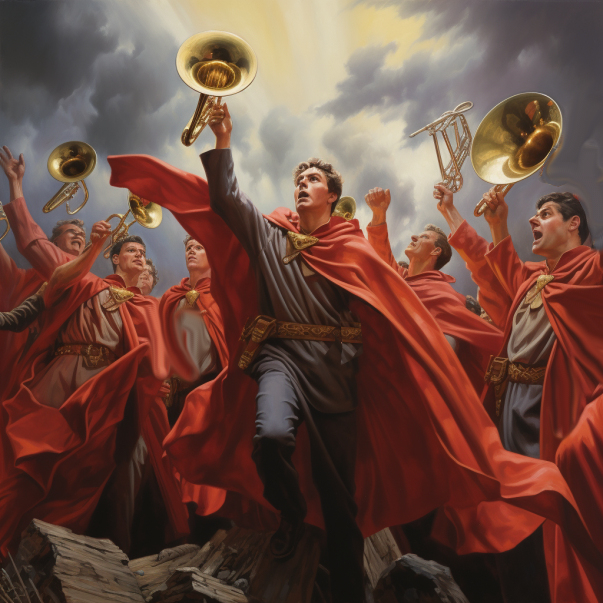
Continuing my view of the coming of ebooks, I’d like to go into the good things brought by ebooks first.
[I’d forgotten people were terrified of ebooks. Eh. I guess some still are – SAH]
This is important. There’s a feeling of doom and gloom in the air. Publishers tell us daily they’re on the verge of collapse *because* of ebooks. (This is not exactly true, in my opinion. Look both at yesterday’s post here and at my Mad Genius Club Post on 1/5 for reasons that are pushing the collapse of publishing, reasons that are ushering in ebooks.)
[At the time I wrote this, I was still traditionally published — tbf not for long. 4 years except for finishing up contracts.
Blame my tendency to make friends and influence people…. ahem, that is, being a Heinlein sadist defined as one who tells the unvarnished truth in social situations. The miracle is not that I eventually got hard noped, the miracle is that I managed to keep my mouth shut for a 20 year career. The power of “baby needs shoes” I guess.
The truth was that Publishers were terrified of ebooks and particularly of indie publishing. They should have been. They should still be (now they seem to be firmly holding onto whistling past the graveyard.) You see, indie publishing would never have got a foot hold if traditional publishing had still been offering solid value and concentrating on its ONE job of publishing things the readers wanted to read, it would be hard to beat their established position, their expertise, and their, back then, overwhelming advantage.
If they’d had the trust of readers, no one would have gone even looking at indie and “authors publishing themselves” (think of it with nose in the air and a wrinkle of distaste) except for bargain deals of dubious quality when in great money crunch.
Of course, that’s not what happened. And keeps happening. The thing that amuses me the most is that most of the houses are just doubling down on what they WANT their primary mission to be: propagandizing readers and pushing mostly woke and insane lines. Coff “educating readers” as they used to call it.
But even houses trying to save themselves (or lines, if not houses) seem to be confused about what they’re up against. It’s both hilarious and disturbing. No, people are not going to pay you more or reward you because you have some imagined touch of “quality” or whatever. There’s only two things you can do to keep existing: publish what people want CONSISTENTLY and gain/keep their trust. That’s it. Of course. This is completely foreign to an industry that has never done market research. To make it worse, most of them have never talked to indies and found how cheaply you can create a comparable (or superior) product (things like atticus, okay?) in less time and no overpriced, dedicated workers. Heck, most of them are still holding on to PHYSICAL offices. And none of them — not one — understands that we don’t really care if they think they’re offering “quality or literature”. We like what we like, and we want more of it. And if it’s offered by indies or the authors themselves, that’s fine with us. At this point, “traditional” has no advantages except “get you on shelves in bookstores” which still matters for some writers, but every year matters to fewer readers. – SAH]
This makes both readers and writers feel odd and insecure. We have people vowing never to read in electronic format, never, never, never, and others reading in electronic format only. We have strange movements in the used-book-sales field. We have people debating anew concepts of copyright and fair use.
For writers it is still more anxiety-making. Our publishers are convinced ebooks are bankrupting them, which has turned their publishing routines upside down and made our careers very precarious.
So, it’s good to remind oneself the coming change has many good features. Perhaps the most important is letting an author take charge of his/her career.
[And not allowing us to be vanished. Without indie and this blog, I’d have “retired” 7 years ago, and most of you would think I was dead, which is why Biggle’s book resonated with me at this point in time. This is the threat I lived under – SAH]
Here, I’d like to talk about Lloyd Biggle Jr’s book, The Still Small Voice of Trumpets. Why would I like to talk about it? You’ll see.
Biggle’s book was one of my favorites as a teen. It is a standard adventure science fiction with a shadowy “federation of planets” type setup. For a new world to be admitted to this federation, it must have a democratic government. However, Earth’s agents are forbidden from imposing democracy from outside. (In the seventies, I was greatly impressed by the motto “democracy imposed from the outside is the greatest of tyrannies.” This runs counter the history of Japan, for instance, but at the same age, I was also impressed by the sudden realization that we’re all naked under our clothes. There are miles and miles of twerpitude on the way to being a grown up – as Pratchett might say.)
[I’d gotten over the naked under your clothes thing by 14 and laughed at twerps using it to try to get my clothes off. Children, the 70s were not just stupid and ugly. They were also evil – SAH]
The world that our main character – a member of Earth’s secret service, trying to bring about a revolution in this newly discovered planet – is sent to infiltrate is inhabited by a human breed that is absolutely enamored of beauty. In fact, the book starts with a peasant woman risking her life to keep something beautiful.
The mission goes wrong from the beginning, in ways I won’t detail. This post requires me to give away the ending, but even if you know that, the book is a pretty good read, full of fun and resonance.
The main problem the character faces is how to bring about a revolution from within – how to spur the natives, themselves, to revolution. Though the world is ruled by an absolute king, the public is pretty satisfied with his rule. He finally finds the way to make people aware of how tyrannical the king is.
You see, the king can – and does – send anyone who displeases him (or just happens to be in his vicinity when he has a toothache or whatever) to a village of the exiles. This is done by cutting off one of their arms, first. Now, most people sent to these villages are unknowns – the king’s chefs, physicians, servants and probably the occasional minister.
But one category sent there are musicians. The main instrument in this world is a sort of harp. (IIRC) You need both hands to play it. The king, as passionate about beauty as his subjects, loves art and has musicians play before him often. Which means, he has one of their arms cut off fairly often too.
These musicians are known and revered and have followings. But once their arm is cut off, they can no longer play, they go to these villages – they disappear. Their public forgets them.
The main character hits upon the idea of creating trumpets that the exiled ones can play, then has the musicians parade back into civilization playing their trumpets, reclaiming their public – thereby fomenting a coup.
Now, I’m not suggesting that the current state of affairs in publishing has anything to do with tyrannical anything. I mean, bookstores and distributors often seem tyrannical to readers, but I’m sure it’s simply because we don’t understand the imperatives of THEIR business.
[So, there I was soft pedaling because baby needed shoes. The book business was exactly like a tyrannical, capricious, absolute ruler. First of all there were very few houses, and if you fell afoul of one of them, for ANY REASON OR NONE (I have friends who were black listed and none of us every figured out why. Best we can tell some game of telephone in editorial offices) you got the dreaded “hard to work with” label and NO ONE WOULD BUY YOU. Your friends would abandon you, because they could be tarred by association, and you were generally done.
There used to be a way around it, which was starting again as a newbie (those who know the odds about ever being published and how little it depended on quality can see why this was less than ideal, but all the same) under a new name. But by the time I came along, this was not even really possible. Only way to submit for most houses — or at least if you wanted to get bought — was via agents and agents, who depended on publishers for their rice bowl would not “deceive” them that way. So, if you found yourself unable to sell, even if you had no idea why — maybe you were seen being friendly to someone newly on the outs? Maybe the publisher had a toothache? — you were done. It was time to forget the decades you took breaking in and acquiring a public. As far as your readers knew you were dead. Move on. Go learn to code or something.
More importantly, by the time I broke in, if you were a decent seller but didn’t break out into bestseller ranks in 3 books — very difficult without help from publishers — if they condescended to keep you on, they made you change genre/subgenre AND YOUR NAME which meant most of the time, what readers you’d found couldn’t follow you, and you could be kept midlistish forever.
So, yeah, it was a tyrannical, irrational, capricious regime, with random cancellation powers – SAH]
We are, however, in the middle of a revolution, and one of the things the e-book tech revolution is doing (amid all the confusion and fear) is giving those writers who were consigned to exile through no fault of their own an instrument they can play, and a road back into civilization.
Writers whose fans forgot they existed; writers who spent years honing their craft only to disappear from view forever, will now be publishing again.
Even better, the books have the potential to be available forever, at no cost to the publisher and/or the writer. This means there is a chance for books that went relatively unnoticed but which deserve notice, to acquire it.
This is – to me, perhaps because I am a writer – the best part of this “revolution”. It gives us instruments we can play. It allows us to come down the road, our capes fluttering, playing our trumpets, allowing people to look at us.
There are many other points pro and con what is happening – many shoals on our way to a happy ending we might or might not read. The most important of these is how the reader will find us – and I do have ideas on how to do that. I’ll be covering those in daily posts probably for a week. But for now, think of the series that were interrupted that you’d like to see finished. Right off the top of my head, I can tell you I WANT to read more of the Lord Meren Egyptian Mysteries (written by Lynda Robinson.) I’m sure you can think of some yourself.
[Turns out the author actually died, or at least that’s what I vaguely remember. But yeah, finding authors/authors finding a public is still difficult, and I haven’t been writing nearly enough. Getting on that.
Anyway, so, there it is. We are back. The banished writers. There will be attempts to silence us again (It’s what my serialization experiment is about, among other things) but I’m going to guess they’ll fail. We have this here trumpet, and we can forge others, and continue to play – SAH]
Stop and think – won’t it be lovely to hear again the still, small voice of vanished writers?
 According To Hoyt
That story, so… its Young Adult, where the problem is resolved by misbehaving horny people.
LikeLike
I have no idea what you’re talking about and I’m very confused.
LikeLike
Is pun! Trumpet = horn.
LikeLike
…and Biggle wasn’t writing YA, but is riffing off pun. Misbehaving (young) horny people solving crises = good summary of most of YA.
I giggled!
LikeLike
Dear UPS:
Please deliver an entire truckload of carp to Dorothy.
LikeLike
for the record, the still small voice of trumpets IS NOT YA. And yeah, trumpets/horns. But no.
LikeLike
Sigh….
LikeLike
I’ve been picking up books from older authors long gone. Heinlein, not the least. Presume their heirs benefit? But IDK.
LikeLiked by 1 person
Some. Some are out of copyright. The older Heinleins are about to be.
LikeLike
IIRC, he and Virginia put all of the IP in the Trust. They also (IIRC again) managed to corral all of the bits and pieces into their name, except for the rare blood article – that was a work for hire.
They couldn’t just single out Mickey Mouse for extension, as much as they wanted to – so his IP should be covered under “life plus 70.” Which would be in 2058. Okay, I’ll only be 98 by the time I can download them from Gutenberg…
I think I’ll keep acquiring the ebooks. Except for the Number of the Beast with the illustrations.
LikeLike
yes, but after a certain date, they do get remaindered…..
Also the earlier works were under weird copyright. I know double star and the like were on the verge of rolling over.
LikeLike
I read that book. I remember being vastly irritated by it and wishing for an orbital kinetic barrage. (I think Heinlein spoiled me with “The Moon Is A Harsh Mistress”.)
That’s why in my books, many things are solved from orbit. >:D
LikeLike
Ah yes, I well remember spending 14 years of trying to get my wife’s masterpiece novel published, all for naught. Everybody who read it loved it, including a top agent and a publisher in San Francisco who had 3 first readers rave about it, but decided it was too politically incorrect for him–not that there is anything even remotely political in the book. In 2010 when Amazon tired of the publishers’ bullshit, foot-dragging, law-faring ways and opened e-publishing up to everybody, we had nothing to lose. Unfortunately her health never allowed her to write more novels, but at least she got more than friends and family to tell her how good it is. (What family? Nobody in either of our families ever read it.)
I have found myself binging on the old TV series Nashville. Extraordinarily well done drama with villains suddenly revealing their decent side, and heroes falling prey to all the snares of the devil. On the way it’s a great primer on the pettiness, and vindictiveness of the accountants and packagers in charge of record labels. Much sexier than the book business unless you absolutely hate country music.
Of course, at LibertyCon, Larry Correia pointed out that more than half his sales are now in audio books, so that is my next quest.
LikeLike
Alas, until they find a way to regenerate auditory nerves, audio books will never be my favorite.
LikeLike
Sorry to hear that. (Is that rude to say that?) All the same electronic versions are certainly available. I haven’t dived into paperbacks yet.
LikeLike
/laugh
You know what they say, “If I didn’t have a sense of humor, I’d have no sense at all.”
LikeLiked by 1 person
Yep. Between nerve damage and too many rounds to replace stuck stapes*, my hearing is charitably described as “fairly bad”. Listening to new songs, I run into Lady Mondegreen a lot, so I don’t want to think of how I’d do with an audio book.
() Otosclerosis and an ear surgeon who needed three tries to get the left ear to stay fixed. That ear has the worse nerve damage, but it’s nice to be able to hear *something. I was a bit too patient with the surgeon. OTOH, the right ear (done first) did great.
LikeLike
Ah yes, Mondegreens.
Did I ever tell you the story about how shocked I was when I saw the lyrics to, “Forever in Blue Jeans”? For years I’d been wondering why they were singing a song about, “Reverend Luigi”.
LikeLiked by 1 person
Most singer/song writers have at least one hilarious story about Mondegreens. One of my favorites is John Prine’s “Happy Enchilada song.” https://www.youtube.com/watch?v=udaggbRYGhU
LikeLike
My favorite is “There’s a bathroom on the right”.
LikeLiked by 2 people
Yeah, I kept wondering about that line. Finally, the radio DJ announced the name of the song. :)
LikeLike
My hearing is still amazingly functional, but for many years I thought it was Willie Nelson’s wife that was “making music with [his] friends.” Which is perfectly grammatically plausible, and changes the meaning of the song entirely.
LikeLike
Even though my hearing is (knock wood) fairly good, audio books will never be my favorite either. Matter of taste/personal preference. (“I want to read, not be read to. Give me text, dang it!”)
LikeLiked by 1 person
For whatever it’s worth, you might look into finding a functional medicine doctor who uses low level laser therapy to stimulate healing.
Why I think it might help: I had been having some kind of nerve malfunction of the nerves behind my eyes. (not the optic nerve, though, I think he called it the cortical nerve?). When I sat up after lying down, my vision would narrow to a tunnel and–go black. My functional medicine doctor addressed it for me using the laser, and has addressed it again several times since whenever the problem has recurred. It took about 3-4 treatments before the malfunction stopped occurring. That was over a year ago now–but if it comes back, he’ll fix it again. :D
I love that laser. It’s amazing. It makes sinus pain and inflammation disappear too. I want one.
I can’t guarantee that it could absolutely fix your hearing for you, but nothing ventured, nothing gained–and if it doesn’t work, it won’t harm you or make it worse.
LikeLike
Probably won’t work for me. Childhood fever and ear infection apparently pruned a whole pile of the hair cells in the cochlea. If they were all gone, then I’d be deaf and a cochlear implant might be a viable option. (I’m not impressed with them. The people I’ve talked to who have them all have complained about multiple and severe infections.)
LikeLike
Hmm.
I suppose I should look into it. Though I’m never going to be a judge owing to auditory issues.
LikeLike
I’m only familiar with Larry Correia’s work through audiobooks. I’ve never read a printed one.
Bronson Pinchot does an excellent job of narrating them.
LikeLike
Took me THIRTEEN years to sell DST. No one but Baen would touch it, on politics.
And Baen was (Is?) still convinced space opera doesn’t sell….
LikeLiked by 1 person
I remember that book. It was quite good.
I kind of agree to some of the objections to ebooks & self-publishing. I have never read an author whose work could not be improved by a good editor, good copy editor, and a good graphic designer. In fact, the was one big name author who was so big that he successfully negotiated to not have his books edited. He got blacklisted after I read a new release and said “that’s a good first draft”.
I’ve also read printed books that were originally ebooks and some of the results were truly terrible. Blank pages. Headers & footers in the same font as the text plus no spacing to set them off. Pages with one word on them. Margins were too narrow. The writing and storytelling were good enough that I read the entire series, but a good editor would have helped, but he really, really needed a graphic designer.
And even the illustrious hostess of this blog gets criticism from me for a book that mysteriously changed the font (and font family) for a chapter and then shifted back.
We really need to get systems and resources in place to take the place of what print publishers ostensibly provided.
LikeLike
“I have never read an author whose work could not be improved by a good editor, good copy editor, and a good graphic designer.”
Define GOOD. And that’s assuming you get that. I was substantially edited TWICE in over thirty books. One was good. The other one was LSD inspired. (I’m being charitable on that second. As in, I was told a character’s story arc was bad. The character was not in the book. Then it was demanded I turn meaning inside out. Then–)
I respectfully contend while what you say is true in the abstract, “a good editor” is a very individual thing, personal to the writer and THAT BOOK.
You might as well be saying you never met a beautiful woman who couldn’t be made prettier. Absolutely. In the abstract.
I also submit you have NO idea if books WERE edited. Or if you’d like them better otherwise.
So your opinion is a bit…. odd.
LikeLike
I think I gored a sacred cow. Still, they make good hamburgers.
I have read books that obviously have not even been touched by even a halfway competent editor.
As far as knowing whether or not a book has been edited, it is usually fairly obvious. In the case of the big name author, I mentioned how bad a book I had read recently at a convention and was informed that said big name author was now big enough to demand that his work not be edited. Maybe they were wrong, but the folks I talked to were much more closely tied into the publishing business than I am.
Yes, I know that perfect is the enemy of good, but there is a lot of mediocre works out there that could be upgraded to good by competent editing. Yes, I understand that finding a good editor for your works can be a problem, so is finding a good mechanic to work on my 1986 Dodge.
LikeLike
You didn’t gore any cows.
MOST books aren’t touched by a semi-competent editor.
Some are just better than others.
LikeLike
A lady who used to be in my writing group got on with what I would consider a vanity publisher. They didn’t charge her, but her book had to be fully edited (they did not provide editing services) and she had to go in with a marketing plan as they also did not provide marketing.
LikeLike
Um…. you have to do that with trad these days. Yes, really. And the marketing plan? You already had to do that in the 90s
LikeLike
I guess I should have stated outright what I meant instead of using an example.
Just because a book is “published” by a professional publishing house, doesn’t mean it was edited.
LikeLike
Precisely this. In fact, it’s overwhelmingly unlikely to have been. Which is why I took exception to Matt’s words that “every book can use”
There is this bizarre idea that writers don’t want to be edited and are holding on to every precious word.
The fact is publishers don’t really edit anymore, unless for a very precious few, and even those not often.
LikeLike
Yup. Some of the building biggest trad pub editors not only admitted that most books were no longer copy edited or content edited, he said that anyone who had published one book should just edit any subsequent books by a hired editor.
However, he said that he did edit first books, by doing it on the train into work and on the train home from work.
All work hours were occupied by meetings and administrative stuff. (To be fair, it also sounded like the publisher had gotten rid of all secretarial staff.)
Also, it was totally normal not to know where manuscripts were, for months or years sometimes. (I guess it is too hard to have a filing cabinet or an index to boxes.)
The whole thing sounded like bad management, and frankly bad workplace safety also.
LikeLike
Honestly, I don’t think my editors ever READ the books sold on proposal.
LikeLike
Yup. Some of the building biggest trad pub editors not only admitted that most books were no longer copy edited or content edited, he said that anyone who had published one book should just edit any subsequent books by a hired editor.
However, he said that he did edit first books, by doing it on the train into work and on the train home from work.
All work hours were occupied by meetings and administrative stuff. (To be fair, it also sounded like the publisher had gotten rid of all secretarial staff.)
Also, it was totally normal not to know where manuscripts were, for months or years sometimes. (I guess it is too hard to have a filing cabinet or an index to boxes.)
The whole thing sounded like bad management, and frankly bad workplace safety also.
LikeLike
Ah! “No longer copy edited or edited”. I’ve been reading SF longer than most people here. I have also noticed a serious decline in the quality of books available the last decade or so. Things have changed. As far as telling if a book has been edited, most writers have certain patterns and certain phrases that they use that are apparent when reading. A good editor will see things like this and break up or at least flag the repetitions.
What I see is that many writers now have groups of people they trust to read the works in progress and comment on them. A good group can certainly do a better job than many “professional” editors, but it does take a lot of trust. It is obvious from this thread that some writers are very protective of their works.
LikeLike
I’ve been in the field 25 years. They weren’t edited and proofed back then. writers have just gotten more hopeless and sloppy.
And yes al of us have beta readers.
LikeLike
Is there a market for professional editors?
LikeLike
sort of, if you remember that indy writers are by and large broke. Or at least, we earn back VERY slowly and unpredictably.
I made 14k the first year of a book — Other Rhodes — but others — Bowl of Red are earning a few hundred a month, probably ad infinitum, but not much up front. So it’s a bit weird.
Depends if you mean copyeditor or editor.
I have a very good, reasonable, affordable professional copy-editor thank heavens.
LikeLike
Even if your name is “Robert Ludlum” or “Lee Child.”
Unfortunately.
LikeLike
Most books are at least self-edited, with some writers being halfway decent editors, and many others being really bad ones, at least when it comes to their own work.
LikeLike
I meant by trad pub. Most books aren’t TOUCHED.
LikeLike
I taught myself to do cover art and interior design because I simply cannot afford an editor.
No, I’m not the best, but with the tools available there’s no reason why an author can’t turn out a book equivalent to anything professionally published.
Even Amazon has templates that put in headers, footers, chapter breaks, etc. Even suggested spacing for titles and so on. Putting a book together under those conditions is a no brainer.
And if an author doesn’t go in and check each page before publication, that’s on him.
LikeLike
My books are way better looking than the trad pubbed ones.
LikeLike
I did the same – I worked out myself how to format (because the graphic artist that the Teeny Publishing Bidness had on tap charged so much that it pretty well wiped out any profit, unless we charged a bomb in the first place. And frankly, the numbers of clients who could afford that were getting damn thin on the ground.) I’ve done the formatting ever since, not that I will be winning any book design prizes … but turning out a serviceable product is well within the wheelhouse of any competent user of MS-Word’s more arcane elements.
What has put the Literary-Industrial Complex in a tail-spin late in the Oughts and early Teens was two-fold: digital printing, which meant that you could do small print runs (less than 100, as few as one or two copies) of your book for not very much, and Amazon popularizing e-readers and opening up to indy writers. This was huge for the various members of the writing group that I was part of in the Oughts. We seized on that opening with both hands, put our books out there … and that our books would be available and sold through Amazon? Oh, we went to town on that opening. No print charges, no shipping, no warehousing fees; nothing that made printed books an expense.
No wonder that the Literary-Industrial Complex is frantic about that competition.
LikeLiked by 1 person
There are those who will yell at you for using MS-Word to produce ebooks or books for print-on-demand. They will insist that you ought to write the book as a text file from the beginning, manually or semi-manually putting in fnord-codes for chapter headings, italics, etc.
I say nuts to that. Composing prose is not the same as text editing, and word processors are prose-composition tools that text editors can’t match. (Text editors have their own uses and reasons for being.)
Now once you have your manuscript as a Word document, various arcane incantations are required to turn it into a halfway decent ebook – but that’s the cost of doing business and MUCH less painful than attempting to use a text editor for book-length prose composition.
LikeLike
My beloved had no idea, but he turned out “Le Boulanger,” using Amazon templates and his own photos. I think he struggled a bit, but he enjoyed the process, too.
LikeLiked by 1 person
What do you mean by “editor?” Copy-editing to remove the tyops and and repeated words? Style editor to “correct” word choices and “tone” however the editor defines it? Concept editor, who would help guide the vague ideas into a story? Developmental editor, who has you change plot arc details, add and remove characters, excise scenes that “don’t add to the story” and characters likewise? Line editing to improve flow and tone of your language, as fits the genre? A formatting specialist who can also override the publisher’s internal settings and glitches (if so, please, let me know this person’s contact information, please!)?
Depending on how you use the term, and what style of language you prefer, any book needs an editor. Good heavens, Dickens certainly did, Marx also needed a fact-checker as well as developmental and style editors.
I whole-heartedly agree with you on despising publishers who do an OCR scan of a published book and can’t be bothered to even check that the punctuation is correct and letters match before selling it as an e-book. coughcoughSimonandSchustercoughcoughPenguinRandomHousecough
LikeLiked by 1 person
Yeah this kind of stuff is blatantly common. Sci-Fi (especially older stuff Like E.E. “Doc” Smith ) get slammed by this. There are often coined words or names that look kind of like existing words. So the combination of bad OCR and spell checking mangles things horribly. I tend to report these when I hit them (you can do this with kindle), but I’m yet to see anything updated and I’m not holding my breath until I do :-).
What astonishes me is that publishing houses need to do this OCR trick with things that have been previously published. ANYTHING published post say 1985 has to have been computer typeset. The days of folks sitting and entering the text into linotypes to get page proofs went bye bye. Usually that means there is a magtape or floppies or perhaps a burned CD-rom that had the typeset text. Admittedly getting back the contents of a 9 track tape or a bunch of 8″ floppies (or an RL-02 disk pack many of these things used PDP-11s running RT or RSTS) can be a challenge and those media are flaky (quite literally especially magtapes) as they age. But as these texts are the item that your business depends on. You’d think someone would have thought to at least store them reasonably. Of course Randy Penguin and its ilk don’t think about selling back catalog, and in the old days before the Mouse got Congress to corrupt copyright that would have been reasonable. But now you can hold that back catalog for a LONG time. Look at the money record and TV back catalogs can make. But given the execs for publishing seem to have no concept that businesses are to make money and most are third rate frustrated English majors that want to be part of the cool kids table I shouldn’t be too surprised.
LikeLike
I sold a book to Wiley in 1986. They would not take any electronic format. They wanted loose 8-1/2×11 paper, daisywheel or NLQ dot matrix. So I wound up spending many-many hours feeding sheets of paper into a printer, one at a time.
I threw a 5-1/4 and a 3-1/2″ diskette into the box with plain ASCII text. I’m pretty sure the typesetting shop used that, because I never found any typesetting errors in the printed books.
LikeLiked by 1 person
What a bunch of Luddites, except the Luddites actually had some valid concerns. Maybe in 1986 I could see folks being idiots (though idiots they were even then), but here nearly 40 years later you’d think they’d have learned.
LikeLike
Not gored.
checks
Not cow.
Certainly not sacred.
Next.
LikeLiked by 2 people
I think I gored a sacred cow.
No, you said something painfully ignorant, and Sarah was being polite and informative in her response.
LikeLike
Incorrect. You spoke with authority about a field in which you have none, and made a pompous ass of yourself to people who know more about what you are talking about than you do.
But hey, keep haughtily pretending that you’re superior to everybody, that’s always a winning strategy and convinces people that you are Totally Not An Asshole.
Probably, given how few truly competent editors there are. But if you never read an earlier version of the same book, or know the author personally and know for certain what process the book went through, you literally have no fucking idea if it was edited at all, badly, or well. (You can probably tell if something was thoroughly and carefully proofread or not. But if you pretend that you can tell what kind of a structural edit a book had only from reading the published version, we’re just going to point and laugh at you.)
Says the guy who in the same paragraph admits he’s not even closely tied to the industry.
“Big enough to be editor-proof” is a shorthand for explaining how certain successful authors get self-indulgent once they are steadily successful.
The truth is always more complicated than that.
For example, Stephen King — an author whose success makes him “editor-proof” if anyone ever was — has said, long after he got rich enough to buy a few small countries, that he always wants a good editor. He knows he has faults and flaws, and he wants his books to be as good as possible. Sure, he’s rich enough to probably have veto power over things he thinks aren’t good suggestions, but even with his long-lasting success, he wants editing. He appreciates good editing.
Or another big name author, whom I won’t name here. He published a new installment in a long-running series, and fans freaked out saying it wasn’t edited. The little I know about the behind the scenes situation, a lot of things went wrong. The author was fighting through writer’s block, and missed deadlines. The publisher had to get the book out by a certain date (or thought they did). The editor the author knew and trusted and wanted to work on it couldn’t, for external reasons, in the timeframe necessary. The editor the publisher assigned to the book had to do it in an insanely short timeframe, and was… I won’t say “incompetent”, but “a bad fit for the material” is not unfair.
Or Dean Koontz. He had a decade-plus relationship with his publisher in the 1980s, sold so well he was one of the reasons the publisher stayed afloat. But the people at the company didn’t respect him. Every NYT bestseller he had, he was told, by his editor and the execs, that it was a fluke, he wasn’t “really” a bestseller. For something like eight books in a row. So he jumped ship. His books were edited there, but do you mean to tell me they were well edited by people who thought he was a hack and only good for the money he brought in?
I mean, at least you sort of admit you don’t know what you’re talking about.
And there are mediocre works out there that were sub-par, and became mediocre through competent editing. Again, unless you know the process that went into the making of the book, you don’t know which is the case.
Your condescending tone is, again, another sign that you are Totally Not An Asshole.
Since you are Not An Asshole, and since you obviously know everything, perhaps you can explain in some detail why finding a good editor is harder than finding a good mechanic for your beater?
LikeLiked by 1 person
Tradpub or well-written indie – I’ve noticed no real differences, to be honest. Typos exist, weird font changes exist, etc.
If anything, the people trying to make a living ebook only do a better job than any publisher.
LikeLiked by 1 person
Hear Hear. Probably 75% of what I read these days is indies. There’ll by typos from time to time, but I report those with the Kindle (hoping they get back to the author to fix). Some authors might benefit from some detailed editing especially for length, but on the other hand they get to tell their story the way they want and don’t have to bend to the whims of some editor who is likely super liberal/Communist. There are really only 3 or 4 authors I read any more that go through TradPub and even they (e.g. Brandon Sanderson) seem to be leaving the fold as trad pub doesn’t want to publish what they want to write.
LikeLike
PLEASE don’t report mine to kindle. If there are typos send them to me, not Kindle.
Kindle threatens to remove your book for “quality issues.”
LikeLiked by 2 people
OK will do. Haven’t seen any in yours since I found that feature. That’s a shame they’re such jerks (and I didn’t say jerks) about it. Getting texts eight is HARD. They should find a 50th anniversary version of Lord of The Rings and read the intro. Both J.R.R and Christopher Tolkien spent years getting Unwin and Ballantine (allegedly first rate publishing companies) to fix typos and editorial changes including omitting a whole paragraph in one instance.
LikeLiked by 1 person
I kind of wonder what Larry C’s MHI looked like when he first posted the parts on-line; compared to the Baen published version?
LikeLiked by 1 person
The original Dead 6 might still be online. I skimmed through it quite a while back. The single biggest difference is probably Ling, who has a much bigger role. But the forum posts were written when the story was still just a single “novel” posted in parts to a forum, and not intended to be part of the trilogy it was published as. The published version reduced her role, and then expanded her in the sequels.
LikeLike
It’s still up on The High Road. It’s called “Welcome Back, Mr. Nightcrawler.” Mike Kupari was bored and wrote it in installments between power outages, uploading bits whenever he had an internet connection. Larry asked if he could join in, and created the “Lorenzo” character as the opposite of Kupari’s “Valentine”.
A whole lot of polishing got done on the way to publication, but the bones of the story stayed basically unchanged.
LikeLike
I’ve seen most of those problems, as well.
In books that had paid editors. Trad pub is especially bad for the “eh, someone will buy it” thing, especially if it’s not a politically valuable books.
Guess that goes to show that any book can be made worse by a bad editing job.
Several times I’ve seen weird font stuff in ebooks vanish when I download it again.
Not an option with physical books….
LikeLiked by 1 person
I still think traditional publishing, or even book ‘stores’ could reinvent themselves by going to a print on demand, with a vastly increased digital inventory of all authors, not just the ones they pick. Even with that model, there’s still going to be who decides the search algorithms to what the potential reader sees, as well as what they throw up for advertising.
Me? I like dead tree reading. I like e-book reading. Heck, I like reading runic carvings on rocks. (No, I don’t want the entire new Barbarella series on slate slabs, although that might be a cool project to do and auction off for a charity – assuming permission from the author and artist, of course.
Democracy and Japan are kind of exceptions to the rule. And I my understanding is that the ordinary people of Japan got a much-desired chance of self-determination by our lopping off their government heads post WWII. Their culture still had, and has, a lot of ancestor worship, as well as a deification of their Emperor, (not much different (IMO) from divine rule we saw in Europe, but in both those cases the divinity of human rulers has been fading away.
What I’d like to see is some of these writer’s estates granting permission to authors to play in their playground, rather than waiting 70 years for copyright to open up (assuming they don’t pull the Disney perpetual license crap.) That was the original idea behind copyright and patents in this country; the originator had a limited time to exclusive benefit from their work, and then it opened up for everyone to benefit by it.
LikeLike
It would be amazing to walk into a bookstore, make a request and they print and bind the book right there. That would encourage me to actually walk into a bookstore.
LikeLiked by 1 person
They can. There is an espresso machine (I think that’s what it’s called.) They’re 15k and they can print on the spot. I think the issues are the legalities.
LikeLike
As long as the author, or copyright holder, got the correct amount of royalties, and Uncle Sugar got the correct tax amount, I’d think that would cover the legal issues. But then I’m extraordinarily ignorant and naive about that whole process.
LikeLike
It has to do with everything down to the publisher’s contract with the author. I could enlighten but it would be a whole book.
LikeLike
It might be easier for indie authors. And now I want to know: how do we sign up? :D
LikeLiked by 1 person
Dude. It’s lawyers. They breed legal issues faster than beer cans in your back seat breed other beer cans….
LikeLiked by 1 person
faster than hangers in your closet.
LikeLiked by 1 person
??? Hangers in my closet disappear. They must be in the same alternate universe as the socks.
LikeLike
They multiply in mine….
LikeLike
Is that where mine went? Please send the skirt hangers back: I’m about to go out and buy more!
LikeLiked by 1 person
Huh. All the hangers in my house are sexist. They keep running into my wife’s closet. And I’M the one who does the laundry!
LikeLiked by 1 person
The multiply in ours, then apparently turn to cannibalism. I want to know which of them ate my good leather belt.
LikeLiked by 1 person
“Innie versus outie”?
LikeLike
Ah. Explains much. Please kindly return my socks. Carpapult shipping will be fine.
LikeLike
Whew! Good thing I put the beer cans in the back of the truck. More room, and easier to sweep them into the recycling bin. :-D
LikeLiked by 1 person
Interesting the rabbit holes you can wander down.
https://en.wikipedia.org/wiki/Espresso_Book_Machine
https://ondemandbooks.com/sales_contact.php
LikeLiked by 1 person
THAT’S the one I want beside the Coke machines, not “Redbox” or another of it’s competitors. Swipe my card for five bucks or so, and print me a trade-paperback of anything in Project Gutenberg. And no due dates or late fees, either.
LikeLiked by 2 people
Tragically, it looks like a good idea fallen into hands THAT didn’t know what to do with it. It is/was run by moguls of the Big Four houses, and the site hasn’t been updated since 2021 at the latest.
LikeLike
yep.
LikeLiked by 1 person
hmmmmmm……. wood, plus laser engraver…..
LikeLike
We have the technology…
LikeLike
CNC + wood = wood cuts.
LikeLiked by 1 person
And some of the writers chosen to write in estate legacies are horrible. Anyone seen the latest James Bond? I don’t think I’d pick it up off the 5-books-for-a-dollar table.
LikeLiked by 2 people
https://www.bizpacreview.com/2023/09/09/new-woke-james-bond-book-dragged-by-conservatives-for-having-anti-trans-trump-associated-villain-1394573/
LikeLiked by 2 people
Leftists and other wannabee fuhrers and commissars always overreach.
It’s a big point in our favor.
Granted, it took the USSR a long time to fall and the CCP nose-pickers are still abusing the Chinese people; but 2+4=4.
And calling it 5 when there is no food or freedom can make even the useful idiots rebel.
LikeLiked by 1 person
” but 2+4=4.”
Uh…?
:P
LikeLike
For certain values of 2.
LikeLike
No edit button to correct fat-finger typos. Grammar nazis were supposed to have been killed off during the coof….
LikeLiked by 1 person
Grammar nazis, yes, but math nazis are forever. :)
As are math smart-asses. (raises hand) :) :) :)
LikeLike
Once upon a time…
(after I got away with correcting, respectfilully, another DS) Drill Sergeant: ” You’re a real smartass, you know it, right?”
11B-trainee: ” Thank you Drill Sergeant!”
…. …. …. (Norman Coordinate!)…… …..
DS: “…..What?”
11B-T: ” I am grateful you think I am a smartass instead of a dumbass, Drill Serageant!”
…….
DS: ” Reflect on what you just said while doing push-ups until -I- get tired.”
11B-T: (pushes down local crust of Ft Benning. Grinning. So was he.)
I still treasure the look of astonishment on his face. He never once called me dumbass. Even after that.
LikeLiked by 1 person
Perfect social engineering. You were doomed to do the push-ups either way; but you showed initiative. And they look for a particular flavor of that to nurture and cultivate.
LikeLike
My garbage bill just doubled because the state legislature thinks it can control bacterial methane production and the weather. I spent the whole day deeply depressed.
LikeLiked by 1 person
What is that phrase? ‘Illegitimi non carborundum”? Never took latin in school; but I have used it in memes since before Netscape Navigator…
(Don’t let the bastards grind you down.)
LikeLiked by 1 person
One content edit I did the book was good. I suggested he go indie because of some of the content (content that was integral to the story but would definitely be “adjusted” by a publishing house–MCs were a homeless vet with PTSD and an extremely obese teenager). I gave him much more than he paid for, gave him quite a bit of line editing. What can I say, I got interested.
He notified me later that it had been published and I pulled it up. Not a single one of my edits had been included in the book, not even the egregious blocking errors or spelling. Nothing. In one paragraph he had the character push the door open, and then it was shut again. That kind of thing.
I acknowledge that whether or not to use the suggested edits is entirely the author’s choice, but picking it up cold in the state it was in as published I wouldn’t have gotten past the first page. Which was sad, because the book was good, and I think necessary.
LikeLike
Understand, I’m not complaining about edits. I didn’t get enough edits to complain about.
By the end of my trad career I was paying my own editor and my own copyeditor out of pocket.
And when I can afford it, I pay an editor, just to have someone catch me. I ALWAYS pay a copyeditor. (And editors and copyeditors are NOT the same.)
It’s just the blanket statement of “Writers need this” is inane. Most writers never get them. So, how would a reader know?
And if that’s why we should go trad, well…. they’re not doing it.
LikeLike
Oooooh yeah. Glances at last book by Big Name Author she got When the publishers swap real editors for young, starving BAs in English Lit, you just know it’s going to get ugly. And it has.
LikeLiked by 2 people
If you think that’s fun, try editing a book for an author who doesn’t make the suggested edits, inserts new material and creates new (massive, embarrassing) errors, gets magnum opus rejected because of errors, and tries to come back and get a refund because “I got rejected due to your lousy editing!” Har de har… This is why I take payment before delivery!
LikeLiked by 1 person
So, as a kid with a buck or two to burn I would go to the Newberry’s or the F. W. Woolworth or maybe the drug store and splurge – a Tarzan and Doc Savage for fifty cents each and a copy of “Orphans of the Sky” by some guy named Heinlein for eighty-five cents… heaven!
Now, much later in life, I find myself prowling several local libraries for “old” authors and finding now and again a really good read. My sister (eight years older) read a lot too and I would get her hand-me-downs by folks like Dick Francis and Tony Hillerman. I still grab a book or two from on-line resources and most are “older” in nature.
As for the few authors I enjoy that are contemporary, I grab each offering as it comes out (our host for example). I also haunt the “new arrivals” shelf at my local libraries and only rarely find something worthwhile. Several of the choices from the new shelf (hey, it’s free from the library) I read a few chapters and return it – I gave it a try and it just didn’t work for me. Being retired now (every day is Saturday) I get to read for myself more than ever and I have been getting more and more “new” books from authors on-line and not traditionally published – it’s just a better product.
I really like a real book-book in my hand, turning pages and sticking a bookmark in the last page I read. With that, I have also embraced the e-book and have a ton of them on my computer, kindle, phone and nook. I’ve used the Calibre (https://calibre-ebook.com/) program a lot. I’ve also found some fun drivel that should have never been published but I enjoyed the story and the writing wasn’t that bad. I once found an unpublished, in a PDF format, Man From UNCLE novel that was entertaining but never saw the light of day or any sort of book store. I prefer “real” physical books but I enjoy the stories and writing way to much to limit myself so I completely embrace the e-book and don’t care one bit about the publishing houses and their concerns. Just keep the stories coming!
LikeLiked by 1 person
There is an economic theory that whenever a product can’t be understood by most customer, lemons will drive out good products, until/if the buyer base learns the difference, because lemons cost less to make than good products, and if most consumers buy lemons and good products at similar rates, you earn more by selling lemons.
I suspect a similar thing happens when the buyer has little choice in what they can buy; producing junk cheap becomes more profitable than spending the time to build a quality product. And I think that is what killed the publishing houses; they’d more or less figured out how to restrict the aupply, so it became a matter of doing less per book sold, so they eliminated their only real expertise.
LikeLiked by 1 person
yep.
LikeLiked by 1 person
For a while, one key to doing really well on the ‘Zon was to have books at $.99 to 1.99. And it worked at first. Then the lemons drove readers away from free and very cheap (unless it is the first in a series). Now? I think you can do OK if it is a cheap short story, because the shortness fits the price. Otherwise? Nope. The “tsunami of swill,” as one trad=pub gatekeeper put it, drenched too many people too often.
LikeLiked by 2 people
yep.
LikeLike
That is a very good comment, it expresses some of what I was trying to say.
LikeLike
Totally OT but completely “$%!! infuriating: Democratic governor of New Mexico “suspending,” all carry concealed or open carry “privileges” in Albuquerque for 30 days. Because 2 to 3 children are murdered per month in the entire state and it must stop! Says her oath to support the constitution is not “absolute.”
#@$%&!! Because words fail me.
LikeLiked by 1 person
…and when the murder rate goes up, which ‘privileges’ will they ‘suspend’ next? Because it couldn’t POSSIBLY be the result of their ‘Enlightened Leadership!’ No, no, it’s all your fault for having too many ‘privileges’!
———————————
The Democrats trust violent criminals and terrorists with guns more than they trust you.
LikeLiked by 1 person
Oh, and have ANY of those murders been committed by people carrying legally? Or are they all criminals that aren’t allowed to have guns in the first place?
LikeLike
I will laugh if people simply ignore that illegal decree en masse and the cops refuse to enforce it. :-P
LikeLiked by 1 person
Somehow, I doubt it’s a coincidence that Albuquerque is the capital, and therefore there will be state police and National Guard on hand. Look for a 2A protest that will be an “insurrection”.
LikeLiked by 1 person
Albuquerque is the largest city in the state, but it’s not the capital. Super blue and trendy Santa Fe is.
The crime rate in Albuquerque has been getting steadily worse for a while, with growing, “Don’t go there after dark,” sections. How much of this is due to “migrants,” and/or cartels, don’t know.
LikeLiked by 1 person
It’s been way too long since my last geography class.
LikeLiked by 1 person
I’ve spent a fair amount of time there. I’m sorry to see the city going downhill.
LikeLiked by 1 person
Yeah. Quirky Burke used to be a relaxed, fun place to visit and do research, not as painfully “historically accurate and preserved” as Santa Fe. The last time I was there, things were getting sketchy in areas that had been blue-collar, quiet, and safe. Now? I wouldn’t go out after six PM in those areas, unless I was with a large group. Certainly not on Central and around the university.
LikeLiked by 1 person
I try to get to Old Town whenever we’re in the area. Yeah, it’s a tourist trap, but a nice one. And there’s a small winery north of town run by a former Oracle executive who is fascinating to talk to (Casa Abril – and the wine’s good).
Last time we were there we got lost after dark and found out afterwards we’d been in a, “Don’t go there after dark,” neighborhood.
LikeLiked by 1 person
Arctic blast reported in Hell. A California Donk said the NewMex GrabEx was unconstitutional.
https://redstate.com/nick-arama/2023/09/09/law-enforcement-response-to-nm-govs-unconstitutional-edict-is-troubling-n2163618
BeeeBeeeeeeBeeeeeeep. …. illogical, illogical…. Beeeeeeep.
LikeLike
Rumors are there are whole bunches of lefty related folks saying things like that about this. The theory I’ve seen is that Gov. Grisham did what every gun grabber has wanted to do, but essentially said the quiet part/inner monologue (I don’t NEED to adhere to the constitution) out loud. The various anti gun folks are trying to get some spin control lest their hearers realize they think the same thing (which of course they do). In actuality they don’t give a rat’s patootie about the gun control issues they just want those sweet sweet donations to keep coming in so they can pay themselves nice fat salaries. IF they actually cared and thought their ideas would work they would be enforcing their insane laws. Of course they know they won’t/can’t work and that the criminal element is a large portion of their constituency, so they just take their money and act all outraged.
LikeLike
“Defund the police! Oh noes crime is happening- quick ban guns!”
LikeLiked by 1 person
“…and so it begins….”
………
I certainly hope the lawyers are queueing up to unleash lawsuitmageddon.
Oh no we ain’t suspending the constitution.
LikeLike
The murderer the Pennsylvania police are spending millions of dollars hunting down is an illegal alien. Biden, Garland and Mayorkas should be forced to reimburse the cost personally.
———————————
When police arrest violent criminals to protect innocent people, they are condemned as Jackbooted Fascist Stormtroopers.
When the Fibbies arrest innocent people at the behest of corrupt politicians, they are hailed as National Heroes.
LikeLiked by 1 person
Gosh I remember reading that story. It was The Rule Of One that allowed them to introduce trumpets.
LikeLiked by 1 person
Yep. One innovation.
LikeLike
This column made me remember P.C. Hodgell, whose brilliant God Stalk excited me some thirty years ago, but whose career stalled, apparently for reasons you outline here. Anyway, I have been looking for ebooks to read and went and bought a Kindle version of God Stalk, which I intend to enjoy for the next couple of days.
LikeLike