Here, Behind My Eyes

*Heinlein flamewars will have to wait, as I’m still trying to finish the book. For now, content yourself with this*
Are any of you walking stereotypes? If you know anyone very well, do you know anyone who is a walking stereotype?

Let me see… I’m not particularly attuned to American stereotypes about someone like me, but I suppose I could fit several niches.

I could be the Portuguese-born, married-an-American woman. Right. A week after my wedding, my mother in law informed me I shouldn’t be submissive because men don’t like submissive women. I presume that is part of the stereotype because NO ONE in their right mind has ever spent more than ten minutes talking to me and called me submissive. (Also, for the record, it’s not true of Portuguese women in general. Yeah, I suppose some Portuguese women are submissive to males – how the heck would I know? I never had that many female friends back then and women in my family are known for being holy terrors.) And I presume I’m supposed to be dark, small, pretty and, as the stereotype bleeds into Spanish or perhaps Brazilian, which is what most Americans resort to when failing to find a niche for “Portuguese” I’m supposed to dress in colorful clothes, love to dance and… I’m running out of ideas here. I’m relatively dark, I think – but not if I haven’t been out in the sun for a while. Small… eh… I hope to see small again in my lifetime. I wear black, mostly because it makes me look smaller. Dancing – I used to be okay with it, like most young people. But these days I’d rather sit down with a good book.

I also know – from the things kids’ teachers have let drop that I’m supposed to miss the more “communal” life in Portugal and that I’m supposed to speak Portuguese at home.

I’m so sorry, life is full of these little disappointments. You must cope with them as best you can. I was raised in a village, so life was, of necessity, more… “connected” – and I hated it with a burning passion. I can’t imagine anything worse for a born odd duck than having someone follow your every move and come up with – outrageous – explanations for them. I’m fond of saying “It takes a village to make you completely insane.”

If I were a sitcom character, I would be forever talking about how things were in Portugal and acting surprised at things in the States. My dears, I was never an ADULT in Portugal. Legal adult, sure. But I was a college student until I married and came here, where I learned all the … “rituals” of adulthood. If I were required to say, rent a house, get a phone connected or even have dry cleaning done in Portugal I’d go into the fetal position on the floor and suck my thumb. And if after twenty five years here I were still surprised at how things work, I would take myself quickly to the nearest hospital and try to figure out the source of my memory issues.

I am, so Dan says – and he should know – “excitable” which is part of the stereotype for any Latin. But actually I think I’m only excitable compared to him, since he was born and partly raised in New England and “excitable” is reacting to a home break-in with more than a “oh, my. How inconvenient.” I’m often the voice of calm and reason when dealing with my friends, who are, none of them – now I think about it – Portuguese and only one of whom (hi Alicia!) has Latin blood (even if born and raised in the US!) And the exception isn’t excitable. She’s cutting, snarky and occasionally sarcastic (in the best way) but NOT excitable.

Okay, you’ll say. But you’re an (over) EDUCATED woman. You’ll be different. Right. So… let me see. Birkenstocks. I don’t shave my legs. I don’t pluck my moustache. I hang out in cafes that have poetry readings. I talk about herstory. I can’t discuss anything without bringing Foucault or perhaps Derrida. I dress mother-Earth style. I drive a prius. I…

Yeah, those of you who know me personally can get up off the floor before you die of laughing. I hear it can happen (indulgently.)

I shave my legs. My footware of choice is slippers, because I work at home. Tennis shoes for running about. But if I get a chance, I like high heels and I have a terrifying THING for stilettos. I wax my face. Look, I am a Mediterranean woman of middle years. If I didn’t wax my face regularly, most supermarket cashiers wouldn’t know whether to call me sir or ma’am. Their lives are hard enough. Let it go.

I’ll confess to a fondness for Shakespeare quotes, and waiting to see who catches them. And I love reading the sort of history books that are published in batches of eighty and sold to me and seventy nine university professors. I also like Jane Austen. But you’re as likely to find me with cheap romance, an old, pulp sf novel or… Disney comics. Sigh, I hate to confess it, but it’s true. I have no intellectual consistency. And I’m not ashamed of it.

Oh, and I drive an Expedition, which is handy, because it’s often filled up with furniture to be refinished or boards for my latest, odd, home improvement project. The current dream is a workshop in the basement for my projects. I do fit the SF author stereotype in that I have way too many cats, but then so did my grandmother, and she didn’t write any science fiction. (Or anything.) If I lived in the country, I’d have rabbits, pigeons, goats, turtles and dogs, as well.

Let me see what else – I love cheap amusement parks, diners (particularly Greek diners), zoos, and museums and lectures by scientists and historians.

Okay. Go and get the sponge. Clean the bits of brain off the wall. Then sit down and listen.

None of us are stereotypes. Or few of us are. (I can’t claim to know everyone in the world!) So why are so many characters stereotypical? It’s not just in sitcoms. How many times have we read versions of the blood-thirsty warrior, the large, dumb oaf, the – oh, please, even if her first few books in the series were enjoyable, I will NEVER forgive Misty for this one – too-sensitive-for-words gay magician, the spunky woman, the rebellious regency woman (all of them kindred to Scarlet O’Hara), the … Need I go on?

And the answer to that is, we create stereotypes because they are easy to signal and easy to allow the reader to fill in the rest of the mental map. We create stereotypes because we, to some extent, file people under stereotypes. When you don’t know people very well, you tend to fill in the vast empty areas with things that seem to be true of the group. This is how the human brain works. It’s how language works. We organize things in categories. (I say “table” and you don’t think of every table you’ve ever seen – you think of a generic (in my case line drawing) of a table, details to be filled in as they emerge.)

If you’re at a party, and you meet ten new people, you’re going to organize them by stereotypes – “the skinny girl who probably has never been kissed”, “the jolly matron”, the… But if you get to know them, then they stop being stereotypes.

My problem, I guess, and the reason for this post, is that in books, they rarely do. In books, in tv, in movies, particularly when talking about the villain parts, you tend to cast them in general molds. So, what is wrong with that, you say? Why, everything. Because books and stories are how we learn about life, and I’m getting sick and tired of being put in categories I couldn’t remotely belong to.

But stories are how the human brain works – Pratchett is correct on that. Stories are what helps our brain organize reality in ways that make sense. (No, “real” reality doesn’t. Too many variables, most of the time to draw significant conclusions. Only with the aid of stories, we can sort of see the relevant bits to form a picture, to learn from our experiences.)

The problem is getting fed on a continuous diet of stereotypes does NOT help us learn from our experience. Instead, it convinces us, subconsciously, that, outside the space behind the eyes everything goes by groups and that knowing one characteristic of the group you know everything. In the wake of this come the true evils – treating people as things; treating people as ciphers, members of a group; all alike within the group. After that come collective guilt, collective reward and, ultimately, collective punishment – a chain that has led to some of the very worst atrocities in the twentieth century.

So? So, if you’re a writer, try not to write stereotypes*. For one, because they’re boring and will get your book classed as “another one of x”. It’s more difficult to signal who the good and bad guys are without stereotypes. And you have to walk a fine line, because your characters have to be predictable enough to please the reader, but not so predictable they bore the reader.

I once, not very long ago, got in serious trouble in a romance writers’ group (what can I say. I’m a trouble maker) by suggesting that this character they were talking about as ideal, who is a social reformer and trying to stop the manufactures from exploiting children probably owned Victorian slums. Oh, the boos and hisses, but look… How many times is that true? Hypocrisy is not confined to religious people. Often “enlightened” people have their hands in all sorts of dirt. Why not show that, if nothing else to surprise the reader.

In the same way, I got in trouble in the same group for suggesting this – yeah, I know, what can I say. I said I was a troublemaker – wouldn’t you love to have a character you set up as the “bad guy” because (let’s say this is a regency, it’s easier) he’s a Lord and very full of himself, but then you find out secretly he finances homes for orphans? He will present as everything you hate, then turn out to be wonderfully complex? (If you think about it, Jane Austen did it with Darcy. Not the homes for the orphans, but secretly sensitive and caring.)

And wouldn’t it be okay, just once, to have a bad boy who really is a bad boy? An unredeemable undeserving rogue? You see where I’m going, right? It’s doable. It’s more of a challenge. And it’s something that might – just might – take your character from okay to truly alive, vibrant, memorable.

Look at Heyer for examples of how it can make you have staying power with the readers. (Really? She has a romance heroine who stutters AND has disfiguring heavy eyebrows. Heck, in fact none of her characters are standard-issue.)

And if you’re a reader? Next time you come across one more standard-issue villain or achingly simplistic goody-two-shoes hero*, do try to remember this is nothing but an expression of the writer’s failure.

Reality is not like that. In reality everyone is as complex as you are – there, behind your eyes.

*stereotypes for walk on or very secondary characters are perfectly all right. They are the writers equivalent of the painter leaving the background unfocused. Yeah, you can mix it up a little, but if you bring every little walk-on part to absolute sharp individuality you’ll do nothing but muddle background and foreground and confuse your reader. Hinting that your general collects porcelain tea cups is okay, but if we must also know about his passion for baroque painting and his interest in raising bulldogs, we start wondering which one is his most important trait. And if he ONLY appears for three lines, you’ll find it hard to cram all of those things on the page. (Though the image of a general charging into battle with a bulldog across his saddle, an antique porcelain cup in his left hand and a baroque painting behind him IS going to keep me awake at night.)

Days of Future Past

Sometimes I get nostalgic for the future – a future in which people have flying cars and flying houses; where diners were run by sentient bots embedded in the walls; where there are colonies in other planets.

You see, I read Clifford Simak when I was very young, and that was the future I’d thought we have. I understand there are many reasons – many of them having to do with regulation more than with anything else – why we don’t. (For instance, I suspect that the main reason we don’t have space colonies is the treaty that says no one can own a piece of space. It’s unnatural, unrealistic, and it stops exploration – but not a subject for this post.) I also understand in some instances that future might have been impractical. Flying cars seem a particularly quixotic idea. But that world had a dreamy, rosy glow about it, being invested with the dreams of childhood.

I’m not displeased with the world we do have, mind you. For one, our computers are better than theirs. But I am forever enthralled of the idea that there is some other universe where this future of gadgets and regular moon flights is true.

This story below, Wait Until The War Is Over is based on the idea that the real world is that future, and that some people can perceive it/cross over. It was published in Gateways (a DAW anthology.)

Needless to say, this is in its unproofed state. The one published was properly copyedited, but not this one.

Wait Until The War Is Over

Sarah A. Hoyt

“And then the aliens came,” My father said. He stood in his blue-and-white pajamas by the potted plant in the living room, watering can in hand, and he looked at me with his earnest, intent dark blue eyes.

I rushed forward and grabbed the watering can and sniffed it. As I’d thought, he’d filled it from the coffee maker in the kitchen. The plastic felt hot to the touch.

As I pulled it from his unresisting hands, he whispered softly, “Our lives were never the same again.”

I set the watering can down. Coffee wouldn’t probably have been any worse for the rubber tree than the chocolate milk in the cat’s dish had been for the cat’s digestion last week – leading to a couple of messes to clean up but perfectly survivable – but I wasn’t about to find out.

I took dad by the arm and led him up the stairs.

“The battle for Marstown,” he said. “You should have been there. You were in the Academy still, of course. All those low flying warblers coming in at low-altitude, flaring their deep bombs and scaring the greenies…”

It sounded like gibberish. It probably was gibberish. The doctors to whom I’d started taking dad about six months ago said that he had some form of dementia. I wasn’t so sure. It was more like he’d sulked permanently away from reality and into a more exciting world of his own creation – an amalgam of all the pulp science fiction tales he’d read in youth.

I led dad slowly up the stairs to the second floor of his house, his feet shuffling on the steps with hesitant, slow, small movements, as if the control of his legs were completely divorced from his brain and carried on with no more intent than an automatic process. I’d take a step up the stairs and wait, until he sort of shuffled up, then take another.

And all the while, his voice went on, with all the liveliness missing from his brown-suede-slippered feet. “I thought it was going to be a total massacre. Particularly if they hit the underground habitat and it–”

I coaxed him up the final step and he followed, onto the long narrow hallway of the Victorian he and Mother had bought half a century ago. It had been old then. Now it was organic, a house that was part of people, and whose meandering rooms filled with the nicknacks and remnants of their life together resembled a living organism more than anything else.

Then down the hallway, shuffling step by shuffling step, while he shouted and commanded and instructed about greenies, warblers, glimmerers, zoomers and who knew what else. He was describing some sort of battle set, as far as I could tell, on Mars, and he seemed to be under the impression that he was some great hero, some commander, someone that future generations would care about.

“Historians will say that my decision to mine the deep-under habitat caused the loss of invaluable hydroponic cultures that could have prevented the near-famine of ninety nine,” he said, in a reasonable tone. “But you’ll find that without it, we’d have lost humans and humans must always be the measure of the universe.”

While his voice carried on in this way, his body shuffled along in the hesitant steps a toddler might take along the hallway to the door to his room – next to my own childhood room. Which was good because that meant I could hear him when he decided to get up and do chores in the middle of the night, or – even worse – to go walking through the darkened streets while his unmoored mind flitted around some other universe.

He’d been like this since Mother died six months ago. Though, to be honest, it might have happened before and Mother might simply never have said anything about it. In fact, she might not have noticed. She’d always considered Dad as somewhat of a child and a danger to himself, so taking sharp objects away from him and making sure he didn’t leave the house alone might have crept into their routine so gradually that she’d never noticed.

But when I’d come for my mother’s funeral, I’d found Dad like this. And I hadn’t been able to leave since.

I led him to his bed, turned back the roiled covers and coaxed him into lying down, then covered him up. I closed the curtain he had opened. Outside, the snow fell, ever faster and thicker over the neighborhood of tall, narrow gingerbreads in which I’d grown up.

Looking out, I almost understood my dad, too. Where were our flying cars, our rolling sidewalks, our spaceships, our moon colonies? Here we were in the twenty first century and it looked dismally like the nineteenth.

“Euridyce?” Dad said, from the bed.

He sounded so much like his old self, like the man who held my hand and explained it all to me while the moon rockets flew in our black-and-white tv, that I turned around. “Yes?”

“Shouldn’t you be going back to Colorado?” He said. “Don’t you have a job to return to? You know you can’t take this long off just to nurse me.”

Surprised by his sanity, I blinked. My job in Colorado, the accounting job that my boss said he’d hold for me, might very well vanish in another month. I thought of how much I loved the mountains, the sense of self-sufficiency and freedom of the west. And I thought of Glen and my heart seized.

Glen was a redheaded giant computer programmer, the companion of my hikes through the wild country. We’d been going out together for a year, slowly ambling towards feelings that surpassed friendship.

I’d thought we were coming to an understanding, but he hadn’t called for the last month and could I blame him? I had disappeared into Rocktown in the wilds of Connecticut and never returned. I answered his calls but never called first.

He couldn’t know that days spent chasing after Dad and keeping him away from sharp objects and from watering plants with rubbing alcohol or giving his life savings to the UPS delivery man left me too exhausted to think of anything else.

But now, for the first time in six months, my dad was speaking softly and it wasn’t about some space war. “I know you’re worried about me, honey,” he said. “But you have a … duty, you know?”

I got near the bed, and put my hand on his hand which rested on the covers. His hand was still as large and bluntly square-fingered as it had been in my childhood, but it felt papery and brittle like parchment against my own skin. The suggestion of strength had been replaced with something else – a dryness, as if he were fading from the inside out and becoming a shadow of himself.

“It’s okay,” I said. Perhaps he’d only gone distracted over Mom’s death. They’d never been what you’d call a classically happy couple, but you could never judge these things from the outside. Perhaps he’d gone a little crazy and would be all right now. “Now that you’re getting better I’ll just stay a little longer. It won’t hurt anything.”

But he shook his head, a flurry of anxiety against the pillow, white hair flying this way and that. “It can hurt a lot Euridyce. Think about it. If you’re not there and I’m not there and they attack the moon colonies, they could have a complete victory. And find the Earth defenseless. The troops won’t know what to do without a Mayhem in command. ”

“What–”

He pulled his hand out from under mine and patted my hand reassuringly. “Get you to Colorado and take the jumper to Tycho as soon as possible. Don’t you worry about me. I’ve been laser-burned in battle before, and it will all come out all right. The Space Command will take good care of me.”

I pulled my hand away, turned off his light and closed the door softly.

“Goodnight dad,” I said, just as the phone started ringing down in the living room.
#

The only phone in the house was in the living room and sturdily wired to the wall. For reasons known only to her, mother disapproved of wireless phones, cable tv and microwaves. And I’d thought I’d only stay on a little while after her death. I hadn’t bothered bringing the conveniences of life with me. Nor had I had much time for shopping.

However, running and slipping along the wooden living room floor, trying to reach the phone before the person on the other side gave up, I promised myself I was going to buy a wireless phone if it was the last thing I did. Or remember to charge my cell phone, no matter how many times my dad watered the cat or fed kibble to the rubber plant tomorrow.

I grabbed the phone mid plaintive ring, and panted “Hello,” into the receiver.

For a moment there was no answer and I thought I’d got it too late, then Glen’s voice said, “Dicey?”

“Yes.” It was probably a revolting nickname, but it was okay because he called me that. “Yes.”

He hesitated and cleared his throat and my heart thumped so loud and fast I thought I wouldn’t be able to hear anything, anyway. He was going to tell me he was seeing someone else. He was going to tell me I’d stayed away too long–

“Er,” he said. “Dicey…”

“Yes,” I said again. I thought I heard a door close upstairs, but though I strained to hear anything else, nothing came. I was just imagining my dad was leaving his room. I was hoping my dad would stage one of his aimless escapes so that I didn’t have to stand here and hear the bad news.

“I’ve been thinking,” he said.

“Yes?” Was that a step on the stairs?

“Will you… I mean… I know you’re looking after your father and, but maybe if we can put him in a home near us. I mean, there’s some good–”

Near us? What did he mean?

“Dicey, what I want to ask is, would you consider coming back and marrying me?”

“I…” I said and thought that I couldn’t. I couldn’t leave dad alone for long enough to even arrange a wedding. And a home… what if we put dad in a home and it turned out to be one of those nightmare places where they abused old people? I could never live with myself.

The truth was I’d be worrying about dad all the time. My marriage would wilt before it even began.

Still…. being married to Glen. Just the thought of being with him all the time, of being loved and cherished, of not being alone with my fears for my dad and an insane load of work was tempting.

I wanted to accept. But it was impossible. We should wait until father was a little more stable. We should…

The metal on metal noise of the back-door latch being opened, then the sound of the screen door slamming echoed in the silent house. A rush of cold, cold air streamed from the door between the kitchen and the living room.

“Oh, Lord,” I said.

“Dicey?”

“Dad has gone out,” I said. “I have to go.” Slamming the phone down, I ran through the kitchen, past the dinner dishes stacked on the counter. I opened the screen door and ran out, hearing it swing closed behind me.

Outside, the snow was coming down fast and blinding and the cold stung through my flannel shirt and my jeans. The indoor moccasins on my feet were, fortunately, fur lined.

I listened for the sound of Dad’s shuffling steps, but all I could hear was the dead silence of a snow storm – the snow absorbing all sounds and giving back only the loudest.

“Dad?” I called, half hoping he would answer me. Not sure why, because he never had before. When he was on one of his walks around the neighborhood he was more lost than ever in the world of the mind. “Dad?”

Nothing. From a few streets away came the muffled sound of a car horn.

I looked down and thought I saw, on the glimmering fresh snow, the faint track of shuffling feet fast being erased by the piling on of new flakes. I started following it, hesitantly.

The cold stung on my ears. I folded my arms on my chest and tucked my vulnerable hands under my arms. My nose dripped with cold. “Dad?”

Nothing. The traces on the snow were very faint indeed and they could easily be the track of some animal that had passed through here hours ago.

I strained to hear, but there was nothing. The snow clung to my long chestnut-brown hair, soaking through it to wet my scalp.

The door. I’d left the door open and only the screen door on. The neighborhood was safe, but still… The cold would stress the heating system. I might end up with frozen pipes.

I should go back. I should go back and call nine one one and let someone else find Dad in this white, blinding maze.

But if I did, the traces of his shuffling – if they were that – would surely be gone. And then what? Dad could freeze to death out here, alone, in the cold, and no one would know.

He hadn’t been the best of fathers. Too restless to hold any real job after he’d left the Air Force, too much of a dreamer for any of his investment schemes to pay off. And I often thought he and Mother had been too involved with each other to even notice I existed.

But Dad had been the one who read books to me, and talked to me about the bright future of flying cars and moving sidewalks and interstellar colonies that waited my generation.

He’d taught me to believe in a better future and even if his dreams hadn’t come to pass, I couldn’t quite forget them.

“Dad?” A shuffling sound, just ahead. “Dad?” I stretched my hand.

There was a flare ahead, a multicolored flare – bright red and green light fading away to tones of violet and glaring yellow. A hand grabbed my hand. Not Dad’s hand. A strong, young hand with supple skin.

It enveloped mine, and another hand reached for my arm, and then it pulled me, and I fell to the soft snow with a heavy, warm male body on top of me.

“Keep down, keep down, keep down,” he shouted and, all the while, his body covered mine. “They’re warbling Rocktown. The command shields are flaring, but zoomers still might get through.”

The voice was familiar – Glen’s voice? – and the hands were strong, and around us lights were changing color and there was a soft, never ending pop pop pop pop, and things – like little pebbles – zoomed by my face, leaving a trail of incandescent heat.

Then it all stopped, and it was just white snow falling, and silence all around, and I was being hauled to my feet like an ill-stuffed potato sack, and Glen’s voice was saying, “Lady, don’t you know a hush-down alert when you hear one? What did you think the white-out was for? What are you doing out of the shelter?”

And then he looked at me – in the insufficient light at the heart of the snow storm – and his green eyes widened further, and his mouth opened a little and he said, “Dicey! I thought you were in Tycho.”

My heart was beating near my mouth, the proximity of him, the scent of him – sweat and soap and cologne – felt like coming home after the six months apart. I’d never thought we’d meet again and I’d thought–

I reached for him and touched his sleeve, which felt odd and oddly warm, as if his bright blue cling-on shirt were made of living tissue. And then I realized he was wearing very odd clothes indeed – a bright blue shirt and bright blue pants, all of it clinging to his body and molding every muscle from his broad shoulders to his narrow hips, and the long legs beneath. A sort of collar around his neck held what could only be described as a military insignia – if military insignias were little rockets topped with a row of stars.

Still, he looked exactly like himself with that ruddy tan that pale people acquire when they’re outdoors a lot, and the square chin and the too-open-to-be-handsome bright green eyes.

He looked like the Colorado boy he’d been in his childhood; like the mountain town man he’d grown up into.

All of it at odds with the science fiction-movie getup.

I opened my mouth to ask about the costume and why he hadn’t told me, on the phone, that he was in the neighborhood, but he grabbed me and enveloped me, totally, in his muscular arms. “Dicey, damn it Dicey, I thought you were in Tycho. I thought you were dead.”

“Tycho?” I asked, blinking puzzledly at him, and thinking that Dad had said something about Tycho.

“Tycho under. It was warbled by the greenies. An hour ago? Don’t you know? Weren’t you plugged in?”

He looked at me and ran his hands over my head, as if expecting to feel something. “Where’s your halo?” he asked. “And why are you out of uniform? Were you on injured leave? Why didn’t you tell me?”

I shook my head. Something was wrong with me. I had started sharing Dad’s illusions. “I…” I said. “I was looking after Dad. I was–”

Glen nodded. “Commander Absalom Mayhem. None of this would have happened if he’d been at Tycho.” He nodded. “If we’d had a Mayhem in command…”

His voice trailed. He shook his head. “No matter. You couldn’t have known. At least you came out at the hush-down call.” He grinned, his mischievous grin. “Even if without your uniform or halo. Still, I’m glad you’re ready to resume duty. Let’s galoomph.”

I looked blankly up at him. He stared down at me and nodded, as if understanding my expression. “No galoomph boots? No prob. I’ve got the belt.”

And before I knew what he was doing, he put the belt around my waist and attached it to his and then started … jumping. Only jumping seemed like a strange word to describe taking block-long leaps and falling gently onto the snow. But now, it couldn’t be snow, could it?

I had stopped feeling cold after Glen showed up. And the stuff falling around us had a dry, papery texture, like shredded Styrofoam. It crunched underfoot like crushed walnuts each time we landed. And during the jump itself, there was a Gaaaaa-loooooom-phhhhh sound.

“I hate galoomphing in white-out,” Glen said. Fortunately I have the halo guide on.”

I had absolutely no idea what he was talking about and wished he’d go back to greenies. At least I could understand that.

As it was, I could do no more than allow myself to go along, limply, as he – ah – galoomphed for what seemed like half a mile.

It was a dream. It had to be a dream. But my dreams had never been this vivid. I could smell Glen and feel his muscles against mine, as the belt pulled us together.

He was here. Or I was here. I’d swear to it.

Real.

And then we emerged from the white out. The fake snow receded. And there was…

My mouth dropped open and I swallowed, convulsively. That was it. Dad’s hallucinations were definitely catching and I’d caught them.

Ahead of me was the future. At least the future as it was going to be circa nineteen thirty – brightly colored, domes and towers erected cheek to jowl and seemingly with no pattern. Around them wound even brighter colored… they looked like plastic car tracks, of the sort that bent into improbable configurations. Along the tracks, people slid. Or rather people stood on the tracks and seemed to slide along. The people closer to us, those I could see well enough, wore clothing that looked much like Glen’s but which ran to stranger colors, like bright purple and glaring pink. And there was a shine around their heads and, as I looked at Glen, I saw the same shine around his. Was that the halo he’d talked about? And what did it do?

“We’ll get you into Command,” he said. “And get you haloed in. That white-out there was the first attack on earth in fifty years. I think the shields held. At least the halo says so. But you know the next hit will be harder. I’m just glad both you and your father are here.”

He undid the belt around my middle. We were standing at a door – round door – to a building. It irised open as we walked forward. There were a lot of people dressed like Glen, though some wore red uniforms and some had silver emblems on their collars.

Inside the building, it looked like the walls had been poured of glass — all gleaming fluid curves in colors as vivid as the clothes — pink, purple, yellow, lime green and electric blue.

They saluted each other according to some protocol I couldn’t fathom. And they all saluted me. We floated up a central open space that Glen called an anti-grav well, up to a third floor railing, where he reached and hauled himself into a platform. I followed.

We were in some sort of command center, and Dad stood there – in a red uniform with a collar bearing a spaceship and ten stars – on a little platform, talking to people. Haranguing them.

I understood very little of what he was saying. Something about Tycho Under being gone and no defenses remaining between the greenies and earth. How it was up to us to keep the home of humanity safe. How it was time to show the greenies they couldn’t wipe humanity out. We weren’t ready to go. We’d never be ready to go.

It had the sound of a brave speech and a desperate speech. But the thing is, Dad sounded as he would have at his most persuasive. He was the commander and with him in command, things just might be all right.

Father had found the vocation that had eluded him in the life I remembered. He was respected and obeyed.

He paused in his speech and looked at me, “Ah, Euridyce. Glad you joined us. And Captain Glen Braxladen, of course. The greenies will return. They’ll be better armed, ready to penetrate our shields. This time people must defend the world. I’m glad we have our best fighters here. We need all of them.”

I wanted to say I had no idea what they were talking about, but somehow I couldn’t. The room was packed with uniformed men and women and they were all looking at Dad and then at me, as if they believed him some sort of Messiah and had almost equal faith in my abilities.

Glen led me to a room where the door irised open and he said, “Get suited up and haloed in. I don’t think we have much time and I’d like to… Remember what I asked last time I haloed you in Tycho? I’d like to do it now, if you don’t mind. I’ll mention it to your father. Just get suited up and let’s see if we have time before we take off.”

I wanted to ask enough time for what, but his eyes had gone all serious. He leaned in and kissed me. “Just in case, you know…” he said.

His lips were warm against mine, his mouth hungry, his tongue probing.

I nodded, dazed by his kiss and not sure what he meant. Inside the room which was small and oval, the white walls gave the impression of having been poured out of some glassy material, there was a red suit hanging.

I put it on. It fit perfectly. On the hook, where the suit had been, there was what looked like a very fine, metallic circle. Something that might have been made of piano wire. The halo. Obviously.

I set it on my head, wondering if there was something else I should be doing.

There was warmth. I could tell it was glowing.

And then… Oh, it wasn’t that I remembered. I mean, this world still didn’t make any sense to me. I still didn’t know how I’d got here and thought it all too likely that Dad had some sort of contagious madness.

But with the halo on, I found facts being fed to my puzzlement, my questions being answered before they were asked.

It was all still madness. I was sure I was still hallucinating. But this hallucination had footnotes.

Greenies were insect-like aliens. They’d come just after we’d got to the moon. At first, they’d almost exterminated us. But we’d got their technology and reverse-engineered it.

We had moon colonies, and rolling sidewalks and ships and…

And dad’s heart murmur, which had precluded his ever joining the space program in the world I remembered all too clearly had been fixed here. The aliens had brought in bio-technology which helped the regeneration of defective organs.

The price of all that advancement had been a war of extermination waged on us.

Dad had been one of the first astronauts. He’d become the chief commander of the troops when the aliens had attacked Marstown, our first Martian colony. He had achieved a resounding victory against superior numbers and become a legend in his own time.

I walked out of the dressing room, in a daze. A beautiful redheaded woman smiled at me, didn’t salute. She too wore a red uniform.

The halo told me she was commander Hazel Stein. She’d been my roommate in the Space Academy where I’d learned to pilot flitters and command flitter detachments.

Her husband was… Robert? I could not remember. I remembered they had twin sons, though, and I smiled at her, in as friendly a way as I could manage, considering I had no real memory of our friendship.

“Don’t worry,” she said. “My wedding was a five month nightmare of preparation followed by a hellish three day whirlwind. This will be quick and easy. You’ll survive.” Her face clouded momentarily. “At least, I hope you will. The greenies are returning in force, they say. We don’t have much time for personal business before they get here.”

The halo informed me that the greeny battle squadrons had encircled Earth, that they’d destroyed the other solar system colonies, that the grimmest phase of the war was about to begin.

Meanwhile, Hazel escorted me into a small room which had… Dad, standing at the front and on either side, forming an isle down the center, a group of people – men and women – in uniforms that my halo identified as friends, acquaintances and my subordinates.

Glen was up front, looking nervous. He turned as I came in, with Hazel by my side and gave me a wan smile.

This looked like a wedding. Were we–?

As I got up front, Glen took my hands. “Thank you for agreeing to do this. I know we’d agreed to wait until the war was over, but what if it never is?”

The ceremony was brief and utilitarian. Halfway through it, my halo started screaming “Greeny ships flying towards Peace City. White Out called in New York. White Out Denver Outbound Spaceport. White Out Cape Canaveral. White-out in Rio. White-out Milano. White-out Pris. White-out Venice. White out–”

Through it, I heard Dad’s words, “Take this man to be your lawfully wedded husband, to love and honor and–”

When he stopped talking I said “I do.”

Glen took me in his arms. The halo was going crazy its voice-thought overrunning my own thoughts.

And over it all Dad said, “To those who say it is foolhardy of them to marry just before the great battles, I say we all get married before great battles. If humanity waited until the war was over there would be no humanity. Go forth and multiply and–” his voice subsided for a moment under the halo’s mind screams that New York was being warbled and came back again, full force, “Wipe the bastards from the galaxy.”

And then we were running, Glen and I side by side, and the halo let me know which ship to take, and I jumped in.

Suddenly there were memories. Or at least, not memories, but the ship felt familiar. The vaguely ozony smell inside it, the fit of the seat, like a living thing wrapping around me. The ship felt like something I’d known and loved a long time.

It was a one-person ship, shaped roughly like a kidney bean and bright yellow.

It closed around me. The seat… hugged me in a tight, cushiony embrace.

Before I could even look for a button or lever, it took off. Very fast. Other ships zoomed around me. My stomach flew to my mouth.

I swallowed.

My eyes closed in an involuntary flinch.

When they opened again, I was in space or at least somewhere dark and deep like rich black velvet pin-pointed with flickering fireflies.

Around me, here and there, like colored marbles scattered on a black pavement, other ships ranged. I wished I knew which one was Father’s, which was Glen’s.

The halo started to transmit something about Glen’s ship, but suddenly the enemy showed up.

Their ships were grey, circular and flat, like coins or saw blades.

They didn’t so much look evil as inhuman. Something about them proclaimed that no ape-hands had fashioned it, no humanoid-brain had designed it.

This was why the greenies wanted us gone. We were just as alien to them — as filled with murderous otherness. As evil.

One of the ships made straight for me and flared. I saw a ray of light fly towards me.

I couldn’t find any controls and the halo started saying it was all mentally controlled, through the halo which was connected to a series of computers which controlled all of–

I wished myself sideways. The ship flipped.

Light flew by.

Another enemy ship approached, flaring at me.

And another.

I thought up, down, sideways, tilt and jump.

My ship danced and skipped like a skittish gymnast.

Around me, vaguely glimpsed other ships flared and fired laser beams. Our ships or theirs. I couldn’t tell.

I hoped Glen was all right and heard his voice in my head, “Fire at them, Dicey. You can’t just wait till they’re all around you. Fire now. Don’t try to be a hero.”

I wasn’t trying to be a hero. I didn’t know how to fire.

But if I didn’t they’d mass around me. And if they massed around me, they’d go past to bomb Rocktown.

If they bombed Rocktown, they’d get the Space Command.

Earth’s defenses would be headless.

Saw-blade ships surrounded me on all sides, and I skipped and jumped and–

I had to kill. Now, now, now.

I heard a hiss, and then a brightly-burning laser shot out from the front of my ship. It exploded in all directions, sliding the grey disks in two.

And then they exploded, in a dazzle of blue.

And I felt cold.
#

“Losing her–” a stranger’s voice.

“Quick graft, quick–”

“The bio regen–”

“Why didn’t she shield?” Glen’s voice, with a hint of desperation. His hand in mine. “So many ships. She had to know that the radiation–”

“She didn’t have time to think,” Dad’s voice said. “In the excitement of battle it is possible–”

The sounds were fading, fading, going away.

And I was cold.
#

I was in the middle of the snow, and there was a shuffling of feet ahead, and Dad’s voice saying, “We stopped the greenies. They didn’t even warble New York. Euridyce is a hero. She’ll survive. She’ll be all right.”

My dream? His dream? Or some reality beyond dreams?

“Dad,” I yelled and ran to him and put my arms around him, tightly. He was cold, but warmer than the snow.

I grabbed his arm and started leading him back, while he told me about the successful battle and in my mind there was a feeling of being elsewhere, of being at the same time in the other world, with the warblers and the zoomers, the sliding sidewalks and the attacking greenies.

If the price for the future was a vicious enemy trying to exterminate mankind, perhaps it was best we’d stopped going to the moon. Perhaps it was best living in this twenty first century that looked like the nineteenth.

But part of me didn’t really believe it. Part of me thought it was more likely this world was an illusion and the world out there, with the greenies, was the real one. Perhaps the greenies were spinning these lies into our brain.

Or perhaps both worlds were real and father’s mind had become unmoored and perceived the wrong one at the wrong time.

I got Dad into the house, anyway. I took him up to his room, covered him up.

In both worlds, father and I were fighting a war. Even the bright, glimmering future that had been the past’s dream had its price and the price might be the end of mankind.

In this world…

I needed to go back to the living room and I needed to call Glen back and accept his proposal before he thought better of it. Yes, Dad still needed my care. We’d need to put Dad in a home. Money would be tight. I’d worry.

But if humanity waited till the war was over, there would be no humanity.

On the bed, Dad was speaking to himself. He was issuing orders for a counter attack.

I paused at the door to his room. “Give them hell, Dad,” I said.

For a brief moment, he looked at me, and his face was the face of the man in my – dream? Hallucination?

He smiled. “Oh, I will.”

I turned off the light.

*crossposted at Classical Values*
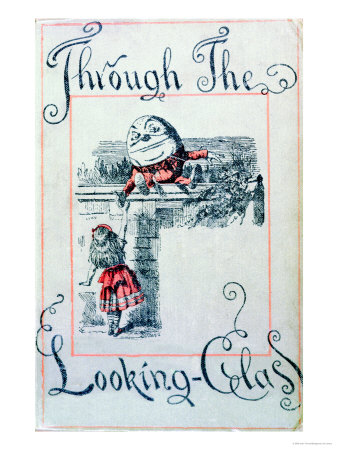
Pushing Humpty Dumpty

Back when I was eight I read Alvin Toffler’s Future Shock. I’ve since heard it has a globalist sub-text, or whatever. I don’t know. I haven’t re-read it since I was eight.

At eight, what I took away from it was the mechanics of change in society and how people react to change. Also, that things would change REALLY fast. And so far what I took away from it has served me very well.

Change came at me at a higher speed and in scarier aspects than it did at most of you. Portugal in the sixties and early seventies – due to stupid government tricks, like a mercantilist philosophy (among other issues) – in the place where I lived (it varied greatly by region) was stuck somewhere in the early twentieth century.

When I grew up – seems like a vanished country – there were two private-home televisions in the entire village. Most nights, people got all dressed up and went to the coffee shop to watch TV, which had two channels, showed in black and white, and would run to soap operas and recycled American shows as well as to recordings of the symphony and/or lectures on various subjects. Other people stayed home and listened to programs on the radio – my mom was very fond of what can only be called cultural programming: lectures on mythology or history; disquisitions on various philosophies and readings of great novels. Since she worked from home and often worked late, I used to sit next to her, playing with construction toys and listening to the radio. It probably formed the basis of my views of the greater world out there. I remember being scared out of my wits by a program on World War I.

Mind you, mom also listened to radio soap operas. They played at noon, to hit the shop girls and factory workers during their lunch breaks. Walking down the village at a certain hour, you could hear the entire soap opera, from the radios in each house as you passed.

Of course, with this sort of entertainment – prepare yourself for this. No, I’m serious – the big activity on weekends was… sitting on your door stoop to watch your neighbors walk past. My mom came from another village and on weekends we walked to the bus stop to go to the next village and see her parents. And dating couples would walk up the street. This and the attendant gossip was enough entertainment for most people. For us kids, there were vendors who walked down the village street, (down several village streets. They took the bus, too) carrying their wares in insulated backpacks that looked somewhat like converted (small) water heaters. Of note was a sort of waffle cylinder called “Mother in Law’s tongue” (because it was so long, see?) And … Good Humor ice cream bars. (Under a different name.)

Our fish and oil and olives were still sold out of ox carts. I learned to write with a quill pen because those newfangled ball point pens ruined your penmanship. We made a lot of our own games, and we had a lot of time to think. It wasn’t a bad life. Unless you counted the state of interior plumbing, food supply, water supply (cholera was a big problem every year in summer) or health care.

I saw my first tape recorder at three, my first dishwasher at eight, my first in-theater movie at fourteen and my first microwave in a Columbo episode, at seventeen.

In the middle of all this, I read science fiction. It was natural. Some of it came very naturally. When I first heard of a dishwasher for instance, I thought of a Clifford Simak type machine, with robot arms poking out of the wall.

And things accelerated. Portugal couldn’t remain forever impervious to the outside world, and it didn’t. By the late seventies they were a little behind the US but not to the point that things were almost alien. When I came over (the first time, as an exchange student) at seventeen, the only thing I remember being really new was the hot-air hand dryers in the bathrooms.

Having seen this play out in my lifetime, I understand both the attraction of the “romantic” longing for the “simpler” past and the forward-thinking person, waiting in excitement for the birth of the future. It says something about me, I suppose, that during the fastest time of change (when I was between the ages of eleven and seventeen) I was reading the most science fiction. And watching any science fiction that came my way, even, yes, I cringe to admit it, Space 1999.

You see, there were things I had realized, though I didn’t think about them for a very long time. I might miss some of the aspects of the past and try to recreate them – for instance, we didn’t have a TV in the house till my kids knew how to read and had developed reading habits. I confess they got computers at three years of age, though – but in general, as time went on, things got better.

Oh, not immediately. And not for all types of change, JUST for tech change — I’m not talking here of political or social change, which of course can go in many directions. North Korea and a lot of other nations with dictatorial regimes have gone backward in technology availability and use and in lifestyle. But tech change– at least in my life time – makes things better. Sometimes it makes things better after a period of disruption when things seem much, much worse, but in the end, on the whole, things get better. Yes, pity the poor olive oil seller who did the round of the villages with his donkey-pulled-cart. (I was very fond of the donkey. He wore a hat and you could give him carrots. I hope he ended up in honorable retirement or a petting zoo or something.) But now people in those same villages don’t have to wait for the “oil man” to buy oil. They can get it from the store any time they feel like. That’s a win.

Oh, sure, when suddenly, ancient ways of doing things were toppling things got scary. Sometimes it was hard to convince people this was a good thing – for instance, it was hard to convince people to stop making their own soap or using bar soap and use – instead – laundry detergent. It was so hard, in fact, that when I was about five, detergent salesmen came door to door (I kid you not!) and, because children are often pivotal in pushing their mothers to buy something, the detergents gave away the sort of prizes here associated with cereals. “Collect all…” Yeah. People complained and grumbled, but the pattern changed. New ways of doing things emerged.

Shopping at the supermarket up the street might feel disloyal to the village shops, but they had different things and had them cheaper and people changed their habits. Not always completely. Of the three village shops – gossip centers, place to sell your bumper crop of whatever vegetable you were growing, and (after nine pm) tavern – one survives. It functions right now as a combination convenience store and farmers’ market and it serves a purpose. And my parents might wax nostalgic for the “closeness” of doing all your shopping in the village, but they love the convenience of the supermarket and its shelves.

It probably is a coincidence that the shop that survives was the first to get a refrigerator (just a normal home-style refrigerator, with a freezer) and, heaven knows from where, get hold of those popscicle-shaped ice making forms which they filled with colored, sweetened ice, or lemonade, or juice, and sold to the hordes of school children, as we came out of the elementary school two blocks away.

Now, this business was good for maybe two or three years, before commercial ice cream started being available in the village, but for those two/three years, it was a license to coin money.

So, what’s with the trip down my – rather long, tortuous and winding – memory road?

It’s my way of presenting my credentials on having seen enough technological change to know how things play. And, because I saw so much of it, I have also learned about the typical reactions to change.

People, in general, seem to fear change. This is logical. I think for a long time, not liking change and doing things the way your parents/grandparents/great grandparents did them, avoided getting in real trouble by experimenting with new, dangerous things. It might not get you ahead, but it kept you from getting killed. After all, there might be more than one way to skin a mammoth, but surely grandad knew all of those ways.

So, almost everyone’s first reaction to tech change is negative. We feel, at best, put out, and at worst, scared. We want our own comfortable way of doing things. (For years, I had a program that made my keyboard make a typewriter sound. Typing in silence seemed bizarre.)

When a state of equilibrium is disrupted, fear comes first, and then several other reactions. Some people truly hate change and go on hating it more and more. They become more and more attached to the old way, the more they see the new. This is a fairly rare reaction, except in very old people or people who have something to lose by the change and who might actively try to fight it.

Some people embrace change, want to take advantage of all the new things – sit awake at night dreaming up new ways to use, improve or make money off whatever new thing just came into their sphere.

And then the middle muddle once the detergent salesman pushes his detergent at you, (and your kid really wants the little plastic horse they’re giving away this month) you start seeing good sides. Oh, hey, your clothes smell better. And if you immerse them in detergent before washing, you don’t need to pound the fabric halfway to pieces against stones to get it clean.

This is how it works for individual people, and it’s part of the reason – ah, you knew I was going to get there, right? – my experience tells me ebooks and ebook readers are the things of the future. And most individuals will adapt, get used to it and in ten years or so wonder how they ever got along without it. Oh, sure, the rates of acceptance will be different and some people will never be comfortable with an ebook reader over paper, but most of them will find an ebook reader they love.

Groups of people are not individuals and companies have mechanics all their own. I will confess right now that as much as I love ebooks, I didn’t expect the change to be this fast. Now, if you look back through my posts on ebooks, here , here , here, here and here, you’ll see that the system is changing this fast because there were problems in distribution, problems in feedback on the selections, problems on decisions on publishing which are influenced by distribution and … round and round it goes. The system is falling because it was ripe.

But the companies involved in all this employ people at each of these steps, and each of these people have, to the limits of their abilities and the system’s, been trying to make sure that everything worked for the best. And, in the absence of a more efficient model, have convinced themselves what they had was the best, in the best of all possible worlds.

Yeah, circulation was falling down, down, down, down, and the number of people who read fiction for pleasure either dwindling, or including an ever larger contingent that re-read things for pleasure – but they had reasons. Tons of reasons: movies, TV, computers. The reasons were imperfect and didn’t mesh with the numbers time-wise, but never mind, they must be it, because all these people were doing the best they could in good faith.

Given that assumption, it’s easy to see how terrifying this change to ebooks is. Particularly because some people have built their careers to this point and are too old to change. Heck, it’s even a little scary for myself and my colleagues. Oh, sure, we can get a bigger piece of the pie with self-publishing/ epublishing and various other forms. But … until we start getting that, we are stuck in a world of almost no advance. And most of us have learned to count on those advances. And what if our books get lost in the noise? And what if they don’t sell at all?

But such as our fears are, they must be much worse within publishing companies. Because, hey, guys, look, this writing gig was never a matter of great security. I mean, tomorrow they might not buy me anymore. (And it might be through no fault of my own, but just… my book was left out of a catalog; a bookstore chain decided not to stock me again; my cover was so terrifying no one – not even my best friend – wanted to be seen with it, and it led to bad numbers and no publisher could afford to buy me, even if they liked the work.) Besides, I worked for fifteen years to sell my first novel and there was no guarantee I’d ever sell ANYTHING. It’s the nature of the job.

It’s different in a corporation. No matter how much publishing might be a labor of love for you, you have a degree and credentials to do your job; you started at entry level; there’s a ladder to climb, you have pensions and benefits and a salary… Or you did. And then the world rocks under your feet, and the pavement opens up and swallows all your security.

It’s no wonder there are a lot of very scared people in all phases of publishing right now. The problem with this is that when people are scared they run in the first direction anyone indicates. They stampede, willy-nilly in the direction shouted by the person with the strongest voice.

Now, while I’m starting to be excited about this change, and sitting up at night trying to figure out new ideas and ways to use the change in my favor – and to make my readers’ lives easier, too – I don’t yet know everything that will work. Each change brings with it new strategies that will make things better for the greater number. However, I also know there are guaranteed ways to fail.

One of them is to try to hold on to the old. No matter how much people running those village grocery stores tried to hold on to their way of doing things, the fact they couldn’t afford commercial refrigeration was going to doom them.

Mind you, one of the ways that could have worked was to become more themselves: to develop the best gossip center, the best local produce, the nicest after-hours tavern. In fact I think that the store that survived used the first two of these strategies. Not sure how that would translate to publishing: more hard covers? Better paper? More promo to the authors you DO publish? All of those might work, for all I know, but of course, they involve heavier outlay up front.

The other method that does not work is to try to eliminate the new way of doing things. Some publishers are trying to make it harder to buy ebooks; pricing them above hard covers; trying to make them as unapetizing as possible. It won’t work. All the kings horses and all the kings men can’t put publishing together again. Once people realize detergent means not pounding their clothes to death, you’re not going to lure them down to the river and the pounding stones again, even if you point out how much more expensive the detergent is than the stones.

Perhaps, just perhaps, pricing the ebooks more attractively, selling those in quantity and using the profit from that – oh, come on, look, if you don’t have a greater profit from that, you need to examine your ledgers – to implement the strategy above for paper books might work better? No, I don’t know if it will, but it might. Trying to put things back the way they were before technology changed them will not.

Yet another method that will not work is to guilt your readers into coming back. Telling them how nasty/evil/mean they are because they won’t pay for paper they don’t want will not bring them back. It might make the young and naive feel guilty… for a while. After that, it’s pretty much just going to make them mad at you. And speed your demise.

Yeah, I know no one up there is listening to me. And even if they were, I know there are deadlines to meet, product to put out, and stock that’s plunging scarily. I know that large institutions change slowly. I know – and understand – that people are scared.

But I also know I’m me. I’m scared too. And I’m frustrated at seeing strategies implemented that are bound to fail.

Still, in the end, I’m sure – with a certainty borne out by all the changes I’ve seen over time – that the future is better than the past.

We can’t put Humpty Dumpty together again, but there will be omelets and nice crafts from his gigantic shell. And perhaps we can figure out how he grew so big and tasty and grow more of him only smaller and more portable? It might be better to get moving on that and stop trying to get horses to pull the shell together. (Horses? Who thought that was a good idea? Was this run by committee?)

So, let’s think of ways to brand books, and ways to promote books, and ways to make reading ebooks even better and more fun. Let’s find better, more efficient, more profitable ways of bringing together stories and the people who love them. And perhaps in this we can find better niches than the ones we’re losing.

On the count of three – Give Humpty Dumpty a shove!

*Crossposted at Classical Values*

What Baen Does Right

I’ve talked a lot about what publishers are doing wrong in the analysis of the current transformation of book marketing and publishing.

Let me talk about some things one of my publishers is doing very right.

First, let me admit to some built-in bias. For those who haven’t heard the sob story at cons or panels, my first book came out a month after 9/11. This was back when people – even I – still went to bookstores on a regular basis. Only at that time we didn’t. We sat at home and watched the news, and waited for the other shoe to drop. (Well, I did. While writing the third book of the series.)

Because of this, many of the copies weren’t even unpacked at the various bookstores; never made it to the shelves. The sell through was terrible, the laydown on the next book was lower and on the third lower still (according to the iron law of book death spins.)

After that, no one would touch me – yes, this was the year of the seventeen proposals. I could have been Shakespeare, Jane Austen and Robert A. Heinlein rolled into one, and NO ONE would have considered publishing me. Except… Baen did. Through a concatenation of events too long to recount, Dave Drake recommended me to then-publisher Jim Baen, who a few months later bought Draw One In The Dark, the first shifter novel (for now available only in e-format from the Baen website. Good price and no DRM.)

I don’t know if there was a connection, but once Baen had dipped its toe in, other houses bought me too. So, if you like my recent works, remember they wouldn’t exist if Baen hadn’t taken that chance back in… 03?

This is the sort of thing that can’t be paid back. I’ve said before and will continue to say: Baen can publish me as long as they wish to. I would agree to terms from them that I wouldn’t agree on from anyone else. (Not that they offer me worse deals than other houses, mind, but they could, if they needed to. [I can see Baen’s current publisher – Toni Weisskopf – who once told me NEVER to tell anyone I’d write anything for free scowling at me through the computer. I assume she’d tell me never to tell a publisher I’d sell something cheap. Sorry, Toni. It’s still true.])

However, there is a rational reason for my wishing to continue selling to Baen, beyond my gratitude to them.

Baen does a lot of things right. Not everything by any means. I’m a writer. I reserve the right to bitch about covers, grouse about copy editing and moan about distribution. BUT – but, Baen does do some things very right.

One of the things, started by Jim Baen, was the website, with an attached “bar” where the “barflies” gather. Early on I was given my own conference in the bar. The diner is quieter these days, in competition with sites such as facebook and twitter, but it is still a place where I know I can find die-hard fans when I need them. And sometimes I need their psychological support more than anything else.

The other thing Jim did was make stories available in non-DRM format, not treating his customers like dishonest people a-priori. It paid off. I’m not saying Baen is not pirated, but it’s not dying from piracy.

Another thing – and in this Toni is as good as Jim was – is the strong “personality” of the books published by Baen. A lot of people think Baen is only one political color. This is wrong. Regardless of the beliefs of the editors, Baen covers a gamut of beliefs among its writers. In fact, we could start our own UN complete with internal wars and backstabbing. We don’t, but we could. If we weren’t so busy writing.

But Baen books do have a certain – for lack of a better word – flavor. In a literary world in which SF/F is trying to buy a place at the academic table by flaunting pretty words and ignoring plot (not always, but it seems like that’s the preferred mode) Baen goes for story every time.

As a result, they’ve built a strong following that looks for the PUBLISHER’S brand, as well as the writer. If I had a dime for each new-acquired fan who tells me, “I didn’t think this would be my kind of thing, but it’s a Baen book, so I tried it,” I’d have a big pile of dimes.

This, as we go into a time when writers ask “what have you done for me lately?” and “Why shouldn’t I just publish myself?” is the type of thing that adds value and that makes writers think the publishers are earning their money. Brand building, which allows a not-so-well-known writer to find an audience is just the sort of thing e-publishers of the future WILL have to develop.

For now – and reverting to my lol-cat-persona – I’d have to say Baen, u iz doing it right.

Crossposted at Classical Values

UPDATE: thanks to Instapundit for the link! Here I was, cleaning the litter boxes and organizing my research materials in preparation for a weekend of writing and suddenly all these comments hit my inbox! Welcome instapundit readers. Do poke around. I’m sometimes amusing and often outrageous. :)

UPDATE II: Since you’re here and I can’t really serve you tea and cookies, you might as well have some free stuff to download and read. I have some free short stories here: http://cornerbooth.sarahahoyt.com/blueplate.html those links to your right. You can read them online, or you can download them. Sweet Alice is set in the world of Draw One In The Dark and Glentleman Takes A Chance. High Stakes and Neptune’s Orphans are in the world of Darkship Thieves (space opera) a few centuries earlier. (I’m trying to build my future history through shorts as well as novels.) For my historical writing, try The Private Wound, a collection of some (mostly Elizabethan) shorts.

To download — free, though they ask for a donation. It’s free, you do not have to give a donation — my first collection of short stories Crawling Between Heaven And Earth (Dark Regions press 2001) go here and look for my name. These stories were written between fifteen and ten years ago, and some are space opera, but others are fantasy or horror.

The Rope Over The Lion Pit

But I don't eat English majors!Today at the breakfast table, the entire e-publishing thing flipped on me. It started with nothing more significant than a flutter, a feeling of excitement.

Now, you know – if you’ve read me – that when it comes to technology and how it affects our lives, I’m a “the glass is brimming full” kind of girl. In fact, I have to stop and make myself THINK of the drawbacks of any technology that makes my life easier or safer or more interesting.

But I confess that lately, with the doom and gloom climate prevailing everywhere in publishing, with the confusion of non-paying bookstore chains and sinking numbers and the editorial houses seeming to scramble in the darkness, I’ve been having the sinking feeling that the entire field that I spent two decades breaking in/working in was turning to ashes and nothing under me and that, a couple of birthdays from 50 I’d find myself with no significant professional experience to do anything at all. Yeah, I used to be a multilingual translator, but like music languages are something that must be either practiced or lost. And I haven’t practiced in twenty years.

To be honest I never thought that my job prospects were that great, at any time in my life. My degree was modern languages and literatures, English major, German minor, with an option in education. (And before you boo and hiss, this was in Portugal, and English was not a gimme major and German was a TOUGH minor, and education was just good sense, because it gave you one more option for jobs.) In addition, I took four language courses outside the college, to maximize my chances at employment, because finding jobs in the mid eighties in Portugal was almost impossible. (Not as impossible as it is for young people now, but never mind.)

In fact, when I was in my last year of college, there was a joke going around that one of our classmates, after years and years of searching, found someone willing to offer her a job. That the job was in a circus and walking the tight rope and that she had never walked the tight rope could not scare her away. Not even the revelation that she would be walking over a pit of famished lions could scare her.

It wasn’t until she was halfway across the pit and felt her feet falter that she worried. Falling into the pit, she was shocked to see one of the lions pull back its head, to show a glimpse of a human face, and even more shocked to hear, “Class of 83. You?”

When you finish a tough degree with prospects like that, you’re not going to be a wussy. But the prospect of being a 50 year old receptionist did worry me. Only…

Only, it’s not like that.

Someone commented on one of my other blogs – Mad Genius Club – that he never bought ebooks because at least paper books, for all their flaws in distribution, kept printers and truck drivers and store personnel in business. And I – and a couple of other people – pointed out this was a counterproductive way of dealing with change. One of the other commenters pointed out that change always brings more jobs. And I wanted to believe.

This morning I finally believed it, perhaps because I’m starting to see the glimmers of that change and – through a looking glass darkly – the signs of what the new pattern will be.

Now, looking into crystal balls is always hazardous, and I might be wrong about the way things will stabilize, but here are some of the signs I see:

Someone offering her services as a free lance editor/copyeditor. – Make no mistake, writers need copyeditors. I’d say I’m exhibit A, as when I’m reading I tend to fill in whatever I left out and smooth out the grammar in my mind. I need people who won’t gloss over stuff like wording, grammar and – very important – internal coherency. When Bill doesn’t realize he was Joe ten pages ago, it can be awkward. And, yes, it does happen, in a novel, usually with very minor, walk on characters.

More, and this is something that reading the Heinlein bio made me realize – writers need EDITORS. A good editor can pull an author from comfortable competence to amazing or excellent. I will say, though, that nine times out of ten (and I could explain why, given trends in employment and in publishing, but let’s let it rest) these days, books don’t get that type of editing. Even the editors you know are able to do it, don’t have that kind of time. And a lot of the editors who think they can do this, really can’t, often being failed writers themselves.

Making editors work for writers, instead of the other way around, not only will keep the power in the hands of the creators of the work (and, really, look, who else should have it?) but it will make any VERY GOOD free-lance editor incredibly sought after. Possibly leading to him/her making a good living AND improving the writer’s work permanently AND providing better reading for the consumer. Win. Win. And, oh, yeah, win.

Writers who are just a little more established than I sharing expertise with each other on how to sell better, how they’re selling, how they’re publicizing.

One of the things that surprised me when I came into the field was how often, beneath the collegial attitude, there were deep rifts and jockeying for position in publishing. I think part of this was the “no room at the top” feeling caused by the fact that there were only so many publishing slots – often diminishing in number – and to make it in, you knew someone else had to be kicked out. Also, the often random way that the scant publicity/editorial interest fell created a “teacher’s pet and the rest of the class” atmosphere.

Epublishing with small presses or even self publishing seem to be breaking that. All of a sudden we are genuinely colleagues, sharing tips on how to survive. Perhaps this is just the conviviality of victims of ship wreck, huddled atop the grand piano, while the Titanic of publishing sinks, but I don’t think so. I have a feeling these bonds will grow and expand. Perhaps one say our organizations will actually be effective! And this is important because – no offense to y’all out there, but – writers are powerfully weird critters. A writer on the extreme left of politics and one on the extreme right, if they don’t immediately try to kill each other, will find they have more in common with each other than with their own families (unless those families are ALSO writers.) This going around with entire worlds in the brain leaves a mark.

I have yet to see someone offering to be an effective publicist for epublishing. Note, I said “effective.” Not so long ago, I looked madly for a publicist, but after interviewing five hired none. At least in the level I could afford, everything they proposed doing revealed less knowledge of the internet than I have. (Note to all – SPAMMING people with random messages about a book they might or might not want to read is NOT marketing.) Also, less knowledge of the world in general. Recommending I do articles for literary journals, to publicize my work, was probably my favorite suggestion, considering that doing articles for literary journals is a career in itself.

I’m sure, though, that right about now there are four or five laid-off PR people looking at the screen and going “Uh… I could do that. And given how many self published people there are, I could… uh… get two thousand clients, charge them a percentage of their earnings, and….”

And I’m sure there are other niches in marketing/editing/publishing/book doctoring that I haven’t even thought about and that will come to life over the next year, causing me to go “oh, now, that’s really clever.”

I know that a lot of artists are already finding niches in cover/book design/site design, etc.

Oh, yeah, and my colleagues are talking about the marketplace’s hunger for “content” – i.e. for story. I’ve spotted that too. I’m getting emails asking me to continue my Musketeer Mysteries, for instance. (Actually borderline threatening. Mission accomplished. I’m negotiating to get the first out as an ebook SOON, and after that I will continue the series with book six – since the publisher won’t give me back the rights to books two through five, and no, I don’t want to talk about it.)

Mind you, this will not alter some jobs in publishing. Traditional publishers/editors will always exist. Paper books might become more of a prestige thing, like hardcovers in a time of mass market paperback predominance, but they’ll be there. After all, it’s devilish hard to get your kindle edition signed, much less to will the signed copy to your kids. You can have my signed Pratchetts when you tear them out of my cold, dead hands. Ditto for my signed Bradburys. I’m just sorry I never got a signed Heinlein!

Agents, too, whether they transition to publicists or not, will exist for a good long while yet. Having just got my first contract for a foreign edition of one of my books – Japan, squee! – I can attest this is something I couldn’t possibly have done on my own.

But the field is opening, expanding, and offering a lot of other chances.

As for writers? Well, while there are books I’m not willing to let go small press or e-only – not yet – that is changing, too, and ask me again in three years and it could be quite different. For years now, being published anywhere but by the big boys/gals was an admission of failure. Just the lifting of that taboo is huge. As is the fact that being self-published is not the end of the world, anymore.

My second-worst year in psychological terms, i.e. the only year worse than the one when my first book crashed and burned, was the year when I wrote seventeen proposals. Seventeen. Proposals.

To the uninitiated, a proposal in my genres (not in Romance, I gather) consists of an outline that can range anywhere from ten to fifty pages, plus the first three chapters of a book.

The outline is not so much of a problem. Publishers are okay with it changing, when/if you write the book ten years later (sometimes.) But the chapters were death. For me to write sample chapters, I need to nail the voice. I’m not exaggerating when I say that once I’ve written three chapters, in terms of work, the book is half done.

(I was actually quite cheered when hearing of Heinlein, in this phase of creation, lying on the sofa moaning so alarmingly that Ginny thought he was ill. I’ve never done that, exactly, but I often get myself in such a nervous state that I catch whatever bug is coming through town at the time. Also, my husband – bless him – is a tower of strength. I don’t know what men with less patience might do when I come downstairs for the third time that day and announce I’m giving up writing because it all reads blah and I’ll never be able to write another book again, never, ever, ever.)

The year of the seventeen-proposals was soul-crushing, particularly because I knew a lot of those I’d never be able to write and be paid for. And once the characters had come to life for me, I wanted to write them, so it was like… breaking off little pieces of myself.

Yes, I know that sounds melodramatic, but truly, truly, it left me completely drained and feeling like I’d aged ten years in one.

Now, well… a couple of those books are on to be finished as soon as I get a month or so. So they might never sell, so what? I’ll put them up in ebooks. Even if they sell slowly, they won’t go out of print, and they’re bound to earn enough, over time, to justify my bother. And in the future I have that outlet for any books that want to be written and aren’t that “commercial” as the publishers see it.

That alone might save my sanity. But, as more and more readers come into an expanded market and as the economies in the process of producing an ebook mean a larger share per-book for the author, I think we’re about to see an explosion in the market for stories…

And all of a sudden I saw all this, and I got really excited. Come on! There’s a new reality shaping up. There’s all sorts of cool chances.

Walk that tightrope. It’s all right and tight. Never fear. Class of 85 down here. You?

*crossposted at Classical Values*

Doodling

In a post a couple of weeks back, Kate talked about “practice pieces.” Pieces you write and feel free to be as out of it, or as in it as you wish because no one will ever ever ever see it. She also said if you don’t have a practice piece going, you should try to get it.

Now, those of you who know of my strong and indelible aversion to writing only for myself are probably thinking “Ah, bet you Sarah doesn’t have a practice piece.”

You would of course be wrong. Sarahs are that way. This particular Sarah has several practice pieces, ranging from snippets that will never go anywhere to fully developed short stories, to partial novels. I don’t have a finished novel, but I have novels I could finish given a couple of days.

Practice pieces – that are started knowing they will never see the light of day or at least never see the light of day in their present form – are things that I’m not sure I can pull off; I’m sure I can pull off but sure I can’t sell; sure I can pull off AND sell but don’t want associated with me, even at the remove of a pen name (or two.)

They are the equivalent of doodling pieces done by artists, which are never going to interest anyone unless you happen to be Leonardo DaVinci.

So, you’re wondering what is the difference between these pieces and stuff you begin and never finish, the never ending bits and pieces that all of us have in file cabinets, on our desks, or in our drive?

Well, practice pieces are sort of part of a pact with yourself. You save them to a special place, perhaps. The fact you know no one will ever see them but you allows you to try things without your friends/editors/fans thinking you’re stupid or not competent or sick or… I often use my practice pieces to experiment with extreme situations and see how far I can push things before I break a character, for instance. Also to feel the power in that sort of situation and figure out how to harness it for others.

Now, mind you, some of my stories do move from the private file – particularly the ones that are fine, but don’t have a market. Markets change. But at that point they must be stories I’m no longer working on, so I don’t feel like I violated my own trust. (Be still. It’s weird in here. If it’s not weird behind your eyes, you’re not a writer.) At that point it is the equivalent of taking a sketch and fleshing it out into a painting.

But most of my stories in the practice file will remain in there forever, safely locked up.

So, do you have a practice file? What do you keep in it? (General, not violating your own privacy.) Do you find it useful? Would you consider having one?

Ten (+1)Things I Didn’t Know When I Joined M.O.B.*

*Mothers Of Boys – a distinct and separate reality

10 – That when the kids were elementary school age and I took them with me everywhere, when they needed to use the bathroom I’d be stuck outside it, hovering like a perv, and yelling at the closed door, “Are you all right in there?” or, sometimes, reduced to asking total strangers – who might be pervs – to see if my kid was still alive in there.

9 – That our culture TRULY had gone off the deep end. Or that any playground monitor in her right mind would try to refer to the police – for sexual harassment – a nine year old kid who – by happenstance – touched a female classmate on the behind while trying to get attention. And that same playground monitor would refuse to believe the kid had no clue there was anything sexual about the behind. (We owned no TV and he was not very “aware” in that way.)

8 – That, as they got older, sometimes the conversation at the table would make absolutely no sense to me. The boys and their father would be ostensibly speaking English and I don’t think it was on highly technical subjects, but I had no idea what they were talking about.

7 – That sometimes I’d function as an interpreter to them, when they interact with the female world of teachers, secretaries and even female friends, “No, honey, what they really mean is…”

6 – That my kids would consider themselves highly traumatized by the times I dragged them to the fabric shop (we never left them with babysitters much) to the point that – nowadays – when we’re off on errands they say “Oh, don’t tell me we’re stopping at the horrible place. I have bad memories…”

5 – That sometime around their early teens boys become interested in cooking, and, if you don’t start teaching them, highly creative. “What do you mean you used all of my jumbo pack of dehydrated onion in an omelet? And you ate it? Ew!” – creative. Or “chocolate, peanut butter, onion and garlic salad dressing” creative.

4 – That it would give me a whole new insight on males. I don’t know how to explain this, except, having been a girl, and having watched the boys and their friends grow up, that boys seem curiously unprotected in the face of the world. It’s like girls have fewer illusions and more technique when dealing with reality. I think I write male characters better because of this, because while it’s hard to encapsulate, it’s impossible to ignore.

3 – That some words would cause everyone in the house but me to crack up at the same time when I’m not trying to be funny – yeah, I know they can be euphemisms, but for heaven’s sake, my hobby IS working with wood. And I DO use tools for that. (All the male readers: STOP GIGGLING. JUST STOP.)

2 – That – Awesome – my clothes never get “borrowed” without permission. Well, save for Halloween three years ago when my white, ruffled blouse became a pirate shirt for one exciting evening. (I hope it enjoyed itself!)

1 – That – Even more Awesome – I’d always have playmates to relive my tomboy days with. The current manifestation of this is that everyone in the house has his own nerf sword, and that it’s not unusual for one of us (not always the boys!) to jump into the hallway bellowing a challenge (my favorite, of course, being “To me, musketeers!” or “En guarde!”) and for the entire hallway to become a scene of mayhem as the other three people in the house join in and the cats try to “help.”

– And the top thing I didn’t know about raising boys: That as they become young adults, I miss having little troublemakers underfoot and wish I could do it all again.

Free Stories

Some stuff to amuse you while I’m working on A Fatal Stain (under pen name Elise Hyatt.)

High Stakes

Click.

The question is always how far you’re willing to go to get what you want. Kill or be killed? Betray or be betrayed? Win or lose? At each step, you place your bets; you take the result. You don’t cry about it. There’s no one to cry to.

Click.

If there were anyone to cry to, the world wouldn’t be in the mess it was in. Every place would be prosperous and free, and everyone would be happy. And some of us wouldn’t have to fight like hell to get out of the holes we’d been born in and some place where we were left alone to live our own way. We wouldn’t have to be ready to kill or be killed…

Click.

The cheap lock to the tiny room I occupied – high up on the North tower of Babylon Seacity – clicked again. This time the sound was graver and resonated, as if a deep cord had been struck in the hollow metal shell anchored to hollow ceramite. My first impulse was to sit up, throwing off both sheets and blankets.

For the rest go here — High Stakes

page down past the story, to the links to download it, download and enjoy.

The young man walked along the streets of Goldport, Colorado, his collar turned up against the November wind, his mind in turmoil. The day before Thanksgiving, and the lights of the shop windows and neon signs puddled like curdled milk on the patches of ice that dotted the sidewalk.

Rafiel Trall might look like a California surfer, with his slightly-too-long blond hair, his seemingly built-in tan, but he had been born and raised in Goldport. He knew of the customary Thanksgiving blizzard, and avoided the ice on the sidewalk without even thinking about it; just like he avoided broad splashes of slush thrown by passing cars.

He’d walked from his parents’ home, a mile and a half away, in the older part of downtown where dignified Victorians set on broad lawns had resisted the various waves of devaluation and now gentrification that had submerged the surrounding areas.

His feet had brought him, as they so often had when he was much younger, to the shabby splendor of Fairfax Avenue, which ran – in a straight line – the length of Goldport and where used bookstores competed for attention with diners, with headshops, with used CD stores, with craft shops. As a young boy, he had frequented the comic book store he was now passing. Later on, his interest had moved to the specialty mystery book store down the street. And he – his entire class, really – had gathered at the Athens down the street for milkshakes and burgers and conversation.

Go here: Sweet Alice page down past the text, download and enjoy.

“The Private Wound”

And THIS is a collection of some of my Elizabethan short stories. As many of you know, I spend so much time in Elizabethan England I probably should pay taxes there. This is (I think) four short stories, two (The Private Wound and Young Fortinbras which kind of is not Elizabethan but sorta is) which have never been published anywhere else.

Elizabeth first heard Robin’s voice in the choir, after compline.

It was the twenty-fifth of January 1558 in England — 1559 on the continent where years were counted from January, instead of March — the Feast of the Conversion of St. Paul, the day the scales had fallen from the apostle’s eyes.

Elizabeth was the last one to leave the choir, at the end of the line of grey sisters of the tertiary order of Saint Francis.

A thin young woman, her pale face looked out of the dark headdress, its perfect features seeming rather to belong to an ancient idol lovingly carved in ivory.

She lingered and dawdled at the end of the line.

If pressed, she might confess that she wanted nothing more than a respite from the company of the other nuns; like her, cloistered prisoners of this inglorious convent. A respite from company and a moment alone.

Even into the cloister walls, news from London had slipped. Queen Mary had died and the crown of England was tossed, like a child’s glittering toy, between many contenders.

And in this convent, in a distant province, Great Henry’s other daughter walked apace at the end of a line of quiet women while disordered thoughts ran through her head like masterless horses.

The private wound

You know the drill. I promise new stuff soon.

Keeping It Real

How much reality is too much?

For those who don’t know, while recovering from whatever it was that laid me flat during the holidays and whose coming – I think – caused my exhaustion and decision to go on vacation, I spent a lot of time reading romances. In fact, I’m still reading the stragglers, during my exercise in the morning (it’s funny that I can listen to audio books while walking outside, but walking on the treadmill [have you seen the weather in Colorado?] I need to read a book. I think it’s because outside I’m looking around. Inside, it’s not so interesting.)

Yesterday was the turn of Scarlet Angel by Elizabeth Thornton. It’s a regency, and I thought I knew what regencies were all about, but this one surprised me. It starts with an absolutely riveting scene – the prison massacre during the French revolution.

I was halfway through the book before I realized my exercise time was over, I was done with breakfast, and had just plunked down at the breakfast table and read for an hour.

The book is riveting. What it isn’t is a classical regency romance. I confess the interludes where it lapses into “classic regency mode” including the kiss that is like no kiss didn’t bother me. First, they didn’t bother me because I’ve been reading a lot of regencies, and it was expected. It would be like getting mad because there are drawings in comics. Second, they didn’t bother me because in this particular book she gives a very good reason for the characters to react to each other the way they do: the female is unusually inexperienced (at being a girl, at all), the male is singularly guarded. So their meeting would be devastating.

But once I was done reading the book, it occurred to me to wonder how well it did with romance readers. I wouldn’t have liked it even a week ago when I was sicker and expecting pat, silly regencies. You see, the book, with a little editing to make it lean that way, could have made a very good, scary-good historical.

It wasn’t just the graphic description of the massacre, though that was part of it. One rarely finds anything that graphic, unless the book is either horror or a thriller. It was well done, with a light hand, but still graphic enough to induce sort of a “blow to the head” state.

But what set the book apart from the other romances I’ve read lately, was the realistic scars that both the characters suffer from having come through the French revolution (sort of on different sides. It’s complicated.)

That sort of societal and governmental upheaval leaves scars of course. And yet societies heal after it. Of course. And yet those – both the upheaval and the healing – are devilishly difficult to capture. Most people trying to do it pick one side and make it… facile. Thornton doesn’t. The characters and the situation remain, to the end, complex and complicated and difficult and though there is a Happily Ever After it’s a realistic one. You know this couple will have to deal with their scars – some of them mutually inflicted – for the rest of their lives.

Perhaps the book hit me so hard because right now my current pursuit in my writing is “not flinching away from the real.”

Real in stories doesn’t mean real in the real world. I don’t mean I’m giving up fiction. I mean fiction has a sort of internal logic and internal narrative need which, if ignored, will make the story less than satisfying. Say you read a story where they sacrifice babies, and there’s the woman walking forward, holding a baby, towards the idol. Would you be satisfied if she explains in this case it’s just a blessing-ceremony and she’s not afraid at all? I wouldn’t. The baby can escape but, no matter how repugnant that scene is to write, you must try it… For the sake of keeping it real.

I think Darkship Thieves was the first novel in which I went there. I mean, really went there. It’s certainly the first novel in which I became aware of “flinching” from such moments. The moments I flinch from are weird. I don’t mind hurting characters. Jumped that hurdle LONG ago. But I DO mind my characters – particularly male characters – appearing weak. So when Kit keeps getting wounded, my inner self kept flinching and wanting a less hurtful plot, one in which he wasn’t shown as having any weaknesses. As you can tell, if you read the book, I conquered that impulse.

Now, again, I don’t know if Thornton would have sold better with that book if it had been the “expected” like glancing regency, instead of a “real” book. I know I wouldn’t have liked it half as much. And one must, of course, admire the… chutzpah of mixing something as shocking and as in your face raw as the worst excesses of the sans coulottes with the mannered and expected regency romances. It doesn’t matter how close they were in time, in narrative they’re eons apart.

And I don’t know if my fans want me to or would appreciate it, but I hope I can manage to continue writing “real” stories, for whatever the internal reality dictated by the story is. Real stories aren’t boring. They rip the veil of illusory reality and show us the world – and our mind – as it really is.

Vee Hav Vays Und Means

So, ebooks throw the publishing field wide, but have some drawbacks.

The first drawback is giving readers a way to weed out the truly awful. Not that readers can’t weed out the truly awful themselves. Of course they can. I weed out bad books by the score any day of the week. I read two pages and put them down. Or download the preview from Amazon, then erase it.

The problem is even getting to the point you know the book exists – the equivalent of browsing your favorite brick-and-mortar bookshelf and finding new books. Amazon “people who bought this also bought” does that, if you make it a regular practice of browsing those – I do – and of downloading the free samples for the kindle. I think – it’s been a few weeks since I bought from them, and the holidays and my anniversary happened in between, so it feels like years – fiction wise allows you to download free samples as well. However the “people also bought” is limited.

What we need in that respect are the equivalent of the books they used to publish, called “what do I read next”. I understand the kindle boards do some of this. That’s a beginning to the solution.

Of course the other part of the solution is for writers to do extensive self-promotion and perhaps there some sort of co-op or banding together (I’m suspicious of co-ops on an instinctive level. They take extraordinary organization to work) to cross promote. I’ve been the recipient of recommendations from my fellow authors – notably Larry Correia, who is an excellent writer, himself (well, my sons think he’s better than I :) ) and Dave Freer, ditto and Ilona Andrews, also ditto – and given the same sort of help when I can. Something like that on a greater scale can help.

Also perhaps websites that hold an “eternal sf convention” where panels are posted on you tube? Or mystery convention, for that matter? Surely there are some of you fans out there who aren’t devoting every minute of your lives to promoting authors! My question to you is “why not?” and my advice is “get to it!”

The problem of gatekeepers and what I’ll call for lack of a better word “recommenders” is more of a problem.

You see, publishing houses have fulfilled two very important roles traditionally. Recently they’ve fulfilled one middling well and the other in general (with exceptions that vary depending on the field) very badly.

The one they’ve done very well is the one of weeding out the sheer unreadable stuff. If you think they haven’t done such a good job at that, you haven’t looked at what they’re culling from. If they err there – and of course, they’re human and they do – it is in using their power to “improve” the readers, which biases them in favor of the less-readable-but-more-moral (for their definition of moral, of course.) Which results in very few Yas with male protagonists, say (because boys SHOULD read about women. Never mind that they don’t as a rule.) It also results in passing up “readable and entertaining but fluff” because they’re looking for the worthy. But in general, if it’s between the covers of a major house, it’s not raw slush. (Oh, there’s one or two, but not usually.)

The function at which most houses today fail spectacularly is that of creating a ‘brand’ and ‘feel’ for their output. In fact, in science fiction, I can think of only one house with a distinctive output – Baen. And that was because Jim Baen molded it to his personal tastes. It’s something that large corporations have trouble doing – no reflection on individual editors.

I don’t need to explain to anyone why the gatekeeper function is important. Well, maybe I do to some of you but that is ONLY because you’ve never read slush. TRUST me on this, ninety percent of it makes your eyeballs boil in their sockets.

Yes, there are side-evils to gatekeepers, particularly if they’re all concentrated in one geographical location and all attend the same parties, etc. Particularly if the job doesn’t pay much. The problem is that greed is one of the cleanest motives human beings can have. Greed and attempting to get sex. Yes, I know that’s heresy, but it’s true nonetheless. If you deny the search for those, you become embroiled in things like power games and prestige which twist the human mind much more than the craving for material goods or satisfaction can.

So we need widely distributed gatekeepers, from various geographical locations and points of view – as varied as the readers would be great, thanks – who have some claim to knowing what they’re doing (there can be many claims) and who can make a living from this. Ideally, these gate keepers would have some means of self-promotion and of promoting their authors – and also of introducing authors to each other and allowing them to form impromptu alliances, which is very needed because writers are often solitary people.

For my money, the most apt institutions to step into this role would be literary agencies. Over the last few years they’ve done pretty much all of the manuscript selection, anyway. More and more they’re scattered all over the country and if they’re not catering JUST specifically to NYC there will be even more of them. And the best and largest ones already have in house publicists. IF I were head of a literary agency right now, or even a successful literary agent in an agency, I’d be looking very hard at transitioning to e-publisher. Perhaps dip my toe in with a few books/stories that I think are wonderful but which won’t fit the very tight market currently.

Publishers could do it too, of course – and here is a great opportunity for medium to small publishers to grow very large, just now. Here I must mention that Baen Books were pioneers in e-publishing and would be the logical house to transition to a bigger part of its inventory online. (OTOH I’m not the publisher, I don’t know all the details, and, no, Toni, I’m not telling you how to run your business! This is just my view from the outside.)

Then there is the function of “recommenders” – less is needed for this, because one presumes someone else has selected the book, had it cleaned up and published (even if self-published.) This would just be a person who recommends certain sorts of books according to his or her taste and creates a “brand” which makes it easier for people to find books they’re likely to enjoy.

This doesn’t require an institution or a reading staff. It requires a fairly devoted and fast reader, with strong opinions and tastes.

Honestly, given time and money and starting right now, there is an opportunity for common citizens, and even mildly-successful writers to do this right now, either by establishing a small publisher or by simply starting some sort of “imprimatur” business, where they give books they approve of a way to put “selected by xyz” button or label on their ebooks. Probably would have to do it for free initially, but a judiciously managed “brand” could be a valuable commodity in two or three years. People probably would pay to get evaluated to maybe get it, since it would add to their ability to sell. Kind of like the “good reading seal of approval”. There would have to be several caveats, of course, like having a set and equal fee for everyone wishing to be read and considered, and I’m assuming a smart evaluator wouldn’t JUST be bribed, which would dilute the brand.

(So, Sarah, why don’t you do it? – you ask. It’s a valid question. Mostly because I don’t have time. I’m too busy writing my own books. Which is why I’m only a silent partner in a micro publisher – because I don’t have time or emotional space to deal with the nitty gritty of day to day work. Also because it’s a long-term, work-towards-the-future job, and I already have one of those.)

This would, needless to say, be easier for someone who already has an online presence, or whose judgement people already value. Someone who has a review blog, say. But he or she would have to be willing to read a lot and put in the work day in day out – oh, and convince the authors to first accept the “brand” for free, and then to pay some amount for it – an amount I expect would increase with the fame of the recommender.

And finally – and this distresses me, because though I belong to two group blogs, I really don’t tend to ingratiate myself with groups of my colleagues (I suspect it’s the too opinionated by half feature of my personality) – there are formal or informal alliances of writers. For instance, I – if/when I put out full novels on my own (I simply haven’t had the time to do it) – would be more than glad to give “back of book preview” space to Dave Freer or Larry Correia, or half a dozen other authors I enjoy.

As for the idea that there is no money in publishing – or there won’t be if there’s so much competition… nonsense. The best ten percent will still be the best ten percent. People will still pay to see more of those writers. And then there is the sheer differential (because of production costs) between writers’ income per volume. If I made, say, $2 per book, I would only need ten thousand people to buy each book (given that writing two books a year is easy) to make a passable income. Right now, to make that income, one needs more like fifty thousand readers. Now, making money in the millions of dollars might be harder. However, even that I’m not sure of, and I suspect time will prove wrong.

However, the “scrum” at the bottom might get bigger and noisier. That’s okay. To an extent maybe the field will become more of a meritocracy. We’ll never eliminate the luck-factor completely, but maybe we can reduce it to something less than all powerful.

In other words, I see an open future of more competition and of potentially far greater rewards for a lot more people. Whether it will happen fast enough that I benefit from it is something else again. I am already benefitting as a reader, though, by being given a far more ample choice.

I am open, btw, to other comments and questions about what can be done to facilitate the transition and better match writers and readers. If some of it interests me enough, I might even do a couple more posts on this.