 Back when I was eight I read Alvin Toffler’s Future Shock. I’ve since heard it has a globalist sub-text, or whatever. I don’t know. I haven’t re-read it since I was eight.
At eight, what I took away from it was the mechanics of change in society and how people react to change. Also, that things would change REALLY fast. And so far what I took away from it has served me very well.
Change came at me at a higher speed and in scarier aspects than it did at most of you. Portugal in the sixties and early seventies – due to stupid government tricks, like a mercantilist philosophy (among other issues) – in the place where I lived (it varied greatly by region) was stuck somewhere in the early twentieth century.
When I grew up – seems like a vanished country – there were two private-home televisions in the entire village. Most nights, people got all dressed up and went to the coffee shop to watch TV, which had two channels, showed in black and white, and would run to soap operas and recycled American shows as well as to recordings of the symphony and/or lectures on various subjects. Other people stayed home and listened to programs on the radio – my mom was very fond of what can only be called cultural programming: lectures on mythology or history; disquisitions on various philosophies and readings of great novels. Since she worked from home and often worked late, I used to sit next to her, playing with construction toys and listening to the radio. It probably formed the basis of my views of the greater world out there. I remember being scared out of my wits by a program on World War I.
Mind you, mom also listened to radio soap operas. They played at noon, to hit the shop girls and factory workers during their lunch breaks. Walking down the village at a certain hour, you could hear the entire soap opera, from the radios in each house as you passed.
Of course, with this sort of entertainment – prepare yourself for this. No, I’m serious – the big activity on weekends was… sitting on your door stoop to watch your neighbors walk past. My mom came from another village and on weekends we walked to the bus stop to go to the next village and see her parents. And dating couples would walk up the street. This and the attendant gossip was enough entertainment for most people. For us kids, there were vendors who walked down the village street, (down several village streets. They took the bus, too) carrying their wares in insulated backpacks that looked somewhat like converted (small) water heaters. Of note was a sort of waffle cylinder called “Mother in Law’s tongue” (because it was so long, see?) And … Good Humor ice cream bars. (Under a different name.)
Our fish and oil and olives were still sold out of ox carts. I learned to write with a quill pen because those newfangled ball point pens ruined your penmanship. We made a lot of our own games, and we had a lot of time to think. It wasn’t a bad life. Unless you counted the state of interior plumbing, food supply, water supply (cholera was a big problem every year in summer) or health care.
I saw my first tape recorder at three, my first dishwasher at eight, my first in-theater movie at fourteen and my first microwave in a Columbo episode, at seventeen.
In the middle of all this, I read science fiction. It was natural. Some of it came very naturally. When I first heard of a dishwasher for instance, I thought of a Clifford Simak type machine, with robot arms poking out of the wall.
And things accelerated. Portugal couldn’t remain forever impervious to the outside world, and it didn’t. By the late seventies they were a little behind the US but not to the point that things were almost alien. When I came over (the first time, as an exchange student) at seventeen, the only thing I remember being really new was the hot-air hand dryers in the bathrooms.
Having seen this play out in my lifetime, I understand both the attraction of the “romantic” longing for the “simpler” past and the forward-thinking person, waiting in excitement for the birth of the future. It says something about me, I suppose, that during the fastest time of change (when I was between the ages of eleven and seventeen) I was reading the most science fiction. And watching any science fiction that came my way, even, yes, I cringe to admit it, Space 1999.
You see, there were things I had realized, though I didn’t think about them for a very long time. I might miss some of the aspects of the past and try to recreate them – for instance, we didn’t have a TV in the house till my kids knew how to read and had developed reading habits. I confess they got computers at three years of age, though – but in general, as time went on, things got better.
Oh, not immediately. And not for all types of change, JUST for tech change — I’m not talking here of political or social change, which of course can go in many directions. North Korea and a lot of other nations with dictatorial regimes have gone backward in technology availability and use and in lifestyle. But tech change– at least in my life time – makes things better. Sometimes it makes things better after a period of disruption when things seem much, much worse, but in the end, on the whole, things get better. Yes, pity the poor olive oil seller who did the round of the villages with his donkey-pulled-cart. (I was very fond of the donkey. He wore a hat and you could give him carrots. I hope he ended up in honorable retirement or a petting zoo or something.) But now people in those same villages don’t have to wait for the “oil man” to buy oil. They can get it from the store any time they feel like. That’s a win.
Oh, sure, when suddenly, ancient ways of doing things were toppling things got scary. Sometimes it was hard to convince people this was a good thing – for instance, it was hard to convince people to stop making their own soap or using bar soap and use – instead – laundry detergent. It was so hard, in fact, that when I was about five, detergent salesmen came door to door (I kid you not!) and, because children are often pivotal in pushing their mothers to buy something, the detergents gave away the sort of prizes here associated with cereals. “Collect all…” Yeah. People complained and grumbled, but the pattern changed. New ways of doing things emerged.
Shopping at the supermarket up the street might feel disloyal to the village shops, but they had different things and had them cheaper and people changed their habits. Not always completely. Of the three village shops – gossip centers, place to sell your bumper crop of whatever vegetable you were growing, and (after nine pm) tavern – one survives. It functions right now as a combination convenience store and farmers’ market and it serves a purpose. And my parents might wax nostalgic for the “closeness” of doing all your shopping in the village, but they love the convenience of the supermarket and its shelves.
It probably is a coincidence that the shop that survives was the first to get a refrigerator (just a normal home-style refrigerator, with a freezer) and, heaven knows from where, get hold of those popscicle-shaped ice making forms which they filled with colored, sweetened ice, or lemonade, or juice, and sold to the hordes of school children, as we came out of the elementary school two blocks away.
Now, this business was good for maybe two or three years, before commercial ice cream started being available in the village, but for those two/three years, it was a license to coin money.
So, what’s with the trip down my – rather long, tortuous and winding – memory road?
It’s my way of presenting my credentials on having seen enough technological change to know how things play. And, because I saw so much of it, I have also learned about the typical reactions to change.
People, in general, seem to fear change. This is logical. I think for a long time, not liking change and doing things the way your parents/grandparents/great grandparents did them, avoided getting in real trouble by experimenting with new, dangerous things. It might not get you ahead, but it kept you from getting killed. After all, there might be more than one way to skin a mammoth, but surely grandad knew all of those ways.
So, almost everyone’s first reaction to tech change is negative. We feel, at best, put out, and at worst, scared. We want our own comfortable way of doing things. (For years, I had a program that made my keyboard make a typewriter sound. Typing in silence seemed bizarre.)
When a state of equilibrium is disrupted, fear comes first, and then several other reactions. Some people truly hate change and go on hating it more and more. They become more and more attached to the old way, the more they see the new. This is a fairly rare reaction, except in very old people or people who have something to lose by the change and who might actively try to fight it.
Some people embrace change, want to take advantage of all the new things – sit awake at night dreaming up new ways to use, improve or make money off whatever new thing just came into their sphere.
And then the middle muddle once the detergent salesman pushes his detergent at you, (and your kid really wants the little plastic horse they’re giving away this month) you start seeing good sides. Oh, hey, your clothes smell better. And if you immerse them in detergent before washing, you don’t need to pound the fabric halfway to pieces against stones to get it clean.
This is how it works for individual people, and it’s part of the reason – ah, you knew I was going to get there, right? – my experience tells me ebooks and ebook readers are the things of the future. And most individuals will adapt, get used to it and in ten years or so wonder how they ever got along without it. Oh, sure, the rates of acceptance will be different and some people will never be comfortable with an ebook reader over paper, but most of them will find an ebook reader they love.
Groups of people are not individuals and companies have mechanics all their own. I will confess right now that as much as I love ebooks, I didn’t expect the change to be this fast. Now, if you look back through my posts on ebooks, here , here , here, here and here, you’ll see that the system is changing this fast because there were problems in distribution, problems in feedback on the selections, problems on decisions on publishing which are influenced by distribution and … round and round it goes. The system is falling because it was ripe.
But the companies involved in all this employ people at each of these steps, and each of these people have, to the limits of their abilities and the system’s, been trying to make sure that everything worked for the best. And, in the absence of a more efficient model, have convinced themselves what they had was the best, in the best of all possible worlds.
Yeah, circulation was falling down, down, down, down, and the number of people who read fiction for pleasure either dwindling, or including an ever larger contingent that re-read things for pleasure – but they had reasons. Tons of reasons: movies, TV, computers. The reasons were imperfect and didn’t mesh with the numbers time-wise, but never mind, they must be it, because all these people were doing the best they could in good faith.
Given that assumption, it’s easy to see how terrifying this change to ebooks is. Particularly because some people have built their careers to this point and are too old to change. Heck, it’s even a little scary for myself and my colleagues. Oh, sure, we can get a bigger piece of the pie with self-publishing/ epublishing and various other forms. But … until we start getting that, we are stuck in a world of almost no advance. And most of us have learned to count on those advances. And what if our books get lost in the noise? And what if they don’t sell at all?
But such as our fears are, they must be much worse within publishing companies. Because, hey, guys, look, this writing gig was never a matter of great security. I mean, tomorrow they might not buy me anymore. (And it might be through no fault of my own, but just… my book was left out of a catalog; a bookstore chain decided not to stock me again; my cover was so terrifying no one – not even my best friend – wanted to be seen with it, and it led to bad numbers and no publisher could afford to buy me, even if they liked the work.) Besides, I worked for fifteen years to sell my first novel and there was no guarantee I’d ever sell ANYTHING. It’s the nature of the job.
It’s different in a corporation. No matter how much publishing might be a labor of love for you, you have a degree and credentials to do your job; you started at entry level; there’s a ladder to climb, you have pensions and benefits and a salary… Or you did. And then the world rocks under your feet, and the pavement opens up and swallows all your security.
It’s no wonder there are a lot of very scared people in all phases of publishing right now. The problem with this is that when people are scared they run in the first direction anyone indicates. They stampede, willy-nilly in the direction shouted by the person with the strongest voice.
Now, while I’m starting to be excited about this change, and sitting up at night trying to figure out new ideas and ways to use the change in my favor – and to make my readers’ lives easier, too – I don’t yet know everything that will work. Each change brings with it new strategies that will make things better for the greater number. However, I also know there are guaranteed ways to fail.
One of them is to try to hold on to the old. No matter how much people running those village grocery stores tried to hold on to their way of doing things, the fact they couldn’t afford commercial refrigeration was going to doom them.
Mind you, one of the ways that could have worked was to become more themselves: to develop the best gossip center, the best local produce, the nicest after-hours tavern. In fact I think that the store that survived used the first two of these strategies. Not sure how that would translate to publishing: more hard covers? Better paper? More promo to the authors you DO publish? All of those might work, for all I know, but of course, they involve heavier outlay up front.
The other method that does not work is to try to eliminate the new way of doing things. Some publishers are trying to make it harder to buy ebooks; pricing them above hard covers; trying to make them as unapetizing as possible. It won’t work. All the kings horses and all the kings men can’t put publishing together again. Once people realize detergent means not pounding their clothes to death, you’re not going to lure them down to the river and the pounding stones again, even if you point out how much more expensive the detergent is than the stones.
Perhaps, just perhaps, pricing the ebooks more attractively, selling those in quantity and using the profit from that – oh, come on, look, if you don’t have a greater profit from that, you need to examine your ledgers – to implement the strategy above for paper books might work better? No, I don’t know if it will, but it might. Trying to put things back the way they were before technology changed them will not.
Yet another method that will not work is to guilt your readers into coming back. Telling them how nasty/evil/mean they are because they won’t pay for paper they don’t want will not bring them back. It might make the young and naive feel guilty… for a while. After that, it’s pretty much just going to make them mad at you. And speed your demise.
Yeah, I know no one up there is listening to me. And even if they were, I know there are deadlines to meet, product to put out, and stock that’s plunging scarily. I know that large institutions change slowly. I know – and understand – that people are scared.
But I also know I’m me. I’m scared too. And I’m frustrated at seeing strategies implemented that are bound to fail.
Still, in the end, I’m sure – with a certainty borne out by all the changes I’ve seen over time – that the future is better than the past.
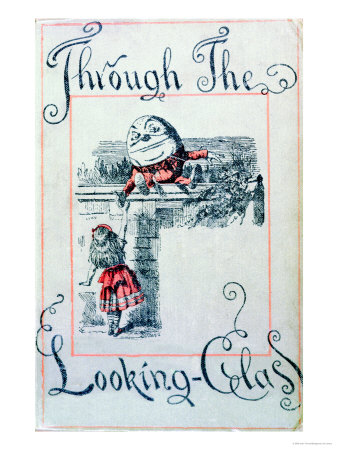
We can’t put Humpty Dumpty together again, but there will be omelets and nice crafts from his gigantic shell. And perhaps we can figure out how he grew so big and tasty and grow more of him only smaller and more portable? It might be better to get moving on that and stop trying to get horses to pull the shell together. (Horses? Who thought that was a good idea? Was this run by committee?)
So, let’s think of ways to brand books, and ways to promote books, and ways to make reading ebooks even better and more fun. Let’s find better, more efficient, more profitable ways of bringing together stories and the people who love them. And perhaps in this we can find better niches than the ones we’re losing.
On the count of three – Give Humpty Dumpty a shove!
*Crossposted at Classical Values*
 According To Hoyt
eight…EIGHT? EIGHT!!!!!!!!
I think I was in my mid twenties(maybe thirties?) when I read it….and I read it first publication…
for something really scary read Vernor Vinge’s “Singularity”.
E-reader’s (as text readers) just might not last very long. I seem to recall something called a “game engine”….a software program that will generate 3d animation.
Feed an ebook into THAT and what have you?
LikeLike
Ev,
I remembered SO vividly reading it when I was eight that I didn’t check the publication date. I just got up from bed to check on it (I hope you’re happy :) ) because I know sometimes memories get muddled, and though I remembered reading it on the floor, in my brother’s hospital room when he was recovering from knee surgery (sports injury), he had another surgery two years later. However, I too read it first printing and it was published in Portugal at same time as here, or close enough. 1970 — I was indeed eight. Mind you, I stole it from my ten-year-older brother, so…
LikeLike
Seventy?
My mind….it’s going HAL…..
er…make that Late teens (whew)..
At one time I would have said that “Future Shock” was one of the books that influenced me more than most. Along with what’s his name’s “men and marriage”.
Since then I’ve read a bunch more books. I still think they (both) had a great deal of important stuff to say. True too. Being ignored too.
LikeLike
One thing I have noticed about corporations facing the headlights of doom is that they act like little bunnies and become astoundingly risk averse. The individuals who are in those corporations/industries and are willing to take a risk, bet the company on a new model and otherwise fight jump ship and the risk averse remain. The organization as a whole thus becomes even less likely to take decisive action and that typically means it fails. I’ve seen this in diverse markets (European chemicals, computer networking to name but two) and it looks to me like the same thing is occurring in publishing.
In fact it seems to me that one could say that publishing is going through the various phases of mourning (denial, anger, acceptance) but what they are mourning “aten’t dead yet”, and in fact need not die unless the mourners bury it alive and leave it to die. There is a market for physical books, there is a market for stories (and those two markets are not necessarily the same), but the large publishing houses and their various hangers on in the traditional distribution chain don’t seem to quite grasp that the death of the ‘traditional’ distribution model – which is no more than a century old, if that – does not actually imply death for the products distributed by it.
The problem is that when the publishers take the
LikeLike
take the? Francis — that is one of the most insightful things I’ve ever read — and it accords with what I’ve seen when computer companies are in trouble — do go on.
LikeLike
last line a mistake. Was an early version of one of the sentences above that failed to get deleted.
LikeLike
Dang> Iw as hoping you intended to go on. :)
LikeLike