All writers love their characters. I mean, the characters are ours. Of course we love them. Or we hate them with the sort of hatred that’s the other side of love.
One of the eternal questions is how to make the reader care for them too.
There are probably many ways to do this, but my favorite is to have an eccentric character that thereby arouses the reader’s interest. You can also have a sexy character, of course. (I don’t seem very good at that.) And there’s always … oh, yes, making your character a victim.
I think the attraction of making your character a victim – which is particularly likely for younger or new writers (yeah, I did my share of this) – is that most people instinctively want to protect the unjustly oppressed. This causes them to bond to your character like a mother duckling to her baby.
The thing is – and my younger self didn’t understand this anymore than the rest of newbies do – that there is a difference between having your character be a victim and having your character be interesting. Yes, a victim character immediately arouses strong emotions – but the emotion that certain characters bring forth causes you to want to slam the door in their faces. It’s sort of like meeting a stranger in the street and have him cry all over you and tell you how unhappy he is. You’ll be looking all over for a friend – or another stranger! – to rescue you from the situation.
But then, you say, (come on, say it!) Won’t the victim character arouse the reader interest as well as their protective instincts? Won’t people want to know how the character comes out of it?
The point is of course that the character is supposed to come out of it. Which means, we have to believe they’re the sort of character who can.
Back when I was young and stupid (as opposed to well worn and stupid-er) I used to plot by dropping walls on characters. I.e. everytime the character started raising his little head from the mire, I dropped a wall on him to smash him back down. This was an attempt to increase sympathy for him (it was almost always a him) rather than to plot, since at that time I wouldn’t have known a plot if it had danced naked in front of me waving a giant flag that said “Plot”.
The problem with this method of making my characters interesting was that… it didn’t. Eventually the character got tired of the horrible, unexpected, bizarre illness, the accidental near-death, the robbery, the assassination attempt that leaves him lost on a snowy road and I just couldn’t care enough for this pitiful lump to make him do anything more…
I grant you, I probably was better than most people, because this was MY character. Most sane people would have given up on page one when pitiful lump shows up sobbing and moaning.
I was also guilty of the normally coincidental flaw – the tendency to assume that because the character is a victim that must make him good. This type of character building is normal on TV, where I think they think they’re striking one for social justice or something, but seriously – character is an oppressed minority? You’ll find he’s out feeding orphans in his spare time. Character is a misunderstood teen? You’ll find he’s really a genius working on a new theory in his spare time.
It’s the type of surprise that doesn’t surprise anyone, but – worse – when translated to books, these victim-heroes are ASSUMED to be heroes because they’re victims and the writer doesn’t bother to show any admirable qualities. Or any flaws, either. It’s just “oh, look, he’s being kicked. He will save the world.”
When I went to the Oregon Writers Workshop Kris Rusch got upset at what she called “empty description.” Say you’re entering an office. “It was the typical office. It had a desk, a chair, some pictures on the wall.” Can you see it? No? Neither can I.
I was doing empty description because I was filling the backgrounds with Hollywood stage sets. I’m a people person, I don’t pay much attention to scenery but I was trying to avoid talking heads in a void, and I thought I was succeeding… till Kris rubbed my nose in it.
After that, I learned to do things like “It was the sort of office that made you wonder about its occupant. The walls could use a paint, the desk was grey and battered metal, but on top of the rusted metal file cabinet in a corner was a watercolor portrait framed in what looked like an antique gilded frame. It showed a little girl, aged maybe four. On the wall were framed pictures of the sunset over the sea. The chair looked like Joe spent too much of his time in it – until it had taken on the shape of his body and looked incomplete without him.”
I think what we’re talking about with characters is similar. It’s okay to reach for the victim character. Or the quirky character. (Or both.) But to save it from cheap sentimentally and to avoid the little crushed blob syndrome, you REALLY must get to the particular – focus in. Make your character unique.
As an exercise, read Night Watch by Terry Pratchett. Note that the “revolutionaries” are by and large truly oppressed, but this doesn’t make them admirable – or even good. And yet they’re likeable. We look at them and we recognize… people. Characters who are good all the time aren’t people, they’re mannequins. You can’t admire what you can’t aspire to.
Since I tried to create my characters this way, I find my plots easier, and my writing much more pleasant – for me and others.
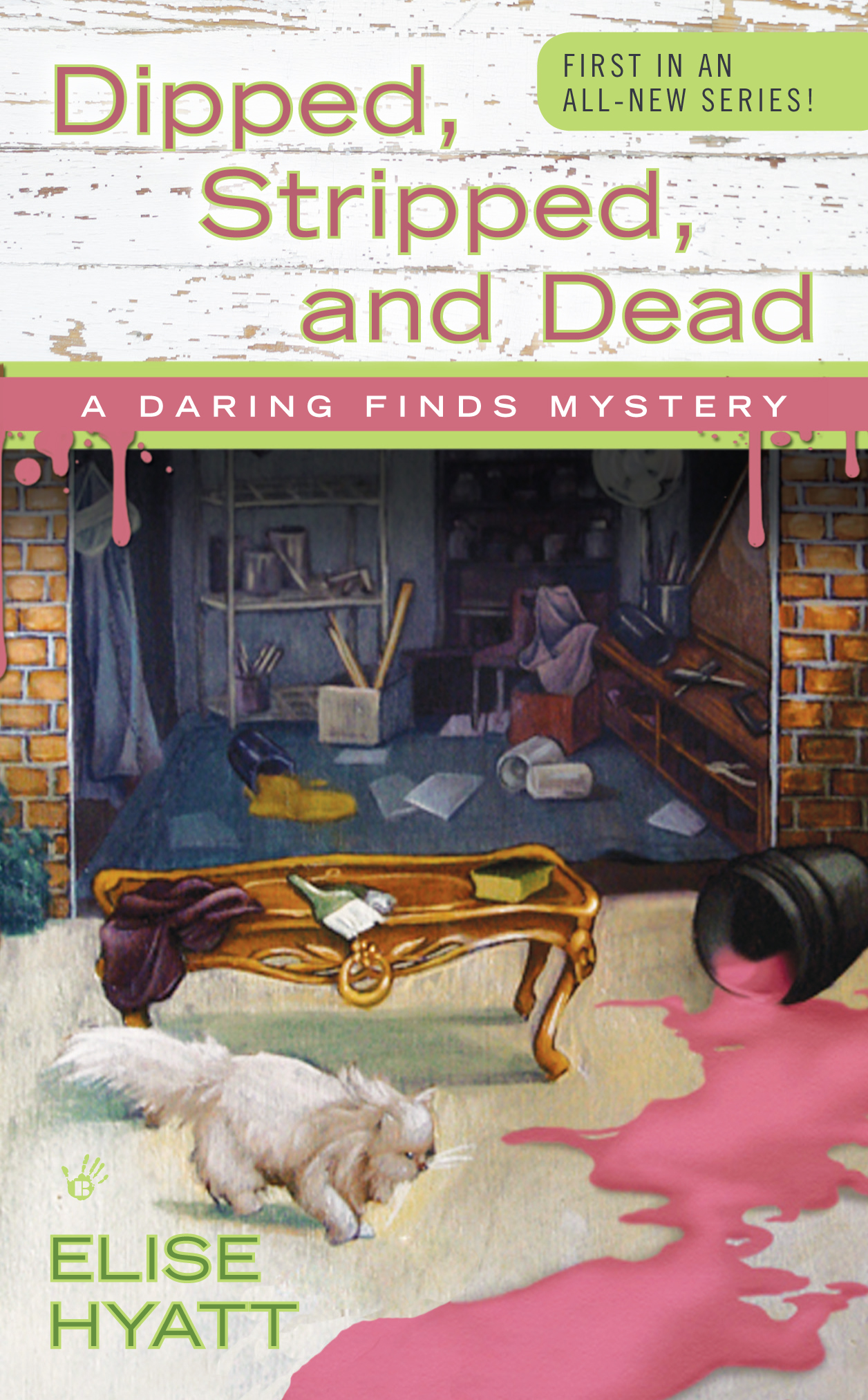
Take the beginning of Dipped Stripped And Dead – someone has to. Her real circumstances make her a “victim” but she’s just not getting the message. (Kind of like Euclid cat who LIKES being confined in the big dog carrier we use for a kitty jail. We catch him peeing somewhere inappropriate, set up the carrier, and he runs in, all happy.) You know she’ll get out of whatever it is, because she has yet to UNDERSTAND she should be a good little victim and lie down under her misfortune. Same thing with flaws – you know she has flaws aplenty from the moment she saunters on stage. You can name them. But they just make her human.
When I was little, I was going to be a ballerina. This was a strange ambition for a five year old who could trip over both feet at the same time while standing still. As soon as that tragic fact dawned on me, I settled on the more attainable ambition of becoming a lion tamer. This, at least, seemed perfectly within my reach, since my cat always did exactly what I wanted her to – well, except when she balked at jumping through the lighted hoop. Which is just as well, since Mom didn’t exactly approve of my setting fire to her quilting frame. With the quilt in it.
In the aftermath of the fire-in-the-living-room incident and subsequent grounding, I’d regretfully dropped the lion taming ambition – probably good, since Fluffy wouldn’t come near me any more, though her fur did grow back – and with it all my hopes of a career in the performing arts.
A failure at the age of six, my ego crushed, I’d actually been weak enough to consider dad’s life-long ambition of having me grow up to become a private eye. Except that I wasn’t absolutely sure what a private eye was – it seemed to me you’d have to go around with your hands over your eyes to prevent anyone seeing them and…
Well, that also didn’t go well. And My Little Investigator’s Kit which Dad bought me, didn’t provide me with many clues. I spread the fingerprint powder over the cat, finger painted with the inking pad and used the magnifying lens to start a fire in the leaf pile in the backyard.
After the fire department had been by and we’d found Fluffy cowering under the azalea bushes at the far end, I thought that this private eye thing was by far too hazardous.
And this is how I never quite figured out what to be when I grew up.
Which probably explained why, at twenty nine years of age, I had parked at the edge of Goldport college campus and was rummaging through a dumpster.
Okay, it wasn’t exactly as dire as Mom had always said it would be. I wasn’t living on the streets. I still had all my teeth – even if there had been some doubt about that when I went flying from my bike at the age of eight, after riding down suicide hill with no hands – and I wasn’t looking for food.
Well, at least I wasn’t exactly looking for food, only for the stuff that allowed me to make a living. Because, after waffling through two years as an English major – until the words post modernism could put me to sleep like hypnotic suggestion – and a year as a teaching major – before I remembered another name for hell was school room full of kids – and a year in pre law, before I realized I just didn’t have the required forked tongue, I’d left college with a Mrs. degree.
And when that exploded in my face – worse than the quilting frame – I’d found myself as at a loss for what I wanted to do with my life as I had been at six, when my hopes of lion taming had been so cruelly dashed.
Only it no longer was a career a matter of keeping myself amused, or even of feeling I was a productive member of a society. No. My marriage with Alex – All-ex, completely ex, he couldn’t be more ex if I killed him, something I was tempted to do twice a week and four times on Sundays or whenever we had any interaction – Mahr while otherwise completely unproductive, had left me with a child.
Enoch – his father had chosen the name because he thought it sounded solid. I called him E because I hoped to save on therapy bills when he grew up — had been one when his father and I got divorced. His primary interests in life had been attempting to stuff all his fingers in his mouth at once and finding ever more interesting bugs to eat.
He was still interested in gastronomic entomology at two and a half. But he didn’t look at all like All-ex – or like me, though he had the blond hair and blue eyes I’d had till three, before both had turned pitch black – and he showed some signs of, through some amazing genetic mutation, growing up to be someone worthwhile. Which would be thwarted if I let him starve to death or even – forbid the thought – if I allowed his father full custody.
My working retail would have supported us – sort of – but I’d have had to leave E with someone. Mom and Dad weren’t an option. They worked all day in Remembered Murder, the mystery bookstore they owned and where Fluffy – whom I believed remained alive on the hopes I’d die first – was store cat. And Fluffy started twitching whenever she saw me, or E.
This left me with the one skill I’d more or less inadvertently picked up while furnishing my first home. I’d taken a course in furniture restoration and refinishing at the community college. Back then I’d done it to fit furnishing a house within the scant budget All-ex would allot to it.
On my own — after some experimentation — I found that picking up old, beat up and abused furniture, refinishing it or fixing it or giving it a total make over, and selling it – under the business name of Daring Finds — made just about enough money to keep me and E in three meals a day and a roof over our heads.
Said roof was rented and in an area of town that made my friend Ben cringe and the meals might run to pancakes a lot, but it beat the alternative. Homeless shelters struck me as a terrible place to take a kid who liked to sample bugs.
And so I was at the corner of the college, on a bright Saturday in late May, looking at a bulky green dumpster.
You see, while real antiques go for exorbitant sums in Colorado, they sell at those prices because they are hard to get. Very few people have an attic full of grandmama’s break front dresser or great great grandmama’s Duncan Phyfe dining set that they would be willing to sell at a garage sale for mere pennies and which could be made radiant by a simple wiping with oil.
No. I heard of such things from other people who came from places out East, but I figured on the way to Colorado by covered wagon, most people had ditched their grandma’s carved walnut chairs halfway across Kansas, possibly with Grandma still clinging to them.
What could be got – in various states of disrepair –were twentieth century knock offs and good, solid furniture of forties and fifties vintage, made in factories, but capable of looking quite good once one had scraped off the twenty coats of paint, including the two inevitable metallic coats applied in the sixties by someone who had found truly interesting mushrooms.
Oh, sometimes, rarely, in a thrift shop or a garage sale, I’d come across a good piece, which I refinished and took to Denver to leave for consignment at Shabby Chic. But for the greatest part, I cleaned and fixed and varnished, then put the pieces up at the local flea market where they made a modest profit just barely enough for our daily pancakes.
Which brought me to cost-cutting.
“Bah, bah, bah, bah!” E said from the strapped-in safety of his child seat in the back of my fifth hand blue Volvo station wagon. I looked over to see him glaring at me, his face scrunched intently, as he clutched the top of the half-lowered window with his chubby spit-covered fingers. “Bah!”
Since he could say quite a few words and even the occasional sentence, I assumed “bah” was his view of the situation.
I looked over to the dumpster, overflowing with black trash bags. Though it was still too early in the morning for it to be really hot, there was a distinct smell of spoiled meat coming off the container. “Undoubtedly,” I told E. “On the other hand, look, there is something there that looks like a gracefully curved table leg. Painted white, but a table leg.”
“Bah!” E said.
Which was probably true. I frowned up at the maybe-table-leg.
So, what other ways do you know to make a character riveting right from the beginning? And how do you cope with making them not so terminally interesting that people run away screaming? And what are your pet peeves in character-generalities? And am I barking up the wrong tree altogether?
*crossposted at Mad Genius Club*
 According To Hoyt