But hopefully tomorrow.
Sorry, I woke up with a raging ear infection, but I should be okay tomorrow. I have antibiotics and pain meds…
I know, the promo shouldn’t take brain power, but it does.
Born Free
But hopefully tomorrow.
Sorry, I woke up with a raging ear infection, but I should be okay tomorrow. I have antibiotics and pain meds…
I know, the promo shouldn’t take brain power, but it does.

Now that the USSC has decreed that discrimination on the basis of race, sex or sexual preference in the interest of advancing minorities or other supposedly benevolent purpose is just as illegal as discrimination on the same basis against minorities for supposedly malevolent purposes. This of course is obvious and should be obvious, but our government has more or less required people to ignore that.
Anyway, I was reading an article on it over at powerline, DEI Is Illegal and someone in the comments said that the people IBM passed over, never considered, didn’t advance or in other ways injured due to their DEI games should sue for millions of dollars.
In theory they’re correct. In theory. The problem is proving you were passed over. Or that you, personally, were discriminated against.
It would require intervention by government and counting of heads, which gets us back where we were. All the insanity of affirmative action and its mentally slow grandchild “DEI” came about because they assumed people were — or course, individuals being evil and needing the government to force them to behave — discriminating against minorities on the sly. So they came in, counted heads and allowed people to sue if there weren’t the exact same proportion of each race or whatever the company was found to be discriminating.
I don’t need to tell you why this is stupid. Thomas Sowell has done it. I don’t remember any quotes exactly, but I remember his going through various cases of certain groups of immigrants specializing in one thing or another, maybe because the first one got into it, or because other professions are closed to them, or whatever. My friends who used to live in South Africa for instance tell me Portuguese in South Africa used to be most of the owners of vegetable stands. Why? I don’t know and am not doing a deep dive. Beyond that, there are in a country such as the US certain accretions of ethnic characteristics coupled with culture that create a tendency to certain professions in ethnic — or sub ethnic — group.
Completely independent of discrimination, people will gravitate to professions because cousin so and so does it, and they can “see” into it and think they’ll like it. I mean, neither of my kids writes professionally at the moment, but they both have written, and writing professionally might happen in the future, because they learned an awful lot simply by watching me do my work, or hearing me discuss it. (This might actually get more so, as people work at home more.)
Head counting is not proof of discrimination, (well, unless a company or an industry is solidly one race, sex, national origin or for that matter political color) and honestly nothing much is.
DEI forbidden or not will continue, at least until and unless we have 16 years or so when the crazy race-obsessed left doesn’t get a look in. Supposing, of course, they aren’t replaced by the crazy, race obsessed right (much smaller. Like maybe 1% of the right. At least unless you discount foreigners and bots and foreign bots. BUT they do exist, and who knows what the future will bring?) Because right now they’re expecting the left to win the midterms and want to be right with the psychos when they come back in.
But I was thinking of the massive amount of damage this type of discrimination has done to the country.
Let me be clear: Hiring people for any reason other than competence will degrade competence over time. This is because when you hire less than competent people, thy know they’re not competent. And this means they won’t hire people who are more competent than they are, and the cycle degrades competence over time.
But there’s more than that. Think of all the people who were passed over, not knowing why? They will of course assume that they aren’t good enough. And if you can’t figure out why you’re not good enough, it breaks you over time.
Worse, if you know why, but you know you can’t prove it, and if you complain people will assume it’s sour grapes.
So how do we fix it?
We don’t let the race obsessed left get a look in. For this reason as well as many others, it’s very important.
How? I don’t know. Mostly cleaning the voting.
Is it possible, even? I don’t know.
If we lose, yes, we can still come back. But it’s going to cost and it’s going to hurt — more — so…
While we can we must fight in every way we can to make sure the left doesn’t win the mid terms or the general or the other midterms or the other general.
The left must be brought to the point of reforming or dying. For the sake of the republic. And civilization.
TODAY THERE WILL BE NO EXTRAORDINARY BOOK PROMO, BECAUSE YOU DON’T NEED A BOOK PROMO WITH YOUR BOOK PROMO SO YOU CAN PROMO WHILE YOU PROMO. THERE WILL, HOWEVER, BE SHAMELESS WRITER SELF-PROMO.
*First of all, a blessed Easter to those celebrating, and for those who celebrated Passover this week, I hope you passed dry shod from slavery to freedom. And now, the promo!- SAH.*
If you wish to send us books for next week’s promo, please email to bookpimping at outlook dot com. If you feel a need to re-promo the same book do so no more than once every six months (unless you’re me or my relative. Deal.) One book per author per week. Amazon links only. Oh, yeah, as an Amazon Associate, I earn from qualifying purchases. By clicking through and buying (anything book-related, actually) through one of the links below, you will at no cost to you be giving a portion of your purchase to support ATH through our associates number. A COMMISSION IS EARNED FROM EACH PURCHASE.*Note that I haven’t read most of these books (my reading is eclectic and “craving led”,) and apply the usual cautions to buying. I reserve the right not to run any submission, if cover, blurb or anything else made me decide not to, at my sole discretion. Remember though all of these submissions are from people willing to be associated with this blog. So if you’re trying to buy from people who don’t hate you, this is a good place to start.– SAH
FROM SARAH A. HOYT, ON PRE-ORDER COMING OUT APRIL 23: Witch’s Daughter
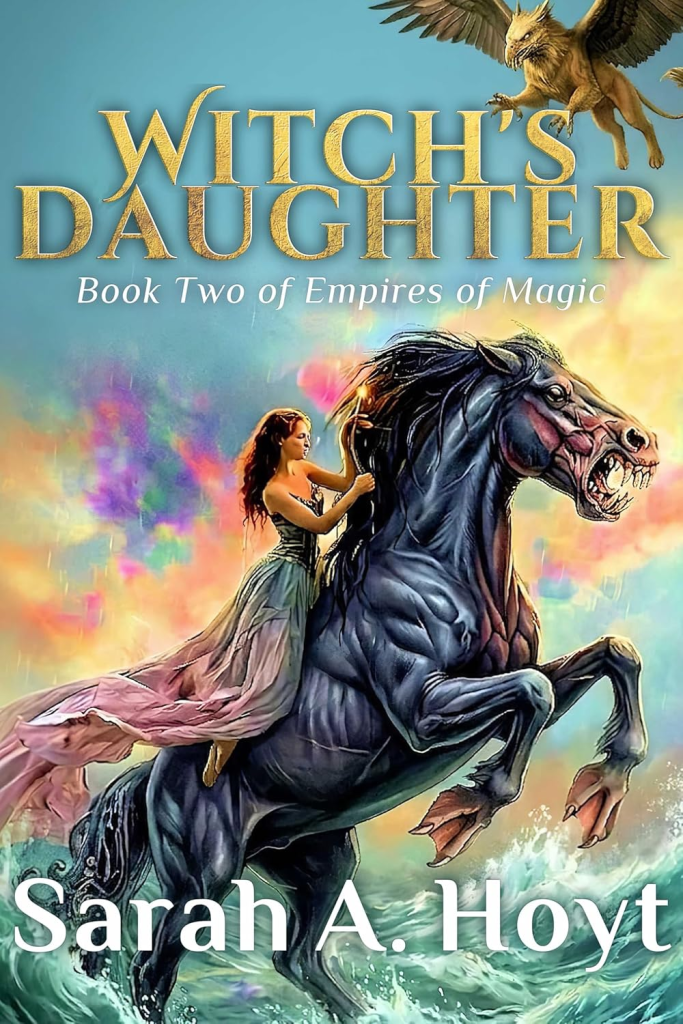
Some letters come from the living. Some come from the dead. This one comes with a formula that turns a rowboat into a miracle.
Seventeen-year-old Lord Michael Ainsling — youngest brother of the Duke of Darkwater, builder of mechanical marvels, survivor of fairyland — receives a letter from a man sixteen years dead. The inventor Tristram Blakley has not perished; he has been imprisoned by his own genius and begs the one mind in all of Avalon brilliant enough to understand his work to set him free. All Michael has to do is find seven missing brothers first and walk a magical path..
Fifteen-year-old Albinia Blakley has spent her whole life under her mother’s iron thumb — and her mother is a witch. The day Al finally escapes down a rope of knotted sheets, she lands in a world she doesn’t recognize, with no money, no magic kit, and no idea that the stranger who catches her is about to become her greatest ally.
Together, a girl with more secrets than she knows and a boy who builds machines that try to murder him must outwit a sorceress, navigate the treacherous courts of Fairyland, and unravel an enchantment years in the making — before a family is lost for good.
Witch’s Daughter is a gaslamp fantasy brimming with wit, warmth, and wonder, for readers who love their magic wrapped in velvet and their adventures served with morning tea.
FROM JOHN BAILEY: The Vesuvius Incident

A scientist has vanished beneath the ice of Europa.
Officially, it was an accident.
Unofficially, she discovered something impossible.
Josef Kellerman is asked to find out which is true.
Posing as a documentary photographer, Josef travels to a remote research station on Jupiter’s frozen moon. His assignment is simple: observe, ask questions, and report back quietly.
But nothing about Europa is quiet.
The missing scientist was studying anomalies in the subsurface ocean—patterns that shouldn’t exist. Structures that shouldn’t be there. Evidence of technology no human has ever built.
Now she’s gone.
And Josef isn’t the only one searching.
As rival factions close in—each with their own plans for the discovery—accidents turn deadly and alliances begin to fracture. The deeper Josef digs, the clearer it becomes:
This was never just a disappearance.
It was a cover-up.
And whatever lies beneath Europa’s ice is too valuable—and too dangerous—to be revealed.
If Josef can’t uncover the truth in time, the discovery could reshape humanity…
or destroy it before it ever reaches the surface.
FROM ROBERT MILLER: Up the Down Beanstalk: Parodies based on the fairytale, Jack and the Beanstalk

UP THE DOWN BEANSTALK
There has to be MORE to the story …
Did you read the story of Jack and the Beanstalk and come away with questions?
How young was he, to believe the beans were magic?
Was he bullied into accepting beans in exchange for the cow?
Was he really that gullible? Was he desperate? Or was magic real in his world?
Why did he think it was smart to climb that beanstalk? How far did he climb?
Why didn’t he run when he saw the giants?
What was the giants’ side of the story? Were they bullies, or were they the victims of burglars and swindlers?
What about the golden harp and the goose?
On and on, with every answer generating MORE questions..
We invite you into these pages to explore the MORE our authors found. You’ll be delighted, enchanted, intrigued, and we hope you’ll cheer for our heroes in all their shapes and sizes and motivations.
Brilliant inventors and identity theft. Brutal usurpers and imprisoned princes. Mischievous boys and missing eggs. Curmudgeonly neighbors and rivals. Heroic sheriffs and computer programmers. Liars and thieves and desperate girls risking all for their families.
And MORE.
BY EDMOND HAMILTON, REVIVED BY D. JASON FLEMING: The Hidden World (Annotated): The science fiction classic
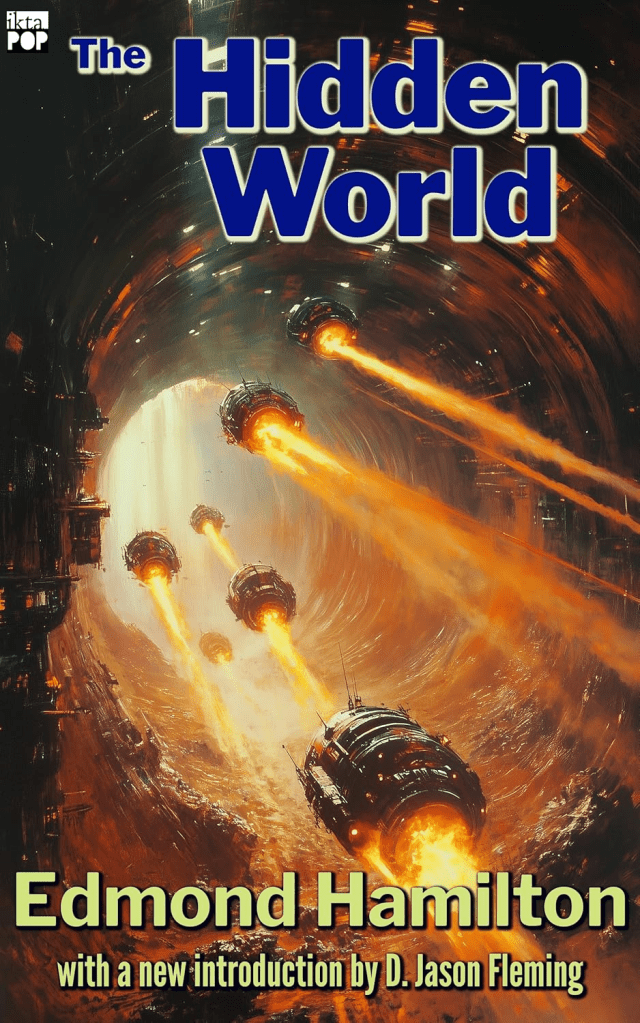
Sudden, brilliant towers of light emanate from the Earth at three different points on the Equator, at specific intervals in time! Dr. Kelsall has a theory, that they come from a world inside our own world, and he takes his three comrades to the South American jungle where he predicts the fourth light will appear. But nothing, absolutely nothing, prepared the men for the alien menace they were about to face!
- This iktaPOP Media edition includes a new introduction giving the book cultural and genre context.
FROM KEN LIZZI: Dekason (Twilight Galaxy Book 1)
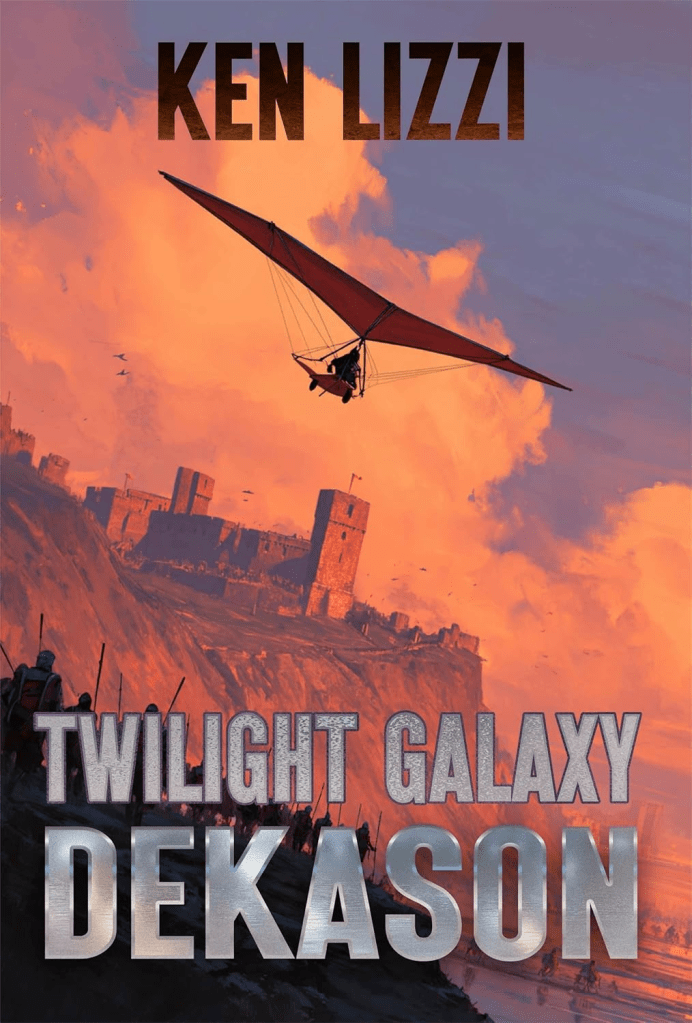
On the feudal world of Kvasir, lowly armsman Carkston Monitor steals an ancient glider and launches a one-man raid to shatter two enemy armies—hoping to win a baron’s daughter and a seat among the Peerage. His audacious strike succeeds… and utterly ruins a secret plan of the nobility. Banished in disgrace, he’s dumped on the decaying planet Dekason, where stagnant syndicates duel with dueling swords and forbidden electromag pistols.
Now Carkston is done playing by anyone’s rules.
He forges a deadly alliance with an Unsanctioned House, turns rival nobles’ own vendettas against them, and unleashes a whirlwind of sabotage, estate raids, and blazing gunfights that threaten to topple the rotten aristocracy of a dying world.
One outcast. One stolen glider. One chance to seize the stars—or burn both planets down trying.
BY ROBERT J. HORTON, REVIVED BY D. JASON FLEMING: The Man of the Desert (Annotated)
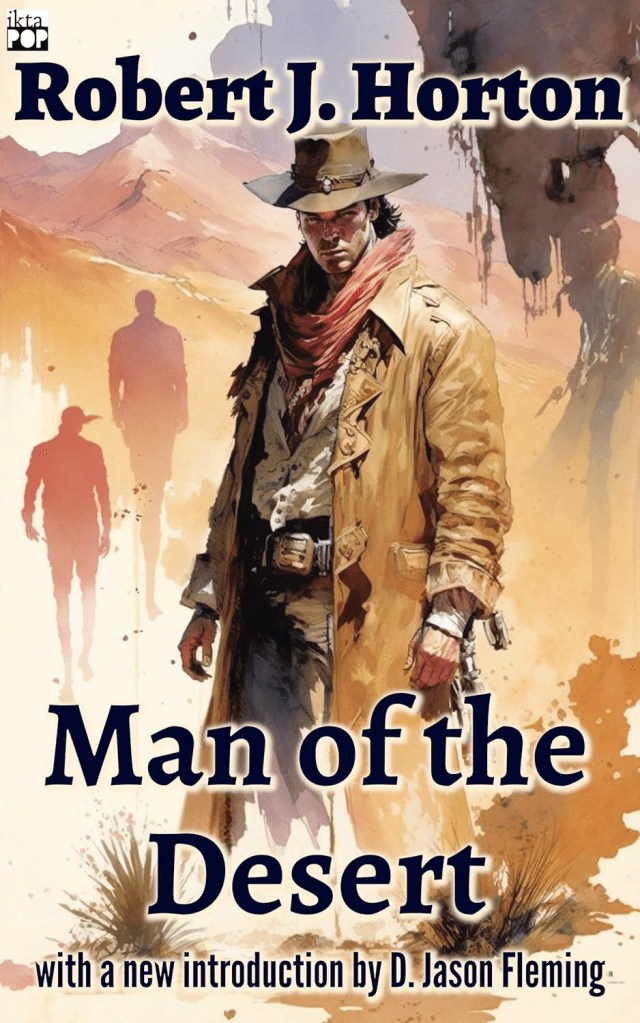
It starts with a stampede, and never lets up from there!
- This iktaPOP Media ebook has an introduction by indie author and editor D. Jason Fleming putting the novel into historical and genre context.
FROM DALE COZORT: Through the Wild Gate

Robinette Thornburg, the half-human daughter of ultra-rich Robert Thornburg, thought she was fully human, just weird, for the first twenty-one years of her life. She went to expensive private schools, then Harvard. On her twenty-first birthday, she learned that she was half Mangi, the result of an encounter between her father and a primitive near-human woman from the Wild, an alternate reality North America where primitive humans arrived half a million years ago, but no modern humans ever did.
That was the first she had heard of Mangi or the Wild, closely held secrets of the wealthy families who control Gates to it, but she finds out far more than she wants to about the Wild when mysterious enemies kidnap her and leave her to die in the Wild, naked and weaponless.
Robinette nearly starves before finding her way back to our world through an early, uncontrolled Gate. She vows revenge, but on who? She teams up with Eric Carter, a down on his luck private eye and former bodyguard to her father. The two try to figure out who kidnapped Robinette and why, a quest that takes them through the decadent world of the Gate families, the only law in the Wild. It also takes them back to the Wild and then to a final confrontation with, their lives and the fate of the Wild at stake.
FROM NATHAN C. BRINDLE: The Tale of the Crane Princess (Timelines Universe Book 6)

Ordinary, everyday shopkeeper Horiuchi Tsurue is running a little general store and mini-café on a small island in Japan’s inland sea, two centuries after mankind was nearly wiped out by a virus.
One day, Yamaguchi Yukiko, the kamaitachi of legend (The Cross-Time Kamaitachi), and her daughter Mikoko, appear in front of Tsurue’s shop, and she invites them in for tea.
That’s when Tsurue discovers she is anything but ordinary. And in the end, the island she is sworn to protect will depend upon it.
FROM JENNIFER RUST: Dream Not for Sale: How I Chased Riches but Found True Wealth

Desperate to break the humdrum of her life and begin achieving her dreams, a young Jennifer chased riches for years before realizing what she was truly after couldn’t be bought.
In 1994, Jennifer Rust moved to a small town in South Carolina to work as an assistant editor at the local daily paper. Things seemed exciting; her first few months, the only story that splashed over the headlines centered on OJ Simpson.
Glamor fades with time, though, and as a newly-minted late-20s-year-old, Jennifer began to look for an escape out of her grind. She was lonely thanks to her afternoon and evening shift job-not to mention, struggling from paycheck to paycheck with the salary of peanuts from the newspaper.
One day, one of her few friends in town introduced her to an opportunity to make money. Skeptical at first, Jennifer walked away but soon realized she didn’t have much to gamble-and she’d always put trust in betting in herself and her work ethic.
Before long, Jennifer was all in, spending money to make money. At one point she turned her career upside down in the chase for riches. She endured months of rejection, lost friends, and spent thousands of dollars before learning the secret to true wealth. She discovered that dreams are a goal to achieve, not a product to purchase.
Dream Not For Sale is an immersive memoir that reads like a novel about a young woman on a journey to find true happiness. Inspired by true events, the memoir can be compared to any book showing how someone got out of the multi-level marketing business and paid off their debt, learning only the expensive lessons they can teach.
FROM HOLLY CHISM: Having a Pint (Liquid Diet Chronicles Book 2)
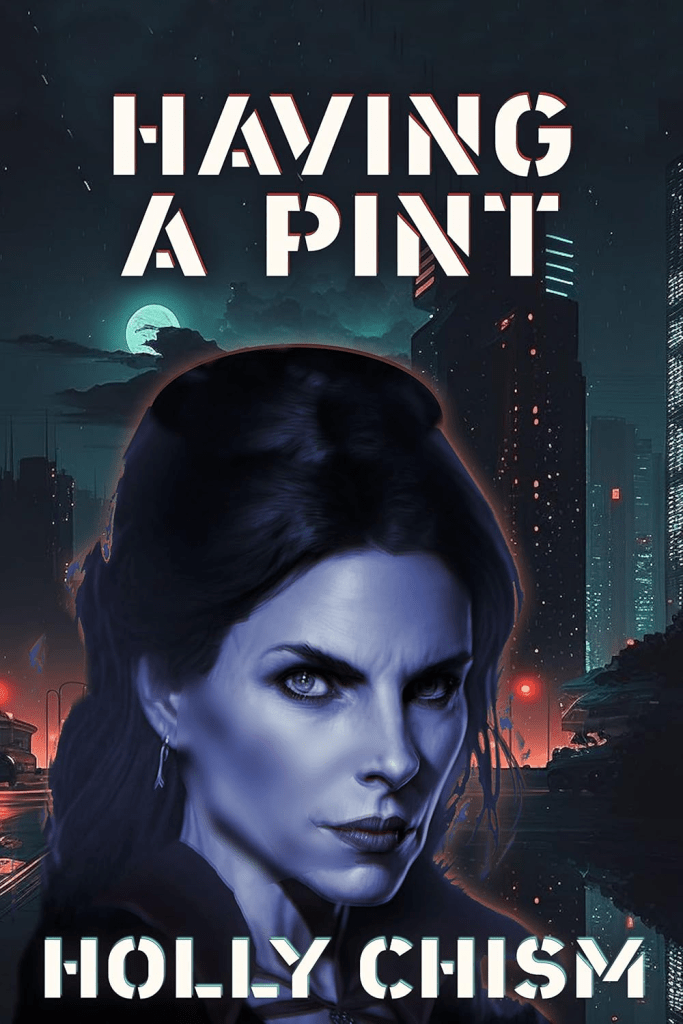
Even the dead have to make a living…
Meg Turner, vampire accountant and investments advisor, has plenty of living clients, but not many among her fellow undead. That’s about to change: she’s been invited to a regional business fair for her kind. She’ll get to meet and greet more bloodsuckers than she really wanted to (hopefully without having to suck up to any of them). than just the two Vampire cops she helped track down and stake her late, unlamented sire—and hopefully make some friends and answer some questions.
Unfortunately, she’s got a Line Progenitor who’s begun invading her dreams, and a serial killer stalking her future clients to distract her from growing her business. Throw in a sick roommate not long before the conference starts, a mafia messenger boy left on her front porch, and only one car to juggle all of her responsibilities toward her roommate and unexpected guest. And then on top of that, she has the business fair over an hour away that features vampire karaoke, nosy, pushy elder bloodsuckers, and one particular elder who’s friends with her unwelcome dream guest. Seriously, it’s enough to drive her to drink something other than coffee or blood.
Just why did she think this whole conference thing sounded like a good idea, again?
FROM KAREN MYERS: King of the May – A Virginian in Elfland (The Hounds of Annwn Book 3)
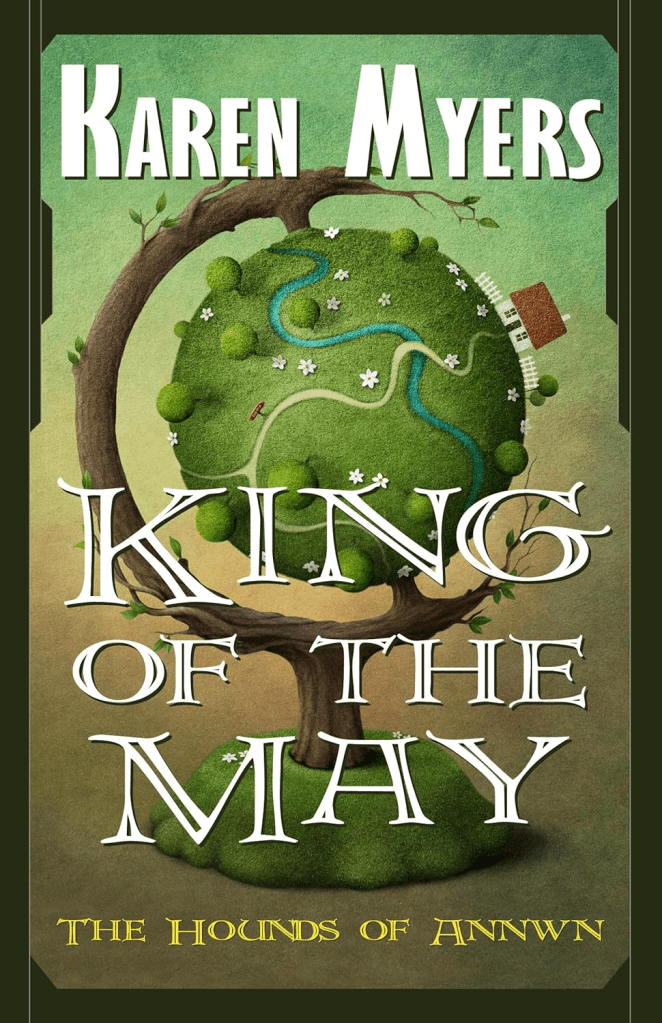
Book 3 of The Hounds of Annwn.
MORE VALUABLE AS A WEAPON THAN A KINGMAKER, HE MUST MAKE HIS OWN CHOICES TO SECURE THE FUTURE.
George Talbot Traherne, the human huntsman for the Wild Hunt, had hoped to settle into a quiet life with his new family, but it was not to be. Gwyn ap Nudd, Prince of Annwn, has plans to secure his domain in the new world from the overbearing interference of his father Lludd, the King of Britain.
The security of George’s family is bound to that of his overlord, and he vows to help. But when he and his companions stand against Lludd and his allies at court, disaster overturns all their plans and even threatens the Hounds of Annwn themselves.
George and his patron, the antlered god Cernunnos, must survive a subtle attack that undermines them both. Other gods and gods-to-be have taken an interest, but the fae are divided in their allegiances and fear the threat of deadly new powers in their unchanging lives.
George and his companions must save themselves if they are to persuade their potential allies to help. But how can they do so, attacked on so many fronts at once? Will he put his family into greater jeopardy by trying to defend them?
FROM LEIGH KIMMEL: Ice Storm
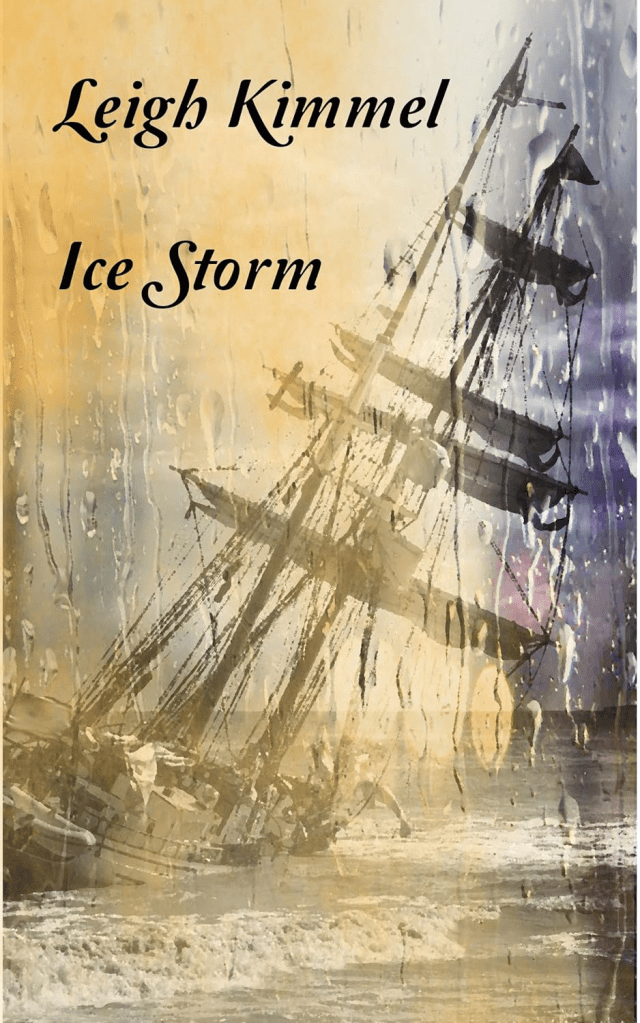
Everywhere Evangeline looks, a thin coating of ice makes objects gleam in the sunlight. However, the beauty proves deceptive, for it hides a deadly secret, one only she can recognize.
In her youth, Evangeline had aspired ot master the powerful magics of her world. Those dreams died the day her Gift awakened uncontrolled and plunged her into a vision of a full fleet battle. The Admiral’s Gift will not be denied, and for Evangeline there was no choice but to trade her mage’s robes for Navy blue.
Now she is faced with an enemy she cannot fight save by magic. Except those who bear the Admiral’s gift are forever barred from working magic.
FROM SARAH A. HOYT: No Man’s Land: Volume 1 (Chronicles of Lost Elly)
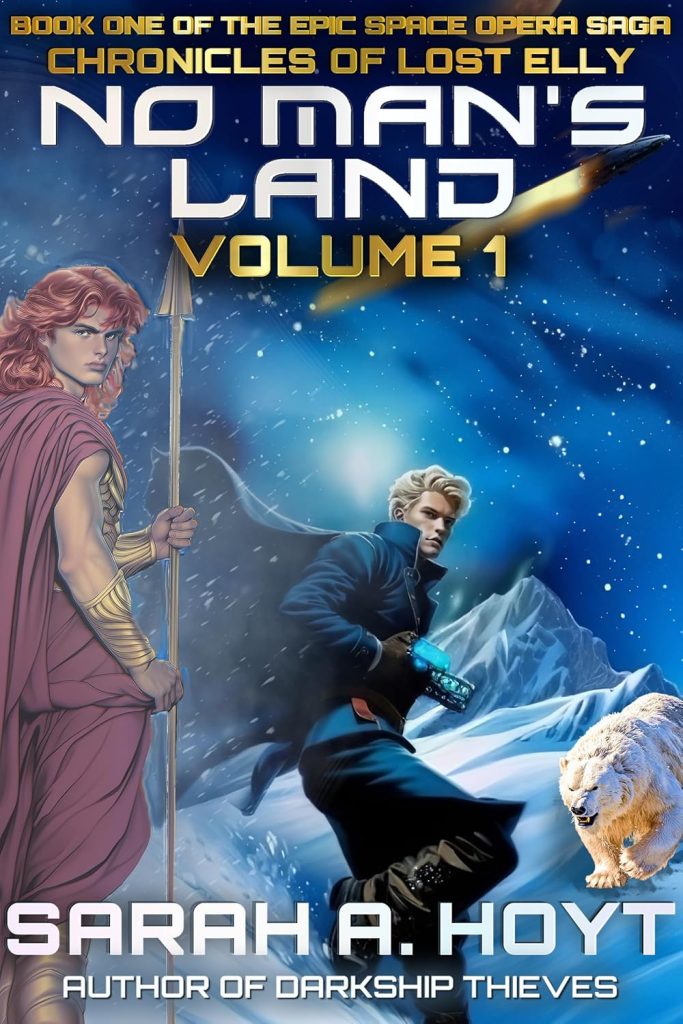
Sufficiently advanced science is indistinguishable from magic.
On a lost colony world, mad geneticists thought they could eliminate inequality by making everyone hermaphrodite. They were wrong. Catastrophically wrong.
Now technology indistinguishable from magic courses through the veins of the inhabitants, making their barbaric civilization survivable—and Publius Cornelius Scipio Africanus Kayel Hayden, Viscount Webson, Envoy of the Star Empire—Skip to his friends— has just crash-landed through a time-space rift into the middle of it all.
Dodging assassins and plummeting from high windows was just the beginning. With a desperate king and an archmagician as his only allies, Scipio must outrun death itself while battling beasts, traitors, and infiltrators bent on finishing what the founders started: total destruction.
Two worlds. One chance. No time to lose.
So what’s a vignette? You might know them as flash fiction, or even just sketches. We will provide a prompt each Sunday that you can use directly (including it in your work) or just as an inspiration. You, in turn, will write about 50 words (yes, we are going for short shorts! Not even a Drabble 100 words, just half that!). Then post it! For an additional challenge, you can aim to make it exactly 50 words, if you like.
We recommend that if you have an original vignette, you post that as a new reply. If you are commenting on someone’s vignette, then post that as a reply to the vignette. Comments — this is writing practice, so comments should be aimed at helping someone be a better writer, not at crushing them. And since these are likely to be drafts, don’t jump up and down too hard on typos and grammar.
If you have questions, feel free to ask.
Your writing prompt this week is: Pass.
*The Amazon links in this post all use my associate’s link, and therefore I earn a small commission from your purchases, at no extra cost to you.
As an FYI, if you signed up on x, we’re not ignoring you. My assistant hasn’t been able to get into her computer that has X on it for these last few days (her husband was fixing it) but that’s solved now, and you’re not being ignored.
I have a list my assistant is compiling of authors to promote who answered the call of responding if they were not afraid of being associated with this blog. I will be post them in the evening, ten at a time. Hopefully you find some new reads. If nothing else, you know these people are fearless. – SAH*
KB Carlisle is husband, father, panda enthusiast, former time traveler and professional desk chair warmer. If you can’t find him in his office, then you probably won’t find him anywhere because he is most likely lost.
He loves stories of all kinds from fairy tales and folk lore to horror and psychological thrillers and almost everything in between.
His debut novel The Book of Rose won the 2024 Imadjin Award for Best Young Adult Novel.
Check out all of his work at kbcarlisle . com
KB Carlisle would like you to consider his book: The Book of Rose
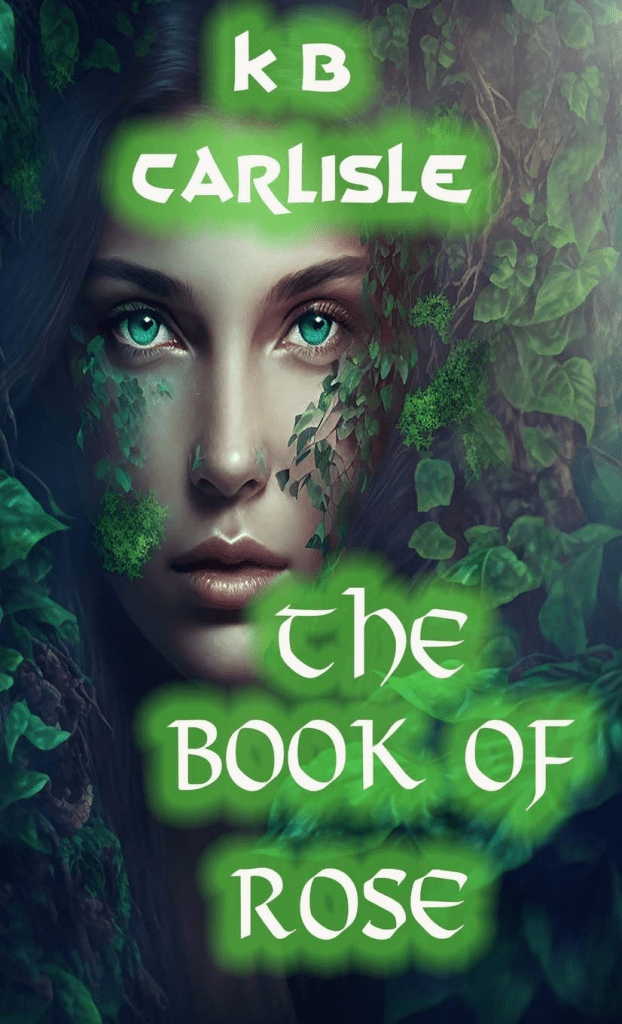
The world ended. That’s what Rose had always been told when she was a child. Every time she asked why the sky was blue or how apples grew on trees, her grandpa would grin and say, “Because the world ended.”
She never believed that it had actually happened, especially not on the same day that she was born. Even if it were true, the world that ended wasn’t a world she knew.
After all, her world was just beginning.
But when strangers appear on her doorstep, the world Rose knows is turned upside down. As she is introduced to new powers, new beings, and new questions, one thing becomes certain… her story is just getting started.
Join the multiverse of science fiction, fantasy, the paranormal and the un-normal from the mind of Karina Fabian. Here you will find snarky dragons, slapstick zombies, religious sisters who do dangerous work in space, insane psychics, and more. With books that range from the solidly serious to the happily hysterical, you’ll find adventures to challenge the mind and tickle the funnybone – sometimes both at once.
I’m Karina Fabian, and I’ve been writing science fiction and fantasy since (mumblemuttervagueness). I grew up reading Asimov and Mercedes Lackey and discovered Robert Asprin and Douglas Adams in college. These authors and the influence of my writing friends (especially in the Catholic Writers Guild) have helped me develop my unique style–humor with heart!
After 30+ years of writing and teaching, I’ve compiled my knowledge into a series of guides in print, ebook, and video! Check them out on my Write Boost page.
I’m also a speaker on topics of writing and faith as well as a standup comedian. I’m available for events. Check out my comedian and speaker pages or contact me directly for more information. https://karinafabian.com/
Karina Fabian would like you to consider her book: Gapman: A DragonEye, PI story
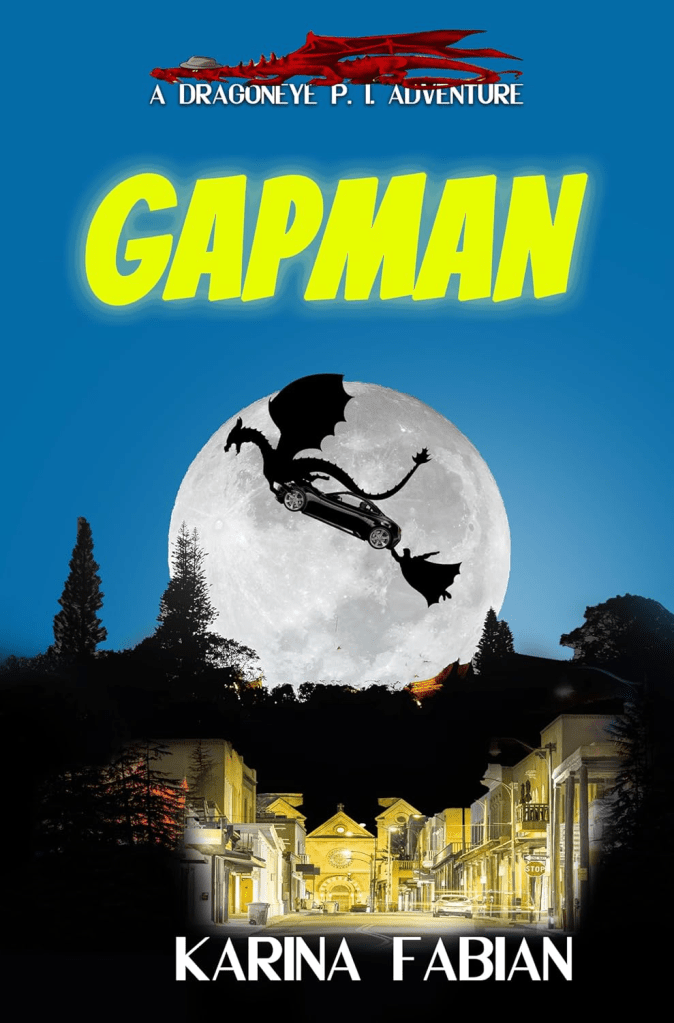
When Ron Engleson wakes up with superpowers, he’s determined to do good for the city of Los Lagos. Being the first superhero in the world is hard enough—but on the border town of the Faerie and Mundane worlds? Forget gang fights and bank thieves—he’s also fighting murder hornets and possessed geese. On top of that, he’s adopted by the local dragon, Vern, who’s under orders to train him up and keep him out of the police’s way. At least there’s a chance for romance with the local reporter—but does she want the man, the hero, or the story?
Join Gapman as he defends his mom against sleazy exes, rescues an ill-tempered chihuahua, and faces mortal danger on the Conveyor Belt of Doom!
“Yes, I’m in this book, but it really is about my padawan. Enjoy.” –Vern
Rick Hannah is living in Central Texas with his beloved wife, Daune, where they make arts & crafts. Rick made the decision between art and writing when he was 18 and decided, when he turned 60, it was past time to write.
He has self-published a collection of Sword & Sorcery stories, “Brysta of the Dawn,” and has had a few short stories published. He has a new collection of interrelated stories in the same genre now out, “The Tears of Arquazel,” Book 1 of “The Siblings.”
He’s currently working on the next book in that series and contemplating producing whimsical animal-based stories (inspired by Kipling’s “Just So Stories”) native to his Texas origins, such as, “Why the Mockingbird Mocks” and “How the Rattlesnake Got Its Rattle” and such like. The short that inspired this idea, “How the Lion Lost Its Spots” is now in search of a home since the publishers who purchased it have decided to shut down.
Rick Hannah would like you to consider his book: The Tears of Arquazel: The Siblings Book 1
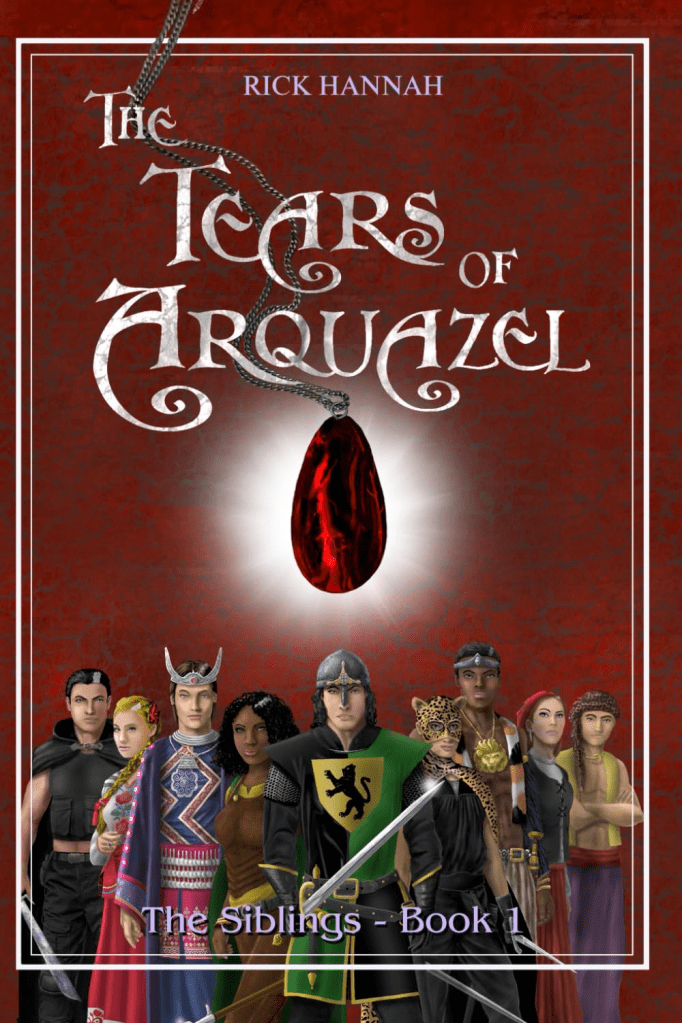
10 jewels were fashioned to enhance, protect, extend and heal. 10 jewels for 10 children. Children who must grow up and bear a heavy burden. Warriors, seers, sorcerers, rulers, conquerors… That was The Plan. The earth was recovering. The skies were clearing, the air was warming, life began to burgeon again.But one man saw in a vision that this resumption would spell the end of humanity. Mankind would grow and prosper and then, they would recover the Old Knowledge. The Forbidden Wisdom. Once again they would possess the machines of destruction, and this time, they would finish what they had started so long ago. They would utterly extinguish themselves. All of humanity would perish, a final and complete extinction event. To stop this, the man conceived a mad scheme and planted the seeds for the Siblings, exceptional men and women who would be burdened with a great task, to stop the spread of such knowledge, if only for a time. But The Plan seemed impossible to implement, too many factors beyond the man’s control, chaos warring with his notion of order. And the man had colleagues who broke away and saw his idea as a great evil and would do anything to stop it. And now, in the fracturing of his designs, as the Siblings begin to discover the fate manufactured for them, they will come to a time of choosing. Success will involve death and destruction and hatred for 100 years. Failure could mean annihilation. What path will the Siblings choose?
Stories have captivated Caroline Furlong from early childhood. She considers it a minor miracle that as a child no one ever tripped over the toys she scattered while she set up queens and sent out heroes on quests. Reading meant that the toys got taken out less, and when it came to writing at thirteen or fourteen they were put away for good.
But she continues to dream up realms and heroes, monsters and androids. They are her toys now, parading across paper rather than a carpet. The slightest suggestion – a word, a movie, a flower, or a ship – can bring a new story to mind. So, where there are dragons that talk and spaceships to fly, that’s where she will be.
Her novelette “Halcyon” appeared as the cover story for Cirsova Magazine of Thrilling Adventure and Daring Suspense’s Summer Special. The story was the focus of John DeNardo’s appraisal of the Special for Kirkus Reviews. One of her short stories was the first entry in DAOwen Publications’ Unbound III: Goodbye Earth anthology. She is also a contributor at The Mind at War, The Everyman Commentary, and Tuscany Bay Books’ blog. Her poetry appeared in Dragon Soul Press’ Organic Ink, Volume 2 anthology, and two of her stories have appeared in Planetary Anthology: Luna and Uranus. Another story by her appeared in Cirsova Summer Issue 2020. She has been published in Ember Journal and Cirsova Magazines 2021 Summer Issue. Her series, The Guardian Cycle, is available for purchase in ebook and paperback on Amazon.
Caroline enjoys history, reading, writing, swimming, traveling, astronomy, and classic cars. She lives in south central Virginia, U.S.A. https://carolinefurlong.wordpress.com/
Caroline would like you to consider her book: Contact: Angeles

While removing a prototype sensor from the prow of her new Alliance battleship, the Ausa, Captain Elizabeth Goodwin and her crew encounter a setback when one of the engineers sent to remove and stow the device is injured in an accident. Before the other engineer can help the man, the two are surrounded by amoeboid creatures which seem immune to the effects of vacuum.
Thought to be hallucinations experienced by early spacers who had been alone in deep space too long, these creatures – known as “angel fish” – startle the crew by their sudden appearance. Despite her misgivings, Goodwin allows three of the aliens to be taken aboard for study. But less than an hour after the aliens have been brought on the ship, one of Goodwin’s men is killed and another is seriously wounded.
Her search for both the murderer and the escaped “angels” soon leads to a disturbing revelation. Eventually, Goodwin must decide which threat is greater: an old enemy of the Alliance, or the fabled “angels” encountered by the first explorers from Terra.
When I graduated college I wanted to be a great writer like Shakespeare, Bradbury, Hardy, or Heinlein. Five years later and $14 richer off my writing career, I decided I needed a career that put food on the table as well. My wife, a chemist and wonderful writer herself (S. T. Gaffney) reminded me of my interest in Remote Sensing, and I spent 40 years as a software engineer with a career spanning punch cards to artificial intelligence. Now I’m back to my original career. I mostly write SF, but I write on whatever comes to mind on my own website at https://frank-hood.com and on more technical stuff at my LinkedIn site https://www.linkedin.com/in/frank-hood-b708588/.
Frank Hood would like you to consider his book: Advance Guards
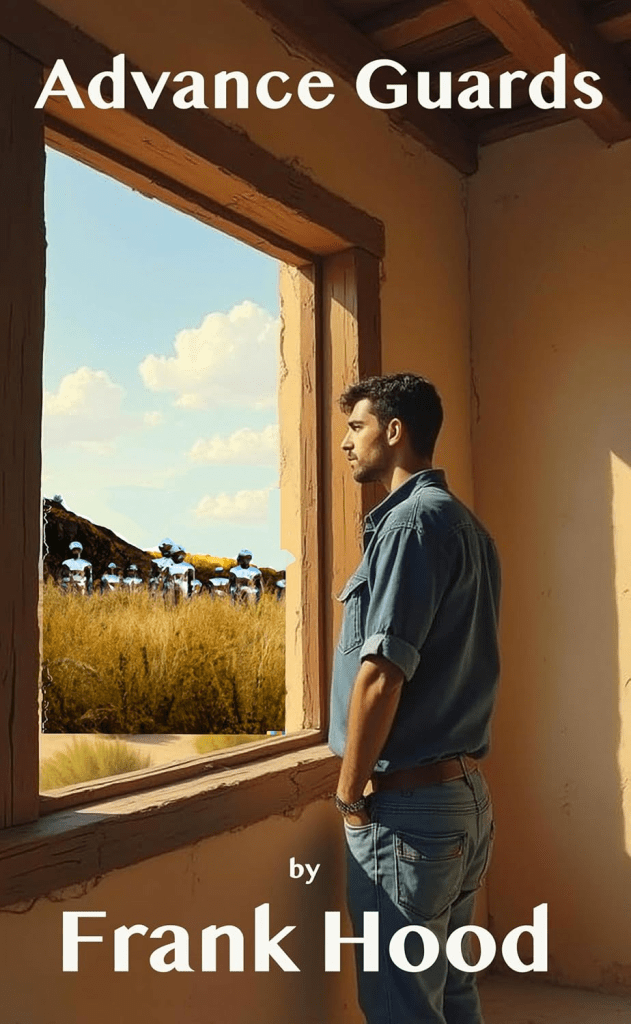
A young man and woman abandon a near-future Los Angeles that is so addicted to technology that human needs are met at the cost of everyone’s humanity. After 40 years in the wilderness that has been abandoned by the population, the family they raised returns to the city one by one to either revolutionize the dying city or be consumed by its seductive allure. Does all hope rest on their youngest son?
“Seth, everything I have, and everything I am, I now bequeath to you. Do you understand?”“Yes Father,” Samuel managed to stammer despite his father’s mistaking him for his eldest brother, the brother he had never met, the brother that had died before any of his siblings were even born, the brother that had never had the chance to grow up.
“Take care of your mother. She’s your responsibility now.”
Dan is a departure for this set, since he doesn’t publish on Amazon. but all of us who’ve read the adventures of Nastycat, Neighborcat, Othercat and Doofus knows exactly why I’m including his link to Royal Road here.
Guys, this man can WRITE!
You should probably check out Dan Lane’s current serial on Royal Road: Dr. Z’s Zombie Apocalypse
Mackey (Mac’) Chandler retired to Rochester, Michigan from a working life that spanned a large number of occupations. Mold maker, aerospace machinist, plumber, mechanic and dozen more as well as owning several businesses. In 2022 the Chandler family relocated to Winston Salem, NC to be near relatives and no longer deal with Michigan winters.
A life long time reader of Science Fiction, the authors at Baen’s Bar and their evening chat room motivated him to try his own hand at writing. His first effort was a short story titled “Common Ground” which sold to the short-lived Jim Baen’s Universe.
“Paper or Plastic” was his first Kindle book. Two series have been added starting with “April” and the second series starting with “Family Law”. The series have merged and continue to grow together. Limited print and audio books are available.
Other stand alone books and shorts bring current publications to twenty-nine.
His personal favorite book is “The Mote in God’s Eye” by Larry Niven and Jerry Pournelle. Other favorite authors include Lee & Miller, and C.J.Cherryh.
Mac’ blog is at: http://mackeychandler.com
All Mac’s books are DRM free. I respect my readers and don’t assume they are thieves.
Mackey Chandler would like you to consider his book: April (April series Book 1)

April is an exceptional young lady and something of a snoop. After a chance encounter with a spy, she finds herself involved with political intrigues that stretch her abilities. There is a terrible danger she, and her friends and family, will lose the only home she has ever known, and be forced to live on the slum ball Earth below. It’s more than an almost fourteen year old should have to deal with. Fortunately she has a lot of smart friends and allies. It’s a good thing because things get very rough and dicey. They challenge the political status quo, and with a small population the only advantage they have in war is a thin technological edge. The entire “April” series is building towards a merge with the future series that starts with “Family Law”.
I grew up in a far suburb of Los Angeles, the oldest in a family of four children, the offspring of a research biologist and an artist in stained glass, which eccentric family experience formed the basis for my first book a memoir “Our Grandpa Was An Alien” (Booklocker, 2004) after I had written many, many short accounts of growing up in mid-century suburbia.
After earning a professionally useless degree in English Literature (California State University Northridge, 1976) an un-slaked taste for adventure, foreign travel (and a regular paycheck) led me to enlist in the United States Air Force, where I trained as a radio and television broadcast specialist, and served for twenty years in places as various as Greece, Spain, Japan, Korea, Greenland and Ogden, Utah, in a wide assortment of duties and pleasures which included midnight alt-rock DJ, TV news anchor, video-production librarian, radio and television writer and producer, production manager, tour guide and driving a bright orange Volvo sedan from Athens to Zaragoza, Spain, accompanied only by a small and cranky child.
I retired from the Air Force in 1997, and began working for various small firms in San Antonio as an office manager, administrative assistant and executive secretary. By 2002, I had become exceedingly bored with all that, and leapt at an invitation to became a regular contributor to a military-oriented weblog, “Sgt. Stryker’s Daily Brief” (now “The Daily Brief”). The build-up to Desert Storm had begun, and my daughter was serving as an active-duty Marine. Writing for the blog was an outlet for me and I wrote anything and everything; essays and commentary on matters historical, personal, political, cultural, literary and military.
One thing led to another, and with the encouragement of various blog-fans, I got hooked on writing historical fiction. I brought out “To Truckee’s Trail” in 2006; that’s the story of the first ever wagon-train party to bring wagons over the Sierra Nevada, which marked the opening of the California Trail. The Adelsverein Trilogy followed, which was originally going to be just a single book, but the experiences of the German settlers in Texas became so interesting to me, and there was so much non-fiction about them that it ran to three books, and I wasn’t even finished at that. As it turned out, there are another three books, relating to some of the secondary characters in the Trilogy; Daughter of Texas and Deep in the Heart – about early Texas, the war for independence, the Alamo and the eventful decade of the Republic of Texas. My latest book, the Quivera Trail is sort of a sequel to the Trilogy, dealing with the adventures of two young Englishwomen who arrive in Texas in 1876.
Besides historical novels, I review books and movies for PODBRAM and for the Amazon Vine program, and contribute to several blogs and on-line discussion groups. I currently live in San Antonio with my daughter and an assortment of dogs and cats, and travel within Texas doing lectures and talks about my follow-up novel series, the Adelsverein Trilogy. I’m on FB as Celia Hayes, and my website is http://www.celiahayes.com/
Celia Hayes would like you to consider her book: The Golden Road (Adelsverein)

Sixteen year old Fredi Steinmetz longed for adventure and riches. What better way to find both than to follow the Gold Rush from Texas to California, But he didn’t reckon on bandits, and robbers, gold in the riverbanks, murder in the streets of San Francisco and the saloons of Moke Hill, a rich cache under a half-dead pine tree on the North Fork, of Mormons and gold-miners, fugitive Fenians, and the Lotta Crabtree, the Faery Star dancing under a glittering golden rain thrown on stage The wild west was never wilder.
Lauren Ritz started writing at the age of six with a journal entry about an alien flying through her bedroom window and landing on her wall. She would have started earlier, but she was handicapped by the fact that she couldn’t draw well enough.
After years of dabbling in this and that (making a living on the side) Lauren decided to settle down to writing full time.
You can find Lauren online, or in her garden.
Lauren Ritz would like you to consider her book: DemonTaint (Demons Bay)
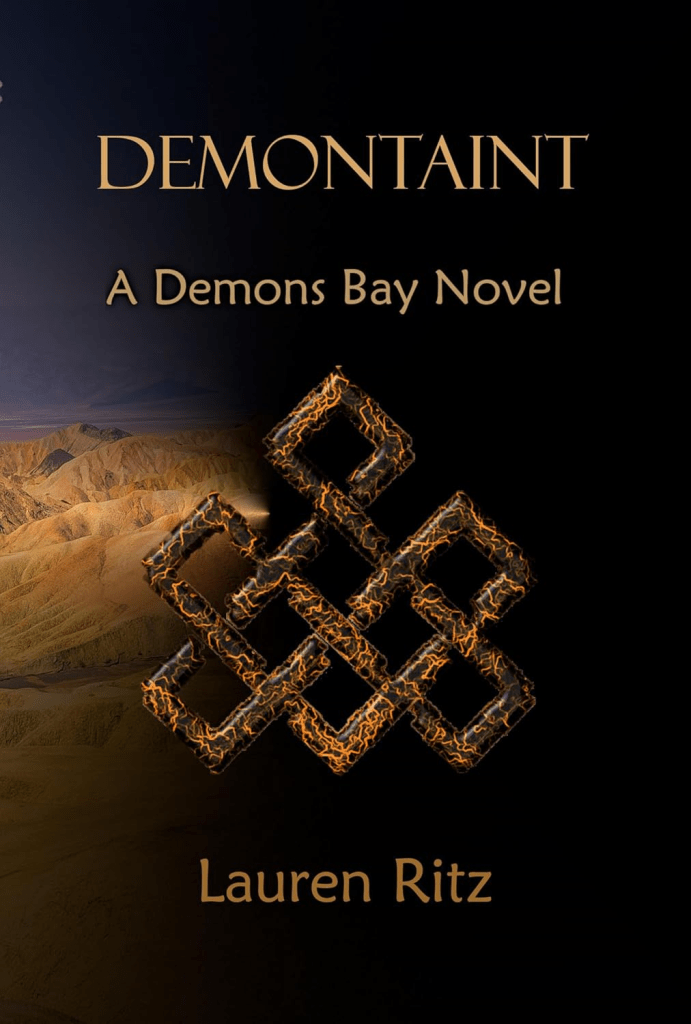
Lady Motsu Inata disappeared from her father’s House years ago. Found by a nameless woman in a cottage that moves from place to place each night while they sleep, Lady Inata struggles to raise and care for children who are not her own and who never seem to age in a timeless solitude that becomes more and more dangerous as time passes—time that the woman, with the evil of the Demons Bay deep in her eyes, would deny entirely if she could. Kobi Sibir has returned from her two years of service to the blod. She was given one instruction by the Administrators–find out how many non-human ameso there are so that the “infestation” can be contained. Kobi begins a journey toward the Demons Bay that the semi-aquatic ameso call home. Toward the cottage. Like all evil things, the Demons Bay must either own what is good, or destroy it.
I grew up in a small town in southern Minnesota at a time when Moms made homes and read bedtime stories, cars had no seatbelts, kids rode bicycles to shoot .22’s in the town dump, and we didn’t come home ’til the street lights came on. It was an idyllic childhood. I’m grateful to have had it.
Thanks for stopping by. I hope you enjoy yourself.
Nathan Bissonette would like you to consider his book: Kobold and Centaur

Worst Prom date ever. Steph only went with Sam because nobody else asked her. Besides, it was just for Prom, right? It wasn’t forever. But that was before the little man with pointed ears handed them enchanted scrolls that sent them out of this world. Now she’s stuck in far from home wearing a different body. Can Steph and Sam make it back in time to save the planet and everyone on it? And can they do it without getting killed? Or killing each other?
I am a writer, editor, technologist and contrarian living in Scottsdale, Arizona. Although I’ve worked as a programmer, I’ve been in the technical publishing industry (both magazines and books) from 1985 until I retired in 2015. I co-founded Coriolis Group Books in 1989 and ran editorial until the company closed in 2002. Most of my book-length work has been on computer technology. (See ASSEMBLY LANGUAGE STEP BY STEP and LEARN COMPUTER ARCHITECTURE WITH RASPBERRY PI, as well as many more titles now out of print but available used.)
In my spare time I’m an amateur radio operator (callsign K7JPD), amateur astronomer, and SF writer. My first SF novel, THE CUNNING BLOOD, appeared in 2005 but I have been selling SF stories to magazines and anthologies for over 50 years, and was on the final Hugo Awards ballot in 1981.I now have seven volumes of SF and fantasy on KDP Select, plus a collection of my short nonfiction and miscellaneous works, and a middle-school romance.
My wife Carol and I met in high school and have been married for 48 years. We live in Scottsdale, with one Bichon Frise dog.
*If you’ve never come across his fiction, Jeff comes with a personal recommendation from me – Sarah A. Hoyt*
Jeff Duntemann would like you to consider his book: Drumlin Circus / On Gossamer Wings
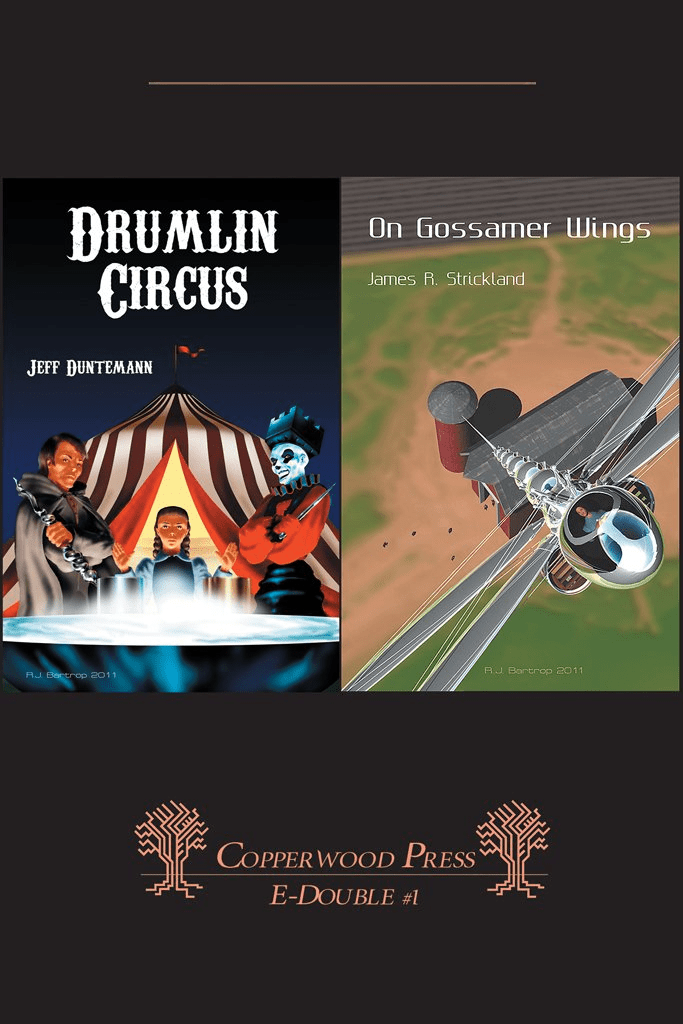
A starship malfunctions and strands its 800 passengers on a planet eerily like the Pleistocene Earth, complete with prehistoric mammals including woolly mammoths, dire wolves, and smilodons. And something else: tens of thousands of abandoned alien machines consisting of a bowl and two pillars that respond with drum-like sounds when touched. Tap 256 times on the pillars in any combination, and…something…coalesces in the bowl. It might be a spoon or an axe or a twisted lump of silvery metal. These artifacts (dubbed “drumlins”) help the unwilling colonists survive, but there’s something a little weird about what comes out of the “thingmaker” machines. High-pitched sounds sometimes make drumlins twitch and combine into more complex things. Stranger still, what drumlins do seems to depend on the thoughts of nearby humans. Wish hard while you whistle just so…and something amazing may happen. 260 years on, the castaways have created a civilization resembling late 19th Century America, based in part on coal, steam, iron, and hard work–and in part on the mysterious drumlin artifacts. Both short novels in this volume are set against this background.
Drumlin Circus: Every spring, Bramble Ceglarek takes Pretty Alice’s Wonderland Circus down the dirt roads of the west country, dazzling townfolk with clowns, acrobats, calliope music, and trained animals — especially trained animals. His wife Julia trains them with a drumlin whistle, and they obey with peculiar precision. The cultlike Bitspace Institute, hoping to train animal assassins, sends agent Simon Kassel to steal the whistle. Unknown to him, Kassel has been set up to fail by his Institute rivals who want to be rid of him, and after Julia and her apprentice Rosa are abducted by Institute thugs who attempt to kill him, Kassel switches loyalties and joins the circus as a very scary clown. He returns to Institute HQ to rescue Julia and Rosa, only to discover that the training whistle is much more than merely a whistle: a mysterious “function controller” that compels animals, human beings, and even the alien drumlin artifacts themselves to obey its bearer.
On Gossamer Wings: From out in the dry rye fields of the west, rumors have come to the Bitspace Institute that someone has drummed up something valuable from the alien thingmakers: a large sphere of pure iron. Institute agent Hiram König rides out to investigate, and discovers the strange, mute young woman who has done the drumming. He also learns that the Big Ball of Iron is just the beginning of the previously unknown drumlins that she has discovered in the vast “bitspace” of the alien thingmakers. Despite the slow progress of technology in the Valeron colony, where steam locomotives and the first primitive hydrogen airships are state of the art, Natalie Bishop is using her talents with the thingmakers to seek out the drumlin parts she needs to build a heavier-than-air flying machine. For her, the flier is her masterpiece, the work that will prove her worth to the people she cares about. The race is on for König to extract Natalie from the pressure-cooker of a small town that is her home, before it blows up around her and before she takes the dazzlingly risky final step and tries to fly.



























































































































*The Amazon links in this post all use my associate’s link, and therefore I earn a small commission from your purchases, at no extra cost to you.
I have a list my assistant is compiling of authors to promote who answered the call of responding if they were not afraid of being associated with this blog. I will be post them in the evening, ten at a time. Hopefully you find some new reads. If nothing else, you know these people are fearless. – SAH*
Amie was born and raised in the Salt Lake Valley. She started making up stories before she could read and would act them out with her dolls and stuffed animals. She started actually writing them down in college, just decided to do it one day and couldn’t stop.
She took an unplanned hiatus from writing when she went to Vanderbilt Law School and all of her brain power got consumed by cases, statutes, exams, and partying like only grad students in Nashville can. She graduated and picked her writing back up as soon as her brain limped back in after the bar exam.
She loves urban fantasy and is obsessed with the theory of alternate realities. Whether or not she travels to them in the flesh or just in her mind is up for debate.
She spends her days living the law life and her nights writing when she’s not hitting downtown Nashville to check out live music or inflict her singing on the crowds at karaoke bars.
To hear about new releases and receive a free short story you can not find anywhere else, sign up for Amie’s mailing list here: https://mailchi.mp/afc38083307c/amie-gibbons.
Amy Gibbons would like you to consider her book: Psychic Undercover (With The Undead): A Southern Psychic Mystery Romance (The SDF Paranormal Mysteries Book 1)
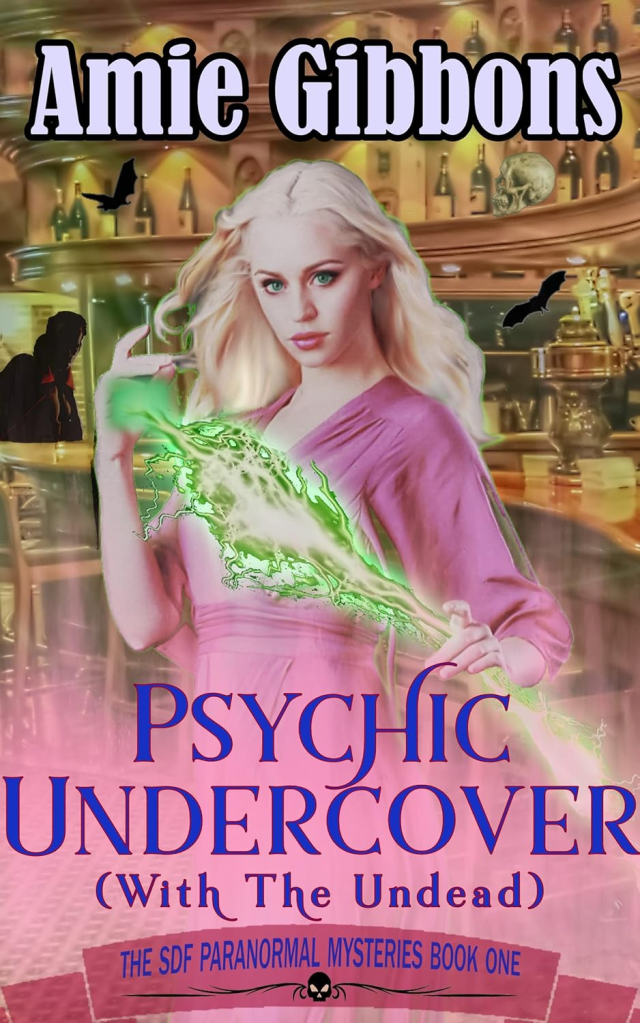
If you love paranormal murder mysteries, vampire romances, and spunky heroines, get ready for a sizzling, spellbinding ride into the world of psychic detective Ariana Ryder.
Ariana Ryder’s the rookie on the FBI’s paranormal investigative team in Nashville. She’s too young, too perky, and too immature. (At least according to some people.) She’s only got the job for one reason. She’s a psychic.
Her mama’s sure she can do more with her gifts. But what’s more important than solving crimes? Especially this one? The brutal murder of a young woman outside a club.
This murderer is just getting warmed up, and Ariana’s sight alone isn’t going to stop him, but the FBI aren’t the only one’s investigating…
The jurisdictional battle between the human and supernatural worlds isn’t the only thing boiling over as Ariana’s team and a new ally she shouldn’t trust, but is overwhelmingly attracted to, race to catch the killer before he strikes again, and gets what he really came for.
L. Jagi Lamplighter is the author of The Unexpected Enlightenment of Rachel Griffin, as well as the Prospero’s Daughter Trilogy (Prospero Lost, Prospero In Hell, and Prospero Regained).She has also written a number of short stories, articles on anime, and is an author/assistant editor in the BaddAss Faeries series.
She is a graduate of the St. John’s College in Annapolis, MD. When not writing, she switches to her secret identity as a stay-home mom in Centreville, VA, where she lives in fairytale happiness with her husband, author John C. Wright, and their four darling children, Orville, Ping-Ping, Roland Wilbur, and Justinian Oberon.
For more information see: http://www.ljagilamplighter.com/
Jagi Lamplighter would like you to consider: The Unexpected Enlightenment of Rachel Griffin (Books of Unexpected Enlightenment)

Roanoke Academy for the Sorcerous Arts – A magic school like no other!On her first day of school, Rachel Griffin discovers her perfect memory allows her to see through the spell sorcerers use to hide their secrets. Very soon, she discovers that there is a far-vaster secret world hiding from the Wise in precisely the same manner that the magical folk hide from the mundane folk.When someone tries to kill a fellow student, she investigates. Rushing forward where others fear to tread, Rachel bravely faces wraiths, embarrassing magical pranks, mysterious older boys, a Raven that brings the doom of worlds, and at least one fire-breathing teacher.Described by fans as: “Lovecraft meets Narnia at Hogwarts”, The Unexpected Enlightenment of Rachel Griffin is a tale of wonder and danger, romance and heartbreak, and, most of all, of magic and of a girl who refuses to be daunted.Curiosity may kill a cat, but nothing stops Rachel Griffin! “Lamplighter introduces many imaginative elements in her world that will delight…” VOYARecommended for 15+
This comes with a personal recommendation from my assistant’s second son, though he’s much too old for it, but he still loves it. :)
John C. Wright is a retired attorney, newspaperman and newspaper editor, who was only once on the lam and forced to hide from the police who did not admire his newspaper.
In 1984, Graduated from St. John’s College in Annapolis, home of the “Great Books” program. In 1987, he graduated from the College and William and Mary’s Law School (going from the third oldest to the second oldest school in continuous use in the United States), and was admitted to the practice of law in three jurisdictions (New York, May 1989; Maryland December 1990; DC January 1994). His law practice was unsuccessful enough to drive him into bankruptcy soon thereafter. His stint as a newspaperman for the St. Mary’s Today was more rewarding spiritually, but, alas, also a failure financially. He presently works (successfully) as a writer in Virginia, where he lives in fairy-tale-like happiness with his wife, the authoress L. Jagi Lamplighter, and their four children: Pingping, Orville, Wilbur, and Just Wright.
John C Wright’s blog: https://scifiwright.com/
John C. Wright would like you to consider his book: Starquest: Space Pirates Of Andromeda
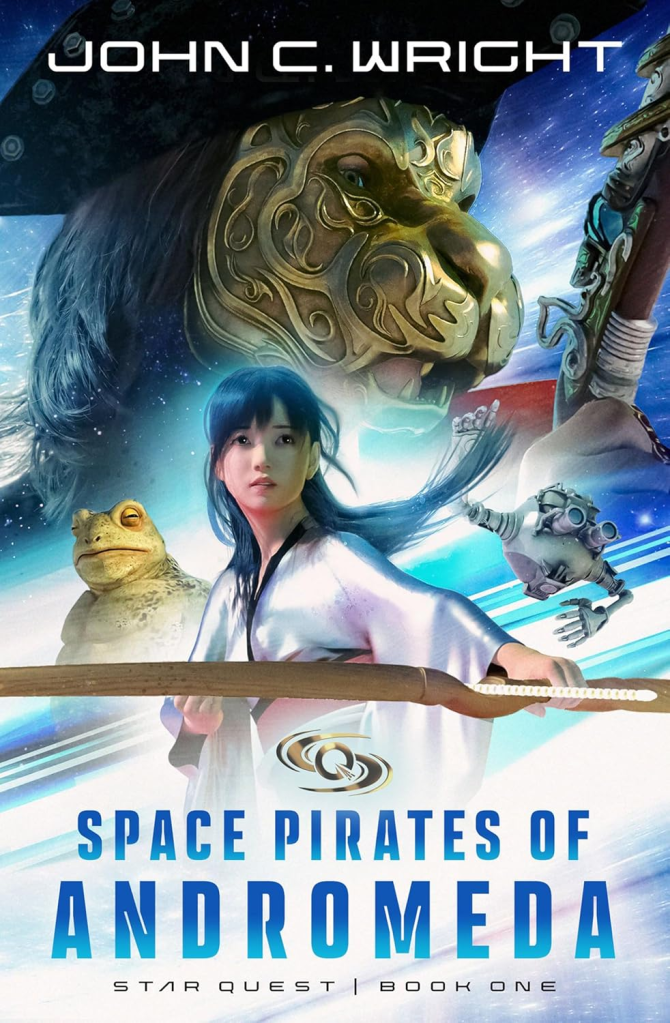
Space Opera must be Great! Gallant! Gigantic! Grandiose!
This tale told by a Grandmaster vows to return the glory that was lost!
Remember the days gone by, when science fiction was fun?
Now new hope is here!
If you are weary of weak, wan, woke and wasted works, your wait is ended!
Here is an epic, as grand as any tale of old — here you will hear wonders told!
Of course there is a Space Princess, and Space Pirates galore, and an Evil Galactic Empire.
Of course there is a super-weapon known only as the Great Eye of Darkness!
Here meet Athos Lone, Ace of Star Patrol, in his one-man mission of vengeance!
The Ancient Mariner, like an iron ghost, when slain, seems to rise again!
The mysterious spymaster called Nightshadow walks in dark worlds but serves the light!
An Imperial Deathtrooper must reverse his loyalties, and fight his own clone-brothers!
Fate has set these unlikely heroes against the Four Dark Overlords
An utmost evil the unwary galaxy thinks long dead!
Can Darkness fail and Light prevail?
Read On! For All True Tales are but Part of a Greater!
Stephen J. Simmons left his home in a teeming metropolis of 900 people in the northern Catskills of upstate New York to pursue a career as a submarine nuclear-plant operator. After he retired from the Navy in 2004, he discovered that twenty-plus years of naval service had trained him in the fine art of spinning fanciful yarns (shipmates would call these “sea stories” of course) in addition to his training in nuclear physics and the fundamentals of steam propulsion. https://www.facebook.com/stephen.simmons.395
Stephen J. Simmons would like you to consider his book: Just Grimm And Bear It (Fractured Fairy Tales Book 1)

So, you think you know your Fairy Tales?
Join the unsung younger Grimm Brother on a rollicking romp through the Enchanted Forest on his quest to help Rapunzel to reclaim her tower.
Kelly Grayson is a bestselling Amazon author and popular public speaker who spends his hard-earned royalty checks on brown liquor and guns. He lives in upstate New York with a woman who tolerates his shenanigans with a minimum of eye-rolling. https://www.facebook.com/StevenKellyGrayson
Kelly Grayson would like you to consider his book: Kindred (The SumDood Chronicles Book 1)
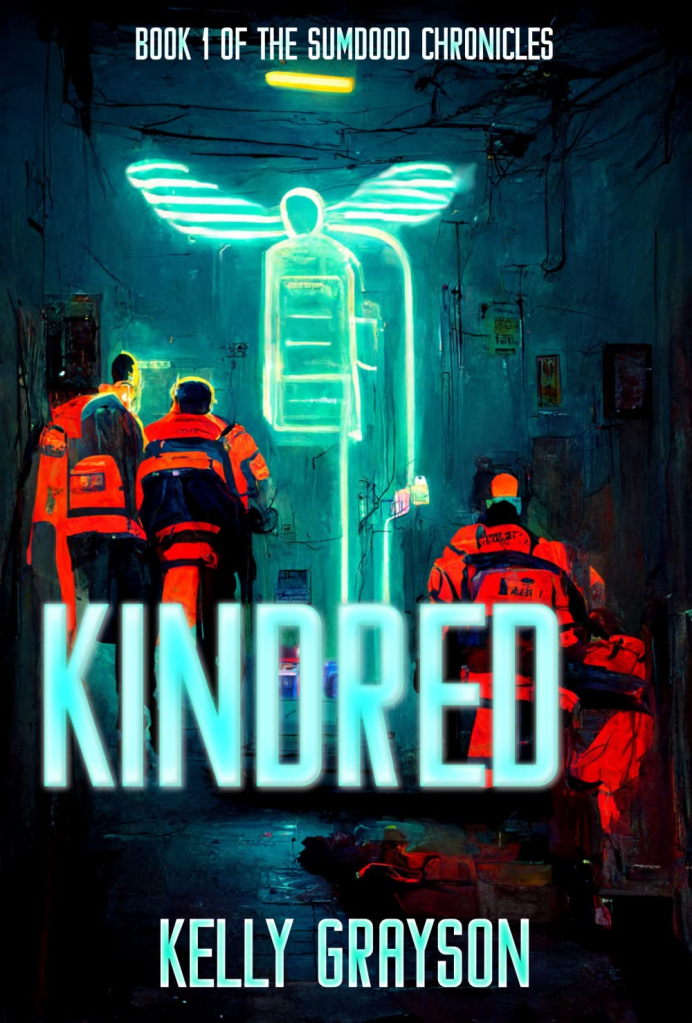
In the Dakota Territory, a U.S. Marshal haunted by his past works desperately to discover who is behind a weaponized smallpox plague and stop an incipient Sioux uprising.
A Serbian policeman, at war with terrorists as well as his conflicting loyalties, races against the clock in Sarajevo to stop the terrorists intent on setting off World War I.
A gifted New Orleans paramedic finds himself embroiled in the bloody drug cartel wars on the U.S./Mexico border, battling a new kind of plague he does not understand.
All three men have two things in common: the archangel that resides in their heads, and the fallen angel they’re pursuing.
It’s a battle as old as time, with the fate of mankind hanging in the balance.
In his quest to take over the world, Hawk has landed a series of jobs with NASA, DoD, and Missile Defense. Currently, he’s testing aircraft and spacecraft for the rigors of the natural (and unnatural) environments that only he can conquer. The recent loss of his sidekick, Vlad (to a paying job) has been painful, but he’s managed to work through the loss to conquer large swaths of Colorado. Hawk has a number of professional publications in engineering, science, history, and fantasy. He has been performing as a Mad Scientist for many years and is very close, at this point, to taking over (or destroying) the Earth. He can be found tweeting as @Sablehawk. He loves to speak at Science Fiction Conventions, such as Dragon Con, and will be happy – over a beer – to talk about any of these things for hours. Hawk currently lives in Denver CO and is enjoying the heck out of spoiling his wife and current baby girl with all of his ill-gotten gains.
Hawkings Austin would like you to consider his book: Court Human
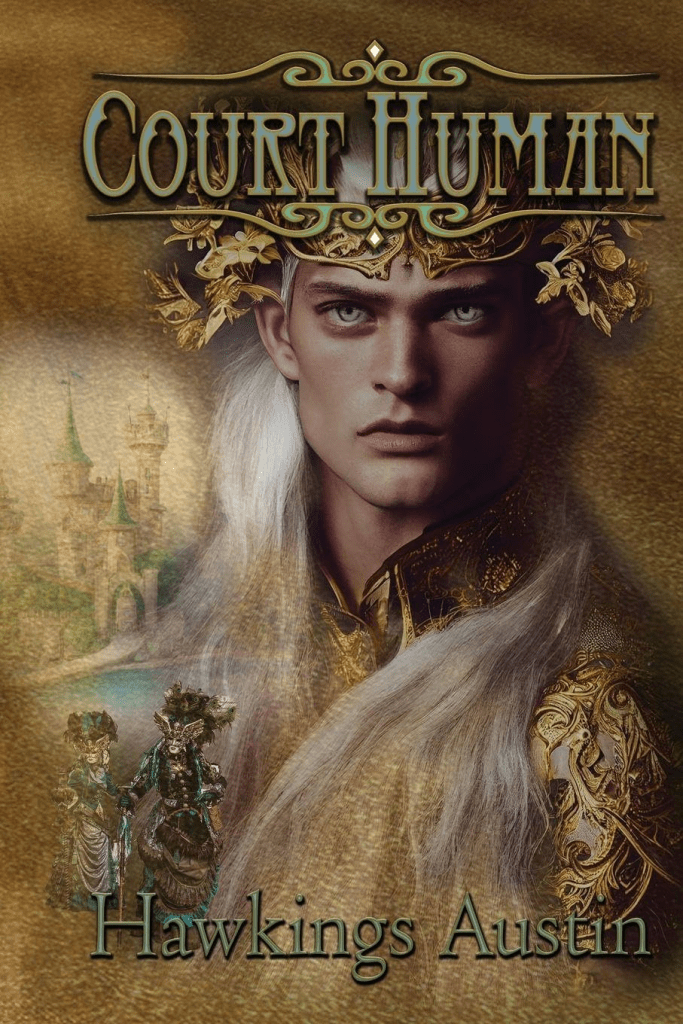
A cup of murder with your coffee?
Severn doesn’t need the Summer Court’s money and frankly, there’s more intellectual stimulation to be found in an old history book and a good cup of coffee than in the tawdry
backstabbing affairs of the Elves, but now the local folk of Karagut are coming to him for help. Could these marketplace murders be somehow connected to the rarified halls of the Fairy Palace? Severn knows digging deeper could kill him, but he can’t resist a good murder mystery.
Keith Hedger escaped Iowa at the age of 19 to serve in the United States Army as a road construction engineer and then a radio electronics technician which lead to his (current) career in information technology. When not saving other people’s data, he enjoys runs on roads and trails that extend for ridiculous distances and exercising in his garage gym. He lives in Pella, Iowa with his wife and dog. Fortunately, they tolerate his workouts and his habit of hiding in the office, listening to loud music and coming up with stories. You can also follow Keith at https://www.keithhedger.com/
Keith Hedger would like you to consider his book: Moving Target: Book 1 of the Burn & Karma Series (The Burn and Karma Series)

She took a last gig for big cash. They had to bury her to hide their deeds. Can she move fast enough to survive?
Breeze didn’t see the double cross coming. After doing jobs for their source before, she’s shocked to find a kill team waiting over her dead getaway driver. When she gets clear and finds out what the job was, she has to save her team.
Desperate, Breeze chooses to cut a deal with her hunters. But deals with devils are always complex, and she fears they have something crushing planned for her.
Can Breeze dodge the devils’ plans or will she be sacrificed to their goals?
Moving Target is the exciting first book in the Burn and Bad Karma series cyberpunk series. If you love thrilling action and cyberpunk, then you’ll love Keith Hedger’s engrossing thrill-ride.
Buy Moving Target today!
Beth Elliot is a writer and musician who lives in California.
https://bethelliott.substack.com/
Beth Elliot would like you to consider her book: Redemption Through Love!: An Irreverent Guide to Wagnerian Opera Thrills Without Being a Nut (1)

There is a world of music, beautiful, thrilling, powerful and romantic music, that one composer wrote to express the theme of Redemption Through Love! He wrote this music for “sacred music dramas” he believed could transform the world through art. His stories come from legends and mythology and folk tales, and he meant them to resonate deep within the subconscious mind, long before modern psychology knew this could be done. And they do. His music has inspired observations like “Some people are made to feel by his music that they are in touch with the depths of their own personality for the first time: a feeling of wholeness, yet unboundedness; compared to a mystical or religious experience.”Is this what you think of when you think of Wagnerian opera? Or do you think of heavy Germanic arias sung by heavy Germanic divas in horned helmets? Do you imagine yourself surrounded by pedantic Wagner cultists ready to look down their noses at you and test your worthiness to enter the temple, with stuffy conversations about the most arcane and obscure performances about which hoi polloi like you surely must be woefully ignorant?Dear music lover, this author believes you should associate with Wagner a world of beautiful, thrilling, powerful and romantic music that will thrill you, uplift you, caress you, transform you, and leave you in a state of sheer delight!Contrary to popular impression, access to the glory and wonder of Richard Wagner’s art can be easy and inexpensive. If you do nothing more than pick up a couple of albums of overtures, preludes, and Ring Cycle highlights (with vocal lines transcribed for orchestra), you’re in for a real treat. Wagner proposed art as a transfiguring rite of passage to a higher world. Approaching his art with an irreverent attitude can propel you confidently past any snooty operatic gatekeepers. And this book will summon that irreverent attitude from the depths of your music-loving soul.There is everything one could want in this book in terms of Wagner knowledge and deep insights into the deep themes underlying his music dramas. Presented irreverently.
I write in a variety of genres when it comes to fiction. My short fiction ranges from mainstream to fantasy/science fiction and several things in between! My novels are mostly inspirational fiction, except for a fantasy series I’m working on with the talented Azure Avians.
In addition to my fiction writing, my column “Laura’s Look” appears weekly in the News Sun (Highlands County). In it I talk about all kinds of things, from news of the day to my family.
Look around, check things out. Hopefully you’ll find something you like!
https://www.facebook.com/laura.ware
Laura Ware would like you to consider her book: Seek and Ye Shall Find

Two years ago, Gary Benson’s world as he knew it ended. His daughter Sarah died in a car accident while she was arguing with Gary about religion. The tragedy left Gary filled with guilt and estranged not only from God, but also his Chinese wife and their remaining daughter, Sarah’s twin sister Melanie.When Melanie, arrested and accused of being a Chinese National Christian while visiting family in China, disappears, Gary must marshall all of his contacts as an ex-Special Forces member and senior CIA analyst to try to save her.He blamed God for one daughter’s death. Can he find a way to forgive God – and himself – to save the other in time?
Kevin Creighton is a full-time gunwriter and firearms instructor who has written articles for just about every firearms-related publication you can think of. Raised in Canada at the foothills of the Rocky Mountains, he has lived and traveled extensively in Latin America.
https://www.facebook.com/kcreight
Kevin Creighton would like you to consider his book: Salvation

Vengeance belongs to someone.
John Rogers is a retired Army Ranger and bodyguard living in Southwest Florida. After years in personal security, John seeks a quiet life but is drawn back into the darker side of life when his best friend asks him to protect a volunteer on a mission of mercy. The novel explores themes of redemption, justice and faith, as John grapples with his past, begins a new romantic relationship and rekindles his spiritual beliefs.
*Look, before I start this post I HAVE TO brag. Which is kind of like having to bake, with fewer pans and flour. No shade on Mark S. who still wrote my favorite Amazon review, but this one…. this one is not a good review. It’s the review I’d have dreamed of if I knew this was possible! REVIEW OF SARAH HOYT’S NO MAN’S LAND. I’m not sure how I deserved this. I’m sure I’m not worthy, and all I can say is “aye, aye, captain. Working on Orphans of the Stars as much and as fast as I can” -SAH*

There are things I seem to have been appointed to scream out in the desert (by whom is a good question. Perhaps a superior power. Perhaps my subconscious. I don’t care. Whatever it is is much smarter than my conscious mind and seems to come to accurate conclusions on insufficient data, so I listen.)
So I’ve spent my time screaming what I think is obvious in the face of overwhelming opposition. Though some of them the rest of the world seems to be coming around on. One of those is “The population is NOT exploding. Paul Ehrlich was wrong on this too, as on everything else. What we have are incentives to over report. The real danger is population dearth. The only real wealth is human beings and human minds.”
But there are others. Oh there are others, and some of these I scream in the face of my own unalterable pessimism. And the thing is, although the pessimism shouts back that all is doomed, so far the optimism has been correct. Whether I’m like the man falling from a high building, passing the fifth floor window and going “So far so good.”is way way above my paygrade. And I likely won’t find out in my lifetime, even if I live another 40 years, which is unlikely but possible.
Because what I’m saying is not that the fight is DONE and everything will be rainbows and flowers from here on. That has never happened in the history of humanity and never will. Humanity is forever on the edge of a precipice. All we can do is catalogue the good, the bad, and hope that our descendants keep good trends going or combat the bad.
However, these my inner voice thinks is true:
In our current fight, we have already won. What remains is mop-up which, as we all know, is the most dangerous portion of the action, because the enemy has nothing to lose and will go all out to take even one of us.
We — potentially, there’s a couple of big inflection points ahead — stand on the very edge of a mountain of achievement that will take us to the stars, make us a multi-planet species and make our descendants healthy and wealthy beyond the dreams of avarice. Which in turn will create more achievement, because that’s how it works. (And no, it won’t be paradise. No paradise in this sorry world where world means this universe.)
Everything is upgef*cket and will need to be rebuilt in the next 20 years. Everything: Physical infrastructure, education, institutions, our transmission of our civic culture, the rebuilding of faith in our churches. AND don’t get me started on the rest of the world. We might be able to do it. I’m not sure about them.
AND the dictum meeting with even more resistance than those: Stop blaming and beating the young. And by young in this case I mean 45 and younger. Every generation complains about inheriting a broken world. They didn’t in fact inherit a broken world. Neither did we. Neither did Cain and Abel to use metaphor. The world is no more broken than it’s always been in this our vale of tears. THEY DID HOWEVER INHERIT AN EDUCATION SYSTEM AND INSTITUTIONS THAT CAN’T BE TRUSTED. NOT EVEN A LITTLE BIT.
Look, all of us, even people my age (this isn’t saying much as I came after. More on that later) were badly educated for the world as it is. This is because since the eighteenth century or so the world has been changing faster than the culture, mostly due to tech, and the whole process is accelerating.
I, for instance, took a degree in languages and literature which yes, would have given me instant entrance into a teaching profession (in Portugal) and since I’m insane and came out with seven languages and at the top of my class in most (except German, and even there I was in the top ten. I just hate German. It’s too organized for my brain.) supposing I got a personality transplant, I could have become a diplomat of some sort. (This was what mom, G-d rest her, was holding out for. It’s like she never met me. In answer to her hopes, my brother drafted a newspaper article from 2030 where I’d been declared Persona non grata in every country in the world, including Portugal.)
But the degree wasn’t actually designed for any of that. What it was designed for was to make me “an accomplished young lady” who would shine in the marriage mart. Because it was established that long ago, and universities in Portugal were very slow to change in spirit. (And yet a bunch of Marxism had crept in, mostly through literary analysis. No. It’s no more valid there than anywhere else. The people who maintain that the theory is wrong but “still valid” for this or that are actually saying “So the theory that there are cows on the moon is complete insanity, but still good for NASA mission planning.” Come again? I must be hearing wrong.)
This is normal. This is bog standard. This is what we always went through. And part of the reason when young we think the world is broken for us specifically. Because we’re young we trust what we were taught and are angry and bewildered it doesn’t match anything.
My kids generation and later (I COULD have kids who are now forty five, if I’d got started early and if my fertility were higher than that of your average rock in the desert) had a particular cross to bear though that was much worse than that.
When I said “I came after” I meant it had already started in my generation, though we had it slightly better due to societal inertia. This is good and bad. Good, because we can understand how effed up things can be. Bad because we who are now grandparent age have internalized “everyone goes through this. They just need to fight harder” and then blame the young more. Which is very very bad, because the system has corroded further since our time and because if we were ejected into a world that was fast-setting jelly holding us down, they were ejected into a world that’s quick-set cement and with fewer resources than we had because education has also decayed further. Oh, no further than that. Let me tell you as someone who taught her kids around and after school, I saw some decay in what they got, but didn’t realize how dire things were till I met their friends. (Look, my kids are genetic, compulsive over achievers and tend to associate with their like. This means I’ve met the creme de la creme of their generation at least in their circles. The depth not just of their ignorance, but what they learned that is bizarrely possibly even intentionally wrong is unfathomable. You stare into it and the abyss answers back “Wut?”)
And every one of these kids now entering middle aged is still struggling more than we did in our twenties, because all of American (and we’re still the best of the west) society has been weaponized AGAINST them. They weren’t allowed to take crappy teen jobs to build resilience AND defray their college expenses AND give them a resume. (My kids made up jobs, but it wasn’t enough. There is no such thing as a paper route at 12 anymore. There isn’t even mowing the lawns for money. There isn’t EVEN a lemonade stand, because if they catch you they’ll fine you within an inch of your life.) We treat them like lepers and blame them for what they don’t know. AND to put the cherry on the cake, the project of our (spits) “elites” for the last fifty years has been to outsource their jobs to foreigners either legal or illegal, either here or offshore, because it’s cheaper. It’s not that the kids expect to come in at middle management. It’s that there is nothing but the crappiest, most weaponized against humans jobs (Retail, now, where you don’t even know your schedule day to day but you’re still required to keep it, blindly, regardless of other commitments, even family and classes. No, it’s not just the kids whining. Ask some of the commenters who are very much adults and stuck in that how much fun it is.)
Then there is the “came after” thing. Look, I knew that I — already — didn’t have the education my dad or my brother had. And it’s not modernization, since that hadn’t hit in Portugal. I was born in sixty two at the very end. (No, not a boomer, for this and many many other reasons.) My brother is almost ten years older. My brother went through school in the same elite set of schools (his was the boy’s side) I attended later. (Mom maneuvered into it with faked addresses, etc. It was public school but it was also where most people went into college. Not a lot. It was by grades on a final, national, blind graded exam. But about 2 to 3% of our high schools made it in, compared to 0.5% of the general population.)
My brother learned Latin and (I THINK) a modicum of Greek in high school. Mathematics through Calculus. Serious physics and chemistry and all the rest. He came out of high school with an education our recent college graduates have no way of touching till maybe a Masters degree.
I came in well, he was advanced faster, so a full 10 years or more later. Latin was gone. Greek was gone. Only French was taught, we had to fight for me to get English. The rest? Cutesy things like sociology (Scientific Marxism really. Yes, Weaponized Envy Fantasies) had been brought in. The rest was still there. And I still graduated from high school with what would now be a “general knowlege” (Whatever they call those) college degree.
However, even back then, at the dawning of the eighties, I knew I’d only been educated to about my brother’s Middle School level. I KNOW. I read his books. (And tried to learn, but like all autodidacts I have holes the size of the grand canyon and don’t always know where.)
What happened? Well, I didn’t find out until I was reading a book on the “educational revolution” of the sixties, which I’d picked up at a bargain bin, because it was a couple of cents, and I read everything.
What happened was the boomers. No, not throwing shade on those of you of that generation. This was “activists” plus the bizarre idea at the time that the youth cohort would keep increasing, be a force in politics, and we should APPEASE them now, instead of making them learn and work. (You see this in Heinlein’s novels. I don’t remember in which high school students were striking for higher pay and no homework. Yes, satire, but it tells you what people at the time expected of the future.) Turns out the “Student revolts” of the sixties and seventies weren’t all anti-war or for the transmission of lice among the unwashed. They also demanded and got a watering down of the curriculum, the retiring of strict professors and well “Credentials for nothing and our degrees for a lot of money but no effort.” The truth was the colleges were, of course, cool with that. because more money, less work, more power to bureaucrats.
The “revolution” propagated downward, particularly as a lot of the graduates of those times became the teachers my generation got in middle and high school. (Which explained the plague of “Call me John. I’m just one of you. You’ll teach me more than I teach you” we started getting hit with in sixth and seventh grade, and which MULTIPLIED.)
Wait a minute, Sarah, you’ll say. You were in PORTUGAL. How did that propagate? Are you really going to ask that? For my entire life — my parents’ entire life and dad is in his late 90s — the future has come from America, and everywhere has decided whatever America did was the thing to do (all while hating America. Humans, amiright?) For illustration see covidiocy. And also foreigners tend to do it harder and more stupidly. When America Sneezes the rest of the world catches pneumonia.
So I know what it’s like to be ejected into the world half-taught. And husband and I had to fight his parents to get them to understand the “get a job, be loyal, they’ll be loyal in return and you’re set for life.” We came into the work force in 1980. Most people got jobs after a long period of working crappy temporary jobs. Thing is there were A LOT of temporary jobs (this was largely before outsourcing, so that was the hack to exploit people at lower wages.) And retail was not scheduled “at need” by computers, so you got your schedule a week or two even ahead. Pay was crappy, but the jobs were predictable. You could navigate two or — when I was in retail I had a friend who did this and so did her husband. For extra difficulty they also coordinated it so that one of them was always home with the baby at any given time. Heroes, both, but this isn’t even possible now. Now it would take a daily miracle — three retail jobs.
On top of that these people, adult citizens, who vote, were ejected into the world with absolutely no understanding of fundamental realities of life, like biology, history and economics.
“But they could learn” you’ll say. And I agree. They could. The amount they’re TRYING to learn is sweet and overwhelming and will bring a tear to your eye, honestly. Not all of these kids, of course (the killer of Iryna Zarutska is the age of one of my kids, after all) but by and large, the decent kids of these generations are fighting like heck to patch up their knowledge and learn what should have been their civilizational birthright.
This is very easy when it comes to things like “how to repair a toilet flush mechanism” or “how to cook beef Stroggonoff” or even “how do I maintain my lawn.”
For other stuff… well, as a mostly autodidact the biggest problem is you don’t even know what you don’t know. Latin and Greek, say are easy to figure out you should know, so you could read the foundational texts of the West in the original. Learning is a little harder, because all languages are harder in isolation. (It has occurred to me I should start a study group for these on Discord. It might help me.) But the other stuff? Do you know how many times I think I’ve researched something to the Nth degree for a book, and then a beta (Or, heaven forbid, a reader after it’s published) says “Sarah, your entire second half of the book is impossible. Don’t you know that x y z didn’t happen like that/works like this?” And no. I’d never stumbled on it in years of research, and honestly had no idea I was even missing it.
When it comes to things like history though (or economics. DEAR LORD economics) the ground shifts. Yes, there’s a lot of information and 99% of it is poisonously wrong. And they came out of school without enough information to know this is crazy cakes. AND with a ground in, bone-level distrust of the institutions that taught them or employ them.
I’m now coming across videos by thirty somethings on youtube who think Tartaria and the mud floods were real and really happened and are being covered up. This is not a joke. PEOPLE BELIEVE IT. And not stupid people.
Which brings me to the point of this post, over two thousand words in. We keep saying they weren’t taught history, but this isn’t true. They were taught history. That’s why they’re in a permanent panic about Nazis and completely missidentify what Nazis were and what they did.
Look, if you don’t live with a computer person: there’s a new thing called Vibe Coding, aided by AI.
I’m not going to diss WELL DONE vibe coding (Yes it exists, and I really am not dissing it, you can sit down Matt and Ian.) My husband assures me there is such a thing (so does ESR and he should know.) and it saves you time and is amazing.
For the rest of you: it is where you give the AI code instructions in plain languate, then use the code given. (This is grossly simplified. Again, sit down Matt and Ian. I’m not TEACHING vibe coding. You want to explain it better, send me articles.) It is best applied by those who understand code, because they can see where there are bits that do nothing or are just bad, and fix it.
It’s disastrous in the hands of those who don’t know what they’re doing.
The kids, and by kids I mean anyone younger than 60 were LARGELY (in the US there remained pockets of competency) taught vibe-history.
I was, but only for the twentieth century. The rest was much deeper, though honestly I don’t even know if I was taught it deeply in school, or it just felt that way because by the end of middle school I’d run through my father’s considerable historical library both fiction and non fiction.) When I came to the states I found an incredible emphasis on bullet points, dates and names, with absolutely NO understanding of what was behind it. You learned the “points” of the declaration of independence, but not where the ideas came from, why they were codified that way, what the opposition was. NOTHING. I believe this was because it was the early eighties, and it was easier to grade multiple choice, so teaching was mangled to fit multiple choice. (I could be wrong.)
OTOH I suspect the 20th century vibe history was intentional. I remember learning that the Nazis were racists. That they killed “inferior races” (And Jews. even at the time I remember a long argument with a teacher on “How the heck can they be considered either a race or inferior. A few brave souls in my form backed me. This was in Portugal.) that they wore impeccable uniforms and were all about the public order and cleanliness. And that Nazis preferred blonds. That they had death camps. That they were very hard on criminals (defined as anyone who disobey them.) AND were nationalists. They were evil.
Meanwhile, the communists were the opposite of the Nazis, and wanted everyone to be equal and free, loved all races, and were the good guys.
Yes, the holocaust was mentioned. (Not soaked in, as it was for my kids, but mentioned.) BUT note that it was all a bolus.
Since this was vibe-history with no context, you exited school absolutely convinced that any two of the Nazi characteristics was the road to hell. If you dressed impeccably and were blond, you were probably a Nazi. If you preferred to date blonds, you were a Nazi. If you favored order and justice upon criminals you were a Nazi. If you admired the military and read military fiction or bios (guilty) you were DEFINITELY a Nazi. And if you loved your own nation, its culture, its customs, its people? NAZI. Dangerous Nazi, as you were probably just waiting to exterminate everyone else.
Meanwhile the Communists were kind of like hippies with fewer lice (maybe.) They were into free love and hated no one, and just wanted everyone to be equally rich and happy. THIS DURING AND AFTER THE STALIN PURGES.
The reason this was so badly vibe-taught-history was two fold. What the Nazis were and what they did was the result of ideas — particularly state control, eugenics and state planned economy — which were everywhere at the time. The allies were slightly less tainted than the Nazis and hadn’t reached terminal state. (Looks at Canada and Great Britain who are getting there.) You couldn’t teach how the Nazis had become what they were without indicting FDR. So instead you pointed at other, incidental characteristics, and screamed. If that failed you pointed at Hitler and said they’d elected (doubtful, it’s more complicated than that) a madman and that’s what put them over the top.
As far as I know, this is still taught exactly this way. The kids have no way WHY the Nazis were objectionable. They just know they were and these characteristics accrue. Which is why so many of the young and the infantile old lose their minds every time we have a President who loves his country or works for the benefit of his people, and double lose it if he dresses well, or is married to a blond.
Because they know nothing but the code they were handed and which they don’t understand, of COURSE they think Trump is Hitler. To understand why he isn’t they need a short course in real history.
They need a course that makes them understand that given a state for whom citizens are possessions of the state, it always ends the same way and in the same tired old atrocities, whether they call themselves Nazis or Canadians. If the state thinks of citizens as objects to be manipulated for the benefit of the ever more controlling state, sooner or later eugenics creeps in (I’m looking at you Possessed Spain) and starts batch killing the old, the poor, the lame, the weird, and yes, any minority the state designates evil-bad according to what hat the state put on that morning. No madman needed. That mind set seems to make everyone a little mad and glad to sleep walk into hell.
And this is the problem. Of all the horrible things we’ve done to the young, teaching them Vibe-history is the worst. (And now it goes all the way to the prehistory and the mythical communist, matriarchal pre-history for which there not only isn’t any proof, but there’s plenty of evidence against.)
They’re navigating this world by maps painted by a madman with his own shit on the wall of an asylum.
They don’t even know what they don’t know.
The miracle is not that so many of them sound insane. The miracle is that the MAJORITY doesn’t. For that we must thank their innate distrust of institutions.
So what can we do? Teach. Teach as much as you can, by every means you can, patiently, gently, as respectfully as you can.
Yes, we’re old and tired (even those of you in your thirties. This timeline ages a sane person) and this is a very difficult job. It’s much easier to set fire to everything and hope paradise emerges from the ashes.
I have bad news. We’re here because people have been setting fire to everything for a hundred years. At this point, it’s hard to reach beyond the ash, the cinders and the radioactive cultural waste.
More fire will do nothing except make it harder.
Yes, you can walk away. Sure. Why not. You can wash your hands of the human project and walk away.
BUT you are as human as I am. If you value any shred of humanity, or our potential, of our future, and want our descendants to have a chance? Teach.
I’m not asking you to bring an history book to every casual encounter, or to go on a long-winded rant as I tend to on this blog.
I’m asking you to try to put in a word of truth and perspective. Here and there. As opportunity offers. And if you can, incorporate it in your art, your writing, games you create, anything really to help the medicine go down. No, not preaching, just the world view.
Truth has a force of its own. And the generations after mine are starved for truth. DYING for it, sometimes literally.
Stop calling them bad names and stomping on the hands trying to grasp the top of the cliff. Help them up and teach them how to stand.
So they can walk into the future.
*The Amazon links in this post all use my associate’s link, and therefore I earn a small commission from your purchases, at no extra cost to you.
I have a list my assistant is compiling of authors to promote who answered the call of responding if they were not afraid of being associated with this blog. I will be post them in the evening, ten at a time. Hopefully you find some new reads. If nothing else, you know these people are fearless. – SAH*
Kal is a graduate of the United States Merchant Marine Academy. He followed in his parents’ footsteps and joined the US Army after graduation and served as an active-duty engineer officer, a reservist, and as an active reservist. He is a combat veteran with deployments to Iraq and Afghanistan. Kal has a master’s degree in environmental engineering and has worked in civil construction and environmental remediation.
His enjoyment for seeing new places has been facilitated by his career choices, and he’s been to over thirty countries. Kal likes hiking, fishing, and skiing, and his favorite places are typically in the mountains of Colorado. His other hobbies include wargaming, tabletop RPGs (both as a DM and player), metalworking, and just about anything else that takes his interest.
A father and husband, Kal and his family live wherever the Army tells him to (he doesn’t often get much choice in the matter) but he thinks of Colorado as home.
His website with more information, details on upcoming books, other random things can be found at kalspriggs.com His facebook is: https://www.facebook.com/kalspriggs
As an extra bonus, Kal once saved the Hoyts from being homeless for three months! (Long story, our lease ended before the house we were buying was ready for move in. So he stepped in at considerable sacrifice.)
Kal would like you to consider his book: Spectres of Valor: A Military Science Fiction Novel (Valor’s Cohort Book 2)
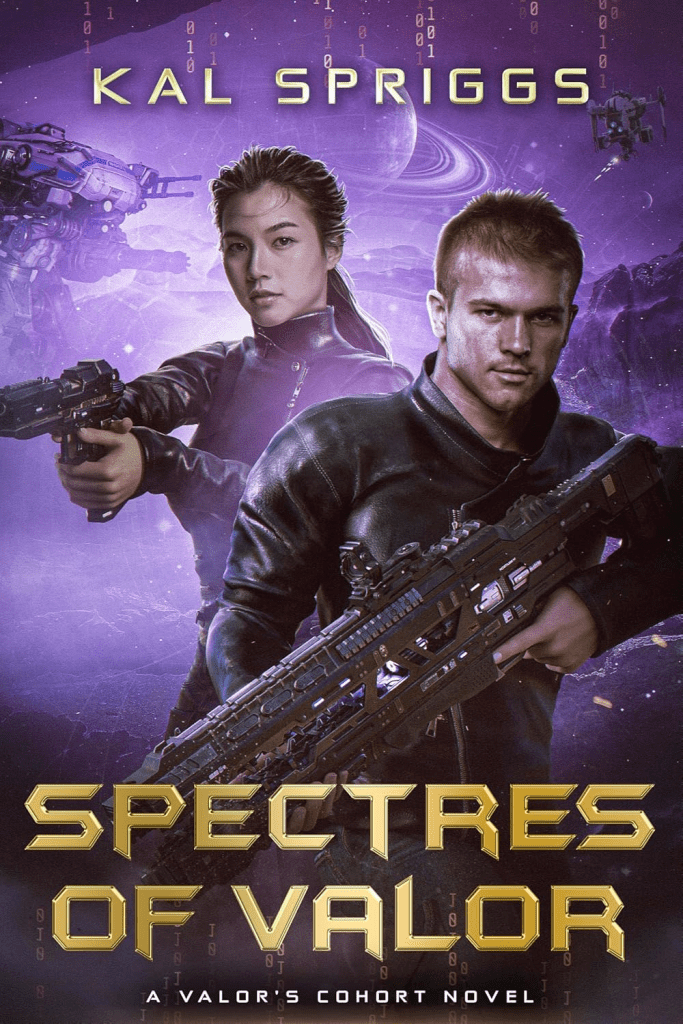
Century has fallen.
With their defenders killed or scattered, the alien Culmor Empire has seized and occupied the planet. Only a handful are able to oppose the aliens, hiding in the shadows and trying to survive.
That struggle is far more personal to Ashiri Takenata and Alexander Karmazin. They are both children of multiple worlds, one a refugee who dreams of her distant ocean planet, the other trained for the military from birth in the hopes of reconquering his stolen birthright. They have fought in the shadows to free Century and now they start taking that war into the light.
But they have stumbled across a terrible truth. The world of Century is too valuable for the aliens to allow it to be liberated. The Culmor have created a doomsday plan, one that will leave the world’s cities as smoking craters, that may well scorch the world’s very atmosphere away.
To fight the aliens, to free their world, Alexander and Ashiri must become more than shadows, they will need to become spectres, able to strike and disappear without a trace. If not, their friends, families, and entire world may pay the price.
Wife and a mother of five, J.F. Posthumus is an IT Tech with over a decade of experience. When she isn’t arguing with computers and their inherent gremlins, or being mom to the four younger monsters (the eldest has flown the nest and is doing quite well on his own), she’s crafting, writing, or doing some other sort of art. An avid gamer, she loves playing Dungeons & Dragons, and a variety of other board games with her family and friends. She’s also a hopeless romantic, thanks to all the fairy tales she cut her eyeteeth on—they were what J.F. Posthumus learned to read before she discovered the Boxcar Children Mysteries. From there, she fell into the rabbit hole that’s reading, where she discovered a love for mysteries, fantasy, and the occasional romance. Since writing was her favorite subject, she naturally incorporate dice her love of murder, mysteries, and fantasy into her works.
This is J. F. Posthumous facebook page: https://www.facebook.com/jennie.posthumus
J. F. Posthumous would like you to consider her book: Scales of Injustice: A Injustice Series Novel (Corruption Universe Book 2)
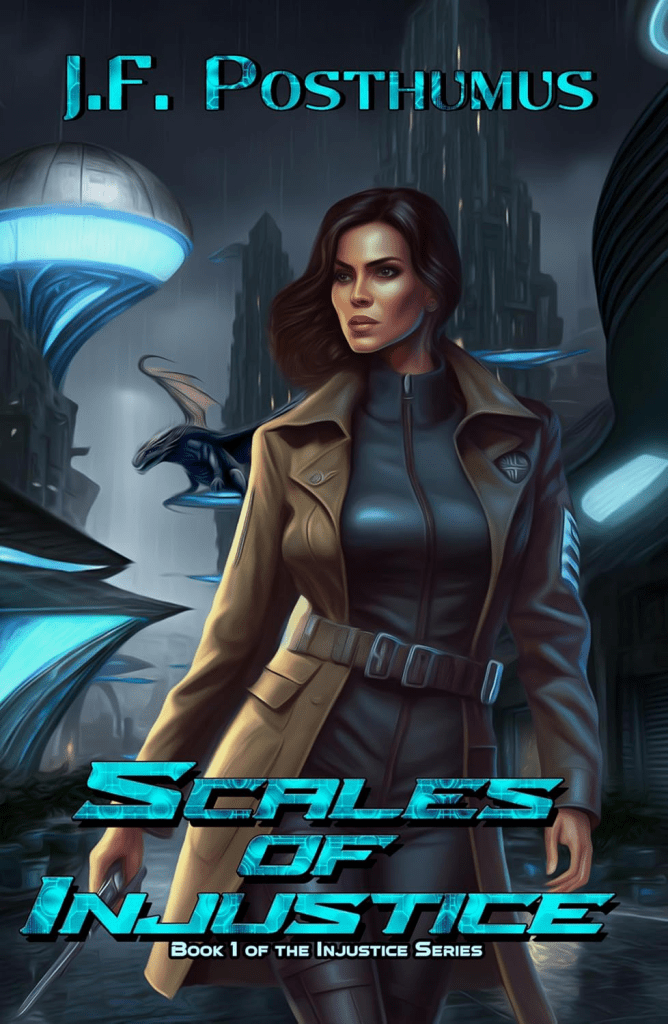
Justice is deadly.
Violetta Cq’linns—a relentless homicide detective on the world of K’lais—lives by the law. But when she digs too deep into department corruption, she finds herself framed for the one crime she didn’t commit… murdering the chief of police.
Now, she’s a fugitive with a target on her back, hunted by the very force she once called family. With nowhere to turn, her only lifelines are a ruthless crime lord demanding a dangerous favor—and an old flame whose loyalties are as unpredictable as her own fate.
But Violetta isn’t going down without a fight. She was raised to survive. Trained to finish what she started. And the people who set her up? They have no idea what’s coming.
Shami Stovall is a multi-award-winning author of fantasy and science fiction. Before that, she taught history and criminal law at the college level and loved every second. When she’s not reading fascinating articles and books about ancient China or the Byzantine Empire, Stovall can be found playing way too many video games, especially RPGs and tactics simulators. She loves John, reading, and writing about herself in the third person.
https://sastovallauthor.com/newsletter/
If you want to contact her, you can do so at the following locations:
Website: https://sastovallauthor.com/
Twitter: https://twitter.com/GameOverStation/
Facebook: https://www.facebook.com/SAStovall/
Email: s.adelle.s@gmail.com
Shami Stovall would like you to consider her book: Knightmare Arcanist (Frith Chronicles Book 1)
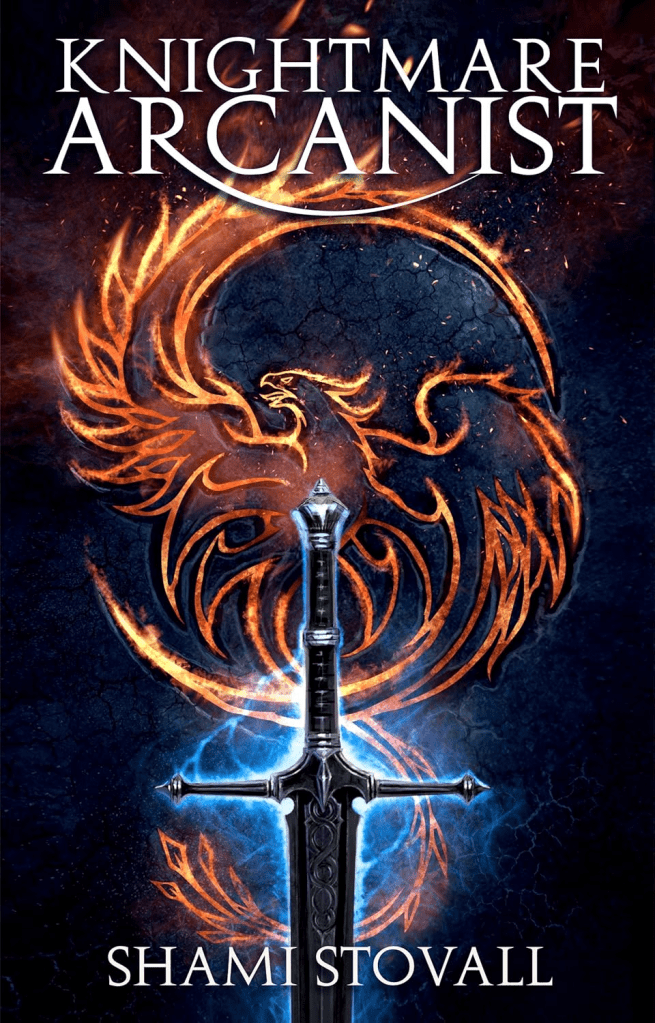
“Knightmare Arcanist by Shami Stovall was rollicking good fun! Perfect for those who enjoy the Codex Alera series, the Thomas Wildus series and the Harry Potter series. Stovall is quickly becoming a name I look for.” – Seattle Book Review
Magic. Sailing. A murderer among heroes.
Gravedigger Volke Savan wants nothing more than to be like his hero, the legendary magical swashbuckler, Gregory Ruma. First, Volke needs to become an arcanist, someone capable of wielding magic, which requires bonding with a mythical creature. And he’ll take anything—a pegasus, a griffin, a ravenous hydra—maybe even a leviathan, like Ruma.
So when Volke stumbles across a knightmare, a creature made of shadow and terror, he has no reservations. But the resulting bond leads Volke down a path he never expected. One where he might have to fight against his hero to save everything he loves.
A fast-paced fantasy with magical creatures for those who enjoy the Furies of Calderon (Codex Alera series) by Jim Butcher, Unsouled (Cradle Series) by Will Wight, and Percy Jackson and the Olympians by Rick Riordan.
Charli Cox is a best-selling multi-genre author. She believes in writing stories with humor because life can be dark sometimes; let’s embrace a little joy wherever we can.
Whistles of the Wendigo, an Alternate History/Military Fantasy novel set in the Joint Task Force 13 universe from Three Ravens Publishing, is available now!
If you enjoyed Fae Wars: Northwest Front and want to see more stories about Ash and “Gunny,” Cannon Publishing has you covered. “Sasquatch” is available now in the Cannon Fodder: Tales From the Gun Crew anthology. Also, please be sure to leave a review!
Representing #teamandmore, Charli’s first published short story is in The Phoenix Initiative: First Missions from Chris Kennedy Publishing. She has stories in Bureau 42 and Express Elevator to Hell, also from CKP.
Charli’s previous experience has been as a Realtor, HVAC Business Manager, IT Office Manager, and freelance bookkeeper. Professional skills such as drafting strongly worded emails transition surprisingly well into writing fiction.
An animal lover and #boymom, she lives in SW Oregon with her Leg husband, two sons, an Arabian mare, and two Husky mixes who think they are hooman.
Learn more about Charli and sign up for her newsletter on her website. Hang out with her on Facebook, Instagram, X, and/or TikTok.
Charli Cox would like you to consider her book: Whistles of the Wendigo: A Joint Task Force 13 Legacy Novel (Joint Task Force 13 (JTF 13))
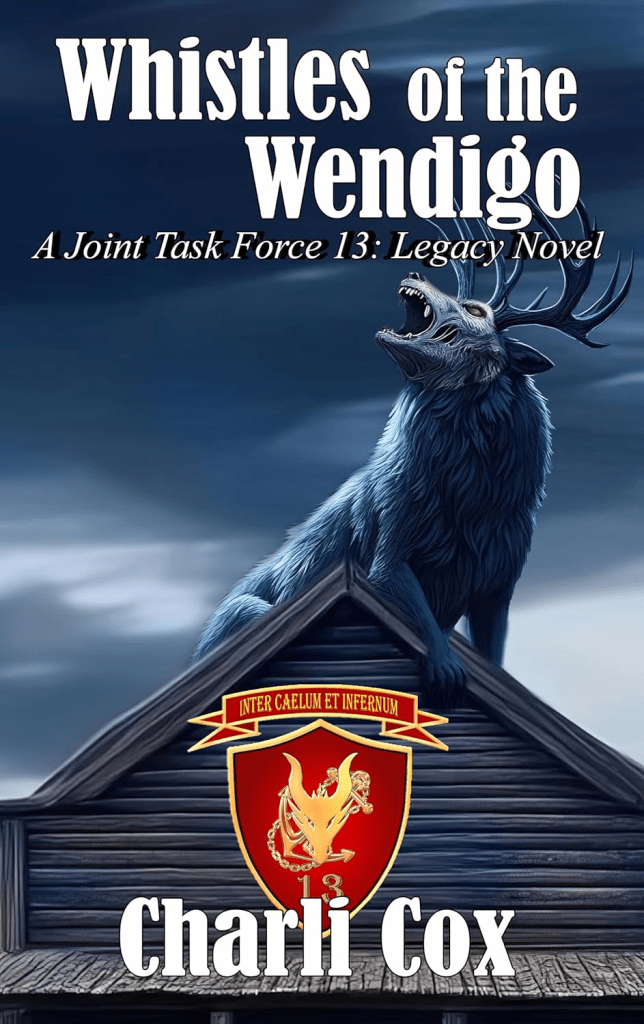
When the war ends… a new nightmare begins.
The smoke of the Civil War has barely cleared when another battle ignites—this time, on the homefront. A fiery prohibition movement is tearing the state apart, and the governor calls in the US Army’s 6th Cavalry to keep the peace.
But peace is the last thing they’ll find.
On patrol, Sergeant David Wilkerson and his troop ride straight into a ghostly fog—and straight into hell. A terrified horse disappears—a mangled carcass returns. Something ancient and hungry has awakened.
The saloons go silent. The townsfolk go missing. The line between law and chaos is about to be crossed.
Now, with tempers boiling and terror creeping in from the shadows, Wilkerson and his men must ride into the unknown, face what lies in the mist…
…and stand as the last defense between Heaven and Hell.
James Young is a double threat, both writer and publisher. James Young is a an editor / author of alternative history author and science fiction hailing from Missouri. Leaving small town life, James obtained a bachelor’s in military history from the United States Military Academy then went on to spend six years as an armor and staff officer in Korea, the Pacific Northwest, and Germany.
After serving his commitment to the Republic, James returned to the Midwest to obtain his Masters and Doctorate in U.S. History from Kansas State. License for evil, er, Ph.D. in hand, Dr. Young now spends his spare time torturing characters, editing alternative history anthologies with far more famous authors (see his Arc of Ares series), and admiring his wife’s (Anita C. Young) award-winning artwork.
On Amazon, you can check out James’ Usurper’s War (alternative history) and Vergassy Chronicles (science fiction) series, both of which he is diligently working on now that the academic yoke is from around his neck. Outside of Amazon, Dr. Young can be found at sci-fi conventions selling books and merchandise as James Young, Slinger of Tales. Stop by his booth sometime and he’ll be happy to tell you about his latest project then discuss World War II carrier doctrine.
In addition to his positive fiction reviews, Dr. Young also writes non-fiction military history. His books Barren SEAD (Vietnam) and Eagles, Ravens, and Other Birds of Prey (post-Vietnam through Desert Storm) chart the evolution of USAF Suppression of Enemy Air Defense doctrine from 1953-1991. Besides his books, his awards include winning the United States Naval Institute’s 2016 Cyberwarfare Essay Contest, placing as a runner up in the 2011 Adams Center Cold War Essay Contest, and having USNI select his article “The Perils of Distribution” for inclusion in the Leyte Gulf 80th Anniversary issue of Naval History.
This is his professional facebook page: https://www.facebook.com/ColfaxDen/
James Young would like you to consider his book: On The Sea: Naval Alternate History (Arc of Ares)
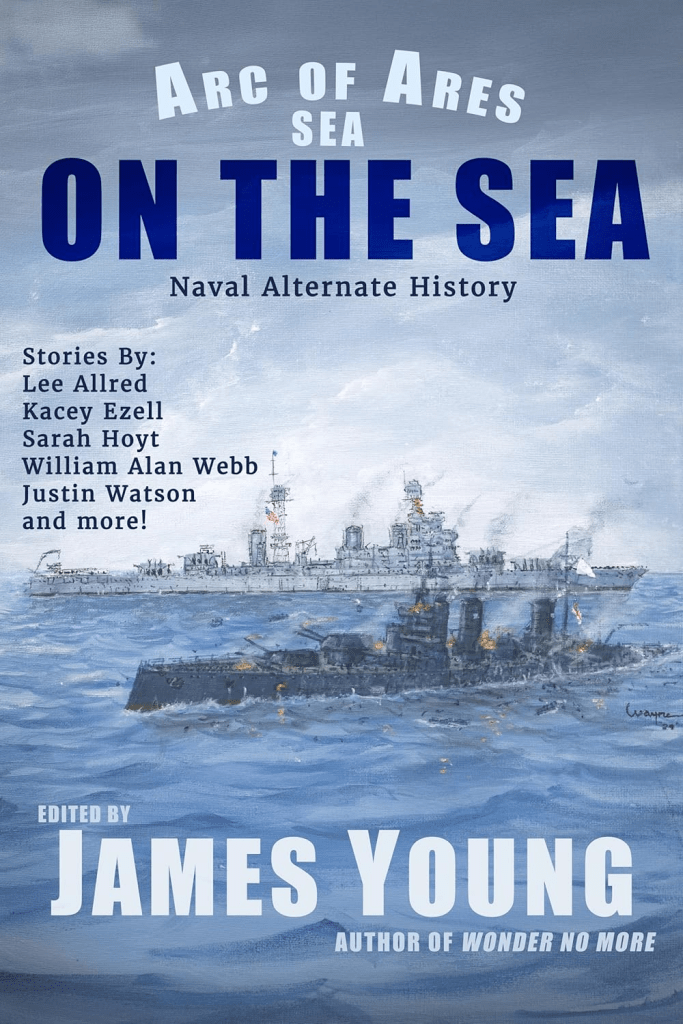
You seldom hear of the fleets except when there’s trouble, and then you hear a lot.
— Admiral John S. McCain
The sea. Bearer of commerce, fertilizer for empires, and a battlefield where the environment itself is set to kill the warriors who engage each other upon it. From the galleys of ancient Greece to the deadly, silent murder machines of the nuclear age, Mankind has set across the oceans to visit great harm upon their fellow man on distant shores. On The Sea brings you alternate endings to these voyages, with characters and points of divergence as varied as the oceans themselves.
Prefer your sea tales in an era of wooden ships, coal smoke, and iron men? Dragon Award Winner Sarah Hoyt (“For Want of A Pin”), 2025 Imadjinn Award Winner Dan Kemp, and Day Al-Mohamed (“Martha Coston and the Farragut Curse”) will give you all the splinters, canvas, and cannonballs you could ask for.
Like your torpedoes to be self-propelled rather than damned and your fleet actions wreathed in coal smoke? Veteran authors Joelle Presby (“A Safe Wartime Posting”), Rob Howell (“Far Better to Dare”), and Philip Wohlrab (“Beatty’s Folly”) bring you very different endings to the Spanish American War and World War I that stretch from the Falklands to the Irish Sea.
“I don’t know, I’m more a fan of Long Lances than Black Lung…” Dear reader, On The Sea has so many Imperial Japanese Navy cameos, there should be an Imperial Chrysanthemum on the cover. Two-time Dragon Award nominee Kacey Ezell, 2024 Imadjinn winner William Alan Webb, and Sidewise Award Finalist Lee Allred will give you turning points from the volcanoes of Rabaul to the far reaches of the Indian Ocean.
More a fan of Détente than Bushido? 2010 Sidewise Award winner Eric G. Swedin provides a new short story set in his When Angels Wept universe, while 2020 Sidewise nominee William Stroock keeps the Geiger counters growling with his short “Atlantic Flash.” If you like your points of deviation with more pho sauce and less unscheduled sunrises, 2025 Dragon Award nominee Justin Watson (“Decision Over Cam Ranh”) and editor James Young (“Mr. Ford’s Cats”) provide two very different views of war in Indochina.
Bottom line: Whether you’re partial to Ares or Poseidon, On the Sea has alternate history that scratches the nautical itch. With a carefully curated mix of previously published favorites and new stories, this thunderous conclusion to the Arc of Ares series reflects what happens when the war god brings his chaos over the water’s edge. Grab a cutlass or activate the CIWS, as the fish are about to get fed!
Editor’s Note: Also includes excerpts from James Young’s Wonder No More, an alternate history of the Battle of Leyte Gulf.
Gray Rinehart retired from the U.S. Air Force after a rather odd career. “Eclectic,” he likes to call it. During his first and second assignments, he researched and wrote the first edition of Quality Education. He is the only person to command an Air Force tracking station, write speeches for Presidential appointees, invent a poetic form, and have his music played on The Dr. Demento Show.
After retiring from active duty, Gray became a Contributing Editor for Baen Books, and also spent several years on the staff of the Industrial Extension Service at North Carolina State University. His fiction has appeared in Analog Science Fiction & Fact, Asimov’s Science Fiction, Orson Scott Card’s Intergalactic Medicine Show, several anthologies, and elsewhere. His first novel was originally published by WordFire Press. He is also a singer/songwriter with three albums of mostly science-fiction-and-fantasy-inspired songs—two of which have been featured on The Dr. Demento Show.
Gray Rinehart would like you to consider his book: A Church More Like Christ

A church like Christ would
· Teach like Jesus
· Worship like Jesus
· Pray and live and love like Jesus
Is your church a force for good, a light in the darkness, an outpost of God’s kingdom in the world? Do the wounded find comfort and healing in your church? Do the broken find repair and restoration? Do the vulnerable find help and hope? Does your church offer refuge for the oppressed, a hand up to the beaten-down, and recognition to the unseen? If so, this book may not be for you.
If not—if your church is divided against itself, or focused only on itself, or more judgmental than caring—it may be that the church is not as much like Christ as it could be. A Church More Like Christ can help you examine how Christlike your church is, and give you new ways to think about what it means for a church to live out the faith it practices.
If the church were quicker to comfort than to condemn, quicker to heal rather than harm, quicker to love than to hate, disparage, or ignore, perhaps it would be a greater source of inspiration, strength, and change in people’s lives—and in the world. If so, it would be, in effect, more like Christ.
Josh Griffing is a lifelong lover of beauty and the written word. He blogs intermittently at subcreated-worlds.com.
Josh Griffing would like to consider his book: Pyre and Ice
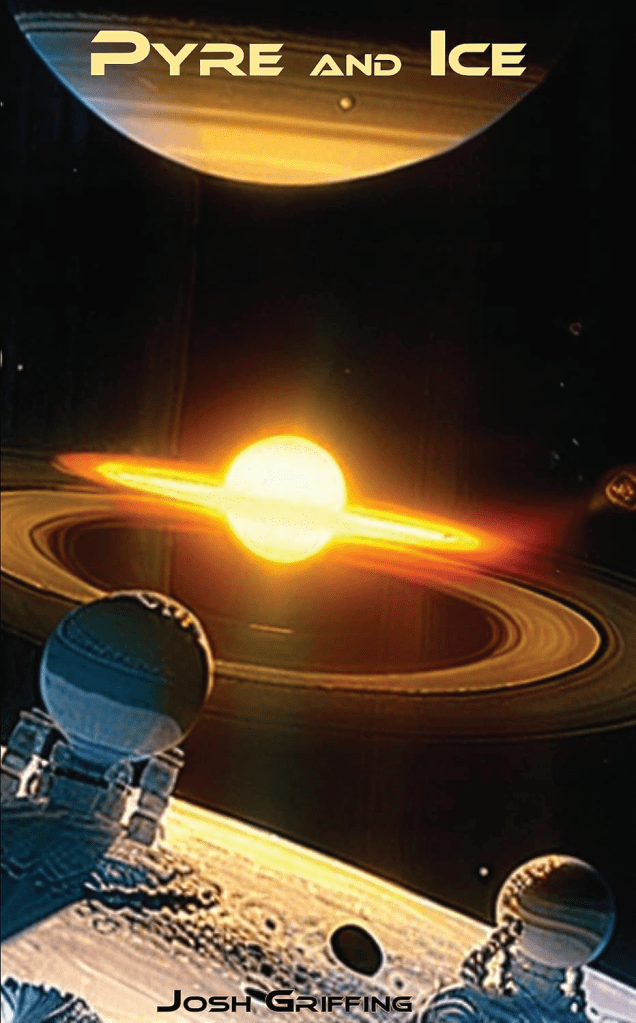
A Crisis on Titan
“Me heat’s gone, Jamie!” McGregor said. “I can’t feel me leg!”
“No you doan’! I ain’t t’ set by an’ let my mate cark it up here! Ye’re one mate I ‘ave wi’ blood worth bottlin’!” Stobbins stooped and lifted McGregor from the ice.
Even through his gloves he felt McGregor’s right leg growing colder. But frostbite was the least of their worries as the men confronted a danger that threatened to destroy their entire mission from within.
Titan is a frozen and unforgiving world. Only men and women with fire in their hearts will conquer its cold frontier.Per author’s design, his book is released without DRM.
G. Scott Huggins grew up in Wichita, Kansas and now lives in Wisconsin. At a young age, he fell in love with the worlds of Pern, Tran-Ky-Ky, We Made It, and many more. He studied all around the world, and speaks both German and Russian. He is a graduate of the Clarion Writing Workshop (1997) and sold his first story in 1999.
When he is not writing science-fiction and fantasy, Huggins teaches history at The Independent School. With his wife, he is in the process of raising children and tolerating cats. His favorite authors include G.K. Chesterton, Dan Simmons, C.S. Lewis, Lois McMaster Bujold, Larry Niven, and Terry Pratchett.
Scott Huggins would like you to consider his book: A Cold and Mortal Spring: A Flintlock Fantasy epic novel (The Wishkiller Saga Book 1)
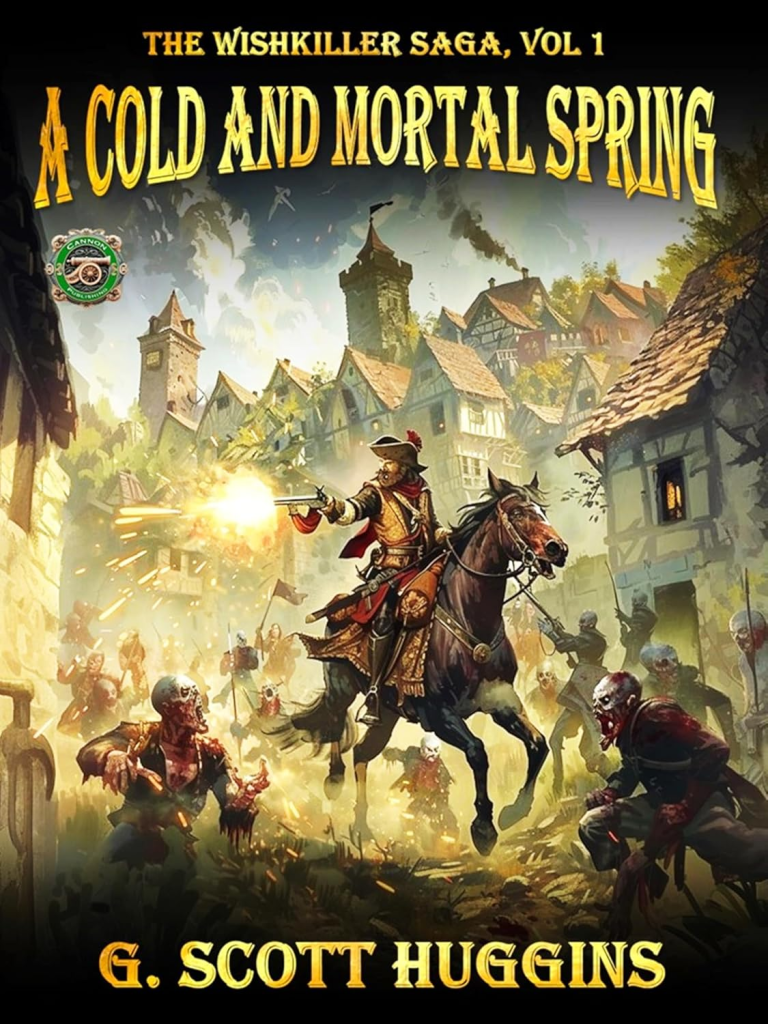
What price would you pay to save your nation and your loved ones?
While on patrol in the grasslands far from the halls of power, Captain Aethal Paaling discovers evidence that an ancient terror has reached the rich soil of his home. The Lotus, a prolific growth whose addictive leaves devour their victims from within, turning their hosts into horrible, terrifyingly violent mockeries of humanity. Created at the dawn of history by the twisted power of a godly relic called the Well, the return of the Lotus may be a harbinger of even more horrors to come.
Carrying the fatal news to the capital, Aethal discovers that even in the face of death itself, the Lords will fight to keep their secrets and their power. With only the guidance of his legendary Greater Rifle and the aid of the Phoenix Lancers, the soldier must find his way through the halls of a forgotten holy order and into deep dens of crime seeking answers.
It is a race against time, because the Lotus may have already taken root among those he loves… and fighting it may cost him everything, including his soul.
“I really, really like this book. A lot. If you want heroes, honor, dastardly villains, and an existential threat to all human life, all wrapped up in battles, bloodshed, assassinations, treason, and men and women prepared to die for honor, you will too.” ~ David Weber, author of the best selling Honor Harrington series.
Blake Smith doesn’t know what she wants to be when she grows up. In the meantime, she’s a fantasy and historical fiction author, horse mom, and cat magnet, in between playing polo, gardening, and pretending to cook. She resides in Connecticut. Blake blogs at madgeniusclub.com
Blake Smith would like you to consider her book: The Hartington Inheritance (The Hartington Series Book 1)
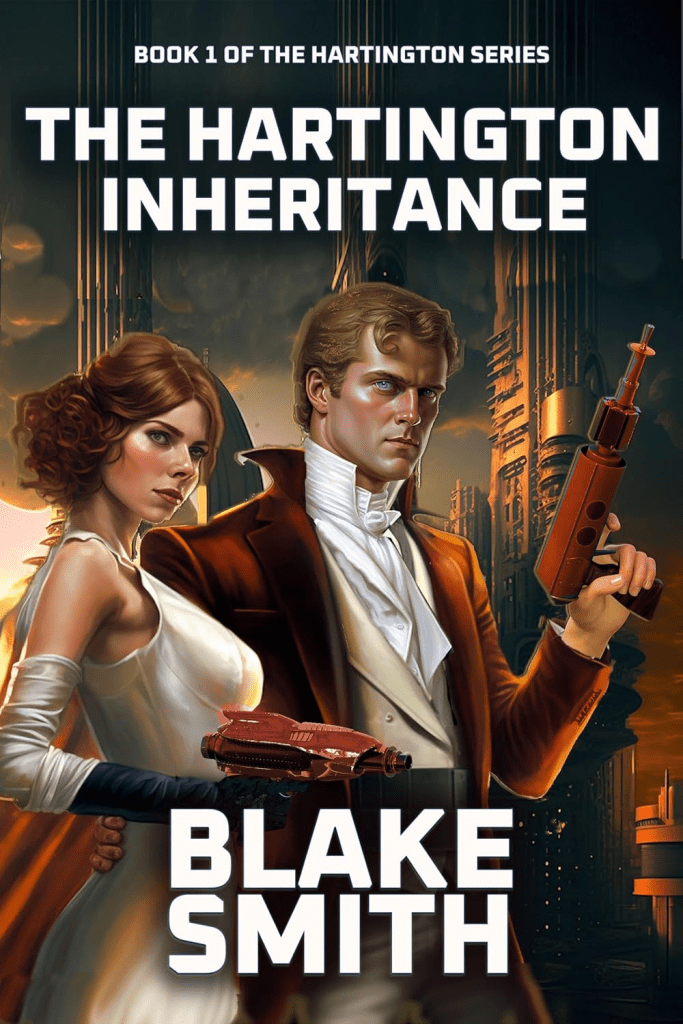
Almira Hartington was heir to the largest fortune in the galaxy, amassed by her father during his time as a director of the Andromeda Company. But when Sir Josiah commits suicide, Almira discovers that she and her siblings are penniless. All three of them must learn to work if they wish to eat, and are quickly scattered to the far reaches of the universe. Almira stubbornly remains on-planet, determined to remain respectable despite the sneers of her former friends.
Sir Percy Wallingham pities the new Lady Hartington. But the lady’s family will take care of her, surely? It’s only after he encounters Almira in her new circumstances that he realizes the extent of her troubles and is determined to help her if he can. He doesn’t know that a scandal is brewing around Sir Josiah’s death and Almira’s exile from society. But it could cost him his life, and the lady he has come to love.
Laura Montgomery began reading science fiction when she was thirteen, when the local U.S. Air Force base donated many amazing books to the school she attended in northern Thailand. Laura practices space law in Washington, D.C. She has worked on space tourism and launch safety regulations, which, honestly, are not science fiction. She lives outside Washington with her husband, children, and dogs.
To receive updates about new releases, sign up for her newsletter at lauramontgomery.com.
Laura Montgomery would like you to consider her book: PLANTING LIFE: Shut the Kingdom (Near Future Science Fiction Adventure)
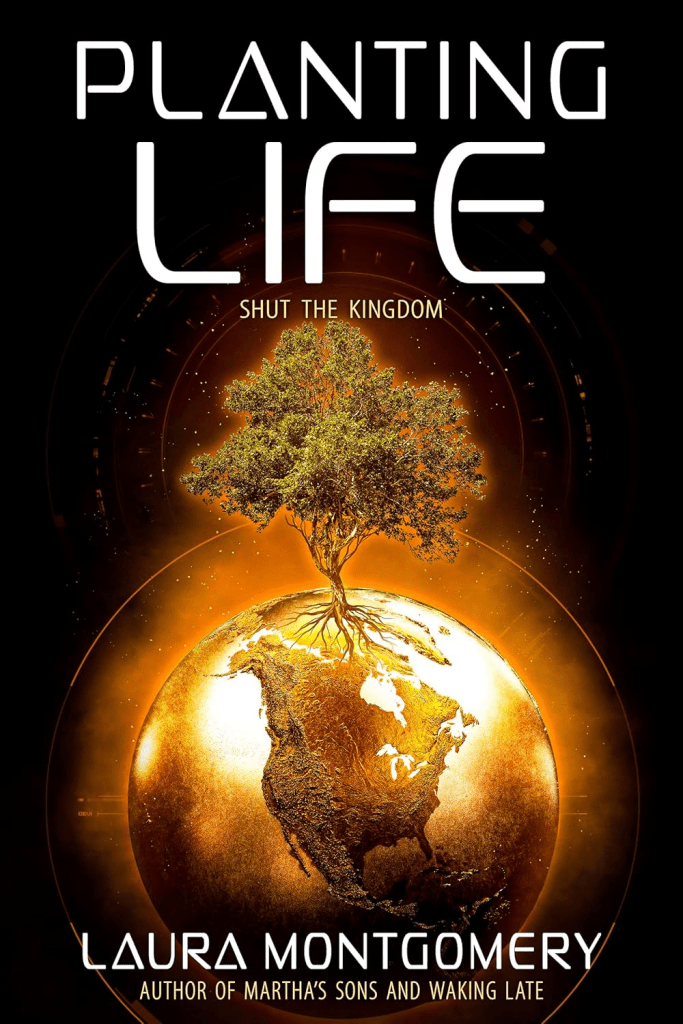
Nominated for the 2026 Prometheus Award for Best Novel.
The road to Mars has to start somewhere. It might as well be central Virginia.
Jack Darien scorns his parents’ path. After the disaster at his father’s Mars settlement, the high school senior scraps both his lifelong interest in space exploration and his college plans. Even his rescue of a college student from assault doesn’t make him see his own future any differently.
Jack becomes obsessed, however, when one strange comment from the attacker draws him to unravel secrets at the former Superfund site that is now Webb University, the school where his returning father teaches and eco-restoration reigns. What starts for Jack as a distraction from thinking of his future turns into a dangerous journey that puts him, his mother, and sister at risk. As for his father, Jack decided long ago the man was on his own.

It is universally agreed on the right that we need to change the culture. It is also universally agreed by most sane people that politics is downstream from culture. This falls under not giving orders that won’t be obeyed.
The part where I seem to be the voice screaming in the desert, to the point where I feel like … well me, twenty years ago screaming “We’re not at risk of population explosion. The population is probably already falling and we’re at great risk of population dearth!” is this: The culture is already changing, and for cultural change, it’s changing at a FAST clip. And it’s changing our way, at that.
Instead, every time I try to say this I’m met with screaming, fits, tantrums and destructive rages and assurances that no, we’re more broken than ever and the only solution is to burn it all down.
Right. So part of that — only hell itself who spawns them knows how large a part — this psyops agents for the other side. And by other side I mean foreign agents opposed to us and perhaps our very own entrenched, insane commies. Though if you want to believe the other side has a more theological dimension I’m certainly not going to stop you.
My response to that psyops is: if it were already lost they wouldn’t be shelling out for such a large fifty cent army to convince you to burn it all down. They’re evil and delusional, but not that stupid.
So, past the psyops, what is at work here? Why are people so despairing about changing the culture if I’m right and it’s already changing?
Because they don’t understand the breadth, the span and the limits of cultural change.
Look, I was born to a nautical culture. Not that I grew up by the seaside. I mean, we spent at least a month in summer going to the seaside every day for most of the day. This was considered (maybe still is, in Portugal) absolutely necessary if the child is to grow up even middling-healthy. The trip there, given the roads and transport available to us at the time was over an hour and sometimes over two. (Yes, there and back every day.) Now it’s fifteen minutes, to the point that it would be a practical way to live “by the sea” without spending too much money. Times change, in physical plant at least. But the area I came from still doesn’t consider itself seaside anything. The culture looks inward, towards land and farming and the closest they come to the sea is buying fish carcasses to fertilize the fields. This makes sense. The highway system has existed (to this extent) for less than 40 years. And almost universal car ownership for less than that.
Bear with me, this has a bearing! (And not exit pursued by a bear.)
However, all of Portuguese metaphors, culture and images is nautical. For obvious reasons.
So, when i think of turning a culture around I visualize turning a sizeable sail boat around. Under a certain technology and for a long time this was basically impossible. Not really, but it amounted to being impossible. At least if the wind were a certain way. Then tech was invented (I believe, though not my metier an arrangement of triangular sails) so one could tack against a contrary wind. And it became possible, but for large boats still difficult to do a you turn. It has to be done slowly and carefully lest it pitch us all in the drink.
Now imagine a boat the size of the US and all the minds in it, and cross winds and currents composed of all the countries (and enemies-domestic) who wish us ill.
It’s going to take time.
Normally culture takes a very, very long time to change. Things learned with mother’s milk are almost impossible to eradicate and the only thing that comes close is INDIVIDUAL immigration and acculturation. Even immigrating with your family slows that process. For an entire group of people… you have to wait for people to die is what it amounts to.
“But Sarah, they changed culture without waiting.” Are you sure about that? They’ve been at this, one way or another for 100 years. But to an extent you are right, as the last sixty years the changes have been lightening fast culture wise.
There’s two reasons for this: It’s not change so much as destroying which is different. Hold on, I’ll explain later.
Second: they had full control of innovative and pervasive CENTRALIZED tech and organizations that they controlled UTTERLY.
On the first: they weren’t actually aiming to build and replace, not after the first thrust was effectively defeated in WWII (because the thrust was eugenics, scientific government and control of industry and business by government, not the specific flavor. And granted it was defeated in varying amounts and not completely anywhere, though the US came closest.) What they were aiming was destroying current and old culture, so that the “new thing” could grow. All they really achieved, predictably, was the destruction part. Even then, this was only possible because the culture, even before what we’ll call for the sake of disambiguation the “progressive” project (which was left and right at least until Reagan really), was in massive crisis, still convulsing at the shock of easier transport and the full blooming of the industrial revolution. (Heck, it hadn’t fully recovered from the black plague. That’s how slowly culture changes.)
Thing is that culture changes very slow because assumptions get embedded everywhere from nursery rhymes to stories adults listen to, to LANGUAGE ITSELF. And that’s hard as heck to get out.
By that definition, we’re achieving turning the ship around at an almost unheard clip, even faster than the progressive project did.
The reasons for that are even more technological change that doesn’t accord with the centralized everything that the progressives used AND — very importantly — the fact their “change” was a hastily applied patch. They could force public and outward compliance, but all the stuff from the late 19th century remains in ferment underneath and returns in weird ways.
Now the patch is breaking we’re seeing crazy cake stuff, of course, because to the shock of the industrial revolution we have added more and spicy tech shock, so that people are all reeling and the culture hasn’t resolidified. This is why we see clever fools arguing for monarchy, which culturally speaking is like a twelve year old becoming so traumatized that they decide to un-potty-train themselves. We’ve done that sh*t before. Enough.
But there’s also, somehow, healthy culture coming back. Or perhaps it never left, just was afraid to show itself. Underneath it all, people generally speaking have their head on straight, far more than you see in the visible parts of the culture. (Visible because they scream, cry and throw themselves on the floor, or threaten others.)
So why are those, shall we call them institutional? parts of the culture not only so broken but so resistant to being kintsugied?
Well… it’s the culture thing. In this case institutional and workplace and specialty culture.
In a time when our education institutions taught almost nothing practical, the repository of “how to do things” is almost exclusively “learned by doing” which means my generation (roughly X, okay) and older are the ones holding the keys to “it’s done this way.”
These are also the people that are most unwilling or unable to see who things have changed and that the progressive project has failed everywhere. PARTICULARLY in the fields that were wholly taken over by the left to the point that people were promoted on ideology rather than competence. And yet they still have some competence…
Let me explain: All of us are sick and tired of things that Amazon does and youtube does, not counting the funny gals over at netflix and such.
BUT what they do is absolutely predictable and will only be resolved by time and replacements.
Or put it another way: When Jeff Bezos created some kind of video/tv/movie dpt for Amazon, who could he hire? Well, people who had come up through the system in such fields. The only way to be sure they knew what to do ws to go to the heads. And of course, those were ideologically chosen and so– the new thing was as lefty as the old.
Same for who he put in charge of the book division, which is why they’re favoring trad pub, and say that ebooks have hit a natural ceiling. (Screams in “it’s all so tiresome.”)
When you guys rage against Amazon and I say “they’re not that bad’ I’m not saying they’re NOT bad. I’m saying they’re the best of the field. Because they all hire from the same tainted pool.
This will change. BUT the change takes time.
At the speed of filling graves? Maybe. In this case I think it will be faster as it’s becoming obvious even to those who wish to be blind that expertise in the field as used to be doesn’t have anything to do with the field as is.
And AI animation is about to kick the entire process into turbo by making every guy with time and a computer a movie maker.
I suspect it’s the same for almost everything including even stuff like manufacturing, which in turn will change the process of innovation, because if you can build a better gizmo in your garage and compete with the big boys, chances are a few million people will.
And culture will change, or at least back away from the progressivist nonsense. It will, of course, find other nonsense. And there’s still the problem of potty training all those monarchists again.
However, things are going our way. Just slower than any of us will like, but that’s the way life is.
Cultural boats turn around very slowly. Particularly in crosswinds. Mind the tiller and take care not to fall into the drink.
Steady as she goes.
News broke on Sunday morning that the US had rescued an American pilot who was shot down during combat operations in Iran. (Seriously, God? Shot down on Good Friday, brought out alive on Easter Sunday morning? You need a better editor. No one is going to believe that.) I’m glad he’s home and that we got him out.
But, there are a ton of hot takes from liberals and foreigners online about how America lost and destroyed a bunch of equipment during the rescue operations. “Is it worth the millions of dollars of equipment just to get him out? You lost two C-130s and an A-10.”
First, I know that looks like a lot. That’s probably your entire air force! But also, by even asking that question, you show you know nothing about America and its values. America, from before its birth, has prized human life over treasure.
During World War 2, American aircraft were at a significant disadvantage early in the war compared to the Japanese Zero fighters. The Zero was faster and had a better climb rate. But, those advantages were bought a price. The Zero sacrificed its armor and this made the pilots more vulnerable. The Americans won the war because our pilots would come back and get another aircraft. But, after June 1942, a significant portion of the experienced Japanese carrier pilots were dead and their fleet carriers were at the bottom of the Pacific and those that were left could not compete with the improved American aircraft that were coming. The US had an advantage that it would never lose, though it took three more years for the Japanese to realize this. The US was willing to sacrifice performance to bring its pilots home and that proved decisive in the end.
This is also seen in how the American soldier knows that the US will move heaven and earth to come and find them if they are wounded, captured, or dead. We know that we are valued at a level that foreigners will never understand and that our sacrifices are valued, which means we will fight harder and endure more in return.
The movie (and book) Black Hawk Down is a classic example, but it goes further back. The US launched a punitive expedition on Tunisia in the early 1800s because they were attacking our ships and capturing our sailors. We went to war with the greatest power of the day in 1812 because they were taking our sailors to serve on their ships.
The Son Tay prison raid also shows both of these points. During the Vietnam War, the US found out where the North Vietnamese where holding some of our pilots. So we trained up a raiding force to go in and rescue them. During the early practice runs, the raiders realized that crashlanding a helicopter directly into the compound would significantly increase the likelihood of success, so they wrote off the helicopters as the cost of doing the raid. The leadership chose to sacrifice equipment to make it easier to rescue our people.
No American prisoners were rescued as the Vietnamese had moved them a couple days before, but the raid was regarded a complete success. The compound was destroyed with minimal casualties on the part of the American forces, only a twisted ankle and it led to some critical changes in how the North Vietnamese dealt with American POWs.
The Cabanatuan prison raid in World War 2 is another example. When intelligence told the American Forces in the Philippines in 1945 that the Japanese were going to execute Allied prisoners, they sent Rangers in to rescue them. At the cost of two dead, they were able to rescue over 500 Allied prisoners.
Some people might argue that rescuing pilots in particular is critical because they are elite and important members of society, as well as being highly trained. However, that loyalty to your fellow soldiers transcends ranks. When I was in Afghanistan in the last 00s, every soldier who deployed was given a rescue beacon and basic training in how to signal rescue forces in case you got caught behind enemy lines. We knew that the US would do whatever it took to bring us home.
And it wasn’t just the rescue equipment. We were given high-grade body armor, improved equipment, and the best medical care available if we got injured. We had plans in place to evacuate the wounded to trauma hospitals, then back to the US.
Also, we know that even if we are killed, the US will do whatever is necessary to bring us home or make sure we are not forgotten. Submarines that don’t return home are regarded as “still on patrol” and a message is sent yearly to them, letting them know we haven’t forgotten. The US has entire units dedicated to finding and identifying the remains of those who are MIA. This is how Father Kaupin’s body was identified and brought home for burial.
We have plans in place to bring the dead home from combat theaters. The dead are brought home to their families who are flown out to meet them and senior governmental leadership is there as well, including the President at times. A plane flying a body home has precedence over any aircraft other than Air Force One.
How many times have we seen a military member be brought home for burial in a community that is not their own, perhaps because the family is new to the area and the community shows up because it is an American Soldier? The loyalty of America to its service members is unlimited. (You can make the case that this was not how it was done in Vietnam, but I would argue that this is an exception and the result a foreign occupying belief system that is at odds with America and the sooner it is expunged from our society, the better.)
The loyalty goes both ways. The American soldier and veteran is often the foundation of the community. They believe that they have taken an oath that will never expire- an oath that is not to a person, but to an idea. You might say, USAian-ism. And it is that attitude that is at the base of why the US will spend unlimited amounts of treasure to take back its people.
It is born from the belief that no man is better than another, that no one is better simply because of what family they come from or where they were born. That “All men are created equal, that they are endowed by their creator with certain unalienable rights, that among these are life, liberty, and the pursuit of happiness.”
From its very inception and in its founding documents, America has believed and put into practice that human life has value simply because it is human. It is a gift that we have gotten Judeo-Christianity, that Man was created in the image of God and that that Imago Dei conveys worth in and of itself. And therefore, we will (must, even) sacrifice any amount of treasure to get our people.
Not paying the Danegeld, but going in and taking them back with the skills of the greatest army on earth because we know that once you pay the danegeld, you’ll never be rid of the Dane. If it means sending in a Marine Expeditionary Unit, SEAL Team 6, or some other highly trained unit, if it means sending a multiple waves of close air support or B-52s to provide cover or a distraction, if it means paying whatever price is needed to get our people back, we will do it.
So when you see people mouthing off online about how we lost equipment and questioning why we would go in and get one pilot out? Understand that those who ask these questions are not Americans. Answer them as such.
 According To Hoyt